
Поиск:brainwave
Стили
Все

2
Brainwave Music No. III was initially recorded live on October 30th 2021 as part of 10 Brain Wave - sound installation - performances by Ilpo Väisänen and Dirk Dresselhaus (die ANGEL) in the Life on a Leaf house, Turku, Finland.
The concept was based on an interactive system including brainwave interfaces that allowed the two performers to process the sounds of several semi-modular synthesizers via CV with their brain activities.

Ilpo Väisänen & Dirk Dresselhaus (feat. Ulrich Krieger)
Brainwave Music No. III
2
Brainwave Music No. III was initially recorded live on October 30th 2021 as part of 10 Brain Wave - sound installation - performances by Ilpo Väisänen and Dirk Dresselhaus (die ANGEL) in the Life on a Leaf house, Turku, Finland.
The concept was based on an interactive system including brainwave interfaces that allowed the two performers to process the sounds of several semi-modular synthesizers via CV with their brain activities.

Ilpo Väisänen & Dirk Dresselhaus (feat. Ulrich Krieger)
Brainwave Music No. III
2
Brainwave Music No. III was initially recorded live on October 30th 2021 as part of 10 Brain Wave - sound installation - performances by Ilpo Väisänen and Dirk Dresselhaus (die ANGEL) in the Life on a Leaf house, Turku, Finland.
The concept was based on an interactive system including brainwave interfaces that allowed the two performers to process the sounds of several semi-modular synthesizers via CV with their brain activities.
7
Limited Edition to 200 copies incl. Remixes by DALO, Benedikt Frey and Nathan Dawidowicz
R.i.O. welcomes Brainwave Research Center, a NYC-based duo consisting of house/techno producer Chase Smith and documentary filmmaker Christa Majoras. In early 2023 they freed their debut album "figure 1" via their own label BRC. Two more albums followed. All documenting their love for experimental yet charming music of all kinds.
Their influences span a vast spectrum, from Steve Reich, Laurie Spiegel, and Edgar Froese to Martin Rev, John Carpenter, early Kraftwerk, or the ambient techno of Pete Namlook's Fax +49-69/45046 label. Yet, Brainwave Research Center forges a sound distinctly their own, seamlessly blending analog synthesis with electro-acoustic experimentation.
On "Psychic Antenna", the duo takes a gentle rawer approach. The tracks range from the manic verbal Die-Tödliche-Doris-like loops of "I Find Myself" to the meditative cosmic trance of "Open Your Mouth." "Orange Drop" and "Transmitter Park" toy with the dancefloor, channeling slow-motion acid trance and krautrock echoes.
The release is rounded out by three remixes: R.i.O.'s own Benedikt Frey delivers a deep, trippy groover full of inner musicality, while close companion DALO crafts a dark, echo-drenched pop rework, and Berlin's Nathan Dawidowicz injects psyched nu-disco rhythms, expanding "Psychic Antenna" into seven notions of intense neural oscillations.
ML


10
Brainwave Research Center returns with their 3rd Electronic music LP. Their DIY approach to creating music has forged a unique sound that is not experimental music, but music born out of experimentations with analog synthesizers. Feel Free is the third installment of their first four part series and captures the feelings and emotions of a summer season.
The A-side begins with a soundtrack to a daydream; imagining the life of a earthworm. Followed by a teeth-grinding drive through the grime of Brooklyn streets in Interceptor iii. Side A finishes out with that summer euphoria that comes from laying in the grass under the sun through dusk and watching the moon rise.
The B-side begins in a startling manner; an attempt to capture the feeling of falling in your dreams. The music continues down a darker path that reminds us of their second LP, Mosaic, with electronic experiments mixed with acoustic elements. The side concludes with two songs that capture the nostalgic feelings of summer.
Feel Free offers you a glimpse into the musings of everyday life for brainwave research center. Recommended if you like analog / digital synthesizers, sequencers, hand-played melodies, simplistic clock-like rhythms

8
Chase Smith aka the W.T. Records and Apartment associate and documentary filmmaker Christa Majoras are back as brainwave research center with their second full length, Mosaic. Once again the sonically inquisitive pair mix up analogue synths with electro-acoustic experiments, epic and adventurous soundscapes and plenty of raw texture, hooky pop melodies and innocent rhythms. Along the way the duo take influence from their heroes including Ennio Morricone, John Carpenter and Kraftwerk on a record that was laid down in the back of Smith's synthesizer repair shop. It's an absorbing listen once more from this increasingly vital pair.
8
Brainwave research center is a new project from NYC-based house/techno producer, Chase Smith (W.T. Records, Apartment, is/Was), & documentary filmmaker, Christa Majoras (School of Visual Arts).
Conceived together over two years as musical thought experiments, brainwave research center’s debut album, figure 1, contains a genre-bending distillation of influences from experimental music (Steve Reich, Laurie Spiegel, Black Dice), 1990s ambient techno (The Orb, Pete Namlook/Fax Records), and Motorik/Kosmiche/Krautrock (Kraftwerk, Suicide, Manual Gottsching).
The songs embrace a raw, naive approach to sound design, instrumentation, and technical production to capture the feeling of experimentation of the works they are inspired by. Described by listeners as a mixture of Electronic, ambient, and kosmische/krautrock.
Recorded and produced in Greenpoint, Brooklyn in the back of Smith’s synthesizer/electronic repair shop, Specs Sales & Repair, Figure 1 is the first in a sequence of 4 works to be released.
Made primarily with TR-606, OB8, SH-101, MS-20, Fizmo, H3000, SDE-3000
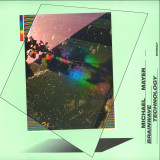
Michael Mayer’s latest EP, Brainwave Technology, comes at you purposeful, stealthy and sly. It’s a glorious left turn for the redoubtable producer, one that sees his typically lean and lithe productions buffed to a metallic, futurist sheen. There’s a gleam in the eyes of tracks like “Brainwave Technology” and “Alpha” that speaks of serious fun, of the intersection of the pleasure zone and the frontal lobe.
“Brainwave Technology” itself is informed by Mayer’s deep dive into the thorny terrain of artificial intelligence, transhumanism and posthumanism. Inspired by reading German philosopher Richard David Precht, Mayer found himself heading down the “proverbial rabbit hole,” as he describes it, “watching hours of YouTube material by self-proclaimed prophets of these ‘inevitable’ changes to come.” Never one to be taken in by the egotist’s dance, Mayer’s cynicism about the whole endeavour is tempered, a little, by the deeper questions that these figures gesture towards: “Is it really an evolutionary step that man and machine become one? Or is it rather a marketing plot by Silicon Valley billionaires?”
On “Brainwave Technology”, Mayer plays the charlatans at their own game, turning their logic against them by exposing the fruitiness of their ‘visions’. “I chose irony as my sword with which I chopped off some quotes from some of those batshit crazy prophets and self-promoters,” he explains of the drooling psychobabble he drops in the track’s lacuna. There’s a sense of humour here – how could you not laugh at these hungover egotists? – but there’s levity too, a sense that Mayer’s using sound to expose the contradictions and double-speak at the heart of these half-formed ideas. It’s a Burroughsian tactic, to slice into the heart of the voice to see what hidden truths surface.
It was Burroughs, too, who once said that “when you cut into the past, the future leaks out”; Brainwave Technology cuts into the logic of the futurologist to leak out the messiness of modern reality. On “Alpha” and “Gamma”, Mayer seems to conjure up the stark, ominous music that’d soundtrack a science fiction reinterpretation – or preinterpretation – of our modern malaise, all funereal wreaths of electronic noise and clatterboxing beats. As the EP resolves with “Device For The Young At Heart”, Mayer’s questions are piling up: “Do we want to become immortal and live on as a download? Do we really give up on Earth and put all our effort into colonising Mars?” There are no answers, of course, but plenty of imaginings-to-be. Brainwave Technology soundtracks both dystopian and utopian possibilities of what could come next.

Scand resident Steve Allman brings together the fast-paced sounds of Detroit and London electro in his debut EP on EON Records.
A key part of London’s longest running electro night Scand for ten years, the south London producer has played alongside the genre’s most important figures The Advent, Detroit in Effect
and Andrea Parker included - delivering consistently high velocity all vinyl sets. Allman’s approach to the dancefloor comes out in its full majesty here on Brainwave. Driven with analogue bass from the Novation Bass Station 2 that’s central to his studio set up, the EP is an uptempo booty moving selection of tracks. Sonically the EP is an expression of Allman’s ear for fast-paced 90s era Detroit electro and the UK’s rave edged take on the sound calling upon freaky synth work, heavy bass patterns and eerie rave stabs to colour the release. What we hear on Brainwaves across the three original tracks is pacey, buoyant and sub-weighted - a record ready to be played loud when the systems are turned back on. Closest influence and mentor Sync 24 drops a bomb of a remix for the title track Brainwave, weaponising it a step further adding a deadly acid scrawl.

5
Black Truffle is honoured to announce the first ever vinyl reissue of David Rosenboom’s legendary Brainwave Music, originally released on A.R.C. Records in 1975 and here expanded to a double LP with the addition of over 40 minutes of contemporaneous material. Pioneer of live electronics, innovator in music education, collaborator with artists as diverse as Jon Hassell, Jacqueline Humbert, Terry Riley and Anthony Braxton, Rosenboom is renowned for his ground-breaking experiments with the use of brain biofeedback to control live electronic systems.
Each of the three pieces that make up the original Brainwave Music LP integrates biofeedback with musical technology in different ways. In the side-long opening piece “Portable Gold and Philosophers’ Stones”, four performers have electrodes and monitoring devices attached to their bodies to receive information about brainwaves, temperature, and galvanic skin response. This information is analysed and fed into a complex set of frequency dividers and filters, manned by Rosenboom, but essentially played by each of the performers through their psychophysiological responses to the situation. The result is a slowly unfolding web of filtered electronic tones over a tanpura-esque fundamental, possessing the unhurried, stately grandeur of an electronic raga. In “Chilean Drought”, three different variations of a text about a drought in Chile, each read by a different voice in a different style, are associated with the Beta, Alpha, and Theta brainwave bands. Alongside an insistent piano accompaniment, we hear a constantly shifting combination of the three vocal recordings controlled by the relative preponderance of each of the brainwave bands in the soloist whose brainwaves are being monitored. “Piano Etude I (Alpha)”, the earliest piece included here, is based on research into the link between Alpha brain wave production and the execution of repetitive motor tasks. As Rosenboom plays a very rapid, incessantly repeated pattern in both hands – deliberately designed to be difficult to execute without being in an alert, non-thinking state similar to that associated with strong Alpha brainwave production – two filters controlled by monitoring his brainwaves process the piano sound, moving gradually higher in frequency as the average Alpha amplitude increases, resulting in a hypnotic, constantly shifting blur of repeated notes reflected through the shimmering, watery lights of the filters. For this reissue, the original LP is supplemented with an additional LP containing an unreleased 1977 live recording of Rosenboom’s “On Being Invisible”, in which the composer himself performs on an array of electronics that are fed information from his brainwaves. Stretching out over 40 minutes, the piece begins in similar territory to “Portable Gold and Philosophers’ Stones” but eventually becomes far wilder, building up to pointillistic bleeps and dense layers of electronic fizz that unexpectedly cut to near-silence. As Rosenboom explains, the piece creates a situation in which the ‘performer’s active imaginative listening became one of the ways to play their instrument, as well as an active agent in how self-organizing musical forms might emerge.’ Enriched with archival images and new notes from the composer, this expanded reissue of Brainwave Music is essential listening for anyone interested in the history of live electronic music and alive to the possibilities it might still contain.

4

11
A near-perfect record, White Magic was the lauded CD-only debut album by Sorcerer (Californian native Dan Judd, one half of Windsurf with Hatchback). Just in time for Spring/Summer, we present the first ever vinyl issue, released as a deluxe double LP.
Back in summer 2007, this majestic set gently nestled itself into the Balearic soundtrack-to-summer slot for many, making him a household name for Cosmic Disco heads alongside the likes of Lindstrom, Metro Area, Todd Terje, Mudd, Studio and Quiet Village. In the intervening years, exceptional producers have created vibrant variations on the dreamy, dubby, melodic nu-disco theme. Happily, the emergence of such luminaries as Jex Opolis, Harvey Sutherland, Suzanne Kraft, Tornado Wallace et al has only served to make the master - Sorcerer - sound ever more brilliant and vital.
Utilising his array of guitars, drum machines, synths, and trusty MPC, the loved-up Sorcerer sound inspires halcyon memories of warm days, endless sunsets and pure youthful abandon. Influenced by surf, 80s dance pop, acid-R&B, space jazz, krautrock, disco, dub, and am radio gold, his music maps a tour through a uniquely Californian lifestyle. Yet when music so vividly captures a vibe and a feeling, it can make writing about it appear almost redundant. Instead, to glean the full colour of what your turntable will soon gratefully radiate, we prescribe the generous soundclips presented here.
And, for a unique insight into the process behind the wonderful sounds conjured up, here's Sorcerer himself:
"White Magic is a reflection of personal freedom and discovery. Having been in bands for years, this was a chance to develop music that stood alone and for me to be in full control.
I was living alone and worked on jams whenever I could. I was highly inspired by a new openness to music as a pure inspiration, not being part of any scene. I tapped into the mixes I was hearing coming out the UK where deejays were playing "cosmic" sounds that were so strangely familiar.
I was picking up all kinds of $1 vinyl and throwing bits of it into my sampler almost randomly to see what would come out.
In my mind, I was making music to be played at my friend's Broker/Dealer Pop nights where they fused golden German techno sounds with the new disco emerging at the time. Also, I took vacations and reconnected with the Pacific Ocean where I spent so much time as a kid: it spilled out into the sounds.
Lastly, I forged a partnership with Hatchback (Sam Grawe) who was working on music in the same way. I learned so much about arrangement and the colors of music. We began recording together as Windsurf and released our own stuff. It all seems like a small glorious moment in time, so I am so excited to keep the legacy alive and I continue to work on my music with these spirits inside of me."
Lovingly remastered by the esteemed Simon Francis, cut reassuringly loud on to heavyweight double vinyl and presented in a deluxe gatefold jacket with freshly commissioned artwork throughout from original designer Rich Robinson, this limited edition of 500 copies is sure to fly.

4
KR3.018 KR3 proudly welcomes Jin Synth & Marco Maldarella to its roster. To mark the conclusion of the label's fifth anniversary cycle, launched in September 2024, KR3 together with these two talented artists, presents "The Neural Abyss" a split EP that embodies both an ending and a new beginning through the theme of "Death/Rebirth".
This 4-track project, showcases the distinct yet complementary visions of Jin & Marco, each taking one side of the 12" vinyl. Together, their work invites listeners on a profound exploration of hypnotic, deep brainwave states. Let's celebrate the final chapter with this exciting collaboration! KR3 | 5YRS Down-Road
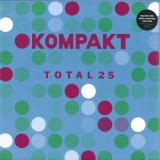
- A1: Pop Vampires Cologne - Karianne
- A2: Superpitcher - Pandora’s Box Feat. Alexis Taylor
- A3: Jürgen Paape - Grace (A Tale) Feat. Hella
- A4: Triola - Arcadia Feat. Irene Kalisvaart (The Modernist Mix)
- A5: Reinhard Voigt - Zahl An Einem Anderen Tag
- B1: Gui Boratto - Panorama X-Press
- B2: Robag Wruhme - Starsow Total
- B3: Michael Mayer - Brainwave Technology (Wassermann’s Brainwave Inferno Mix)
- B4: Michael Mayer - Erdbeermond
- B5: Hardt Antoine - Let Me Go
- B6: Wassermann - Sog
11
The latest boy band in town, POP VAMPIRES COLOGNE, opens the party with the enigmatic ‘Karianne’. SUPERPITCHER knows how to make a grand appearance, accompanied by high-calibre guests. His electro-pop treat ‘Pandora’s Box’ features Hot Chip’s ALEXIS TAYLOR on vocals. JÜRGEN PAAPE isn’t coming alone either, but with newcomer HELLA in tow. ‘Grace (A Tale)‘ once again shows our resident hit maker at his best. JÖRG BURGER also has a table companion, the extremely talented Irene Kalisvaart, and remixes himself on top of that. REINHARD VOIGT points out that money never sleeps and proceeds according to the motto: ’Zahl an einem anderen Tag (Pay another day)’. Our Brazilian whirlwind GUI BORATTO returns after a long absence with the banger ‘Panorama X-Press’. After careful consideration, ROBAG WRUHME has named his new track ‘Total’ and sings in the chorus with his family for the first time. WASSERMANN contributes an ultra-fat remix of Mayer’s ‘Brainwave Technology’, while MICHAEL MAYER himself marvels at the rare ‘Erdbeermond’. HARDT ANTOINE’s ‘Let Me Go’ really gets the party going again before WASSERMANN orders a large taxi and skips out on the bill.
See you again next year!
TOTAL 25… Schon wieder ein Jubiläum in einem an Jubiläen ohnehin nicht armen Jahr. Zum 25. mal versammelt sich die Kompakt Familie zum alljährlichen Stelldichein. Ohren angelegt, los geht’s!
Die neueste Boygroup in town, POP VAMPIRES COLOGNE eröffnet die Party mit dem enigmatischen ‘Karianne’. SUPERPITCHER weiss, wie man einen großen Auftritt hinlegt, und zwar in hochkarätiger Begleitung. Sein Elektropop-Leckerbissen ’Pandora’s Box’ featured Hot Chip’s ALEXIS TAYLOR an den Vocals. Auch JÜRGEN PAAPE kommt nicht allein, sondern mit der Neukommerin HELLA im Schlepptau. ‘Grace (A Tale)’ zeigt unseren Haus- und Hitlieferanten mal wieder in Bestform. JÖRG BURGER hat ebenfalls eine Tischdame im Gepäck, die überaus talentierte Irene Kalisvaart, und remixed sich obendrein selbst. REINHARD VOIGT gibt zu Bedenken, dass Geld niemals schläft und verfährt nach dem Motto: ‘Zahl an einem anderen Tag’. Unser brasilianischer Wirbelwind GUI BORATTO meldet sich nach längerer Abstinenz mit dem Banger ‘Panorama X-Press’ zurück. ROBAG WRUHME hat seinen neuen Track nach reiflicher Überlegung ‘Total’ genannt und singt darauf erstmals selbst im Chor mit seiner Familie. Der WASSERMANN steuert einen ultrafetten Remix von Mayers ‘Brainwave Technology’ bei, während MICHAEL MAYER selbst den seltenen ‘Erdbeermond’ bestaunt. HARDT ANTOINE’s ‘Let Me Go’ bringt die Party nochmal so richtig in Schwung, bevor der WASSERMANN ein Großraumtaxi bestellt und die Zeche prellt.
Wir sehen uns wieder im nächsten Jahr!

8
Scanning Backwards, Phase Fatale’s second full-length album originally released on Berghain’s in-house label Ostgut Ton in 2020 is now reissued via his label BITE on limited edition pink marble vinyl after being long sold out and sought after. Using the connection between weaponized sound and psychological manipulation as a conceptual foundation, Hayden Payne explores the ways in which music – and sub frequencies in particular – are used to influence thinking and to synchronize emotions and behavior: from military technology to sound systems and the physicality and sexuality of queer techno culture.
Known for his innovative post-punk takes of dance music as featured on EPs for unterton and Ostgut Ton, the Berghain resident draws on his background as both a guitarist and sound engineer to create a heady mix of broken rhythms, noise-, and shoegaze-inflected techno, often at slower tempos. The result is music with space and pace to expand, highlighting the intense rushes of frequencies found in both sonic warfare and functional dance music. Over eight tracks named after a combination of historical and fictional narratives from literature and science fiction, Payne’s rhythmic excursions explore different manifestations of sound as power – specifically within the context of seeing Berghain as an instrument itself. This is also reflected in the album artwork, taken from an early flyer for the SNAX party series and an obvious ode to the fetishization of power dynamics.
In his own words: “All tracks on the album, no matter the style, were tailored to sound a certain way in Berghain – something I figured out through years of dancing in the middle of the floor, DJing as a resident and investigating what frequencies really penetrate the body. This includes speech and high-frequency, brain-penetrating instrumentation and drilling textures that I had not utilized so often before, but which I think also have an effect on thought and memory. It’s especially true in a space where gay and fetish roots combine with music in unexpected ways, almost in a cultish manner. A musical and physical deprogramming and reprogramming, psychic driving and de-patterning, the erasing and replacing of memories.”
Ultimately, Scanning Backwards surveys not only the manipulative properties of electronic music (mantras, loops, subliminal messages) but also how rhythm facilitates both moving and thinking in synchrony; a pulse of coordinated sound- and brainwaves.

9
Michael Mayer albums don’t come round too often, which is one of many reasons why his fourth collection, The Floor Is Lava, is a genuine event. It’s been eight years since his last one, the collaborative & released on !K7; its predecessors, Mantasy (2012) and Touch (2004), took their sweet time, too. It’s no real surprise, given the many hats Mayer wears – globetrotting DJ, revered remixer, inveterate collaborator, and boss of both Kompakt and Imara – that his solo productions are relatively sparing. But this also speaks to their quality: Mayer’s name on a record sleeve is a sign of quality, of music that’s both looking to the future and calling back to the past, that balances the imperatives of the dancefloor and the loungeroom, that’s as exploratory as it is functional.
On The Floor Is Lava, Mayer seems to be taking the temperature of both the music that surrounds him (past and present), and the ides of the industry he works within. There’s that iconic album title, for a start. “The album’s mindset,” he says, reflecting on those four words together. For Mayer, it’s partly a critique of the way the industry boxes in both producer and listener, focuses them on genre, on market, on the next new thing: “Being a free minded spirit that transcends genres has become an uphill battle.” A battle worth fighting, though, and with The Floor Is Lava, the result is an album that’s varied, quixotic, idiosyncratic, charming, and deeply, addictively listenable.
Throughout, Mayer finds thrills in exploration and juxtaposition, allowing unexpected things to blossom and giving them their life, their platform, throwing the listener exciting curveballs: “It’s a DJ album by a DJ that’s easily bored.” Either easily bored, or endlessly curious, The Floor Is Lava is rich with ideas. It opens with “The Problem”, which looks back to look forward, embracing the rickety way early house productions threw samples together with gleeful abandon. Mayer mentions Pal Joey, and the scene around Rockers Hi-Fi and their Different Drummer imprint, as reference points, and you can hear that freewheeling spirit throughout.
It’s followed by “Vagus”, a slinky, sensual minimal house number that Mayer describes as his “musical catnip”. The flow of these two opening cuts defines the dynamic of The Floor Is Lava, defining the dialectical drive at its core: thesis and antithesis leads to synthesis, but with a welcome prickliness that means you’re always excited, always engaged. It’s also productive in the way it derives energy from rubbing genres and sounds against each other, in unexpected ways, for maximum musical frisson. There’s psychedelic techno on “Feuerstuhl”, more minimal techno with “Ardor” (Mayer mentions ‘Immer 1’ era 90s minimal as inspiration), slippery, Shepard-tone breakbeat through “Sycophant”, a lovely, lush vocal turn on the poppy “The Solution”.
The album closes with the melancholy “Süßer Schlaf”, where Mayer sets a poem by Goethe to one of his most haunted, moving pieces of music yet, in abstract tribute to a lost friend. It’s one of the most affecting moments on The Floor Is Lava. There’s also an update on 2020’s wild Brainwave Technology EP, with the surrealist glitter-stomp of “Brainwave 2.0” (check out those handclaps!),where Mayer’s thinking about the socio-political precipice of the now: “I’m reading with great interest about this whole complex of how humanity is about to cross so many lines and the implications that the resulting financial and educational inequality will bring.”
That’s The Floor Is Lava: then and now, brainwaves and nerve structures, problems and solutions, genres on fire; the real, the unreal, and the surreal. An album for the easily bored and the endlessly curious. Mayer has the last word, telling us all you need to know about the album’s spirit: “Burning for the cause, being zealous, being addicted to the heat of the night, the exuberant powers of music.”
Michael Mayer veröffentlicht nicht oft Alben, was einer von vielen Gründen ist, warum ‘The Floor Is Lava’ ein echtes Ereignis ist. Es sind acht Jahre vergangen seit seinem letzten Werk, dem Kollaborationsalbum &, das auf !K7 erschien; seine Vorgänger, Mantasy (2012) und Touch (2004), ließen ebenfalls auf sich warten. Es überrascht nicht wirklich, da Mayer viele Rollen gleichzeitig erfüllt – weltreisender DJ, vielbeschäftigter Remixer, unermüdlicher Kollaborateur und Chef von sowohl Kompakt als auch Imara – weshalb seine Solo-Produktionen eher sparsam ausfallen. Doch das spricht auch für deren Qualität: Ein Album mit Mayers Namen auf dem Cover steht für Qualität, für Musik, die sowohl in die Zukunft blickt als auch auf die Vergangenheit verweist, die das Gleichgewicht zwischen den Anforderungen des Dancefloors und des Wohnzimmers hält, die genauso erforschend wie funktional ist.
Auf The Floor Is Lava scheint Mayer sowohl die Musik um ihn herum (vergangen und gegenwärtig) als auch die Strömungen der Branche, in der er arbeitet, zu reflektieren. Da wäre zunächst der ikonische Albumtitel. „Die Grundhaltung des Albums“, sagt er, drückt sich in diesen vier Worte aus. Für Mayer ist es teilweise eine Kritik daran, wie die Industrie sowohl Produzenten als auch Hörer in Schubladen steckt, sie auf Genres, auf den Markt und auf das nächste große Ding fokussiert: „Ein freier Geist zu sein, der Genres überschreitet, ist zu einem steinigen Weg geworden.“ Ein Kampf, der sich jedoch lohnt, und mit The Floor Is Lava ist das Ergebnis ein Album, das vielfältig, eigenwillig, charmant und tiefsinnig, aber auch süchtig machend ist.
Im gesamten Album findet Mayer Freude an der Erforschung und Gegenüberstellung von Stilen, lässt unerwartete Dinge erblühen und gibt ihnen Raum, überrascht den Hörer mit spannenden Wendungen: „Es ist ein DJ-Album von einem DJ, der sich schnell langweilt.“ Entweder langweilt er sich schnell oder er ist unendlich neugierig – The Floor Is Lava ist reich an Ideen. Es beginnt mit „The Problem“, das in die Vergangenheit blickt, um nach vorne zu schauen, und die wilde Art, wie frühe House-Produktionen Samples mit fröhlicher Unbekümmertheit zusammenwarfen, aufgreift. Mayer nennt Pal Joey und die Szene um Rockers Hi-Fi und ihr Label Different Drummer als Referenzpunkte, und dieser freie Geist zieht sich durch das gesamte Album.
Es folgt „Vagus“, eine sinnliche Minimal-House-Nummer, die Mayer als seine „musikalische Katzenminze“ beschreibt. Der Fluss dieser beiden Eröffnungstracks definiert die Dynamik von The Floor Is Lava und den dialektischen Antrieb im Kern: These und Antithese führen zu einer Synthese, jedoch mit einer willkommenen Schärfe, die dafür sorgt, dass man immer aufgeregt und engagiert bleibt. Zudem gewinnt das Album Energie, indem es Genres und Klänge auf unerwartete Weise aneinanderreibt, um maximalen musikalischen Nervenkitzel zu erzeugen. Es gibt psychedelischen Techno in „Feuerstuhl“, mehr Minimal Techno mit „Ardor“ (Mayer erwähnt ‘Immer’ Ära Minimal als Bezugspunkt), gleitenden Shepard-Ton-Breakbeat in „Sycophant“ und einen lieblichen, üppigen Vocal-Auftritt im poppigen „The Solution“.
Das Album schließt mit dem melancholischen „Süßer Schlaf“, in dem Mayer ein Gedicht von Goethe vertont und eine seiner bisher eindringlichsten und bewegendsten musikalischen Kompositionen schafft, als abstrakten Tribut an eine verschiedene Freundin. Es ist einer der ergreifendsten Momente auf The Floor Is Lava. Ebenfalls gibt es ein Update der wilden Brainwave Technology-EP von 2020, mit dem surrealistischen Glitzer-Stampfer „Brainwave 2.0“ (hör dir diese Handclaps an!), in dem Mayer über den sozio-politischen Abgrund der Gegenwart nachdenkt: „Ich lese mit großem Interesse über diesen ganzen Komplex, wie die Menschheit dabei ist, so viele Grenzen zu überschreiten und welche Auswirkungen die daraus resultierende finanzielle und bildungstechnische Ungleichheit haben wird.“
Das ist The Floor Is Lava: Damals und heute, Gehirnwellen und Nervengeflechte, Probleme und Lösungen, brennende Genres; das Reale, das Unreale und das Surreale. Ein Album für die schnell Gelangweilten und die unendlich Neugierigen. Mayer hat das letzte Wort und sagt uns alles, was wir über den Geist des Albums wissen müssen: „Brennen für die Sache, leidenschaftlich sein, süchtig nach der Hitze der Nacht, den überschwänglichen Kräften der Musik.“
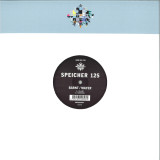
Speicher 125 is a most auspicious collaboration between two great, inimitable voices in techno: Kompakt co-founder Michael Mayer, and Magazine’s own Barnt. They’ve both been productive of late, Mayer with his “Brainwave Technology” EP in 2021, Barnt with his first release on Kompakt, "ProMetal Fan Decor Only Product" in 2022. Of course, they’re also busy with their respective record labels, and international DJing schedules.
You may already have heard their first track, which appeared on Michael’s "&" album from 2014, the psychedelic “Und Da Stehen Fremde Menschen”. For Speicher, though, they set their sights firmly on the peak time dance floor – the result is two stunning cuts of techno euphoria.
On “Teller” Barnt and Mayer unleash a synth storm, tense and thrilling. Percussion piles up against the incessant buzz, but before too long we’re submerged in waves of dense texturology, making the track an object lesson in tension and release. “Duration” is a bittersweet anthem about "life long love". A moving voice tells us about "faith in life" while gleaming, synths, choral swarms and snares shower down from above to form an epic tale about duration and devotion.
Weirding the groove and updating the emotions, Speicher 125 is a monster.
Speicher 125 ist die Zusammenarbeit zwischen zwei unnachahmlichen Stimmen des Techno: Michael Mayer, Mitbegründer von Kompakt, und Barnt von Magazine. Beide waren in letzter Zeit nicht unproduktiv, Mayer mit seiner "Brainwave Technology" EP, Barnt mit seiner ersten Veröffentlichung auf Kompakt, "ProMetal Fan Decor Only Product". Natürlich sind sie auch mit ihren jeweiligen Plattenlabels und internationalem DJing beschäftigt.
Vielleicht hast Du schon ihre erste Kollaboration gehört, die auf Michaels "&"-Album von 2014 erschienen ist, das psychedelische "Und Da Stehen Fremde Menschen". Für "Speicher" haben sie den Peak-Time-Dancefloor ins Visier genommen - das Ergebnis sind zwei atemberaubende Stücke voller Techno-Euphorie.
Auf "Teller" entfesseln Barnt und Mayer ein Synthie-Gewitter, spannend und mitreißend. Die Percussion türmt sich gegen das unaufhörliche Summen auf, aber schon bald tauchen wir in Wellen dichter Texturen ein, was den Track zu einer Lehrstunde in Sachen Spannung und Entspannung macht. "Duration" ist eine bittersüße Hymne über "lebenslange Liebe". Eine bewegte Stimme erzählt uns vom "Glauben an das Leben", während schimmernde Synthies, Chorschwärme und Snares von oben herab eine epische Geschichte über Ausdauer und Hingabe prasseln.
Speicher 125 ist ein Monster, das den Groove neu erkundet und die Emotionen auffrischt.

- A1: Reset Series Part I
- B1: Reset Series Part Ii
Iñigo Medina aka M4 explores the profound convergence of two disciplines that share a common foundation: the manipulation of vibration and resonance to transform consciousness and space: Yoga and Electronic Music.
While Yoga balances the body's energetic vibrations through breath, posture, and meditation, electronic music employs sustained tones, slowly shifting sequences, and atmospheric textures that induce trance states and align with meditative brainwave patterns.
"Reset Series" is characterized by atmospheric, non-danceable soundscapes built on repetitive sequences and arpeggios that slowly evolve, often processed through delay and reverb. Both yoga sequences and M4 compositions (the full track is almost an hourlong, divided into two parts) unfold gradually over extended durations . Each practice invites a journey inward, guiding the practitioner or listener through layers of repeating motifs that subtly transform, revealing deeper states of awareness with patient attention.
Time becomes elastic; space becomes internal; vibration becomes the universal language connecting body, environment, and sound.

4
Michael Mayer, aka Mr. Lava Lava asked a bunch of his absolute favourite artists to have a go at some of the tracks from his recent album 'The Floor Is Lava'. First up is Barcelona's brightest flame, RAXON, who is melting 'Brainwave 2.0' into a stompin fun-filled primetime banger. Longtime collaborator DAVE DK is a masterful producer and remixer that appears regularly on Pampa and Kompakt. His take on 'The Solution' feels like a road trip to paradise and back. Montreal's PRIORI is one of the hottest names in showbiz right now. His ability to bridge genres and create pristine sound designs is fully on display in his remix for 'The Solution'. Last but not least, the legend that is SEBASTIAN MULLAERT took a moment off from his revered Circle Of Life jams to transform the albums deepest cut 'Ardor' into an extraordinary musical journey. Oldschool Border Community vibes in the rebound!

- A1: Brainwave Playground
- A2: Promised Land Utopia
- A3: Lucidity Gone
- A4: Life Out Of Balance
- B1: Satan's Waltz (Metamorphosis Stage 1)
- B2: Bambino Illuminatus
- B3: Bambino Criminale
- B4: Over The Rainbow
- B5: An Answer
- B6: V Day Baby
- B7: The Moaning Pyramid
- C1: Mind Splitting Lab (Metamorphosis Stage 2)
- C2: I Feel Seperated
- C3: Fascinating Child
- C4: 8-Bit Trauma
- D1: The Monarch's Pyramid
- D2: To You All Kids Will Come (Metamorphosis Complete)
17
Stylish, intelligent and cinematic, the second series of the cult UK TV series UTOPIA in 2014 reinforced the impact of Emmy Award winning
Series 1 and gained the show an even larger following. Integral to the action is Chilean composer Cristobal Tapia de Veer's original music
for the programme, recognised by the Royal Television Society who awarded it Best Music (Original Score), Record Collector who gave
it five stars and Mojo who placed it at No. 4 in their Top 10 Soundtracks of the year.
This record was originally released for Record Store Day 2015 and is repressed on a new colour by popular demand. Cristobal Tapia de Veer’s
music has more recently found a new audience with his soundtrack to HBO hit show The White Lotus and the film Babygirl (2024).

Developing on the trance-induction and brainwave entrainment techniques explored on the first Ethernet album 144 Pulsations of Light, Opus 2 moves into deeper, more introspective and emotive territory. A stronger focus on melody and harmonic structure results in pieces that almost approach, but never quite arrive at, traditional song forms, while still leaving much to the imagination of the listener, evading mental categorization and revealing new sonic experiences with each listen.
The bulk of recording took place during the darkest months of winter in the Pacific Northwest, between late-night shifts providing technical support for hospital operating rooms. The pieces on the album each formed gradually and spontaneously during extended improvised sonic meditations as part of the composer’s own trancework (or self-hypnosis) practice, this in an effort to remove specific compositional intention from the process, instead just allowing them to “happen".
If 144 Pulsations… was about expansion of awareness and opening to the light that surrounds us, Opus 2 is intended to induce inner contemplation and internalized focus on the light within us. It is also a statement on the gradual darkening and inexorable decay of our modern world, and the need to look within to find true support and sustenance from one’s own energetic source. Patience and perseverance.

This is long overdue. I mean, looooooonnnnnng overdue. A solo album by Jim. The trap kit - so straightforward, so mysterious. What"s inside those things? Air and light - from which century? Which continent? Which planet? Depending on how and when you hit them it can be a vibration sent through a prehistoric breath, particles of Saturn"s atmosphere, the dead, wet leaves you walked through on the way to the first day of school. These are the memories of the drums on this record. Infinite and personal. Editing each other as they muscle to the front or soft shoe to the shadow. Cymbals can override/cancel everything out - wipe your memory clear or make the memory clearer. Drums are the instrument where you can feel the presence of the player the most - the full body - and sense the thoughts of the player the most. The instrument with the most choices to be made sends out the most brainwaves. A bouquet of brainwaves is on this LP. Jim oversees it all, surveys from the lost place we"re in, the void - the drumless song. We trust. We trust, Jim. His big green eyes search for the right tool (mallet, brush, etc), eyes that search you like you"re a song he wants to join, wants to see if he can add to or understand. Before humans, drums were playing - these drums. Genesis was a solo drum piece. After humans, these drums, this album. Someone - the last man - is out in a spaceship at the edge of space. He plays a single chord on a synth to set time free from its bind and then lets go. This album sets time free, lets it frolic, lets it graze, lets it remember. This is a record of thoughts, memories, surgery. A deft surgical operation you may not even realize is happening as it"s happening but you"re back on your feet when it"s over. Memories refreshed. Did you really even listen to it? -Bill Callahan, November 2023

This is long overdue. I mean, looooooonnnnnng overdue. A solo album by Jim. The trap kit - so straightforward, so mysterious. What"s inside those things? Air and light - from which century? Which continent? Which planet? Depending on how and when you hit them it can be a vibration sent through a prehistoric breath, particles of Saturn"s atmosphere, the dead, wet leaves you walked through on the way to the first day of school. These are the memories of the drums on this record. Infinite and personal. Editing each other as they muscle to the front or soft shoe to the shadow. Cymbals can override/cancel everything out - wipe your memory clear or make the memory clearer. Drums are the instrument where you can feel the presence of the player the most - the full body - and sense the thoughts of the player the most. The instrument with the most choices to be made sends out the most brainwaves. A bouquet of brainwaves is on this LP. Jim oversees it all, surveys from the lost place we"re in, the void - the drumless song. We trust. We trust, Jim. His big green eyes search for the right tool (mallet, brush, etc), eyes that search you like you"re a song he wants to join, wants to see if he can add to or understand. Before humans, drums were playing - these drums. Genesis was a solo drum piece. After humans, these drums, this album. Someone - the last man - is out in a spaceship at the edge of space. He plays a single chord on a synth to set time free from its bind and then lets go. This album sets time free, lets it frolic, lets it graze, lets it remember. This is a record of thoughts, memories, surgery. A deft surgical operation you may not even realize is happening as it"s happening but you"re back on your feet when it"s over. Memories refreshed. Did you really even listen to it? -Bill Callahan, November 2023

Second release of Berlin-based Shiver records.
DJ Seen takes you through a field of mesmerizing frequencies. The record's A-Side opens up for the waves of relaxation & dream. The title track Hypnotique lushes you into a continuous state of trance-induced easiness emphasised by a plain repeating chant.
Adam Collins’ remix takes you into a bubbling dreamworld underlined by a soft acid bed and a heavy deep neverending blanket of warmth.
The B-Side performs a natural switch, activating the brainwaves & inducing a woke state while trying to understand the sudden synth-explosions hailing through the tribalistic grooves of Bandicoot.
The trip ends with a burst of Insight at 6 am. A hymn to the frequencies of dance before it all settles down again.

Monkey is the second single by The Rellies since releasing 'Isabella is Annoying/ Brainwaves' in 2020. Ryan, guitarist and dual singer and songwriter for the band describes the making of 'Monkey' during lockdown with his brother Riley. "During covid we got very bored. Originally, we wanted to get our Monkeys and run them over with our dad's car, but we settled for filming them falling down the stairs and writing a song about it. When the other members of band finally heard the song, they liked the Monkey and then we made a clip with our friends and some TV monkeys. Everyone sang 'I like the Monkey' and soon everyone liked the Monkey!" Helicopter is Ryan's sonic representation of "hunks of steel flying through the sky. I'm an aviation nerd." He doesn't disappoint. Helicopter's opening riff is catchy and travels. Ryan's vocal powers through the song and the background vocals from kid brother Riley kicks it up a notch as he improvises his way through the chorus begging for a ride. The Rellies ages range from 13-16 and developed at Kings Cross Conservatorium. The brothers began writing and recording at age 9 and 11 respectively and doing shows as The Rellies in 2018 with Jarlath Kiernan on drums. In 2021, the band replaced guitarist Aiden Burke with Lachlan Knight when Aiden decided rehearsal was too loud. Ryan: "We love the Beatles but lately we've got more of a punk energy in our songs. Also, Riley likes a lot of different stuff like Tyler the Creator... his lyrics are inspiring us to be creative with humour."

Black Truffle is pleased to announce Symphony No. 107 –The Bard, a previously unheard archival recording of the legendary improvising ensemble MEV (Musica Elettronica Viva), captured in concert at Bard College, New York in 2012. Formed by a group of American expat composers in Rome in 1966, the MEV ensemble played an important role in the development of free improvisation, bridging the live electronics tradition begun by Cage and Tudor and the high-energy squall of free jazz. Early recordings like Spacecraft or The Sound Pool unleash volleys of metal and glass amplified with contact microphones, howling winds, primitive synthesizer bleep and raucous audience participation, the intensity of which puts much later ‘noise’ to shame. In later decades, the ensemble would go through many iterations, often including legendary free players like Steve Lacy and George Lewis. In its final years, MEV settled into the core trio of founding members heard here: Alvin Curran, Frederic Rzewski, and Richard Teitelbaum, using piano, electronics, and small instruments.
Curran, Rzewski, and Teitelbaum were life-long friends blessed, as Curran says, with ‘incompatible personalities’: major figures in the post-Cagean experimental tradition, they explored countless divergent and even contradictory paths as composers and performers, from agitprop songs to brainwave-controlled synthesis. MEV is the sound of these three personalities coming together, their contributions radically individual yet attaining a state of ‘fundamental unity’ that Rzewski, in a text written in the collective’s earliest years, defined as the ‘final goal of improvisation’. Of course, listeners familiar with aspect of the trio’s individual works might hazard some guesses about who is doing what: the crisp piano figures are probably Rzewski’s, the cut-up hip-hop samples most likely Curran’s, the sliding, squelching synth possibly Teitelbaum’s. But often these identities are dissolved in a constantly shifting hall of mirrors, the listener unable to tell which of these pianos is live and which is a sample of a past virtuoso, or whether a horn blast derives from ethnographic documentation or Curran cutting loose on Shofar. The two side-long sets here occupy a similar terrain of constantly shifting texture and instrumentation, unexpected interruptions, and moments of sudden beauty. The first set is sparser, at times almost ominous, as a bell repeatedly sounds across wheezing harmonica, seasick orchestral textures, and creaking wood, making room for episodes of yodelling and delicate prepared piano before exploding into a storm of buzzing synth and piano fragments. The second set is more frenetic, moving rapidly across centuries and continents: cars crash into post-serial piano pointillism, wailing voices collide with chopped and screwed hip-hop samples, Hollywood strings are buried under layers of electronic gurgles. The performance slows in its final moments, making way for a sampled voice repeating the phrase ‘protest and the good of the world’, reminding us that MEV’s idea of freedom was always more than musical. Symphony No. 107 –The Bard is a beautifully recorded example of the endlessly multi-layered later MEV sound, accompanied by new liner notes by Alvin Curran (now the only surviving member of the group) and a selection of previously unseen photographs from across the many decades of the group’s activity. Arriving in an elegant sleeve bearing a beautiful photograph by Francis Zhou of the Olin Hall at Bard College where the concert was recorded, this is an essential document from a major group in the history of experimental music. As Rzewski wrote, this music is ‘like life, unpredictable, sometimes making sense, mostly not’.

BRETT is a new label celebrating the co-dependent scenes of techno and contemporary art.
A sub label of Inland’s Counterchange imprint, each edition will feature music selected by Ed Davenport (Inland / Counterchange), paired with cover art curated by Nils Petersen (Flipping The Coin).
BRETT is dedicated to the spirit of Berlin’s early club scene, where cross-pollination and spirited discourse between musicians and visual artists etched the blueprints for a new techno-culture.
001 finds co-creator and long-time Berlin ex-pat Inland at the helm, delivering four surging, up-tempo club tools, plus 2 brainwave-activating noise experiments. Celebrated Irish-born artist Mariechen Danz provides a photograph of her visionary sculpture, ‘Statue for Gesticulation’, for the cover artwork.
The towering super-human structure bears a multitude of nurturing hand-gestures, suggesting support, comfort and togetherness. Built from roughly textured grey concrete and resembling a technoid, monolithic bunker or industrial space in itself, the loving, humanist symbols of peaceful action mirror the culture of inclusion, love and acceptance practised on the dance floor.

A true veteran of Madrid's fabled electronic scene, Roberto Gemelin takes the reins for local imprint Trauma Collective's sixth missive. Known for releases since the late '90s on labels as diverse as Minifunk, Nehoma, Warm Up, and his own imprint Brainwaves, he returns with the first vinyl release under the Groof alias in 10 years - the Staca EP.
Whether its the industrial-grade broken beats of opener "Take A Break", or the subterranean snarl of "Command" with its ominous swells underpinned by visceral kicks (perfect for those-heads-down moments) - the A side already showcases the diversity within Gemelin's sonic repertoire. Over on the flip, he continues his onslaught with the functional and hypnotic title track, and ends with the mind game of "Stay Puft", awash in searing synth textures and mechanised rhythms.

This acoustic body experiment will intoxicate your ears and veins. “Ectomorphin” by Chris Baumann is a straight confession for athletic acid underground – as the artist himself describes his style: “The border between timeless old school quality and new school upfront innovation in today’s techno music – just call it raw, hypnotic techno.” And this new release on Snork Enterprises presents a full load of proof for this bold hypothesis.
Ironically referring to some curious scientific concepts such as “Ectomorphin”, “Brainwave limiter”, “Neurotraxin”, and “Bioport” one may ask himself how the artist may well hypnotize our body and brain. Listening to the four forward moving techno tracks, you will soon know the answer. Just turn up the volume and get your body cells moving.

10
Bringing together therapeutic frequencies, forest bathing
(shinrin-yoku) and binaural sound, Hinako Omori's ‘a journey...’
combines inner healing and natural landscapes into in an
immersive cartography of the mind in ambient electronics. The
album progresses not track by track but as a continuous
journey, a stream of consciousness tracing hills and valleys with
the warmth of analogue synthesis and Omori’s voice always
close at hand. Omori detuned oscillators to create binaural
beats, syncing to the Hz of our brainwaves so that listeners
might further find themselves calmed by and immersed in these
soundscapes
‘a journey...’ was recorded at Omori’s home studio and Real
World Studios, when Omori was an invited to perform at the
immersive online festival WOMAD At Home. Spatial 3D
recordings are woven throughout the album, and situate each
track in different environments, from waterways to forests in and
around the Mendip Hills.
It is Hinako’s work in sound engineering that provides the
bedrock of skills that manifest her vision for ‘a journey...’,
articulating a whole world in binaural field recordings, analogue
synthesisers, and augmented vocals.
The album sits within a rich lineage of electronic musicians who
have looked to music for its healing properties, from
Venezuelan musician Miguel Noya to Pauline Anna Strom’s
ambient soundscapes; Pauline Oliveros’ deep listening
meditations and the augmented field recordings of Irv Teibel’s
‘Environments’ series.
Mastered and cut by Matt Colton at Metropolis.
LP pressed on white vinyl.

13
Prove You Wrong is the third studio album by Prong, released in 1991. The album turned heads worldwide with its more melodic approach to Prong’s formula of hardhitting industrial Hardcore Thrash Metal.
The album yielded two singles: “Unconditional” and “Pointless”. Surprising song on Prove You Wrong is the Stranglers’ cover Get A Grip (On Yourself) which is sung by new bassist Troy Gregory.
Available as a limited 30th anniversary edition of 666 individually numbered copies on silver & black marbled vinyl. The package includes an insert with lyrics.

4
The 2nd release of "fukuinn" label has brought together 4 groups of cutting-edge artists who are active in Europe.Do_1 & GGGG is the first. His details will not be disclosed, but it is a destructive sound by French nice guys who have been active in the electro and braindance scenes of the last few years.A2 is Weith. He presides over Brainwaves and has released tracks on many labels. Italian producer Caramel Chameleon who is also active in 030303 Records. The moving IDM sound is a must listen. Featured newcomer Tadan offers a clear electro track that is unique to him. This release is packed with variety of electro and acid tracks. Vinyl only!!

An unheard production unit entirely geared towards hi-octane live explosiveness and spine-tingling studio hustle-and-bustle, Hysteria Temple Foundation step up with their anticipated debut platter, "Atrahasis EP" - a four-track EP by way of manifesto, due out for release on September 13 / 21.
Elusive and haunting by nature, skirting Shackleton-esque dub meanders, polyrhythmic folk instrumentation and further left-of-centre sonic divagations, the sound of Hysteria Temple Foundation is one that sheds skins when you expect it least. Scanning out a baroque timeline where no-holds-barred floor traction wildly clashes along deeper sound investigations, "Atrahasis" ushers us into a twirly pit of tribal drums and bow echoes.
Summoning the spirits of Muslimgauze and African Headcharge for a hectic ride in a sandstorm-caught bazaar of processed darbukkahs and further steely industrial tropes, "Annunaki" gets the ball rolling in sheer immersive fashion. Cranking the heat up a notch, "Gamesh" rushes us headlong into ruthless rapids of accelerated ritual drums and mind-expanding acid onslaughts breathing in some squelchy spaciousness into its intricately-woven web of sound.
Flip sides and here's the proper grime-steppish number "Ziuziu" taking over your brainwaves with a fierce unloading of harnessed machine rage and dystopian cybernetics turned into some club-optimised weaponry. Back to a dubby kind of vibe, "Chmanze" raises an army of louder-than-loud kicks, FX-laden percs, sizzling spurts and ankle-snapping breaks, all fit to breeze across the bulkiest sound systems with utmost sangfroid and nonpareil trenchancy.

8
TOTAL turns 21 this year, and Kompakt’s venerable compilation series couldn’t have asked for a more auspicious coming-of-age collection. If TOTAL 20 was consolidation against the odds, the Kompakt crew producing for a dreamt-of dancefloor in an uncertain future, then TOTAL 21 feels abuzz and alive with possibilities. Significantly, it’s the first TOTAL in some time that’s streamlined down to a single disc; this makes TOTAL 21 even punchier than usual, a joyous, reflective, and always thrilling 75-minute audio scan of the world according to Kompakt.
As with every instalment of TOTAL, there’s a deft balancing here of Kompakt regulars and new blood. Of the latter, there’s a first appearance by KOLLMORGEN, remixed by PATRICE BÄUMEL into an astral torch song; Amsterdam’s NICKY ELISABETH, offering up ROMAN FLÜGEL’s pulsating, arpeggiated remix of “Celeste”; and CAPTAIN MUSTACHE swoops down into view, PLAY PAUL in tow, with the dream-like electro lift-off that is “Everything”. JONATHAN KASPAR also drops by with a new track, “Von Draussen”, a stealthy and lethal floor-hugger with prowling bass.
Elsewhere, there’s the lead track to MICHAEL MAYER’s astonishing recent EP, “Brainwave Technology”, which not-so-gently spears the tech-futurist babble of AI, transhumanism and posthumanism, soundtracked by one of Mayer’s typically lush, glimmering soundscapes. JOHN TEJADA reaches back to the heyday of glitch and dub techno with the gorgeous “Spectral Progressions”, while the brothers VOIGT & VOIGT, on “Nicht Mein Job”, seem reinvigorated by the interwoven patterns and funky minimalism of the Profan days. Not to be outdone, JÜRGEN PAAPE kicks TOTAL 21 with “La Guittara Romantica”, a chiming and lilting lullaby for woozy late-night reflection.
Throughout, it feels as though Kompakt are taking a moment to both breathe in the dust of the past and look forward to a bright future. Perhaps that’s why, on “Fasson”, SASCHA FUNKE seems so confident, with pinprick melodies bouncing around a hall of audio mirrors, or why THE BIONAUT returns with “Blue Sky Motor Lodge”, a song so moistly melancholy, so enduringly lovely, it’ll make you weep tears of joy. ROBAG WRUHME gets a little delirious on the ticking, twisting “No”, and then GUI BORATTO mops everything up with the bubbling, bumping glam-stomp “Wake Up”.
That’s not all – spring for the digital and/or vinyl edition and you’ll get a new cut, “Happy”, from MICHAEL MAYER, and MARC ROMBOY & C.A.R.’s “I Am A Dancer”. But however you choose to play it, now TOTAL’s turned 21, it’s your duty to throw it the celebration to end all celebrations. Let the party begin, and don’t forget to bring a party favor…

13
LTD. LOSER EDITION
Kiwi Jr. is a phenomenal "rock" and/or "punk" and/or "indie-rock" (whichever you like more) band from Canada, made up of Jeremy Gaudet (mic, guitar), Brohan Moore (drums), Mike Walker (bass), and Brian Murphy (guitar). Cooler Returns is their second album, and their first for Sub Pop. Despite being a snapshot of the pandemic-infused beginnings of this decade, Cooler Returns is truly a whole lot of fun. RIYL indie-pop from down under, things that are smart/exuberant/catchy all at once. Buildings burning in every direction; macabre unknowns in your friendly neighbor's basement; undecided voters sharpening their pencils: under pressure we could call Kiwi Jr.'s Cooler Returns "timely." But what year is it, again? On Cooler Returns, Kiwi Jr. cycle through the recent zigs & looming zags of the new decade, squinting anew at New Year's parties forgotten and under-investigated small town diner fires, piecing together low-stakes conspiracy theories on what's coming down the pike in 2021. Put together like a thousand-piece puzzle, assembled in flow state through the first dull stretch of quarantine, sanitized singer shuffling to sanitized studio by streetcar, masked like it's the kind of work where getting recognized means getting killed, Cooler Returns materializes as a sprawling survey from the first few bites of the terrible twenties, an investigative exposé of recent history buried under the headlines & ancient kings buried under parking lots. Not so long since their debut Football Money in archaeological time, unending gray eons later in the dog years of quaran-time, spiritually antipodean Canadians Kiwi Jr return to disseminate this year's annual report to the shareholders, burying the incriminating numbers in the endless appendices of a longform narrative record, a 3,000 word tract for stakeholders to pore over. These stories - memories of Augusts past, unrepressed & transcribed fast - go down easier thanks to meaningful changes enacted in 2019's KiwiCares Pledge: delivering on a promise to transition from Crunchy to Smooth by 2021, the caveman chug of Football Money has been steamed & pressed with the purifying air of a saloon piano - operated with bow-tie untied - and a spring green side-salad of tentatively up-tempo organ taps & freshly fluted harmonica. A chronically detuned spin of the dial through swivel-chair distractions & WFH daydreams, an immersive ctrl-tab deluge cycling through popular listicle distractions like the unentombing of Richard III, or the deja vu destruction of the Glasgow School of Art, Kiwi Jr. sing this song to an indoor audience, crisscrossing canceled, every other prestige distraction source wrung dry, only songwriting remaining to deliver engrossing tales to the populace, just how I imagine it worked in the old days. Fixing loose ingredients into a sturdy whip, Kiwi Jr. beam in live from the 9-5, striding into 2021 with a mastered brainwave that comes equally from the back room of the record store as the penalty box. And how do we, left holding this box of deliberate entanglements, sign off to those as yet uninitiated, undecided, uncertain, unseen, absent return coordinates - Best Wishes, Warm Regards, Good Luck? Cooler Returns, Cooler Returns, C o o l e r R e t u r n s ! Cooler Returns was produced by Kiwi Jr., mixed and engineered by Graham Walsh (METZ, Bully) in Toronto, and mastered by Phillip Shaw Bova at Bova Labs in Ottawa, Ontario.

13
Kiwi Jr. is a phenomenal "rock" and/or "punk" and/or "indie-rock" (whichever you like more) band from Canada, made up of Jeremy Gaudet (mic, guitar), Brohan Moore (drums), Mike Walker (bass), and Brian Murphy (guitar). Cooler Returns is their second album, and their first for Sub Pop. Despite being a snapshot of the pandemic-infused beginnings of this decade, Cooler Returns is truly a whole lot of fun. RIYL indie-pop from down under, things that are smart/exuberant/catchy all at once. Buildings burning in every direction; macabre unknowns in your friendly neighbor's basement; undecided voters sharpening their pencils: under pressure we could call Kiwi Jr.'s Cooler Returns "timely." But what year is it, again? On Cooler Returns, Kiwi Jr. cycle through the recent zigs & looming zags of the new decade, squinting anew at New Year's parties forgotten and under-investigated small town diner fires, piecing together low-stakes conspiracy theories on what's coming down the pike in 2021. Put together like a thousand-piece puzzle, assembled in flow state through the first dull stretch of quarantine, sanitized singer shuffling to sanitized studio by streetcar, masked like it's the kind of work where getting recognized means getting killed, Cooler Returns materializes as a sprawling survey from the first few bites of the terrible twenties, an investigative exposé of recent history buried under the headlines & ancient kings buried under parking lots. Not so long since their debut Football Money in archaeological time, unending gray eons later in the dog years of quaran-time, spiritually antipodean Canadians Kiwi Jr return to disseminate this year's annual report to the shareholders, burying the incriminating numbers in the endless appendices of a longform narrative record, a 3,000 word tract for stakeholders to pore over. These stories - memories of Augusts past, unrepressed & transcribed fast - go down easier thanks to meaningful changes enacted in 2019's KiwiCares Pledge: delivering on a promise to transition from Crunchy to Smooth by 2021, the caveman chug of Football Money has been steamed & pressed with the purifying air of a saloon piano - operated with bow-tie untied - and a spring green side-salad of tentatively up-tempo organ taps & freshly fluted harmonica. A chronically detuned spin of the dial through swivel-chair distractions & WFH daydreams, an immersive ctrl-tab deluge cycling through popular listicle distractions like the unentombing of Richard III, or the deja vu destruction of the Glasgow School of Art, Kiwi Jr. sing this song to an indoor audience, crisscrossing canceled, every other prestige distraction source wrung dry, only songwriting remaining to deliver engrossing tales to the populace, just how I imagine it worked in the old days. Fixing loose ingredients into a sturdy whip, Kiwi Jr. beam in live from the 9-5, striding into 2021 with a mastered brainwave that comes equally from the back room of the record store as the penalty box. And how do we, left holding this box of deliberate entanglements, sign off to those as yet uninitiated, undecided, uncertain, unseen, absent return coordinates - Best Wishes, Warm Regards, Good Luck? Cooler Returns, Cooler Returns, C o o l e r R e t u r n s ! Cooler Returns was produced by Kiwi Jr., mixed and engineered by Graham Walsh (METZ, Bully) in Toronto, and mastered by Phillip Shaw Bova at Bova Labs in Ottawa, Ontario.

13
Prove You Wrong is the third studio album by Prong, released in 1991. The album turned heads worldwide with its more melodic approach to Prong’s formula of hardhitting industrial Hardcore Thrash Metal.
The album yielded two singles: “Unconditional” and “Pointless”. Surprising song on Prove You Wrong is the Stranglers’ cover Get A Grip (On Yourself) which is sung by new bassist Troy Gregory.
Available as a limited 30th anniversary edition of 666 individually numbered copies on silver & black marbled vinyl. The package includes an insert with lyrics.

9
After releasing two records with the quintet Fazer, German guitarist Paul Brändle presents his solo debut on Squama Recordings.
Paul's minimalist compositions move in slow-motion between Straight Ahead Jazz, Folk, and Blues, only subtly disclosing their musical origins.
The album was recorded in Vienna during the annual 'Hundstage', a period in the summer during which the whole city succumbs to the sweltering heat. Short on oxygen, but not on ideas, Paul created 9 tracks of soothing excellence that are worth calming down for.
