2025 marks 20 years of Tectonic, the pioneering dubstep and electronic label founded in 2005 by Bristol’s underground originator, DJ Pinch.
The Tectonic Sound compilation lays down the gauntlet for the future direction of the imprint. Split across 6 x 4-track 12”s, the compilation comprises many producers making their Tectonic debut, including Re:ni, Beatrice M., Yushh, Flora Yin-Wong, and Sicaria, alongside stalwarts like Om Unit, RSD, Peverelist and Kahn & Neek. It’s an exhilarating 24-track journey through experimental, bass-heavy electronic music, with almost all tracks created by the artists specifically with Tectonic's sound in mind - at the intersection where dubstep and techno meet.
“More so than just the sound, the music is in tune with the real ethos of the early dubstep scene,” - Label boss Pinch says: “People talk about 'heads in a scene - but it's led by hearts really. I've always tried to follow my heart when it comes to music and all the music here is from people I trust that do something worth communicating with the world. I love to watch and help artists grow just as much as I'm excited to release tracks from bigger names who are still passionate about what they do and have developed the powers and control to be able to output that effectively. It feels like Tectonic has been a part of so many communities over the years now, and that there is something that binds all the releases together, something that speaks for itself in a way that goes beyond words, something that's instinctive and immediate.”
Across Tectonic’s 150-strong catalogue there are seminal releases by 2562, Scientist, and Mumdance & Logos, side by side with appearances from Flying Lotus, Shed, Adrian Sherwood, Riko Dan and Photek. The label holds some of the earliest dubstep incantations of Skream, Digital Mystikz, and Joker as well as Pinch’s own productions. The evolution of the Tectonic sound branches into audio explorations encompassing sub-heavy techno and grimey soundscapes alongside leftfield electronica and future-facing beats. The common thread that binds is Pinch’s devotion to pushing underground music ahead of its time, always built to rattle a soundsystem
Cerca:branches
Penguin Cafe Orchestra’ is the second studio album by the Penguin Cafe Orchestra, released in 1981, and recorded between 1977 and 1980. By this album, the line-up for the band had expanded greatly, with contribution including Simon Jeffes, Helen Leibmann, Steve Nye and Gavyn Wright of the original quartet, as well as Geoff Richardson, Peter Veitch, Braco, Giles Leamna, Julio Segovia and Neil Rennie.
All pieces were composed by Simon Jeffes, except for ‘Paul’s Dance’ (Jeffes and Nye), ‘Cutting Branches’ (traditional), and ‘Walk Don’t Run’ (by Johnny Smith).
The cover painting is by Emily Young.
‘Cutting Branches For A Temporary Shelter’ is based on the traditional Zimbabwean song, ‘Nhemamusasa’, a field recording of which can be heard played on mbira on the Nonesuch Records album ‘The Soul of the Mbira’.
The Boston Globe opined that “this is one of the most eccentric records released this or any year... It’s also one of the most delightful.”
In 2021, ‘Penguin Cafe Orchestra’ was named among The Fifty Best Albums Of 1981 by Spin.
This repress uses the 2008 remaster.
Pressed on apricot vinyl.
- Boat Called Predator
- I Had A Thought
- Kristen Stewart
- Thank You And Goodbye
- Puppet Museum
- Crayon Potato
- Take You Somewhere
- Perennial
- Let's See What We Can Find
- On Our Way
- Try Try Try
- You Can Give It (But You Can't Take It)
SASSYHIYA want to take you somewhere. The journey starts in Kathy and Helen's flat in South London. Sit down, close your eyes, and immerse yourself... You are on your way to a musical rainforest a long way from Camberwell. Explore your new surroundings, and you will find beautiful pop blooms like Let's See What We Can Find, as bright and vibrant as The Sundays, thrusting their colourful faces up from the forest floor. You'll find tangles of sharp-edged guitar, as if Swiss she-punks Kleenex had been left to evolve here in the rich fertile soil (I Had A Thought). You'll find dark pools full of lyrical complexity, deceptively deep and immersive, with shimmering reflections of The Go-Betweens (Perennial). And you'll come across delicate love songs, creeping up the trunks and branches of the bass and drums, displaying their fragile beauty (Thank You And Goodbye). And what's that exotic striped animal prowling through the undergrowth? Actually, it's Crayon Potato, Sassyhiya's pet cat, the other resident of their flat in South London, taking up her role as the feline star of a lilting, singalong anthem written in her honour. That's what is so great about this album. You are somehow, simultaneously, exploring the most exotic forest in the world while also sitting in a flat in an ordinary, familiar English street with Sassyhiya and their cat. This album transports you without pretending the real world doesn't exist: it doesn't get all mystical on you (Take You Somewhere is as unlike Enya as anything you've heard). Sometimes you might be reminded of Girls At Our Best, and then Delta 5. You might even, on occasion, think of Echo and the Bunnymen. Sassyhiya (pronounced "Sassy Hiya") were formed when Helen and Kathy, real-life partners and co-songwriters, joined up with Pablo and Neil (drums and guitar). Helen had previously been in Boys Forever and Basic Plumbing, collaborating with much-missed Veronica Falls musician Patrick Doyle. She and Kathy then formed Barry, a stripped-down queercore outfit, with Bart McDonagh (The Male Gays) and Mark Amura (My Executive Dysfunction). Sassyhiya feels like a culmination of all these elements, hitting the sweet spot between post-punk and indie pop. They know their way around a melody but still keep it wonky, with influences ranging from the Breeders and Broadcast to Dolly Parton.
Way back when, Upgrade & Afterlife was the umpteenth release from the individual and collective forces of David Grubbs (known then for Bastro, The Red Krayola, Codeine, Squirrel Bait) and Jim O"Rourke (known for O"Rourke), whose further history has since numbered at least another umpteen or so essential listens. What is it though, wrapped up in delectable sonic amber here, that defines this Upgrade? To be sure, we hear these young men dashing through the joys of youth-their actual young youth-as well as a version captured in memory and relived with a performative touch. Time remembered as tones, with gravity gained via perceptions. The stuff of memory and sentiment as selective and potentially deceptive in their nature. Who needed "em? As part of its time-traveling function, Upgrade & Afterlife is a return to roots, but not always necessarily Gastr"s. They were more than happy to stand on branches up above other folks in order to see any next thing worth leaping for. In addition to the elder-statesman Conrad, Gastr del Sol drew upon a memorable spectrum of players for the sounds of Upgrade & Afterlife, including Anthony Burr, Steve Braack, Gene Coleman, Mats Gustafsson, Terri Kapsalis, John McEntire, Günter Müller, Jerry Ruthrauff, Ralf Wehowsky and Sue Wolf. When issued, this combination of players, parts and play - packaged in an impressively broad tip-on Stoughton gatefold sleeve emblazoned with Roman Signer"s instantly iconic "Wasserstiefel" image - became the fastest-moving Gastr del Sol record to date. A delightful result, to our way of thinking, of the band"s ability to push at the far boundaries of their music while consolidating upon pleasure points within sounds and songs. Gastr used these polarities to compulsively draw the listener intimately close with sudden injections of g-force and an uncanny interpolation of space.
Kai Alce's NDATL Muzik is one of our favourites for deep house so imagine our delight to learn that it now branches out with a new sub-label, Nutria Sounds. Its debut release is a gem from Shaka with Eve's soulful vocals capturing the essence of Paris through organic textures and sultry melodies. The main vocal mix has jazzy chords and a carefree vibe, while 'Unbleached' is a more driving deep house cut with dancing keys and low end heft. The ever-on form Chicagoan Vick Lavender also steps up with a signature jazz-infused remix that is refined yet ready to work the 'floor. This is a fine debut for Nutria Sounds, which seems like it is going to be another vital outlet for heartfelt and classy house.
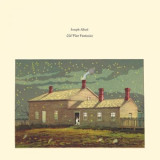
The songwriter Joseph Allred is always prolific, but breaks up their string of solo releases for one of the most orchestrated offerings since the excellent Branches And Trees. Allred’s often monastic guitar works are fleshed out here on Old Time Fantasias, turning them towards ensemble visions of country, Americana, and Appalachia. Album opener, “The Groundhog,” features the distinctive piano of Hans Chew, with bass from Daniel Kimbro and brass from Mikey Allred. Elsewhere the new album features Kelby Clark, Courtney Werner (Magic Tuber String Band), Evan Morgan (Magic Tuber String Band), Lydian Bramblia, and Jack Bird in the mix. “I started recording this album in Spring ‘23, thinking I might be making a mostly solo acoustic album with a couple of duets thrown in for good measure. I met Hans Chew at a Nashville show a few months earlier and sent him a few tracks to see if he wanted to add anything to them. Before long the ‘solo acoustic album’ had given way to what’s probably the most involved and densely orchestrated album I’ve made to date. “I enjoyed following some threads of influence that aren’t as easily discernible in my solo playing—I hear some classic country and psychedelic flourishes, baroque pop glockenspiel and horns, percussion ideas that may be cribbed from Danny Elfman and Tom Waits albums, nods to post-rock-filtered western guitar twang, and a little Cocteau Twins dreaminess. “All in all this was a satisfying record to make. I’m especially grateful to the collaborators for adding their touches and making it a less solipsistic affair than it would have been otherwise. The political climate has changed so much over the last two years that I find it hard to imagine I could make a record with this kind of fantastic mood if I started now. I hope that it can maybe re-enchant those of us who are felling disillusioned.” —Joseph Allred
Under the right conditions, half-remembered dreams can meld seamlessly into hazy present moments. Time spent alone can be an emotional blank canvas, and an opportunity to deconstruct sense and feeling; a patchwork of snippets both rooted in memory and abstracted from reality. The title of ‘quilted lament’ perfectly captures the way Gretchen Korsmo and claire rousay’s overlapping missions come together to do just this. Worn polaroid melodies and snatched everyday noises seem overheard through windows onto the street. They feel emotionally twinned, claire and Gretchen, it’s not always possible to tell where one ends and the other begins. Their musical thoughts and DNA are sewn together into a mini symphony of warmly embracing movements.
Built remotely between pre-existing friends in the underground music scene, the duo layered ideas onto audio files, and sent them back (and forth). And these luscious instrumentals truly do feel assembled by intuition, casually crafted with little need for guidance. “claire and I are both emo,” explains Korsmo. “We are both former texas-dwellers too and relate over both the woes and beauties of being in the American DIY experimental music scene.” Buoyant piano keys and hushed layer vocals tracks sit alongside a humming field-recorded scrapbook; a neighbour caught in a moment of private inspiration while street noise elevates; a private hymnal in the bathroom while the washing machine ends its cycle. Both artists take field sounds from a wealth of Zoom and Tascam recordings made in the last half-decade in Santa Fe, San Antonio, Los Angeles, Kamakura, Japan and elsewhere – from a baseball game announcer in Santa Fe, to the sound of a friend eating a juicy peach. At times, the bedroom walls seem to grow thin amid atmospheric creaks and disembodied whispers. Despite its very emo core, this is a recording engulfed in an intense sense of bliss, more at peace than we’ve heard either artist before.
Germany's iconic deep funk collective digs into a new soundscape: "A Higher Frequency" was recorded with a nine-piece live to tape at legendary MPS studio in the Black Forest, adding an airy, jazzy flavour to their trademark raw and breaks-heavy funk. Ten tracks full of spiritual grooves, soulful themes, loose funkiness and organic interplay, captured with state-of-the-art 1960s gear in a super-vibey room - but the title A Higher Frequency is not just about the pristine analogue sound quality of the recording, it is also a reference to a trancendant wavelength where minds meet and music connects.
Together with long-time friends and collaborators Daniel Kimaz on flute and Guillame Métenier, who worked his magic on the studio's historic Bösendörfer grand piano and Hammond organ, the group spent a week in the Black Forest, with full focus on the mission to capture the live energy and togetherness of the ensemble.
The result is an album bursting with positive energy and power, rooted in a universal funk groove with excursions into many colourful branches like outernational, cinematic, soulful jazz, psychedelic & disco.
The common thread is a propulsive, driving-forward feel: "Open The Gate" welcomes us with hard-hitting breakbeats and dramatic crime brass, followed by the cool groovin' piano-led soul jazz of "Get Loose", while "Spinning" takes us on a ride through cinematic horn choruses and folky-psych flute and guitars. "Back And Better" is Nichola Richards' time to shine, laying her sweet vocals over the sparse hiphop-infused soul beat to tell a comeback story. "Sweet Company" is a lighthearted uptempo tune inspired by TV and library themes of the 1960s. The swampy groove of "Sparks Of Joy" best reflects the fun of the band playing together and "Phantom Power" combines a trademark Mocambo breakin' theme with an unusual instrument, an electric phin from Thailand – a nod to the many so-called "world music jazz" recordings that the MPS studio gave birth to. On "Can't Stop This Fire", soul singer Carlton Jumel Smith from New York City takes over the mic as a special guest and brings the house down with a heavy funk delivery. "When We Roll" builds another highlight where bouncy drums play off disco-jazz horn themes and finally, the gospel-flavoured cine-soul epic "Homebound" drives it all home.
The vinyl record comes in a limited first edition in hand-made tip-on sleeve.
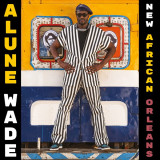
In his sixth and latest album “New African Orleans”, released by ENJA and Yellow Bird, bass guitarist and composer Alune Wade explores the multiple junctions between his native West African rhythms, the Afrobeat and juju rhythms from Lagos and the brass band repertoire immortalized in New Orleans. “I’m exploring a world that goes from my roots to the lost branches on the other side of the Atlantic,” explains the musician from Senegal. He has whittled down around 50 compositions – both original and standards - to a dozen which Alune recorded in Paris, Dakar, Lagos and New Orleans. “The idea first came to me during the Jazz à Gorée festival I organized back in 2014,” he explains. “It had me reflect on the notion of reversing the musical trip most people take from the United States to the African continent. I wanted to set out westward and begin a musical conversation with the best artists, both in Nigeria and the US.”
To achieve this, Wade has invited top artists from both sides of the Atlantic, including the Nigerian talking drummer Olaore Muyiwa Ayandeji, the percussionist Weedie Braimah and the jazz drummer Herlin Riley from New Orleans. The musical inspirations are equally transatlantic, ranging from Dr. John to Manu Dibango and Charlie Parker. But the 45-year-old also pays homage to his father who was a brass band star in his native Senegal back in the Sixties.
BACKGROUND
We only have a partial idea of the birth and remarkable development of the music born of the transatlantic slave trade. From Malinke ballads to Cuban son, from call-and-response patterns to field hollers and hip-hop, Yoruba rhythms to Argentinian tango, from Angolan percussions to the New Orleans brass band sounds… all have roots in Africa and a shackled migration that lasted four centuries. No more so than Congo Square in the Louisiana capital. In 2024, we mark the 300th anniversary of the implementation of the Code Noir which “gave enslaved Africans Sundays off to dance”. A drop in the ocean, but one which shows the importance of culture as a lifebuoy against this barbaric trade. As the Guadeloupian writer Daniel Maximin once claimed: “Our music guided us from the scream to the song, from dragging our chains to dancing.”
Rinse France branches out with a brand new label of its own and who better to inaugurate it than Paris-based Beatrice M. The producer makes a knowing nod to dubstep's golden era on this debut with the first version of 'Magic.' It is built on steppy rhythms with seriously wobbling basslines that are all-consuming. Glitchy effects and shimmering synths finish it in style and leave you dreaming of dubstep dances gone by. The B-side is a Techno Mix that reimagines the original with a driving four-on-the-floor rhythm and plenty of richly atmospheric pads.
A new full-length from THE ORB following last year's acclaimed album MOONBUILDING 2703 AD.
An expertly crafted ambient experience from two pioneers at the height of their creativity
180g standard vinyl version comes with download code of the full album
Being pioneers with a new album created in no more than 6 months, THE ORB are bound to be exposed to fan expectations running high, while quizzical questions about little fluffy clouds and the good old times take over. It's especially jarring as the duo of accomplished soundsmiths Alex Paterson and Thomas Fehlmann has become known for its genre-bending curiosity and surprising sonic detours, exploring experimental soundscapes as well as club-friendly beats.
The funny thing is, though, that whatever the context, you know a track from THE ORB when you hear it. Case in point: COW / CHILL OUT, WORLD!, their latest full-length offering - a masterful ambient album that branches out in many directions, but unmistakably sounds like THE ORB in either ear (and probably to your third ear, too).
"The idea was simply to make an ambient album", Dr Paterson explains, "we didn't look back and study earlier recordings, but wanted a more spontaneous approach, a focus on THE ORB today, our vibe in 2016."
In contrast to their much-acclaimed previous full-length MOONBUILDING 2703 AD (KOMPAKT 330 CD 124) - which took years to prepare and finetune -, the new album was produced over the course of only five sessions in six months, directly following the like-minded ALPINE EP (KOMPAKT 339): "it got so spontaneous that a track like 9 ELMS OVER RIVER ENO (CHANNEL 9) consisted only of material collected at North Carolina's Moogfest in May - second-hand records from local stores, field recordings, live samples from gigs that we liked, and of course an excursion to the Eno River, which actually exists. This geographic intimacy and the spontaneity are among the top reasons why we love this album so much."
Herr Fehlmann sees the duo's relentless gigging schedule as a formative influence on the new album: "the countless performances we've played in the last years - probably up to 300 - have brought us closer as a musical unit. The spice of our concerts is improvisation - a fertile process that we've brought to the studio, where we operate with very simple rules of engagement (in this case "ambient") and go wherever the flow takes us." It's an approach that one might expect from traditional acoustic instrumentation, not necessarily an electronic set-up, but for THE ORB it works wonders: "we're quite happy and also a little bit proud that we've reached this level of unscripted levity with purely electronic means. We're finessing ourselves, sort of, always looking for the next sonic surprise that leaves us rubbing our eyes about how the heck we got there."
Once more, THE ORB's trademark playfulness is on full display on COW / CHILL OUT, WORLD!, and it doesn't limit itself to the multi-layered sampling and psychedelic sound composites that the duo has become known for - you'll find it in the album title as well. The simple invitation (or order) to chill out (relax Calm the eff down) is converted into an acronym - and the cow that you might expect to find on a Pink Floyd cover or with iconic UK chill-out/dance pranksters The KLF. It's not so much an obscure trope coming full circle as a perfect example for THE ORB's multitimbral approach to sound and meaning - a compelling, immersive journey to diverse places and impressions.
Each track title is a conceptual work in its own right, playing with multiple references, some of which remain highly personal and mysterious. But the greatest feat of THE ORB's latest outing might just be how all this semantic doodling never gets in the way of the actual listening, at all times directly relating the artists' sonic vitality and cheerful nosiness. Chill out world! and treat yourself to an outstanding new ambient experience from THE ORB.
From a world of its own, somewhat like ours, yet a bit different. Familiar sound, but in a slightly different order, upside down or backwards, with different instruments or in another language just beyond comprehension, that still, somehow, makes sense and carries us further in search of musical discovery. With playful and creative interaction and exceptional chemistry, Mari Kvien Brunvoll, Stein
Urheim, and Moskus take another step into uncharted musical territory. The result is the Album Barefoot in Bryophyte. The members of this quintet are frequent figures in the Hubro discography but had not played together before this project. The collaboration began as the commissioned work Branches & Limits for Voss Jazz Festival in 2023. The music has an immediacy, an unusual combination of song material spontaneous improvisation and musicianship that made the concert a favorite among both critics and audience at the festival. Mari Kvien Brunvoll and Stein Urheim have written the songs that were further developed together with Moskus. The open and improvisational approach is evident, in the blending of the known and unknown in their songs. They have a curious approach to creativity, with lyrics that are both open for interpretation and poignant at the same time
- Air À Danser
- Yodel 1
- Cutting Branches For A
- Temporary Shelter
- From The Colonies
- Southern Jukebox Music
- Numbers 1 To 4
- Telephone And Rubber
- Band
- Air
- Beanfields
- Paul’s Dance
- Oscar Tango
- Music For A Found
- Harmonium
- Isle Of View (Music For
- Helicopter Pilots)
- Prelude And Yodel
- Dirt
- Giles Farnaby’s Dream
When In Rome...’ is a 1988 live album by Penguin Cafe Orchestra, and was recorded at The Royal Festival Hall, London, on 9 July 1987.
It was produced by Simon Jeffes. The cover painting is by Emily Young. This iteration has for the first time the full gig and uses the 2008 remaster.
Blvck Spvde and the Cosmos are “the evolution of what you think jazz is.” The ten-plus piece band is ever-evolving. Rooted to the many branches of black music, the group’s essence and mission is spiritual: to be an open channel for music of the universe to flow through…to invite voices of ancestors back into the room, and to play their part in creating many pieces of heaven on earth.
Motyl is a brand new creative coming together from DYL and Moll+ and this new cassette Noc has been conceived as a soundtrack to go with a book of 'night' themed poetry and imagery. it's an immersive and evocative blend of ambience, field recordings and moody sound collages that range from serene and peaceful to much more ominous and dark.
Oliver Coates' Throb, shiver, arrow of time is a portal into somatic chiaroscuro, aglow with the embers of imperfect memories and smudged with the plumes of internal echoes, which augment in vast, mercurial dimensions. For his third album on RVNG Intl., the British cellist, composer and producer offers a capsule of personal resonance and remembrance, assembled over the past six years. Throb, shiver, arrow of time traces the familiar metallic anatomy and viscous string modulations of his 2020 release skins n slime, while recentering his inner compulsions following a procession of lauded score writing projects, including the films Aftersun (Charlotte Wells, 2022), The Stranger (Thomas M Wright, 2022) and Occupied City (Steve McQueen, 2023). While working on Aftersun, Wells asked Coates how music could signal that someone is going on a trawl through their memory_a question that has stayed with him ever since and fosters a heartbeat running through the record. Throb, shiver, arrow of time is "all about inaccurate transmissions from our memories, overlaid with emotions from other sources," says Coates. The release is imbued with the ache and glow of recollections mulched together, where the guttural dissonance of misremembering is shrouded by strange orbs of sentiment. At the record's inner core is "Shopping centre curfew," a swift yet cavernous track that emerged five years ago when two real world events, both occurring in South London during the pandemic lockdowns, became fused in a dream: the demolition of Elephant and Castle shopping center, and the discussion of a curfew as a real possibility for all men following a violent crime. A strange simultaneity occurred with this piece of music and Coates built the album out from there, a sense of temporal entropy refracting shimmers of lurking convulsions into lucid sonic topologies. The ten compositions of Throb, shiver, arrow of time find weightless melodies soaring across after-image gradients, magnified and compressed. Misted tones within "Please be normal" and "90" soften drone-soaked shudders of inner acoustics messing up. Vocal invocations appear from long-term collaborators Malibu and chrysanthemum bear, as well as drifting synth radiance from Faten Kanaan. Throb, shiver, arrow of time furthers Coates' reach in collapsing the digital into the analogue and vice versa, allowing serendipity to reorganize the material and push out against the confines of flatness. This sculptural approach to sound is deeply influenced by the intricate installations of artist Sarah Sze, whose permutations of visual matter with its own after-image form kaleidoscopic epitaphs for ephemera and emotion. Coates' thinking about Sze's work and processes flowed together with his own playing and editing techniques, superimposing the textural relief of a live take back into a composition, and allowing the sound to succumb to a dream of itself. As Coates expands, "The cello is a kind of melancholic instrument with a light ethereal spirit. When the sound is flattened into digital processes, with shifted frequencies and time stretching I'm trying to give it even more of those qualities. Sometimes I'm distancing myself from it, so it becomes a piece of discarded debris that has soul in it, a down-sampling. Or other times, it's trying to maximize the present tense in the act of playing, and collapse that vivid color into a burnished, photocopied kind of sound. So the music acts like weather, weathering the listener, or as flames licking at the sides of objects." As the record unfurls, the compositions swell in duration, until the granular glimmers of its finale "Make it happen" persist in almost violent delight. "There's a feeling of not wanting to let this album go, trying to defy the extinguishing sound at the end of the music, trying to push the colors beyond the confines of the structure, to defeat the silence." In the scramble to resist denouement, Coates suspends the arrow of time in its eternal flight, just for a moment, to reveal the solace of the dust settling in the afterglow. Oliver Coates' Throb, shiver, arrow of time will be released on vinyl, Japanese import CD, and digital editions on October 18, 2024. On behalf of Oliver and RVNG Intl., a portion of the proceeds from this release will benefit The Traditional Music and Song Association of Scotland, an organization fostering opportunities for people of all ages to participate in the traditional music and culture of Scotland.
Crispy Jason is a moniker of Rian Trench. Trench, once half of Solar Bears (Planet Mu, Sunday Best, Warp), branches out here into acid-focused IDM. Shadowcon One explores spaced out 303s via retro arcade against furious breaks and ambiguous moodscapes with an offset of introspective disco
returning, dream’ is the second album from Paradise Cinema – the‘Fourth World’ inspired project led by multi-instrumentalist Jack Wyllie (Portico Quartet/Szun Waves). While Wyllie’s other projects move between tightknit electronica, widescreen minimalism and improvised ambient sounds, ‘returning, dream’ contains nods to Jon Hassell, Terry Riley, Don Cherry and Midori Takada as well as more contemporary electronic, ambient and non-western music and even draws inspiration from physics and science fiction.
The first, eponymous, Paradise Cinema record, released in 2020, was recorded in Dakar (Wyllie lived in Senegal for a while in the late 2010s) and featured the dense rhythms of Mbalax music combining with Wyllie’s textural saxophone and synth playing, but here he takes a step into the unknown:
The music is no longer built primarily around the rumbling
propulsiveness of Mbalax, but takes its inspiration from the Many-Worlds Interpretation of quantum mechanics, which suggests that there are many different worlds that branch off from our own. Wyllie explains: “It is an imagining of what music could be like in a different time and space, ancient and futuristic from everywhere and nowhere at once. I was listening to a lot of physics podcasts when I created this record. I loved the many-worlds interpretation of quantum mechanics; about the multiple paths we are taking each time a quantum decision is taken. The different worlds then splitting off like branches on a tree. I could imagine different histories and worlds and multiple versions of myself, others and even other societies existing. In this album I’ve dug into these ideas andattempted to make music that would come from those different spaces, trying to poke my finger through to the other selves and stories. Effectively a form of composed science fiction, the music is an idea of what might be occurring or have occurred on a branch of the tree in a different world. But I like to think the tracks might actually have been composed somewhere or sometime.”
Created in London by Jack Wyllie with additional recordings from Dakar and Sydney, ‘returning, dream’ blends sounds that do not typically live together. It features Khadim Mbaye (sabar drums) and Tons Sambe (tama drums) who provide the dense Sengalese rhythms, plus Szun Waves colleague Laurence Pike, also on drums.
returning, dream’ is the second album from Paradise Cinema – the‘Fourth World’ inspired project led by multi-instrumentalist Jack Wyllie (Portico Quartet/Szun Waves). While Wyllie’s other projects move between tightknit electronica, widescreen minimalism and improvised ambient sounds, ‘returning, dream’ contains nods to Jon Hassell, Terry Riley, Don Cherry and Midori Takada as well as more contemporary electronic, ambient and non-western music and even draws inspiration from physics and science fiction.
The first, eponymous, Paradise Cinema record, released in 2020, was recorded in Dakar (Wyllie lived in Senegal for a while in the late 2010s) and featured the dense rhythms of Mbalax music combining with Wyllie’s textural saxophone and synth playing, but here he takes a step into the unknown:
The music is no longer built primarily around the rumbling
propulsiveness of Mbalax, but takes its inspiration from the Many-Worlds Interpretation of quantum mechanics, which suggests that there are many different worlds that branch off from our own. Wyllie explains: “It is an imagining of what music could be like in a different time and space, ancient and futuristic from everywhere and nowhere at once. I was listening to a lot of physics podcasts when I created this record. I loved the many-worlds interpretation of quantum mechanics; about the multiple paths we are taking each time a quantum decision is taken. The different worlds then splitting off like branches on a tree. I could imagine different histories and worlds and multiple versions of myself, others and even other societies existing. In this album I’ve dug into these ideas andattempted to make music that would come from those different spaces, trying to poke my finger through to the other selves and stories. Effectively a form of composed science fiction, the music is an idea of what might be occurring or have occurred on a branch of the tree in a different world. But I like to think the tracks might actually have been composed somewhere or sometime.”
Created in London by Jack Wyllie with additional recordings from Dakar and Sydney, ‘returning, dream’ blends sounds that do not typically live together. It features Khadim Mbaye (sabar drums) and Tons Sambe (tama drums) who provide the dense Sengalese rhythms, plus Szun Waves colleague Laurence Pike, also on drums.
The boys are seated under the shade of a family tree that bears its fruit on the branches of Kings of Leon & the Black Crowes; deeply rooted in an unwavering respect for Lynyrd Skynyrd & Led Zeppelin. Founded as an edgy, hard rock band in 2018, Mojo Thunder have built up a rabid fanbase in the time since with its enthralling live shows and down-to-earth humility. During that time the band has become one of the most entertaining new acts to emerge from Kentucky -- a state otherwise known for its bluegrass and country music. On the album's 10 tracks, the band explores everything from the dark side of activism ("Holy Ghost") and civil rights ("Memphis") to the healing power of a live concert experience ("Greetings from Western Art") and the feeling of not being enough ("Step by Step"). A definitive journey of growth, the project sees the band as their most authentic selves yet as they push themselves -- and their listeners -- to be the best versions of themselves. Mojo Thunder's sophomore effort, The Infinite Hope will please fans of rock music as they return to some familiar sounds while also ambitiously reaching for new heights.