Legendary Canadian EDM / Freestyle artists In-Dex return after their huge success with their sold out 2021 Brazilian only 12" vinyl "No Science for Love" with a very limited white vinyl 12", a brand new track "I'll Never Walk Away"
4 tracks, 3 exclusive to this record, including a special dub mix of "No Science for Love" and a special mix of their 1988 hit "Give Me a Sign".
Produced by Brazil's Decho Wanlu, fans of early Depeche Mode will love this. In-Dex were formed in 1987 & had three hits between '89 & '91 and reformed in 2021. Lead vocalist & songwriter Rupert Gayle is a 1994 Juno award winner for best R&B album recorded in Canada. By 2008 he had written four #1 songs in Canada for other artists. In 1993 he founded Beat Factory Productions & signed Dream Warriors to Island Records in the UK.
This limited edition, collectable 12" is much sought- after in Germany, Finland, Canada, USA & Brazil where the radio version has had many streams on the internet. The other 3 tracks will not be available to stream or download.
Tracks: I'll Never Walk Away (Radio Version) / I'll Never Walk Away (Dub Mix) / Give Me a Sign (Special Mix) / No Science for Love (Dub Mix)
Biomes are little worlds of organic relationships, full of struggles, symbiosis, and sheer obsolete noise. In "De Silenti Natura," Henrique Vaz is meticulously crafting synthetic auditory biomes, sprouting from their own fuzzy logic. Unfolding across two distinct acts, the Brazilian artist interprets and replicates the complex, often ambiguous sounds of (un)natural environments, creating imaginary systems to inhabit over two sides of tape. The soundscape of the first side and title track is entirely algorithmically synthesized, with no samples used, leveraging Supercollider for real-time sound generation. The environment thus built is a flourishing one, seemingly unable to escape its own grandeur as insect-like buzzing and crackles expands into mountain ranges and forests of erupting sonorous drama. The second side introduces 'hydrophone' water synthesizers, submerged in a goldfish bowl to interface with the unfurling waves of electronic chords, creating a unique blend of damp and unwieldy sloshing movements, prismatically scattered into a luscious soundscape, and resembling everything from the bridge of a starship to the echoed drip-drip of stalactites.
Both sides of the album slowly unwrap and uncrinkle, revealing layers of hisses, distant digital choirs, warm enveloping chords, and juddering bleeps. Despite their unwieldy and strange nature, myriad elements convey a familiar sense of environment, flitting between the blossoming of new (manmade) life and the doom and destruction of the (real) world.
As the ringing of bells (fully synthetic; no samples were used) hove into view during the closing movement of side one, a simulacrum cacophony of voices is ushered in. It’s a reminder of the holy nature of sound itself, beamed into our heads intangibly. The flipside’s water ritual, frantically dunking ‘water synthesizers’ to birth swooping melodies and yawning tones, is jabbing at sleeping giants. It’s pushing and pulling the stars in the night sky into place. It’s both a simple act of beautiful creation, and a storm in a teacup.
out of Stock
Last delivered 2 years ago available to reorder, subject to availability
Black Truffle is thrilled to announce a reissue of Chico Mello and Helinho Brandão’s self-titled release from 1984, the first return to vinyl of this classic of Brazilian experimental music with its original cover art and complete track listing. An under-recognised figure whose work inhabits a singular terrain where radical new music techniques and music theatre meet musica popular brasileira, Mello has lived and worked in Berlin since the late 1980s. A student of Dieter Schnebel, Mello played in the 90s iteration of Arnold Dreyblatt’s Orchestra of Excited Strings alongside compatriot Silvia Ocougne, with whom he produced a radical and hilarious deconstruction of MPB classics on Musica Brasileira De(s)composta (an early and rather atypical release on Edition Wandelweiser).
On this release, his only recording predating his move to Europe, Mello works with the alto saxophonist Helinho Brandão, who appears to be otherwise unknown outside Brazil. The record’s six tracks range from solo saxophone improvisation to densely layered ensemble works bridging minimalism, acoustic sound art and a plaintive melodic sensibility that calls up Edu Lobo or Milton Nascimento. Beginning with a dramatic, dissonant wind and string surge from which emerge ominously pounding piano chords, opener ‘Água’ slowly builds in intensity, a halo of clustered vocal harmonies gradually closing in on Brandão’s squealing sax until the piece opens up to reveal a gorgeous passage of melodic singing. The piano accompaniment reduces to tolling bass notes as the voice begins a repeated incantation, suggesting a ritualistic atmosphere reminiscent of parts of Xenakis’ setting of Oresteia. Dissonant, sawing tremolos on the strings climb to a crescendo before disappearing into the sounds of water being poured and splashed into metal vessels, presented not as a field recording but as a percussive element performed by the ensemble. A child’s voice then appears, singing to piano accompaniment the same melody heard earlier in the piece. After a brief solo alto improvisation from Brandão, working with the guttural pops and fleeting melodic gestures of Braxton or Roscoe Mitchell, the remainder of the first side is dedicated to the leisurely unfolding of ‘Baiando’ over the course of twelve minutes. A trio for Brandão on soprano saxophone, Mello on a very period-appropriate phased nylon string guitar and Edu Dequech on bongos, the performance eases its way hypnotically through subtle variations on a set of rhythmic and melodic patterns, almost derailed at points by Brandão’s wild forays into extended technique but held together by Mello’s droning guitar notes.
The second side opens with another multi-part epic for a larger ensemble, ‘Matraca’, which makes use of strings, electric guitars and a wide range of South American percussion instruments. Rasping violin harmonics hover as drum hits, repeated guitar notes and triangle accompany a slowly descending bass glissando. A sudden change in direction introduces a thrumming, incessantly repeated bowed bass tone, beginning a series of episodes of minimalist phasing and pattern variation, the combinations of electric guitars and orchestral instruments giving the ensemble an ad hoc charm like the early Penguin Café Orchestra but with more percussive drive. Eventually the piece is overrun by a cacophony of the titular matracas (a kind of ratchet/cog rattle). Following a lyrical trio improvisation by Mello, Brandão and Gerson Kornin on bass, the final ‘Danca’ focuses entirely on Mello’s layered acoustic guitars and vocals, using this restricted palette to build up a haunting piece of almost orchestral density, reminiscent of the 70s work of Egberto Gismonti in how it thickens a folkish ambience with harmonic sophistication.
Arriving in a starkly beautiful gatefold sleeve and sounding better than ever in its new remaster, one might call the stunning music contained on Chico Mello/Helinho Brandão ahead of its time. But what (other than some of Mello’s own work) produced in the years since its initial release has really touched the organic fusion of minimalism, free improvisation, radical instrumental technique and popular song achieved here? Forty years after its first release, Chico Mello/Helinho Brandão remains music of the future.
out of Stock
Last delivered 2 years ago available to reorder, subject to availability
Specially prepared liner notes by renowned music writer Brian Morton. Brazilian singer/ song writer Joao Gilberto was a legend of bossa nova. While Antonio Carlos Jobim set the standard for the creation of bossa nova in the mid-'50s (with songs like The Girl from Ipanema and Desafinado), it was Gilberto who brilliantly reimagined defined the genre.
In 1959 Gilberto presented his first LP, Chega de Saudade presented here. The title song turned into a massive hit, launching Gilberto's career and the bossa nova craze.
"In 1959, before I left my hometown, I heard Joao Gilberto. And hearing Joao Gilberto was a revolution in my mind; it was an enlightenment, really. I knew that something had to happen, something was already happening, and that Brazil could be freer and bigger and could make some kind of original contribution for world
civilization." - Caetano Veloso (Brazilian singer/composer)
Marking sixty years of Bossa Nova, and twenty years since Marcos Valle’s first release for Far Out Recordings, what better time to bring back this era-defining classic from the Brazilian master composer?
Throughout his astounding six-decade career, infiltrating pop, bossa nova, samba, delicate psychedelia, jazz and funk, Marcos Valle has consistently shown a dogged determination to transcend the traditions and structures of bossa nova, whilst never veering away from the movement’s inherent, fundamental spirit. To some extent, his epithet ‘the original Rio beach boy’ is a handy one: it reflects the origin and character of his often sun-soaked sound, but expounding his importance in the lineage of Brazilian music, he is more discerningly known as ‘the renaissance man of Brazilian pop’. He is indeed one the very greatest and most important composers, arrangers, writers and performers in Brazil.
Up until Nova Bossa Nova, Marcos Valle hadn’t released an album for well over a decade. After 1983, he resented the way the music industry had changed with commercialisation and new demands curtailing his creative freedom. This was until 1994 when Marcos met Far Out boss Joe Davis and they recorded a track for Far Out’s first Friends From Rio album. This new collaborative partnership resulted in a new solo album, which commenced recording in 1996.
Nova Bossa Nova brought Marcos bouncing back into the 90s, slotting nicely in place alongside the acid jazz movement as well as a voracious new demand for Brazilian music on dancefloors from London to Tokyo. It was witnessing the London club scene’s growing appetite for Brazilian music, as well as a lack of new sounds coming out of Brazil at the time, that a young Joe Davis put in a proposal to record a new album with one of his musical idols. Joe wanted to facilitate an album which would combine the latest technologies and production techniques, with live to analogue tape recording: a Marcos Valle album tailor-made for London’s clubs. Always open to modern influences and possibilities, Marcos agreed to the project, and Joe and his production partner Roc Hunter flew to Rio in ‘96. The record wasn’t released until ’98, as the original ½ inch tapes were stolen from Far Out’s London studio, meaning parts of the album had to be re-recorded.
Nova Bossa Nova was unveiled at the peak of the of the Brazilian movement, the record would also prove to be something of a revolution, inspiring a new generation of artists like Bebel Gilberto, Sabrina Malheiros, Da Lata and Bossacucanova, who continued to fuse Brazilian influences with modern electronic sounds.
out of Stock
Last delivered 2 years ago available to reorder, subject to availability
-Daniel Zelonky (aka Low Res) has been producing records since 1978. Notable credits span from The Misfits to his own iconic club track "Amuck".
-His 2022 orchestral funk celebration of "Marvin Gaye's Trouble Man" has earned critical acclaim. This record, featuring many outstanding musicians, breaks the mold of history-conscious record making, eschewing the slavish copying of past styles which has become so common, and exemplifying the label’s stated mission of “Reimagining a futuristic past” where “weird vistas of fresh possibilities unfold before us...”
Suite Crude Revue is a rotating cast of outstanding performers committed to an unshackled aesthetic. Produced, composed, and arranged by Daniel Zelonky, this single presents songs for imagined films.
“Cowpoke Detox” might be termed “spaghetti jazz”. It’s a strange hybrid of spaghetti western style baritone guitar lines supporting jazz noir harmonies, creating a surreal backdrop for the tale of an unrepentant murderer, who feels regret only in terms of the consequences he’s facing.
“Blue Ramen #1” is a lover’s lament, set to what might be termed a “Hollywood samba”: One imagines Los Angeles session players emulating samba for a commercial film, not an authentic Brazilian band. The lush aural environment culminates in a dreamy closing vamp with the impassioned vocal set amid a swirl of improvised trumpet, violin, and piano. This haunting, yet ironic song may well have found its way into the popular consciousness ... if the movie had actually existed!
out of Stock
Last delivered 2 years ago available to reorder, subject to availability
Tooflie is back with a new exploration of regional sound from all over theglobe by the anonymous crew of edits lovers. The five different, but equallyimpressive, cuts on the fourth installment are deep dives into the soniccarnival of Brazilian favelas through the skillful reinterpretations by hiddentalents. The A2 track 'CBACA' bolsters the signature baile funk raw energywith hard house rhythms and acidic melodic patterns. Stepping between thefunkier side of electro and polyrhythmic panache, MWR - 'man withrefrigerator' is tailored to take the dancefloor to a new level. The openingtrack starts with a minimalistic yet paunchy breakbeat groove on 'PDNCA' and continues the deepness through the heavy and raw low-endextravaganza on 'RTK'. Bringing the vinyl to a close, 'LAPA' goes full-throttleon haunting arpeggios and leaves things on a blissful note.
out of Stock
Last delivered 3 days ago available to reorder, subject to availability
This isn’t just a seminal album. It is an estuary. All the black rivers that would form Brazilian funk/hip-hop flow through it. Led by Paulista pianist Salvador Silva Filho – Dom Salvador – “Som, Sangue, e Raça” from 1971, one year after the explosion of Tim Maia on the scene, catalyzed the bossa nova and jazz background of its leader with the rhythm and blues of its members like saxophonist Oberdã Magalhães, nephew of samba-enredo master Silas de Oliveira and future leader of Banda Black Rio, who since the group Impacto 8 (which had, among others, Robertinho Silva on drums and Raul de Souza on trombone) had already been trying to reconcile MPB with Stevie Wonder and James Brown. Add to all this a mixture of samba, Nordestino accent, and even the black side of the Jovem Guarda represented by the authorial presence of Getúlio Cortes (older brother of Gerson King Combo, our James Brown “cover”) in ‘Hei! Você’. Alongside these elements and the presence of Rubão Sabino (bass), who still called himself ‘Rubens’, drummer Luis Carlos (another member of Black Rio), the record enlists the trumpet and flugelhorn of symphonic musician Darcy in place of the original Barrosinho (yet one more founder of Black Rio), who was traveling during the recording but would end up being a leading force of the band.
The album ‘Som, Sangue e raça’ paves the way for future generations of musicians and producers of the Carioca scene at the beginning of the 1970s. The lyrics that dealt with the question of race and the explosive fusion of samba, soul, jazz, and funk, elaborated by Dom Salvador and his troupe, Abolição, established the bases for the development of new sounds and tendencies in Brazilian music.
out of Stock
Last delivered 3 years ago available to reorder, subject to availability
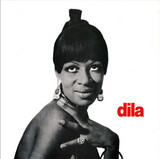
Far Out Recordings proudly presents the first and only album from the mysterious Brazilian vocal sensation Dila (pronounced “Jee-la”). Having reportedly died in a car crash shortly after the album’s release in 1971, there is very little known about the woman behind the voice. But the joyous music Dila left behind, gives us a picture as good as any, of a powerful feminine soul at the top of her game.
The liner notes on the elusive original LP, written by composer Arnoldo Medeiros attest: “Friend, look out! Because when this girl starts to sing, you’re in trouble. Hold the railing so you don’t fall down the stairs, because she’s coming this way and shaking up everything.”
Arranged and produced by Durval Ferreira, alongside his studio band affectionately known as “Os Grillos” (The Crickets), Dila (1971) is a rare glimpse into the authentic soulful Samba sound of Rio’s favelas in the late sixties and early seventies.
A blast of funky, percussive Brazilian breaks, scorching hot brass and swing-laden piano, the music is as iconic as the album’s stark cover, as is clear on opener ‘Inez’, composed by The Crickets’ bassist Romildo. There’s a fantastic interpretation of the Ivan Lins classic ‘Madalena’ (made famous by Elis Regina), a moving version of the Tom Jobim and Vinicius De Moraes classic ‘O Morro Não Tem Vez’, and a number of sunny original compositions by Arnold Madeiros, who’s other writing credits include music for Marcos Valle, Wanderlea, Evinha and Dom Salvador.
With original LPs extremely hard to come by, this rare treasure of Brazilian soul, which fans of Gal Costa, Celia, Evinha and Elis Regina will love, gets a much-deserved official reissue: remastered and pressed to 180g vinyl.
out of Stock
Last delivered 7 years ago available to reorder, subject to availability
África Brasil is a 1976 release by Brazilian artist Jorge Ben. It was Ben's 14th studio album and a milestone in his career with a switch to electric guitar and funk music leaks. For África Brasil Ben reworked three of his earlier compositions: "A Princesa e o Plebeu" from Sacundin Ben Samba, "Taj Mahal" from Ben, and "Zumbi" from A Tábua de Esmeralda. The album's opening track "Ponta de Lança Africano (Umbabarauma)", a song about an African football striker, became a well known soccer-associated track and it was later included on David Byrne's 1989 compilation Brazil Classics Beleza Tropical, prompting rotation of a video for the track on VH-1
Grande Coisa! (Big Deal!). You could hear it. It is the eternal irony of life. For a composer who has been making music since he was a teenager and only at the age of 38 does he make his work public, it can indeed be a big deal. Grande Coisa, is Dorea's first authorial album, and tells his stories, the ones he lived, others he heard about, but mainly the ones he created. With all the songs composed during the most isolated period in the pandemic, the work can be dense in many moments, difficult to digest, but there are sighs. And there are stories that intersect, like those of the boys who are one and also millions, and show the artist's vision of Brazil. The disappeared, forgotten, the sad and aimless still appear. And there is the warmth of the song for a loved one or even a family partnership, between mother and son. Grande Coisa has ten songs, all written by the artist himself, one of them with lyrics adapted from an excerpt from a book written by his mother. Its musical roots are rooted in rock, but with a blatantly Brazilian gaze and interpretation. It has musical production and minimalist paths chosen by Sebastian Notini, collaborative arrangements forged in the encounter of Dorea's guitar with Seba's percussive and melodic vein and Carla Suzart's bass, and a wood weave that ends the album with the timbres of Joana Queiroz (bass clarinet and clarinet) and Leandro Tigrão (flute) under the baton of maestro Per Ekdahl.
Far Out Recordings Proudly Presents The 1975 Self-titled Debut Album From Brazilian Vocalist And Bossa Nova Luminary Emilio Santiago. Nicknamed 'the Nat King Cole Of Brazil', Santiago Was A Master Bossa Balladeer And A Top-class Crooner. But He Is Known Equally For His Brazilian Funk, Soul And Boogie Classics. One Of His Best Know Is Album Opener 'bananeira', A Party-starting Version Of The Song Originally Written By Joao Donato And Gilberto Gil. 'brother' Is A Smooth-grooving Killer With Great Horn Arrangements And A Huge Backing Choir, While 'la Mulata' Is A Soulful, Swinging Salsa Stepper.
Originally Released On The Cid Label, The Album Showcases The Full Range Of Emilio's Talents, While Paying Homage To Some Of Brazil's Greatest Composers, Including Jorge Ben, Marcos And Sergio Valle And Ivan Lins Among Others.
The Credits On The Album Are A 'who's Who' Of Brazil's Greats, With João Donato On Keys, Wilson Das Neves, Ivan 'mamão' Conti And Paulinho On Drums, Durval Ferreira, Carlos Roberto Rocha And Helio Delmiro On Guitar, Ariovaldo, Orlandivo, And Chacal On Percussion, Danilo Caymmi On Flute, A Brass Section Featuring Victor Assis Brasil, Edson Maciel And Jesse Sadoc, And Backing Vocals From Jaime And Nair, Lúcia Lins, Jurema And Marcio Lott.
out of Stock
Last delivered 2 years ago available to reorder, subject to availability
The Brazilian composer, pianist and producer, Mário Castro Neves and his group, Samba S. A.'s self-titled album from 1967 is oozing with class. It possesses that archetypal 60's bossa nova, jazz, samba sound. We’d place it up there with Sergio Mendes at his finest, Tambo Trio or Milton Banana. It’s a breezy ride that touches on easy listening at times, but it holds it together with a cool swagger. Biba and Thaís Do Amaral's vocals are on point, with a relaxed delivery that compliments the tracks with the sublime beauty à la vocal groups such as Quarteto Em Cy, who Biba also sang with, as well as with Antonio Adolfo's e A Brazuca. Also appearing on the record is bassist extraordinaire, Novelli who worked with Milton Nascimento, Nelson Angelo E Joyce, Airto, and many of the greats of Brazilian music of the time.
The album has long been a favourite with DJs and collectors over the years, with songs selected for compilations by Gilles Peterson and Nicola Conte. One of the centrepieces of the album, 'Candomblé’, has been sampled by Cut Chemist on his track 'Povo De Santo'. The song 'Naña' is punchy and light with dancefloor-jazz appeal. The gloriously catchy 'Vem Balançar' is a brilliant bossa shuffler. A superb listen throughout, the album sticks to a framework but delivers in spades.
Though released on the major-label RCA Victor, original copies are elusive, sought-after items with a price tag to match. For this reissue, we have opted for the Mono master, mirroring the original 1967 Brazilian pressing. Instantly familiar, the album has a welcoming feeling of nostalgia and is something that stays with you from the first listen.
out of Stock
Last delivered 2 years ago available to reorder, subject to availability
Les Disques Bongo Joe are proud to be home of the new volume of DJ soFa's well known curation work Elsewhere series with Elsewhere CC! This ninth exploration of our beloved Bruxelles based cratedigger and producer (Mameen 3, Nyati Mayi & The astral Synth Transmitters, ...) is an ode to summer and groove!
The ninth edition in the Elsewhere series is a real digger’s paradise of tropical gems, from Trinidad to Brazil, Poland, Dominica, and beyond. The compilation is an eclecticmix of outernational, tropical-wave, Calypso, multi-rhythmic percussive beats, lo-fi disco jams, and other such styles that lie somewhere in that magical in-between zone. Compiled by Brussels-based DJ, tastemaker and producer soFa, Elsewhere Vol.9 CC is a perfect collection of Balearic, good-vibe, sunshine rarities, to soundtrack a cocktail session on a reclusive, tropical beach, featuring rare tunes and some of the artist’s own unique productions and collaborations.
Modern day selector, 7” detective, international cratedigger, and self-styled musical activist DJ soFa, aka. soFa Elsewhere, is renowned for his borderless approach to curation. Adapting his unconventional and radical approach to DJing to his acclaimed compilation series, soFa’s goal has always been to expand horizons, highlight scenes, and tell stories. And herein lies the beauty behind the latest edition in the Elsewhere series. Behind every great record, is an even bigger story, and Elsewhere CC, has plenty of them...
out of Stock
Last delivered 20 months ago available to reorder, subject to availability
Wendell Harrison, who reiterates his passion as a jazz musician with the "Rebirth" label name on this album, is joined by his friend Harold Mckinney, another leader of the Detroit jazz scene, on the brilliant "Winter" (M1), a piano-driven opening number. The opening number "Winter" (M1), with the brilliant piano of his friend Harold Mckinney, who is also a leader of the Detroit jazz scene, is followed by "Love Dream" (M2), a light Brazilian jazz song that blends Leon Thomas' warm vocals with a bossa flavor, and the spiritual and freaky "He's He's He's He's He's" (M3), which is a powerful bluesy tune. He's The One We All Knew" (M3), a spiritual and freaky tune that Wendell blows with great gusto. The second half of the album continues the momentum, with the fusion-like title track "Reawakening" (M4) with Wendell's flute playing a light, mellow melody, and the percussive beat and horn section intertwining in all directions to create the jet-black funkiness of "Tons & Tons Of Ofamp" (M5), which is a great example of the jazz sound of the band. Tons & Tons Of B.S." (M5), which is a performance of maturity! He also performed "Where Am I," a Wendell Harrison song that was featured on the Tribe-era classic "An Evening With The Devil," in an innovative arrangement featuring Leon Thomas' vocals, as if tracing his own career. It is a masterpiece suitable for the launch of the new label "Rebirth"!
This isn't just a seminal album. It is an estuary. All the black rivers that would form Brazilian funk/hip-hop flow through it. Led by Paulista pianist Salvador Silva Filho - Dom Salvador - 'Som, Sangue, e Raça' from 1971, one year after the explosion of Tim Maia on the scene, catalyzed the bossa nova and jazz background of its leader with the rhythm and blues of its members like saxophonist Oberdã Magalhães, nephew of samba-enredo master Silas de Oliveira and future leader of Banda Black Rio, who since the group Impacto 8 (which had, among others, Robertinho Silva on drums and Raul de Souza on trombone) had already been trying to reconcile MPB with Stevie Wonder and James Brown. Add to all this a mixture of samba, Nordestino accent, and even the black side of the Jovem Guarda represented by the authorial presence of Getúlio Cortes (older brother of Gerson King Combo, our James Brown 'cover') in 'Hei! Você'. Alongside these elements and the presence of Rubão Sabino (bass), who still called himself 'Rubens', drummer Luis Carlos (another member of Black Rio), the record enlists the trumpet and flugelhorn of symphonic musician Darcy in place of the original Barrosinho (yet one more founder of Black Rio), who was traveling during the recording but would end up being a leading force of the band.
The album 'Som, Sangue e raça' paves the way for future generations of musicians and producers of the Carioca scene at the beginning of the 1970s. The lyrics that dealt with the question of race and the explosive fusion of samba, soul, jazz, and funk, elaborated by Dom Salvador and his troupe, Abolição, established the bases for the development of new sounds and tendencies in Brazilian music.
A Brazilian rock classic! The band had a very sophisticated sound that mixes nice vocal production with spare arrangements supported by guitar, piano, and bass. The sound is difficult to describe but the record has some extremely compelling songwriting, and great vocal work that carries the strength of the tracks, whether or not you understand Portuguese. Titles include "Sangue Latino", "O Vira", "Primavera Nos Dentes", "Amor", "Assim Assado", and "As Andorinhas". Nice cover, too with the band's heads on a table!
(180 gram pressing) A great 70s album by Os Novos Baianos - a wonderfully youthful group that was one of the bright spots in Brazilian music after the Tropicalia years. Titles include "Sorrir E Cantar Como Bahia", "Dagmar", "Vagabundo Nao E Facil", "Cosmos E Damiao", "Com Qualquer Dois Mil Reis", and "Os Pingo Da Chuva".
A great 70s album by Os Novos Baianos - a wonderfully youthful group that was one of the bright spots in Brazilian music after the Tropicalia years. The band had a style that mixed folksy percussion with honest personal songwriting, plus occasional touches of elements gleaned from the larger influences in Brazilian rock at the time. The album has a sound that's a lot more intimate than later work, with some especially great work on guitar and bandolim, and great production on the band's vocals. Titles include "Sorrir E Cantar Como Bahia", "Dagmar", "Vagabundo Nao E Facil", "Cosmos E Damiao", "Com Qualquer Dois Mil Reis", and "Os Pingo Da Chuva".
out of Stock
Last delivered 2 years ago available to reorder, subject to availability
Lovely work from Marisa Monte – perhaps a bit sweeter than some of her earlier stuff, but pretty darn catchy, and with some excellent production by Arto Lindsay! The tracks have a mellow breezy feel, with a compressed production style that includes a lot of flanged-out guitar, subtle electronics, and warm acoustic touches. As with most of Marisa's albums, the record's filled with work by famous guest stars – like Joao Donato, Arnaldo Antunes, Marc Ribot, Carlinhos Brown, and others. Titles include "O Que Me Importa", "Nao E Facil", "Perdao Voce", "Abololo", "Gotas De Luar", and "Agua Tambem E Mar".
out of Stock
Last delivered 4 years ago available to reorder, subject to availability
Classicos EM Vinyl, LP 180gr, Simple cover) Recorded live at "Maracanãzinho" (Rio de Janeiro) on the 23rd of February, 1974. Liner notes by Gerson Conrad.
Here at Mr Bongo we have been inundated with people asking us to reissue this release. Ana Frango Elétrico's petit cult classic masterpiece 'Little Electric Chicken Heart' from 2019, which was only ever released on vinyl and CD in Brazil and Japan, has fast become a collector's item.
Well received by fans, DJs, and reviewers on release, The Needle Drop expressed "Ana Frango Elétrico's authentically vintage fusion of chamber pop, rock, samba and jazz is a real blast!" listing it as one of its Top 50 Albums of 2019. The album's reputation has been slowly building ever since, gaining a Latin Grammy nomination in 2020, and now solidly cementing itself as a gem of contemporary Brazilian music.
Across the albums nine tracks, Ana blends elements and influences from MPB, Tropicália, indie rock, punk and pop, forging them together with a sumptuous dose of her signature style. The finesse of 'Saudade' kicks off the LP, one of Ana's most known tracks to a non-Brazilian audience. A sublime opener, beginning with a spellbinding piano solo before transcending into a beautiful dream-laden slice of warmth, complete with luscious jazzy horns and deft vocal delivery. ‘Promessa e previsões’ follows, the only track on the album not to be written by Ana, instead being penned by Chico França. It’s a swelling and sweeping twilight groover, building and breaking across absorbing peaks.
Other highlights on the album include the anthemic 'Chocolate', which was a firm favourite with a packed sing-along crowd when we heard Ana perform it live. Elsewhere, 'Se No Cinema' hits with its quirky allure, charm and catchy melodies before transforming into a carnival spirit.
Tapping into the richness of Brazil’s new wave of musical energy, the album also includes a heavyweight lineup of collaborations with artists such as Dora Morelenbaum (Bala Desejo), Tim Bernardes, Antonio Neves and Guilherme Lirio to name but a few.
A short, sweet and refreshing record, that leaves nothing to waste, marrying playful ideas with poignant themes. 'Little Electric Chicken Heart' is a future classic and will beguile fans of ‘70s Brazilian recordings, Gal Costa, Mac DeMarco, Stereolab, Superorganism, Caetano Veloso and more.
out of Stock
Last delivered 2 years ago available to reorder, subject to availability
Fronted by vocalist/guitarist Taylor Madison, and with Jake Clarke on drums and Mike Paulshock on bass, Webbed Wing cement their place in modern rock supremacy across 10 tracks of fuzzed-out pop nostalgia on new album Vol III. One impossibly-catchy anthem after another, loaded with Madison's signature sardonic wit, makes for one of the most exciting alternative rock records of the year. Taking notes from the likes of The Lemonheads and Teenage Fanclub, "Further" opens Webbed Wing's new album Vol. III with a bang--in less than 10 seconds, we're all the way in with Webbed Wing as they expertly intertwine the vibrancy of modern pop, the heaviness of grunge, and the sincerity of country. Brazen and self-deprecating, "Burn It Down" finds Madison unpacking what it means to fly too close to the sun. Its mid-tempo mastery is a testament to the trio's connection as musicians and friends; everything about this song just works. Drawing inspiration from big country ballads and shoegaze gems alike, the song shows off a different side of what listeners can expect from Vol. III.
Som, Sangue e Raça is still one of the milestones in Brazilian music. The music of Dom Salvador e Abolição is a funky and smooth blend of samba, soul, rock, jazz, forro and baião. The band's sound was a major influence on the successful group Banda Black Rio. Som, Sangue e Raça still stands out for its catchy and groovy melodies and shows the wide range of the band. All this makes this samba/soul classic a must for all music collectors.
Som, Sangue e Raça is available as a limited edition of 1000 individually numbered copies on translucent red coloured vinyl.
A seminal set from Jorge Ben one that mixes samba soul with more baroque arrangements from the legendary Arthur Verocai! The record's got a different feel than some of Jorge's other work almost a wider vision of music that ties his usual funky style to some of the more ambitious modes being explored by Marcos Valle and Edu Lobo at the time expressed here in some larger instrumental passages that shade the tunes lightly, while still letting Jorge step out strongly on vocals and the usual mix of tight percussion and raspy guitar. Titles include "Que Maravilha", "Rita Jeep", "Comanche", "Porque E Proibido Pisa Na Grama", "Cassius Marcelo Clay", "Palomaris", "Maria Domingas", and "Negro E Lindo".
Vengaboys is one of the most successful Eurodance acts in the world. With a string of global top 10 hits, including ‘Up & Down’, ‘Shalala Lala’, ‘We Like To Party’ and the UK No.1 singles ‘Boom, Boom’ Boom Boom!’ and ‘We’re Going To Ibiza’ they dominated the charts in the late 90’s and early 00’s. These songs have also been embraced by younger generations, with several global viral TikTok trends.
This brand new 14-track Greatest Hits compilation is pressed on transparent pink vinyl.
out of Stock
Last delivered 17 months ago available to reorder, subject to availability
180 gram pressing. Warmly mellow work from Marisa Monte – a record that's issued in conjunction with her samba-styled Universo Ao Meu Redor album, but which has a sound that's much more in keeping with her Memorias Cronicas E Declaracoes set from a few years back!
Released in 1989, Marisa Monte's first album was a critical and public success. Produced by Nelson Motta and recorded live, the 11 tracks featured a singer with a sweet and powerful voice, interpreting a repertoire of varied styles and eras, who conquered the country. In addition to the only unreleased, the hit "Bem que se quis", MM brings in the repertoire "Comida" (Tit–s), Preciso me encontrar (Candeia), "Ando meio desligado" (Arnaldo Baptista/Rita Lee/Sergio Dias), "South american way" (Al Dubin / Jimmy McHugh) and "Comida" (Tim Maia), among others.
First career spanning compilation on vinyl, covering studio albums, singles and unreleased tracks (2009-2023) by the acclaimed Peruvian instro band, Los Protones. A collection of intense recordings - mostly originals - which combine surf music, psych, garage, and tropical & Andean flavors. DESCRIPTION The Protones began their strange journey in Lima, Peru, in early 2007. The band's roots were as a side project for several members of Manganzoides, a well-remembered Peruvian garage rock band, but they quickly consolidated their own instrumental style that, to this day, combines musical genres from the 60s such as psychedelia, surf music and garage rock, sometimes paying tribute to Peruvian rhythms such as chicha and Amazonian cumbia. They are surely the only band in the world that has shared stages with Los Shapis and the New York Dolls, although not on the same night... Over the course of two decades they have played countless concerts, including visits to Europe and other Latin American countries. The music on this compilation comes from their four, full-length studio albums: "Los Protones", "Hijas del Diablo", "Maravilla!" and "Misión: OA4", in addition to the previous CD compilation "20 Monstruos! 2007-2015" and "Double Feature", a split CD with the Brazilian band Os Brutus. The group's current lineup includes Gonzaleo (guitar), Tito (drums), Jimi (keyboards), Andrés (bass) and Lucía (violin). Dance floor oriented tropical music at its best!
One year after being introduced to Brazil with his “Samba Esquema Novo,” Jorge Ben released his second album, “Sacundin Ben Samba.” Continuing the style of its predecessor and also produced by Armando Pittigliani, this album returns to shelves as part of the “Classics on Vinyl” collection from Polysom.
Composed of 12 tracks, “Sacundin Ben Samba” features arrangements by saxophonist J.T. Meirelles. All the songs are written by Jorge Ben, except for “Carnaval Triste” (Paulo Bruce / Sérgio Carvalho) and “Espero por Você” (João Mello), and they address themes characteristic of the singer and songwriter, such as innocent love and chronicles of daily life. The album includes tracks like “Anjo Azul,” “Nena Nanã,” “A Princesa e o Plebeu,” “Pula Baú,” and “Jeitão de Preto Velho,” among others.
out of Stock
Last delivered 2 years ago available to reorder, subject to availability
Formed by Kenny Clarke and Francy Boland, the Clarke-Boland Sextett, with the participation of numerous musicians from both Europe and the United States, made significant contributions to the development of jazz in Europe. At the core of this ensemble, the powerhouse sextet consisting of Kenny Clarke, Francy Boland, Sahib Shihab, Jimmy Woode, Joe Harris, and Sadi came together to record the album "Music For The Small Hours" in 1967, and it is now set to be reissued with an obi.
This album spans a wide range of styles, from standards like Burt Bacharach's "Wives & Lovers" to Brazilian and Afro-Cuban influences such as Luiz Bonfá's "Ebony Samba" and Dizzy Gillespie's "Tin Tin Deo." Additionally, it features original compositions like Shihab's "Please, Don't Leave," where he takes on vocal duties. The entire recording exudes a sophisticated and relaxed mood, showcasing the utmost skill of this formidable sextet. "Music For The Small Hours" is a masterpiece that deserves a place in the history of European jazz, boasting the ultimate level of refinement.
The daughter of a Brazilian mother and German father, Astrud Gilberto achieved international prominence with “The Girl From Ipanema,” an inauspicious debut
recorded for the landmark album her husband, Joao Gilberto, created with Stan Getz in 1963. Moving to the USA, where she was subsequently based,
she continued her solo career and also toured with Getz, with whom she later began a relationship. Over-the-top classic That Girl From Ipanema allowed
her to revisit the hit in the sweeping high-fidelity full-spectrum setting of a disco big-band,
the album overseen by MFSB and Salsoul mainstay, Vince Montana.
Along with individual takes of Cole Porter’s “Love For Sale” and Harry Nilsson’s “The Puppy Song,”
original “Far Away” benefits from the understated trumpet of Chet Baker, but the album ultimately revels in all things disco,
the Brazilian element coming courtesy of percussionist
Dom Um Romao on select tracks. Crank up the volume and tune in to the brass, piano and percussion that percolates under Astrud’s characteristically soft
and sultry vocals to fully experience this underrated gem.
out of Stock
Last delivered 6 years ago available to reorder, subject to availability
After Sunrise, the new collaboration from Circles Around The Sun and Mikaela Davis reunites the disco cosmonauts and acclaimed harpist for further explorations of the synergy first showcased on the title track of CATS’ 2023 album, Language.
Comprised of two new original compositions, ‘Gloaming Way’ and ‘Moonbow’, and an inspired interpretation of Brazilian legend Sérgio Mendes’ ‘After Sunrise,’ the album features the first appearance of vocals on a Circles Around The Sun recording, sung by Davis. A live take on ‘Language’ rounds out the second side and brings the pairing full circle.
Once the endless night of the discotheque finally gives way to morning light, you may find yourself seaside as the sun peeks over the horizon. As the party rolls through the dawn and into the day, this is the soundtrack.
This is After Sunrise. If it’s nice, play it twice."
One of the most remarkable unheard albums of 1969, Genesis, the sole release by San Francisco-based sisters Wendy and Bonnie Flower, has emerged as an acclaimed pop-psych touchstone. Brimming with melodic confections and laced with radiant, sisterly harmonies, the set�s breezy Brazilian splashes and soft-rock strains convey a sophistication that belies the artists� tender ages (Wendy, 17; Bonnie, 13). The album has grown over the years in importance, and has influenced a generation of psychedelic pioneers, from Broadcast to Stereolab to Welsh rockers Super Furry Animals ( who sampled the duo on their hit "hello Sunshine") This single-lp edition is pressed at RTI and is an exact replica of the original 1969 pressing, with fully restored cover art and incredible sonics mastered from the original reels.
Madlib Invazion presents a colored vinyl issue of the long out of print 11th issue on the Madlib Medicine Show series - Low Budget High-Fi Music, on clear pink vinyl. In 2010, Madlib launched an ambitious series of releases known as the Madlib Medicine Show, which allowed the prolific producer to release new material on a monthly basis. The series touched on all the genres Madlib digs, and that’s just about any genre you can consider - from Jazz to Rock, Soul to Disco, myriad African musics, Brazilian and Reggae. On the 11th installment in series Madlib returned to his hip hop roots with Low Budget High-Fi Music. Featuring a run-down of regular Madlib collaborators who provide the Beat Konducta’s foil, it also included a hint of what was meant to come on the never-realized second Jaylib album, with a previously unreleased J Dilla collaboration."