Poté returns to Benji B’s Deviation Music following the release of his acclaimed debut album 'Spiral, My Love' last year. 'Waters of Praslin' is the first in of a run of club-focused 12"s from the artist entitled the Versiclub series.
St. Lucia born and London-raised, Poté (real name Sylvern Mathurin) has always been drawn to African diasporic futuristic beats from baile funk to kuduro and gqom. Before Benji stepped in to release his debut record Poté put out multiple EPs for Enchufada, the independent record label founded by his spiritual forbearers in Lisbon, Buraka Son Sistema.
The Brazilian influence is definitely evident in opening track 'Jacquot (Waters of Praslin)', with its afro-samba rhythm laced with the metallic synth work of UK bass. Track 2, 'Sirens' feels like a future dance floor favourite that channels UK funky, dub step and of course the power of the siren in the dance.
"Waters of Praslin is my homage to the people and spirit of my hometown, Praslin in St.Lucia. These are the waters which gave us life, stories, joy and memories” says Poté “these waters saw many of us grow and and eventually pass."
Buscar:brazi
Celebrating its 25th anniversary, Far Out Recordings proudly presents two albums of previously unheard Azymuth demo recordings from 1973-75
Since their debut album release in 1975, Azymuth have risen to rank alongside the world’s greatest jazz, funk and fusion artists. As young men in Rio de Janeiro, they stood out for both their exceptional talent as musicians, and their wild rock ‘n’ roll antics in the predominantly middle-class worlds of bossa nova and jazz. Their signature ‘Samba Doido’ (crazy samba) sound ruptured the tried and tested musical structures of the day, resulting in what can only be described as an electric, psychedelic, samba jazz-funk hybrid.
Before they became Azymuth, José Roberto Bertrami (keyboards), Ivan ‘Mamão’ Conti (drums), Alex Malheiros (bass) and Ariovaldo Contesini (percussion) played backing band to just about every major artist in Brazil. Bertrami was also contracted as an arranger and songwriter at some the biggest labels of the era: Polydor, Philips, Som Livre, and EMI being just a few. Azymuth’s name can be found on record sleeves by the likes of Jorge Ben, Elis Regina, Marcos Valle, Ana Mazzotti and countless others. But at the dawn of the seventies, fascinated by developments in improvisational music - from jazz in the US, to progressive rock in the UK and of course samba, bossa and tropicália on home turf - the energetic young group were inspired and ready to move forward. Any spare moment in which they weren’t in sessions and writing music for other artists, they would be carving out their own sound.
These previously unheard recordings took place between 1973-75 at Bertrami’s home studio in the Laranjeiras district of Rio de Janeiro. At the time of recording, there was nothing in Brazil, less the world that sounded anything like them, so perhaps it’s unsurprising that when Bertrami presented his demos to the record companies he had been working for, he was turned away, and told in effect that the music was ‘wrong’.
One of the demos ‘Manhã’ would be picked up by Som Livre and Azymuth released their seminal debut album in 1975. Throughout the late seventies and eighties, the group released a series of now classic albums for Milestone Records, before taking an indefinite hiatus to pursue their individual careers.
When English producers Joe Davis and Roc Hunter arrived in Brazil in 1994 to record the first Azymuth album in over a decade, Bertrami dug out the demos which had sat virtually untouched for over twenty years. Joe recalls how he was “blown away by the freedom and intensity of the music, as well as the genius of the ideas musically.” Beginning a long and fruitful relationship, ‘Prefacio’ would be the first track Azymuth recorded for Far Out Recordings and was released on the Carnival album (1996).
Along with ‘Manhã’ and ‘Prefacio’, only a handful of these demos were ever professionally recorded and released, making this the first opportunity to hear many of these early Azymuth compositions in their raw, original form.
On every track the frenetic energy in the studio is palpable, giving the recordings a beautifully personal feel and a sense of the phenomenally creative vision Bertrami, Malheiros and Conti were realising at the time. Fifty years on, Azymuth’s earliest recorded music retains an ineffable, futuristic quality, standing amongst their most captivating and moving work.
Credits:
Keyboards: José Roberto Bertrami (Mini Moog Series One, Arp Omni, Arp 2600, Arp Solina Strings, Fender Rhodes 88, Hammond B3 with box speaker, Clavinet with Wah Wah)
Drums: Ivan ‘Mamão’ Conti
Bass: Alex Malheiros
Percussion: Ariovaldo Contesini
Produced by Azymuth and Jose Roberto Bertrami
Recorded at José Roberto Bertrami’s home studio in Laranjeiras, Rio De Janeiro, Brazil between 1973–1975.
Issue and project co-ordinator: Joe Davis
Tape transfers by Roc Hunter (thanks to Simon Hitner)
Mastered by Daniel Maunick at the Sugar Shack, Lanark, Scotland
Mastered by Frank at Carvery Cuts
All tracks published by Far Out Music Publishing/Westbury Music LTD
Celebrating its 25th anniversary, Far Out Recordings proudly presents two albums of previously unheard Azymuth demo recordings from 1973-75
Since their debut album release in 1975, Azymuth have risen to rank alongside the world’s greatest jazz, funk and fusion artists. As young men in Rio de Janeiro, they stood out for both their exceptional talent as musicians, and their wild rock ‘n’ roll antics in the predominantly middle-class worlds of bossa nova and jazz. Their signature ‘Samba Doido’ (crazy samba) sound ruptured the tried and tested musical structures of the day, resulting in what can only be described as an electric, psychedelic, samba jazz-funk hybrid.
Before they became Azymuth, José Roberto Bertrami (keyboards), Ivan ‘Mamão’ Conti (drums), Alex Malheiros (bass) and Ariovaldo Contesini (percussion) played backing band to just about every major artist in Brazil. Bertrami was also contracted as an arranger and songwriter at some the biggest labels of the era: Polydor, Philips, Som Livre, and EMI being just a few. Azymuth’s name can be found on record sleeves by the likes of Jorge Ben, Elis Regina, Marcos Valle, Ana Mazzotti and countless others. But at the dawn of the seventies, fascinated by developments in improvisational music - from jazz in the US, to progressive rock in the UK and of course samba, bossa and tropicália on home turf - the energetic young group were inspired and ready to move forward. Any spare moment in which they weren’t in sessions and writing music for other artists, they would be carving out their own sound.
These previously unheard recordings took place between 1973-75 at Bertrami’s home studio in the Laranjeiras district of Rio de Janeiro. At the time of recording, there was nothing in Brazil, less the world that sounded anything like them, so perhaps it’s unsurprising that when Bertrami presented his demos to the record companies he had been working for, he was turned away, and told in effect that the music was ‘wrong’.
One of the demos ‘Manhã’ would be picked up by Som Livre and Azymuth released their seminal debut album in 1975. Throughout the late seventies and eighties, the group released a series of now classic albums for Milestone Records, before taking an indefinite hiatus to pursue their individual careers.
When English producers Joe Davis and Roc Hunter arrived in Brazil in 1994 to record the first Azymuth album in over a decade, Bertrami dug out the demos which had sat virtually untouched for over twenty years. Joe recalls how he was “blown away by the freedom and intensity of the music, as well as the genius of the ideas musically.” Beginning a long and fruitful relationship, ‘Prefacio’ would be the first track Azymuth recorded for Far Out Recordings and was released on the Carnival album (1996).
Along with ‘Manhã’ and ‘Prefacio’, only a handful of these demos were ever professionally recorded and released, making this the first opportunity to hear many of these early Azymuth compositions in their raw, original form.
On every track the frenetic energy in the studio is palpable, giving the recordings a beautifully personal feel and a sense of the phenomenally creative vision Bertrami, Malheiros and Conti were realising at the time. Fifty years on, Azymuth’s earliest recorded music retains an ineffable, futuristic quality, standing amongst their most captivating and moving work.
Credits:
Keyboards: José Roberto Bertrami (Mini Moog Series One, Arp Omni, Arp 2600, Arp Solina Strings, Fender Rhodes 88, Hammond B3 with box speaker, Clavinet with Wah Wah)
Drums: Ivan ‘Mamão’ Conti
Bass: Alex Malheiros
Percussion: Ariovaldo Contesini
Produced by Azymuth and Jose Roberto Bertrami
Recorded at José Roberto Bertrami’s home studio in Laranjeiras, Rio De Janeiro, Brazil between 1973–1975.
Issue and project co-ordinator: Joe Davis
Tape transfers by Roc Hunter (thanks to Simon Hitner)
Mastered by Daniel Maunick at the Sugar Shack, Lanark, Scotland
Mastered by Frank at Carvery Cuts
All tracks published by Far Out Music Publishing/Westbury Music LTD
Born in the 1940s in Istanbul, Italian painter and percussionist Wilfred Copello had, from the onset, a predisposition for exotic sounds.Indeed, his interest for latin music was manifest early on in his career. In 1970 he was an uncredited member of the Italian band Latins 80 who released the same year the LP Foglie Gialle All’Imbrunire which has now gained cult status.From that period onwards, Wilfred settled in Rome where he gained an excellent reputation as a studio player; he participated in a large number of projects and albums, especially on the jazz scene with his friend Romano Mussolini (The Latin Taste, Jam Session , Soft & Swing, etc.). But it is the music from Brazil that had the greatest impact on Wilfred. In 1974 he recorded ‘Viva Brasil’ with the group Expo 80, an album which was an ode to Brazilian music. A few years later, at the turn of the 80s, he formed the band Wilfred Percussion. He brought with him an all-star cast of the jazz and Latin scene in Rome which included Argentinean drummer Osvaldo Mazzei and respected trumpet player Cicci Santucci.It was actually in Cicci Santucci’s Audio Sound Studio that was recorded Wilfred Percussion’s only album.Recorded in 1983, the album is a musical gem. Self-produced, Wilfred Percussion is composed of covers and original compositions. Covers include original titles by the unclassifiable Hermeto Pascoal as well as Milton Nascimento, and are reinterpreted here in a totally unique fashion with that distinctive Italian groove. Wilfred Percussion is an album which allies funk to MPB with jazz undertones, introducing the listener to a singularly fresh and evocative opus.
Written by Chris Franck and Davide Giovaninni, Oba Lata draws on traditional Yoruban chant blending it with a live afro-beat groove. Edgy, rhythmical analogue synths, vocals, guitars and percussion tied together by the clave and driving afro bassline make this a credible dance floor contender. The vocals honour "Obatala", one of the main Orishas in Yoruban culture. He is seen as the creator of earth and a lover of peace and harmony.
NameBrandSound are IG Culture and Alex Phountzi. The duo were part of the original West London broken beat scene and are known for their involvement with New Sector Movements and Bugz in the Attic. This remix draws on some of the modern African rhythms like Gqom (Durban - South Africa) and Coupé-Décalé (Ivory Coast via Paris) and combines them with their own "bruk" sound. Stripped back vocals and instrumentation make this a remix focused heavily on groove.
This instrumental track 'Dakar' is the result of a recent trip to Senegal during the period of Ramadan. It features an 8 piece woodwind/horn section recorded in Belo Horizonte (Brazil) which has been beautifully arranged by Rafael Martini. A mid tempo groove leaning heavily towards North Africa combining acoustic and electronic elements to create a deep modal feel and mood.
Alt-rock icon Josephine Wiggs is best known as bassist in The Breeders, rising to superstardom in the '90s and continuing to draw crowds and critical acclaim in the wake of their 2018 album All Nerve.
But over the years, Wiggs has released several of her own albums, all of which delightfully defy genre. Her new solo record, We Fall, is both a departure and a distillation of an enduring personal aesthetic: moody and spare but also melodic, at once contemporary and nostalgic.
Some influences are clear: We Fall is reminiscent of the experimentalism of Brian Eno's Another Green World and recalls the delicate, languid minimalism of Harold Budd. The album's classical inflections, sharpened by a dialog with electronic elements, evoke Alva Noto and Ryuichi Sakamoto. This is an album of juxtapositions: minimalist at moments, richly layered in others; ambient while also sharply focused; melancholy yet resolute.
There's something both dreamy and scientific about We Fall. Wiggs, an enthusiastic amateur mycologist, has an impressive collection of mushrooms she's photographed in her travels. We Fall could be the soundtrack to what can't be captured in a single photo—the growth and decay of miraculous creatures that a less astute and sensitive eye might overlook entirely.
Composed, performed and recorded by Wiggs, with drums and electronics by her longtime friend and collaborator Jon Mattock (Spacemen 3, Spirit , We Fall is a lyrical, bucolic album with an undercurrent of disquiet. Think of a wintertime walk in the woods as dusk falls too soon. True to the classic album form, the 10 almost entirely instrumental tracks on We Fall form a compelling whole: a crystalline meditation on paths not taken and words unspoken, an elegy for moments lost and last embraces.
JOSEPHINE WIGGS BIO
Josephine Wiggs grew up in an unconventional family north of London. Returning home from a summer holiday with a donkey riding in the back of the family's 1927 Rolls Royce was not considered at all bizarre. Wiggs studied cello as a child, segued from college in London to undertake a master's degree in Philosophy, and then, in a move few would have predicted, joined a rock band.
After making three albums with The Perfect Disaster (1987-1990), Wiggs left to join Kim Deal (Pixies), Tanya Donelly (Throwing Muses), and Britt Walford (Slint) in forming indie supergroup The Breeders, whose debut album Pod came out in 1990. Following a shift in line-up—with Kelley Deal on guitar and new drummer Jim Macpherson—The Breeders released Last Splash in 1993; with its hit single 'Cannonball' and 'Divine Hammer,' they became alternative rock superstars.
During the same period, Wiggs released two lower-key albums with Jon Mattock (Spacemen 3, Spiritualized): Nude Nudes (1992) under the name Honey Tongue, and Bon Bon Lifestyle (1996) using the moniker The Josephine Wiggs Experience. She also recorded and produced Klassics with a K (1996), the beloved and only album by the Kostars (Luscious Jackson's Jill Cunniff and Vivian Trimble). During a brief run of shows, Wiggs joined the band on drums, showing her range of musical ability.
In the late '90s Wiggs collaborated with Vivian Trimble as Dusty Trails, whose eponymous 2000 album is an homage to neo-noir soundtracks, spaghetti westerns, and Gallic pop. Time Out described it as 'one of the most subtly suggestive, understatedly elegant...things likely to have caressed your cochlea in years.'
Allusions in Dusty Trails to film music foreshadowed the next stage of Wiggs's career, writing scores for feature and documentary films—from Happy Accidents by Brad Anderson in 1999 to Appropriate Behaviour by Desiree Akhavan in 2014. Her new album We Fall began as a suite of short pieces for the documentary film Built on Narrow Land. Wiggs has also composed and recorded music to accompany live performance and short films by the acclaimed Brazilian choreographers chameckilerner.
In 2013, following the 20th anniversary of Last Splash, the classic lineup of The Breeders reunited for a world tour. Five years later in 2018 they released All Nerve, with Wiggs co-writing two songs and singing lead on the standout track 'Metagoth.' We Fall, Josephine Wiggs' third album of her own design and ninth album in a career spanning three decades, will be released on vinyl and available for download and streaming on April 12, 2019 by Sound of Sinners.
Renato Ratier is one of the most important names in Brazilian and South American electronic scene not only as the creator of the d-edge club and partner of Warung club, two of the world's leading electronic music clubs. As a producer and citizen of the world, this time the artist found inspiration in the middle of the Atacama desert in Chile during a trip to a gig in that country. Definitely, the vibe and atmosphere of this unique place, suggested to Ratier a track full of personality as well as his work as a producer. While working on his new album, Ratier offers us a precious and pulsating track, with a striking square bassline and a hypnotic line of chords and synths. To complete this special package, Ratier invited two of the most important djs and Brazilian producers to bring their remixes.Ney Faustini and A.84 with their brilliant jobs.
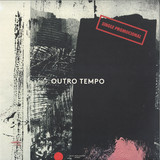
In the lead up to part two of the highly anticipated Outro Tempo compilation, MFM drops this teaser EP with the never before heard cassette madness of São Paulo's Bruhahá Babélico and Individual Industry's ethereal electro pop on the flip.
Music From Memory announces a series of Brazilian releases for this Spring that pick up where their 2017 Outro Tempo compilation left off. Circling around the musical projects that emerged out of the art world in Brazilian cities during the late 1980s and 1990s, 'Outro Tempo II: Electronic and Contemporary Music from Brazil, 1984-1996' takes anotherdive into the depths of the Brazilian underworld, exploring the rhythms that lurk beneath the Ipanema sunset. It shines light on more illustrious unknowns and on the genre-defying music that maintained asymbiotic, yet uneasy, relationship with mainstream popular culture.
- A1: Converters - I've Been Converted
- A2: Harrison Jones - On That Other Shore
- A3: Wisdom - Change
- A4: Johnson Family Gospel Singers – Imitations
- B1: Calvin B. Rhone - I Believe
- B2: Psalms - Praise The Lord
- B3: Mr. Jesse R. Mcguire – Jesus Is On The Mainline
- B4: Paradise - Keep The Fire
- C1: Wisdom - Let The Lord Come In Your Life
- C2: Prophecy - Take It To The Streets
- C3: New Creation - Ain't No Right Way To Do Wrong
- D1: Calvin B. Rhone - That's How Much He Loves You
- D2: Harrison Jones & The Voices Of Harmony - On
- D3: Mr Jesse R. Mcguire – Jesus Is On The Mainline (Steve Cobby Remix)
Available april 30th
Heavy heavy heavy gospel compilation.. Including a few tracks that are under the radar or recently discovered such as Harrison Jones - On that Other Shore, Converters, I've Been Converted and the super limited self-released 45 by Mr Jesse R. McGuire – Jesus Is On the Mainline. Only 50 copies were ever pressed... Also holds Paradise's brilliant "Keep the Fire.".. TIP!!
Although gospel and disco music seem like polar opposites—one is secular while the other has embraced a hedonistic culture—the marriage of the two genres has birthed the uplifting spirituality and dance floor thump found in gospel disco. By the mid-'70s many established and independent gospel artists started creating records with a tight four-on-the-floor beat that touched both churchgoers as well as patrons of the drug-fueled establishments of the '70s.
Cultures of Soul Records is proud to present the second installment of Greg Belson's Divine Disco. Belson is one of the world's leading authorities on the funky gospel sound; for this collection he dug deep into his crates to
undercover the rarest independent and private press gospel disco records ever recorded. Greg Belson's Divine Disco sound is one that's been heard around the world from his DJ appearances at Glastonbury's NYC Donwlow stage to LA's Funky Sole to soul nights across
Europe.
Many tracks are under the radar or recently discovered such as Harrison Jones - On that Other Shore, Converters, I've Been Converted and the super limited self-released 45 by Mr Jesse R. McGuire – Jesus Is On the Mainline. Only 50 copies were ever pressed. This volume even includes gospel disco from the UK with Paradise's brilliant "Keep the Fire." This compilation also includes remixes and edits by Steve Cobby (who was a member of Fila Brazillia) and the Divine Situation production duo of Greg Belson and Paulo Fulci.
- 180 GRAM AUDIOPHILE VINYL
- CLASSIC AND HARD TO FIND BRAZILIAN RARE GROOVE ALBUM
- FEATURING THE BREAKBEAT/SAMBA CLASSIC 'BOBEIRA'
- LIMITED EDITION OF 1000 INDIVIDUALLY NUMBERED COPIES ON TRANSPARENT RED VINYL
Sweet and breezy, light and jazzy, with plenty of warm touches - and one of the only albums ever releases by Edson Fredrico. Edson Frederico E A Transa features Frederico working with arrangements by Luiz Eca and Durval Ferreira, done with light percussion touches, plenty of keyboards, and some of the warm fusion phrasing of the mid 70s Brazilian scene. Vocals on most tracks are done in an ensemble chorus style, which makes for a nice finish to go with the warm feel of the cuts - and tracks include 'Ginga Gire Gire', 'Sacode Carola', 'Tema De Heloisa', 'Sambane', 'Garota De Copacabana and the breakbeat classic 'Bobeira'.
Edson Frederico E A Transa is available as a limited edition of 1000 individually numbered copies on transparent red vinyl.
- 180 GRAM AUDIOPHILE VINYL
- CLASSIC AND HARD TO FIND BRAZILIAN RARE GROOVE ALBUM
- FEATURING THE BREAKBEAT/SAMBA CLASSIC 'BOBEIRA'
- LIMITED EDITION OF 1000 INDIVIDUALLY NUMBERED COPIES ON TRANSPARENT RED VINYL
Sweet and breezy, light and jazzy, with plenty of warm touches - and one of the only albums ever releases by Edson Fredrico. Edson Frederico E A Transa features Frederico working with arrangements by Luiz Eca and Durval Ferreira, done with light percussion touches, plenty of keyboards, and some of the warm fusion phrasing of the mid 70s Brazilian scene. Vocals on most tracks are done in an ensemble chorus style, which makes for a nice finish to go with the warm feel of the cuts - and tracks include 'Ginga Gire Gire', 'Sacode Carola', 'Tema De Heloisa', 'Sambane', 'Garota De Copacabana and the breakbeat classic 'Bobeira'.
Edson Frederico E A Transa is available as a limited edition of 1000 individually numbered copies on transparent red vinyl.
Elisabeta. Just hearing her name puts a grin on her face.
Originally released on Polychrome Sounds, "Elisabeta, the remixes" features a remaster of the original by Karpov not Kasparov and three truly unique and magnificent remixes.
The first one is Carrot Green, who gave the original the Brazilian Ritmo-treatment, with extra acid on top for a spicy touch. On the second remix, Belgian mastermind Strapontin created a smooth grooving tension-builder, slow rolling to a deep and beautiful introverted climax. Lastly, Pletnev took the atmosphere of the original and gave it a trippy ethnic-break beat twist, as only the Vilnius producer can do so well.
Bucketround returns with an incredible work by the Japanese "Tominori Hosoya" "Anniversaries EP" 2 original cuts based on real love, superb melodies and rhythms that take you into a magical world and all this accompanied by the touch of the Brazilian "Ney Faustini" and the Spanish "Manuel Costela" to define a stunning release that you should not miss.
Repress!
Following on from the standout D.J. Rogers release, South Street Disco turn their sights to reissuing two seminal and much sought after '70s jazz funk Loft classics. One side houses Miroslav Vitouš' cosmic disco delight 'New York City', the other uncovers the Latin infused whirlwind 'Whistle Bump' from Eumir Deodato.
First up, the Czech jazz bassist and founding member of Weather Report, Miroslav Vitouš, supplies the infectious vibrations of 'New York City'. Harnessing the spirit of the bubbling NYC underground club scene of the mid '70s, Vitous lays down a proto Arthur Russell flavoured jam, that blends whirling new-wave-esque vocals and brazen basslines over trademark cosmic keys from the master, Herbie Hancock. Combined with tight drumming and fiery, overdriven riffs it paved the way for this to become a dancefloor hit and a clear precursor to the early house scene. With originals trading hands for £120+ it's high time 'New York City' got an official remastered reissue.
On the flip side, a timeless Brazilian instrumental jazz-funk gem from Eumir Deodato that likewise became a certified classic through heavy rotations on New York's revered dancefloors, most notably via David Mancuso at The Loft. Feel good feelings amplified by spirited Rhodes, psychedelic strumming and that sure-fire Latin infused bongo / whistle carnival combo. Carefree, unbridled energy that sees Pops Popwell's funk bass perfectly accompanying blazing guitar solos and a horn section from heaven, it's impossible not to get down to. Pure South American sunshine bottled up and ready to be supplied at will.
Wehbba collaborates with ghetto tech legend DJ Deeon, to deliver another superlative EP on Drumcode.
Since his debut on Drumcode in 2017, Brazil's Wehbba has become one of the most dependable and impressive artists on the roster. Last year saw two standout EP's 'Eclipse' and 'Catarse' drop on the imprint, alongside 'Just', his strong contribution to A-Sides Vol.7. He also made his mark playing Drumcode events at OFF Week, Resistance Ibiza and the much talked about double header in Manchester and Bristol when DC took over Warehouse Project and Motion respectively.
A true master craftsman in the studio, his first contribution for 2019 is typically impressive. A huge inspiration to Wehbba since his nascent raver days, ghetto tech icon DJ Deeon contributes a fierce vocal to 'We Have Bass', after a serendipitous hook up in São Paulo. A peak career moment collaborating with one of his original heroes and the artist responsible for the classic 'Freak Like Me', the resulting percussive-heavy cut kicks like a rodeo bull. 'Third Wave' is coffee geek Wehbba's homage to his favourite brew, constructing the production to mirror the experience of a caffeine fix, as a loopy trance-inducing groove leads to powerful synth stabs that are heavy on impact. 'Steamroller' is a stripped back slice of techno driven by the Brazilian's Korg MS-20 and found form after it initially begun as a studio jam inspired by Richie Hawtin's 'Minus Orange'.
A Jean-Michel Jarre fan stretching back to his childhood, 'Another Mistake' was conceived after Wehbba saw the French legend in concert last year and was subsequently able to meet him backstage through a mutual friend. While creating the track, the producer imagined Jarre playing the main layers of the hook on his famous Laser-harp, eliciting an almost celestial quality with the melody. This is a stirring slice of techno fit for stadiums. The EP ends with 'Purge', the artist's stream-of-consciousness expression recorded in one-take and a beautiful beat-less way to conclude the work.
- A1: Descalço No Parque
- A2: Onde Anda O Meu Amor
- A3: Bicho Do Mato
- A4: Vou De Samba Com Você
- A5: Samba Legal
- A6: Ôba Lá Lá
- B1: Gabriela
- B2: Zópe Zópe
- B3: Saída Do Porto
- B4: Dandara, Hei
- B5: Samba Menina
- B6: Guerreiro Do Rei
Just a year after introducing Brazil to his first album, “Samba Esquema Novo” (1963), whose title made its theme clear, one of the greatest artists in national music, Jorge Ben, achieved great popular acceptance and was already releasing his third LP. Titled “Ben É Samba Bom” (1964), the album features songs that are still hits today and returns to shelves as part of the “Classics on Vinyl” collection from Polysom, in 180-gram vinyl.
- A1: Arranha Céu (Skyscrapers) (Eumir Deodato)
- A2: Flap (Marcos Valle & P.s. Valle)
- A3: Rodando Por Aí (Rudy\'S) (Eumir Deodato)
- A4: O Jogo (Soccer Game) (Pacifico Mascarenhas)
- A5: Atire A 1A Pedra (Ataulfo Alves & Mario Lago)
- B1: Puma Branco (The White Puma) (Marcos Valle & P.s. Valle)
- B2: Passarinho Diferente (The Byrd) (Eumir Deodato)
- B3: Extremo Norte (The Gap) (Eumir Deodato)
- B4: Tô Fazendo Nada (Down The Hill) (Eumir Deodato)
- B5: Menina (Boy Meets Girl) (Eumir Deodato)
- B6: Carlota E Carolina (Carly & Carole) (Eumir Deodato)
One of Brazil's most prolific artists, Eumir Deodato has participated in the creation of over 450 albums, racked up 16 platinum records, won a Grammy (and received two more nominations), and sold over 250 million records in the USA alone. Over the course of his career, he has written for, arranged music by and played with artists including Frank Sinatra, Tom Jobim, Kool & The Gang, Earth, Wind & Fire, Marcos Valle, Aretha Franklin and Bjork, among others.
At the height of Deodato's productivity in the early 70s, Os Catedraticos 73 was recorded between Rio de Janeiro and New York, featuring a Brazilian rhythm section comprising Azymuth drummer Ivan 'Mamão' Conti, percussion master Orlandivo, and Sergio Barroso on bass, while the horn section features some of the big apple's top players from the CTI in-house brass.
A firm favourite with rare-groove enthusiasts and fans of Latin jazz alike, Deodato melds the musical sensibility of post-bossa nova Brazilian jazz with North American soul & funk, and the explosive Latin influences of '70s New York. Os Catedraticos 73 certainly swings harder than some of Deodato's earlier releases and opening track 'Arranha Ceu' (Skyscrapers) is a euphoric dance floor classic, which has been lighting up clubs for years.
With the blessing of Deodato himself, this official Far Out reissue has been remastered and pressed to 180g vinyl, with replica original artwork from the OG Equipe release.
Baby Buddha is the experimental new wave duo of Charles Hornaday (vocals, guitar, electronics, drums) and David Javelosa (vocals, electronics, clarinet). Born from late night improvisations of San Francisco synth-punks Los Microwaves with a rotating cast of musicians. Live shows would include music, projections, dance and performance art in both clubs and gallery spaces. In 1980, Howie Klein's 415 Records released their first single of Tammy Wynette's 'Stand By Your Man'. In 1981, 'Music For Teenage Sex' was their first full length album released via Poshboy Records. It featured Los Microwaves' Meg Brazill, Poshboy boss Robbie Fields, and Kathy Peck as "Tammy Why-not", who later went on to found H.E.A.R (Hearing Education and Awareness for Rockers). In January 1983 Kathy, Charles and David went into the studio with a couple of Kathy's original 'country' songs and began working on a sophomore album. They also incorporated songs from a live multi-track recording of a concert at the Graffiti Club on June 6th 1984. The album titled 'Everyone Is My Age' sat unreleased until 1987 due to relocation to Los Angeles and eventually found a home on David's Hyperspace Communications, the original label for the first Los Microwaves singles. For this first time reissue we've added a previously unreleased bonus song 'What's Going On,' a Kathy Peck original. All songs have been remastered by George Horn at Fantasy Studios in Berkeley. The vinyl comes housed in the original jacket featuring a collage by David Javelosa and includes an insert with lyrics, photos and liner notes. Alternative.
Caetano Veloso's seminal first '68 Tropicalia monster in MONO, must have or what...
First Authorized North American Vinyl Issue of Caetano Veloso Courtesy of Third Man Records!
IN VERY RARE MONO VERSION
Caetano Veloso's self-titled debut solo album is one of the most important and influential Brazilian (and, dare we say, South American) albums of all time. With the release of this seminal album, Veloso would become the leading voice of Tropicália. The songs on this album immediately connected with people. "Alegria, Algeria" was his breakout hit that gained traction as a hymn for liberty advocates, juxtaposing images of Coca Cola, guerrilla groups, bombs and Brigitte Bardot as part of the everyday experience. The album's first song "Tropicália" was an anthem for the whole movement; it's a fragmented allegory, a structure borrowed from friends in the concrete poetry scene, touching on divergent cultural symbols, events, allusions and idioms, nimbly representing and critiquing the many contradictions in the new Brazilian dictatorship.
"Superbacana" (translated as "Supergroovy") follows a hyperbolic superhero's use of technology to fight a gang of cowboys led by the money-hungry Uncle Scrooge, serving as allusions to American imperialism and greed felt in their country, all in the rapid-fire structure of a comic book. The subtext in all these songs, which the dictatorship would not immediately catch, were that these repressed but glaring contradictions, not the bountiful sunny paradise that the military regime was pushing, were the true national identity. Unfortunately, these cleverly veiled jabs in Veloso and his contemporaries' bodies of work gained greater and greater exposure as the movement became more and more popular, leading to the arrest, imprisonment and forced exile of Veloso and many of his cohort. Despite these difficulties, the Tropicalists continued creating in exile, strongly influencing artists both at home and abroad.
This is the first authorized North American vinyl issue of Caetano Veloso. Whether you're a longtime fan or first-time listener, Third Man Records could not be more proud to spread the compelling story of this album, this artist and the Tropicália movement.
With the fifth release and the first 7inch on the quality imprint, Notes On A Journey turns its attention to Brazil with E´ A Vida Que Diz / Enquanto Houver the long lost single from Celso Rubinstein.
Release no. 1 on Rapscallion brings 3 ridiculous broken reworks that are sure to raise an eyebrow or two.
We're not being told who in particular is responsible for such goodness here but rest assured an accomplished veteran must be at the helm for sure...
Kicking things off is 'A Dis Yah Secret Friend' - A Secret Friend of messrs Asher and Forge at the legendary Inspiration Information nights. A proto broken sound, at a point where Sir Paul was playing with the influences, instruments, melodies...definitely an important piece in fusion history. Kaidi's 'Dis Yah On I Love' provides the beat.
First up on the flip is 'Find a Way'. Take two different versions of Stanley Cowells I'm Trying to Find a Way/ Trying to Find a Way (Both as deserving of an edit as the other), add a bus load of bottom end, beautifully layered percussion and a jazz mash up it is then! A Dingwall's classic in its origin guise, and a future classic in it's reworked (clouseau-esque) Rapscallion disguise.
'Little Rudeboy' closes things...Originally out in '84, only 1 minute at 32 seconds in length and strewn with proto Brazilian boogie synthesizers boogie vibes, a rework/edit of this has been a long time coming. Paired with the Cosmosis broken classic and a surefire dance floor stormer is upon us...Clever stuff indeed !