'Ye Mele' is a very firm Mr Bongo favourite, and always a contender for end/start of the night track. A true classic.
Opens with a distinctive vocal harmony/chant and claps before dropping into bossa piano, organ and drums, which calms for a moment before reaching the chorus... and then building more into a horn section, that plays until the end. Immense.
Taken from Vinhas' now relatively expensive and very excellent 'O Som Psicodelico' LP from 1968.
'Berimbau'. And again - another favourite. Awe inspiring arrangement, of the highest order.
Opens with what is very reminiscent of a Brazilian Western soundtrack, before soaring into vocals, strings and horns. And then THAT end section...!
Golden Boys were a male vocal group, of brothers. 'Berimbau' is taken from their self-titled 1969 LP.
Search:brazil boys
Sometimes the best things take time to come into fruition, and here we are, ready to finally unleash Brazil45 number 88 - the missing 7"! Featuring two Mr Bongo favourites that we have been longing to share with the world.
First up is a lesser-known Brazilian Boys track titled 'Super Herois’. This slightly trippy and quirky funk-rock groove is taken off an obscure 7" on CID records and was originally released in 1975. 'Super Herois' is super catchy, addictive and a guaranteed complete earworm. It’s a muti genre, crossover nugget that will branch scenes and tick all sorts of boxes.
On the flip is the driving, jazz-rock-samba dancefloor joint 'Tudo Ai’, a cut taken from Rubinho E Mauro Assumpção's highly sought after 1972 album 'Perfeitamente, Justamente Quando Cheguei’. Originally released on Tapecar Records, this short in stature track packs a real punch!
For number 89 in the Brazil45 series, we present a no-nonsense Brazilian funk / samba rock double-sider courtesy of the mighty Golden Boys and Silvio C sar. The Golden Boys were a quartet formed in 1958 by the Correa brothers; Renato, Roberto, Ronaldo, and their cousin Valdir Anuncia o. They enjoyed a stellar recording career, from the 50s through to the 90s, with members of the group still involved in music to this day. For this selection we headed to their self-titled 1975 album released on Odeon and cherry-picked one of the group’s funkiest moments, ‘Segura Na Cintura Dela (O Gavi o)’. By now performing as a trio, they enlisted Paulo Deb tio of Lemos E Deb tio 8206;fame as executive producer and, on the controls, producer Milton Miranda. Miranda was a silent figure behind so many of the much-loved classic Odeon / EMI releases of the 60s and 70s. ‘Beco Sem Sa da’ is another Odeon release, and another classic produced by Milton Miranda. Taken from Silvio C sar’s self-titled 1971 album, here the prolific singer and composer delivers a swinging samba rock / groove. With fantastic arrangements by Geraldo Vespar, this addictive swing was reconstructed in the 2000s when Drumagick sampled it for their track ‘Sambarock’. So here we have two slices of Brazilian dancefloor pressure just waiting to take centre stage again.
- Next installment in BRAZIL45 Series.
- Brazilian funk and samba rock double-sider.
- Both tracks produced by Milton Miranda.
Tip on sleeve.
Latin Grammy-Winning Producer Pupillo Unites Global
Artists on his new album
Co-produced by Mario Caldato Jr. (Beastie Boys), featuring collaborations with Rodrigo
Amarante, Carminho, Adrian Younge, Gaslamp Killer, Cut Chemist, Hervé Salters, and more
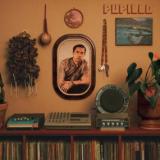
Drummer, percussionist and producer Pupillo, one of the most influential figures in Brazilian
music and a four-time Latin Grammy winner, releases his first original album through the Los
Angeles–based label Amor in Sound. The record brings together an impressive and diverse
group of collaborators from Brazil and abroad. Amor in Sound is run by Samantha Caldato,
the project’s executive producer and creative director, and Mario Caldato Jr. (Beastie Boys),
who co-produced the album alongside Pupillo. The project was developed in a free,
experimental environment, allowing the artist to explore the many rhythmic and sonic
territories that have shaped his career — from Northeastern Brazilian traditions to jazz, hip
hop, and cinematic soundscapes. Listen here.
The album features special appearances by Brazilian artists such as Céu, Rodrigo Amarante,
Agnes Nunes, Amaro Freitas, Davi Moraes, Alberto Continentino and Pedro Martins,
alongside a strong roster of international collaborators, including Carminho, Gaslamp Killer,
Loren Oden, Adrian Younge, Cut Chemist and Hervé Salters (known for his work with
General Elektriks). The album’s 12 tracks were further enriched by contributions from
Jeremy Gustin, Roberto Schilling, and other musicians who make Amor in Sound Studios in
Los Angeles a place of creative exchange.
Beyond his work as the drummer of Nação Zumbi, Pupillo has built a prolific career as a
producer and collaborator with some of the most important names in Brazilian music,
including Gal Costa, Nando Reis, Erasmo Carlos, Céu, and Otto, helping to shape the sound
of multiple generations. This trajectory has earned him four Latin Grammy Awards.
From Pernambuco, Pupillo is also an acclaimed composer for cinema, having written
soundtracks for films such as Arido Movie and Blue Blood (directed by Lirio Ferreira), The
Assailant (directed by João Daniel Tikhomiroff), among others. This cinematic sensibility
permeates the album, which unfolds like a film, moving through richly textured soundscapes
that cross continents and musical traditions.
- A1: Totem Projects - Time (Pete Herbert Remix)
- A2: Statues - Andromeda
- A3: Max Essa - Just After Nine
- A4: Imogen Soundsystem - Giselle (Pete Herbert Edit)
- B1: Pete Herbert - At Zuka
- B2: Kasper Bjørke Meets El Aqua Es Profunda - Meke
- B3: Gafas De Soul - Silver Horizon
- B4: James Bright - Knight & The Sun (Pete Herbert Remix)
The second volume of this series is as good as the first with more finely tuned twilight dubs and Balearic chuggers, expertly curated by a master of this form in Pete Herbert. Across two sides, the comp flows between low-slung grooves, deep synth atmospheres and sun-kissed dancefloor moments. Highlights include Statues' warming 'Andromeda' and a powerful synth-driven turn from Imogen Soundsystem, while side two leans further into Balearic romance, from Herbert's nostalgic 'At Zuka to Kasper Bjorke's proto-dancefloor elegance. Cohesive, tasteful sunset music with real substance.
DJ Feedback
Phil Mison/Cantoma/Ambala:
"Great tunes as always , full support. Lovingthe Zuka tune!"
Sean Johnston/ALFOS:
"Killer Petey! Next few ALFOS sets sorted"
Conrad/Idjut Boys:
"Nice selection, totem project rmx has it for me"
Sally Rogers/A Man Called Adam:
"Excellent, dependable DJ fodder from Pete and Co. Thanks for the consistency :) "
Camilo Miranda/Ibiza:
"Nice combo of tracks here ! loving these!!"
Dream Chimney/Blog:
"SF vol 2 is 10/10 every track a winner on here"
Logan Fisher/Try Outs:
"Superb comp. full of goodies"
4Trepanado/Selvagem/Brazil:
"Great compilation! the Pete Herbert Remix for Time is a great weapon to flip the switch at the dancefloor"
Simon Lee/Faze Action:
"Stunning compilation, hard to pick a winner but I'm heading for Pete Herbert - Zuka"
Marco Gallerani/Hell Yeah:
"Beautiful selection!!! loving it. Can't wait for summer now"
Dicky Trisco/File Under Disco:
"Classy release. All winners. Giselle is my fave. Nice one Pedro xxx"
Felix Joy/Rinse FM:
"Sounding great!"
Jaime Fiorito/Ibiza:
"Some cool bits! Time is my favorite!"
- A1: Genji Sawai - Hikobae
- A2: Today's Latin Project - Danza Lucumi
- A3: Shigeru Suzuki - On The Coast
- B1: Air Suspension Club Band - In The Hot City
- B2: Yasunori Soryo&Jim Rocks - So Long America
- B3: Jugando - Twisty
- C1: Kingkong Paradise - Samarkand
- C2: Katsutoshi Morizono With Bird's Eye View - Imagery
- C3: Om - Windmill
- D1: Parachute - Mystery Of Asian Port
- D2: Yuji Toriyama - Bay/Sky Provincetown 1977
- D3: Keiichi Oku - Heat Wave
- D4: Safari - Day Dream At The Bob's Beach
2025 Repress
Midnight In Tokyo 2, the second installment to the compilation series that rounds up hidden gems by Japanese artists that's perfect for listening at night in Tokyo, is here. This time the collection brings together some tasty electric jazz fusion from the '80s , compiled by Dubby, the man behind the online record store Ondas.
The compilation begins with "Hikobae," a dark and slow cosmic jazz by saxophonist Genji Sawai, followed by "Danza Lucumi," an odd Caribbean-style jam by Today's Latin Project, a band fronted by Tadaaki Misago of Tokyo Cuban Boys, with arrangements by Yasuaki Shimizu. "On The Coast" is a soulful and mellow vocal track arranged by Ryuichi Sakamoto, from guitarist Shigeru Suzuki's album White Heat, and fusion boogie cut "In The Hot City" is by Mr. Theodore, which was a one-off project by a mysterious artist.
The melancholic soul jazz number "So Long America" is the title track from the album Yasunori Soryo released in '82, following a stint in America with the band Brown Rice. "Twisty" is a tropical reggae tune from the album Samba Kathy, an underrated classic by Jugando which was released on Trash, a sublabel of one of Japan's finest jazz labels, Trio. "Samarkand" is an electric Latin jazz jam that sounds like something Miles Davis and Santana could have played on, performed by a Latin funk band from Fussa. "Imagery" is a primal African fusion track by Katsutoshi Morizono, a member of the prog rock band Yoninbayashi.
"Windmill" is the most acoustic sounding tune on this compilation, a breezy Brazilian affair with a Hermeto Pascoal feel. "Mystery Of Asian Port" is by the band Parachute, which consisted of Japa-nese fusion giants like Akira Inoue, Tatsuo Hayashi and Masaki Matsubara. The cosmic jazz record sounds like something Daniele Baldelli would play in his sets. "Bay Sky Provincetown 1977" is a classic Japanese fusion tune by guitarist Yuji Toriyama.
The set also features the mellow but danceable "Heatwave" by keyboardist Keiichi Oku, featuring a female vocalist (which some have identified as Rie Ida), and last but not least, closing out the 13 track compilation is "Day Dream At The Bob's Beach," a wonderful urban fusion with a beautiful vibraphone melody, from the Japanese fusion classic album that was a one-off project by studio musicians
"Guerra Total Na Boca Do Lixo" is CAVEIRAS' new album, to be released on February 13, 2026. The album will include 12 brand new tracks, displaying the usual mix of punk aggression, batucada rhythms, industrial / noise bravado and bass music.
---------------------
CAVEIRAS deal in obsessive rhythms and low frequencies, infusing punk with Afro-Brazilian vibes. Their spiritual birth can be traced back to a visit to Favela Rocinha: while watching two young boys improvise a batucada with a bucket and a bin, band members became obsessed with the possibility of an occult alliance between Rio de Janeiro and Einstürzende Neubauten’s Berlin. Back home, Caveiras made a blood oath, vowing to channel the dark side of samba. Armed with an electric bass, scrap percussions and a machine-gunning sampler, they began to butcher Brazilian standards with a wild and iconoclastic attitude. Claves and rhythms of the Brazilian tradition are heavily treated through electro-acoustic techniques, dub-oriented bass lines strip melody down to the bone, while screams cross the line separating punk’s rants from Quimbanda’s curses.
Carwyn Ellis & Rio 18 release their new album "Fontana Rosa". Possibly the world's only musical group to fuse Latin music of all kinds with the Welsh language, this time Rio 18 draw inspiration from slightly different musical corners, including Chicano Soul, Nuyorican pop, and Salsoul disco plus Latin sounds filtered through the cultural spectrum of the USA.
Most significantly though, the album was among the last ever to be recorded by the acclaimed producer Liam Watson at his legendary studio and shrine to all things analogue, Toerag Studios - a huge inspiration and influence on Rio 18's Carwyn Ellis. The "Fontana Rosa" sessions saw Ellis draw together an all-star band at the fabled studio which is perhaps best known through its place in the White Stripes history.
Talking about the story and gestation of the album, Carwyn said:
"I was in Mexico City with Baldo Verdú when I heard that Toerag Studios in London was going to close. It came as a shock - Toerag and Liam Watson, its owner and resident producer had been a massive influence on me. Liam, along with Edwyn Collins, had taught me much of what I know about recording, had hired me as an instrumentalist on countless sessions and had helped me to get started when I began my own solo career. And over the years, I'd still go in to record with Liam whenever the opportunity arose. When I heard that Liam was shutting up shop, I took it upon myself to try and ensure he went out with a musical bang. I rounded up the best band I could get: the aforementioned Venezuelan percussion wiz and singer, Baldo Verdú: American drummer, multi-instrumentalist and producer Shawn Lee: the Isle of Wight's finest drum and percussion master, producer and composer Rupert Brown (whom I'd originally met at Toerag many moons ago): Elan Rhys, one of Wales's finest voices and long term collaborator with Rio 18, as well as being one third of the wonderful folk group, Plu: and Kassin - my Brazilian brother from Rio de Janeiro, bassist and producer with artists such as Jorge Ben, Caetano Veloso, Gilberto Gil and a multitude of others, including Carwyn Ellis & Rio 18.
So this was my dream team, assembled to make beautiful music one more time at Toerag (I have to add at this point that Shawn and Rupert hit it off so well at our sessions that they booked their own session shortly afterwards! Look out for the brilliant Shawn Lee's Toerag Orchestra 'Percussion Discussion' album). Toerag, if you're not familiar with the place, made its name as London's foremost analogue studio for some 30 years, recording directly to tape which in essence means musicians playing live, together in a room until they get it right. And the sound? Oh the SOUND!! And this is all Liam Watson's doing, his sonic aesthetic - a real master engineer. The studio is perhaps best known as the place where the White Stripes recorded their monster hit album 'Elephant' but for me it's where I got to record with James Hunter, Lay Low (from Iceland), Quruli (from Japan), Fabienne Delsol (from France) and made many lasting friendships, learnt a great deal about popular music, as well as making a bunch of my own best recordings with Colorama.
Over the course of five days we laid down as much music as we could. We had some visitors too: guitar slinger Little Barrie (Primal Scream, The The and Liam Gallagher among other things, but also my dear bandmate in Edwyn Collins's band): sax and flute maestro Jim Hunt (Amy Winehouse, Primal Scream, Duffy and very many others): and Diego Laverde Rojas, the Colombian Latin harp virtuoso.
This time the music had a slightly different edge - although we still maintained our Brazilian/Welsh connection on 'Deffro'r Dydd' (written with and sung by Elan Rhys), our Cumbia vibe and some Merengue ('Mariposa' and 'Te Adoro', sung by Baldo Verdú) and even a traditional Afro-Venezuelan tune ('La Quichimba', again sung by Baldo) - the main influence for me this time was Latin music as recorded in the USA, both new and old. 'No More Secrets' is a straight up slice of Salsoul disco, while 'Hei Ti' is a punky funky but of Nu Yorican pop somewhere between ESG and the Beastie Boys. But one of my main influences in the last couple of years has been the current wave of Chicano Soul coming from California, particularly via the Penrose and Big Crown labels. I was turned on to this music when I was in Japan in early 2023 - Takashi-san at Pleased To Meet Me Records in Nara played me the Altons' 'Float' and I was hooked!
And that music has a similar aesthetic to Toerag: music recorded live to tape by excellent engineers, performed by fine musicians and singers. So our songs 'Impossible', 'Heartbreaker' and 'Lovesick' are very much in this vein. And that just leaves the title track, 'Fontana Rosa'."
Reissued here for the first time, "Cartão Postal" is one of the best and most sought-after Brazilian funk-soul albums from the early ’70s. It includes some outstanding uptempo gems like Marcos and Paulo Sergio Valle’s ‘Que bandeira’, and the stellar ‘Esperar Prá Ver’, co-written by Evinha’s brother Renato Corrêa who also happened to be a member of the Golden Boys. This is a classic Brazilian soul-funk title, right up there with all the greatest albums of the genre. Remastered from the original tapes and pressed on 180g vinyl. This release is part of a new reissue series that will include many other outstanding Brazilian classics. "Cartão Postal" was originally released on Odeon Brazil in 1971, a few years after Evinha started her solo career. From 1961 to 1968 she was a member of Trio Esperança, alongside her brothers Mário and Regina. In 1969 Evinha won first prize at the Festival Internacional da Cançao Popular and her discography for Odeon took off. "Cartão Postal", her third solo album, comprises some outstanding gems. Songs like ‘Que bandeira’, by Marcos Valle, Paulo Sérgio Valle and Mariozinho Rocha, that moves between funk/soul and bossa/MPB grooves; the stellar ‘Esperar Prá Ver’, co-written by Evinha’s brother Renato Corrêa who also happened to be a member of the Golden Boys, is a mid-tempo funk soul number that features stunning arrangements and an epic bassline that is hard to be forgotten… ‘Só Quero’ emanates samba soul sounds while songs like ‘Por Mera Coincidência’ or ‘Rico Sem Dinheiro’ resemble what Trio Esperança was doing at the time: vocal-driven groovy jams spiced with celestial strings arrangements and heavy-duty drums and basslines, which is not surprising since they both worked with the same producers and arrangers, as they were all Odeon artists. Ridiculously rare and expensive now, and at the top of many collectors’ wants lists for decades, it’s finally reissued here after years unavailable.
Immersed in the encounters of Afro-Brazilian cultures and in the influences of yoga philosophy, Brazilian singer-songwriter Alvaro Lancellotti drew inspiration to create his new album: “Arruda, Alfazema e Guiné”. The songs merge the spiritual and musical realms as fundamental elements of its conception, yet remaining free from any fixed aesthetic. With a percussive strength connected to its sound, “Arruda, Alfazema e Guiné” was released by the American label Amor in Sound, led by Mario Caldato Jr. (Beastie Boys) and Samantha De Lucena-Caldato.
Alvaro Lancellotti is a multifaceted artist whose songs have been recorded by renowned artists such as Marcos Valle and Maria Rita. Among his collaborators are Rogê, Wado, Davi Moraes, his brother Domenico Lancellotti, and legendary artists spanning generations, such as Mateus Aleluia and his father, Ivor Lancellotti.
Back in stock due to popular demand, the 18th release in our signature Brazil 45’s series saw Elys Camargo’s ‘Taieiras’ and ‘Não Aguento Você’ by Trio Esperança issued for the first time on 7”.
First up, ‘Taieiras’ from Elys Camargo’s 1972 album Cantos Da Minha Gente on RCA. An infectious, folk-leaning, call and response number that transports you instantly to Brazil. Although Elys recorded 12 albums between 1960 and 1983, little is known about her. DJ Yoda sampled ‘Taieiras’ in his 2012 track ‘U No Likey Like That’ featuring Roots Manuva and Kid Creole & The Coconuts.
On the B side, ‘Não Aguento Você’ by Trio Esperança. A Rio vocal trio formed by siblings Mário, Regina and Evinha Correia José Maria (the latter of which recorded the stunning classic, ‘Esperar Pra Ver’), whose three older brothers we’re The Golden Boys.
‘Não Aguento Você’ is a sun-kissed, psychedelic stunner, taken from their self-titled 1971 album. The original line up recorded seven albums for Odeon Brazil between 1963 and 1975.
Grande Coisa! (Big Deal!). You could hear it. It is the eternal irony of life. For a composer who has been making music since he was a teenager and only at the age of 38 does he make his work public, it can indeed be a big deal. Grande Coisa, is Dorea's first authorial album, and tells his stories, the ones he lived, others he heard about, but mainly the ones he created. With all the songs composed during the most isolated period in the pandemic, the work can be dense in many moments, difficult to digest, but there are sighs. And there are stories that intersect, like those of the boys who are one and also millions, and show the artist's vision of Brazil. The disappeared, forgotten, the sad and aimless still appear. And there is the warmth of the song for a loved one or even a family partnership, between mother and son. Grande Coisa has ten songs, all written by the artist himself, one of them with lyrics adapted from an excerpt from a book written by his mother. Its musical roots are rooted in rock, but with a blatantly Brazilian gaze and interpretation. It has musical production and minimalist paths chosen by Sebastian Notini, collaborative arrangements forged in the encounter of Dorea's guitar with Seba's percussive and melodic vein and Carla Suzart's bass, and a wood weave that ends the album with the timbres of Joana Queiroz (bass clarinet and clarinet) and Leandro Tigrão (flute) under the baton of maestro Per Ekdahl.
COTONETE is back!
After releasing numerous and now collectable standalone singles, plus some now famous collaborations with Dimitri from Paris, 2019 saw Parisian based 8 piece, Cotonete release their first long player in 15 years! Under the guidance of Melik Bencheikh from Paris’ rare record emporium, Heart Beat Vinyl. The dark moody mover "Super-Vilains" came out to great success on Heavenly Sweetness.
After playing some packed live shows around France and the UK, including the acclaimed Sunday at Dingwalls in Camden, hosted by Gilles Peterson and Patrick Forge. Somewhere along this part of the journey, they came across the Brazilian music legend and vocal powerhouse, Di Melo. He softened their souls, and from this love affair came the album "Atemporal". Released on Favourite Recordings, this 8 track album would end up being sampled by Canadian superstar Drake, for his 2023 album ‘For All the Dogs Scary Hours
Edition’.
So now into 2024, and we have Cotonete full length number two. They’ve enlisted the producer Guts to guide them towards sunshine, groove, warmth and all the colours in his rainbow. With their tongues firmly in their cheeks, the album is titled ‘Victoire de la Musique’ - a dig at the annual French music award ceremony. Taking the band deep, producer Guts showed them new and exciting rhythms from all corners of the world. The record’s first example of this is ‘Venezuela’, a track directly inspired by the jazz funk from the great Caribbean nation.
Other key musical exploration on the record can be attributed to the late composer Francis Lai. On ‘Cinq Pour L'aventure’ - an almost 15 minute epic monster showcasing the band’s love for 70's French movies soundtracks. “L’aventure c’est l’aventure”, was a movie by one of the most famous French directors Claude Lelouch The single from the soundtrack was sung by French music superstar Johnny Halliday.
Guests are scattered very tastefully across the album, on the only cover version of the record, the Brazilian master Jorge Ben’s ‘Bebete Vãobora’, Sabrina Malheiros was invited to lend her lungs. The daughter of Azymuth’s Alex Malheiros helps join perfectly the dots from a band that are without a doubt Cotonete’s biggest influence. Brazilian jazz funk, now with an added French touch.
On ‘Day in Day Out’ a powerful performance is given from Leron Thomas on vocals and trumpet. Perhaps also known for his role as the musical director for Iggy Pop and touring member of his band. This track is an already tried and tested dance floor filler, emphasizing just how tight the band really can play - the track even found its way into BBC Music’s Craig Charles’ ‘Track Of The Year’ selection.
No record so soulful would be complete without a trip to the UK. Omar, London’s Godfather of New Soul pops in. Having recorded with artists like; Courtney Pine, Level 42 & Erykah Badu, in his distinctive smooth style, he blesses the track ‘What Did Run You For?’ The final vocal visitor is Gystere Peskine, a Parisian based musical hero, who shows off his retro future funk feels on ‘O Ceu es Preto’ - which literally translates as ‘the sky is black’ - although given the hugely uplifting and almost Gospel Soul of this Russian/Brazilian singer, he
has us seeing things far brighter.
Cotonete have endeavored to build a worldwide rainbow warrior team of merry boys and girls. Fighting the brave fight to shine light towards the fact that music will always win…. "Victoire de la Musique" - a symphony of spring, songs of the new world, a "Victory Of Music”
Vocal Shades And Tones is a miraculous leftfield library classic from the genius mind of celebrated UK composer/singer/vocal arranger Barbara Moore. It's a heavenly groove-based blend of jazz, Latin, soft-psych, folk-funk and gospel soul. Recorded for the legendary Music De Wolfe in 1972, it's an audacious start-to-finish listen, as dizzying as it is dazzling. It's a perfect snapshot of a musical era, supported by Moore's glorious vocal arrangements. Widely regarded among collectors, DJs, and lounge/easy-listening acolytes as an absolute essential it is viewed as the holy grail by many production music heads, rarely appearing for sale and disappearing in a flash when it does. Indeed, originals now go for over £300 and it's easy to see why. Just one of the reasons why this fresh Be With reissue, part of a wider De Wolfe reissue campaign, is so utterly crucial.
Racing out the gate, the driving "Hot Heels" is a bright, sophisticated scat groove which sounds Brazilian, richly produced as if coming by the hand of Arthur Verocai. Yes, *that* good. It's followed by "It's Gospel" which is, er, a wonderfully slow and deeply soulful gospel treasure. The appropriately monikered "Steam Heat" is a darker, breathy gem, one for salacious crates and one of the record's most infamous tracks. "Fly Away" is pastoral West Coast soft rock, very much in conversation with John Cameron and Keith Mansfield's epochal KPM recording, Voices In Harmony. "His Name Was" is a stop-you-dead-in-your-tracks Beach Boys accapella church-organ stunner, whilst "Swing Over" is another carefree, richly produced sun-dappled smasher. The gentle Bossa and sunshine soul of the aptly-titled "Touch Of Warmth" closes out a virtually perfect A-Side.
The B-Side opens with the easy grace and dramatic build of "Voice Force Nine". The jaunty "Very Fine Fellow" may be the only track to slightly grate so we advise heading to the slower, moody "Shades-Tones", eminently more compelling with sparkling, hypnotic piano throughout, underpinning the gorgeous wordless vocals. Just beautiful. It was sampled by Redman for his Method Man-featuring "Do What Ya Feel" on the great Muddy Waters. We're back in Brazilian territory with the cool, uptempo "I'm Feather" before swooning to the warm, relaxed "Drifting", another total highlight which was famously sampled by Koushik on his legendary remix of Madvillain's "America's Most Blunted (Doom's Verse)". The penultimate track, "Take Off" is a bright, organ lounge groove before this remarkable set is rounded out by the beaty "Fly Paradise". It's so so good, it sounds like Rotary Connection fronted by The Mamas & the Papas. As noted in a recent Guardian article on Moore's life, "there is a plushness and electricity in the tight vocal harmonies that spring out, sung with the precision of cathedral choristers decades before Auto-Tune." Amen.
In the 1960s, Barbara Moore was a member of Top of the Pops’ resident vocal-harmony group, The Ladybirds and sang backing vocals for Dusty Springfield’s TV show. Her own outfit, the Barbara Moore Singers, were regulars on TOTP, singing with Jimi Hendrix when he performed "Hey Joe" live in Lime Grove Studios. An important detail for Moore was the shepherd’s pie she bought Hendrix when she found him alone, looking emaciated, near the BBC canteen. By 1970, she was working as a session singer for De Wolfe and, by 1972, was composing her own tracks for De Wolfe and working within their tight creative strictures. Each short track had to evoke an obvious mood and theme, with no significant key or tempo changes. Her response, this very album, managed to stay between the lines while cohering as an overarching artistic masterpiece.
The audio for Vocal Shades And Tones has been carefully remastered by Be With regular Simon Francis, ensuring this release sounds better than ever. Cicely Balston's expert skills have made sure nothing is lost in the cut whilst the records have been pressed to the highest possible standard at Record Industry in Holland. The original, iconic sleeve has been restored here at Be With HQ as the finishing touch to this long overdue re-issue.
Mo" Horizons enter their seventh album chapter andremarkably, celebrate 25 years of their exultant andglobally enriched, forward-thinking, electronic sound. Featuring a cast of guest singers, including Ghanaianlegend Gyedu-Blay Ambolley, Mango, is a fiery andsample-heavy blend of future-funk, balearic, highlife,Brazilian drum "n bass and lo-fi hip hop, set to bereleased on their long-standing label Agogo Records.
Spanning over three decades, German DJ andproduction duo Mo" Horizons, led by Ralf Droesemeyer,& Mark Wetzler have been a relentless force on theglobal groove scene. For 25 years, the pair havecontinued to grow their international audiences,testament to remaining on-point, ignoring the fashionand tribalism of scenes like big beat and broken beat,that thrived but then morphed and went off radar.
In 1983 there came a sound from the depths of the Brazilian rainforest that was primal, ground-breaking, and completely ahead of its time. The roaring of amplifiers and the beating of drums was the sound of Max and Iggor Cavalera creating their debut cult-classics 'MORBID VISIONS' and 'BESTIAL DEVASTATION', and now it seems that after many years, the Cavalera brothers will be returning to their raw upstarts with a full re-recording of these beloved yet obscure albums.
When 'MORBID VISIONS' and 'BESTIAL DEVASTATION" were first spawned it was done in ramshackle conditions in Belo Horizonte, where the duo grew up. Max and Iggor were 14 and 13 years old during the original recording, and they had all the tenacity and energy of a pack of wild dogs. Only, their sound was not quite refined at that time, their adolescence bled through on those early records. It is well known that Max's guitars were completely out of tune on those sessions, and Iggor's drums often swung around tempos crazily. There's an air of youth and passion that could only be achieved by two teenagers that wanted to shock the world. Four decades later and it is plain to see that they certainly did gather the world's attention.
Despite the production being rough around the edges and the band still carving out their direction, there was a noticeable level of craftsmanship to the song structures and a clear indication that given their desire to thrash like maniacs, these kids from Brazil were going to tear the place up night after night. These albums still hold a dark, mystic and at times eerie quality to them that many have come to love over the years. For some, the music does not have to be delivered with perfect technical precision, the spastic live delivery is something to be cherished, and even with their guitars out of tune, they played like the gates of hell were opening. The crossroads of a shamanistic spiritual summoning at a back-alley metal show in downtown Belo Horizonte.
It is a task of heavy magnitude to try and cross the gap between the accomplished artists that they are today to the scrappy boys that they were when they first wrote these songs, but the duo have executed the performances flawlessly. The perfect bridge between the unbridled energy of the original sessions and the high-quality sound of a 21st century production. It is truly astounding to hear Max once again growl like a monster during "Troops Of Doom" and riff at insane speeds through "War" and "Crucifixion". Iggor's barbaric drumming on "Anti-Christ" is like the galloping hooves of a death-rider. Accompanied by bassist Igor Amadeus Cavalera (HEALING MAGIC, GO AHEAD AND DIE) and lead guitarist Daniel Gonzales (POSSESSED, GRUESOME) the quartet is a force to be reckoned with.
How this re-recording attained such a familiar tenacity is almost a mystery, like some spell that brought these albums back from the grave. Within the first few beats you can hear that the Cavalera’s have lost no momentum, attacking the songs at maximum speed and ferocity. In fact, it seems that the brothers have only empowered their connection through music over the decades. You can feel the spark that those two create, a dynamic sound rich with subtleties and ear-grabbing hooks. As Iggor counts in each song with his drumsticks, and Max's guitar feedbacks loudly as he approaches the microphone, there is palpable apprehension. It is apparent that when these two icons get together to play, they are going to electrify the room with their presence.
Few have had the incredible careers that Max and Iggor have achieved through their music. Even fewer had faith in the young boys that wrote 'MORBID VISIONS' and "BESTIAL DEVASTATION' all those years ago. Yet here they still stand ripping through their earliest works with decades of experience under their belts. For them, it is a breath of fresh air to finally give these songs the desired production that they deserve. They both feel that the fans also deserve a fresh look at these albums, a chance to appreciate them in a completely new light.
From start to finish 'MORBID VISIONS" and "BESTIAL DEVASTATION" are a torrential whirlwind of riffs, beats, and screams. A blast from the past that is sure to take every last listener back to the raucous live shows of the eighties.
Mysterious clouds form above an old cathedral, the summoning of dark magic is upon us, and the troops of doom march forth to announce the arrival of 'CAVALERA'!
We’re still harvesting the fruits of those past days in seclusion, the cabin fever induced creative outbursts, ideas that would probably have never surfaced without these enforced trips to our inner minds. Lockdown transcendence.
“Don’t Cry” by Italo-Brazilian DJ producer Stephan Barnem and Futuristant is another impressive testament of those days. Secluded in Stephan’s studio in Northern Italy, the duo subconsciously conjured the spirits of one of their mutual favorite bands, Depeche Mode and created a fierce, boombappy Neo New Wave smasher contrived to send rays of hope into the darkest corners of this mad world. We had to add a gratuitous beatless version to the EP that amplifies the cinematic depth and healing potency of this song.
If “Don’t Cry” echoes the dark brooding euphoria of Depeche Mode’s “Music For The Masses” era, the flipside cut “Elysium” harks back to the synthwave happy days of their debut “Speak & Spell”. It’s a wonderfully careless track that’s bringing a dearly needed breeze of fresh air to today’s discerning dancefloors.
Boys don’t cry for me Argentina. Save your tears for another day.
Wir ernten immer noch die Früchte jener vergangenen Tage in Abgeschiedenheit, der vom Lagerkoller verursachten kreativen Ausbrüche, Ideen, die ohne diese erzwungenen Reisen in unser Inneres wahrscheinlich nie entstanden wären. Lockdown-Transzendenz.
„Don’t Cry“ des italo-brasilianischen DJ-Produzenten Stephan Barnem und Futuristant ist ein weiteres beeindruckendes Zeugnis jener Tage. In der Abgeschiedenheit von Stephans Studio in Norditalien, beschwor das Duo unbewusst die Geister einer ihrer gemeinsamen Lieblingsbands, Depeche Mode, herauf und schuf einen wilden, boombappigen Neo-New-Wave-Smasher, der Licht in die dunkelsten Ecken dieser verrückten Welt senden wird. Wir mussten der EP eine Beatless-Version von “Don’t Cry” hinzufügen, die die filmische Tiefe und heilende Kraft dieses Songs noch verstärkt.
Wenn „Don’t Cry“ die dunkle, grüblerische Euphorie von Depeche Modes „Music For The Masses“-Ära widerspiegelt, erinnert der Flipside-Cut „Elysium“ an die Happy Synthwave-Tage ihres Debüts „Speak & Spell“. Es ist ein wunderbar sorgloser Track, der den dringend benötigten frischen Wind auf die anspruchsvollen Tanzflächen von heute bringt.
Boys don’t cry for me Argentina. Save your tears for another day.
This genre-bending album takes the listener on a sonic journey through moments of gritty hip hop as well as lush soul/R&B soundscapes, also providing a glimpse into modern jazz.
World Champion Battle DJ, Rhettmatic, reminds you why he’s one of the most respected DJs in the world with his masterful scratches throughout the album. In a time where musicians are scrambling to copy whatever the latest trend in music is, more than ever.
JRawls’ signature Jazz-Hop sound meshed with Rhettmatic’s West Coast bounce creates an undeniably hypnotic & original sound that is all their own.
Tracklist RawlsMatic Intro
Play Your Position
Excalibur
State My Case
Doty X & The Sen
Stay Good
Role Reversal
Brazil
Straight Shot Of Whiskey
Everyday Sh-t
The Brink
The Sun
Xanadu
Key Selling Points
-The powerful duo, Rawlsmatic, consists of respected hip hop producer-DJ’s, Rhettmatic (Member of the World Famous BeatJunkies, Cypress Junkies) & J Rawls (Produced for Black Star, Slum Village, Beastie Boys, & more).
-Their debut collaborative album "Role Reversal" via Chavez Sound features Craig G, Blu, Ras Kass, Illa J & Frank Nitt, John Robinson, Wordsworth, Sadat X & El da Sensei, Trek Life & Supastition, Ann One, Cyrus Baty & B-Jazz.
Carolina’ is the Brazilian virtuoso Seu Jorge's debut full-length album from 2002. Originally released under the title ‘Samba Esporte Fino’, its release and subsequent international acclaim dovetailed with Seu Jorge’s ascent into movie stardom. He is probably best known outside of Brazil for his work on Wes Anderson’s 2004 film 'The Life Aquatic with Steve Zissou’, in which he played a starring role and his Portuguese covers of David Bowie records were a highlight of the soundtrack. Having initially found fame thanks to his standout performance as Knockout Ned in the revered movie ‘City of God’. ‘Carolina’ would cement his global fame and launch an illustrious musical career that has earnt him a Grammy nomination.
Co-produced by Mario Caldatto of Beastie Boys and Planet Hemp fame, the album presented a vibrant, contemporary combination of samba and funk, backed by guitar, bass, drums, percussion, and horns. It kicks off with one of Seu's most loved tracks 'Carolina', an anthemic feel-good classic with timeless energy, ending in a sing-along crescendo. Other highlights included the Brazilian-Funk of 'Mangueira' reminiscent in places of Tim Maia with its 80s inspired vibe, and the catchy jazzy-samba of 'Tu Queria' which always ignites the dance floor.
- A1: Laboratorija - Jugoton Express
- A2: Laboratorija - Devica 69
- A3: D'boys - Zaba
- A4: Beograd - Sanjas Li U Boji
- A5: Data - Neka Ti Se Dese Prave Stvari
- A6: Brazil - Gdje Nema Te
- B1: Denis & Denis - Jugoton Express
- B2: Denis & Denis - Ti I Ja
- B3: Du Du A - Romance
- B4: The Master Scratch Band - Pocket
- B5: U Skripcu - Noc Ca, Ca, Ca
- B6: Parlament - Kad Je Kraj Blizu
- C1: Dorian Gray - Jugoton Express
- C2: Dorian Gray - Tonemo U Mrak
- C3: Hc Andersen - Palcica
- C4: Sladana & Neutral Design - Neko Je Tu (Sa Mnom U Sobi) (Sa Mnom U Sobi)
- C5: Amila - Vodi Me Iz Ovog Grada
- C6: Tuzne Usi - Ti Me Uci
- C7: Zana - On
- D1: Oliver Mandic - Jugoton Express
- D2: Oliver Mandic - Dode Mi Da Vrisnem Tvoje Ime
- D3: Hc Andersen - Snjezna Kraljica
- D4: Dubravka - Harakiri
- D5: Milka Lenac - Ponocni Express
- D6: Nicky - Radio Video
- D7: Mladen Kusec - Tonkica Palonkica Frrrrrrr
Synthetic Music From Yugoslavia 1980-1989
"The galloping technical progress in the second half of the last century dominated all spheres of daily life, art and culture. In the music industry machines took over the role of classical instruments and did not stop at RnR, punk nor industrial music. No one could resist the challenge, but also the prevailing trends in the 80s. The music industry was influenced by the electronic virus globally, not sparing even the remotest corners of the planet, producing bands like Depeche Mode, New Order, Soft Cell or lesser known ones like Liquid Liquid, Section 25, The Wake as well as the pioneers of the electronic music Silver Apples, Pierre Henry,etc .
What was going on in the music industry of former Yugoslavia and at Jugoton, the biggest YU music label at that time? The all over answer is given by a new release of Everland Music: Electronic Jugoton - Synthetic music from Yugoslavia 1964. - 1989. Vol. 1
Electronic Jugoton is the first part of two double albums, where the second part will even go back to pre-electronic music from 1964. Both double albums were initially released by Croatia Records (ex-Jugoton) in 2014 on a 2CD set with no less than two and a half hours of material (47 songs, 35 performers), showing the contemporary trend of Jugoton at that time towards avant-garde and provocative directions in electronic music. This untimely compilation is released for the first time on vinyl now on two double LPs, housed in gatefold sleeves by Everland Music, where part 2 will be released in 2023.
The brave and insightful creators of the compilation Electronic Jugoton, veteran crate diggers Višeslav Laboš and Zeljko Luketić, have excelled at reconstructing the musical past of electronic music in Yugoslavia from 1964 – 1989. Jugoton's extensive research included the most exciting and progressive moments of pop and disco music, early rap, electronic responses of new wave, RnR, post punk and industrial bands to the current trend of the 80s, but also pioneers of avant-garde electronic music.
Electronic Jugoton part 1 is officially opened by the band Laboratorija with the song Devica 69, which opens a window to a completely new and experimental world in former Yugoslavia.Laboš and Luketić have boldly chosen the material without reservations, suggesting that for the first time in one place we have a section of forgotten, unique underground bands like Beograd, Data, Brazil, The Master Scratch band, DU DU A and beyond.
Besides the excellent underground bands, we find popular performers of the time performing less well-known songs: Denis & Denis, Oliver Mandić, Slađana & Neutral Design.
Electronic Jugoton part 2 is partly dedicated to unique electronic music in the performance of important Yugoslav punk, new wave, RnR and industrial bands: Zana, Pekinška patka, Električni orgazam and Borghesia, while the second part of the material is focused on avant-garde early electronic music in Yugoslavia, where the works of composers Igor Savin, Branimir Sakac, Igor Kuljerić and Miroslav Miletić were presented. Luketić and Laboš rescued the obscure electronic tune Elektra by Zdenka Kovačiček, who was at that time Jugoslovska Soul and funk diva.
The uniqueness and quality of this compilation are also audio stories for children, which were extremely fertile ground for an experimentation with electronic sounds, as they should be highly imaginative to attract the attention of the childrens. Electronic Jugoton is also the first compilation in which the listener will find fragments of interviews with actors from the time gave for Jugoton Express. This was a series of promo vinyls printed in extremely small quantities in the 80's and intended to be exclusively for radio stations. An average of 30 minutes of promotion material and interviews with musicians were available for the first time through this compilation.
The value of this compilation is time and priceless. The only question is whether you will be fast enough to catch your copy of the limited double vinyl editions!"