Repetentes 2008 is 26 year old Brazilian multi instrumentalist, session super star, Globo Television soap opera jingle up-and-comer, 40% Foda label boss and Botafogo FR football hooligan Gabriel Guerra. Known affectionately as Guerrinha amongst his friends, Guerrinha - or as he’s referred to officially - Gabriel, turns in Superconscious Records’ 13th edition. After his absurd debut LP on Future Times and his more recent outings on his own 40% Foda and PAN records, Guerrinha keeps things relatively straight up with 4 absurdly fast but not furious club friendly tracks.
quête:brazilian
The Brazilian singer-songwriter and guitarist Joyce Silveira Moreno was born and raised in the middle of Copacabana, a short beach stroll from the epicentre of the bossa nova universe.
Her father was a Dane that had settled in Brazil, but she was raised by her mother and step-father in a typical Portuguese-Brazilian household. Since her older brother was friendly with
leading lights of the bossa nova movement such as Roberto Menescal and Eumir Deodato, she was steeped in the form at an early age and witnessed its key evolution first-hand. At the
age of 16 in 1964, she was taken to the studio by Menescal to contribute to the coveted debut album by the mythical group Sambacana, assembled to record the work of composer Pacífico
Mascarenhas when the meagre budget would not allow the vocalists he preferred. Knowing that a full-time career in music was certainly not guaranteed, she began studying journalism
in 1967, shortly before her controversial song “Me Disseram” reached the finals of Rio’s second International Song Competition. The following year, her self-titled debut album was
released by Philips, produced by Armando Pittigliani, with orchestration by Dorival Caymmi and arrangements by Gaya; along with her own compositions, the album also featured songs
by her rising-star friends, including Caetano Veloso and Marcos Valle.
Soul Deep Exclusives is proud to present our latest vinyl release! This time we've recruited 4 talented producers that have created 2 tracks of musical bliss. Greek producer, mSdoS, has gone to the other side of the world to collaborate with Subsid, a Brazilian Producer, to craft up the song entitled, "Malibu". The song oozes with uplifting musicality and summer vibes, heating things up for the warmer time of the year. British producers, Payback & Conspire, team up to produce the second offering. The track offers up a more edgy sound, but is softened up by its epic pads and dreamy soundscapes. Overall, these 4 producers have created some classic music that will stand the test of time. Classy vibes!
“Following on from Homenagem, Lugar Alto’s first critically acclaimed project, the São Paulo label's new endeavour is the reissue of another neglected masterpiece. This time, it’s “Poema da Gota Serena” turn by Zé Eduardo Nazário from 1982. This unique work gathers elements of free jazz, Brazilian Northeastern rhythms, Asian percussive instruments and electronics.
Zé Eduardo is a virtuoso drummer and percussionist with a prolific career as a musician and teacher. He was introduced to music in his youth and started playing professionally at the age of thirteen. In the late 60’s he was a regular at the famous Totem night club in São Paulo, where he performed alongside the pianist Tenório Jr. and other exceptional instrumentalists. It was there that he met Guilherme Franco, and together they formed the Grupo Experimental de Percussão. This period defined Nazário’s interest in different sonorities involving percussion, and he broke away from the more traditional genres, such as bossa nova and jazz. Over time, this distinctiveness in sound and playing allowed him to create his own path which culminated in an extensive number of remarkable works, including the colorful and psychedelic “M andala”, which examines Indian and hippie themes. He also played with Hermeto Pascoal’s group and joined him and Jaques Morelenbaum for the recording of the cult classic “Imyra, Tayra, Ypy” by Taiguara. For Egberto Gismonti’s “Nó Caipira”, Nazário performed with the khene, a mouth organ from Laos, a present from Gismonti himself.
But it is Nazário’s work with the 1976 collective Grupo Um which is his most well-known, who, during their 6-year legacy recorded, amongst movie and ballet soundtracks, 3 albums: “Marcha Sobre a Cidade”, “Reflexões Sobre a Crise do Desejo” and “Flor de Plástico Incinerada”. The combo is considered one of the most innovative formations of its time, unusually combining electro-acoustic elements, jazz and Brazilian traditional music.
Poema da Gota Serena was Zé Eduardo's first solo project and it was financed by the legendary Lira Instrumental, a collaboration between the ground-breaking venue, label and publisher for the São Paulo avant-garde, Lira Paulistana, along with the always interesting Continental Records, home to such luminaries as Tom Zé. The album was offered as a package deal simultaneously with the production of “Flor de Plástico Incinerada”, ensuring 2 studio sessions at JV studios in October 1982.
Each side of the album explores different duets which, with its suite formated tracks, give the album the feel of a cohesive whole. The first half of the A side, “Energia dos Três Mundos”, is shared with the improvised saxophone of Cacau. Nazário delves into free jazz rhythms and plays his drums with a rolling and tumbling swing, using the kit in full, demonstrating the power of Brazilian jazz fusion. The second half of the suite takes us into a more tranquil mode. “Só Prá Ouvir”, demonstrates Zé’s mastery on the glockenspiel, and Indian percussion instruments, such as the tabla and mridangam. Cacau, on his side, switches his saxophone for more delicate dancing flute driven passages, equal parts northeastern rhythms and deep Amazonian indigenous influences. The B side, with “Prá Pensar / Prá Sentir e Prá Contar”, contrasts heavily with the A side’s more organic and natural feel. In Prá Pensar Lelo Nazários’s synth clusters and electronic blasts strangely interact with the exploring, wandering percussion. This track leads into the sublime “Prá Sentir e Prá Contar” where South Indian inspired vocals, performed by Zé Eduardo, accompany the graceful synth chords and fluttering percussion. The result is a hypnotic, otherworldly feel to the music that is infectious and takes the listener on an extraordinary journey.
With Poema da Gota Serena, it is possible to hear music that extrapolates the lines of the avant-garde and popular music. It is an album the demonstrates that Brazilian jazz fusion can be both spiritual and challenging at the same time.
All the tracks were expertly remastered by Lelo Nazário, directly from the original tapes, maintaining the high quality of production that Lugar Alto are becoming renowned for. All the artwork was reinterpreted by the São Paulo design studio Sometimes Always, including an exclusive insert and unpublished images.
It seems that Lugar Alto have managed to excavate yet another gem from the seemingly bottomless Brazilian mines. Long may they continue to do what they do so well.”
Lance Ferguson's Rare Groove Spectrum collection of newly recorded versions of classic funk, soul, jazz and latin vinyl rarities found fans everywhere when released earlier in 2019. The extended reworking of Earth Wind & Fires' 'Brazilian Rhyme' was selected for Jazz FM's A playlist and stayed there for months.
Lance has always enjoyed imaginatively taking a classic rare groove and re-recording in it a different genre, and it has to be said that his latin-ised version of the great jazz organist Jimmy Smith's '8 Counts for Rita' is a concept no one saw coming. Kept back from the Rare Groove Spectrum album, we proudly present it here in all it's swinging, samba-fied glory!
Spanish DJ & remixer Flow Lab Kid (Sergio Cáliz López) is also along term Ferguson fan , and he delved back over 12 years to Lance's very first 'Black Feeling' album and did own 'Blessed' remix of The Blessing Song (which was originally and amusingly credited to the fictitous group The Shirley Eubanks Ensemble) but was in fact a version of jazz violinist Michael White's spiritual jazz track from his 1972 album Pneuma on Impulse Records.
Finally, there is a straight down the line funk version of the Blackbyrds Theme that also didn't make it onto the Rare Groove Spectrum album, although it was always planned that it would see the light of day and what a great way to round off Lance Ferguson's Rare Groove Spectrum - remixes and rarities.
Known as the Queen of Morna, Cesária Évora brought the traditional music of Cape Verde to international recognition and became recognised as one of world music's great female voices. Raised in an orphanage, Évora started singing as 16-year-old in the bars and sailor taverns of the West African island and sang on cruise ships before performing in Portugal at the invitation of Cape Verdean singer Bana. After being discovered by Portuguese producer Jose Da Silva she went to Paris becoming a serious global star. . Madonna asked her to perform at her wedding and again for her birthday, but Evora turned her down both times
Influenced by Brazilian rhythms, creole flamboyance and the heartworn sadness of the blues, the "barefoot diva" was compared to Billie Holiday and found great acclaim in). A heavy drinker and smoker, Évora's romantic, humble visions of Africa led to a Grammy Award for Voz d'Amor (2003), but ill-health forced her retirement in 2010 and she died - aged 70
The Barefoot Diva, and she continued to always perform without shoes on, proudly proclaiming her humble roots. She is also remembered for her stage appearance, always modestly dressed, with a bottle of Cognac on stage and a cigarette in her mouth.
Cesaria Evora is the world's foremost singer of the morna, the indigenous style of Africa's Cape Verde Islands. The morna evolved as a hybrid of Portuguese fados, British sea shanties, and African rhythm, reflecting the island's history as a Portuguese colony and spot for British coal mining. Some say it was also influenced by the modinha, a Brazilian song form. Full of mournful melodies and slow tempos, Evora's music encapsulates the essence of the morna in its sadness, longing, and nostalgia.
canadian beatdown master “eddie c” is back with fourth full length on endless flight!
this new album is his unique mixture of laid back hip hop and lo-fi house sound which is inspired from late 80’s to early 90’s and much more darker than usual.
the album kick off by old school hip hop tracks of “carbondate”,in the park” then new wave disco sound of “way uptown” it reminds us nyc post punk/new wave artist “konk”,dubby brazilian percus-sive disco track “batucada”,”berlina” is early 90’s nyc house like pal joy, probably most club friendly track “bad words” is wired new wavy vocal house madness and the album close with dreamy down tempo track “an der wedding” heavy kraut rock influenced stuff.
hope you enjoy.
- A1: Ferro Na Boneca
- A2: Eu De Adjetivos
- A3: Outro Mambo, Outro Mundo
- A4: Colégio De Aplicação
- A5: A Casca De Banana Que Eu Pisei
- A6: Dona Nita E Dona Helena
- A7: Se Eu Quiser Eu Compro Flores
- B1: E O Samba Me Traiu
- B2: Baby Consuelo
- B3: Tangolete
- B4: Curto De Véu E Grinalda
- B5: Juventude Sexta E Sabado
- B6: De Vera
Originally released by RGE in 1970 in Brazil, ‘É Ferro Na Boneca!’ features 13 songs composed by Luiz Galvão and Moraes Moreira. This record shows the roots of the group, moving through psychedelics, edgey pop, rock and Tropicália.
After writing ‘É Ferro Na Boneca!’ their music began to move towards MPB due to the influence of João Gilberto, who began working with the group. In 1972 they released their incredible ‘Acabou Chorare’ LP, which came top of Rolling Stone Magazine’s list of 100 Greatest Brazilian Records (published in 2007).
- A1: Afrodite Se Quiser - Fora De Mim
- A2: Lilith - Todo Amor E Bom (Remix)
- A3: Fabio Fonseca - Ladroes De Bagda Feat.marina Lima
- A4: Fernanda Abreu - Hello Baby
- A5: Luna E Dj Cri - Acabou Como Comecou
- B1: Junior - Vim Te Buscar
- B2: Thaide & Dj Hum_Coisas Do Amor (Trepanado Edit)
- B3: As Damas Do Rap - Um Sonho Real
- B4: Mc D' Eddy - Jeito Do Se Menina (Inst)
- B5: Sharylaine_Saudade
I grew up fascinated with the music played late at night on the radio.
As a kid, when times were tough and I couldn't get myself to sleep, I would tune the radio to my favourite FM station and dream on.
This was back in the late 80's and lasted until the mid 90's, a time when I was getting hooked by Hall & Oates, Loose Ends, Maze, S.O.S. Band, Soul II Soul, and other artists that used to rule the dial in the wee hours.
So this music didn't only comfort and nurture me at the time, it also shaped my music personality.
When Renata approached me in order to work on the first ever compilation for Hello Sailor, I knew the selection would end up reflecting this side of me. It had to come from the heart.
It also had to bring to the table something different than what's already associated with Brazilian music, and exploring our own take on the street soul genre sounded good.
It was never done before and it's also faithful to Brazil's musical heritage.
Back in the 80's and into the 90's, it was very common at parties to have a slow dance moment in between the more uptempo sections. A timeout from all the frantic dancing, when people could cool off and flirt in a more romantic way. (It does sound like a great idea to have this intimate just-the-two-of-us moment in the middle of a party; maybe it explains the number of marriages at that time.)
This is a tradition that goes back to the black music balls in the late 70's, which helps to explain why the majority of the early rap acts from Brazil used to have a couple of romantic songs in their albums. When you add to this recipe the power of the mellow pop acts during the aforementioned period, one can realise why it extended its tentacles to deeper depths of pop music in Brazil.
This compilation features some of my favourite music ever, songs that I've crossed paths with in different moments of my life.
Fernanda Abreu, for instance, is a longtime crush - I have been in love with her music since the mid 80's when she used to sing in a band called Blitz, which my mom loved.
Afrodite Se Quiser, on the other hand, created some buzz while the group was active with the minor hit "O Que Que Ela Tem Que Eu Nao Tenho", from their first album (1987), but I didn't know about "Fora de Mim" until 2015. My point is: even if it took me 25 years to find this track, I had a reserved spot in my brain for it and it laid there perfectly as if it innately belonged there.
It's a built memory, and I love playing with this idea when presenting music to people.
Street Soul Brasil is part mellow pop, part R&B, part rap.
One can surely feel a lot of street energy from the B Side. The music reflects the influence of international pop at the time, but it also shows how Brazilians are talented in making any sound their own!
This compilation is supposed to be a mixed collection of songs, something that might trigger the feeling of flipping through an old photo book full of tender memories. These are songs that should speak straight to the heart, music to comfort and heal, music that deals with joy and pain, feelings that I always liked being transmitted through music.
It's among the best forms of therapy. It worked for me and I hope it works for you...
(2LP gatefold 180gr pressing) The album is a collaboration between Brazilian artists Lula Côrtes and Zé Ramalho, a wonderfully off-kilter record full of fantastic hooky and strange tunes that range from full-on freakouts to quiet pastoral numbers displaying the entire range of 1970s hippie Brazilian musician culture.
For Against Fascism Trax 006, Auntie Flo takes us to Brazil, a country that is dealing with having a bona fide fascist president, with an EP recorded in Rio De Janeiro. I’m going to shut up and let Afonso Marcondes from Sao Paolo take it from here -
In a world in which culture policies (incl. music) win nationalist tones, Brazil has lessons to give with the catastrophic failed experience of the last government and the teletubbies talk on Culture from the current one.
As one sometimes feel as if one is on a time-warp from time to time, most often taken there by music, songs like March of The Berimbau here, could easy make for the perfect soundtrack for the political history of Brazil, country in which Auntie Flo got his inspiration and recorded this tracks.
From the military regime that gave Brazil bossa nova in the 60’s, the tropicália sounds of the 70’s to the pop rock era of the 80’s all the way from the rave scene of the 90’s to todays Bahia Bass, music in Brazil has always been instrumental in helping shape the political scene.
One thing about the Brazilian music ’scene’ is that rarely it lends itself to extreme political views, via lyrics or otherwise, after all, carnaval must be kept a happy time! The number of different cultures living in peace, side by side in Brazil has strenghten the country disapproval of hate talk in music since I can remember growing up in the interior of São Paulo state.
As per wiki: Fascism is a form of radical ultranationalism, characterized by dictatorial power, forcible suppression of opposition… Children bedtime reading if you follow the past 15 years in Brazilian politics and the rise and fall of Brazil’s Labour Party, together with its disastrous polices on culture and synergy with de definition above; including the views of a important cultural Party branch that continuously 'preached' that Authors should need no rights over their works. That couldn’t bit music in Brazil.
Fast forward to the first 5 months of government of an unfortunate retired army officer, whose every word sounds like Trump, and whose views on culture is to extinguish the Culture Ministry and cut low the state incentives to the sector, that, so far, is not bitting music in Brasil.
Hope that Auntie Flo’s music inspired everyone as the place where it was made and recorded inspired music in Brazil, as a beacon of light against any hate talk darkness.
Born in 1949 in Recife (Brazil), Roberto De Melo Santos, despite a very light discography, is among
the true icons of the Brazilian Soul music under his artist alias, Di Melo. He’s indeed only needed an
eponymous album, released in 1975 on Odeon, to assert himself as a star in his native country, but
also as a legend for all collectors and connoisseurs of the world. More than 40 years after its release,
this famous album sells for several hundred euros in its original version, and even for the few
reissues that were offered. Not very active since then, Di Melo however returned in 2016 with the
album O Imorrível, released on the Brazilian label Casona Produções.
It is then that a year later, came a meeting with the French group Cotonete, that Florian Pellissier,
founding member and keyboard within the band tells us about: “On tour in Brazil with Cotonete, we
had a few days off in Sao Paulo and I really hoped to make a collaboration with an important artist or
band from the Brazilian funk scene. We had thought of Marcos Valle, Meta Meta or Ed Motta... but
Rafaela Prestes our Brazilian "sound ingineer/genious" told me she’d worked with Di Melo for his
recent comeback and gave me his number. No sooner said than done, as I'm a huge fan of Di Melo.
The next day he arrived at our house with Jo, his wife, and Gabi, his daughter. He takes the guitar in
front of us and gives us a private show of 3 hours… we cried the tears of joy. He had 400 original
songs never recorded, a gold mine. On the same night, we started working the arrangements for 2
days, followed by a rehearsal and two small gigs in Sao Paulo. Immediately after, we recorded in the
magical Epsilon B studio. This album is the summary of this moment, of these 5 days of madness
spent together between “the best band in the world” and the legend Roberto Di Melo… Simple,
beautiful, Brazilian-French, human music…”
Today, Atemporal found its final version in collaboration with Favorite Recordings and is proudly
presented as what we believe will become the genuine long-awaited follow-up to the classic Di
Melo’s LP.
Poté returns to Benji B’s Deviation Music following the release of his acclaimed debut album 'Spiral, My Love' last year. 'Waters of Praslin' is the first in of a run of club-focused 12"s from the artist entitled the Versiclub series.
St. Lucia born and London-raised, Poté (real name Sylvern Mathurin) has always been drawn to African diasporic futuristic beats from baile funk to kuduro and gqom. Before Benji stepped in to release his debut record Poté put out multiple EPs for Enchufada, the independent record label founded by his spiritual forbearers in Lisbon, Buraka Son Sistema.
The Brazilian influence is definitely evident in opening track 'Jacquot (Waters of Praslin)', with its afro-samba rhythm laced with the metallic synth work of UK bass. Track 2, 'Sirens' feels like a future dance floor favourite that channels UK funky, dub step and of course the power of the siren in the dance.
"Waters of Praslin is my homage to the people and spirit of my hometown, Praslin in St.Lucia. These are the waters which gave us life, stories, joy and memories” says Poté “these waters saw many of us grow and and eventually pass."
Born in the 1940s in Istanbul, Italian painter and percussionist Wilfred Copello had, from the onset, a predisposition for exotic sounds.Indeed, his interest for latin music was manifest early on in his career. In 1970 he was an uncredited member of the Italian band Latins 80 who released the same year the LP Foglie Gialle All’Imbrunire which has now gained cult status.From that period onwards, Wilfred settled in Rome where he gained an excellent reputation as a studio player; he participated in a large number of projects and albums, especially on the jazz scene with his friend Romano Mussolini (The Latin Taste, Jam Session , Soft & Swing, etc.). But it is the music from Brazil that had the greatest impact on Wilfred. In 1974 he recorded ‘Viva Brasil’ with the group Expo 80, an album which was an ode to Brazilian music. A few years later, at the turn of the 80s, he formed the band Wilfred Percussion. He brought with him an all-star cast of the jazz and Latin scene in Rome which included Argentinean drummer Osvaldo Mazzei and respected trumpet player Cicci Santucci.It was actually in Cicci Santucci’s Audio Sound Studio that was recorded Wilfred Percussion’s only album.Recorded in 1983, the album is a musical gem. Self-produced, Wilfred Percussion is composed of covers and original compositions. Covers include original titles by the unclassifiable Hermeto Pascoal as well as Milton Nascimento, and are reinterpreted here in a totally unique fashion with that distinctive Italian groove. Wilfred Percussion is an album which allies funk to MPB with jazz undertones, introducing the listener to a singularly fresh and evocative opus.
Alt-rock icon Josephine Wiggs is best known as bassist in The Breeders, rising to superstardom in the '90s and continuing to draw crowds and critical acclaim in the wake of their 2018 album All Nerve.
But over the years, Wiggs has released several of her own albums, all of which delightfully defy genre. Her new solo record, We Fall, is both a departure and a distillation of an enduring personal aesthetic: moody and spare but also melodic, at once contemporary and nostalgic.
Some influences are clear: We Fall is reminiscent of the experimentalism of Brian Eno's Another Green World and recalls the delicate, languid minimalism of Harold Budd. The album's classical inflections, sharpened by a dialog with electronic elements, evoke Alva Noto and Ryuichi Sakamoto. This is an album of juxtapositions: minimalist at moments, richly layered in others; ambient while also sharply focused; melancholy yet resolute.
There's something both dreamy and scientific about We Fall. Wiggs, an enthusiastic amateur mycologist, has an impressive collection of mushrooms she's photographed in her travels. We Fall could be the soundtrack to what can't be captured in a single photo—the growth and decay of miraculous creatures that a less astute and sensitive eye might overlook entirely.
Composed, performed and recorded by Wiggs, with drums and electronics by her longtime friend and collaborator Jon Mattock (Spacemen 3, Spirit , We Fall is a lyrical, bucolic album with an undercurrent of disquiet. Think of a wintertime walk in the woods as dusk falls too soon. True to the classic album form, the 10 almost entirely instrumental tracks on We Fall form a compelling whole: a crystalline meditation on paths not taken and words unspoken, an elegy for moments lost and last embraces.
JOSEPHINE WIGGS BIO
Josephine Wiggs grew up in an unconventional family north of London. Returning home from a summer holiday with a donkey riding in the back of the family's 1927 Rolls Royce was not considered at all bizarre. Wiggs studied cello as a child, segued from college in London to undertake a master's degree in Philosophy, and then, in a move few would have predicted, joined a rock band.
After making three albums with The Perfect Disaster (1987-1990), Wiggs left to join Kim Deal (Pixies), Tanya Donelly (Throwing Muses), and Britt Walford (Slint) in forming indie supergroup The Breeders, whose debut album Pod came out in 1990. Following a shift in line-up—with Kelley Deal on guitar and new drummer Jim Macpherson—The Breeders released Last Splash in 1993; with its hit single 'Cannonball' and 'Divine Hammer,' they became alternative rock superstars.
During the same period, Wiggs released two lower-key albums with Jon Mattock (Spacemen 3, Spiritualized): Nude Nudes (1992) under the name Honey Tongue, and Bon Bon Lifestyle (1996) using the moniker The Josephine Wiggs Experience. She also recorded and produced Klassics with a K (1996), the beloved and only album by the Kostars (Luscious Jackson's Jill Cunniff and Vivian Trimble). During a brief run of shows, Wiggs joined the band on drums, showing her range of musical ability.
In the late '90s Wiggs collaborated with Vivian Trimble as Dusty Trails, whose eponymous 2000 album is an homage to neo-noir soundtracks, spaghetti westerns, and Gallic pop. Time Out described it as 'one of the most subtly suggestive, understatedly elegant...things likely to have caressed your cochlea in years.'
Allusions in Dusty Trails to film music foreshadowed the next stage of Wiggs's career, writing scores for feature and documentary films—from Happy Accidents by Brad Anderson in 1999 to Appropriate Behaviour by Desiree Akhavan in 2014. Her new album We Fall began as a suite of short pieces for the documentary film Built on Narrow Land. Wiggs has also composed and recorded music to accompany live performance and short films by the acclaimed Brazilian choreographers chameckilerner.
In 2013, following the 20th anniversary of Last Splash, the classic lineup of The Breeders reunited for a world tour. Five years later in 2018 they released All Nerve, with Wiggs co-writing two songs and singing lead on the standout track 'Metagoth.' We Fall, Josephine Wiggs' third album of her own design and ninth album in a career spanning three decades, will be released on vinyl and available for download and streaming on April 12, 2019 by Sound of Sinners.
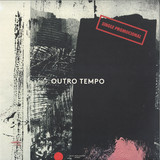
In the lead up to part two of the highly anticipated Outro Tempo compilation, MFM drops this teaser EP with the never before heard cassette madness of São Paulo's Bruhahá Babélico and Individual Industry's ethereal electro pop on the flip.
Music From Memory announces a series of Brazilian releases for this Spring that pick up where their 2017 Outro Tempo compilation left off. Circling around the musical projects that emerged out of the art world in Brazilian cities during the late 1980s and 1990s, 'Outro Tempo II: Electronic and Contemporary Music from Brazil, 1984-1996' takes anotherdive into the depths of the Brazilian underworld, exploring the rhythms that lurk beneath the Ipanema sunset. It shines light on more illustrious unknowns and on the genre-defying music that maintained asymbiotic, yet uneasy, relationship with mainstream popular culture.
Renato Ratier is one of the most important names in Brazilian and South American electronic scene not only as the creator of the d-edge club and partner of Warung club, two of the world's leading electronic music clubs. As a producer and citizen of the world, this time the artist found inspiration in the middle of the Atacama desert in Chile during a trip to a gig in that country. Definitely, the vibe and atmosphere of this unique place, suggested to Ratier a track full of personality as well as his work as a producer. While working on his new album, Ratier offers us a precious and pulsating track, with a striking square bassline and a hypnotic line of chords and synths. To complete this special package, Ratier invited two of the most important djs and Brazilian producers to bring their remixes.Ney Faustini and A.84 with their brilliant jobs.
- 180 GRAM AUDIOPHILE VINYL
- CLASSIC AND HARD TO FIND BRAZILIAN RARE GROOVE ALBUM
- FEATURING THE BREAKBEAT/SAMBA CLASSIC 'BOBEIRA'
- LIMITED EDITION OF 1000 INDIVIDUALLY NUMBERED COPIES ON TRANSPARENT RED VINYL
Sweet and breezy, light and jazzy, with plenty of warm touches - and one of the only albums ever releases by Edson Fredrico. Edson Frederico E A Transa features Frederico working with arrangements by Luiz Eca and Durval Ferreira, done with light percussion touches, plenty of keyboards, and some of the warm fusion phrasing of the mid 70s Brazilian scene. Vocals on most tracks are done in an ensemble chorus style, which makes for a nice finish to go with the warm feel of the cuts - and tracks include 'Ginga Gire Gire', 'Sacode Carola', 'Tema De Heloisa', 'Sambane', 'Garota De Copacabana and the breakbeat classic 'Bobeira'.
Edson Frederico E A Transa is available as a limited edition of 1000 individually numbered copies on transparent red vinyl.
- 180 GRAM AUDIOPHILE VINYL
- CLASSIC AND HARD TO FIND BRAZILIAN RARE GROOVE ALBUM
- FEATURING THE BREAKBEAT/SAMBA CLASSIC 'BOBEIRA'
- LIMITED EDITION OF 1000 INDIVIDUALLY NUMBERED COPIES ON TRANSPARENT RED VINYL
Sweet and breezy, light and jazzy, with plenty of warm touches - and one of the only albums ever releases by Edson Fredrico. Edson Frederico E A Transa features Frederico working with arrangements by Luiz Eca and Durval Ferreira, done with light percussion touches, plenty of keyboards, and some of the warm fusion phrasing of the mid 70s Brazilian scene. Vocals on most tracks are done in an ensemble chorus style, which makes for a nice finish to go with the warm feel of the cuts - and tracks include 'Ginga Gire Gire', 'Sacode Carola', 'Tema De Heloisa', 'Sambane', 'Garota De Copacabana and the breakbeat classic 'Bobeira'.
Edson Frederico E A Transa is available as a limited edition of 1000 individually numbered copies on transparent red vinyl.
Elisabeta. Just hearing her name puts a grin on her face.
Originally released on Polychrome Sounds, "Elisabeta, the remixes" features a remaster of the original by Karpov not Kasparov and three truly unique and magnificent remixes.
The first one is Carrot Green, who gave the original the Brazilian Ritmo-treatment, with extra acid on top for a spicy touch. On the second remix, Belgian mastermind Strapontin created a smooth grooving tension-builder, slow rolling to a deep and beautiful introverted climax. Lastly, Pletnev took the atmosphere of the original and gave it a trippy ethnic-break beat twist, as only the Vilnius producer can do so well.