Hailing from Macclesfield, Cheshire, and growing up in Cheadle Hulme, John Mayall had already made a name for himself on the Manchester blues scene before relocating to London in 1963 at the urging of Alexis Korner.
Following the breakup of The Bluesbreakers in 1968, Mayall took a three week break in LA, and it proved an eye-opener for him. As a result, Blues From Laurel Canyon was a concept album of sorts, a view of a Brit Abroad at a time when it wasn't de rigueur to travel. 2401 especially is an incredible confection – acknowledging Cream, foreseeing Led Zeppelin; Mick Taylor's slide guitar would soon be heard in the Rolling Stones. Fly Tomorrow is a nine- minute blues- rock tour de force.This re-issue faithfully replicates the original 1968 Decca Records UK stereo release with gatefold sleeve and is pressed onto high quality 180g vinyl.
Buscar:break it
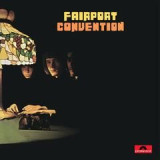
These records contain some of the most storied names not just in British, but world music. From a bunch of school friends setting out to be 'the British Jefferson Airplane', over the course of their first quartet of releases, the group metamorphosed into the leading exponents of British folk rock. In the way American folk and blues had looked back to gospel songs and spirituals, Fairport mined a seam a traditional English folk song, and then combined them with rock rhythms to create something ground- breaking and quickly emulated.
For many, this is the first time the considerable talents of Richard Thompson, Sandy Denny, Ashley Hutchings, Ian Matthews, Dave Swarbrick and Dave Mattacks would have been heard on record.
Cable Ties are a fierce, tense rock’n’roll trio. They take the three-minute punk burner and stretch it past breaking point to deliver smouldering feminist anthems. Post-punk and garage rock hammered together by a relentless rhythmic pulse. Jenny McKechnie channels her struggles into songs that resonate deeply, giving voice to feelings often buried in modern life. Shauna Boyle and Nick Brown are a rhythm section anchored in Stooges primitivism, relentlessly hammering out a bedrock for McKechnie’s guitar pyrotechnics and vocal wallop. Three friends summoning a rhythmic tide to deliver anthems that turn latent anxieties into a rallying cry.
The band has been committed to an inclusive feminist and political outlook since its inception in 2015, exploring issues of gendered violence, colonialism, and sexual assault. The band members have been involved in benefit shows, organized DIY festivals, and volunteer with Girls Rock!, a not-for-profit organization that aims to empower female, trans, and gender non-binary youth in music.
Cable Ties are dedicated to their local community and independent networks, and to playing diverse and inclusive shows. They have toured Australia a number of times and have developed into a lean and efficient touring band who deliver powerful and meaningful shows. Their debut self-titled album, released in 2017 on Poison City Records, was a Triple J feature album and album of the week on 3RRR, with strong support nationally from community radio. They have also self released three 7” singles which have all sold out. The debut album is on its third vinyl pressing.
The band toured UK/Europe in 2017 supporting Jen Cloher, and played Punk’d Festival in Berlin. They returned to the UK in May 2019 to play The Great Escape and shows with Tropical Fuck Storm and Amyl & the Sniffers. In Australia they played Bigsound 2018 and festivals such as the national Laneway Festival tour in 2018, Boogie Festival 2018, The Plot 2017, and Meredith Music Festival in 2016. Cable Ties have supported artists such as Joan Jett, The Kills, Camp Cope, and Cash Savage. They won Best Hard Rock Act at the 2017 National Live Music Awards and were nominated in five categories. They won the Corner Music Award in 2017, have been nominated for eight Age Music Victoria awards, and were longlisted for The Australian Music Prize 2017.
From a bunch of school friends setting out to be 'the British Jefferson Airplane', over the course of their first quartet of releases, the group metamorphosed into the leading exponents of British folk rock. In the way American folk and blues had looked back to gospel songs and spirituals, Fairport mined a seam a traditional English folk song, and then combined them with rock rhythms to create something ground-breaking and quickly emulated.
In the centre of deep space we tune in to the radio broadcasts from an old Class T interstellar spaceship. The emissions endlessly resonate the frequencies of the seventeenth release on the label HC Records by one of the titans of the Valencian scene, The Lost Boys, new pseudonym of the DJ and producer Raszia.
With releases on labels such as Bass Agenda, Subsist or Hxagrm Records, the artist mesmerises our senses with the Exiles of Mars Ep, available in both double vinyl and digital.
Syncopated rhythms are the protagonists across four original tracks together
with remixes by four electro legends: Boris Divider, Estrato Aurora, Dark Vektor, and Filmmaker.
The EP’s first cut is a remix of "Wall Of Bricks" by the legendary Boris Divider, which gives the track an air of crystalline, synthetic and cosmic sound, very much in line with his latest works on the Generative Operations series. Next, we find the original version, where the kick drums are heavier, the synths and basses more colourful and the acid sequences take centre stage in an odyssey of sidereal intensity.
On the record’s flip side, a feeling of overwhelming melancholy takes root in our soul. Valencian Estrato Aurora mentally transports us to the mysterious red sand of Mars in a precise exercise in symphonic minimalism with his remix of "Exiles of Mars", which mutates the original idea with velvety pads, synths and a slow and rapturous hypnotism that sinks us to unfathomable depths.
The Lost Boys' original concept on B2 is a combination of Miami Bass-style breaks and a demonic mantra-like main synth line, backed by what seems like an infinity of pearly effects and secondary melodies, pushing the track towards a crescendo punctuated by a dry and sharp snare.
The second disc’s opener "Bust My Moves" is a masterclass in deconstruction and reconstruction by Dark Vektor with his "Electro Escuadrón Remix”. The genius from Terrassa provides powerful lyrics loaded with a message about the modern rise of the 808 movement. We return to the original Lost Boys version on C2, a futuristic martial discourse takes shape with combating breaks combined with rave chords and brief episodes of respite, almost dreamlike, in the middle and end of the track’s exciting development.
On the D side, rough frequencies verging on distortion materialise through our ship's speakers as we pick up the Colombian Filmmaker’s remix of "Data Recovery For Brains". A psychotronic final appetiser that combines harshness and elegance in the use of the rolling kick drums and saturation of the sound, it is without a doubt the ideal soundtrack to narrate the collision of two galaxies. The closing of the EP features the original track, in which The Lost Boys show us his most mental and lysergic side as the track progresses along a slow and comforting broken rhythm, made dynamic by clever use of diverse acid sequences and clairvoyant stellar melodies.
The complete artistic experience is enhanced in all dimensions with accompanying artwork by
Daniel Requeni and videos elaborated by Frank-F.
Mastering as usual by Steve Voidloss at Black Monolith Studios in London (UK).
Marc Richter aka Black To Comm released his debut record 20 years ago. In 2023 he is still busy releasing music under various disguises and is currently signed to the Thrill Jockey label. To celebrate this anniversary his own Cellule 75 label is re-releasing some classic out-of-print vinyl albums that originally came out on the defunct Type and De Stijl labels. The LP will feature a full-colour printed inner sleeve exclusive to this edition.
In 2009 the Type Recordings label run by John Twells had just released seminal records by Grouper, Jóhann Jóhannsson and Yellow Swans when they signed Richter and put out his breakthrough Alphabet 1968 album. The LP sold out within two weeks, receiving a glowing full-page review in The Wire Magazine by the late Mark Fisher (later reprinted in his book Ghosts Of My Life), was selected for Boomkat's Top 10 releases of the year (alongside debut albums by Leyland Kirby, Demdike Stare and Oneohtrix Point Never) and was greeted with universal praise in the underground blog network as well as established magazines such as The New Yorker and Pitchfork.
The music itself played with the notion of nostalgia without being nostalgic itself. It's the sound of half-remembered dreams, a surreal distorted vision of the past, an aural polaroid of long forgotten musics, a ghostly voice from a non-existent era.
From the original Type one-sheet:
"The mission statement for Alphabet 1968 was to write an album of "songs" for want of a better word. Short tracks which represented genre points, the milestones which stuck in Richter's mind when he thought back to his favorite records. What we arrive at is a breathtaking 10-track album which, over the course of 45 minutes, explores world music, techno, noise, avant-garde, ambient music and even exotica. Each track is linked with a loose thread of radio static or environmental sound, dragging you through the album, as if tuning in to a stray broadcast or a particularly adventurous mix. Richter has pieced the album together from hours of recordings made at his studio with home made gamelan, small instruments and loops gathered from a collection of ancient vinyl and 78 records. The scope of the album is admirable, but ignoring this, it is simply a shockingly arresting collection of experimental oddities, with references ranging from Moondog to Basic Channel by way of Bernard Herrmann. It's not hard to fall in love with Alphabet 1968, far harder would be to place exactly where the record should fit into your collection."
Mark Fisher in The Wire:
"But what if we were to take Richter's provocation seriously - what would a song without a singer be like? What would it be like, that is to say, if objects themselves could sing? It’s a question that connects fairy tales with cybernetics, and listening to Alphabet 1968, I’m reminded of a filmic space in which magic and mechanism meet: JF Sebastian’s apartment in Blade Runner. The tracks on the LP are crafted with the same minute attention to detail that the genetic designer and toymaker brought to his miniature automata, with their bizarre mixture of the clockwork and the computerised, the antique and the ultramodern, the playful and the sinister. Richter’s musical pieces have been built from similarly heterogeneous materials - record crackle, shortwave radio, glockenspiels, all manner of samples, mostly of acoustic instruments. ….. JF Sebastian's apartment was itself an update of older spaces in which science and sorcery co-existed: the workshops of ETA Hoffmann's inventor-magicians, or of Pinocchio's creator, Geppetto. I think, too, of Auguste Villiers de l'Isle-Adam's astonishing 1886 tale The Future Eve in which Edison, using the expertise he has recently acquired from inventing the phonograph, sets himself the task of constructing an artificial woman. But if there are songs here, they are sung by the gramophone and other recording and playback machines. Richter so successfully effaces himself as author that it is as if he has snuck into a room and recorded the objects as they played (to) themselves. Rather than simply automating his music, as in the case of Pierre Bastien and his mechanical machines, Richter makes us feel that he has merely recorded the unlife of objects. ….. Indeed, the impression of things winding down is persistent on Alphabet 1968. Entropy has not been excluded from Richter's enchanted soundworld. It feels as if the magic is always about to wear off, that the enchanted objects will slip back into the inanimate again at any moment."
It all begins here.
Alba Gitana, Gipsy dawn, is a commencement, a turning point of particular importance in the career of a guitarist labelled as “manouche”. Because despite the universality within that word, (“manu” meaning “man” in Sanskrit), it is often reduced to the almost mystical musical legacy of the genius Django Reinhardt. Steeve Laffont’s dawn sees his artistry break away from the confines of this tradition.
In his original compositions we find the ingredients for an unexpected recipe. There is a manouche feel to it, but the fragrance of flamenco mixes with Indian spices, the bossa nova breaks and klezmer rhythms are coloured by Spain ; Steeve finds comfort in both the journey and it’s unexpected turns. Such is the very essence of Tzigane culture. This album tells the story of an emancipation and the joy of no longer being held to respect a legacy, a tradition, of finally having so many more roots to grow with.
Freedom is key to this project which never compromises on the essential : sharing the pleasure of playing together. In the company of such virtuosos as Costel Nitescu on violin, Dominique Di Piazza on bass and of course the ever-faithful Rudy Rabuffetti on rhythm guitar, the compositions are never shows of strength, rather finely crafted magic tricks.
With such vivid, liquid playing Alba Gitana is an invitation to let go, to submit to a harmonic wandering as deep as it is wide. A high-wire walk between structures and freedom, here is the spirit of jazz at its most elegant and universal.
Howard Jones was an icon of the synth-pop era of the early 80s, with a few major hits which have since been etched into the memories of anyone in reach of a radio well into the 90s. While his major breakthrough came with the 1984 album Human's Lib, there was also a curious compilation put together in Japan entitled Howard Jones Sings What Is Love? which pulled together some of his early singles, including extended 12" mixes, but the release never made it past promo stage. As such, it's been a collectors item for a long time, and now Cherry Red have given it a first official release with attention to detail in the artwork and English translation of the original Japanese sleeve notes.
Opening with euphoric keys and soothing birdsong, Jman & The Argonautz’ debut LP ‘Therapy In Session’ feels like a seminal moment. Not just for the band (it’s not everyday you reveal your debut album to the world) but also in the HF canon.
As a label founded on emcees and breaks, the notion of releasing a fully fledged LIVE studio album, crafted by a 6-piece of likeminded and deeply connected musicians makes for a hugely refreshing kink in the arc, at a time when championing true art has never been more important.
The thing we love most about ’Therapy In Session’ is the sense of togetherness that runs through the album. From the aforementioned opening notes to the very last cymbal, every member bringing out the very best in one another as the track list unfolds. Everything poised and perfectly measured, Jman’s lyrical dexterity and Maddy’s accompanying melodies offering up a rich assortment of emotion and mood for the band to blanket in warm arrangements.
Above all else, ‘Therapy In Session’ represents catharsis for both Jman and The Argonautz; each track a deep dive into the highs and the lows, fears, lessons and regrets that life too often throws at us; 16-tracks, each eloquent and razor sharp at every turn.
The post-industrial Ruhr-Area has been an indisputable part of Germany's techno landscape since the very beginning. More than 30 years after techno's golden era and after a manifold challenging pandemic, the scene and its sounds are blooming like never before. Ahmet Sisman and his project The Third Room can be described as key factors for both the area's ongoing, sustainable dedication to electronic music and its current success, being more and more embedded in cultural contexts and society overall.
It's unsurprising that the first album of Ahmet Sisman, the multitalented artist and man of action, is a well-considered mix of familiar and pioneering sounds, enriched by countless influences within and beyond technos constantly evolving sub-genre scenery. With a sophisticated 50/50 mix of four on the floor strikes and innovative breaks, Sisman manages to hit a sweet spot between raw but groovy, experimental but subtle nostalgia, melodious but noisy.
All this is already worthy of a listen, but placed in context, it perfectly fits the musical approach of the Ruhr-Areas biggest transcendental techno project - The Stone Techno Series and Festival. Like the bound-breaking release series of the last two years, 'The Third Space' maintains the metallic and fierce sound vision of a coal mining tradition with everlasting impact. The time travel through industrialization and renaturation continues here with T3R008 and gains a whole new dimension from Sisman's skilled handwriting.
Rico Puestel (Cocoon / Break New Soil) presents an exclusive collection of long-lost Techno tracks from his 2002-2004 archives on blue double vinyl, accompanied by a dream painting Rico did in basic school as full colour artwork!
Seemingly and somehow being ahead of their time, these tracks never made it to an official release although Rico always desired their sheer existence and overall sound, standing out in many different ways...
A further exhibition on the run!
Infinite Pleasure presents another debut release, this time by Rotterdam based, new kid on the block, Pettson. Showcasing his versatile talent with a smashing 5 track EP named Satchidananda.
Skillfully blending intricate beats with profound melodies leaving no genre untouched. Breakbeat, Electro, Deep Dub, 2Step & Ambient it's all there, laced with a unique freshness.
The title is a nod to the renowned yogi, who believed that pleasure is our natural state of being and we couldn't agree more!
- A1: Daytime Tv (Rainy Miller Remix)
- A2: It’s Hard To Get To Know You (Space Afrika Ambiv)
- B1: Pigeon Flesh (Mobbs' Butcher Mix)
- B2: Love Like An Abscess (Aho Ssan Remix)
- C1: Nervous Energy (Teresa Winter Remix)
- C2: I Was Born By The Sea (Morgane Polanski Remix)
- D1: I Was Born By The Sea (Fila Brazillia Remix)
- D2: Dream About Yourself (Bonus)
Richie Culver had been waiting his whole life to record I was born by the sea. His debut album immediately and messily inscribed the artist into the canon of outsider music and experimental electronics, serving both as an arresting statement of intent and a painful reckoning with the difficult path that lead up to it, stealing one last glance back at a place he always knew he had to escape. Between grim lamentations, faded memories and anxiety attacks, all told with searing honesty and disarming openness, I was born by the sea excavates a space for hope, finding Culver digging through Humberside silt to find a world weary optimism, the raw material from which his visual and sound art is shaped. For this collection of expansions and inversions, Culver invites a collection of kindred spirits, contemporary inspirations and old heroes to wade into the salt water of his formative years spent living for impromptu raves and afterparties, connecting vivid memories of his birth place of Withernsea to artists hailing from as nearby as Preston and Bridlington, further afield, from Manchester and London, Berlin and Paris, before returning back to Hull, to where it all began.
For some, responding to I was born by the sea means diving even deeper into the record’s furthest reaches. Space Afrika clear away the pummelling loops of noise from ‘It’s hard to get to know you,’ revealing a cool and cavernous expanse in its wake. Distant chatter, previously heard as though through thin, plasterboard walls, now echoes from outside the maddening claustrophobia of the original’s Sisyphean sonics, illuminated as a dense storm cloud suspended amidst a more open scene, washed clean by a lighter rain, allowing the tender heart of the track to beat clear. London producer MOBBS stretches out ‘Pigeon Flesh’ into an epic, 10-minute, cold-sweat spiral, strung-out tension wrung from disconnected phone tones twisted in unexpected directions, snatches of Culver’s voice turned inside-out and deep fried bass threatening to tip the track over into oblivion, the build-and-release of a nervous breakdown experienced in real time. In an act of subversive self-reflection, Morgane Polanski switches one kind of ennui for another in her adaption of ‘I was born by the sea,’ swapping the sea for the city, English seaside towns in January for summer evenings in Paris and flashing lighthouses and sparkling oil rigs for the Eiffel Tower and the traffic around L’Arc de Triomphe. Even Culver finds time to revisit ‘Dream About Yourself,’ a track taken from his EP Post Traumatic Fantasy, breathing new words into its glacial drift, the half-remembered testimony of a shut-in: Woke up in the evening / Pray for me / Don’t trust anyone / Pray for algorithm. Reframed in a more melancholy light, the track’s reverberant keys even more clearly evoke a mournful nostalgia, fresh pain felt in old wounds.
Others find a parallel universe in Culver’s visceral world building. Rainy Miller flips the script with a scorched, avant-drill rework of ‘Daytime TV’, threading puncturing hi-hats and queasy low-end surge through the track’s steady ambient cascade, invoking the irresistible Preston beat magic of Miller’s own essential debut album, Desquamation. Aho Ssan melts away the crystalline textures of ‘Love Like an Abscess’ with the ominous crackle of a nascent fire, building through swathes of organic Max/MSP squelch and brittle, nails-down-chalkboard scrape, swelling and metastasising the original to spill over Culver’s desperate hymn to corporeal desire, at once flesh and not. Teresa Winter transports us an hour up the coast from Withernsea to her native Bridlington, replacing the sea wall of synthesis on ‘Nervous Energy’ with muffled ASMR murk and fever dream whispers, transforming Culver’s unflinching observations into a haunting call-and-response, filling in the blanks with her own eerie utterances, a fleeting conversation with a ghost. In a touching victory lap, Fila Brazillia, eccentric stalwarts of beloved ‘90s trip hop imprint Pork Recordings, whose performances at Hull institution The Lamp convinced a young Culver of the necessity to make his mark on club culture, resurface for their first remix in 20 years. Steve Cobby and David McSherry lead a low-slung, heartfelt stroll back through a suite of tracks from I was born by the sea, tracing a full circle saunter from Culver’s origins to his current musical practice, the sounds of his present repurposed by the sound of his youth. In a gesture that reflects the emotional complexity of the project, Fila Brazillia find joy at the end of Culver’s troubled reflection, picking out an undeniable groove in the stasis of feeling trapped in your hometown. Underlining Hull’s vital musical legacy, from Baby Mammoth to Throbbing Gristle, Cobby and McSherry demonstrate that, though there are certainly storms, by the sea there is also sun and through the fog, if you listen, you can hear a singular sound, a sound now carried by Richie Culver.
Participant is a record label and creative studio run by William Markarian-Martin and Richie Culver
- A1: Avalon - Linked (Move D Remix)
- A2: Alegria - Danger (It's For Real) (Alien Remake)
- A3: Gemini - 7 15 Pm
- B1: Solar Quest - Acid Nation
- C1: Modulate - Dreams
- C2: Nu Era - Pisces
- C3: Hans G - Anything You Like (B2)
- D1: Q-Burn's Abstract Message - Mess Of Afros (Glenn Underground Remix)
- D2: Hector Zazou & Harold Budd - The Light Gave Us Away (House Mix By Herbert)
Hi Scores is beyond excited to present SSR Records: In Retrospect. This 2LP compilation album presented in a beautiful gatefold sleeve and through all digital platforms, wishes to highlight the immense and hard to grasp legacy of the Brussels based label. SSR Records was founded in 1988 by Marc Hollander as a sub label of his Crammed Discs and spanned the nascent years of house, acid, rave, trance, new beat, hip-hop, future jazz and broken beat, collaborating internationally and racking up close to 200 releases until it was put to sleep in 2002. Far ahead of their time, SSR Records released music of both European and North American artists that hadn’t broken through yet, such as those collected on this compilation: Move D, Nu Era, Gemini, Bjørn Torske, Glenn Underground or Matthew Herbert.
SSR Records was run by Crammed Discs chief Marc Hollander and Minimal Compact singer Samy Birnbach aka DJ Morpheus. SSR Records: In Retrospect comes with extended liner notes, exploring the pivotal milestones in the history of the adventurous label and zooming in on the origins of all records featured on the compilation.
All nine tracks on SSR Records: In Retrospect were selected by Hi Scores’s head honcho Kong DJ and have been remastered. Created between 1990 and 1996 and in the at the time pioneering spheres of house, breakbeat, electro and trance music, these treasures from the vast SSR catalog today stand as a stunning testimony to a truly remarkable and timeless musical legacy. Kong DJ: ‘While collaborating with Crammed Discs on the releases of Aksak Maboul in 2016 and Zazou / Bikaye in 2018 on Ensemble, I began to grasp the impressive catalog of the label and its sub labels, including SSR. Surprised by the tiny footprint SSR had left on the world wide web - often the case for labels ceased before the internet revolution - I wrote an article for British website The Vinyl Factory.
This would later prove to be the first step towards this compilation album, collecting favorites from the label as a kid in a giant candy store.’
The sounds of Cleveland seem to grow increasingly abstract with each passing release and a third Kalahari outing is no exception. Manipulating house and techno templates into newly mutated forms, ‘Lola Ran’ is a testament to a producer always playing fast and loose with concepts of genre. It’s possibly his most probing set of productions thus far.
Where predecessors came bearing remixes, it's strictly originals for the duration here.
‘Rand’ and ‘PrideBRK’ are direct but decidedly off-kilter; at once modern and faintly retro in their approach to breaks and deep-dwelling techno. ‘Lola Ran’, ‘Mano’ and ’Temp Oro’, on the other hand, shift gear into opiated, rhythmelodic territory. There are no doubt traces of Detroit-style sci-fi but the Brussels-based producer terraforms an alien microcosm unto itself.
Kitchen sink Scuzz n’ Bass from 1998 Tokyo. Existing somewhere between Drum n Bass, Musique Concrète, Free Jazz and Noise, Jigen (aka Taro Nijikama) ran the cult Shi-Ra-Nui imprint and was a lynchpin of Tokyo's underground music scene, working as much behind the scenes as in front of them.
There is an inherent grit to the work on display here. Jazz-inflected drums, echoing bells, dissonant flutes, and haunting piano work coarsely interact with skipping breaks and industrial atmospherics, punctuated by tense gasps of silence. Samples disintegrate and reappear, creating a kind of elliptical narrative, and the 9 tracks here perhaps trigger a disorienting sense of dèjá vu.
Originally released on CD by Shi-Ra-Nui in 1998, Double Circumflex is proud to present the first officially licensed reissue of Stone Drum Avantgardism by Jigen and introduces the prescient sound of Shi-Ra-Nui for deeper excavation into its shadowy fissures. Mastered and cut with maximum precision by Beau Thomas at Teneightseven.
Up next on Space Dust is Miles, exploring 4 variations on an other-worldly electro vibe with his 'Peeking Through Clouds' EP.
The landslide-worthy bassline of 'Hole in the System' kicks off proceedings, with sharp claps and sizzling rides occupying the space left behind, while squelching stepper 'Light Years Away' presents itself as another wieldy dancefloor weapon on a US-garage tip.
On the flip, bass continues as the dish of the day through 'In Transmission', as moody synth work rides a subdued breakbeat. 'Peeking Through Clouds' boxes off the EP in an ethereal fashion... but this shimmering closer remains a floor-focussed weapon.
WE ARE definitely not afraid to switch things up here at Neighbour Recordings. In fact it's part of our blueprint, our mission statement, our philosophy. And here's the proof; the Court Vision EP, our latest release from label co-owner Birke TM.
For this 'fresh as' four-tracker, Birke TM has penned a sonic love letter to the classic drum & bass that is dear to him and the originators who he has the deepest respect for. This is no pastiche though, rather a considered and meticulously-crafted take on and homage to D&B that is stamped with Birke TM's own deft touches, musical DNA and versatility.
From the hypnotic and up-tempo opening cut I Dream Of Jeannie through to the emotions-tugging Eden, the distinctly-soulful tones of Sanctuary and winding down with the meditative Never Lose Touch, there is a deep sensibility running through the entire EP that is the perfect counterbalance to the pacy yet sublime breakbeat.
De La Soul is never far away from the conversation about great music but as of late, they have been back in the headlines more than ever as their music finally got added to digital streaming sites. Buhloone Mindstate is a lesser-known but just as good album as the most famous Three Feet High and Rising and was a critical success at the time. The lead single has samples of Michael Jackson's 'I Can't Help It' and Smokey Robinson's 'Quiet Storm', there is a collab with Biz Markie on 'Stone Age' and MC Shortie No Mas appears on many tracks including the particularly standout 'In The Woods'.
In the quiet surrounding the pandemic, Madeline Kenney made sonic sketches in the basement studio she shared with her then-partner. She arranged phrases that called her—the sharp knife of a synth cutting a path along a blooming arpeggio, drums stuttering firm and tight. Working this way, she amassed a collection of songs she had no particular aims for. Some formed her 2021 EP Summer Quarter, others languished.
But in 2022, Kenney’s partner left suddenly and without warning, plunging her into the solitary act of untangling what happened. In the wake of her ensuing depression, she revisited these songs and found in them something prescient. She’d already laid the foundation for A New Reality Mind.
That her relationship’s end came without warning is only half true, though. The warnings were in the feelings and fears that inspired Kenney’s critically-acclaimed third album, Sucker’s Lunch (2020), which was co-produced by Jenn Wasner (Flock of Dimes) and centered around the idea of flinging oneself freely into the seemingly-assured destruction of new love, come what may.
If sonically Sucker’s Lunch was letting yourself be pulled into the warm bath of a good story, A New Reality Mind reflects the harsh light of truth coming to break the spell. But as sobering as morning light can be, there’s brilliance to it, too. To see in the clarity of day is a gift. A revolution. Rather than reckoning with love lost, the songs on A New Reality Mind grapple with the self that chose to fall. “I guess I only needed to look twice / Reflected in my attitude, my constant compromise,” Kenney sings on “Red Emotion,” the musical landscape screeching and gasping around her observations of how she made herself small to keep the dream of love alive.
These notions of sight and vision pervade the record as Kenney stands before the infinity mirror of selves she’s been to preserve bonds in her life. On “I Drew a Line,” Kenney contends with the stories she’s told herself to keep plodding along, and the way those stories shape her perceived reality. She invokes John Berger’s Ways of Seeing—“Everything around the image is part of its meaning,” we hear him say. “Everything around it confirms and consolidates its meaning.” Here, Kenney isn’t interested in shaming herself for being carried away by the fantasies of the heart, but rather in investigating the unavoidably human propensity to do so. “I, like everyone else, am muddling through my most ordinary disaster of a life,” she acknowledges, a sentiment which reverberates through album opener “Plain Boring Disaster.” “I don’t need to start again,” she sings at the song’s close. “But I can change when it ends.” We may all be doomed to repetitive, ordinary heartbreaks, Kenney realizes, but at least we can cultivate a capacity to witness our missteps and build new realities for ourselves.
This is Kenney’s most expansive work, while also her most solitary. Produced and recorded alone in her basement, these songs are manifestations of what it feels like to be transformed by pain. Textures collide and collude; sonic ornaments emerge and dissipate capriciously; saxophones soar untamed, as on the 80s pop elegy to self-sacrifice, “Reality Mind”. These songs beg you to dance, then pull the rug out from under you once you’ve caught the beat, leaving you dizzy like the whiplash of love’s end.
But in the propulsive power of A New Reality Mind, there’s also acceptance, self-forgiveness, and a willingness to move forward into life, with all its ways of making a sucker of you. “That way of living, I’m over it,” Kenney declares of the habits that hold her back on “Superficial Conversation”. “I do not need to be reminded of what I did,” she assures, the song opening wide and beaming, like a smile expanding to taste a new breath of air.