Slow paced drums with offbeats softly phased with the guitar, misty takeoffs from the synthesizer: a hazy idyll is starting off on the road to the rocket festival (bun bang fai). Answering each other on the responsive mode of the lam soeng, Sothipong engages in a flirt but Oulay Vanh is not ready to trifle with just anybody.
As a stylistic variation of a popular Lao musical genre, the lam soeng was the source of several themes among which the “bang fai” - which is part of the Lao conciliatory festivities preceding the rainy season - remains one of the most renowned.
However, the producer and composer of these songs, Sothy, created an unusual arrangement: the instrumental introduction separates from the sang canon, the synthetic mix is stripped down of the traditional organology - everything here becomes unsettling for a listener familiar with the genre.
Everything comes with a reason: the record was edited in 1981 under the title Sothy Productions yet produced in France by the Parisian label Oxygène (famously known for its unforgettable first French punk compilation 125 grammes de 33 1/3 tours). Chansons Laotiennes still remains hard to classify.
And then who’s Sothy? Along with the unverifiable identity of the seemingly Laotian singers, skepticism gains ground concerning the man behind the pseudonym. Is he an escaped musician from one of the first Cambodian rock bands of the 1960s? A surviving producer from the 1980s Paris? Or a composer in transit in one of the many places of the Laotian diaspora? Sothy eludes any researches and disappears behind his numerous homonyms.
The second track is just as enigmatic: a beat box, a lightly reverberated voice as well as a guitar solo and a small synthesizer break, “Tuei” or “Tawai” offering (as the writing on the record suggests) makes way to dancing step and a truly joyful melody. Twisted and lively steps on a romantic background tune turn this second track into a genuine paslop - a program recommended by therapists to relieve muscular pains due to seated positions: you will unlock your pelvis with some synchronized Laotian choreographies.
For their first edits, Akuphone called on a young Parisian producer. Shelter, aka Alan Briand, mingles his own mixes and electro productions with a large variety of influences and styles: krautrock, disco, traditional music, psychedelic, synth pop, ambient, bossa nova, Japanese funk. He produces both original compositions and remix.
quête:break sl
"One of the most iconic groups of the late 20th century, Dire Straits established their timeless sound from the
moment they first appeared on the London gig circuit, in 1977. With faultless musicianship and memorable songs
that quickly connected with music lovers, it was clear the group would set their own path, proving that, even amid
the new-wave era, classic songwriting would never go out of fashion.
After three years of relentless hard work, touring, writing and recording their music, the group entered the 1980s
well on their way to becoming the biggest-selling band in the world. That year’s Making Movies album would also
make its presence felt on the silver screen, thanks to the inclusion of the UK No.8 single ‘Romeo And Juliet’ – later
used in films such as Empire Records, Hot Fuzz and I, Tonya – and live favourite ‘Tunnel Of Love’, which featured in
the 1982 Richard Gere film, An Officer and a Gentleman. Dire Straits’ frontman, Mark Knopfler, would later explain
to The Times how satisfying it was to write ‘Tunnel Of Love’: “It’s the moment when you know you’re really on to
something,” he said. “There’s a certain part of the song that I call the breakdown and when I got there I could feel
the drums, the piano, all the things that I wanted all the instruments to do. When you get to that state, there’s a
strange sense of one thing following another, of elements falling into place quite naturally.”
Paying extra attention to those elements, this half-speed master of Making Movies has been overseen by Miles
Showell at Abbey Road Studios, in London, resulting in a cut that has a superior high-frequency response (treble)
and very solid and stable stereo images. Pressed on 180g vinyl, it comes with alternative artwork that swaps the
red and the blue of the original album sleeve, plus a printed inner sleeve, a “Half-Speed Master”-branded obi-strip
and an Abbey Road certificate of authenticity.
"
Black Truffle is pleased to announce a tenth anniversary reissue of Oren Ambarchi’s Quixotism, originally released on Editions Mego in 2014. Recorded with a multitude of collaborators in Europe, Japan, Australia and the USA, Quixotism presents the fruit of two years of work in the form of a single, LP-length piece in five parts. Quixotism takes the driving rhythmic aspect of works such as Sagittarian Domain to new levels, with the entirety of this long-form work built on a foundation of pulsing double-time electronic percussion provided by Thomas Brinkmann. Beginning as almost subliminal propulsion behind cavernous orchestral textures and John Tilbury’s delicate piano interjections, the percussive elements (elaborated on by Ambarchi and Matt Chamberlain) slowly inch into the foreground of the piece before suddenly breaking out into a polyrhythmic shuffle around the halfway mark, and joined by master Japanese tabla player U-zhaan for the piece’s final, beautiful passages.
The pulse acts as thread leading the listener through a heterogeneous variety of acoustic spaces, from the concert hall in which the Icelandic Symphony Orchestra were recorded to the intimacy of crys cole’s contact-mic textures. Ambarchi’s guitar itself ranges over this wide variety of acoustic spaces, from airless, clipped tones to swirling, reverberated fog. Within the complex web Ambarchi spins over the piece’s steadily pulsing foundation, elements approach and recede in a non-linear fashion, even as the piece plots an overall course from the grey, almost Nono-esque reverberated space of its opening section to the crisp foreground presence of Jim O’Rourke’s synth and Evyind Kang’s strings in its final moments. Formally indebted to the side-long workouts of classic Cologne techno, the long-form works of composers such as Éliane Radigue and the organic push and pull of improvised performance,
Quixotism is constantly in motion, yet its transitions happen slowly and steadily, often nearly imperceptible, the diverse elements which make up the piece succeeding one another with the logic of a dream.
At the time of its first release, Quixotism was clearly a summation of Ambarchi’s work in the years leading up to it. Now, listening back a decade later, it also seems like an arrow pointing to the future, suggesting paths that would be explored further in works to come: the pulsating guitar layers of Hubris, the album-length collaboration with Jim O’Rourke and U-zhaan on Hence, Shebang’s joyous layering and percussive drive. Now sounding better than ever in a new remaster by Joe Talia, the time is ripe to rediscover its quixotic charms.
After the breakthroughs of 2020’s wistfully lush Fear of Death, and 2022’s High School, whose tales of nostalgia were never quite as distant as they seemed, the multi-hyphenate comedian and songwriter Heidecker has reached a new peak with Slipping Away, his warmest and fullest record to date. While all of his albums are concept records to some degree, this one tells a story on a larger scale, offering an imagistic framework that allows for some of his brightest melodies, heaviest themes (the feeling of before the fall and after), and most direct and vulnerable lyrics.
For the next reissue in Mr Bongo’s Cuban Classics series, we look to Raúl Gómez’s entrancing 1977 Instrumental album. Presenting a unique blend of orchestral disco and jazz-funk, with Afro-Cuban flavours and soundtrack influences, it’s rich with drum breaks, energy and evolving compositions. A record that forever keeps you guessing, powered by an exemplary orchestra at the top of their game.
Cuban composer and singer Raúl Gómez is most known for featuring in the groups Mirtha Y Raul and Los Bucaneros alongside producing the Cuban classic Los Reyes 73 album, amongst a whole host of other incredible productions over the years. Released on Cuba’s state-owned label Areito, Instrumental sees Gómez not only as an instrumentalist and author, but also as a producer and arranger.
It's an album that deftly evades pigeonholing. Floating between instrumental mood music and library/soundtrack mastery, followed by explosions of cosmic-Latin funk, psych guitar workouts and compositions that reflect the orchestrated disco coming out of the US at the time, from greats such as Love Unlimited or MFSB. Lace that together with a healthy serving of Afro-Cuban magic to underpin the tracks and it’s a recipe for a record that captivates from start to finish.
Predominantly an instrumental album as the title suggests, the record showcases the Orquesta EGREM in full flow, soaring strings and vibrant horns at every turn. Highlights include 'Mi Samba Carnaval' with its breathtaking drum break, bubbling synths and sublime arrangements and the romantic film music impressions of ‘Tema De La Sierra', that have been a sampling source for many a producer. Elsewhere, ‘6 Son’ is a mind-melding psych guitar powerhouse, with 'Dacapo', written by Gilberto Peralta, offering up a slice of atmospheric and energetic Latin shuffle. One of only a handful of tracks where scat vocals compliment the orchestral tones, a Brazilian percussion theme marries with dancefloor sensibilities for a dose of feel-good, brilliance.
A wide-ranging, multi-dimensional release, Instrumental exhibits musicianship, composition and creativity at its finest and demonstrates another key example of the rich output of music that flowed from the island of Cuba post revolution.
“A huge thing for this record was to make it feel as close to our live show as possible,” says Tom Sharkett of W.H. Lung’s latest album. “We didn’t want it to sound live but we wanted to capture the excitement of the live performances.”
This is something that has become paramount to the group in recent years as they have undeniably blossomed into one of the most joyous and arresting live bands in the country. “The reason I’m in a band is to play live music,” says singer Joe Evans. “For me, music is live music. That’s what it’s for, to be played with people.”
The five-piece band, also featuring Chris Mulligan, Hannah Peace, and Alex Mercer-Main, decided to try something new on their third album after two incredibly successful collaborations with previous producer Matt Peel. In order to capture the energy, spirit and dynamism of their live shows, they relocated to Sheffield to work with Ross Orton (MIA, Arctic Monkeys, Working Men’s Club) who was able to harness this side of the band to remarkable effect. “Ross is the Sheffield Steve Albini,” says Evans. “He’s the king of not overthinking it and trusting the process of the art of recording songs. He was always there to stop us fucking around with cerebral stuff and get it down.” Sharkett echoes this too: “He was the exact producer we needed without us even realising. His productions and mixes are bombastic, lively and in your face and that’s exactly what we wanted.”
However, while this album is rooted in a sense of capturing a moment and a sparky liveness, that’s not to say it’s a raw or ragged record. It is still a meticulously composed, delicately layered and pristinely produced piece of work that, in true W.H. Lung style, runs the gauntlet from dance to pop to indie while still capturing that distinctly unique quality that is unquestionably their own. “It was a really big thing for me to realise what made us sound like us on this record,” says Sharkett. “I think the album sounds a lot more confident and self assured because of it. Some songs sound just so much like Lung and I’m really proud of that. I’m not sure we’ve done that as consistently across the other records.”
While the band have drilled deeper into finding their own singular identity, it’s not a record resting on its laurels. It’s a significant leap forward, expanding on their solid foundations while also breaking new ground. “The big difference with this record is its directness in every sense,” says Sharkett. “The songwriting is more upfront. Previously we’d focused a lot on vibe and production as opposed to just writing songs. The overall mission here was to revert to a classic songwriting structure and for the production to come afterwards.” And so what you have on this record are deeply considered and well-crafted songs, then recorded with blistering intensity in the moment, and then given a touch of experimentation afterwards. Then throw in Orton’s contributions to the band and it’s proven to be a real winning formula. “He brought a real dose of magic to the songs we’d written,” says Sharkett. “And brought an extra bit of wonk and quirkiness each time.”
The band’s ability to write more traditional and conventional songs is clearly a skill they’ve taken to with ease, at times there’s an almost Springsteen-like quality – but if he'd ever had an ecstasy period – to tracks such as ‘Thinner Wine’ and ‘Bloom and Fade’. While ‘How to Walk’ was constructed with one thing only in mind: that it would absolutely slay on stage. “I can’t wait to play this live,” says Evans. “We wanted a song to represent our live set, a new big one, and this is it.” Once again it leans towards the anthemic, with its driving, propulsive charge complete with incandescent synths and vocal melodies so irresistible you can already hear them being sung in unison by a crowd.
It’s an incredibly difficult feat to pull off a record that is more rooted in traditional songcraft while also capturing the power of a live performance, as well as pushing sonics into experimental new directions while working with a brand new collaborator. But here the band has managed to do just that. And the album’s closing song ‘I Will Set Fire To The House’ is a perfect example of such a thing. It’s a song that feels immaculately constructed but also very much alive and of the moment as its radiating synths engulf from the off, and Evans’ vocal is silky but powerful and in perfect symbiosis with Peace’s. It’s a song that captures the endless joys of music playing long into the night. “It may be a bit of a bloody bombastic way to end an album saying ‘and we’ll dance into the sunrise’,” says Evans. “But fuck it.”
MORE PRESS ON ‘VANITIES’ (MELO131)
"Vanities artily refines an exhilarating brand of up-front electro-dance" MOJO ⅘
'Idiosyncratic yet euphoric electronic pop on triumphant second LP' 9/10 Uncut
''One of the most effective alternative pop albums of the year'' 4/5 Record Collector
'Dance music for the modern age' - The Times (4*)
Phoebe Rings is a dream-pop band offering a unique blend of introspective yearning with celestial danceable grooves. Their self-titled debut EP, a hopeful collection of musings, out on Carpark Records, is a testament to the distinctive musical style of Auckland jazz-school-trained pianist and songwriter Crystal Choi. Across six tracks, the EP is a love letter to some of the band’s influences: Studio Ghibli films, Zelda and Stardew soundtracks, Bossa Nova, Stereolab, and 90’s Korean ballads.
In 2020, the band played their first gig in a ‘funny side room’ during a festival at Auckland Town Hall. Choi’s songwriting was brought to life with Alex Freer on drums, Simeon Kavanagh-Vincent on guitar and synths, and Benjamin Locke on bass. Choi says she knew the tracks had to be recorded after the band played the songs better than she could ever imagine. And so, remotely through the COVID-19 lockdowns, the band started recording the EP.
“Daisy” is the vibrant leading single, with the shimmery refrain “Ooh-wee-a-waa” and the uplifting mantra: “When you’re next to me, the world’s full of daisies.” The swirling synths fizz on the skin like warm sun, promising growth and new starts. “Cheshire” is an Alice in Wonderland-inspired trip through the rabbit hole, pacing in anticipation. “Like a Cheshire cat, it grins and disappears in moments when you accept yourself,” explains Choi. Locke and Choi finished the lyrics one evening, huddled in the corner of a local underground music venue, with references to Murakami’s book Dance Dance Dance.
Choi grew up in Seoul, developing a palette for K-pop and retro sounds. The city-pop influence of “January Blues” shines through, with Choi crediting one of her favourite songs from the ’80s: “연극이 끝난 후 After Play”. The track explores her disconnect with the summer break. “In the Northern Hemisphere, January is winter,” says Choi. “I missed that a lot, and I don’t vibe with the beach.”
“Spissky,” chimes in with Choi’s lilting vocals reminiscent of childhood lullabies, inspired by a lonely-looking castle she saw on tour with Princess Chelsea in Slovakia. While “Ocean” leans into its mumble-core roots, taking a leaf from the Cocteau Twins. There’s an external shift in the EP, with “Lazy Universe” being the most energetic track, evolving with the band’s chaotic sci-fi experimentation. Asking, “Are you still waiting for a kiss?” Choi is self-critical and urgently speaks up from being passive.
The members of Phoebe Rings are cemented in the musical ecosystem, balancing other projects and full-time work. Yet Sundays will always be carved out for Phoebe Rings to dream up imaginative, world-building tunes — often with a Nintendo game soundtrack in the background as inspiration.
When the world — and his previous band Star Tropics — crumbled in the early days of the pandemic, Chicago's Loren Vanderbilt began rebuilding himself through song. Daydreaming to the chime of IRS-era R.E.M., Felt, The Railway Children, New Order, and 90's staples like Ride, Pale Saints and Slowdive, he fell backwards in time through records as a means of escape. To break away from the present and embrace the nostalgia of musical eras gone by, Loren formed Humdrum — a band built around his favorite elements of dream-pop, indiepop, shoegaze, and new wave. On his debut album, "Every Heaven," Loren establishes himself as a talented songwriter and master of melody across 10 tracks brimming with jangly guitars and lovelorn vocals—all punctuated by the pulse of a driving beat. A deeper listen reveals a juxtaposition between the album's carefree melodies, and its sobering truths about the life, loss, and the questions of being a queer 30-something artist. With "Every Heaven" Humdrum has presented 10 songs that speak to life's dynamic moments. And they can't wait for you to hear them.
2024 coloured (violet) vinyl repress for this year's Sonic Cathedral's 20th anniversary! Hull/Leeds based five-piece bdrmm release their much anticipated debut Bedroom on July 3, via Sonic Cathedral. The 10-track album was recorded late last year at The Nave studio in Leeds by Alex Greaves (Working Mens Club, Bo Ningen) and mastered in Brooklyn by Heba Kadry (Slowdive, Beach House). It's a hugely accomplished debut and a real step up both sonically and lyrically from their early singles, which were rounded up on last year's If Not, When? EP. Musically, there are nods to The Cure's Disintegration, Deerhunter and DIIV, while the band reference RIDE and Radiohead. There are also echoes of krautrock and post-punk, from The Chameleons to Protomartyr, plus the proto shoegaze of the Pale Saints' The Comforts Of Madness, not least in the cross fading of some tracks, meaning the album is an almost seamless listen. As a result, Bedroom becomes an unexpected and unintentional concept album, running through the different stages of a break-up set against the backdrop of the ups and downs of your early twenties. "The subject matter spans mental health, alcohol abuse, unplanned pregnancy, drugs_ basically every cliché topic that you could think of," reveals frontman Ryan Smith. "But that doesn't mean they ever stop being relevant. It's a fucker growing up, but I'm lucky enough to have been able to project my feelings in the form of this band, surrounded by four of the best people I've ever met." And that band name, in case it needs explaining, is pronounced the same way as the album title. "I never thought I'd get to the stage where I would have to explain it so much," says Ryan. "We have been pronounced as Boredom, Bdum and my old boss thought we were a ska band called Bad Riddim. We're all sarcastic cunts, so Bedroom spelt correctly seemed like the perfect title." He's right. The perfect title for the perfect debut album. "A modern day shoegaze classic" - NME "The general roller coaster of being twenty-somethings in post-Brexit England who find themselves awash with a shimmering soundscape that recalls Oshin-era DIIV, Deerhunter's Microcastle, or even The Cure at their most ambiently grandiose" - Under The Radar
An incredible version of 7 Days Too Long on beautiful green vinyl, by New Zealand Soul Sensations Jamie and The Numbers. To make this even more special, the artwork has been inspired by Dexy’s Midnight Runner’s debut album “Searching for the Young Soul Rebels”, as well as the sleeve notes written by Kevin Archer. It also features the trombone skills of “Big” Jim Paterson!
“The original by Chuck Wood was released in the 60's. However, it was 1973 when I heard it for the first time whilst growing up in the Black Country. At the time, I was just 15 years old and having no siblings, I looked towards the older kids, who for me, were into the scene, especially Northern Soul. There were songs such as "Me & Baby Brother" by War, and the commercial "Skiing In The Snow" by The Invitations that grabbed my attention, plus I also liked the drummer Hamilton Bohannon.
The footwear of choice were Solatio shoes, which had leather soles that allowed shuffling on the dancefloor, as well as the great acts of acrobatics during the high points of these great tunes. Although girls attended these gatherings, it was unheard of to ask a girl to dance. It just wasn't the cool thing to do! All of this brings me to Dexys Midnight Runners. Mike Taylor, a friend of the band, suggested covering this song. Our sound was a little bit like Jamie & The Numbers, in what both bands set out to achieve with each of their respective sounds. This version has been inspired by Dexys - the intro, the breakdown, the guitar and organ driven vibe, all providing the perfect backdrop for the amazing talent of Jamie Musava. Her vocals are just brilliant and of course, Big Jimmy is there with them on trombone. Now for the caper...”
A steady and sure buzz has been building around Steve Young’s ‘Scarper’ project over the past few years, particularly since his acclaimed 2017 debut album ‘Warmer Squares’ and subsequent dancefloor favourite ‘E-Funk', which won over fans from Skream to Carl Craig with its genre-crossing appeal.
Marking a noticeable shift in direction and a new sense of focus, Scarper returns with four tracks of varying styles and influences. Drawing from dub, techno, breakbeat and rave, he mainly shoots for the floor (with a clear emphasis on bass weight), although as always, there is ample headphone fodder.
Opening with ambient intro 'Wavecrush,' Scarper moves through dub- infused downtempo with the Weatherall-esque chugger 'Metadub,' swiftly picks up the energy with the chunky beats and deep bass of
‘Metadome,’ and concludes with high-octane face melter 'Slab,' which throws tech-breaks, dark garage and jungle/hardcore vibes into the pot.
More quality from Scarper.
One of London’s most loved underground parties, Tangent, celebrates its 10th birthday this year with a new compilation on Mr Bongo. Its residents, John Gómez and Nick the Record, have curated a selection of prized, rare and dancefloor-ready tracks that have soundtracked the past decade of their parties. Alongside remastered reissues of these original cuts, the CD version of the compilation also houses three incredible edits from Nick, John and Dan Tyler of the Idjut Boys. These were too good not to press onto vinyl, so we’ve given them the standalone 12" they deserve.
Contextualising their edits Nick states, “Tangent was not only the place for us to play the music we love the most, it also became the testing ground for our edits. It was really helpful being able to see the effect each of these had on a dancefloor before the records were released and many of them also became firm Tangent classics.”
Up first, Nick is joined by Dan Tyler (Idjut Boys), who he runs the edit label Record Mission with, for a furiously feel-good re-edit of Leo Basel’s ‘Quelle Drôle De Vie’. Basing their edit on the 1987 ‘Special Remix’, it does what any great re-work does, dropping the sections from the original that don’t quite hit the mark, whilst focussing on the gold in amongst it all. The result is a slice of peak-time, French boogie joy, that will warm even the coldest hearts.
John then joins Dan at the dials for a cosmic revamp of Love Isaacs 'Surprise Surprise'. A serving of ‘80s electro-funk, dripping in swagger with a highlife tinge. John and Dan extended the grooves for maximum dancefloor power, space echoing it into the stratosphere at all the juiciest points.
Lastly, Nick takes on Rick Asikpo and Afro Fusion 'Let's Get High' from the super sought-after 1980 album, Got To Be Me. Celestial, gospel-infused soul from Nigeria, Nick homes in on the energetic last 2 minutes of the original as the building block of his 12-minute edit. A completely reworked, feverishly paced creation, Nick switches the sections around, saving the slow, soulful segment for a brilliant cosmic breakdown before the track erupts back into its full flow. Synthesised, jazz-funk elation from start to finish!
- Heart Of Tin
- Aberfan
- Movement
- Richard E Grant
- Salvation Xl
- Taking Stones To Joe’s House
- Double Island
- At The Lake Ft. The Golden Dregs
- Flight
- Bluff
In Cornish slang it is said that things get done ‘dreckly’; that is, not now, not necessarily tomorrow, but, at some indefinite point...in the future...soon...
Fitting then that when Bristol’s Langkamer decamped to their de facto home-from-home in the picturesque south-west seaside town of Falmouth to record their third album in as many years (with an EP thrown in there too) - there was no particular need to rush things: “The process was much slower and more considered for Langzamer.”, drummer/vocalist Josh Jarman explains: “The first two albums felt pretty urgent, and each was finished in about 6 months, but this one feels a lot more deliberate. It’s taken us two years to get this done.”
Equally fitting too that Langzamer kicks off proceedings with ‘Heart of Tin’: the first bars are languidly lugubrious, so deliciously plucked-out and scuzzed-up that they linger in the air like passing smoke, magically, slowing time down to their own assured and steady will. And in so much time, that also feels like no time at all, comes an opening line of such stark, disarming confessionalism as might be found in the David Berman/Silver Jews songbook: “Do you want the good news or the bad news first? // They’re both bad news, but the bad is worse” It’s Langkamer in a nutshell: embattled, heart-on-sleeve Slacker Rock slaked with twinges of fret-sliding Americana, yet deeply embedded in the folk mythologies, colloquialisms and experiences of the band’s West Country roots.
Throughout Langzamer, confronting the listener again and again is this conflict between the band’s breezy, melodic charm, and the threat of something more sinister lurking in the undergrowth. While those more familiar with Langkamer’s oeuvre to date will have already come to know and love their often self-deprecating yet witty lyricism, the songs on Langzamer take this trademark ebullient gloominess to more challenging plains: “Principally this is an album about grief, and everything that entails...” explains Jarman. “in a sense death brought these songs to life.”
This thread is felt no more so than on ‘Salvation XL’. Inspired by a “particularly bad batch of food poisoning I had in Morocco”, Jarman explains, and beginning with the memorable opening line, “Jesus came to me a Burger King in Marrakech”, the band wind their way through the ‘big topics’: death and God.
“This trip was shortly after a few of my friends had passed away, and I think a lot of my thoughts and actions at that time were being influenced by my grief without me realising it.”, he explains, “Whenever I dwell on grief, and how death has given my life a new context, I come back to that. The ongoing battle between agnosticism and atheism. I wasn’t raised in a very strict religious home, but I come from a long line of methodists, and it’s interesting to think about the way theism and religion have shaped my life without me knowing it. I think that’s being channelled on this album a lot. The uncertainty that comes with disbelief.”
Our collective mortal frailties are also felt on lead single ‘Richard E Grant’. With a trademark bittersweetness, a track that begins as an appreciation of the actor’s humorous social media presence unfolds as a study on “finding healthy coping strategies to deal with loss.”. Elsewhere, ‘At The Lake’ - to the tune of mournful, folk-like balladry - explores binge-drinking culture and the troubled association between unhealthy behaviour and creativity. The listener is left in no mind as to the meaning behind the references to James Joyce and Janis Jopin as “souvenirs stolen from the dark”.
With themes as weighty as these strewn across the album’s 10 tracks, It seemed like a particularly astute move then for the band to personally approach Ben Woods, founder of the Golden Dregs, to assist on production duties. Not only would the delicate intimacies of Woods’ main project - see 2023’s On Grace & Dignity for reference - add an appropriate moodiness, but Woods was also born and raised in Cornwall, where the album was recorded; amidst “eating pasties” and breaks by the sea, Woods and the band transformed the vaults underneath iconic Falmouth venue The Cornish Bank into a makeshift studio for a weeks’ worth of recording. Occasionally friends would drop by to lighten the load; Zander Sharp tracking violin on ’Double Island’ and ‘Flight’; Josh Law and Ben Sadler of Breakfast Records labelmates Getdown Services, both of whom contribute to the soul-stirring ‘mountain’ chorus on ‘Aberfan’.
When compared to the brightness of 2023’s The Noon and Midnight Manual, Woods’ influence on the record seems indisputable. On the aforementioned ‘At The Lake’, for instance, which features backing vocals from Woods. Or, most acutely, on the piano strains of harrowing closer ‘Bluff’, a track with such chilling, spectral severity as to effect the band’s most heartbreaking effort to date. While it’s particularly sombre note on which end proceedings, it's also an appropriate one: Langzamer bravely stands tall as their most restrained, matured, and sincere collection to date. And almost by virtue of its impeccable honesty, those moments of sunshine-joy that creep through the cracks feel that much more golden.
Pearson Sound returns to his Hessle Audio label with Which Way Is Up, a 4 track EP showcasing a range of textures and tempos with soundsystem pressure as the anchor. The 808-laced 'Hornet' kicks things off with a sound palette inspired as much by '80s Miami as '10s London. 'Twister' dials up the energy with a jagged lead and scattered breakbeats pulling in opposing directions, while the steppers pulse of 'Slingshot' evokes formative experiences at Subdub in Leeds. The EP is brought to a close with the blissed out title track 'Which Way Is Up', whose arpeggios dance around each other until they fizzle to breaking point. Support from Mala, Mary Anne Hobbs, Joy Orbison and more.
Straight out of Tokyo, the illusive Guchon steps up for the next release on Feelings Worldwide.
One for the heads who like to stay up late and get down with their games consoles, the EP is packed with dance floor curveball material.
Super fun vibes throughout, a slab of Japanese bubblegum pop-house with some bonus breaks and a remix from cult hero Chrissy of Chicago Smartbar fame.
The highly anticipated follow-up to Thee Sacred Souls's breakout 2022 self-titled debut, Got A Story To Tell, features 12 all original new songs, a soaring statement of exquisite craftsmanship from this young band from San Diego whose story grows bigger by the day. Recorded and produced by Gabriel Roth at Penrose Recorders, in Daptone’s Riverside, CA studio, and written in the throes of supporting their 2022 album, which was met with significant excitement and major touring that brought them across the world. What swirls together on Got A Story To Tell is an appreciation of decades of soul music, and beyond - a sound and feel that is timeless, lived in, and very much in the now. Album opener “Lucid Girl” champions independent women, set to some of the toughest sounding drums and bass the band has yet to put to tape. “Waiting On The Right Time” slinks with a touch of slow-burning psychedelia. A plea for empathy punctuates “One and the Same,” with Lane singing: “We’re one and the same, I feel one day / We learn to live with each other / In love, not fear / Just for a moment, why can’t we be together.” “On My Mind” is a sweeping orchestration, with Lane navigating the complexities of finding happiness while balancing the good with the bad. The album is punctuated with strings and squelching guitar, trundling piano, pops of conga, horns - it makes for a thrilling, layered listen that rewards with multiple spins.
Coke Bottle CLear Vinyl. The breakout success of 2016's Puberty 2 saw Mitski hailed as the new vanguard of indie rock, the one to save the genre from the white dudes who've historically dominated it. But the often overlooked aspect of being a rising star is the sheer amount of work that goes into it. "I had been on the road for a long time, which is so isolating, and had to run my own business at the same time," Mitski explains, "a lot of this record was me not having any feelings, being completely spent, but then trying to rally myself and wake up and get back to Mitski. I was feeling really nihilistic and trying to make pop songs."We want our artists to be strong but we also expect them to be vulnerable. Rather than avoiding this dilemma, she addresses directly the power that comes from appearing impenetrable and loneliness that follows. "With a lot of the romantic infatuations I've had," she says, "when I look back, I wonder, Did I want them or did I want to be them? Did I love them or did I want to absorb whatever power they had? I decided I could just be my own cowboy figure that I so desire." In Be The Cowboy, delves into the loneliness of being a symbol and the loneliness of being someone, and how it can feel so much like being no one.
Eaux proudly announces a new collaborative mini-album from label boss Rrose and Polygonia. Containing six tracks and over 40 minutes of music housed in a fully printed sleeve with artwork by Jon-Paul Villegas, the record focuses squarely on the dancefloor while infusing it with the kinds of psychoactive drones, intricate polyrhythms, and relentless modulations that have come to identify both of their approaches to sound. Featured heavily are their shared interests in sonic shapes that resemble natural forms and conjure tactile feelings, in this case related to themes of skin-like surfaces and circulatory systems experienced simultaneously on a micro and macro level. While several of the tracks hover in a flexible tempo range between 125 and 130 bpm, "Stretcher" reaches up to 142, and the closing track "Vena Cava" trades the kick drums for spectrally processed percussion and endlessly diverging high-frequency pulses.
The story behind the release starts in 2022, when Rrose reached out to Polygonia after noticing that her tracks were appearing in their sets more frequently than any other artist. Never before had Rrose proposed a collaboration with someone they hadn't met before, but there was such an obvious connection in their approach to sound that it felt necessary. As it turns out, Polygonia had only become interested in techno after hearing Rrose perform at a festival in 2018. It all made sense, and they began sharing sketches and unfinished ideas with each other, trading them back and forth until they reached completion. Without any announcement of their collaboration, the two artists have since been asked to share the stage together several times. It seems there are other people out there sensing a connection...
Bios:
RROSE
Rrose is an alias of the multi-disciplinary artist Seth Horvitz, born and raised in California, and currently based in London. Active since 2011, the Rrose project explores the intersection of hypnotic techno, experimental composition and psychoacoustic phenomena with a meticulous touch. The first major breakthrough was 2012's "Waterfall" for Sandwell District which followed "Motormouth Variations," a collaborative project with composer, improviser, and activist Bob Ostertag. After the shuttering of Sandwell District, Rrose established Eaux, a home for further solo productions and collaborations. Building on his studies in electronic composition and history at Mills College, Rrose's electronic pieces blur the lines between thrillingly claustrophobic club tracks and destabilizing sound art explorations. In 2015, she released an extended version of James Tenney's postcard composition "Having Never Written a Note For Percussion" for solo gong, and in 2018 collaborated with Charlemagne Palestine on "The Goldennn Meeenn + Sheeenn" for two grand pianos. These works overlapped with the development of Rrose's singular techno: EPs like "Vanishing Pools," "The Ends of Weather" and "Arc Unknown" as well as 2019's debut LP "Hymn to Moisture" and last year's follow up "Please Touch." Rrose is also active as a touring DJ and live performer, equally comfortable commanding sweaty warehouse dancefloors and seated audiences in historic concert halls. Appearances include Unsound, Atonal, Semibreve, Dekmantel, Mutek, Sonic Acts, Nuit Sonore, Mostra, Parallel, Theatre Graslin, Nextones, and Berghain.
-----
POLYGONIA
Polygonia represents a multidisciplinary music and art project conceived by Lindsey Wang from Munich, Germany.
She draws inspiration from her many years of practicing various acoustic instruments and her keen interest for other cultural forms of expression, which she translates into the digital language of electronic music and art.
Her productions' soundscape exudes a mystical, organic quality, featuring intricate and compelling rhythms. Polygonia's sound palette ranges from energetic, groovy Deep Techno, Downtempo, Grey Area to textural and/or harmonic Ambient. Besides, she is not afraid to include influences from the genres House, Drum and Bass, Electro etc.. In addition inspiration from nature play a major role in many of her productions. Exemplary for her style are for instance her 'Otro Mundo' EP (2023) on Bambounou's Bambel Imprint, her 'Bloom' EP (2022) on the American record label Sure Thing, the release 'Deformed Human Nature' (2021) on her own label IO, as well as the album 'Abbilder einer vergessenen Welt' (2021) on the Korean label Huinali.
Her DJ and live sets too reflect her passion for different genres. Depending on the time of day and setting, Polygonia shows a different musical side. What unites all her dance music sets is the hypnotizing effect that invites to completely lose oneself in the world of sounds for a longer period of time. Several voices from the audience also confirm that the musician always tells a complex story within her mixes, allowing for very clear highs and lows. In the same set there can be very harmonic passages, which provide emotional moments and on the other hand extremely texture-heavy dark tracks, which establish a connection with the subconscious and put the listener in a kind of trance.
Polygonia has already visited numerous of prestigious venues. She is now a regular at Tresor or Berghain in Berlin and additionally started her residency in 2023 at Munich-based BLITZ club.
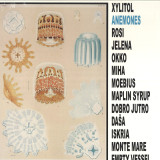
Xylitol is the alias of Catherine Backhouse, producer and DJ under the name DJ Bunnyhausen. She was a resident DJ at Kosmische, the now dormant Krautrock club and is a fan of jungle and hardcore. She currently co-hosts the radio show Slav To The Rhythm, which focuses on vintage central and eastern European pop and electronica and she's also co-writing a book on Yugoslavian pop culture. 'Anemones' is a total project from the cover to the music. Backhouse is fascinated by early botanical illustrations of anemones and other aquatic fauna, and how the act of taxonomy reveals as much about human psychology, desire and sublimation as it does about the organic specimen as a thing in itself. Each track is a microcosm of this 'other life', an allegory for the extraordinary potential latent within bodies that the dancefloor has the power to activate. Using early jungle and garage as starting points to connect dots and open up contrasts between dance music and vintage electronics, Backhouse finds a sweet spot which, in her words "feels like something that's simultaneously still and ancient yet propulsive and ecstatic." Not afraid of letting the the hiss and flutter of the music show, 'Anemones' holds attention with ancient bubbling synths and gracefully drifting arpeggiations, occasionally brought to heel by charming melodies, all accompanied by breakbeats that explode like fireworks. 'Anemones' has a lively and unpolished aesthetic that's a kindred spirit to Nondi_'s 2023 album of smeary, water-damaged footwork, 'Flood City Trax'. 'Moebius' pits the spaced out neon chords of the track's namesake against absolutely tearing breaks, allowing time for this almost overwhelming combination to become near enough transcendental, while the bleeping melody and sad slavic chorus motif in 'Okko' feels like an artifact from an alternative future. The Drexciya meets 2-step garage of 'Dobro Jutro' creates a welcome respite at the album's midpoint before the flow builds up again to 'Daša' with its glassy sounds from a lost radiophonic workshop miniature meeting bruising kicks and snares. Meanwhile 'Iskria' has purring synth chords and 8-bit melodies evoking the cosmonaut age. The subliminal influence of the Yugo era is felt in DIY synthesis and Mitteleuropean melody and seen in song titles such as 'Jelena', 'Miha', 'Daša' (named after novelist Daša Drndič) and 'Iskria' (taken from the fictitious Balkan region in Ottessa Moshfegh's bleak fable 'Lapvona'). 'Anemones' very effectively folds experimental genres from different times and places into a very enjoyable new sound.
Stepping outside his usual sphere, Blue Hour delves into dub-infused atmospheres with his latest EP, ‘Duality’. The EP kicks off with ‘Trekia’, a chord-driven techno track evolving slowly with blissful pads and a dreamy melody. ‘Orisus’ follows a similar palette, adding more funk to the drums and introducing drama with an unexpected string variation.
On the B-side, ‘Atoll’ delivers a more rolling, percussive groove, with subtle riffs breaking through the repetition. The final track, ‘Triton’, takes a deeper, moodier turn, featuring melancholic bell like tones and a wandering arpeggio. Followers of Blue Hour will find echoes of his earlier work here, but ‘Duality’ brings a breath of fresh air and sense of refinement, making it the perfect home on Arsenik Records.