Alex Rex, the project of acclaimed musician and former Trembling Bells bandleader Alex Neilson, is set to release his fourth and final studio album, The National Trust, on March 28th. Written in the wake of the sudden death of his younger brother, Alastair, the album is a poignant reflection on loss, love, and renewal, deeply rooted in the landscape of Carbeth—a cabin community in the Scottish countryside that Alastair called home. For Neilson, the cabin became both a physical and emotional project, a symbol of restoration and reconnection.
"For the first four years after Alastair died, his cabin lay empty and exposed to the remorseless Scottish weather. It came to look like a rotten tooth in a beautiful mouth. Cladding was dropping off its veneer, the ashen baubles of dead wasps nests clung to the rafters, all his possessions were just as he'd left them but eaten by mice, moths and time. Ashtrays still carried the crushed centimetres of his old tab ends. The cabins are so joyfully animated by their host's specific personality and this one looked like a haunted house. Guilt, unrealised hopes and encroaching nature yoked together in a wandering sadness. Combined with the fact that I didn't know the right way round to hold a hammer made the project of its restoration seem hopeless.”
Neilson, however, gradually began chipping away at the task, determined to transform the cabin into something he hoped would resemble “a National Trust site occupied by a psychopath,” with a little help from some friends, including Lavinia Blackwall and Marco Rea.
“They poured love into the cabin and helped restore Alastair's original vision. The project also helped restore my relationship with Lavinia which had fractured after Trembling Bells broke up in 2017. Alongside long-term Rex lieutenant Rory Haye, we applied the same intensity of dedication that we did in renovating the cabin, into creating The National Trust.”
As with Neilson’s previous albums, the recording process was intentionally unpolished, with songs presented in the studio with no rehearsals and captured in just a few takes. This raw, immediate approach amplifies the emotional weight of the album, which Neilson describes as being at a “personal apex of sour self-reflection, mock misanthropy, and self-exposure.” Longtime collaborators Lavinia Blackwall, Marco Rea, and Rory Haye return, alongside guest musicians like Jill O’Sullivan (Jill Lorean) and Trembling Bells guitarist Mike Hastings, to bring Neilson’s vision to life. The result is a deeply personal and multifaceted work, blending acid wit with haunting introspection.
The songs on The National Trust traverse a wide emotional and thematic range. The title track opens the album with a sharp and confessional edge, exploring love, loathing, and cultural critique with Neilson’s signature wit. “Boss Morris” pays tribute to the all-female Morris dancing troupe that reinvents British folk with vibrant energy, while “Two Kinds of Song” turns self-referential humour into an avalanche of remorse, culminating in the unforgettable chorus: “I’ve got two kinds of song. Which one will it be; one where I hate myself or one where you hate me?” Elsewhere, tracks like “Psychic Rome” draw from the decadence and hysteria of ancient Rome, while “The Coward in the Tower” breaks new ground as the only song Neilson has composed on an instrument before recording.
Throughout the album, Neilson’s lyricism is as vivid as ever, transforming personal tragedy into poignant and often darkly humorous art. Yet, there is a sense of finality to this work. "Songwriting has encouraged me to see the whole world as a resource. The things people say and throw away can be chiselled and polished and plopped into a lyric. It’s the same with building the cabin- scouring the edges of society for pallets, discarded wood, ornaments for the garden. But while song writing brings to life orphaned parts of my personality, the cabin is a synthesis of all my interests – nurturing my emotional health instead of exploiting it. With that in mind, I think this will be my last album as Alex Rex.”
With The National Trust, Neilson closes a significant chapter of his career, blending masterful musicianship with deeply personal storytelling. Known for his collaborations with artists such as Bonnie "Prince" Billy, Shirley Collins, and Current 93, as well as his decade-long tenure leading the psych-folk outfit Trembling Bells, Neilson has long been celebrated for his eclectic and uncompromising vision. This final album serves as a fitting culmination of his journey as Alex Rex, capturing the essence of his artistry while offering a profound exploration of loss, renewal, and the enduring power of love.
Buscar:breaks
- A1: Dialogando
- A2: Circolazione
- A3: Numero Uno
- A4: Basso Regime
- A5: Vie Motrici
- B1: Escursione
- B2: Transizione
- B3: Riproduzione
- B4: Cantiere
- B5: Moto Blues
Sonor Music Editions proudly presents an absolute Italian mood music grail and one of the best Library Music recordings ever - A.ALESSANDRONI's RITMO DELL'INDUSTRIA n.2, a true legend in the field. This is the maestro most prized and sought-after album, produced in 1969 on the small Grand Prix label, part of the Leonardi publishing group. A mindmelting record featuring some of the most killer driven beats ever! - dark vibes and haunting atmospheres with constant and moody Industrial rhythms, filled with tons of drum breaks, trippy Scat vocals and eastern inspired obsessive grooves. Music has been remastered from the original stereo master tape and the back sleeve will feature deluxe liner notes written by Mr. Jonny Trunk. HOLY GRAIL ALERT!
RASTER MEDIA 30 YEARS ANNIVERSARY EDITION REPRESS / 180 G VINYL
Ich bin meine Maschine features remixes by Boys Noize, Function and AtomTM himself.
to underline this tryptic statement (and to demonstrate the diversity) of one of atom™'s compositions that appeared on his 2013 'HD' album, raster-noton now releases a vinyl ep featuring remixes by boys noize, function and atom™ himself. 'ich bin meine maschine', in an elaborate manner, illustrates uwe schmidt´s main musical concern - the exploration of electronics in pop music. inspired by a statement of the cybernetician heinz von foerster, atom™ constructed/generated a message that is playing around with a widely-cited kraftwerk quotation, turning 'ich bin eine maschine' into 'ich bin meine maschine' (i am my machine). besides the album version of 'ich bin meine machine,' the ep features some dominantly techno infuenced versions that perfectly connect the pop attitude of 'HD' with dancefoor functionality. the boys noize remix shows off alexander ridha´s deft skills for translating atom™´s futuristic pop into his own rough and driving electronic language. on the other hand, atom™'s 'linear remix' breaks down the original structure of the song and turns it into a reduced and much straighter, forward looking composition. function - one of techno's true underground heroes - provides a remix that is breathing the air of solid and hypnotic club music, in which just the essential elements are streamlined and ondensed into perfection. all 3 remixers adapt the track to their particular universe. by doing so, they prepare the 12' vinyl for its fnal destination - the club.
- A1: Apt A (1) 06 29
- A2: Apt A (2) 05 52
- B1: And All You Can Do Is Laugh (1) 05 35
- B2: And All You Can Do Is Laugh (2) 05 51
- C1: I Promise Never To Get Paint On My Glasses Again (1) 05 46
- C2: I Promise Never To Get Paint On My Glasses Again (2) 06 02
- D1: Jimmybreeze (1) 07 01
- D2: Jimmybreeze (2) 05 33
- E1: (Cloud Dead Number Five) (1) 05 23
- E2: (Cloud Dead Number Five) (2) 06 00
- F1: Bike (1) 07 13
- F2: Bike (2) 06 54
european exclusive version[39,92 €]
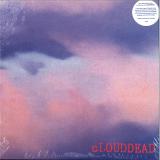
cLOUDDEAD's debut album, compiling six 10" EPs that appeared between 2000-2001, is aurally dense and obscured. A sprawling mass of miniature beat-suites and Dadaist lyrics, this strange and beautiful 3xLP would influence a myriad of sub-genres (cloud rap, hauntology, lo-fi hip-hop, etc.) in the two decades since its initial release.
Only the three members of cLOUDDEAD – Why?, Doseone and Odd Nosdam – can speak to the group's origins, but in the context of underground hip-hop towards the end of the 20th century, their arrival makes perfect sense. Cincinnati had a vital scene; home to Scribble Jam, an annual confluence of MCs, DJs, B-boys and graffiti artists. While the trio soon relocated to the Bay Area where they co-founded the Anticon collective, their Midwestern roots – in ramshackle basements of off-campus hovels, as the "cerberus of Southern Ohio" – would remain the atomic heart of their early recordings.
As Chris Martins writes in the liner notes, "The only reason we know their names today is because of how loudly and curiously they aired their insularity. They rewrote the entire world as they knew it through their own fucked perspective, and when those mysterious 10-inches started popping up in record shops, it wasn't just a puzzle to investigate: there seemed to be a whole cosmology hidden in those grooves."
Each side of the album represents one of those elusive 10-inches, each embodying a universe unto itself. Opening salvo "Apt. A" and "And All You Can Do Is Laugh" are perhaps most emblematic of the cLOUDDEAD experience. Why? and Dose create a new language through boundless non-sequiturs, sing-song non-choruses and call-and-response hooks, while Nosdam's dexterous production shifts from crackling ambience of Flying Saucer Attack to tight Ohio Players drum breaks and oblique film samples.
Taken all together, cLOUDDEAD is an original interpretation of hip-hop in the surreal Y2K glow – a bizarre meeting point between William Basinski's Disintegration Loops and MF DOOM's Operation: Doomsday. All it took was a Dr. Sample SP-202, Tascam cassette eight-track and cheap RadioShack mic. There's truly nothing like it.
This edition has been faithfully restored by Nosdam. European exclusive version comes on clear vinyl, incl. fold-out poster and liner notes insert.
Notti Senza Fine is the second album by the post-avant-garde theater company Magazzini Criminali, released in 1983 on the independent label Riviera Records and now reissued for the first time by Soave Records in a very limited edition of 200 copies. This work breaks away from linearity and meaning, creating a dizzying collision of voices and sounds that blend theater, punk, and experimental elements. Through montage and collage techniques inspired by the visual arts and poets such as Antonin Artaud, the album explores a dense and layered soundscape.
Composed by Federico Tiezzi, Sandro Lombardi, and Marion d'Amburgo, “Notti Senza Fine” uses sounds and fragments to create an experience that transcends conventional music. The song titles evoke geographical spaces without clear definition, while the sound textures, which include tribal percussion and synthesizers, intertwine without resolution. The album is a “meaningful object,” a musical vehicle that challenges conventions and rejects institutional distribution channels, remaining a rarity appreciated by collectors for over forty years.
The cover, designed by Mario Schifano, adds another layer of meaning to the work, making it a timeless sonic and visual experience.
- A1: Roudi Vagou - Gleisende Lichter
- A2: Roudi Vagou - Halb So Schwer
- A3: Roudi Vagou - So Sueß
- A4: Roudi Vagou - Lila Gibt Es Nicht
- A5: Roudi Vagou - Iss Mich Ganz Auf
- A6: Roudi Vagou - Grenzueberschreitung
- A7: Roudi Vagou - Aufgeben Ist Kein Verzicht
- B1: Läuten Der Seele - Komischer Anruf
- B2: Läuten Der Seele - Punkt Mitternacht
- B3: Läuten Der Seele - Nur Fuer Uns Zwei
- B4: Läuten Der Seele - Mineralwasserflasche 1
- B5: Läuten Der Seele - Glaskopf Mit Watte
- B6: Läuten Der Seele - Rathausdach
- B7: Läuten Der Seele - Ein Kitzeln In Den Graebern
- B8: Läuten Der Seele - Mineralwasserflasche 2
- B9: Läuten Der Seele - Mondraetsel
Across an extensive suite of enchanting miniatures, Matthias Kremsreiter and Christian Schoppik present the hypnagogic vision of Taghelle Nacht. Recording under their respective Roudi Vagou and Läuten der Seele aliases, Kremsreiter and Schoppik combine their distinct but equally accomplished instrumental practices into a new collaboration that weaves swooning samples amongst instrumental passages. They lead us through 16 vignettes that revel in the cognitive dissonance and seductive magic of moonlight at midnight.
Both artists have past form within the folds of contemporary experimental electronic music in Germany. Kremsreiter's work as alibikonkret has manifested on DIY tape releases created with a methodical, technically-minded approach. Debuting his Roudi Vagou pseudonym on Taghelle Nacht, he pivots to a more playful, instinctively felt method that allows the compositions to flow with a natural cadence. Schoppik has been a key figure in the celebrated dark-ambient-folk scene, not least as part of the group Brannten Schnüre. His work as Läuten der Seele includes the acclaimed 'water trilogy' of LPs between 2022 and 2024, with a greater emphasis on instrumental, atmospheric production, and a last, stunning collaborative album with Nový Sv?t's Jota Solo.
On Taghelle Nacht the precise ingredients of each piece soften at the edges as tape loops and swathes of reverb seal the joints between spellbinding melodic refrains. Opening track and lead single 'Gleisende Lichter' sets the tone with ghostly murmurs, spine-tingling string refrains and splashes of cymbal that cut through the gloom with stark clarity. A lilting romanticism stirs at the heart of the orchestral samples that populate the likes of "Grenzu?berschreitung" - old-world beauty sometimes buried in dust, elsewhere rendered with startling clarity. 'So Süß' lets buzzing, sustained drones and dissonant sweeps of extended technique glide in and out of each other. Granular processing subtly breaks apart the mellow swell on 'Komischer Anruf', and forlorn sax calls out into heavy-hearted space on 'Glaskopf Mit Watte'. At every turn a new scene is painted, distinct from the last and yet all bound up in the pervasive, pale blue light cast over the sleeping landscape Kremsreiter and Schoppik have sculpted.
Snatches of song drift by like dreamlike fragments, and achingly tender flourishes fleetingly appear and retreat - ideas and expressions momentarily caught in the light before retreating into the shadows once more. This is the evocative world of Taghelle Nacht - an unsettling depiction of the surreal blend of memories and imagination that merge into each other once the sun goes down.
Islaja presents her new album ”Angel Tape”, her debut release on the new Helsinki-based label Other Power. Drawing inspiration from childhood epiphanies while listening to an alleged recording of angels singing, Islaja has crafted an album that stands out as a major work in her expansive and celebrated catalogue, which includes previous releases on labels such as Ecstatic Peace!, Fonal and Svart.
Islaja, aka Finnish artist Merja Kokkonen, describes her new album as a “counterwork” to her most recent albums, where the mode of composing was more song-based. This time around, she goes more in the direction of vast fields of sound where the human voice is a key ingredient of music that breaks free of strict stylistic guidelines and traditional song forms. Rough around the edges, atonal and otherworldly, "Angel Tape” is the result of a lifetime of inspiration from something beyond the immediate realm of our experience, an attempt to catch the elusive essence of musical otherness.
”As a child, I listened to the ’angel tape’ my mother played, and I never thought that the human voices I heard on it were angels singing. Instead, all the aural debris lying just beneath the surface caught my attention as I thought it was mysterious and something from a different world than ours, and so that was probably what was referred to as the ’angels’ so miraculously caught on tape”, Kokkonen explains. ”I think this was one thing that led me on this lifelong quest to find new sounds and forms in music.”
The tape she is referring to, a mid-80s church recording, was passed around in religious circles. Each time the tape was copied, it became slightly more distorted. It was believed that this recording of religious music had accidentally captured for the first time the voices of actual angels singing. The tape was rumoured to have originated in Kansas City and to have made its way to Finland.
Whereas Islaja has often thought of albums as being collections of recent songs presented together, ”Angel Tape” has a strong sense of conceptual coherence. The music comes from a place. That doesn’t mean that one must take a single path from one place to the next, as close listenings of the album reveal layers upon layers of not only sound but also of mood and meaning. From the human voice in its barest form, to the rising dense walls of sound moving and reshaping, ”Angel Tape” is a captivating album that unveils new contours with each repeated listening.
Dubcore 27 features DJ Badshape from Leipzig’s vibrant breaks and bass scene with her full vinyl debut. She already made her solo debut with Hurrican Kick on Defrostatica Records and dropped some tunes on some compilations like Bassmæssage Second Drop as well as on cassette on human togetherness. While producing tunes she dj and regularly uploads her Temper mixes on SoundCloud.
The first two tracks, “Facebreaker” and “Entitled,” were produced shortly after Bangface. Hours of waiting at Humberside Airport turned into long talks about music — the festival's energy and conversations inspired this creation. The tune “Spring Bird Symphony” is the first track I produced with the KO2 media sampler from Teenage Engineering. It was the best birthday present my boyfriend could have given me! You hear the spring fever in it? ;) Finally, “Der Fallende Bach” is an ode to the flora and fauna of the Austrian Alps, imagining the joy a drop of water must feel as it rushes down a waterfall, riding nature’s own rollercoaster.
Grupo um celebrate 50 years with release of lost dictatorship-era album nineteen seventy seven!
First time release - vinyl comes with printed innersleeves
Brazilian avant-jazz vanguardists Grupo Um celebrate their 50th anniversary, sharing a second previously lost 1970s album from the vaults. Nineteen Seventy Seven (titled after the year it was recorded) is another rip-roaring instrumental fusion treasure from the band which spawned from within Hermeto Pascoal’s famed mid-1970s São Paulo collective.
Like their debut album Starting Point, Grupo Um’s Nineteen Seventy Seven was recorded when Brazil's military dictatorship was at its most repressive. “There were no open doors to those who dreamt to be protagonists in creative instrumental music”, remembers drummer Zé Eduardo Nazario, “even popular composers and singers had to submit their songs to censors and many records were banned and confiscated from the stores.”
Just like Hermeto Pascoal's Viajando Com O Som (1977) and Grupo Um's previous album Starting Point (1975), both of which remained unreleased until the 21st century, Zé Eduardo asserts that the 1977 album was flatly 'without any chance to be released at that time."
Recorded at Rogério Duprat’s Vice-Versa Studios in São Paulo, the group were under both time and space restraints, “we chose the small Studio B,” Lelo Nazario recalls, “which had a Tascam (TE AC) 12x8 console and a 4-channel AMPEX AG 440 machine. Therefore, we had to record without overdubs, everything straight to tape.”
Expanding from a trio to a quintet, original Grupo Um members Lelo Nazario (keys), Zé Eduardo Nazario (drums), and Zeca Assumpção (bass) were joined by saxophonist Roberto Sion and percussionist Carlinhos Gonçalves. Carlinhos, Zé and Zeca had already played together in the group Mandala, while brothers Lelo and Zé had just finished a stint backing Hermeto Pascoal during his years in São Paulo.
Lelo was deeply immersed in modular synthesizer experimentation during this period, working extensively with the ARP2600 and EMS Synthi AKS. These electroacoustic explorations formed the sonic foundation for "Mobile/Stabile," one of his first compositions to merge modular synthesis with Brazilian music, a fusion that would ripple throughout the Brazilian jazz scene. The piece premiered at the first São Paulo International Jazz Festival in 1978, performed by Grupo Um with guest trumpeter Márcio Montarroyos. In a shocking moment, festival organizers interrupted the show mid-performance, sparking fierce backlash from both audience members and journalists who denounced the incident as artistic censorship during Brazil's era of political and cultural repression. The version on Nineteen Seventy Seven is the first recording of the composition.
Nineteen Seventy Seven combines Afro-Brazilian rhythm, modular synthesis and a plethora of whistles, percussion and effects pedals. Album opener “Absurdo Mudo” - so titled for the absurd difficulty it poses to the musicians performing it - starts out in a cloud of mysterious dissonance, before the haze breaks for a glorious keyboard and saxophone interplay atop an uptempo samba groove. “Cortejo dos Reis Negros (Version 2)” (Procession of the Black Kings), based on the maracatu rhythm, inverts the traditional jazz song structure by beginning with improvisations, which are followed by the theme and a final coda. “The studio also had two Parasound electronic reverb units,” Lelo notes, “and the timbre is very audible on the soprano sax and percussion.”
Grupo Um’s daring music represents a manifesto of resistance during the dictatorship years, but it’s one which remains just as relevant today. As Lelo puts it: “For me, the aesthetic issue has always been about combining contemporary avant-garde languages with Brazilian music, independent of categories and commercial interests. The result of this fusion takes music to a new level.”
Recording credits (1977)
Recorded at Vice-Versa B Studio, São Paulo, November 9, 1977
Produced by Lelo Nazario and Zé Eduardo Nazario
Engineered by Ricardo “Franja” Carvalheira
Lelo Nazario – Wurlitzer electric piano, acoustic piano, signal generator, percussion
Zé Eduardo Nazario – drums, percussion
Zeca Assumpção – electric bass
Carlinhos Gonçalves – percussion
Roberto Sion – soprano sax, clarinet
Release credits (2025)
Produced by UTOPIA Studio, São Paulo
Project Coordination in Brazil by Irati Antonio (Utopia Studio)
Tape Restoration and Digital Mastering by Lelo Nazario at Utopia Studio, July 2025
Liner Notes by Lelo Nazario and Zé Eduardo Nazario
Photography by Jorge Las Heras, Lelo Nazario, and artists' personal archives
Photo Restoration by Lelo Nazario
Artwork and Design by Alessandro Renaldin
- Mighty Idy #1
- Bad Attitude
- Baby Boom
- Out Of Our Tree
- From Home
- Shirt Loop (Not Recorded For Sire Lp)
- Boy From Nowhere (Not Recorded For Sire Lp)
- When I Get Off (Not Recorded For Sire Lp)/Destroyer
- He's Waitin' (Not Recorded For Sire Lp)
- Do Not Enter
- I Don't Know When To Stop (Not Recorded For Sire Lp)
- Mighty Idy #2
*13 ripping songs totalling 33 minutes from the original 20-song 65 minute master reel tapes, recorded in early February 1978 for producers Flo & Eddie, the night before DMZ (the raw-assed pre-Lyres outfit that never made it!) spent 3 days trapped by a blizzard recording their Sire album. **4 page insert with info, pics and Rick Coraccio's ultra-detailed journal on how it all went down! ***LP includes DOWNLOAD CODE Kapital Ink zine: "In the annals of R&R history, as far as local American rock'n'roll scenes go, Boston is hardly ever looked upon in the same shining light as, say, NY, Detroit, San Francisco or even Austin or Seattle. Unlike those other towns, there's never even been a definitive book about the scene. Maybe it's because Boston is a perennial hard-luck place (just witness the Red Sox) with a serious New York inferiority complex hanging over its head. Boston is ignored by the industry at large, despite the fact that the city has spawned countless heavyweights in both a commercial (Aerosmith, Boston, the Cars) and aesthetic (Modern Lovers, Real Kids, Mission Of Burma) (Crypt editor note: and DMZ!! and LYRES!!) sense. Boston was the first US city to directly reflect the influence of the Velvet Underground, as epitomized by the Modern Lovers, who've proven to be almost as influential in their own right. Fast forward to the days of hardcore, and Boston was one of the pre-eminent strongholds of shave-head mania, shoring up its rep as an angry, intolerant New England outpost. Naturally the town has produced more than its share of local legends: Willie Alexander (who actually was in the Velvet Underground, albeit when the band was on its Lou Reed-less last legs); Jonathan Richman (geekus supremus no small thing considering the subsequent indie hordes, to whom he's a savior); and most of all, the great Real Kids, (Crypt editor note: and DMZ!! and LYRES!!) who could've been the equivalent of the MC5, Stooges or Flamin' Groovies in the annals of American rock if it hadn't been for a series of bad breaks but let's not get into that because it'll only reinforce Boston's eternal self-pitying plight. The fact is, the scene in Boston was more or less built by a string of bands who are so organically-interconnected that it seems like an act of God."
- A1: Low Clouds Hang, This Land Is On Fire
- A2: Murmur
- A3: Burn The Throne
- A4: We Overflow The Streets And Squares Like The Sea In A S
- A5: Black Flag Anthems
- B1: They Fall Because They Must Fall
- B2: Gathering
- B3: Still
- B4: But Go Not "Back To The Sediment" In The Slime Of The M
- B5: Storm The Heavens
- B6: 1A New Morning Breaks
Tashi"s latest punk anthems: electric guitar improvisations to brutally impact us with... gentle lyricism and introspective depth! In a time of extraordinary institutional inhumanity, seeing the faces of the many deprived, what is there to feel but exhaustion? What to want but silence? Tashi seeks it all out actively, with intention. Hard truths absorbed, he enjoins power to reconstitute as spirit, to disseminate to everyone outside the walls.
Back in stock soon!
Dan Piu wrote this album during the "dark, dystopian times" of the last year. The record's themes take in nature, human life, sci-fi, cyborgs and plenty in between with opener 'Tru Confession' being a robust house track stacked with throwback breaks, futuristic synths and old school vocals. There is a real warmth and soul to the machine sounds of 'Un-X-Plored Exodus' while a certain sense of 90s New York house colours 'Upgrade System M59'. 'System Of Ethics' shows off a fine mastery of synth craft that brims with emotion and 'Asteroid Blues' is like a lost Kerri Chandler cut. Essential.
Back when the first white labels started floating through the hands of German, British, American and Canadian DJs in late ’84, nobody was ready for what was coming. The official drop hit in early ’85 and the scene was never the same again. This was the moment Mike Mareen broke through the static. Yeah, he’d been working with Chris Evans-Ironside since the ’70s but nothing hinted that together they’d channel something this futuristic. “Dancing In The Dark” sounded like it had slipped through a wormhole: melancholic, hypnotic vocals wrapped in vocoder haze, riding an arrangement so razor-sharp it made most releases of the era feel prehistoric. It didn’t need the pop charts… It owned the clubs. And the clubs listened.
London. Berlin. Madrid. Rome. Paris. Lisbon. Amsterdam. Athens. Toronto. NYC. Tokyo. Mexico City.
One drop of that electro bassline and DJs were hooked. Crowds were hooked. The whole underground was hooked. Soon Europe’s radio charts caved under its pressure, and the track crossed borders on mixtapes, becoming a cult anthem behind the Iron Curtain. It was everywhere, even where it technically wasn’t allowed to be.
Fast-forward four decades and the spell hasn’t faded. “Dancing In The Dark” still shows up in indie dance, italo wave, house and deep house sets. Producers keep re-editing it like it’s sacred material. It’s one of those tracks that DJs treasure, a timeless weapon, one of the top three defining singles of Mareen’s entire career.
And now for the 40th anniversary of its official release, Vintage Pleasure Boutique and Night’n Day Records drop the vinyl every collector and selector has been waiting for: a special reissue loaded with four brand-new remixes spanning the full spectrum of today’s underground indie/disco/italo/house energy.
Tallac – the American Berlin dweller – dives deep into the hypnotic soul of the original, pulling out its buried deep-house DNA and carving out a spacious, emotional roller.
Luksek, Italian producer & DJ, goes raw and dirty: loop-driven, gritty, underground, hypnotic, the kind of edit that eats dancefloors alive.
Flemming Dalum, the Danish Italo grandmaster, finally gets to remix the track he’d always dreamed of touching and of course it’s pure Flemingish electro-italo magic.
And the Polish sparkle: A.P. Mono delivers a shimmering mix of italo disco, glitterbox groove, disco glamour and synthwave glow, all while keeping the spirit of Mareen’s original heartbeat intact.
The wax also features two historical heavy-hitters: the 1985 Jens Lissat’s team remix and Luis Rodriguez’s original arrangement, essential cuts in the Mareen universe.
This release isn’t nostalgia. It’s a resurrection. A celebration. A reminder. “Dancing In The Dark” didn’t survive 40 years by accident, it survived because it still moves bodies, breaks hearts and lights up floors in ways modern tracks can only wish for.
If you’re an indie, italo, wave, house or disco DJ… This record isn’t just worth owning… It’s mandatory.
Straight from the pantheon of techno greats, John Beltran’s Placid Angles project enters Kalarahi orbit.
Revived after a 22 year hiatus, PA has since become our main source for new Beltran material. Buy-on-sight stuff for those seeking ambient techno of a rarified calibre. There’s an inevitable pinch-me moment whenever a producer of undeniable influence jumps on the label, and safe to say, this is one of those moments.
Expect sun-kissed Balearica and sublime, acid-fuelled romance. Sometimes we levitate, bathing in the glow of JB’s beatific harmony and sanguine tenderness. The slow-burn simmer of 303, the lithe gliding of his breaks; all of it demonstrating effortlessness of execution.
Choral vocals ascend, vistas pristine and closer listens reveal even greater levels of detail. You might say it’s the gift that keeps on giving.
do not listen it in 2 minutes please !
this is Music... Oscillating between Mental Tribe, some XP breaks and a trance feeling...
A travel into time as tunes were selected in 2024... Mastering issues and pressing fevers... And finally... this project took 2 years to come out.
It's a different way for Acid tribe music...
This is a Present.
If you like C.Ysme, Verdure, Moanda and before Tettsuo, 25ème dimension, Win and before again Curley, Pure or Somatics...
if you really open you mind : you can catch it !
Do not fall into the Format-trap for this kind of production.
Enjoy o/
The Dynamite Coorporation is the brainchild of Robbert Peperkamp aka @infestmusic and Tommy Willetts aka @thenightservicecommute. After meeting in music school their joint interest in jazz, breaks, tape and dark cinematic soundscapes resulted in a collaboration that led to this fantastic album.
Expect dark cinematic soundscapes, Drums, trumpets, guitar, keys and resample madness.
- C2: Back Again (Hot Toddy Remix)
- D1: Alone With You (Purple Disco Machine Remix)
- A1: Coming Home Baby (7" Edit) — Skeewiff
- A2: I Can't Give You Up — Smoove & Turrell
- A3: Ya Lookin Tight — Soopasoul
- A4: God Walked Down — The Allergies
- A5: Man Of Constant Sorrow — Skeewiff
- B1: Geno's Discotheque (Aroop Roy Remix) — Smoove & Turrell
- B2: Keep On Searching — Kraak & Smaak
- B3: Dust (Dimitri From Paris Vs. Cotonete Discomix) — Gizelle Smith
- B4: Glow — Sam Redmore
- C1: Blind Faith (Art Of Tones Extended Remix) — Izo Fitzroy
- C3: Sun Don't Shine (Sophie Lloyd Remix) — Wolfgang Valbrun
- C4: Tears (Scrimshire Remix) — Sam Redmore
- D2: Kinetic (Kraak & Smaak Remix) — Golden Girls
- D3: Speculate (Saison Remix) — Flevans
- E1: The Difference — Smoove & Turrell
- E2: Stumble (Feat. Parcels) — Kraak & Smaak
- E3: Easy Ain't Nothing (Featurecast Remix) — Ephemerals
- E4: I Feel It — The Allergies
- E5: Life Is Good (Technimatic Remix) — Ephemerals
- F1: Skyline (Kraak & Smaak Badlands Remix) — Izo Fitzroy
- F2: Wild Shadows — Flevans
- F3: Sunset Breakup — Dr Rubberfunk
- F4: You Brighten Up My Day — Hallmighty & Vanucci
Jalapeno Records are celebrating their 25th anniversary in the business. The label are marking the occasion with the release of a 3LP compilation featuring some of label boss Trevor Mac's favourite dancefloor gems from across the years. From a humble start in a basement recording studio on Holloway Road to a quarter century anniversary celebrated from their Brighton offices – Jalapeno Records has been an indie label with a mission - to bring the funk to the masses. Along the way that has taken in so many genres from chill to house, gospel to soul, breaks to drum & bass but it has all had a common thread running through it - the funk. "Twenty Five years means there are too many artists to list and this album is not supposed to be a Greatest Hits. We did that on the 20th anniversary. The album is dedicated to all of the artists that trusted us with their music and all the people who supported us along the way" says Trevor
k 11. Back Again (Hot Toddy Remix) feat. John Turrell — Kraak & Smaak
n 14. Alone with You (Purple Disco Machine Remix) [feat. Cleopold] — Kraak & Smaak
[k] 11. Back Again (Hot Toddy Remix) [feat. John Turrell] — Kraak & Smaak
[n] 14. Alone with You (Purple Disco Machine Remix) [feat. Cleopold] — Kraak & Smaak
[k] 11. Back Again (Hot Toddy Remix) [feat. John Turrell] — Kraak & Smaak
[n] 14. Alone with You (Purple Disco Machine Remix) [feat. Cleopold] — Kraak & Smaak
The third instalment of the remixes from J:Kenzo's album 'Taygeta Code' sees four killer producers take on each remix in their own unique style across the 140 bpm spectrum.
BOYLAN (Sentry / Mean Streets) leads the dance with his 140 bpm jungle / breaks flip of 'Like A Hawk' which features vocals by the mighty FLOWDAN. Bringing the heat in heavy and devastating fashion!
MANI FESTO (Rupture / Club Glow) steps up with his electro breaks remix of the modular dance floor heater 'Deadbull', with filtered breaks and a high energy bounce.
Canadian dubstep producer MYTHM (Artikal / Wheel & Deal) delivers his heavyweight remix of album highlight 'Narky'. The Vancouver native flips the groove and levels up the energy bringing additional heat to his version.
The final remix is from UNKEY (Foto Sounds) who takes on the album opener 'Desired State'. Unkey turns the air dark, strips back the vibe and uses sub heavy minimalism to inject a feeling of dread throughout his remix to put a stamp on the finale covering 4 corners of the world of Dubstep and 140 music.
Having established himself as one of the most exciting contemporary dance producers with a string of stellar releases, Japanese producer boys be kko returns triumphantly with the Nagasawa EP, four floor cuts bursting with emotion, shimmering in Tokyo technicolor, and perfectly at home on Bliss Point.
Nagasawa kicks off with a bang. “ChuKii” is a peak time heater: breaks, chopped vocals and punchy toms sear over a low end groove that proves body music can funk. Melodic acid explodes like a firework mid-track, taking the dance floor to psychedelic new heights.
The club psychedelia continues with “Mold Mold”, a minimal, subterranean system roller adorned with swells, bells, and deep, guttural growls dubbed to the vanishing point.
“Sant Esteve (kko Edit)” is melancholic and contemplative jazz house, eschewing cliché and twinging with nostalgia for that moment you felt most free.
“Humor is an important part of my music”, boys be kko reflected over lunch as Izakaya smoke billowed past his face. “Oignon”, the fourth and final track on Nagasawa, is an airy and joyful slice of sampledelia that makes good on this promise. An enormous smile of a track sending listeners off with a slice of sonic sunshine and, dare we say, hope.
Kulture Galerie releases its 3rd Digital Artefacts cassette tape: "Mediterranean Blue" by NYC's own Alien D. Alien D is back on Kulture Galerie. Prior to this, Daniel Creahan has been featured on labels such as Lillerne Tapes, Banlieue Records, and Theory Therapy, and now shares a 6 track EP called Mediterranean Blue that lands on Filippo MSM's tapes series Digital Artefacts, the label's more experimental output.
The work is something of a companion piece to his recent release on Theory Therapy, “For the Early Hours of the World in Bloom,” exploring similar states with a more hazy, fluid sensibility. The compositions here trace back to a week spent several years prior on the Puglia coastline, where, in the midst of a read through of Helene Cixious’s Tomb(e), he began compiling a series of works drawing the gleaming sun, swirling waves and jagged, rocky coastline of the region, mixing in fragments of slow, pulsing low end, wafting synth elements and a range of processed samples dwelling on states of transition, life and love. Waves and dripping water swirl around lilting saxophone, kick drums drown the mix in heavily side-chained throbs of bass, and breaks rush in and out of the mix, making for a series of recordings that seem to view the dancefloor as a dream, always front of mind but hazily remembered.
“I was obsessed with these balances between the light-washed, dusty landscape and these quiet modest homes dotting the hills, and all I could think about was the passage of time, falling in and out and back in love, and the slow drift of memory,” he says. “It was like waking up with a new thought.”