Mammal Hands are a trio of like-minded musicians: Nick Smart piano, Jesse Barrett drums and tabla, and Jordan Smart saxophones. Floa is their second album for Gondwana Records and in the 18 months since their debut, Animalia, they have carved out a growing following both here and abroad for their hypnotic fusion of jazz, folk and electronica: winning fans from Bonobo and Gilles Peterson to Jamie Cullum. Landmark live performances have included shows at King's Place in London and the RNCM in Manchester, as well as a barn-storming debut at the Montreal Jazz Festival. Drawing on a rich well of influences from Sufi and shamanic African trance music, Irish and Eastern European folk music, to Steve Reich and Philip Glass and more contemporary electronica influences, their music is built around deceptively simple sounding ideas that are lent power through the use of repetition and rhythmic loops. They have been compared to both Portico Quartet and GoGo Penguin for the way in which they navigate the choppy waters between contemporary dance music and jazz. Floa (an old Norse word that means to deluge or to flow) is the sound of a more confident, experienced band: one that has grown together naturally through touring and gigging and through mammoth writing and rehearsal sessions where all three bring rhythmic, improvisational and melodic ideas to the table. Floa was recorded at Gondwana's home from home, 80 Hertz Studios in Manchester, reuniting the band with producer Matthew Halsall and features some of the Gondwana Orchestra strings who played on Halsall's acclaimed album Into Forever. Together they have crafted a wonderful sounding record, the richness of which perfectly illuminates the band's music. Artwork is from Gondwana's in-house design maestro Daniel Halsall whose artwork of symbols created from older symbols perfectly illustrates the creative ideas that drive the band's music.
The release is supported by an extensive UK tour including dates in Norwich, Bristol, Brighton, Manchester and beyond. The band support Matthew Halsall at St John's Hackney on May 26th and have their own head-line show at the Jazz Cafe, Camden on 31st May. Confirmed airplay from Jamie Cullum BBC Radio 2, Gilles Peterson 6 Music, Radio 3 Late Junction, BBC Scotland Jazz House, Jazz FM, John Kennedy X and full servicing to all specialist and online radio stations. Reviews from The Guardian, Mojo, Record Collector, Jazzwise, Nos Magazine, Nowthen and local press. Online support from AllAboutJazz, Quietus, Access All Areas, Bebop Spoken Here and beyond.
quête:brigh
After his successful debut album SUPER VATO (CÓMEME CD LP 01) from two thousand eleven, his highly praised mix CD MOMENTO DRIVE (KOMPAKT CD 117) from two thousand fourteen, and all-around mayhem during his adventures as one half of the Pachanga Boys, Xalapa's finest REBOLLEDO returns with his second solo album MONDO ALTERADO: a recollection of moments and experiences from recent years, colorful mnemonics encompassing the brightest and the darkest. The result is a kind of soundtrack for a movie that doesn't exist, a sonic journey designed like a mixtape that faithfully reflects Rebolledo's background as DJ and producer. Nine tracks connect for one overarching narrative, sharing elements, motives, details as they blend together. The artist's signature can be found all over the place, roaming between straight, rock-drenched drumming, sinister atmospheres, raw synth textures, exciting peaks and foggy bottoms - but always following this kinetic flow and drive which is such a big part of Rebolledo's compelling charme.
Dutch power duo Doms & Deykers a.k.a Steffi and Martyn step up to the plate with a brand new action packed offering. Following up their "Fonts for the People EP" and their track "Whirling" on Ostgut Ton's Zehn LP, the two take their continuous collaboration to a new level. The three tracks on "Dedicated to those who feel" see Steffi and Martyn recognizing their respective strengths, combining their 90s heritage with a vision of the future, modern techno soul with all its flaws and bright euphoric moments. "Dedicated to those who feel" serves as the introduction to a full length Doms & Deykers LP, scheduled for later this year.
Ark & Pit Spector continue their inspired journey with an extended EP full of groovy jams and absorbing rhythms for Hold Youth. The Frenchmen have formed a potent alliance with a series of expertly-crafted, high-quality releases dropping over the last couple of years. On this new EP they go deeper into their sound explorations with five original works and a remix from their Parisian buddy and Hold Youth member, Le Loup. First up, we go into bumping jazzy territory with 'Chauffage Central', a mesmerising cut with swirling pads, soulful vocal clips and a jaunty b-line. Straight up after that, Hold Youth rudeboy Le Loup gives 'Chauffage Central' a funky little rework, throwing live sounding percussion, Nubian vocal clips, trumpet parps and a pumping bassline into the mix which gives a totally different identity. The final track on side A, is a cheeky teaser called 'Petite Ondée'. Rolling out for just under two minutes the track has a muffled, jazz-esque feel to it with a warm rolling bassline and bright, sparkling piano keys.
On the flip we kick off with 'Air Conditionelle', a lush, retro feeling with those oh-so-familiar heavy-hitting eighties snare licks. The bassline takes you to a New York City street and the whole atmosphere is that of an old school NYC neighbourhood, while a spoken-word sample adds a human touch just before the track comes to an end. 'Sub Tropical' goes a little leftfield with an unusual combination of sounds in tandem with a pulsating low end, occasional sax licks and punchy percussion to give it plenty of energy. 'Averse Et Contre Tous' closes out the EP with a slothish ride into the sunset - Ark and Pit Spector show their experimental side presenting an odd union between blues samples, gruff electronic sounds and piano keys.
Another triumphant effort from Ark and Pit Spector, in fact, some of the finest work to date. Make sure you check it out!
This EP starts with Stitched", which begins by a rough & anxious introduction with a drone bass and a dissonance pad. Then a steamroller sub bass engaged itself into an insane run drived by a brushing arpeggiated synth and sharpened cymbals. College Road, the eponym track is a bright energetic trippy techno track influenced by house grooves & sonorities, for club use (not only). The last track Bkr is a live construct track with both hardware and software stuff to create a freaky bouncing groove. Can be played as main set track or as tool as well. Artist Bio : Born in Rouen, Normandy, the duo Easy Morph used to make people dance in clubs before they were even allowed to get in. Together since the age of 12, the duo experienced some emulation among themselves and with the music they cherish and collect, the electronic music and particularly techno. The logical consequence was the creation of the duo a few years later in order to exploit this connection, at first for dj sets and then for production. In their sets as in their production, they like to hear the rolling sub and the kick on time, a powerful and compelling binary techno punctuated by dark soundscapes, sometimes melancholic accompanied by saturated synths brushing against acidity. The duo met later the collective Peche Mignon,seduced by their project, their values and their love of music.
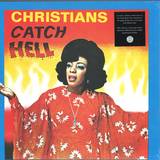
- A1: Pastor T. L. Barrett - After The Rain
- A2: Camille Doughty - Elijah Rock
- A3: The Howard Lemon Singers - For The Children
- A4: The Fantastic Family Aires - Tell Me
- A5: Jean Austin & Company - Spirit Free
- B1: The Jordan Singers - Will You Save Me
- B2: The Phillipians - Never Say What You Want
- B3: The Fabulous Luckett Brothers - Help Me To Carry On
- B4: Bright Clouds - I've Got To Make A Change
- C1: The Fantastic Family Aires - Troubled Mind
- C2: The O'neal Twins - Wake Up Everybody
- C3: Rev. T.l. Barrett - Said It Long Time Ago
- C4: The Fantastic Family Aires - The Color Of God
- C5: The Brooklyn All Stars - Blessed Be The Name Of God
- D1: The Original Sunset Travelers - On Jesus' Program
- D2: Reverend Edna Isaac And The Greene Sisters - Christians Catch Hell
- D3: The Fountain Of Life Joy Choir - Thank You
- D4: The Fantastic Family Aires - Glory
Utterly magnificent, sublimely soulful survey of the Gospel Roots label, subsidiary of the mighty TK Records at the height of the Miami Sound. Beautifully presented... the LPs with a 12"-square, full-colour, sixteen-page album of photos and original artwork. Check!!
A&R was co-ordinated by Gospel legends Ira Tucker — from the Dixie Hummingbirds — and Ralph Bass, veteran producer with Savoy, King and Chess. The label was run by Timmy Thomas, who had recently smashed with Why Can't We Live Together, for another TK spin-off, Glades. Operations were overseen by Henry Stone himself, unlikely King of Disco, who had recorded a young Ray Charles, and pushed forward James Brown. They drew in artists from all over the US, from St. Louis, Columbus, Memphis, Brooklyn, Cabrini Green in Chicago: unknowns like Camille Doughty, reluctant to jeopardise her job at GM ('Generous Motors') in Detroit, and huge-sellers like the revered Brooklyn All Stars, who started out on Peacock in 1958.
Choral belters, deep ballads, harmony quartets, epic city-blues, gritty funk, powerhouse female soul... Killer-diller Philly like a scorching version of Harold Melvin & The Blue Notes' Wake Up Everybody, and Jean Austin's raw Spirit Free, co-written by Ronnie Dyson, produced by Jesse James at Future Gold. Chicago Sound like The Fantastic Family Aires — named after the family's furniture store on North Cicero, but reminiscent of the Staple Singers at their best — through to the full-blown glory of The Fountain Of Life Joy Choir, led by Marvin Yancy from The Independents, and featuring Natalie Cole... Singers like Versie Mae Gibson, from the Jordans, by rights up there with Irma, Etta and Ree... Bangers 100%-guaranteed to find their way into Theo Parrish sets, and mortal delirium for the prissiest of soul and gospel purists.
Marcos Valle - EstrelarMarcos Valle is back again, this time with the almighty 'Estrelar', his most well-known disco/boogie track co-written with Leon Ware. Added hints of Yacht Rock too!
Marketed as workout music" at the time, 'Estrelar' was his best-selling record with a total of around 90,000 sales.'Estrelar' is taken from his 1983 self titled LP released on Som Livre.
Robson Jorge & Lincoln Olivetti - AlleluiaTwo of the masters of the Brazilian Boogie sound joined forces to make a self-titled LP released in 1982 that epitamised the sound of early 80's Rio de Janeiro. Synths and keys float over razor sharp samba, jazz and 2-step drum grooves backed by huge layers of horns. Production is as shiny, bright and ultra clean as it ever got!'Alleluia' is a mid tempo groover, with rich horns, guitar, synth and vocal lines. An end of the night jam if ever there was one.Released on the LP mentioned above and also on 7' in 1983.
Over the course of five albums, Manchester based trumpeter, composer, arranger and band-leader Matthew Halsall has carved out a niche for himself on the UK music scene as one of it's brightest talents. His languid, soulful music has won friends from Jamie Cullum and Gilles Peterson to Jazz FM and Mojo as well as an ever-growing international following. His new album Into Forever, puts the spotlight on Halsall the composer, arranger and producer. Halsall draws on a diverse range of influences from Alice Coltrane, Dorothy Ashby, Phil Cohran and Leon Thomas to the more contemporary sounds of The Cinematic Orchestra, Max Richter and Nils Frahm to deliver his most complete recording to date. Into Forever features renowned Manchester based soul poet Josephine Oniyama and rising star vocalist Bryony Jarman-Pinto (Werkha) as well as regular collaborators, flautist Lisa Mallett, harpist Rachael Gladwin, koto player Keiko Kitamura, pianist Taz Modi, bassist Gavin Barras and drummer Luke Flowers (The Cinematic Orchestra) and two percussionists Sam Bell and Chris Cruiks. The result is arguably Halsall's finest record, asublime melding of stripped back soulful funk and deep, minimalist, spiritual jazz, that will take you on a journey deep into forever!
Confirmed reviews Mojo, BBC Music Mag, Jazzwise, Record Collector Independent On Sunday, Guardian, Quietus, all main jazzy blogs, Airplay from Jamie Cullum, Gilles Peterson, 6 Music, Jazz Line-up, Patrick Forge, Ross Allen and many more
9 date national tour including Liverpool Capstone Theatre Oct 1, Bristol St Georges Oct 15, Manchester St Peter's Church Oct 23, St Mary's Hastings Oct 28 and London Union Chapel Oct 29 plus Uber Jazz Hamburg Oct 31
Heralding from Brighton, married (production) couple Sam and Tracy presented Classic with some music Classic was very familiar with. Not only is Sam a member of the legendary Gramme, but has also featured on a number of past Luke Solomon originals for Classic...so are already part of the extended family.
Classic immediately warmed to the music and the music already felt at home. Looking for the right remixer begun - Classic played the tracks to long-time member of Crazy P - a certain Mr Basejam and immediately leapt to them and remixed not one - but both of the records on the EP as he loved them both so much.
The result is a meeting of minds sounds and words.
The second outcome on Retrograde signifies the first release of head-honcho Marlon Hoffstadt on his and Natureboy Gold's new imprint. After a short timeout the young Berlin producer presents his new work on this four-tracker in collaboration with Chicago House Music icon and pioneer Paris Brightledge, accountably for releases since 1987 on substantial labels such as DJ International Records. He recently delivered the vocals on Paranoid London's killers 'Paris Dub 1 & 2'. 'Smile' the title track of the EP, highlights Paris' ability to hypnotize the dance floor with his unique voice combined with Marlon's production smoothness. With 'Smile' Paris displays: 'torn from the angst of my soul concerning the tragedy of love and life lost'. 'Smile' got a special treatment by Detroit's very own Kris Wadsworth. His Venus Rx Remix lived up to its name and has some 'pretty nasty analog stuff going on' to catapult yourself right into the atmosphere. The B-side 'Lies' discusses how coming from the streets doesn't always allow feelings to be displayed in life or in love. It's a percussion driven, 303 based club workout. No rest for dancers on this one. Remix comes from label artist Matteo Luis, providing a more synth accented version, introducing an engrossing sound that will be continued on his upcoming RTGD 003. The EP is Paris' and Marlon's first collaboration and we can already promise it won't be the last one on Retrograde. Every copy comes with a full cover artwork by Hermann Reimer.
Earlier this year, an email dropped into the Claremont 56 inbox. It was from a producer in the early stages of his musical career called Simon Peter, and contained a joyous slice of languid, organic Balearica entitled 'Arc of Lark'. Suitably impressed, Claremont 56 boss Paul Murphy had no hesitation in snapping up the track right away.It marks a new stage in Simon Peter's career. He made his debut in February 2014 with the Double Up EP on Silhouette Music, which contained the shimmering nu-Balearic disco of 'Espacio Temporal'. While that was laden with sun-kissed synthesizers, 'Arc of Lark' is a much more organic affair. Blissful electric piano keys, hazy guitars and fluttering flutes cascade over an undulating live bassline and shuffling, bongo-laden beats. Warm and humid, it's a slice of audible
sunshine to brighten up the grim winter months.Long-time friends of the family 40 Thieves handle remix duties, turning Simon Peter's picturesque original into an effects-laden chunk of slo-mo dub disco goodness. 40 Thieves member Layne Fox loved the track so much that he's also contributed an additional remix that focues the action around a loose, languid, dub reggae influenced groove, spiralling electronics and Peter's mesmerizing flute line. It's a fitting conclusion to a magical label debut.
- A1: Interview - Salut Des Salauds
- A2: Philippe Krootchey - Qu'est Ce Qu'il A (D'plus Que Moi Ce Négro-Là)
- A3: Gérard Vincent - Gérard Vincent Pas Gérard Vincent
- A4: Style - Playboy En Détresse
- B1: Pierre-Edouard - A Mon Age Déjà Fatigué
- B2: Casino - Pât Impérial
- B3: Bianca - La Fourmi
- B4: Trigo & Friends - La Dégaine
- B5: Hugues Hamilton - Je M'laisse Aller
- C1: Pascal Davoz - Cinéma
- C2: Anisette - Scratch Au Standard
- C3: Pilou - Ça Va
- C4: Henriette Coulouvrat - Miam Miam Goody
- D1: New Paradise - Easy Life
- D2: Gérard Vincent - Tas Qu'à Fermer Ta Gueule
- D3: Ich - Ma Vie Dans Un Bocal
- D4: Attaché Case - Les Crabes
- D5: Yannick Chevalier - Ecoute Le Son Du Soleilv
This is France in the Mitterrand years: fashions fleet as fast as governments. In the early eighties, the happy-go-lucky gather the nectar of each and every new release.
Believing in a bright future for videotex, and loosened up by the sexy talks broadcasted on the budding pirate radios, the new generation dreams of dance floors and holiday clubs. French Boogie, which preserves the spirit of these years of boodle and bunkum, is the ideal soundtrack to their dreams.
What the web now refers to as French Boogie is some synthetic funk reflecting the spirit of those days when nothing was impossible, or so it seemed. Its syncopated flow heralded the dawning of French rap. Often considered as some kind of post-disco, inspired as much by black music as by new wave, this carefree pop music with bawdy lyrics indulged in simple pleasures: holidays, swank and sun were recurrent themes. Totally in tune with its time, it incidentally glorified luxury, success, and a certain consumerism embodied, for instance, in Bernard Tapie.
In popular clubs such as La Main Bleue in Montreuil, or L'Echappatoire in Clichy-sous-Bois - where Micky Milan could be seen behind the decks - an enthusiastic audience discovered this new sonic wave, influenced as much by French pop as by Sugar Hill Gang or Kurtis Blow. The artists who first launched the movement engaged in it wholeheartedly, but as often the case with new music trends in France, humour and casualness quickly became a decoy to impose a new style. This explosive mixture, in which startling and typically Frenchy French lyrics go along New-York-style tunes, is sometimes reminiscent of the kinky comedies directed by Max Pécas or Claude Zidi. On this prolific scene, partly originating from the Jewish community, everybody was looking for success, trying to hit the jackpot with what was to hand. Famous media personalities, one-hit wonders or John Does in quest of fame, all had a go at French Boogie - more or less successfully. Apart from « Vacances j'oublie tout » by Elégance, « Un fait divers et rien de plus » by Le Club, or « Chacun fait ce qui lui plaît » by Chagrin d'amour (produced by Patrick Bruel), very few songs became hits: the story of funk in France is that of a half-baked robbery.
In this myriad of new musicians, the very young François Feldman and Phil Barney pioneered a fresh and hybrid style. Other well-known artists like Gérard Blanc from Martin Circus (Attaché Case), Richard de Bordeaux (Ich), or Jean-Pierre Massiera (Anisette, Pirate Scratch Band, Mandrake, Scratch Man...) added an eccentric touch to this sound-wave, making it often entertaining, and sometimes showy.
Capture d'écran 2015-10-26 à 12.55.43Singers like Agathe (the author of 'La Fourmi' and of the hit song 'Je ne veux pas rentrer chez moi seule') were far more than just window dressing. They even tried to give an ironic and subversive twist to this rather harmless genre. The very vindictive rebel Gérard Vincent shared in this spirit, but as a whole, French Boogie became associated with nonchalance and sauciness. Thus, Stéphane Collaro, Gérard Jugnot, Alain Gillot Pétré and other TV clowns would clumsily contribute to this French variation on funky sounds. In a few but intense years, French Boogie gave all the tips to party with style.
If some hits made it possible for the happy few to get a real house under truly exotic palm trees, the wave actually ebbed away very quickly, leaving quite a few musicians stranded on the shore. Whether they were sincerely motivated, or simply opportunistic, they had failed. In 1984, French Boogie was already breathless, and got merged with other genres: on the one hand, rap and breakdance adapted its flow to a more urban world, especially with Sydney's show, H.I.P.H.O.P, and Dee Nasty's broadcasts on Radio Nova; on the other, italo, new beat and house began to rule over dance floors, even more strongly asserting the will to develop music for clubs.
Squeezed in between the age of disco and that of modern electronic music, French Boogie was a transitional phase, but it remains an amazingly refreshing testimony to the intermingling of pop and underground cultures. The genre was hastily categorized as anecdotal in spite of its pioneering synthetic groove and matchless bass lines. An attentive ear will discover the poetry of the ephemeral beyond the eccentricities of the genre, as well as a certain unexpected avant-gardism. At the origin of major music trends, always cheerful and catchy, French Boogie is what you need to party.
Coming out of Amsterdam via London, Breach's Naked Naked imprint has been a platform from the globally lauded producer can launch club-ready material both from himself and his peers. Having previously released records from Maison Sky, J.Tijn and Viers - the next in an ever-reliable series welcomes back Church and 2020 Midnight Visions affiliate Lorca for his third outing on the label. Hailing from Brighton, Lorca has garnered a following behind several extolled 12s showcasing his intricate and spectral brand of UK Electronic music. His latest offering expands on this with three moody cuts that meld eyesdown melodies with sharp, lively drum structures. 'Creta Kano' kicks things off with ticking percussion scurrying over a rubbery, tape driven thud. Deft dynamics build depth in the mix as detuned and delayed synth lines interweave to stunning effect. 'Malta Kano' then sets more textures bubbling behind bright drums and powerful, melodic synth leads. The Alt version of 'Creta Kano' then brings things to a dark and purposeful close. Field recordings gently bleed in and out of focus while more glowing synthesis occupies the foreground. A warped sequence circles in towards the close bringing another insight into the chops of one of the UK's most dynamic and exciting young producers to a close".
First in a series of edits from a well known Brighton based record label. Their resident producers and label mates breath new life into unknown rarities.
VINYL only, as somethings in life, be it food, sex or music are better when they remain physical.
Audio Casette Tape
Following up on the experimental sounds of LP3 and LP4, RATATAT return to their core guitar-driven sound on Magnifique which was recorded over the course of four years in various studios in different locations including Jamaica (the country), upstate New York, Long Island, NY and their home studio in Brooklyn. The art for Magnifique includes a series of sketches drawn by Mast and Stroud during the recording sessions. What else can you expect on Magnifique: pedal steel guitar, the sound of a tiny 1940's guitar amp found in a thrift store in Guadalajara used on Intro,' a song named upon the discovery that the guys both had posters of a ' Countach' on their walls in junior high (the duo met in college), and a cover, their first ever, called I Will Return' by Springwater (aka Phil Cordell).
Cadenza Records displays a deft touch in showcasing new talent, just as much as it leans on its core of established producers. The 'Split' EP shines a bright light on the musical endeavors of Enrico Gasperini AKA gAs, and fellow Italian, Lino Pugliese. One side of vinyl each, and gAs opens up Side A with 'Rack Attack', its woody hits and scattering hi-hats holding a solid groove whilst gentle keys entwine a melodic touch with a stuttering synth riff that's designed to circulate around the brain. Splashes of cymbals and white noise provide the all important drama as the track rises to a crescendo. Enrico's second contribution, 'Agogo', keeps up the ante with another slice of exquisite house grooves. The inner-city street ambience opening gives way to an undeniably funky rhythm track, incessant spongy stabs and frenzied percussion that makes this one a sure fire winner. Over on Side B, Lino Pugliese gets to flex his sonic palette after recent releases on Cadenza Lab and Memento. 'Banging On Your Door' takes its time to unfurl; a percussive swing not too dissimilar to the Stones' 'Sympathy For The Devil' sets the tone magnificently, as low frequency synth sweeps and distant vocal effects build, the kick drum jolting the track into life with bursts of furry snares and handclaps. More ambient soaked business on 'Aniwama' as Lino forges melodious piano and clanging ride cymbals with low end sonics as the track deconstructs as quickly as it builds, tearing up the arrangement rule books to create a unique cut that can perform as a mood-setting piece just as well as a peak time genre-shifter.
OID is the solo project of Russian producer Andrei Antonets who is set to release his latest track 'Bright Side of Life' on PNN Records (13/07/2015) Born in Riga and having lived in Berlin, OID is now based in Moscow, where he is inspired by the city's rapidly changing scene. 'Bright Side of Life' translates a sense of potential, it is upbeat without being commercial. The track's singular sound has prompted The Field, Popnoname & J.P Janzen (Von Spar) and Mujuice all to produce remixes which will appear on the EP alongside the original. Each of these deliver a unique take on this uncommon yet catchy tune.
- A1: Abayomy - Obatala (Pd)
- A2: Zebrabeat_Zebrabeat Afro - Amazônia Orquestra (Zebrabeat)
- A3: Burro Morto - Lúcifer Colômbia (Daniel Jesi/Burro Morto)
- A4: Ive Seixas - Cervejas Populares (Ive Seixas)
- B1: Iconili - O Rei De Tupanga (Iconili)
- B2: Zulumbi - Zulumbi (Rodrigo Brandão / Lúcio Maia / Pg / Dengue)
- B3: Passo Torto - Faria Lima Pra Cá (Kiko Dinucci / Rodrigo Campos)
- B4: André Sampaio E Os Afromandinga - Ecos De Niafunke (André Sampaio)
- B5: Fabrício - Feito Tamborim, Pará Céu (Fabrício.)
Over the past few decades, there has been a seismic shift in Brazil's musical landscape. A plethora of varying musical undergrounds has developed across the nation. While Rio and São Paulo have been overwhelmed with networks of talented musicians for a long time, creative life is now bursting all over the country. Amplificador exists to document and propagate the wonderfully diverse music currently blossoming from Brazil's vivacious and geographically varied musical undergrounds. Presenting an up-to date insight into Brazilian music, this compilation draws together some of the components of 'Novíssima Música Brasileira' (brand new Brazilian music), ranging from afro-grooves to rock, to modern samba and MPB. The music reaches back across Brazil's incredibly rich musical and cultural traditions, while also taking in influence from other movements around the globe.
Having begun life in 2012 as a Brazilian music blog run by Marcelo Monteiro, Eduardo Rodrigues, Mateus Campos, and Ricardo Calazans, the aim of Amplificador is to document and propel to wider audiences, Brazilian music of the '00s and '10s generation. This is a task made more significant by obvious changes in the way music is consumed. 'People are no longer obliged to listen to what the radio and TV are presenting. There is a whole new generation that wants to listen to new bands and new sounds and we try to connect those bands with other bands, producers, fans and even the mainstream.' These changes in technology and the way music is discovered and shared have developed parallel to the proliferation of these emerging scenes. The ostensible decentralization of the music industry means the promoting and filtering work of journalists and blogs, like Amplificador, have become increasingly important, as people try to keep up with the tsunami of new music and media flooding the country on a daily basis.
Marcelo uses the example of the Mangue Beat movement to explain a trend in contemporary Brazilian music that looks both inwards, to Brazil's own musical traditions and outwards, to movements around the world to create a novel, localised identity: 'The 90's Pernambuco art-social movement was inspired by Coco, Maracatu and Forró all mixed with modern riffs and grooves. The mythical
revolutionary Chico Science, his Nação Zumbi, Mundo Livre, Siba, and many others do this blend perfectly. There are also the references to the older generations and masters - Gil, Caetano, Luiz Gonzaga, João Gilberto, Tim Maia, Jorge Benjor - as a constant inspiration for all bands.' This is very much the case for the Brazilian artists of today.
Music is unquestionably informed by place. Brazil has always been famed for its regional differences in this sense. Indeed there are still pronounced variations between the scenes of Rio, Sao Paulo, Natal, Goiânia, Belo Horizonte and Belém for example, there are also great divergences within cities and while technology has brought changes to the way musical influences are shared, there are cultural differences, rooted in folkloric traditions, that aren't going away. Expressing his appreciation for this fact, while highlighting the potential of Brazil's spread of musical flavours, Marcelo explains that 'what we have now is new ingredients to make an even better mixture.'
This compilation heavily features music from a scene in Brazil's current musical make-up, which draws inspiration from African music, particularly Afro-beat music. Abayomy Afrobeat Orchestra from Rio formed because of their shared love of the music of Fela Kuti, uniting initially in 2009 for a jam session in his honour. But what sets Abayomy apart from other groups of a similar nature, is the fact that their sound also brings with it the songs and rhythms of candomblé. In this sense, Abayomy was the first band of its kind. The thirteen members of the orchestra have a palpable current of Rio's musical heritage - its rhythms and culture - running through them. So while their sound is distinctly African, it is also inherently Brazilian. Similarly, Zebrabeat Afro-Amazônia Orquestra draw upon traditional guitarradas and carimbos from the state of Pará and fuse these with the poly-rhythms of Afrobeat to create another regional hybrid, which stays true to both its Amazonian and African roots, yet which results in a very fresh, Brazilian sound. From Belo Horizonte (capital of Minas Gerais), Iconilli are another key band on Brazil's Afro-groove scene. With influences as varied as funk, jazz and psychedelic rock, congado, mining harmonies, maracatu, coco, ijexá, carimbó, Iconilli somehow manage to balance all of these sounds in such a way that makes it impossible to pin them down. From the Northeastern city of Joao Pessao, Parayba, Burro Morto's pshychadelic afro sound leans more towards rock and funk influences, with hint of regional Brazilian rhythms such as frevo and forro. They add another flavour to the Brazilian afro-groove scene: just one of the many exciting facets of Novíssima Música Brasileira.
While African-inspired music features heavily on the compilation, it is just one of the many styles within. Ive Seixas has a fresh approach to MPB, based on traditional rhythms and instrumentation, punctuated by a pop sensibility, coupled with a powerful female vocal. As an artist she is a product of a 'Do It Yourself' outlook to creativity, taken from her love of rock growing up. In 2013 she embarked on a project of street performance: wandering, like a lonely troubadour with just her guitar. Ive and her project began to gain notoriety and shortly after, her first EP was recorded, featuring some important names of South Rio's underground scene. 'Cervejas Populares' taken from the EP, is a beautiful, sombre piece of modern Brazilian pop, with a traditional samba rhythm. Another artist of the new MPB scene is Fabricio, from the city of Vitoria, who's 'Feito Tamborim' melds rock and funk and is also clearly reminiscent of the old Brazilian masters. It's an appreciation for the national musical heritage, alongside a keen ear for melody and an acceptance of foreign influences that results in these promising new sounds of Brazilian MPB.
Sao Paulo's super group of the underground 'Passo Torto' have been at the helm of an emerging scene in the city: an innovative approach to samba which draws in and experiments with afro grooves, jazz melodies and rock structures. Their sound is naturally very Brazilian, but the nylon twang of Faira Lima Pra Ca, interspersed with ominous strings and light rolling percussion, seems reminiscent of Captain Beefheart or Tom Waits, as the band lament their frustrations with their native city through their music.
The Future of Novíssima Música Brasileira looks very bright. The main challenge (and purpose of this album) is to get the music beyond Brazil's underground and into view of international audiences. In the last 10 years this goal has become somewhat more attainable, as the Brazilian government has begun to see the internationalisation of the nation's culture as a strategic objective, with public projects gaining increased investment and backing. The continuing project of Amplificador is to reinforce this international bridge by writing, filtering and promoting the scene as a whole. There is a wealth of great music currently blooming in Brazil and using new media tools, Marcelo and the team, alongside many others, will passionately continue to get the voices of Brazil's underground heard.