One of the greatest enigmas of the music scene in mid to late 1970s Harare was The New Tutenkhamen, a band which played an eclectic brand of Zimbabwean township music combining
traditional rhythms and western influences. The band included some luminaries of Zimbabwean township music. Elisha Josamu was an alumnus of the fabulously-named Hallelujah Chicken Run Band (alongside Thomas Mapfumo), and Green Jangano’s long-running Harare Mambos, and would later form Two Plus Two with bassist Christopher “Chex” Tavengwa. Jethro Shasha played the drums, and would arguably become the New Tutenkhamen’s most famous export, making continental waves working with likes of Salif Keita. Paul Sekerani played the rhythm guitar, with Amos Chatyoka on the organ, while the enigmatic Maggie Mbuli provided vocals and F. Manda played the sax. The New Tutenkhamen recorded I Wish You Were Mine at Teal Records, produced by Crispen Matema, a talented jazz drummer in his own right who had played drums on the all-time classic Skokiaan, and had backed Louis Armstrong on his 1960 Rhodesia visit. Combining the
heavyweight producing talents of Matema and the writing chops of Josamu, The New Tutenkhamen band created an album howcasing various musical styles popular at the time. From the afro-jazz jam session aesthetics of “Tutenkhamen Theme”, “Big Brother alcom” and “Forever Together”, to the almost Van Morrison-sounding “Sunday Morning”; from the upbeat rock ballad “True Love”, to the funk-infused dance song “Togetherness”; from the bouncy jazz
exhortations to work hard in “Ane Nungo”, to the brassy, raunchy foot-stomper “Me & Dolly”. The title track “I Wish You Were Mine” is a ska-infused ballad that wouldn’t be out of place in post-war
Birmingham, while the star of the show is “Joburg Bound”, itself a fast-paced rock piece with Motown undertones and funky guitar lines. As a collective effort, I Wish You Were Mine provides a fascinating insight into a fraught time in Zimbabwe’s history, and the bands plying their trade through the turmoil, making music for young people, by young people.
Cerca:bro records inc
Italian producer and Fine Human Records label head Dino Lenny lands on Crosstown Rebels for the first time this November, bringing his distinct and personal style to the label on the absorbing Doctor, also featuring a remix from Nuiton. The haunting, emotive vocals of Dino impress throughout on Doctor, chugging groove moves alongside waves of dark electronics and panic-struck, devilish synth. A track crafted to capture the inner workings of Lenny’s mind, transforming them into a hypnotic piece. Nuiton remixes Doctor on the reverse, adding energy to the original with skipping hats and quirky arrangements, building tension that reaches an intense jazzy crescendo of percussion and brass to leave you in a headspin. On the digital release a dub version loses the voice but retains the mysticism. With almost 30 years of releasing records under his belt, Dino Lenny has naturally built an incredible back catalogue of remixes and collaborations. He’s worked with some of the biggest names in the business, yet his productions retain a unique style that is all his own. A true lover of the 80s, when he needs that extra touch he will add his vocals to the music, always trying to deliver something original that will stand the test of time, often opting for imperfect unique experience over precise emotionless never-ending loops. Alongside this, he has remixed huge names like Missy Elliott and Timbaland and has collaborated with legends including Madonna, Wu-Tang Clan, Seth Troxler and Dixon. Lenny has been named as “a wizard of electronic music” by the Chemical Brothers, played live with Underworld, released music on the likes of Crosstown Rebels sister label Rebellion, Innervisions, Diynamic, Cocoon & Correspondant, and is currently signed to Ellum. Constantly evolving his sound, Dino is unpredictable & eclectic.
- A1: Clyde Alexander & Sanction - Got To Get Your Love
- A2: Foster Jackson Group - Feel The Spirit
- A3: Rudy Stewart - Get Down
- B1: Mary Clarke - Take Me I'm Yours
- B2: Louise Murray - (Let's Just) Stay Away
- B3: Queen Yahna - Ain't It Time
- C1: Ahzz - New York's Movin
- C2: Le´o Roy - Pound For Pound
- C3: Kessler - Turn Up Your Radio
- D1: Golden Flamingo Orchestra Featuring Margo Williams - The Guardian Angel Is Watching Over Us
- D2: Cloud One - Flying High
- D3: Bobby Mann - Spank Me
2 track vinyl compilation featuring the roots of modern dance music, on 180g heavyweight double LP. P&P was producer and Harlem hustler Peter Brown’s production company. He created some of the greatest moments in underground African American dance music, across a handful of labels in the 70s and 80s.
Due to his independent ethos his releases on imprints such as Heavenly Star, Sound Of New York, La Shawn, P&P and others would often disappear after a single low numbered pressing making them incredible hard to find on original pressing.
Tracks such as Mary Clarke’s ‘Take Me I’m Yours’, and the Fosters Jackson Group’s ‘Feel The Spirit’ have been championed by DJs such as Floating Points and Dimitri from Paris. Whilst the sheer rarity of some singles such as Clyde Alexander and Sanction’s ‘Got To Get Your Love’ and Louise Murray’s ‘Let’s Just Stay Away’ would set you back multiple hundreds of pounds to buy on original copies.
- A1: Sceechie Dan - We A Don
- A2: Lone Ranger - My Number
- A3: Dennis Alcapone - Riddle I This
- A4: Kentrus - It A Fi Bun
- A5: Lone Ranger - Apprentice Dentist
- B1: King Sporty - Dj Special
- B2: Prince Jazzbo - Little Joe
- B3: Jim Brown - Ragga Muffin
- B4: Mad Roy - Universal Love
- B5: King Sporty - Choice Of Music
- C1: King Stitt - Rhyming Time
- C2: Prince Jazzbo - Fire Coal Version
- C3: Dillinger - Fountain On The Mountain
- C4: Michigan & Smiley - Thank You Jah
- D1: Prince Garthie - Raindrops
- D2: Jah Buzz - Automatic Clapping
- D3: Dennis Alcapone - El Paso
- D4: Big Joe - Nanny Version Skank
Featuring Prince Jazzbo, Dillinger, Dennis Alcapone, Lone Ranger, Michigan & Smiley and many more. Soul Jazz Records’ new Studio One DJ Party is the latest installation from the mighty Studio One Records catalogue, a wicked new collection of the finest DJs and toasters ever to inhabit the world of reggae – seminal Jamaican artists including Prince Jazzbo, Dillinger, Dennis Alcapone, Michigan & Smiley, Lone Ranger as well as a host of lesser known artists and rare cuts from Studio One. From the earliest days when Clement ‘Sir Coxsone’ Dodd ran his Downbeat soundsystem up and down the length of Jamaica, DJs and toasters such as King Stitt and Count Machukie were always a part of the sound of Studio One, introducing new records and exciting audiences with catchphrase lines such as: “No matter what the people say these sounds lead the way It's the order of the day from your boss deejay” King Stitt So when DJ emerged as a distinct reggae style at the start of the 1970s, Studio One was, as always, way ahead of their competitors. Legendary artists of the calibre of Dillinger, Dennis Alcapone and Prince Jazzbo all queued up to record for the equally legendary label. At the end of the 1970s, as dancehall exploded onto the island, Clement Dodd was once again able to maintain Studio One’s position on the throne as the number one sound in the Jamaica, fighting off upstart competitors such as Channel One and Joe Gibbs who tried to replicate Studio One’s unique sound. During this period Clement Dodd released a series of stunning dancehall releases from young DJ/dancehall artists at the label including Lone Ranger and Michigan & Smiley. This selection spans the early 70s up until the mid-1980s, from the earliest days of deejay toasting right up until digital dancehall, ground-breaking tracks over the finest selection of the ultimate Studio One rhythms and tracks. Who could ask for more? Studio One DJ Party includes specially commissioned sleevenotes by Chris Lane, founder of the legendary British reggae label Fashion Records, as well as fantastic original artwork commissioned by the illustrator Ski Williams. The album is released as double heavyweight vinyl (+download code), and distinctive Soul Jazz Records CD with slipcase
- A1: Geraldo Pino - Shake Hands
- A2: Sonny Okosunds Ozziddi - Dance Of The Elephants
- A3: The Wings - We'll Get Home
- A4: Alhaji (Chief) Prof. Kollington Ayinla - E Ye Ika Se
- B1: Colomach - Kassa Kpa Sama Kpa
- B2: Geraldo Pino - Heavy Heavy Heavy
- B3: Mfb - Beware
- B4: Tony Grey And The Ozimba Messengers - You Are The One
- C1: Sonny Okosuns - Oba Erediauwa I
- C2: The Wings - Single Boy
- C3: Geraldo Pino - Power To The People
- D1: Original Wings - Igba Alusi
- D2: Don Bruce And The Angels - Sugar Baby
- D3: Geraldo Pino - Africans Must Unite
Soul Jazz Records’ Nigeria Soul Power 70 album showcases the influence of funk, rock and disco on Nigerian music during the 1970s. Originally released as a now-long-out-of-print collectors’ 7” RSD box, this fully expanded album release now also includes extra tracks from Sonny Okosuns, Wings, Chief Kollington Ayinla and more. While for many people the fusion of funk and jazz music with Nigerian rhythms and aesthetics began with Fela Kuti and his afro-beat sound, in fact this can be traced further back to the phenomena of the 1960s Nigerian artists and house bands in nightclubs and hotels who interpreted US soul and pop music with a local flavour and none more so than Geraldo Pino, the ‘African James Brown’ who features heavily in this collection. Other similarly inspired Nigerian funk and soul artists featured here included Tony Grey and his Ozimba Messengers and Don Bruce and The Angels. Nigeria Soul Power 70 includes a number of tracks from the group Wings originally known as BAF (Biafran
Air Force) Wings, an army band formed during the Biafran civil war in Nigeria. The groups’ heavy mixture of funk, rock and African styles was popular among many Nigerian groups at the time.
Beneath the shadow of the few Nigerian artists who signed international recording deals in the 1970s – Fela Kuti, King Sunny Ade, Chief Ebenezer Obey – lies of vast wealth of largely undiscovered musical transmutation and cultural cross-pollination, and included here are heavy afro-funk/rock and disco tracks
from artists such as the legendary Sonny Okosuns as well as rare cuts from little-known outside of Nigeria - groups such as Colomach and MFB. Most of these obscure artists signed to major labels in Nigeria in the commercial slipstream that opened up as Philips, Decca and EMI tried to emulate the international
success of the big three international Nigerian artists. Finally featured here is Kollington Ayinla, one of the co-founders of Nigerian Fuji music, who gives us perhaps the heaviest of all tracks on this album. Ayinla is the great moderniser of the Fuji sound and in the late 1970s began adding Bata drums and synthesizers to his authentic music to create a powerful and heavy new fusion of traditional and modernist aesthetics, embracing both new technology and experimentation while rooted firmly in Nigerian historical lineage. Nigeria Soul Power 70 is released as a heavyweight gatefold double vinyl LP (+ free download code),
deluxe slipcase CD and digital album.
Black Truffle invite you to an evening of drunken revelry in the Batcave! After a chance meeting at a local supermarket in Poughkeepsie, New York, Joe McPhee and Graham Lambkin have performed together as a duo extensively in recent years, in addition to their joint work excavating some of the wildest tapes from McPhee’s archive for Lambkin’s now defunct Kye label. Live in the Batcave documents an evening the two friends spent together in the company of Joe’s brother Charlie and Lambkin’s son Oliver in November 2017 at Charlie’s house in Poughkeepsie. The LP captures seven increasingly drunken snapshots of the four shooting the breeze, playing flutes and whistles, drumming on anything at hand, and playing records.
Edited together in Lambkin’s distinctive style of lo-fi domestic tape collage, the multiple simultaneous cassette recordings of the shenanigans abruptly cut in and out and fall out of sync, creating disorientating, woozy echoes. Mics are bumped, stories are told, drinks are poured, text messages arrive, and AACM-esque flute jams are interrupted by violent bursts of laughter and wet-mouthed sound poetry. All the while, classic soul records play, initially in the background, but coming increasingly to the fore until the record culminates in a strangely moving free-associative singalong. Presented in a gatefold sleeve with extensive photographic documentation and liner notes from Joe McPhee, Live in the Batcave is a truly unique document that exists somewhere between free jazz, audio verité, performance art, and everyday life. File next to your copy of Das Kümmerling Trio. ‘Our music was born from the sounds of jazz, funk, soul, noise … sounds with no other reason so exist, except because they did, sounds which occurred like putting one step in front of the other to see if the way was clear to take the next step. The plan was, there is no plan, just start at the beginning, end at the end and party like it’s 1999’ – Joe McPhee
Klein's offbeat singular vision continues to defy classification. Her acclaimed, self-released records – Lagata, Only and CC – along with Tommy for Hyperdub and her theatre musical Care, have allowed glimpses into Klein's uniquely spirally perspective on vocal abstraction, disarming experimentalism and pop culture wonderment. Yet these chapters have also served as masks to conceal the artist's own personal crises of self-belief, misrepresentation and belonging.
An 18-month writing process led to her new album Lifetime. It's an unexpectedly literal body of work which Klein compares to "giving someone your diary." Lifetime embraces the inevitable cycles of existence, phasing through moments of brutality, vulnerability, estrangement and unexpected fortitude. Lifetime embraces the inevitable cycles of existence, phasing through moments of brutality, vulnerability, estrangement and unexpected fortitude. Every sound in Lifetime is intentional, every influence—from 'King of Gospel Music' composer James Cleveland, to early 18th century tonalities in the b side, the work of 'race film' pioneer Spencer Williams, the residue of the religious experience is deeply personal. The 12 songs of the album are pieced together like a puzzle; seamless transitions connect each of its compositions in a reverse chronology, while every chord from every song is echoed someplace else.
What's been hinted at in Klein's live performances is now realised in full for Lifetime. Less vocal work allows her to be even more expressive, and in eschewing a tendency towards brief, truncated sketches, each song serves as its own long conversational piece, committed to realities of a lived experience. The artist who once grappled with self-doubt has set about breaking the cycle of insecurity for others like her, while mindfully chipping away at the conventions of classical music.
Like its artwork, Lifetime addresses intersecting life cycles: the inner and outer selves, hypermodernity versus history, living nightmares and dream states, while seeking the light and darkness in both. Part 1 opens with unmistakable Klein flourishes on the title track. Gusty pads, anxious, frayed-edge static arcs, and craters of deep negative space, all of which melt down to the clean slate of "Claim It," which is a tribute to embracing one's own blessings. "Listen And See As They Take" and "Silent" form their own microcosm, as the sound of crackling kindling burns backwards into imposing structures of distorted strings and disembodied marching drums, before returning to heat and ash again. "For What Worth", in collaboration with sound artist and saxophonist Matana Roberts, explores the kinship between two artists whose shared exploration of lineage leads them both toward uncharacteristically sweet clarity.
Part 2 is further steeped in black expressive styles of the past. "Enough is enough" links the Lifetime narrative to the broader diasporic black experience, inhabiting every chamber of a harmonica with ghostly notes of the present and past, as fragmented gospel chords reflect spiritual bonds between self and the divine. "We Are Almost There" begins the journey with nothing but the looped structures of multitude of voices. The drums and dischord of "Never Will I Disobey" wordlessly create the conditions for "Honour," a near 10-minute composition where crossed boundaries and crossed wires are exposed in real time, and sharp expressions of hurtfulness, accountability and corrupted expectations are rendered beautiful in representational form, via sustained synth tones which hum, jab and flit in natural disharmony. The interlude "Camelot Is Coming" draws on the choir tradition to prelude the spoken word recounts the cycles of trauma and death that form "99." Lifetime closes with the dystopian swirl of "Protect My Blood" a composition which details an excruciating rift, before blooming into serenity as it draws to a close.
Klein's Lifetime is laid bare, from the end to the beginning, and cycled over again. From her place within her family, to their place within her, to viewing the fragility of culture through the lens of memory. It's a lifetime, an embodiment of young livelihood, and an end as much it is a beginning.
From Far Out Recordings’ in-house producer, Daniel Maunick’s debut solo album Macumba Quebrada conjures scenes of collective hedonism from start to finish. Spanning Afro-Brazilian spiritual dance ceremonies, late-eighties Detroit techno parties and jungle and broken beat raves in nineties London, Maunick celebrates our instinctive, age-old desire to come together and lose our sense of self.
Daniel Maunick practically grew up behind the mixing desk. As the son of Brit-funk legend Jean-Paul ‘Bluey’ Maunick (of Incognito fame), he found himself immersed in music from an early age, and quickly became involved in London’s drum n’ bass, acid-jazz, house, broken beat and soul scenes, releasing his first production at the age of sixteen on Gilles Peterson and Norman Jay’s Talkin’ Loud label. Since then, he has produced albums by the likes of Azymuth, Marcos Valle, Terry Callier, Incognito, Ivan ‘Mamao’ Conti and Sabrina Malheiros.
Reflecting his dual residence between Rio de Janeiro and East London, Macumba Quebrada features deep house stompers and broken bangers littered with Brazilian rhythms - in the form of both dusty percussion and Maunick’s intricate drum programming. But the album sees Daniel draw inspiration from across the black music continuum, and the rich histories of communal celebration in Detroit techno, Chicago house, London D’n’B and New York disco. Bringing all this together in explosive peak-time club tracks, moments of eerie ambience, South American swing and tribal earthiness, Macumba Quebrada expands on Maunick’s recent vinyl-only EPs ‘A Vicious Circle’ and ‘Sombra Do Dragao’, with a 13-track double LP and 14-track CD and digital release.
Taking its title from a syncretism of South American spiritual practices, the cover art is photograph taken by acclaimed French photographer and self-taught ethnographer Pierre Verger, who travelled the world documenting civilizations that would soon be effaced by progress. Settling for good in Salvador, Brazil, Verger became initiated into the Candomblé religion, eventually officiating rituals and ceremonies within the community. Without having become an ordained priest, Daniel Maunick shares both Verger and Far Out Recordings’ love for Brazil: its people, its culture and its music.
"He's been producing Azymuth and all kinds of great musicians in Brazil, and finally his debut album is about to be released." Gilles Peterson (BBC 6 Music)
"This one is a good one. Thanks!" Derrick Carter
"Wow couple of killers on there so it sounds!! Thanks a lot" ?? San Soda
"He is always brilliant!" Voclov (Neroli)
"Energetic, summery and full of groove. "It's like Theo Parrish went to Brazil and never decided to come back." Errol (Touching Bass)
"Super dope release from Daniel! proper Venom / Viper Squad vibes!!" Pablo Valentino (MCDE/Faces Records)
"Organic and bumpy...healthy dance music!" Mad Mats (Local Talk)
"really diverse, great sound" Chris Todd (Crazy P)
"super dope" Nick Tyson (XOA)
"Keep em coming man! ... Nice one" Earl Jeffers
"Feeling this! As always with Mr Maunick." Opolopo
"Dirty Trix is real nice!" Jkriv (Razor N' Tape)
"This is great!" Danny MoodyManc
"He's right on the money with this one, isn't he? Deep, profoundly funky stuff that Larry Heard would be proud of. You can feel it!!!!" Mark Webster (BBC 5 LIVE)
"this is so dope" Alex Attias (Visions Recordings)
"Love these tracks" Serkan Cetin (SunSplash)
"Great release, I love It! I-Robots approved!" I-Robots
"This is excellent. Dirty Trix and Somra Do Dragao are the ones!" Dane (The Love Below)
The highly anticipated album by Jay-Z's 4:44 soul hurricane Hannah Williams & the Affirmations produced by award-winning composer and multi-instrumentalist Shawn Lee.
Hannah Williams, the British soul hurricane who sensationally became part of Jay-Z's chart-topping 4:44 album, is primed and ready for her own national and international breakthrough.
Williams turned heads worldwide when the hip-hop superstar sampled her heart-stopping vocals on 'Late Nights & Heartbreak' for the title track, '4.44' on his 2017 album. Now Hannah and her exemplary, Bristol-based band the Affirmations deliver a definitive career statement with the drop-dead soulful new album 50 Foot Woman which will be released October 18th on the Milan based imprint Record Kicks.
The album captures all of the visceral power of the band's increasingly legendary live performances. Shades of classic Soul and Psychedelic Funk blend uniquely with modern-day flavours on a record destined to set the soul agenda for 2019 and far beyond. "I've never been as proud of anything in my entire career" says Hannah.
Born in High Wycombe in Buckinghamshire, Williams'father was a musically gifted minister, and her mother let her join the church choir at the age of six. Hannah could read music before she could properly read words, and when she discovered soul by listening with her mum to Motown and Bill Withers, there was no turning back.
After a 2012 debut with her previous band the Tastemakers, it was 2016's Late Nights & Heartbreak that announced the arrival of Hannah Williams and the Affirmations. But little did she know that Jay-Z was listening. One day, at her then-day job running the music department at the University of Winchester, he sent her a text.
Once she'd established that it wasn't a wind-up, and summoned the courage to call him back, she learned that JayZ's producer, No I.D., had played him Hannah's track to inspire his response to Beyoncé's Lemonade, on which she sang of his infidelities.
Williams was as in the dark about how 'Late Nights & Heartbreak' would be used until 4:44 dropped. But the substantial sample of her voice opened doors she never dreamed of. "It was an incredible catalyst," she says, "as a change in our collective career, and getting a global audience. Suddenly, there were millions of predominantly American hip-hop fans listening to my voice, going 'Is this from the '60s? Is she dead?'"
What followed was a year of the band's widest-ever touring including an invitation to perform at Central Park Summer Stage NY, Toronto Jazz Festival and Brooklyn Bowl NY and expanded audiences in continental Europe where she and the Affirmations had already made a mark. Then came the burning determination to make the record of their lives. The captivating 50 Foot Woman is that album, produced by Shawn Lee, a respected presence on the funk/soul scene whose credits include Amy Winehouse, Lana Del Rey and Alicia Keys. Lee has released five solo albums as Shawn Lee's Ping Pong Orchestra on San Francisco label Ubiquity Records and is also one half of the cool melodic pop duo Young Gun Silver Fox.
Now the world will hear what the cognoscenti have known for a while: that Hannah Williams is the real deal, and sings from her very soul. "I feel like my performance comes from my solar plexus," she says. "The emotional side of it is so intrinsic; I can't take it away from what I do."
Casino Times? aka Nicholas Church and Joseph Spencer
from London have been betting against the house for
close to 10 years already, winning big with releases on
Wolf Music, Needwant, Omena and their own Casino
Edits label. The pair also hosts the radio Show “What’s
My Derivative?” on Bloop Radio.
Since Mireia Record’s big cheeses RSS Disco have been keen to gamble with the Time’s
music, routinely lighting up dancefloors with it, a loose connection and mutual admiration
formed over the years and eventually lead to this fine record here.
RUSH & KAWAI
Casino Times demonstrate their cunning yet natural and flowing sound with two originals:
“Rush” and “Kawai”. Both tracks are a proper trip of its own, psychedelic pinball machines
that’ll catapult you to the further edges of the known sphere.
An arpeggiated melody line leads the “Rush”, while a rock solid foundation of hard hitting
drums keep you steady. The melody filters into acidic fringes and a strange voice guides the
traveler to the core of this outer-body experience.
By intertwining a pulsating E-Bass with sharp percussions and a brazen guitar chords,
“Kawai” steers the travels even further out of world’s reach. A whole ensemble of sirens and
vocal fragments warn of imminent rapture. After this, it’ll be hard to return to the mundane.New Release Information
KAWAI (Conga Fever’s Belgian Fries Remix)
Leading the string of three remixes is Mireia’s Conga Fever. Known by now for impeccable
and inspired productions he might just have outdone himself again with this interpretation
of “Kawai”.
Taking cues from Belgian New Beat while sounding unconditionally modern at the same
time, Conga Fever has crafted a bona fide festival anthem. After confidently building up
tension and taking his time in the breakdown, the remix manages to release an incredible
amount of energy. We’ve seen people out of their minds and literally stage dive to this one.
KAWAI (Rigopolar Remix)
A new face and dream cast to the label: Rigopolar aka Menio Brown. The Brooklyn-based
producer and DJ has been on our radar for some years with a string of captivating releases
for Tom Tom Disco, Nazca Records and an upcoming EP on Duro. Especially “Sun Of
Lemuria’s” hypnotic brittleness turned our heads.
Adding a new high point to his repertoire, Rigopolar’s take on “Kawai” is an expansive, dark
journey into the void. Powerful lasers and strobe lights appear to lead the way, emergency
broadcast voices beckon the dancers to the floor. The clobbering bassline and twitching
melody help to reach previously unseen heights.
RUSH (Filburt Remix)
Working his signature slow-burn magic on his remix of “Rush” is Filburt. More than happy to
welcome him back to the label. The O*RS label head, DJ and producer is responsible for
some of our favorite material in the past and does not disappoint with this remix either.
Lush pad sounds oppose salient drumming, slowly tightening the atmosphere while a robotic
voice evokes a melancholic mood. The whole night’s rooted on this fervid bassline and it’ll
carry you into next Monday
Dutch techno duo D&S - or Dennis & Stephan to their parents - hail from Rotterdam and have a penchant for the classic sounds of Detroit. Their previous releases on SK Black, Orbis Records, Indigo Aera's AEX compilations, ARTS and Girada Unlimited have earned them support from the likes of Adam Beyer, Marco Bailey and Ilario Alicante, and this tasty new EP for Abstract Reasoning looks set to find similar favour.
The pitter-patter of classic drum machine hi-hats drive the title track along with swooping, filtered pads and gentle licks of acid, the track gradually evolving into a veritable bubble bath of 303 goodness and gated synth swells. Incidence continues the theme, with gentle cymbal rides splashing over continually evolving acid blips and bleeps while mystical waves of chord melody envelope your senses in a foggy haze.
The second half of the EP flips the script beautiful with two broken beat tracks that show they have a real prowess for melody as well as rhythm. Lost In Sequence's thumping kicks are punctuated by the rolling tribal percussive elements and looming, sorrowful pads. Intricate rhythms and beautiful use of reverb and other FX create a dreamy atmosphere throughout. Partisan sees a morphing, resonant synth motif pulse over another pleasingly thick kick rhythm, and swirling, ethereal layers of atmosphere. All in all it's a superb release that has something for the dancefloor as well as the home stereo.
- 1: I
- 2: Ii
- 3: Iii
- 4: Iv
- 5: V
- 6: Vi
- 7: Vii
- 8: Viii
- 9: Ix
- 10: X
Oscar- and Grammy-nominated composer, vocalist and multi-instrumentalist Sufjan Stevens will release his acclaimed score for Justin Peck’s ballet TheDecalogue October 18 via his own label, AKR. Performed by the pianist Timo Andres, the recording is the first time the score, premiered during the NewYork City Ballet’s 2017 season, is available to the public.
The Decalogue is the third collaboration between NYCB Resident Choreographer Peck and Stevens, following 2012’s Year of theRabbit and 2014’s Everywhere We Go. The piece was widely praised upon its premiere; The New York Times lauded the “beauty and charm” of Peck’s choreography as well as Stevens’ “romantically modernist études.”
Brooklyn-based composer-pianist Timo Andres is a Nonesuch Records artist, who has written major works for the Boston Symphony, Carnegie Hall, the Barbican, the Takács Quartet, the Concertgebouw, and elsewhere. He performs regularly with Gabriel Kahane, and has frequently appeared with Philip Glass, Becca Stevens, Nadia Sirota, the Kronos Quartet, John Adams, Ted Hearne, and others. As a pianist, Timo has performed at Lincoln Center, for the NewYork Philharmonic, the LA Phil, at Wigmore Hall, for San Francisco Performances, and at (le) Poisson Rouge. Upcoming highlights include a curated program for the Cincinnati Symphony (featuring Dance Heginbotham and a performance of Andres’s cello concerto, Upstate Obscura), and a solo piano recital for Carnegie Hall. Previous work with Sufjan Stevens includes the orchestration of “Principia” for Justin Peck and the New York City Ballet.
Picnic Record's founder Captn K is back and while he was gone he got a 909, "What are you gonna do with your 909 Captn K?" – "Try doing a bit of house I guess." So with this release the West Australian producer lends his unique style to a bit of 90s inspired house.
Sometimes you just gotta get it off your chest, and with the world the way it is there's a fair bit to get angry about. On R U COOL? Captn K shakes his fist at the sky and gets old school with his 909 and trusty bass synth to let it all out. A rant filled bad-ass-belter that cranks you up and kicks out the bad vibes. It's funny but relatable. It's simple but it's big! Included is a dub version for the club when you want the wriggle without the rant.
On the flip we got Tonite We Flying, a sexy piano driven builder that launches into a vocal filled disco/house track. Amazing husky vocals from Captn k's mate, Britt Bro tell the story of a night out and the desire to be free. Chugging piano n bass, juicy synth swells n sweeps and funky percussion get jiggy with their long time pals, 909 kicks n claps! Together it creates an uplifting energy filled anthem that makes you want to soar into the night!
Let you ears and sub be the judge, chances are you'll find a place for this one in the crate at your next party.
Oráculo Records proudly presents “OMBRA FESTIVAL Unusual Sounds Gathering Volume 1”, a vinyl compilation created to celebrate the very upcoming second edition of OMBRA FESTIVAL, that will take place next november 29th and 30th in different spots of Barcelona. Released in a one-off limited edition of 300 copies it includes unreleased material by some of the artists that joined OMBRA FESTIVAL project and that majorly will be part of the scheduled OMBRA FESTIVAL live shows. Featuring new music by THE PRESENT MOMENT, CELLDÖD, PSYCHE, RNXRX and WE ARE NOT BROTHERS. All tracks has been specially remastered by Eric Van Wonterghem at Prodam Berlin.
The Melbourne show on June 17th was The Beatles's sixth and final date of their second Australian visit. Another incredible event that showed Beatlemania at one of its highest points- John, Paul, George and Ringo played their "usual" breathtaking set list in front of a wild and screaming crowd and after more than 50 years the whole thing still feels like pure Rock 'n' Roll.
Alexander Pletnev started an entirely new journey under his own name two years ago. Release after release on forward thinking and respected labels like Media Fury, KUMP, Fleeting Wax, SZE and Hard Fist, he has built a solid discography of incredible diversity - from percussive DJ tools to viscous synthetic EBM to dreamy weirdness.
His latest EP titled Voranto Bros is a long awaited return to Le Temps Perdu and the prime example of refined musical storytelling. Title track is a cinematic tale, a sound novel about two migrant brothers hitting the shores of USA in the dawn of XXth century to became vicious gangsters, broken souls ruling the night of NYC. Dusty tape hiss, off kilter percussions and melodies all alternate to later sink under the weight of heavy drums. While Hope They Wont Come Back is a severe instrumental ballad with low drums, talking bass lines and noisy guitar riffs - five minutes inside confused man's mind.
On a remix front, Cocktail D'Amore's head honchos Discodromo strip Voranto Bros down to bear bones to deliver EBM style dance floor burner. And Harold Boué aka Abstraxion aka Lion's Drums of Biologic Records fame delivers menacing remix for Hope They Won't Come Back, a dark & mystic journey, which unwinds slowly and builds up to unexpected climax.
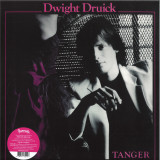
Dwight Druick’s born in Montreal to a professional gambler and an ex-Radio City Rockette. One of five children, he grew up in a family buoyed by music and beleaguered by the vagaries of miscalculated risk. After attaining a McGill University bachelor’s degree in Art
History, Dwight fully embraced both music and risk by traveling to London, where he signed a contract with Pye Records and Joe Cocker’s management company. The ensuing record,
Druick & Lorange was released to critical acclaim and relative success. After returning to Canada, Dwight recorded two albums with Phil Vyvial: Midnight and Minuit. Recorded with the Muscle Shoals Rhythm Section in Alabama, the duo’s work achieved airplay success in Quebec and across Canada. Dwight subsequently released his first French language solo album, Tanger, released in 1980 by the Canadian label, Bobinason.
Today quite hard to find in its original version, Tanger is first of all an incredibly solid album, clearly underrated and deserving more credit. Mostly known by collectors and DJs for the
stunning cover of Toto’s classic hit, “Georgy Porgy”, which was produced and arranged with the help of George Thurston (Boule Noire), it includes many other tasty titles, with amongst
them another fine rendition of “Open Your Eyes” by The Doobie Brothers. In fact, with its brilliant mix of Modern-Soul, Disco and AOR styles, the whole album is already considered
by many connoisseurs as a classic, and clearly a must have for anyone enjoying this musical blend. Never reissued on vinyl until now, there was not much more needed at Favorite Recordings
to make it happened. Officially licensed to Dwight Druick, who was unfortunately not able to provide the original tapes, Tanger has been perfectly restored and remastered by Frank Merritt, at The Carvery, London. CD and digital edition will also come with “Georgy Porgy (Version Disco)” as a bonus track.
With the release of their first two albums and live shows supporting Snarky Puppy, Roy Ayers, Marcus Miller, Larry Mizell & the Blackbyrds, Butcher Brown, Yellowjackets and more, Resolution 88 have already established themselves as one of the UK's leading exponents of funk jazz. Their music is synonymous with the silky, buttery sound of the Fender Rhodes. They're also a bona fide band, a refreshing change in a musical world increasingly occupied by online collaborations and viral videos. They're best mates who love to hang out, play together and make their own music - that sincerity is evident in their songs and their chemistry on stage.
'Revolutions' represents a lot of firsts - the first time Resolution 88 have recorded to multi-track tape, the first time that they've included a real string and brass section, the first time they've included special guests on record and the first time they've pressed an album on vinyl. Imagine a combination of an undiscovered Herbie Hancock album from the mid' 70's, rare-groove samples from the golden era of hip hop (ATCQ, Pharcyde etc) and the new London sound of bands like Yussef Kamaal.
Every track on'Revolutions'represents an aspect of music on vinyl. On'Pitching Up'you hear the DJ pitch the record up from 33rpm to 45rpm.'Out Of Sync'simulates a clumsy attempt at beat-matching. The hypnotic, circling sax line that opens the title track'Revolutions'(echoed by the strings at the end) evokes the mesmerizing sensation of watching the record label artwork whirling as it spins on the platter.'Runout Groove'fades in and out; the drum beat mimics the distinctive, perpetual rhythm tapped out by the stylus as it reaches the runout groove. On the second side,'Sample Hunter'unexpectedly deviates from the main section into Rhodes-drenched interludes; the type of moment that producers searched high and low for back when hip hop was great.Marcus Tenney's (Butcher Brown) lyrics on 'Dig Deep'are all about the thrill of digging for records and'Matrix'is inspired by the hidden messages sometimes left in the matrix markings on record pressings. On'Tracking Force', you can hear the beat twist and morph as the stylus skates over the record. Finally,'Warped Memories'closes out the album with a wistful, melancholy melody. Sit back with a glass of Japanese whisky and a Cuban cigar (or whatever your chosen poison is), stick the album on and enjoy it from start to finish - although if you're listening to it on vinyl, you'll need to get up to turn it over to the B-side ;)
- A1: Like Falling In Love - Ernest Ranglin & The Federal Band
- A2: Profile Cha Cha - Cecil Lloyd & The Starline Troubadors
- A3: I Love Paris - Lennie Hibbert Combo
- A4: T'is Wonderful - Eric Grant Orchestra
- A5: C'est Magnifique - George Moxey
- A6: Go Fife Go - Count Owen & His Calypsonians
- B1: Angelima - Ernest Ranglin
- B2: Estrellita - Lennie Hibbert Combo
- B3: Rhumbina - Cecil Lloyd & The Starline Troubadors
- B4: Sly Mongoose - Ernest Ranglin
- C1: Linstead Market - Baba Motta & Ernest Ranglin
- C2: Wheel And Turn Me - Bertie King
- C3: Come Back Liza - Ernest Ranglin & Baba Motta
- C4: Solas Market - Solas Market
- C5: Brown Skin Gal - Bertie King & Baba Motta
- C6: Mango Walk - Bertie King & Ernest Ranglin
- C7: Aye Aye Aye - Count Owen & His Calypsonians
- C8: Razor Merengue - Eric Grant Orchestra
- D1: Ernest's Tune - Ernest Ranglin
- D2: String Of Pearls - Audley Williams & His Orchestra
- D3: Monday Monday - Winston Turner Quintet
Reaching out to the real roots of the Jamaican sixties musical explosion…
Some of the originators of the genre, including Ernest Ranglin, Lennie Hibbert & Cecil Lloyd, playing in their element and demonstrating just where they're coming from
2019 marks the 20th anniversary of ‘Low Birth Weight,’ the second album by Piano Magic, then a loose collective of musicians centred around founder songwriter, Glen Johnson. Though a year later, the collective would take shape as a bona fide internationally touring group, in 1999, Johnson had one foot in his native Nottingham and the other in his new home of London where, finding himself label manager at Rough Trade Records, also became highly prolific, releasing his own records across a myriad of micro-labels (Che, Wurtlitzer Jukebox, Darla, Rocket Girl, etc).
By his own admission, ‘Low Birth Weight,’ owes much to the East London experimental group, Disco Inferno who, embracing sampling technology, attempted to turn pop music inside out. By 1995, the Inferno had burnt out but Johnson remained inspired by their playful, subversive manifesto and thus, the album here, partly produced by “Nottingham’s own Martin Hannett,” Martin Cooper, is difficult to pigeonhole either at the end of the millennium or even now. Drum kit signals are fed through a tiny amp literally inside a cardboard box; breathing is employed for rhythms; kick drums are replaced with broken glass; there’s a ragbag of tablas, huge slap back delay and phase, theremin, shortwave radio, and more.
Aside from the DI benchmarks, ‘Low Birth Weight’ bears the marks of an infatuation with the dreampop of the time – the guitar saturated in delay and overdrive – inspired by the likes of AR Kane and Kitchens Of Distinction and not the more languid “shoegaze,” which has oft been levelled at LBW.
There’s a revolving door of guests on the album, including Pete Astor (The Loft/The Weather Prophets) on a cover of Disco Inferno’s ‘Waking Up’; Simon Rivers of The Bitter Springs supplies lyrics and voice to ‘Crown Estate’ and ‘Dark Secrets Look For Light’; Jen Adam, then an American art student on a year’s placement in London, writes and sings ‘The Fun Of The Century,’ a personal account of being pushed off a roof at a party by someone she thought a close friend.
‘Low Birth Weight’ is undoubtedly of its time, though undoubtedly more playful and literary than much of the music made during the late 90’s and a fascinating bridge between dream pop and experimental electronic music.