The seeds of composer Rafael Anton Irisarri’s latest LP were first planted during his 2016 tour in Italy, months before that Autumn’s unexpected presidential election. The linguistic glitch of an innocuous diner in Milan named “il Mito Americano” – meant as “The American Dream” but translated literally to English as “The American Myth” – sparked a series of ideas, both conceptual and musical.
Amid the chaos of 2020, while exploring the stark world of brutalist architecture and inspired by the false fronts of Potemkin villages, a vision started to take shape: FAÇADISMS. Composed over three years, it’s a late capitalist lament of simmering electric despondency.
Irisarri’s obsession with repeating motifs mirrors the cyclical nature of our tumultuous political history. The album’s eight tracks heave and storm like a tempest being drained of its rage. This is the sound of majestic dissipation, of morning afters, fashioned from a mournful haze with cavernous guitars and granular twilight. A euphony of a receding tide as one sifts through the remnants of what remains: dust, delusion, and memory.
Opening with the somber gauze of “Broken Intensification," FAÇADISMS moves fluidly between moments of absence and abandon. Ashen swaths of electronics billow above smoldering embers of melody, guitar, and scattered streaks of processed strings and voice, as on the rapturous doom of “Control Your Soul's Desire for Freedom,” featuring Julia Kent on cello and Hannah Elizabeth Cox on vocals. "The impoverished peoples of the Americas have known all along that 'freedom' is a cruel illusion crafted by the elites, akin to Potemkin's fake villages designed to impress Catherine the Great," Irisarri indicates. "FAÇADISMS illustrates a twisted inversion where the rulers deceive their subjects with illusions of safety, democracy, and free speech to create a grotesque mirage of control over their own lives.”
Elsewhere, Irisarri leans into passages of hushed oblivion (“Hollow,” “Dispersion of Belief”), while ragged drones rumble and disintegrate into wind-battered ambient wreckage. One has the sense that it’s all too late. The hour of fury has passed. The beauty has come and gone. Irisarri’s muse has become the crack in the façade of the unraveling myth.
The record closes with a climax of grand departure. Co-written with Kenyan sound artist KMRU, “Red Moon Tide” surges from flickering elegy to celestial disquiet, roiling waves of hymnal descent, and bristling noise. The effect is unsettling and unmooring: a soundtrack for the soul leaving the body, only to discover a void. It’s the sound of the center not holding, of shared illusions being dissolved in a tunnel of white light.
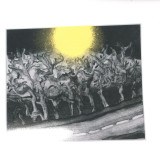
The cover photograph captures a profound sense of desolation. Taken in the historic shanty town of La Perla, Puerto Rico, where Irisarri spent his childhood, brutal colonial mysteries are lost to time. A skeletal concrete structure decays against an expansive blue horizon. Only the shadow of its shell ripples on the empty sea.
Has the American myth finally run its course?
Поиск:bro sa
Все
The seeds of composer Rafael Anton Irisarri’s latest LP were first planted during his 2016 tour in Italy, months before that Autumn’s unexpected presidential election. The linguistic glitch of an innocuous diner in Milan named “il Mito Americano” – meant as “The American Dream” but translated literally to English as “The American Myth” – sparked a series of ideas, both conceptual and musical.
Amid the chaos of 2020, while exploring the stark world of brutalist architecture and inspired by the false fronts of Potemkin villages, a vision started to take shape: FAÇADISMS. Composed over three years, it’s a late capitalist lament of simmering electric despondency.
Irisarri’s obsession with repeating motifs mirrors the cyclical nature of our tumultuous political history. The album’s eight tracks heave and storm like a tempest being drained of its rage. This is the sound of majestic dissipation, of morning afters, fashioned from a mournful haze with cavernous guitars and granular twilight. A euphony of a receding tide as one sifts through the remnants of what remains: dust, delusion, and memory.
Opening with the somber gauze of “Broken Intensification," FAÇADISMS moves fluidly between moments of absence and abandon. Ashen swaths of electronics billow above smoldering embers of melody, guitar, and scattered streaks of processed strings and voice, as on the rapturous doom of “Control Your Soul's Desire for Freedom,” featuring Julia Kent on cello and Hannah Elizabeth Cox on vocals. "The impoverished peoples of the Americas have known all along that 'freedom' is a cruel illusion crafted by the elites, akin to Potemkin's fake villages designed to impress Catherine the Great," Irisarri indicates. "FAÇADISMS illustrates a twisted inversion where the rulers deceive their subjects with illusions of safety, democracy, and free speech to create a grotesque mirage of control over their own lives.”
Elsewhere, Irisarri leans into passages of hushed oblivion (“Hollow,” “Dispersion of Belief”), while ragged drones rumble and disintegrate into wind-battered ambient wreckage. One has the sense that it’s all too late. The hour of fury has passed. The beauty has come and gone. Irisarri’s muse has become the crack in the façade of the unraveling myth.
The record closes with a climax of grand departure. Co-written with Kenyan sound artist KMRU, “Red Moon Tide” surges from flickering elegy to celestial disquiet, roiling waves of hymnal descent, and bristling noise. The effect is unsettling and unmooring: a soundtrack for the soul leaving the body, only to discover a void. It’s the sound of the center not holding, of shared illusions being dissolved in a tunnel of white light.
The cover photograph captures a profound sense of desolation. Taken in the historic shanty town of La Perla, Puerto Rico, where Irisarri spent his childhood, brutal colonial mysteries are lost to time. A skeletal concrete structure decays against an expansive blue horizon. Only the shadow of its shell ripples on the empty sea.
Has the American myth finally run its course?
The seeds of composer Rafael Anton Irisarri’s latest LP were first planted during his 2016 tour in Italy, months before that Autumn’s unexpected presidential election. The linguistic glitch of an innocuous diner in Milan named “il Mito Americano” – meant as “The American Dream” but translated literally to English as “The American Myth” – sparked a series of ideas, both conceptual and musical.
Amid the chaos of 2020, while exploring the stark world of brutalist architecture and inspired by the false fronts of Potemkin villages, a vision started to take shape: FAÇADISMS. Composed over three years, it’s a late capitalist lament of simmering electric despondency.
Irisarri’s obsession with repeating motifs mirrors the cyclical nature of our tumultuous political history. The album’s eight tracks heave and storm like a tempest being drained of its rage. This is the sound of majestic dissipation, of morning afters, fashioned from a mournful haze with cavernous guitars and granular twilight. A euphony of a receding tide as one sifts through the remnants of what remains: dust, delusion, and memory.
Opening with the somber gauze of “Broken Intensification," FAÇADISMS moves fluidly between moments of absence and abandon. Ashen swaths of electronics billow above smoldering embers of melody, guitar, and scattered streaks of processed strings and voice, as on the rapturous doom of “Control Your Soul's Desire for Freedom,” featuring Julia Kent on cello and Hannah Elizabeth Cox on vocals. "The impoverished peoples of the Americas have known all along that 'freedom' is a cruel illusion crafted by the elites, akin to Potemkin's fake villages designed to impress Catherine the Great," Irisarri indicates. "FAÇADISMS illustrates a twisted inversion where the rulers deceive their subjects with illusions of safety, democracy, and free speech to create a grotesque mirage of control over their own lives.”
Elsewhere, Irisarri leans into passages of hushed oblivion (“Hollow,” “Dispersion of Belief”), while ragged drones rumble and disintegrate into wind-battered ambient wreckage. One has the sense that it’s all too late. The hour of fury has passed. The beauty has come and gone. Irisarri’s muse has become the crack in the façade of the unraveling myth.
The record closes with a climax of grand departure. Co-written with Kenyan sound artist KMRU, “Red Moon Tide” surges from flickering elegy to celestial disquiet, roiling waves of hymnal descent, and bristling noise. The effect is unsettling and unmooring: a soundtrack for the soul leaving the body, only to discover a void. It’s the sound of the center not holding, of shared illusions being dissolved in a tunnel of white light.
The cover photograph captures a profound sense of desolation. Taken in the historic shanty town of La Perla, Puerto Rico, where Irisarri spent his childhood, brutal colonial mysteries are lost to time. A skeletal concrete structure decays against an expansive blue horizon. Only the shadow of its shell ripples on the empty sea.
Has the American myth finally run its course?
Smallville Records welcomes Barcelona’s Lis Sarocca onto the imprint this November with her four-track ‘Untitled Thoughts’ EP.
Since 2018, Barcelona, Spain’s Lis Sarocca has been steadily unveiling her take on House, Techno, Disco and Electro via the likes of Shall Not Fade, Hot Haus and Chiwax among others as well maintain a steady presence across the globe as a heavily in demand DJ. Here, we see Sarocca making her debut on Smallville with her latest collection of works, again showcasing her widespread influences and mesmerising sonic aesthetic across four cuts.
Up first is ‘Atacote’, a hypnotic house cut with a Balearic feel courtesy of breathy vocals, cinematic strings, piano lines and hazy atmospherics, intertwined with organic percussion and bouncy sub bass tones. ‘Breaks Reminder’ follows and shifts gear into a broken rhythm section, squelchy acid lines and textural synths throughout.
Opening the flip-side is ‘Early Years’, diving back into deeper realms with a multitude of ethereal pads, dubby synth flutters, plucked bass hits and crisp drums. ‘Might Be’ then concludes the EP on a more chuggy Nu-Disco tip, employing gritty bass stabs, bubbling arpeggios, airy flute melodies and a saturated off-kilter drum groove.
Comes with a Full Cover Artwork by Stefan Marx
- A1: Let ‘Em Know (Produced By Domino)
- A2: Live And Let Live (Produced By Domino)
- A3: That’s When Ya Lost (Produced By Del Tha Funkee Homosapien)
- B1: A Name I Call Myself (Produced By Del Tha Funkee Homosapien)
- B2: Disseshowedo (Produced By Domino And Jay Biz)
- B3: What A Way To Go Out (Produced By Domino)
- B4: Never No More (Produced By A-Plus)
- C1: 93 ‘Til Infinity (Produced By A-Plus)
- C2: Limitations Feat. Casual (Produced By Jay Biz)
- C3: Anything Can Happen (Produced By A-Plus)
- D1: Make Your Mind Up (Produced By Del Tha Funkee Homosapien)
- D2: Batting Practice (Produced By Casual)
- D3: Tell Me Who Profits (Produced By Domino)
- D4: Outro (Produced By Domino)
Repress! There are very few albums across any genre that stand the test of time better than 93 ‘Til Infinity, the classic debut record from the Hieroglyphics crew’s very own Souls of Mischief. In an era where Gangsta Rap and G-Funk dominated the West Coast Rap scene, Souls broke ground on a completely unique and thoroughly west coast sound. While the Dr. Dre’s and the Snoop Doggs were garnering much of the mainstream attention, Souls were quietly forging a charismatic, critically acclaimed, and cohesively shaped record that when categorized, sounded much closer to A Tribe Called Quest than N.W.A. The sound of their debut is characteristic of the distinct style explored by the collective, including a rhyme scheme based on internal rhyme and beats centered around a live bass and obscure jazz and funk samples.
93 ‘Til Infinity was propelled into success by its title track and lead single, which reached #32 on the Billboard Hot 100. It also featured singles “That’s When Ya Lost” and “Never No More” which also reached the Hot Rap Singles. In 1998, the album was selected as one of The Source’s 100 Best Rap Albums of All Time. Considered by many to be a text book “slept-on” classic Rap record, 93 ‘Til Infinity has only grown better with age. The album simply defines the Hiero golden age with a sound that would later be fine tuned with strong releases from MCs Del The Funkee Homosapien, Casual and Pep Love.
It takes some serious bravado to name your album 93 ‘Til Infinity, but certainly the goal of creating a Hip Hop “classic” must have been on the collective minds of group members A-Plus, Tajai, Opio, and Phesto when recording this landmark moment in Hip Hop history. It’s true, even seventeen years after the album’s initial release many people are still discovering it, and with this re-mastered reissue on double vinyl, fans all over the world will once again discover the brilliance that 93 ‘Til Infinity delivers and will continue to deliver beyond infinity.
- Sunday Morning
- Sun
- Love Songs
- Thoughts
- Don't Go Away
- Take A Picture
- What Can I Give You
- Think Of Rain
- Can You Tell
- Someone I Know
- Love
- California Shake
Auf dieser Tribute-Compilation finden sich Interpretationen von Margo-Guryan-Songs von TOPS, Rahill, Clairo, June McDoom, MUNYA und Kainalu, Frankie Cosmos und Good Morning, Kate Bollinger, Pearl & The Oysters, Bedouine und Sylvie, Empress Of, Barrie, und Margo Price. Die meisten unserer Geschichten über Kultmusiker, die ein oder zwei Alben machen und dann zu verschwinden scheinen, sind von Trauer, Verzweiflung und ausgefranstem Ehrgeiz umrahmt. Nicht so bei Margo Guryan, einer begeisterten Jazz-Ausnahmeerscheinung, die Popmusik verachtete, bis sie 1966 „God Only Knows“ hörte, das ihr ein Fenster zu den Wundern öffnete, die diese Musik-Form enthalten konnte. Nur zwei Jahre später veröffentlichte sie auf dem Album „Take a Picture“ ihre eigenen kleinen Popsinfonien und erntete dafür großes Lob und hohe Erwartungen. Aber da sie sich bereits von dem Posaunisten Bob Brookmeyer hatte scheiden lassen, lehnte sie es ab, ein Musikerleben zu führen und auf Tournee zu gehen oder auch nur darüber zu sprechen. Ihre Zurückhaltung führte dazu, dass „Take a Picture“ bald in den Regalen der Discounter und letztlich in den Mülleimern landete. Sie schrieb weiterhin Songs und nahm noch jahrelang auf, arbeitete sogar mit der Band von Neil Diamond zusammen, aber meistens schien sie mit ihrem relativ privaten Leben zufrieden zu sein. Wie es sich für eine so atemberaubende und subtile Musik gehört, erlebte die 2021 verstorbene Guryan in den letzten sechs Jahrzehnten mehrere Wiederauferstehungen. Und jetzt geschieht es wieder: Kurz nachdem ihre fast geflüsterte und liebeskranke Hymne „Why Do I Cry“ sie 2021, im selben Jahr, in dem sie starb, zum TikTok-Star machte, startete die Numero Group eine Wiederveröffentlichungskampagne, aus der 2024 das hochgelobte Set „Words and Music“ hervorging. Und jetzt haben ein Dutzend Künstler - von denen keiner geboren war, als „Take a Picture“ entstand - das gesamte Album (plus einen Bonustrack) für „Like Someone I Know: A Celebration of Margo Guryan“ neu interpretiert. Empress Of, Margo Price, Clairo, June McDoom: Sie alle bestätigen Guryans Schärfe als Songwriterin und die Brillanz eines Albums, das den Werbezyklus, den Guryan vor so langer Zeit ablehnte, bei weitem übertroffen hat. Guryan wurde in einer weitläufigen Familie in Far Rockaway geboren, als der Ort noch größtenteils von Bäumen umrahmt war. Während ihres Kompositionsstudiums an der Boston University stolperte Guryan in einen Auftritt als Pianistin zwischen den Konzerten des Miles Davis Quintet, unterschrieb einen Vertrag als Songwriterin bei Atlantic Records und verpatzte eine Session mit Nesuhi Ertegun. Aber sie war nicht darauf aus, ein Gesangsstar zu werden. 1959 ging sie an die Lenox School of Jazz in den Berkshires, um für Ornette Coleman und Don Cherry zu schreiben, die Aufmerksamkeit des Dozenten Max Roach zu gewinnen und in Gunther Schuller einen langjährigen Mentor und Freund zu finden. Sie wurde eine versierte Texterin und schrieb nicht nur für Coleman und Nancy Harrow, sondern auch für Harry Belafonte und Gary MacFarland. Aber es war die spätere Begegnung mit den Beach Boys, die Guryan die Tür zu „Take a Picture“ und einer Reihe anderer großartiger Songs öffnete, von denen viele auf „Words and Music“ erschienen sind. „Take a Picture“ ist eine ausgefeilte Bestandsaufnahme der Romantik und Unentschlossenheit der Mittzwanziger, vom koketten Treiben in „Sunday Morning“ und der Verliebtheit in „Can You Tell“ bis zur verzweifelten Hilflosigkeit in „What Can I Give You“. Ihre ewig weiche Stimme, ihre kühne Songkunst und ihre völlige Offenheit: Guryan machte 1968 und darüber hinaus gewagte Musik, egal wie sanft sich diese Klänge zu bewegen schienen. „Like Someone I Know: A Celebration of Margo Guryan“ unterstreicht die Stärke von Guryans Liedern, indem es einem Dutzend verschiedener Künstler erlaubt, sie auf ihre eigene Reise mitzunehmen. Im Laufe der letzten Jahrzehnte ist immer deutlicher geworden, wie gut Guryan war, wie stabil ihre Lieder inmitten der wechselnden Geschmacksrichtungen. „Like Someone I Know: A Celebration of Margo Guryan“ ist eine absolute Bestätigung, ein Zeugnis für die anhaltende Relevanz und Brillanz von Guryans Arbeit. Ein Teil des Erlöses dieses Albums wird für die Bereitstellung von und den Einsatz für erschwingliche reproduktive Gesundheitsdienste gespendet.
Joel Sarakula's new album "Soft Focus" is a mid-career album spanning his many influences and genres including Soft-Rock, Funk and Indie Pop, all brought under the umbrella of his gentle gaze and a 'soft' aesthetic. "Soft Focus" is also the name of a photographic technique born out of a spherical abberation of the lens where the image is a bit blurry and undefined: it's both flattering and forgiving on the subject. It's an apt title. As a lifetime wearer of (vintage) glasses, Sarakula knows a lot about spherical abberations. Perhaps he produced these songs with his glasses off as these are abstract and warm vignettes, never overstaying their welcome and for this reason Sarakula manages to feature twelve new tracks on "Soft Focus".
Highlights include one of the two Shawn Lee produced tracks "I'll Get By Without You", the rockier, iberic beat of "King Of Spain", the soulful affirmation of "Back For Your Love" and the psychedelic-tinged "Bird Of Paradise" and "Microdosing". This is a lovingly crafted album, well polished and it feels like the culmination of Sarakula's adventures in soulful soft-rock and his defining statement in the genre. While comparisons will be made with contemporary projects like Shawn Lee's Young Gun Silver Fox, Drugdealer, Benny Sings and Prep, echoes of soft-rock icons Ned Doheny, Boz Scaggs, Todd Rundgren and Michael Franks also ripple gently through the album.
Imagine if Ray Manzarek was the frontman for the Bee Gees... It's a neat visual introduction to Joel Sarakula, a UK-based Australian artist who writes, produces and sings Soulful Pop, gazing out at a contemporary world through vintage glasses, vintage threads and long blond hair. His music is informed by a rich, 1970s-inspired palette, drawing on soft-rock, funk and disco influences: sunny, uptempo jams for darker times. Self-aware that he looks and occasionally sounds like the love child of Ray Manzarek and the Gibb brothers, his self-deprecating sense of humour is always there just below the fringe.
Born in Sydney, based in UK and international in outlook Sarakula is a songwriter who has travelled the world in search of his muse, experiencing everything from being a victim of Caribbean carjackings to performing in the remote fishing villages of Norway before finally establishing his career in the UK and Europe. Since then he has released albums such as "Island Time" (2023), "Companionship" (2020), "Love Club" (2018) and "The Imposter" (2015) that have racked up plays on rotation across national UK and European radio and got him noticed in The New York Times, The Independent (UK), The Irish Times, Rolling Stone Germany, El Pais (Spain) and Sydney Morning Herald. It's- been a long road finding his current cult status starting out at the piano from a young age in suburban Sydney, writing and singing songs by the time he was a teenager and onstage by fifteen years old playing jazz standards in his local golf club. "I came from humble beginnings, it's best not to mention" as he sings in his 70s boogie influenced song "I'm Still Winning". Joel Sarakula is a fixture on the festival and club circuit having previously performed at SXSW, Primavera Sound and Glastonbury festivals. Ever the internationalist, he tours with pickup bands sourced from each territory he plays in: a Barcelona band for Spain, a Berlin band for Germany and so forth. This cross-cultural exchange is another echo of the 1970s when world travelling soul and pop artists from the US did the same and guarantees that his live shows remain fresh, exciting and absolutely contemporary.
Unbound by place or genre, mercurial, experimental pop duo Soft as Snow find freedom to intuitively reflect the disarray of human connection with their intricate, shape-shifting pop production. With each successive release, the duo evolves, unfurling into their own poetic sound, now fully realized on their intimate, third full-length, Metal.wet.
The oft-present trappings of male-female duos are eschewed here as the Berlin-based Oda Starheim and Øystein Monsen contribute equally across a canvas of analogue synthesizers, samplers, live drums, and processed guitars. At once a part of and yet apart from the zeitgeist, their forward-thinking modernity stretches the limits of expectations across Metal.wet's ten insouciant tracks. Fans of Tirzah, Hype Williams, and even Angelo Badalamenti will find much to love in this haunting work peppered with ASMR moments and rough sampling wrapped in high production –– twinkling glasses and sirens in the distance, rhythms and voices up front. The result is synth-driven, noisy, and dripping with laidback, confident sensuality.
Although Starheim's voice begins the album in a whisper, it quickly becomes apparent that the group has jettisoned their previous tendency to bury and distort her vocals. Nested in a bed of thorny electronics and broken rhythms, her multifaceted vocals might bring to mind Kazu Makino of Blonde Redhead or Hope Sandoval fronting Massive Attack. London MC Brother May (Mica Levi, CURL) makes an appearance on the driving and ethereal “Whip,” while Øystein’s own voice appears for the first time in a state of languid background haze.
Soft as Snow create and record across Europe. Defiantly averse to genre, the pair become vessels for their “electronic music pushed to the brink of collapse” (The Wire), previously released by Infinite Machine and Houndstooth. Informed by backgrounds in film and performance art, “there’s a surrealism that comes with watching Soft as Snow in the flesh,” (Vice) as seen at L.E.V. and Lunchmeat Festivals. Collaborations with visual artist Guynoid, designer AGF Hydra, and sculptor Camilla Steinum add depth to the corporeality of their “strange, mesmerising and utterly unforgettable” electronic experimentations. (DJ Mag).
Mac DeMarco's breakthrough sophomore album, Salad Days - released on April Fools', 2014 - garnered widespread critical acclaim, landing on over 30 Year End lists. It was the album that catapulted DeMarco from "loveable slacker" to "mature songwriter with a gaptoothed grin," all at the tender age of 23. DeMarco's demos for Salad Days, originally included in an expanded edition of the album only available on Captured Tracks Mail Order site, peel back the curtain of said artist, who, up until then, may have been more known for his raucous live shows than his genuine talent as a songwriter and craftsman. This collection of demos and sketches as well as previously unreleased instrumental demos offer a rare insight into Mac's world and process.
Buffalo Tom (Bill Janovitz, Chris Colbourn und Tom Maginnis) gründeten sich 1984 an der University of Massachusetts in Amherst - einer Brutstätte von Post-Punk-Gitarrenbands wie Dinosaur Jr. und Pixies. Die drei langjährigen Bandmitglieder erkennen die Leistung ihrer Langlebigkeit als kreative Einheit an. Anfänglich boten sie einen rauen, treibenden Sound, der Janovitz" imposanten Gitarrensound hervorhob, doch der frühe Ansatz von Buffalo Tom wich einem melodischeren, aber nicht weniger unverwechselbaren Stil. Die Band hat zehn Studioalben veröffentlicht, das jüngste, Jump Rope, erschien Anfang dieses Jahres. "Big Red Letter Day" wurde 1993 veröffentlicht. Auf ihrem vierten Album machten sie das, was sie sehr gut können, aber mit mehr Glanz in der Produktion. Das Album wurde in LA von den Robb Brothers aufgenommen und enthält zahlreiche Publikumslieblinge, vor allem: "Sodajerk", 'I"m Allowed", 'Treehouse" und 'Late At Night". Die Band erlangte neue Berühmtheit, als "Late At Night" in einer Schlüsselszene der kurzlebigen TV-Kultserie "My So Called Life" mit Claire Danes und Jared Leto in den Hauptrollen zu hören war, die Mitte der 90er Jahre ausgestrahlt wurde. Der Song kam nicht nur in der Folge vor, sondern die Band wurde auch bei der Aufführung des Songs gezeigt. Der Rolling Stone bezeichnete den Song in einem Bericht über die Band als "inspirierte, geradlinige Power-Pop-Sammlung", und Spin schrieb: "Die Leidenschaft fühlt sich echt an und die Musik ist erhaben."
- A1: Call Her A Bitch
- A2: Blow The Whistle
- A3: Burn Rubber Pt. 2
- A4: Keep Bouncin' (Street) (Feat Snoop Dogg, Will.i.am, & Fergie)
- B1: Pimpin' Forever
- B2: Money Maker (Feat. Pimp C & Rick Ross)
- B3: Strip Down
- B4: Nothing Feels Better
- C1: Sophisticated
- C2: Playa
- C3: 16 Hoes (Feat. Bun B)
- C4: Baller
- D1: Sadity (Feat. Tha Dogg Pound)
- D2: I Want Your Girl (Feat. E-40, Dolla Will, & Mistah Fab)
- D3: It's Time To Go
- D4: Shake It Baby
PRESENTED FOR THE FIRST TIME EVER ON VINYL AS A DOUBLE LP IN A GOLD VINYL PRESSING WITH A FOLD-OUT INSERT
As music fans know, James Brown wasn't just the greatest funk and soul singer the world has ever seen - he was also a musical visionary and businessman, who surrounded himself with geniuses who made him better and pushed him further. From horn masters Maceo Parker and Pee Wee Ellis to vocalists Lyn Collins and Bobby Byrd, Brown was a musical A & R master, restless and always looking for the next big thing. Most times, that would manifest in the latest James Brown smash under his own name. But not always. His stable of talent was overflowing in the 60s and 70s, and, thankfully, the tape machine in his studio was always rolling. Originally released in 1988, during the era of hip-hop's golden age of sampling, it's no surprise that just about every note heard in this incredible collection has been used on not one, but multiple rap classics. Which, at the time, was proof of Brown's (and his crew's) staying power. But we are over three decades beyond those days now, and it has lost none of its musical potency. Diving deeper into the vaults than the also-incredible Part 1 of the Funky People series, there is not a weak track in the bunch. Moving beyond well-known JBs cuts, things get interesting from the get-go with Bobby Byrd's monumental groove "I Know You Got Soul". Hank Ballard and Marva Whitney also enter the fray, leading the way to Myra Barnes's emotional and powerful "Message From The Soul Sisters (Parts 1 & 2)" and Lyn Collins's slow, smoldering cover of Isaac Haye's "Do Your Thing." Politics even get the funky soul treatment, with Fred Wesley & The JBs "You Can Have Watergate But Gimme Some Bucks And I'll Be Straight" and "I'm Paying Taxes, But What Am I Buying?" And it should not be overlooked that Maceo & The Macks instrumental workout "Soul Power ‘74" even features a proto-sampling snippet from MLK’s I’ve Been To The Mountaintop speech from 1968. This is another amazing collection of James Brown's funky friends, without one second of filler, brought to you as a glorious 2-LP gatefold by your friends at Get On Down.
Louis De Roo already knows a thing or two about what life can throw at a person, yet this young Belgian songwriter is still very much on the threshold of a promising international musical career. Fall 2024 sees the release of his debut album ‘Troubled Waters’ as Isaac Roux. His debut and breakthrough single White Rose (which is not on the album) became an alternative hit in Belgium and the Netherlands, with follow-up singles Colours and Autumn Love opening doors in Germany (radioeins), France (Radio Néo) and Austria (FM4) and to trendy streaming playlists. Roux’s combination of warm indie folk and alternative rock works even better on stage, never failing to leave a crowd open-mouthed, like during a live session on German national radio (Deutschlandfunk Kultur). Impressing crowds at the Rock Werchter and Pukkelpop festivals in his home country, he did the same in the Netherlands and Germany (playing Reeperbahn three times), and supporting Dotan on his European tour in places like London, Paris and Vienna. Every song, and the album as a whole, gives the listener a glimpse into the life of De Roo, who hasn’t always had it easy, hoping that his music can give people in similar situations something to hold on to. “To win, to lose, to dream and to hope, they’re just some of the things that have shaped me into the person that I am today”, De Roo says. “And through my stories I hope to provide a little bit of a moral compass for people who, like me, haven’t always been treated nicely by life.”
- A1: Timmy Thomas - Why Can't We Live Together
- A2: Gwen Mccrae - 90% Of Me Is You
- A3: Facts Of Life - Givin' Me Your Love
- A4: Peter Brown - Dance With Me
- A5: T-Connection - Groove To Get Down
- B1: Clarence Reid - Living Together Is Keeping Us Apart
- B2: Raw Soul Express - Dedicate All My Love
- B3: Milton Wright - Keep It Up
- B4: Betty Wright - Clean Up Woman
- B5: Robin Kenyatta - You
1st in a series of compilations collecting the ultimate funk & soul tracks from the legendary TK DISCO catalog that have been instrumental is shaping the sound of hip-hop. 10 tracks from the vaults highlighting grooves that have been sampled by DRAKE, DR. DRE, KANYE, MADLIB. PETE ROCK, and more.
- Keep Up With Jones
- Country's Cool Again
- Good Horses (Feat. Miranda Lambert)
- Broken Hearts Still Beat
- Whirlwind
- Call A Cowboy
- Hang Tight Honey
- Bar In Baton Rouge
- Counting Chickens
- X4Xu
- Ring Finger
- Middle Of It
- Devil Don’t Go There
- Whiskey Colored Crayon
Die mehrfach mit Platin und Grammys ausgezeichnete Künstlerin Lainey Wilson liefert mit Whirlwind einen
gewagt ehrlichen Einblick in das Leben und die Reise der Sängerin durch Nashville.
Das von Jay Joyce produzierte Album mit 14 Titeln folgt auf Wilsons sieben Auszeichnungen der Country Music Association
(CMA), darunter „Entertainer des Jahres“, sechs Auszeichnungen der Academy of Country Music (ACM)
und einen Grammy für das „Beste Country-Album“.
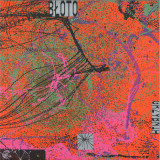
Błoto’s bold 2020 debut brought forth three albums in just twelve months. This prolific creative burst, followed by an ongoing tour and involvement in other projects, meant that fans had to wait over three years for the next release. During this time, new ideas took shape, and the vision for their fourth LP crystallized. The wait for Błoto's new album is nearly over. As always, autumn signals the arrival of Grzybnia (Mycelium).
The idea for the album had been simmering within the band since the release of Kwasy i zasady and finally took shape in late January 2023 at Warsaw's Studio Pasterka, under the careful guidance of Piotr Zabrodzki. It was by far the most fruitful session in the group's history, with ideas flowing in abundance. The chosen tracks not only resulted in two well-received singles, Szlam / Ścieki and Bakteria, but also provided enough material for an EP set to drop next year.
The seemingly chemical title of the album Kwasy i zasady (Acids and Bases) ultimately referred to interpersonal relationships, describing traits that prevent harmony. The album embodied the polarization of societies in the 21st century. The metaphor of Grzybnia (Mycelium) goes a step further. It emphasizes the importance of cooperation as a fundamental skill that can yield various results (fruits, fungi)—both good and bad. Above all, it underscores the power of collective action beyond divisions.
In a complex, unstable modern world that is breaking apart into pieces, the concept of mycelium offers a powerful model. Mycelium thrives in degraded, seemingly lifeless environments created by humans. A key aspect of the broader significance of mycelium is that cooperation benefits all involved parties, where each contributes something and receives something in return. Mycelium is a symbiont, meaning it forms a symbiotic relationship with certain tree species through mycorrhiza, where the roots of the trees and the mycelium exchange essential life-sustaining substances. This results in mutual benefits. The world of mycelium exemplifies cooperation.
A single mushroom, like a person, dies, but mycelium endures, much like humanity itself. Thus, similar to culture, it is immortal. Błoto operates in a manner akin to mycelium. It undoubtedly belongs to the underground realm, embodying the essence of the underground. It is also a destructor of music. In what sense? The Polish Nobel laureate Olga Tokarczuk noted in her book Primeval and Other Times that “... Mycelium thrives by drawing the last remnants of life from what dies, decomposes, and seeps into the earth. Mycelium is the life of death, the life of decay, the life of what has died.” In the same way, Latarnik, Cancer G, Wuja HZG, and OlafSaxx, through their collaboration, process cultural products to create entirely new and surprising combinations. The result of this work is both edible and poisonous mushrooms, manifested in the form of fat beats, house, spiritual jazz, improvised music, illbient, organic techno, and genre-defying electronics.
The peak mushroom season in Poland occurs in autumn, which is why Grzybnia will be released on October 11, 2024, via Astigmatic Records.
- A1: In A Blaze Of Fame
- A2: Racefietsen In De Polder
- B1: Ghost Stories From A New House
- B2: Satyricon Pandemonium
- C1: Come And See Your Misery
- C2: Ritmo Siniestro Embrujado
- D1: Ethics Synths Morality
- D2: I Got Lost In The Tool Shed
- D3: A Million Exoplanets Without Djs
- E1: A Vast Comfortless Universe
- E2: North Rhine Westphalia Theme
- F1: Taping A Broken Heart
- F2: Tears From A Manta
Legowelt returns to Clone Records with yet another sonic journey that defies conventional electronic music boundaries, offering an album that is as eclectic as it is immersive. Blending different styles and textures seamlessly and proving that electronic music can still be creative and that function doesn't always prevail style. He delivers a collection that transports listeners through a kaleidoscope of retro-futuristic sounds, deep grooves, and cosmic melodies. Despite being in the music game for more than 25 years the music from Danny Wolfers remains playful and refreshing. Stylistically taking elements from his whole musical career and not commiting to the latest trend or any genre specifically, and low-key taking the piss with everyone who takes themself to seriously. While many electronic music artists are stuck in their own void, busy pleasing the big room, Legowelt meticulously crafts rich textured soundscapes, balancing between cosmic exploration and the dancefoor, that evoke both nostalgia and futuristic visions. His ability to fuse elements of house, techno, disco and electro with cinematic influences results in an album that is not only ready for club use but also gratifying at home. Each track offers something unique--whether it's the hypnotic rhythms, the lush synth lines, or the subtle, eerie undertones that creep in unexpectedly. Legowelt's attention to detail and passion for his craft shine through, making this album a worthy follow up to his last album on the Clone Jack For Daze series.
"The Seeker is a musical reinvention of Hermann Hesse’s classic novel, Siddhartha, that has captivated readers for over 100 years.
Now vividly retold by composer and writer Rachel Fuller as a double album accompanied by a beautifully illustrated book-launched seperately on 7th Nov. The Seeker follows the quest of the young Siddhartha as he embarks on a journey of self-discovery and enlightenment during the time of the Gautama Buddha. Alongside the complete lyrics and narrative from the album, Siddhartha’s adventures and search for wisdom are brought to new life by the striking artwork of Emilia Wharfe. The album includes narration by the late Christopher Plummer, and features a dazzling array of performances from Pete Townshend, Sir Elton John, Nakhane, Emeli Sandé, Layton Williams, Sunidhi Chauhan and the Royal Philharmonic Orchestra. Lifetime followers of this timeless story and a new generation of seekers alike will be enchanted by this magical reimagining."
This self-titled LP marks the fifth release of Scottish artist Murray Collier’s Dip Friso project, his longest running alias and the solitary vanguard of his own Real Landscape imprint. Across the six tracks he delivers another collection of warped percussive loops, heavily manipulated guitar work and psychedelic sound experiments that drift between popular music forms ('I’ll Get to Hiding') and whittled down takes on electric blues and shoegaze ('Another Country’). The former features the instantly recognisable croon of Still House Plants vocalist Jess HK embellishing a backdrop of tape loop alchemy, an inspired pairing given the shared history of Glasgow dwelling. ‘Thin Ayrshire’ (written with Hannan Jones) treads a similar path with Collier’s own beyond-unrecognisable voice featuring, broken suddenly by a brief flash of 12th Isle’s Loris S. Sarid & Innis Chonnel’s ‘Spalted Water Portal’ thanks to a recycled tape spool. ‘A Sorry Business’ takes on avant-jazz inspired puddle skronk, a stunted casio bleep propelling forward guitar dirge and cymbal crashes, whilst Australian minimal wave heroes The Systematics are paid homage via a farewell cover of their track ‘Midnight on Balancing Day’ (here ‘Midnight’).
All in, the album sees the project incorporating more instrumentation and a full use of vocalists, leaning less heavily on gauzy sample collage styles and providing a more introspective look at the hazy, dubwise world Collier has been building for the past half a decade.
Kool Customer is a collaborative project from B. Bravo and Bay area singer Rojai that brings together the sounds of future funk, 80s boogie, and a little bit of strip club sleaze.
B.Bravo is a 2010 graduate of Red Bull Music Academy with releases on Brownswood, Frite Nite and Ernest Endeavors.
Support from the likes of Benji B (BBC Radio 1), Gilles Peterson, DaM Funk, Sweater Funk Collective .
B. Bravo's shared the stage with artists like Chromeo, Dam-Funk, Flying Lotus and serenaded crowds across the world with his bass heavy outer space boogie and dirty grinding synth grooves at festivals like SXSW, Detroit Electronic Music Festival, and Sonar in Barcelona.
Rojai (pronounced "ROW-JUH") is a San Francisco born singer emerging as a leading voice in the modern funk scene with a vocal range from a raspy, percussive island vibe, to silky r&b.
As a frontman for Kool Customer and Latin-funk outfit Bayonics, Rojai has proven himself adept at crooning on any groove in his soulful timbre.
Being legally blind hasn't slowed down Rojai's ability to write, record and perform. He has channeled his life experience into songwriting and singing, creating music with a spirit and soul that inspires.
Extensive sync history include Awkwafina Is Nora From Queens, Netflix's Fatherhood, as well as 3 unique songs featured on Tyler Perry's Sistas and more
Freestyle Records drop another UK boogie 12" rarity from Eddie Capone's Treatment, this time the previously white label-only "Only You Know What I Like" from 1985. Limited to 300 copies worldwide.
----------
A mainstay of the UK's reggae, soul, funk & rock circuits since the early 1970s, Eddie Capone has played with a diverse and revered collection of acts; Chairmen of the Board, The Foundations, Black Velvet, The Elgins, Arthur Brown's Kingdom Come, Arthur Lee's Love, Billy Preston and Edwin Starr to name but a few. Eddie was also part of short-lived group Casablanca, with David Costa & Barry Clarke of early 70's folk-rockers Trees, signed to Elton John's Rocket Record Company.
Eddie founded the Treatment band in the early 1980s bringing in a revolving cast of singers and players, and created the Treatment Records imprint out of his own Black Rock studio in South East London in 1982. Releasing a string of singles - with efforts from Eddie Capone's Treatment, a side-project with singer Beryl Marsden as Salt & Pepper, and a single from Norwegian group Wave - Treatment Records then followed this up in 1985 with the 12" release of "I Won't Give You Up" with Diane Jones brought in on vocal duties. This received solid support amongst DJs and radio at the time, and was quickly followed with this solid slice of white label-only UK boogie-funk that has since become a favoured deep cut on the selectors circuit.
Treatment Records continued through the 1980s through to early 1990s releasing Eddie's music, both as a solo artist and as part of collaborative side-projects, and Eddie has continued to write, perform and produce music from his home studio right through to the present day. As a committed community figure & activist in South East London, Eddie has since 2014 re-started Treatment Records under the name of 3G Treatment - bringing together three generations of people from the local area to ensure young artists & musicians have access to the expertise and experience of their elders for support and encourage successful careers in the industry.