Ingredient is the elegant collaboration of Toronto poets, composers, producers and dear friends Ian Daniel Kehoe and Luka Kuplowsky. Their self-titled release is an enigmatic electronic avant-pop record attuned to the micro and macro perspectives of the natural world. Ingredient is an album whose lyrics are more poem than lyric, and whose songs exist in a merger of house music, philosophically-minded lyricism and contemporary R&B. One might recall electronic and art-pop luminaries such as Yukihiro Takahashi, The Blue Nile, and Arthur Russell, or connect it to contemporaries like Nite Jewel, Westerman and Blood Orange. A distinct world of dance, of questions, of secrecy and ultimate softness.
Eight years of friendship forges strange telepathy.
In the summer of 2020, Ian Daniel Kehoe was entrenched in a new feeling of heaviness; psychosomatic symptoms had started to proliferate; stress made new pores across the body, bending sensitivity into pain. His days were met with confusion, detachment, sleeplessness and pain without causation. Disfigured, he felt that what had been central and centering was blown out to the periphery of things. In a moment of self-preservation he reached out to his dear friend Luka Kuplowsky to make an album together. For Kehoe, it was an instinctual grasp for the anchoring truthfulness of deep friendship and the potential for a dedicated creative collaboration. Kuplowsky’s presence was light, supportful and curious, eager to explore musically the sounds they were mutually drawn to: house music, ambient pop, dub. The duality between Kuplowsky and Kehoe – between the Aflight and the Unmoored – is a portrait of a friendship whose exchanges came easy and produced an outpouring of song. Creation and therapy crisscross. In email correspondence that catalogs their process of collaboration, affection abounds: “feels bare without the Luka Licks”, or “Love you so much”, or “Kinda just overwhelmed with deadliness coming in at all angles.” When their voices first come in together on “Wolf,” that harmony arrives in a dramatic avant-pop sound that is bold and wondrous.
Kuplowsky and Kehoe both arrive at Ingredient as established artists whose works are committed to language’s propensity to provoke and mystify. Kuplowsky’s 2020 album Stardust is an idiosyncratic and otherworldly blend of pop and jazz romanticism grounded by Cohen-esque vocals and a stirring philosophical curiosity. Kehoe’s entrance into the new decade has hatched four records of pop experimentation, most recently 2022’s Yes Very So, a euphoric and bold album of poetic synth-pop and meditative ambient instrumentals. Kuplowsky and Kehoe’s union as Ingredient is a beautiful and unusual chemistry that integrates their distinct approaches while bringing forth a newness: a sound that alternates between cinematic technicolor and dubbed out fogginess; a lyricism that exchanges their lucid and clear poetics for a playful and obtuse verse. The album intuitively taps into the opposing emotional states of Kuplowsky and Kehoe during the conception of the record, contrasting the buoyancy of trumpeting keyboards (“Resurface”), angelic synthesized voices (“Come”), and rolling bass (“Photo”) with the record’s underlying darkness of whirring buzzsaw textures (“Transmission”), whooping sirens (“Wolf”) and murky ambience (“Illumination”). Lyrically, this duality arises in the record’s flux between openness (“Variation”, “Raindrop”) and existential dread (“Wolf”). “Illumination” most clearly crystalizes this opposition, reconciling the verses’ neurotic yearning for enlightenment with the chorus’ liberating doctrine of negation: “no more devotion… no more delusion”. Amidst the gradations of light and dark, Kuplowsky and Kehoe trade indelible, lush melodies as though their voices are made of a substance that melts easily one into the other. The harmony of poetry, sound, and texture cuts through your brain fog like a wet diamond.
Ingredient’s self-titled record was assembled by Kuplowsky and Kehoe over the course of six months in a home studio they frequented daily. Amidst synthesizers and drum machines they composed, re-composed, and workshopped a wide array of music, ultimately focusing on a set of eight songs that lived in a shared musical and philosophical world. Recording days often ended in basketball games at a local court or a rooftop commune over a pot of tulsi tea and a crossword puzzle. Kuplowsky brought in the Blue Cliff Record – the classic anthology of Chan Buddhism – whose inscrutable and sublime insights remained constant throughout the recording process as an activator of reorientation and reflection. While Kehoe was frequently rendered physically immobile by bouts of anxiety, a patience and mutual caring governed the pace of their creation; rest, stretching and meditation became equally important as the act of arrangement. Invited into their intimate circle of composition was Thom Gill, whose heavenly voice uplifts “Variation” and “Raindrop,” and Karen Ng, whose alto sax simmers and dances around the funky strut of “Raindrop.”
The lyrics on Ingredient reflect the persistence of change, the infinite variability of nature where randomness and divergence are no accidents. In Daoism, duality, in the form of Yin and Yang, is not contradictory as it is in Western idealist philosophy, but rather composes the eternal and lived paradox of our changeless-changing universe: changeless because all is change, and changing because the dynamism of the Dao makes each moment transformational. Kuplowsky and Kehoe refract this way of seeing the world, as in Variation: “Variation in the natural world / there it is.” Ingredient is an experience of the manifold ways of saying there it is of the transformational world, and there it is, unfolding. Elsewhere, change and ephemerality is addressed through the record’s preoccupation with non-human perspectives, reorienting the listener to the wolf, the mouse, the emerald frog, the centipede, the bird, the fly in the lamp. The album cover visualizes this fascination with the striking image of a reddish-orange frog atop a defamiliarized landscape of dark green leaves. Mirroring the exploratory process of the record’s collaboration, the frog also signals the amphibian’s natural inclination to leap into boundless potential. Kuplowsky and Kehoe’s lyrics manifest philosopher and ecologist Timothy Morton’s concept of “the mesh,” drawing attention to the “vast, entangled web” of interconnectedness that connects all life forms and interweaving the songwriters’ shared wonder into the Animal’s unknowability. As Luka narrates in the breakdown of the dance-floor ready “Photo,” “the closer we observe things, the further they retreat into abstraction.” In Ingredient’s ecosystem, perception is a reversible fractal where the world’s minutest details mirror the shape of the cosmos.
According to the Dao, the path to healing starts by reorienting perception away from the self and toward the self’s subsumption in Totality. For Kehoe, collaborating with Kuplowsky became the reorientation necessary for the self-preservation he was seeking, opening up a shared creative practice to navigate and soften the complexity of his psychological shattering. The album begins with Kuplowsky intoning “colossal faith” which bounces around the stereo field in a cloud of echo, and it is the enormity of “faith” that centers both Kuplowsky and Kehoe’s collaboration and their inquisitiveness in the vast mysteries of our very being. Truth in Ingredient is not an essential nugget, but a bending of the light – it is the equivocal entanglement of how we are in nature as nature, but with a plea or prayer under our breath that marks our felt distance from what we are a part of: “carry me towards the mountains of my birth / returning to the nest / the silence of the earth.”
Search:bro sa
With I was born by the sea, Richie Culver brings to a close a period of intense introspection and emotional reckoning with a debut album that serves as both an optimistic statement of intent and a final glance back at the painful places it explores. Following recent work with Blackhaine and Pavel Milyakov, I was born by the sea picks up where Culver’s EP for Italian label Superpang, Post Traumatic Fantasy, leaves off, painting an unabashed portrait of contemporary malaise, detailing a life lived behind closed doors, pinned under the crushing weight of austerity, sapped of the strength to do anything other than gaze out to sea and all the grey possibilities it represents. Where Post Traumatic Fantasy saw Culver returning to his hometown of Hull after a period spent entangled in London’s relentless sprawl, his first full length project reaches further back to his formative years working in a caravan factory and going to raves in and among Hull’s outskirts. Unspooling like a fever dream, I was born by the sea is the anxious clutter of a racing mind spoken clearly, a stark reflection on how it feels to have too many ideas and too much time to act on them.
Though unquestionably a snapshot of a time of significant difficulty, Culver reflects on this period with tender empathy and pitch-black humour, stitching together unflinching observations from England’s neglected corners, ‘there’s more mobility scooter repair shops and bookies than there are bookshops,’ and devastating vignettes of everyday struggle, ‘tears on the tin foil’, with surreal depictions of industrial grit, ‘skimming stones in a small pond by the slaughterhouse’. His DIY approach to production stretches the rough sinew that connects these fragments of memory, a process he describes as using a paired back collection of synths and drum machines to the best of his ability, ‘but to the least of their capabilities,’ wringing out visceral sound with self-taught urgency. During the album’s most impressionistic passages it’s as though Culver has transposed past internal turmoil into powerfully resonant noise, the Sisyphean sonics of ‘Create A Lifestyle Around Your Problems’, which evokes in its concrète clatter and MRI machine barrage the sound of making the same mistake again and again, or the stuttered jumble of ‘Its Hard To Get To Know You,’ its garbled vocal modulation and frayed edges of distortion channeling the paranoia of somebody listening to muffled voices through thin plaster, climbing the walls of their bedroom with the curtains closed, a nervous breakdown in stereo.
In counterpoint to this glides the ever-present spirit of the dance floor, which haunts the record from the moment it is invoked in its first few seconds. Opening onto a sea wall of bright synthesis, the stuttering vocals and bass tone chops of ‘Nervous Energy’ dump us directly into post rave ecstasy, the echoing cry of a voice amplified by loudspeaker carrying the loose energy and surge of crowds moving in darkness. The incessant, dead phone line beep of ‘Pigeon Flesh’ builds to a pulse that suddenly swells into an anxious technoid surge, shapeshifting at lysergic speed into head shrinking audio hallucinations, a descent into the void of the present via machine music hypnosis. Even ‘Its Hard To Get To Know You’ summons the ego death drive of hardcore techno within its scorched textures, flickering indiscernibly between attritional noise and frazzled hardware stomp. Paying homage to both the parties of his youth and a countless succession of Sundays spent offering himself up within Berghain’s hallowed architecture, Culver’s experiments in addressing his formative relationship with rave provide an energetic glimpse at where he might take his sound next.
Between spikes of propulsive energy and grim mood pieces Culver returns to suspended passages of aching, glacial drift, the cold swell of the North Sea, accompanied by some of his heaviest testimonials. The gauzy ebb of ‘Daytime TV,’ its tumbling loops reminiscent of boats bobbing off a distant shore, sees the artist at his most checked out, slumped in front of his television, seven days a week. ‘I used to dream of doing something,’ he admits, ‘anything to get out of this town.’ ‘Love Like An Abscess’ pairs swirling currents of ambient shimmer with violent images of baseball bats lying next to beds and blood-stained mattresses, next to which Culver pleads in a desperate mumble, ‘let our love grow, like a broken abscess.’ Yet it’s with the album’s final word and title track that Culver reveals a glimmer of cautious optimism, a parting gesture of exposition and closure. ‘I knew I had to get away,’ he asserts, ‘so I did and I never looked back.’ What follows builds from a low throb, the flutter of a tiny heartbeat, to a resonant glow, embellished with unfurling synthetic burbles, oil rigs sparkling in the distance, golden light spilling across the sea. In reckoning with the place he had to escape, Richie Culver is now free to look towards the promise of something new, something hopeful.
After releasing his self-titled debut album in 2017 (On Agitated AGIT044R), Dion Lunadon (The D4, ex-A Place To Bury Strangers) and In The Red Records is proud to release his sophomore album, Beyond Everything. Beyond Everything will be Lunadon’s first release on In The Red (an ideal match for his music), as well as his first full-length since departing A Place To Bury Strangers. Written, performed and recorded by himself, the songs tap into a raw, palpable energy that blur the line between the music and the person. Drums on the record were played by Blaze Bateh (Bambara) and Nick Ferrante (The Black Hollies). Lunadon says; “The record was written and recorded sporadically between 2017 and 2019. I probably wrote about one hundred songs during this period. The first album was pretty relentless which I liked, but I wanted to make something more dynamic for the second record. Something that could be more conducive to repeated listens. I’d get in my studio, come up with a song title, and start working on any ideas that I had. For example, with ‘Elastic Diagnostic,’ the idea was to create a hum that evokes the sound of life coursing through your body. Everything else kind of formed around that idea.” “An arresting, noise-infected dose of psych-garage.” on “It’s The Truth”—Brooklyn Vegan “An amped up garage psych ripper.” on “Living And Dying With You”—Brooklyn Vegan “A ferocious rocker.” on “Living And Dying With You”—Destroy Exist “A gritty and raw glam-like anthem centered around chugging power chords, Lunadon’s howled and desperate delivery, forceful and propulsive drumming paired with an explosive feedbackdriven coda, ‘It’s The Truth’ further cements the Kiwi-born, Brooklyn-based artist’s reputation for crafting anthems meant to be played as loud as humanly possible.” —Joy Of Violent Movement
Monophonics cordially invite you to attend the grand re-opening of the once thriving, once vibrant establishment, the legendary Sage Motel. A place where folks experience the highs and lows of human existence. A place where big dreams and broken hearts live, where people arrive at without ever knowing how they got there. It's where folks find themselves at a crossroads in life. So join us as we examine where the stories are told and experiences unfold.....and sink into a soft pillow of soulful psychedelia.....down at the Sage Motel.
Collaboration between Broken English Club and Autumns exploring dub, post-punk atmospheres and political unrest. Debut EP is a bold and eclectic taster of this duo. Vacant Heads is the duo of Christian Donaghey (Autumns) and Oliver Ho (Broken English Club). Anyone familiar with their work, or underground electronic music in the last two decades, probably needs no further introduction. Having worked together (Autumns' album ‘Shortly After Nothing’ was released on Oliver’s ‘Death and Leisure’ label) and shared stages over the years. Vacant Heads was borne from a desire to collaborate on tracks and form a live unit.
Their debut self-titled EP is a bold taster of where Vacant Heads are at and where Vacant Heads are headed. These four tracks reek of a brutal and busted city - after-hours prowls with fuck all to do and nowhere to go. In “Crawling Up The Pisser”, Ho’s world-weary treatise on consumerism drools over the nag, nag, nag of the tightest and tautest post-punk electronics. “Heavy Rain Dub” is a ten-minute low-end cruiser. A deep, Digi-dub riddim underpins clarinet squalls, jaw harp twang and screwed vocals that feel like a nocturnal trip into Chris Morris’ ‘Blue Jam’…On Side B, “Street Toucher’s” rowdy snare hits, new wave synths and trademark distorted howl from Donagheyhint at the potential ferocity of their upcoming live shows. “Swan Dive” rounds off the EP - slowing down the tempo and pulling influence from the renegade sound of Adrian Sherwood’s revered production work with the likes of Tackhead and Keith LeBlanc. The heaviest breakbeats meet industrial churn and clipped vocal samples. Vacant Heads. Nothing up top. Pure body music.
- A1: Monsters On The Hill
- A2: Big Troubles Come In Small Doors
- A3: Fold Me Up
- A4: I Hate The Capitalist System
- A5: No Hiding Place For Me
- A6: What Does A Man Do All Day
- B1: United States Of The Broken Hearted
- B2: I'm Just A Visitor
- B3: I've Enjoyed As Much Of This Good Life
- B4: Deportees
- B5: Looking For Some Rain
- B6: Satisfied Mind
Das neue Jeb Loy Nichols-Album besteht aus zwölf düsteren, aber wunderschönen Stücken, bei denen der langjährige Freund und Produzent Adrian Sherwood seinen charakteristischen Dub-Ansatz gegen sorgfältig zurückgenommene Arrangements eintauscht. Akustikgitarre und Jebs Stimme werden umrahmt von subtilen Bläsersätzen, Cello und Perkussion sowie Keyboardbeiträgen von Martin Duffy (Primal Scream, Felt). Politisch aufgeladene Coverversionen ('I Hate The Capitalist System', 'Deportees') stehen neben eher introspektivem Material, darunter einige der besten Songs, die Nichols bisher geschrieben hat. Adrian Sherwood fügt hinzu: 'Dies ist Jebs 'Great American Songbook', er ist im Laufe der Jahre ein großartiger Sänger und Songwriter geworden. Es ist ein wunderschönes Werk, das an unsere gemeinsame Liebe zu dem Miracle-Album erinnert, das ich mit Bim Sherman gemacht habe. Ich bin wirklich stolz auf diese Platte und sie ist ein passender Nachfolger von Long Time Traveller.'
- A1: Ulakanakulot (2022 Remaster)
- A2: Decline And Fall (2022 Remaster)
- A3: Sweethome Under White Clouds (2022 Remaster)
- A4: Bau-Dachöng (2022 Remaster)
- B1: Baby Turns Blue (2022 Remaster)
- B2: Ballad Of The Man (2022 Remaster)
- B3: Walls Of Jericho (2022 Remaster)
- B4: Caucasian Walk (2022 Remaster)
- B5: Theme For Thought (2022 Remaster)
…If I Die, I Die was released only weeks before the Heresie box set. The two albums show very different faces of the Virgin Prunes – one that explored mythical worlds and another that showed their surrealistic interest in the creative power of insanity. They also highlight the ways in which the band enjoyed experimenting with different genres, sound forms and recording techniques. As Friday has commented recently, ‘The Virgin Prunes contained four different bands at the same time.’
The album was recorded at the Windmill Studios in Dublin in the summer of 1982 and produced by Wire’s Colin Newman. Rather than adopt an A/B format, the sides of the 1982 vinyl and album cover, which was designed by Steve Averill, were given brown and blue colours, signalling earth and sky respectively. The art work on each side of the sleeve was also inverted so that either side could be read as the front cover. Ursula Steiger’s photography captured, on the brown side, the band running through a forest like a nomadic tribe. On the blue side we then find them in different costumes, performing with fire and mannequins within a derelict building.
This 40th Anniversary Edition of the album sees a full remaster housed in a Limited Edition Special Finish Gatefold Sleeve on Transparent Vinyl. This Deluxe LP also comes with a 16 page booklet featuring sleeve notes by Dr. Jonathan Wood exploring the writing, recording and production of the record. Plus an exclusive 12x12 Art Print. The album is also available as 2CD Mediabook & Digital Deluxe.
All-star group recording led by Swiss trumpeter/composer Franco
Ambrosetti and featuring John Scofield, Scott Colley, Uri Caine and Peter
Erskine, plus strings arranged by Alan Broadbent
Growing up in Lugano, Switzerland, the son of a pioneering bebop alto
saxophonist on the 1940s European jazz scene, a teenaged Franco Ambrosetti
came under the sway of his father's heroes - Charlie Parker, Dizzy Gillespie and
Clifford Brown. They became his heroes too as the aspiring trumpeter began
emulating their blistering chops and visceral abandon. Now, at age 80, Franco is
following a different muse. After nearly 40 albums as a leader, he has reached a
point in his career where caressing each note is more important to him than
showcasing chops. "When you're in your 20s, you want to play as fast as you can
and as high as you can, like Clifford," he said. "But somewhere after turning 50,
then you concentrate on more important things and you try to say something with
just a few notes, but the right ones, like Miles Davis did."
Franco plays all the right notes in typically elegant fashion on 'Nora'. Backed by an
all- world group of pianist Uri Caine, bassist Scott Colley and drummer Peter
Erskine, with a guest turn by guitarist John Scofield, plus Grammy- winning
pianist- arranger Alan Broadbent conducting a 22- piece string orchestra,
Ambrosetti plumbs the depth of emotion on this program of romantic ballads,
delivered with rare intimacy and grace. Possessing a golden tone on flugelhorn,
he ruminates and tells stories on each of these melodic gems.
Saft's X series signs up accomplished French house artist Pablo Valentino for a new EP that features Patchworks and includes a remix from Seb Wildblood. Valentino hails from East France but his work has made a global impact. He runs FACES Records and is A&R for the cult MCDE Recordings. Next to that he DJs around Europe and has produced both solo and as part of collectives such as Creative Swing Alliance and Hipster Wonkaz for labels like MCDE, Eureka and Room With A View.
Atmospheric opener "Look Deeper" is a rough and steamy deep house cut for cosy basements. The drums are raw and alive, the lead synth is haunting, and the keys bring a jazz feel while vocal coos add some serious soul. French jazz, soul and deep house artist Patchworks guests on "X Rousse", a freewheeling jam with loose-limbed drums and funky chords. It channels the spirit of Moodymann and is sure to bring heat to any party. The final original is "Bagaco"; a bubbly and percussive number underpinned by warm bass stabs. The dynamic groove never rests and raw claps amp up the energy throughout.
Seb Wildblood is a driving force in the South London scene thanks to running Church, All My Thoughts and Coastal Haze. From house to downtempo, leftfield to techno, he has a broad stylistic range that always looks forwards. His remix is a celebratory broken beat workout. It's all about big stabs, soulful smeared chords and cutting loose on the dance floor without a care in the world. Once again, The Saft X
It is our distinct pleasure to announce the debut solo effort from Thee Sacred Souls' own Jensine Benitez. Anyone who has had the privilege to catch Thee Sacred Souls live is already well familiar with Jensine. On a nightly basis, when she gracefully steps into the spotlight for one of her solos, her mellifluous voice and commanding stage presence sends the crowd into a frenzy of adoration and unadulterated joy. With this single she enriches that charm with honeyed melodies set to floaty rhythms that are sure to have you bobbing your head with the windows rolled down. "Ilusión de Amor" is a lilting lament sung en español about a forlorn lover whose deep, brooding sadness has left them yearning well beyond any hope of reconciliation. On the flip is "The Spar kle in Your Eyes," a vibey, mid-t empo mover that will have couples crowding dance-floors for decades to come. A stunning two-sider that epitomizes the kind of soul music we dig. Snatch this one up quick, or tears may fall..
- A1: Only The Strong Survive
- A2: Soul Days Feat. Sam Moore
- A3: Nightshift
- A4: Do I Love You (Indeed I Do)
- A5: The Sun Ain’t Gonna Shine Anymore
- B1: Turn Back The Hands Of Time
- B2: When She Was My Girl
- B3: Hey, Western Union Man
- B4: I Wish It Would Rain
- B5: Don’t Play That Song
- C1: Any Other Way
- C2: I Forgot To Be Your Lover Feat. Sam Moore
- C3: C7 Rooms Of Gloom
- C4: What Becomes Of The Brokenhearted
- C5: Someday We’ll Be Together
Orange Vinyl[31,89 €]
- A1: Ataxia - Detroit Gospel
- A2: Ataxia & Andres - Pine Island
- A3: Ataxia - Language
- B1: Ataxia & Dj Minx – Maxia
- B2: Ataxia - Spit In Your Percolator
- B3: Ataxia - 98 Degrees
- C1: Ataxia - Number Streets
- C2: Ataxia - The Formulator
- C3: Ataxia - The Pusher
- D1: Ataxia & Mister Joshooa - Feels Like
- D2: Ataxia – Wm
- D3: Ataxia - Dance The Bridge
Having torn up raves for well over a decade, the Detroit duo Rickers and Ted Krisko AKA Ataxia present their debut longplayer ‘Out Of Step’. Featuring guest spots from close peers DJ Minx, Andrés and Mr Joshooa, they twist house, techno, electro, breakbeat and rave into revitalized new shapes; embellished with a touch of soul, funk and hip hop. With backgrounds in hardcore and punk, Ataxia’s debut is suffused with that energy, attitude, and approach; this is raw, lean and unashamedly no-nonsense dance floor tackle that goes straight for the jugular. Heavily analogue, the album experiments with tape saturation, which harks back to the duo’s formative years in bands, recording demos to cassettes. These straight-up, in-the-red tracks give preference to overdriven drum machines, rather than generic polished sheen, but conversely, it’s all deceptively well-crafted too; ‘Out Of Step’ is a standout record that’s big in character, bringing to mind the renegade spirit of Underground Resistance, and the bombastic brilliance of The Prodigy and Chemical Brothers.
Defiantly optimistic despite the state of the world, a “life is good” vocal sample meets minor chords sliding over 808 hats on the exemplary house/techno pumper ‘Detroit Gospel’, before a lighter moment on the album, but no less impactful with its hefty low-end thump, is ‘Pine Island’ featuring Motor City hero Andrés. Together they cook up a Motown-inspired house cut awash with horn swells and backup singers, bouncing to wide swung funk bass, in classic 313 style. ‘Language’ turns the club on its head – busting out one of the most distinct basslines in recent times, and bristling with buzzy, undulating chords, whilst ‘Maxia’ features influential Detroit royalty DJ Minx. Inspired by her classic ‘A Walk In The Park’, with a fat distorted kick and stealthy bass groove, this is low-slung, stripped-back, heads-down coolness. The high-tech funk of ‘Spit In Your Percolator’, is laser-guided in its efficiency, with a strobe-like, increasingly intensifying energy, peppered with clever, tripped up vocal chops. With the next cut, conveyor belt noises and fast churning low-end gives way to a dubbed-out breakdown, on the deep breakbeat roller ‘98 Degrees’. Charged with a blistering, rave intensity, ‘Number Streets’, is a futuristic distorted techno workout that booms through the subs, whilst ‘The Formulator’ mixes filtered snippets, abstract synth noises and melodic bleeps with a bassline echoing Paperclip People’s ‘The Floor’. Closer to the UK definition of hardcore, combining 4/4 and breakbeat, ‘The Pusher’ evokes the spirit of late 80s orbital raves, adding a natty keys solo, and deadly bass used sparingly, for even deadlier effect. ‘Feels Like’ sees Rickers and Ted team up their studiomate and fellow TV Lounge resident and club booker, Mister Joshooa. Inspired by Photek but also almost UKG in style, this breakbeat session is stamped with MJ’s signature chopped vocals and intricate rhythmic interplay. The bubbling, wobbly loose swing of ‘WM’ is constructed around a classic chopped-up MTV cribs sample, with a filtered vocal creating a far out psychedelic effect – all of which is propelled apace by a huge bruising LFO. The LP concludes in fine style with ‘Dance The Bridge’, where bouncy beats and wigged-out keys meet bright, gently uplifting synth chords that bring a clear-skied mood; ending the record as it began, on an optimistic note.
‘Out Of Step’ marks another chapter in the ongoing relationship between Life and Death co-founder DJ Tennis and Ataxia. Their connection goes back to the earliest days of the label, where they played gigs together on some of Tennis’ initial visits to Detroit. It’s a friendship that’s blossomed organically over the last decade through their shared love of punk and hardcore, and led to the fruition of one of Ataxia’s most compelling projects to date. Labels to release Ataxia’s output include legendary Detroit techno imprints Planet E and KMS, plus the seminal American house label Nervous Records. Their catalogue also includes music for Visionquest, Leftroom, 20/20 Vision and Seth Troxler’s Play It Say It.
- A1: Only The Strong Survive
- A2: Soul Days Feat. Sam Moore
- A3: Nightshift
- A4: Do I Love You (Indeed I Do)
- A5: The Sun Ain’t Gonna Shine Anymore
- B1: Turn Back The Hands Of Time
- B2: When She Was My Girl
- B3: Hey, Western Union Man
- B4: I Wish It Would Rain
- B5: Don’t Play That Song
- C1: Any Other Way
- C2: I Forgot To Be Your Lover Feat. Sam Moore
- C3: C7 Rooms Of Gloom
- C4: What Becomes Of The Brokenhearted
- C5: Someday We’ll Be Together
Black Vinyl[30,21 €]
Written and recorded between 1972 and 1982 in Western Oregon, Back to the Woodlands is a previously unreleased, and nearly lost, album made by Ernest Hood during the same era as his near mythical album Neighborhoods . A visionary combination of field recordings, zithers, and synthesizers, Back to the Woodlands offers an unprecedented depth of access to this singular artistic mind. Born into a musical family, Ernest Hood began a promising career as a jazz guitarist during the 1940s, touring internationally with his brother Bill Hood and the saxophonist Charlie Barnet , before contracting polio in his late twenties. The disease left Ernest unable to play the guitar and confined him to a wheelchair for the rest of his life. It also forced him to adapt and innovate around his musical practices in the face of adversity; Hood's value of sound matured with a remarkably democratic and nonhierarchical approach and application. Taking up the zither, a less physically-demanding stringed instrument to the guitar, embarking upon the unprecedented process of incorporating field recordings into his work as early as 1956, and eventually discovering the synthesizer, Hood's music became imbued with optimism and subtle cultural critique. This ethos and technique - refined over the coming decades - would lay the groundwork for a sprawling body of radio work, mail order recordings for homebound listeners, and Neighborhoods , self- issued as a small vinyl edition in 1975. Where Neighborhoods , a nostalgic opus, drawing from a well of collective memory of the 1950s, is defined by traces of human activity, Back to the Woodlands leaves the modern world behind, delving into Hood's love for nature. Only recently discovered in his archives, the album dramatically expands his concept of "musical cinematography," imagistically triggering states of sensory memory from within its zither and synthesizer melodies, intertwined with field recordings made during Hood's extensive travels throughout Oregon. If Neighborhoods is a retreat into the gauzy joys of a romanticized past, Back to the Woodlands is an immersion in the timeless sanctuary of the natural world. A fascinating counterpoint to its predecessor, Back to the Woodlands brings us even closer to Hood's belief in the transportive qualities of sound; that field recordings could serve as a vehicle for the imagination and liberation, particularly for those with similar mobile disabilities as his own. Across the album's twelve compositions, the rippling instrumental harmonics - shifting between abstraction and playful melody - fold so seamlessly into the birdsong, bubbling brooks, and other environmental ambiences, that they often give the impression of having been recording within the landscapes toward which they whisper. Falling somewhere between the immersive calm of healing music and New Age, the creative field recording practices of sound ecologists world building for Folkways, and the jazz infected ambiences during Obscure / Editions EG's highest heights, Back to the Woodlands sculpts an singular proximity of music for its moment; a form of ambient sonic realism that draws the consciousness toward its surroundings as much as within. Working closely with his estate to maintain his original vision, Freedom to Spend has restored and remastered this never before released, lost masterpiece by Ernest Hood from the original tapes. Ernest Hood's Back to the Woodlands will be issued on vinyl, as well as on CD in combination with its contemporary Where the Woods Begin , with new liner notes by Michael Klausman . On behalf of Ernest Hood and Freedom To Spend, a portion of the proceeds from this release will benefit Oregon Wild, an organization dedicated to protecting and restoring Oregon's wildlands, wildlife, and waters as an enduring legacy for future generations.
Charbel Haber is Lebanese musician, performer, visual artist and composer from Beirut. His work has seen him collaborate with artists from a wide range of disciplines - film, video art, visual art, theatre, dance - both in Lebanon and abroad.
As a solo artist and as a member of post-punk band Scrambled Eggs, he has composed music for directors Khalil Joreige and Joana Hadjithomas, Ghassan Salhab, Mohamad Malas, video artists Lamia Joreige and Akram Zaatari, Maqamat dance company and playwrights Rabih Mroueh and Lina Saneh, to name but a few. His prolific and collaborative career includes free improv group Johnny Kafta Anti-Vegetarian Orchestra, psychedelic Arabic music ensembles Malayeen and Orchestra Omar, cold wave band The Bunny Tylers and minimal ambient duo Good Luck In Death. He is the founder of Those Kids Must Choke and co-founder of Johnny Kafta's Kids Menu - two experimental record labels - and he has recorded and collaborated with notable artists from the fields of free rock and improv such as Oiseaux-Tempête, Radwan Moumneh, Tarek Atoui, Jean Francois Pauvros, The Ex, Michael Zerang, Mats Gustafson, Eddie Prevost, Xavier Charles and Tony Buck.
And once again, here I am telling you to go look for the truth and its beauty in the words of dead poets, in the little tales of ravaged cities, in aborted dreams, in the melancholy of the ruins of tomorrow, in meaningless plastic totems, in the enigmatic end of restless fools.
I'll be here long after you all disappear.
These are the first and last sentences from Charbel Haber's latest offering, A Common Misunderstanding of the Speed of Light: a multi-media musing on the chronic and the chronological, the subversive nature of time. This combination of a record and book observes the slow passing of life and the illusion of retrogradation in his every day. Simply by documenting - via image, text and tune - Haber assigns value to everything that is cast in amber by this project. There's an acceptance and appreciation of the destitution he witnesses, it is an homage given in overlapping forms.
ACMOTSOL has two parts. The book, hardcover in an embossed orange, features photographs and texts taken from Haber's personal digital diary spanning from 2020 to the start of 2022. Broken into six chapters - named for the six tracks on the record - the entries are an artist's log of sorts during a peculiar period of global hyper stagnation and navigating the aftermath of the Beirut explosions. The 96 pages highlight Haber's interest in decay, negative space and the temporality of the human condition. Instead of presenting the images and texts as they were originally paired online, they're reordered and recontextualized in the book. New connections are formed, as tenuous and fleeting as the content they surround. The images interrupt the texts in many instances, forcing pauses and inviting distraction.
At the center of the book is a sudden burst of orange pages, with stylized pluckings of the text framing a QR-code that grants access to the record. With the brilliant orange covers and matching innards, pregnant with the music at the core, it's almost as if these central pages act as a way to turn the book inside out. There, the book's purpose is altered, fixated on a mirror image of itself. It forms a self-completing arc for the project, a loop.
ACMOTSO's second half is that mirrored album. Six tracks totalling just under 52 minutes. The music could be a continuation of his solo albums Of Palm Trees and Decompositions (2016) and It Ended Up Being a Good Day Mr. Allende (2012), an exploration into the expansiveness of seemingly simple loops of a lilting guitar. Careful electronic effects add dimensions or reground the listener. There's a swelling of sound, the illusion of the push of space before it retracts back into itself or fades into the distance. Much like the images and texts the music complements, the songs challenge the purity of cycles. Endings are beginnings, beginnings are endings or is everything just the middle? Haber is quietly and elegantly grappling with the troublesome act of place-making. In music, in words and in visual storytelling.
ACMOTSOL is a work that can be calming or disorienting, depending on what is requested of it. Similar to the way loops and cycles can signify both meditation and mania. The tendrils of Haber's past - his home of Beirut, fictional and real characters encountered, authors read, films watched, composers listened, walks taken - knit themselves together for a presentation of our immediate present. An evidence of a happening. A considered project of time.
All photographs, texts and music by Charbel Haber. Album mixed by Radwan Ghazi Moumneh. Design by Maziyar Pahlevan. Printed by Albe De Coker in Belgium.
This dual-part project will be released on XX XXX 2022 on 'Other People.'
Description by Nereya Otieno.
yellow marbled vinyl / full colour sleeve / incl. dl code
"Whirlpool-Gedanken" is the next 4 track EP by Schwefelgelb. A dedication to precise, sharp and punchy drums and percussion, embedded in a floating structure of synth sequences. A sound that recalls the explosive expression of Industrial Techno as well as the smooth progression of Detroit Techno at the same time. NPLX004 comes on 140 g colored vinyl including a download code and will be released 11th of November. The digital version contains a bonus remix by Ospiel. Presale starts 7th of October.
Schwefelgelb is a Techno duo from Berlin mostly known for their strikingly energetic live performance, which brought them into clubs and festivals all around the globe. Previous releases on n-PLEX, aufnahme+wiedergabe, Fleisch Records and Minimal Wave Records' imprint Cititrax have been supported by acclaimed DJs (Adam X, Amelie Lens, Ellen Allien, Helena Hauff, Jasss, Jensen Interceptor, Phase Fatale, Randomer, Rebekah, Regis, Samuel Kerridge, Silent Servant, SPFDJ, The Hacker, Tommy Four Seven, Veronica Vasicka, VTSS and more).
Extremely limited edition 7” vinyl pressing of Red Rum Club’s infectious new singles Vanilla and The River.
After recently kicking up a dusty, desert-pop storm on their US tour, Liverpool’s funk-infused, brass-driven rock sextet are offering their new wave of American fans a chance to take home a slice of Scouse swagger in the form of a super limited two-track 7” record.
Armed with unapologetically catchy melodies and oozing with an instantly likeable charm, the band have captured the true essence of their personalities on these two new singles. ‘Vanilla’ takes a vicious side-swipe at mundanity and provides the perfect antidote to “vannilla” living with its infectious hook, vibrant brass melody and brooding vocal delivery. Meanwhile, unreleased track ‘The River’ sees the band delve into their emotive side and produce an uplifting and heartwarming song that radiates a feel-good party atmosphere that will make you forget all your troubles in an instant.
Never afraid to wear their hearts on their sleeve, Red Rum Club have distilled the rock and roll flair, endearing lyrical honesty and hip-shaking musical energy of their wide-ranging discography into two tracks that epitomise them as a band. After releasing three albums in as many years, the group have truly refined their unique sound, combining the authentic grit of their native northern England with an eclectic, groove-laden funk sensibility and this exclusive new 7” is the perfect way to sample that concoction in its truest form.
Written and recorded between 1972 and 1982 in Western Oregon, Back to the Woodlands is a previously unreleased, and nearly lost, album made by Ernest Hood during the same era as his near mythical album Neighborhoods. A visionary combination of field recordings, zithers, and synthesizers, Back to the Woodlands offers an unprecedented depth of access to this singular artistic mind.
Born into a musical family, Ernest Hood began a promising career as a jazz guitarist during the 1940s, touring internationally with his brother Bill Hood and the saxophonist Charlie Barnet, before contracting polio in his late twenties. The disease left Ernest unable to play the guitar and confined him to a wheelchair for the rest of his life. It also forced him to adapt and innovate around his musical practices in the face of adversity; Hood’s value of sound matured with a remarkably democratic and nonhierarchical approach and application.
Taking up the zither, a less physically-demanding stringed instrument to the guitar, embarking upon the unprecedented process of incorporating field recordings into his work as early as 1956, and eventually discovering the synthesizer, Hood’s music became imbued with optimism and subtle cultural critique. This ethos and technique - refined over the coming decades - would lay the groundwork for a sprawling body of radio work, mail order recordings for homebound listeners, and Neighborhoods, self-issued as a small vinyl edition in 1975.
Where Neighborhoods, a nostalgic opus, drawing from a well of collective memory of the 1950s, is defined by traces of human activity, Back to the Woodlands leaves the modern world behind, delving into Hood’s love for nature. Only recently discovered in his archives, the album dramatically expands his concept of “musical cinematography,” imagistically triggering states of sensory memory from within its zither and synthesizer melodies, intertwined with field recordings made during Hood’s extensive travels throughout Oregon. If Neighborhoods is a retreat into the gauzy joys of a romanticized past, Back to the Woodlands is an immersion in the timeless sanctuary of the natural world.
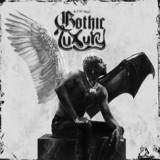
Als ein Drittel des New Yorker HipHop-Trios Flatbush Zombies arbeitete Meechy Darko bereits mit u.a.
James Blake, A$AP Rocky und Danny Brown zusammen. Mit ”Kill Us All” stellte er jetzt die erste
packende Videosingle aus seinem Debütalbum ”Gothic Luxury” vor, das am 26. August über Loma Vista
Recordings / Concord erschien.
Es ist die Komik der Tragik, die Meechy Darko zu seinem ersten Soloalbum geführt hat. Ausgehend von
dem entsetzlichen Tod seines Vaters, der im Januar 2020 von einem Polizisten in Miami niedergeschossen
wurde, ist sein Debütalbum kein Schritt aus der Komfortzone, sondern ein Stoß in die Realität: ”Ich hatte
keine andere Wahl, als es zum Persönlichsten zu machen, was ich je getan habe, denn glücklicherweise oder
unglücklicherweise befinde ich mich gerade in einer sehr aufrüttelnden Phase meines Lebens”, sagt der 32-
jährige Rapper über die Entstehung von ”Gothic Luxury” und die Bedeutung dessen als Momentaufnahme.
”Der, der ich gestern war, ist vielleicht schon nicht mehr der, der ich morgen bin. Ich bin nicht der,
der ich letzte Woche war. Man kann nicht sagen, wer ich nächstes oder übernächstes Jahr sein werde.”
Zusammen mit Dot Da Genius, dem langjährigen Partner von Kid Cudi und Produzenten für u.a. Jhené
Aiko, Lil Nas X und Denzel Curry sowie Grammy-Preisträger Neal Pogue (u.a. TLC, Outkast, Tyler The
Creator) hat Meechy ein vielschichtiges Debütalbum erarbeitet, auf dem sich der Flatbush Zombie so öffnet
wie nie zuvor.
Bubbling up from the psychedelic tar pits of L.A., Frankie and the Witch Fingers have been a constant source of primordial groove for the better part of the last decade. Formed and incubated in Bloomington, IN before moving west to scrap with Los Angeles’ garage rock rabble, the band evolved from cavern-clawed echo merchants to architects of prog-infected psych epics that evoke a shift in reality. After a stretch on Chicago/LA flagship Permanent Records the band landed at yet another fabled enclave of garage and psychedelia - Brooklyn’s Greenway Records, now working in tandem with psych powerhouse LEVITATION and their label The Reverberation Appreciation Society, the groups latest effort is dually supported by a RAS / Greenway co-release. After years of searching for the specific alchemy that would tear open the cosmos, they found the formula with the addition of Shaughnessy Starr on drums in the summer of 2018. They began a new cycle and tripped into tip-on double gatefold territory, flesh-ing out their lysergic impulses into a monolith of sound that closes in from all sides. The band reached new levels of grandiosity and utilized every minute to manifest their psych-soul Sabbath in four dimensions, spilling psychic blood on a populace ready and eagerly waiting. Yet, as expansive, inventive, and immersive as any studio album might be, the band is born for the stage. As their live prowess caught the ears of some legends in their own right, the band practically lived on the road last year with stints opening for Oh Sees, Cheap Trick and ZZ Top. Along the way the constant pulpit of the stage would form ZAM into a transformative experience while plotting their next permutation of space and time. That transformation, Monsters Eating People Eating Monsters... (repeated infinitely,) rises like a Phoenix from the road tar, van exhaust, and ozone crackle of amps in heat. Once off the road it was recorded in just five blistering days. Though, while the tour may have hammered the album into shape and brought about a wind of change, those changes stretched to the band itself as well. In the wake of the tour the band’s longtime bassist Alex Bulli made his exit, with the majority of bass parts on the album being written and played by multi-instrumental magician Josh Menashe with occasional pitch in from songwriter Dylan Sizemore. Stripped to their core the band has created their most ambitious work to date, an album that takes the turbulence of ZAM and crafts it into a beast more insidious and singular than anything in their catalog. Moving forward, the band has taken on new blood. Completing their lineup, Nikki Pickle (of Death Valley Girls) will join them working the new album out roadside on bass. A new horizon of Frankie and the Witch Fingers draws near and we’re all set to follow them into the unknown.