- A1: Bobby Womack - Across 110Th Street
- A2: Samuel L Jackson & Robert Deniro - Beaumont's Lament
- A3: Brothers Johnson - Strawberry Letter 23
- A4: Samuel L Jackson & Robert Deniro - Melanie, Simone And Sheronda
- A5: Bill Withers - Who Is He (And What Is He To You?)
- A6: Johnny Cash - Tennessee Stud
- A7: Bloodstone - Natural High
- A8: Pam Grier - Long Time Woman
- B1: No Artist - Council Gargle - Detroit 9000
- B2: Foxy Brown - (Holy Matrimony) Letter To The Firm
- B3: Randy Crawford - Street Life
- B4: The Delfonics - Didn't I Blow Your Mind This Time
- B5: The Grass Roots - Midnight Confessions
- B6: Minnie Riperton - Inside My Love
- B7: Samuel L Jackson, Robert Deniro* & Bridget Fonda - Just Ask Melanie Voice Actor - Bridget Fonda, Robert Deniro*, Samuel L. Jackson
- B8: Vampire Sound Inc - The Lions And The Cucumber
- B9: Elliot Easton's Tiki Gods - Monte Carlo Nights
Suche:brothers in mind
Oyster ass is back with their Italian brothers for the 3rd round.
Sea correction is a retreat into alter worlds—rigidly organized, timeless, often inescapable trancelike states of mind-body dislocation.
Hope your mind and body are ready because Public Request and WAS will take care of the correction.
Salty kisses and happy correction!
70s Nigerian psychedelic soul rock to be filed next to Shuggie Otis’ Inspiration Information. Some albums are more than the sum of their parts. This is one of them. Nothing quite explains the luscious layers of sounds. The wholesome feeling that exudes from the first note to the last. Shuggie Otis meets Grotto/Ofege is what comes to mind.
The band was a ragtag band of teenage musicians who hung around Federal Palace Hotel in classy Victoria Island, listening to the resident band, led by the incomparable Yom Yem with Papa Doe and Gboyega Adelaja on keys. Frank who had some experience stringing around studios in Lagos, approached the George Veira (Vocals, Guitar), Nadi brothers (Clifford and Gerrard) with the idea of making a record. Odion Iruoje had enjoyed massive success with Ofege and Frank knew he might be open to the idea of producing the band. “It happened very fast, as Georges had songs already written or half completed. We started jamming with a few gigs at Surulere Night Club, which was run by Tee Mac at the time. Odion heard the material and did not need any convincing. We Then we went into the studio to lay the vocals, drums and guitars. The keys and further production was done in London.
“My routine at the time was to finish records in London, at Abbey Road Studios. It was the best way to get the sound I wanted and allowed my use London based musicians which brought a special flavour. I liked to lay the rhythm tracks and vocals at our Wharf road studio in Lagos. That was the core of the work”. Mr Odion Iruoje
(Resident A&R exec/Producer, EMI Nigeria)
Bogotá-based Colombian composer Eblis Álvarez, known as Meridian Brothers, has been concocting a unique blend of psychedelic sounds since 1998. With his latest project, "Mi Latinoamérica Sufre," Álvarez explores the untapped potential of the electric guitar in a tropical Latin context. Drawing inspiration from African highlife and soukous traditions, Álvarez crafts a fearless sonic experiment infused with invention, playfulness, and emotion. Unlike typical tropical guitar records, this album eschews distortion and clichés, opting for a pure, clean approach. Through intricate compositions blending cumbia, champeta, soukous, Brazilian tropicalia, and underground psychedelic rock, Álvarez pays homage to the golden era of Congolese rumba, Ghanaian highlife, and Nigerian afrobeat.
"Mi Latinoamérica Sufre" delves into the ego trip, presenting a humorous yet introspective journey of self-discovery and identity. The central character, Junior Maximiliano the Third, navigates through the complexities of self-discovery using psychedelic substances, political philosophy, and folklore. As he grapples with nostalgia, paranoia, and shared suffering, Álvarez showcases his vocal prowess, creating a sonic theater of the mind. Accompanied by visual narratives from Colombian artist Mateo Rivano, the album portrays various psychological states of disorientation, self-pity, enlightenment, and optimism. "Mi Latinoamérica Sufre" emerges as a worthy and innovative addition to the concept album tradition, offering a distinctive blend of bitter-sweet flavors inspired by Latinoamérica.
Willie Roy Turner a native Mississippian, migrated with his family to the South Side of the city of Chicago during the 1950’s. Initially taking up employment at the Golden Rod Ice Cream Company, his first foray into secular music arose when he was accompanied by Muddy Waters Band at Smitty’s Corner Club and performed an impressive recital of the 1959 Big Jay Neely standard “There’s Something On Your Mind” at an Open Mic Night sometime in 1963. A regular talent show entrant, Duke would eventually meet and befriend fellow Mississippian, Garland Green. Green himself had been spotted at the Trocadero Theater by the then husband and wife team of Mel Collins and “Joshie” Jo Armstead, who signed him to their Giant Enterprises production company where he recorded several excellent singles for MCA’s subsidiary, Revue and Uni labels. Green’s third Revue single release, “Ain’t That Good Enough” was composed by Jo Armstead, brothers Howard and Walter Scott and session drummer Ira Gates. It was Green who introduced Duke Turner to the Scott Brothers. The Scott Brothers Review (later known as The Scott Brothers World), one of Chicago’s most respected bands, operated their own production company, Capri Productions, producing songs on both their own and other labels artists. With the Scott’s, Duke recorded his first 45, the upbeat funk mover “Doggie Dog World” b/w “Put Some Soul In Your Dance”. The tracks penned by Duke and respected arranger Johnny Cameron was released on Don Clay’s Omega label in 1968.
Duke then formed his own company, Spinning Top Records, initially releasing “Shake Your Rang-A Tang (Rang-Dang-Du) to be followed by a second single “(Let Me Be Your) Baby Sitter”. Originally intended for release with a b-side entitled “Friendship Or Friends” the studio engineer on the project Ed Cody persuaded Duke to drop “Friendship” in favour of a part 2 version of “(Let Me Be Your) Baby Sitter”. “Friendship Or Friends” was sadly never revisited and with Duke moving to several different addresses across the ensuing years, the tapes eventually became lost. Fast forward half a century, and following a conversation with collector Malcolm Collins who divulged the existence of a acetate of “Friendship Or Friends” won on e-bay by a British collector Russell Gilbert (now living in the Netherlands), the idea of releasing the song was born. When contacted, Russell was only too happy to loan to us the acetate as a mastering reference. Upon receipt of the acetate, we realized in addition to the unreleased “Friendship Or Friends” the version of “Baby Sitter” was a longer and different mix to the released 45 version. After confirming and reacquainting Duke with his long-lost masters a licensing deal was struck which will see the long overdue release of “Friendship or Friends” along with the alternative mix of “(Let Me Be Your) Baby Sitter” as part of a 3- track EP courtesy of Soul Junction Records that also includes the original 1974 version of “Give Me Some Sugar, Baby”, a song now finding favour with the ‘Lowrider’ scene. “Give Me Some Sugar, Baby” became Duke’s signature song, which he recorded again in 1983 under the title of “Sugar Baby Your Love” with his then band ‘Torch’, which included two young musicians that Duke had previously mentored, Terry Coffey and Jon Nettlesbey, the successful 90’s songwriting partnership responsible for several RnB/Pop hits for Howard Hewitt, Alexander O’Neil, Teddy Pendergrass and Keith Washington. Their credits also include Joey Diggs “Always Coca-Cola” hit commercial jingle.
The brothers Fognini aka Mind Against return to Life And Death with their new single Love Seeking with a remix from friends and fellow masters of the emotional dancefloor Âme.
It’s fitting that techno storytellers Mind Against should revisit the home of their first EP with a revamped sound and turbo-charged take on current-day disco. Their history with DJ Tennis and Life and Death is almost as old as the label itself, harking back to their days living together in Berlin.
Now the brothers leave behind their signature hypnotic techno palette for a boogie-fied stepper that’s equal parts pop breeze and deep synth trip, full of hopeful anticipation. For the remix, Innervisions duo and cultural tour-de-force Âme twist the knobs and stretch out the heartstrings for an extended slice of big room goosebumps.
In the words of Mind Against themselves:
“10 years after releasing our very first EP Atlant on Life and Death, we’re excited to come back to our first imprint with such a special track and remix by Âme.
We’ve stepped out of our usual comfort zone and done something that can be both linked to our own musical world and to the sounds that Life and Death have evolved in recent years.
Our friendship with DJ Tennis is about as old as the label is, bringing us back to the times we used to share a flat in Kreuzberg. One may say this release is both an ode to the past and to a bright future, full of promises.”
After a short break mezin is back with the 4th record, helmed by Crihan. An Ordinary Family is a special affair, put together over a long period with a special narrative in mind, embodied by 4 pieces representing each of the main characters in F.M. Dostoevski magnum opus (or so we think!) The Brothers Karamazov.
In this exercise of imagination, Alin attempts to push his creative juices to new heights to represent his perception of the novel’s titular actors. From religious themes, distant church bells and organs, yet, a lighthearted Aliosha to the dark reveries and otherworldly echoes of Ivan through to the sheer power and brute force of Dmitri and finally intersecting with sly, slinky but confident Grushenka. An Ordinary Family sets off on an ambitious trip that, we hope, will spark some curiosity for the novel, but we’ll be happy if you keep on dancing, too!
"Once again it's quite difficult to pin down exactly what's going on through Herandu's debut album, Ocher Red, but its a little bit like Metalheadz meets Weather Report out on the Siberian steppes...
Herandu are brothers Evgeny and Mikhail Gavrilov from Novosibirsk in Siberia. Mikhail and his brother have played music together since they were very young eventually forming the band FPRF together in the mid 2000's. Eventually the group split as the members dispersed around Russia, but Evgeny and Mikhail continued to make music, Evgeny under the alias Dyad and Mikhail under the name Misha Sultan (some of you may remember his excellent cassette, Roots, which came out on Hive Mind in 2022).
Herandu was born in 2022 during several studio sessions they managed to grab whilst both visiting Siberia. They both quickly realised that together they were making music that didn't quite sound like either of their solo projects but which was influenced by the music of their formative years. Their friend Vladimir Luchansky was invited in to add saxophone and the result is an 'urban music' that's as influenced by the gritty cityscapes of '70s TV cop thrillers as it is by 21st Century urbanism.
The paintings on the album cover are by Italian artist Mauro Reggio, who kindly allowed us to use his work, and whose paintings seem to convey something of the mood of Herandu..."
Mood Child unleashes Sirus Hood and Trangaz’s ‘Ghetto Corazon’ EP, a blazing fusion of African, Latino, and Asian influences.
Label father Sirus Hood and Mood Child favourite Trangaz join forces to craft two original bangers, ‘Ghetto Corazon’ and ‘Boothy’, while Manda Moor, Mood Child's mother, spices things up with two different versions of remixes of the second track.
‘Ghetto Corazon’ is one of those tracks that ignites the dancefloor and highlights a DJ set. It’s primal, unique, tribal, and groovy. It has a Techno vibe with its high BPM and killer kick drum that has the power to tremble any dancefloor.
We can sense the Latin roots with the Spanish vocal singing "mi corazon" and the African flair with its broken swing percussion pattern.
‘Boothy’ is a playful acid-led tune enhanced by a unique hi-hat game, with vocals from Trangaz himself talking about the DJ booth adventures. The vocal depicts situations that are bound to happen in any club.
Manda Moor delivers two different remixes of ‘Boothy’: a ‘Punchy’ and a ‘Spicy’ remix. Her ‘Punchy’ rendition is vinyl only and adds a dirty punch to the original, while her ‘Spicy’ version has all the essence of the ‘Manda Moor groove’ - an addictive drum pattern with her unique style that is recognised right away. She is known for her picante sound, adding the perfect spice to this EP.
This release showcases the best of the heat from three minds with different roots. An irresistible melting pot, with early supports from all stars like the king Carl Cox and The Martinez Brothers.
Sirus Hood & Trangaz ‘Ghetto Corazon’ EP drops via Mood Child on 22nd March 2024.
Repress.
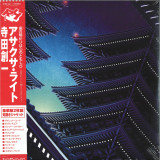
Back in 2015, Japanese DIY house pioneer Soichi Terada stepped back into the limelight courtesy of Rush Hour's 'Sounds From The Far East', a Hunee curated retrospective of material first released on his own Far East Recording label in the 1990s and early 2000s. Buoyed by the positive response and renewed interest in his work, Terada went back into studio to record his first new album of house music for over 25 years, Asakusa Light.
Developed over 18 months, Terada tried to recreate the mental and physical processes that led to the creation of his acclaimed earlier work. Those familiar with Terada’s celebrated, dancefloor-focused sound of the 1990s – a vibrant, atmospheric, and emotive take on deep house powered by the twin attractions of groove and melody – will find much to enjoy on Asakusa Light.
“I tried to recall my feelings 30 years ago, but when I tried it, I found it super difficult,” he explains. “I didn’t even know what I thought about myself five years ago, and the mental metabolic cycle seems to be faster than I thought. I tried different methods, including digging up my old MIDI data and composing by remembering old experiences. With the help of Rush Hour, I found some of the light from my heart that I had 30 years ago. I nicknamed the light I found in my heart, ‘Asakusa Light’.”
Produced using the very same synthesizers and drum machines that powered his 1990s work, the album is a joyous, colourful and life-affirming collection of timeless house music that not only recalls Terada’s own impeccable back catalogue, but also that of similarly celebrated contemporaries such as the Burrell Brothers or Ben Cenac (Dream 2 Science, Sha-Lor).
Terada, who has spent much of the last two decades writing video game music, has always had a gift for combining warm, undulating synthesizer basslines and perfectly programmed machine drums with stirring chords, smile-inducing melodies and mellow musical flourishes. It’s this immersive, sun-kissed and tuneful trademark style that takes centre stage on Asakusa Light, an album for the ages.
The set begins with the alien-sounding chords, soft-touch percussion and dawn-friendly warmth of ‘Silent Chord’ and ends on a high via the bouncing string stabs, starlight chords and thickset grooves of ‘Blinker’; in between, you’ll find a deluge of effortlessly feelgood music that’s the aural equivalent of a dopamine rush at sunrise.
There are subtle variations aplenty throughout the album – see the 8-bit lead lines and pulsing electronic textures of ‘Takusambient’, the vintage Tony Humphries flex of ‘Diving Into Minds’ and the effortlessly funky ‘Marimbau’ – but it’s the uniquely atmospheric, vivid and tactile nature of Terada’s loved-up sound that resonates. After well over 30 years in house music, the light in his heart is shining brighter than ever.
A new artist on the Citizen Records / Clivage Music roster, Vhinz is a musician based in Brussels. After taking his time to break onto the electronic scene, he’s now ready to share Belvédère, his debut, dreamlike album, confidently intense, sweeping between cinematic songs and soaring, epic electronic sounds.
Vincent Honca is Belgian, with Armenian roots and a love of keyboards: the mini synth he used to play as a child, the classical piano of his years of training at the Académie de Musique, the Yamaha synth of his teenage years... During the noughties of his adolescence, electronic music was omnipresent in his life as he listened to and admired Daft Punk, Moby, Vitalic, Air and The Chemical Brothers. He also went out dancing, a lot, in the nightclubs and parties of Brussels and the vicinity, and soon his love of computers, technology and synthesisers led to him producing his own music. “I wanted to create beautiful textures with synths,” he says. “I wanted to have fun and discover the possibilities. As part of the internet generation, I taught myself everything I know through reading magazines and checking the forums.”
Vincent went on to become a computer programmer and decided to make music in as much of his spare time as possible. His first productions came out in 2015, including “Drastical”, one of three deep house dancefloor-orientated tracks recorded with none other than Kris Menace. “At the time I was really searching for my musical identity,” explains Vincent, and progressively his music started to lean towards another of his passions – films and film music. “I’ve listened to soundtracks a lot since I was a teenager, and they’ve been a big influence, in particular the music for Heat by Elliot Goldenthal, Gladiator (Hans Zimmer), Saving Private Ryan (John Williams), The Last Temptation of Christ (Peter Gabriel), The Virgin Suicides (Air) and Leon (Eric Serra).” Coincidentally, Vincent has already worked on two independent Belgian films by director Christophe Karabache, UltravoKal and Vortex, both collaborations with Michel Duprez.
Now Vincent has chosen the name Vhinz, bringing together his expertise with machines and computers, his passion and enthusiasm for the electronic sounds of his adolescence and his adoration of cinema’s powerful, impactful soundtracks. Vhinz’s first track is thus called “Aether”, a track brimming with character and confidence, with sung-spoken vocals that sweeps the listener up in bewitching synthetic themes and drums like an off- kilter heartbeat. The track perfectly encapsulates the Vhinz sound, and Citizen Records – the only label he sent it to – immediately loved it and were ready to release a 12” with more. “Then Covid and the lockdown happened, and everything came to a complete halt,” remembers Vhinz. During those long two years without anything being released, the project continued its gestation and has now grown in a mini-album of eight coherent, fascinating tracks. “I really wanted a strong concept for everything, and so was born this album that I’ve called Belvédère. I imagined myself on a belvedere with a panoramic view of the world, channelling all the emotions it elicited in me into music.”
Belvédère is a dreamlike debut album, confidently intense, sweeping between cinematic songs and soaring, epic electronic sounds. It’s a place for Vhinz to showcase his dreams, talk, sing and invite others too: Margot Ferro sings on “Le Passage” and “Envole-moi”, and Michael Meers lends his vocals to “Evolution”. “My album tells a story, with the tracks in chronological order. There are both times of hope and darker periods of my life, with sadness and love,” meaning that listeners are invited to experience a suite of different emotions and be swept along by the author’s musical daydreams. Musically, the album falls somewhere between Moby, Vitalic, Air and Serge Gainsbourg, with a density and atmosphere that are completely Vhinz. “With Belvédère I was looking for beauty, but also something darker, dirtier, more organic. The album is the culmination of that.”
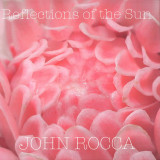
Reflections of the Sun is a collection of new music that see JOHN ROCCA experiment with a more laid back side to his musical personality. John is best know in Jazz Funk circles for his 1980s self funded, self produced and self released Brit Funk classic 'Southern Freeez', and as the band Freeez's founder.
"The melancholic suburban soul of ‘Southern Freeez’ never gets tired for me....an album that has remained at the top of my Brit Funk pile!" - GILLES PETERSON
Much of the album is also somewhat reflective. A personal and emotional reflection on John's life - the tracks a nod to John's varied musical pasts. Sounds, a pondering upon his collection of global influences and his life experiences over the years; Genre, the pulse of today, societal, musical or otherwise - but not easy to place as is John's character; Lyrics, the present dilemmas we face as humanity, whilst reflecting on our own private and deepest human feelings, of life and, of love in all its wonderous forms.
Musically, the 'Reflections of the Sun' album casts a glimpse back to Rocca's Brit Funk roots growing up amongst 1970s classic Jazz Funk and Soul, while also blending inspiration from his 1980-90s electronic influences topped off with everything else he has seen and heard on his life travels since then.
Giving a nod to John's own past while bringing Reflections of the Sun up to date was completed by adding elements of London's re-surgent and vibrant jazz scene. Not so different from John’s own early days jamming with Freeez, he is accompanied on all the album's tracks by his two young nephews and highly respected jazz musicians, Benjamin Rocca on keyboards and Joel Rocca on Saxophone. The two youngsters are known on the current London Jazz scene as the "Rocca Brothers".
The album's title track, "Reflections of the Sun" refers to how humanity, gorging on the sunshine that brings life to everything, also has a tendency to reflect the hellishness of the sun itself. Comparing our self-destructive nature with our planet's volumes of un-ending beauty.
Initial support for various tracks has come via radio plays on UK stations such as JazzFM, Jazz Funk & Soul Radio (JFSR), Soul Groove Radio and Solar (amongst others).
Hot on the heels of their sophomore release with DJ Rocca, Cyphon Recordings welcome Tijuana’s Cyborg Nerve to the family for the third installment in their busy label schedule.
A new project helmed by the Cedillo brothers - also known for their work under the monikers Soul of Hex and Mano De Fuego - Cyborg Nerve’s sound tips the hat to the roots of Detroit electro and techno.
The Vicario Musique Recordings bosses have already made a mark under their Soul of Hex alias, pushing their cosmic, vibrant take on deep house. It’s caught the ear of labels and artists across the world; the likes of Delusions of Grandeur, Freerange Records and Quintessentials have shared their music and they’ve even earned the Larry Heard seal of approval, with the legendary Chicago producer stepping up to remix their 2014 track ‘Lip Reading’. As Mano De Fuego they’re also getting their music into the hands of pioneering figures in the American dance music scene - summer of this year saw them release a shamanistic debut via the inimitable Underground Resistance.
For their debut outing as Cyborg Nerve, the pair deliver four tracks of old school electro grooves. Title track ‘Cristalizacion’ kicks things off. A slice of intergalactic electro; celestial pads soar above warm bass and staccato drum rhythms. Their eponymous track follows and takes the energy levels up a notch: a warbling bass line drives the track forward, whirring and revving while crisp hats fizz overhead.
‘Tijuana 3000’ is another cut that's custom-made for the dance floor. As with the title track, the duo call to mind the interstellar jazz-tinged electronics of Detroit outfit Galaxy 2 Galaxy, as they pair cosmic twinkling melodies with a hypnotic acid line that takes centre stage. ‘Machine Effect’ brings the EP to a close. Like its name suggests the track is powered by a raw, machine funk groove and precise drum programming - no bells and whistles, just pure cosmic vibrations to move your body.
- A1: Dancing As An Act Of Rebellion
- A2: Fuck Green New Deal
- A3: Your Miserable Fake Flag Is Not Your True Homeland
- A4: La Maté Porque Era Mía (Feat Espectra Negra)
- A5: Semiconducteur Dopage (Poupees Electriques Remix)
- B1: Embrace Capitalism (Until It Strangles You)
- B2: Fake News, Good News
- B3: Religious Music For Atheists (Feat Bavs)
- B4: Quiet Before The Last Storm
- B5: Europe Is Dead (We Are Not Brothers Rework Feat Ana Curra)
- C1: Your Miserable Fake Flag Is Not Your True Homeland (Melting Dogmas Remix)
- C2: Religious Music For Atheists (Feat Bavs) (Hbk Remix)
- C3: Fake News, Good News (José Rodríguez Remix)
- C4: Fuck Green New Deal (Soj Remix)
- C5: Embrace Capitalism (Until It Strangles You) (We Are Not Brothers Remix)
- D1: Fake News, Good News (Geistform Remix)
- D2: La Maté Porque Era Mía (Feat Espectra Negra) (Smforma Vs. Morbia Remix)
- D3: Fake News, Good News (Ober Dada Remix)
- D4: Embrace Capitalism (Until It Strangles You) (Pandemian Mascletà Dework)
Dancing as an act of rebellion is the first Abraxas LP in collaboration with the Valencian label Soil Records. A compilation of the first project recordings released between 2020 and 2021 plus some new tracks and, in addition to this, a second vinyl by other darkwave electronic artists remixing the first one: Geistform, We Are Not Brothers, Ober Dada, Melting Dogmas, SMforma, HBK1, José Rodríguez, SOJ and PanDemian.
Abraxas is a halfway project between dark dance electronic music, philosophical reflection, socio-political activism and musical entrepreneurship. Its main goal is to shake bodies and minds by spreading messages of individual and social self-criticism from the point of view of duality, extremes and contradiction, inherent to the human being and capitalist society.
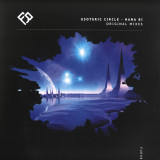
The parisian DJ and producer duo Esoteric Circle are back on Future Romance and take us on the eighth journey of our young label history.
With "Hana Bi" the two brothers give us three brandnew creations named "Nowhere", "Hana Bi" and "Hidden Life" full of euphoric moments and glittering melodies made for the deeper melodic dancefloors. Early DJ support by Mind Against, Innellea, Einmusik, Magdalena, Alfa Romero, Markus Kavka, Miss Melera, Raphael Mader and many more...
UILTY RAZORS, BONA FIDE PUNKS.
Writings on the topic that go off in all directions, mind-numbing lectures given by academics, and testimonies, most of them heavily doctored, from those who “lived through that era”: so many people today fantasize about the early days of punk in our country… This blessed moment when no one had yet thought of flaunting a ridiculous green mohawk, taking Sid Vicious as a hero, or – even worse – making the so-called alternative scene both festive and boorish. There was no such thing in 1976 or 1977, when it wasn’t easy to get hold of the first 45s by the Pistols or the Clash. Few people were aware of what was happening on the fringes of the fringes at the time. Malcolm McLaren was virtually unknown, and having short hair made you seem strange. Who knew then that rock music, which had taken a very bad turn since the early 1970s, would once again become an essential element of liberation? That, thanks to short and fast songs, it would once again rediscover that primitive, social side that was so hated by older generations? Who knew that, besides a few loners who read the music press (it was even better if they read it in English) and frequented the right record stores? Many of these formed bands, because it was impossible to do otherwise. We quickly went from listening to the Velvet Underground to trying to play the Stooges’ intros. It’s a somewhat collective story, even though there weren’t many people to start it.
The Guilty Razors were among those who took part in this initial upheaval in Paris. They were far from being the worst. They had something special and even released a single that was well above the national average. They also had enough songs to fill an album, the one you’re holding. In everyone’s opinion, they were definitely not among the punk impostors that followed in their wake. They were, at least, genuine and credible.
Guilty Razors, Parisian punk band (1975-1978). To understand something about their somewhat linear but very energetic sound, we might need to talk about the context in which it was born and, more broadly, recall the boredom (a theme that would become capital in punk songs) coupled with the desire to blow everything off, which were the basis for the formation of bands playing a rejuvenated rock music ; about the passion for a few records by the Kinks or the early Who, by the Stooges, by the Velvet mostly, which set you apart from the crowd.
And of course, we should remember this new wave, which was promoted by a few articles in the specialized press and some cutting-edge record stores, coming from New York or London, whose small but powerful influence could be felt in Paris and in a handful of isolated places in the provinces, lulled to sleep by so many appalling things, from Tangerine Dream to President Giscard d’Estaing...
In 1975-76, French music was, as almost always, in a sorry state ; it was still dominated by Johnny Hallyday and Sylvie Vartan. Local rock music was also rather bleak, apart from Bijou and Little Bob who tried to revive this small scene with poorly sound-engineered gigs played to almost no one.
In the working class suburbs at the time, it was mainly hard rock music played to 11 that helped people forget about their gruelling shifts at the factory. Here and there, on the outskirts of major cities, you still could find a few rockers with sideburns wearing black armbands since the death of Gene Vincent, but it wasn’t a proper mass movement, just a source of real danger to anyone they came across who wasn't like them. In August 1976, a festival unlike any other took place in Mont-de-Marsan – the First European Punk Festival as the poster said – with almost as many people on stage as in the audience. Yet, on that day, a quasi historical event happened, when, under the blazing afternoon sun, a band of unknowns called The Damned made an unprecedented noise in the arena, reminiscent of the chaotic Stooges in their early adolescence. They were the first genuine punk band to perform in our country: from then on, anything was possible, almost anything seemed permissible.
It makes sense that the four+1 members of Guilty Razors, who initially amplified acoustic guitars with crappy tape recorder microphones, would adopt punk music (pronounced paink in French) naturally and instinctively, since it combines liberating noise with speed of execution and – crucially – a very healthy sense of rebellion (the protesters of May 1968 proclaimed, and it was even a slogan, that they weren’t against old people, but against what had made them grow old. In the mid-1970s, it seemed normal and obvious that old people should now ALSO be targeted!!!).
At the time, the desire to fight back, and break down authority and apathy, was either red or black, often taking the form of leafleting, tumultuous general assemblies in the schoolyard, and massive or shabby demonstrations, most of the time overflowing with an exciting vitality that sometimes turned into fights with the riot police. Indeed, soon after the end of the Vietnam War and following Pinochet’s coup in Chile, all over France, Trotskyist and anarcho-libertarian fervour was firmly entrenched among parts of the educated youth population, who were equally rebellious and troublemakers whenever they had the chance. It should also be noted that when the single "Anarchy in the UK" was first heard, even though not many of us had access to it, both the title and its explosive sound immediately resonated with some of those troublemakers crying out for ANARCHY!!! Meanwhile, the left-wing majority still equated punks with reckless young neo-Nazis. Of course, the widely circulated photos in the mainstream press of Siouxsie Sioux with her swastikas didn’t necessarily help to win over the theorists of the Great Revolution. It took Joe Strummer to introduce The Clash as an anti-racist, anti-fascist and anti-ignorance band for the rejection of old-school revolutionaries to fade a little.
The Lycée Jean-Baptiste Say at Porte d’Auteuil, despite being located in the very posh and very exclusive 16th arrondissement of Paris, didn’t escape these "committed" upheavals, which doubled as the perfect outlet for the less timid members of this generation.
“Back then, politics were fun,” says Tristam Nada, who studied there and went on to become Guilty Razors’ frontman. “Jean-Baptiste was the leftist high-school in the neighbourhood. When the far right guys from the GUD came down there, the Communist League guys from elsewhere helped us fight them off.”
Anything that could challenge authority was fair game and of course, strikes for just about any reason would lead to increasingly frequent truancy (with a definitive farewell to education that would soon follow). Tristam Nada spent his 10th and 11th unfinished grades with José Perez, who had come from Spain, where his father, a janitor, had been sentenced to death by Franco. “José steered my tastes towards solid acts such as The Who. Like most teenagers, I had previously absorbed just about everything that came my way, from Yes to Led Zeppelin to Genesis. I was exploring… And then one day, he told me that he and his brother Carlos wanted to start a rock band.” The Perez brothers already played guitar. “Of course, they were Spanish!”, jokes their singer. “Then, somewhat reluctantly, José took up the bass and we were soon joined by Jano – who called himself Jano Homicid – who took up the rhythm guitar.” Several drummers would later join this core of not easily intimidated young guys who didn’t let adversity get the better of them.
The first rehearsals of the newly named Guilty Razors took place in the bedroom of a Perez aunt. There, the three rookies tried to cover a few standards, songs that often were an integral part of their lives. During a first, short gig, in front of a bewildered audience of tough old-school rockers, they launched into a clunky version of the Velvet Underground's “Heroin”. Challenge or recklessness? A bit of both, probably… And then, step by step, their limited repertoire expanded as they decided to write their own songs, sung in a not always very accurate or academic English, but who cared about proper grammar or the right vocabulary, since what truly mattered was to make the words sound as good as possible while playing very, very fast music? And spitting out those words in a language that left no doubt as to what it conveyed mattered as well.
Trying their hand a the kind of rock music disliked by most of the neighbourhood, making noise, being fiercely provocative: they still belonged to a tiny clique who, at this very moment, had chosen to impose this difference. And there were very few places in France or elsewhere, where one could witness the first stirrings of something that wasn’t a trend yet, let alone a movement.
In the provinces, in late 1976 or early 1977, there couldn’t be more than thirty record stores that were a bit more discerning than average, where you could hear this new kind of short-haired rock music called “punk”. The old clientele, who previously had no problem coming in to buy the latest McCartney or Aerosmith LP, now felt a little less comfortable there…
In Paris, these enlightened places were quite rare and often located nex to what would become the Forum des Halles, a big shopping mall. Between three aging sex workers, a couple of second-hand clothes shops, sellers of hippie paraphernalia and small fashion designers, the good word was loudly spread in two pioneering places – propagators of what was still only a new underground movement. Historically, the first one was the Open Market, a kind of poorly, but tastefully stocked cave. Speakers blasted out the sound of sixties garage bands from the Nuggets compilation (a crucial reference for José Perez) or the badly dressed English kids of Eddie and the Hot Rods. This black-painted den was opened a few years earlier by Marc Zermati, a character who wasn’t always in a sunny disposition, but always quite radical in his (good) choices and his opinions. He founded the independent label Skydog and was one of the promoters of the Mont-de-Marsan punk festivals. Not far from there was Harry Cover, another store more in tune with the new New York scene, which was amply covered in the house fanzine, Rock News (even though it was in it that the photos of the Sex Pistols were first published in France).
It was a favorite hang-out of the Perez brothers and Tristam Nada, as the latter explained. “It’s at Harry Cover’s that we first heard the Pistols and Clash’s 45s, and after that, we decided to start writing our first songs. If they could do it, so could we!”
The sonic shocks that were “Anarchy in the UK”, “White Riot” or the Buzzcocks’s EP, “Spiral Scratch” – which Guilty Razors' sound is reminiscent of – were soon to be amplified by an unparalleled visual shock. In April 1977, right after the release of their first LP, The Clash performed at the Palais des Glaces in Paris, during a punk night organised by Marc Zermati. For many who were there, it was the gig of a lifetime…
Of course, Guilty Razors and Tristam were in the audience: “That concert was fabulous… We Parisian punks were almost all dressed in black and white, with white shirts, skinny leather ties, bikers jackets or light jackets, etc. The Clash, on the other hand, wore colourful clothes. Well, the next day, at the Gibus, you’d spot everyone who had been at this concert, but they weren’t wearing anything black, they were all wearing colours.”
It makes sense to mention the Gibus club, as Guilty Razors often played there (sometimes in front of a hostile audience). It was also the only place in Paris that regularly scheduled new Parisian or Anglo-Saxon acts, such as Generation X, Siouxsie and the Banshees, the Slits, and Johnny Thunders who would become a kind of messed-up mascot for the venue. A little later, in 1978, the Rose Bonbon – formerly the Nashville – also attracted nightly owls in search of electric thrills… In 1977, the iconic but not necessarily excellent Asphalt Jungle often played at the Gibus, sometimes sharing the bill with Metal Urbain, the only band whose aura would later transcend the French borders (“I saw them as the French Sex Pistols,” said Geoff Travis, head of their British label Rough Trade). Already established in this small scene, Metal Urbain helped the young and restless Guilty Razors who had just arrived. Guitarist for Metal Urbain Hermann Schwartz remembers it: “They were younger than us, we were a bit like their mentors even if it’s too strong a word… At least they were credible. We thought they were good, and they had good songs which reminded of the Buzzcocks that I liked a lot. But at some point, they started hanging out with the Hells Angels. That’s when we stopped following them.”
The break-up was mutual, since, Guilty Razors, for their part, were shocked when they saw a fringe element of the audience at Metal Urbain concerts who repeatedly shouted “Sieg Heil” and gave Nazi salutes. These provocations, even still minor (the bulk of the skinhead crowd would later make their presence felt during concerts), weren’t really to the liking of the Perez brothers, whose anti-fascist convictions were firmly rooted. Some things are non-negotiable.
A few months earlier (in July 1978), Guilty Razors had nevertheless opened very successfully for Metal Urbain at the Bus Palladium, a more traditonally old-school rock night-club. But, as was sometimes the case back then, the night turned into a mass brawl when suburban rockers came to “beat up punks”.
Back then, Parisian nights weren’t always sweet and serene.
So, after opening as best as they could for The Jam (their sound having been ruined by the PA system), our local heroes were – once again – met outside by a horde of greasers out to get them. “Thankfully,” says Tristam, “we were with our roadies, motorless bikers who acted as a protective barrier. We were chased in the neighbouring streets and the whole thing ended in front of a bar, with the owner coming out with a rifle…”
Although Tristam and the Perez brothers narrowly escaped various, potentially bloody, incidents, they weren’t completely innocent of wrongdoing either. They still find amusing their mugging of two strangers in the street for example (“We were broke and we simply wanted to buy tickets for the Heartbreakers concert that night,” says Tristam). It so happened that their victims were two key figures in the rock business at the time: radio presenter Alain Manneval and music publisher Philippe Constantin. They filed a complaint and sought monetary compensation, but somehow the band’s manager, the skilful but very controversial Alexis, managed to get the complaint withdrawn and Guilty Razors ended up signing with Constantin with a substantial advance.
They also signed with Polydor and the label released in 1978 their only three-track 45, featuring “I Don't Wanna be A Rich”, “Hurts and Noises” and “Provocate” (songs that exuded perpetual rebellion and an unquenchable desire for “class” confrontation). It was a very good record, but due to a lack of promotion (radio stations didn’t play French artists singing in English), it didn’t sell very well. Only 800 copies were allegedly sold and the rest of the stock was pulped… Initially, the three tracks were to be included on a LP that never came to be, since they were dropped by Polydor (“Let’s say we sometimes caused a ruckus in their offices!” laughs Tristam.) In order to perfect the long-awaited LP, the band recorded demos of other tracks. There was a cover of Pink Floyd's “Lucifer Sam” from the Syd Barrett era – proof of an enduring love for the sixties’ greats –, “Wake Up” a hangover tale and “Bad Heart” about the Baader-Meinhof gang, whose actions had a profound impact on the era and on a generation seeking extreme dissent... On the album you’re now discovering, you can also hear five previously unreleased tracks recorded a bit later during an extended and freezing stay in Madrid, in a makeshift studio with the invaluable help of a drummer also acting as sound engineer. He was both an enthusiastic old hippie and a proper whizz at sound engineering. Here too, certain influences from the fifties and sixties (Link Wray, the Troggs) are more than obvious in the band’s music.
Shortly after a final stormy and rather barbaric (on the audience’s side) “Punk night” at the Olympia in June 1978, Tristam left the band ; his bandmates continued without him for a short while.
But like most pioneering punk bands of the era, Guilty Razors eventually split up for good after three years (besides once in Spain, they’d only played in Paris). The reason for ceasing business activities were more or less the same for everyone: there were no venues outside one’s small circuit to play this kind of rock music, which was still frightening, unknown, or of little interest to most people. The chances of recording an LP were virtually null, since major labels were only signing unoriginal but reassuring sub-Téléphone clones, and the smaller ones were only interested in progressive rock or French chanson for youth clubs. And what about self-production? No one in our small safety-pinned world had thought about it yet. There wasn’t enough money to embark on that sort of venture anyway.
So yes, the early days of punk in France were truly No Future!
- 1: Downtown
- 2: The Shadow
- 3: Good Intentions
- 4: Gerima
- 5: See The Light
- 6: Hang On
- 7: Summer Rain
- 8: Forgotten Dream
- 9: Ojijican
Continued Sound is proud to present The Shadow by Ojiji.
In 1979, Rupert “Ojiji” Harvey put out one of the most distinctly original albums of a generation. Combining progressive jazz-fusion arrangements with soul, funk, and reggae from his native Jamaica, Ojiji’s The Shadow is an album only he could create.
Ojiji, along with his brother Carl, were performing in nightclubs before they were old enough to legally enter. At just 15, Ojiji was tapped by reggae keyboard legend Jackie Mittoo to join his band The Cougars. Not long after, the Harvey brothers teamed up with other Cougars members to form the funk band Crack of Dawn. This union proved to be groundbreaking, not just in the soul/funk genre, but for Canadian music as a whole. In 1975, they were signed to a major label, Columbia Records, the first Black Canadian band in history to do so. Tracks like “It’s Alright” and “Keep the Faith” still echo in the halls of Canadian funk history.
Personal and industry differences caused Crack of Dawn to break up in 1977, and a young Rupert Harvey was without a band for the first time. However, the creative mind never rests. Outside of the band, Ojiji had been writing and composing his own personal songs since age 17. These songs were a fusion of the sounds and styles he’d soaked up during his time with his musical mentors mixed with new emerging musical influences he was hearing every day.
With the help of his brother Carl and some Crack of Dawn bandmates, he began recording his debut solo album The Shadow. The band's tightness heard in the intricate arrangements are a testament to their interwoven musicianship at the time. Many tracks were recorded in only one-take. Each song in The Shadow’s eclectic glory paints a picture of a young man's singular lived experience through music. Regaling us with where he’s been. Inviting us to where he’s going.
- 1: Anaemia ( 04:36 )
- 2: Triesteitaliana ( 04:53 )
- 3: Cobalt Of March ( 06:01 )
- 4: Bluecracy ( 06:07 )
- 5: Architheme ( 04:1 )
- 6: Nascence ( 04:33 )
- 7: Iridescence ( 05:12 )
- 8: Sound Odyssey ( 05:32 )
- 9: Argentic ( 05:28 )
- 10: Deorbit ( 06:24 )
Then known as Catacomb, their early recordings of unusual gothic doom metal were to quickly gain the band interest. It was around 1993 that the brothers decided that a name change was in order & Novembre was born. Following swiftly on the back of 2006's 'Materia' release - Novembre's first album for their then new label, Peaceville - & in the wake of the great acclaim the band was receiving at the time for its highly captivating blend of atmospheric, emotional & progressive rock/metal, arrived the follow-up opus, 'The Blue', in 2007.
Featuring among the band's strongest compositions to date & with twists of doom/ gothic which brought to mind classic bands such as Opeth, 'The Blue' was a flawlessly executed opus of soaring majestic anthems in the unmistakable Novembre style. 'The Blue' was recorded at Outersound Studios, Italy, by the band & mixed at Finnvox Studios in Finland (Nightwish, Finntroll, HIM). Artwork was created by Travis Smith (Katatonia, Opeth). Following the recent release of the band's stellar 'Words Of Indigo' album, this edition of 'The Blue' is presented on black vinyl with printed inner sleeve featuring lyrics & arrives on the vinyl format for the first time.
- A1: All Strung Out Over You
- A2: People Get Ready
- A3: I Can't Stand It
- A4: Romeo And Juliet
- A5: In The Midnight Hour
- A6: So Tired Side
- B1: Uptown
- B2: Please Don't Leave Me
- B3: What The World Needs Now Is Love
- B4: Time Has Come Today
The Chambers Brothers are four biological brothers who cut their teeth in church choirs and on the gospel and folk circuit around Southern California. But, things really picked up halfway the 1960s when they started performing in New York and in 1968 scored their only hit “Time Has Come Today”. This 11-minute opus spent five consecutive weeks at #11 (yes, really!) on the Billboard Hot 100 and really showcased the progressive mindset of the brothers; the group combined American blues and gospel traditions with the effects-laden sound of psychedelic rock that was very much in-vogue around that time. If you’re fan of psychedelic soul such Rotary Connection, you can’t miss this. The Time Has Come is available as a limited edition of 1000 individually numbered copies on red coloured vinyl.
Pelican has always been a band that's not just from Chicago, but distinctly of Chicago. Formed in 2000 by guitarists Trevor Shelley de Brauw and Laurent Schroeder-Lebec alongside brothers Bryan and Larry Herweg on bass and drums respectively, Pelican's foundation was built upon the rule-free, genre-agnostic scene synonymous with the Fireside Bowl. "The `90s in Chicago was a free-for-all. Everyone was just coming from a place of pure creativity," says Shelley de Brauw. With Schroeder-Lebec returning to the band following Dallas Thomas' exit in 2022, this reunified version of Pelican allowed the band to tap back into those influences and build something distinctly new with Flickering Resonance. While longtime Pelican fans will find an updated version of the band's ethos_one that's been constantly evolving since their very first EP_their new partnership with Run For Cover Records emphasizes something that's always been implicit to the Pelican formula. These songs take as much inspiration from titanic `90s post-hardcore, space-rock, and emo as they do traditional metal, showing that though Godflesh and Goatsnake records occupied the shelves of Pelican's songwriters, so too did Quicksand, Christie Front Drive, and Hum. "A lot of people didn't hear it," says Schroeder-Lebec. "I was like, well, I guess the metal world is where we fit. But now, I'm willing to acknowledge all the suits we're wearing." On Flickering Resonance, Pelican allowed themselves to look at their music less as a means of hard-earned catharsis and more as an appreciation for the glimmers of joy that occur even in the bleakest landscapes.