As funny as it may sound, Anaïs Mitchell has spent the past 15 years in some kind of hell. OK, not actual hell, but the multi-faceted world of Hadestown, a musical project she began in Vermont in 2006 that has grown into a Tony®- and Grammy®-award-winning Broadway phenomenon with touring editions now delighting audiences as far away as South Korea.
“I experienced so much joy working on Hadestown, but it just kept ramping up and up and requiring more and more attention,” Mitchell admits. “I had to become so single-minded and really put blinders on to my other creative life.” As it did for many artists, the COVID-19 pandemic unexpectedly offered Mitchell a blank slate to reconnect with her own music. The result is a new self-titled album made with close collaborators from Bon Iver, The National and her own band Bonny Light Horseman, Mitchell’s first collection of all-new material under her own name since 2012’s Young Man in America.
“I was nine months pregnant when the pandemic reached New York, so we made an 11th hour decision to leave and have the baby in Vermont,” Mitchell recalls. “We left the city and had the baby a week later, and then like everyone, we were in the midst of this unprecedented stillness. It felt like I could see behind me: oh, there’s New York City. There’s Hadestown. There’s my life with just one kid. A certain kind of stress and expectations. In Vermont, we moved onto my family farm and lived in my grandparents’ old house, with a new baby. I’d look at pictures on my phone from a few months earlier and wonder, whose life was that? This record, and the songs that are on it, came out of that time. I got into a flow again that I hadn’t felt in a really long time.”
Dubbed by NPR as “one of the greatest songwriters of her generation,” Mitchell is a master of the worlds of narrative folksong, poetry and balladry. Those talents are evident from the first moments of the new album, as Mitchell narrates what she calls “an unbearably romantic” trip over the Brooklyn Bridge colored by Bon Iver member Michael Lewis’ heartstring-tugging saxophone accompaniment. “Having left New York, I was able to write a love letter to it in a way I never could when I was living there,” she says. “It was like, fuck it. This is how I feel. There is nothing more beautiful than riding over one of the New York bridges at night next to someone who inspires you.”
Produced by Mitchell’s Bonny Light Horseman bandmate Josh Kaufman, the album proceeds to chronicle Mitchell’s reconnection with the Vermont roots that have been so formative in her life and music. “Bright Star” finds her making peace with the idea of being at peace in the familiar setting of her grandparents’ house, while “Revenant” was inspired by paging through a box of journals and letters belonging to herself and her grandmother — “a very pandemic activity,” she says. “That house is literally my happy place. I can picture myself as a kid, in this house, laying on the carpet with a sunbeam coming through the sliding glass door. There’s something about it that is really connected in my mind to my childhood and a very free, imaginative, creative time. “Revenant” has a lot to do with that house and reconnecting with my childhood self.”
Mitchell concedes that she tends “to be someone who thinks it has to be hard in order for it to be good or beautiful,” but that feeling has changed, partly thanks to her deep connection with musicians she’s met through the 37d03d collective established by The National’s Aaron and Bryce Dessner and Bon Iver’s Justin Vernon. During the pandemic, some of those artists participated in a “song a day” writing group — an idea Mitchell says is usually “totally opposite of how I roll. But it really helped me to gain access to some kind of trust and intuition and flow. I began a bunch of these songs while doing that.”
“It unlocked something that allowed me to finish a bunch of songs I’d been sitting on, and feeling a bit paralyzed about how to finish them,” she continues. “Because no one was touring, it’s not like I was playing them for anyone before we were in the studio. In other times, I’ve trotted things out in advance. Here, it was like, here’s all these brand new songs. Let’s discover what they can be. That was really exciting.”
That discovery process took flight at Dreamland Recording Studios outside Woodstock, N.Y., which Mitchell describes as “this weird, janky, beautiful church - it’s my favorite studio in the world.” Kaufman, Lewis and Big Red Machine drummer JT Bates formed a core band around Mitchell, while Aaron Dessner and Thomas Bartlett joined the sessions mid-week on guitar and piano, respectively.
After the appropriate COVID tests came back negative, “it was a pretty extraordinary feeling to hug, kiss and share the same space playing together,” Mitchell says. “We went into that world for a week and didn’t leave the studio for any reason. I felt very safe with all those guys. It was warm and joyful.”
Mitchell says this environment brought out unexpected details in the material, which was recorded almost entirely live together in the room. “Sometimes we tried separating things out, like vocals, but we always ended up back in the room together,” she says. Indeed, after spending the better part of a day recording overdubbed versions of “Little Big Girl” that nobody loved, the musicians gave up and tracked it again live. “We got so frustrated that we went in and I was like, I’m just going to sing this as hard as I fucking can. It felt like that’s what the song wanted to be,” Mitchell says. “It felt like all those songs wanted to be recorded as live as possible.” The exception to the rule was Nico Muhly's arrangements for strings and flute, which were added from New York City afterward.
Mitchell will debut the new material during various headline tours in the U.S. and Europe in 2022, at which she’ll be accompanied by players from the album. On stage, she can’t wait to further hone the sights, sounds and scenes that bring the songs to such vivid life. “I’ve spent a lot of time trying to write in the voice of other characters, especially with Hadestown. It’s fun for me, but these songs are not that,” she says. “Weirdly, they’re all me. The narrator is me. That’s why it felt right to self-title the album. It felt like after so many years of working on telling other stories, now here are some of mine.”
quête:bryce
- A1: Earthquake
- A2: King Of Nothing
- A3: Armadillos
- A4: Pterodactyl
- A5: Wine & Milk
- A6: Cooking
- A7: Cantharellus Cibarius
- A8: Sparassis Radica
- A9: Five Golden Keys
- A10: Qiyamat
- A11: Coprinus Comatus
- A12: Last Winter
- B1: Theogeny
- B10: Venerate Decay
- B2: Happyland
- B3: Black Cat
- B4: Muff Eating Dinosaur Crocodile
- B5: The Assasins
- B6: Little Red Riding Hood
- B7: The Deep Lake
- B8: Pirate Radio
- B9: Amanita Muscaria
Originally released on cassette in 1994 and now for the first time on vinyl, this is an incredible document from a teenage Arrington de Dionyso. All the seeds of his 30+ career are engrained on these fully formed Tascam recordings. From Arrington: "Orga Ar is how Old Time Relijun came into being. It was the first time I ever had a "real" drummer (Bryce Panic) come in to give me some tracks to build songs with, and then I had Aaron come in and play upright bass on one tune (Qiyamat). When they heard the tape they both asked me if I had ever thought about starting a band and getting some shows organized. It's so weird to imagine now, because I really didn't have my shit together to do the kind of live performance I wanted to do all by myself. So the idea was that we would start with the songs on the tape but allow them to "breathe" in the live setting. I think at first I really wanted the band to be mostly improvisational, and just using the lyrics as a way to have continuity. But after a lot of trial and error in setting up our own shows we decided that having a more structured setlist had better results in getting people to dance. The Olympia scene at that time was kind of "anti-dance party"- most of the punk shows downtown were heavily politicized and were more about the connected activism than about the music per se. For me at the time, I felt like the REAL "political statement" that needed to be made was for the music to be an affirmation of one's physicality, that movement and enthusiasm were both OK and sometimes necessary for self-and-social liberation. We weren't popular at all in the "scene" until years later, in fact all of our US tours were disastrous until we were invited to tour in Europe by an Italian fan who organized everything in 12 different countries. In pre-internet era Olympia, our only aims were playing fun shows for our friends, with little regard for reaching the outside world."
Tancade is the solo debut by experimental cellist Gaspar Claus. Following on from his previous soundtrack work and a wealth of collaborations (incl. Bryce Dessner, Sufjan Stevens, Jim O'Rourke), Claus brings forth a collection of pieces which free the cello from its own limitations. Majestic and adventurous, stormy and radiant, dreamy and rigorous, Tancade defies categorisation, evoking chamber music suspended in the fourth dimension, the soundtrack of an experimental film or the strange folk music of an undiscovered tribe.
A selection of exclusive tracks from a dusty shoebox full of cassettes and DAT tapes, recorded by Facehugger and Deviant between 1995 and 1997.
The Parasite EP showcases their first batch of live analogue jams that mash the boundaries of experimental house, deep electro, acid and the hazy bustling sounds of the city – a soundtrack of travelling to raves, staying up late, coming home and making wild mixtapes until early Monday morning.
Despite the untimely passing of his production partner, Deviant, in 2009, Facehugger has remained a dedicated and unique beatmaker, close personal friend and unsung hero of the scene, not to mention “unofficial” manager of the Plates record shop, known for his outspoken, boisterous and loud opinions about any new releases which came in!
Now, nearly 30 years on, nestled in the quiet suburb of Carlton (Nottingham), Facehugger loads up his drum machines and starts to create, with the promise of a new wave of music on the horizon…
DJ support from: Charlie Bones (NTS), Bradley Zero, Coco Bryce, OK Williams, Glenn Astro
2021 Repress
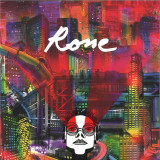
Rone is a stalwart of the French electronic scene and returns with his fourth album, 'Mirapolis', a synesthetic journey with features from Bryce Dessner (The National), Baxter Dury, John Stanier (Battles) and Saul Williams. The artwork was created by the critically acclaimed director Michel Gondry.
Stepping into Rone's music is like sleepwalking through a vividly colourful dream, eventually stumbling across a strange, scintillating Megapolis of saturated light and colours: 'Mirapolis'. Its twelve tracks / districts, each with their own specific planning, pulsate as though animated by their musical mastermind.
The project was an opportunity to get reacquainted with long- time stage and studio partners John Stanier, Gaspar Claus and the Vacarme band and Bryce Dessner (guitarist for The National,) while bringing in new collaborators (and thus, new interpretation of Rone's dreams). We find American slam-poet Saul Williams, who happened to be in Paris for a moment and contributes a searing anti-Trump screed, Baxter Dury, who brings an irresistible East London touch to 'Switches', a kind of fan fic that reimagines the Beatles' Sergeant Pepper lounging pensive in a club chair, Israeli electronic music muse Noga Erez, who inspired 'Waves' which, despite being recorded remotely, betrays a euphoric partnership, and finally, Kazu Makino, Blonde Redhead's bewitching singer and multi- instrumentalist, who contributes to the album's closer, the gauzy 'Down For The Cause'.
Rone remains a producer of grand instrumental pieces, which cannot be easily categorized in the architectural canon of our electronic music galaxy. Hypnotic, cinematic opening track 'I Philip' is an offshoot from the score for the first French virtual reality fiction, built around Philip K Dick - the perfect gate into a city that then opens up myriad temporal perspectives.
Nonesuch Records releases an album of songs written and performed by Caroline Shaw and Sō Percussion, Let the Soil Play Its Simple Part. The musicians, who have known each other since their student days, were presented with three days of gratis studio time and decided to experiment with ideas they had begun putting to tape during the sessions for their January 2021 Nonesuch release Narrow Sea. With Shaw on vocals and Sō – Eric Cha-Beach, Josh Quillen, Adam Sliwinski, and Jason Treuting – filling out this new band, they developed songs in the studio, with lyrics inspired by their own wide-ranging interests: James Joyce, the Sacred Harp hymn book, a poem by Anne Carson, the Bible’s Book of Ruth, the American roots tune ‘I’ll Fly Away’, and the pop perfection of ABBA, among others. The album is co-produced by Shaw, Sō Percussion, and the Grammy Award–winning engineer Jonathan Low (The National, Taylor Swift).
Shaw, who won a Pulitzer Prize for her vocal composition Partita for 8 Voices, written for and performed with Roomful of Teeth, makes her solo vocal debut with Let the Soil Play Its Simple Part. The album’s first track, ‘To the Sky’, from the Sacred Harp, takes its lyrics from Anne Steele. “I love the songs about death, and going home, and looking toward a time that is better or brighter, which, if there’s one thing to think about in the world, maybe that’s the thing,” Shaw says. “This one I love in particular. There’s a line, ‘Frail solace of an hour / So soon our transient comforts fly / And pleasure blooms to die.’ It’s meditation on the ephemeral, and I love it.”
“I hadn’t written very many songs, but I have certainly loved many in my life. I’ve been thinking of making a solo album for seven or eight years, but it takes having the right friends and community in the room,” Shaw says. “The prompt for all of us was: What would we make in the room together with no one person in charge, like a band writes in the studio?”
Cha-Beach recalls of the early test run during the Narrow Sea session: “It had that capturing-lightning-in-a bottle feeling.” When the opportunity to have three days in their friends’ studio, Guilford Sound, came up, the five musicians decamped for Vermont with engineer/co-producer Jonathan Low. “Jon is an amazing editor,” Cha-Beach says. “He is so helpful in thinking about: ‘We have these ideas: how do we shrink those and make them come across on an album?’”
One such idea was for Shaw to do a duet with each member of Sō. She sings with Josh Quillen on steel drums on the title track, which she wrote in under an hour in a “free-writing zone, very inspired by James Joyce, taking on that brain space,” she says. Lyrically, the song is “related to some math bits that I love, but also memory, and love songs of somebody who’s gone or passed away, or that you’re no longer with: what is the sound of that kind of devastation or confusion or love?” They recorded the song only twice, and the first take is on the album. “It’s very spare. The playing is very Josh; it’s so sensitive,” Shaw says.
Adam Sliwinski’s marimba duet with Shaw is an interpretation of the ABBA song ‘Lay All Your Love On Me’. She explains, “It’s really a Bach chorale. Also, the idea of someone singing ‘Don’t go wasting your emotion / Lay all your love on me / Don’t go sharing your devotion / Lay all your love on me,’ over and over again very slowly, there’s a certain tragedy in it. And then Adam did some absolutely exquisite layering that built this stunning world from the marimba.”
Jason Treuting on the drum kit joined Shaw for ‘Long Ago We Counted’. She suggested, “Why don’t we start with the voice and the kit having a weird conversation, sort of like two babies talking to each other? And then we built this loop, and we go from this place that’s totally uncomfortable and nonsensical to something that’s rich and rolling and satisfying.” For ‘Some Bright Morning’, the duet with Cha-Beach – who here plays electronics, piano, and Hammond organ – Shaw drew upon a twelfth century liturgical hymn she had sung regularly in church during her college years: ‘Salve Regina’.
“Some songs on Let the Soil… were very specifically composed by Caroline,” Cha-Beach says. “But others were this assemblage of ideas: finding words, an idea for how a melody could work, a harmony, and then tossing it in a blender and trusting each other.” Shaw adds, “What I love about Sō is the curiosity about how objects make sounds and how they speak to each other. There was an underlying thread of thinking about what goes into soil, how we take care of it, how we allow it to be itself, how we contain it, and what can come out of it if you cultivate the right environment, which for me is always this wonderful metaphor for creativity and collaboration: let people be themselves and see what happens,” she concludes.
Caroline Shaw is a New York–based musician – vocalist, violinist, composer, and producer – who performs in solo and collaborative projects. She was the youngest recipient of the Pulitzer Prize for Music in 2013 for Partita for 8 Voices, written for the Grammy–winning Roomful of Teeth, of which she is a member. Shaw’s film scores include Erica Fae’s To Keep the Light and Josephine Decker’s Madeline’s Madeline as well as the upcoming short 8th Year of the Emergency by Maureen Towey. Hailed for ‘astonishing both the pop and classical music worlds’ (Guardian), she has produced for Kanye West (The Life of Pablo; Ye) and Nas (NASIR), and has contributed to records by The National and by Arcade Fire’s Richard Reed Parry. Shaw currently teaches at NYU and is a Creative Associate at The Juilliard School. Her 2019 Nonesuch/New Amsterdam album Orange won a Grammy Award.
Through its interpretations of modern classics, innovative multi-genre original productions, and ‘exhilarating blend of precision and anarchy, rigor and bedlam’ (New Yorker), Sō Percussion has redefined the scope and role of the modern percussion ensemble. Sō’s repertoire ranges from twentieth century works by John Cage, Steve Reich, and Iannis Xenakis, to commissioning and advocating works by contemporary composers such as David Lang, Julia Wolfe, and Steven Mackey, to collaborations with artists who work outside the classical concert hall, including Shara Nova, choreographer Susan Marshall, The National, Bryce Dessner, and many others. Sō has recorded more than twenty albums, including a performance of Reich’s Mallet Quartet on the Nonesuch record WTC 9/11; appeared at Carnegie Hall, Lincoln Center, Walt Disney Hall, the Barbican, the Eaux Claires Festival, MassMoCA, and TED 2016; and performed with Jad Abumrad, JACK Quartet, the Mostly Mozart Festival Orchestra, and the LA Phil and Gustavo Dudamel, among others.
Documented during peak isolation times in Los Angeles, between December 2020 and January 2021. These pieces were performed as Live AV pieces from 2017-2019, at Coaxial Arts, Zebulon and Desert Daze 2019, but not documented in a release until later. Signal processing and sequencing frameworks built in Max 8 with signals generated from Prophet '08, a broken AW16G, 0-coast, Max, and a MC-909. With the context of the electromagnetic medium, the absence of live performance and moving visuals and the new "spirit" of the pestilent times, "Cutting Them All Off" should barely be represented as reworks of the originally performed pieces. What was once pulsing and blasting out of PA speakers live is now referenced as a distant past document. These pieces (for better or for worse) have been removed and cut-off from their contextual source and can only be presented in their displaced/liberated state. Like a fish out of water gasping for air, or the only drunk survivor of a car crash that was his fault.
Christopher Reid Martin started Rotary ECT in 2016. The project focuses on highly active signal processes on synchronized Audio -> Visual signals, with many signals being constructed to self-generate. Much like a rotary machine's rotation, the process is consistent and signalled when turned on. Much like electroconvulsive therapy, a human need to be there to actively monitor and attend to the process and generation of the signals being emitted.
Christopher currently works for Cycling '74, is a curatorial/programmer at Coaxial Arts Foundation and ⅓ of curators (alongside J.Prey and J. Rivera) behind the ephemeral stream Cathode TV/Cathode Cinema. Christopher continues to show gallery works, both virtual and physical, digital and video works and performs in other numerous events and projects such as Bailouts, CGRSM (with Gabie Strong), Shelter Death, Gate (with Michael Morley) and Via Injection. He has performed and collaborated with artists Joseph Hammer, Bryce Loy (RIP), Tetuzi Akiyama, Christopher Thompson, James Roemer, Andrew Scott, Gabie Strong, Michael Morley, Lev Abramov and many others.
Recorded sporadically over five years from 2015 to 2019, Sixty Summers was shaped profoundly by Stone’s key collaborators on the album: Thomas Bartlett, aka Doveman, and Annie Clark, the Grammy-winning singer, songwriter and producer known as St. Vincent. Bartlett and Clark were the symbiotic pair Stone needed to realise her first pop vision. A wizard of production and songwriting, Bartlett helped coax Sixty Summers’ independent, elemental spirit from Stone, writing and recording over 50 demos with her at his studio in New York. Itself a thoroughfare for indie rock luminaries, some of whom, such as The National’s Matt Berninger and Bryce Dessner, ended up on the album, Bartlett’s studio was perfect fertile ground for Stone’s growth.
Clark was the incisive yang to Bartlett’s yin, a sharp musical polymath who, when presented with the work Bartlett and Stone had made together, quickly helped fashion Sixty Summers into the album it was destined to be. Contributing vocals and guitar in addition to production, Clark’s revered acidic touch ignited the sparks of Stone’s creations.
The scope of Sixty Summers is dizzyingly vast; miles away from Stone’s past work, it is a world unto itself, a surreal and breathtaking new landscape. Where Stone’s previous solo records, 2010’s The Memory Machine and 2014’s By The Horns, found her grappling with the natural darkness that comes with loving too much, Sixty Summers finds Stone claiming every part of herself: fire, fury, love, lust, longing. Touching on reference points as disparate as the avant-funk of Talking Heads (on ‘Break’) the romantic 2am musings of Serge Gainsbourg (‘Free’, ‘Dance’) and the sleek, ecstatic synth work of Lorde’s Melodrama (‘Substance’), Sixty Summers is an album you can dance to and one you can lose yourself in completely.
Part 14 of the remixes series pulls exactly zero punches. Huge tunes with huge remixers is the name of the game. Slamming straight in with a massive remix of their seminal jungle classic, Ham & Poosie turn it up with “Thinkin About U”. A legend in his own time, Coco Bryce lays down a proper jungle techno remix of Hyper On Experience’s “D.A.T Coat”. A Champion Sound remix of NRG seems like overkill, and it is, in the best way…and the whole EP is rounded out by an insane Gothic Shade remix of the first ever KF release by Luna-C….
Club / DJ Support
Billy Bunter, the Fat Controller, Glowkid, Slipmatt, Dj Jedi, Dj Luna-C, Dj Brisk, Clayfighter, Jimni Cricket, Bustin, Sc@r, Doughboy, Saiyan, Dave Skywalker, Ponder and many others
LA-based producer, composer, songwriter and multi-instrumentalist James McAlister is a rare creator, and highly sought after collaborator. Perhaps best known for his work with Sufjan Stevens , McAlister has also appeared on record with Lorde amongst many others, and is a regular contributor to Aaron Dessner 's projects, including the latest albums from Taylor Swift, folklore and evermore . His regular work with film music includes The Two Popes, The Big Sick, and Ron Simonsen 's recent films. In 2018 he joined Stevens, Casey Foubert , St. Vincent and Moses Sumney for the Oscar performance for music from Call Me By Your Name, where he played piano and a bottle of cupcake sprinkles. With nearly countless projects to his name, it was in 2017 that his collaboration with Stevens, Nico Muhly, and Bryce Dessner entitled Planetarium was released by 4AD. Around the same time McAlister started a deep dive into a personal sonic realm that has manifested as an ambient project under his own name. 2018 saw the release of Three Breaths , the first offering from this exploration. 2021 will see the second installment, an album called Scissortail which vividly puts McAlister's evolving master craft on display. It is a collection of moving, meditative, immediately satisfying and quietly stunning work. It is the sound of an artist letting go entirely of pre-conceptions or expectations, instead mining the depths of that very real and abstract place of sound, texture, color and feeling. Some songs arrive almost intuitively, while others feel mechanically made, fed through the framework of synthesizers and the patchwork of recording gear. And with that comes a compelling duality to the work; a machine grace informing the on-going but subconscious dialogue between energy and material, sensitivity and asceticism.
Inland is Vanessa Wagner’s continuation of the exploration of the minimalist composers register to complete the solo continuum of the Statea released in 2016 with the Mexican producer Murcof. Inland highlights a set of pieces, mostly rare or unavailable to date (Moondog, Nico Muhly, William Susman, Bryce Dessner, Gavin Bryars...) and some other well known (Philip Glass, Wim Mertens, Michael Nyman) that Vanessa Wagner performs with her classic pianist background and velvet sound.
Lucie Antunes is a French classically trained drummer and percussionist, inspired by the pioneers of minimalism. Her debut album SERGEÏ is a tour de force of eclectic music that leaves the listener amazed, almost hooked up in Lucie’s magnetic spiral of sounds. The eclecticism that pervades SERGEÏ is shown by Lucie ability to create labyrinths of sounds through the use of unconventional instruments such as marimba, vibraphones, celesta, tubular balls, glockenspiel and ondes Martenot.
Sergei is a statement of freedom. The same childish freedom that we run behind and that we desperately seek. Lucie, with SERGEÏ, achieves her freedom and builds on it, the artist that she is with no compromises but only with the determined ambition to break the boundaries, to shake genres and to make the eyes smile.
Inland Versions is the electronic extension of the latest album "Inland" by the French pianist Vanessa Wagner. 5 reworks by GAS, Suzanne Ciani, Vladislav Delay, Nadia Struiwigh and Marc Melia.
On the original album, released in May 2019, Vanessa Wagner performed, with excellence, solo piano rare pieces from the minimalist repertoire (Moondog, Philip Glass, Wim Mertens...) to featured works from younger composers from the contemporary music scene (Bryce Dessner, Nico Mulhly). On Inland versions, the pianist has invited established artists from the current experimental scene to transform her unique interpretations into equally fascinating electronic explorations.
- A1: Glottal Wolpertinger Feedback Band 1
- A2: Glottal Wolpertinger Feedback Band 2
- A3: Glottal Wolpertinger Feedback Band 3 / A
- A4: Glottal Wolpertinger Feedback Band 3 / B
- B1: Glottal Wolpertinger Feedback Band 4
- B2: Glottal Wolpertinger Feedback Band 5
- B3: Glottal Wolpertinger Feedback Band 6 / A
- B4: Glottal Wolpertinger Feedback Band 6 / B
Jan St. Werneris A Critically Acclaimed And Internationally Recognized Sound Innovator. In A Myriad Of Ways, As A Solo Artist, A Collaborator, Through His Group Mouse On Mars, As A Producer , Or As A Course Instructor At Mit, Werner Has Challenged Traditional Approaches To Creating And Experiencing Music. The Sixth Installment Of His Fiepblatter Catalogue Series, Glottal Wolpertinger, Endeavors To Transcribe The Phenomenon Of Sound As Anarchic And Highly Sensitive Material. His Multilayered Presentation Of The Project Highlights The Ways In Which Sound And Music Can uctuate And Morph Depending On Context. In Keeping With The Series' Collaborative Nature, The Pieces Include Contributions From Guitarists Aaron & Bryce Dessner Of The National, Who Werner Also Collaborated With On Mouse On Mars' Dimensional People, And The National's Sleep Well Beast. Glottal Wolpertinger Was Initially Conceived As A Radio Installation For Documenta 14 With Each Of The Tracks Broadcasting Individually Over The Course Of Ten Weeks And Culminating In A Convergence Of All Eight Tracks At A Performance In Athens. The Pieces Consist Of Microtonally Tuned Feedback, Multispectral Drones Which Werner Modulated And Fltered With A Purposeful, And Indeed Vocalized, Emphasis Given To The Different Frequencies And Textures Used. Glottal Wolpertinger's Incarnation As A Recording Is No Less Potent Than Its Preceding Forms, But Serves As A Continuation Of The Project's Evolution As A Distinct Listening Experience.
Comma And A.fruit Land Two Unadulterated Bangers On Rua Sound, Backed With The Unmistakable Sounds Of Tmsv And Itoa On Remix Duties.
Oakland's Comma Roars Out Of The Blocks On His Rua Debut With A Crushed-up Glitchy Cut Entitled Gasworks. Comma Rams The Heavier End Of The West Coast Beat Scene Into The Uk Hardcore Continuum, On A Track Buzzing With Furious Energy.
If You Don't Know Itoa Yet - It's Time To Catch Up. Exit Record's Latest Addition Brings His Singular Production Style To The Remix With Whip-sharp Drums, A Colourful Sound Design, And Fresh, Unconventional Arrangements.
A Producer In Ascendency, Russia's A.fruit Serves Up The Darkness On The Flip With A Stepping Growler, Sodden With Bass. Her Production Is Tightly Bound Together By D.e.'s Intense Vocal And Delivers A Punch.
Rua Regular Tmsv Picks Up The Pace On The Remix, Rounding Off The Ep With Dancehall-infused Dread-rave Vibes, Like Only He Can.
Support From Deft, Fixate, Tim Parker, Breaka, Mister Shifter, Dolenz, Yorobi, Executive Steve, Coco Bryce, Hyroglifics And More.
The Brooklyn duo of Bryce Hackford and Joakim teamed up again, this time as Joyce, 2 years after their debut as Jhack.
.
/A two track 12' featuring a thumping and heady psychedelic deep house groove, in a classic Prescription zone, on the A-side ( Bubbles'). On the B-side, Die Siesta' is a tribal ode to the Balearic art of napping, a moody live percussion improvisation jumping down the bpm and floating on filtered piano chords.
Mouse on Mars' Andi Toma and Jan St. Werner return with their most
inventive album to date, Dimensional People. The electronic music pioneers
have been critically acclaimed for their playful and inventive sound and
production techniques on releases spanning from the early '90s to now. In
demand from a surprising array of artists their most recent contributions are
featured on the Grammy award winning album Sleep Well Beast by The
National.
The duo are joined on Dimensional People by an impressive list of guests
: Justin Vernon (Bon Iver), Aaron and Bryce Dessner (The National), Zach
Condon (Beirut), Spank Rock, Swamp Dogg, Eric D. Clarke, Lisa Hannigan,
Amanda Blank, Sam Amidon, Ensemble Musikfabrik, and about 20 more
musical collaborators. The cast of characters are as unique as they are vast,
clearly a rich quarry for the prodigious duo.
Dimensional People is by it's nature a collaborative album. Originally
premiering as a spatial composition using object-based mixing technology
playing with the possibilities of sonic design (4D Sound) and collective
musicianship, the recording expands upon these ideas. Dimensional People
expresses itself as a dynamic 50-piece orchestra, telling a story in sound.
Mouse on Mars offer sound as a means to encourage open-minded societies,
aided by cutting-edge technology including their own MoMinstruments
music software or a spatial mixing technique called object based mixing,
with which a spatial version of the work was created. It is a conceptual
puzzle composed around one harmonic spectrum within one rhythmic
scheme, mostly in the tempo of 145bpm (inspired by Chicago footwork,
so the dance oor is not entirely absent). Looking ahead, Dimensional
People will also be realized through installation, presenting the work as an
immersive listening experience, as well as performance.
Mouse on Mars is recognised as one of Germany's most defning and versatile electronic music projects. With their
anarchic mixture of sound that oscillates between uncontrollable chaos and meticulously arranged structures,
Jan St. Werner and Andi Toma have forged a unique musical language, which is readily decomposed by the
unpredictability of its myriad mutations. Free from schools of thought, genre conventions, and from the constraints
of the music establishment, they have worked under the Mouse on Mars alias for 24 years, mapping their own
idiosyncratic trajectory through a no man's land between pop, art, club music, and the avant-garde. - Jan Rohlf
Idiology takes the acoustic experiments of Niun Niggung even further, and it's this combination of electronic
and 'traditional' music -- melding keyboards and synthesizers with french horns and guitars and trumpets into a
seamless whole -- that points the way through the dead-ends of most electronica.'
- PopMatters
Andi Toma and Jan St. Werner continue to create soundscapes that blur the line between programming and live
musicianship, and sometimes between Earth and outer space.' - The A.V. Club
On April 13th Mouse on Mars will release Dimensional People,
their brand new studio album on Thrill Jockey.
The album features Werner and Toma joined by a number of
prolifc guests: Justin Vernon (Bon Iver), Zach Condon (Beirut),
Spank Rock, Aaron and Bryce Dessner (The National), Swamp
Dogg, Eric D. Clarke, Lisa Hannigan, Amanda Blank, Sam
Amidon, Ensemble Musikfabrik, and about 20 more musical
collaborators.
After a series of notorious dance oor releases, Dimensional
People reveals them working deep within their own vernacular,
digging into fertile terrain of their inexhaustible vault of digital
and acoustic experimentation, and charismatically making
elemental components new again. This album makes clear how
their craft is of discovery, of fnding new contexts for places,
sounds, memories, sensations, ambiences, technologies,
relationships, and of course, people.
- A1: The Revenant Main Theme
- A2: Hawk Punished
- A3: Carrying Glass
- A4: First Dream
- A5: Killing Hawk
- A6: Discovering River
- A7: Goodbye To Hawk
- B1: Discovering Buffalo
- B2: Hell Ensemble
- B3: Glass And Buffalo Warrior Travel
- B4: Arriving At Fort Kiowa
- B5: Church Dream
- B6: Powaqa Rescue
- C1: Imagining Buffalo
- C2: The Revenant Theme 2
- C3: Second Dream
- C4: Out Of Horse
- C5: Looking For Glass
- C6: Cat & Mouse
- D1: The Revenant Main Theme Atmospheric
- D2: Final Fight
- D3: The End
- D4: The Revenant Theme (Alva Noto Remodel)
"THE REVENANT" is the new Alejandro G. Iñárritu one year after the brilliant and Oscar winning "Birdman", "Babel", "21 Grams" and "Amores Perros". Produced and distributed worldwide by 20TH CENTURY FOX, "The Revenant" stars Leonardo DiCaprio and Tom Hardy.
Following the success of 2014's Birdman (Winner of four Academy Awards including Best Picture and Best Director), director Alejandro G. Iñárritu pushes the limits of film making with the survival epic The Revenant. Starring Leonardo DiCaprio (Titanic, Wolf of Wall Street), Tom Hardy (Mad Max: Fury Road, The Dark Knight Rises) and shot in the frozen Canadian wilderness with only natural lighting, The Revenant is a story of loss, revenge and resilience in the face of impossible odds against the furies of man and nature itself. The film is heavily favoured to be a critical darling as awards season gets under way.
Director Iñárritu has chosen to forgo almost all dialogue in favour of a gorgeous soundscape and a sweeping score. A film of this magnitude deserves a composer who understands creative artistry and unbridled passion. Japanese master and Oscar winner Ryuichi Sakamoto (Merry Christmas Mr. Lawrence, The Last Emperor) fits the bill perfectly. Along with fellow Yellow Magic Orchestra member and frequent collaborator Alva Noto, Sakamoto has created a gripping soundtrack that is sure to be a treat for the winter crowds. Bryce Dessner (writer for Kronos Quartet and the LA Phil) also supplies additional music.