Geboren aus dem elementaren Urgrund der Wurzeln des Heavy Metals, von den vom Krieg gezeichneten Industrielandschaften Birminghams bis zu den heruntergekommenen Bars und Kellern Brooklyns, erscheinen Neon Nightmare wie ein Geist in der Nacht, um die Tradition fortzuführen. Beunruhigende Musik für beunruhigte Menschen. Und obwohl es nichts Neues unter der Sonne gibt, gibt es in den Schatten vielleicht doch eine Chance - es sind eben diese Schatten, aus denen "Faded Dream" aus schimmerndem Stahl geformt wurde.
Der Titel sagt alles: "Faded Dream", das Debütalbum von Neon Nightmare, ist eine Synthese aus emotionalen Höhen und Tiefen und einer düsteren, grüblerischen Atmosphäre, die die Sehnsucht nach Vergangenheit weckt, die einst von jugendlichem Drang und Neugier geprägt war. Mit einem Fundament aus großen Riffs, einer erdrückenden Studioproduktion, die in Fantasie und psychedelische Ornamente getaucht ist, und einem dramatischen Sänger, der in der Lage ist, nahtlos zwischen gespenstischen Gothic-Bariton und klassischem Heavy Metal zu wechseln, ist "Faded Dream" ein Mix, in dem sich Doom, Psych, Shoegaze und Alternative Metal auf eine Weise kreuzen, wie man es seit Jahren nicht mehr gehört hat.
"Faded Dream" hat einen unverkennbar satirischen Zug, denn Neon Nightmare vermeiden geschickt die offenkundige Traurigkeit und das selbsternannte ‚Metalband mit Gothic-Tendenzen'-Milieu. Bei aller echten Vorahnung und Konfrontation mit echter Depression verliert sich "Faded Dream" nie im Sumpf oder gibt seine Vorliebe für spannungsgeladene Vergnügungen und heitere Faszination auf. Die heraufbeschworenen Klänge haben im Laufe der Jahrzehnte der Heavy-Metal-Geschichte viele bedeutsame Formen angenommen, und Neon Nightmare sind hier, um diesen Zyklus fortzusetzen.
Geboren aus dem elementaren Urgrund der Wurzeln des Heavy Metals, von den vom Krieg gezeichneten Industrielandschaften Birminghams bis zu den heruntergekommenen Bars und Kellern Brooklyns, erscheinen Neon Nightmare wie ein Geist in der Nacht, um die Tradition fortzuführen. Beunruhigende Musik für beunruhigte Menschen. Und obwohl es nichts Neues unter der Sonne gibt, gibt es in den Schatten vielleicht doch eine Chance - es sind eben diese Schatten, aus denen "Faded Dream" aus schimmerndem Stahl geformt wurde.
Der Titel sagt alles: "Faded Dream", das Debütalbum von Neon Nightmare, ist eine Synthese aus emotionalen Höhen und Tiefen und einer düsteren, grüblerischen Atmosphäre, die die Sehnsucht nach Vergangenheit weckt, die einst von jugendlichem Drang und Neugier geprägt war. Mit einem Fundament aus großen Riffs, einer erdrückenden Studioproduktion, die in Fantasie und psychedelische Ornamente getaucht ist, und einem dramatischen Sänger, der in der Lage ist, nahtlos zwischen gespenstischen Gothic-Bariton und klassischem Heavy Metal zu wechseln, ist "Faded Dream" ein Mix, in dem sich Doom, Psych, Shoegaze und Alternative Metal auf eine Weise kreuzen, wie man es seit Jahren nicht mehr gehört hat.
"Faded Dream" hat einen unverkennbar satirischen Zug, denn Neon Nightmare vermeiden geschickt die offenkundige Traurigkeit und das selbsternannte ‚Metalband mit Gothic-Tendenzen'-Milieu. Bei aller echten Vorahnung und Konfrontation mit echter Depression verliert sich "Faded Dream" nie im Sumpf oder gibt seine Vorliebe für spannungsgeladene Vergnügungen und heitere Faszination auf. Die heraufbeschworenen Klänge haben im Laufe der Jahrzehnte der Heavy-Metal-Geschichte viele bedeutsame Formen angenommen, und Neon Nightmare sind hier, um diesen Zyklus fortzusetzen.
The 2015 edition of Winnipeg’s send + receive festival, focussed on rhythm, turned out to be a generative meeting of minds. There, Mark Fell encountered the music of Will Guthrie, a meeting that was eventually to result in the frenetic acoustic drumkit and digital synthesis pairing heard on Infoldings and Diffractions (2020). At the same festival, Limpe Fuchs first heard and appreciated the music of Mark Fell, planting the seed of a collaboration that came to fruition when Fell (along with his son Rian Treanor) visited Fuchs at her home in Peterskirchen, Germany in September 2022. Black Truffle is pleased to announce the release of the results of this extensive session in the audacious form of a triple LP, housing over two hours of music across its six sides. The collaboration might appear unlikely: what common ground could exist between Fuchs, classically trained pianist, legend of improvised music, instrument builder and sound sculptor active since the 1960s, whose group Anima Sound connected the dots between free jazz, krautrock and ritual, and Fell, proponent of radical computer music, known for his bracingly austere productions that twist remnants of club music into algorithmic stutters? For all their seeming disparity in technology, approach and background, the music on Dessogia/Queetch/Fauch makes it immediately evident the pair share a great deal in their essentially percussive approach and ability to, in Fuch’s phrase, ‘establish silence’. Recording at her home studio, Fuchs had the use of her entire array of instruments, found, invented, and traditional, and treats the listener to some that don’t often make their way to concerts, including extensive passages performed (with Gundis Stalleicher) on pieces of wooden parquetry. Alongside metallic, wooden and skin percussion of all kinds, sounded and struck in every conceivable way, we also hear bamboo flute, viola, and Fuchs’ distinctive free-form vocalisations. Fell also stretched himself, with his contributions ranging from characteristically fizzing pitched percussive pops to swarms of sliding tones and abstract digital noise. Showing both remarkable restraint and improvisational freedom, much of the music consists of duets between a single percussion instrument and a distinctive mode of digital sound, often lingering in one timbral-rhythmic space for minutes at a time. Improvisational forward momentum coexists with a free-floating, wandering quality. On opener ‘Dessogia I’, the shimmering almost-gilssandi tones of Fuchs’ enormous set of microtonally tuned metal tubes ripples across Fell’s rubbery pulse, which moves up the frequency spectrum as Fuchs becomes more animated and switches to horn. At some points, as on the metallic chiming tones that open ‘Fauch I’, only the unexpected dynamic behaviour of Fell’s sounds distinguish them from Fuchs’ acoustic instruments. At others, like on ‘Queetch III’, the waves of sliding tones and noise textures are bracingly synthetic, joined by piercing squeaks and scrapes from Fuchs’ metal objects. Epic in scope, immersing the listener in an entirely distinctive world of sounds, and thrillingly bold in its melding of the most ancient musical procedures with cutting edge technologies, Dessogia/Queetch/Fauch is an unexpected major statement from two of the great mavericks of contemporary music.
With his Premise EP, Felix Fleer unites long-held ideas into a cohesive and deeply personal collection, offering a unique blend of intricate textures and fragile harmonies that reward attentive listeners with its meticulous attention to detail. The title track “Premise“ opens the A- side with an infectious garage groove and Fleer’s signature brand of detuned vintage polysynths, building up to a bright crescendo that reveals a rhythmically captivating vocal hook. “Know U” features a piercing drum groove, occasionally interrupted by abstract Buchla glitches and a reduced RnB vocal chop paired with ethereal, almost organ-like layers of pads to culminate in a stripped-down moment for the bass line to take center stage. The main theme of “Thinkage” is a classic break paired with a layered pattern of abstract, percussive vocal chops. This rhythmic pulse is accompanied by a wild harmony of constantly warping and evolving pads and drawn-out bass sounds. Opening the B-side, “Real Love” is the darkest tune on the EP. Its unstable chords and intricate, unpredictable textures induce a constant sense of unease, held together by a subtle techno groove. “Rush” contrasts this with a euphoric chord progression reminiscent of early post-dubstep anthems. The EP closes with “Drift,” a final climax that revisits previous themes, offering a powerful and uplifting resolution.
out of Stock
Last delivered 21 months ago available to reorder, subject to availability
Rapping at the window / Crying through the lock / Bells and running water / Influence on dusk.
Re-release of Blue Chemise's debut LP, which originally appeared in 2017 as a limited private release of 105 copies. BAADM make this much sought-after record available again on both physical and digital format, with remastered sound by Christophe Albertijn and updated artwork, all true to the original intentions of, and in close collaboration with, the artist.
‘Influence On Dusk’ forms an idiosyncratic cycle of fourteen mysterious, sometimes uncanny electroacoustic compositions, a personal and subdued eruption of 'melancholy of the healthy kind’, suddenly here and suddenly gone…
This is the second release on B.A.A.D.M. by the Australian artist Mark Gomes, following his equally atmospheric but more romantic 'Flower Studies' from 2021.
Techno House Connoisseurs are back with a proper VA full of acid and tech house delights for the heads. This EP has 5 dance floor whoppers for even the most discerning ear. Starting things off on the A side is Los Angeles duo Warehouse Preservation Society with a chunky bass heavy breakbeat-ish slammer called Fugitive Funk. Hypnotic west coast music at its finest. THC is stoked to welcome Londons Flash Mitra to the label. Flash's debut track is a psychedelic acid house gem perfect for those looking for something moody, dreamy and percussive. This jam will be welcomed on dance floors worldwide. Flip to the B side with THC stalwart Praus unleashing another low slung acid chugger. Magnetism creeps along working its way into your psyche with its warped and unusual vocal snippets and percussive rhythms topped with a healthy dose of 303. Big room cosmica muziks! Track 2 on the B finds label head Space Ace and Seattle's Sherman C of Selector records together bringing to light a buried acid monster titled Just a dream. Crisp percussion underlies a burly acid baseline with more 303 with a breakdown that will bring the floor to a peak. Not for the faint of heart. Lastly Warehouse Preservation rounds out the VA with a filthy dub of Fugitive Funk with a bass line that will rumble the floor and percussion that is so satisfying you will be looping it throughout your set. Bells, congas and claps all reverberating and panning for that head candy you won't be able to get out of your head.
out of Stock
Last delivered 23 months ago available to reorder, subject to availability
Paul Kelly"s latest album, "Fever Longing Still", his first of new original material since 2018"s "Nature", delivers 12 additions to his superb catalogue of love songs spanning more than 40 years. "Hello Melancholy, Hello Joy", as one of the new songs says. The album"s title comes from a line in Sonnet 147 by Shakespeare, whose writing has thrilled and inspired Kelly ever since schooldays. With love as the topic, Kelly finds a way to keep replenishing the creative well. Even if it can take some time for a song to surface.
Die britische Metalcore-Band Skarlett Riot nahm ihr neues Album "Caelestia" in den Treehouse Studios auf, wo auch Bullet For My Valentine, While She Sleeps oder Fightstar aufnahmen. Touren mit Künstlerkollegen wie Esoterica, mehrere ausverkaufte Headliner-Shows sowie zahlreiche Videoclips (Luminate, Chemicals, Hold Tight, Lullaby) haben ihre Fangemeinde auf das neue Album vorbereitet. Inhaltlich beziehen sich die neuen Songs auf Umwälzungen in den Privatleben von Sängerin Skarlett und Gitarrist Danny.
"Five years since her debut album Delivery, Mikaela Davis has moved away from her hometown of Rochester, shared the stage with the likes of Bob Weir, Phil Lesh, Christian McBride, Bon Iver, Lake Street Dive and Circles Around the Sun and entered a new decade. But it’s the ever-evolving relationships between her closest friends and bandmates that has propelled the Hudson Valley-based artist onto her latest album And Southern Star––a truly collaborative effort that ruminates on the choices we make, and the people we always come back to.
The band, made up of Davis (harp/vocals), Alex Coté (drums), Cian McCarthy (guitars/vocals), Shane McCarthy (bass/vocals) and Kurt Johnson (steel guitar), have been playing together for over a decade and it’s the first time they’ve appeared on a full length record together. Weaving 60s pop-soaked melodies, psychedelia and driving folk rock, And Southern Star picks apart the reflection we used to recognise, while trying to build a new one. It navigates the periphery of past selves, the coexistence of isolation and excitement in a new environment and the tension of growing away from what we thought we wanted, tackling it with a luscious, kaleidoscopic grace. “I finally feel like this album is more me than anything else that’s been released,” Davis says, adding that producing the album along with her four bandmates allowed them to carve out their own ideas, rather than someone else’s. It’s the band’s collective step into adulthood that has informed much of And Southern Star’s thematic landscape."
based songwriter Henrik Appel returns with third album Shadows. Ranging from freewheeling garage rock to intimate moments, and adding touches of jazz, Shadows is inspired by the likes of Bob Dylan’s Blond on Blonde and The Fall’s Hex Enduction Hour and another step of his continued evolution as a songwriter and artist.
For as long as he’s been a solo artist, Henrik Appel has been in a constant state of evolution. His first album, 2018’s Burning Bodies, was a meticulous construction project, one that came togeth-er over a five-year period and that saw him chronicle, with searing honesty, the slow death of a relationship, with its nine songs written according to a stringent set of self-imposed rules, intend-ed to keep the songwriting minimalist and bare-bones in nature.
His 2021 follow-up, Humanity, represented a remarkable progression of its own. It was born out of a break-up of a different kind, this time with his former bandmates in Stockholm outfit Lion’s Den; piecing together aspects of the vision he’d had in mind for the band’s never-realised second al-bum, he built from them his own sophomore LP, one that took the classic feel of Burning Bodies and imbued it with adventurous new influences, as he began to carve out a genuinely singular sound.
Now, three years on from Humanity, Appel has made another ambitious left turn. Neither of his first two albums were made in complete isolation; on both, he enlisted the production services of Stockholm underground legend Martin ‘Konie’ Ehrencrona, and also collaborated on his lyrics with his partner, Emma Lind. Now, on this thrilling reinvention of a third record, Appel has turned away from perfectionism, placing chief importance instead on making a raw, human record.
Arbes’ long-awaited debut album, "Counterways", exists on the cusp between the ethereal and the more attention-seeking concerns of pop. The record invites listeners into an unusual sonic world of atmospheric depth. Comparisons can be drawn to New York post-punk of a more colourful bent, running Blondie all the way through to Gang Gang Dance. The album's dream-pop dimension brings to mind Cocteau Twins, while its grittier, art-rock moments, coloured with ambience feels akin to Deerhunter. Glimmering flashes of psychedelia channels the likes of Melody's Echo Chamber.
The ten track album explores romantic dreaming and the struggle to (not) understand and to be understood. It memorialises glimmers of connection, discontentment and longing. Front woman Jess Zanoni’s soulful, oracular voice is anchored by the earthbound brambles of prickly guitar and brushstroke percussion, where all is tethered to a surface of unearthly detail and resonance. Written and recorded over a five year period (2017-2022), Arbes eke out every possible ounce of emotionality from their songs. Not to sedate, but to guide listeners somewhere unexpected, at the song or album's conclusion.
Body Meπa is the New York-based quartet of Greg Fox (drums), Sasha Frere-Jones (guitar), Melvin Gibbs (bass), and Grey McMurray (guitar). As luminaries in the intersecting traditions of improvised music, rock, jazz, fusion, and contemporary classical music, the four artists have each spent decades building diverse practices that extend beyond sound into multiple disciplines. Prayer in Dub, their second release on Hausu Mountain, follows the band’s 2020 album The Work Is Slow.
The album presents a band whose collective intuition as instrumentalists and live-in-the-room songwriters has deepened with each take that they put to tape. Prayer in Dub finds Body Meπa taking up new experiments with song structure and atmosphere, fanning out into a wide menu of both longer and more concise pieces that suggest deliberate shifts in energy and emotional resonance. The album presents a thrilling contrast between storms of precise rhythmic interplay and slowly expanding fields of multi-guitar and bass texture, alternately pushing the narrative toward explosive peaks of intensity and dipping into ambient expanses. Contemplative guitar lines, both bone dry and effected into total abstraction, ripple together over dub-indebted rhythm section grooves before shifting the dial towards beatific twang. Knotty distorted solos surge out of the fray over networks of arpeggios and drum fills.
On Prayer in Dub, Body Meπa pursues a strain of euphoria charged with elegiac grandeur and the looming potential to crumble at any moment under the psychic weight of confusion. It speaks to the band’s goals and general outlook that chaos never completely consumes their sessions. The band channels the kinetic energy of a “supergroup” of veteran musicians into communal works that evolve beyond their creators’ extensive pedigrees into new forms both intimate in sentiment and majestic in scope.
Body Meπa is the New York-based quartet of Greg Fox (drums), Sasha Frere-Jones (guitar), Melvin Gibbs (bass), and Grey McMurray (guitar). As luminaries in the intersecting traditions of improvised music, rock, jazz, fusion, and contemporary classical music, the four artists have each spent decades building diverse practices that extend beyond sound into multiple disciplines. Prayer in Dub, their second release on Hausu Mountain, follows the band’s 2020 album The Work Is Slow.
The album presents a band whose collective intuition as instrumentalists and live-in-the-room songwriters has deepened with each take that they put to tape. Prayer in Dub finds Body Meπa taking up new experiments with song structure and atmosphere, fanning out into a wide menu of both longer and more concise pieces that suggest deliberate shifts in energy and emotional resonance. The album presents a thrilling contrast between storms of precise rhythmic interplay and slowly expanding fields of multi-guitar and bass texture, alternately pushing the narrative toward explosive peaks of intensity and dipping into ambient expanses. Contemplative guitar lines, both bone dry and effected into total abstraction, ripple together over dub-indebted rhythm section grooves before shifting the dial towards beatific twang. Knotty distorted solos surge out of the fray over networks of arpeggios and drum fills.
On Prayer in Dub, Body Meπa pursues a strain of euphoria charged with elegiac grandeur and the looming potential to crumble at any moment under the psychic weight of confusion. It speaks to the band’s goals and general outlook that chaos never completely consumes their sessions. The band channels the kinetic energy of a “supergroup” of veteran musicians into communal works that evolve beyond their creators’ extensive pedigrees into new forms both intimate in sentiment and majestic in scope.
"In a world where there are no more heroes, the Fleshtones walk the earth like Roman gods. Since their inception in 1976 in Queens, New York, and their sweaty, boozy gestation at legendary venues such as CBGB, Max’s Kansas City, and the storied Club 57— recently feted at the Museum of Modern Art, where their proto-video underground film “Soul City” was unspooled for art stars, glitterati, and a raft of punk rockers who managed to get past the front gate — they have perpetrated their proprietary brand of SUPER ROCK, a frenetic amalgam of garage punk and soul, punctuated by the big beat and unleashed with the spectacular show business majesty which has kept them on the road for over forty years, adored by audiences whose love for them borders on religious fervor.
It’s Getting Late (…and More Songs About Werewolves) is a smash that could have dropped at any point in their epic career — it is an outburst, and a celebration of the SUPER ROCK sound. Unlike their contemporaries, they have not dialed down the tempos to compensate for osteoporosis, they have not lost anything on their fastball, and continue to throw it for strikes. The hardest working band in garage rock has never sounded better, and now you see why they've been your favorite band's favorite band for decades."
What if Japanese city pop met no wave? Neither in your wildest dream such occurrence could be real, but let’s make things clear. Frank Chickens could have been possibly forerunners for several famous alternative bands, Cibo Matto on top of all, but sure had a development on their own. Our history began in London, early eighties, art duo Frank Chickens is the original creation of Japanese performers Kazuko Hohki and Kazumi Taguchi. All of a sudden the band debuts with a pair of singles and a full length on Kaz Records, it’s 1984, but could have been easily 1994. Backed by the likes of Steve Beresford (Alterations, The Slits, General Strike, London Improvisers Orchestra), Annie Whitehead (Penguin Cafe Orchestra, Robert Wyatt), Lol Coxhill, Tony Coe and Clive Bell (the top of the cream of the English avantgarde) the band soon became a case in history. Now we have the pleasure – 37 years after its original release – to reissue their second album: Get Chickenized!
The record came out in 1987 on the british label Flying Lecords and showed a different side of the project, with a major focus on the so-called synth wave counterculture, still maintaining a certain avant feel. With original conspirator Steve Beresford still on board, the band was propelled in the studio by another key figure of the London underground: journalist, composer and producer David Toop. Being John Peel’s favorite for a while, the band built a cult following retaining some absurd live performances, well known for their idiosyncratic choreography. Later revamped in the year 2000 - thanks to cult label Ninja Tune – the band enjoyed a second wave of success, with a remix album featuring the likes of Pizzicato 5, Fink and Neotropic. With a cover embellished by the labor of Pere Ubu David Thomas, this second influential album is finally available for your listening pleasure. Here’s your chance to dive deep into this exotic pop extravaganza.
Bob Balch here. This second SLOWER record "Rage And Ruin" consists of Amy Tung-Barrysmith (Year Of The Cobra) on vocals and bass, Esben Willems (Monolord) on drums and myself Bob Balch (Fu Manchu, Big Scenic Nowhere/Yawning Balch) on guitar. When we started this album the original intention was to cover SLAYER's EP "Haunting The Chapel" in its entirety. We started with "Chemical Warfare" then went on to "Haunting The Chapel" but once we got to "Captor Of Sin" we realized that tune didn't want to be slowed down at all. So we started writing our own songs and I'm glad we did. The result is "Rage And Ruin." Two sides with Slayer songs in the middle bookended by SLOWER originals. We are super proud of this record and can't wait for you to hear it!! Mixed and Mastered by the very talented Esben Willems. Recorded at our individual studios.
Neon orange vinyl, limited to 300 copies. Bob Balch here. This second SLOWER record "Rage And Ruin" consists of Amy Tung-Barrysmith (Year Of The Cobra) on vocals and bass, Esben Willems (Monolord) on drums and myself Bob Balch (Fu Manchu, Big Scenic Nowhere/Yawning Balch) on guitar. When we started this album the original intention was to cover SLAYER's EP "Haunting The Chapel" in its entirety. We started with "Chemical Warfare" then went on to "Haunting The Chapel" but once we got to "Captor Of Sin" we realized that tune didn't want to be slowed down at all. So we started writing our own songs and I'm glad we did. The result is "Rage And Ruin." Two sides with Slayer songs in the middle bookended by SLOWER originals. We are super proud of this record and can't wait for you to hear it!! Mixed and Mastered by the very talented Esben Willems. Recorded at our individual studios.
Alan-Parsons-Fans dürfen sich 2021 gleich über zwei besondere Reissues freuen: Der britische Musiker, Tontechniker und Produzent legt seine Alben »On Air« und »The Time Machine« noch einmal auf, und zwar auf CD und LP. Die beiden Vinyl-Versionen kommen auf Translucent Blue Vinyl bzw. Transparant Vinyl, sind nummeriert und auf jeweils 1500 Exemplare limitiert.
»The Time Machine« erschien 1999 und ist das dritte Soloalbum von Alan Parsons. Es handelt von Zeitreisen und von der Erinnerung an die Vergangenheit.
Der Gesang auf dem Konzeptalbum stammt unter anderem von Tony Hadley (Spandau Ballet), Colin Blunstone, Maire Brennan (Clannad), Beverly Craven und Neil Lockwood (ELO).
»The Time Machine« klingt wie eine Kombination aus dem Alan Parsons Project der 1970er-Jahre mit einer Prise Pink Floyd und ist ein Klangerlebnis, das Fans von Parsons, New Age und Electronica begeistern wird.
Das Album beginnt mit dem Instrumental »The Time Machine (Part 1)«, geschrieben von Cockney-Rebel-Schlagzeuger/Komponist Stuart Elliott (später Al Stewart und Kate Bush u. a.), das der Art und Weise ähnelt, wie das Project sein Album zu eröffnen pflegte. Es gibt den sanften Song »Out Of The Blue«, mit Leadgesang von Tony Hadley von Spandau Ballet. »Ignorance Is Bliss« ist einer der schönsten Songs mit dem Gesang des ehemaligen Zombies-Leadsängers Colin Blunstone.
Time It Was Always Time, the debut duo release from Berke Can Özcan & Jonah Parzen-Johnson on We Jazz Records, is a refreshing and full-throated expression of joy and curiosity. In a year when 76 countries hold national elections and we find ourselves in an existential battle against apathy and cynicism, this effortlessly authentic album offers an innocent reminder that the antidote to stagnation is curiosity and the fuel for change is the joy of building something transformative together.
Kenner von Richard Swift wissen, dass sein Katalog umfangreich und phantasievoll ist, vollgepackt mit ebenso vielen ausgefeilten, eiskalten Klassikern wie verrückten Ein-Take-Experimenten. Diese Kleinode kommen in allen Formen und Größen, und während das den Eingefleischten nichts ausmacht, ist der Einstieg in die Musik von Swift für den Neuling schwierig: Wo soll man anfangen? Was kommt in die engere Wahl? Wie viele Crooner? Wie viele wilde Lieder? Vor diesem Hintergrund präsentiert Secretly Canadian "4 Hits & A Miss - The Essential Richard Swift", einen bescheidenen Versuch, die siebenundvierzig Minuten und vierzehn Songs zusammenzutragen, die die Uneingeweihten einführen können. Wenn Sie Richard Swift nicht kennen, lassen Sie sich von dem unvergleichlichen Kevin Morby aufklären: "Es gibt einen alten Pfadfindermythos, von dem ich als Kind gehört habe, dass man eine Kapelle bauen kann, wenn man die richtige Person mitten in den Wald setzt, bewaffnet nur mit einem Schweizer Taschenmesser. Wenn ich an diesen Mythos zurückdenke, denke ich an Richard Swift, der, wenn man ihn mitten im Wald mit einem 10-Dollar-Radio-Shack-Mikrofon absetzte, irgendwie ein Studio bauen konnte und in diesem Studio eine Kapelle des Klangs errichtete. Tatsächlich hat er genau das in seinem eigenen National Freedom Studio mitten in den Wäldern von Oregon getan, in einer Stadt namens Cottage Grove, wo er unzählige Stunden seiner eigenen Musik und der anderer Leute aufgenommen hat. Diese Kapellen des Klangs werden - und ich habe es bereits erlebt - kommende Generationen in Ehrfurcht versetzen und inspirieren, so wie es die Steinkapellen im frühen Europa tun. Beide lassen die Menschen verblüfft zurück und fragen sich: Wie konnte etwas so Massives und Schönes mit so minimalen und archaischen Mitteln gebaut werden - und in Richards Fall so schnell? Nach ihrem Tod scheinen die meisten Künstler endgültig zu ruhen, ihre Kataloge ruhen für immer neben ihnen. Aber Richard scheint aus dem Jenseits rastlos zu sein, und die Arbeit, die er hier unten auf der Erde begonnen hat, geht weiter. Sein letztes Album, The Hex, wurde nur wenige Monate nach seinem frühen Tod im Jahr 2018 veröffentlicht, und jetzt haben wir mit 4 Hits and A Miss eine Sammlung seiner beliebtesten Songs sowie einen neuen, noch nie zuvor gehörten Track "Common Law", aufgenommen um 2012. Ob Gelegenheitsfan oder Swift-Purist, 4 Hits & A Miss ist entweder ein perfekter Startpunkt oder ein Ziel für uns eingefleischte Fans, um wieder einmal etwas Neues zu finden, das uns beeindruckt und inspiriert. Wie ein versteckter Raum in seiner bereits beeindruckenden Kapelle gibt es immer etwas Neues von unserem geliebten Freund und Helden, dem verstorbenen großen Richard Swift, zu entdecken." Viel Spaß!
~~~From Mississippi and Olvido Records~~~~~~ Steel-string guitar and vocals by the great Giorgos Katsaros, a mythic figure of Greek rembetiko. Our obsession with underground Greek music continues with 10 ultra-rare recordings of heartbreak and vice from rembetiko legend Giorgos Katsaros. Katsaros, who by some accounts lived to be over 100 years old, carried the old songs of Greece to the Diaspora in the United States, bridging centuries of music in one storied lifetime. Born in 1901 on the Greek island of Amorgos, Katsaros' was enchanted with the songs he picked up as a kid in the streets of Piraeus and Athens. Encouraged by his grandfather, an amateur singer, Katsaros developed a style that mirrored his upbringing - centuries-old Asia Minor songs, island rhythms of his homeland, well-known Athenian songs of the time, and anonymous `rebetiko' songs. Katsaros' songbook was vast, but he was most drawn to the street life and music of the manges of early 20th-century Greece: outcasts who dealt with the indignities of an unstable economy and an inauspicious future with the old standbys: wine, hash, and dancing. These ten tracks are remastered from Katsaros's 64 surviving early recordings, many rarely heard since their original release. Hypnotic melodies plucked over repeating thumbed basslines back his deep, mournful voice. Katsaros brought this nostalgic late-night music to smoke-filled rooms of Greek exiles in Chicago, Philly, and New York, where he emigrated in 1917. He continued to travel the country and play until his music was supplanted by more modern styles in the 1950s. He retired to the town of Tarpon Springs, FL, famous for its Greek sponge fishers, til a late-in-life revival brought him back to Greece for a few massive concerts and national accolades in the 1990s. Like many great artists, Katsaros carefully curated his own mythic backstory over the decades. He sometimes claimed he was born in 1888, making him 109 on his passing, and conflicting accounts of his birth and travels circulate to this day. Greek researchers Stavros Kourousis and Konstantinos Kopanitsanos, who also compiled these tracks, contribute groundbreaking new historical research on Katsaros' life. Lyrics, poetically translated by Tony Klein, further fill in the picture. Clean and rare 78s were remastered by Stereophonic. Katsaros has never sounded better than on this LP, pressed on red vinyl, with extensive notes and lyrics.
Pedals is the second studio album from post-hardcore band Rival Schools, released 10 years after their debut record United by Fate was first released. Pedals was recorded by the entire original cast, whom were seen as a tremendous influence within the post-hardcore movement. Where United by Fate was an album often ready to burst at the seams with energy, Pedals shows a more matured and controlled feel, even somewhat experimental at moments with bass tones and frequent use of acoustic guitars and distortion effects. Much like the 2022 reissue of Rival School's first LP, this reissue features packaging updates curated specifically by the band to create the definitive version of this record. The album's artwork has been updated with new gatefold packaging and a slip-case cover along with an updated set of lyrics and liner notes. In addition to all ten original tracks, the second disc of this edition includes three b-sides and four live tracks.
“Commencement/Mineral Blend” delivers a fusion of rough and ready dub-adjacent bass music compositions from the London based trio Damos Room. Also featured are eclectic remixes from artists Gonjasufi, Lewi Boome, Dome Zero, and Nudibranch residents Polyop.
The bulk of the EP came from a rare in-person collaboration at Elijah Minnelli’s loft. The Horse Militia laid belly to the ground, endlessly feeding an effects chain like a battery hen with noises from multiple contrasting sources. It was particularly hot that day and the windows were wide open, so if you listen closely you can hear the humid Selhurst skyline bleeding into the recordings. This long weekend was punctuated by visits to the local swamp and an outing to see Channel One Soundsystem.
"Commencement," the EP's inaugural offering, unfolds with a hypnotic, droning bass groove, providing the floor for a paranoid stream of consciousness.
"Mineral Blend" takes a lazier dancehall-esque approach. Littered with unloved sounds from previous sessions and repurposing the lyrics ("I want to be a vessel") from Damos Room's DR Viewings #2 release with Polyop, this track weaves in and out of consciousness without ever truly bubbling over.
Remixers Lewi Boome and Dome Zero contribute imaginative 150bpm takes on both "Commencement" and "Mineral Blend” respectively, drawing inspiration from their backgrounds in bass, techno and experimental electronic music.
Polyop's remix of "Mineral Blend" leans further into dub techno stylings, infusing a refreshing and spacious perspective that echoes their acid roots.
The LA-based artist Gonjasufi transforms "Commencement" into a foggy and mysterious rendition, using his unique production techniques to transcend the dancefloor and immerse listeners in a misty sonic landscape.
On How It Ends (?), slinky melodies snake through nocturnal atmospherics, drawing you into a world built on poetic, painterly lyricism. Night Crickets, a long-distance groove affair that materialized during the drawn-out days of lockdown, has emerged once again to soundtrack our waking dreams.
David J (Bauhaus, Love & Rockets), Victor DeLorenzo (Violent Femmes) and multi-instrumentalist Darwin Meiners spearhead a loose collective of like-minded creative souls whom, through sheer tenacity and a burning desire to collaborate and create, transcend the restrictions of space and time. Audio files shared from Los Angeles to Milwaukee, from London to the San Francisco Bay, and the ghosts of Candlestick Park shimmer through the fog, coalescing in a glorious ‘gesamtkunstwerk’ that draws from the past, the present and the imagined future.
Declaring Bauhaus, Love And Rockets, and Violent Femmes iconic, foundational bands in the history of alternative music would receive little pushback from those in the know. San Francisco born artist Darwin Meiners is a fan of all three. A chance meeting with David J grew into a friendship, and Darwin not only became a bandmate, but his manager. After reaching out to Victor DeLorenzo through e-mail, Darwin met the Violent Femmes drummer after their set at Coachella. Soon, after the three collaborated on Darwin’s 2014 release Souvenir.
As the pandemic took hold, Darwin was looking for a new project to occupy the lock down time and approached Victor, who was keen to proceed and suggested that David join as well. The musical trust established between these three was immediate and Night Crickets were born. Within weeks a global process was initiated between them, the recordings eventually forming the album, A Free Society.
Following that release, inspired by how well – and quickly – they all worked together, the trio kept up their collaboration. “We are each free to discover musical connections that could only exist in an ideal creative setting” explains Victor. “We are very lucky to have three musicians who write, sing and play various instruments in one trio… our egos seem to melt into one when we face musical decisions, so our expeditions are always filled with pure discovery, humor and drive!”
How It Ends (?) was crafted with the same collaborative spirit as A Free Society. Each member contributed contributed unique elements to spur their collective creativity—whether a drum pattern, a lyrical concept, or a musical idea—and together, they expanded these initial sparks into the finished work. True to their approach, much of what you hear was captured in the first take, reflecting a genuine, unfiltered moment.
The music on the How It Ends (?) is a true evolution of the debut album. It is deeper and darker. Having said that, the dark tone is alleviated by a healthy measure of the buoyant, bouncy and melodic. “Much of the new material is very psychedelic and the contrast between this heavy, dark psychedelia and the more uplifting pop elements puts me in mind of The Beatles’ ‘Revolver’ album to some degree,” tells David J. “The recording process for the new album was exactly the same as the first in that we all recorded remotely, taking turns to share files and reacting spontaneously to the previous track, overdubbing then passing on once again until we all felt that the track was done.”
“While we didn’t start with a specific theme, the album emerged as a contemplative exploration of endings” says Darwin. “It touches on the loss of individuals, the shifting of ideas, and the fragility of systems. Beneath this sense of darkness and finality, however, there are threads of beauty and glimpses of hope. We invite you to immerse yourself in the album and experience the journey we’ve embarked upon.”
Die in der Schweiz geborene Halb-Britin Kings Elliot ist ein offenes Buch für ihre Fans.
Bei ihr wurden eine Borderline-Persönlichkeitsstörung und Angstzustände diagnostiziert.
Mentale Gesundheit ist das Kernthema ihrer Musik, ihre Songs sprechen offen über ihren Kampf mit sich
selbst und ihre Social Media Profile sind ein sicherer Hafen und Ort für tiefen Austausch für ihre Fans
geworden.
Kings Elliot spielte bereits weltweit Festivals wie z.B. Barn on the farm oder das Montreux Jazz Festival, wurde unter anderem von Online- und Presseoutlets wie der Deutschen Vogue, Teen Vogue, Billboard,
Clash, Wonderland und zuletzt der Sunday Times gelobt und erhielt social Media Unterstützung von Reese
Witherspoon, Dixie D’Amelio, Lewis Capaldi, Milky Chance und Macklemore.
Sie tourte mit Imagine Dragons durch die größten US Stadien und supportete Sam Ryder (”Space Man”,
bekannt vom Eurovision Song Contest) auf dessen letzer EU Herbsttour, auch Stephen Sanchez nahm sie
als Support mit auf große US Tour.
Im Sommer 2023 supportete sie auch Lana Del Rey bei ihrer großen Hyde Park Show in London.
Mit ihrer EP ”I’m Not Always Sad, Sometimes I’m Angry” erscheint zum zweiten Mal ein physisches
Produkt in Form einer 10” Vinyl.
Als Höhepunkt einer bemerkenswerten Reise – vom Busking auf den Straßen Torontos bis hin Auftritten
mit Künstlern wie Orville Peck und Sierra Ferrell – schlägt Albino mit „Our Time In The Sun“ sein nächstes
musikalisches Kapitel auf.
Für die zwölf Songs hat er sich mit Dan Auerbach - Leadsänger der Black Keys, Gründer von Easy Eye
Sound und GRAMMY®-prämierter Produzent - zusammengetan, nachdem dieser zufällig auf Albinos Musik
gestoßen und direkt fasziniert war. In Nashville, wo das Album entstand, stellte Auerbach Albino einigen der
besten Session-Spieler und Songwriter der Stadt vor, darunter Pat McLaughlin (u.a. John Prine, Johnny
Cash).
Albinos Geschichte begann auf einem Bauernhof im ländlichen Ontario. Aus dem Verkauf von Obst und
Gemüse in Toronto wurde schnell das Musizieren auf den Straßen der Stadt und schließlich mitreißende
Live-Shows mit Größen wie Shovels & Rope, St. Paul & The Broken Bones und Shakey Graves in den USA
und Kanada.
Als er die Arbeit an „Our Time In The Sun“ aufnahm, war es das Ziel, diese packende Live-Energie auch im
Studio einzufangen: Das Album besteht aus tief empfundenen Eigenkompositionen, geprägt von cleveren
Wendungen. Albino greift auf die Südstaaten-Psychedelik und den Blues-Rock der 60er Jahre zurück, um
Geschichten über eine gescheiterte Liebe, den Kampf mit der Flasche und ein von der Arbeit bestimmtes
Leben zu erzählen.
Elvis Costello: King of America & Other Realms umfasst 6 CDs und erforscht das karrierebestimmende
Album von 1986, das von T-Bone Burnett produziert wurde: von den Solo-Demoversionen der Songs auf
King of America bis hin zu den von Memphis und New Orleans inspirierten Aufnahmen und Kollaborationen
der letzten vier Jahrzehnte.
Die Reise durch die Musik wird von Costellos neuem, selbst verfassten 35-seitigen Essay und zahlreichen
seltenen und nie zuvor gesehenen Fotos begleitet. Den Kern der Sammlung bildet CD1, ein neues Remaster
des Albums aus dem Jahr 2024 von den Original-Masterbändern. CD2 versammelt die 1985 aufgenommenen Solo-Demos und enthält nun 6 nie zuvor gehörte Aufnahmen der Red Bus Session. CD3 ist ein nie
gehörtes, von den Mehrspurbändern abgemischtes 17-Song-Konzert, aufgenommen in London, UK am 27.
Januar 1987. Hören Sie Elvis im Konzert, begleitet von James Burton, Jim Keltner, Jerry Scheff, Belmont
Tench & T-Bone Wolk. Das Set schließt mit 3 Compilation-CDs, die Costellos Studioaufnahmen, bisher
unveröffentlichte Demos, Outtakes und Live-Aufnahmen zusammenfassen.
Wir feiern den 30. Geburtstag von Weezers wegweisendem, selbstbetiteltem Debütalbum, auch bekannt
als „Blue Album“.
”Weezer” (das ”Blue Album”) ist einer der kulturellen Meilensteine der 1990er Jahre und hat sich einen so
festen Platz im Herzen von Rockfans der letzten drei Jahrzehnte erobert, dass es bis heute als ”Einstiegsdroge” gilt. Auf dem Album finden sich diverse Evergreens der Band: Titel wie „Buddy Holly“ und „Say
It Ain’t So“ erzielten Hunderte Millionen Streams und unzählige Platzierungen in Fernsehsendungen und
Filmen. Weezers „Blue Album” ist als eines der stärksten Debütalben aller Zeiten anerkannt und wurde
nun von den originalen analogen Bändern neu remastered.
Songs of Joy and Peace is a Christmas music album by cellist Yo-Yo Ma, originally released in 2008. The album features collaborations with many other artists, including vocalists Diana Krall & Alison Krauss, James Taylor, Dave Brubeck, Chris Botti a.o. This holiday disc doesn't exclusively stick to traditional Christmas songs, but covers a wide scope of material in a very ambitious manner. Ma opens with a lovely take of the traditional favorite “Dona Nobis Pacem (Give Us Peace)”, playing both the melody and counterpoint via overdubbing. Jazz pianist/vocalist Diana Krall is superb in a swinging rendition of Jerome Kern's unjustly obscure ""You Couldn't Be Cuter"", adding bassist John Clayton. An arrangement of “Joy To The World” features pianist Dave Brubeck and cellist Matt Brubeck (his son). Chris Botti has never sounded better in the warm arrangement of “My Favorite Things”, playing both open and muted trumpet. James Taylor is featured on vocals on the Beatles cover “Here Comes The Sun”. Songs of Joy & Peace is a limited edition of 500 copies on translucent green coloured vinyl.
Julie Kuhl, geboren 2005 in Châtillon-sur-Seine in Frankreich, ist eine junge Singer-Songwriterin aus Frankfurt a.M, die in den vergangenen zwei Jahren von sich hören gemacht hat. Bereits als kleines Kind fing Julie an, in Chören zu singen, Instrumente zu lernen (Gitarre, Klavier, Bratsche) und erste Songs selbst zu schreiben. Im Alter von 15 Jahren folgt dann ihre erste Single und kurz darauf ihr Debütalbum „flowers & candles“. 2022 – mit 17 Jahren – erschien Julies zweites Album „Born With Nostalgic Bones“ auf dem Frankfurter Jazz-Label „Jazz Montez Records“.
Chris Douridas, Musikdirektor des kalifornischen Radiosenders KCRW zählt bereits zu ihren Fans. Nach unzähligen Auftritten in Frankfurt, teils auf großen Bühnen (wie auf der EM Eröffnungszeremonie in Frankfurt oder dem Holidays Festival), teils klein folgt nun eine Zusammenarbeit mit dem Kölner Musiker Gianni Brezzo (Marvin Horsch), der mit ihr gemeinsam 5 Songs im Stile von Genevieve Stokes, Arlo Parks & Clairo produziert hat.
Die IndiePop-Hymne DAMAGE drückt den Schmerz der Jugend und ihre düsteren Herausforderungen mit ihrer eigenen Perspektive aus & die kraftvolle Piano-Produktion lässt Julies klassisch ausgebildeten Gesang einfließen.
Julie: "Es geht um Jemanden, mit dem man Abschließen will und um dem Konflikt mit sich selbst, da man immer noch ganz viel Liebe für die Person hat, aber zeitgleich weiß, dass sie einem nicht gut tut. Ein präsentes Thema ist auch die Verzweiflung darüber, dass die Person keine Einsicht zeigt und sich ihrer Taten gar nicht bewusst ist.“
Die EP CLOUDS OF GRIEF erscheint 01.11.2024 auf dem „Jakarta Records“ Sublabel „ASMARA RECORDS“ (Woman & XulZolar). In Japan erscheint die EP auf P-Vine Records. Brain Marrow übernimmt die PR (inkl. Radio) in UK & Achim Launert bemustert die Radiosender im deutschsprachigen Raum. Begleitet wird das Release von einer Digitalen Marketingkampagne (Konversion) auf Instagram.
out of Stock
Last delivered 23 months ago available to reorder, subject to availability
Not much has been written written about the conceptual hardcore band inspired by and named after a 9th century antisocial loner monk-poet of China’s Tang dynasty. Han-shan the band existed from 1991 to ‘93 in California. Their lyrics covered themes of solitude, mystery, poverty, and discord, directly inspired by the verses of the titular poet. Han-shan’s music was psychopathic, with blood-curdling vocals, and messy but powerful, in the vein of Void, Siege or Septic Death. The band played to the absolute limits of their physical ability and then some, with a sound that complemented their West Coast contemporaries—bands like Heroin, Mohinder, Second Story Window, Antioch Arrow and Angel Hair. Recorded in San Diego by Matt Anderson in late 1993 and originally released posthumously in early 1994 on the tiny Soledad record label, Hans-shan’s eight song seven inch EP came packaged in a manila envelope, each one hand-printed with a woodcut block and roller, with the art and insert referencing both the poet and Tang dynasty China. LG Records has carefully reproduced this cover art and returned to the original multitrack tape. Tim Green has remixed the recording at Louder Studios for a significantly more powerful, and yes, LOUDER, 12” 45rpm release. Members of Han-shan had previously been in Suckerpunch, Brain Tourniquet, End of the Line, and John Henry West; and went on to play in Behead The Prophet NLSL, Solid Gold, Drunk Horse, Astral, Tight Bro’s from Way Back When, Sex/Vid, Very Paranoia, Low Plateau and Nudity. For fans of fast, out of control hardcore with a raw emotional edge. And saxophone.
Second release on Robert Pollard's new Splendid Research label is a vinyl & CD reissue of a 1984 demo cassette by Children's Crusade, post-punk teenage band of Guided By Voices' Doug Gillard. The Cleveland guitarist went on to record for Scat, Homestead and Restless Records with the bands Death of Samantha, Cobra Verde, My Dad Is Dead, and Gem, before joining GBV (1996-2004), then Nada Surf (2010-2016), then rejoining GBV (2016-present), as well as playing on albums by Richard Buckner, Neko Case and others. 1980s Cleveland was a hotbed for indie rock, following in the Northern Ohio footsteps of Pere Ubu, The Dead Boys, The Styrenes, Mirrors and Devo. "Children’s Crusade was a fleeting blotch on the wild, mid-80s Cleveland underground music scene, slowly seeping through like a drop of oil on the uniformly black jeans of that era – noticeable only after it settles, spreads, and you realize it won’t come out in the wash."
RADIAL
Acoustic Rhythm & Texture Sequencer
Available as C60 Limited Edition of 50 mirror dubs- (same on both sides) + Inserts
written and produced by
S.Gordon 2024.
additional percussion by Islay Spalding - TRK 7, recorded at SFS studios 2024
Synths & Radial - SDGordon.
The Radial instrument was designed to explore various material's acoustic characteristics in ways that could only be achieved through mechanical and electronic control.
It creates sporadic dense percussive sequences & sharp reciprocating sweeps or can focus in on tiny acute angles to produce deep shaking drones among a host of other planned and unplanned acoustic sounds.
Radial uses 5 voltage controlled motors and interchangeable textured cylinders captured via contact microphones positioned within the chassis. The cylinders can be synchronised or independent & the blades are interchangeable allowing the flex of certain materials to skew and augment the movements and sounds and sequences.
Playing the Radial instrument is a direct visceral experience. Its sequences sound unlike anything else i have used and the simple design by no means limits the scope of its rhythmical output. After feeling out the controls you arrive somewhere in-between the rubbery juddering fuzz or clockwork blasts of percussion and can step back allowing the physicality of the instrument itself to dictate how things proceed. Minor adjustments can have a butterfly effect on the entire tone inmate rewardingly unpredictable but controllable way.
On certain tracks there’s some synth work in a move away from the potential “instrument study” vibe of the release and Islay Spaldings blistering scrap metal percussion on Track 7 was incredible to watch.. Additional thanks to Stephan P Richter “SPR” for the advice and encouragement through the whole build.
The acclaimed trio of Mikkel Ploug, Sissel Vera Pettersen, and Joachim Badenhorst is set to release their fourth studio album, Lento, on November 1, 2024, through the Klein label. Following their celebrated albums 'Equilibrium', 'Walking Voices', and 'Liquid Light', this new release further cements the group’s position as an innovative voice in contemporary music.
Lento offers an evocative blend of jazz, folk/world, classical, minimalism, and avant-garde influences, crafted through a dynamic mixture of free improvisation and original compositions. The trio’s unique synergy is evident in every track, pushing the boundaries of genre while maintaining an intimate and expressive core.
The trio comprises of the Norwegian vocalist and saxophonist Sissel Vera Pettersen, a multifaceted artist known for her collaborations with Chick Corea and Marilyn Mazur, Her contributions to Lento showcase her versatility, moving seamlessly between voice and saxophone with a fluidity that anchors the group’s explorative sound.
On guitar is Danish virtuoso Mikkel Ploug, who is renowned for his work with saxophonist Mark Turner and composer Bent Sørensen, Ploug's playing on Lento is both intricate and expansive. Completing the trio is the Belgian reed player Joachim Badenhorst, whose talents on the clarinet have earned him a spot in Downbeat Magazine’s "Rising Star" polls. Badenhorst is known for his work with Han Bennink Tony Malaby’s, Kris Davis and his own projects Carate Urio Orchestra and Zero Years Kid.
Having garnered praise from critics and fans alike for their previous albums, the trio continues to evolve and captivate. Lento is a testament to their ability to fuse disparate musical elements into a coherent, deeply moving whole. Expect meditative passages, explosive bursts of improvisation, and moments of pure musical dialogue that transcend traditional boundaries.
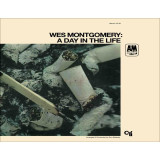
A Day in the Life' was released in 1967 and reached #1 on the Billboard Jazz Albums chart.
From the early 1960s to the late '80s, A&M was one of the most eclectic and powerful independent record labels in the world. The roster of artists who recorded there includes The Carpenters, Captain Beefheart, The Police, Joe Cocker, Suzanne Vega, Procol Harum and Janet Jackson, among others. Founded as an independent company by Herb Alpert and Jerry Moss in 1962, soon the label garnered interest and success, and was acquired by PolyGram in 1989. Throughout its operations, A&M housed well-known acts such as Sting, Sergio Mendes, Supertramp, Bryan Adams, Burt Bacharach, Liza Minnelli, Paul Williams, Quincy Jones, Cat Stevens, Peter Frampton, Carole King, Extreme, Joan Baez, the Human League, Soundgarden, Duffy, and Sheryl Crow, among others. Reissue of the debut album on A&M Records by jazz guitarist Wes Montgomery, released in 1967. It reached #1 on the Billboard Jazz album chart and #2 on the R&B chart. Considered by far the best of his three albums on A&M (in partnership with Creed Taylor’s CTI Records), A Day in the Life features a plethora of star sidemen, such as Herbie Hancock, Ron Carter, Ray Barretto and Grady Tate, among others, as well as superb arrangements by Don Sebesky.
. For Fans Of: The Weather Station, Weyes Blood, Adrianne Lenker, Phoebe Bridgers, Joan Shelley, Lana Del Rey, Cass McCombs, Angel Olsen & Neil Young. Camelot, the legendary seat of King Arthur’s court in Early Middle Ages Britain, was probably not a real place. A corruption of the name of a real Romano-Briton city, the word “Camelot” accumulated symbolic, mythic resonances over centuries, until achieving its present usage as a near-synonym of “utopia.” In the mid-20th century alone, Camelot inspired an explosion of representations and appropriations, among them the violent, affectless Arthurian court of Robert Bresson’s 1974 film Lancelot du Lac and the absurdist iteration of Monty Python’s 1975 Holy Grail, both of which feature armoured knights erupting into fountains of blood; the mystical Welsh world of novelist John Cowper Powys’s profoundly weird 1951 novel Porius, with its Roman cults, wizards and witches, and wanton giants; and the nationalist nostalgia of President John F. Kennedy’s White House. Unsurprisingly there are fewer Camelots in more recent memory. Camelot, Canadian songwriter Jennifer Castle’s extraordinary, moving 2024 chronicle of the artist in early middle age, charts a realer, more rooted, and more metaphorical place than the fabled Camelot of the Early Middle Ages (or its myriad depictions), but it too is a space more psychic than physical. In Castle’s Camelot, the fantastic interpenetrates the mundane, and the Grail, if there is one, distills everyday experience into art and art into faith, subliming terrestrial concerns into sublime celestial prayers to Mother Nature, and to the unfolding process of perfecting imperfection in one’s own nature. Co-produced by Jennifer and longtime collaborator Jeff McMurrich, her seventh record is at once her most monumental and unguarded to date, demonstrating a mastery of rendering her verse and melodies alike with crisply poignant economy. For all their pointedly plainspoken lyrical detail and exhilarating full-band musical flourishes, these songs sound inevitable, eternal as morning devotions. “Back in Camelot,” she sings on the lilting, vulnerable title track, “I really learned a lot / circles in the crops and / sky-high geometry.” The album opens with a candid admission of sleeping “in the unfinished basement,” an embarrassing joke that comes true. But the dreamer is redeemed by dreaming, setting sail in her airborne bed above “sirens and desert deities.” If she questions her own agency whether she is “wishing stones were standing” or just “pissing in the wind” it does not diminish the ineffable existential jolt of such signs and wonders. This abiding tension between belief and doubt, magic and pragmatism, self and other, sacred and profane, and even, arguably, paganism and monotheism, suffuses these ten songs, which limn an interior landscape shot through with sunstriped shadows of “multi-felt dimensions” both mystical and quotidian. The epic scale and transport of “Camelot,” with its swooning strings, gives way dramatically to “Some Friends,” an acoustic-guitar-and-vocals meditation in miniature on Janus-faced friends and the lunar and solar temperatures of their promises—“bright and beaming verses” versus hot curses which recalls her minimalist last album, 2020’s achingly intimate Monarch Season. (In a symmetrical sequencing gesture, the penultimate track, the incantatory “Earthsong,” bookends the central six with a similarly spare solo performance and coiled chord progression, this time an ambiguous appeal to … a wounded lover? a wounded saint? our wounded planet?). Those whom “Trust” accuses of treacherous oaths spit through “gilded and golden tooth” cynics, critics, hypocrites, gurus, scientists, doctors, lovers, government, the so-called entertainment industry sow uncertainty that can infect the artist, as in “Louis”: “What’s that dance / and can it be done? What’s that song / and can it be sung?” Answering affirmatively are “Lucky #8,” an irrepressible ode to dancing as a bulwark against the “tidal pools of pain” and the “theory of collapse,” and “Full Moon in Leo,” which finds the narrator dancing around the house with a broom, wearing nothing but her underwear and “big hair.” But the central question remains: who can we trust, and at what cost faith, in art or angels or otherwise? Castle’s confidence in her collaborators is the cornerstone of Camelot. Carl Didur (piano and keys), Evan Cartwright (drums and percussion), and steadfast sideman Mike Smith (bass) comprise a rhythm section of exquisite delicacy and depth. This fundamental trio anchors the airiness of regular backing vocalists Victoria Cheong and Isla Craig and frames the guitars of Castle, McMurrich, and Paul Mortimer (and on “Lucky #8,” special guest Cass McCombs). Reprising his decennial role on Castle’s beloved 2014 Pink City, Owen Pallett arranged the strings for Estonia’s FAMES Skopje Studio Orchestra. On the ravishing country-soul ballad “Blowing Kisses” Pallett’s crowning achievement here, which can be heard in its entirety in the penultimate episode of the third season of FX’s The Bear Jennifer contemplates time and presence, love and prayer and how songwriting and poetry both manifest and limit all four dimensions: “No words to fumble with / I’m not a beggar to language any longer.” Such rare moments of speechlessness “I’m so fucking honoured,” she bluntly proclaims suggest a state “only a god could come up with.” (If Camelot affirms Castle as one of the great song-poets of her generation, she is not immune to the despairing linguistic beggary that plagues all writers.) Camelot evinces a thoroughgoing faith not only in the natural world including human bodies, which can, miraculously, dance and swim and bleed and embrace and birth but also in our interpretations of and interventions in it: the “charts and diagrams” of “Lucky #8,” a daydreamt billboard on Fairfax Ave. in LA in “Full Moon in Leo,” the bloody invocations of the organ-stained “Mary Miracle,” and all manner of water worship, rivers in particular. (Notably, Jennifer has worked as a farmer and a doula.) The album ends with “Fractal Canyon”s repeated, exalted insistence that she’s “not alone here.” But where is here? The word “utopia” itself constitutes a pun, indicating in its ambiguous first syllable both the Greek “eutopia,” or “good-place” the facet most remembered today and “outopia,” or “no-place,” a negative, impossible geography of the mind. Utopia, like its metonym Camelot, is imaginary
Just under a year after their acclaimed self-titled debut, dreampop duo deary release a brand new six-track EP – Aurelia – via Sonic Cathedral on November 1. It includes the singles ‘The Moth’, ‘Selene’ and ‘The Drift’ and features Slowdive drummer Simon Scott playing on three songs. It will be available on three different vinyl variants, a CD with three bonus tracks and digitally. It’s a stunning record, which displays a new-found maturity in terms of production as well as musically and lyrically. The band – singer Rebecca ‘Dottie’ Cockram and guitarist/producer Ben Easton – have had to grow up in public since the release of their debut single at the start of 2023, supporting legends such as Slowdive and Cranes and TikTok sensations like Wisp along the way. An aurelian is a rare old term for a lepidopterist – someone who studies and collects moths – derived from the Latin aurelia, meaning chrysalis. The perfect title for an EP which is based around the theme of metamorphosis and change. “It leans on the natural world, the human body, the earth and sky as well as human emotion,” says Ben of how the EP represents physical and metaphysical growth. “Change can be daunting but equally exciting, which is something we’ve come to learn.” “While writing the EP, I found a letter I had written to myself when I was 22,” adds Dottie. “I was fresh out of university and had moved back in with my parents as Covid was in full force. I was uninspired and lost and reaching out to my future self for some hope. It was a physical representation of what can happen in a few years; how much can change and how you never know what’s coming next. “I found it interesting that – at the age of 26 – here I was looking back to my younger self for hope or just some comfort in the fact that things will and do move on. It was important to me to bring both of these versions of myself into the new songs.” “Personally, I had noticed a change in myself; a new level of social anxiety, a strange disassociation to things that once brought me joy as well as negative repetitions in my daily life,” reveals Ben. “I began the year sober which allowed me to finish the writing process as a letter of care to my own mental health. There are motifs throughout the EP – for example the riffs in ‘The Moth’ and ‘The Drift’ being reminiscent of each other – which are like musical reflections of these repeated cycles.” It’s musically where the change deary have undergone is most obvious. ‘The Moth’ mixes howling guitars atop a strident breakbeat making it more Curve than Cocteaus; ‘Selene’ is a slow-building wall of noise; ‘The Drift’ combines a perfect pop melody with an incredible sense of urgency. These three singles are balanced by the brief but beautiful ‘Where You Are’ which leads into the Portishead-style trip-hop of ‘Dream Of Me’. The title track has been a staple of their live sets for about a year as ‘Can’t Sleep Tonight’, but its mix of The Cure circa Disintegration and Mezzanine Massive Attack has grown and evolved so much that they renamed it ‘Aurelia’ as the embodiment of the change they have been through. “We’ve allowed deary to naturally grow over the past year, we didn’t want to force it to take a certain shape or sound,” explains Dottie of the duo’s slow and steady approach. “A lot of the last EP was written by sending ideas back and forth over WhatsApp, but this time we were able to sit in the same room and I think that really shows. We know each other a lot better now as we have experienced this journey together and that benefits the writing process as we are more open with each other and can be vulnerable.” “Aurelia definitely feels a lot more collaborative, more personal and more fully realised than the first EP,” concludes Ben. “It feels like a real document of what has been a very important time in both of our lives. Ironically, the band has changed and matured even more since the recording, so we’re both excited to document the next stage
Described by Steve Lamacq as “so elegant and haunted, in an almost gothic way, but with that bass momentum of proper post-punk”. This is the debut album from bloody/bath. 10 tracks inspired by the unsettling sounds of horror soundtracks, early 2000’s indie rock guitar lines and mental illness, ‘In An Empty Space, I’m Screaming’ is as anthemic and cathartic as it is eerie. Produced by Matt Peel (Yard Act, WH Lung, Dream Wife, Divorce, Eagulls), the record is dissonant post-punk filtered through a myriad of sonic palettes. Lead single ‘Suffering’ evokes catchy indie rock while opener ‘Strangling of the Dog’ finds itself firmly in the harsher edges of the genre. The album also features ‘Idle Hands’ which was championed by Iggy Pop and played on BBC Radio 6Music by Iggy, Steve Lamacq and Lauren Laverne. This limited edition vinyl on translucent red with black smoke marble is limited to only 100 distro copies. Link to Soundcloud tracks - ‘Strangling of the Dog’, ‘Heather’ and ‘Unholy Cross II’