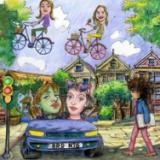
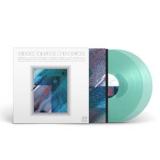
Scottish producer & DJ Graeme Clark AKA The Revenge releases his second album 'When The Thrill Comes' on his own Roar Groove imprint on 11th May 2018.
'When The Thrill Comes' is a demonstration of a producer achieving a point of maturity in their work, able to exercise a sense of restraint, to allow for their sound to have space. It is also the opportunity for The Revenge to explore his own electronic music roots with a deeper pared-back sound more in touch with his earliest production experiences in house and techno.
Clark is no novice to the art of production and the sweaty alchemy of animating bodies on dance floors. He has been producing and playing electronic music since 1995, in many forms, though is well known for 'some of finest modern disco dubs and re-edits on the block' (DJ Mag). This passion for dusty disco and deep cuts is reflected in his long-standing collaboration with Craig Smith as 6th Borough Project which has yielded 3 albums and provided the foundation for the influential but now defunct Instruments Of Rapture label.
2015 was a momentous year for Clark with the release of his debut album 'Love That Will Not Die' on his own Roar Groove imprint. The LP picked up 'Best British Album' from DJ Mag, was shortlisted for Scottish Album Of The Year and drew support from leading DJs including Jackmaster, John Talabot, Solomun, Craig Richards, Axel Boman amongst others. Recent production work has both cemented and extended his reputation; with his future-facing remix for Auntie Flo being re-touched by Dixon for the Philomena label and his two EP's for Berlin's Dirt Crew Recordings reinforcing his love for solid club jams
Cerca:buzz
- A1: Intro. Halcali Bacon
- A2: Tandem
- A3: Girigiri Surfrider
- A4: Aa Harukari Sensation
- A5: Otsukare Summer
- A6: Halcalism Candy Hearts
- B1: Conversation Of A Mystery
- B2: Peek-A-Boo
- B3: Hello, Hello, Alone
- B4: Styly Styly
- B5: Electric Sensei
- B6: Zoku Mayonaka No Grand
Following the recent worldwide success of “Otsukare SUMMER,” the analog edition of HALCALI’s debut album “HALCALI BACON,” originally released in 2003,
is now set for release 22 years later. The name “HALCALI” comes from combining the two members’ names, “HALCA” and “YUCALI.”
The album was fully produced by O.T.F, the production team of RYO-Z and DJ FUMIYA from RIP SLYME.
“HALCALI BACON” includes a diverse lineup of tracks such as “Otsukare SUMMER,” produced by Tomoyuki Tanaka (FPM)—a song that has surpassed 4.5 billion
views on TikTok and is generating global buzz—and their debut track “Tandem.” After more than two decades, the HALCALI wave is once again ready to sweep
the world
- A1: You Are The Sunshine Of My Life 2:45
- A2: Maybe Your Baby 6:45
- A3: You And I 4:39
- A4: Tuesday Heartbreak 3:09
- A5: You've Got It Bad Girl 4:55
- B1: Superstition 4:40
- B2: Big Brother 3:35
- B3: Blame It On The Sun 3:28
- B4: Lookin' For Another Pure Love 4:45
- B5: I Believe (When I Fall In Love It Will Be Forever) 4:48
The fifteenth album by Stevie Wonder, originally released in October 1972. As the second of five consecutive albums which made up Stevie's classic period, Talking Book found Wonder at the top of his game, combining tight song writing with warm electronic arrangements and effervescent vocal performances. Released in 1972 and sandwiched between the release of Music of My Mind and Innervisions, Talking Book saw the then 22 year-old Wonder enjoying more artistic freedom from Motown, taking over the production reins and playing most of the instruments himself. As a result, the sound of the album is sharply defined by Wonder's exquisite keyboard work, and his use of the Hohner clavinet model C on Superstition became widely regarded as one of the definitive tracks featuring the instrument. Despite making the majority of Talking Book himself, the album also benefits from the talents of guest guitarists Jeff Beck, Buzzy Feton and Ray Parker, Jr who featured on Maybe Your Baby and Lookin' For Another Pure Love.
- A1: Original
- B1: Spike Hellis Remix
File under Boy Harsher Jae Matthews lends her unmistakable voice to a striking reinterpretation of Buzz Kull’s cult classic “Man On The Beat.” Built for midnight drives and neon-lit highways, Matthews’ version transforms the track into a dark, hypnotic pulse of tension and atmosphere, carried by her haunting, commanding vocal. Released as a special limited-edition 12" by Heartworm Press, the single reimagines the underground favorite with a colder, more cinematic edge.
On the B-side, Los Angeles duo Spike Hellis deliver an extended remix, stretching the track into a dancefloor-ready transmission of ecstatic synth and rhythm. Matthews is widely known as the vocalist of the dark electronic project Boy Harsher, but here she steps into a different light, channeling the nocturnal spirit of the original while making the song unmistakably her own.
- 1: 640 (Intro)
- 2: Days Of Doom
- 3: Rage Of The Conqueror
- 4: Winds Of Ash And Dust
- 5: Lese Majesty (Corpus De Sang)
- 6: Through Fire And Blood
- 7: Ready To Explode
- 8: By The Blood In Our Veins
- 9: Marching To Victory
DYING VICTIMS PRODUCTIONS is proud to present WHIRLWIND’s highly anticipated second album, 1640, on CD and vinyl LP formats. WHIRLWIND was originally conceived as a studio-project by Mark Wild, from Körgull The Exterminator among other extreme metal bands, to satisfy his will to make a classic heavy metal album, a style that changed his life during his childhood – influenced mostly by ‘80s German metal bands like early Running Wild, early Helloween, Accept, Heaven’s Gate, Gravestone, Tyrant, Grave Digger, Steeler, and Stormwitch among others, but also all kinds of classic heavy metal like Mercyful Fate, Manowar, Iron Maiden, and Judas Priest. In 2022, WHIRLWIND released their debut album, 1714, marking the band’s beginning. WHIRLWIND also established a live lineup to bring their songs to life onstage, with musicians from other known bands, like Redshark, joining as permanent members of the band. The album immediately generated a big buzz in the underground scene and led them to perform at some of the best-known festivals in Spain like Pounding Metal Fest and Skulls of Metal, alongside such bands as Visigoth, Attic, Omen, Tentation, Mindless Sinner, Witchtower, IRON CURTAIN, and Phantom Spell. Now arrives WHIRLWIND’s second album, 1640. Like its predecessor, the album is focused on historical and epic episodes of their homeland; specifically, this album revolves around the Thirty Years War that took place around Europe and the inner conflicts within Spain.
Musically, WHIRLWIND deliver a masterclass in cruising, classy Teutonic metal, running from more traditional-minded mid-tempo stompers to surging, up-tempo gallops of glory. Riff and lead form a lethal tandem, balancing both energy and color, while the rhythm section stays locked in no matter the dynamic. The production, too, of 1640 honors the mid ‘80s with authenticity – underground in spirit, Big League in execution. All told, the album is true heavy metal for true heavy metal people: no more, but definitely no less. By the blood in their veins, WHIRLWIND are marching to victory, ready to explode!
Formed in 2021, the band have been maturing since their very first single. Their live performances and sonic evolution have created an undeniable buzz over the years. Recent single Cognitive Dissonance suggests this new chapter is their best yet, this confident debut album is sure to be a crowd pleaser.
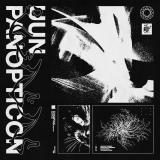
Fresh off an EP on Semantica and an album on MORD, Uun returns to his imprint Ego Death with the Panopticon EP. Uun showcases his range on these 6 tracks, running the gamut from dissonance to chord driven grooves.
The A side focuses on intensity. “Aesthetic Descent” features dual synth lines, slipping between melody and atonality. The straightforward percussion allows the listener to focus on the everchanging dynamics in the leads. “Structural Obedience” begins with a chugging groove, out of which a buzzsaw synth emerges. This track is a display of Uun’s ability to walk the line between minimalism and maximalism.
The B side focuses on the interplay between melody and groove. “Ralph’s Track” channels the dub chords of Basic Channel while applying a modern edge. “The Hidden System” features the lone vocal on the EP, sampled from the work of the late great David Lynch. The interplay between the 7⁄8 lead synth and 4/4 percussion creates a feeling of anticipation, where the patterns develop in unpredictable ways.
The digital exclusive tracks go into more experimental territory. “Queen’s Chamber” is a broken beat dirge, consisting of reverb drenched percussion and synths reminiscent of Dead Can Dance. The final track, “Shokunin”, is the counterpoint to Aesthetic Descent, closing out the release on a crushing yet hopeful note.
Pressed onto a unique custom turquoise and black hand poured color mix record inside a full printed jacket. The evocative artwork was created by Minneapolis based graphic designer Ryote.
»Single #Two« offers another bite-sized portion of Muslimgauze. This one almost falls into traditional »A-side/B-side« territory, with side A containing a single buzzy, frenetic track just over 3 minutes in length. Densely looped percussion, vocal sample, and fuzzy keyboards meld together into a blurry rush.
The side B is longer, more chill, and less immediate; still utilizing the same ingredients but here spaced out, with the sampled singing only coming to prominence a few minutes in. If the first might provoke a twitch response, the second seems calibrated more for head-nodding.
Dez Andrés, Detroit’s underground legend and genre-blurring maestro is back with another batch of reworked old skool bangers.
Since the late '90s, Dez has built a respectable catalog that blurs the boundaries between genres. One of motor city’s most prolific artists, his music can be summed up in one word: quality. Now he returns to DFM with a two-sided heater.
Dez flips Odyssey’s classic Native New Yorker into a gritty dembow style club weapon. With iconic vocal lines and signature piano riff, Dez injects his signature bounce and percussive punch, turning this disco anthem into a raw dancefloor destroyer.
Diving deeper, Dez revives Dr. Buzzard's Original Savannah Band’s classic Sun Showers, transforming it into a rhythmic, power groove tailor-made for sweaty basements, rooftop sets and smoke filled dance floors on red-lit nights that refuse to end.
Following Parnell March’s Back Bar Grooves EP in February and November’s release of the Dust Tears (lead song from Sarah/Shaun’s debut) remixes, Edinburgh’s Hobbes Music label returns with a second EP of dream pop from husband-and-wife duo Sarah/Shaun (pronounced simply Sarah Shaun), alias Sarah and Shaun McLachlan (pronounced McLochlun), who wooed hearts and wowed critics with debut EP ‘It’s True What They Say?’ last year.
‘It’s True What They Say?’ attracted fans across the board: Artist Of The Week in The Scotsman, rapturous reviews from The Skinny and Tokyo's Ban Ban Ton Ton blog, BBC 6Music airplay courtesy of Nemone (Mary Anne Hobbs' Morning Show), more radio play from Radio Scotland's Roddy Hart & Vic Galloway, plus Simone Butler (Primal Scream) and Jim Sclavunos (Bad Seeds) via their respective Soho Radio shows, not forgetting ringing endorsements from the likes of David Holmes, Youth, Kevin Bales (Spiritualized), Brent Rademaker (Beachwood Sparks) and Julian Corrie (Franz Ferdinand).
They played gigs supporting Glasgow's huge Glasvegas, at festivals (Kendall Calling, Dunbar Music, Hidden Door), plus a slew of venues across the Scottish capital, ending the year with a trio of shows supporting Glaswegian 80s pop legends The Bluebells at Aberdeen’s Tunnels, Dunfermline’s PJ Molloys and Edinburgh’s Liquid Rooms, while The List magazine tipped them among their Ones To Watch For 2025, with journalist Fiona Shepherd suggesting they were “blending the starry-eyed pop of Sonny & Cher with the electronic experimentation of Chris & Cosey.”
Very much the companion piece to the debut EP but arriving a full twelve months later, Someone’s Ghost is emblematic of the duo’s desire not to rush things or release anything half-baked.
“I’ve always wanted to create the perfect pop record and I do really feel that we’ve achieved that with this one,” says Shaun. And he’s clearly not the only person who thinks so.
REVIEWS, FEEDBACK ETC:
"I LOVE that! Dreamy dreamy pop." ROY MOLLOY (Marvellous Crane/Alex Cameron) on BLAST RADIO, Sydney
“the Scottish music scene’s cream of the cool... buzzy drum beats, high, distant chimes, and heavenly electronics…. very ethereal.” THE SKINNY
"Listening to Sarah/Shaun is like eavesdropping on a noir dreampop, long-distance phone call between them both, across two separate sonic locations. On this stunning 4-song EP, Sarah’s voice, effortlessly mesmerising, draws you into these big beautiful and haunting passages of perfect dream-pop. All beautifully produced in a multi-layered-scape of low-fi analogue textures, epic cinematic crescendos, intense electro-pulse grooves and warped psycho-pop guitar riffs. Within the songs lurk a sense of unresolved emotions, longing and pathos. There are shades of classic Lee Hazelwood & Nancy Sinatra but also Post-Punk Electronica and Beach House. But what a unique sound they’ve created of their own. I love it" DAVID MCCLUSKEY (The Bluebells)
"Absolutely beautiful" SEAN JOHNSTON (A Love From Outer Space)
"Lovely stuff here! Total quality." MARTYN 'MASH' HENDERSON
"Ooooh. Everything the last record promised is here. Well done" GEORGE T aka George Demure (Accident Machine)
"Vince clark Era Depeche Mode in places" KEVIN BALES (Spiritualized)
"Sounds cool. Well done" PETE KEMBER (Sonic Boom, Spacemen 3)
"Glorious, it (Debbie Harry) grabs hold of you and doesn't let go." IAIN DAWSON aka RAVECHILD (Everyone Wants To Play The Hits Podcast)
SOMEONE’S GHOST
Born out of an incredibly anxious, stressful time, the songwriting process for these recordings has been something of a personal tonic for Shaun…
“There was a period when I was having nightmares,” he reveals. “Apparently I was saying there was someone in the room, I was talking to that person and Sarah was seeing all this while I was still asleep.
So, I was thinking that this was my ghost. I started writing songs because I was going through something and I was dealing with something and writing songs was a comfort. My ghost was a comfort, whether it was real or not. The idea of it was a comfort.”
“I firmly believe that everyone has someone who watches over them but all of the songs are essentially about being there for someone,” he says. “Everybody needs someone but also everyone needs to stay real and keep what you have, keep it close, never let it go. If you don’t have it, continue to tell people you’re there for them. It’s about loving and hoping people will be good to you in return.”
While Shaun took the songwriting lead on Filter Of Love and EP closer The Sound Which Stresses The Sound Of My Ears, Debbie Harry was originally instrumentally conceived by producer Jaguar Eyes, alias Ali Chisholm, later lyrically completed by Shaun, and the EP’s lead track, Anhedonia, and one of its stand-outs (much like Starbed on the debut) was conceived by Sarah, as a result of experiencing a bit of a spiritual epiphany of her own.
“When I first heard the word Anhedonia, I didn't know what it meant but when I found out I thought about it quite a bit. How sad it would be to have no enjoyment in anything,” she explains. “This song is really about my own personal beliefs. When I have been down, that's one of the things that helps me the most. It talks about trying to make amends but realising, for some things, you can't. But I think with any kind of faith comes hope… which is always a good thing.”
A record about hope, truth, honesty, a belief in something bigger than oneself… and all set to a soundtrack that wouldn’t feel out of place in a David Lynch or Eighties feature film. What more could anyone ask for, really?
There’s equally a desire to offer something universal and positive to anyone who tunes in. The labels for the 12” edition reveal the dual mantras “Who just wants to survive?” and “It’s about time to live a little”, with both messages also engraved in each record’s run-out grooves. T-shirts accompanying debut EP It’s True What They Say? bore the slogan “Kill Them With Kindness” - leading caps intentional. Shaun carries the acronym KTWK everywhere he plays, as a reminder: it’s stitched into his guitar strap. And this particular wee pebble has already caused a few ripples: people have been approaching him at gigs to acknowledge their appreciation and respect for it.
"We feel we have made an honest, open, colourful, body of work,” say the duo. “We hope to go out and play the songs with the guys (our band) and then potentially make more records. We are taking things as they come. Everything has been organic so far, after all. We are looking forward to whatever this brings."
The AMTK+ series on Amotik's self-titled imprint gives room for friends and admired artists to present their futuristic take on techno. For the fifth edition, Italian producer D-Leria joins the team and presents two highly effective, booming techno trips. The first track, 'Filterbank' sets the tone with its punching kick-drums mangled in between buzzing bass lines. His second track, 'Let It Be' shows a rare side from D-Leria where he uses mesmerising vocal chops to create an immersive, driving techno tool. On the flip side, Argentinian artist Translate comes in with some excellent bleepy hypnotism on 'Notation', followed by the darker, pulsating 'Shifted Communication'.
- It Gets So Hot
- Dancing On The Wall
- Eastside Girls
- Wannabeher
- On Call
- So What
- Party's Over
- Big Stick
- Mary Jane
- Girl's Girl
- Unless
- Why Do I Get A Good Feeling
- Buzzkiller
CLEAR RED VINYL[23,49 €]
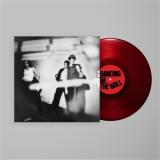
Die Reise von MUNA war schon immer davon geprägt, Raum für die komplexen, chaotischen und ekstatischen Realitäten des Lebens zu schaffen, und mit ihrem vierten Album "Dancing On The Wall" sind sie so prägnant, düster und mitreißend wie nie zuvor. Ausgehend von den funkelnden, mit Konfetti übersäten Höhen ihres selbstbetitelten Albums aus dem Jahr 2022 kanalisieren sie nun die ängstliche, unsichere Energie des Lebens in einem Los Angeles, das von politischen Spannungen, Umweltzerstörung und dem stillen Druck der Prekarität der Millennials geprägt ist. Das Ergebnis ist ein Album, das sich sowohl intim als auch spektakulär anfühlt, eine Popwelt, die mit Biss, Witz und emotionaler Resonanz aufgebaut ist, ein Soundtrack für Herzen, die gleichzeitig in Flammen stehen und das Chaos um sie herum beobachten. Auf dem gesamten Album erkundet MUNA Sehnsucht, Intimität und Verbundenheit vor dem Hintergrund einer Welt im Wandel. Es gibt eine stille Auseinandersetzung damit, wie man weiterleben, lieben und sich gegenseitig erreichen kann, während man Zeuge politischer Brutalität und systemischer Gewalt wird, und wie Freude ohne Verleugnung überleben kann. Tracks wie "Wannabeher" fangen den schwindelerregenden Nervenkitzel ein, sich vollständig in die Fantasie eines anderen zu begeben, während "Why Do I Get A Good Feeling" noch lange nach dem Ende des Beats nachhallt, eine Meditation über flüchtige Freude und ausgesetzte Möglichkeiten. Das Album schließt mit "Buzzkiller", einer schonungslosen Auseinandersetzung mit Sehnsüchten und ihren Folgen, dem Schmerz, etwas erreicht zu haben, nur um festzustellen, dass neue Fragen, Zweifel und Sehnsüchte zurückbleiben. "Dancing On The Wall" wurde von Naomi McPherson produziert, wobei ihre charakteristische Liebe zum Detail mühelos mit der ausgefeilten Pop-Technik ihrer Bandkollegin Josette Maskin hinter den Kulissen verschmilzt, um lebendige, atmende Welten für die prägnanten Texte und die unverwechselbare Stimme der Leadsängerin Katie Gavin zu schaffen. "Dancing On The Wall" verbindet euphorische Klanglandschaften mit prägnanten, menschlichen Geschichten. Das Album spiegelt einen intensiven, selbstgesteuerten kreativen Prozess wider, der von Instinkt, Vertrauen und vollständiger künstlerischer Kontrolle geprägt ist. Es wirkt lebendig, eindringlich und filmisch und spiegelt eine Generation wider, die sich durch Unsicherheit navigiert und sich dennoch nicht von ihrer Freude abbringen lässt. Mit diesem Album beweisen MUNA erneut, dass Pop gewagt, intim und sozialbewusst zugleich sein kann: ein Album, das nicht nur den Moment einfängt, sondern ihn zu einer Welt destilliert, in der man leben möchte.
- 1: Slab
- 2: Thirty-Seven Forever
- 3: How You Gonna Get Even
- 4: Someone You Forgot
- 5: Lonely Heart Pyramid Scheme
- 6: Soulseeker
- 7: Jukebox Weepie
- 8: Casio
- 9: High Hopes (Ballad Of Rural France)
- 10: Electrical Tape
Much like the duo’s music, the story of Rural France is both mundane and magical. Tom Brown (also of transatlantic janglepunks Teenage Tom Petties) and Rob Fawkes moved to London in their mid-twenties. Despite living under the same roof, they never picked up a guitar – except for one drunken, failed attempt at writing a Spoon song (“Big Chops” …don’t ask). It was only after both separately relocating to Wiltshire and starting families that they began assembling songs as a way of meeting up. Tom had amassed a pile of sprightly slacker jams that were calling out for Fawkes’ messily melodic guitar lines. Rural France was born.
After a debut album on their hero, ex-Lemonhead Nic Dalton’s Half-a-Cow Records, they retreated to a garage to record their next two albums: RF (2021) and Exacamondo! (2024), both released on much-respected jangle label Meritorio Records. Despite being lo-fi in the truest GbV sense, both records were warmly received by the DIY indie blogosphere, with their short, scrappy, but supremely melodic songs landing on numerous AOTY lists. RF even won Album of the Year at Janglepop Hub.
Raven Sings The Blues probably summed up the sound best: “With drunken visions of Beach Boys harmonies playing in the back of their heads and hooks that consume Teenage Fanclub cheeriness with the same beautiful brevity that drives Tony Molina, the pair have knocked out eleven rumpled classics.” Album four, SLOTHS, arrives via Meritorio Records and Safe Suburban Home Records on 08/05, and is a slightly different beast. For one, it’s been mixed by a professional – Rob Slater (Westside Cowboy, Yard Act, Thank) – giving the guitars and drums room to breathe. It’s easily their most high-fidelity record to date. It’s also their jangliest, most baroque and thoughtful album yet. But alongside added organ, horns and mellotron – and drums from Tom’s Teenage Tom Petties bandmate Jeff Hamm – it still retains the buzzes, hums and little freak-outs that stick to the duo’s original “Pavement playing Teenage Fanclub” mission statement. “Rob and I both wanted to do something a little slower and a little more melancholy,” says Tom. “We resisted our usual urge to hit the distortion pedal and made something that fitted where we are now and celebrates how we still listen to Meatloaf when we get drunk.”
SLOTHS is also the most thematically consistent Rural France record to date. While it wouldn’t be right to call it grown-up, it definitely has homeowners’ insurance. From the Silver Jews-esque Americana of “Slab” and mid-life rallying cry of “Thirty Seven Forever”, to the horn-embossed loser anthem “Lonely Heart Pyramid Scheme,” the songs celebrate (and rail against) the absurdities of getting older, forming a band in your thirties, and the strange phenomenon of time passing. Because no matter how slow you move, everything else goes fast. SLOTHS.
Black Truffle is pleased to present Radis, the first recording by the Oslo-based trio of Andrea Giordano (voice and organetto), Kalle Moberg (accordion) and Jo David Meyer Lysne (guitar and snare drum). Now based in Norway, Giordano is a native of Cuneo, in the Piedmont region in the north-west of Italy and her exploration of the Piedmontese language provides the starting point and conceptual anchor of the trio improvisations heard on Radis, which make use of the words of 20th century Piedmontese poets Nino Costa, Bianca Dorato and Oreste Gallina. As the musicians explain, the project is an attempt to preserve the beauty and singularity of a language at risk of extinction.
Fittingly, the first sound we hear on the opening piece ‘Fiorìa’ is Giordano’s unaccompanied voice. She sings a poem from Oreste Gallina as a kind of floating cadenza, the accompanying silence sensitizing the listener to the pellucid quality of Giordano’s voice and the unique sound of the Piedmontese language. The voice dies away and into the silence swells a single tone, sounded by Moberg’s accordion and—special guest on this opening piece—the alto saxophone of Mario Gabola. Extended techniques and preparations create unexpected timbres from the acoustic instruments: Gabola’s saxophone is augmented with tin cans and springs and Moberg’s unorthodox techniques allow the accordion to generate wheezing, buzzing textures and patterns of microtonal beating. Giordano’s voice returns, picking up the thread of the languorous opening melody, coexisting for a while with the shifting drone before the piece takes an unexpected yet organic left-turn into a delicate saxophone solo of sorts.
Recorded in several locations across Italy and Norway over the course of three years, Radis documents an ensemble who have developed both a distinctive sound-world and a remarkably sensitive group dynamic. Moving from folkish duets between accordion and Giordano’s organetto (the small accordion used in Italian folk music) to episodes of metallic guitar scraping from Meyer Lysne, the music is both quietly contemplative and gently chaotic. Ensemble roles shift with disarming ease. If on ‘Profij dëspers’ Meyer Lysne’s prepared guitar adds a haywire noise element to a lyrical episode of organetto and accordion, the next piece, ‘D’antorn a lor’, is grounded in chiming guitar chords of stunning beauty; once Giordano’s joins, the result calls up the most spacious moments of Maria Monti’s Il Bestiario. Throughout the seven pieces, the trio explore countless possibilities of group interaction and the margin between conventional euphony and pure abstraction: at times the voice floats against silence or seems almost disconnected from the gentle clatter of the instruments (sometimes reminiscent of Nikiforas Rotas’ haunting settings of Cavafy), while at other points the instruments touch on conventional harmonic accompaniment. What is perhaps most striking of all is the way that voice and instruments relate to each other, the extended technique reframing the voice as a kind of abstract sound object, while the melodic beauty of Giordano’s voice lends a contemplative, almost melancholic air to the wheezing and scraping of accordion and guitar.
Captured in gorgeously intimate recordings, Jim O’Rourke’s careful and beautifully spacious mix highlights the wealth of textural detail in each element. Accompanied by notes, session photos and the text of the Piedmontese poems, Radis is a work of stunning beauty that demonstrates the vitality of exploratory music in Norway today.
Analog Fingerprints Vol. 0 is a compilation bringing together the early 2000s works of Marco Passarani under his Analog Fingerprints alias, collecting key tracks originally released on Rome’s Plasmek and Pigna labels.
For Numbers, the story starts long before the label itself. In their formative years, digging in Glasgow’s Rubadub, Passarani’s records felt like dispatches from a future city. Releases on his own Nature Records and on labels such as Generator and Interr-Ference Communications were mind blowing: rooted in Detroit techno, Chicago house and electro, yet pushing somewhere new. Much like fellow travellers Autechre, who would remix him in 2001, Passarani’s music balanced machine funk with restless experimentation.
Information was scarce, and you would hear these records first on the dancefloor or at listening stations in shops like Rubadub. Print fanzines like Ear and early web outposts such as Forcefield offered only fragments. But there was a palpable axis forming between Detroit techno and a new European wave of record labels including Skam, Rephlex, Clone, Viewlexx and Nature itself. It was the sound that defined Saturday nights at Rubadub’s ‘69’ parties in Paisley, just outside of Glasgow.
Passarani’s records, in particular, were instrumental in bringing together the future Numbers co-founders. Richard had already booked him pre-Numbers; meanwhile Calum (Spencer) and Jack (Jackmaster), then 16/17 year olds working alternate Saturdays in Rubadub, were so enamoured with the Roman sound that they travelled to Rome for the Bitz Festival in 2003 to seek out Passarani and Lory D at their source.
The first Analog Fingerprints release landed as a 12” on Plasmek in 2001, following the fractured, IDM-leaning 6 Katun material. For Passarani, the project marked a recalibration. A DJ first and foremost, he had moved into production via early computer setups, from a Commodore Amiga through primitive PC audio, Cubase and Logic, later experimenting with Ableton. The IDM scene had offered a playground for trial and error, but there was always a tension between abstraction and the dancefloor. Analog Fingerprints became the bridge: still intelligent, but with more dance than distance. After years of broken beats and complex arrangements, he wanted directness without surrendering identity.
Working closely with Francesco de Bellis and Mario Pierro in the Pigneto district, the trio formed Pigna as a vehicle for reclaiming a more accessible dance sound, deliberately steering away from the minimal wave beginning to dominate Europe. Sessions were fast, instinctive, often stretching late into the night with friends dropping by. It was a studio as social space, production as collective energy.
“In that constant search for balance, Analog Fingerprints was my way of expressing something closer to the classic dance floor. The track 'Tribute' - a tribute to my favourite early Detroit techno track of all time, 'First Bass' by Separate Minds - came after I realised I had almost lost my connection with the dance floor. The simplest step was to take inspiration from early Chicago and Detroit and twist it in our Roman ‘Pigna’ way. My goal was to create more accessible dancefloor tracks by mixing my unconscious Italo roots with my teenage love for that early US sound, ensuring the result was as far as possible from the minimal sound that was starting to dominate everywhere.” - Marco Passarani
Technically, the Analog Fingerprints tracks span a transitional era: Roland TR-909, SH-101 and Alpha Juno hardware met early software experiments. A Novation Drumstation rack stood in for the unattainable TR-808, syncing with TB-303 and TR-606. Yet the true secret weapon was Jeskola Buzz, a tracker-style modular environment that allowed step-by-step parameter control and strange melodic constructions, later exported into the audio sequencer. Even the lead on ‘Tribute’ came from an early PPG Wave-style plugin. It was hybrid thinking at a moment when digital tools still felt unstable but full of possibility for technologists like Passarani.
Behind the music sat Finalfrontier, a loose Roman collective orbiting Nature and Plasmek. Distribution and production were intertwined; importing obscure records into Italy built connections with like-minded outsiders across Europe and the US. Expensive phone bills and fax machines forged an “electronix network” that linked Rome to Clone, Viewlexx, Skam, Rephlex, Rubadub and Detroit’s Underground Resistance. There was a shared sense of survival and resistance, of operating against commercial systems.
Passarani recalls “The first time I found a sheet of paper inside an Underground Resistance 12” with info about upcoming releases... and a huge picture of Spock on the back. Imagine that: you love the music, you love Star Trek, and there’s someone on the other side of the ocean sharing those same values and sounds. It was the perfect match. We even gave our original company the suffix ‘Finalfrontier’: that says it all.”
Feedback in that era arrived physically: distributor faxes, conversations with visiting DJs, the experience of playing abroad and meeting kids who had connected with the records. Glasgow became a key node in a scattered outlier network. Passarani personally brought the first two Nature releases to Fat Cat in London, playing them in-store. Shortly after, a fax arrived from Rubadub in Glasgow requesting copies.
“I still remember that phone buzz and the fax paper slowly sliding out, with someone I didn’t know saying they wanted 75 copies of Nature 001. Or like the time we got a fax from the Rephlex crew just saying, “Hello Nature Records, Keep up the good work.” That was how we knew the message was getting through. It was a fantastic feeling; just one piece of thermal fax paper as an analog notification - the mood for the entire week would change.” - Passarani
The connection to Glasgow has since stretched across generations. As Passarani reflects, links often fracture as scenes renew themselves, but in Glasgow something different happened. New and old mixed seamlessly. There was a visible trust in what came before, and a willingness to carry it forward rather than discard it. Observed from Rome, it was deeply encouraging.
Analog Fingerprints Vol. 0 captures that moment of exchange: Rome to Glasgow, Detroit to Europe, experiment to dancefloor. It documents an artist recalibrating his sound and a network of scenes discovering one another in real time, connected by vinyl, faxes and shared intent.
- 1: Break It Up
- 2: Suicide Bomber
- 3: Conquer The World
- 4: Up Against The Wall
- 5: Johnny Thunders Lived In Leeds
- 6: Where Did It Go?
- 7: Apathy
- 8: Waiting (For You To Call Me)
- 9: Government
- 10: Big Mistake
- 11: Just For You
- 12: The Kids Can't Be Trusted With Rock 'N' Roll
- 13: Hope You're Having Fun
- 14: Falling For You
- 15: Amalia
- 16: Second Best
- 1: Mail Order Bride
- 2: Stick 'Em Up
- 3: Black Lightning
- 4: Diagnosis
- 5: Lying Low
- 6: Shallow
- 7: Lock Up
- 8: Conspiracy Theory
- 9: Hooked On You
- 10: Hit It
- 11: My Baby's Become A Right Wing Extremist
- 12: I'm Celebrating
- 13: Do You Wanna Know?
- 14: Don't Tell Me Everything's Alright
- 15: I Don't Wanna Dance
- 16: My Mind's On Strike
- 17: New Love
"Singled Out" kommt als auf 1000 Stück limitierte Doppel-LP auf farbigem Vinyl (LP1 blau / LP2 kirschrot) im Klappcover oder als glänzende CD! Dreiunddreißig Tracks! Alle 7"-Singles der Band bis jetzt! Das sind alle ihre A- und B-Seiten! Mit dabei sind zwei bald erscheinende Singles, von denen eine als kostenlose 7" der nächsten Ausgabe des SAFETY PIN MAGAZINE beiliegt. Die andere gibt's als streng limitierte Lathe-Cut-7". Um Komplettisten zu begeistern oder zu ärgern, wird gleichzeitig eine dritte (Standard-)7"-Single veröffentlicht, deren A- und B-Seite hier nicht enthalten sind. Cyanide Pills veröffentlichten 2009 ihre erste 7"-Single ,Break It Up", gefolgt von weiteren 14 fantastischen 45er-Singles, zuletzt eine Split-Single mit den Schweizer Nasty Rumours Anfang letzten Jahres. Die meisten dieser Veröffentlichungen enthielten exklusive B-Seiten, die auf keinem Album zu finden sind und die Damaged Goods für ,Singled Out" zusammengestellt haben. Schön, sie alle an einem Ort zu haben, oder? Alle Tracks wurden im Billiard Room in Leeds mit dem Produzenten Carl ,Razorblade" Rosamond aufgenommen. ,Einflüsse? Hmm, nun, wir hören nicht nur Punkrock, das taten auch die frühen Bands nicht, weil es noch keinen gab", sagte Leadsänger Phil 2023 im Gespräch mit dem Magazin ,Vive le Rock". ,Wir mögen natürlich die üblichen Verdächtigen, unsere Favoriten sind die belgische Band The Kids, X-Ray Spex und Buzzcocks. Wir mögen Satan's Rats, The Tours, Knots, The Fingers, Panic, Kleenex, Crime, The Terrorways, Victims, Wipers, The Briefs, The Spits, The Plugz, Bad Nerves, Nasty Rumours, solche Sachen, jede Menge Sachen, Syd Barrett, The Kinks, MC5, Stooges, Bowie, Ruben and the Jets, Kim Fowley, John Lee Hooker, Howlin' Wolf. Die Liste geht weiter und weiter und weiter."
- A1: Kuniyuki Takahashi - Asia
- A2: Brian Eno, Moebius, Roedelius - The Belldog
- A3: Anchorsong - Windmills
- A4: Monde Ufo - Vallee
- B1: Mariah - Sokokara
- B2: Mytron, Zongamin - 08932168
- B3: Liquid Liquid - Scraper
- B4: Five Green Moons - Spider Dub
- C1: Fun Boy Three - Faith, Hope & Charity
- C2: Meat Beat Manifesto - Drop
- C3: African Head Charge - Orderliness, Godliness, Discipline And Dignity
- C4: Cristina - You Rented A Space
- C5: The Cramps - Garbageman
- D1: The Durutti Column - Sketches For Summer
- D2: The Third Bardo - I’m Five Years Ahead Of My Time
- D3: Sordid Sound System - Inanna
- D4: Daniel Avery - Drone Logic
- D5: Spectrum - True Love Will Find You In The End
Two Piers proudly announces the upcoming release of Bridges Towards Open Spaces: Circadian Rhythms 1967–2025.
This new collection brings together a wide range of artists and styles, weaving immersive sonic landscapes that explore a connection between natural cycles and the rhythms within.
Featuring artists such as Brian Eno, Moebius, Roedelius, Meat Beat Manifesto, Fun Boy Three, Daniel Avery, and Spectrum, the compilation moves fluidly between shimmering ambient textures and raw, straight-ahead garage rock.
Bridges Towards Open Spaces: Circadian Rhythms 1967–2025 follows in the footsteps of Two Piers acclaimed previous releases, Night Train: Transcontinental Landscapes 1968–2019 and Music for the Stars: Celestial Music 1960–1979, continuing the label’s exploration of expansive, time-spanning musical journeys.
“I wanted once again to shape a compilation around a time period, this collection is a nod to my days behind the counter of a record shop, the people I met and the styles of music that was played and I was introduced to. Some are from that time, some are of the style/feeling, that I can associate & with the friends I met there; from the early shift to the late shifts as the tempo rose throughout the day and the neons of London started to buzz”
The album will be available on Limited Vinyl and CD in May, arriving just in time for the longer, warmer days and the shifting light of the Seasons Sun.