Infinity is the new release by Melbourne-based Leo James, and the second Patience production. Leo scratches a longstanding itch and delivers two sidelong excursions that inhabit a similar sonic space but spin off in opposite directions on the continuum.
Desert Nightflower hums with vitality in a seemingly lifeless landscape. Impressionistically tracing the lifecycle of a flower’s bloom in the desert night – from the searing afternoon sun through dusk’s chill, the midnight blossoming and symbiotic relationship with travelling bats, through the blue hour comedown to first light – Leo employs vibrant, buzzing electronics, plaintive strings and levitating clarinet to illustrate beauty’s brief conquest of nature’s harshest environment, with vividly evocative and deftly moving results.
After Desert Nighflower floats completely off the grid, an ever-present kickdrum drives Infinity’s near 20-minute trip into timelessness. Sharing Side A’s subliminal synthesised hum and free-form clarinet, Infinity moves fast and firm down a dub techno dirt road towards the end of time. As elements drop in and out of the mix, Infinity builds momentum to a pulsing, cathartic peak of poignant piano, ethereal keys and lucid clarinet expressions.
As an avid nature enthusiast, spatial awareness looms large in Leo’s work. His solo releases on Berceuse Heroique, Neubau and his own label Body Language have been inspired incarnations of techno, EBM, industrial and wave.
Patience is a new outlet for exploring further beyond the break than usual. Inspired by the music perpetually on rotation at HQ – with E2-E4 representing the format’s high tide mark – each release will be one artist’s deep dive down one inspirational wormhole spread across two sides of vinyl, or two side-long sojourns making full use of a round 12” piece of plastic. Set and forget, zone out to tune in.
Search:buzz
Three incredible reimaginations of Nina Simone classics from Francois K, Tony Humphries and Coldcut each with their own unique touch and trademark style weaved within.
Francois K kicks off with a sublime deep house rework of 'Here Comes The Sun'. Reminiscent of Larry Heard's output, Francois nods to Mr Fingers with a bassline that harks back to those early Chicago classics, coupled with deft mbira touches that create an other-worldy feel to the remix. Celestial waves and singing rides mix with a buzzing top line melody that lay the foundations for Simone's spiritual voice to hang in the air with a perpetual elegance and grace. A timeless slice of house music that earned Francois' version a spot on one of Innervisions acclaimed 'Secret Weapons' compilations.
Next up, Zanzibar royalty Tony Humphries lays out a bumping remix of 'Turn Me On' turning the bluesy soul leanings of the original on their head and flipping it into an uplifting summertime groover. Simone's words take on a different tone with this revitalising rework backed by staccato guitars and chopped up vocal melodies that give a playful yet soulful character to this slab of sunshine.
Rounding off the EP in classic Coldcut style, the duo meld 'Save Me' into a chopped, screwed and crunched remix. Lo-fi percussive elements and distorted textures blend with glitching samples and stuttering sequences that turn Simone into a tripped-out goddess. An atmospheric piece of electronica but with a harden edge purpose made for the dancefloor.
Brothers Harvey and Ryan McKay return to Drumcode with their dynamic Alias project. We were introduced to Alias last year when the McKay brothers dropped the impact-heavy 'Visions' EP mid-way through 2017. The duo followed with a lauded contribution for Drumcode Live and the buzz from fans was palpable. The follow up sees the pair in powerhouse form.
The title track 'NRG' is an attitude-packed tour de force; compromised of aggressive snares, warped vocals and a tension-filled break, it has been smashed by Adam Beyer for the last six months. 'Orange Sunshine' pulls no punches as it dishes out apocalyptic acid paired with the sibling's startling drum work.
'The Event' rounds out the EP and is an exhilarating affair propelled by uplifting synth lines and a buzzing energetic bassline.
Following the massive buzz a round the label's last release (voted THE record of 2017 by some 400+ international DJs and tastemakers on Bill Brewster's DJ History Podcast/poll (2017 Furtive 50) , Hobbes Music kicks off 2018 with a heavy slice of warehouse techno backed with deeper electro flavours, a second double-A-side 12" outing by the anonymous DALI.
You may remember DALI (NB all caps in the spelling) released a debut 12" around this time last year. Support came from Ben UFO, Laurent Garnier, Domenic Cappello (Sub Club), John Heckle, Chris Duckenfield, The Revenge, Tom Findlay (Groove Armada), Sean Johnston and XDB (among others) and a repress happened swiftly, with Laurent Garnier and Avalon Emersonalso supporting most recently (on WWFM and at Berghain, respectively).
DALI has a passion for analogue synths, abstract, hypnotic dance music and all things psychedelic. Don't bother looking her up on the net, social media etc. DALI is eschewing all that, to let the music do the talking for now.
We know you've been waiting for this one since last summer! Caspa's debut on Youngsta's ridiculously on-point Sentry has been one of the most requested releases in a very long time. Hot on the heels of releases by dBridge, Nomine and Akcept, the Sub Soldier comes in hard with two absolute burn-ups...
'Gutter Riddim' is a stately spacious construction where every weighty element is carefully considered and plays a key role in the momentum. Tightly sprung tension buzzes through it with high voltage as Caspa lays down some of his darkest designs to date. 'Hot Head' hurls us even deeper into the shadows. A true teaser piece, the first bass line is a staccato stab that gives you just enough time to settle into the groove before the real big-balls bass line comes hurtling out of nowhere.
Rewind every single time, this has been causing uncut mayhem for the few DJs lucky to have it early enough. Timelessly gully and a perfect way to kick the doors of 2018 in. As those who were at Sentry's first anniversary at Fire earlier this month will corroborate: London's heart rate is pounding away at 140 again, some of the most crucial bass music is coming out of the city and Sentry, Youngsta and Caspa are slap bang in the heart of it. The wait is over... Enjoy.
Môme is quickly becoming something like France's new house god. His earthy vinyls for Housewax and FTWR got him a great following with record collectors and house DJs alike. Appearing on Appolonia's Fabric mix, several Boiler Room sets, and his 'For One Day EP' at #1 on Decks Buzz Charts, Môme quickly wins the hearts of dancers and players. 'Triple House' is probably the most amazing outing of his fresh style to date, with all 3 tracks being sweaty bouncing groove monsters. As if this wasn't enough, label honcho Stefan Goldmann cracks his funkiest cutting remix in ages to round the package off. It's unreal. 4 out of 4 are total winners to fall in love with and spawn children. Where else do you ever get this
`Freak Puke' (2012) saw Melvins Lite_featuring Buzz Osborne, Dale Crover, and upright-bass virtuoso Trevor Dunn_offering a leaner, more nimble twist on the band's heavy-rock sound. The use of acoustic bass lends an elastic, jazz-tinged punch to otherwise sludgy riffs, while the songwriting remains both off-kilter and surprisingly tuneful, further proving the group's capacity for reinvention.
It is with some degree of surpriseand delight that we were contacted by John Andrew Fredrick, the founder and omnipresent member of Santa Barbara’s the black watch to see if Blue Matter would be interested in putting out their newest album. Of course we were. One listen was more than enough to convince us that it would fit perfectly on to the label. Perhaps a little more indie than other albums we’ve released, but sowhat? ‘Varied Superstitions’ is an intriguing collision of Cure-style indie and trippy psych which had us buzzing right away. the black watch (lower case intentional) wasformed in 1987 by John Andrew Fredrick in Santa Barbara, California, and he has been (and still is) it’s guiding light. They have released 25 albums over the last 38 years and show no sign of ageing. With a fantastic band behind him, John has presented us with a wonderful batch of songs ranging from mesmeric psych to indie/punk. In late 2025 John paid a brief visit to the UK to see friends and also to do a couple of live acoustic performances. The Bevis Frond was lucky enough to share the bill with John at London’s Betsey Trotwood for a wonderful evening of acoustic revelry. Not only is he a hugely talented musician/songsmith, but a thoroughly decent fellow. It’s a true privilege to be able to put out ‘Varied Superstitions’ on our label.
The craft of making music and the exploration of new methods for creating sounds were at the very heart of producing markmechanik’s LP “Invest in Rest”. The months-long production process led to one key insight: music is a tool. And this tool opens up possibilities for slowing down, sets a counterpoint to the fast-paced digital age, and leaves intellectual overthinking behind.
In his second solo release, markmechanik fully dedicates himself to blending sampling with digital and analog sounds. Between the sounds, you can hear the celebrated time spent in the studio—the playful tinkering with sounds and devices has been distilled into the LP’s eight tracks.
UILTY RAZORS, BONA FIDE PUNKS.
Writings on the topic that go off in all directions, mind-numbing lectures given by academics, and testimonies, most of them heavily doctored, from those who “lived through that era”: so many people today fantasize about the early days of punk in our country… This blessed moment when no one had yet thought of flaunting a ridiculous green mohawk, taking Sid Vicious as a hero, or – even worse – making the so-called alternative scene both festive and boorish. There was no such thing in 1976 or 1977, when it wasn’t easy to get hold of the first 45s by the Pistols or the Clash. Few people were aware of what was happening on the fringes of the fringes at the time. Malcolm McLaren was virtually unknown, and having short hair made you seem strange. Who knew then that rock music, which had taken a very bad turn since the early 1970s, would once again become an essential element of liberation? That, thanks to short and fast songs, it would once again rediscover that primitive, social side that was so hated by older generations? Who knew that, besides a few loners who read the music press (it was even better if they read it in English) and frequented the right record stores? Many of these formed bands, because it was impossible to do otherwise. We quickly went from listening to the Velvet Underground to trying to play the Stooges’ intros. It’s a somewhat collective story, even though there weren’t many people to start it.
The Guilty Razors were among those who took part in this initial upheaval in Paris. They were far from being the worst. They had something special and even released a single that was well above the national average. They also had enough songs to fill an album, the one you’re holding. In everyone’s opinion, they were definitely not among the punk impostors that followed in their wake. They were, at least, genuine and credible.
Guilty Razors, Parisian punk band (1975-1978). To understand something about their somewhat linear but very energetic sound, we might need to talk about the context in which it was born and, more broadly, recall the boredom (a theme that would become capital in punk songs) coupled with the desire to blow everything off, which were the basis for the formation of bands playing a rejuvenated rock music ; about the passion for a few records by the Kinks or the early Who, by the Stooges, by the Velvet mostly, which set you apart from the crowd.
And of course, we should remember this new wave, which was promoted by a few articles in the specialized press and some cutting-edge record stores, coming from New York or London, whose small but powerful influence could be felt in Paris and in a handful of isolated places in the provinces, lulled to sleep by so many appalling things, from Tangerine Dream to President Giscard d’Estaing...
In 1975-76, French music was, as almost always, in a sorry state ; it was still dominated by Johnny Hallyday and Sylvie Vartan. Local rock music was also rather bleak, apart from Bijou and Little Bob who tried to revive this small scene with poorly sound-engineered gigs played to almost no one.
In the working class suburbs at the time, it was mainly hard rock music played to 11 that helped people forget about their gruelling shifts at the factory. Here and there, on the outskirts of major cities, you still could find a few rockers with sideburns wearing black armbands since the death of Gene Vincent, but it wasn’t a proper mass movement, just a source of real danger to anyone they came across who wasn't like them. In August 1976, a festival unlike any other took place in Mont-de-Marsan – the First European Punk Festival as the poster said – with almost as many people on stage as in the audience. Yet, on that day, a quasi historical event happened, when, under the blazing afternoon sun, a band of unknowns called The Damned made an unprecedented noise in the arena, reminiscent of the chaotic Stooges in their early adolescence. They were the first genuine punk band to perform in our country: from then on, anything was possible, almost anything seemed permissible.
It makes sense that the four+1 members of Guilty Razors, who initially amplified acoustic guitars with crappy tape recorder microphones, would adopt punk music (pronounced paink in French) naturally and instinctively, since it combines liberating noise with speed of execution and – crucially – a very healthy sense of rebellion (the protesters of May 1968 proclaimed, and it was even a slogan, that they weren’t against old people, but against what had made them grow old. In the mid-1970s, it seemed normal and obvious that old people should now ALSO be targeted!!!).
At the time, the desire to fight back, and break down authority and apathy, was either red or black, often taking the form of leafleting, tumultuous general assemblies in the schoolyard, and massive or shabby demonstrations, most of the time overflowing with an exciting vitality that sometimes turned into fights with the riot police. Indeed, soon after the end of the Vietnam War and following Pinochet’s coup in Chile, all over France, Trotskyist and anarcho-libertarian fervour was firmly entrenched among parts of the educated youth population, who were equally rebellious and troublemakers whenever they had the chance. It should also be noted that when the single "Anarchy in the UK" was first heard, even though not many of us had access to it, both the title and its explosive sound immediately resonated with some of those troublemakers crying out for ANARCHY!!! Meanwhile, the left-wing majority still equated punks with reckless young neo-Nazis. Of course, the widely circulated photos in the mainstream press of Siouxsie Sioux with her swastikas didn’t necessarily help to win over the theorists of the Great Revolution. It took Joe Strummer to introduce The Clash as an anti-racist, anti-fascist and anti-ignorance band for the rejection of old-school revolutionaries to fade a little.
The Lycée Jean-Baptiste Say at Porte d’Auteuil, despite being located in the very posh and very exclusive 16th arrondissement of Paris, didn’t escape these "committed" upheavals, which doubled as the perfect outlet for the less timid members of this generation.
“Back then, politics were fun,” says Tristam Nada, who studied there and went on to become Guilty Razors’ frontman. “Jean-Baptiste was the leftist high-school in the neighbourhood. When the far right guys from the GUD came down there, the Communist League guys from elsewhere helped us fight them off.”
Anything that could challenge authority was fair game and of course, strikes for just about any reason would lead to increasingly frequent truancy (with a definitive farewell to education that would soon follow). Tristam Nada spent his 10th and 11th unfinished grades with José Perez, who had come from Spain, where his father, a janitor, had been sentenced to death by Franco. “José steered my tastes towards solid acts such as The Who. Like most teenagers, I had previously absorbed just about everything that came my way, from Yes to Led Zeppelin to Genesis. I was exploring… And then one day, he told me that he and his brother Carlos wanted to start a rock band.” The Perez brothers already played guitar. “Of course, they were Spanish!”, jokes their singer. “Then, somewhat reluctantly, José took up the bass and we were soon joined by Jano – who called himself Jano Homicid – who took up the rhythm guitar.” Several drummers would later join this core of not easily intimidated young guys who didn’t let adversity get the better of them.
The first rehearsals of the newly named Guilty Razors took place in the bedroom of a Perez aunt. There, the three rookies tried to cover a few standards, songs that often were an integral part of their lives. During a first, short gig, in front of a bewildered audience of tough old-school rockers, they launched into a clunky version of the Velvet Underground's “Heroin”. Challenge or recklessness? A bit of both, probably… And then, step by step, their limited repertoire expanded as they decided to write their own songs, sung in a not always very accurate or academic English, but who cared about proper grammar or the right vocabulary, since what truly mattered was to make the words sound as good as possible while playing very, very fast music? And spitting out those words in a language that left no doubt as to what it conveyed mattered as well.
Trying their hand a the kind of rock music disliked by most of the neighbourhood, making noise, being fiercely provocative: they still belonged to a tiny clique who, at this very moment, had chosen to impose this difference. And there were very few places in France or elsewhere, where one could witness the first stirrings of something that wasn’t a trend yet, let alone a movement.
In the provinces, in late 1976 or early 1977, there couldn’t be more than thirty record stores that were a bit more discerning than average, where you could hear this new kind of short-haired rock music called “punk”. The old clientele, who previously had no problem coming in to buy the latest McCartney or Aerosmith LP, now felt a little less comfortable there…
In Paris, these enlightened places were quite rare and often located nex to what would become the Forum des Halles, a big shopping mall. Between three aging sex workers, a couple of second-hand clothes shops, sellers of hippie paraphernalia and small fashion designers, the good word was loudly spread in two pioneering places – propagators of what was still only a new underground movement. Historically, the first one was the Open Market, a kind of poorly, but tastefully stocked cave. Speakers blasted out the sound of sixties garage bands from the Nuggets compilation (a crucial reference for José Perez) or the badly dressed English kids of Eddie and the Hot Rods. This black-painted den was opened a few years earlier by Marc Zermati, a character who wasn’t always in a sunny disposition, but always quite radical in his (good) choices and his opinions. He founded the independent label Skydog and was one of the promoters of the Mont-de-Marsan punk festivals. Not far from there was Harry Cover, another store more in tune with the new New York scene, which was amply covered in the house fanzine, Rock News (even though it was in it that the photos of the Sex Pistols were first published in France).
It was a favorite hang-out of the Perez brothers and Tristam Nada, as the latter explained. “It’s at Harry Cover’s that we first heard the Pistols and Clash’s 45s, and after that, we decided to start writing our first songs. If they could do it, so could we!”
The sonic shocks that were “Anarchy in the UK”, “White Riot” or the Buzzcocks’s EP, “Spiral Scratch” – which Guilty Razors' sound is reminiscent of – were soon to be amplified by an unparalleled visual shock. In April 1977, right after the release of their first LP, The Clash performed at the Palais des Glaces in Paris, during a punk night organised by Marc Zermati. For many who were there, it was the gig of a lifetime…
Of course, Guilty Razors and Tristam were in the audience: “That concert was fabulous… We Parisian punks were almost all dressed in black and white, with white shirts, skinny leather ties, bikers jackets or light jackets, etc. The Clash, on the other hand, wore colourful clothes. Well, the next day, at the Gibus, you’d spot everyone who had been at this concert, but they weren’t wearing anything black, they were all wearing colours.”
It makes sense to mention the Gibus club, as Guilty Razors often played there (sometimes in front of a hostile audience). It was also the only place in Paris that regularly scheduled new Parisian or Anglo-Saxon acts, such as Generation X, Siouxsie and the Banshees, the Slits, and Johnny Thunders who would become a kind of messed-up mascot for the venue. A little later, in 1978, the Rose Bonbon – formerly the Nashville – also attracted nightly owls in search of electric thrills… In 1977, the iconic but not necessarily excellent Asphalt Jungle often played at the Gibus, sometimes sharing the bill with Metal Urbain, the only band whose aura would later transcend the French borders (“I saw them as the French Sex Pistols,” said Geoff Travis, head of their British label Rough Trade). Already established in this small scene, Metal Urbain helped the young and restless Guilty Razors who had just arrived. Guitarist for Metal Urbain Hermann Schwartz remembers it: “They were younger than us, we were a bit like their mentors even if it’s too strong a word… At least they were credible. We thought they were good, and they had good songs which reminded of the Buzzcocks that I liked a lot. But at some point, they started hanging out with the Hells Angels. That’s when we stopped following them.”
The break-up was mutual, since, Guilty Razors, for their part, were shocked when they saw a fringe element of the audience at Metal Urbain concerts who repeatedly shouted “Sieg Heil” and gave Nazi salutes. These provocations, even still minor (the bulk of the skinhead crowd would later make their presence felt during concerts), weren’t really to the liking of the Perez brothers, whose anti-fascist convictions were firmly rooted. Some things are non-negotiable.
A few months earlier (in July 1978), Guilty Razors had nevertheless opened very successfully for Metal Urbain at the Bus Palladium, a more traditonally old-school rock night-club. But, as was sometimes the case back then, the night turned into a mass brawl when suburban rockers came to “beat up punks”.
Back then, Parisian nights weren’t always sweet and serene.
So, after opening as best as they could for The Jam (their sound having been ruined by the PA system), our local heroes were – once again – met outside by a horde of greasers out to get them. “Thankfully,” says Tristam, “we were with our roadies, motorless bikers who acted as a protective barrier. We were chased in the neighbouring streets and the whole thing ended in front of a bar, with the owner coming out with a rifle…”
Although Tristam and the Perez brothers narrowly escaped various, potentially bloody, incidents, they weren’t completely innocent of wrongdoing either. They still find amusing their mugging of two strangers in the street for example (“We were broke and we simply wanted to buy tickets for the Heartbreakers concert that night,” says Tristam). It so happened that their victims were two key figures in the rock business at the time: radio presenter Alain Manneval and music publisher Philippe Constantin. They filed a complaint and sought monetary compensation, but somehow the band’s manager, the skilful but very controversial Alexis, managed to get the complaint withdrawn and Guilty Razors ended up signing with Constantin with a substantial advance.
They also signed with Polydor and the label released in 1978 their only three-track 45, featuring “I Don't Wanna be A Rich”, “Hurts and Noises” and “Provocate” (songs that exuded perpetual rebellion and an unquenchable desire for “class” confrontation). It was a very good record, but due to a lack of promotion (radio stations didn’t play French artists singing in English), it didn’t sell very well. Only 800 copies were allegedly sold and the rest of the stock was pulped… Initially, the three tracks were to be included on a LP that never came to be, since they were dropped by Polydor (“Let’s say we sometimes caused a ruckus in their offices!” laughs Tristam.) In order to perfect the long-awaited LP, the band recorded demos of other tracks. There was a cover of Pink Floyd's “Lucifer Sam” from the Syd Barrett era – proof of an enduring love for the sixties’ greats –, “Wake Up” a hangover tale and “Bad Heart” about the Baader-Meinhof gang, whose actions had a profound impact on the era and on a generation seeking extreme dissent... On the album you’re now discovering, you can also hear five previously unreleased tracks recorded a bit later during an extended and freezing stay in Madrid, in a makeshift studio with the invaluable help of a drummer also acting as sound engineer. He was both an enthusiastic old hippie and a proper whizz at sound engineering. Here too, certain influences from the fifties and sixties (Link Wray, the Troggs) are more than obvious in the band’s music.
Shortly after a final stormy and rather barbaric (on the audience’s side) “Punk night” at the Olympia in June 1978, Tristam left the band ; his bandmates continued without him for a short while.
But like most pioneering punk bands of the era, Guilty Razors eventually split up for good after three years (besides once in Spain, they’d only played in Paris). The reason for ceasing business activities were more or less the same for everyone: there were no venues outside one’s small circuit to play this kind of rock music, which was still frightening, unknown, or of little interest to most people. The chances of recording an LP were virtually null, since major labels were only signing unoriginal but reassuring sub-Téléphone clones, and the smaller ones were only interested in progressive rock or French chanson for youth clubs. And what about self-production? No one in our small safety-pinned world had thought about it yet. There wasn’t enough money to embark on that sort of venture anyway.
So yes, the early days of punk in France were truly No Future!
Repress 2025
The King of K-Pop Returns!
To those unfamiliar, G-Dragon is regarded by many as the Godfather of K-Pop. Rising to fame in the mid-00’s with his group, Big Bang, that later went on to become one of the world’s biggest selling boy groups. He quickly stood out with his unique and intricate songwriting as the leader of the group. A talented songwriter and trendsetter within the youth culture and fashion space, G-Dragon has received a bevy of awards, nominations for his music and fashion sense from the World Music Awards, to Hypebeast’s 100 list, to Forbes’ 30 Under 30 list, it’s apparent that G-Dragon has cemented his place in cultural relevance.
After serving his mandatory South Korean military service and a brief hiatus from music, the global superstar, G-Dragon has returned! He announced that he signed with indie-powerhouse, EMPIRE, and released his first comeback single on October 31, 2024 with POWER to immediate global fanfare and buzz, with the music video garnering over 44 MILLION views in a month and over 115 MILLION global streams. He soon followed that up with an electrifying performance at the 2024 MAMA Awards show in Osaka coupled with the release of his new single, Home Sweet Home which has garnered 100 MILLION global streams since release.
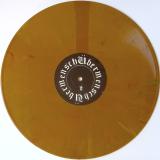
2025 will see the release of his first full length album since 2017 entitled Übermensch along with global tour dates. The album is expected to make a huge impact globally and further cement his place in music history!
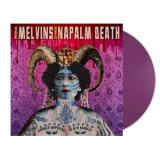
Nach zwei gemeinsamen Headliner-Tourneen in den letzten zehn Jahren setzen die Melvins ihre langjährige Tradition fort, mit einer anderen Band ein Album aufzunehmen. Als nächstes steht Napalm Death auf dem Programm. Es handelt sich hierbei nicht um eine Split-Veröffentlichung, bei der jede Band eine Seite für sich beansprucht. Savage Imperial Death March ist eine vollständige Zusammenarbeit, bei der Melvins und Napalm Death auf allen Tracks gemeinsam spielen. Diese Veröffentlichung erschien ursprünglich 2025 in streng limitierter Auflage auf CD und Vinyl über AmRep (nur auf Tour und im AmRep-Store). Es handelt sich um eine erweiterte Version mit zwei zusätzlichen Songs, brandneuem Artwork von Mackie Osborne, neuen Vinyl-Varianten und wird zum ersten Mal offiziell in Plattenläden, bei DSPs und anderen Händlern erhältlich sein. Napalm Death gelten als Pioniere des Grindcore-Genres, da sie Elemente des Crust Punk und Death Metal einfließen lassen. Selbst nachdem sie fast 40 Jahre lang einen unauslöschlichen Einfluss auf die gesamte Welt der Heavy-Musik ausgeübt haben, gibt es immer noch keine Band auf der Welt, die so klingt wie Napalm Death. Die Legenden aus Birmingham sind nicht nur Pioniere, sondern auch ein dauerhafter Maßstab für Erfindungsreichtum und Furchtlosigkeit in der Heavy- und Experimentalmusik aller Art und rasen immer noch mit voller Kraft voran. Die Melvins sind eine der einflussreichsten Bands der modernen Musik. Die 1983 gegründete Gruppe - bestehend aus Sänger/Gitarrist Buzz Osborne gegründet wurde und zu der ein Jahr später Schlagzeuger Dale Crover stieß, wird zugeschrieben, die Welten des Punkrock und der Heavy-Musik miteinander verschmolzen und ein ganz eigenes neues Subgenre geschaffen zu haben. Im Laufe ihrer über 40-jährigen Karriere haben sie mehr als 30 Originalalben, zahlreiche Live-Alben und unzählige Singles und Raritäten veröffentlicht.
L. Jacobs releases his second album, Behind the Great Curve, on the Belgian label Blickwinkel. Featuring contributions from Milan W., Sarah Yu Zeebroek, and Joachim Badenhorst, the follow-up to the surprising debut Enthusiasm was initially composed and recorded in Jacobs’ small attic room and later refined at Milan W.’s Van den Nest Studio, where W. also handled production and mixing.
A line or outline which gradually deviates from being straight for some or all of its length.
Behind the Great Curve explores and celebrates the beauty and universality of the abstract notion above and what we commonly refer to as the curve. Its presence, allegedly, is everywhere. It is a form that appears visually, mathematically, and symbolically — a line that suggests motion, time, expectation, and impermanence.
This album aims to listen to all of this — the poetry, the irony, and the faint background hum of modern life — with quiet curiosity. Within a gently meandering, synthesized landscape, a collection of dreamlike compositions unfolds: delicate melodies, sparse percussion, warm buzzing synths, and fragments of field recordings coexist in carefully measured imperfection. Colorful yet minimal in aesthetic, the album does not seek to explain the curve, but to follow it.
- 1: Ny Uap
- 2: High In The Underground
- 3: The Other Side
- 4: You Are The Jet
- 5: Loneliest Part
- 6: Tiger On Glass
- 7: Hanging On A Dream
- 8: Half Moon Pendant
- 9: Temporary Buzz
- 10: When The Light Has Gone
After two co-headlining tours over the past decade, (the) Melvins are continuing their long tradition with us of teaming up with another band on an album. Next up – Napalm Death! This isn’t just some split release with the bands each getting a side. Savage Imperial Death March is a full collaboration with both Melvins & Napalm Death playing together on all the tracks.
This release originally came out on super-limited CD and vinyl via AmRep in 2025 (tour and AmRep store only). This will be an extended version with 2 extra songs, brand new artwork from Mackie Osborne, new vinyl variants, and will be the official release for the first time at record stores, DSPs and more.
Napalm Death are credited as pioneers of the grindcore genre by incorporating elements of crust punk and death metal. Even after exerting an indelible influence on the entire world of heavy music for nearly 40 years, there is still no band on Earth that sounds like Napalm Death. Not just pioneers, but an enduring benchmark for invention and fearlessness in heavy and experimental music of all kinds, the Birmingham legends are still hurtling forward at full pelt.
The Melvins are one of modern music’s most influential bands. Having formed in 1983, the group — founded by vocalist/guitarist Buzz Osborne, with drummer Dale Crover joining a year later — has been credited with merging the worlds of punk rock and heavy music, forming a new subgenre all their own. Over their 40-plus-year career, they’ve released more than 30 original albums, numerous live records, and far too many to count singles and rarities.
As Nathan Fake rises from the nocturnal subterranea and rave catharsis of his previous records, on Evaporator, he resurfaces into the domain of daylight, bringing a tangible sense of air rushing against your face, of big skies, and endless landscapes.
The idea of pop accessibility that trickled into 2023’s Crystal Vision is refracted here through the prism of sweeping ambient, deep electronica, and trance uplift. Evaporator is Fake’s idea of “airy daytime music”, with each track a different barometer reading across the album’s varying atmospheres, which range from vibrant sunbursts, bracing rainscapes, and fine mists of clement melodics. “It’s not overtly confrontational electronic club music,” states Fake. “It’s quite pleasant, it’s accessible. As I was progressing through making the tracklist, I called it a daytime album. It doesn’t feel like an afterparty album.” For the past decade Fake has been gingerly introducing collaborations with heroes and friends alike into his lone, idiosyncratic working process.
Border Community alumni Dextro AKA Ewan Mackenzie transmutes his ferocious drumming for Pigs Pigs Pigs Pigs Pigs Pigs Pigs into the blurred choral thump of ‘Baltasound’. ‘Orbiting Meadows’, meanwhile, is his second collaboration with Clark, an eerily idyllic duet where microtonal 18EDO piano clangs slowly twirl around wailing pads. Evaporator marks the junction point of old technology and ever fresh creativity for Nathan. The trusty “dinosaur” age software, particularly Cubase VST5, that has powered two decades of music is rarely updated. “I used to sort of feel a bit ashamed of using such old software, and then I kind of had an epiphany – that’s just how I work”, comments Fake. “That’s just how I play. I’m very fond of these old tools, and I get the most joy out of them, but now I’ve incorporated new technology too.” When an artist accumulates so much synergy with their instrument, music making becomes instinctual. By Fake’s account, much of Evaporator just fell into place. The album title arrived randomly in his head (“it felt completely perfect. Airy.”), ideas looped and developed until things locked into place and just felt right. ‘The Ice House’ is a fleeting glimpse of the sonic world he taps into in this creative state, its glassy FM synths built around a counterpoint between rough-hewn crystalline arpeggios and sparse yet gravitas-bearing bass. “That riff I just wrote out on the keyboard, I just played it forever and ever and ever.
The original track ended up being really short. Here you go, and it’s gone!” These unplanned channellings of sound call forth records from Fake’s past while he looks ahead, perhaps getting at the very essence of his musicianship. The opener ‘Aiwa’ (“the breeziest,” he muses) reminds of the introspection that characterised Providence, excited by the fire and grit of Steam Days’ textural experiments, its chunky slams and clatters surging into a flood of harmonic buzzing as they reach out for old wisdom. ‘Hypercube’ stampedes in a similar chronological confluence, infusing an incessant synth line reminiscent of the golden age of rave with the crackling, ecstatic energy of modern festival anthems. Like the vaporisation of liquid to particles, everything that Evaporator presents has a mutant desire to be amorphous. Sounds rarely settle; the irradiated garage beat of ‘Bialystok’ is pitched downwards to driving, rebounding effect, while ‘You’ll Find a Way’ warps static into shivering energy, cinematic synth strings building anticipation into a gradual gush of chords. This translates into a more expansive stereo field than Fake has explored before.
‘Slow Yamaha’ saves the wildest, most kinetic transformations for last with a cornucopia of crispy melodies and fried drums; a sibilance of cymbals on the left, a susurrus of shakers on the right, and kaleidoscopic lasers pulsing and fizzing all around. Evaporation culminating in pure excited atoms.
"Invaders Must Die" is The Prodigy"s 5th album, and is 40 minutes of having your head battered by future nostalgia, serotonin levels twisted by feel-good horrorcore and your synapses snapped by whiplash attitude. It"s the sound of The Prodigy mixing up genres, contorting the past and rewiring the future, ram-raiding through the tranquility of music"s status quo like a blot on the landscape of England"s dreaming. The first thing you notice about "Invaders Must Die" is how complete it sounds, a consistent collection of bangers all firing from the same cannon. The next thing you notice about "Invaders Must Die" is just how melodic it is. Not just melody in the vocal sense but in the heyday-of-hardcore keyboard-hookline sense. Yes, if The Prodigy have learned anything from the hugely successful live shows it was that those old skool rave anthems still rock hard - and are every bit as iconic to their generation as punk was to the nation"s forty-somethings. So "Invaders Must Die" is awash with references to the free party generation, thundering along like the mother of all E-rushes, all hairs tingling, spine jumping and lips buzzing. But not a retroactive arms-in-the-air, water-sharing nostalgia trip, but a set fuelled by punk"s saliva-dripping rabid snarl. "Invaders" also features Dave Grohl drumming on "Run With The Wolves".
- M.i.a. ( 04:08 )
- Hold Back ( 04:41 )
- Watch It Burn ( 03:05 )
- Master Of A Plan ( 04:47 )
- Torn Again ( 05:31 )
- Can't Withstand ( 05:07 )
- Ruthless Coward ( 04:28 )
- Talking Through Walls - Part 1 ( 03:28 )
- Talking Through Walls - Part 2 ( 04:30 )
- Hope Is Burning ( 04:55 )
Both lyrically & musically, 'VOiD' reflects a disillusionment with a world increasingly defined by division, ideological rigidity & the loss of nuance. The album documents a conscious withdrawal from the noise - a retreat into a personal void. "Metal as well as Rock, from the head as well from the heart" - Classic Rock DE Much of 'VOiD' is driven by frustration with the binary nature of modern discourse, where context & intent are routinely discarded in favour of winning arguments. The record rejects that environment entirely, choosing introspection over confrontation & exploring Darran Charles' (lyricist & vocals) balancing of misanthropy with optimism & isolation with connection.
"Their blend of indie-rock & alternative metal has emotion & depth" - Buzz Magazine The writing process for 'VOiD' was exacting & often punishing, with songs repeatedly reworked in pursuit of emotional impact. Long- standing collaborators Tom Price & Gavin Bushell play a vital role throughout, while the introduction of new bassist Francis George - the band's first line-up change in twelve years - brings a subtle but important shift in the overall feel of the rhythm section.