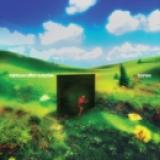
For our fourth release, we welcome Basel-based producer Ben Kaczor. ‘To Baby Bones’ showcases the tracks produced as part of Ben’s first live set presented at Above Below Festival in 2024.
Written as a homage to a loved one, the title track of the EP is a gentle soundscape traveling through memories and subtle body shivers, far away yet never out of heart’s reach. ‘Bridge’, as if hung high above, suffuses the air with a thick emotional haze, lifting slowly as a walk along a fragile structure ends. Wistfully transforming present into past, ‘This Blue Light’ melds with the orange glow of the sun and dissolves into a white cloud. Driving and fizzy ‘Punchbag’ brings all the dreamers down to earth. Immersing them straight into the buzzing front left, it buoyantly concludes an ode to the melody of life and the joy of a loving heart — To Baby Bones.
Suche:c bones
- 1: Friendly Fire
- 2: Hell Nah
- 3: Bones
- 4100: Summers
- 5: Murder
- 6: Dang
- 7: King
- 8: Stars
- 9: Texas Hold'em
- 10: Tropics
VOL. 2[16,77 €]
MOST SOUGHT AFTER & HARDEST TO FIND IN NYC TECHNO/HOUSE/GHETTO HISTORY.
We proudly welcome Frankie Bones to our label with a compilation of what is in my opinion one of the grails of the music for dancing in dark clubs and warehouse raves.
GHETTO TECHNICS is now compiled in 2 volumes for maximum dancefloor damage, remastered for the greatest impact but preserving all the essence and aesthetic, including & unreleased tunes from the time.
FOR TRUE DISC-JOCKEYS & COLLECTORS.
OFTENPLUSNEVERMINUS+8
H.
Within the nine carefully composed tracks of Young Bones, Mel D’s characteristic voice stands out in all its facets, varying from fragile to powerful, haunting to playful, but most of all soulful. With a voice that’s both extraordinarily clear and melancholic, Mel D is something surprisingly rare: a singer whose artistic expression goes beyond the mere use of her voice. On Young Bones, Mel D uses contemporary figures, rephrasing them into timeless formulas. Her unique musical language embodies references to genres like Indie or Alternative. In other moments, her sound leans baroque, then jazzy, soulful, and contemplative. Each song represents an ode to being connected: to the world, other people, and most of all to the beauty of music. Mel D draws her inspiration from struggles felt in the current world climate: “I have felt overwhelmed by the world we live in and its countless challenges,” said Mel D. “As if we’re all a bit directionless in our own lives.” Nevertheless, Mel D uses her musicality as a tool for resistance - using it to transform sadness and anger into creativity, and to give world-weariness a voice that seduces, comforts, and inspires. On Young Bones, Mel D sings us to a place where we might find hope - with songs rooted in concern, solidarity, humanness, and empowerment, inviting the listener to lean into those feelings. Bring the Witches Back, a hymn to witchcraft, is a quiet song that summons the return of witches with feminist urgency, for more love and magic to open ourselves towards each other and the world. Soft, a soulful song with a tender melody, gently lulls the listener into an in-between dimension, full of opportunities. Meanwhile, in the coming-of-age ballad, Slowly Growing, she raises questions about belonging and identity, pointing directly at our emotional core. Where Do You Look When It Hurts? speaks to the sensation of exhaustion and emptiness, offering musical warmth and a sense of community in moments of lethargy. Finally, listening to the album, one always feels in good company. Playfully working in folk and electro-pop elements, Mel D takes us on a ride toward love and a sense of belonging, particularly on the track We win. Young Bones was recorded in Zurich and Paris with two outstanding producers of our times: Renaud Letang, who has previously collaborated with Feist, Chilly Gonzales or Lianne La Havas, and Dino Brandão. The latter recognized Mel D’s artistic uniqueness during their first meeting, inviting her to a recording session in his studio and bringing her into the band of Swiss superstar, Faber. Mel D’s solo project was more a product of coincidence than planning, as she says, even though an undisputed talent and passion for music had always been apparent throughout her youth. During her studies in fine arts in Zurich, she founded the electronica-duo mischgewebe, and composed soundtracks for theater and movie productions, as well as for exhibitions. Long before forming her current artistic identity, she went by the nickname Mel D, in a humorous reference to the Spice Girls. Although her personality and musical language suggest thoughtfulness and a melancholy touch, Mel D acknowledges that an honest laugh is never out of place, making her sympathetic and approachable.
- One More Time
- See You There
- Might Take A While
- Depot
- Tried To Find It
- Fbi
- I Get By
- City Sun
- Western Metaphor
- Drop Out
Wenn es darum geht, seinem eigenen Meister zu folgen, haben die PSYCHIC ILLS aus New York das seit ihren Anfängen 2003 perfektioniert. In den frühen Jahren gab es einige Veröffentlichungen bei Social Registry, und die Band verbrachte seitdem viel Zeit auf der Straße und kollaborierte mit so unterschiedlichen Künstlern wie Gibby Haynes von den BUTTHOLE SURFERS und Sonic Boom (SPACEMEN 3 / SPECTRUM). 2011 machte sich ,Hazed Dream", die erste Platte für Sacred Bones, über verdrehte Synthesizer her und wurde zu einer Platte sonnenverbrannten Psych Pops voller warmer Töne und Blues Songwriting. 2012 erledigte die Band zwei komplette US-Touren inklusive eines Stops auf dem Austin Psych Fest und einen Trip nach China. PSYCHIC ILLS nahmen ,One Track Mind", ihr viertes komplettes Album, im Herbst 2012 auf. Das Album wartet mit Kollaboration und Produktion von Neil Michael Hagerty von ROYAL TRUX und THE HOWLING HEX auf. ,One Track Mind" ist das direkteste Rockalbum, das die PSYCHIC ILLS jemals aufgenommen haben.
Seit ihrem ersten Demo 2013 haben INSTITUTE, die ursprünglich aus Austin stammen, ihren rauen Anarcho-Punk zu etwas Weitgreifenderem und Nuancierterem geschliffen. Die ,Salt EP" aus dem Jahr 2014 stellte den Beginn der Zusammenarbeit der Band mit Sacred Bones dar und ergründete längere, experimentellere Songstrukturen. ,Catharsis", das Debütalbum der Band, war ein weiterer großer Schritt vorwärts - mit einer etwas klareren Produktion und einigen Krautrock-Einflüssen. Weiter und weiter schieben sie sich selbst aus jeglichem Genre, indem sie Hard Rock und Glam mit in ihr Spektrum aufnehmen und so das bisher abwechslungsreichste Material ihrer Karriere auf Subordination veröffentlichen.
- Spirit In Front Of Me
- Star Crawl
- Future Folklore
- Sticks And Stones
- Memory Room
- Worlds Gone Weird
- Darken The Door
- Electrons Rising
- Nature Noir
- Phases Forever
CRYSTAL STILTS haben zum ersten Mal mit ihrer selbstbetitelten EP 2005 und dem Nachfolger "Alight Of Night" aufhorchen lassen - ein kleines Vorbeben der Welle von fuzzigen, Hall-orientierten Bands, die ihnen auf dem Fuße folgen sollten. In den Jahren, die seitdem ins Land gezogen sind, hat sich die Band weiterentwickelt und 2011 das kräftige ,In Love With Oblivion" und die ,Radiant Door"-EP veröffentlicht. Gegründet von Sänger Brad Hargett und Gitarrist JB Townsend haben sich CRYSTAL STILTS mit Andy Adler am Bass, Keegan Cooke am Schlagzeug und dem Organisten Kyle Forester zu einer kompletten Band gemausert. Dementsprechend wurde das neueste Album der Band, ,Nature Noir", vom Quintett eingespielt. Aufgenommen im Frühjahr 2013 weiten CRYSTAL STILTS ihre Soundpalette aus und spielen mit Streichern, Percussion und Synthies. Auf Tracks wie ,Star Crawl" und ,Sticks And Stones" verfügt der Gesang von Hargett über eine brillante Klarheit und Gefühlstiefe, während die musikalischen Arrangements eine Gewandtheit bezeugen, die die überraschen wird, die CRYSTAL STILTS bisher in die Lo-Fi-Schublade gesteckt hatten.
- The World On Drugs
- Slow Death Sounds
- Bumpy Road
- God Trip
- Final Flight
- The Holy Ghost
- Control The Light
- Night Loner
DESTRUCTION UNIT sind eine amerikanische Band, die in der Wüste Arizonas zusammenkam. Gegründet von Ryan Rousseau waren D. UNIT ursprünglich ein synthielastiges Trio, dessen andere Mitglieder Jay Reatard und Alicja Trout (LOST SOUNDS) waren - ebenso war Rousseau ein Mitglieder der REATARDS, bevor Jay auf Solopfaden wanderte. Geboren im Dunstkreis der Memphis Goner Records Szene und verpflanzt nach Tempe, Arizona, hat Rousseau des Band zu einem kompletten Soundangriff geformt, für den drei Gitarristen (er selbst, Nick Nappa und Jesco Aurelius), sein Bruder Rusty am Bass und ein 19-jähriger, klassisch ausgebildeter Schlagzeuger, Andrew Flores, verantwortlich sind. DESTRUCTION UNIT haben auf dem bandeigenen Label Ascetic House bereits einige Kassetten, auf Jolly Dream eine LP namens ,Void" und kürzlich eine limitierte 7" auf Suicide Squeeze veröffentlicht. ,Deep Trip" ist ihr erstes echtes Studioalbum. Produziert von Ben Greenberg von THE MEN, HUBBLE & PYGMY SHREWS im Vacation Island Studio in New York. Morphium Boogie für den Noisesüchtigen des 21. Jahrhunderts. "Skull-crushing repetition, menacing walls of nuanced guitar noise, feedback magick wah'd from hell to the sky, a sprawling kraut backbone, evil melodies." - Pitchfork
VOL. 1[16,77 €]
MOST SOUGHT AFTER & HARDEST TO FIND IN NYC TECHNO/HOUSE/GHETTO HISTORY.
We proudly welcome Frankie Bones to our label with a compilation of what is in my opinion one of the grails of the music for dancing in dark clubs and warehouse raves.
GHETTO TECHNICS is now compiled in 2 volumes for maximum dancefloor damage, remastered for the greatest impact but preserving all the essence and aesthetic, including & unreleased tunes from the time.
FOR TRUE DISC-JOCKEYS & COLLECTORS.
OFTENPLUSNEVERMINUS+8
H.
Transparent Seaweed Green Vinyl[22,27 €]
Maggot Mass, the fifth full-length album by Pharmakon on Sacred Bones Records, marks the project's return after a five-year hiatus. This album signifies a departure from the original rules and structures established by Margaret Chardiet for Pharmakon, evolving into a new form. It retains the project's experimental roots in power electronics and noise while incorporating industrial and punk influences. The album stems from a profound disgust with humanity's dysfunctional relationship with the environment and other life forms. It explores the loneliness resulting from this broken bond and challenges us to acknowledge our personal and systemic responsibility. What peace can we make with privilege when the true cost of our comfort is not measured in dollars but in death? How can we reconcile with death when we impose the same hierarchical structures on it that we do in life? Is life worth living in the isolation of this self-imposed species loneliness? Humans often measure worth by accumulation _ money, assets, objects _ mistaking this for power and influence. Western heritage dictates a hierarchy, placing humans at the top, separate from the natural world. This delusion turns bodies into objects, land into property, and people into expendable tools. If our value were instead determined by our contribution to the ecosystem, who could claim that a human is more valuable than a maggot? Maggots recycle death into life, breaking down matter and nourishing new growth. They transform into flies, pollinating plants and sustaining the Earth's flora. In contrast, humans pollute rather than pollinate, with a select few profiting from exploitation at the expense of biodiversity and the well-being of many. In grappling with grief and loss on both personal and global scales, Margaret sought solace in the idea of rebirth through death, celebrating the beauty of regeneration through decay. However, she had to confront the stark reality of the disconnection from the earth under oppressive systems. Pharmakon is here imagining a path where the final act is to give back what was received from creation, offering our lives and deaths to sustain existence. once I slough off this human skin I will find my home and ancestral kin_ in the coffin-birth of my cadaver's ecosystem
“Rob wanted the world of The Northman to feel harsh and uncomfortable, and for everything to feel like it was caked in mud and dry blood, so it was crucial for the score to mirror that.” Composers Robin Carolan (Tri-Angle Records) and Sebastian Gainsborough (Vessel) were given a task of epic proportions when director Rob Eggers (The VVitch, The Lighthouse) asked them to create the score for his ambitious and highly anticipated new film The Northman, releasing on April 22nd. They needed to make a score that both honored the immense research that had gone into the authenticity of this Viking era period piece and complimented the cinematic maximalism of the film for a modern audience. The artists stretched themselves to the depths of their creativity and the resulting album is a gorgeous sonic tableaux that places the listener right in the center of the film.
While arranging the score the composers consulted musician and ethnographer Poul Høxbro for inspiration and insight into the history of Viking music. Having backgrounds in left field electronic music, Robin and Sebastian felt liberated by the constraint of using a small selection of musical tools for this piece. “Electronic music has almost limitless potential when it comes to making sounds and that’s obviously an incredible thing, but you can also go down the wormhole and get lost in it sometimes. There’s no risk of that happening when you only have a few primary instruments to draw upon.” Robin remarked.
They utilized traditional instruments such as the tagelharpa, langspil, kravik lyre, and säckpip to build the cinematic world of The Northman but they also took creative freedoms in adding instruments likes drums, which some academics believe wouldn’t have played a big part in Viking musical culture, simply due to the lack of archaeological evidence of actual drums. “One of the pieces we wrote was intended to emulate the sound of a bullroarer; an ancient instrument used in sacred rituals or in battle to intimidate enemies. It makes a really disorienting roaring vibrato sound and low frequencies capable of traveling insane distances.” Robin says when asked about one of the more unique aspects of the score. Everyone involved put so much effort into both their research and their creativity and this richness is evident in every track. The album as a whole is a cinematic masterpiece of sound and ambiance, both gorgeous and disturbing, like the film it so beautifully accompanies.
- High Noon
- Holy Hells
- Feel Life
- Cowgirl
- Katie Cruel
- Ways Of Losing Feat. Y La Bamba
- Dyed
- Drifting
- Is Anything Wrong
Ora Cogans ,Formless", veröffentlicht am 25. August 2023, ist ein Album, das Schönheit, Absurdität, Humor und unerwartete Freude in den düstersten Zeiten findet. ,Formless" entstand inmitten von Trauer und pandemiebedingter Isolation. ,Ich habe viel Zeit damit verbracht, mit meinem Hund ziellos durch den Wald zu streifen", sagte Cogan. Das Ergebnis ist eine Flut von Gedanken über ungeschickte Liebe, Schmerz, innere Kämpfe und den Kampf, Wege zu finden, sich gut zu fühlen, wenn alles schlecht läuft. Das Album wurde größtenteils in Live-Takes mit der Rhythmusgruppe David Proctor und Finn Smith auf Analogband im Risque Disque Studio auf Vancouver Island aufgenommen und von Cogan und David Parry von Loving co-produziert. Mit dabei sind internationale Gaststars wie Cormac Mac Diarmada von Lankum, der ,Feel Life" auf der Saitengitarre spielt, und Y La Bamba, die ,Ways of Losing" im Duett singt. Das Album ist thematisch sehr vielfältig: ,Katie Cruel" mit seinem ätherischen Gesang, einer schlurfenden Snare und einer sitarähnlichen Gitarre ist eine tragische Ballade über eine Sexarbeiterin, die mit Soldaten der leichten Infanterie unterwegs ist. ,Cowgirl" ist ein psychedelischer, langsamer Country-Jam, der sich mit sozialer Isolation in Trauer auseinandersetzt; und ,Feel Life" ist ein Track, der durch den Wahnsinn des alltäglichen Tumults und epische, lebensverändernde Verluste tanzt. Mit einer einzigartigen Stimme, die ebenso sensationell wie klangvoll ist, sucht Ora Cogan nach neuen Realitäten im Labyrinth aus Rauch und Spiegeln unserer grausamen Gesellschaft.
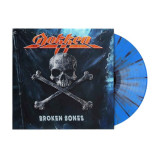
- 1: Empire
- 2: Broken Bones
- 3: Best Of Me
- 4: Blind
- 5: Waterfall
- 6: The Victim Of The Crime
- 7: Burning Tears
- 8: Today (Jefferson Airplane Cover)
- 9: For The Last Time
- 10: Fade Away
- 11: Tonight
LP-Neuauflage auf blau-schwarzem Splatter-Vinyl.
2012 kamen Dokken mit „Broken Bones”, ihrem elften Studioalbum, zurück. „Broken Bones” ist eine Rückkehr zum klassischen Sound ihrer Hochphase und folgt damit dem Weg, den sie schon auf dem letzten Release „Lightning Strikes Again” eingeschlagen haben.
„Broken Bones” rockt ordentlich, ohne dabei die samtenen Melodien außer Acht zu lassen. Genau darauf haben die Fans gewartet!
Repress!
In the mid-1970s, a force of nature swept across the continental United States, cutting across all strata of race and class, rooting in our minds, our homes, our culture. It wasn’t The Exorcist, Goodbye Yellow Brick Road, or even bell-bottoms, but instead a book called The Secret Life of Plants. The work of occultist/former OSS agent Peter Tompkins and former CIA agent/dowsing enthusiast Christopher Bird, the books shot up the bestseller charts and spread like kudzu across the landscape, becoming a phenomenon. Seemingly overnight, the indoor plant business was in full bloom and photosynthetic eukaryotes of every genus were hanging off walls, lording over bookshelves, and basking on sunny window ledges. The science behind Secret Life was specious: plants can hear our prayers, they’re lie detectors, they’re telepathic, able to predict natural disasters and receive signals from distant galaxies. But that didn’t stop millions from buying and nurturing their new plants.
Perhaps the craziest claim of the book was that plants also dug music. And whether you purchased a snake plant, asparagus fern, peace lily, or what have you from Mother Earth on Melrose Avenue in Los Angeles (or bought a Simmons mattress from Sears), you also took home Plantasia, an album recorded especially for them. Subtitled “warm earth music for plants…and the people that love them,” it was full of bucolic, charming, stoner-friendly, decidedly unscientific tunes enacted on the new-fangled device called the Moog. Plants date back from the dawn of time, but apparently they loved the Moog, never mind that the synthesizer had been on the market for just a few years. Most of all, the plants loved the ditties made by composer Mort Garson.
Few characters in early electronic music can be both fearless pioneers and cheesy trend-chasers, but Garson embraced both extremes, and has been unheralded as a result. When one writer rhetorically asked: “How was Garson’s music so ubiquitous while the man remained so under the radar?” the answer was simple. Well before Brian Eno did it, Garson was making discreet music, both the man and his music as inconspicuous as a Chlorophytumcomosum. Julliard-educated and active as a session player in the post-war era, Garson wrote lounge hits, scored plush arrangements for Doris Day, and garlanded weeping countrypolitan strings around Glen Campbell’s “By the Time I Get to Phoenix.” He could render the Beatles and Simon & Garfunkel alike into easy listening and also dreamed up his own ditties. “An idear” as Garson himself would drawl it out. “I live with it, I walk it, I sing it.”
But as his daughter Day Darmet recalls: “When my dad found the synthesizer, he realized he didn’t want to do pop music anymore.” Garson encountered Robert Moog and his new device at the Audio Engineering Society’s West Coast convention in 1967 and immediately began tinkering with the device. With the Moog, those idears could be transformed. “He constantly had a song he was humming,” Darmet says. “At the table he was constantly tapping.” Which is to say that Mort pulled his melodies out of thin air, just like any household plant would.
The Plantae kingdom grew to its height by 1976, from DC Comics’ mossy superhero Swamp Thing to Stevie Wonder’s own herbal meditation, Journey Through the Secret Life of Plants. Nefarious manifestations of human-plant interaction also abounded, be it the grotesque pods in Invasion of the Body Snatchers or the pothead paranoia of the US Government spraying Mexican marijuana fields with the herbicide paraquat (which led to the rise in homegrown pot by the 1980s). And then there’s the warm, leafy embrace of Plantasia itself.
“My mom had a lot of plants,” Darmet says. “She didn’t believe in organized religion, she believed the earth was the best thing in the whole world. Whatever created us was incredible.” And she also knew when her husband had a good song, shouting from another room when she heard him humming a good idear. Novel as it might seem, Plantasia is simply full of good tunes.
Garson may have given the album away to new plant and bed owners, but a decade later a new generation could hear his music in another surreptitious way. Millions of kids bought The Legend of Zelda for their Nintendo Entertainment System back in 1986 and one distinct 8-bit tune bears more than a passing resemblance to album highlight “Concerto for Philodendron and Pothos.” Garson was never properly credited for it, but he nevertheless subliminally slipped into a new generations’ head, helping kids and plants alike grow.
Hearing Plantasia in the 21st century, it seems less an ode to our photosynthesizing friends by Garson and more an homage to his wife, the one with the green thumb that made everything flower around him. “My dad would be totally pleased to know that people are really interested in this music that had no popularity at the time,” Darmet says of Plantasia’snew renaissance. “He would be fascinated by the fact that people are finally understanding and appreciating this part of his musical career that he got no admiration for back then.” Garson seems to be everywhere again, even if he’s not really noticed, just like a houseplant.