Free Love, the artists formerly known as Happy Meals return to Optimo Music with ‘Extreme Dance Anthems’ a phantasmic mini album from their hearts to yours.
They say – “We recorded EXTREME DANCE ANTHEMS in our recently moved studio, ‘Full Ashram Celestial Garden’ which is now situated in a building that holds both a church below us and a sex club next door. Most of the tracks were formed from late-night sessions that we started to kind of ritualistically hold inspired from a particular thought or idea that we later cut down and did a live mixdown of. The music is about physicality and the metaphysical – it is about a recontextualisation of the ineffable as a centre point of existence which in turn influences how we engage with everything around us. A celebration of the unquantifiable, unspeakable, indivisible EXPERIENCE as the throne from which all ideas are derived. Even though the world is fucked- we are here.
On the face of it – I realise that this description might just seem like apolitical hippy bullshit but fuck that – as a deliberate result of the modern political landscape, our societies’ individual and collective disengagement with the metaphysical has led us to treat other humans, animals and our environment like resourceful statistics rather than something that actually holds any inherent value. An Inner Revolution of the foundations of our reality in a way that reintroduces the essence of existence, and not merely its describable derivatives, into the conversation of how we should live our lives INFORMS our perception of the world in a way that demands us to ACT. The record is about a kind of gradual awakening between the two of us – a reconnection with the magic around us.
The ineffable is not without moments of illumination- mostly in the form of immediate absurdity: ONE DAY WE WILL ALL BE DEAD BUT HERE WE ARE ALIVE INSTEAD.
The record is called EXTREME DANCE ANTHEMS because it made us both laugh”.
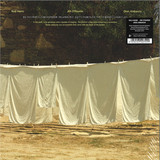
Cerca:c bones
Keiji Haino,Jim O'rourke,Oren Ambarchi
In the past only geniuses were capable of staging the perfect...
- A1: In The Past Only Geniuses Were Capable Of Staging The Perfect Crime (Also Known As A Revolution) Today Anybody Can Accomplish Their Aims With The Push Of The Button Part 1
- B1: Decorously Decorously Decorously Decorously Decorously Decorously Decorously Decorously Decorously Decorously To Make Something Beautiful And Then To Smash It Decorously
- C1: Head-On Collision If It Still Has Bones It Shall Move Forward (Which Is Different To Progress)
- D1: In The Past Only Geniuses Were Capable Of Staging The Perfect Crime (Also Known As A Revolution) Today Anybody Can Accomplish Their Aims With The Push Of The Button Part 2
For its 50th release, Black Truffle presents the 9th album from one of the label’s core ensembles, the power trio of Keiji Haino, Jim O’Rourke and Oren Ambarchi. Drawn from a November 2015 performance at Tokyo’s now-defunct SuperDeluxe, the record’s opening piece drops us immediately into the maelstrom, abruptly cutting into an extended episode of Ambarchi’s pummelling drums, O’Rourke’s fuzzed-out 6 string bass and Haino’s roaring guitar and electronics. Eventually settling into a hypnotic bass and drum groove over which Haino unleashes some almost Ray Russell-eque skittering atonal screech, these opening 13 minutes act as a potent reminder of the trio’s power. Alongside showcasing the steady development of a unique language for the guitar-bass-drums power trio, the group’s succession of releases over the last decade has demonstrated a constant experimentation with new instruments, which continues here with O’Rourke use of Hammond organ (played at the same time as his roaming, sometimes knotty basslines). On the album’s second piece, the organ plays a key role, furnishing a harmonically rich shimmer over O’Rourke’s angular 6 string bass chords, Haino’s distant, chirping electronics and Ambarchi’s crisp cymbal work; arriving somewhere halfway between Albert Marcoeur and Terje Rypdal, this piece is undoubtedly a highlight in the trio’s catalogue so far. Sides two and three are given over to slow-burning, multi-part epics that range from spacious reflection to furious tumult. Where the trio’s previous 2LP set (This Dazzling, Genuine “Difference” Now Where Shall It Go?, 2017) was primarily instrumental in focus, here we find Haino’s voice taking the spotlight on the expansive third side, intoning, wailing and exhorting in Japanese and English over a backdrop that moves from hushed bass and organ atmospherics to rolling toms and cymbal crashes before arriving at an ecstatic finale of searing guitar, tumbling drums and reverb-saturated bass. The fourth side returns to the hypnotic grooves of the opening piece, fixing on an relentless riff and riding it into oblivion under Haino’s roaming psychedelic soloing and jagged chordal slashes.
The second full-length LP from Jungle Brown, ‘Full Circle’, drops on Mr Bongo in September 2019. Featuring collaborations with Sampa The Great, Fliptrix (High Focus) and Terri Walker amongst other super-talents.
The trio – Ric Flo, MAEAR & Tony Bones – have spent the last two years redefining soulful hip-hop – the sound is bigger, more thought-provoking, and it has matured with a rich soulful underpinning. They have also entered territories fans are yet to hear from them as they glide effortlessly over Tony Bones’ productions that introduce trap and house into their repertoire. The
project is an eclectic array of their influences, twisted and blended together to create a ground-breaking release for UK music.
Jungle Brown’s debut album ‘Flight 314’ has achieved more than a million streams without any budget for marketing or promotion. They spent much of 2016 in Apple Music’s ‘Best of 2016 category, featuring on Spotify and SB.TV, were requested to curate an exclusive playlist for Tidal and attracted attention from New York with Beats 1’s very own, Ebro.
They’ve shared the stage with the likes of De La Soul, Ghostface Killah, Lowkey, Akala and Donaeo, played major festivals including Glastonbury, Boomtown and Lovebox as well as a huge number of clubs shows across the UK.
The infamous Kiwi returns to Needwant with his second EP on the London label (home to the likes of The Revenge, Ejeca, Maxxi Soundsystem and many more) On this cut Kiwi does what he does best by incorporating emotion and grit into dance music. The EP features 3 mixes of ‘Kiya’ as well as a remix from underground hero Brian Ring.
The record opens with the original version of ‘Kiya' which features warm bass tones, spaced out synth lines, shuffling percussion and a tribal-esq vocal. The Rave mix gives ‘Kiya’ dance floor authority, introducing driving acid synth lines and a weightier low end. On the B side Kiwi delivers a deconstructed ‘Dreamscape’ mix stripping ‘Kiya' back to it’s beautiful bare bones.
‘Kiya’ will be another addition to Kiwi’s already impressive physical discography which includes releases on imprints such as Disco Halal, Future Boogie & 17 Steps. His unique approach to remixing and producing over the years has meant that he has seen a wealth of support from names such as Andrew Weatherall, DJ Harvey, Gerd Janson, Daniel Avery, Erol Alkan, Optimo, Annie Mac and Skream.
The Ryote EP is the aptly titled debut from Ryote, featuring 5 tracks of raw, leftfield house and techno inspired by grimy basements and late
night mischeif. Ryote also has releases with Minneapolis labels Always Human Tapes and Abstrakt Xpressions. The co-founder of Kajunga and co-owner of Detroit-based Clave House stays active in the Midwest circuit, performing regularly at a varity of events and festivals such as: Even Furthur, Sacred Earth, SYSTEM, Communion and Elixir.
Black Truffle is pleased to announce the release of this genuine head-scratcher, the first collaboration between DJ/mixtape-compiler Kayo Makino and underground legend Tori Kudo. Originally created to be played between acts at the launch of Eiko Ishibashi’s acclaimed The Dreams My Bones Dream and then reworked and refined for LP release, the two side-long pieces are sonic environments constructed by Makino for Kudo’s piano to inhabit, or, as the LP’s credits suggest, a cinéma pour l’oreille in which Kudo’s piano plays the starring role. Beginning with a soothing field recording of crickets dramatically punctuated by smashing glass, the first side finds Kudo playing his way repeatedly through one of Satie’s 1897 Pièces froides. Best known to many listeners for his role as leader of the ecstatically shambolic rock unit Maher Shalal Hash Baz, Kudo’s performance of Satie’s whimsical yet haunting melody is alternately halting and fluid, delighting in the hesitations of unstudied technique and the subtle variations between repeated attempts. While the combination of Kudo’s piano and the background of crickets initially suggests a documentary approach to recording – as if the we are simply hearing incidental sounds creeping through an open window – things take an unexpected turn a few minutes in when Kudo’s piano is suddenly doubled. Layering two separate attempts at the same piece of top of each other, Makino’s unorthodox mixing blurs Satie’s original into a fog of stumbling echoes that becomes increasingly dreamlike as the chirping crickets are overtaken by pattering rain, German dialogue and traffic sounds. The second side begins in a similarly inscrutable vein, with snatches of birds and film music providing a gentle backdrop for Kudo’s improvisational variations on a chord progression that, as his performance builds over its twenty-minute duration, somehow begins to suggest the sadly swaggering grandeur of Mick Taylor-era Rolling Stones. Makino accompanies and eventually overwhelms Kudo’s piano with a bizarre layer of digitally processed voice and drums, stretched out into a disorienting haze before suddenly retreating to leave Kudo’s piano accompanied only by a barking dog. Seemingly unrelated to anything else being produced in the world of contemporary music, this is a striking collaboration between two unique musical personalities that bridges the mundane and the surreal, opening up a dream-space both haunted and hospitable.
The Brussels-based trio of Virginia Genta, David Vanzan and Ernesto González (Bear Bones, Lay Low) have been playing as Yader for some years already. Bagigi Dub and WW Dub sees them run two tracks from their 8 track tape through effects for more spaced-out versions of their sound, under the name Jahder. This 7", also with cover design by Virginia, features two cuts of prime dubbed-out drum machines, loping bass lines and widescreen delays for expansive listening.
Aleqs Notal's introduction to the Sistrum family, 2017's Ascending Nodes, offered a taste of his capacity for jazzy undertones and rhythmically complex percussion. His return to the label, the LYU EP, takes his propensity for drums a step further. Heavy hand percussion drives the release across all three cuts, with a fourth mix that's stripped down to just its bare bones parts.
As a visual artist and ambient composer, Tor Lundvall's work often recontextualizes the familiarity of everyday life through abstraction and space. Starting with the snapshot of a moment, Lundvall extracts its underlying complexity of the seemingly mundane and gives sleeping suggestion a presence and purpose. Mainly working sans vocals, Lundvall returned to voice exploration for 2018's A Dark Place, a somber, dark synth album that merged his mastery of textural ambience with traditional pop structures.
Rescued from old DAT tapes A Strangeness In Motion: Early Pop Recordings 1989-1999 are some of Lundvall's earliest completed synth pop works which have remained unreleased until now.
Though Lundvall's work throughout the collection has the recognizable ambient bones and sensibilities he has refined throughout his career, many of the tracks call back to the synth-driven pop of Orchestral Manoeuvres In The Dark, The Human League and New Order, with the common thread being the sparse density and mood created by reservation and the lonely impulse to twist convention, not to rip it up and repurpose it. Rather than 10 disparate ideas, Lundvall's curation of A Strangeness In Motion: Early Pop Recordings 1989-1999 feels like excerpts from a broader work, allowing the listener to fill in the holes and ladder up to his larger themes and concepts, perhaps coloring his prior works in new hues and tones.
'For years I dismissed these songs as naive and youthful relics, but I've grown much fonder of them in recent years along with the memories they evoke,' he says of the decade spanning collection of tracks, many of which were sketched out in his duo with Drew Sullivan, After The Outing. 'Original One', 'Procession Day', 'The Clearing', and 'The Melting Hour' are present here as solo reworkings, originally culled from his sessions with Sullivan. The remaining songs were ideas originally considered for Passing Through Alone (1997) and its proposed follow up, provisionally and playfully titled Femalamania.
'The title was summing up my girl problems at the time and also a silly word spin on Robyn Hitchcock's Fegmania!' he says. 'Sadly, the project was abandoned—a rare decision for me and perhaps the only time I've scrapped an album entirely.'
* Welcome to the DUB SOUND from Jamaica. The vocal records cut back to the bones of bass & drums, with the instruments and vocals faded in and out sometimes with echo and reverb to make a great new VERSION!!. Although remembered as an early 70's phenomenom, the dubbed sound can be dated back as early as 1968. But by the mid- seveties it became the norm for records to carry a Version (dub) b-side and in fact many records were brought for this reason especially if they were known to come from the hands of the dub master himself King Tubby. So sit back and enjoy this dub excursion, many from the hands of King Tubby but all classics in their own right.
1 Why Fight The Dub
2 Conversation Dub
3 A Better Version
4 General Dub
5 The Jehovah Version
6 Care Free Dub
7 A Wicked Dub
8 A Truthful Dub
9 Rocking Dub
10 Step Inna Dub Style
11 A Good Version
12 My Brethren In Dub
13 Rub This Dub
14 Creation of Dub
15 Invasion Dub*
16 A Lonely Dub*
*CDBonus Tracks
- A1: Sembe
- A2: Anaata
- B1: Sembe (Dub)
Finnish electro-tropical ensemble Maajo is delivering a new Queen Nanny EP with Ismaila Sané from Senegal. Currently based in Finland, Sané started his career as a dancer and percussionist in Dakar in 1974. He has since pursued an extensive international career and worked with the likes of Jimi Tenor and Piirpauke. Ismaila and Maajo have produced two powerful songs in Jola language, spoken in Casamance, Southern Senegal. Sèmbè is an off-beat mix of disco reggae grooves, dancehall rhythms, trancey synths, and African gospel. The dub version on the flipside does what a dub is supposed to do, strips the track to its bones for bass-heavy sound system. The second track, Anaata, is a dark and mellow dub disco groover with an equally sublime vocal performance from Ismaila Sané.
Limited to 500 on gold vinyl WW!! Over two decades later, KRS One's debut solo album Return of the Boom Bap finally gets the reissue it deserves. Pressed for the first time on gold vinyl, this double LP not only includes a bonus 7' of Kenny Parker remixes, but also features the first-ever colour sleeve on a U.S. pressing. Stripping away the intricate production of the final Boogie Down Productions album, Sex and Violence, Return of the Boom Bap saw the already iconoclastic rapper return to the bare bones, gritty territory of his landmark masterpiece Criminal Minded. KRS-One's delivery, burned with a reinvigorated fury, spits out his rhymes with pummeling cadences and world-wise intelligence. Although the record isn't as focused on social activism and political protest as the latter Boogie Down albums, KRS-One never made his lyrics simplistic, nor did he turn his back on what could now be called prescient social commentary. The combination of raw beats and emotion-driven rhymes made Return of the Boom Bap a genuine comeback for KRS-One, one of the founding figures of modern hip-hop.
Corey Fuller Is One Half Of The Duo Illuha On 12k And Break Is His Frst Solo Recording For 12k. A Crashing Wave, The Breaking Dawn, An Impact, The Crushing Of Emotional Spirit... The Breaking Of A Storm. These Are All Relevant Ideas Behind His Choice Of A Title For This Highly Emotional Abum. Fuller Has Addressed The Universality Of Human Struggle Without Going Into Specifcs Of His Own Personal Waves. The Ideas That We As Humans All Share Many Of The Same Diffculties Is Both A Launching Point And A Message He Wishes To Share With Break — The Catharsis.
While Illuha's Music Is Known For Its Attention To Small Sounds And Light Textures, Break, While Equally As Fragile, Sees Fuller Working With Much Heavier Elements. Still Highly Melodic, The Work Pulls And Churns Between Harmony And Tension, Weight And Air, The Crash Of A Wave, The Pull Of The Undertoe. The Album Is Focused Intensely On Melody And Harmony, Progressions More Carefully Composed Than The Serendipitous Found Sound Of His Work With Illuha.
The Piano Is Often At The Center Of These Songs, An Instrument (his Own) That Has Become Much An Extension Of His Own Body. His Own Voice Plays An Important Role As Well, Sometimes Lyrically Ethereal And Sometimes Just A Breath Signifying The Ever-fragile Thread Of Life. Beautifully Recorded
In His Tokyo Studio, The Sounds Are Captured With All Of Their Inherent Physical Faws. As Fuller Himself States About The Piano Being recorded In A Way That You Can Hear The Bones, Like An Open Ribcage, Moving Contorting...' Everything On Break Is There For A Reason, Not Just The Sound And Soul Of The Piano But The Electronic Elements As Well, Rattling Bass Tones And Dramatic, Emotional Waves Of Synthesizer Rising And Dissolving.
If A Single Word Can Be Used To Describe Break It Is Physical. From The Instruments And Techniques Used To Produce The Album To The Concepts Of Vulnerability Of The Human Body. Break Is An Emotional Riptide Where Violence And Rest Struggle To Be The Last Voice.
i) Adrift
ii) Asunder
iii) Aground
Led By Nigel Ayers And Caroline K, The Band Was One Of The First To Use Tape Cutting, Avant-garde Art, And Underground Video Works To Create A Stage Experience That Was Being Cultivated By Like-minded Artists Like Throbbing Gristle, Spk And Cabaret Voltaire.
Originally Self Released In 1988 On Earthly Delights, Spiritflesh' Is A Masterpiece And A Major Reference For The Early Drone/dark Ambient Minds.
By The Time The Album Came Out, Nocturnal Emissions Had Already Produced Several Albums Of Electronic Music Which Varied From Noisy To Funky. Displaying His Usual Perversity, Nigel Chose To Ditch Electronic Dance Music Immediately Before The Acid House Revolution And Produce A Series Of Utterly Compelling Atmospheric Albums Which Are Often Referred To These Days As Being 'ambient Industrial'.
"spiritflesh" Was The First Offering By The New Shape Of Nocturnal Emissions. The Record 'came Out Of A Long, Hard Thinking, A Personal Examination Of My Own Motives For Working Within Music.' Nigel Ayers Played Church Harmonium, Chime And Music Box On The Record, And Used Samples Of Chimpanzees, Cattle, And African And European Wild Birds. While Generally Ambient, The Music Is Not Like Brian Eno's Work; It Is Atmospheric, But Impossible To Relegate To The Background.
'there's Always A Dangerous Intrusion Of The Real World Into Our Music,' Ayers Said. 'we're Looking Into The Relationship Between People And The Environment, The Kind Of Feedback Which Happens Between People And Locations. Underneath It All, This Planet Has Got Its Own Message.'
Known for a broad swath of genre-obliterating club tracks on crucial labels including Critical, Exit, and 50Weapons, Sam Binga approached us earlier this year with a radically different kind of project, a collaboration with Welfare, true junglist and label boss at D&B bastion Rua Sound. The result of their team-up is Conamara Fieldworks. Its unique inspiration and patient process are best described by the duo themselves:
"In early November 2016, we set off through the bleakness of an Irish November into the wilderness that is Conamara, County Galway, Ireland, with about half an idea of what we wanted to do. Our friend Laney had been kind enough to allow us the use of a 300 year old cottage overlooking the sea, itself belonging to her family through generations which she was bit by bit restoring to its former glory. The isolation was perfect - very little in the way of creature comforts, no network coverage, but plenty of turf for the stove and Guinness for the belly.
Our routine for the next few days consisted of trudging the length of the rugged coastline in search of interesting sounds we could potentially process into usable elements for some kind of dub/dub techno-inspired composition...This took us inside tidal caves and abandoned ruins, across sheep fields, up and down mountains and winding country lanes, in and out of the odd pub, under upturned boats and (carefully) across huge washes of seaweed-covered shoreline. Using our handheld recorder (shouts Danny Scrilla for the lend) we assembled a palette of varied noises, constantly battling with the peaking and distortion created by the incessant Atlantic gusts.
Each evening, following some intense huddling around the stove and vital Irish home cuisine and stout, we'd examine and dissect what we had collected that day, sometimes discovering the most interesting material firmly planted in the background of the soundscapes. A certain amount of (but not too much) processing later we had the bones of a few short loops of each sound which made some kind of musical sense when played alongside each other.
Binga suggested staying true to the craft and keeping the rawness to the foreground by attempting to develop the loops into full compositions via live desk mixing, arrangement and effects. We said our goodbyes to Conamara and a month or two later said our hellos to the Dubkasm shedio. Following a crash course from the dynamic duo, we set to work for the day, learning as we went along and enjoying to the full the unpredictability, intuition and sheer vibes a dubbing session can bring, particularly in a studio kitted out with some fine analogue gear which undoubtedly helped us to keep that damp, saturated feeling that Conamara had sown."
The resulting collection of music speaks for itself, and does so in its own language. It is meditative, deeply textural, and richly saturated, with awesome sound design, generous bass weight, and dubwise finesse. Referencing ambient, concrete, and dub techno while never letting any genre dictate its path, Conamara Fieldworks is a deeply rewarding and intensely involving listen. A restrained yet transporting remix from the one Ossia completes the set.
The name Hugo Mari might not ring a bell just yet, but we've got a feeling this is about to change real soon. He's released a handful of EP's under his former alias Books on Omena and XVI including his own edit series on the latter label (check out his killer track 'in the groove or his jazzy deep house collaboration with Zodiac called 'Feel it in my Bones'). Considering he's also remixed well known artists like afrobeat legend Dele Sosimi and grime master Trim, you might share our view of this amazingly talented and versatile producer. His 'Change ur ways' EP for Heist is soulful, jazzy, deep and energetic with three varied originals and a classic soulful house remix by man of the moment, NDATL label head Kai Alcé.
'Get Loose' features the silky-smooth vocals of Zodiac, some lovely solo work on the Rhodes and a 'free jazz' vibe on the horns. There's a constant funk bassline looping throughout the track to keep the energy going while the loose arrangement as well as the drum programming give the track that care-free feeling of a never-ending live jam. With that, 'Get Loose' is a great club track that crosses the boundaries between funk, jazz and house.
The title track still has that jazzy feeling but moves towards a quirkier territory with some 'Frits Wentink' style harmonization, detuned piano's and loosely chopped samples. There's a definite gospel feel to the track, thanks to the choice in vocal chops, which is complemented perfectly by a filtered disco bassline. The percussion layer and rhythmic elements are full of energy without ever crossing the line where of subtlety that makes this track so catchy.
On the flip, there's 'Feel ur senses', the most straightforward deep house track of the release, that gets its mood from an ongoing tremolo on the Rhodes pads. Space bleeps, bells, a hidden arp and 'reverbed-out' hits give the track an almost balaeric sound that will certainly put a smile on your face.
The B side is complemented with a vocal and instrumental remix of 'Get Loose' by Kai Alcé, who has been throwing out one killer tune after the other, remixing Volcov's Isoul8 project (one of our favorites of the year), as well as kicking out releases on his own NDATL label. Kai goes for a full-on soulful house vibe, giving his own chord progression center stage along with a set of rimshots. He chooses to leave the horns out, and instead work the vocal, Rhodes, and cowbells from the original to great effect, adding a little solo work of his own on a bell-like piano where he freestyles happily throughout the track and copies the vocal for added harmonies.
The instrumental version is perfect for those moments where you're done with all the vocals and just want a tight soulful groove.
We couldn't be happier with this release so play it loud and get loose!
Yours Sincerely,
Maarten & Lars
Upon examining the eventful life of Can bassist Holger Czukay, one might conclude that this intrepid musician was a loner. His turbulent career exuded an enduring eccentricity governed by a boundless free spirit. Yet Czukay,
who passed away unexpectedly last year at the age of 79, constantly emphasized that his creativity was always contingent upon a musical partner, whether that was a skin-and-bones counterpart or an anonymous manifestation that interacted with him through radio waves or, as happened later, the internet. Nonetheless, most of his partners were of flesh and
blood.
His oeuvre, which is in itself cinematic in nature, boasts a cast worthy of a Martin Scorsese film. Only the most interesting character actors were cast:
Brian Eno, Phew, Rolf Dammers, David Sylvian, Annie Lennox, Jah Wobble, his Can bandmates... the list could go on and on.
Many of these masterpieces are now out of print, so Groenland Records, who already released the highly acclaimed retrospective 'CINEMA' to mark the occasion of Holger's 80th birthday at the beginning of the year, has taken it upon themselves to release reissues of Holger's music in order to make it accessible once again.
Upon examining the eventful life of Can bassist Holger Czukay, one might
conclude that this intrepid musician was a loner. His turbulent career exuded
an enduring eccentricity governed by a boundless free spirit. Yet Czukay,
who passed away unexpectedly last year at the age of 79, constantly
emphasized that his creativity was always contingent upon a musical
partner, whether that was a skin-and-bones counterpart or an anonymous
manifestation that interacted with him through radio waves or, as happened
ater, the internet. Nonetheless, most of his partners were of flesh and
blood.
His oeuvre, which is in itself cinematic in nature, boasts a cast worthy of a
Martin Scorsese film. Only the most interesting character actors were cast:
Brian Eno, Phew, Rolf Dammers, David Sylvian, Annie Lennox, Jah Wobble,
his Can bandmates... the list could go on and on.
Many of these masterpieces are now out of print, so Groenland Records,
who already released the highly acclaimed retrospective 'CINEMA' to mark
he occasion of Holger's 80th birthday at the beginning of the year, has
aken it upon themselves to release reissues of Holger's music in order to
make it accessible once again.
Upon examining the eventful life of Can bassist Holger Czukay, one might
conclude that this intrepid musician was a loner. His turbulent career exuded
an enduring eccentricity governed by a boundless free spirit. Yet Czukay,
who passed away unexpectedly last year at the age of 79, constantly
emphasized that his creativity was always contingent upon a musical
partner, whether that was a skin-and-bones counterpart or an anonymous
manifestation that interacted with him through radio waves or, as happened
later, the internet. Nonetheless, most of his partners were of flesh and
blood.
His oeuvre, which is in itself cinematic in nature, boasts a cast worthy of a
Martin Scorsese film. Only the most interesting character actors were cast:
Brian Eno, Phew, Rolf Dammers, David Sylvian, Annie Lennox, Jah Wobble,
his Can bandmates... the list could go on and on.
Many of these masterpieces are now out of print, so Groenland Records,
who already released the highly acclaimed retrospective 'CINEMA' to mark
the occasion of Holger's 80th birthday at the beginning of the year, has
taken it upon themselves to release reissues of Holger's music in order to
make it accessible once again.


