Tradition and experimentation are two familiar
territories that C'mon Tigre, a duo who find
their identity by working with musicians from
all over the world, can balance between very
well. As they did for their debut album (2014),
they have put together a multicolored collective
for their second record 'Racines', out on
February 15, 2019 for BDC/K7.
The title is a French word that means "roots",
referring to the musical roots in which C'mon
Tigre's feet, head and heart are immersed, and
from which their contaminated tracks sprout to
create unusual and original sound environments. In their new album the sounds of the
Mediterranean - the sea of their land -
intersect, intertwine and overlap with a
kaleidoscope of other sounds and a new
approach based - they explain - "on the type of
work we had done when we rearranged the first
album for live shows, by emphasizing the
synthetic part of our tracks". This time around
they did it from the very beginning: "The
composition of the pieces immediately included
the use of machines and synthesizers as a
basis for acoustic instruments. The goal was to
reprocess the terrain of Mediterranean
influences that was undoubtedly our starting
point".
Imagine a work in progress where bass and
guitars interact with woodwind, synths, percussions, vibraphones, dipping the listener into a
sensual and hypnotic musical journey. Sailing
from the Mediterranean basin and being guided
by the fascination for Africa and the Middle
East, C'mon Tigre give rise to a personal
language, made up of mixtures with jazz,
afrojazz, the rhythmics of hip hop, funk, 70s
disco. All without ever confining their songs to
one style, but pushing the exploration as much
as possible, into a dimension that every journey
worthy of this name should encompass. "With
the musicians we work with the exchange and
experimentation continue till the end, the
songs can take different directions at any time'.
The result is a mixed, cosmopolitan record,
which escapes from any label for the affirmation of a free attitude. The attitude that led
C'mon Tigre to seek a connection with dancefloor culture, even if considered only as an
evocation to revisit in an absolutely personal
way
Search:c da afro
The Daktaris is a well-disciplined army of two hundred African Bull Elephants marching relentlessly up your business to the beat from Funky Drummer. Or so began the liner notes on the original pressing of this album.
Truth is often stranger than fiction. In 1998 Desco Records—a precursor to Daptone and Soul Fire records—released The Daktaris' Soul Explosion, ostensibly as a reissue of an unearthed Nigerian LP from the seventies. Though it's now common knowledge that the story was a bit of a hoax, the record's significance as a seminal part of the Afrobeat and afro-funk renaissance of the last two decades cannot be denied. The roots of the Budos Band, Antibalas, and uncountable others can be traced back to this enigmatic afro-funk release.
Now, two decades later, Daptone has remastered the album from the original tapes, including a bonus track that had previously only been available on a 45, and featuring extensive all new liner notes by Bosco Mann telling the bizarre true story behind the Daktaris sessions.
KEY MARKETING POINTS:
- FULLY REMASTERED, including new bonus track, 'In the Middle.'
- Extensive new liner notes by BOSCO MANN explaining the real story behind The Daktaris.
- Features members of The DAP-KINGS and ANTIBALAS.
- Features JOJO KUO (drummer for FELA KUTI) on vox and percussion.
- Originally released on DESCO RECORDS in the 1998, has been out of print for years.
- The spirit of the late, great Fela Kuti runs through The Daktaris' Soul Explosion. - Jazz Times
" 'Workaholic Paranoid Bitch' is taken from Marie Davidson's most recent album Working Class Woman released on Ninja Tune in October 2018. Russian DJ and producer Nina Kraviz delivers two different versions of her remix including a dub mix. Day Dreaming' also features on Working Class Woman and has been remixed by Russian/British/Ghanaian producer Afrodeutsche also delivering a beat free remix."
Official, remastered reissue of this disco tinged, afro funk treasure and the first time the 'Karam Bani' single has been cut to 12' - maximising every ounce of highlife soul from Sidiku Buari's productions.
That undeniable US funk flavour coupled with Buari's Ghanaian rhythms bring a zest to these grooves even the tangiest of forbidden fruits couldn't draw out. Those fuzzed keys and dusty highlife guitar licks sprinkle the West African flavour, whilst drumming demi-god Bernard Purdie provides the wizardry behind the infectious, yet precision like beats that make the track so unique. Purdie's killer breaks combined with Buari's jubilant vocals give a spirituality to this cut that'll liven up any dancefloor - alongside being a gold mine for samples.
Flip it over and you're hit with the joy filled jam, 'Ye Koaba'. Tribal drums lead the way for a chorus of jubilant chants supplemented by glistening synth sounds and funk fuelled guitar riffs. It's a feel-good slice of Ghanaian sunshine, capturing that community spirit and good-hearted nature Ghana's famous for.
Two afro funk sensations sure to put a smile on your face, even when the skies are grey and you're 5000 miles away from the glorious West African coastline.
Rich, Deep, Percussive Soulful Folk Album From Master Togolese Singer, Akofa Akoussah.
The Album Moves Through Uptempo Afro-folk-funk On 'tango' To Deep Ballads Of 'ramer Sans Rame' And 'i Tcho Tchass' And Lighter Moments On 'g Blem Di' And 'mitso Aseye'. Akofas Exceptional Songs And Soaring Vocals Are Decorated With Percussion, Guitar Lines, Subtle Backing Vocals And Horns To Create A Unique, Rich Sonic. The Album Was Recorded For Release By French Label Sonafric In 1976. Produced By Gérard Akueson; Founder & Owner Of African Record Label, 'akue', Based In Paris.
Music Was Truly In The Blood Of Julie Akofa Akoussah. She Began Singing At The Age Of Three, Inspired And Led By Her Mother And Older Sister And Became Principal Soloist In Her School Choir, St. Peter & Paul Choir Of Our Immaculate Conception Parish Of Nyékonakpoé, At The Age Of 8. From There Her Career Blossomed, And Singing Often Took Precedence Over Her Studies. In Order To Master Her Art She Spent Time Studying And Working Closely With Local Groups Including Mélo Togo, Rocka Mambo, Rio Romamcero, Ok Fiesta, Eryco Jazz, Afro Cubano, Los Muchacho, Elégance Jazz And Togo Star Amongst Others. In Her Own Words: 'luck Opened The Door In January 1966 Where I Had The Honour Of Being Selected To Share The Stage With Bella Below - One Of The Best Voices Of
Africa - At The 1st 'negro Arts Festival' In Dakar. On My Return, I Was Approached By Ambroise Ouyi, The Highly Respected Singer & Poet, And We Wrote 'tu Ne M'écris Plus', My Very First Opus.'
The Popularity Of Her Work Led To An Increased Exposure For Togolese Music Outside Of The Country, In Neighbouring Ghana And Benin Most Notably. During Her Career She Collaborated And Performed With Greats Including Manou Djibango, Queen Pelagie, Abeti Massikini, Aycha Koné And Myriam Makeba. Akoussah Was Also Dedicated To, And Widely Recognised For, Her Work For Social Causes, Championing And Nurturing Young Musical Talent, And The Fight Against Aids. She Was President Of The National Union Of Artists Musicians Of Togo (unam) Before Sadly Passing Away In April 2007 After A Long Illness, At The Age Of 57.
You might know Peter Matson as the founder, frontman, and guitarist of NYC-based breakout band Underground System, who recently released a debut album of otherworldly global-dance anthems (on Soul Clap's self titled imprint) and have been touring their live show at venues around the US. Matson's roots, while nestled in worldly live sounds, also firmly grip deeper dance music styles, though they manage to still pack a refreshingly eclectic energy.
His debut EP 'Short Trips' for Brooklyn's Bastard Jazz connects the dots between his time moving bodies in the club as a DJ, as well as in his group as a guitarist and producer, though this record is better suited for a woozy club floor. "Roma Norte" kicks off the wax with its soulful cocktail of latin-house styles and hypnotic basslines that would elevate the opening hours of any club night. Deep house legend and Freerange Records boss Jimpster provides an ethereal, creative remix that delves into afro-house territory. "3AM to Sete" is a warm and bubbly deep house tune that sounds like something you might hear late-night in a South London nightclub—it's all warm bass vibrations and subtle synth explorations. Matson's seasoned instrumental skills shine on "126," another breezy synth jam with just enough punch to make you move, eyes closed, of course. 'Short Trips' sounds like the work of someone not interested in where one scene ends and the other begins, but instead, where they connect.
Tropical Disco plucks out a spellbinding salvo of heaters for Tropical Disco Volume. 7, dished out on suitably heavy wax.
Moodeena's 'The Horns' boldly kicks off the record, effortlessly weaving together elements of funk, soul and afro, influenced by a myriad of far-reaching regions. The earworm of a bassline subtly leads the piece, morphing, dipping and then reassembling as the brass resurfaces, creating a tender, palpable sound palette. On the flip 'What Da Funk's playful track title doesn't reflect its cultivated build, and no doubt lethal functionality on a dancefloor.
Titillating strings are the driving force for Tropical Disco newcomer Sammy Deuce's input, bringing a burning, high-energy ode to golden-era disco with 'Smack My Strings Up'. Hot on the heels of a series of well received releases on labels such as Glasgow Underground, Club Session and Big Love, Sammy deuce offers up a rare guest track on the label that pairs perfectly with a recipe Sartorial and Moodena have refined so successfully.
Sartorial closes the EP with 'Little Love', a carefully plotted symphony and formidable sign off for the release. Hustling a creamy bass and slowly swooning vocal, this audio aphrodisiac will have dancers headed straight to the bedroom...
Tropical Disco's back-catalogue of quality nu-disco obscurities is building thick and fast, and the latest package is a diamond in a gleaming gold mine.
Support across Mi Soul & House FM.
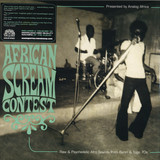
- A1: Lokonon André & Les Volcans - Mi Kple Dogbekpo
- A2: Picoby Band D'abomey - Mi Ma Kpe Dji
- A3: Gabo Brown & Orchestre Poly-Rythmo - It's A Vanity
- A4: El Rego Et Ses Commandos - Se Na Min
- B1: Napo De Mi Amor Et Ses Black Devil´s - Leki Santchi
- B2: Orchestre Poly-Rythmo - Gbeti Madjro
- B3: Roger Damawuzan - Wait For Me
- B4: Ouinsou Corneille & Black Santiagos - Vinon So Minsou
- B5: Orchestre Super Jheevs Des Paillotes - Ye Nan Lon An
- C1: Tidjani Kone & Orchestre Poly-Rythmo - Djanfa Magni
- C2: Discafric Band - Houiou Djin Nan Zon Aklumon
- C3: Le Super Borgou De Parakou - Congolaise Benin Ye
- D1: Vincent Ahehehinnou - Ou C'est Lui Ou C'est Moi
- D2: Les Volcans De La Capital - Oya Ka Jojo
The Analog Africa label delves into the amazing history of music from 1970s Benin and Togo.
This compilation highlights forgotten raw and psychedelic Afro sounds, and the well-researched liner notes tell fascinating stories to accompany the mind-blowing music. The essence of Analog Africa is clear, searching in dusty warehouses for forgotten music to keep the sound alive!
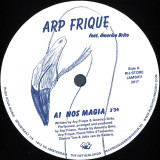
Three dance floor hitters by the Dutch Arp Frique. "Nos Magia" holds collaborations with Nigerian funkster Orlando Julius and Cape-Verdean legend Americo Brito. Surprising new cuts that could easily have been made in the 70ties! Big tip!
Arp Frique is Niels Nieuborg from the city of Rotterdam, who has been actively involved in the Dutch live music scene for years, working with Cape Verdean & Surinamese musicians especially. After all these years, he finally presents his own true musical output.
"Nos Magia" is a classic sounding, but unheard Cape Verdean funana song featuring the old skool Americo Brito on vocals. The b-side holds two collaborations with afro-beat protagonist Orlando Julius.....enjoy!!
Digging deep into the depths of African rhythms and melody , Digital Africa is pushing forward the frontiers of dance floor orientated Afro -Beats & House. Recieving heavy support from Carl Cox, Nicodemus and many more, this is destined for all time status. Perhaps the first serious AFROHOUSE rel
Having remained continuously active since 1971, the Yoruba Singers are the longest-running musical group in Guyana. Emerging from a music scene mostly dominated by slick, commercial entertainment, the Yoruba Singers brought a new dimension to Guyana popular music, cooking up a potent stew of afrocentric vibes, steeped in a committed invocation of the country's African heritage. The Yoruba Singers released several recordings during their imperial period in the nineteen seventies and eighties, but what is broadly regarded as the group's magnum opus is the 1981 album Fighting for Survival. The album sums up the group's first decade of operation, serving up a heavy mix of calypso, jazzy funk, reggae and afrobeat. Initially released on the short-lived Interculture label and later reissued on a Guyana-only compact disk, the album has long been more talked about than actually heard. But thanks to Cultures of Soul a new edition is now available in wide release, and with it comes the opportunity to experience some of the deepest grooves the Caribbean has to offer!
The godfather of acid house, DJ Pierre, is back - bringing four heavyweight Chicago cuts to the fore, two of which, 'Pinball Machine' & 'The Spirit' are unreleased, exclusives.
'Sexy Aquarian' showcases Pierre's unique style putting his trademark spin on this classic vocal, combining it with a bumping bass and dizzying acid lines, to trigger old memories whilst giving you something new for your mind, your body and your soul.
Next up 'Pinball Machine' goes in heavy on the percussion - filling those speakers with a barrage of weighty toms, crisp hats and crunched up snares. The frenzied synth line bounces around relentlessly, pinging off the sides of your brain like a sonic arcade.
Take to the flip for a lesson in how to take jackin' house to another level. 'Whats Mine is Mine' delves beyond the beat, mixing sassy vocals and spiritual organ stabs, with a touch of swing reminiscent of an era long gone.
Closing out the EP, 'The Spirit' utilises another treasured vocal layering it behind punchy drum programming, a rumbling bass and atmospheric touches that add an ethereal tinge to the track.
DJ Feedback:
The Black Madonna - We Still Believe / Liaison Artists - Excellent!
Eli Escobar - OH yes.
PBR Streetgang - 20/20 Vision - classic
Andy Caldwell - Nettraxx / Cr2 Records - Ooh so so sublime. Good shit here!
Tony Humphries - The Zanzibar / New York - Nice peak time banger.
Danny Howard - BBC Radio 1 / Nothing Else Matters - Aceeeee. Wicked vocal!!! Love the vibe
Die sechste Veröffentlichung in der Limited Dance Edition Serie präsentiert die allererste 12" Maxi Single von Anthony Emrold Phillip, besser bekannt als "Bro. Valentino". Die A-Seite 'Stay Up Zimbabwe' ist eine legendäre Shango / Orisha / Calypso Melodie aus dem Jahr 1979, die in die Karnevalszeit in Trinidad und Tobago eingedrungen ist. Bro. Valentino betäubte die Welt erneut mit 'Ah Wo (Band New Revolution)', ein Jahr später mit einer Melodie, die sich für die neue Stimmung der Inseln und den neuen Ruhm der Karibik einsetzte, die zweifellos von der grenadischen Revolution ein Jahr zuvor abgelehnt wurde. Diese erfrischenden karibischen Calypso Afro-Tunes, werden in einem wunderschönen Siebdruckcover und türkisfarbenem limitiertem Vinyl geliefert.
Ever since Onom Agemo & The Disco Jumpers broke the dreaded curse of the difficult second album by releasing "Liquid Love", a cocktail so spicy and delectable that it could warm the cockles of the grumpiest man alive's heart, even in the most Arctic conditions, everybody wondered how the Onom crew could top that one. But now you have an opportunity to whip out your "Magic Polaroid" as proof that this wasn't an impossible Project. Never before has the band so successfully captured their full-on live sound as they do here, thanks to three days of recording frenzy at Daniel Nentwig and Sebastian Maschat's Butterama studio, a haven of analog hardware hidden in a remote part of Berlin's Neukölln district. The exploding kaleidoscope of styles that make up this album, perfectly reflected by the stunning cover artwork from Nick Henderson and photography by Christoph Rothmeier, means that they can no longer be confined to their early description as an "Afro-Funk Quintet" or merely described as a lively tribute to the artists which have influenced them: their sound is 100 per cent pure uncut Onom Agemo, even though every track feels like a new beginning. The presence of a charismatic in-house vocalist who brought her own lyrics along has also boosted their confidence considerably and provided a further knock-out punch to their onstage performances.
And no one will be disappointed as soon as the first bars of "The Trumpets Of Denmark" stomp on stage like a boisterous fanfare, with Johannes Schleiermacher's impressive wall of sound production making the musicians sound like a much bigger band than what their line-up suggests (with Maria Schneider from Andromeda Mega Express Orchestra adding some extra percussive clout) and just the right amount of dizzying cross-rhythms to steer it away from potential bombast. When Onom Agemo's powerhouse vocalist Natalie Greffel starts chanting what at first sounds like a string of Onomatopoeia, it soon becomes clear that she's laying down her manifesto for a nostalgic Space-Age yet to come, with a few key words serving as Mantra (Focus, patience, tears and creation): an invitation to drive off the Information Superhighway and its endless litany of polite noises, to redirect our gaze inside ourselves and learn to understand and sometimes question how others perceive us.
- A1: Wildstyle Crew - Intro (Edit)
- A2: Bryozone - Juicy Quiddity
- A3: Ratti Nielsen Nikolaienko - M2
- A4: Mark Templeton - Soft Education
- A5: Andrew Pekler - Underwater Nocturne
- B1: Native Instrument - Thud
- B2: Nisantashi Primary School - Flaneur
- B3: Aem Rhythm Cascade - Biruza
- B4: Ol - Nutmeg
- B5: Vakula - Afromadness
Ukrainian label Muscut celebrates its anniversary - Muscut X (10) Test Pressign II - is the tenth record in a row. The first release was published in 2012 on 7 inches and was called simply Test Pressing. Like six years ago, the current vinyl is a compilation of Muscut's 'residents', as well as new friends of the label. Test Pressing II is 12 inches on which there are exactly ten tracks. Both sides are significantly different in color of mood. Party A starts with dub-drone sketches of key figures of the Odessa underground - Wildstyle Crew and Bryozone. Then we hear the mantra-like M2 - the work of the creative union of Nicola Ratti, Mads Emil Nielsen together with Nikolaenko. The Canadian sound-artist Mark Templeton continues the line of rhythmic textures crowned with unhurried percussion - it is in all senses of Soft Education at number four. The first part is completed by an exquisite curtsy from the Andrew Pekler label frequenter called Underwater Nocturne as a soundtrack for the perfect tea ceremony.
The second side confidently sets a completely different compilation rhythm from the very start - the tribal tribal dance from the Berlin project Native Instrument instantly introduces into a trance. It is followed by a warm, enveloping minimal synth track from the Ukrainian trio Nisantashi Primary School. The middle of the second side is decorated with the pensive house-ballad of St. Petersburg producer Fadeev known as AEM Rhythm Cascade. Another Russian settled next to him - Muscovite Oleg Buyanov, aka OL, with a massive broken dub Nutmeg. The final composition consists of burning afrosint motifs from luminary Odessan Vakula.
Manana presents a new remix EP bringing together some essential re-works of Sound Species and Ache Meyi's collaboration recordings.
Originally recorded in 2016 in Santiago de Cuba during the lead-up to the Manana Festival in the city, the original sessions were an inspired fusion of Ache Meyi's deep folkloric Afro-Cuban styles with Sound Species' subtle electronic touches. The new re-works have attracted some familiar names from clubland: broken beat don IG Culture keeps the roots of 'Ogún Meyi Meyi' intact with a bass-heavy, percussive attack; brilliant UK drummer and producer Tom Skinner strips back 'Egrem Bata Jam' on a pulsing new version; Chicago legend Ron Trent creates a more melodic dancefloor re-work of 'Alina's Calypso' while Sound Species themselves beef up the original Afro-Haitian rhythms of the same track for a dubbier treatment.
- A1: La Bush - Disco Bush
- A2: System Love - System Love
- A3: Cora Corona - Jungle Love
- A4: The Diskery - Star
- B1: The Rogers - Cosmos 81
- B2: Rendez-Vous - My Blue Bird
- B3: Raymond Joniaux - All' A Bi Bi
- C1: Manuel Ferrero - Fela
- C2: Rayon Laser - Funky Meteor
- C3: Autumn - The Third Autumn
- C4: Afro-Disiak - Chant Vaudou
- D1: Patrik - The Joymaker
- D2: Roland Delys - Love
- D3: Dj Bert & Eagle - I Am Your Master B
Compiled by cratediggers Loud E & The Wild, Discophilia Beligica' is a collection of next-door-disco and local spacemusic from Belgium 1975-1987. The tracks on this delightfully obscure collection are from ordinary folk. Most have day jobs. Yet as musicians, they go as far out as possible in to the disco universe and back again.
In the sweltering North-Eastern Brazilian state of Pernambuco lies the coastal city of Recife, where Amaro Freitas is pioneering the new sound of Brazilian jazz. For the prodigious young pianist, the spirit of his hometown runs deep. From the Afro-Brazilian maracatu born on the sugar plantations of slavery, to the high intensity carnival rhythms of frevo and baião, Amaro's heavily percussive approach to jazz is as indebted to these Pernambuco traditions as it is to Coltrane, Parker and Monk.
As with many of the greats before him, Amaro began playing piano in church aged 12, under the instruction of his father, leader of the church band. As his natural talents became obvious, the young prodigy quickly outgrew his father's instruction. He won a place at the prestigious Conservatório Pernambucano de Música but had to drop out as his family could not spare the money for the bus fare. Undeterred, Amaro gigged in bands at weddings and worked in a call centre to fund his tuition. The transformative moment came at age 15 when Amaro stumbled across a DVD of Chick Corea concert, 'he completely blew my mind, I'd never seen anything like it but I knew that's what I wanted to do with a piano'.
Despite not actually owning a piano, Amaro devoted himself to studying day and night - he would practice on imaginary keys in his bedroom, until eventually striking a deal with a local restaurant to practice before opening hours. By the age of 22 Amaro was one of the most sought-after musicians in Recife and resident pianist at the legendary jazz bar Mingus. It was during this time he met and begun collaborating with bassist Jean Elton and the pair went in search of a drummer. 'We kept hearing about this crazy kid who was playing in 7/8 or 6/4, we knew we had to meet him'. Hugo Medeiros joined, and the Amaro Freitas Trio was born.
'I want to show the simplicity of music, to break the stigma that the piano is for a particular social class. Yes, it's a difficult instrument, which many people do not have access to, but with it you can express everything.'
Following his critically acclaimed debut album Sangue Negro (black blood), the title of his sophomore release Rasif is a colloquial spelling of Amaro's home town. A love letter to his native northeast, Amaro explores its traditional rhythms through the jazz idiom, employing complex mathematical patterns reminiscent of some of the most challenging works by fellow Brazilian masters Hermeto Pascoal, Egberto Gismonti and Moacir Santos.
Preferring to see the piano as a though it were a drum with 88 unique tones, Amaro's intelligence and emotion intertwine on every track, from album opener 'Dona Eni': a scorching reconstruction of the baião rhythmic structure, played in seven measures instead of two, to the serene homage to the coastal reef and its ecosystems on the title track 'Rasif'. 'Aurora' is a suite of three parts, representing the sun's journey from the light and soft of the rise, to the aggressive dissonance at its midday zenith and descending chromatic cadences as the sun sets.
Due for an Autumn release on Far Out Recordings, Rasif sees Amaro Freitas take a deserved step onto the world stage. Having already made a name for himself in Brazil, Amaro and his phenomenal band will embark on their first European tour later this year.
Amaro Freitas - Piano
Hugo Medeiros - Drums & Percussion
Jean Elton - Double Bass
Henrique Albino - Baritone Sax, Flutes & Clarinet
All compositions by Amaro Freitas
Produced by Amaro Freitas
Recorded by Bruno Giorgi @ Carranca Studio, Recife, Brazil
Mixed and mastered by Bruno Giorgi @ Quarto Studio, Rio de Janeiro, Brazil
Executive producer and management: Laercio Costa