
Suche:c mos

8
Shaped from fragile, emotionally charged piano motifs that distort, disappear and transform into dense, cinematic textures, 'CANALS' is a debut that's finely matured, the result of years of friendship and growth. Italian artist Vanja Sturno and Montréal-based Belgian-Spanish composer Pablo Geeraert (aka Sanea Ima) have worked together extensively on various projects up until now, but 'CANALS' is their first official release as a duo. Having both studied music academically, the pair were eager to work more intuitively, so applied their well-honed set of skills to sound that, instead of fitting into a conceptual box, reflected more personal experiences.
Back in 2023, Geeraert travelled to Rome to support his friend at a difficult time and, during the trip, received some bad news of his own. The complicated feelings unconsciously surged through a series of delicate Ryuichi Sakamoto-inspired piano improvisations and a new project began to coalesce. They didn't realize it at the time, but once the record was finished, Sturno and Geeraert began to understand that the entire process had been a form a joint catharsis - a release of pressure. They were able to function so effortlessly and swiftly because they had already provided the space for each other to resonate emotionally and the music flowed from that point.
So the album's title, while remaining ambiguous, suggests its formation: a sequence of eight interconnected channels that feed a creative whole. On the first segment, Sturno and Geeraert's initial recordings can be perceived most nakedly, the melancholy, Satie-like phrases floating peacefully for a moment before the tranquility is agitated by stormy distortions and swelled into thick waves of harmony. The piano provides the record with its emotional anchor, offering focus and clarity as multi-dimensional noise wells up around it before inevitably dissipating, leaving gentle, unadorned sounds once again.
And the familiar instrument is reshaped into a wheezing artificial organ on the animated 'CANALS III', punctuated by percussive, tape-warped pitch fluctuations that seem to bite into its very essence. Gauzy acoustic granulations snowball into a powerful, bass-heavy crescendo on the fourth part, setting the tenor for the album's second half. But after the crushing 'CANALS VI', possibly Sturno and Geeraert's heaviest track, a brief tremolo-heavy vignette that ripples through experimental rock and ambient music's braided history, the duo clear the air with a jazzy diversion, introducing soft woodwind blasts as a palate cleanser before an epic, widescreen finale.
It's an album that's best absorbed as a whole, a vortex of ritualistic, rhythmic repetitions that Sturno and Geeraert appropriately refer to as "spiral listening".
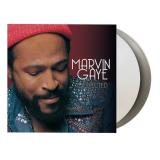
- 1: (I’m Afraid) The Masquerade Is Over
- 2: Let Your Conscience Be Your Guide
- 3: Hitch Hike
- 4: Pride And Joy
- 5: Can I Get A Witness
- 6: Once Upon A Time (With Mary Wells)
- 7: Stubborn Kind Of Fellow
- 8: How Sweet It Is (To Be Loved By You)
- 1: It Takes Two (With Kim Weston)
- 2: I’ll Be Doggone
- 3: Ain’t That Peculiar
- 4: Ain’t No Mountain High Enough (With Tammi Terrell)
- 5: I Heard It Through The Grapevine
- 6: Ain’t Nothing Like The Real Thing (With Tammi Terrell)
- 7: You’re All I Need To Get By (With Tammi Terrell)
- 8: Too Busy Thinking About My Baby
- 1: What’s Going On
- 2: Mercy Mercy Me (The Ecology)
- 3: Inner City Blues (Make Me Wanna Holler)
- 4: Trouble Man
- 5: Let’s Get It On
- 6: You Are Everything (With Diana Ross)
- 1: Distant Lover
- 2: I Want You
- 3: Got To Give It Up
- 4: Heavy Love Affair
- 5: Sexual Healing
- 6: Sanctified Lady
Marvin Gaye always dreamed of being a smooth crooner, “sitting on a stool, possibly behind a piano,” delivering velvety songs like Nat King Cole. But Motown had other plans. Pushed between raw R&B and polished pop, Gaye fought to find his own voice, eventually rising to become one of the greatest soul singers in history.
Motown Records released the first Marvin Gaye record in 1961 "(I'm Afraid) The Masquerade Is Over", a single intended for (radio) promotion from the singer's debut album. This was followed up by the officially released "Let Your Conscience Be Your Guide" a week later. Gaye scored his first real hit with "Stubborn Kind of Fellow" in 1962, which he had co-written himself, joking about his alleged stubbornness. He found his own unique style with the single released at the end of the year: "Hitch Hike". The foundations were now laid for an enormous series of chart successes: "Pride And Joy", "Can I Get A Witness", "How Sweet It Is (To Be Loved By You)" and "Ain't That Peculiar" are all Motown classics from 1963-1965 which are still being regularly played today after all these years. The duets he recorded with Kim Weston ("It Takes Two"), especially Tammi Terrell and Diana Ross were certainly at least as good.
He scored his biggest ever hit with "I Heard It Through The Grapevine" in 1968. "What's Going On" from the same titled album became a number 1 hit in the USA. The album was received as a masterpiece and is regarded as one of the most important records in pop history. In 1973, the artistically and commercially very successful, "Let's Get It On" album was mainly a musical ode to Marvin's love for his new muse Janis Hunter. His journey continued after a turbulent relationship, addiction and a dramatic creative rebirth in Belgium, where he crafted the global hit “Sexual Healing in 1982.
Marvin Gaye left behind timeless hits, groundbreaking albums, and a legacy that shaped the sound of modern soul. His story, from ambition to artistry, from struggle to brilliance, remains as powerful as the music he created.
Music On Vinyl proudly presents a special coloured vinyl edition of the Marvin Gaye Collected album which is available as a limited edition of 10.000 individually numbered copies on white (LP1) and silver coloured vinyl (LP2) and includes a booklet with liner notes.
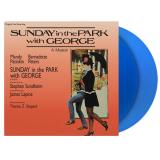
- A1: Sunday In The Park With George
- A2: No Life
- A3: Color And Light
- A4: Gossip
- B1: The Day Off
- B2: Everbody Loves Louis
- B3: Finishing The Hat
- B4: We Do Not Belong Together
- C1: Beautiful
- C2: Sunday
- C3: It's Hot Up Here
- C4: Chromolume #7 / Putting It Together
- D1: Children And Art
- D2: Lesson #8
- D3: Move On
- D4: Sunday
- D5: Putting It Together
- D6: Sunday
Sunday in the Park with George presents the music from the original 1984 Broadway production of Stephen Sondheim and James Lapine’s acclaimed musical. Recorded shortly after the show’s premiere, the album features the original cast performing Sondheim’s layered score, inspired by Georges Seurat’s painting "A Sunday Afternoon on the Island of La Grande Jatte".
The cast of the musical is led by Mandy Patinkin and Bernadette Peters, whose performances tell a story about art, love, and artistic legacy across two time periods. The recording includes notable songs such as “Sunday,” “Finishing the Hat,” and “Move On.” Winner of the Pulitzer Prize for Drama, Sunday in the Park with George is widely regarded as one of Sondheim’s most distinctive works. Produced by Thomas Z. Shepard, the recording won the 1984 Grammy Award for Best Cast Show Album.
The soundtrack of Sunday in the Park with George is available as a limited edition on blue vinyl and includes a 4-page booklet. The 2LP is packaged in a deluxe sleeve with linen laminate finish.
4
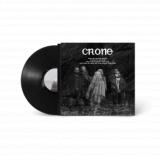
Irish drone-doom-folk act One Leg One Eye, the project of founding Lankum member Ian Lynch and veteran noise monger George Brennan, announce their new album, CRONE, out on 1 May on AD 93.
Today the group share the first track on the album, ‘Many are my Names Besides’, on which they are joined by the elemental force that is legendary actor, performer, writer and director Olwen Fouéré (Operating Theatre) contributing vocals.
Olwen Fouéré comments:
“When Ian and George first approached me to work with them, they were already creating the Crone album as a sonic invocation of the ‘sovereignty goddess’, who personifies the land and the legitimacy to rule it, in her darkest and most terrifying form. As we spoke, the triple goddess figure of the Morrigan entered my mind, reinforced by a marked presence of crows every time we met. The Morrigan is essentially a war goddess, frequently appearing as a crow in a battlefield, a death prophet, a guardian of sovereignty, and a very powerful figure in Irish Mythology.
So I invoked her energy as a starting point, using text extracts that Ian sent me from the Ulster Cycle and other sources. The voice recording was done in one day, improvising the source material while the already composed music occupied my psyche through headphones.
Listening back, at this time in our world, I can only wonder at how much blood and war the Crone/ Crow of sovereignty is preparing to unleash now. Watch out.”
CRONE is the second album from Lynch and Brennan, following on from 2022’s slowburn slab of ambient grit, …And Take The Black Worm With Me. Bewildering, psychedelic and ultimately transcendental, the four tracks of One Leg One Eye’s CRONE shapeshift and morph endlessly in a coarse miasma. Traditional song structures and vocal melody are eschewed, instead the trio directly channel energies from the rich seams of mythological significance submerged below the Irish psyche. The anger, rage and beauty of the sovereignty goddess burn a consistent and deliberate line through the album in the form of obscure incantations and dire pronouncements, the gnarled sinews that bind it all together.
Just as the subject matter of the tracks delve deeper into Irish myth and the remote past, the temporal reality of the album reaches back into the bands prehistory, with the majority of it the material being recorded by Lynch and Brennan in 2021 before One Leg One Eye was conceived of as an entity with Brennan working on the CRONE project while Lynch worked on …And Take The Black Worm With Me.
When they were there they saw a lone woman coming to the door of the Hostel, after sunset, and seeking to be let in. As long as a weaver’s beam was each of her two shins, and they were as dark as the back of a stag-beetle. A greyish, wooly mantle she wore. Her lower hair used to reach as far as her knee. Her lips were on one side of her head.
She came and put one of her shoulders against the door-post of the house, casting the evil eye on the king and the youths who surrounded him in the Hostel. He himself addressed her from within.
"Well, O woman," says Conaire, "if thou art a wizard, what seest thou for us?"
"Truly I see for thee," she answers, "that neither fell nor flesh of thine shall escape from the place into which thou hast come, save what birds will bear away in their claws."
"It was not an evil omen we foreboded, O woman," saith he: "it is not thou that always augurs for us. What is thy name, O woman?"
"Calib," she answers.
"That is not much of a name," says Conaire.
"Lo, many are my names besides."
"Which be they?" asks Conaire.
"Easy to say," quoth she. "Samon, Sinand, Seisclend, Sodb, Caill, Coll, Díchóem, Dichiúil, Díthím, Díchuimne, Dichruidne, Dairne, Dáríne, Déruaine, Egem, Agam, Ethamne, Gním, Cluiche, Cethardam, Níth, Némain, Nóennen, Badb, Blosc, Bloár, Huae, óe Aife la Sruth, Mache, Médé, Mod."
On one foot, and holding up one hand, and breathing one breath she sang all that to them from the door of the house.

Besides having one of the most original artist names out there, Qrusifix aka Hampus Karlsson, is a true record collector who has been putting in the work on his MPC 2000 for quite some time. With roots in Småland and now based in Stockholm he’s been spinning records, low-key producing tracks on his home turf and popping up whenever the time felt right to spread his vibes. In 2024, together with fellow producer and friend David, he released his first record on the Malmö label Hip Hop Weekend.
The Chasing Clouds EP, out in May 2026 on Västkransen Records, presents four tracks built for late nights that drift into dawn - calm, dreamy and slightly melancholic soundscapes, as if you're on your way somewhere but without rush.
7
Time To Get On Board A New Black Universal Express.
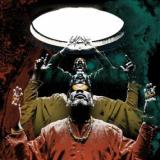
With each new recording Anthony Joseph presents an imaginative, personal vision of contemporary black culture, and The Ark is yet another compelling album by the award-winning Trinidadian poet and musician. This second part of a sequence of two albums launched with last year’s Rowing Up River To Get Our Names Back, finds Joseph giving full vent to his desire to explore many thought-provoking themes. However, there is a specific thread running through the glorious offering of sounds.
”I was especially interested in the idea of using Afrofuturism as a means of using the future in order to correct the wrongs of the past,” explains Joseph. “And so a lot of lyrics reimage or imagine an alternate black history. At the same time there are elements of autobiography.” The aforesaid cultural phenomenon, a view of the black experience through the prism of science fiction and ancient Egypt and Africa, as mapped out by visionaries from music and literature such as Sun Ra, Parliament-Funkadelic and Octavia E. Butler, has previously inspired Joseph. His 2006 novel The African Origins Of UFOs was a multi-hued work, and the new music shows how Joseph
has, much like all significant artists, gone on to broaden his conceptual palette, creating beguiling new stories and images set to startling rhythms and tones. Tracks such as ‘James’, with its taut, crisp bass and dubbed-up brass, and ‘Transposition Of Space (Glissant)’, a potent evocation of the influential Martiniquan theorist set in a haze of jazz guitar and ambient synthesizers, are marvels of text-sound painting.
As for ‘Baron Samedi’, shaped by a languid, almost wounded guitar line and slow rise of horns that frame Joseph’s journey to the ‘mountain of fire, almost touching the sky’ it is an epic blend of commanding vocal delivery and dramatic sonic tapestry.
Joseph led the Spasm band in the early 2000s and recorded well-received albums such as Bird Head Son and Time, in which songs were largely based on spirituals or chants enhanced by improvisation. But his musical curiosity has naturally led to collaborations, and the new work is produced by Dave Okumu, the prodigiously talented guitarist-vocalist-composer known as the leader of Mercury Music Prize-nominated The Invisible, and who was also a member of the seminal band Jade Fox.
Having first performed together at a show curated by influential saxophonist-flautist Shabaka Hutchings at the storied Total Refreshment Centre In London during lockdown, Joseph and Okumu struck up a rapport that further developed when the former guested on he latter’s album. With the connection made Joseph knew Okumu was the ideal producer for this latest project, which has a freewheeling, almost black psychedelic thing. After sifting through demos and loops the guitarist made on pro-tools the poet started to live with the music. Many months later words began to take shape. Joseph then went into the studio with Okumu’s band and set about creating a magnum opus. Boasting a stellar cast such as vocalist Eska Mtungwazi, trumpeter Byron Wallen and keyboardist Nick Ramm, The Ark is a highly intricate musical mosaic framed by simmering funk grooves, wily jazz improvisation and haunting dub effects. Through the use of many genres the music has simply become its own genre.
The Ark can be perceived as a vessel or means of transport to new worlds, along the lines of Sun Ra’s Ark or Funkadelic’s Mothership, and the material it contains is a unique blend of who Anthony Joseph is and how he sees the world and society in these stimulating, challenging times. “It balances the personal with the universal in a much more vulnerable, accessible way than on previous albums,” Joseph explains.
“It has become less about a personal experience and more about a collective, communal experience in which the artist is conduit, messenger, urban griot.”

Ataxia return to Planet E with two club-optimized cuts that capture their rolling, characterful approach to the authentic roots of Detroit's electronic culture. Marking the duo's return to Planet E following 2020's Oblivion EP, both tracks deliver energy tapped from a fundamental understanding of house and techno, equally charged with their punk and DIY background.
Immediately establishing a deep, hypnotic beat, 'The Whistles' expands into a collage of unruly samples that tour the club, the street and the true characters between. Playfully hinting at the tension between Detroit's party people and those who would like the music turned down, the track is a steamrolling club cut that finds Ataxia going wild with their most psychedelic studio trickery.
'Hocus On Pocus' is a tightly wound, punchy psychedelic wormhole of analogue FX and rubbery basslines, adding layers of pressure and surprising sonic twists. The result is an offbeat banger in the spirit of Planet E's wildest moments; primed for the dancefloor but with personality to spare.

- 333: Am
- Signs Of Life
- Whale Pebble
- Paralysed
- Darabuka
- Numb Year
- Time Used To Feel Like
- A Spell
- Harvest Hope
- Julian's Rocks
‘Sings Again’ is the fifth album from British electronic musician Will Samson. After starting the decade with a pair of largely instrumental albums, Samson… sings again.
The familiar collection of old tape machines that have characterised much of Samson’s sound remain (with a 1971 Seinnheiser microphone for the vocals), firmly rooting ‘Sings Again’ in an organic sonic landscape of electronic and acoustic influences.
Taking inspiration from the early works of Bjork, Four Tet and Efterklang, much of the album was built upon recording and then sampling organic sounds such as twigs, rocks and paintbrushes to create percussion. An empty glass bottle was transformed into the otherworldly organ on raw opener ‘0333AM, and his own voice became the moody synth sound on the sparse electronica of ‘Darabuka.’ Elsewhere, the hypnotic, emotionally resonant ‘Time Used To Feel Like’ and grandiose album finale ‘Julian’s Rocks’ offer a raw and direct insight into the most vulnerable parts of himself – a long-established artist beginning again.
- 1: Bleed
- 2: Wrong
- 3: Oh My God Ft. Widowdusk
- 4: The Knife
- 5: Understand Ft. Wratt Starr
- 6: Jemma
- 7: Sink
- 8: Rot Ft. Someone You Can Call
- 9: Altar
- 10: Home
- 11: Philip
- 12: Sweat And Tears Ft. Casper Hill
Dead Calm is a band from Liam McCay... a young, prolific Irish musician from County Donegal, known for creating music under numerous aliases, most notably Sign Crushes Motorist, Dead Calm, and Take Care, exploring genres like slowcore and indie rock with poignant, introspective, and often melancholic themes, gaining significant online traction while maintaining a low-key, hobbyist approach to his rapidly growing career. He began with the fiddle, pivoted to guitar during the pandemic, and has since released extensive work, even turning down record deals to keep his creative process personal.

- 1: Grow Ft. Masumi
- 2: Mountain
- 3: Slump
- 4: Keep Moving On
- 5: Turn Around Ft. Rosevile Sucks
- 6: Chance Ft. Widowdusk
- 7: Gorgeous Night
- 8: Say Goodbye
- 9: We Love You Dennis Rodman
- 10: What Took You So Long
Dead Calm is a band from Liam McCay... a young, prolific Irish musician from County Donegal, known for creating music under numerous aliases, most notably Sign Crushes Motorist, Dead Calm, and Take Care, exploring genres like slowcore and indie rock with poignant, introspective, and often melancholic themes, gaining significant online traction while maintaining a low-key, hobbyist approach to his rapidly growing career. He began with the fiddle, pivoted to guitar during the pandemic, and has since released extensive work, even turning down record deals to keep his creative process personal.
6
Persistence of Sound releases a new work by Brunhild Ferrari called »L’oreille Voleuse« (The Thieving Ear). The LP features an extraordinary live reinterpretation by Eiko Ishibashi and Jim O’Rourke, recorded in October 2025 in Paris.
»No, without listening at doors, the ear captures noises here and there and unexpected sounds without choice, but remains attentive to the messages of each one picked up over the years. It gathers surprises and impressions, bringing them together in a simple mix. In waking up these ear memories again, which were mostly recorded on magnetic tapes, I am very happy about the collaboration of Eiko Ishibashi and Jim O'Rourke in playing on this mix tape.« Brunhild Ferrari
Eiko Ishibashi is a Japanese composer, singer, and multi-instrumentalist who has developed a unique body of work blending experimental pop, improvisation, and film music. Her work, praised for its expressive intensity and sensitivity to sonic textures, has led her to collaborate with numerous musicians on the international scene, including Jim O'Rourke, with whom she forms a long-standing duo. She is also the composer of several film scores, notably for the films of Ryusuke Hamaguchi (Drive My Car, Evil Does Not Exist), which have helped to bring her work to a wider audience beyond experimental music circles.
Jim O'Rourke is an American composer, producer, and multi-instrumentalist, and has been a major figure in experimental and independent music since the 1990s. His work spans rock, improvised music, electronic music, and contemporary music. A former member of Sonic Youth and a collaborator with Wilco, Gastr del Sol, and Merce Cunningham, he has released numerous solo albums and film scores. Based in Japan since the early 2000s, he continues to pursue a rich and multifaceted musical practice, where formal rigor and freedom of invention coexist.
Persistence of Sound was founded in 2019 by Iain Chambers (Langham Research Centre, Rubbish Music). The label explores the world of electroacoustic music, contemporary global field recordings, and the unclassifiable music spanning these genres.
Australian composer-performers Judith Hamann and James Rushford have worked together in countless projects for two decades, perhaps most notably in Golden Fur, their trio with Sam Dunscombe. Black Truffle is pleased to announce Midmeste, their first work as a duo. Its title is Middle English for ‘the middlemost point’, alluding to how the piece builds on the points of overlap between the highly personalised musical languages Hamann and Rushford have developed in recent years. Performed on cello and a variety of pipe organs, Midmeste is a spacious, sometimes unsettling exploration of their shared interest in alternative tunings, psychoacoustic phenomena, the physical properties of their instruments, and the usually peripheral sounds generated by the performing body.
Beginning with a sequence of austerely vibrato-less harmonics from Hamann's cello, trailed by Rushford's whistling portative organ tones, the music soon expands into a slow-moving melodic wander, pausing at times to linger over an uncomfortable harmony or particularly resonant cello tone. Hamann and Rushford have long histories of engagement with pre-Classical European musical traditions, having in past projects performed and radically extended the work of Solage, Louis Couperin, Johann Conrad Beissell and other composers. Here they use a 15th century song by John Dunstaple, ‘O rosa bella’, which returns throughout the piece, distorted, aerated and splayed into new forms.
Developed while the two shared residencies at Akademie Schloss Solitude, Stuttgart in 2020 and La Becque on Lake Geneva in 2023, Midmeste integrates recordings made (at at the invitation of the Biennale Son) on the organ of the Basilica St Valere in Sion, Switzerland—the world’s oldest playable organ, built in the early 15th century. Played by both Rushford and Hamann, the instrument’s idiosyncratic features, including bellows pumped manually using massive wooden beams, are integrated into the music through amplification. Creaks and thumps locate the music physically both in the performers’ bodies and the specific site of its making. Moving through a series of distinct episodes across its forty-minute span, Midmeste makes space for near-silent duets of high harmonics and hissing air, moments where twittering high tones and rumbling sub-bass could be electronic, and static fields that unexpectedly blossom into almost Romantic harmonies.
Listeners familiar with Hamann and Rushford’s work will find many familiar features here: the stunningly rich cello tones, their patient sustain allowing heightened awareness of the inner life of sound and its interactions with the environment; the care with which acoustic space is activated, becoming at times a third instrumental voice; the attention to fragile, unstable sonorities that sometimes have a comic edge. A major work from two key figures in contemporary experimental music, Midmeste synthesises rigorous exploration of fundamental questions of sound and performance with an unapologetic embrace of beauty.
- A1: Round About Midnight 05:14
- A2: Evidence 03:04
- A3: Smoke Gets In Your Eyes 03:23
- A4: Well You Needn't 03:24
- B1: Reflections 05:01
- B2: We See 02:34
- B3: Eronel 02:32
- B4: Off Minor 02:31
It happens very rarely that you can praise a records without any reservations, this is the case here!!!
A lot of ink has flowed across the page since the Vogue/Swing release (1955) of that founding solo record. The repertoire was made up of pieces that Thelonious was playing in New York over that period, but in trio or with a quartet, here his music shows nakedness, i should say crudeness, whisch is completely overwhelming. It is a balck and white photograph of what is happening inside Monk's head; its sharpness is enthralling, as everyone has known for more than sixty years.
We enter the world of one of the most original artists. Monk, at 37, is at the peak of his art.

- 11: Goin' Back To Wurstville
- 2: The Pulpo Dance
- 3: Ma Juju Girl
- 4: Space Spy
- 5: Just My Kind
- 6: Oofty Goofty (Wild Man Of Borneo)
- 7: The Double Switch
- 8: Itch!
- 9: Pineapple Mama
- 10: Howlin' For My Woman
- 11: Bayou Fever
- 12: Big Chief
- 13: Shake It Wild
- 14: Tiger In My Tank
- 15: King Ghidorah
- 16: Do The Wurst
12
Seit fast zwei Jahrzehnten verbreiten der King und seine Cumberland Three ihren Rhythm & Punk-Spaß in der ganzen Welt und bringen jede Menge ausgelassene Energie, Albernheiten, gute Laune und Schweiß mit! Mit diesem Quartett ist jede Show eine Party! Anlässlich ihres 20-jährigen Jubiläums, in dem sie unermüdlich weltweit auftraten und Dutzende von Platten veröffentlichten, haben King Salami & The Cumberland Three tief in ihrem umfangreichen Katalog gegraben, um 16 ihrer besten Tracks auszuwählen. Das Ergebnis ist diese energiegeladene Zusammenstellung, ein Album voller Spaß, das verrückte Klassiker wie ,The Pulpo Dance", ,Pineapple Mama", ,Shake it Wild" und ,Do the Wurst" enthält, neben ihrem weniger bekannten Instrumentalstück ,Itch!", das kürzlich in der Dreamies-Katzenfutter-Fernsehwerbung zu hören war. ENG For nearly two decades, the King and his Cumberland Three have been spreading the Rhythm & Punk grease all around this big old world, bringing along with them buckets of fun, raucous energy, silliness, smiles and sweat! With this quartet, every show is a party!! To mark their 20 years anniversary of relentlessly playing shows around the globe and releasing dozens of records, King Salami & the Cumberland Three have dug deep into their extensive catalogue to select 16 of their most killer tracks. It makes for a fun-packed album which contains wacky classics such as `The Pulpo Dance', `Pineapple Mama', `Shake it Wild' and `Do the Wurst, alongside their lesser-known instrumental `Itch!' that recently featured on the Dreamies cat food TV ad.

- A1: Here I Am Baby (Come And Take Me)
- A2: Everything I Own
- A3: Green Grasshopper
- A4: Play Me
- A5: Children At Play
- B1: Sweet Bitter Love
- B2: Gypsy Man
- B3: There’s No Me Without You
- B4: The First Time Ever I Saw Your Face
- B5: I Just Don’t Want To Be Lonely
- C1: Mark My Word
- C2: The First Cut Is The Deepest
- C3: Melody Life
- C4: Work And Slave
- C5: Working To The Top (My Ambition) (Part 1)
- C6: Don’t Let Me Down
- C7: Band Of Gold
- D1: Put A Little Love In Your Heart
- D2: I See You, My Love
- D3: It’s Too Late
- D4: Baby If You Don’t Love Me
- D5: Love Walked In
- D6: When Will I See You Again
- D7: Play Me (Part 2)
24
2025 Repress
140g vinyl, remastered, double LP with the original LP along with a second record of 14 rare tracks
Sweet And Nice is the vital debut album from Jamaica’s undisputed first lady of song Marica Griffiths. It’s reggae at its most soulful. Slinking through a tight ten tracks of R&B and pop-sourced material, it became an instant best seller. 45 years after its initial release the LP is available again on vinyl, now as a double LP, with an extra record collecting 14 rare tracks.
Sweet And Nice has appeared over the years with a revised running order and under different titles. But the original’s opening sequence of loping soul is legendary, even beyond reggae circles. These songs are now returned to how they were presented on that first Jamaican release, and under their intended album title. Be With doesn’t mess with magic.
Marcia’s version of “Here I Am (Come and Take Me)” has long been lusted after, played by genre-hopping selectors to snapping necks for decades now. It’s followed by the sophisticated, rollicking wah-wah funk of “Everything I Own” and the slice of smooth lovers soul par excellence that is “Green Grasshopper” and her ace, lilting Neil Diamond cover “Play Me”.
The thundering, humid funk of “Children At Play” “sounds uncannily like a precursor of Massive Attack”, as FACT Mag astutely noted when they put Sweet And Nice at number 16 in their list of the 100 best albums of the 1970s. Otherworldly, moody and essential.
Side two keeps the fire burning. “Sweet, Bitter Love” should leave you swooning, and is also one of the album’s alternate titles. Curtis Mayfield’s already-eternal “Gypsy Man” is up next, recast as proto-lovers rock.
“There’s No Me Without You” is elevated to canonical status by the majestic, forlorn horns of the Federal Soul Givers and Marcia’s heartbreaking delivery. And if this doesn’t get you then surely the next track will: arguably the definitive version of Ewan MacColl’s “The First Time Ever I Saw Your Face”. Yes, seriously.
“I Just Don’t Want To Be Lonely” re-takes its rightful place at the end of the LP’s second side… but we couldn’t leave it at that. So we added an entire second record of rare material recorded around the same time as Sweet And Nice, much of it unavailable since it was originally released. Some of these songs have only ever been found on now unattainable 7" singles and no, rarity doesn’t always correspond with quality, but in this case we’re talking about some seriously jaw-dropping music.
Amongst 14 extra tracks you’ll find the exquisite late-60s singles “Melody Life” and “Mark My Word” which, along with the sumptuous reading of “Band Of Gold”, are now £100 records, if you can find them! Just sayin’. There‘s also a fantastic version of “The First Cut Is the Deepest” and an alternate take of “Play Me” with producer Lloyd Charmers adding his own vocals.
Everything’s been remastered of course, including the original LP, so Sweet And Nice now sounds even sweeter, and even nicer.

We Release JAZZ is very happy to announce the limited vinyl edition of Obad’s powerful new album Suspended, a vivid document of the Tehran ensemble’s endlessly evolving sonic universe — now available as a limited LP housed in a heavyweight sleeve with an Obi strip and featuring original artwork by Iranian painter Sadra Baniasadi.
Suspended is a superbly spontaneous, improvisational blend of exploratory jazz fusion, progressive funk-rock, and transcendental groove. Built from lived experience and shaped by Tehran’s pulse, Obad’s music is kinetic and intuitive — an ever-morphing dialogue between rhythm and texture, emotion and message.
With Farid Farzian Pour on drums, Siavash Karimi on electric guitar, Kiarash Radmehr on bass guitar, and Hamidreza Keshavrpajuh (aka Pajuh) on tenor saxophone, Obad creates a soundworld where hypnotic basslines meet thunderous, free-flowing percussion; where searing guitar motifs coil around saxophone phrases that move from whispered invocation to explosive catharsis. Suspended captures the quartet at full creative stretch: alive, unguarded, and deeply attuned to one another.
Sadra Baniasadi’s striking cover painting mirrors the album’s energy — bold, dreamlike, charged with movement, and extending Obad’s world into the visual realm.
Suspended stands as a major statement from one of Iran’s most compelling contemporary ensembles, marking Obad’s first release on We Release JAZZ and continuing the label’s commitment to boundary-pushing music born from profound listening, place, and collective intuition.

8
In a sharp-angled, fiercely inventive reflection on the nature of club culture and digital fatigue, Simo Cell and Abdullah Miniawy reunite to deliver their new album, Dying is the internet, to Dekmantel's UFO series.
French producer Simo Cell has blazed a singular path from his dubstep-influenced origins to become a leading light in contemporary leftfield club music, twisting up adventurous rhythms and flamboyant production in pursuit of a perpetual freshness for the floor. Egyptian singer, poet, producer and composer Abdullah Miniawy has become equally omnipresent in the past 10 years, straddling the arts world and leading with his piercing Arabic lyricism while maintaining an eternally curious spirit that leads into open-ended, experimental music from the abstract to the propulsive.
Following up on their 2020 EP for BFDM, Kill Me Or Negotiate, Miniawy describes their sharply focused new album as "a playful prophecy about the triggers of a new global revolution." Cell considers the title, Dying is the internet, to be a mantra about "how the internet lost its soul," becoming "less about sharing ideas and more about surviving in a digital business ecosystem." Deliberately at odds with the reel-ready two-minute attention span of the average social media surfer (i.e. everyone), the pair set out to make an album that takes its time to reveal nuanced ideas and expressions. Rather than one-note despair for the modern malaise, Cell and Miniawy offer a philosophical reminder that this present moment in the human experience is a temporary phase, no matter how overwhelming it feels.
Dying is the internet finds Miniawy experimenting with auto-tune across the record, while Cell has developed his voice design chops and compositional instincts, moving closer to fully realised song structures without losing the fundamental 'clubbiness' of each track. The result is a cohesive, wildly original kind of heavyweight dance music that slings out hooks left right and centre, from Miniawy's laconic trumpet looming through low-slung 'Reels in 360' and 'Travelling In BCC' to the persistent handclaps that bring 'Living Emojis' to life. Miniawy's poetry explores the power of insistent, repeated phrases in a break from his more typically structured form.
Kenyan powerhouse Lord Spikeheart adds extra snarl to stripped-back, slow-burn opener 'I See The Stadium', but otherwise Dying is the internet is purely the work of Miniawy and Cell casting their considerable chops out into unexplored territory. The results are electric, bound together by a consistent economy of sound that burrows into a shroud of bass-heavy minimalism barely masking Cell's incredibly detailed studio flex. Even the beatless flourish of the Miniawy-produced 'Tear Chime' comes loaded with physicality — a sensory rush at the mid-section of the album bookended by some of the most idiosyncratic club music in recent memory.
Both Simo Cell and Abdullah Miniawy have already proved themselves as fearless innovators across different fields. The strength of their partnership lies in their ability to make space for each other while letting their distinctive sonic identities ring loud and true. Dying is the internet has immediacy and physicality to translate over a soundsystem, but its intricacies are purpose-built for repeat visits and contemplation, unveiling hidden dimensions the deeper you dive into it.
10
Gatefold Sleeve
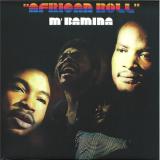
M’Bamina – African Roll (1975)
The story of an album born between Africa, Italy, and the nightclub culture of the 1970s
In the heart of 1970s Italy — a country undergoing profound social change and a music scene just beginning to open itself to distant sounds and cultures — an extraordinary, almost improbable story took shape. It is the story of a group of young African musicians who found their way to Europe, of a Turin nightclub that became a crossroads for communities and experimenters, and of an album which, released in small numbers and largely unnoticed at the time, is now considered a rare jewel of Afro-fusion.
The band called themselves M’Bamina — an ensemble of musicians from Congo, Cameroon, and Benin, who arrived in Italy in the early Seventies. Settling between northern Italy and the Pavia area, they began performing in small clubs and community events, bringing with them a vibrant rhythmic heritage: African polyrhythms, call-and-response vocals, funk-infused bass lines, and Caribbean or Afro-Latin colours absorbed along their musical journeys. Their raw, contagious energy on stage quickly drew attention.
Meanwhile, in Turin, another story was unfolding. There was a venue becoming almost legendary: Voom Voom, one of the city’s liveliest nightclubs, run by Ivo Lunardi. The club attracted an eclectic crowd — students, artists, foreigners, night owls — and Lunardi quickly understood that the dancefloor wasn’t just a place for music, but a melting pot for a new kind of cultural energy. Out of this vibrant atmosphere came his idea: to turn the club’s name into a small independent record label, Voom Voom Music, capable of capturing the spirit of those years and giving voice to unconventional projects.
When Lunardi heard M’Bamina, he immediately sensed that this was the sound he had been searching for: fresh, different from anything circulating in Italy at the time, and capable of blending African tradition with funk and European sensibility. He brought them into the studio.
Production was handled by Lunardi along with Christian Carbaza Michel, while the engineering was entrusted to Danilo Pennone, a young sound technician with a sharp, intuitive ear.
The recording sessions — held in Turin in 1975 — produced a remarkably warm and direct sound. The music feels almost live: grooves rooted in African tradition, but open to funk-rock structures and modern arrangements. It is a natural fusion, never forced. Tracks move between tribal rhythms, funk basslines, light electric guitars, congas and Afro-Latin percussion, with call-and-response vocals and melodies that echo both Congolese tradition and the lineage of Latin jazz. Not by chance, one of the album’s most striking tracks, Watchiwara, reinterprets a Latin standard through M’Bamina’s own rhythmic language.
The album was titled African Roll — a name that was already a statement of intention. It is African music that “rolls,” that moves, adapts, transforms within a new geographic and cultural setting. It is not strictly Afrobeat, nor Congolese rumba, nor Western funk: it is a spontaneous, hybrid blend, shaped more by lived experience than by any calculated aesthetic program.
When African Roll was released, the world around it barely noticed. Distribution was limited, and 1970s Italy had yet to develop a cultural framework for receiving such music. The national music press rarely paid attention to African or “world” productions. The album slipped into silence — though the band’s own story did not.
M’Bamina continued performing across Europe and Africa, even sharing a stage in Cameroon with none other than Manu Dibango. By the late Seventies, they moved to Paris, signed with Fiesta/Decca, and recorded a second LP, Experimental (1978). Meanwhile, the peculiar record they had made in Turin began to resurface quietly among vinyl collectors, Afro-funk enthusiasts, and DJs hunting for forgotten grooves.
That is when the album’s fate began to shift.
Over the decades, African Roll emerged as an almost unique document: a snapshot of an intercultural Italy before the word “intercultural” even existed, a fragment of migrant history, a spontaneous experiment in musical fusion born far from major industry circuits but rich in authenticity. Original copies began commanding high prices on the collector’s market, and the album became recognized as one of the hidden classics of European Afro-fusion from the 1970s.
Today, more than fifty years later, this reissue finally restores visibility and dignity to a project that deserves to be heard, studied, and celebrated. It is not simply an album: it is the testimony of a rare cultural encounter, born in an Italy unaware of how fertile such exchanges would one day become.
It is the story of a visionary producer, an extraordinary band, and a fleeting moment in which music, migration, and nightlife came together to create something genuinely new.
African Roll is — now more than ever — the sound of a bridge: between continents, between eras, between cultures. A record that, after rolling far and wide, has finally come home.
