Cited as the first real god of the electric guitar, ‘Titan of Twang’ Duane Eddy enjoyed 15 US Top 40 singles during the late Fifties and early Sixties with his unique, revved-up six-string sound, and over the years has sold a staggering 100 million records worldwide. This compilation on 180g Vinyl pulls together his most legendary instrumental recordings including those hallowed hit singles.
Suche:c mos
- Just A Gigolo - I Ain't Got Nobody
- Felicia No Capicia
- Oh, Marie
- Buona Sera
- That Old Black Magic
- Bourbon Street Blues
- If You Were The Only Girl In The World
- Alright, Okay, You Win
- Jump Jive An' Wail
- The Girl Of My Best Friend
- Love Me Tender
- All Shook Up
- Are You Lonesome Tonight?
- A Big Hunk O'love
- I Feel So Bad
- Little Sister
- Rock-A-Hula Baby
- King Creole
Prima, who died in 1978, was the eternal game-changer. In his early years, he led various jazz outfits including the highly rated New Orleans Gang. A star of not only music, but also films – Prima appeared in several shorts and full-blown Hollywood productions during the ’30s. In 1967 he provided the voice for King Louie, the orang-utan in Disney’s The Jungle Book, for which many people remember Prima today. But as this essential double-album confirms, long before that he made great, humour-instilled, often exciting sounds that left audiences feeling happy. Featured here are all his very best and most loved songs
Pacific Highway Music, the new album from Skegss, reintroduces the Australian band as the duo of Ben Reed (vocals, guitar) and Jonny Lani (drums) presenting their most masterful and fully realized work to date. The Byron Bay-bred band’s third full-length—the follow-up to their acclaimed sophomore album Rehearsal, which debuted at #1 on their homeland Australia ARIA Albums Chart and led to their first-ever Coachella appearance and a sold-out U.S. tour—brings a newly heightened creative energy to every aspect of their explosive yet introspective form of rock. The band are in market this week, playing an exclusive sold out show at Signature Brew in Blackhorse Road (London).
Matt Filippini is an Italian guitar player, rock songwriter and producer. After working with some local bands, he started to take it seriously when in 2001 he started to play some gigs in Italy during a masterclass tour of the legendary drummer Ian Paice (Deep Purple founder and current member since 1968 but also with Paul McCartney, Gary Moore and Whitesnake). One year later, in 2003, after writing a bunch of rocking songs and recording a demo in his home studio, Matt gave a cd with the tracks to listen to Mr. Paice who liked the stuff and agreed to record the drum tracks for the songs. So after Ian Paice recorded three of the tracks, Matt asked Glenn Hughes (Deep Purple, Black Sabbath, ...) to record vocals for two of the songs. Those became Rose In Hell and Where Do You Hide The Blues You've Got, two of the most appreciated songs from the first Matt's studio album, MOONSTONE PROJECT Time To Take A stand, released April 2006 on Majestic Rock Records. The album features other rock and roll gods like Carmine Appice, Steve Walsh of Kansas, Eric Bloom of Blue Oyster Cult, Graham Bonnet of Rainbow and many more! The album, produced and written by Filippini himself, has been acclaimed by the music press with some great reviews and adored by thousands of classic rock fans from all over the World. In 2010 Matt toured Spain and Italy with Carmine Appice., in September 2010 Matt he played a festival in Sardinia along with Roger Glover (Deep Purple), Bobby Kimball and Steve Lukather of Toto and Vinny Appice (Black Sabbath and Ronnie Dio).In 2011, Through the next few years he played with Deep Purple, Doogie White (Rainbow and Malmsteen) and Neil Murray (Whitesnake and brian May Band), as well as several gigs with Hughes and Paice. He has certainly been active these last few years! the Moonstone Project title “New Life” the full album has been completely remixed and remastered by Fredrik Folkare, featuring on the album the Rock legends Glenn Hughes, Graham Bonnet, Eric Bloom, James Christian, Andrew Freeman, Ian Paice, Ken Hensley, Carmine Appice etc.
One of London’s most loved underground parties, Tangent, celebrates its 10th birthday this year with a new compilation on Mr Bongo. Its residents, John Gómez and Nick the Record, have curated a selection of prized, rare and dancefloor-ready tracks that have soundtracked the past decade of their parties. Alongside remastered reissues of these original cuts, the CD version of the compilation also houses three incredible edits from Nick, John and Dan Tyler of the Idjut Boys. These were too good not to press onto vinyl, so we’ve given them the standalone 12" they deserve.
Contextualising their edits Nick states, “Tangent was not only the place for us to play the music we love the most, it also became the testing ground for our edits. It was really helpful being able to see the effect each of these had on a dancefloor before the records were released and many of them also became firm Tangent classics.”
Up first, Nick is joined by Dan Tyler (Idjut Boys), who he runs the edit label Record Mission with, for a furiously feel-good re-edit of Leo Basel’s ‘Quelle Drôle De Vie’. Basing their edit on the 1987 ‘Special Remix’, it does what any great re-work does, dropping the sections from the original that don’t quite hit the mark, whilst focussing on the gold in amongst it all. The result is a slice of peak-time, French boogie joy, that will warm even the coldest hearts.
John then joins Dan at the dials for a cosmic revamp of Love Isaacs 'Surprise Surprise'. A serving of ‘80s electro-funk, dripping in swagger with a highlife tinge. John and Dan extended the grooves for maximum dancefloor power, space echoing it into the stratosphere at all the juiciest points.
Lastly, Nick takes on Rick Asikpo and Afro Fusion 'Let's Get High' from the super sought-after 1980 album, Got To Be Me. Celestial, gospel-infused soul from Nigeria, Nick homes in on the energetic last 2 minutes of the original as the building block of his 12-minute edit. A completely reworked, feverishly paced creation, Nick switches the sections around, saving the slow, soulful segment for a brilliant cosmic breakdown before the track erupts back into its full flow. Synthesised, jazz-funk elation from start to finish!
• First issued on the Dot label in 1965, Karen Verros’ recording of ‘You Just Gotta Know My Mind’ is one of the most popular and in-demand tracks ever to appear on Ace Records’ “Girls With Guitars” compilation series. Pressings of the hopelessly rare original exist in two variants, one 20 or so seconds shorter than the other.
• This new Ace release features the longer of the two versions. ‘Karen’s Theme’ on the B-side is the ‘You Just Gotta Know My Mind’ backing track, with added freakbeat guitar in place of Karen’s vocal.
• An original copy, in the unlikely event one should become available for sale, is likely to carry a hefty asking price. Designed to resemble a small-run mid-60s acetate pressing, rather than a replica Dot label, this very welcome addition to Ace’s catalogue of 7-inch vinyl singles should set punters back about the cost of a bottle of cheap plonk.
*Full colour artwork coming soon, this is a digitally generated mock-up. Comes in a risograph sleeve featuring liner notes and original Saturn artwork. *
Recorded at the Choreographers’ Workshop in New York, 1963, Waaghals Records presents two songs from Sun Ra’s Continuation sessions on vinyl for the first time. Known for its lo-fi recording quality coupled with heavy use of echo and reverberation, the material recorded at the Choreographers’ Workshop holds a special place within the Sun Ra catalogue. This unique blend of avant-garde jazz and bold production methods is described as “low-budget musique concrete” by Sun Ra biographer John F. Szwed.
Taken from the 1970 Saturn album Continuation, side a features the complete unedited version of New Planet. A bouncy Ra track that somehow ends up in a sound-bath of low, throbbing frequencies and echoes. The b side, Meteor Shower, remained unreleased until 2014, making its first official appearance on vinyl here. The opening trumpet salvo warms us up for a micro trip through the vast cosmos, with more echoed percussion and a beautifully bowed bass solo. It is no surprise that in recent years this particular piece has been sampled, most recently by RP BOO and Armand Hammer.
Tape transfers and audio restoration by Michael D. Anderson and Irwin Chusid of the Sun Ra Archive.
- Heart Of Tin
- Aberfan
- Movement
- Richard E Grant
- Salvation Xl
- Taking Stones To Joe’s House
- Double Island
- At The Lake Ft. The Golden Dregs
- Flight
- Bluff
In Cornish slang it is said that things get done ‘dreckly’; that is, not now, not necessarily tomorrow, but, at some indefinite point...in the future...soon...
Fitting then that when Bristol’s Langkamer decamped to their de facto home-from-home in the picturesque south-west seaside town of Falmouth to record their third album in as many years (with an EP thrown in there too) - there was no particular need to rush things: “The process was much slower and more considered for Langzamer.”, drummer/vocalist Josh Jarman explains: “The first two albums felt pretty urgent, and each was finished in about 6 months, but this one feels a lot more deliberate. It’s taken us two years to get this done.”
Equally fitting too that Langzamer kicks off proceedings with ‘Heart of Tin’: the first bars are languidly lugubrious, so deliciously plucked-out and scuzzed-up that they linger in the air like passing smoke, magically, slowing time down to their own assured and steady will. And in so much time, that also feels like no time at all, comes an opening line of such stark, disarming confessionalism as might be found in the David Berman/Silver Jews songbook: “Do you want the good news or the bad news first? // They’re both bad news, but the bad is worse” It’s Langkamer in a nutshell: embattled, heart-on-sleeve Slacker Rock slaked with twinges of fret-sliding Americana, yet deeply embedded in the folk mythologies, colloquialisms and experiences of the band’s West Country roots.
Throughout Langzamer, confronting the listener again and again is this conflict between the band’s breezy, melodic charm, and the threat of something more sinister lurking in the undergrowth. While those more familiar with Langkamer’s oeuvre to date will have already come to know and love their often self-deprecating yet witty lyricism, the songs on Langzamer take this trademark ebullient gloominess to more challenging plains: “Principally this is an album about grief, and everything that entails...” explains Jarman. “in a sense death brought these songs to life.”
This thread is felt no more so than on ‘Salvation XL’. Inspired by a “particularly bad batch of food poisoning I had in Morocco”, Jarman explains, and beginning with the memorable opening line, “Jesus came to me a Burger King in Marrakech”, the band wind their way through the ‘big topics’: death and God.
“This trip was shortly after a few of my friends had passed away, and I think a lot of my thoughts and actions at that time were being influenced by my grief without me realising it.”, he explains, “Whenever I dwell on grief, and how death has given my life a new context, I come back to that. The ongoing battle between agnosticism and atheism. I wasn’t raised in a very strict religious home, but I come from a long line of methodists, and it’s interesting to think about the way theism and religion have shaped my life without me knowing it. I think that’s being channelled on this album a lot. The uncertainty that comes with disbelief.”
Our collective mortal frailties are also felt on lead single ‘Richard E Grant’. With a trademark bittersweetness, a track that begins as an appreciation of the actor’s humorous social media presence unfolds as a study on “finding healthy coping strategies to deal with loss.”. Elsewhere, ‘At The Lake’ - to the tune of mournful, folk-like balladry - explores binge-drinking culture and the troubled association between unhealthy behaviour and creativity. The listener is left in no mind as to the meaning behind the references to James Joyce and Janis Jopin as “souvenirs stolen from the dark”.
With themes as weighty as these strewn across the album’s 10 tracks, It seemed like a particularly astute move then for the band to personally approach Ben Woods, founder of the Golden Dregs, to assist on production duties. Not only would the delicate intimacies of Woods’ main project - see 2023’s On Grace & Dignity for reference - add an appropriate moodiness, but Woods was also born and raised in Cornwall, where the album was recorded; amidst “eating pasties” and breaks by the sea, Woods and the band transformed the vaults underneath iconic Falmouth venue The Cornish Bank into a makeshift studio for a weeks’ worth of recording. Occasionally friends would drop by to lighten the load; Zander Sharp tracking violin on ’Double Island’ and ‘Flight’; Josh Law and Ben Sadler of Breakfast Records labelmates Getdown Services, both of whom contribute to the soul-stirring ‘mountain’ chorus on ‘Aberfan’.
When compared to the brightness of 2023’s The Noon and Midnight Manual, Woods’ influence on the record seems indisputable. On the aforementioned ‘At The Lake’, for instance, which features backing vocals from Woods. Or, most acutely, on the piano strains of harrowing closer ‘Bluff’, a track with such chilling, spectral severity as to effect the band’s most heartbreaking effort to date. While it’s particularly sombre note on which end proceedings, it's also an appropriate one: Langzamer bravely stands tall as their most restrained, matured, and sincere collection to date. And almost by virtue of its impeccable honesty, those moments of sunshine-joy that creep through the cracks feel that much more golden.
The Intercommunal Free Dance Music Orchestra was created in 1971 by French free jazz pianist legend, François Tusques. Free Jazz, was also the name of the 1965 recording Tusques made along with and other Michel Portal, François Jeanneau, Bernard Vitet, Beb Guérin and Charles Saudrais. Six years later, in 1971 Tusques would go ahead of free jazz.
Wondering if free jazz wasn’t a bit of a dead end together with Barney Wilen (Le Nouveau Jazz) or even solo (Piano Dazibao and Dazibao N°2), Tusques formed the Inter Communal Free Dance Music Orchestra, an association under the banner of which the different communities of the country would come together and compose, quite simply. If at first the structure was made up of professional musicians from the jazz scene it would rapidly seek out talent in the lively world of the MPF (Musique Populaire Française).French Popular Music, ndlt
As with L’Inter Communal a few years earlier, Le Musichien follows on from the group of varying musicians that Tusques had conceived as a “people’s jazz workshop”. In 1981, at the famous Paris address, 28 rue Dunois, the pianist sang with his partner Carlos Andreu “Le Musichien”, an Afro-Catalan tale over an exceptional bass line from Jean-Jacques Avenel backed by percussion from Kilikus, saxophones from Sylvain Kassap and Yebga Likoba and trombone from Ramadolf which presented a myriad of constellations. The sky has no limits, let’s make the most of it.
“Les Amis d’Afrique” is recorded the following year, at the ‘Tombées de la Nuit’ festival in Rennes, bassist Tanguy Le Doré would weave with Tusques the fabric on which would evolve an explosive “brotherhood of breath”: Bernard Vitet on trumpet, Danièle Dumas and Sylvain Kassap on saxophones, Jean-Louis Le Vallegant and Philippe Le Strat on... bombards. With hints of modal jazz inspired by Coltrane or Pharoah Sanders, the Intercommunal Free Dance Music Orchestra is an ecumenical project which speaks to the whole world.
Following releases on Sähkö Recordings and The Trilogy Tapes, "Fever of the World" is the Soda Gong debut by Memotone, the nom de plume of UK-based multi-instrumentalist Will Yates. As a collection, it is both intimate and expansive, like the feeling of gathering one's thoughts before setting off on a long journey or committing to an irrevocable course of action. Throughout, Yates' talents as both player and sound designer are on full display, as are the sonic signatures that have come to characterize the Memotone catalog: low-lit, ECM-inflected noir; evasive and evolving loop-based accretions; and mellifluous mosaics of keys, guitar, reeds, and percussion. It is patient and focused music, built around production techniques and compositional ideas that have been perfected both in studio and in live performance over a period of several years. "Catherine, On Fire" sets the scene, one of two languid, longform selections, and develops slowly from a spare, harmonic-laden guitar loop into a bed of rippling textural ambience and woozy clarinet filigree. Later, "The Bus" and "When the Bakery Has What You Want and It's Cheap" conjure images of rain-streaked windows, fanciful baked confections, and grey skies broken finally by sunlight. Warm, generous, and comfortable in its own skin, this is music that reminds us that when it feels easy to resign ourselves to world weariness, we should pause for a moment and listen to the rustle of the leaves. The wind knows not to linger.
Chita, the third album proper by Japanese guitar pop trio Usurabi, is their most elegant, stylish confection yet. Over the past four years, Toshimitsu Akiko (vocals, guitar), Kawaguchi Masami (bass) and Morohashi Shigeki (drums) have been recording, playing live, and releasing songs of rare melodic warmth, centring Toshimitsu’s unique musical vision, where melancholy and joy can co-exist, a split-second flick of her wrist switchblading the guitar from languorous sweetness to overloaded rock action.
Chita expands on the smartly sculpted pop and rock songs found on their previous albums, Remains Of The Light (2021) and Outside Of The World (2023), while infusing the music with more of the rough- housing energy that also coursed through the live CD, Once In A Red Room, they self-released in January 2024. There’s still a through-line, of course, that connects the music here to Toshimitsu’s earlier groups, Doodles and Animone, but Chita feels more deeply like a sussed, sharp take on the crumbling edges of sixties psychedelic folk and rock: the harmonica that blasts through the opener, “Bansho”, is pure Dylan in effect.
One of the many smart things about Usurabi, though, is that they never feel beholden to the historical moment. Soon after “Bansho”, we encounter “TurnOff”, a lush pop song that turns on a dime, with Toshimitsu tearing fuzztone notes from six strings that are like a more folk-reverent Kaneko Jutok. And there’s something about the guitar and bass riff that doubles through the thrilling two-and-a-half minutes of “Hakanonaka” that’s a dead ringer for the Only Ones. Flip the record, and things get more expansive, the spindly jangling of the title song spiralling ever inwards, before the sweet, sugary rush of “Kanata” resolves to the martial rhythms that pulse through “Aseranai”, winding the album down to its poetic, becalmed resolution.
- A1: Searching (For Your Love) W/ Ultra Naté
- A2: Tonight Ft. Richard Farrell
- B1: House Music Ft. Fast Eddie
- B2: Star In The Ghetto Ft Bdi Thug & B Mo Moultrie
- C1: Don't Turn Your Back On Me Ft. Pauline Taylor
- C2: Make It On My Own Ft. Richard Farrell & Jasper St. Co
- D1: Gimme A Call Sometime Ft. Richard Farrell
- D2: Second Hand Smoke Ft. Richard Farrell
- D3: I'm Here
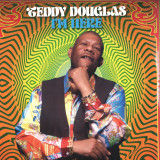
US House Music legend Teddy Douglas of Basement Boys and Jasper St. Co. fame gets set to unleash his first solo artist album, ‘I’m Here’, on the iconic label, Nervous Records. Teddy has gone all out to deliver one of his most creative and musically diverse albums to date. ‘I’m Here’ is a colourful pallet of meaningful songs and grooves that reach far beyond Teddy’s signature soulful Baltimore House sound, with added infusions of Funk, Rock and Jazz, yet still loaded with plenty of Teddy’s trademark House and Disco sounds that we all know and love.
Across the album he’s pulled together an array of heavyweight international vocal talent including; UK vocal diva Pauline Taylor; Danish award winning Folk and Blues artist, Richard Farrell; Chi Town Hip House legend, Fast Eddie; dance music’s legendary No.1 vocal queen, Ultra Naté; up and coming Brit Soul talent, Sipho; and Buckshot from Blackmoon appearing as BDI Thug. From the shimmering cover of The Frontline Orchestra’s ‘Don’t Turn Your Back On Me’ with Pauline Taylor on the vocals, to the downtempo rocky vibes of ‘Help!’ with Sipho delivering a spine-tingling gravelly vocal, ‘I’m Here’ is testament to Teddy’s finely tuned expert musicianship and impeccable knack for penning great songs and delivering vibrant covers.
Baltimore’s Teddy Douglas has produced everyone from Michael Jackson, Lenny Kravitz, Crystal Waters, Erykah Badu, Martha Wash and Ultra Nate’ and was an important figure in the development of the Baltimore “House” Sound. Teddy has held down a long and successful DJ career since 1983 staring out in Baltimore and spreading his wings globally gracing the decks at clubs such as Yellow in Japan to London’s Ministry of Sound and beyond. In 1985 he met Jay Steinhour and Thommy Davis, who later formed The Basement Boys production company. The Basement Boys have produced countless dance classics like Crystal Waters’ 1991 Gold single, ‘Gypsy Woman’. In the mid 90’s Teddy Douglas and Jay Steinhour opened Basement Boys Records and released club anthems from Teddy Douglas, Jasper St. Co., Ann Nesby, Those Guys, DJ Spen, Byron Stingly, Karizma, Kenny Bobien, Taja Seville and more
***BACK IN STOCK ON ORANGE CREAM VINYL!!!
On Fire is widely recognized as the canonic pinnacle of Galaxie 500's career. The artwork conveys this, with a low-angle shot of the band, looking up towards an amber sky. This record marked the realization of their signature sound. Nowhere is it clearer than on the album opener, "Blue Thunder," the closest a song can come to waves crashing on a beach in song form. Lyrically inconsequential, with a chorus composed entirely of "la"s, the track's power lies in a systematic build and break of intensity that reaches a Spector-like climax. It is the quintessential Galaxie 500 song, encapsulating all that was great about the band. With the Boston trio once again utilizing the bizarre genius of producer Mark Kramer, On Fire sounds like anything but. The guitars are warm blankets enwrapping Dean Wareham's vocals, percolated by the open percussion of Damon Krukowski and anchored by the emotion-laden bass of Naomi Yang. Songs like "Snowstorm," "Strange," and "Decomposing Trees" have an endless quality, without beginnings or ends, but rather frozen somewhere on a spectrum of melancholy. For the first time since its original pressing, On Fire is available again on vinyl. Cut by vinyl ace Kevin Gray from a remaster by Kramer and Alan Douches, the album sounds more vibrant than ever, and Galaxie 500 exists again as one of the most enrapturing and glorious bands to emerge from the underground in the past 25 years.
We are honored to present a proper house music classic from 1991 to y’all which was huge back in the day and we had the pleasure to re-vamp for today´s house heads: Urban Soul ft. Roland Clark- Alright! This project is a brainchild from one of house music´s most prolific figures, Roland Clark, who actually wrote and produced the original track that we all love. Vocal credits also go to Roland and to the late Ceybill Jeffries. The remixes on this beauty are rather huge! First up Baltimore´s finest DJ Spen and MicFreak team up and do a masterclass on remixing, what a soulful house monster, beautiful new chords and a baseline to die for. One of Peppermint Jam´s first artists on the roster, Mellow Man, just couldn´t stop and delivered a fantastic remix with that jackin´ groove which puts us back right to the glorious days of house music in the naughties. Vinyl Only Mixes!
It´s allllllllllllllllllllright!
Watkins Group is a new project from one half of infamous Crust House vagrants Watkins & Almodovar, taking inspiration from the landscapes, myths and legends of ancient Scottish & Celtic culture. The title of this debut album on the newborn Frequency Consortium label, Beanntan a’ Bhròin (Mountains of Sorrow), might already give an indication as to where we’re headed here; evoking Nan Shepard’s meditations on the Cairngorms at their most isolationist & uncompromising as much as it does the creatures that occupy the crags, gullies & glens of old Caledonia. Watkins Group dive deep into fx-drenched grot and expansive somnambulant driftworks over six tracks, as spacious as they claustrophobic, recalling the works of Deathprod, early-90s Lustmord and at times even the stark soundtracks of Mica Levi.
[a] A1. Sluagh na marbh [Host Of The Dead]
[b] A2. Biasd Bealach Odail [The Beast Of Odal Pass]
[c] A3. Am Fear Liath Mòr [Big Grey Man Of Ben MacDhui]
[d] B1. Caoineag [The Weeper]
[e] B2. An Teàrnadh [The Escape]
[f] B3. Cait Sith [The Mysterious Black Cat]
Forgetting You Is Like Breathing Water, the self-titled debut from the duo of trumpeter Will Evans and guitarist, synthesist, producer and multi-instrumentalist Theo Trump, arrives like a vault revelation. It feels like a decades-old yet newly unearthed masterwork of gorgeous ambient improvisation, the sort of thing scholars live to research and shepherd into deluxe reissue.
The patient, crystalline chords that swell and resonate like a series of confessions; the textured brass murmurs that suggest a ’60s or ’70s Fire Music master at their most poignant. Provocative found-sound experiments threading arcane religious recordings through dystopian soundscapes. Ear-shattering free-noise tumult. Where and when did this music come from? Who are these voices?
As it turns out, Forgetting You Is Like Breathing Water springs from an engrossing human story, though it isn’t necessarily the one you’d expect. This work of stunning maturity is in fact an entrance by two little-known explorers in their early 20s, who grew up together in Virginia, in the shadow of the Blue Ridge Mountains. It documents one of those perfect, sparkling moments in post-adolescence when big decisions and responsibilities are right around the corner, but for a spell, two young artists are able to create among the comforts and nostalgia of their shared past.
It also represents a reunion of sorts, as Evans and Trump connected as toddlers, became inseparable as boys, then pursued independent lives and creative paths as young adults. “Theo is my oldest friend,” Evans says, “and I feel like that’s what this band is — us meeting right in the middle of our interests.”
Now, having conjured this magic, they’ve detached once again: Evans, whose other works include the indie/avant-jazz unit Angelica X, is currently based in New York City. Trump recently moved to England, where he’d participated in his family’s theatre company, to go to school and further his solo ambient project. “This album didn’t start out as something super ambitious,” Evans explains. “It was more just an excuse to spend time together again and make music.”
***
In conversation, Evans and Trump are a delight, especially for cynics who might think that Gen-Z is only capable of doomscrolling. They come across as kindly young intellectuals who grew up using the internet as it was intended, for exposure to ideas and art across genres and generations. Trump points to indie-folk and the oracular post-rock of late Talk Talk, Bark Psychosis and Gastr del Sol. Pressed for his guitar heroes, he cites Bill Orcutt, Mary Halvorson and Marc Ribot, and mentions his devotion to alt-country. Heyday electro-industrial stuff like Skinny Puppy and Nine Inch Nails also meant a lot to him.
Evans is equally intrepid, though his background has a greater jazz focus. Ambrose Akinmusire, among today’s most thoughtfully commanding trumpeters, is a favorite. As for the soulful murmur he offers throughout Forgetting You, Pharoah Sanders’ wistful and lyrical contributions to Floating Points’ work is a touchstone.
The two grew up down the street from each other in the northern Piedmont town of Batesville, Virginia. Their families were friends, holidays were celebrated together and they became the most loyal of pals. As children they had a pretend band.
Then life unfolded, they attended different schools and their paths diverged. Evans discovered John Coltrane and became a jazz obsessive, as Trump found punk and hardcore and later began making ambient music. As a dedicated jazz trumpeter, Evans studied formally and widely; Trump was an autodidact, teaching himself guitar and absorbing synthesis and production techniques. The late teens and very early 20s brought moves away from home and back to home, as well as plenty of listening and learning. The Covid pandemic meant an opportunity to reconnect on long walks. Through it all, together and apart, they remained reverent of each other.
By early 2023, they found themselves living again among the Blue Ridge Mountains. In the evening, after giving trumpet lessons in Charlottesville, Evans would make the eerily beautiful trek “over the mountain” to Trump’s home in Staunton, Virginia. They’d talk and eat and begin to improvise, deep into the night. Evans played trumpet and sometimes drums. (Given the wee-hours recording schedule, the neighbors didn’t appreciate the latter.) Trump plugged a rickety, junk-store Telecaster-style guitar into a cheap solid-state amp and explored open tunings; he also layered on lap steel, electric bass, synths and electronics.
They locked in and relished each other’s gifts. In Trump, those include patience and intentionality and sonic decision-making; for Evans, a distinctive trumpet sound that both musicians think of as a singer’s voice. “Will’s playing is so thoughtful and well placed,” Trump says. “My goal from a producer’s mindset is that the trumpet will occupy the space that vocals would take.”
Often, they got lost in the best way. “The thing I look for most when I’m playing is that feeling of disappearing into what you’re doing,” Evans says. “Usually when that happens, the music is good.”
By the same token, they didn’t pursue free improvisation as an ethic, or as a pure process. Their goal was something closer to spontaneous composition. “We were trying to make good songs,” Evans says simply. Later, Trump did brilliant post-production work, expanding a modest setup into an enthralling soundworld. Under his judicious editorship, music that was wholly improvised sounds at times like a carefully composed new-music commission.
The results speak for themselves. “A Happy Death” summons up a swath of American desolation through the viewfinder of Wim Wenders. “Flesh of Lost Summers” and “Partings” are highlights from an essential ECM LP that never was. “A Collapse of Horses” infuses those seminal post-rock influences with the plod of doom metal or slowcore. The album’s final track, “The Mountains Are a Dream That Calls to Me,” was in fact the first thing the duo recorded, as an evocation of those twilit drives across the Blue Ridge Mountains. “Looking back at what we chose to name the songs,” Evans says, “and some of the sounds and how they make me feel, there is an air of impermanence and loss to this album.”
“I’m excited for everything that’s to come,” he adds, “but I recently thought, ‘Damn — that’s not going to happen again.’ It was a privilege for us to have that time together.”
Never say never! Because it's time for TURMOIL - a surprising landmark album comeback for RICO PUESTEL defining a musical and personal turning point with a completely new and re-invented artistry. About time!
4U opens the Pandora's Box of TURMOIL with inimitable meditative beauty, descending into the metaphorical and tonal SLICES OF LIFE that unleashes a complex chain of energy while WHERETO even overcomes this high voltage setup with a deadly infective loop and the only reminiscences of something to call Techno on this album in its fading conclusion.
Before HEART OF GOLD defines the probably most immersive peak on TURMOIL with its vast soundscape and mantra-like piano shuffle, QUESTIONS floats in Dubstep'ish ways to actually raise two questions to the listener while this train keeps on going.
FIVE SIGNS speeds up the pace on the album's second half, culminating in the mesmerizingly driven groove and words of HIGH HOPE and the powerful Upbeat drenched into ambient soundscapes on NEWTON.
Nearing the end of TURMOIL, DUMB delivers the longest vocal verses on this album and proceeds with the most pervasive and powerful layers of beats, violins and synth stabs.
Closing and re-starting all of it, EVERENDING grooves into infinity with its yoga-like theme and spreads some true love.
Without a doubt, TURMOIL happens to be the most accomplished work by RICO PUESTEL melting so many of his artistic worlds into one unique piece of art!
"On August 26, 1965, we find John Coltrane and his quartet recording at RCA Victor Studios on 24th Street in Manhattan. In the tunes tracked for Sun Ship, we hear Coltrane revisiting ground he had covered in the past with heightened sensitivity and a deepened interest in timbre. Sun Ship is a portrait of Coltrane’s most important band during his most important year, and while it’s sometimes overlooked in Coltrane’s discography — probably because it was released posthumously — it’s a crucial document for understanding what this band had accomplished, and it also offers a glimpse of why Coltrane moved beyond it. He needed to be in places where he was less sure of himself."