Diese einzigartige Zusammenstellung vereint die Essenz der Original-Soundtracks der drei 'Batman' Filme von Christopher Nolan, komponiert von zwei der größten Filmmusikkomponisten der Gegenwart, Hans Zimmer und James Newton Howard, und eingespielt von Londons besten Filmmusikern, London Music Works.
Suche:c music factor
- Mar Vista - Visions Part 1 Her Eyes Are Closed
- Kennlisch - Kennlisch
- Crystal Eyes - Crystalzed
- Warlus - Girl Like You
- Gerard Alfonsi - Fana Stickle
- Geoffroy - Viking
- Amphyrite - Symphonie Pour 3 Oeufs Brouilles
- Eole - Friendship
- Capucine - Les Elephants
- Rictus - Flashes
- Inscir Transit Express
- Polaris - Polaris
- Joel Boutolleau - Force
- Spotch Forcey - Frustre
- Demon Wizard - Black Witch
- Temple Sun - Voyage Sans Retour
- Chantal Weber - Ballade Aux Chataignes Tombees
- Jean-Claude Zemour - X Kmh
- Rhodes Co - Baoum
- Guidon Edmond Et Clafoutis - Stormy Sunday
"For a long time, I'd come across these discs without really understanding what connected them, apart from a button and that famous logo designed by René Dessirier. Then, with a little more digging, I discovered the "self-production" link. For choirs, schools, folk singers, young pop groups, popular homes and even great composers who engraved unique copies of certain recording sessions...
The French equivalent of the English "Derby Service", the Kiosque d'Orphée, formerly at 7 Rue Grégoire de Tours in the 6th arrondissement, was taken over by Georges Batard in 1967 and moved to 20 Rue des Tournelles in the 4th arrondissement of Paris. The adventure lasted until 1991. Georges Batard was a sound engineer who used a Neumann tube engraver to engrave acetates from the tapes he received, before printing the precious vinyls in the press factories of the day, where he was able to produce very small runs of between 50 and 500 copies.
Of course, there were other structures for releasing his records, such as Voxigrave or, later, FLVM, but none of them had so many records in their catalog. Le Kiosque d'Orphée was neither a label nor a publisher, but a structure that allowed you to press your own vinyl, at a time when it was quite an adventure to get your first 45 rpm or 33 rpm album released!
Georges Batard was described as passionate and conscientious. His son, bassist Didier Batard, wrote of him:
"Georges was passionate about recording and reproducing the stereo sound of his great passion, music. He paid close attention to distortion rates, signal-to-noise ratios, response curves, rise times and other damping factors in audio equipment. He was looking for the exact reproduction of concert hall sound in his living room (with the same sound level, if possible...). In the late '50s/early '60s, he found other sound enthusiasts in AFDERS (Association Française pour le Développement de l'Enregistrement et de la Reproduction Sonores). He became its honorary president. Every Saturday afternoon, its members met to test au- dio equipment. Their opinions were published in the monthly Revue du Son.
All you had to do was send in your tapes and choose the number of record copies you'd like to take home with you, so you could finally share your creations and, in a way, exist. You could opt for a generic sleeve, available in several colors, directly customizable with your name and credits, or you could design your dream sleeve yourself in your living room or at a printer's.
This "Do It Yourself" temple gave birth to some superb pouches. Stencilled, hand-written, illustrated with paintings, drawings, illustrations by friends or girlfriends of the time, photo prints hastily stuck in the middle of a blank, white sleeve, on which the traces of time would leave their imprints, so that collectors and the curious would come and buy them decades later, with the promise of a musical discovery, unfortunately not always fulfilled...
What most of these records have in common is the youth of their songwriters, whether or not they've had a career. Stories of buddies, of getting by and dreams of glory made up this catalog. Most of them were amateur productions, both in terms of the level of the musicians and the quality of the recordings, made on a two-track or, the ultimate luxury, a 4-track in a teenager's bedroom or parents' living room.
It was the beginning of the home studio, thanks to the advent of the Revox portable tape recorder. A bit of a shaky DIY system, but, in return, the luxury of setting no limits: one-sided tracks, no outside censorship, no artistic director, no manager, no Barclay or EMI/Pathé Marconi logos...
When you finally had your own record, you could give it away or sell it to friends, family or after concerts. You could also drop it off at the nearest record shop, with undisguised pride.
It was also a calling card that could be sent to radio stations or music labels, in the hope of launching a career...
Many of the protagonists in this story tried to sign with labels, but in those days, bridges were not so easy to build between one's hometown, or even one's village, and the major or more specialized label that might have released these records. At the time, the advertisements published in the press by the Kiosque d'Orphée opened up the field of possibilities for provincial composers. It was now possible to make their own record, without having to go through the process of signing with a label.
Some of the composers who have gone on to make a career have used this channel to release their first record or parallel projects (Claude Engel, Dominique A, Andy Emler, Michel Deneuve, Claude Mairet, Mick Piellard, Tristan Mu- rail...) and sometimes even single or very limited pressings of work or promotional copies (Bernard Parmegiani, Jef Gilson...).
This album is the conclusion of a long investigation, begun six years ago. It took a long time to find the records, scattered all over the place, in the homes of collectors and sometimes the musicians themselves, and then to listen to them, sometimes painstakingly, to unearth these moments of grace.
From this work, 23 tracks remain, but there are dozens of others that could have been included, so we had to choose, and the choice had to be as universal as possible. This selection is obviously not objective, but I hope you'll like it.
Today's music is raw, touching and powerful. "
Jean-Baptiste Guillot - Born Bad Records
Random Color Vinyl. Beach Fossils' sophomore album, Clash the Truth, is modern post-punk triumph that's left a lasting impression on the music scene it was born out of. After releasing their self titled debut and the beloved EP, What a Pleasure, songwriter and composer Dustin Payseur began recording dissonant and introspective demos reflecting on his southern upbringing and young adulthood in New York. The tracks that would eventually make up Clash the Truth involved Payseur taking his songwriting in a new direction, employing jagged instrumentals, existential lyrics, and socially conscious subject matter. The darker themes of Clash the Truth still come out vibrant through bright guitar tones, locomotive drumming, and Payseur's inventive home recording techniques. Referencing the sounds of Factory Records releases, New York's no wave scene, and 90's avant-pop, Beach Fossils expanded their sound past the perimeters of bedroom dream pop. The album is now being reissued for the first time on Payseur and his partner Katie Garcia's own label, Bayonet Records, including a limited edition clear pink vinyl pressing.
Holiday for Skins Vol. 1” by Art Blakey is a fascinating blend of percussion and jazz. Recorded in 1958, the album brings together talents like Ray Barretto, Sabu Martinez, and the Jazz Messengers. These exotic rhythms explore Afro-Cuban and Brazilian styles, delivering a vibrant musical experience. The versatility of percussion and mastery of jazz make this album a true rhythmic celebration, highlighting Art Blakey’s lasting impact in the world of jazz.
"Holiday For Skins Vol. 1" by Art Blakey includes the following tracks: "Lamento Africano" and more.
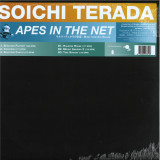
6-track EP compilation with Terada's work for the Ape Escape games, tip!
Outside of the international house underground, where his early ‘90s works for the Far East Recording label he co-founded with Shinichiro Yokota are rightly celebrated as bona-fide classics, Soichi Terada is best-known for his work composing music for video games. Yet until now, few of his productions for video games have been released outside of Japan, especially on vinyl.
Apes In The Net, a six-track EP featuring music composed for the popular PlayStation 1 series Ape Escape, sets the record straight. It not only showcases Terada’s quality as a composer and producer, but also his versatility. Like much of Terada’s work on the Ape Escape series, the tracks featured don’t explore deep, New York and New Jersey influenced house sounds, but rather his lesser-celebrated love of jungle and drum & bass – a sound he fully explored on 1996 album Sumo Jungle.
“The producer of the Ape Escape games heard that and got in touch,” Soichi remembers. “They asked me to make the soundtrack, and then work on the music for the sequels after that. I used to love making music with AKAI hardware samplers, synthesisers, and computers, so I played and recorded the tracks using almost the same methods as I did when I made house music. Using breakbeats and audio samples with a sampler was the most useful way to make the soundtracks.”
The six tracks on show, which were originally recorded in the ‘90s but reconstructed and remastered for Japan-only CD and digital releases over a decade ago, mix elements of Terada’s familiar deep house style – think warming chords and pads, memorable melodies, and emotive musical motifs – with blistering D&B breakbeats, 16-bit synth sounds, electronic bleeps and undeniably weighty basslines. They’ve stood the test of time and arguably sound just as fresh now as they did at the turn of the millennium.
For proof, check the soaring, spellbinding ‘Spectors Castle’, where uplifting lead lines and sumptuous chords dance atop punchy beats and growling bass, the jazzy and saucer-eyed rush of ‘Mount Amazing’ (all twinkling piano motifs, alien synth sounds, squelchy bass and skittish drums) and the intergalactic, liquid D&B excellence of ‘Time Station’, whose whistling melodies and stargazing chords are undeniably alluring.
There are plenty of other delights to be found across the EP, too, from the bustling, race-to-the-finish breathlessness of D&B/bleep techno fusion workout ‘Spectors Factory In’, and the rumbling sub-bass, creepy pads and suspenseful melodies of ‘Haunted House’, to the bombastic, all-out-assault on the senses that is ‘Coaster’, the set’s most “purist” jungle workout – albeit one that also doffs a cap to the pulsating world of big room techno.
Apes In The Net, then, celebrates Soichi Terada’s mastery as a video games composer and early Japanese junglist. Props are well and truly overdue.
One of New Zealand’s fastest-rising electronic producers, Sanoi aka Jonas Fischer announces the release of his new album, ‘Echoes Of Home’. Rooted in melodic house and techno, the album is a journey through electronic music, one that is as at home on the dancefloor as it is on headphones. Having previously released on labels such as Bar 25, Stil Vor Talent, Beat & Path, Magician On Duty, Sounds Of Sin and Tube & Berger’s Zehn Records, Loop are proud to present Sanoi’s second full-length. The New Zealand-based, German-born producer has crafted deeply personal electronic music that pushes the boundaries of creativity, skill and production techniques, while influenced by organic deep house and electronic techno from Berlin. Created at his home in Auckland, and road tested across countless live performances across New Zealand and Australia over the past two years, ‘Echoes Of Home’ sees Sanoi’s songwriting step up to another level. Constantly developing as an artist and finding expression through music are some of the key factors that drive him, whether it be in the studio or behind the decks. His deeply danceable, meticulous though mischievous DJ sets see him move seamlessly across warm, melodic, groove-driven techno and beyond. Featuring vocals by Beacon Bloom on ‘Silver’.
Dark Entries flashes back to the grimy streets of New York City circa 1982 to bring us an unreleased album from cult outfit Ike Yard. Comprised of Stuart Argabright, Michael Diekmann, Kenneth Compton, and Fred Szymanski, Ike Yard sits between the sinewy proto-body music of the Neue Deutsche Welle and the shattered grooves of their No Wave peers in New York. The band’s initial run was short but blinding. They released an EP for Les Disques du Crépuscule in 1981, which was followed by their legendary self-titled LP for Factory in 1982. They disbanded within a year, frustrated by the slow pace at which the industry was able to release their increasingly challenging music. 1982 features 10 tracks which likely would have become the band’s second LP - only four of these songs have previously seen release on 2006’s 1980-82 Collected via Acute Records. Following the release of Ike Yard, they continued down their tortured path of hybrid electro-acoustic music with an arsenal of now-classic analog instruments, including the Korg MS-20 and the Roland TR-808. Skittering rhythms teeter on the verge of collapse while seasick synth warbles threaten to push us overboard. Electronic washes devolve into waves of feedback. Sneering basslines threaten dancers to move, but how can the body obey? This is dangerous music, gliding along the brink. The album features a live photo of the band by Makoto Iida and includes an insert with liner notes from Stuart Argabright. 1982 is essential for fans of post-punk and caustic electronics from Liaisons Dangereuses to Beau Wanzer.
The album ‘Trenchtown Rock’ is a celebration of the place where Marley and many other Jamaican artists emerged. It evokes the atmosphere, culture, and resilience of the people of Trenchtown. The title track is often associated with the reggae movement and serves as an example of Bob Marley’s commitment to social and political issues of his time. With hits like ‘Sun is Shining,’ ‘Kaya ,’ or ‘Trenchtown Rock,’ this album helped define and popularize reggae worldwide. Alongside albums such as ‘Catch a Fire,’ ‘Burnin,’ ‘Natty Dread,’ ‘Rastaman Vibration,’ and ‘Exodus,’ it established Bob Marley as one of the greatest icons of 20th-century music.
Ennio Morricone in his long and wonderful career has composed a large number of soundtracks for Thrillers and Noir.
Here is a selection of ten scores which once again demonstrate his immense musical genius.
THE PALERMO CONNECTION by Rosi (1990), VIOLENT CITY by Sollima (1970), WHAT HAVE YOU DONE TO SOLANGE? by Dallamano (1972),
BEHIND THE TRIAL (1978-1980), THE FLOWER IN HIS MOUTH by Zampa (1975)
THE HUMAN FACTOR (1975), SHORT NIGHT OF GLASS DOLLS by
Lado (1971) ALMOST HUMAN (1974), THE DEATH DEALER (1974), THREE COLUMNS IN THE NEWS (1990) by Vanzina,
musically represent the entire dramatic and mysterious side of Ennio Morricone who wrote,
orchestrated and conducted soundtracks for two genres that always had a huge following of fans all over the world.
- A1: Passage Through The Spheres
- A2: All Life Long (For Organ)
- A3: No Sun To Burn (For Brass)
- B1: Prisoned On Watery Shore
- B2: Retrograde Canon
- B3: Slow Of Faith
- C1: Fastened Maze
- C2: No Sun To Burn (For Organ)
- D1: All Life Long (For Voice)
- D2: Moving Forward
- D3: Formation Flight
- D4: The Unification Of Inner & Outer Life
Kali Malone's anticipated new album "All Life Long" is a collection of music for pipe organ, choir, and brass quintet composed by Kali Malone, 2020 - 2023. Choral music performed by Macadam Ensemble and conducted by Etienne Ferschaud at Chapelle Notre-Dame-de-L'Immaculée-Conception in Nantes. Brass quintet music performed by Anima Brass at The Bunker Studio in New York City. Organ music performed by Kali Malone and Stephen O'Malley on the historical meantone tempered pipe organs at Église Saint-François in Lausanne, Orgelpark in Amsterdam, and Malmö Konstmuseum in Sweden. Kali Malone composes with a rare clarity of vision. Her music is patient and focused, built on a foundation of evolving harmonic cycles that draw out latent emotional resonances. Time is a crucial factor: letting go of expectations of duration and breadth offers a chance to find a space of reflection and contemplation. In her hands, experimental reinterpretations of centuries-old polyphonic compositional methods become portals to new ways of perceiving sound, structure, and introspection. Though awe-inspiring in scope, the most remarkable thing about Malone's music is the intimacy stirred by the close listening it encourages. Malone's new album All Life Long, created between 2020 - 2023, presents her first compositions for organ since 2019's breakthrough album The Sacrificial Code alongside interrelated pieces for voice and brass performed by Macadam Ensemble and Anima Brass. Over the course of twelve pieces, harmonic themes and patterns recur, presented in altered forms and for varied instrumentation. They emerge and reemerge like echoes of their former selves, making the familiar uncanny. Propelled by lungs and breath rather than bellows and oscillators, Malone's compositions for choir and brass take on expressive qualities that complicate the austerity that has defined her work, introducing lyricism and the beauty of human fallibility into music that has been driven by mechanical processes. At the same time, the works for organ, performed by Malone with additional accompaniment by Stephen O'Malley on four different organs dating from the 15th to 17th centuries, underscore the mighty, spectral power that those rigorous operations can achieve. All Life Long simmers in an ever-shifting tension between repetition and variation. The pieces for brass, organ, and voice are alternated asymmetrically, providing nearly continuous timbral fluctuation across its 78-minute runtime even as thematic material reiterates. Each composition's internal framework of fractal pattern permutations has the paradoxical effect of creating anticipated keystone moments of dramatic reverie and lulling the listener into believing in an illusory endlessness. On an even more granular level, the historical meantone tuning systems of each organ used, and the variable intonation of brass and voice, provide further points of emotional excavation within the harmony. The titular composition "All Life Long" appears twice on the album, first as an extended canon for organ and again in the final quarter, compactly arranged for voice In the latter, Malone pairs the music with "The Crying Water" by Arthur Symons, a poem steeped in language of mourning and eternity. For organ, "All Life Long" moves with a patient stateliness, the drama concentrated in moments when shifting tonalities generate and release dissonance and ecstasy. For voice, each word is saturated with feeling, the singers swooping gracefully downward to capture the melancholy of the narrator's relationship to the timeless tears of the sea. "Passage Through The Spheres," the album's opening piece, contains lyrics in Italian pulled from Giorgio Agamban's essay In Praise of Profanation. In it, Agamban defines profanation as, in part, the act of bringing back to communal, secular use that which has been segregated to the realm of the sacred, a process Malone enacts each time she performs on church organs. This is not music of praise, or of spiritual revelation, but it is an artistic enactment of translating the indescribable. It carries the gravity of liturgical chant, and its fixation on the infinite, but draws its weight from the earthly realm of human experience. A music that draws the listener into the present moment where they can discover themselves within the interwoven musical patterns that can come to resemble the passage of days, weeks, years, a lifetime.
- A1: Mw3 Theme (From "Call Of Duty Modern Warfare 3")
- A2: Gears Keep Turning (From "Gears Of War 3")
- A3: Nate's Theme (From "Uncharted 2 Among Thieves")
- A4: Ezio's Family (From "Assassins Creed 2")
- A5: Arthas My Son (From "World Of Warcraft Wrath Of The Lich King")
- A6: Finish The Fight (From "Halo 3")
- A7: One Winged Angel (From "Final Fantasy Vii Advent Children")
- B1: Theme (From "Battlefield 1942")
- B2: Theme (From "The Curse Of Monkey Island")
- B3: Staff Roll (From "Final Fantasy Vii")
- B4: Intro (From "Turrican Ii The Final Fight")
- B5: Theme (From "The Legend Of Zelda")
- B6: Ground Theme (From "Super Mario Bros")
- C1: Main Theme (From "Metal Gear Solid 2 Sons Of Liberty")
- C2: Theme (From "Fall Out")
- C3: Icarus (Main Theme From "Deus Ex Human Revolution")
- C4: Theme (From "The Last Of Us")
- C5: Theme (From "Tomb Raider")
- C6: Dreams Of Trico (From "The Last Guardian")
- D1: Opening Titles (From "Call Of Duty - Modern Warf")
- D2: Theme (From "Dragon Age Inquisition")
- D3: Passion (From "Kingdom Hearts Ii")
- D4: Invincible Theme (From "World Of Warcraft")
- D5: Gerudo Valley (From "The Legend Of Zelda Ocarina")
- D6: Guiles Theme (From "Street Fighter Ii The World Warrior")
Sie sind ein großer Fan von Videospielen? Entdecken Sie eine Zusammenstellung der besten Videospiel-Soundtracks, aufgeführt von Londons besten Filmmusikern, London Music Works. Von 'Call Of Duty' über 'The Legend Of Zelda' bis zu 'World Of Warcraft' – lassen Sie sich von diesen Videospiel-Musikuniversen überraschen! Gepresst auf klarem Doppelvinyl.
- Interruption Introduction
- Passé Composé
- Les Orpailleurs
- Vitesse & Précipitation
- Octopolis
- La Ligne Claire
- The Coordinates Of A Soul
- Sens Dessus Dessous
- Catamaran Cameraman
- Une Minuscule Effervescence
- Le Devoir De Vacances
- Stereogrammes
- The Patterns Of A Hand
- Ainsi Souffle Le Vent
- Schmall Talk
- Maritime Jazz
- The Laws Of Subtraction
- Le Dictionnaire Des Sentiments
- Passé Decomposé (Bonus)
- Les Murènes (Bonus)
- The Contrast Of Characters (Bonus)
Jakarta Records is proud to present “Les Grandes Vacances” courtesy of Beirut’s Cosmic Analog Ensemble, aka multi-instrumental phenom Charif Megarbane. The LP is an expansive musical odyssey, one that paints a melodic tapestry woven from an eclectic panorama of sonic tools. Funky beats, dreamy melodies + cinematic flair combine to create an experience that transcends time. From vibrant funky energy to introspective moods and library-inspired tunes, “Les Grandes Vacances” captures the essence of past and present, inviting you to indulge in the perfect balance of “groove-stalgia.” Out January 19, 2024.
Cosmic Analog Ensemble (1.6k Spotify Monthly Listeners – SML), the prolific one-man band helmed by Charif Megarbane (61.5k SML), the staggeringly prolific producer, instrumentalist, and all-around musical mastermind, returns to his “Ensemble” with LP “Les Grandes Vacances.” Megarbane's artistry has garnered widespread recognition, with notable placements in Spotify Editorial Playlists like "Global Groove" (679k) and "Folk Fabrique" (162k), along with coverage from esteemed platforms / publications such as BBC Radio, Bandcamp, The Vinyl Factory, Time Magazine, and Esquire, among others. Building on the success of his debut solo release “Marzipan” in 2023 via Habibi Funk, “Les Grandes Vacances” is a sonic journey that captures the full scope of Megarbane’s sonic habitus. As a composer and producer, Megarbane touts hugely versatile, sometimes volatile musicianship — his 100+ catalogue of projects (including legendary groups like the Cosmic Analog Ensemble, Free Association Syndicate, Monumental Detail, etc.) features a huge domain of sonic direction. Now, Jakarta Records presents a new expansion in the Megarbane sonic universe.
In the enchanting sonic world of “Les Grandes Vacances,” Cosmic Analog Ensemble expertly combines diverse musical elements to craft an immersive experience. From vibrant funky energy to introspective moments and library-inspired compositions, the album's sonic palette is rich and varied. The meticulously designed artwork by Simone Cihlar (known for collabs with Anderson Paak., Tom Misch, Ivan Ave, Tapioca and others) complements the album's thematic depth, enhancing the visual and auditory journey for listeners.
First single is the thrilling sonic escapade, “La Ligne Claire,” set to release on November 10th in conjunction with LP pre-order. The track immerses listeners in vintage spy movie ambiance, featuring groovy drums, warm keys, thematic guitars, and strings that create an unforgettable car chase scene. As part of the rollout schedule, this single offers a glimpse into the album's captivating fusion of nostalgia and innovation, promising a musical adventure that lingers and resonates in your ears. Second single, the lush and groovy “Le Dictionnaire des Sentiments,” follows in the sonic footsteps of Serge Gainsbourg (complete with beautifully poignant French lyricism), out December 8th to round out the year. The track jerks the listener towards a more meditative state and expanding, cinematic sound.
Kicking of 2024 will be the absolute funkified single 3 “Maritime Jazz,” out January 5th. The track transports you to a groovy marina where the movement of the sea and boats sways you along a Madlib / Yesterdays New Quintet-esque groove.
Reflecting on his creative process, Megarbane cites a stream of consciousness approach to the Cosmic Analog Ensemble: “It’s a very spontaneous, playful, and diary-like approach and workflow…I trust my instinct because instinct is based on experience.”
New Zealand juggernaut Fat Freddy’s Drop return with a new studio album, ‘Special Edition Part 1’, due for digital release on 15th November, with 2LP Vinyl and CD following up on 10th January. The 45rpm vinyl edition is produced with
a different track order across four sides and promises to deliver super fat loud audio.
Part 1 of a double album, ‘Special Edition Part 1’, comprises of six tracks of which ‘Raleigh Twenty’, ‘Trickle Down’ and
‘Six-Eight Instrumental’ were written and recorded undercover at the band’s Wellington studio, BAYS, while the other
tracks; ‘Special Edition, ‘Kamo Kamo’, and ‘OneFourteen’, have all been developed and evolved from the band’s celebrated live jam sessions, whilst on the road in front of audiences worldwide.
Supremely crafted at Freddy’s own BAYS studio in hometown Wellington, the deep musical and rich vocal layers reflect
Freddy’s inspiration from the black music lexicon and is a response to the crowd energy at their world dominating live
shows.
‘Special Edition Part 1’ is the first release of a long envisaged double album project with separate chapters. The next
journey, Part 2 will be released in 2020 after stringent road-testing with audiences over 35 shows across New Zealand, UK and Europe celebrating the release of the Part 1. These upcoming live performances will allow the band to fully explore new song-writing technology and give rise to a slamming Part 2. The new album follows on from 2015’s ‘BAYS’ LP, which saw support from Financial Times, Resident Advisor, Dummy, the DJ Mag and Clash-acclaimed ‘Blackbird,’ second album ‘Dr Boondigga and the Big BW’ - which gained rave reviews by The Guardian and BBC Music - and the band’s record breaking debut album ‘Based on a True Story’, which went nine times platinum and remained in New Zealand’s top 40 charts for over two years after its release in
2005.
The album cover artwork is by Wellington artist Otis Chamberlain, a continuing evolution from his creation for the its first single ‘Trickle Down’, a work that's morphed from digital cover art to the band’s massive summer tour backdrop and the recently released late-night buttery steppers ‘Kamo Kamo’. Fat Freddy’s Drop have been performing and recording together for more than 15 years, establishing themselves as one of New Zealand's most internationally successful acts. Considered one of the best live experiences in the world, they will embark on their biggest European and UK tour since they sold out a double hitter at London’s 02 Academy Brixton in 2018. Including an already sold out show in Dublin, the band will headline Cardiff’s Motorpoint Arena on 29th April 2020, Liverpool’s Invisible Wind Factory on 30th April, returning back to London’s Alexandra Palace on 1st May – the palace was the scene of two triumphant sold out headline concerts in 2014 and 2017 - before heading north to Glasgow’s Barrowland on 3rd May.
The fragility and balancing act of creativity is an immeasurable factor in the life of any artist, serving as a commanding force in the choices they make over their careers. If the connection and meaning in creativity becomes devoid, there's a transformation process that either channels an ascension or departure. An internal and external battle that can chase and haunt individuals in every part of their life if one falls into the latter position. In the case of Los Angeles based electronic producer Huxley Anne, ascension was achieved during one of these tests of creative endurance and preservation, entering a phase of her life where the process of feeling art on meaningful levels had subsided for a lengthy period and the eventual reprisal of these natural gifts returned. This led to the creation of her debut album and an expansion in creativity that marks an important beginning for her path as an artist. This work is known as Ilium, representing a moment in Huxley Anne's life that's been one of her most testing yet rewarding mountains to climb. Ilium is Huxley Anne's debut album with Los Angeles indie imprint and Alpha Pup Records affiliate, Dome of Doom. Sonically, Ilium is an orchestrated field of unique beauty, drawing together eight tracks of exotic electronic music that calls upon the darkest and most light-driven of emotions. Exploratory textures take on vortexes of shape through cinematic sound designs, fluidly traversing between amorphous undertones, intricate composition mapping and pulsing rhythms. From the submersion of euphoria to the illumination of power, Ilium draws upon as many influences in the realm of mystical antiquity as it does the landscape of experimental music leading us into the future. A sonic portrait of her ascension through creative turmoil, the struggle of sustained determination and a rebirth into timeless artistry. Huxley Anne has created a boldness in sound that was made with the most vulnerable and giving of sides and simply put, Ilium is the continuation of meaningful life
- A1: Main Title (2 41)
- A2: Reese Dreams Of Future War (1 51)
- A3: Love Scene (2 32)
- A4: Main Title (1 59)
- A5: Escape From The Hospital (4 35)
- B1: Its Over (4 38)
- B2: T3 (3 10)
- B3: The Terminator (2 17)
- B4: Radio (2 23)
- C1: Opening (6 00)
- C2: Farewell (1 41)
- C3: Salvation (3 03)
- C4: Fate & Hope (3 56)
- D1: Sacrifice (4 17)
- D2: Terminated (2 01)
- D3: My Name Is Dani (3 37)
- D4: Epilogue (1 09)
Top-Kollektion mit den besten Scores aus der Terminator-Filmreihe zwischen 1984-2019. Unter dem Namen London Music Works spielen die besten Filmmusiker Londons Themen aus Terminator (1984), Terminator 2: Tag der Abrechnung (1991), Terminator 3: Rebellion der Maschinen (2003), Terminator: Die Erlösung (2009), Terminator: Genisys (2015) und Terminator: Dark Fate (2019). Transparent-rotes Doppelvinyl.
Martin Bramah, lead guitarist in The Fall, was the final original musician to leave the band and inarguably the most important factor in the band's original sound. What Bramah took with him on departure was a sort of hazy psychedelic vision featured so readily on The Fall's debut and continued through his work with Blue Orchids.
Magpie Heights is an unexpected addition to Bramah's canon, which will have increased by three brilliant albums in under a year.
Baby Series is born as an approach to young artists who propose a new dialogue. Artists little known to the general public that have a lot to contribute.With the musical quality as key factor, Baby Series gives a platform to people with solid projects for the future and that deserve to be heard to express themselves.
Ram Godt is a very versatile Belgian artist when it comes to producing and has a very strong sound. In this EP Ram Godt proposes a first track, "Raised by Goddess", more emotional and uplifting and a second cut, "Godt's Touch", thought in essence to be danced on the dancefloor, quality techno.
It is impossible not to find parallels between the sound of "La Ruta Destroy" and Victor Muerte. The young Valencian presents two somewhat different tracks. The first of these, "Corazón Valiente", with a more raw touch with vocals sung by himself and the second, "El Encuentro", with a more ambiental melody and somehow reminiscent to the trance proposed in past times
»In Words« is the first solo album by the Danish musician, composer, and visual artist Alexander Tillegreen. The album represents a series of varied electronic music pieces while also carrying examples of ongoing work with psychoacoustic phenomena. Composed partly of material taken from his artistic practice as an installation artist and his ongoing interdisciplinary artistic research into psychoacoustic phenomena, Tillegreen investigates subjective sonic perception and the negotiation of language. Particularly, these investigations are done through the use of the phantom word illusion, originally discovered by music psychologist Diana Deutsch. Parts of the album were conceived when Tillegreen was the first artist ever in resident at the Max Planck Institute for Empirical Aesthetics. Triggering the brain’s tendency to interpret language-based auditory illusions as meaningful information and as words within the mind of the listener, Tillegreen’s unique sound works unfold like a kaleidoscope of phonetic mirrors which render possibilities to reflect upon the listener’s own psychological and culturally situated linguistic embeddedness. Gender-distorted voice perception, speech and language borders are all challenged and thematized throughout Tillegreen’s work. The listener’s head and bodily movement drastically affect the listening and the word interpretation. Their psychological subconsciousness, recent events, memories, and expectations as well as the listener’s motion in space all become co-creative and co- composing factors in a reactive and choreographic process of listening. The polyrhythmic seriality of spatialized syllabic structures is accompanied by elements of heavy bass drops, high-frequency tensions, undulating synth lines, and hypnotic effects. Some of the many compositional potentials of the phantom word illusions are exercised and unfolded in selected tracks throughout the album. The notion of language borders is approached from an entirely different and even more “anti-logocentric” perspective on the “eponymous” closing track »Assimilate (in Words)«, where the listener experiences the struggle and collapse of interpersonal communication through conversation. Other parts of the album represent more diverse approaches to abstract electronic music. »In Words« morphs soundscapes into glacial, spherical passages of ambient backdrops, while at other times emphasizes raw tectonic blocks of hyper-panning drones that erupt into high-velocity outlets of energetic, granular fields. Tillegreen is alternating between cyclical, minimalist, hypnotic approaches and complex, glitchy polyrhythmic melodic structures that shift and melt into evocative ambiences. The phantom words and the nature of Tillegreen’s musical visions progressively demand more of the listener’s attention and represent the artist’s ongoing artistic work and scientific research into psychoacoustics and language. While »In Words« is a highly conceptual album, the musical bandwidth is extensive.
White Vinyl Repress
The 12 track album was written and produced since the turn of 2013 and mixed with Erol Alkan at 'The Phantasy Sound', the label's own studio in London.
A difficult trick to master but like Carl Craig's 'More Songs About Food And Revolutionary Art', Plastikman's 'Consumed' or more recently the work of Four Tet, the album works as a cohesive whole rather than a disparate collection of tracks. Innovative and forward thinking, Drone Logic manages to draw influences from beyond the dancefloor via My Bloody Valentine, NEU! and Chris Carter while still having the techno pulse to scale the walls of any club. The wide array of plaudits and early adopters of Avery's music is proof of this, ranging from acid house legends like The Chemical Brothers, Andrew Weatherall and Richie Hawtin to the best of the new breed in Maya Jane Coles, James Holden and Factory Floor.
'Ultrasound', the fifth release under the Banger Factory umbrella, is a further stride forward toward founder and trumpeter Mark Kavuma's vision of bringing together seemingly disparate elements from within the bubbling London jazz scene, uniting sounds, and players from across generations and creating a unique, exciting, and fresh sound all its own Marking the start of a new partnership with alto sax player Theo Erskine strengthening the imprints artistic reach and sparkling ever more creative ideas, Ultrasound is the product of hours and days spent practicing together during the pandemic - hours and days that turned into time spent plotting and planning future musical collaborations and projects when getting together in person became impossible. The recording itself captures the zeitgeist (spirit) of a unique moment in time when musicians starved of creative, collaborative music- making during the pandemic, were able to meet again and record, each track suffused with palpable joy, yet tinged with reflection. 'The Day After Tomorrow' promises respite from a hangover, 'The Return of Johnny Bravo' characterises a re-emergence in a whirlwind of excitement . 'June' describes the glinting skyline of a world- reopened and 'The Loneliest' explores how peace is drawn from inward sources in the loneliest of times. Personnel: Theo Erskin- tenor saxophone, Mark Kavuma - trumpet, Noah Stoneman - piano, Michael Shrimpling - double bass, Shane Forbes - drums