Building on a foundation of atmospheric metal, samples of wilderness and sea weave a sonic tapestry that blends seamlessly with meticulously crafted acoustic melodies. An unforgettable musical odyssey where the untamed majesty of nature meets the raw power of black metal.
Suche:c ras
Originally released on the Sprüngkartellwachs label (and highly sought after) now comes as a rerelease on Mat Carter’s own Varial label.
A four track track ep striding electro, techno, down beat and new wave flavours. ‘Raspmutal’ kicks things of with spaced out techno flair, offering a mutating analogue mover, constructed with large systems in mind. Driving dancefloor fodder laden with spiralling dub-wise effects. ‘Downturn’ follows with a finely tuned piece of liquid electro. Stripped down and turbo-charged this twists and turns through fragmented beats and lush melodies, creating a sublime and fluid mix.
‘Fullow Street’ is a bundle of down tempo leftfield beatism inspired by hot humid nights in huge cities. A blissed out journey through hazy hip-hop beats and lush, glistening electronics. ‘Process’ completes the ep with dancefloor delight that has more than a nod towards the timeless, analogue sounds of experimental new wave and electrodisco. Beats build into a shimmering eighties-tinged workout, with wave upon wave of gorgeous keys.
Son of Detroit Waajeed is back with the three-track “Ten Toes Down” EP, the next chapter in a musical odyssey through struggle and self-awareness that finds the producer creating some of the strongest work of his career.
Joined by Wu-Tang songstress Blue Raspberry under alias Candi Lindsey on “Heavy” and the tribal soliloquy “Deeper Into Blue,” this new project is a reflection of many changes since last year’s “From the Dirt” full-length.
'Ten Toes Down' is the first in a string of releases in 2019.
Rainbow Generator are Australia’s first true experimental electronic music group. Consisting of David Labuschagne AKA Mojo, and Rob Greaves AKA Ras. Starting in the mid-70’s, the pair took it upon themselves to begin exploring the possibilities of the sonic dimension and with an ‘open mind’ began investigating the interface between psyche and sound.
In 1976 David established the ‘Lectric Loo’ studio in Woolloomooloo, Sydney. Known to the ‘heads’ as simply the “Loo”, the 3-story building was owned by the Department of Main Roads, and slated for demolition. So, it was that the entire block became a haven for squatters, and while Mojo had the main 3-story building to himself, the rest of the buildings were taken by a hotch-potch of people that included Anarchists, a Clown School and a collection of other random squatters.
Recording in the ‘Lectric Loo’ provided them the ability to record freely. In 1975 they began to experiment, putting Mojo’s Fender Strat through effects pedals, playing with sounds while manipulating shortwave radio stations and also challenging convention by playing the insides of instruments. By 1976 they had built a kit synthesizer and shortly after purchased a full Roland 100 Synthesiser set-up and were on their way.
In 1978, with little resources, or any form of distribution they released their sole LP ‘Dance of the Spheres’. As Mojo puts it, “we were intent on making music with whatever we could beg, borrow, buy, and liberate. Albeit with scant regard for the rules or conventions or niceties of the game. Ultimately, it was all an act of love, of joy. Not just an adventure; it was a musical odyssey”.
This odyssey continued their exploration of the interface between psyche and sound.
Fusing genres and boundaries, Dance of the Spheres incorporates elements of 70’s psych and folk with spoken-word and of course the emerging sounds of the synthesizer and drum machines. Furthermore, the addition of traditional instruments such as the didgeridoo and the classical Indian instrumentation technique of a Raga add a timeless layer, all seamlessly complementing the other elements and launching the album to another dimension.
“Bumpers” is the latest EP on T4T LUV NRG by DJ Autopay, the alias of musician and DJ Russell E.L. Butler. All of these tunes were written with DJs and blending in mind—like bumper cars, they are fun yet emotionally charged and built for unexpected collisions of sound. “More Femme, More Masc” is a queer non-binary anthem with heavy Baltimore-influenced vibes, written by Russell during the pandemic in a time of peak vulnerability, their voice cracking throughout. The track is an interpretation of “Fast Car” by Tracy Chapman and “Sometimes I Rhyme Slow” by Nice & Smooth but sounds like nothing we have heard before. Tropes 1, 2 & 3 are all house instrumentals in the spirit of the golden age of American house music yet interpreted through Russell’s unique lens. These cuts would have been as at home on Guidance records years ago as they are today on T4T LUV NRG, evoking the swinging dance beats and heady vibes of producers like Callisto and the early Large records by Kerri Chandler and DJ Rasoul. Russell has created something truly special for the contemporary dance floor with this timeless EP.
The Mapendo album of the Mighty Cavaliers, up to today, has been shrouded in mystery. If you look at the original cover of this very rare Kenyan funk-infused album all you will find are the names of the engineer and the producer, as EMI Kenya omitted the names of the musicians and the songwriters. Digging deeper a rather sinister story of deceit develops whereby Mapendo becomes symbolic for all what was wrong about the Kenyan record industry in the 1970s, and the music industry in Africa as a whole. As this maltreatment of artists proved endemic throughout the continent, although little talked about.
One of the three surviving members of the Mighty Cavaliers, bass player Bonnie Wanda - who started his career in 1971 with Gloria Africana - vividly remembers participating in the recording of the two albums the band made in 1976 and 1977 - Fisherman and Mapendo - and how they, especially on the last album, got short-changed by shrewd record label executives. In the 1960s it was mostly Indian and European record bosses that called the shots and usually gave musicians the chance of a one-off payment for their session time and recorded songs or wait for - hopefully - a generous royalty check. In most cases records didn't sell more than a thousand copies with an occasional hit selling in the tens of thousands, so musicians were reluctant to register themselves with the Music Copyright Society of Kenya. Although without doing so one couldn't receive royalties.
'For two years the Mighty Cavaliers performed five nights a week at the Starlight Club for five hour sets.
The re-release of Mapendo, the first of the German Want Some Records label, is another exciting puzzle piece in the tapestry of groovy Kenyan music. It proves that there are still great gems out there to be re-discovered for audiences worldwide.
Text written by Michiel van Oosterhout
This Album is dedicated to the musicians
Bonnie Wanda, Rashid Salim, Vuli Yeni, Juma Waweru Njuguna and Athmani 'guitar boy'."
After releasing her acclaimed debut album "EROSÃO" (Fun in the church 2021), Mariá Portugal launches the original soundtrack she composed for the chilean movie "1976". Directed by Manuela Martelli, the movie premiered at the Quinzaine des Réalisateurs in Cannes in 2022 and has been collecting awards, among them Tokyo, BFI London, Athens and Jerusalem International Film Festival.
Portugal combines analog synthesizers (especially ARP - 2600 and Moogs) with brass and wind instruments to create a pungent score which evolves together with the character in the movie, in a process of continuous humanization in which artificial becomes human.
The score have the participation of the Rotterdam - based french hornist Romain Bly (Bonsai Panda), the Brazilians Maria Beraldo and Joana Queiroz (Quartabê) on clarinets and bass clarinets, and the german tubist Carl Ludwig Hübsch. The improvisations by both Beraldo on clarinets and Hübsch on Tuba have a very special importance within the written score.
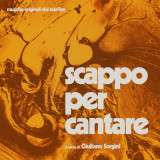
Another dream coming true! One of Giuliano Sorgini's finest and most sought-after titles is finally available as an official LP reissue – the first ever – remastered from the original tapes.
Originally released in 1971on the small library music imprint FAMA, which operated as a sub-label of RCA Italy, the record contains the original music written for Scappo per cantare, a small, pseudo-psychedelic 'musicarello' (musical comedy film) broadcast on RAI television and starring, among others, Italian singers Gianni Morandi and Mauro Lusini.
The only credited album artist is Sorgini, but it's impossible not to perceive, in this record, the hand of his close friend and colleague Alessandro Alessandroni.
This should not come as a surprise. In the early 70s, the two composers and multi-instrumentalists had a fruitful collaboration that saw them, under the monikers Braen (Alessandroni) and Raskovich (Sorgini), produce an abundance of works together, most of which have now gained the recognition they deserve. These include, among others, two 7" singles from their band The Pawnshop, three records in the series Alle sorgenti delle civiltà (Folkmusic), the crime/noir library albums Quarta pagina (Usignolo) and Inchiesta giudiziaria (Octopus Records), as well as the LP Tempo Libero (Panda Records), which was released shortly after the record presented here and in some ways drew rhythmic inspiration from it.
While their collaboration remained unacknowledged on the original release of Scappo per cantare (this was not uncommon at the time, especially in the field of library music), the record sounds perfectly in line with other works composed by Alessandroni in the early 70s, such as Complesso Gisteri's Mostra Collettiva (co-written with Oronzo De Filippi), or even a landmark album like Spontaneous, where Sorgini contributed to a handful of tracks.
So, yes, the sheer beauty of Scappo per cantare is the result of an incredible synergy between two heavyweights of Italian library music! Airy and sweeping melodies à la Zoo Folle, psychedelia à la Under Pompelmo, and various percussion instruments played by Sorgini seamlessly blend and fuse with elements and touches provided by Alessandroni.
More specifically, we find Alessandroni's signature, melancholy whistle in "Desolazione"; the peaceful and dreamy sound of his 12-string guitar in "Scogliere" and "Con Amore"; the trademark harmonies of his vocal ensemble Cantori Moderni in the last two tracks mentioned and in "Per cantare"; and his ingenious use of distortion on his Fender Stratocaster in the suspenseful transitions "Concentrazione" and "Fantocci", as well as in the frantic/hypnotic hippie numbers "Mordente" and "Fendente" (as a side note, it is worth remembering that Alessandroni experimented extensively with distortion in the rock-infused album Underground, co-written with De Filippi and released in 1971 under the moniker Braen's Machine, probably a reference to British psychedelic band Soft Machine).
The creative relationship between Sorgini and Alessandroni was so symbiotic that it would be useless to try to identify in more detail their respective contributions to the sound of Scappo per cantare. The alchemy between these two musical geniuses is the key to the album's exquisitely Italian mixture of cheerful lounge, sweet psychedelia and smooth easy listening.
To do justice to the quality of the music, this remastered reissue is enriched by a new artwork by Eric Adrian Lee, who drew inspiration from the psychedelic visual culture of the period in which the album was written and recorded.
Craft Recordings kündigt eine Edition zum 60-jährigen Jubiläum von The Futuristic Sounds of Sun Ra an.
Das Album aus dem Jahr 1962 ist ein herausragender Titel im umfangreichen Katalog des AfrofuturismusPioniers und innovativen Jazz-Künstlers und markiert Sun Ras erste Aufnahme mit seiner Band The Arkestra in New York, nachdem er von Chicago nach New York gezogen war. Produziert von Tom Wilson (der unter anderem für Bob Dylan, The Velvet Underground und die Mothers of Invention arbeitete), gilt The Futuristic Sounds of Sun Ra seit langem als eines der zugänglichsten Alben des Avantgarde-Künstlers.
Diese spezielle Neuauflage wurde von Kevin Gray bei Cohearent Audio komplett analog remastert, während die LP bei RTI auf 180-Gramm-Vinyl gepresst wurde. Als Bonus enthalten die CD- und LP Pakete Tom Wilsons Original-Liner Notes sowie aufschlussreiche neue Essays des Jazz-Historikers Ben Young und von Irwin Chusid, der nicht nur den musikalischen Nachlass von Sun Ra verwaltet, sondern auch Journalist, Radiopersönlichkeit und Autor des demnächst erscheinenden Buches Sun Ra: Art on Saturn - The Album Cover Art of Sun Ra’s Saturn Label ist.
Brotherhood Of Peace (aka B.O.P.) brought the world some of the best breezy power pop, Southern rock and heavy boogie all packed into one brilliant album in 1976, the fittingly titled Cuttin’ Loose. The album is a free-flowing nine song collection of genre blending would-be hits suited for both ’70s AM gold and FM album rock that never received its proper due, until now. The album flows somewhat similar to the way Big Star combined heavy riffs with airy pop sweetness, but B.O.P. brought more of a blues rock groove to the proceedings, resulting in heavier undercurrents to songs with glowing three-part harmonies and impeccable power trio musicianship. By the mid-’70s, rock ’n’ roll was truly anything goes. Experimentation, excess and inventing new genres was all the rage, and the trio of spritely young men—guitarist / vocalist Dennis Tolbert, bassist / vocalist Mike Arrington and drummer / vocalist Ronnie Smith—gamely tackled whatever sound they pleased. Fortunately, the band captured it all on their lone album, released on the small independent label Avanti Records in March 1976. The Mount Airy, North Carolina trio got its start as teens in 1969 as the backing band to a large 20-50 person traveling church choir called the New Americans. By 1970, the band was ready to move on to performing on their own. First as a sextet, the band soon trimmed down to a three-piece, working the local club circuit like madmen, sometimes playing three shows a day. At the height of their live tightness, B.O.P. recorded the album with local musicians Don Dixon and Robert Kirkland of the band Arrogance who worked at Charlotte recording studio Reflection Sound in October 1975. The band laid out the highlights of their live set in the studio, which ran the range of influences from The Raspberries to Deep Purple, Doobie Brothers to Nazareth, Lynyrd Skynyrd and Grand Funk. The initial pressing of 1000 copies was released in March 1976, but without major label machinery for retail distribution, radio and press, the album never took off. The band mostly sold them at live shows, via consignment at local stores and in limited distribution in the Southeastern region. However, to date, the record still occasionally pops up for sale online worldwide at exorbitant collectors’ prices. Until now, finally getting a proper reissue via Riding Easy Records.
Classic Jazz Album from 1978.
Featuring an all-star line-up.
First ever vinyl reissue since 1986.
Released for the first time in the UK & North America.
180g BLACK vinyl limited to 500 copies (w/obi strip).
Curtis Fuller (December 15, 1932 – May 8, 2021) was an American jazz trombonist best known for being a member of several legendary jazz outfits, his impressive catalog of solo albums and a contributor to many classic jazz recordings.
Fuller was born in Detroit and lost both his parents at a very young age. He spent several years in an orphanage run by Jesuits where he developed a passion for jazz after one of the nuns there took him to see his first live performance. Curtis attended public school in his hometown (together with Donald Byrd and Milt Jackson) where he took up the trombone at the age of sixteen.
Curtis Fuller was a well-respected member of iconic outfits such as Art Blakey & The Jazz Messengers, Art Farmer’s Tentet, The Benny Golson Quintet and Eastern Rebellion. The list of his collaborations is impressive to say the least, Mr. Fuller recorded and performed with greats such as Quincy Jones, John Coltrane, Count Basie, Dizzy Gillespie, Freddie Hubbard, Roland Kirk Rashaan, Miles Davis…and many others.
Fuller was granted an honorary doctorate of music from Berklee College of Music in 1999 and eight years later he was honored as a NEA Jazz Master. Curtis Fuller’s performances were included on classic recordings released by prominent labels from the likes of Blue Note, Savoy, Prestige, Strata-East, Muse, Verve and Impulse!
On the album we are presenting you today: Four On The Outside (Recorded in 1978 at the famous New York CI Recording Studio and released on Timeless Records the same year) the listener is treated to six majestic tracks of the highest caliber and features a remarkable outing of advanced musicianship by jazz-giants in their prime, delivering an inspirational gem of an album.
The all-star line-up includes Pepper Adams (Oliver Nelson, Lalo Schifrin, Herbie Hancock) on saxophone, Dennis Irwin (The Jazz Messengers, Chet Baker) on bass and James Williams (Calvin Keys, Thelonious Monk) on piano.
Four On The Outside shows off Fuller’s mastery of the Trombone and this delightful set features him in a front line with Pepper Adams delivering a unique trombone-baritone saxophone combination (few others have followed this intriguing coupling). Curtis Fuller plays from the heart and is on top of his game. Expect sharp and elegant original compositions, machine gun-like spurts, angular boppish lines and top rhythm section work that never gets in the way of the horns spreading their wings. All of the above makes this record a must have for any self-respecting jazz fan or collector!
Maurice Louca & his band Elephantine announce Moonshine, shining brightly with a live, raw, collective sound. Maurice Louca's band is incredible: double drummers Tommaso Cappellato & Özün Usta, Piero Bittolo Bon on alto, Daniel Gahrton on baritone and Isak Hedtjärn on clarinet, Rasmus Svale Kjærgård Lund on tuba, Rosa Brunello on bass, Els Vandeweyer on vibraphone, Louca on guitar/lap steel/synth.
As Asher Gamedze puts it in his essay: "Abstract territories of freedom, always grounded, expansive, multiple, internally differentiated, and elephantine."
One of the most gifted, prolific and adventurous figures on Egypt's thriving experimental arts scene, Louca has in recent years garnered a global reputation through three previous solo albums and an expanding, evolving lineup of genre-defying collaborations. The Wire called his 2014 sophomore solo effort, Salute the Parrot, "remarkable music-dense, driven and splashed with colour.
For Louca, Elephantine serves as both the pinnacle of his wide-ranging experience and a bold next step in his development as a composer, arranger and bandleader, from Cosmic Jazz, African and World music to transcendental modal traditions. The music-from its pensive lulls through its stretches of hard-grooving hypnosis and moments of avant-jazz.
Prika Amaral am Mikrofon und doppelte Riffpower - NERVOSA läuten mit Jailbreak ein neues Zeitalter der Bandgeschichte ein!
Die Thrash Metal Institution NERVOSA kehrt mit unaufhaltsamer Power, neuem Line-Up und ihrem neuen Studioalbum Jailbreak zurück, das am 29. September 2023 über Napalm Records erscheint.
Mit ihrem Vorgänger Perpetual Chaos (2,8 Mio. Plays auf Spotify) sicherten sich NERVOSA nicht nur ihre ersten Chartplatzierungen (#18 der offziellen Deutschen Albumcharts, #6 US Hard Music Albums, #9 US Top New Artist Albums Charts), sondern traten auch auf einigen der größten Festivals Europas auf, wie z.B. Copenhell, Resurrection, Metal Days, Summer Breeze, Wacken Open Air, und vielen mehr. Jailbreak steht mit seinen insgesamt 13 Tracks nicht nur für eine rasende Thrash Metal Attacke, sondern läutet auch ein neues Kapitel in der Geschichte der Band ein. Es ist die erste Veröffentlichung mit Gründungsmitglied Prika Amaral an den Vocals. Darüber hinaus geben NERVOSA mit der talentierten und erfahrenen Helena Kotina als zweite Gitarristin, Hel Pyre am Bass und Michaela Naydenova am Schlagzeug weitere spannende Neuerungen im Line-Up bekannt. Mit Jailbreak senden die vier Frauen die Botschaft, sich von allem und jedem zu befreien, das einen daran hindern könnte, den eigenen Weg und die eigenen Vorstellungen zu verfolgen und umzusetzen. Es geht darum, stolz auf sich selbst zu sein und auf die eigenen Stärken zu vertrauen.
Dreams are made and displaced on Mark Fell & Rian Treanor’s oneiric electro-acoustic inception 'Last Exit', borne from long days in the family garden, and assembled into a mesmerising masterpiece of minimalist modal rhythm and atmospheric exploration, into rapt smallsound detailing in breathtaking form. It’s a bit like listening to Virginia Astley’s ‘From Gardens Where We Feel Secure’, with washes of Autechre seeping into the mix from outside.
‘Last Exit…’ originally appeared in a different form as a cassette release for our Documenting Sound series in 2021, and was edited this year by Mark and Rian for this new expanded and altered edition, mastered by Rashad Becker. It renders a painterly,psychedelic, and diaristic depiction of sublime atmospheric tension, occasionally ruptured by their typical, asymmetric rhythm impulses in a form that rudely transcends their respective aesthetics. Across four parts, they kern, juxtapose and diffract synthesised percussion and field recordings into polymetric arrangements riddled with timbral nuance of a highly unpredictable nature.
While patently inflected with nods to Indonesian gamelan, Ugandan folk, Indian Carnatic classical, Morton Feldman-esque minimalism, free jazz improvisation and a sort of rhythmic cubism that speaks to their mutual, voracious listening habits and tastes, the results are arguably without direct compare. Attentive listeners will recognise, however, that ‘Last Exit’ effortlessly transcends their respective styles, achieving a new high watermark of imaginary future-hyperfolk expressed in a sort of personalised but highly relatable meta-musical language.
Seriously, they’re working beyond known conventions here; opening to a sublime frisson of Feldman-esque keys, birdsong and distant car engines, and closing to a combo of just-intoned drone and wafts of distant ballroom music. The 80 minutes in between feel like returning to a dream, with flashes of FM strings dabbed to sloshing rhythms and domestic detritus, tilting into a nervously tentative tension ruptured with abstract dance dynamism and angular free jazz ballistics.
The rejigged recordings also reflect the fidelity of memory recall, expressing an altered perspective on their time spent in the multigenerational family’s Rotherham garden during spring/summer 2020, replete with their mum/grandmother on piano and overheard singing and in convo, but now fraught with a more melancholic, distempered quality that makes for a genuinely unforgettable listening experience. A long-form isolationist fantasy, consider it crucial listening if yr into Robert Ashley's 'Automatic Writing', Graham Lambkin, Autechre or Nuno Canavarro.
Early on, his prodigious technique and wide-ranging style garnered comparisons with the great Oscar Peterson. But there has always been another side to Alexander's playing. Usually, jazz grabs the upper hand, but on occasion he digs deep into his Jamaican roots.
The 1974 We've Only Just Begun recording signals the beginning of Jamaican pianist Monty Alexander's fruitful relationship with MPS, lasting over a decade and encompassing some dozen albums. On many he partners with no one else than fellow Jamaican and one of the fathers of ska, guitarist Ernest Ranglin.
Among others, this Best Of includes tracks from Monty's MPS classics like RASS!, Here Comes The Sun, Montreux Alexander - The Monty Alexander Trio Live At Montreux, We've Only Just Begun, Monty Strikes Again, Cobilimbo, or the untitled Monty Alexander & Ernest Ranglin.
- A1: Good Luck (Feat Lisa Kekaula)
- A2: Right Here's The Spot (Feat Meshell Ndegeocello)
- A3: Petrilude
- A4: Supersonic (Feat Totlyn Jackson)
- B1: Benjilude
- B2: Lucky Star (Feat Dizzee Rascal)
- B3: Plug It In (Feat Jc Chasez)
- C1: Living Room (2 24)
- C2: Cish Cash (Feat Siouxsie Sioux)
- C3: Tonight (Feat Phoebe)
- D1: Hot 'N' Cold
- D2: Cosmolude
- D3: If I Ever Recover
- D4: Feels Like Home (Feat Meshell Ndegeocello)
KISH KASH is the third album from British electronic dance producers Felix Buxton & Simon Ratcliffe, better known as BASEMENT JAXX. The album features an array of stellar guest vocalists including punk icon Siouxsie Sioux on the title track, London grime superstar Dizzee Rascal on "Lucky Star", the mighty pipes of Rock n" Soul diva Lisa Kekaula (of LA"s "The Bellrays" ) on "Good Luck" and rounds off with the mellow tones of Meshell Ndegeocello. Recorded in Brixton, London, the album was released on XL Recordings in 2004, subsequently won the inaugural GRAMMY award for "Best Dance/Electronic Album" and was nominated for the UK"s prestigious Mercury Prize.
Restless Mashaits are based around the core of Jil and Stuf, who released a sizeable amount of nu- roots classics throughout the 90s and 2000's.
* Recently becoming active again, the Mashaits crew come with two prime-cut instrumentals - `Rasta the First’ & `Restless Mashaits’ - in a traditional roots steppers style with horns ablaze, with both tracks complimented by dub mixes courtesy of Russ D of The Disciples.
Yellow Vinyl[24,58 €]
Es beherrscht ein grauer, stimmungsvoller und dichter Spätherbst-Tag das Geschehen. Viel zu früh hat der Himmel sich verdunkelt. Jetzt plätschert gleichförmig und regelmäßig Regen auf die Straßen, auf die Erde, auf die griesgrämig wirkenden Menschen herab. So stellt man sich die Atmosphäre vor, in welcher das sechste Subsignal-Studioalbum "A Poetry of Rain" entstanden ist.
Fünf endlos wirkende Jahre ließen Subsignal ihre Anhänger auf neue akustische Klang-Abenteuer warten. "Und auch das hatte wieder mit der Pandemie zu tun", offenbart Markus Steffen den Grund für die quälend lange Pause. "Existenzängste schlichen sich ein", reflektiert er. "Im Zuge dessen verließ der langjährige Bassist Ralf Schwager die Band. Mit Martijn Horsten aus Rotterdam war allerdings rasch würdiger Ersatz gefunden. Dennoch schwelgen die zehn Kompositionen vor Sehnsucht und einer gehörigen Portion Wehmut."
Der progressive Mix aus Rock, Metal und Artrock gelingt scheinbar spielerisch. Ausnahme-Drummer Dirk Brand setzt dabei eine fulminante Basis, auf die mal rockige, mal elegante Gitarren-Sounds zusammen mit den Keyboards einmalige Klangwelten zaubern. Darüber schwebt das wunderbare Timbre von Sänger Arno Menses - immer präsent, immer einnehmend, voller Leidenschaft und Kraft. Dazu trägt auch die kristallklare und druckvolle Produktion von Yogi Lang von ihrem Label Gentle Art Of Music bei.
Presse:
Rocks 9/10: "Songs wie ›Impasse‹ oder "Marigold‹ berühren, transportieren Gefühle und packen den Hörer, wie es sonst Marillion, Yes oder Kansas am besten können. Auf welch hohem Niveau die Herren musizieren, wird bei Nummern wie The Art Of Giving Ins oder ›Sliver (The Sheltered Garden)‹ klar, aber Komplexi-lät ist hier nie Mittel zum Zweck."
Deaf Forever 8.5/10: "…meistens die wie immer großartigen Refrains, die einen aufrichten. ….wie gewohnt exzellent gesungene Artrock-Stücke, die von den nach fünf Jahren Wartezeit dürstenden Anhängern nun endlich auch zu Hause genossen werden können."
Rock It - Soundcheck #6/32: "…so steht der Name Subsignal auch auf Album Nummer sechs doch für handgemachte Qualitätsarbeit mit Herz und Seele. Reinhören, eintauchen und mitfühlen!"
Break Out: "Mit "Poetry Of Rain" unterstreichen Subsignal ihre Ausnahmestellung im Rock: Scheibe unbedingt zulegen! Ich bin mir sicher, dass niemand bei diesem Longplayer enttäuscht sein wird, der sich in melodischen Bereichen mit progressiven Parts wohlfühlt."
Gäste:
David Bertok - Keyboards "Embers Part II - Water Wings)
Marek Arnold - Saxophon "The Last of its Kind"
Yogi Lang - Keyboards
Dietmar Waechtler - Pedal Steel "The Art of Giving In"
Iraklis Choraitis - Backing Vocals "Sliver (The Sheltered Garden)"
Mix & Master von Yogi Lang, Farm-Studios Freising