Leave is the third album from Rasmus Rasmussens ethereal electronic project Aerosol. During the nearly six years that has passed since it's predecessor Airborne, Rasmussen has spent his musical efforts in acid rock outfit Causa Sui and as part of various constellations, playing alongside musicians from Sunburned Hand of the Man and legendary kraut bands Can and Faust.
These freeform psychedelic influences seep into the already recognizable style of hazy electronics, known from his own previous work as well as from the music of
his colleagues in former band Limp (Manual/Syntaks).
Cosmic sounds and psy- chedelic effects mingle with cascading guitars and kraut-infused beats on a collection of tracks that sends obvious nods to the german
synth pioneers of the seventies, but is still unmistakably an Aerosol-album - an album set on beating emotions, moods and melodies out of old synthesizers, cheap drum machines and Rasmus' trusty white Stratocaster.
quête:c ras
atom™'s ep »riding the void« is, together with the visual works of »HD+«, the conclusion of his critical yet delightful examination of pop music and culture on raster-noton.like the previous ep »ich bin meine maschine«, »riding the void« is set up very functionally,
aiming at being used in the club. techno maverick scuba, for example, turns the track with his »pulse mix« into a straight and dense march, whereas atom™ himself shakes the groove out of »riding the void« with his own two lighthearted remixes. his »nought remix« presents itself as slimmed-down yet very vibrant, while »tool« is a perfectly dance floor-ready reinterpretation of the original track. further more, an additional remix by hanno Leichtmann can be found on the digital version of the release.
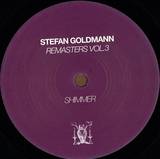
Shimmer was the record that put Stefan Goldmann on the map of techno. The dark and throbbing tracks, reduced to the essentials, were love at first sight for many of the DJs who ruled the scene back in 2004. Josh Wink threw in one of his most focused remixes for Stefan Goldmann's debut on Ovum - which was also the first one by a German artist on the label. As so often in dance music, things have come full circle. About time to give a mint copy of "Shimmer" to the DJs who play this prototypic sound today. Remastered meticulously by Rashad Becker at D&M, with the title track cut to a full 12" side, it never sounded better.
Inspired by the success of last summer's retrospective on Poker Flat, Steve Bug takes up his Traffic Signs moniker once more for a fabulous jam that more than merits the 10-year wait. The uncredited tunes that first came out under this name were classic jack tracks that devastated dancefloors - and 'Cookie Jar' is a more than worthy successor. This is stripped-down house, Chicago-esque, direct and determined to make you move. Berlin legend Jake The Rapper adds downright dirty humour with a spoken vocal fit for an age of internet sextapes and celebrity photo hacking. 'I like what you're cookin. Those cookies smell goooood,' he rascalously declares. Three mixes sprinkle the musical equivalent of chocolate chips, pecans and Brazilian stardust over the original. Steve Bug makes fine adjustments for the club, bouncing around the kick drums and doubling the synth riff with strings, while Joyce Muniz's dark, strobing treatment adds a dirty bass line for sexy, sweat-drenched dancefloors everywhere. Stripping away the vocal on the dub, Muniz's production talents are all the more scintillating, irresistibly kinetic from beginning to end. The brilliant video for 'Cookie Jar' has been created by swiss-french duo Ben & Julia, who let us take part in their playful, colorful and surreal world that suits the song so well.
Prolific Seattle producer Jon McMillion returns to Nuearth Kitchen with another crucial chapter in his epic tale of haunted house-music subversions. This EP offers four variations on a bizarre and engrossing theme. Don't It Make You (edit 1)' is a work of extremes: By some miracle of aural physics, it's at once one of McMillion's strangest tracks and one of his most accessible. He sets into motion a staunch, relentless house rhythm bolstered with congas, massed claps, synth-bass raspberries, and a badass male singer intoning, Don't it make you feel good, if you wanna get down/Just say it, say it again,' over which a miasma of enigmatic tones bubbles and swirls. Like Bohannon's disco-funk classics from the '70s, Don't It Make You' seems like a tease, even at 10 minutes duration, you wish it would roll on for at least 30. On Don't It Make You (edit 2),' McMillion strips things down to dance-floor essentials and erases some of the free-floating background weirdness.
The two remixes are revelatory. New York house icon Fred P. (aka Black Jazz Consortium) slides the track into a tighter pair of pants, but that just makes it swivel harder and slyer. He emphasizes Don't It Make You''s mysterious drones and then loops a female vocalist singing He keeps me' while dropping in some echoed male chatter to gently disorient. What a dreamy, soulful trip Fred P. conjures here. And rising German wunderkind Orson Wells layers and pitches up the original's cascades of bleeps, which becomes the dominant motif, and then subtly modulates said bleeps over the tune's seven minutes, while keeping that irrepressible rhythm strutting. McMillion's raw materials prove to be fertile ground for these two maverick remixers to flaunt their own fascinating quirks while maintaining the original cut's club-darkening and ass-moving functionality.
- A1: Rastaman
- B1: Lost Ark Dub
Deep and heavy cultural modern roots coming in a vintage Lee Perry / Black Ark analog style.
* Vocals from the lesser spotted Istan Black (aka Hugo Blackwood) who recorded with Perry back in the mid-1970s, most notably on the tracks `Reggae Music' with Dr. Alimantado and `Vibrate On' with Augustus Pablo.
* A brutal but subtle dubwise cut on the flip from the Lost Ark crew.
* Fresh roots reggae sounds coming from the ever on-the-ball Partial Records.
- A1: Mikey General - Bulletin (Rastafari Is Calling)
- B1: Twilight Circus - Bulletin Dubwise
*Old school roots reggae steppers rhythm produced by Ryan Moore aka Twilight Circus employing the talents of veteran vocalist Mikey General and riddim section Mafia and Fluxy, alongside legendary Jamaican guitarist Earl `Chinna` Smith.
*`Bulletin' was originally released on CD almost a decade ago but after extensive sound system play on dubplate by numerous sound systems in the UK and Europe, Partial Records have decided to give it a welcome vinyl release.
Little Hill goes dark!
A mysterious artist on the hill for this release named Vasco serving us, on Roman label, an ep with deep and glacial techno sounds; the two original tracks take us to the universe of the artist, cold and dark.
On other side the first remix is produced by Agazzi and follow the musicline of the originals so pulling out a paranoid march, other remix on bside is made by Valent and it's a peaktime modern techno percussive device.
Mastered by Rashad Backer at Dubplates&Mastering
Photo made by Valerio Gorga
- A1: Praise Poems - Warmth
- A2: Carefree - Larry Covin
- A3: Alone Again - Jorge Darden
- B1: What Is Life - Lee Stone
- B2: Resurgence - Ulysses Crockett
- B3: Dragon Rock - The P.t.s
- B4: Black Velvet Soul - Cookie Thomas (Part 1)
- C1: Black Velvet Soul - Cookie Thomas (Part 2)
- C2: Let Me Down Easy - Bold Breed Ft. B.g
- C3: God Of Thunder And Lightning (Shango) - Larry Dismond
- C4: Strawberries - Raspberries - Don Hales
- C5: Wait For Me - Bobby Stroup
- D1: The Way I See It - Far Out - Nature's Time
- D2: Can You Understand Sacrifice - Tom Macke
- D3: Cold Soul - Gemstones
- D4: Tribute To Ruffian - Innerflight (Part 1&2)
To all our respected critics, reviewers, and wisenheimer: be prepared to listen to this album in tranquility. If you do not do so you will most likely rate this release one out of five stars. And this is something which it certainly does not deserve. This album needs time and patience to be fully understood. And if you do so you will be enlightened by the true beauty of this selection.
Not only for Don McCaslin's project Warmth the time has come for representation and appreciation. All the songs on this disc are well worth to be discovered. No matter if you skip to Jorge Darden's jazzy-soulful "Alone Again" or to Seeds of Fulfillment's stunning "Solemn Solitude". Each and every song is a masterpiece in its own right. Funky soul music fans will be pleased to get a chance to listen to Cookie Thomas and Bold Breed, two cuts which are hard to find in its original format. Rarity is one thing, quality is another. The songs to be found here are both rare and good. Better yet, until now, all of these tracks had not yet been compiled.
After Movements and Feeling Nice, two already well-established compilation series on Tramp, Praise Poems could be the start of a new successful one. It was solely the title track which lead us to release this album. Don't ask if there will be a Volume 2. We don't know yet. What we do know is that if we ever come across a similar tour de force as Don McCaslin's compostion, then there will certainly be one.
Tapper Zukie was high on a list of artists that Richard Branson in 1978 had in mind to sign to his new Reggae label Front Line.
The mission was to sign the cream of the reggae crop when the Virgin record boss went down to Jamaica with a group of Reggae minded people,included in that group was one Johnny Rotten,singer of the very recently disbanded group The Sex Pistols.
The result of which would be a two album deal between Tapper and the label.
The first release also in 1978 was the album Peace in the Ghetto(Kingston Sounds KS052) and this release Tapper Roots.
For the cd issue of this release,Tapper has picked two tracks that he feels hapy to put alongside the album.
'Make Faith' cut with the band Knowledge and' New Star'..
This is a very important album from the Tapper Zukie catalogue...Respect
dedicated to promote young and evolving artists and to present musical diamonds in the rough, raster-noton is curating the unun series, which name derives from the atomic numbers of the chemical elements 111-119. »vortices« is ueno masaaki's first release on raster-noton, and the seventh release of this series.ueno masaaki takes his musical cue from natural phenomenon and laws of nature by trying to reconstruct, not simulating them. the results are mainly rhythmical patterns that set off a chain reaction, expanding and contracting and creating new formations all the time.the four tracks he presents on the EP are characterized by solid sound structures that appear to be very harsh and straight, sometimes even brutal, whereas the high pace even intensifies this impression. apparently repetitive at first sight, the tracks are in fact highly complex and intelligently arranged, presenting unforeseen breaks and shifts in direction.
- A1: Revenge Of The Flying Cymballs-Bunny Striker Lee All Stars
- A2: Cool Operator-Delroy Wilson
- A3: The Gorgon-Cornell Campbell
- A4: Ripe Cherry-Dennis Al Capone
- A5: The Beatitude-The Uniques
- A6: You're No Good-Ken Boothe
- B1: Money Money-Horace Andy
- B2: Move Out Of Babylon Rastaman-Johnny Clarke
- B3: Labrish-The Upsetters And The Aggrovators
- B4: Two Faced People-Max Romeo
- B5: It's Reggae Time-Don Lee
- C1: Last Flight To Reggae City-Stranger Cole And Tommy Mc Cook
- C2: Jah Is Guiding Star-Tappa Zukie
- C3: Joyful Locks-U Roy
- C4: The Great Musical Battle-Derrick Morgan
- C5: The Clock-John Holt
- D1: Straight To Jazzbo's Head- I Roy
- D2: Straight To Roy's Head- Prince Jazzbo
- D3: The Killer-Jah Stitch
- D4: Cool Down Your Temper-Linval Thompson
- D5: Lazer Beam- Don Carlos
- D6: Jamaican Roots Dub- King Tubby &The Aggrovators
Bunny 'Striker' Lee's standing in the Jamaican recording business has remained unassailable for over four decades.Known by many aliases including 'Gorgon'.
The legend of the Gorgon originated in Greek mythology some three thousand years ago and has become a common image in art, literature and in Jamaica...Music.
The name actually derives from the ancient Greek word gorgos which means 'dreadful' ,appropriate when one considers that the avalanche of Gorgon inspired records came as a direct result of the influence of the Rastafarian movement on the Jamaican musical mainstream and the dread locked hair of the Rasta brethren was likened to that of the Gorgon sisters.
''About her shoulders she flung the tasselled aegis, fraught with terror...and therein is the head of the dread monster, the gorgon, dread,awful....'' Homer
The second of the Decadub vinyl-only releases dedicates three of its four sides to a volley of woozy and twisted footwork from most of the key members of Chicago's Teklife crew. Side One starts with DJ Rashad and Gant Man's squiggly 303 banger 'Acid Life' and moves onto Taso & Djunya's Darwinian banger 'Only The Strong Will Survive'. Side Two descends into DJ Spinn's bombastic 'All My Teklife' and then Earl, Rashad & Taye's 'Bombaklot' which takes Hyperdub full circle with a yardcore bomb like a 2014 upgrade of the label's early days. Side Three leads with DJ Earl's immaculate diva vocal cut-up of 'I'm Gonna Get You', then moves on into DJ Taye's fizzling R&B jam 'Get Em Up' and the stone cold, warped humour of 'Icemaster' by Heavee. On the fourth and final side, Tokyo-based ally Quarta330 returns to craft 'Hanabi', an epic, uptempo synthesiser jam. Young gun Champion follows with 'Power Cut', its minimal, energetic and militant kicks and bass molded with cowbell and lots of tight edits, before dropping some neat keys and a warping bassline two thirds in. Ikonika finishes things off with the solemn march of 'Tug Zone', opening slow but building in flickering high hats and gaseous cymbals into a track which could have emanated from Battlestar Galactica.
For it's eighth release Apartment delivers it's first long player, by mysterious producer, VernoN (Dixon Avenue Basement Jams / Night Gallery). Little is known of this artist - what we do know is that his formative years were spent in Belgium, immersing himself in the emerging New Beat and EBM sounds emanating from the country's dance clubs. For his release on Apartment he has created 6 tracks that reflect these early influences, whilst also taking in other techno, house and electro influences. Pounding drums, rasping hi-hats, rave stabs, twisting acid lines and grinding synths all come together under the unique tutelage of this most skilled of producers, all the while watched by the experts...
The Hamburg based Hannes Rasmus released a record in 2013 called "Analog Ist Besser" on Gold Panda's precious label Notown which also featured Luke Abbott from Border Community. This put him on the map for minimal electronic melodic music with a lot of tastemakers and friends of melodic techno. Hannes Rasmus who can be described as a shy person who has eveloped a big knowledge for vintage synthesizers over the years. His challenge has been to write music with hardware, sequence und synths. This may sound not so much of a challenge but for "people who know" the analog sound can bear as much beauty as it can be disastrous since it can be pretty much unpredictable and hard to handle as well. So we are talking here about a person who really loves and lives with analogue g
Time led him through various forms/genres of electronic music making, going step by step towards minimal electronic techno and house music. Meanwhile his aim alongside writing music is to build in Hamburg according to his personal demands, so this is as much of a process as doing music and time as he says. When he is not making music you can see him with a soldering iron building synth
with DIY kits or fixing old synths.
His EP on Traum "Musik Für Fünf Maschinen" refers to the equipment he used to write the music... the tracks however refer to swimming pools.
It's now almost two years since German producer Sawlin made his debut on Ann Aimee, but now he is back for a third EP on the Delsin sister label. Entitled 'Niedertracht', it features four more tracks of searing techno in truly uncompromising Sawlin style.
'Kontraktion' goes first with heavy metallic hits, lots of industrial machinery found sounds and thumping kick drums. It's lumpy, mechanical and stiff stuff that is slow and purposeful. The surface of 'Padjam' is then covered in squirming, scratchy little effects as syncopated drums swing deep down below. Eventually the thing gets fleshed out with some malfunctioning melodies and slurred vocal stabs yet still it sounds like no other techno out there.
'Niedertracht' takes up the b1 with a spangled techno track that has gurgling synths and fizzing drills all encased in a ravey arrangement of horns and windy howls. The broken sounding 'Weißhaupt' is made up of metal loops, punctured drums and rasping synths that sound like factories in melt down. This is truly inventive electronic music that's laced with a very real and unmistakable sense of industrialism, and proves Sawlin is one of the day's most exciting producers.
- A1: Kahedi Radio Intro
- A2: Hallo Welt!
- A3: Aufruhr (Freedom Time) Feat. Patrice
- A4: Kahedi Radio Interlude 1
- A5: Jeder Tag Zuviel Feat. Patrice & Joy Denalane
- A6: Esperanto Feat. Joy Denalane
- B1: 1Ste Liebe Feat. Joy Denalane
- B2: Du Du Du
- B3: Kahedi Radio Skit 1
- B4: A-N-N-A Prelude
- B5: A-N-N-A (Immer Wenn Es Regnet)
- C1: Kahedi Radio Skit 2
- C2: Rap Ist Feat. Afrob & Megaloh
- C3: 1992 (Fab 5 Freddy Exclusive) Feat. Samy Deluxe
- C4: Eimsbush Bis 0711 Feat. Samy Deluxe
- C5: Einstürzen Neubauen Feat. Samy Deluxe
- C6: Zu Elektrisch
- D1: Fremde Feat. Sophie Hunger
- D2: Berlin / Tel Aviv Feat. Sophie Hunger
- D3: Solang Feat. Tua & Grace
- D4: Wolke 7 Feat . Philipp Poisel
- E1: Kahedi Radio Skit 3
- E2: Tabula Rasa Pt. 1 Feat. Gentleman & Sékou
- E3: Tabula Rasa Pt. 2 Feat. Gentleman, Sékou, Afrob & Joy Denalane
- E4: Fk 10
- E5: Kahedi Dub / Yogibär Feat. Megaloh
- F1: Alter Weg
- F2: Er-Sagt-Sie-Sagt
- F3: Wo Rennen Wir Hin
- F4: Fühlt Sich Wie Fliegen An
- G1: Kahedi Radio Skit 4
- G2: Vida Feat. Gregory Porter
- G3: Kahedi Radio Interlude 2
- G4: Niemand (Was Wir Nicht Tun) Feat. Joy Denalane
- G5: Kahedi Radio Interlude 3
- G6: Mit Dir Feat. Joy Denalane
- G7: Leg Dein Ohr Auf Die Schiene Der Geschichte Feat. Grace
- G8: Flor Que Marchitará Feat. Don Philippe & Laura López Castro
- H1: Wenn Der Vorhang Fällt Feat. Don Philippe, Megaloh, Afrob & Grace
- H2: So Wundervoll Feat. Gregory Porter
- H3: Halt Dich An Deiner Liebe Fest
- H4: Kahedi Radio Outro
Max Herre hat ein MTV Unplugged aufgenommen. Das rückt ihn in eine Tradition mit Udo Lindenberg, Eric Clapton, Lauryn Hill, Jay Z. Mehr noch als ein konsequenter Karriereschritt und popkultureller Ritterschlag aber ist das Konzert eine Rückkehr zu seinen Wurzeln. Denn lange bevor er als Texter und MC einer ganzen Generation eine neue Stimme geben sollte, war er vor allem der Junge mit der Gitarre, der einfach nur spielen wollte. Das Gefühl, das er als 15-Jähriger im Proberaum suchte, hat er nun im 'Großen Saal'des altehrwürdigen Funkhaus Berlin Nalepastraße wiedergefunden.
Die Geschichte dieses besonderen Abends beginnt vor knapp 25 Jahren in einem Keller in Stuttgart-West. Dort jammte er mit Freunden zu dem Funk, Soul und Reggae, den er liebte - und legte, ohne es zu wissen, den Grundstein für das, was da kommen sollte. Zwei klassische Alben mit Don Philippe und DJ Friction als Freundeskreis zum Beispiel, die sich nicht nur weit über 500.000 mal verkauften, sondern eine ungehörte Musikalität in die deutsche Rap-Landschaft einführten. Drei Soloplatten, die den Bogen spannten von der '1sten Liebe' HipHop zu fragilem Folk im Stile eines Singer-Songwriters (und zurück). Eine Zweitkarriere als Labelbetreiber und Produzent. Und dazwischen immer wieder Auftritte, bei denen all diese Erfahrungen und Einflüsse auf fast magische Weise zusammenliefen.
Max Herre hat Rap immer in einem Bandkontext gedacht, HipHop stets in einem Kollektivgedanken gelebt. Das war Anfang der Neunziger so, als er als Kind der Kolchose seine ersten Live-Auftritte in süddeutschen Jazzclubs hatte. Das war später so, als er aus Freundeskreis die FK Allstars erwachsen ließ und mit ihnen über die größten Festivalbühnen des Landes tourte. Und das ist heute nicht anders, wenn er wie 2012 auf seinem fulminanten Gold-Album Hallo Welt! alte wie neue Inspirationen zu seelenvoller Rapmusik mit Ewigkeitsanspruch bündelt.
So ist es nur konsequent, dass für MTV Unplugged / KAHEDI Radio Show zahlreiche Featuregäste und Freunde nach Berlin gekommen sind: wichtige Weggefährten wie Joy Denalane, Afrob, Sékou, Gentleman, Samy Deluxe, Patrice, Sophie Hunger, Philipp Poisel oder US-Ausnahmesänger Gregory Porter, aber auch das 26-köpfige, eigens für den Abend zusammengestellte KAHEDI RADIO ORCHESTRA. Unter der Führung des musikalischen Leiters Lillo Scrimali kommen so mehr als 40 Musiker aus drei Generationen zusammen. Produzent Samon Kawamura und Host Fab 5 Freddy, einst erster Moderator der wegweisenden HipHop-Sendung Yo! MTV Raps, ziehen im Regieraum zusätzlich dramaturgische Fäden.
'Ich bin sehr dankbar und glücklich, dass ich für dieses Projekt mit einigen der besten arbeiten durfte: viele davon langjährige Freunde und Wegbegleiter', so Max über das mehr als zweistündige, komplett akustische Konzert. 'Sie alle haben nicht nur ihr Spiel und ihre Fähigkeiten eingebracht, sondern ihr Herz und ihre musikalische Vision.'
Den passenden Rahmen bietet das Funkhaus Berlin Nalepastraße am Köpenicker Spreeufer. In dem ehemaligen Hauptsitz des DDR-Hörfunks, in dem schon Barenboim und die Bartoli, aber auch Portishead und Sting gearbeitet haben, vereinen sich Feierlichkeit und funktionelle Strenge auf ganz erstaunliche Weise. Max Herre hat diesen geschichtsträchtigen Ort für MTV Unplugged / KAHEDI Radio Show neu erdacht, indem er seine ursprüngliche Funktion als Aufnahmeraum unterstrichen hat. Vom Publikum umgeben spielen die Musiker in einer 360°-Konstellation zueinander und empfinden gemeinsam nach, wie in den siebziger Jahren Soulmusik gemacht wurde.
MTV Unplugged / KAHEDI Radio Show ist ein erlebtes Experiment mit offenem Ausgang und maximaler künstlerischer Freiheit. Eine kollektive Verneigung vor Soul, Jazz, Funk, Reggae und Rap. Und die in Musik gefasste Botschaft, dass Zukunft stets auch ein Stück Vergangenheit in sich trägt.
Zumindest, wenn sie so klingt wie die Musik von Max Herre.
Seule une étude concise des différents mouvements automates de la musique électronique et leurs constantes permet de les subsidier par des séquences pré enregistrées plus ou moins longues et des les varier dans leurs assemblages via dans un premier temps des outils informatiques simples avec des contrôleurs appropriés. Réunir l'esprit d'un studio d'une période, endroit, d'un style, d'un type de machines ou de marques, la multitude des genres et styles à travers sampling ou reproduction, les possibilités sont presque infinies dans un maigre espace après de longues heures de travail. Une sensibilité suffisamment entrainée peut les naviguer. Ainsi le glorieux "rétro boy" avec sa boite à rythme et son synthétiseur, manifeste de la préhistoire de la techno, tout comme plusieurs personnes manipulant ces machines ne sont qu'un simulacre de ces groupes musicaux des siècles précédents. L'artiste en sa matière assemblée, construite et mutante, lui seul touche à l'individu dans son plus proche appareil. Dans l'enfance de la musique électronique dansante, le musicien reproduit l'autrefois essentiellement acoustique dansant directement sur un petit ensemble d'appareils et ne pouvant qu'agir sur de faibles transformations sonores, restreint à des possibilités de son par les ingénieurs d'une firme parait bien triste dans l'échec de la libération de ses semblables. Aujourd'hui par le biais de la multitude des supports et leur consultation facilité par les nouveaux médias, naviguer entre pratiques d'autrefois et connaissances de ces anciennes cultures tout en les combinant au mode d'aujourd'hui permet le rassemblement de la culture d'une lignée dont le point vectoriel semble remonter vers la naissance d'un certain assemblage physique qui engage un peu près toujours un certain ensemble de mouvements déclenchés autour d'un axe sensible ici non seulement à l'interaction sonore dans un isolement provoqué mais aussi dans le rapport du corps dans l'environnement construit autour d'une énergie artificielle ayant pour but principal le déclenchement de couches successives de vents à modulation de fréquences variées et pulsées à de multiples échelles par la sensibilité humaine de plusieurs personnes à plusieurs époques et rassembler autour d'un même esprit festif harmonieux. Ainsi, c'est l'enregistrement de ces performances que nous vous proposons dans son grand esprit dérivé à l'architecture économique proposée par la société d'aujourd'hui.