"Da fällt mir doch die Kinnlade runter - Hier in euren glücklichen Händen liegen die urzeitlichen Kassetten-Kuscheleien, die aus einem weit entfernten Keller in Baltimore von jenen - mittlerweile sicherlich fast schon mythischen - The Smashing Times heraufströmten. Erhabene Feldaufnahmen, die scheinbar die Kluft zwischen einer aufkeimenden unterirdischen Folk-Rock-Renaissance überbrücken und doch kurz auf schimmernde DIY-Jangle-Pop-Anklänge aus der Jugendrebellion dieses alten Griesgrams treffen, ohne einen Hauch von revisionistischem Ritual oder irgendetwas Trendigem (wie etwa ein emotionaler Komplex). Das besagte Quintett schreitet durch schwindelerregende Tracks voller skurriler Art-Pop-Meisterleistungen, zaubert ein Labyrinth aus großartiger Ausrüstung herbei, trotzt kultureller Langeweile - und ihr werdet schon vor dem Nachmittagstee völlig umgehauen sein und bald ins Bett müssen. Also macht euch ein Bild davon und hört euch die Smashing Times an." - Sam Knee
"Life Is Beautiful Again" is the debut album of Nadine El Roubi, a Sudanese-born, New York-based singer, rapper, songwriter, and multidisciplinary artist.
The album is the culmination of music created over the last three to four years. While the album can be categorized as primarily neo-soul, its true genre remains fluid — shaped by influences in hip-hop, neo-soul,and indie music.
Both melancholic and powerful, introspective and self-assured, Life Is Beautiful Again explores personal and external chaos, womanhood, belonging, and the determination to maintain faith through struggle. Thematically, it marks a shift from her previous work. Where earlier releases were overtly political, defiant, and outward-facing, this album turns inward. It is softer, more reflective, and rooted in the belief that vulnerability can be its own form of strength.
Written and recorded over three years across four cities, the album carries the imprint of many different versions of a Sudanese woman navigating change, loss, love, ambition, and growth, these songs became a way of making sense of the world.
At its core, the album’s message is simple: even through the ugliest of times, life will always become beautiful again.
Futurismo proudly present a vital compilation born in the shadows of American punk; AMERICAN GRAVE Gothic Punk / Deathrock USA: 1978-1988, the third volume in their Altered Vision anthology series.
Drawing from darkest depths of the American spirit, American Grave is testament to a subculture spawned from late night savagery, graveyard hangouts and suburban isolation. Deathrock, post-punk, goth, whatever term you prefer, this compilation showcases the sounds and aesthetics of a tarnished golden era, an underground movement that took the DIY concepts of punk and the velocity of a burgeoning hardcore scene and immersed it in echoes, distortion, tribal rhythms and macabre vocals, thematically preying upon cult horror flicks, surrealism, and the manipulation of religious iconography. Whilst the UK had a counterpart scene many would hail as Goth, this was different, this was a truly American incarnation, a new breed of youth haunted by the ghosts of old blues, garage and glam, bleak theatrical imagery dressed up to evoke a response, smeared eyeliner, leather, bones…black. This was a backlash against a culture in decay, bucking against a puritanical oppression brought on by the archaic social standards set by their parents. It was aggression manifested as gloom, it was a ceremony, the celebration of death.
American Grave has been co-curated by Wesley Eisold (Cold Cave/American Nightmare/Heartworm Press) in collaboration with Futurismo head honcho Del Jae, to bring you a haunting tracklist ranging from the all important integral mainstays of the genre to those rarer and more elusive artists, including many recordings that have never been reissued before on any format. Featuring the music of Christian Death, T.S.O.L., The Cramps, Of A Mesh, The Gun Club, Twisted Roots, Kommunity FK, The Brainz, Theatre Of Ice, Burning Image, Fur Bible, PSI Com, Shadow Of Fear, Super Heroines, 45 Grave and more.
The music on this compilation is reinstated further from a visual perspective by an array of incredible images by famed punk photographer Edward Colver, and lovingly designed to the level you would expect from a Futurismo release.
2xLP on limited edition ‘Splintered Tomb’ coloured vinyl. It is housed in a gloss laminated outer sleeve with colour inner sleeves and contains a large fold-out poster with unseen photos by the great Edward Colver, words by Lisa Fancher and liner notes by Wesley Eisold of Cold Cave/American Nightmare.
Norman Blake und Raymond McGinley machen seit 37 Jahren gemeinsam Musik bei Teenage Fanclub, und auch wenn manche Aspekte des Bandlebens mit der Zeit einfacher geworden sind, können ihnen die einfachsten Dinge immer noch einen Strich durch die Rechnung machen. Blake sagt dazu: "Es ist schwierig, wenn es darum geht, sich einen Namen für ein Album auszudenken. Vor allem, wenn man schon 12 davon gemacht hat." Der Titel ,Do Not Dare To Dream" leitet sich ab von Blakes ,I Do Not Dare To Dream", einem mitreißenden, hymnischen Song, der von klangvollen Akustikgitarren getragen und am Ende von einem Duell elektrischer Gitarren begleitet wird, die sich wie eine beruhigende Umarmung umeinander schlingen. Blake erklärt, dass der Titel jene Memes verspotten soll, die die Menschen dazu auffordern, zu träumen, was für ihn irgendwie lächerlich ist. "Ich glaube nicht, dass die Welt so funktioniert." Das 13. Album von Teenage Fanclub ist voller Songs, die ruhig und entschlossen sind und eine Bestandsaufnahme des angespannten Zustands der Welt vornehmen, ohne der Verzweiflung zu verfallen. Blakes warme, von Orgelklängen untermalte Midtempo-Ballade ,Day In The Sun" und Raymond McGinleys ,Over And Over" sprechen beide davon, wie jeder einen neuen Sinn im Leben finden kann, indem er sein Herz öffnet. "Wir können immer noch fröhlich und optimistisch sein, auch wenn die Lage nicht gerade rosig ist", sagt McGinley. Blake und McGinley werden auf ,Do Not Dare To Dream" von ihren Bandkollegen Euros Childs (Keyboards und Gesang), Francis Macdonald (Schlagzeug) und David McGowan (Bass) begleitet. Dieses Quintett spielt nun schon so lange zusammen, dass keiner der beiden Hauptsongwriter und Gitarristen von Teenage Fanclub das Bedürfnis verspürt, sich vor dem Gang ins Studio über ihre Songs den Kopf zu zerbrechen oder Arrangements auszuarbeiten. Sie warten lieber auf die Beiträge der übrigen Bandmitglieder. Die Aufnahmen fanden im Black Bay Studio in der Ortschaft Kirkibost auf der schottischen Insel Great Bernera in den Äußeren Hebriden statt. Wie langjährige Fans wahrscheinlich wissen, nimmt Teenage Fanclub jedes Album an einem neuen Ort auf, damit die einzigartige Atmosphäre dieses Ortes die Musik beeinflussen kann. Great Bernera war ihr bislang abgelegenster Aufnahmeort, was der Band half, sich auf die Arbeit zu konzentrieren, sie aber auch in einen Zustand der Ehrfurcht versetzte, da sie von der tosenden See und antiken Ruinen umgeben waren. Das Ergebnis ist eine Sammlung von Liedern, die von der richtigen Perspektive von Musikern durchdrungen ist, die schon eine Weile im Geschäft sind, aufgenommen an einem Ort, der schon noch länger existiert. Wie Blake es ausdrückt: ,Ich glaube, es läuft einfach so ab, dass man von einer Sache zur nächsten übergeht, und ehe man sich versieht, sind 30 Jahre vergangen." McGinley fügt hinzu: ,Ja, es ist schon eine ganze Weile her, seit wir mit dem angefangen haben, was wir tun, aber für uns kommt es uns vor, als wäre überhaupt keine Zeit vergangen. An dem Ort, an dem wir das Album aufgenommen haben, wurde schon vor Tausenden von Jahren gesungen. Das Leben ist kurz, aber die Musik ist ewig."
Norman Blake und Raymond McGinley machen seit 37 Jahren gemeinsam Musik bei Teenage Fanclub, und auch wenn manche Aspekte des Bandlebens mit der Zeit einfacher geworden sind, können ihnen die einfachsten Dinge immer noch einen Strich durch die Rechnung machen. Blake sagt dazu: "Es ist schwierig, wenn es darum geht, sich einen Namen für ein Album auszudenken. Vor allem, wenn man schon 12 davon gemacht hat." Der Titel ,Do Not Dare To Dream" leitet sich ab von Blakes ,I Do Not Dare To Dream", einem mitreißenden, hymnischen Song, der von klangvollen Akustikgitarren getragen und am Ende von einem Duell elektrischer Gitarren begleitet wird, die sich wie eine beruhigende Umarmung umeinander schlingen. Blake erklärt, dass der Titel jene Memes verspotten soll, die die Menschen dazu auffordern, zu träumen, was für ihn irgendwie lächerlich ist. "Ich glaube nicht, dass die Welt so funktioniert." Das 13. Album von Teenage Fanclub ist voller Songs, die ruhig und entschlossen sind und eine Bestandsaufnahme des angespannten Zustands der Welt vornehmen, ohne der Verzweiflung zu verfallen. Blakes warme, von Orgelklängen untermalte Midtempo-Ballade ,Day In The Sun" und Raymond McGinleys ,Over And Over" sprechen beide davon, wie jeder einen neuen Sinn im Leben finden kann, indem er sein Herz öffnet. "Wir können immer noch fröhlich und optimistisch sein, auch wenn die Lage nicht gerade rosig ist", sagt McGinley. Blake und McGinley werden auf ,Do Not Dare To Dream" von ihren Bandkollegen Euros Childs (Keyboards und Gesang), Francis Macdonald (Schlagzeug) und David McGowan (Bass) begleitet. Dieses Quintett spielt nun schon so lange zusammen, dass keiner der beiden Hauptsongwriter und Gitarristen von Teenage Fanclub das Bedürfnis verspürt, sich vor dem Gang ins Studio über ihre Songs den Kopf zu zerbrechen oder Arrangements auszuarbeiten. Sie warten lieber auf die Beiträge der übrigen Bandmitglieder. Die Aufnahmen fanden im Black Bay Studio in der Ortschaft Kirkibost auf der schottischen Insel Great Bernera in den Äußeren Hebriden statt. Wie langjährige Fans wahrscheinlich wissen, nimmt Teenage Fanclub jedes Album an einem neuen Ort auf, damit die einzigartige Atmosphäre dieses Ortes die Musik beeinflussen kann. Great Bernera war ihr bislang abgelegenster Aufnahmeort, was der Band half, sich auf die Arbeit zu konzentrieren, sie aber auch in einen Zustand der Ehrfurcht versetzte, da sie von der tosenden See und antiken Ruinen umgeben waren. Das Ergebnis ist eine Sammlung von Liedern, die von der richtigen Perspektive von Musikern durchdrungen ist, die schon eine Weile im Geschäft sind, aufgenommen an einem Ort, der schon noch länger existiert. Wie Blake es ausdrückt: ,Ich glaube, es läuft einfach so ab, dass man von einer Sache zur nächsten übergeht, und ehe man sich versieht, sind 30 Jahre vergangen." McGinley fügt hinzu: ,Ja, es ist schon eine ganze Weile her, seit wir mit dem angefangen haben, was wir tun, aber für uns kommt es uns vor, als wäre überhaupt keine Zeit vergangen. An dem Ort, an dem wir das Album aufgenommen haben, wurde schon vor Tausenden von Jahren gesungen. Das Leben ist kurz, aber die Musik ist ewig."
Composer and multi-instrumentalist Koen Holtkamp has spent more than two decades shaping a body of work at the intersection of ambient, experimental, and electroacoustic music. Known for his role in the influential duo Mountains, as well as a solo catalog defined by texture and spatial awareness, Holtkamp has long explored how sound interacts with environment and perception. With Nightlife, he enters a new phase of that inquiry, one shaped as much by physical relocation as artistic evolution.
After leaving Brooklyn for the relatively rural setting of New York’s Hudson Valley, Holtkamp found himself immersed in nature and embracing a slower way of life, a shift that directly informed the album’s creation. Rather than rushing into a new project, he allowed the space itself to guide him, focusing on experimentation and play instead of a fixed outcome. Over time, a new instrument emerged from his modular system, built around physical modeling techniques that emulate plucked string sounds. Drawing on a deep affinity for acoustic traditions, from guitar soli to the kora and other chordophones, he began translating those influences into an electronic language, creating music that feels tangible, effusive, and even intimate, despite its synthetic nature. As the pieces took shape, Holtkamp expanded the project into a kind of imagined ensemble. Composed with specific collaborators in mind, the album features extensive contributions from drummer Greg Fox and saxophonist and flutist Matt Bauder, whose performances subtly reshape the material and draw it toward more fluid, song-like forms, alongside a guest appearance from Ben Vida on synth bass. Yet even as Nightlife occasionally resembles a band in motion, its construction resists traditional cohesion. Acoustic and electronic sources coexist to create a hyper-dimensional sense of space, with each element deliberately placed in its own distinct environment, yielding a complex yet inviting setting that feels both otherworldly and completely natural.
Much of the album was created during late-night sessions, which became a kind of personal ritual and ultimately inspired its title. Nightlife unfolds as a series of finely detailed environments, where stillness, texture, and subtle interplay take precedence over momentum. Each piece invites close listening while remaining open and unforced, reflecting both a change in pace and a deepening of focus. The result extends Holtkamp’s ongoing interest in how sound can shape, and be shaped by, the spaces we inhabit.
Beneath the sleek, confident guitar line that powers “Overdrive,” the lead single of All Over You, another guitar marks the time more impatiently, as if the groove its locked into is the timebomb- tightness of a pre-hookup heartbeat. Its energy isn’t nervous — after all, it’s hard to be nervous with Will Schwartz cooing come-ons like “I just wanna get you in the bed / Light you up like a cigarette” in your ear — but it is urgent. Excited. Titillated.
That’s the word that best describes the prospect of a new Imperial Teen record: titillating. They come out every five or six years, each new album acting as, to quote Roddy Bottum, “an episodic piece of where we are now, where the world is now, who we have become, and the geography of our collective consciousness.” There is considerable distance between Imperial Teen, its members — Bottum (guitars, keyboards, vocals), Schwartz (vocals, guitars, keyboards), Jone Stebbins (bass, vocals), and Lynn Truell (drums, vocals) — having made lives for themselves in different cities, but the collective consciousness that exists between them makes distance and time seem immaterial to the listener.
Time, especially time together, is not immaterial to Imperial Teen: it is precious. “For the last few records,” Stebbins explains, “the process has been similar. We live great distances away from each other, so initially, we get together to collaborate, write, and create. When we have enough material, we reconvene to record. Both scenarios, creating and recording, take multiple trips, sometimes with big lapses of time in between due to our various schedules.” Bottum concurs: “The biggest challenge in writing and recording is the distance between us, but the longing and desire and the ultimate coming together becomes more potent as a result.”
All Over You is a triumph of maximized moments together, four people bringing the force of their personalities to bear on years of built-up ideas. Title track “All Over You,” initially built over the computer, gained its charming sneer in the studio, where Stebbins’ buoyant, fuzzed out bassline added bounce to the song’s punchy, sloganeering lyrics, a perfect set-up for Truell to drive the song home, screaming the last line of the chorus, “We’ve got nothing to do,” like a rallying cry for a generation that’s been given nothing and told to deny themselves everything. “In my head,” Truell says, “I just went back to punk, to that feeling of prowling around looking for anything to do and being so mad about how boring everything is that you just have to yell.” The track had an attitude, it had an unexpected texture thanks to Truell’s playing improvised percussion, but her scream is what took it to the next level, transforming it into a signature Imperial Teen song.
One of Imperial Teen’s less magical concerns on All Over You is the effect capitalism has on the creation of art. This expresses itself in the headspinning rush of music industry success and disappointment that plays out in “Hands All Up,” and also in Imperial Teen’s sound. All Over You features the band’s most expansive, textured palette to date, and much of it’s steeped in — bubblegum music and boy/girl harmonies, electro beats and grungy distortion, power pop mall anthems and kiss-off lyricism — has been dismissed, at one point or another, as a fad. Time, of course, has proven otherwise, and All Over You makes a case for Imperial Teen as four of that time’s architects, inheriting, preserving, and pushing the boundaries of what pop music can be from one song to the next.
“We want to make people dance and think and feel,” says Schwartz. In all of those ambitions, All Over You crushes, brought to life by four musicians who found each other in the clubs of San Francisco over three decades ago and have remained family ever since. It is less a return from hiatus than a broadcast from the sonic utopia Imperial Teen has long ruled over, where the music is bratty and sexy and the parties don’t stop until everyone’s found euphoria. A raveup for mind, body, and soul, best enjoyed in a dark room packed with as many sweaty bodies as possible
Beneath the sleek, confident guitar line that powers “Overdrive,” the lead single of All Over You, another guitar marks the time more impatiently, as if the groove its locked into is the timebomb- tightness of a pre-hookup heartbeat. Its energy isn’t nervous — after all, it’s hard to be nervous with Will Schwartz cooing come-ons like “I just wanna get you in the bed / Light you up like a cigarette” in your ear — but it is urgent. Excited. Titillated.
That’s the word that best describes the prospect of a new Imperial Teen record: titillating. They come out every five or six years, each new album acting as, to quote Roddy Bottum, “an episodic piece of where we are now, where the world is now, who we have become, and the geography of our collective consciousness.” There is considerable distance between Imperial Teen, its members — Bottum (guitars, keyboards, vocals), Schwartz (vocals, guitars, keyboards), Jone Stebbins (bass, vocals), and Lynn Truell (drums, vocals) — having made lives for themselves in different cities, but the collective consciousness that exists between them makes distance and time seem immaterial to the listener.
Time, especially time together, is not immaterial to Imperial Teen: it is precious. “For the last few records,” Stebbins explains, “the process has been similar. We live great distances away from each other, so initially, we get together to collaborate, write, and create. When we have enough material, we reconvene to record. Both scenarios, creating and recording, take multiple trips, sometimes with big lapses of time in between due to our various schedules.” Bottum concurs: “The biggest challenge in writing and recording is the distance between us, but the longing and desire and the ultimate coming together becomes more potent as a result.”
All Over You is a triumph of maximized moments together, four people bringing the force of their personalities to bear on years of built-up ideas. Title track “All Over You,” initially built over the computer, gained its charming sneer in the studio, where Stebbins’ buoyant, fuzzed out bassline added bounce to the song’s punchy, sloganeering lyrics, a perfect set-up for Truell to drive the song home, screaming the last line of the chorus, “We’ve got nothing to do,” like a rallying cry for a generation that’s been given nothing and told to deny themselves everything. “In my head,” Truell says, “I just went back to punk, to that feeling of prowling around looking for anything to do and being so mad about how boring everything is that you just have to yell.” The track had an attitude, it had an unexpected texture thanks to Truell’s playing improvised percussion, but her scream is what took it to the next level, transforming it into a signature Imperial Teen song.
One of Imperial Teen’s less magical concerns on All Over You is the effect capitalism has on the creation of art. This expresses itself in the headspinning rush of music industry success and disappointment that plays out in “Hands All Up,” and also in Imperial Teen’s sound. All Over You features the band’s most expansive, textured palette to date, and much of it’s steeped in — bubblegum music and boy/girl harmonies, electro beats and grungy distortion, power pop mall anthems and kiss-off lyricism — has been dismissed, at one point or another, as a fad. Time, of course, has proven otherwise, and All Over You makes a case for Imperial Teen as four of that time’s architects, inheriting, preserving, and pushing the boundaries of what pop music can be from one song to the next.
“We want to make people dance and think and feel,” says Schwartz. In all of those ambitions, All Over You crushes, brought to life by four musicians who found each other in the clubs of San Francisco over three decades ago and have remained family ever since. It is less a return from hiatus than a broadcast from the sonic utopia Imperial Teen has long ruled over, where the music is bratty and sexy and the parties don’t stop until everyone’s found euphoria. A raveup for mind, body, and soul, best enjoyed in a dark room packed with as many sweaty bodies as possible
5 year anniversary release of fever, available on vinyl for the first time!
Against The Current is officially back and louder than ever. Formed in 2011 when vocalist Chrissy Costanza, guitarist Dan Gow, and drummer Will Ferri were just 15, the band has evolved from a teenage dream into one of modern rock’s most exciting forces. As they celebrate their 15th anniversary in 2026, Against The Current is gearing up for a massive year: writing new music, planning a global tour, and preparing to unleash their most ambitious era yet. Following the breakout success of their 2021 EP Fever, the trio entered a bold new chapter as independent artists. Their 2024 singles “silent stranger,” “blindfolded,” and “good guy” marked this new era with unapologetic energy and authenticity, amassing over 40M streams worldwide. Fans have been eagerly awaiting what comes next, and the band is set to deliver their first full-length album since 2018’s Past Lives in 2026.
5 year anniversary release of fever, available on vinyl for the first time!
Against The Current is officially back and louder than ever. Formed in 2011 when vocalist Chrissy Costanza, guitarist Dan Gow, and drummer Will Ferri were just 15, the band has evolved from a teenage dream into one of modern rock’s most exciting forces. As they celebrate their 15th anniversary in 2026, Against The Current is gearing up for a massive year: writing new music, planning a global tour, and preparing to unleash their most ambitious era yet. Following the breakout success of their 2021 EP Fever, the trio entered a bold new chapter as independent artists. Their 2024 singles “silent stranger,” “blindfolded,” and “good guy” marked this new era with unapologetic energy and authenticity, amassing over 40M streams worldwide. Fans have been eagerly awaiting what comes next, and the band is set to deliver their first full-length album since 2018’s Past Lives in 2026.
Two decades have passed in the land of Gnod, yet the psychic travelogue only becomes more enthralling as it goes on. And whilst this band has flourished via dauntless conviction, hive-mind magic and a fierce and uncompromising spirit, one ingredient has served as a crucial fuel for the fire – the monolithic singularity of the riff.
This second chapter of Gnod’s sort-of-anniversary trilogy also originates in the same six day sessions as the first, at Hellfire Studios near Dublin with producer Spud Murphy (Lankum, Black Midi etc). Yet the focus this time is on the transcendental heaviness and repetition that the band have often used as a primary fulcrum of their approach. This volume captures the sound of strings flayed, throats shredded, skins punished by the organic chemistry of this formidably powerful band in a room.
The results are amongst the most fearsome and kinetic material that Gnod have summoned to date. As has often been the case for a band heavily driven by serendipity and intuition, the best plan is no plan at all. “We find quite regularly that spontaneity and the no thought approach works better than over analysis and detailed planning” clarifies the band's Chris Haslam
Maximal yet minimal, claustrophobic yet expansive, free in approach yet mercilessly disciplined in their intensity – Gnod like every truly great band are a mass of contradictions. On Chronicles Of Gnowt (Vol 2), this thunderous paradox has never sounded fiercer. To paraphrase Nietzsche: “Is man merely a mistake of Gnod's? Or Gnod merely a mistake of man?”
Creole Culture is the triumphant return of Dawn Richard’s King Creole era. Steeped in history but with its flag planted firmly in the future, Creole Culture pulls elements from Richard’s heritage as a Black and Native American woman who has spent a lifetime making and engaging with music. Following New Breed (2019) and Second Line (2021), Creole Culture is akin to a panel of a triptych: a fully-realized sonic and narrative universe in which Richard, as King Creole, rebuilds her hometown of New Orleans in her image. She not only honors her city for what it was or what it gave her, but stakes a claim for it as a cradle of global culture now and for all time.
Creole Culture follows two acclaimed avant-garde R&B albums with composer Spencer Zahn — the later of which, 2024’s Quiet in a World Full of Noise, found Richard exorcising the specters of grief and trauma in the wake of her father Frank Richard’s health struggles and the killing of her cousin Cisco. It is a softer take on the brass-soaked swagger of Richard’s previous King Creole efforts, an evolution brought about when she realized she had left a crucial viewpoint out of her exploration of New Orleans: her own. “New Breed was the story of New Orleans through my father’s eyes,” Richard explains. “I used his samples, his music, his cultures, his work with Chocolate Milk, his side of the family. Second Line was my mom — her interludes riddled the album with her depiction of what is meant to be a Creole woman in New Orleans. The masculine and feminine sides of King Creole had expressed themselves through them, but the story felt unfinished, like my version of the story was untold.”
That story is, for lack of a better word, complex: at turns triumphant and tragic, sexy and mournful, braggadocious and contemplative. Creole Culture presents Richard’s New Orleans as a utopian soundscape — an intoxicating blend of R&B, soul, hip-hop, pop, and jazz — that’s survived and thrived despite the dystopian circumstances visited upon it. Richard presents the melange of influence and artifact on Creole Culture with the care of a botanist nurturing new hybrids in a rose garden.
What emerges from that care is at once delightful and unexpected, enlisting a crew of guest stars including Big Freedia, Anjelika “Jelly” Joseph, Tarriona “Tank” Ball, and Durand Bernarr for features that play against type. Tank’s turn at spoken word verse on “l v r” serves to add dimension to King Creole’s New Orleans, as does Joseph’s undeniable voice on “chuuuurch.” “I’m not normally a features girl,” says Richard, ”but King Creole can’t build a world from scratch without help. What’s beautiful about the features here — which is also true of my band and producers — is they come from people who understand the materials of the world they’re from, they’re people I love, and they’re people who are just extraordinary at what they do. They’re part of the atmosphere of this place. You need them for the record to breathe.”
In the end, that’s what King Creole creates: a space where Dawn Richard can breathe, can be at peace with herself, and let loose with others. From finding love in opening single “enough” to relishing in the Afrocaribbean futurism of “fiesta,” Creole Culture is a tremendous, freeing breath of fresh air. It captures the resolve of a woman and a place who’ve survived the unimaginable and sees the future not as something to be endured, but as something to be created. Dawn Richard has been making that future one album at a time over the course of her career. Creole Culture is her most stunning one yet.
Creole Culture is the triumphant return of Dawn Richard’s King Creole era. Steeped in history but with its flag planted firmly in the future, Creole Culture pulls elements from Richard’s heritage as a Black and Native American woman who has spent a lifetime making and engaging with music. Following New Breed (2019) and Second Line (2021), Creole Culture is akin to a panel of a triptych: a fully-realized sonic and narrative universe in which Richard, as King Creole, rebuilds her hometown of New Orleans in her image. She not only honors her city for what it was or what it gave her, but stakes a claim for it as a cradle of global culture now and for all time.
Creole Culture follows two acclaimed avant-garde R&B albums with composer Spencer Zahn — the later of which, 2024’s Quiet in a World Full of Noise, found Richard exorcising the specters of grief and trauma in the wake of her father Frank Richard’s health struggles and the killing of her cousin Cisco. It is a softer take on the brass-soaked swagger of Richard’s previous King Creole efforts, an evolution brought about when she realized she had left a crucial viewpoint out of her exploration of New Orleans: her own. “New Breed was the story of New Orleans through my father’s eyes,” Richard explains. “I used his samples, his music, his cultures, his work with Chocolate Milk, his side of the family. Second Line was my mom — her interludes riddled the album with her depiction of what is meant to be a Creole woman in New Orleans. The masculine and feminine sides of King Creole had expressed themselves through them, but the story felt unfinished, like my version of the story was untold.”
That story is, for lack of a better word, complex: at turns triumphant and tragic, sexy and mournful, braggadocious and contemplative. Creole Culture presents Richard’s New Orleans as a utopian soundscape — an intoxicating blend of R&B, soul, hip-hop, pop, and jazz — that’s survived and thrived despite the dystopian circumstances visited upon it. Richard presents the melange of influence and artifact on Creole Culture with the care of a botanist nurturing new hybrids in a rose garden.
What emerges from that care is at once delightful and unexpected, enlisting a crew of guest stars including Big Freedia, Anjelika “Jelly” Joseph, Tarriona “Tank” Ball, and Durand Bernarr for features that play against type. Tank’s turn at spoken word verse on “l v r” serves to add dimension to King Creole’s New Orleans, as does Joseph’s undeniable voice on “chuuuurch.” “I’m not normally a features girl,” says Richard, ”but King Creole can’t build a world from scratch without help. What’s beautiful about the features here — which is also true of my band and producers — is they come from people who understand the materials of the world they’re from, they’re people I love, and they’re people who are just extraordinary at what they do. They’re part of the atmosphere of this place. You need them for the record to breathe.”
In the end, that’s what King Creole creates: a space where Dawn Richard can breathe, can be at peace with herself, and let loose with others. From finding love in opening single “enough” to relishing in the Afrocaribbean futurism of “fiesta,” Creole Culture is a tremendous, freeing breath of fresh air. It captures the resolve of a woman and a place who’ve survived the unimaginable and sees the future not as something to be endured, but as something to be created. Dawn Richard has been making that future one album at a time over the course of her career. Creole Culture is her most stunning one yet.
Danielle Ponder is done waiting for a future version of herself to arrive. Now, the Rochester-born, Atlanta-rooted singer-songwriter is unapologetically living in the moment. This realization powers Everything Has Changed, Ponder's anticipated sophomore album (and debut on Dead Oceans in partnership with Phoebe Bridgers). The LP is Ponder’s most self-assured statement to date: it was crafted through a period of immense transformation as the beloved vocalist propelled from being a lawyer to a full-fledged musical powerhouse. That artistic freedom threads the album, as heard on lead single, “Power”, which serves as both a declaration and an affirmation for the Black diaspora. Other highlights include the revelatory “Sun and Moon”, the towering blues ballad “God of You”, and the devastatingly vulnerable “Open Windows”. Everything Has Changed dismantles the stories Ponder once told herself and finds peace in what remains—all themes that have shaped much of her journey. Music was always a constant presence throughout her life, but practicality initially took over in adulthood. While performing with her family’s band and later developing her own projects, Ponder pursued a legal career focused on criminal justice reform.
It wasn’t until her late 30s that she allowed herself to seriously imagine music as more than a side pursuit. In 2021, at age 39, she finally took the leap, leaving law behind to pursue her artistry full-time. The gamble paid off: she signed her first record deal in 2022, becoming a trailblazer on her own unusual path to worldwide renown. Her debut album Some of Us Are Brave introduced Ponder as one of soul music’s most compelling new voices, thanks to singles like “Someone Like You”, “Roll The Credits,” and the empowering title track. The LP earned critical acclaim along with dozens of major sync placements, including the latest Apple campaign for the iPhone 16 Pro. She’s since had four major TV appearances, including Jimmy Kimmel Live! Ponder has also sold out shows across North America and Europe, including festival appearances at Bonnaroo, Lollapalooza, Afropunk, and the Montreux Jazz Festival.
But if that album documented her arrival, Everything Has Changed documents her evolution.
Danielle Ponder is done waiting for a future version of herself to arrive. Now, the Rochester-born, Atlanta-rooted singer-songwriter is unapologetically living in the moment. This realization powers Everything Has Changed, Ponder's anticipated sophomore album (and debut on Dead Oceans in partnership with Phoebe Bridgers). The LP is Ponder’s most self-assured statement to date: it was crafted through a period of immense transformation as the beloved vocalist propelled from being a lawyer to a full-fledged musical powerhouse. That artistic freedom threads the album, as heard on lead single, “Power”, which serves as both a declaration and an affirmation for the Black diaspora. Other highlights include the revelatory “Sun and Moon”, the towering blues ballad “God of You”, and the devastatingly vulnerable “Open Windows”. Everything Has Changed dismantles the stories Ponder once told herself and finds peace in what remains—all themes that have shaped much of her journey. Music was always a constant presence throughout her life, but practicality initially took over in adulthood. While performing with her family’s band and later developing her own projects, Ponder pursued a legal career focused on criminal justice reform.
It wasn’t until her late 30s that she allowed herself to seriously imagine music as more than a side pursuit. In 2021, at age 39, she finally took the leap, leaving law behind to pursue her artistry full-time. The gamble paid off: she signed her first record deal in 2022, becoming a trailblazer on her own unusual path to worldwide renown. Her debut album Some of Us Are Brave introduced Ponder as one of soul music’s most compelling new voices, thanks to singles like “Someone Like You”, “Roll The Credits,” and the empowering title track. The LP earned critical acclaim along with dozens of major sync placements, including the latest Apple campaign for the iPhone 16 Pro. She’s since had four major TV appearances, including Jimmy Kimmel Live! Ponder has also sold out shows across North America and Europe, including festival appearances at Bonnaroo, Lollapalooza, Afropunk, and the Montreux Jazz Festival.
But if that album documented her arrival, Everything Has Changed documents her evolution.
Moulded By Industry is William D Drake's six album, his first for ten years and a return to the richly layered sonic texture and epic production of his majestic Briny Hooves. He is joined by long time collaborators James Larcombe, Dean Gaisburgh-Watkyn and Steve Jackson, with the addition of a new crew member, singer Treana Morris. Moving on from his nine years of pianistic and compositional duties in Cardiacs, Drake's solo work has been known for its synthesis of Mellotron-driven grandeur with a surreal playfulness.
But the deep heart of Drake's work is in its powerful evocation of the landscape of the countryside and its connection with love, longing and loss. To this end, his own enigmatic lyrics have rubbed shoulders with poetry drawn from across the centuries. From obscure sources such as Samuel Spree to the poetry of Thomas Hardy and Rupert Brooke, his settings make old words shimmer with human emotion. The texture of his music also reflects an inspirational lack of concern for distances of time. The earthy breath of his harmonium is interwoven with tones teased from archaic instruments by James Larcombe – hurdy-gurdy, dulcitone and melodeon.
But Drake's sound-world is no museum. Here, ancient words and the timbres of ancient instruments become one with the rush of a moment's emotion. Moulded By Industry brings this approach a new sonic depth, intoxicatingly shaded by Treana's lush vocal harmonies and underpinned by Steve's rhythm. Dean's evocative guitar textures give an oceanic sense, tinged with Americana, recalling his work with Drake in their alt country band Nervous. These many layers of sound are drawn together into vivid soundscapes by the painterly mixing of producer Ott. Renowned for his work in electronica and dub, Ott's two decades of experience working with artists such as Sinéad O'Connor, the Orb and Brian Eno bring an organic touch here, more akin to the elemental forces of land and sky than grid electricity. More than any of Drake's previous albums, Moulded By Industry reignites the emotional urgency of old texts. The gorgeous single The Flickering Shade, haunted by glimmers of lost possibilities, is set from words by Thomas Ashe. Turtledove's heady evocation of the blissful madness of love sets the words of an anonymous 17th century ballad. above all, the album is a testament to Drake's love of John Clare, 'The Northamptonshire Peasant Poet'. Clare wrote as the centuries old process of enclosure, in which wild and common land was appropriated commercially, was accelerating.
His works, rather than representing simple sentimentality, are passionate love poems to the landscape and cries from a soul reeling from the creeping unfamiliarity devouring it. This sense of the tension between passion and ill-ease has its most potent expression in Green Shadows. The brooding, slow-tempo energy of Steve's drums drive a horizon-wide lament, alternately lulled by Treana's vocal textures and made restless by James' plaintive hurdy-gurdy and the emotive pull of Dean's slide guitar. The present moment is also a time of enclosure, both metaphorically, as our lives, memories and emotions are drawn into the commercial space of social media, and literally as land and water are swallowed by vast data centre developments. Moulded By Industry celebrates a regained sense of being in the moment in the landscape, in life and in love. The album closes with the utterly delightful single Love In The Universe. The kind of song that could make a cynic use the word 'joyous' without irony, this Harry Nilsson-esque romp reassures us, with a wink, that 'in an infinite universe everything has its place ... even the human race'.
OK, so the original pressing of the Heartstopper vinyl box set sold out in 2.5 hours.... Incredible!
We're making another version available. This is basically the same version, except it's NOT numbered. Also, this pressing will be released on October 9.
Heartstopper is the critically acclaimed Netflix coming-of-age romance that has captured the hearts of millions around the world. Based on the bestselling graphic novels and webcomic by Alice Oseman, the story follows Charlie Spring and Nick Nelson as they navigate friendship, love, identity, and growing up. Praised for its authentic representation and warmth, Heartstopper has become a cultural phenomenon, earning a devoted global fanbase and widespread critical acclaim. The series comprises three seasons, which aired between 2022 and 2024, followed by a feature-length film in 2026.
An essential part of the series’ emotional impact is its music. Across the series and film, Adiescar Chase’s music beautifully underscores the characters’ journeys, capturing the excitement of first love, the uncertainty of growing up, and the quiet intimacy of everyday moments. Her compositions have become an integral part of the Heartstopper experience, adding depth and atmosphere to the story’s most memorable scenes.
In collaboration with Netflix, Music On Vinyl proudly presents the complete Heartstopper soundtrack on vinyl for the very first time. This deluxe box set brings together the original scores from all three seasons of the series and feature film across four releases, pressed on stunning marble-coloured records in blue, pink, yellow, and orange, and housed in a beautifully crafted collector’s box. The set is complemented by an 8-page booklet featuring exclusive liner notes by Alice Oseman, four A4 art cards showcasing the original artwork from each release, and a Heartstopper diary for personal use, inspired by the series. Together, these carefully curated elements make this the definitive collector’s edition, celebrating the music and legacy of Heartstopper in a truly special format.
Sudanese rising star and oud player Sulaf transforms her refugee exile into ABA — blending Nubian roots with modern soundscapes in collaboration with producer Maxime Kosinetz (Imarhan, Tinariwen, Gruff Rhys). Drawing on the Sufi poetry of her great-grandfather, she captures loss, identity, and resilience, carrying Sudan’s spirit across borders with haunting power and emotional depth
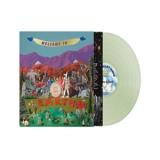
Der Weg zu ,Welcome to Earth" von den Death Valley Girls beginnt in der Asche des Eaton-Feuers in Kalifornien. Nachdem sie ihr Zuhause in Altadena und kurz darauf auch ihren geliebten Hund Tommy verloren hatte, sah sich die Leadsängerin und Songwriterin Bonnie Bloomgarden mit Fragen konfrontiert, auf die es keine einfachen Antworten gab: Was überlebt eine Katastrophe? Was bleibt nach einem Verlust übrig? Wie baut man ein Leben wieder auf, wenn die Dinge, die es einst ausmachten, verschwunden sind? Das Album, das aus diesen Fragen hervorging, gehört zu den intimsten und tiefgründigsten Werken, die die Death Valley Girls je geschaffen haben. Im gesamten Schaffen der Band haben sie Musik sowohl als Feier als auch als Suchaktion betrachtet. Alben wie ,Glow in the Dark", ,Darkness Rains", ,Under the Spell of Joy" und ,Islands in the Sky" verwandelten ihren Space-Rock-Sound in ein Mittel zur spirituellen Suche, um inmitten des alltäglichen Chaos Momente der Transzendenz zu finden. Doch ,Welcome to Earth" unterscheidet sich deutlich von seinen Vorgängern. Es konzentriert sich weniger darauf, der Welt zu entfliehen, als vielmehr darauf, zu verstehen, wie man nach einer Verwüstung verbunden bleibt. Was dabei entstand, war nicht unbedingt ein Psych-Punk-Album über Verlust, sondern über Verbundenheit: die unsichtbaren Fäden, die Menschen, Tiere, Erinnerungen, Landschaften und Leben über die Zeit hinweg miteinander verbinden. Der Titel des Albums fungiert sowohl als Begrüßung als auch als Mahnung - ein Willkommen aus der Natur an eine Spezies, die ihren Platz in ihr weitgehend vergessen hat. Immer wieder kehren die Lieder zu der Möglichkeit zurück, dass Trennung die hartnäckigste Illusion der Menschheit sein könnte. Diese Vorstellung von Verbundenheit reicht über die Lieder selbst hinaus
„Öd“ marks the long-awaited return of Institut für Feinmotorik - the Black Forest collective known for using eight prepared turntables to investigate acoustic micro-phenomena generated by everyday objects - with a new album and their first full-length release on Faitiche. It is also the return of their almost comical understatement as personal artistic principle: „making almost nothing out of almost nothing,“ compressed into the dots on an umlaut.
The Öd-nis, the wasteland, is a field that the collective has been ploughing in sound since their first release in 1997. Eight prepared turntables, four mixers, no records, six hands (give or take) merge into what they call the „Octogrammoticum“. A rotating organism of surfaces in friction, fed with the clutter from a drawer: rubber bands or tin foil, CDs, a discarded socket board. Under IFF's scrutinizing stylus, mundane almost-nothings get scratched open to reveal the acoustic density of negative space itself.
Last year’s „Adhesive Tape“ drew IFF closer together after an almost ten-year hiatus. An eponymous event series at Berlin's silent green set in motion what would become their most twistedly funky release since „Penetrans“ on Staubgold in 2002.
The only thing öd about „Öd" (meaning „barren" or „boring“ in German) may well be its title: layers of improvised play and randomized loops convolve around porous, dubby groove locks, tugging at each other in a call-and-response with howling static that cuts through bulbous ambient techno into a scrap-metal Dixieland phantasm. Stratified yet spacious, these sonic double exposures always hover on the verge of collapsing. What you think you hear might not be what you actually hear.
The album’s track titles resemble Conceptual Poetry, extending this psycho-phenomenological gesture into the realm of spoken language. Conceived by renowned poet Dagmara Kraus, they become word molecules - „stern,” „dies,” „lose“ - tilting delicately between German and English, constantly changing depending on the ear’s perspective and pointing back to the deeply unstable fabric connecting meaning and sound. Which also makes „Öd“ an unusual cross-disciplinary collaboration - at least in the field of electronic music.
PS: Since its beginnings in Bad Säckingen, IFF has always been more than the sum of its rotating parts, moving tirelessly between multimedia art, theory, solo projects and collaborations. With IFF Expanded, the collective now opens its eight-doored apparatus, inviting artists working with CDJs or samplers to join - an ambitious live format that loosens its former purity law while carrying forward a long-standing curatorial practice. The same thread also runs into the related event series Acephalic Headspace.
Institut für Feinmotorik (*1997), artist-group originating from Black Forest working in various fields. In musical context known for transforming turntables into instruments by removing the records and instead applying rubber bands, paper scraps, household materials – resulting in a vivid laboratory for the productive misuse of everyday objects. This approach is documented in record releases and performed live.
Unheard Music delivers a solid four-tracker from Italian producer Far&High, joined by Buba on the closing cut. Tight, rolling tech house built for peak-time sets.
Ten years ago, Horse Jumper of Love released their self-titled debut, one that not only launched their career but also inspired a generation of shoegaze artists to come.
Recorded in a mill space studio by future longtime collaborator Bradford Krieger and first released in 2016 (before a re-issue by Run For Cover in 2017), Horse Jumper of Love introduced listeners to the band’s unique strain of expertly crafted minimalism and haunting lyricism. Tracks like “Orange Peeler” and “Ugly Brunette” capture a gritty melancholy and existentialism that is both youthful and timeless, angst-ridden and sincere. Now, a decade later, Horse Jumper of Love remains a beloved cult classic and a touchstone of the band’s continually developing brand of glacial, grungy indie rock.
This 10 Year Anniversary Deluxe Edition LP features new tri-fold packaging with collaged ephemera from singer and songwriter Dimitri Giannopoulos’ years in Boston while writing the record, a 20-page sewn-in booklet featuring never before seen photos and drawings, and handwritten tablature for the record’s original 9 songs. Disc one includes the original album fully re-mastered, and the brand new second disc features 13 bonus tracks recorded between the years of 2013-2015, mostly by Dimitri at home on a Tascam Portastudio, including single “Heathers (2013)” which was an early version of what would later become “i love you very much forever” and other never before heard demos, b-sides, and alternate versions of the original songs.
The record will also be released for the first time on CD, packaged in a 2-disc swing tray jewel case with a fold out poster.
The third chapter of The Third Room's curator-led series is shaped by Verraco, one of the key voices behind a new generation of artists reshaping contemporary club music. Through his productions, DJ sets and his work with TraTraTrax, he has helped define a sound where hybrid forms, rhythmic experimentation and cross-cultural influences are pushing the genre into new territory. Structured across two distinct sides, the release draws a clear connection between past and present. The A-side leans into a deeper, more classic space, while the B-side moves towards a more forward-facing, hybrid sound. It opens with Libration (Stone Version) by Substance & Vainqueur, a revisiting of their landmark 2007 release, a track that helped define the language of Dub Techno as it is understood today. Reduced, deep and spatially precise, it established a blueprint for how rhythm, delay and tone could function together. It's presence here acts less as a nod to the past and more as a reminder of a foundation that continues to shape the genre. Skee Mask's Clear Sky 909 continues this thread, softening the edges without losing depth. Warm, enveloping textures and fluid movement give the track a sense of openness, balancing clarity with emotional weight. The B-side shifts perspective. On Untitled (Teamgeist Mix), Verraco, joined by Tils, delivers the record's defining moment - a dense, intricately designed piece built on a driving low-end and evolving rhythmic patterns. Elements from Techno, Bass and Leftfield House converge into a detailed, forward-moving structure that actively bridges cultural contexts. It results in a form of dance music shaped by technical precision, but drive.n by a clear sense of intent, marking a distinct expression of Verraco's current sound. Untitled by 1morning introduces a rolling, tribal-infused groove with a strong sense of depth, while PatumPa by Regal86 closes the record with a bright, loop-driven energy that leans into pure motion. Across both sides, the release moves between reference and progression. Rather than separating old and new, Verraco connects them - tracing a line from foundational Dub Techno to a more fluid, contemporary club language. Copyright 2026 The Third Room A1 Written and Produced by Peter Kuschnereit & Rene Loewe | A2 Written and Produced by Bryan Mueller | B1 Written and Produced by JP Lopez & Jakob Ferdinand Tils and mixed by Lurka | B2 Written and Produced by 1morning | B3 Written and Produced by Regal86 Mastered by Andreas Kauffelt (Schnittstelle Berlin) Artwork by Charlotte Ernst Design by Daniel Bornmann (STUEDIO.XYZ) Distribution by Clone Pressing by Matter Of Fact
out of Stock
Last delivered 6 days ago available to reorder, subject to availability
Imagination Lady is the fifth long-player for Stan Webb's Chicken Shack and was originally released in 1972.
Much in the same tradition as the great British bluesmen Alexis Corner and John Mayall, Webb's revolving-door personnel landed the band several notable members. For this album, Webb (guitar/vocals) gathered a trio consisting of himself, future Gods and Jethro Tull member John Glascock (bass), and Paul Hancox (drums). As with the previous Chicken Shack long-players, this disc features several Webb originals augmented with some well-chosen cover tunes.
The album opens with a ferocious cover of B.B. King's "Crying Won't Help You." In a style akin to the Faces or even some of the rowdier moments from the Peter Green-led Fleetwood Mac, this trio grinds out the blues with a decidedly English edge, followes by the folkie "If I Were a Carpenter". "Daughter of the Hillside" & is Webb's most impressive contribution to the album. This straight-ahead rocker is an ideal trio effort recalling the intense instrumentality of Cream or early Led Zeppelin. The closing number "The Loser" is upbeat and almost pop-oriented, again displaying the immense strength of this Chicken Shack line up.
Imagination Lady is available as limited numbered edition of 1000 copies on red vinyl and comes in a gatefold sleeve.
Year Of The Spider is the third studio album by American rock band Cold, released on May 13, 2003. It became the band’s most commercially successful record, debuting at number three on the Billboard album charts and selling over 101,000 copies in its first week. The album also marks the final appearance of guitarists Terry Balsamo and Kelly Hayes. One year prior to the album’s release, the mellow ballad “Gone Away” appeared on the WWF Tough Enough 2 soundtrack.
Produced by Howard Benson, Year Of The Spider presents a noticeably more commercial sound than its darker predecessor, 13 Ways To Bleed On Stage. The album incorporates a wide range of guitar styles, as well as violin, viola, cello, digital effects, and several powerful ballads. While Cold continues to explore themes such as drug abuse and troubled relationships, the album also expands into new territory. “Cure My Tragedy” reflects Scooter Ward’s emotional struggle during his sister’s battle with cancer, while “The Day Seattle Died” addresses the deaths of grunge icons Kurt Cobain and Layne Staley. According to Ward, “Kill the Music Industry” is not aimed at any specific label or individual, but comments on the broader state of the music business.
Year Of The Spider is available as double vinyl album, features the hidden bonus track “Gone Away” and contains an insert with lyrics.
OTHELLO is the debut album by pianist and composer Orson Claeys. Bringing together influences from jazz, hip-hop, urban culture, and everyday life, the record offers the clearest portrait yet of an artist shaped as much by the worlds around him as by music itself.
The title refers to Claeys' full name, Orson Dwight Othello Claeys, and reflects the album's central concern:identity. Throughout the record, personal experiences, cultural influences, and artistic inspirations converge into a body of work that seeks to understand how an artist is formed, both within and beyond music. Musically, OTHELLO builds on jazz, strongly intertwined with hip-hop, contemporary culture, and ideas beyond traditional musical frameworks. For Claeys, music is not a fixed genre, but an open and evolving form of expression.
This broad perspective is evident in the album's carefully chosen collaborations. A track like "WHAT A NIGHT" first took shape during a studio session with indie-soul singer Sevens, whose harmonic ideas laid the foundation for the track. As the composition evolved, Claeys felt it called for a stronger hip-hop voice. Through a recommendation from Mixmonster Menno of STUFF., he was introduced to L.A. rapper IAMOMNI, whose contribution brought exactly the energy and perspective the track needed. The result unfolds like a late-night journey through Los Angeles, with IAMOMNI's contribution adding a sense of movement, character, and place.
Elsewhere on the album, "SPIRAL", featuring Belgo-Brazilian vocalist Helena Casella, grew out of a long-standing mutual admiration. Conceived as a meeting point between R&B and jazz, the composition balances the groove and emotional depth of the former with the improvisational spirit and spontaneity of the latter. The collaboration developed naturally from the outset, with Casella instinctively understanding the atmosphere Claeys envisioned while enriching the music with her own warmth and nuance.
A long-held ambition materializes on "SHADOWBOXING", where Claeys is joined by drummer, producer, and one of the key figures in contemporary Belgian jazz, Lander Gyselinck. Gyselinck's work, particularly his collaboration with Zwangere Guy on Pourriture Noble, was instrumental in showing Claeys how the language of hip-hop could coexist naturally with jazz, an idea that runs through OTHELLO. Drawing inspiration from boxing, the track is a musical equivalent of a fighter's walk towards the ring: focused, intense, and driven by the sense of anticipation that precedes stepping into the fight.
After this heightened intensity, the album gradually moves toward its closing statement. OUTRO / HANIN", featuring oud player Akram Ben Romdhane, a longtime collaborator whose playing forms a natural bridge between Claeys' previous work and the broader musical landscape explored across the album. The title references the Tunisian Arabic word hanin, meaning "nostalgia", a fitting conclusion to a work deeply concerned with memory, identity, and personal history.
Beyond music itself, OTHELLO is informed by a wider cultural landscape. Urban culture, with its visual language, creative independence, and sense of community, forms an important backdrop to the record. Sport also plays a significant role, particularly boxing and basketball, whose emphasis on discipline, focus, and resilience mirrors Claeys' own creative process. Rather than being treated as separate influences, these worlds coexist without hierarchy, reflecting an artistic vision that resists rigid boundaries and allows different disciplines, communities, and experiences to inform one another.
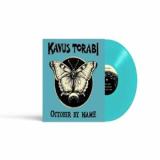
Transparent blue vinyl. October By Name is the latest solo album from Kavus Torabi, marking a luminous new phase for one of Britain's most distinctive psychedelic voices. Written in the wake of significant personal change and shaped by his work with Gong, Cardiacs and The Utopia Strong, the album blends adventurous psychedelia, melodic songwriting and mystical reflection into a sound that is both emotionally direct and unmistakably his own. Completing an autobiographical trilogy of solo records, Torabi once again performs, records, mixes and illustrates every aspect himself, creating a deeply personal work. The result is an intimate, expansive album that feels celestial, transformative and uniquely Kavus Torabi.
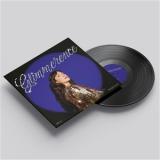
Mit Glimmerence veröffentlicht die Berliner Sängerin und Songwriterin Mirna Bogdanovic ihr drittes Album - eine eindringliche Sammlung poetischer Songs zwischen Jazz, Art-Pop und emotionalem Storytelling. Der eigens geprägte Titel beschreibt einen Schwebezustand zwischen Liebe und Illusion und bildet den roten Faden dieser zutiefst persönlichen Musik. Gemeinsam mit einigen der profiliertesten Musiker der Berliner Jazzszene entstehen fein nuancierte Klangwelten, in denen Stimme, Text und Arrangement untrennbar miteinander verschmelzen. Bogdanovic verbindet vokale Ausdruckskraft mit erzählerischer Tiefe und macht jeden Song zu einer atmosphärischen Momentaufnahme voller Nähe und Intensität. Mit einer eindrucksvollen Neuinterpretation von Chris Isaaks "Wicked Game" setzt das Album einen kraftvollen Schlusspunkt. Glimmerence ist ein vielschichtiges, emotionales Werk über Sehnsucht, Verletzlichkeit und Selbstermächtigung - und ein starkes Statement einer der spannendsten Stimmen des zeitgenössischen europäischen Jazz.
It took a long time – ten years – for his talismanic song, ‘Ça ira tu verras’, to prove his prophecies right, at a time when, everywhere else in the world, nothing seems to be going right. And if everything is going well for Séverin, it’s because he’s managed to build himself a bulwark, an impregnable citadel, and his records now exude a whiff of simplified idealism, with the influence of Souchon and Voulzy never far from his pen and guitar as he brings his bittersweet moods to life in verses and choruses.
But above all, he knows how to invent new settings for himself, push back the boundaries, step beyond the walls of his Parisian studio to go and see how things sound elsewhere. Recorded at Chale Abbey Studios on the Isle of Wight (UK), Séverin once again wanted to let the collective spirit of his regular collaborators take centre stage. Ambroise ‘Sage’ Willaume and Jérémie Arcache, who featured on the previous album *Nouveaux Dinosaures*, once again form the backbone of the band, on guitar and keyboards respectively. Bassist Théodora Delillez (Astral Bakers) and Canadian drummer Robbie Kuster complete the band’s core line-up, which, in just six days at this electric priory, went on to achieve – judge for yourselves – nothing short of miracles.
Whilst all around us the war on falsehood rages – from AI to post-truth, all these fake debates, hypocrites and false values – here is an album that doesn’t cut corners when it comes to emotions, nor in the way it sets them to music.
Originally released in 2017, Zara McFarlane’s Arise represents a classic moment in Brownswood Recordings catalogue. Just before the global spotlight landed on London's new jazz generation, Zara McFarlane was already forging her own path - connecting jazz, soul, reggae and Afro-Caribbean traditions with a confidence and clarity that remains striking nearly a decade later. Arise captures an artist operating with singular vision, creating a body of work that sounds every bit as fresh and forward-thinking today as it did on release.
The album also stands as an early landmark in the career of Moses Boyd, who produced and co-composed the record while serving as Zara's longtime drummer and musical collaborator. Years before his Mercury Prize-nominated breakthrough, Boyd helped shape Arise into a deeply personal exploration of heritage. The credit list is remarkable: Moses Boyd, Binker Golding, Shabaka Hutchings, Nathaniel Cross, Peter Edwards and Shirley Tetteh all contribute to a record that now reads like a roll call of British jazz royalty. The iconic cover shot was taken by Adama Jalloh, around the corner from Brownswood’s North London HQ.
Upon release, Arise was met with widespread critical acclaim. The Guardian praised “A Class Act" and celebrated its exploration of African-Caribbean musical lineage, while Clash Magazine described it as “enchanting and intriguing”. All About Jazz called the album's fusion of jazz and Jamaican rhythms "spellbinding".
As Brownswood celebrates its 20th birthday, we're proud to return one of the label's defining releases to vinyl, with the original copies being highly sought after. Pressed on limited edition gold vinyl, this special anniversary reissue is both a celebration of Zara McFarlane's artistry and a reminder of a record that was both ahead of its time, and whose influence resonantes today.
Tapper Zukie was high on a list of artists that Richard Branson in 1978 had in mind to sign to his new Reggae label Front Line.
The mission was to sign the cream of the reggae crop when the Virgin record boss went down to Jamaica with a group of Reggae minded people,included in that group was one Johnny Rotten,singer of the very recently disbanded group The Sex Pistols.
The result of which would be a two album deal between Tapper and the label.
The first release also in 1978 was the album Peace in the Ghetto(Kingston Sounds KS052) and this release Tapper Roots.
For the cd issue of this release,Tapper has picked two tracks that he feels hapy to put alongside the album.
'Make Faith' cut with the band Knowledge and' New Star'..
This is a very important album from the Tapper Zukie catalogue...Respect
,Sharp Pins" ist das äußerst starke Lo-Fi-Pop-Projekt des talentierten Musikers Kai Slater aus Chicago, bekannt von Lifeguard und Dwaal Troupe. Aufgenommen von Kai Slater. Abgemischt von Kai Slater. Gemastert von Amy Dragon. Aufgenommen im Stülo Gulo in Chicago, Illinois. Ursprünglich als Hallogallo-Kassette im Eigenverlag veröffentlicht. ,Youth Revolution Now". Von Kai: ,Der Soundtrack zu meinem 18. Sommer, in dem ich mit einem chinesischen Taotao 50-ccm-Roller durch die Gegend um die Taqueria Moran fuhr und meinen Sta-Prest-Träumen nachjagte. Ich dachte, es wäre cool, eine Reihe von Songs aufzunehmen, die nie wirklich aufgenommen wurden, und zwar auf eine etwas durchdachtere Art und Weise. Aufgenommen auf einem Tascam Porta One im alten Beton-Stulogulo mit einer imaginären Band namens ,Men in Green Striped Trousers". Der ursprüngliche, von Sharp Pins geprägte Garage-Pop-Sound in seiner ganzen rohen, rauen und kreischenden Pracht _ Ich glaube, ich habe davon etwa 50 Exemplare angefertigt. Nun gehört mein Teenagertraum Ihnen.".
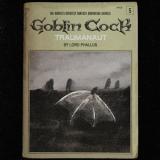
Der Frontmann von Goblin Cock, Lord Phallus, ist eine in einen Umhang gehüllte Nicht-Präsenz in einer Band aus ebenso vagen Persönlichkeiten, die bewusst nebulös gehalten sind; doch während ihre zahlreichen Nachahmer dies als Vorwand nutzen, um eine kommerziell verwertbare Geschichte zu vertiefen, wünschen sich die Mitglieder von Goblin Cock tatsächlich , ignoriert zu werden. ,Traumanaut" ist die neueste LP des Projekts und klingt wie ein unerwartet frischer Lufthauch, insbesondere ausgerechnet aus einem solchen Sumpf der Neurose wie diesem. Zeitweise klingt sie so persönlich, dass jeder normale Songwriter wohl bis zum Absurden gehen würde, um sich von dieser Ehrlichkeit zu distanzieren.
For nearly twenty years, Swedish singer-songwriter Kristian Matsson has played his way around the world as The Tallest Man on Earth, carving out a singular place in contemporary folk music. His discography has long been heard through the lens of the American folk tradition. But Just Beyond Endless Mountain, out October 9th on Anti- Records, quietly turns that perspective on its head. After returning to his native Dalarna in central Sweden, Matsson found himself listening to the music he had spent years trying to leave behind: the polskas, the old field recordings and the sounds of the local traditions that had surrounded him since childhood. The result is not a return to the past, but a step into new musical territory. Swedish folk music has reshaped his melodies, his voice, and the way he writes songs. The Tallest Man on Earth is back with his most deeply rooted album to date. Just Beyond Endless Mountain opens an unexpected new chapter in a career that has never settled for familiar ground.
For nearly twenty years, Swedish singer-songwriter Kristian Matsson has played his way around the world as The Tallest Man on Earth, carving out a singular place in contemporary folk music. His discography has long been heard through the lens of the American folk tradition. But Just Beyond Endless Mountain, out October 9th on Anti- Records, quietly turns that perspective on its head. After returning to his native Dalarna in central Sweden, Matsson found himself listening to the music he had spent years trying to leave behind: the polskas, the old field recordings and the sounds of the local traditions that had surrounded him since childhood. The result is not a return to the past, but a step into new musical territory. Swedish folk music has reshaped his melodies, his voice, and the way he writes songs. The Tallest Man on Earth is back with his most deeply rooted album to date. Just Beyond Endless Mountain opens an unexpected new chapter in a career that has never settled for familiar ground.
,Do to the Beast" war bei seiner Veröffentlichung das erste neue Album der Afghan Whigs seit über anderthalb Jahrzehnten. Die 1988 in Cincinnati, Ohio, gegründete Band hebt sich seit jeher deutlich von ihren Mitstreitern ab - durch ihre wilde, mitreißende Mischung aus Hardrock, klassischem Soul und den eindringlichen Obsessionen ihres Frontmanns Greg Dulli. Das Album war sowohl eine Art Heimkehr - es markierte ihre damalige Rückkehr zu Sub Pop, für das die Whigs der erste Neuzugang außerhalb der nordwestlichen Heimat des Labels waren - als auch ein Blick in die Zukunft einer der meistgefeierten Bands der letzten dreißig Jahre. Doppel-LP, gepresst auf ,Pearl Flip"-/,Lagoon"-Vinyl!
South Asian super-producers Lapgan and Baalti – the former a Madlib-disciple spinning hip-hop grooves out of dusty desi samples, the latter duo purveyors of intricately tapestried dance music – holed up in the California desert in early 2024 for a songwriting session to blend their complimentary styles. They ended up with several albums worth of club material built upon decades of Indian music history – floor fillers that move like early Four Tet meets The Avalanches. They’ve been teasing this material around the world during live sets – from Paris Fashion Week to Glastonbury, London Clubs to BK Warehouse parties, sessions at Lot Radio and Karachi Community Radio, and anywhere else they find an aux. The result has been endless ID requests for unreleased gems like “Ipa Ma” and “Lime Tikka”, calls which should finally be answered with the release of Threads.
Lapgan Bio
Chicago-based archivist and producer Lapgan has become renowned for his signature style: unearthing rare and forgotten Indian & Pakistani sounds and recontextualizing them into hip-hop and dance beats that evoke J Dilla and Madlib. He has cultivated a reputation for quietly revolutionary sample-work across his beloved solo projects History and Duniya Kya Hai, as well as LAFANDAR, his critically acclaimed team up with Heems (of Das Racist / Swet Shop Boys). He has worked with a range of artists from both the West (Your Old Droog, Saul Williams, Cool Calm Pete, Kool Keith, Open Mike Eagle, Blue, Quelle Chris) and the East (EXCISE DEPT, Baalti, Sid Sriram, Sid Vashi, Dynoman), and has been featured in global media including Pitchfork, FADER, Stereogum, Passion of the Weiss, Mixmag, Homegrown, and Vinyl Me, Please. Over the past year he has headlined clubs and performed at festivals across the world from Chicago and New York to London and India, and was personally invited to soundtrack back to back Paris Fashion Week shows for the similarly norm-shifting designer Kartik Research. In 2026 he will soundtrack his third Kartik Research runway show, as well as reissue Duniya Kya Hai for its five-year anniversary alongside a companion EP featuring remixes from peers and supporters Arushi Jain, Loris, Mera Bhai, Malkfunktion, and Maral.
Baalti Bio
Baalti makes electronic music built around rhythm, pressure, and collective release – weaving through leftfield bass, dusty hip hop, tripped out dub and raw house all while maintaining a throughline rooted in South Asian culture seen through the lens of a sweaty dancefloor. In the last year they have experienced a whirlwind rise and growing global recognition: from their EP Mela vividly evoking West Bengal’s sound system culture to their Tamil-cinema-infused filter-house project with Anish Kumar Stunt Doubles, in addition to wide-ranging collabs and remixes alongside DJ ADHD, Naya Beat, and A.R. RahmanThey have also built a reputation for their frenetic live show, with appearances at international festivals like Glastonbury and MELT, headlining shows across Australia and Europe and supporting influences turned peers like Four Tet and Disclosure across North America. Their explosive, percussion-heavy sets have been platformed by Rinse FM, NTS, The Lot Radio, Beats In Space, and Refuge Worldwide, and their music has been renowned by publications including Pitchfork, Bandcamp Daily, RA, and MixMag. Their forward momentum continues into 2026 with slated headline tours in India, Australia, and Asia along with appearances at Coachella, Party in the Paddock, Fvded in the Park, and We Out Here festivals.
SLOT is the high-energy, dance-punk project of couple Abby Detrich (vocals) and Max Detrich (bass, drum machine), based in Baltimore, Maryland, USA. Their music is a potent, genre-fusing sound described as gritty but flirty pop songs with a punk, in-your-face delivery, and pumping, heavy, danceable beats. Drawing on dance punk, noise pop, and alt-rock, their sound is rooted in Max's transition from drummer to electronic beats via a Boss DR-5 drum machine, with Abby contributing lyrics and dynamic vocals. The band's upcoming album is a bold, flirty, punchy, and raw statement, delving into themes of the intersection of performance and sexuality, self-acceptance, and personal reclamation. It was recorded with collaborator Danny Gibney in Harrisonburg, VA, capturing an experimental sound inspired by Y2K media. SLOT delivers an energetic, bratty, and in-your-face live show, having shared the stage with bands like Brainiac and played festivals like MACROCK. Beyond music, Abby is a floral artist and Max is a graphic designer, and they are both dedicated to progressive community causes in Baltimore.