A deep and sophisticated addition to the catalogue of one of Germany’s oldest House labels. With Rhythm Puzzle, Bass Cab returns to Cabinet Records, one of Germany’s longest-standing and most respected House labels, continuing a legacy that has shaped underground dance music with quiet confidence and unmistakable identity for decades. Few labels have managed to preserve such a clear artistic vision over such a long period of time. Cabinet Records has always stood for depth over trends, substance over spectacle, and a deeply rooted connection to the essence of House music.
Cerca:cab
- 1: Full Of Stars
- 2: Punching The Flowers
- 3: Pep Talk
- 4: I Built You A Tower (A)
- 5: Envy The Birds
- 6: Stone Over Water
- 7: How Heavenly A State
- 8: Trap Door
- 9: Riptides
- 10: The Flavor Of Metal
- 11: I Built You A Tower (B)
WHITE COLOURED VINYL[23,49 €]
Death Cab for Cutie is one of the definitive indie-rock bands of the century. After twenty-odd years in the major label system, the band returned to their indie roots and signed with ANTI- Records and they"re back with a brand-new eleventh album titled, I Built You A Tower out June 5th. I Built You A Tower is the sound of loss, compartmentalization, and then grief bursting out from the seams. It"s also the sound of the growth that comes after falling apart, of acknowledging pain without letting it destroy you. "I see the tower existing on your emotional horizon," Ben Gibbard states. "You don"t always have to look at what"s inside it, but it"s a reminder that it happened. You know it"s there. You have to face it." The band is set to hit the road in the US this summer, kicking off on July 10 and includes a two-night run at The Greek in Los Angeles. This comes on the heels of a historic, sold-out global tour marking the 20th anniversary of the album Transatlanticism, and the release of their universally acclaimed, 2022"s Asphalt Meadow.
We're thrilled to welcome Shimpei Watanabe to the label as we continue to build on the Tokyo-Cologne connection. Bringing his versatile talent from Tokyo, he delivers three fresh tracks. This limited vinyl release opens with No Cab Around Here an acid piece in true 303 style, enhanced by deep dub chords. A2 highlights Shimpei Watanabe's signature funky basslines and groovy drums, creating a lively atmosphere. On the flip, B1 introduces a smoother, Chicago-style groove adding a refreshing change of pace. The record’s finale features an energetic remix by Cologne's own Stikdorn - an analog dub techno jam that seamlessly aligns with the label's early releases.
Volta Cab transports us, once again, into his own-defined post-punk universe, bringing nostalgia from 80s synthwave and 90s beats in his own modern context.Throughout his new EP “Alphabet of Humanity”, Volta Cab creates raw emotions from the first track to the last. There is a before and an after when listening to the subtle arrangement and dynamics of each tune, as the atmosphere that embeds his music can only let our imagination flow.
The EP also features astonishing artwork by Anthony Burrill.
For the 10th release label owner Barbara Preisinger is gathering seven unreleased tracks on two seperate 12inches, by previous Slices Of Life artists as well by producers who have a relationship to the label through frindship, events and personal support. Each track presents the personal unique style of it´s producer, but all have a feeling for warm sounding organic house grooves in common, what Slices Of Life stands for since the beginnings in 2009.
6 weeks after SOL10.1 hit the stores with contributions by THE MOLE, BAAZ, DANA RUH and JOHN TEJADA, the 2nd part of the SLICES OF LIFE compilation celebrating release number 10 is following: The A side of SOL10.2 is dedicated to the legendary Berlin producers and Dj duo CAB DRIVERS: - A Complex Situation' catches us with its irresistable swinging groove and filigrane synth lines. OSCAR SCHUBAQ, DJ, Producer and co-owner of the label Tardis Records, starts the B-side with - K-Beat', a rough jackin house tune, which takes a surprising turn to a sunny sounding swing during the 2nd part. The great finale of SOL10 comes from the parisian Deeply Rooted label owner and extensive vinyl collector DJ DEEP. With - Spices Of Life' he created a wonderful, atmospheric and deep piece of music carried by rolling basslines and playful melody fragments.
- Dj Deep and Cab Drivers has been worldwide very well known and respected producers, label owners and DJ´s with a large fanbase since the 90 ies. Osacr Schubaq is co-ownung the label Tardis together with Eli Verveine
- first 500 copies come in dark red printed sleeve
Barsuk Records is pleased to release Death Cab for Cutie's beloved debut LP Something About Airplanes on attractively-priced standard weight vinyl. This black vinyl pressing is packaged with the original spot-color printed die-cut jacket design, with a new boat-and-water-ripples lyrics insert.
- A1: Maybell Hill
- A2: Anne Remembers
- A3: Dark Roads
- A4: Hallucination
- B1: My Little Angel
- B2: She's Here
- B3: Run Rabbit
- B4: Confrontation
- B5: How Things Are And Always Will Be
Barsuk Records is pleased to release Death Cab for Cutie's beloved sophomore LP "We Have the Facts and We're Voting Yes" on attractively priced standard weight vinyl. This lovely black vinyl pressing includes the original vibrant 6-color spot-printed jacket and lyrics insert. Features classics "405" and "Company Calls," and still makes many fans' favorite-album lists, 25 years later!
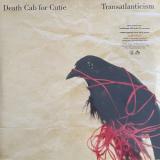
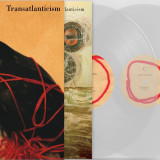
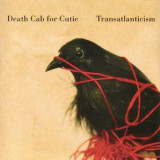
For the first time on clear vinyl, Death Cab for Cutie's landmark 2003 Double-LP "Transatlanticism" comes in a gatefold jacket with a beautiful full-size 12-page booklet.
These copies are pressed from the 2023 Ryan Smith re-cut and include a download code containing the album and all of the original album demos.
Death Cab For Cutie haben es geschafft mit ihrer dritten Platte einen Klassiker des "Quiet Rock" zu veröffentlichen. "Transatlanticism" ist all das, was wir zur Zeit an Rockmusik lieben. Seitdem das Klavier bei Rockmusik wieder mitmachen darf. Große Melodiebögen, die erst nach dem dritten Mal ihre Schönheit offenbaren, leuchtende Ernsthaftigkeit. Eine herrliche Platte. "Transatlanticism" beginnt mit dem Satz : "So this is the new year!" Jedes Mal wenn man diese Platte auflegt ist Neujahr, 4 Minuten nach 00:00 Uhr. Die Band hat die Option, uns durch das ganze Jahr zu begleiten. Mit ihrer Schönheit, Melodie, Vielschichtigkeit... Death Cab for Cutie haben sich 1997 in Bellingham/Washington gegründet. Der Sänger Benjamin Gibbard, dessen Stimme vielen durch sein Wirken bei der Sub Pop-Band Postal Service bekannt sein dürfte, wird von seiner Band - Christopher Walla (Gitarre), Nicholas Harmer ( Bass) und Michael Schorr (Schlagzeug) - durch dieses Album getragen. Wenn Sie schon mal ein wenig verliebt waren, dann hören Sie auf das Titelstück. Das epische 7:55 min lange "Transatlanticism". Und er singt:" I need you so much closer! So come on!"
Lubree revisits the original motif of Hypress with luminous calculation, launching a series of new releases in the near future. Thus, the first release features electro ballads dipped in gentle rawness along with disco bangers and EBM-styled acid house. The original tracks are produced by "Volta Cab" and the remixes by Rotterdam's DJ Overdose and Venezuelan-born and Barcelona-based DJ/producer Cardopusher.
Kostantyn Isaev the man behind the project Volta Cab and also Rambal Cochet is now part of the Waste Editions family. The St. Petesburg’s colorful artist has just recorded 6 catchy and powerful tunes which are heavily influenced by the new wave/post punk music of the late 80’s , especially by bands like Кино (Kino) and the Soviet space disco as well.
Russian Producer Volta Cab presents himself i n MM Discos with Balearic Balsam EP, a record that explores the borders of the sound that was born i n the white i sland, blending i t with a “new-wave” oriented vibe.
On the A side, Saint Petersburg based producer, shows us what he l ikes the most partying obscure rhythms with summery-soothing atmospheres. “Shujumi'' plays along with more ethnic and oriental sounds while “Balearic Balsam” gets highly influenced by t he 80’s new wave.
On the B side, the talented Greek producer “Anatolian Weapons” takes over the control by remixing Shujumi, he twists the original track and adds different acid elements building a perfect 4x4 killer straight to your brain. Volta Cab finishes the EP with “Vedic Space Vehicle”, getting a l ittle darker than the previous tracks on the
A side but without changing the vibe, delivering an excellent new-age-elektro rooted anthem.
The internationally renowned alternative Bluesman, famous for his outrageous one-man live show and songs featured in Breaking Bad (plus many other soundtracks), has now brought his blues growl and rough sound up to peak industry production and style...of around 1974.
This album sits style-wise alongside the greats of the genre: Tom Waits, Randy Newman, Dr John. It also has the unmistakable blues harmonica, voice and wit all his own.
Fans also purchase Seasick Steve, Jon Spencer , and other alt-Blues recordings.
Son Of Dave is a unique genre bending 21st century Blues innovator who has been bringing his 9+ albums and shows to modern generations internationally over two decades and selling over 20,000 hard copies, 50,000 DD, and streaming 3 million annually.
UK PR has secured radio plays at BBC6Music, BBCRadio2, Jazz FM, RadioX Canadian PR has secured charting college station support and national CBC plays.
UK autumn tours include dates supporting Sleaford Mods (not your average blues circuit) 2020 and 2021 singles were playlisted at Spotify curated Nu-Blue, Bluestronica and other alt-Blues type playlists.
Former member of multi-million selling Crash Test Dummies all through their heyday
Has been chosen support for Iggy & The Stooges, Supergrass, Rag&Bone Man,
John Spencer, UB40 and many more. Not the same old Blues in other words.
A very long list of achievements.
Temperatures are dropping and we're all feeling the effects. Bordello A Parigi is letting the cold winds of the north swirl inside its doors with Russia's Volta Cab bringing a fresh 2LP to the table. A spread of influences come together for the eleven tracks of Rise Again. Take 'Emerald's Phantasy', a piece built on layers of percussion that blends elements of disco with notes of techno. 'Dark Room' is a different affair. Arctic chords are cut with electro and distant vocals for an unsettling treat. 'Kruger' stomps to a terse beat before lush pads bloom in a work that builds to dizzying peaks. Warm blasts balance these colder moments, the rich grooves of 'Savage Fury', the floor filling funk of 'Board Scandinavia' and the removed romance of 'Sweet Exorcist' all show another shade to the Volta Cab sound and of course there's more. Rise Again is an audio collection of vibrant colours and hues, tracks pitch from icy blues to autumnal ambers and fiery reds; a musical kaleidoscope that stretches across a spectrum of styles.
Jerome.c/Pheek/Volta Cab/Jarz Polors/Md Wallholz/Ztrl/Jonas Sella/Franco Cinelli/Iv
The Untold Stories Chapter V 2x12"
The Untold Stories offer up their next double pack collection on their trademark transparent yellow and black vinyl. For Chapter V they welcome some new artists into the label with Jerome C, Jarz=Polors, Volta Cab, and MD Wallholz, all featuring for the first time. This combined with some superb works from Franco Cinelli and UNTLD regulars Ztrl, Ivan Lopez, Pheek, and Jonas Sella: makes for a memorable album of highly identifiable music, with varying vibes from the Street Knowledge track by Volta Cab to Ztrl's one perfect for summertime afterhours, altogether another very enjoyable collection.
- A1: Dubble D / Moodymanc - Zzz
- A2: Dubble D / Moodymanc - Zzz (Volta Cab Warehouse Mix)
- B1: Dubble D / Moodymanc - Akom (Original Mix)
- B2: Dubble D / Moodymanc - Inc (Original Mix)
- C1: Detache - U010011
- C2: Detache - U010011 (Anonym Remix)
- D1: Detache - U010011 (Francesco Bonora & Mirko Remix)
- D2: Detache - Valley Of Shadows
- E1: Volta Cab - My Own Sky
- E2: Volta Cab - 99 Supreme
- F1: Volta Cab - My Own Sky (Daniela La Luz Remix)
- F2: Volta Cab - Something Wrong With My Legs
3x12"
Frole Records is proud to announce its first vinyl release with the great jazz musician and dj/producer Danny Ward, that presents his "ZZZ EP" with the moniker "Dubble D presents Moodymanc". Three masterpieces with different musical shades: "ZZZ" is a great house track, with the perfect blend of deep elements, growing synths and percussions, also remixed by the russian Volta Cab, that gives us a massive tune with a great vibe; the dark sounds of "Akom" lead us in underground atmospheres; "Inc" with its sweet melodies, vocals and groove close this awesome EP from Mr Ward!
---
Frole Records presents the second vinyl release, this time a producer from the Netherlands. Detache is a young producer influenced by Detroit, deep house and modern techno. 'U010011' is the typical Detroit track with an undoubted feeling to it. Featuring a dubby atmosphere, playfull synths & dreamy pads. The remixes are made by Anonym (Sushitech) and Francesco Bonora (Abstract Theory) & Mirko (Etichetta Nera) who are staying in this dreamy realm. The track is made at a lakeside which is portrait by the artwork. 'Valley of Shadows' is a deep track that is characterized by the dub sound from Berlin. A solid tune full of deep chords and pads that transcends the mind.
---
Tight rhythms and synths with that 80s taste. These are the hallmarks of 'My Own Sky' made by the Ukrainian producer Volta Cab, in a strong acid house style. Daniela La Luz, obsessed by ability of mixing different genres in her productions; a lot of determination in every piece and this remix is the confirmation. Seventh vinyl for the Frole Records label, a track full of ambient and electronic sounds, a good mix of beats and avant-garde atmospheres whereas nothing is left to chance. Sounds and percussions change shape and tone, but they are all the continuity of each other.
Repress
Alec Falconer is a new artist we are currently working with here at Entity and we are really excited to present to you his first solo release with Entity 005. Alec is part of the Nixwax crew along with Rob Amboule + Harry Wills who features on the funky remix of our 005 release.
Clear Marbled Vinyl[23,74 €]
To celebrate the 10th Anniversary of Major Arcana, Speedy Ortiz will release a remastered edition, on Carpark Records.
On their debut full-length, Western Massachusetts' Speedy Ortiz manages a bit of magic by conjuring the spirits of classic American indie rock, while twisting those ghosts into new shapes. It's easy to hear the influences of Helium, Jawbox, and Chavez on this album, as well as nods to their contemporaries including Grass is Green, Pile, and Roomrunner. Sweet vocal harmonies run up against gnarly distortion, aided by basic, chunky bass parts and heavy, fill-laden drums.
The album was recorded in a few days in November at Justin Pizzoferrato's (Dinosaur Jr., Chelsea Light Moving) studio, Sonelab, a huge space in an old factory in Easthampton, Mass. The sessions went from very early in the day until very late at night, with the band taking its time to experiment. Pizzoferrato's collection of old distortion pedals were utilized on both the record's guitars and vocals.
The theme of the occult and the supernatural runs deep through Major Arcana, inspired by singer-guitarist Sadie Dupuis' reading on black magic. Dupuis' sometimes knotty and abstract lyrics bring to mind fellow wordsmith Stephen Malkmus, while referencing horror film tropes, chemistry, and neuroscience. Major Arcana's literal translation is 'major mysteries,' a phrase from tarot cards. 'I don't write in a narrative way and am more concerned with use of language than meaning,' Dupuis says, 'so I like the open-endedness of the title and the way it invites interpretation.'
After too much time freelance writing and watching re-runs in a windowless Brooklyn basement, guitarist and songwriter Sadie Dupuis left New York City for the wilds of Northampton, MA in order to pursue a master's degree in poetry. In doing so, she began Speedy Ortiz, a self-recorded lo-fi project named after a minor character from the Love and Rockets comic series. Speedy Ortiz soon became something else entirely as bassist Darl Ferm, guitarist Matt Robidoux, and drummer Mike Falcone teamed up to form a full band, balancing abrasive noise with infectious earworms. The newly minted Speedy Ortiz quickly found an audience in the Boston DIY scene, playing frequently with their friends Pile, Grass is Green, Fat History Month, Sneeze, Krill, and Arvid Noe.
Almost immediately, the band recorded a two-song single, 'Taylor Swift' and 'Swim Fan,' with Paul Q. Kolderie (Pixies, Hole) and Justin Pizzoferrato (Chelsea Light Moving, Dinosaur Jr.), and self-released it in March of 2012. Shortly thereafter they spent a few weekends at the dingy yet atmospheric Sex Dungeon Studios in Philadelphia recording the Sports EP, a five-track, loosely conceptual 10' released that June on Exploding in Sound Records.
The creation of Major Arcana, their full-length debut, marks the evolution of Speedy Ortiz into a wholly collaborative effort. Darl leans toward basic, chunky parts, while Mike, a talented songwriter in his own right, helped arrange while also providing aggressive, boisterous drums. And Matt is a classically trained guitarist, but his experience in noise and experimental music comes through in his anti-melodic guitar solos, which counterbalance Sadie's angular, scalar guitar riffs and poppy vocals.
The end result is a band able to distill their influences and creative impulses into something at once dissonant and melodic, noisy yet undeniably pop.
- A1: Up On The Hill
- A2: Love Unlimited
- A3: The View Belongs To Everyone
- A4: Korean Bodega
- A5: Back On The Block
- A6: 10Th Street
- A7: Sugar
- B1: Southside
- B2: We Are All Very Worried About You
- B3: All For Self
- B4: All My Time Is Gone
- B5: Big Night Out
- B6: Mini Bar Blues
- B7: Fisty Nuts (Contains Hidden Track 'Atlantic Cab')
Greatest Hits Was A Major Triumph For Kravitz And A Worldwide Top 10 Chart Performer, Reaching No. 2 In The U.s. And No. 1 In Austria, Italy, And Other Countries. This Compilation Showcases The Many Strengths Inherent In The Grooves Of Kravitz's First Five Albums — 1989's Let Love Rule, 1991's Mama Said, 1993's Are You Gonna Go My Way, 1995's Circus, And 1998's 5 — By Assembling 15 Of The Best Tracks From The First Stage Of His Celebrated Career.- this Greatest Hits Collection Features Early Kravitz Classics And Also Sports A Pair Of Exceptional Non-album Tracks, Including The Previously Unreleased Mid-tempo Version Of again,' Which Reached No. 4 On The Billboard Hot 100 Singles Chart. The Album Also Boasts Kravitz's Incendiary Cover Of The Guess Who's All-time Rock Classic american Woman,' Which Initially Had Been Featured In The Hit 1999 Film, Austin Powers: The Spy Who Shagged Me, And Was Eventually Added To A Cd Re-release Of 5.
- the Core Tracks On Greatest Hits All Serve To Illuminate Kravitz's Own Considerable Talents As A Multifaceted Singer, Songwriter, Producer And Guitar Player.
Vinyl Only
The new label from Eastern Europe delivers music with soul. Jerelo means 'the source'
- 01: Nhá Zefa &Amp; Nhô Pai - We&Apos;Ll Never Forget
- 02: Leôncio &Amp; Leonel - Envious Affair
- 03: Grupo Sertanejo Do Lenço Preto - Oh I Cry
- 04: Mandi &Amp; Sorocabinha - Bad Weather
- 05: Jeca Mineiro &Amp; Bambuí - River Of Revenge
- 06: Zé Mané &Amp; Zé Pagão - White Rose
- 07: Zico Dias &Amp; Ferrinho - I Went For A Walk In The City
- 08: Mariano &Amp; Caçula - Shaved Moustache
- 09: Tonico &Amp; Tinoco - Example Of Faith
- 10: Sulino &Amp; Marrueiro - Return Of The Cowboy
- 11: Moreno &Amp; Moreninho - City Of Roses
- 12: Valdomiro &Amp; Valdemar - Old Saying
- 13: Serrinha &Amp; Caboclinho - The Crimes And Death Of Dioguinho
- 14: Raul Torres &Amp; Serrinha - Friday The 13Th
- 15: Canário &Amp; Passarinho - Goodbye
- 16: Mandi &Amp; Sorocabinha - I Dreamt I Had Died
Death Is Not The End present the first volume in a survey of a form of Brazilian country music known as música caipira ("hillbilly music") - a stripped-back forerunner to música sertaneja, the Brazilian equivalent to US country & western which in it's contemporary form has come to dominate the domestic music industry in recent decades. This collection covers some of the earliest recordings made by the pioneering folklorist Cornélio Pires at the end of the 1920s, through to records from the 30s, 40s & 50s and the beginning of the 60s.
Somewhat rooted in Portuguese troubadour folk traditions, música caipira is typically performed by a duo singing in parallel thirds and sixths, drawing upon a Portuguese-Brazilian style known as moda de viola - with the viola being the viola caipira, a Brazilian-style ten-string guitar that is the core instrument of the music. Born out of the "outback"-style region in north-eastern Brazil, these songs tell stories of pain, love, loss & betrayal - often backed by homemade guitars using invented tunings. Away from the polished pop country & western-stylings of the sertaneja, these recordings could be viewed as the Brazilian equivalent to the roots music of the American dustbowl or Appalachia.
- A1: Les Masques - Il Faut Tenir (1969)
- A2: Isabelle Aubret - Casa Forte (1971)
- A3: Christianne Legrand - Hlm Et Ciné Roman (1972)
- A4: Jean Constantin - Pas Tant D'chichi Ponpon (1972)
- A5: Billy Nencioli & Baden Powell - Si Rien Ne Va (1969)
- B1-: Marpessa Dawn - Le Petit Cuica (1963)
- B2: Jean-Pierre Sabar - Vai Vai (1974)
- B3: Sophia Loren - De Jour En Jour (1963)
- B4: Isabelle - Jusqu’à La Tombée Du Jour (1969)
- B5: Sylvia Fels - Corto Maltesse (1974)
- C1: Frank Gérard - Comme Une Samba (1972)
- C2: Ann Sorel - La Poupée Des Favellas (1971)
- C3: Charles Level - Un Enfant Café Au Lait (1971)
- C4: Andrea Parisy - Les Mains Qui Font Du Bien (1970)
- C5: Audrey Arno - Quand Jean-Paul Rentrera (1969)
- C6: Aldo Frank - T’as Vu Ce Printemps (1970)
- D1: Christianne Legrand - Cent Mille Poissons Dans Ton Filet (1972)
- D2: Clarinha - Lemenja (1970)
- D3: Hit Parade Des Enfants - Aquarela (1976)
- D4: Jean-Pierre Lang - Tendresse (1965)
- D5: Magalie Noël - Une Énorme Samba (1970)
- D6: Françoise Legrand - La Lune
Ever since the late 1950s bossa-nova revolution, Brazil’s influence on French music has been undeniable. Pierre Barouh, Georges Moustaki and a vast array of lesser known artists, all made the Musica Popular Brasileira (MPB) an axis of promotion at the service of a cool and metaphysical, modern and mixed Brazilian lifestyle. Some were seduced by the poetic languors of the bossa, some were looking for fun, and others just loved the American hybridization of jazz-bossa, jazz-samba.
What is bossa nova? One of its creators, Joao Gilberto said: "Its style, cadence, everything is samba. At the very start, we didn't call it bossa nova, we sang a little samba made up of a single note - Samba de uma nota so .... The discussion around the origins of bossa nova is therefore useless”. It is nevertheless useful to remember that these magnificent Brazilian songs, which the guitarist describes as samba, were shifted and balanced around improbable chords. "I like things that lean, the in-betweens that limp with grace," said Pierre Barrouh, quoting Jean Cocteau.
With emotion, arrangements for violin and supple guitar licks, bossa nova rapidly changed. A transformation that can be heard in the Tchic, tchic, French Bossa Nova 1963-1974 compilation, the result of a cultural reappropriation, which traveled through the United States and supplemented itself in France.
A musical revolution that has remained significant, bossa nova was born in Rio. From 1956 to 1961, Brazil lived through its golden years. In five years, the country had invented its modernist style. Elected president in 1956, Juscelino Kubitschek de Oliveira, an elegant man with a broad forehead, brandished a promising slogan: "Fifty years of progress in five years". He quickly got to work. Not worried about increasing debt, he launched the project for a new federal capital, Brasilia, designed by the communist architect Oscar Niemeyer. Volkswagen opened state-of-the-art factories and created the “fusquinha”, the Beetle. In Rio, the Vespa made its first appearance. The Arpoador Surf Club crew run into the “girl” from Ipanema, Helô Pinheiro - the tanned garota ("chick"), between a flower and mermaid, who at 17 walked by the Veloso bar, where the fiery author and composer, Tom Jobim and Vinicius de Moraes, were getting drunk on whiskey. From then on, bossa symbolized cool.
In 1958, Joao Gilberto recorded Chega de Saudade, which the directors of Philips denied, calling it "music for fagots". The marketing director, who believed in it, secretly pressed 3000 78-inch vinyls and distributed them at schools around Rio, creating a tidal wave.
American jazzmen then took over. In particular, trumpeter Dizzy Gillespie and guitarist Charlie Byrd. In November 1962, the Brazilian Ministry of Foreign Affairs funded a "Bossa-Nova" concert at Carnegie Hall in New York, inviting the genre’s pioneers. Unprepared, the show soon turned to disaster. But the troupe was invited to the White House by Jackie Kennedy. The first lady loved "the new beat" and in particular Maria Ninguem, a song by Carlos Lyra, later covered by Brigitte Bardot.
In Brazil, the 1964 military coup quickly ended this euphoria. The destructive atmosphere that ensued pushed many Brazilian musicians to leave, if not to exile. Thus, Tom Jobim, Sergio Mendes and Joao Gilberto arrived to the United States. In New York, Joao Gilberto met saxophonist Stan Getz. At the time, he was married to the Bahianese Astrud Weinert Gilberto, who had a German father. She had never sung before, but she knew how to speak English. Getz therefore asked her to replace her husband on The Girl From Ipanema. The Getz/Gilberto record with Tom Jobim on piano, was released in March 1964. Phil Ramone, the "pope of pop" was in charge of sound.
Bossa nova arrived in Paris through the classic “guitar-voice” channel (Pierre Barouh, Baden Powell, Moustaki…) But France loved jazz and Paris had already welcomed its American contributors. All these good people were to pass through Saint-Germain-des-Prés. The cabaret l'Escale became the Mecca of Latin American sound where one could find Pierre Barrouh and his friends, such as the Camara Trio, samba-jazz aces, whose only record was published by the Saravah label. With a band strangely called Les Masques (a band that included Nicole Croisille and Pierre Vassiliu, among others), the Camara Trio recorded an interesting Brazilian Sound, including the track Il faut tenir which is present on this tasty compilation of rarities.
Other enlightened musicians can also be found on the compilation, such as Jean-Pierre Sabar (songwriter for Hardy, Auffray, Leforestier ...) and the French pop rock organist Balthazar. In 1975, Sabar recorded Aurinkoinen Musiikkimatka on a Finnish label, which featured the crazy Vai, Vai, included on this record. We are now following the footsteps of Brazilian electronic musicians such as Sergio Mendes, Eumir Deodato or Marcos Valle who created funk and disco sounds on their keyboards and synthesizers. A style that influenced Véronique Sanson when she wrote Jusqu’à la Tombée de la nuit in 1969 for Isabelle de Funès, the niece of Louis and a great friend of Michel Berger - Sanson did end up singing this track on her 1992 Sans Regret record.
The pinnacle of exoticism and travel, Sylvia Fels’ Corto Maltese includes bongos, sea mist and ocean sounds. The title was taken from Jacky Chalard’s concept album written in 1974, Je suis vivant, mais j’ai peur (I am alive, but I am scared), based on Gilbert Deflez’s science fiction novel.
However, bossa nova extended the scope of popularity. "In the 1970s, I was a fan of Sergio Mendes, Getz / Gilberto. I fell in love with this music that I knew because I had been an orchestral singer, " explained Isabelle Aubret, who in 1971 delivered a composite record of covers by the very funky Jorge Ben, Orfeu Negro, Tom Jobim, Vinicius de Morais and Jean Ferrat. "I recorded this album for Meys Records in Paris, far from Brazil, with wonderful musicians, François Raubert, Roland Vincent, Alain Goraguer...". The latter wrote the arrangements for Casa Forte, a very percussive title borrowed from Edu Lobo, one of the initiators of the bossa who spent time in California. "Jazz and bossa came together and produced very rhythmic music. I love singing, it allows me to dream, to have fun, to feel a high on stage, and these songs brought me joy, made me swing, my singing felt like a dance.”
The world tours of French singers and their desire for the tropics, often brought them to Rio with its hills, forests, caipirinhas and tanned bodies. There are surprises though, like this Iemenja (Iemenja is the goddess of the sea in the Afro-Brazilian candomblé religion). Not unlike the composer and musician Jean-Pierre Lang, based in Sao Paulo, Claire Chevalier taught Brazil to Brazil. In 1970, the singer and painter published a 45-inch vinyl, Mon mari et mes amants (My husband and my lovers), under the improbable pseudonym of Clarinha (little Claire). She was then living in Rio, with her husband, Joël Leibovitz, who founded a band called Azimuth, and who owned a record label specialized in "sambas enredos" songs for samba school parades.
For its B side, she asked Pierre Perret to come up with lyrics for a song composed by Carlos Imperial: "Oh goddess of the sea, o goddess Iemenja, I bring a white rose to adorn your long hair ..." . "Perret came to see us, and we had fun, remembers Joël Leibovitz. We wrote Lemenja for fun, we recorded it at the Havaí studio, behind the Central do Brasil the central station. Erlon Chaves, the arranger who worked with Elis Regina, joined us" adding his share of Afro-Brazilian percussions and funky brass to the mix.
There is a common misunderstanding in Franco-Brazilian history: that bossa, admittedly hedonistic, is perceived as funny, even though the poets who wrote the texts are often philosophizing on the human condition. Its French interpreters pull it towards a carnival inspired universe, far removed from its fundamental essence. Thus, Jean Constantin covered the famous Samba da minha terra, an ode to the art of samba written by the classic Bahian composer Dorival Caymmi, renaming it with the enticing title of Pas tant de tchi tchi pompon: "On your pier there is no tchi tchi / when you arch your back, you know everything is alright ”(lyrics by Gérard Calvi). This expedited bossa aims for the absurd, but retains a certain elegance.
Indeed, Jean Constantin was not an idiot, the rather large man had a huge mustache and liked fantasy, (Les pantoufles à papa, Le pacha, inspired by cha-cha-cha-cha, salsa and jazz) but he was also the lyricist of Mon manège à moi interpreted by Edith Piaf, the composer of Mon Truc en plume by Zizi Jeanmaire and the soundtrack of François Truffaut’s 400 Blows. Le Poulpe, published in 1970, from which this bossa is extract, was arranged by Jean-Claude Vannier, an accomplice of Serge Gainsbourg’s Melody Nelson. In short: "There is enough of samba / By looking at the parasol / Because my poor cabeza / Is going to die in the sun".
Even the American actress Marpessa Down, who was at the heart of the bossa nova revolution with her role as Euridyce in Marcel Camus’ film Orfeu Negro, winner of the 1959 Cannes Palme d'or, fed the clichée with Je voudrais parler au petit cuica - "Tell me how you manage to always make people want to dance / It's true, I must admit that I cannot resist your magic" - in consequence, once can hear the cuica, a little drum inherited from the Bantu.
But bossa nova had many angles. Societal, of course, pushing actresses who were symbols of women's liberation like Brigitte Bardot, Jeanne Moreau, or Sophia Loren to engage in the exercise of accelerated bossa. In February of 1963, Sophia Loren made a record in French in Rome, Je ne t'aime plus, featuring the song De jour en jour, a bossa written by two Italians, Armando Trovajoli and Tino Fornai, which was released a little later by Barclay. Bossa accompanied the 1960s, a decade of moral liberation. Ann Sorel, who interpreted La Poupée des favellas, caused a sensation with L’amour à plusieurs, a provocative song written by Frédéric Bottom and Jean-Claude Vannier. As for the actress Andrea Parisy, she displayed her bourgeois cheekiness in Marcel Carné's Les Tricheurs before interpreting Les mains qui font du bien. And Magalie Noël, the friend of Boris Vian, who sung Johnny fais-moi mal, was hired to sing Une énorme Samba, composed by Alain Goraguer (arranger to Gainsbourg, Bobby Lapointe and Jean Ferrat) with lyrics by Frédéric Botton.
But in the end, of what wood is bossa nova made of? The answer is given by Christianne Legrand, daughter of Raymond the conductor, and sister to Michel the composer: "With me, with jà" - jà means "immediately" in Portuguese. In 1972, the singer, an expert in vocal jazz and a member of the Double Six, published Le Brésil de Christianne Legrand. Two songs included on the Tchic Tchic compilation that demonstrate how bossa, jazz, funk, rock, etc. work like a swiss army knife: the music is used to denounce broken systems, or miracles, HLM et ciné roman, Cent mille poissons dans ton filet, two songs from the O Cafona soundtrack, a successful telenovela broadcast, at the time in black and white, on TV Globo. The first was adapted in French by the fighter and friend of the Legrand tribe, Agnès Varda. The second is content with a play on words, jostling them into a summer fun.
Véronique Mortaigne
Solar Operandi is a new Parisian label born from a B2B project and developed into a curated platform rooted in electro and exploring its darker intersections with techno, acid and trance. It's focusing on peak-time energy with depth and character.
Its first various artists release, Carnal Savana Vol. 1, brings together standout producers from across the globe, each delivering a distinctive yet cohesive vision of modern electro. The compilation balances raw club functionality with refined sound design, built for powerful systems and late-night intensity.
The process of making this mini-album “anaiis & Grupo Cosmo” was truly life-altering for me. It changed my approach to making music and really brought me back to the roots of what creation is about. I went to Salvador for a month-long artist residency in February 2020 and during that time, I not only fell in love with Brasil’s culture and music, but I also wrote “Toda Cor” with the wonderful Luedji Luna. A few years later, I reached out Biel who’d co-produced “Estrela Acesa” with Sessa to see if they’d be interested in re-developing “Toda Cor” with me. They were enthusiastic and we fully reproduced the record in December, remotely. The connection between us all was electric and it felt like there was a collective enthusiasm for creating more together so I flew out to Brasil in April 2023 to continue this exploration. The beauty behind this record really lies in the experience of making it. We all stayed together in Biel’s house in Ilhabela for a week with Cabral, who co-produced the record with us and plays bass. We would go to the beach, eat communally, share stories, be around the kids, but then spend most of the days creating and jamming together. Each day we would record our songs live to tape, not a computer in the room. By the end of the week we had this album. It was refreshing to make music in this way. The music and approach really held us in that moment and gave us a chance to create freely, in a big moment of transition in our lives in a way that truly embraces imperfection, spontaneity, just very human.
Oven Sound presents Alexis Cabrera.
The label of the renowned Valencian club welcomes the Argentina-born artist, now based in Spain, to the family.
After passing the acid test on the dance floors of festivals and clubs around the world, these 4 tracks are set to become essentials in your record bag.