J.C.'s "Farewell for Walls" gives us three well crafted original tracks plus a remix by Hector Oaks.
It starts with an atmospheric breakbeat work-out followed by a more pounding version by OAKS/KAOS boss Hector.
The B-side continues where the remix stopped, upping the energy and sticking to a 4x4 pattern while retaining breaky elements and chopped vocals.
Cerca:cab
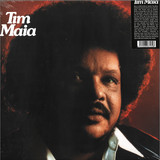
First vinyl reissue of this 1977 LP by one of the great figures of Brazilian music. Brilliant tracks like E necessario, Verao carioca, Venha dormir em casa or Musica para Betinha make it one of the strongest albums to come out of Brazil in the 1970s. Presented in facsimile artwork and pressed on 180g vinyl. TIP!
Tim Maia was born in 1942 in the suburbs of Rio de Janeiro and started his musical career at an early age, along with close friends such as Roberto Carlos or Jorge Ben. Carlos would eventually help him to get a deal for his first single at CBS.
During the 70s Maia started to incorporate soul and funk elements into his style. After a two-year period involvement in the Racional cult in Brazil, Maia's funky style was still at its best when he released this album in 1977. It was his first and only recording for Som Livre, the legendary label that became extremely popular due to the many soap operas soundtracks in its extensive catalogue.
"No Secrets" - Carly Simon (voc, g, p); Jimmy Ryan (g,b); Bobby Keys (ts); Lowell George (g); Kirby Johnson (el-p); Peter Robinson (p); Bill Payne (org); Klaus Voorman (b); Andy Newmark, Jim Keltner (dr); a.o. & orchestra & backing vocals.
Carly Simon’s unquestionably best album, "No Secrets", was also her commercial breakthrough. It topped the Billboard charts for over five weeks, thus quickly gaining gold status, as did the single release of "You’re So Vain".
This song determined the album’s flippant tone, with its sexually unashamed autobiography (»You had me several years ago/When I was still quite naïve«) and its observations on the lifestyle of the jet set. But Simon’s sincerity also meant that her lyricism was double-edged. Now that she thinks she has found true love, she expresses her joy over her relationship to James Taylor with "The Right Thing To Do", another top ten hit.
On the other hand she was just as willing to recognize her own mistakes and regretted pointing her finger at other people. It was not just Simon’s frankness that made the album a success, but also Richard Perry’s simple, elegant pop-rock production, which lent Simon’s music a vitality it never known before.
Perry was mindful in particular of Simon’s vocals, making them more perceptive and stirring than in her other productions. And of course her fellow musicians, such as Paul and Linda McCartney, Mick Jagger, Klaus Voormann, Lowell George, Bobby Keys, Jim Keltner as well as her ex-husband James Taylor all contributed to the success of the album, which was awarded official platinum status by the Recording Industry Association of America.
This Speakers Corner LP was remastered using pure analogue components only, from the master tapes through to the cutting head.
All royalties and mechanical rights have been paid.
Recording: September-October, 1972 at Trident Studios, London by Robin Geoffrey Cable. Production: Richard Perry.
- A1: Gregorio Garcia Segura - Harlem Pop
- A2: Los Brandis Con Maria Nevada - Life's Song
- A3: Lin Barto - Sax Pop
- A4: Blas & His Friends - Supermarket
- A5: Jorge Enrique - Go Go
- A6: Roberto Serrano - Retorno
- A7: Rafael Martinez - Funny Comics
- A8: Orquesta A Latorre - Hotel Don Felipe
- A9: Orquesta Miramar - Pop Song
- A10: Conjunto Nueva Onda - A Su Aire
- A11: Ramon Gil - Mercurio
- A12: Mesie Bato - Violeta
- A13: Red-Key - Morning
- A14: Unidades - Caballo Salvaje
· This compilation features the rarest and unknown instrumental tracks of that Funky Groove early sound.
· Light music along with wind section and keyboard ready to hit the dance-floor, that we call Spanish-Grooves.
· Composers, musicians & arrangers like Gregorio García Segura, Rafael Martínez, Antonio Barco, Antonio Latorre, Jaime Botey, etc.
During the 70's, an important number of orchestras and dance bands popped up in our country but not many of them released their own songs or covers on vinyl, so we can’t say that our music library has bulky volumes, rather it’s just the opposite.
You have to dig deep in the catalogue of obscure record labels to find some quality pieces, which we will usually attribute to Tinglado 13, Conjunto Nueva Onda, The Matches, Conjunto Don Pelegrin, Rafael Martínez, Carlos de Ros, Salgado y su Grupo, Mesié Bató, Pedro González, Jorge Enrique.
Most orchestras played bossa nova, soul, some lounge and easy listening, and a usual mix of light music with wind section and keyboards, something like “spanish-soul” or “rhythm'n'blues-pasodoble”.
It was a time when the bands survived playing shows with a repertoire based, mostly, on Spanish popular songs and international hits.
Many artists recorded with nicknames, many others used licensed songs paying rights to the original authors and some orchestras changed their names when they pressed their records, in an attempt to appear modern or simply for pure commercial purposes, that's why it is difficult to trace accurately the musical path of many of these artists. This scene was especially intense in Aragon and Catalonia, where a bunch of labels emerged, often simply as platforms for bands to promote their own music.
This compilation aims to discover to a wider audience some of the most sought-after instrumental gems by discjokeys and disco music collectors, eager for soul, groove and hot sounds.
Sotomayor is the electronic music project with afro latin influence by siblings Raul (music production) and Paulina (vocals). It is a dance music project that fuses rhythms like cumbia, afro beat, dancehall, Peruvian "chicha" and merengue with futuristic electronic beats.
The band debuted in 2015 with "Salvaje," an album that allowed them to perform in several festivals around the globe in countries like England, US, Mexico and Colombia.
The album received excellent reviews from foreign media in countries like Japan, Australia, United Kingdom, Chile, United States and Colombia. They also appeared in more than 25 lists of the best of the year from medias from all around the world. 2020 will see the release of "Orígenes" their 3rd studio album trough the NY based label Wonderwheel Recordings.
This album was recorded between Mexico and Puerto Rico, and was produced by the 28 times Grammy Winner Eduardo Cabra aka "Visitante" from the legendary band "Calle 13." In this production Sotomayor explores a new Afro Caribbean vision in the music, much more dance floor focused, and highly influenced by percussion
At home, in the islands of Cabo Verde, there was grog, or grogu, a strong sugarcane moonshine not dissimilar to Colombian aguardiente, copiously consumed at Funaná parties. In the diaspora, in Europe, there was leite quente (hot milk). "I can still remember the taste of the first leite quente I drank in Lisbon," says Antonino Furtado Gomes, Pilon's drummer and current band leader.
Synthesize the Soul, Ostinato Records' second compilation, revealed chapter one of the Cabo Verde cultural story in Europe, zooming in on visionaries like Paulino Vieira who made Lisbon the headquarters spearheading the musical revolution taking place within Cape Verdean emigre communities across Europe in the 1980's. Musicians from across the diaspora would eagerly travel to the Portuguese capital to record.
Grupo Pilon represents the second chapter of the Krioulu diaspora story. In smaller pockets, second generation musicians were independently contributing to one of the most lush periods of cultural innovation by immigrants in Europe. In Luxembourg, in 1986, a group of teenagers formed the largely unknown (outside of Cape Verdean circles) but consistently brilliant band named after the blunt instrument used in the islands to pound corn for Cabo Verde's national dish, cachupa.
With only five members, Pilon combined searing estilo Krioulu drumming and the hybrid ColaZouk style with blissful synth work and rugged guitar licks, creating a stripped-down, addictive sound that masterfully straddled two worlds, a seductive electro-Funaná carnival born from the first few sips of hot milk.
The band drew from the inspiring political changes of the day: the release of Nelson Mandela in South Africa and the fall of the Berlin Wall. The right to democracy became a constant theme in Pilon's songs.
With access to better opportunities than their parents' generation, Pilon's roster were part time musicians. Music was not part of their academic upbringing nor a full-time gig. Their rhythm and style were wonderfully imperfect, made out of rawer skills and inexperience. Pilon did not follow the templates established by revered Cabo Verde bands. Keyboard player Emilio Borges played off beat and the band preferred arranging their songs to start from the beat normally heard in the middle of a composition rather than the beginning.
These two elements made Pilon's music simple, unique, and inimitable. From 1997-2015, a lack of concerts and professional musicians proved near fatal. Today, Antonino and what remain of the original quintet are slowly piecing back together the puzzle of their once mighty outfit from an unlikely pocket of Europe. In it's heyday in the 90's, Pilon serenaded audiences in Paris, Lyon, Marseille, Lisbon, Rotterdam and Frankfurt, securing their reputation as a respected and unifying cultural force.
This LP, drawing from the six most powerful songs from Pilon's three-album catalog, is the serving of still fresh leite quente to spice the summer and maybe even fuel the next generation of musicians in the Krioulu corners of Europe.
Nikki Nairs latest release for the new label Muy Muy Limited, based between Mexico City and Ponderosa CA, is a rich and textured testament to his ever evolving production abilities.
Evoking feelings of fireside reflection, this 6-song EP flows from rich ambient orchestration to hypnotic hymns + rhythmic instrumentation, while maintaining an overall feeling that evades description.
This all seems fitting for the first release on a label the was born in a remote cabin high up the Sequoia National Monument.
Mar & Sol presents the reissue of "Na Cambança" the first album of the big band from Guiné Bissau SUPER MAMA DJOMBO.
The band was formed in the mid-1960s, at a Boy Scout camp, when the members were only children (the youngest was six years old)!
Djombo is the name of a spirit that many fighters appealed to for protection during Guinea-Bissau's War of Independence.
In 1974, the politically conscious band leader Adriano Atchutchi joined. The group became immensely popular in the young country, which had gained its independence on the same year. They would often play at President Luís Cabral's public speeches, and their concerts were broadcast live on radio.
In 1980, they went to Lisbon and recorded six hours of material. The first album "Na Cambança" was released in this same year, and the song "Pamparida" which was based on a children's song became a huge hit throughout West Africa, and an important historical masterpiece that finally see the lights again by the hands of our label.
- A1: Get Funky 1933 (Feat The Color Grey, Pomrad)
- A2: Oh Baby 1939
- A3: Royale With G's 2013 With Gramatik
- A4: Roller Disco 1980 (Feat Hi Levelz)
- A5: Overview Effect 1972 With Møme (Feat M I.l.k.)
- A6: Kanagawa Waves 1831 With Fakear, Balkan Bump
- B1: Payeng's Ark 1979
- B2: Cloud Nine 2000 (Feat The Color Grey)
- B3: Time Machine 1985
- B4: Electric City 2015
- B5: Keep Moving Up 1978
- B6: Paris Jazz Club 1920 (Feat Anomalie)
For The Geek and VRV, everything is a matter of time. Since they first met six years ago, the two beatmakers have been broadcasting their music to the four corners of the world, and their collaboration is as strong as ever after the years. Vanguards of the French instrumental hip-hop scene, they’re coming out today with their first album, Time Machine, a synthesis of the sounds and the ideas they’ve been working on from the very beginning of their careers. A trip back through time, as its name suggests, demonstrating the range of sound possibilities that they created in previous projects and on their international tours.
The release of their hit “It’s Because” in 2013 launched them on the scene as French producers who managed to break into the United States, with sampling as their musical base. Closer to home, the Coachella, Osheaga, and Solidays music festivals were won over by the pair’s complementarity, which made the success of their BTOS beat tapes and their EPs, Electric City and Origami.
But since everything is a matter of time, it was sometimes necessary to just let things go, take a break and think things over before coming back even stronger. A year and a half ago, The Geek and VRV started to slow things down, in order to take a step back and concentrate on this new album. With one overriding idea: to explore different eras and time periods, and transpose them into our modernity. Each track is associated with a pivotal year in music. With “Paris Jazz Club 1920”, the first single on the album, we're plunged into the cozy atmosphere of the cabarets, featuring the virtuoso Montreal pianist Anomalie. A meeting made possible thanks to the famous beatmaker Gramatik, who was a fundamental inspiration for their music, and who is also present on the album, as well as the flagship producers Fakear and Møme.
On Time Machine, The Geek and VRV have turned on their time machine to bring us to the year of James Brown’s birth, and find the unstoppable groove of “Get Funky 1933”. Always with hip hop in sight. The explosion of disco inspired them to record “Roller Disco Party 1980”, and the film Back to the Future was behind “Time Machine 1985”. The mixing of different time periods means that the styles, genres and atmospheres are channeled to perfection. The Geek and VRV have been preparing for this trip for five years now. With Time Machine, the time has come for them to begin their exploration, and to take us along for the ride.
- A1: My Wooden Cross (P Perea)
- A2: Peter (J Gatineau)
- A3: Cimarone (J Sherylee)
- A4: Remorse Ful (J C. Pierric/S. Planchon)
- A5: Trois Caros (V Momplet)
- A6: Liberia Land (J Sherylee)
- B1: Watery Stars (J P. Decerf)
- B2: Iceberg (J Sherylee)
- B3: Pictures Of My Soul (P Petitbon)
- B4: Man Fly (G Gesina)
- B5: Ghost March (J Pharos)
- B6: Marchaleco (J C. Capon/D. Humair)
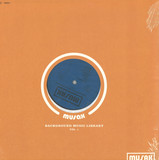
For this first volume of Musax Background Music Library, Farfalla Records continues exploring the maze of the french library music through one of its most discreet and prolific representatives: Jacky Giordano and one of his many projects, the Musax label. Farfalla Records carefully selected this tracklisting among LPs recorded between 1978 and 1979 of which the originals became particularly sought after by the collectors. Jacky Giordano who appears under his aliases Joachim Sherylee and José Pharos, is surrounded by qualified and renowned musicians such as Jean-Pierre Decerf, Jean-Claude
Pierric, Serge Planchon, Patrick Petitbon, Gérard Gesina, Jean-Charles Capon, Daniel Humair and also a band composed of members from the legendary Crazy Horse cabaret, namely Pedro Perea, Claude Brisset, Bruno Bompard, Jean-Claude Guselli, Claude Thirifays, Vincent Momplet and Joseph Gatineau. This selection mixing explosive jazz-funk, lascivious jazz and electronic music more spacey
or experimental, which could also be the soundtrack for a TV show, a porn movie or a car chase between cops and gangsters in the bad neighbourhoods of Paris. A fascinating slice of the French music scene of the late 70 is brought to life before our very eyes. (Erwann
Pacaud)
Concealed within the eclipse, Overdue presents a new black-label 12" series - symbolic of its sinister auditory contents.
Further proof of their unbridled dedication to sound system music and commitment to quality, the Belgian Dubstep imprint unravels
it's fifth physical release. Based in Denver, its newest signee by the name of Ghast returns to the spotlight, following up on heavyweight releases on prominent labels such as Encrypted and Gradient Audio.
The talented American artist sets the stage with two unruly armaments, alongside murderous remixes by Denmark's bass music stalwart RDG as well as the label operators themselves, Substrada & Caba.
Starting the engines, 'Mothership' immerses the stage in flickering echoes and haunting wails - the air bustling with anticipation. Eerily disfigured, granular reverberations materialize amid a pressurized and truly outlandish soundscape, barren at its core. Heading into the second section with renewed vigour, no dance floor remains unscathed in the ensuing aftermath.
The subsequent doomsday scenario, as engineered by Substrada & Caba, strips the ship to its bare essentials - laced with trippy drum instrumentations and the psychedelic foley samples. The meticulous flow presents itself in a bleak dungeon style - hoodlum vocal fragments rounding off the resulting low-frequency inferno.
Flipping the record to its equally profound B-Side, 'Vehement Mess' unhinges another portal into madness - dance floor upheaval guaranteed. Showing no signs of mercy, the infernal armagedon proves to be emblematic for Ghast's dystopian sound design. Profusely industrial and with clinical efficiency, hitting all the right frequencies as the second wave ignites but all available power reserves.
Finishing off any remaining survivors with his irreproachable signature style, RDG's remix marches onwards with unrestrained might in a four-to-the-floor fashion - super-charged, galvanizing the rave in a no-holds-barred shutdown.
Dick Verdult, a.k.a Dick el Demasiado is the Philip K. Dick of multi-disciplinary art, the Moby Dick of “cumbia lunática”, and the Charles Dickens of literature and experimental cinema. He first fell in love with cumbia when he heard his nursemaid singing the classic “La pollera colorá”. From this moment on, he adopted the genre and reinvented it, in a perpetual degeneration called Cumbia Lunática, twisting up the elements of traditional cumbia, the “cumbia of the mucamas”, to create an anarchotropical vertebral rhythm, one which supports every moving part.
Celulitis Illuminati is the powerful debut of the anarchotropical gentleman knight of the abstract, Dick el Demasiado, eight dangerous tracks recorded for the first time on vinyl, songs that, upon listening, will liposuck all that grotesque accumulation of adipose tissue out of buttocks and brain. They interweave an amalgam of South American folklore and the cables of electronic music, the plugged-in Ranqueles indians, as in “Asi Que Los Que Sí” (“So That Those Who Yes”) on Side A, surrealist and lugubrious beats, poetry made song and “the dead man’s drool is good for painting watercolors”, as he sings in “Búho Sin Un Ratón” (“Owl With No Mouse”).Euphony that will abduct you away to a viscous street party with “Son Cosas De Hoy” (“They’re Things For Today”) and to an eclectic and excessive dimension with “pero bien bweno” (“but very proper”).
Side B is pure dynamite: “Mecha flan” (“Pudding Fuse”), “Sábado cultural” (“Cultural Saturday”) and “En la jeta” (“In the face”) represent the perfect blend of Lucho Argain (La Sonora Dinamita) and Muslimgauze (Bryn Jones). On top of this, the album includes an as-yet unheard gem, “Llama Mi Abogado” (“Call My Lawyer”), produced by Dick himself and Manuel Schaller, the telepathic mage of the Theremin. When the Dutchman stepped off the boat and onto the block, as well as offering us the TV set, the sculpture of a deranged English woman who devours islands like they were sandwiches, the synthesizer, the sound effect, the African drum, the maraca, the indigenous whistle, he obtained for us the song and the stanza, he provided us with the language and the poetry, the truthful, the epic of the ugly. Cellulite for mortals, cumbia lunática for the enlightened ones! Alfredo Padilla (Trans. Komurki)
- A1: Pinta Manta - António Sanches
- A2: Dia Ja Manche - Dionisio Maio
- A3: Morti Sta Bidjàcu - José Casimiro
- A4: Pontin & Pontin - Bana
- B1: That Day - Fany Havest
- B2: Odio Sem Valor - Pedrinho
- B3: Mino Di Mama - Quirino Do Canto
- B4: Mundo D'margura - Tchiss Lopes
- C1: Po D'terra - Joao Cirilo
- C2: Corre Riba, Corre Baxo - Abel Lima
- C3: Ilyne - Os Apolos
- C4: Sintado Na Pracinha - Americo Brito
- D1: Capchona - Elisio Vieira
- D2: Djal Bai Si Camin - Antonio Dos Santos
- D3: Stebo Cu Anabela - Abel Lima
repress
2LP 140G VINYL + 12 PAGE BOOKLET.
"Space Echo - The mystery behind the "Cosmic Sound" of Cabo Verde finally revealed!" is the 20th release by the fabulous Analog Africa Label.
In the spring of 1968 a cargo ship was preparing to leave the port of Baltimore with an important shipment of musical instruments. Its final destination was Rio De Janeiro, where the EMSE Exhibition (Exposição Mundial Do Son Eletrônico) was going to be held.
It was the first expo of its kind to take place in the Southern Hemisphere and many of the leading companies in were all eager to present their newest synthesisers and other gadgets to a growing and promising South American market, spearheaded by Brazil and Colombia.
The ship with the goods set sail on the 20th of March on a calm morning and mysteriously disappeared from the radar on the very same day.
One can only imagine the surprise of the villagers of Cachaço, on the Sao Nicolau island of Cabo Verde, when a few months later they woke up and found a ship stranded in their fields, in the middle of nowhere, 8 km from any coastline.
After consulting with the village elders, the locals had decided to open the containers to see what was inside - however gossip as scintillating as this travels fast and colonial police had already arrived and secured the area.
Portuguese scientists and physicians were ordered to the scene and after weeks of thorough studies and research, it was concluded that the ship had fallen from the sky. One of the less plausible theories was that it might have fallen from a Russian military air carrier. The locals joked that again the government had wasted their tax money on a useless exercise, as a simple look at the crater generated by the impact could explain the phenomena. "No need for Portuguese rocket scientists to explain this!" they laughed.
What the villagers didn't know, was that traces of cosmic particles were discovered on the boat. The bow of the ship showed traces of extreme heat, very similar to traces found on meteors, suggesting that the ship had penetrated the hemisphere at high speed. That theory also didn't make sense as such an impact would have reduced the ship to dust. Mystery permeated the event.
Finally, a team of welders arrived to open the containers and the whole village waited impatiently.
The atmosphere, which had been filled with joy and excitement, quickly gave way to astonishment. Hundreds of boxes conjured, all containing keyboards and other instruments which they had never seen before: and all useless in an area devoid of electricity. Disappointment was palpable. The goods were temporarily stored in the local church and the women of the village had insisted a solution be found before Sunday mass.
It is said that charismatic anti-colonial leader Amílcar Cabral had ordered for the instruments to be distributed equally in places that had access to electricity, which placed them mainly in schools.
This distribution was best thing that could have happened - keyboards found fertile grounds in the hands of curious children, born with an innate sense of rhythm who picked up the ready-to-use instruments. This in turn facilitated the modernisation of local rhythms such as Mornas, Coladeras and the highly danceable music style called Funaná, which had been banned by the Portuguese colonial rulers until 1975 due to its sensuality!
The observation was made that the children who came into contact with the instruments found on the ship inherited prodigious capabilities to understand music and learn instruments. One of them was the musical genius Paulino Vieira, who by the end of the 70s would become the country´s most important music arranger. 8 out of the 15 songs presented in this compilation had been recorded with the backing of the band Voz de Cabo Verde, lead by Paulino Vieira, the mastermind behind the creation and promulgation of what is known today as "The Cosmic Sound of Cabo Verde".
The field of electronic music were involved. Rhodes, Moog, Farfisa, Hammond and Korg, just to name a few.
Following on from his beautiful release on Claremont 56 in 2018 - Alterleo aka Denis Leonovich, takes a different approach for this new e.p on the Kinfolk imprint and produces a storming world infused 4-tracker.
'Cabriodelic' is a mid-tempo march that utilises sublime keys, sci-fi ethics and military style drums to incredible effect. 'On The Way' keeps the drums heavy but ventures into a deeper sub tropical technoid-esque landscape.
'Tour De L'Afrique' is exactly that, a jaunty vibe that buzzes and rolls through an unknown afro-centric land.'In Sands' finishes off the package nicely with an acidic heavy Moroccan spiced percussive roller.
Essential music for the truly tropical dance floors of the world.
- A1: Desencanto - Contraviento
- A2: Tras Tus Ojos - Jaime Roos Y Estela Magnone
- A3: De Los Relojeros - Eduardo Darnauchans
- A4: Kabumba - Hugo Jasa
- A5: El Chi-Li-Ban-Dan - Eduardo Mateo
- B1: En Este Momento - Travesía
- B2: Capítulos - Mariana Ingold
- B3: Llamada Insólita - La Escuelita
- B4: Y El Tiempo Pasa - Hugo Jasa
- B5: Bombinhas - Leo Masliah Y Jorge Cumbo
- B6: A Ustedes - Fernando Cabrera
Synth ambiences, acoustic landscapes, deep songwriting and subtle candombe percussions combine in most of the musical output released in Uruguay during the 80s. A very unique sound was developed within the narrow boundaries of Montevideo by just a small group of very talented artists. These sounds reverberated in singer-songwriting, jazz fusion approximations, experimental music and the work of musicians at the intersections of these worlds.
In “América Invertida”, ethereal vocal arrangements and acoustic guitars cohabit with synthesizers and drum machines; Candombe and Latin American music form a fellowship with new wave and dream pop.
"América Invertida" is presented with obi strip, deluxe artwork finishing and insert including extensive liner notes and previously unseen photos. Most of the tracks are reissued here for the first time.
This compilation is the fruitful output of a collaboration with Montevideo based label Little Butterfly, the first of many to come
Greg Hates Car Culture was Venetian Snares' first ever vinyl release. Long out of print, it came out in 1999, as the third release on Minneapolis label History Of The Future. Aaron Funk's hallmarks were there from the start. His absurdist sense of humour, the razor sharp edits and his use of odd time-signatures. There is a rawness here, not often captured on later records, where you can imagine Aaron playing live in front of a room full of young breakcore fanatics. Indeed most of the tracks here were recorded live, tweaking his effects and EQ on the fly, to DAT from his Amiga. The album opens with "Personal Discourse", recorded in 1997, which samples Aaron calling into a Dominatrix live on community cable TV, while "Fuck A Stranger In The Ass" samples from the film The Big Lebowski. The track "Aqap" has a different sound to the others having been recorded later, in 1998, on Aaron's first PC.
We have also added three hitherto unreleased 1997 tracks to this reissue. Two of them "Eating America.." and "Punk Kids" appeared on Venetian Snares rare self-released 1998 cassette Spells and the long sought after "Milk" was only passed around by his friends.
Greg Hates Car Culture lets you hear the raw energy of a musician at the birth of his sound.
Hiking in the Mist is new album of Taiwanese chamber ensemble Cicada who played with Olafur Arnalds, Rachel Grimes, Balmorhea. Cicada was formed in 2009 consists of violin, cello, acoustic guitar, and piano. It's named after Cicada because people are aware of cicada's existence by their sound instead of forms.
Cicada later collaborated with the Japanese label FLAU to release Ocean based on these two albums for worldwide.
In 2016, Cicada selected 14 songs from Over the Sea/Under the Water, Pieces and Let's Go! with the new recording and production to make the album Farewell.
The most recent release in 2017 White Forest was dedicated to animals including coral reefs, sea turtles, humpback whales, dolphins, as well as cats in the city and birds in the mountains.
Cicada walked into the mountain from the ocean on the 10th year and released Hiking in the Mist. It's their hiking journal with intention to depict their homeland with expansive views.
Spanish techno stalwarts JC Cabrera and Kastil come together once again for their No Spiritual Surrender project, this time debuting on L.I.E.S.
Go to the a-side for direct, rhythmic, textured and dense techno gear. The b-side offers a different affair ramping up the bpm, exploring broken beats and spacious atmospheres for the more adventouerous dj. Limited to 300 worldwide.
Tartine Records is pleased to present their duo Coco à Gogo with a brand
new 4 tracks EP. After a first track released this year on the various “Cut A Rug” of french imprint Aurore 404,
the duo formed by John Tareugram and Nuno is proud to brings you this seaside-flavoured release made between Paris and French West-coast.
The Coco à Gogo’s intentions are to take you deeply out of yourself keeping the dance-floors and your fav old-fashioned 80’s cabriolet in your mind…