Buscar:cal green

Estilos
Todo
Niklas Paschburg - L'Ècho De Bretagne LP
  • 01: Paimpol
  • 02: Marché
  • 03: Le Port
  • 04: À La Maison
  • 05: La Vie Lente
  • 06: Bandes
  • 07: Adieu

A century-old grand piano, a secluded house surrounded by the greenery of Brittany, no internet connection, and a reel-to-reel recorder.L'Écho de Bretagne, the new EP by Niklas Paschburg, set for release from fall 2025 via Nettwerk Music Group, is a solo piano record as essential as it is intense. An album made of silences, space, slowness. A music that doesn't chase impact, but truth.

the album release is march 26th - 2026.

If his previous work, Mexican Alps (2025), marked the first time the German composer and producer created an ambient-electronic album without his instrument of choice, the piano, L'Écho de Bretagne emerges as a direct response to that absence. "It was exactly the lack of piano that brought about the need for this new record, which instead puts that instrument, so vital to me, at the very center, stripping everything else away," Niklas explains.

Born in 1994, Paschburg has shaped over the years a musical path deeply connected to travel, nature, and introspection. From his debutTuur Mang Welten(2016) toOceanic(2018),Svalbard(2020),Panta Rhei(2023), and the aforementionedMexican Alps— alongside soundtracks, remixes, and collaborations with artists like RY X, Hania Rani, Ásgeir, and Bryan Senti — his sound bridges neoclassical, electronic, ambient, and pop-driven composition.

WithL'Écho de Bretagne, the Hamburg-born, Berlin-based musician continues his exploration by seeking solitude in nature, much like he did onSvalbard, but this time with an even more radical choice: disconnecting completely from the internet, and switching off both computer and smartphone for a while, in order to fully immerse himself in his new music. "I rented an old cottage in Paimpol, Brittany, where I knew there was a grand piano," he recounts. "When I got there, I discovered that not only was the piano more than a hundred years old, but it was also of an unknown brand, never restored, and quite difficult to play. But that gave it a unique character, and I didn't give up. Sure, it was an instrument left to its own fate, I couldn't play anything too fast. But how fascinating was that? I'm convinced that setting limits, instead of giving yourself total freedom when composing, can become an extraordinary source of inspiration."

As for the decision to temporarily detach from a life that demands we stay constantly connected, Niklas describes it as both a creative and human experiment. "I had my laptop and phone with me, just in case, but I kept them turned off. That choice made me wantL'Écho de Bretagneto be a fully analog work, even in how it was recorded." A way of clearing the mind. "I don't think I've ever been as calm as I was during those days in Paimpol. Even though I was working on a very specific project and didn't have much time, that period was more relaxing than any vacation."

Not that it was free of hiccups. "I'd borrowed a reel-to-reel recorder small enough to travel with me, but after recording a session on the piano, I realized it wasn't working properly, the sound was distorted, full of crackles. I got worried, because I wasn't near any big city where I could find a technician. Luckily, I figured out the problem was the old tape reels I had brought along. That was the only time I had to go online, to order new ones. But it was just for a moment. I shut everything off again right after." At that point, Niklas was waiting for the new tapes to arrive. He found out, completely by chance, from a local UPS courier that they had been delivered to a nearby village. "Since my phone was off, I couldn't track the shipment. So one day I asked this delivery guy, who didn't know anything about it. But from that point on, we'd see each other daily and talk… That's what being disconnected also means: reconnecting with people around you, even strangers. It was thanks to that courier that I found out where the tapes had ended up. And he even helped me get them back, writing directions for me on a scrap of paper."

But there's another element that makes this new EP unique.L'Écho de Bretagnewas recorded entirely live; its tracks are all improvised, complete with their imperfections. This approach leads to a sound that is pure, profoundly organic, and deeply authentic, intentionally preserved to give the listener the feeling of a live performance happening in their own living room. The touch of fingers on the keys, the breath of the wood, the tension of the vibrating string, all become part of the music. There is no construction, only expression. "Even now, when I listen back to it, I feel that moment I gave myself to step away from everything: from reality, from words, from noise." The result is a collection of suspended melodies and atmospheres, reflecting a state of the soul. A refuge from the rush of time. A pause from the world.

Reservar24.04.2026

debe ser publicado en 24.04.2026

25,00
Chase Atlantic - DON'T TRY THIS LP

Chase Atlantic

DON'T TRY THIS LP

12inch964176121
BMG
22.04.2026
  • A1: What U Call That
  • A2: You Too
  • A3: Like A Rockstar
  • B1: Devilish
  • B2: Greengreengreen
  • B3: Lust
No en stock

Haga su pedido ahora y le encargaremos el artículo en nuestro proveedor.

28,36

Ültimo hace: 19 Días
THE COSMIC DEAD - BEYOND THE BEYOND
 
4
También disponible

Black Vinyl[23,32 €]


Kelly Green Vinyl, limited to 350 copies. 'Beyond The Beyond' is the highly anticipated tenth studio album from inter-dimensional space travelling explorers The Cosmic Dead, the album takes listeners on a four track expedition into the deepest cosmos of the band. Recorded at Dystopia Recording Studio in Glasgow, 'Beyond The Beyond' features the riff rolling rhythm section of Tommy Duffin on drums and Omar Aborida on bass guitar alongside soaring fiddle acrobatics from Calum Calderwood and electronic textural bleeps and bloops from Luigi Pasquini on synthesizers, all wah laden and with phasers set to destroy - Turn on, tune in and immerse yourself in the sound of The Cosmic Dead.

Reservar17.04.2026

debe ser publicado en 17.04.2026

24,58
Guilty Razors - Complete Recordings 1977 - 1978

UILTY RAZORS, BONA FIDE PUNKS.


Writings on the topic that go off in all directions, mind-numbing lectures given by academics, and testimonies, most of them heavily doctored, from those who “lived through that era”: so many people today fantasize about the early days of punk in our country… This blessed moment when no one had yet thought of flaunting a ridiculous green mohawk, taking Sid Vicious as a hero, or – even worse – making the so-called alternative scene both festive and boorish. There was no such thing in 1976 or 1977, when it wasn’t easy to get hold of the first 45s by the Pistols or the Clash. Few people were aware of what was happening on the fringes of the fringes at the time. Malcolm McLaren was virtually unknown, and having short hair made you seem strange. Who knew then that rock music, which had taken a very bad turn since the early 1970s, would once again become an essential element of liberation? That, thanks to short and fast songs, it would once again rediscover that primitive, social side that was so hated by older generations? Who knew that, besides a few loners who read the music press (it was even better if they read it in English) and frequented the right record stores? Many of these formed bands, because it was impossible to do otherwise. We quickly went from listening to the Velvet Underground to trying to play the Stooges’ intros. It’s a somewhat collective story, even though there weren’t many people to start it.
The Guilty Razors were among those who took part in this initial upheaval in Paris. They were far from being the worst. They had something special and even released a single that was well above the national average. They also had enough songs to fill an album, the one you’re holding. In everyone’s opinion, they were definitely not among the punk impostors that followed in their wake. They were, at least, genuine and credible.

Guilty Razors, Parisian punk band (1975-1978). To understand something about their somewhat linear but very energetic sound, we might need to talk about the context in which it was born and, more broadly, recall the boredom (a theme that would become capital in punk songs) coupled with the desire to blow everything off, which were the basis for the formation of bands playing a rejuvenated rock music ; about the passion for a few records by the Kinks or the early Who, by the Stooges, by the Velvet mostly, which set you apart from the crowd.
And of course, we should remember this new wave, which was promoted by a few articles in the specialized press and some cutting-edge record stores, coming from New York or London, whose small but powerful influence could be felt in Paris and in a handful of isolated places in the provinces, lulled to sleep by so many appalling things, from Tangerine Dream to President Giscard d’Estaing...
In 1975-76, French music was, as almost always, in a sorry state ; it was still dominated by Johnny Hallyday and Sylvie Vartan. Local rock music was also rather bleak, apart from Bijou and Little Bob who tried to revive this small scene with poorly sound-engineered gigs played to almost no one.
In the working class suburbs at the time, it was mainly hard rock music played to 11 that helped people forget about their gruelling shifts at the factory. Here and there, on the outskirts of major cities, you still could find a few rockers with sideburns wearing black armbands since the death of Gene Vincent, but it wasn’t a proper mass movement, just a source of real danger to anyone they came across who wasn't like them. In August 1976, a festival unlike any other took place in Mont-de-Marsan – the First European Punk Festival as the poster said – with almost as many people on stage as in the audience. Yet, on that day, a quasi historical event happened, when, under the blazing afternoon sun, a band of unknowns called The Damned made an unprecedented noise in the arena, reminiscent of the chaotic Stooges in their early adolescence. They were the first genuine punk band to perform in our country: from then on, anything was possible, almost anything seemed permissible.

It makes sense that the four+1 members of Guilty Razors, who initially amplified acoustic guitars with crappy tape recorder microphones, would adopt punk music (pronounced paink in French) naturally and instinctively, since it combines liberating noise with speed of execution and – crucially – a very healthy sense of rebellion (the protesters of May 1968 proclaimed, and it was even a slogan, that they weren’t against old people, but against what had made them grow old. In the mid-1970s, it seemed normal and obvious that old people should now ALSO be targeted!!!).
At the time, the desire to fight back, and break down authority and apathy, was either red or black, often taking the form of leafleting, tumultuous general assemblies in the schoolyard, and massive or shabby demonstrations, most of the time overflowing with an exciting vitality that sometimes turned into fights with the riot police. Indeed, soon after the end of the Vietnam War and following Pinochet’s coup in Chile, all over France, Trotskyist and anarcho-libertarian fervour was firmly entrenched among parts of the educated youth population, who were equally rebellious and troublemakers whenever they had the chance. It should also be noted that when the single "Anarchy in the UK" was first heard, even though not many of us had access to it, both the title and its explosive sound immediately resonated with some of those troublemakers crying out for ANARCHY!!! Meanwhile, the left-wing majority still equated punks with reckless young neo-Nazis. Of course, the widely circulated photos in the mainstream press of Siouxsie Sioux with her swastikas didn’t necessarily help to win over the theorists of the Great Revolution. It took Joe Strummer to introduce The Clash as an anti-racist, anti-fascist and anti-ignorance band for the rejection of old-school revolutionaries to fade a little.

The Lycée Jean-Baptiste Say at Porte d’Auteuil, despite being located in the very posh and very exclusive 16th arrondissement of Paris, didn’t escape these "committed" upheavals, which doubled as the perfect outlet for the less timid members of this generation.
“Back then, politics were fun,” says Tristam Nada, who studied there and went on to become Guilty Razors’ frontman. “Jean-Baptiste was the leftist high-school in the neighbourhood. When the far right guys from the GUD came down there, the Communist League guys from elsewhere helped us fight them off.”
Anything that could challenge authority was fair game and of course, strikes for just about any reason would lead to increasingly frequent truancy (with a definitive farewell to education that would soon follow). Tristam Nada spent his 10th and 11th unfinished grades with José Perez, who had come from Spain, where his father, a janitor, had been sentenced to death by Franco. “José steered my tastes towards solid acts such as The Who. Like most teenagers, I had previously absorbed just about everything that came my way, from Yes to Led Zeppelin to Genesis. I was exploring… And then one day, he told me that he and his brother Carlos wanted to start a rock band.” The Perez brothers already played guitar. “Of course, they were Spanish!”, jokes their singer. “Then, somewhat reluctantly, José took up the bass and we were soon joined by Jano – who called himself Jano Homicid – who took up the rhythm guitar.” Several drummers would later join this core of not easily intimidated young guys who didn’t let adversity get the better of them.

The first rehearsals of the newly named Guilty Razors took place in the bedroom of a Perez aunt. There, the three rookies tried to cover a few standards, songs that often were an integral part of their lives. During a first, short gig, in front of a bewildered audience of tough old-school rockers, they launched into a clunky version of the Velvet Underground's “Heroin”. Challenge or recklessness? A bit of both, probably… And then, step by step, their limited repertoire expanded as they decided to write their own songs, sung in a not always very accurate or academic English, but who cared about proper grammar or the right vocabulary, since what truly mattered was to make the words sound as good as possible while playing very, very fast music? And spitting out those words in a language that left no doubt as to what it conveyed mattered as well.
Trying their hand a the kind of rock music disliked by most of the neighbourhood, making noise, being fiercely provocative: they still belonged to a tiny clique who, at this very moment, had chosen to impose this difference. And there were very few places in France or elsewhere, where one could witness the first stirrings of something that wasn’t a trend yet, let alone a movement.

In the provinces, in late 1976 or early 1977, there couldn’t be more than thirty record stores that were a bit more discerning than average, where you could hear this new kind of short-haired rock music called “punk”. The old clientele, who previously had no problem coming in to buy the latest McCartney or Aerosmith LP, now felt a little less comfortable there…
In Paris, these enlightened places were quite rare and often located nex to what would become the Forum des Halles, a big shopping mall. Between three aging sex workers, a couple of second-hand clothes shops, sellers of hippie paraphernalia and small fashion designers, the good word was loudly spread in two pioneering places – propagators of what was still only a new underground movement. Historically, the first one was the Open Market, a kind of poorly, but tastefully stocked cave. Speakers blasted out the sound of sixties garage bands from the Nuggets compilation (a crucial reference for José Perez) or the badly dressed English kids of Eddie and the Hot Rods. This black-painted den was opened a few years earlier by Marc Zermati, a character who wasn’t always in a sunny disposition, but always quite radical in his (good) choices and his opinions. He founded the independent label Skydog and was one of the promoters of the Mont-de-Marsan punk festivals. Not far from there was Harry Cover, another store more in tune with the new New York scene, which was amply covered in the house fanzine, Rock News (even though it was in it that the photos of the Sex Pistols were first published in France).
It was a favorite hang-out of the Perez brothers and Tristam Nada, as the latter explained. “It’s at Harry Cover’s that we first heard the Pistols and Clash’s 45s, and after that, we decided to start writing our first songs. If they could do it, so could we!”
The sonic shocks that were “Anarchy in the UK”, “White Riot” or the Buzzcocks’s EP, “Spiral Scratch” – which Guilty Razors' sound is reminiscent of – were soon to be amplified by an unparalleled visual shock. In April 1977, right after the release of their first LP, The Clash performed at the Palais des Glaces in Paris, during a punk night organised by Marc Zermati. For many who were there, it was the gig of a lifetime…
Of course, Guilty Razors and Tristam were in the audience: “That concert was fabulous… We Parisian punks were almost all dressed in black and white, with white shirts, skinny leather ties, bikers jackets or light jackets, etc. The Clash, on the other hand, wore colourful clothes. Well, the next day, at the Gibus, you’d spot everyone who had been at this concert, but they weren’t wearing anything black, they were all wearing colours.”

It makes sense to mention the Gibus club, as Guilty Razors often played there (sometimes in front of a hostile audience). It was also the only place in Paris that regularly scheduled new Parisian or Anglo-Saxon acts, such as Generation X, Siouxsie and the Banshees, the Slits, and Johnny Thunders who would become a kind of messed-up mascot for the venue. A little later, in 1978, the Rose Bonbon – formerly the Nashville – also attracted nightly owls in search of electric thrills… In 1977, the iconic but not necessarily excellent Asphalt Jungle often played at the Gibus, sometimes sharing the bill with Metal Urbain, the only band whose aura would later transcend the French borders (“I saw them as the French Sex Pistols,” said Geoff Travis, head of their British label Rough Trade). Already established in this small scene, Metal Urbain helped the young and restless Guilty Razors who had just arrived. Guitarist for Metal Urbain Hermann Schwartz remembers it: “They were younger than us, we were a bit like their mentors even if it’s too strong a word… At least they were credible. We thought they were good, and they had good songs which reminded of the Buzzcocks that I liked a lot. But at some point, they started hanging out with the Hells Angels. That’s when we stopped following them.”

The break-up was mutual, since, Guilty Razors, for their part, were shocked when they saw a fringe element of the audience at Metal Urbain concerts who repeatedly shouted “Sieg Heil” and gave Nazi salutes. These provocations, even still minor (the bulk of the skinhead crowd would later make their presence felt during concerts), weren’t really to the liking of the Perez brothers, whose anti-fascist convictions were firmly rooted. Some things are non-negotiable.
A few months earlier (in July 1978), Guilty Razors had nevertheless opened very successfully for Metal Urbain at the Bus Palladium, a more traditonally old-school rock night-club. But, as was sometimes the case back then, the night turned into a mass brawl when suburban rockers came to “beat up punks”.

Back then, Parisian nights weren’t always sweet and serene.

So, after opening as best as they could for The Jam (their sound having been ruined by the PA system), our local heroes were – once again – met outside by a horde of greasers out to get them. “Thankfully,” says Tristam, “we were with our roadies, motorless bikers who acted as a protective barrier. We were chased in the neighbouring streets and the whole thing ended in front of a bar, with the owner coming out with a rifle…”
Although Tristam and the Perez brothers narrowly escaped various, potentially bloody, incidents, they weren’t completely innocent of wrongdoing either. They still find amusing their mugging of two strangers in the street for example (“We were broke and we simply wanted to buy tickets for the Heartbreakers concert that night,” says Tristam). It so happened that their victims were two key figures in the rock business at the time: radio presenter Alain Manneval and music publisher Philippe Constantin. They filed a complaint and sought monetary compensation, but somehow the band’s manager, the skilful but very controversial Alexis, managed to get the complaint withdrawn and Guilty Razors ended up signing with Constantin with a substantial advance.

They also signed with Polydor and the label released in 1978 their only three-track 45, featuring “I Don't Wanna be A Rich”, “Hurts and Noises” and “Provocate” (songs that exuded perpetual rebellion and an unquenchable desire for “class” confrontation). It was a very good record, but due to a lack of promotion (radio stations didn’t play French artists singing in English), it didn’t sell very well. Only 800 copies were allegedly sold and the rest of the stock was pulped… Initially, the three tracks were to be included on a LP that never came to be, since they were dropped by Polydor (“Let’s say we sometimes caused a ruckus in their offices!” laughs Tristam.) In order to perfect the long-awaited LP, the band recorded demos of other tracks. There was a cover of Pink Floyd's “Lucifer Sam” from the Syd Barrett era – proof of an enduring love for the sixties’ greats –, “Wake Up” a hangover tale and “Bad Heart” about the Baader-Meinhof gang, whose actions had a profound impact on the era and on a generation seeking extreme dissent... On the album you’re now discovering, you can also hear five previously unreleased tracks recorded a bit later during an extended and freezing stay in Madrid, in a makeshift studio with the invaluable help of a drummer also acting as sound engineer. He was both an enthusiastic old hippie and a proper whizz at sound engineering. Here too, certain influences from the fifties and sixties (Link Wray, the Troggs) are more than obvious in the band’s music.

Shortly after a final stormy and rather barbaric (on the audience’s side) “Punk night” at the Olympia in June 1978, Tristam left the band ; his bandmates continued without him for a short while.

But like most pioneering punk bands of the era, Guilty Razors eventually split up for good after three years (besides once in Spain, they’d only played in Paris). The reason for ceasing business activities were more or less the same for everyone: there were no venues outside one’s small circuit to play this kind of rock music, which was still frightening, unknown, or of little interest to most people. The chances of recording an LP were virtually null, since major labels were only signing unoriginal but reassuring sub-Téléphone clones, and the smaller ones were only interested in progressive rock or French chanson for youth clubs. And what about self-production? No one in our small safety-pinned world had thought about it yet. There wasn’t enough money to embark on that sort of venture anyway.

So yes, the early days of punk in France were truly No Future!
No en stock

Haga su pedido ahora y le encargaremos el artículo en nuestro proveedor.

21,43

Ültimo hace: 31 Días
Bill Evans - Portrait In Jazz LP
  • Come Rain Or Come Shine
  • Autumn Leaves
  • Witchcraft
  • When I Fall In Love
  • Peri's Scope
  • What Is This Thing Called Love?
  • Spring Is Here
  • Someday My Prince Will Come
  • Blue In Green
  • Autumn Leaves

Portrait in Jazz was Bill Evans' third album as a leader and his first LP with the talented bassist Scott LaFaro. The Evans-LaFaro collaboration would reach a climax with their June 1961 club recordings at the Village Vanguard in New York. Portrait in Jazz is made up of eight popular standards plus a couple of original compositions; Evan's 'Peri's Scope', and 'Blue in Green, co- composed by Evans and Miles Davis and first taped in March of 1959 by the two musicians in Miles' sextet that produced the perennial classic, Kind of Blue. This special edition features exclusive photographs by famous French jazz photographer Jean-Pierre Leloir. Includes the bonus track 'Autumn Leaves' (Mono take) from the same session but not on the original LP.


[j] Autumn Leaves [mono Take]

Reservar10.04.2026

debe ser publicado en 10.04.2026

7,07
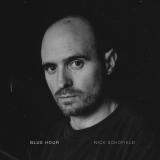
Nick Schofield - Blue Hour LP

Nick Schofield

Blue Hour LP

12inchLPBKWRD040
Backward Music
10.04.2026
También disponible

Clear Vinyl[22,65 €]


Blue Hour is Nick Schofield’s first foray into ambient jazz music. The album is an ambient ode to Miles Davis’ In A Silent Way, and opens up Schofield’s sonic palette to introduce his childhood instrument, drums, with his contemporary ambient-electronic practice. Blue Hour features the intuitive, and totally improvised, trumpet playing of Scott Bevins (No Cosmos, Busty and the Bass).

Schofield grew up playing drums, but turned to creating experimental-electronic music when studying Electroacoustics at Concordia University. Well-known for his signature ambient aesthetic, Schofield has been called a “dazzling electronic artist” by Aquarium Drunkard and a “synth maven” by Constellation Records. Blue Hour marks the first time that he has merged his percussion practice with his ambient electronic explorations, and it is all in the service of reinterpreting Miles Davis’ 1969 watershed recording In a Silent Way.

Schofield improvised all of the drumming and main synthesizer parts over the course of a single day, recording in a church in Ottawa. These foundational layers comprise tender Moog pulses and Roland Juno-6 pads, some of which would not be out of place on the back half of Another Green World or Music Has the Right to Children.

If this was to be a reflection of In a Silent Way, of course there would need to be trumpet. Schofield invited Bevins to record the missing piece of the album during a one day recording session, where Bevins improvised all his trumpet parts having never heard the songs before. Scott Bevins’ contribution gives the music a leading instrumental voice, and his intuitive approach shows a perfect understanding of how to both integrate and elevate the compositions.

Blue Hour is itself a profound reference, an ambient adaptation, a dream realized and an uncanny synthesis of sounds, styles, and personal history.

Reservar10.04.2026

debe ser publicado en 10.04.2026

20,97
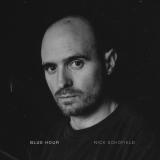
Nick Schofield - Blue Hour LP

Nick Schofield

Blue Hour LP

12inchLPBKWRD040C
Backward Music
10.04.2026
También disponible

Black Vinyl[20,97 €]


Blue Hour is Nick Schofield’s first foray into ambient jazz music. The album is an ambient ode to Miles Davis’ In A Silent Way, and opens up Schofield’s sonic palette to introduce his childhood instrument, drums, with his contemporary ambient-electronic practice. Blue Hour features the intuitive, and totally improvised, trumpet playing of Scott Bevins (No Cosmos, Busty and the Bass).

Schofield grew up playing drums, but turned to creating experimental-electronic music when studying Electroacoustics at Concordia University. Well-known for his signature ambient aesthetic, Schofield has been called a “dazzling electronic artist” by Aquarium Drunkard and a “synth maven” by Constellation Records. Blue Hour marks the first time that he has merged his percussion practice with his ambient electronic explorations, and it is all in the service of reinterpreting Miles Davis’ 1969 watershed recording In a Silent Way.

Schofield improvised all of the drumming and main synthesizer parts over the course of a single day, recording in a church in Ottawa. These foundational layers comprise tender Moog pulses and Roland Juno-6 pads, some of which would not be out of place on the back half of Another Green World or Music Has the Right to Children.

If this was to be a reflection of In a Silent Way, of course there would need to be trumpet. Schofield invited Bevins to record the missing piece of the album during a one day recording session, where Bevins improvised all his trumpet parts having never heard the songs before. Scott Bevins’ contribution gives the music a leading instrumental voice, and his intuitive approach shows a perfect understanding of how to both integrate and elevate the compositions.

Blue Hour is itself a profound reference, an ambient adaptation, a dream realized and an uncanny synthesis of sounds, styles, and personal history.

Reservar10.04.2026

debe ser publicado en 10.04.2026

22,65
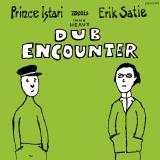
Prince Istari Meets Erik Satie - Inna Heavy Dub Encounter LP

Green Sleeve 2026 Repress

The earliest musical memories of young Prince Istari are of his mother beautifying the home with her piano playing. She would repeatedly play the tranquil pieces of Erik Satie. Skipping school and sitting in the sun, young Prince would listen to these catchy, calm compositions.

In the first week of 2024, the older Prince Istari rediscovered himself and found a box containing his mother's old sheet music. He transferred them to his computer and began spinning dub versions from them. It became a tapestry. As his mother used to say: "To weave a net, one must first spin." The form of the pieces dictated the direction each would take. The heavy dub transforms here into a light weightiness until it dissolves into a pure piano piece accompanied by a synthesizer. However, the last piece is much older, from the time when Prince was still known as Istari Lasterfahrer. The ending includes a distorted recording of Huberta, Prince's mother, playing a Gnossienne by Satie. At the end, she turns the sheet music, and the record can be turned back to the beginning.

In the essence of its material, this record rejects the Loudness War. The originality of the compositions guided the dub within their tracks, thereby imparting to each a form descriptive of its essence.

No en stock

Haga su pedido ahora y le encargaremos el artículo en nuestro proveedor.

18,45

Ültimo hace: 20 Meses
Iterum Nata - Heartwood LP

Iterum Nata

Heartwood LP

12inchLPNVP229C
NORDVIS
03.04.2026

From the quiet desolation of earlier Iterum Nata now rises something heavier – more aggressive and defiant. With “Heartwood”, Finnish multi-instrumentalist Jesse Heikkinen (The Abbey, Henget, ex-Hexvessel) reshapes his progressive rock and neo-folk foundations through the crucible of metal, layering doom-laden riffs and blackened textures upon the project’s introspective core.

To give this vision its pulse, Heikkinen enlisted Ukrainian drummer Yurii Ciel (Stoned Jesus, Cailleach Calling, ex-White Ward), whose expressive performance transforms “Heartwood” into the most visceral Iterum Nata release to date. Together they carve a sound both expansive and immediate: progressive journeys steeped in folk atmosphere, driven by the weight and force of metal.

The record also features rare guest appearances: King Dude lends his commanding voice to “Forgiveness Undone”, Alexander Kuoppala (ex-Children of Bodom) unleashes a searing solo in “I Have Been Sacrificed”, and Sami Hynninen (Reverend Bizarre) delivers an unearthly vocal in “Only Ash and Bones Remain”.

“Heartwood” is an album hewn from fury yet tempered by revelation. Where past Iterum Nata releases drew from solitude and sorrow, here the wellspring is anger – but anger that points beyond itself, toward beauty, hope, and transcendence. It is a meditation on the spiritual war within the collective unconscious, channelled through music that flows between Anathema and My Dying Bride, Opeth and In the Woods…, Pink Floyd and Green Carnation.

Reservar03.04.2026

debe ser publicado en 03.04.2026

26,85
VARIOUS - HELP (2) LP 2x12"
 
24

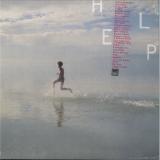
HELP(2) ist die Neuauflage einer der beeindruckendsten Charity-Aktionen der jüngeren Musikgeschichte. Bereits 1995 schlossen sich die Größen der britischen Musikszene zusammen, um mit den Erlösen der gemeinsamen HELP-Compilation Kindern in Kriegsgebieten zu helfen. Auch 2026 ist die globale Lage verheerend. Inspiriert vom legendären Charity-Sampler HELP aus dem Jahr 1995 hat sich in Großbritannien erneut ein Community-Projekt formiert, getragen von einigen der wichtigsten Musikerinnen und Musiker unserer Zeit. Ziel ist es, in bewegten Zeiten einen würdigen Nachfolger aufzunehmen: HELP(2). Wie schon beim Original, an dem unter anderem Radiohead, Oasis, Portishead, The Chemical Brothers, Massive Attack und Blur beteiligt waren, bringt auch HELP(2) Menschen zusammen, um die lebenswichtige Arbeit von War Child zu unterstützen: schnelle Nothilfe, Bildungsangebote, spezialisierte psychosoziale Betreuung sowie Schutz für Kinder, die weltweit von Krieg und Konflikten betroffen sind. Das Album macht auf den dramatischen Umstand aufmerksam, dass heute jedes fünfte Kind auf der Welt in einem Kriegsgebiet lebt. Entstanden ist das neue Album während einer außergewöhnlichen Aufnahmewoche im November 2025 in enger Zusammenarbeit mit den Abbey Road Studios. Als Executive Producer fungierte der vielfach ausgezeichnete Produzent James Ford. HELP(2) vereint eine beeindruckende Liste internationaler Künstlerinnen und Künstler, darunter Anna Calvi, Arctic Monkeys, Arlo Parks, Arooj Aftab, Bat For Lashes, Beabadoobee, Beck, Beth Gibbons, Big Thief, Black Country, New Road, Damon Albarn, Depeche Mode, Foals, Fontaines D.C., Graham Coxon, Greentea Peng, Kae Tempest, King Krule, Nilüfer Yanya, Olivia Rodrigo, Pulp, Sampha, The Last Dinner Party, Wet Leg, Young Fathers - sowie viele weitere helfende Hände. Die kreative Leitung des Projekts liegt in den Händen des renommierten Filmemachers und Oscar-Preisträgers Jonathan Glazer und seines Teams von Academy Films, die sowohl die visuelle Umsetzung als auch die künstlerische Gestaltung von HELP(2) maßgeblich prägten. Sämtliche Erlöse des Albums kommen War Child UK zugute und unterstützen den Einsatz für Schutz, Bildung und die Rechte von Kindern in Konfliktgebieten weltweit. HELP(2) steht für Hoffnung - für Kinder, deren Leben durch Krieg zerstört wurde - und für die Kraft gemeinschaftlichen Handelns. Es ist ein eindrucksvolles Zeichen der Solidarität von Künstlerinnen und Künstlern für eine sicherere und gerechtere Zukunft. Denn kein Kind sollte jemals Teil eines Krieges sein.

No en stock

Haga su pedido ahora y le encargaremos el artículo en nuestro proveedor.

26,01

Ültimo hace: 12 Días
Archive - Call To Arms & Angels LP 3x12"

‘Call To Arms & Angels’ is the title of the twelfth studio album from South London collective Archive.

 A 17-track double CD / triple LP recorded at RAK studios in London and released on Dangervisit/PIAS.

 Deluxe editions of the album also include a bonus ‘Super8’ album of new and exclusive instrumentals, as featured in the band’s ‘Super8’ documentary that will accompany the release of the album.

 Produced by Archive and long-time collaborator Jérome Devoise, ‘Call To Arms & Angels’ is the band’s first studio set since 2016’s ‘The False Foundation’.

 Talking about the new album, Darius Keeler says, “Writing our twelfth studio album was an extraordinary time for the band. The song writing became an unfolding narrative as the world got stranger and more disturbing every day. With people’s freedoms being pushed to the brink, the suffering Covid caused and the terrible events in the US lead by Trump and the rise of the Right, anything seemed possible.

 “To reflect on these times as artists brought up a darkness and an anger, but also a strange kind of inspiration that was at times unsettling. It really made us appreciate the power of music and how lucky we are to be able to express our feelings in this way.

 “It seems there is light at the end of the tunnel, but there are always shadows within that light.”

 Deluxe 2CD album plus ‘Super8’ bonus CD in 40-page casebound Polaroid bookpack.

 2CD album.

 Deluxe vinyl box set with white coloured vinyl 3LP (exclusive to this box set), ‘Super8’ bonus LP on white vinyl (exclusive to this box set), deluxe 3CD with Polaroid booklet and 12” x 12” art print.

 Triple LP on gold vinyl in triple gatefold sleeve.
 Triple LP on green vinyl in triple gatefold sleeve.
 Triple LP on black vinyl in triple gatefold sleeve.

No en stock

Haga su pedido ahora y le encargaremos el artículo en nuestro proveedor.

36,77

Ültimo hace: 61 Días
Archive - Call To Arms & Angels LP 3x12"

‘Call To Arms & Angels’ is the title of the twelfth studio album from South London collective Archive.

 A 17-track double CD / triple LP recorded at RAK studios in London and released on
Dangervisit/PIAS.

 Deluxe editions of the album also include a bonus ‘Super8’ album of new and
exclusive instrumentals, as featured in the band’s ‘Super8’ documentary that will
accompany the release of the album.

 Produced by Archive and long-time collaborator Jérome Devoise, ‘Call To Arms &
Angels’ is the band’s first studio set since 2016’s ‘The False Foundation’.

 Talking about the new album, Darius Keeler says, “Writing our twelfth studio album
was an extraordinary time for the band. The song writing became an unfolding
narrative as the world got stranger and more disturbing every day. With people’s
freedoms being pushed to the brink, the suffering Covid caused and the terrible
events in the US lead by Trump and the rise of the Right, anything seemed possible.

 “To reflect on these times as artists brought up a darkness and an anger, but also a
strange kind of inspiration that was at times unsettling. It really made us appreciate
the power of music and how lucky we are to be able to express our feelings in this
way.

 “It seems there is light at the end of the tunnel, but there are always shadows within
that light.”

 Deluxe 2CD album plus ‘Super8’ bonus CD in 40-page casebound Polaroid
bookpack.

 2CD album.

 Deluxe vinyl box set with white coloured vinyl 3LP (exclusive to this box set), ‘Super8’
bonus LP on white vinyl (exclusive to this box set), deluxe 3CD with Polaroid booklet
and 12” x 12” art print.

 Triple LP on gold vinyl in triple gatefold sleeve.
 Triple LP on green vinyl in triple gatefold sleeve.
 Triple LP on black vinyl in triple gatefold sleeve.

No en stock

Haga su pedido ahora y le encargaremos el artículo en nuestro proveedor.

39,92

Ültimo hace: 61 Días
KYOZO NISHIOKA - Gypsy Song / Never Land 7"
  • Side A. Gypsy Song
  • Side B. Never Land

After traveling through Mexico, Miami, the Bahamas, and New Orleans, Nishioka recorded his fourth album South American Journey in Los Angeles,
released in 1979. From this album, two of his most celebrated tracks—“GYPSY SONG”, a fan favorite with numerous cover versions, and “NEVER LAND”,
featuring the distinctive sound of steel pans and a Japanese reggae vibe are now being pressed on 7-inch vinyl for the first time in a limited edition!

The recording features members of the So What Review band, including Junshi Yamagishi (guitar) and Osamu Ishida (guitar), along with renowned steel pan
player Robert Greenidge, known for collaborations with Van Dyke Parks and Taj Mahal.
(FLATT THE LAIDBACK)

Kyozo Nishioka Profile
(Born May 7, 1948 – Died April 3, 1999)
Singer songwriter from the Shima Peninsula in Mie Prefecture, affectionately nicknamed “Zo-san”.
After enrolling at Kinki University and moving to Osaka, Nishioka became a regular at the folk cafe Dylan in Namba, opened in August 1969 by Masaji Otsuka
and Yoko Ishimura. Dylan was a gathering spot for folk music enthusiasts from all over Japan.
Nishioka formed the folk group The Dylan with Masaji Otsuka and You Nagai, performing at folk camps and the Nakatsugawa Folk Jamboree. In 1971, Nishioka
left the group, and Otsuka and Nagai continued as The Dylan II. Nishioka wrote and composed the song “Puka Puka” under the pen name Zokyozo, which became
one of his signature works. The song was first released in July 1971 as the B-side of The Dylan II’s single “Otoko rashii tte Wakarukai” on URC Records.
Nishioka began his solo career, releasing his debut album “Dylan nite” in July 1972, produced by Kinji Yoshino on Bellwood Records, which included his own
version of “Puka Puka”. In September 1973, he appeared at the farewell concert of Happy End titled CITY – LAST TIME AROUND at Bunkyo Public Hall in Tokyo.
His 1974 album “Machiyuki Murayuki” was produced by Haruomi Hosono, and his 1975 album “Rokka My Baby” featured support from Shigeru Suzuki’s band
HUCKLE BACK. Nishioka recorded three albums under Hosono’s production, deepening their friendship.
Together with his wife and lyricist KURO, Nishioka wrote songs for artists such as Eikichi Yazawa. The couple traveled the world, recording overseas albums such
as “Nanbei Ryoko” (1977), “Yoh-Sollo” (1979), and “New York to Jamaica” (1981), incorporating reggae, calypso, and other global sounds. In the 1980s, he released
works under the duo name KYOZO & BUN with Yoshifumi Okajima, and in the 1990s returned to solo projects with albums like “START” (1993) and “Farewell
Song” (1997).
After KURO’s passing in 1997, Nishioka continued his musical activities until his own death in 1999 at the age of 50. His music transcended the boundaries of folk,
blending jazz and tropical elements to create a unique world view, leaving an indelible mark on Japanese music history.

Reservar06.03.2026

debe ser publicado en 06.03.2026

31,89
Bill Evans Trio - Portrait In Jazz LP
  • Come Rain Or Come Shine
  • Autumn Leaves
  • Witchcraft
  • When I Fall In Love
  • Peri's Scope
  • Blue In Green
  • What Is This Thing Called Love?
  • Spring Is Here
  • Some Day My Prince Will Come
  • Blue In Green
  • Autumn Leaves

Limited edition classic LP, reissued on 180g vinyl, audiophile pressing
Portrait in Jazz was Bill Evans' third album as a leader, following New Jazz
Conceptions (1956) and Everybody Digs Bill Evans (1958). It was also Evans' first
studio album with his legendary trio, featuring Scott LaFaro and Paul Motian.
The repertoire here consists of standards (all of them treated in Evans' very
personal style) plus two originals, "Peri's Scope" – premiered on Portrait in Jazz,
and "Blue in Green," which was co-composed by Miles Davis. Bill first recorded the
latter composition in March 1959 with Miles for the classic album, Kind of Blue.


[f] BLUE IN GREEN [alternative take]


[k] AUTUMN LEAVES [Mono take]

Reservar27.02.2026

debe ser publicado en 27.02.2026

22,65
GREEN MILK FROM THE PLANET ORANGE - City Calls Revolution LP 2x12"
  • A1: Concrete City Breakdown (19:55)
  • B1: Omgs (7:09) B2. Demagog (8:29)
  • C1: A Day In The Planet Orange Part1 (22:44)
  • D1: A Day In The Planet Orange Part2 (12:21)

LIMITED EDITION (500 COPIES) 20TH ANNIVERSARY REMASTER, AVAILABLE ON VINYL (2LP) FOR THE FIRST TIME IN ALMOST TWO DECADES. HOUSED IN GORGEOUS GLOSSY GATEFOLD SLEEVE AND PRESSED ON RED & ORANGE VINYL TO COMPLIMENT THE ARTWORK
City Calls Revolution is our second full-length album, created as we absorbed the new wave revival and math rock movements that emerged in the early to mid-2000s, while simultaneously reconstructing elements of classic progressive rock, hard rock, and experimental music in our own way.
The album strongly reflects the attitude we cultivated as a live band—deeply influenced by the American and Japanese bands we shared stages with at the time—and embodies the punk spirit that shaped us.

Recorded and mixed in March 2005 at Headgear Studio in Brooklyn, New York, by Paul Mahajan (known for his work with Yeah Yeah Yeahs, TV on the Radio, and others), the album was originally released in May of the same year on both LP and CD by Beta-lactam Ring Records, then based in Portland, Oregon. Long out of print, it now returns two decades later as a newly remastered edition to be released by Riot Season Records in the UK.

In 2026, GREEN MILK FROM THE PLANET ORANGE celebrates its 25th anniversary—and also marks 10 years since Damo joined as our current bassist. It is a joy and an honor to have this album, filled with songs we still play live today, reissued in such a milestone year.

Starting January 2026, we will bring this LP on tour across 27 shows in 11 European countries, including the UK. We look forward to seeing all of you at the venues.
/// 2026 Winter European Tour ///

Reservar20.02.2026

debe ser publicado en 20.02.2026

27,31
THROWING MUSES - MOONLIGHT CONCESSIONS LP

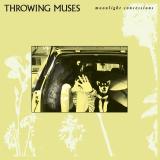
‘Moonlight Concessions’ goes back to basics, a return for Throwing Muses to their esoteric off-kilter best courtesy of Kristin’s pin-sharp sketches and their suitably abrasive musical arrangements. The album follows their acclaimed ‘Sun Racket’ from 2020, a heady set filled with tough and tender tales spiked with surreal imagery. Produced by Kristin Hersh at Steve Rizzo's Stable Sound Studio in Portsmouth, Rhode Island, ‘Moonlight Concessions’ is a collection of snippets from everyday life writ large - think Raymond Carver Short Cuts, overheard conversations, recounted happenings and telling one-liners, all sewed together to illustrate the times as they slowly mature, fully peppered with original Muses’ vim and vigour. ‘Drugstore Drastic’ is a kerbside soliloquy caught en route to a more alluring rendezvous. Built on a brisk acoustic strum with a guitar sub-melody underpinning proceedings, it’s an unfolding tale of social awareness from a blurred sub-conscious. ‘Summer Of Love’ began as a bet with a guy for a dollar that revolved around the idea that the seasons don’t change us. The album opener, it’s a haunting baroque overture, bowed and brooding. ‘Libretto’s strings offset the acoustic ambience, the hot and cold of longing at the very heart of it, a thematic driver filed with warmth in a safe haven lubricated by tequila. Written in the differing South Coast environs of The Gulf Of Mexico and Southern California, ‘Moonlight Concessions’ pulls from the star clusters that light both, generating optimism and hope in varying degrees. Hersh explains, “In New Orleans the stars look greenish-blue, as it’s below sea level and swamp-lit. But on Moonlight Beach, they glow icy white. All these songs were written in these two glowy places, which helped our sonic technique find itself.”

Reservar20.02.2026

debe ser publicado en 20.02.2026

23,49
OREYEON - THE GROTESQUE WITHIN

Neon Green Vinyl. Limited to 350 copies. "The Grotesque Within" is what we proudly call our first true self-produced album. Recorded in the winter of 2025 between Outside Inside Studio in Treviso and our own home studio, it marks a raw and uncompromising chapter in our sound. The record weaves a dense narrative inspired by the unsettling atmosphere found in the works of Thomas Ligotti - where reality constantly threatens to unravel, and horror seeps into the everyday. Much like Ligotti's existential tales, The Grotesque Within doesn't simply portray darkness - it observes how the absurd and the horrific have become indistinguishable from our modern reality. Each track is a confrontation - with the bizarre, the dissonant, and the disturbingly familiar.This is not just an album. It's a descent into the uncanny that already surrounds us.

Reservar13.02.2026

debe ser publicado en 13.02.2026

24,58
David Bowie - Under The Influence? 2x12"
  • A1: Little Richard - Fabulous Little Richard
  • A2: Anthony Newley - Who I Can Turn To
  • A3: Ann Peables - I Can’t Stand The Rain
  • A4: Ken Nordine & The Fred Katz Group - Word Jazz
  • A5: Gerry Mulligan - California Concerts
  • A6: Koerner, Ray & Glover - Blues, Rags & Holler
  • A7: Stooges - Stooges
  • A8: Moondog - Moondog
  • A9: Linton Kwesi Johnson Forces Of Victory - Forces Of Victory
  • A10: Pixies - Doolittle
  • B1: Air - Moon Safari
  • B2: Scott Walker - Scott Walker
  • B3: Grandaddy - The Sophtware Slump
  • B4: Tom Verlaine - Tom Verlaine
  • B5: Brian Eno - Another Green World
  • B6: Kevin Ayers - Unfairground
  • B7: Mother Of Invention - Freak Out
  • B8: Roxy Music - Roxy Music
  • B9: The Langley Schools Music Project - Innocence & Dispair
  • B10: The Polyphonic Spree - Section 8

Which musical artists influenced David Bowie? Which records did he listen to over and over again during his youth and beyond? Who were his favorite songwriters and composers? What were his favorites? And in the case of such an artist, unique in his genre from the beginning to the end of his career, is the term “influences” the right one? As we delved into Bowie’s work, we learned that, even if he was the type to pick and choose from all over the place, he drew most of his inspiration from himself

Reservar13.02.2026

debe ser publicado en 13.02.2026

27,94
Gogol Bordello - We Mean It, Man! LP
  • A1: We Mean It, Man!
  • A2: Life Is Possible Again
  • A3: No Time For Idiots
  • A4: Hater Liquidator
  • A5: Boiling Point
  • A6: Ignition
  • A7: From Boyarka To Boyaca
  • A8: Mystics
  • A9: We Did Good With The Good We Did
  • A10: Crayons
  • A11: State Of Shock
  • A12: Solidarity (Nick Launay Mix)

We Mean It, Man! If you're receiving this message, you are a writerly/music/culture person who wants to know more about the new Gogol Bordello album the band just unleashed. It's called We Mean It, Man! And it's out on February 13, 2026 via Casa Gogol Records. Gogol frontman and spiritual figurehead Eugene Hutz calls it the band's "post punk revenge." It's a fitting description. We Mean It, Man! #was co-produced by Nick Launay, whose 40+ year run of musical partners reads like the Great Canon of avant-teasing rock: Idles, Nick Cave and The Bad Seeds, Public Image Limited, Gang Of Four, the Yeah Yeah Yeahs (he did the one with "Heads Will Roll" on it. Dude is the Quincy Jones of the underground). And Adam "Atom" Greenspan (Nick Cave, Idles, Refused, Amyl and The Sniffers).

Reservar13.02.2026

debe ser publicado en 13.02.2026

26,85
Artículos por página
N/ABPM
Vinyl