Buscar:calle
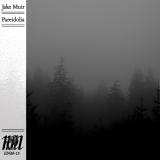
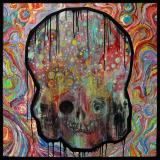
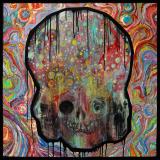
Named after the tendency to impose familiar likenesses, such as faces, on random - usually inanimate - objects, Pareidolia is Jake Muir's way of interpreting the consonances between so-called “ambient” music and extreme heavy metal. Extracting the headiest, most atmospheric sections from hundreds of death metal and black metal tracks, Muir plays the role of both DJ and electroacoustic composer, concocting a lysergic elixir of fractal distortions and prolonged, decelerated riffs that slowly evaporates into iridescent vapor. If there's any trace of the original sources left, Muir makes sure that residue is subtly bewildering, like clouds in the sky that form imposing, larger than life images, or trampled bracken that falls into the shape of “trve kvlt” insignia.
The idea for the album materialized when Muir was working on 2022's Talisman, his collaborative album with multi-instrumentalist Evan Caminiti. Processing guitar for the first time, Muir began to unpack his long relationship with rock music and its Escher-like maze of sub-genres, from the tech metal he obsessed over as a teenager to Loop and Main's drone-y, textured variants. Scraping the internet for unconventional contemporary metal albums, he stumbled across music that seemed to hover between different realms, merging its frenetic, noisy sections with psychedelic interludes that harmonize with classic industrial and avant-garde music, material like :zoviet*france:, Nocturnal Emissions and Z'EV.
RAWAX proudly welcomes Mike Dehnert to the artist Family! We are very happy to present
you this great Producer/ DJ from Berlin on the RX Series. Starting with "Freiraum EP" which came out originally on Mike's onw imprint, called Fachwerk in 2008.
You will hear in future also new music from Mike on RAWAX.
Stay tuned!
2026 Repress
White Marble Vinyl
Dutch electronic music trio, Noisia, have announced the release of their long awaited new album, 'Outer Edges' on their own label, Vision. The 18 track album is their first in six years, and the band's second in total.
With a peerless reputation and countless awards under their belts, Noisia have transcended their genre and grown into a phenomenon in their own right. Drum & Bass is at the core of Noisia's sound, but Nik, Martijn, and Thijs's visceral brand has always ventured further.
"It's called Outer Edges because it's us exploring the outer edges of what Noisia, the three of us together, is. It's about the idea that all the songs are little islands that we take to their individual edge... They're all like expeditions to far sides. That doesn't mean that it's everything; it's just that every song, if it goes in a certain direction, we've taken it all the way there. There's no real concessions, we haven't been super DJ- or radio-friendly at all and we've done no collaborations or hardly any vocals on the album." - Noisia
- 01: Around The Clock News
- 02: Three Days Of Condor
- 03: Nautilus Feat. Anna Sato - Captain Future Theme
- 04: Theme From "The Love Boat
- 05: The Bionic Woman
- 06: Dr. Who Theme
- 07: Le Bracelet
- 08: Twin Peaks Theme
- 09: Lujon
- 10: Brother's Gonna Work It Out Featuring Linski
- 11: Tatort Theme
- 12: Running Up That Hill
- 13: End Theme
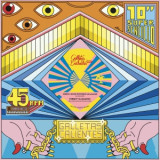
Dive into the depths of the SUNKEN SCORES which is the new concept album by Japanese Rare Groove trio Nautilus from Toyko. What is called lost themes and jazzy seaquences from the cinematic coastlines ends in a journey through different eras of film and television music.
It's their fourth album release on Oonops Drops besides several limited 7inch releases. Like all other releases on the label, this LP is also pressed on recycled vinyl . There will be an extended Germany tour by Nautilus from 8th May to 4th June from the North Sea Coast to the mountains in the Allgäu. / Promo: feature in Jazzthing magazine at the end of May.
Never before heard tunes from the heart of Manchester circa 1989. The lost demos of the band that was Joanna, recorded at iconic Strawberry and Pentagon Studios were discovered in a Manchester apartment loft after 35 years on the shelf. For fans of The Stone Roses, Happy Mondays and Charlatans. With the release of Hello Flower, Joanna is no longer “the most popular band without a record out,” as NME called them in 1990, but their singular spirit is now available for anyone who wants a taste.
Pure feel-good club energy from Italian producer Niccolo Turini, landing on 4lux with a killer slice of classic-inspired house magic! Think warm MPC grooves, rolling basslines, dusty chords and that unmistakable 90s US vibe -- deep, soulful and built for sweaty late-night floors. Essential material for true house lovers!
Isa Gordon and Tony Morris were first brought together through their individual releases on Optimo Music, which established mutual respect within the label’s community. While they had not previously performed live together, they were invited to take part in a fundraiser hosted by Queen’s Park Arena in support of Glasgow NW Foodbank and later for JD Twitch’s end-of-life care. Tony asked Isa to contribute guitar and backing vocals to his set, including a track then called Last Night I Had a Dream. That performance became the seed for their collaboration.
The first phase of fleshing it out, recalls Tony: “Somebody said Isa sang like Shania Twain. That got me thinking about country music and call and response, prompting me to come up with alternative lyrics.” Isa remembers: “I cycled over to Tony’s house with my guitar, and we spoke about what the tune meant. It was about him being wrapped up in dreamland, luxuriating in his subconscious, while my character — impatient and trapped in her own routines — barely had time to remember her own dreams.” Tony continues: “Brilliantly I realised that I could never collaborate with anyone in situ and so I sat in the garden for two hours watching my wife tend to plants. Every now and again I would creep up the stairs and put my ear to the door. I could hear Isa warbling away and so would resume my garden watch. After two hours I went back upstairs to see how she was getting on, only to find that she had written one of the greatest songs I’d ever heard. I still think that.” Tony adds: “My overwhelming sentiment about Wake Up Baby is pride. I can honestly say that I’m more proud of it than anything else I have done. It ticks a whole load of boxes. Isa’s singing in various Scottish modes is unique. The way her electric guitar adorns the dance beat makes it a rock song as well as a dance and a C&W song — truly multi-genre.”
The B-side of the 12” release, Syringe Moustache, is a surreal, darkly playful counterpart to Wake Up Baby. The track was inspired by a dream Tony had: “I was in a shopping mall, in a two-level shoe shop, and my attention was taken by a little girl with a syringe taped beneath her nose like a moustache. She went about her business trying on shoes, confident and wise beyond her years. In the dream, I imagined her as the daughter of cultured, intelligent parents determined to raise her independently. I was struck by my own feelings of inadequacy — I knew I could never have coped with such a contraption myself.” Isa’s take on the meaning of this song somewhat differs: “Tony sent me the tune over Instagram months before I met him, and I was spooked — as far as I knew, he didn’t know anything about me, but the story felt like it was written about me as a little girl, growing up around heroin addiction. The syringe beneath the girl’s nose became a symbol of the inescapable constraints of that environment, literally written on her face, yet something you just have to carry on through. On a buzz from the serendipity, I added a full instrumental backing to this most bizarre of works.”
The result is absurd, unsettling, and strangely empowering, staking out its own surreal, cinematic space. The 12” dance single is a format Tony had long wanted to explore — a tangible artefact to leave for family, a medium that celebrates the physicality of sound and the ritual of listening. It allowed the artists to maximise the format’s potential: a strong, multi-genre A-side, a surreal B-side, and remixes that expanded the record’s sonic world. Glasgow music staples Auntie Flo and 100% Positive Feedback were invited to reinterpret the tracks, bringing their distinctive touch — Auntie Flo transforming the A-side into a luscious, dancefloor-ready meditation, and 100% Positive Feedback twisting Syringe Moustache into absurd, playful shapes with false-start drops and over-the-top vocal editing.
The cover photograph, taken at the University Café by Harrison Reid, captures Isa and Tony embodying the characters they brought to life in the songs — a visual reflection of the record’s narrative and emotional stakes. The Café also holds personal significance: it’s where all of Isa’s meetings with Keith McIvor took place, where she first remembers visiting Glasgow as a child, and a place Tony fondly likes to go to drip egg yolk down his tie and watch the world go by. Together, the 12” format, the remixes, and the artwork create a cohesive, tactile experience, amplifying the duality, theatricality, and emotional breadth of the collaboration.
When I first started Future Retro London, primarily as a club night, the first event was meant to take place in April 2020, but due to the coronavirus pandemic, the date got pushed to June 2020 in the hopes that venues in the UK would have re-opened by that time. They very much were not re-opened by then and navigating the various lockdown periods that occurred meant the first event didn't actually happen until December 2021.
Dead Man's Chest was part of the original lineup intended for the first event but by the time it was actually able to happen, he had temporarily relocated to Portugal & it meant he wasn't able to make it for it. Various attempts were made afterwards to try & include him in events I was doing but nothing came together until I finally had him play the 2nd joint event I did with Distant Planet in December 2024.
He runs a label called Western Lore which I've featured on previously, with 2 different remixes I did of Plastic Face by Response & Pliskin, as well as a track featured on the first Blunted Breaks compilation. It only made sense to eventually work on a joint label project as his label is a key figure in the current wave of jungle music, plus I hadn't put any music from him on Future Retro London yet so now I can finally tick him off the list!
Big up to Dead Man's Chest for his work on the collaborations & for his involvement in making this release a reality.
Pixl has been sending me so much of the music that he's been doing solo as well as his collabs with Duburban, Ark X & Peeb. I've been playing quite a few of them on my shows on NTS Radio & it only made sense to eventually put together a full release of them, so here is Old Citrus by him & Peeb, representing the atmospheric style of jungle that they are both excellent at.
Big up to both of them on this release & to Equinox for his fantastic remix of Old Citrus.
He runs a label called Western Lore which I've featured on previously, with 2 different remixes I did of Plastic Face by Response & Pliskin, as well as a track featured on the first Blunted Breaks compilation. It only made sense to eventually work on a joint label project as his label is a key figure in the current wave of jungle music, plus I hadn't put any music from him on Future Retro London yet so now I can finally tick him off the list!
Big up to Dead Man's Chest for his work on the collaborations & for his involvement in making this release a reality.
- 01: My Brain Is Broke
- 02: I Just Can&Apos;T Get It Up
- 03: Manopause
- 04: Dental Breakdown
- 05: I Got Hacked
- 06: Colonoscopy
- 07: Back Ache
- 08: Taking Out The Trash
- 09: I Can&Apos;T Remember My Password
- 10: Dirty Clothes
Shawn Lee, the Silver Fox, did it again! He managed to persuade David Fostex to reord a follow up to his intriguing 2023 offering "Dark Yacht" with an even more cutting-edge venture into the world of sinister, mysterious world of the super yacht sounds and releases "Dark Yacht 2" including 10 new, original compositions written during a frosty, starry night somewhere near Marina Del Ray.
"As I find myself entering into the new era of my personal musical odyssey, I reflect back to a simpler time -a kinder, more gentle world where people listened without hearing," says David Fostex. "An artistic genius such as myself could easily live a life of excess and luxury without even breaking a sweat. I now find myself slaving away in a hot cramped home studio perspiring profusely over childlike chord structures and rudimentary themes. However, I am still reaching for musical greatness and to be perfectly honest, I am creating sonic masterpieces beyond the shackles of my so-called peers- if you can even call them that. My work speaks for itself and I speak for myself. So it is with great pride that I present to you ,Dark Yacht 2', an intimate journey into the mystical world of DAVID Jeremiah FOSTEX the living legend and purveyor of all things good and true. You will laugh-you will cry… Find a friend or a loved one… hold them close and listen to the splendour of what no doubt will be considered to be one the greatest albums of all time. You're welcome".
Indiana Jones never dug this deep.
Church – the brainchild of Joe Washington – were a band both lucky and cursed to come up in the seventies. Lucky, because they rode a wave of community activism, uplifting messages and a moment when music truly mattered. Cursed, because those same times meant their tight, heartfelt output went overlooked.
Mid-sixties to circa 1980 soul and funk were extraordinarily rich. The era’s big releases have aged like fine wine, yet countless hidden gems remain buried. Church’s only single was one of them. Their hypnotic 1976 release “How Long” b/w “Da Da Song” arrived the same year as Stevie Wonder’s Songs in the Key of Life, Marvin Gaye’s I Want You, Diana Ross’s Diana, and at a time when Black mainstream music was shifting toward disco. Church, however, sounded like Sly & The Family Stone in an alternate timeline — gritty, focused, stripped of additives.
“Da Da Song” is pure grits and gravy: furious, tight drums and lyrics that sound like both a plea to DJs to play their record and an insistence to keep the party alive, noticed or not. It cooks from start to finish in just two and a half minutes.
“How Long” is its own universe. Where “Da Da Song” is skeletal, “How Long” blends key strands of Black music in under three minutes: touches of spiritual jazz with a Gary Bartz-like sax, gospel-blues undertones, and echoes of the era’s flower-power-tinged Black creativity — The Undisputed Truth, The Family Stone, even the poetic freedom of Nikki Giovanni. The lyrics are a timeless plea for love.
Church formed in the Bay Area in the early seventies, shaped by the movement, culture and activism of the time. Joseph Washington, based in San Jose, never chased a music career — for him, music was a way to bring people together. Before Church, he led a backing band called Wash, then added gospel singer Linda Williams (née Stephens) and New York–born Joel Como on xylophone to complete the group.
They rehearsed in Joe’s garage, spread through word of mouth and played every gig they could: Black colleges, opening slots for The Whispers, neighbourhood house parties. Some members studied at Nairobi Junior College in East Palo Alto, then a hotbed of Black community activism, with revolution in the air and messages woven naturally into the music.
This single is a message from that era, resurfacing at last — ready to be sampled just as another Joe Washington track, “Look Me in the Eyes”, was on Drake and J. Cole’s “First Person Shooter”. These rare, spirited tunes are begging for new life through samplers, again and again.
- A1: Sunrise
- A2: Bryce
- A3: Arches
- A4: Totem
- A5: Waters And Geysirs
- A6: Indian Summer
- A7: Opening
- B1: Cpu
- B2: Soft Edge
- B3: Las Vegas
- B4: Rhythm Score
- B5: Space Shuttle
- B6: Disco Funk
Once again Trunk Records comes through with an album of sublime 1980s new age synthwave
music from an artist and library company you have never heard of.
With most Trunk LPs we write the story about how Jonny came across the music. And yes, this LP is no different...over to Jonny…
“My first encounter with Peter Patzer was when I was writing and researching the updated and fully expanded version of The Music Library Book, published by Fuel. The initial book - called The Music Library, was the first ever overview of library music and the wild, unpredictable graphic art of their sleeves. It was first published in 2005 and featured about 400 sleeves and about 120 library companies over 200+ pages. The book was based on over a decade of intense library LP collecting by myself and a handful of other geeky weirdos and made for fascinating and revealing reading and looking. It was a great education for many entering this odd, hidden musical world for the first time. The book quickly sold out.
A few years later the price of the original book had gone bananas. But the geeky weirdos like me had all carried on voraciously consuming and collecting library music so I strongly felt the first book could easily be doubled in size with new info, new sleeves and many newly discovered lost library companies. Which is exactly what I set about doing. The Music Library expanded edition came out in 2015. You have to realise here that The Music Library book was very much a first - until its unexpected arrival (and even the arrival of the much larger expanded edition) there was no published survey, accessible catalogue or anything about international library music. It was still an odd old world shrouded in some historical mystery - even the internet had not really caught up. And I was still finding unusual British one-off library LPs, more unusual Italian library diversions, hidden French funky things and then I finally found Peter Patzer. From Germany.
Hidden away in a very obscure music library corner. All on his own.Peter was unusual in that he was an artist and musician who made his own music and issued it all on his own library, called Crea Music, based out of Bremen in North Germany. Over a series of eight whitevinyl LPs produced in the 1980s Peter Patzer created synth heavy experiments for possible use in film, TV, video and anything else coming along. All his LPs had the same simple red, white and blue sleeve and a typed name and number. Across the eight LPs Peter goes to musical space, creates post-disco funk,travels to Vegas, goes all geological and more.
The eight Peter Patzer / Crea Music LPs are as follows:
01 - Puddy’s Bus 02 - Straight Line 03 - Pos-Attractions 04 - Patterns 05 - Canyons 06 - MIls Maniac 07 - Classic Themes 08 - Formation 17
This is a compilation of some of the music featured across those eight LPs, and yes, it was initially
licensed a few years ago but I held it back as I wasn’t sure people were quite ready for the plugged-inway out drifting 1980s electro sound of Peter Patzer with his synth washes, rhythms and chords. Or maybe I wasn’t ready. Anyway it’s here now... and if this sells out there could be another Peter Patzer LPbut with all his longer 7 minute compositions which there wasn’t room for here.
Focusing on bringing people some fresh air from the island that we produced with its own unique character. Our artists provide an escape to somewhere full of energy to drag you back from the so-called chaotic world. There are plenty of spaces, it’s a sharing for everyone!
As you may know, Koh is a word in Thai that means ‘island’. We want to represent the sound of our characterized island and tell the story through it. For this collection, we want to present the island under the ground which represents the different perspective of life reflecting our music scene in reality.
We gave the word “Clockmaker” as a hint to the artists.
It’s a simple, even mundane concept—something easily overlooked and not immediately eye-catching. It also suggests waiting, as it often takes time for people to return to the shop. But time itself holds meaning, and the clockmaker always has something hidden beneath the surface.
With that in mind, “The Photo Sticker Machine” and “Chucheewa” present their first original track: “Galactic Love.”
Alongside it are five vibrant remixes by artists we deeply admire—from Mogwaa (Korea) and Retromigration (Germany) to three incredible talents from Thailand’s local scene: Kova O’ Sarin, Chalo, and Saranmy.
- A1: Let It Go - Joaquin’s Sacred Rhythm Music Dance Version (Ft Kaidi Tatham)
- B1: Joint Purpose - Joaquin’s Teenage Music Version
- C1: In This Together - Joaquin’s Cosmic Arts Story For Bakki Sora
- D1: Joint Purpose - Joaquin’s Thee Artistic Vintage Lower East Side Nyc Squatters Dub Dub
- D2: In This Together - Joaquin’s Voices Of Innocence Version
Joe Claussell reimagines 3 tracks from Patrick Gibin's 2024 successful debut album 'Strength In Numbers' for Mother Tongue. These are not simple remixes but complete translations into the NYC legend's own language where the words Cosmic and Spiritual go hand by hand. The depth of these new versions is another testament of Joe's ability to always push the Sound to new heights!
'Let It Go' is manipulated into a dancefloor opus rich of sonic surprises and magnificent synth workouts.
'Joint Purpose' is present here in two versions, the deep and complex 'Teenage Music' mix and the thunderous 'Dub Dub' take which is exactly how it's called: an epic out of body bass experience.
'In This Together' comes in a full 15 minutes suite with tempo and mood changes which echoes the best 70's fusion and finally in a more ethereal form ('Voice Of Innocence Version') to close the double pack.
A breathtaking travel into Claussell's endless creative imagination where boundaries are won and Music is all that matters!
Introduced by a discrete message online, at the beginning of 2024, SNR007’s opening track Gliadin snuck its way through the web and first tickled my eardrums. It immediately lightened the mood and caused a little living room dance after a boring and grey day.
K’s musical ingredients may be called sparse, or certainly peculiar. All elements have their purpose though, even if they won’t tell you exactly what that is. The resulting experience is rich, enveloping and darkly funny.
Les Enfants Terribles presents LETM011 by DJ Real Madrid with the new EP No Smoking:
Dear readers and listeners,
My name is Tillmann Ostendarp, others know me as DJ Real Madrid. I love to play instruments, I love to play with machines. And this is something I did in May 2024, when I spent one week in my beautiful studio. Over the course of the week I recorded „NO SMOKING“ which is going to be my first Vinyl Release as „DJ Real Madrid“. No Smoking contains 4 Tracks: „Ta Ta“ which is a Juno-driven deep homage to the god of funk „Johnny Guitar Watson“. „Leave It Be“ is a big percussive jam that tells you to mind your own business. When I knocked out „GGGGGG“, I invited Dino Brandao and Mel D over to jam on the microphone, which led to a dark humorous ode to the insanity of our world. The last track is called „Merlasco“ and brings back the hope that we all will come together in the morning sunrise!
- A1: Hurts And Noises
- A2: Wake Up
- A3: I Don't Wanna Be A Rich
- A4: Terrorist Bad Heart
- A5: Provocate
- A6: Lucifer Sam (Pink Floyd)
- B1: Happy!?
- B2: So Lazy
- B3: I Feel Down
- B4: Stupido
- B5: Guilty
- B6: Caroline Says (Loo Reed)
UILTY RAZORS, BONA FIDE PUNKS.
Writings on the topic that go off in all directions, mind-numbing lectures given by academics, and testimonies, most of them heavily doctored, from those who “lived through that era”: so many people today fantasize about the early days of punk in our country… This blessed moment when no one had yet thought of flaunting a ridiculous green mohawk, taking Sid Vicious as a hero, or – even worse – making the so-called alternative scene both festive and boorish. There was no such thing in 1976 or 1977, when it wasn’t easy to get hold of the first 45s by the Pistols or the Clash. Few people were aware of what was happening on the fringes of the fringes at the time. Malcolm McLaren was virtually unknown, and having short hair made you seem strange. Who knew then that rock music, which had taken a very bad turn since the early 1970s, would once again become an essential element of liberation? That, thanks to short and fast songs, it would once again rediscover that primitive, social side that was so hated by older generations? Who knew that, besides a few loners who read the music press (it was even better if they read it in English) and frequented the right record stores? Many of these formed bands, because it was impossible to do otherwise. We quickly went from listening to the Velvet Underground to trying to play the Stooges’ intros. It’s a somewhat collective story, even though there weren’t many people to start it.
The Guilty Razors were among those who took part in this initial upheaval in Paris. They were far from being the worst. They had something special and even released a single that was well above the national average. They also had enough songs to fill an album, the one you’re holding. In everyone’s opinion, they were definitely not among the punk impostors that followed in their wake. They were, at least, genuine and credible.
Guilty Razors, Parisian punk band (1975-1978). To understand something about their somewhat linear but very energetic sound, we might need to talk about the context in which it was born and, more broadly, recall the boredom (a theme that would become capital in punk songs) coupled with the desire to blow everything off, which were the basis for the formation of bands playing a rejuvenated rock music ; about the passion for a few records by the Kinks or the early Who, by the Stooges, by the Velvet mostly, which set you apart from the crowd.
And of course, we should remember this new wave, which was promoted by a few articles in the specialized press and some cutting-edge record stores, coming from New York or London, whose small but powerful influence could be felt in Paris and in a handful of isolated places in the provinces, lulled to sleep by so many appalling things, from Tangerine Dream to President Giscard d’Estaing...
In 1975-76, French music was, as almost always, in a sorry state ; it was still dominated by Johnny Hallyday and Sylvie Vartan. Local rock music was also rather bleak, apart from Bijou and Little Bob who tried to revive this small scene with poorly sound-engineered gigs played to almost no one.
In the working class suburbs at the time, it was mainly hard rock music played to 11 that helped people forget about their gruelling shifts at the factory. Here and there, on the outskirts of major cities, you still could find a few rockers with sideburns wearing black armbands since the death of Gene Vincent, but it wasn’t a proper mass movement, just a source of real danger to anyone they came across who wasn't like them. In August 1976, a festival unlike any other took place in Mont-de-Marsan – the First European Punk Festival as the poster said – with almost as many people on stage as in the audience. Yet, on that day, a quasi historical event happened, when, under the blazing afternoon sun, a band of unknowns called The Damned made an unprecedented noise in the arena, reminiscent of the chaotic Stooges in their early adolescence. They were the first genuine punk band to perform in our country: from then on, anything was possible, almost anything seemed permissible.
It makes sense that the four+1 members of Guilty Razors, who initially amplified acoustic guitars with crappy tape recorder microphones, would adopt punk music (pronounced paink in French) naturally and instinctively, since it combines liberating noise with speed of execution and – crucially – a very healthy sense of rebellion (the protesters of May 1968 proclaimed, and it was even a slogan, that they weren’t against old people, but against what had made them grow old. In the mid-1970s, it seemed normal and obvious that old people should now ALSO be targeted!!!).
At the time, the desire to fight back, and break down authority and apathy, was either red or black, often taking the form of leafleting, tumultuous general assemblies in the schoolyard, and massive or shabby demonstrations, most of the time overflowing with an exciting vitality that sometimes turned into fights with the riot police. Indeed, soon after the end of the Vietnam War and following Pinochet’s coup in Chile, all over France, Trotskyist and anarcho-libertarian fervour was firmly entrenched among parts of the educated youth population, who were equally rebellious and troublemakers whenever they had the chance. It should also be noted that when the single "Anarchy in the UK" was first heard, even though not many of us had access to it, both the title and its explosive sound immediately resonated with some of those troublemakers crying out for ANARCHY!!! Meanwhile, the left-wing majority still equated punks with reckless young neo-Nazis. Of course, the widely circulated photos in the mainstream press of Siouxsie Sioux with her swastikas didn’t necessarily help to win over the theorists of the Great Revolution. It took Joe Strummer to introduce The Clash as an anti-racist, anti-fascist and anti-ignorance band for the rejection of old-school revolutionaries to fade a little.
The Lycée Jean-Baptiste Say at Porte d’Auteuil, despite being located in the very posh and very exclusive 16th arrondissement of Paris, didn’t escape these "committed" upheavals, which doubled as the perfect outlet for the less timid members of this generation.
“Back then, politics were fun,” says Tristam Nada, who studied there and went on to become Guilty Razors’ frontman. “Jean-Baptiste was the leftist high-school in the neighbourhood. When the far right guys from the GUD came down there, the Communist League guys from elsewhere helped us fight them off.”
Anything that could challenge authority was fair game and of course, strikes for just about any reason would lead to increasingly frequent truancy (with a definitive farewell to education that would soon follow). Tristam Nada spent his 10th and 11th unfinished grades with José Perez, who had come from Spain, where his father, a janitor, had been sentenced to death by Franco. “José steered my tastes towards solid acts such as The Who. Like most teenagers, I had previously absorbed just about everything that came my way, from Yes to Led Zeppelin to Genesis. I was exploring… And then one day, he told me that he and his brother Carlos wanted to start a rock band.” The Perez brothers already played guitar. “Of course, they were Spanish!”, jokes their singer. “Then, somewhat reluctantly, José took up the bass and we were soon joined by Jano – who called himself Jano Homicid – who took up the rhythm guitar.” Several drummers would later join this core of not easily intimidated young guys who didn’t let adversity get the better of them.
The first rehearsals of the newly named Guilty Razors took place in the bedroom of a Perez aunt. There, the three rookies tried to cover a few standards, songs that often were an integral part of their lives. During a first, short gig, in front of a bewildered audience of tough old-school rockers, they launched into a clunky version of the Velvet Underground's “Heroin”. Challenge or recklessness? A bit of both, probably… And then, step by step, their limited repertoire expanded as they decided to write their own songs, sung in a not always very accurate or academic English, but who cared about proper grammar or the right vocabulary, since what truly mattered was to make the words sound as good as possible while playing very, very fast music? And spitting out those words in a language that left no doubt as to what it conveyed mattered as well.
Trying their hand a the kind of rock music disliked by most of the neighbourhood, making noise, being fiercely provocative: they still belonged to a tiny clique who, at this very moment, had chosen to impose this difference. And there were very few places in France or elsewhere, where one could witness the first stirrings of something that wasn’t a trend yet, let alone a movement.
In the provinces, in late 1976 or early 1977, there couldn’t be more than thirty record stores that were a bit more discerning than average, where you could hear this new kind of short-haired rock music called “punk”. The old clientele, who previously had no problem coming in to buy the latest McCartney or Aerosmith LP, now felt a little less comfortable there…
In Paris, these enlightened places were quite rare and often located nex to what would become the Forum des Halles, a big shopping mall. Between three aging sex workers, a couple of second-hand clothes shops, sellers of hippie paraphernalia and small fashion designers, the good word was loudly spread in two pioneering places – propagators of what was still only a new underground movement. Historically, the first one was the Open Market, a kind of poorly, but tastefully stocked cave. Speakers blasted out the sound of sixties garage bands from the Nuggets compilation (a crucial reference for José Perez) or the badly dressed English kids of Eddie and the Hot Rods. This black-painted den was opened a few years earlier by Marc Zermati, a character who wasn’t always in a sunny disposition, but always quite radical in his (good) choices and his opinions. He founded the independent label Skydog and was one of the promoters of the Mont-de-Marsan punk festivals. Not far from there was Harry Cover, another store more in tune with the new New York scene, which was amply covered in the house fanzine, Rock News (even though it was in it that the photos of the Sex Pistols were first published in France).
It was a favorite hang-out of the Perez brothers and Tristam Nada, as the latter explained. “It’s at Harry Cover’s that we first heard the Pistols and Clash’s 45s, and after that, we decided to start writing our first songs. If they could do it, so could we!”
The sonic shocks that were “Anarchy in the UK”, “White Riot” or the Buzzcocks’s EP, “Spiral Scratch” – which Guilty Razors' sound is reminiscent of – were soon to be amplified by an unparalleled visual shock. In April 1977, right after the release of their first LP, The Clash performed at the Palais des Glaces in Paris, during a punk night organised by Marc Zermati. For many who were there, it was the gig of a lifetime…
Of course, Guilty Razors and Tristam were in the audience: “That concert was fabulous… We Parisian punks were almost all dressed in black and white, with white shirts, skinny leather ties, bikers jackets or light jackets, etc. The Clash, on the other hand, wore colourful clothes. Well, the next day, at the Gibus, you’d spot everyone who had been at this concert, but they weren’t wearing anything black, they were all wearing colours.”
It makes sense to mention the Gibus club, as Guilty Razors often played there (sometimes in front of a hostile audience). It was also the only place in Paris that regularly scheduled new Parisian or Anglo-Saxon acts, such as Generation X, Siouxsie and the Banshees, the Slits, and Johnny Thunders who would become a kind of messed-up mascot for the venue. A little later, in 1978, the Rose Bonbon – formerly the Nashville – also attracted nightly owls in search of electric thrills… In 1977, the iconic but not necessarily excellent Asphalt Jungle often played at the Gibus, sometimes sharing the bill with Metal Urbain, the only band whose aura would later transcend the French borders (“I saw them as the French Sex Pistols,” said Geoff Travis, head of their British label Rough Trade). Already established in this small scene, Metal Urbain helped the young and restless Guilty Razors who had just arrived. Guitarist for Metal Urbain Hermann Schwartz remembers it: “They were younger than us, we were a bit like their mentors even if it’s too strong a word… At least they were credible. We thought they were good, and they had good songs which reminded of the Buzzcocks that I liked a lot. But at some point, they started hanging out with the Hells Angels. That’s when we stopped following them.”
The break-up was mutual, since, Guilty Razors, for their part, were shocked when they saw a fringe element of the audience at Metal Urbain concerts who repeatedly shouted “Sieg Heil” and gave Nazi salutes. These provocations, even still minor (the bulk of the skinhead crowd would later make their presence felt during concerts), weren’t really to the liking of the Perez brothers, whose anti-fascist convictions were firmly rooted. Some things are non-negotiable.
A few months earlier (in July 1978), Guilty Razors had nevertheless opened very successfully for Metal Urbain at the Bus Palladium, a more traditonally old-school rock night-club. But, as was sometimes the case back then, the night turned into a mass brawl when suburban rockers came to “beat up punks”.
Back then, Parisian nights weren’t always sweet and serene.
So, after opening as best as they could for The Jam (their sound having been ruined by the PA system), our local heroes were – once again – met outside by a horde of greasers out to get them. “Thankfully,” says Tristam, “we were with our roadies, motorless bikers who acted as a protective barrier. We were chased in the neighbouring streets and the whole thing ended in front of a bar, with the owner coming out with a rifle…”
Although Tristam and the Perez brothers narrowly escaped various, potentially bloody, incidents, they weren’t completely innocent of wrongdoing either. They still find amusing their mugging of two strangers in the street for example (“We were broke and we simply wanted to buy tickets for the Heartbreakers concert that night,” says Tristam). It so happened that their victims were two key figures in the rock business at the time: radio presenter Alain Manneval and music publisher Philippe Constantin. They filed a complaint and sought monetary compensation, but somehow the band’s manager, the skilful but very controversial Alexis, managed to get the complaint withdrawn and Guilty Razors ended up signing with Constantin with a substantial advance.
They also signed with Polydor and the label released in 1978 their only three-track 45, featuring “I Don't Wanna be A Rich”, “Hurts and Noises” and “Provocate” (songs that exuded perpetual rebellion and an unquenchable desire for “class” confrontation). It was a very good record, but due to a lack of promotion (radio stations didn’t play French artists singing in English), it didn’t sell very well. Only 800 copies were allegedly sold and the rest of the stock was pulped… Initially, the three tracks were to be included on a LP that never came to be, since they were dropped by Polydor (“Let’s say we sometimes caused a ruckus in their offices!” laughs Tristam.) In order to perfect the long-awaited LP, the band recorded demos of other tracks. There was a cover of Pink Floyd's “Lucifer Sam” from the Syd Barrett era – proof of an enduring love for the sixties’ greats –, “Wake Up” a hangover tale and “Bad Heart” about the Baader-Meinhof gang, whose actions had a profound impact on the era and on a generation seeking extreme dissent... On the album you’re now discovering, you can also hear five previously unreleased tracks recorded a bit later during an extended and freezing stay in Madrid, in a makeshift studio with the invaluable help of a drummer also acting as sound engineer. He was both an enthusiastic old hippie and a proper whizz at sound engineering. Here too, certain influences from the fifties and sixties (Link Wray, the Troggs) are more than obvious in the band’s music.
Shortly after a final stormy and rather barbaric (on the audience’s side) “Punk night” at the Olympia in June 1978, Tristam left the band ; his bandmates continued without him for a short while.
But like most pioneering punk bands of the era, Guilty Razors eventually split up for good after three years (besides once in Spain, they’d only played in Paris). The reason for ceasing business activities were more or less the same for everyone: there were no venues outside one’s small circuit to play this kind of rock music, which was still frightening, unknown, or of little interest to most people. The chances of recording an LP were virtually null, since major labels were only signing unoriginal but reassuring sub-Téléphone clones, and the smaller ones were only interested in progressive rock or French chanson for youth clubs. And what about self-production? No one in our small safety-pinned world had thought about it yet. There wasn’t enough money to embark on that sort of venture anyway.
So yes, the early days of punk in France were truly No Future!
Unitology is here fresh off the stove. The story has been told by Bogota based artist Felipe Buraye who has been releasing steadily on the best international labels for you to check out, while also co-curating his own label called “From the Void Above”. Releasing under Buraye as well as his alter egos “The Voltaic Continuum” and “Dream Architect” allows you to see that there has been an immersive amount of work put in from this artist, therefore there is tons of music available whenever it’s on digital or vinyl format. It can safely be said that Buraye has got your audio needs covered. From A1-B2 the essence of the artist can be felt within his personal style that brings the Unitology to life. The artist has been a close friend of the label for a while so it is an utmost honour to finally have him on board with his signature flavour of music flawlessly executed.
- A1: Facts
- A2: Fuck It
- A3: Royalty
- A4: Both Ways
- A5: How Could
- B1: Usa
- B2: Let Me See
- B3: Get Paid
- B4: On My Way
- B5: It’s Goin Down
- B6: Real Life
Ten years ago, Adolph Robert Thornton Jr. planted his flag. Released on February 19, 2016, King of Memphis wasn't just a debut studio album; it was a bold declaration of independence and a flawless blueprint for self-made success. To celebrate a decade of this foundational Southern rap masterpiece, Paper Route Empire is honoring Young Dolph’s legacy with a series of exclusive, limited-edition 10th Anniversary vinyl variants.
Before King of Memphis, Dolph had already built a massive underground following through a relentless run of mixtapes. But this official debut elevated him from a local hero to a national powerhouse.
By bypassing the major label system and releasing the project entirely through his own Paper Route Empire (PRE), Dolph proved that undeniable talent, relentless hustle, and business savvy were all you needed to take the crown. The album peaked in the Top 50 of the Billboard 200, an incredible feat for a fiercely independent artist at the time, and cemented his status as a CEO who called his own shots.
King of Memphis is all killer, no filler. Over 11 tracks, Dolph's signature slow-flow delivery and larger-than-life charisma glide over heavy-hitting, trap-defining production from a legendary lineup of producers, including Mike WiLL Made-It, Zaytoven, TM88, and Cassius Jay.
With zero guest features, the project relies entirely on Dolph’s magnetic presence. From the motivational hustler's anthem "Get Paid" to the menacing confidence of "Let Me See It" and "Royalty," the album plays like a victory lap for a self-made king.
Forever Records
Music springs eternal. Recognising the enduring power of timeless albums to guide us through life, Forever Records is a reissue series dedicated to rediscovering lost musical treasures from across the spectrum of head-feeding, heart-rending electronic music.
Established by Rush Hour co-founder Christiaan Macdonald and Delsin founder Marsel van der Wielen, Forever Records places heartfelt faith in a carefully curated sequence of seminal, largely forgotten records from disparate eras, scenes and spaces within electronic music history. Tipped towards the mellow and introspective, these are albums that stop time when the needle hits the groove, stirring only when it's time to flip over before you sink back into the experience. That's what albums were always meant to be about, back then, right now, always and forever.
The Release:
Dancing on the wildest edge of the 90s outsider techno zeitgeist while proudly independent of any so-called scene, Ov Biospheres And Sacred Grooves: A Document Ov New Edge Folk Classics is both of its time and out of time. Rooted in the experiments of electronic music pioneers, industrial culture and ethnic music from around the globe while responding to the house and techno explosion, Robbert Heynen, Reinier Brekelmans, Reinoud van den Broek and Tim Freeman's freewheeling masterpiece takes in lush electronica and murky abstraction on its singular voyage through parts unknown.
Forever Records presents an extensive reissue edition of the first 'fully released' Psychick Warriors Ov Gaia album. Originally released in 1992, this is the first time the full, previously CD-only, version of Ov Biospheres and Sacred Grooves will be pressed on vinyl. The original LP and CD artwork from the various editions released in the early 90s has been combined and designed by the band, and the audio has been remastered with their full approval. As well as a new LP edition of the album, there will also be a uniquely numbered, limited edition available housed in a gatefold sleeve that comes with a bonus 10" featuring two previously unreleased tracks.
Press response to Ov Biospheres and Sacred Grooves - A Document Ov New Edge Folk Classics:
“That’s Magick! The Psychick Warriors Ov Gaia are Holland’s best kept secret.”
Sherman, NME, UK 1992
“PWOG’s debut LP is an organic invocation rite — the soundtrack to a new world coming to life, an odyssey. Cross-cultural rhythms, ambiences and environmental samples segue into one another like a fluid relay, and unlike the majority of dance records, it never settles into a routine. It’s always evolving, always unpredictable, an indefinitely religious experience.”
John Selzer, Melody Maker, UK 1992.
"Grown men, who snorted their first ecstasy to this record, stammered with tears in their eyes about divine experiences and the cosmos, man."
Peter Erik Hillenbach, Marabo Magazine, Germany 1992.
Sacred Grooves’ introduces tribal dance music for the mind, body music leaning on the avant garde. Its ripples of sound drift through tranced out ritualistic beats into ambience and serenity resembling something akin to The Orb meeting Klaus Schulze at a brain tuning session.
Sherman, NME, UK 1992
"There's still dance for a moment, in the opening track "The Challenge," then Psychick Warriors roam the earth, where African drummers, tropical sounds, and science-fiction chords have found their place in a spiralling interplay of rhythms and sounds. A captivating, almost magical ritual." Corné Evers, Oor Magazine, Netherlands 1992.
"It's truly astonishing what these Dutchmen have come up with for their first LP. Their roots might explain the enigma, for Psychick Warriors are more in the tradition of Psychic TV than in the desolate temples of techno-house fetishists, to which they are wrongly relegated. Here, chromosomes dance, not instincts." CMK, Tip, Germany 1992.
"The transcendental essence of this album is spread throughout, with musical gravitations emerging unexpectedly from sonic experiments that are sometimes primitive, sometimes
futuristic in intention… But there is always an aura of cosmic magic that constantly puts all the parts involved in conflict and which, upon closer analysis, ends up being the main reason for the final result." Blitz Magazine, Portugal 1992.
Forever Records
Music springs eternal. Recognising the enduring power of timeless albums to guide us through life, Forever Records is a reissue series dedicated to rediscovering lost musical treasures from across the spectrum of head-feeding, heart-rending electronic music.
Established by Rush Hour co-founder Christiaan Macdonald and Delsin founder Marsel van der Wielen, Forever Records places heartfelt faith in a carefully curated sequence of seminal, largely forgotten records from disparate eras, scenes and spaces within electronic music history. Tipped towards the mellow and introspective, these are albums that stop time when the needle hits the groove, stirring only when it's time to flip over before you sink back into the experience. That's what albums were always meant to be about, back then, right now, always and forever.
The Release:
Dancing on the wildest edge of the 90s outsider techno zeitgeist while proudly independent of any so-called scene, Ov Biospheres And Sacred Grooves: A Document Ov New Edge Folk Classics is both of its time and out of time. Rooted in the experiments of electronic music pioneers, industrial culture and ethnic music from around the globe while responding to the house and techno explosion, Robbert Heynen, Reinier Brekelmans, Reinoud van den Broek and Tim Freeman's freewheeling masterpiece takes in lush electronica and murky abstraction on its singular voyage through parts unknown.
Forever Records presents an extensive reissue edition of the first 'fully released' Psychick Warriors Ov Gaia album. Originally released in 1992, this is the first time the full, previously CD-only, version of Ov Biospheres and Sacred Grooves will be pressed on vinyl. The original LP and CD artwork from the various editions released in the early 90s has been combined and designed by the band, and the audio has been remastered with their full approval. As well as a new LP edition of the album, there will also be a uniquely numbered, limited edition available housed in a gatefold sleeve that comes with a bonus 10" featuring two previously unreleased tracks.
Press response to Ov Biospheres and Sacred Grooves - A Document Ov New Edge Folk Classics:
“That’s Magick! The Psychick Warriors Ov Gaia are Holland’s best kept secret.”
Sherman, NME, UK 1992
“PWOG’s debut LP is an organic invocation rite — the soundtrack to a new world coming to life, an odyssey. Cross-cultural rhythms, ambiences and environmental samples segue into one another like a fluid relay, and unlike the majority of dance records, it never settles into a routine. It’s always evolving, always unpredictable, an indefinitely religious experience.”
John Selzer, Melody Maker, UK 1992.
"Grown men, who snorted their first ecstasy to this record, stammered with tears in their eyes about divine experiences and the cosmos, man."
Peter Erik Hillenbach, Marabo Magazine, Germany 1992.
Sacred Grooves’ introduces tribal dance music for the mind, body music leaning on the avant garde. Its ripples of sound drift through tranced out ritualistic beats into ambience and serenity resembling something akin to The Orb meeting Klaus Schulze at a brain tuning session.
Sherman, NME, UK 1992
"There's still dance for a moment, in the opening track "The Challenge," then Psychick Warriors roam the earth, where African drummers, tropical sounds, and science-fiction chords have found their place in a spiralling interplay of rhythms and sounds. A captivating, almost magical ritual." Corné Evers, Oor Magazine, Netherlands 1992.
"It's truly astonishing what these Dutchmen have come up with for their first LP. Their roots might explain the enigma, for Psychick Warriors are more in the tradition of Psychic TV than in the desolate temples of techno-house fetishists, to which they are wrongly relegated. Here, chromosomes dance, not instincts." CMK, Tip, Germany 1992.
"The transcendental essence of this album is spread throughout, with musical gravitations emerging unexpectedly from sonic experiments that are sometimes primitive, sometimes
futuristic in intention… But there is always an aura of cosmic magic that constantly puts all the parts involved in conflict and which, upon closer analysis, ends up being the main reason for the final result." Blitz Magazine, Portugal 1992.
W.R.F. was formed in 2015 by Nina and late studio partner Andrew Weatherall to help wrangle the vast output recorded together beyond his solo releases.
Spotlighting nine tracks from the Apparently Solo series of EPs recorded between 2016- 2019 and released on Bandcamp in 2023, this lustrous time capsule marks the culmination of Walsh and Weatherall’s creative relationship born after they clicked at London’s earliest acid house clubs, becoming partners then managers of their Sabres Of Paradise/Sabrettes labels before taking different paths by the late '90s.
An accomplished musician, Nina had learned the art of studio technology by the time they reunited and started working together in 2012. Created at her Facility 4 Studio situated in the dangerous, gang-ridden no man’s land between Streatham and Mitcham, Anamchara captures the super-prolific creative stretch starting in 2015 that produced Weatherall’s Convenanza and Qualia solo sets, W.R.F.’s The Phoenix Suburb (And Other Stories) plus a whole lot more. According to Nina, Andrew envisioned the spectacular ‘Borderland’ as natural successor to ‘Smokebelch’, his most revered track. When it came to his remix, Nina enlisted renowned viola virtuoso Sarah Sarhandi and composed new harmonies with Pachelbel’s Canon in D Minor in mind.
The set also catches the breakthrough period when, through Nina’s careful coaxing, Andrew started using the computer system she’d set up to better express his musical visions by arranging the elements, grooves and melodies she sent him. Still considered the UK’s greatest DJ-producer, Andrew’s arrangements were inspired by his club-igniting sets. “This allowed me to mix the colours for his palette whilst he was painting the picture,” says Nina. Anamchara straddles the gamut of musical styles explored by W.R.F. at this time, from slower paced psychedelic “drug chug” outings ‘We Two’. ‘Heat To Meat Ratio’, ‘Hidden Watchers Part 1’ to banging acid house and techno sometimes inspired by the violence outside the studio door, including ‘SCHLAP’, ‘Crack-Ed’ and churning acid juggernaut ‘Yacidik’ (“After much dangling of the acid carrot, Andrew took a bite and, after one familiar raised eyebrow, never looked back,” says Nina).
Many tracks fly elements from the enormous sonic library Nina inherited from late partner Erick Legrand that she called The Akashic Library of Sound. Marking Andrew’s 2016 admission into the vault, ‘Rattly Old Puffin’ boasts Erick’s psychedelic guitar and tumbling drum loop Weatherall would run with, including on ‘Borderland’. “Erick was like our third member,” says Nina.
Bringing down the curtain, ‘Alma’’s exquisitely poignant melody that unfolds over thirteen time-stopping minutes was composed by Nina while navigating Erick’s birth and departure date anniversaries to accompany Andrew’s reading from Gordon Burn’s 1991 same-named novel at 2018’s Durham Literary Festival. Burn’s novel imagines early 60s popstrel Alma Cogan, who succumbed to cancer in 1966 surviving to reflect on fame. “Now it just makes me think of Erick. And every time I hear those well-placed cymbal crashes I can only think of the Captain himself.”
A beautiful grand finale for this astonishing selection of pure gold from the vaults.
Kris Needs / 2026
Ira James' mighty US house outlet Vessel Recordings offers up a fine sampler of what they are all about here. It comes amid a bushy run of releases all dropping this fall and features some seriously heavyweight names from the underground. Jason Hodges, Eddie Leader kicks off with the persuasive house grooves of 'Sometimes Mix', which has nice hooky chords gently looping to hypnotic effect. Wally Callerio's 'Cause You Know' is a lush, luminous number with airy vocals and rising synth patterns, while Jordan Strong gets choppy and heads down and Christopher Mohn brings a muscular, macho house rhythm with rawness at its heart.
- A1: Frankie Knuckles Pres Director’s Cut – The Whistle Song (Re-Directed)
- A2: Frankie Knuckles Pres Director’s Cut Feat. Jamie Principle - Your Love (Director's Cut Signature Mix)
- B1: Frankie Knuckles Pres Director’s Cut Feat. B. Slade – Get Over U (Director's Cut Mix - Sami Dee Edit)
- B2: Frankie Knuckles Pres Director’s Cut Feat. Jamie Principle – I'll Take You There (Director's Cut Classic Signature Mix)
- C1: Ashford & Simpson - Bourgie Bourgie (A Director's Cut Exclusive)
- C2: Joey Negro & The Sunburst Band Feat Donna Gardier & Diane Charlemagne – The Secret Life Of Us (Director's Cut Signature Mix)
- D1: Artful & Ridney Feat Terri Walker - Missing You (Eric Kupper’s ‘Director's Cut Tribute To Fk' Mix)
- D2: Marshall Jefferson Feat Curtis Mcclain – The House Music Anthem (Move Your Body) (Director's Cut Retro Signature Mix)
Limited Edition Transparent Black Vinyl Version - 500 Units Only
There are few people across the globe, who will have not been touched by the work of Frankie Knuckles. Forever regarded as ‘The Godfather of House’ for his unrivalled contribution to the house music we know today; what started as an underground movement in Chicago has grown to international heights thanks to Frankie. His records earned him recognition on a global scale, allowing him to work with some of the globes biggest names including the likes of Diana Ross, Whitney Houston and Michael Jackson.
Five years ago, Frankie passed away in Chicago on 31st March 2014 leaving behind one of the greatest house music legacies spanning almost four decades. Now he is commemorated by long time writing and production partner Eric Kupper. Eric, himself a seasoned DJ producer and writer, has worked on over 116 Billboard #1 Dance Records and played a pivotal role in a many of Frankie’s productions. Having both worked together for many years they established themselves at ‘Director’s Cut’ from 2011 and set about producing original releases and remixes based on the classic ‘Def Mix’ sound while sharing equal credits for their creations.
Together they re-produced and re-purpose classic cuts for modern dancefloors, with reworks including tracks from Marshall Jefferson, Ashford & Simpson, Artful & Ridney and The Sunburst Band, alongside Frankie Knuckles originals. These releases have now been brought together by Eric to feature on special album called ‘The Directors Cut Collection’ on SoSure Music. It includes the Director’s Cut reworks of Frankie’s classic cuts such as ‘Your Love’ and ‘Take You There’ with Jamie Principle, alongside Frankie’s first #1 single - ‘The Whistle Song’ on which Eric shares writing credits.
Within a multitude of classic reworks, highlights include a previously unreleased version of Ashford & Simpson’s ‘Bourgie Bourgie’ and a huge Director’s Cut Retro Signature mix of Marshall Jefferson’s The House Music Anthem (Move Your Body) featuring Curtis McClain.
The Director’s Cut Collection is a fitting tribute to commemorate the fifth anniversary of Frankie’s passing whilst giving Eric a platform to tell his side of the creative story. This album is to be released in collaboration with The Frankie Knuckles Foundation who work to continuing Frankie’s legacy well into the future.
- A1: Wishing For Blue Sky
- A2: Does The Shade Choose Who To Comfort
- A3: Two Magpies
- A4: Memorise Your Senses
- B1: Dark Edges
- B2: Keeping You Awake
- B3: I Buried All The Answers
- B4: Spirit Of Place
Winter Gorse coloured vinyl[32,35 €]
These days – on the new, ninth Fink album – Greenall is operating within a lineage of authentic, quietly revolutionary artists from England’s verdant southwestern toe. Artists like Michael Chapman. In 1970, the elusive acoustic guitar wizard released an album called Fully Qualified Survivor. The cult-classic served as a lodestar for Greenall – along with bandmates Tim Thornton and Guy Whittaker – as he began jigsawing together The City Is Coming to Erase it All, the follow-up to 2024’s Beauty In Your Wake. He even considered covering a song from it, but in the process, inadvertently stumbled into what became the album’s opener. ‘Wishing For Blue Sky’ circles a universal teenage ache: waiting for life to start. “No point dying of patience” goes the first lyric as crunching footsteps cue a resonant, open-tuned acoustic swaying into view. By 18, Greenall was fed up with waiting, so he left suburban Bristol and saw the world, sending postcards from the edge, waiting tables, squirreling away tips for the next flight. Thornton had similar experiences when the guitarist/drummer busked across Eur
This is nowstalgia more than nostalgia, though; there’s a parallel between these 18-year-olds and Fink’s autumn-aged family men. “You’re expected to be boring and settling down at this age,” Thornton says. “But we’ve still got this tremendous wanderlust. We want to go and discover, and also achieve things. It’s a nice life – home and family – but fuck, I can’t wait to get back out there.” City is a product of this hunger for discovery, and idolatry of the album as a form – like we had in 1974. City’s cover mirrors its interior, the first song is the greeting, the instrumental closer the conclusion. It’s a story. It’s a record for people who, like its creators, are curious. People who happily face a little cold for music, who light a crackling fire back home, who sit with these songs until they’re ready to chase after their own blue sky
These days – on the new, ninth Fink album – Greenall is operating within a lineage of authentic, quietly revolutionary artists from England’s verdant southwestern toe. Artists like Michael Chapman. In 1970, the elusive acoustic guitar wizard released an album called Fully Qualified Survivor. The cult-classic served as a lodestar for Greenall – along with bandmates Tim Thornton and Guy Whittaker – as he began jigsawing together The City Is Coming to Erase it All, the follow-up to 2024’s Beauty In Your Wake. He even considered covering a song from it, but in the process, inadvertently stumbled into what became the album’s opener. ‘Wishing For Blue Sky’ circles a universal teenage ache: waiting for life to start. “No point dying of patience” goes the first lyric as crunching footsteps cue a resonant, open-tuned acoustic swaying into view. By 18, Greenall was fed up with waiting, so he left suburban Bristol and saw the world, sending postcards from the edge, waiting tables, squirreling away tips for the next flight. Thornton had similar experiences when the guitarist/drummer busked across Eur
This is nowstalgia more than nostalgia, though; there’s a parallel between these 18-year-olds and Fink’s autumn-aged family men. “You’re expected to be boring and settling down at this age,” Thornton says. “But we’ve still got this tremendous wanderlust. We want to go and discover, and also achieve things. It’s a nice life – home and family – but fuck, I can’t wait to get back out there.” City is a product of this hunger for discovery, and idolatry of the album as a form – like we had in 1974. City’s cover mirrors its interior, the first song is the greeting, the instrumental closer the conclusion. It’s a story. It’s a record for people who, like its creators, are curious. People who happily face a little cold for music, who light a crackling fire back home, who sit with these songs until they’re ready to chase after their own blue sky
2026's Brightest Hope Confirmed: “Kabutomushi”!
In their 7th year since debut, an unprecedented best album is released on CD, Cassette Tape, and LP!
Formed in 2019 as a music production team or conceptual four-piece rock band comprising a pianist, avant-garde composer, painter, and percussionist.
J-POP, hip-hop, new wave, prog rock, techno, house, free jazz, contemporary classical, folk music-all sublimated into an elusive avant-pop.
It could be called the 2020s reimagined version of Yura Yura Teikoku.
- A.1 Geoffrey Day, Zemlyane – Trava U Doma (Geoffrey Day Remix)
- A.2 Geoffrey Day, Alla Pugacheva – Arlekino (Geoffrey Day Remix)
- A.3 Geoffrey Day, Alla Pugacheva, Ritm – Zvyozdnoe Leto (Geoffrey Day Remix)
- A.4 Bratstvo Atoma, Bassnpanda, Kvashenaya – Zvenit Yanvarskaya Vyuga
- A.5 Alyans, Bratstvo Atoma – Na Zare
- A.6 Particles, Koshechka – Prekrasnoe Dalyoko
- B.1 Geoffrey Day - Lambada (Geoffrey Day Remix)
- B.2 Geoffrey Day – Pt - 1X12
- B.3 Geoffrey Day, Alla Pugacheva - Pozovi Menya S Soboy
- B.4 Geoffrey Day – Cookie Crumbler
- B.5 Yuliya Kogan, Frenetic Virtual Orchestra, Geoffrey Day – V Sinem More, V Beloy Pene
- (Geoffrey Day Remix)
- B.6 Scary On, Bassnpanda – Bea - D Theme
- C.1 Dvrst, Igor Sklyar – Komarovo (Dvrst Phonk Remix)
- C.2 Boogrov, Zoanoid – Inside Nora
- C.3 Øneheart, Atomic Heart – Quiet Dive
- C.4 Boogrov, Zoanoid – Inventory
- C.5 Geoffrey Day, Mariya Pakhomenko – Stoyat Devchonki (Geoffrey Day Remix)
- C.6 Acid Minerale – Karusel
- D.1 Boogrov – To Ostatnia Niedziela
- D.2 Mick Gordon, Palina – A Fridge Called Nora
- D.3 Mick Gordon – Shrouded In Mystery
- D.4 Mick Gordon – Polivoks
- D.5 Boogrov, Zoanoid – P.e.a.r
- D.6 Boogrov, Zoanoid – Pchela
- D.7 Boogrov – Welcome To Kollektiv
To celebrate the launch of the 4th and last DLC of Atomic Heart, Kid Katana Records teamed up with Mundfish to bring you this high quality album for the first time on an exclusive double vinyl.
With over 10 million players since its release, and a nomination at the 14th Hollywood Music in Media Awards, Atomic Heart has kept on bringing new content in the game, enriching the players’ experience with new Stories, Threats and Music to pursue the fight for freedom and progress.
The physical edition is a premium 2LP designed in close relationship with the game's creative team: Track selection handpicked by Atomic Heart team, including tracks from Mick Gordon, GeoffPlaysGuitar and Boogrov, and 1 new track (DLC #4 trailer exclusive) 2-colored vinyls with unique red and black “corona” effect: handmade vinyl effect melting red and black colors to shape a unique vinyl color on each product, mirroring the cover art.
Exclusive cover art with mat finishing and glossy effect on the Twin and motorcycle
- A1: Matchgame Tour Guide 0 49
- A2: Motivators (Remix) Feat A Tribe Called Quest 2 41
- A3: Word Play (Remix) Feat A Tribe Called Quest 3 01
- A4: The Jam (Remix) Feat A Tribe Called Quest 2 42
- A5: Mind Power (Remix) Feat A Tribe Called Quest 4 10
- A6: Rock-N-Roll (Remix) 3 07
- A7: Willy Overnite (Broke Niggaz) (Remix) Feat Lo-Income 4 43
- A8: Weekendz (Remix) 3 12
- B1: Niggaz Get Knocked 3 13
- B2: Charge! 2 39
- B3: Electric Feat Kanye West 3 38
- B4: The Bidding War (Freestyle) 2 10
- B5: Itch? 1 17
- 6: Stick Up Feat Q-Tip
- B7: Get Money Feat Mobb Deep
To celebrate Bugged Out’s 30th anniversary, Disco Pogo has produced a book dedicated to the legendary club night - one of the UK’s most formative and enduring.
Edited by Bugged Out promoter Johnno Burgess, the book features new interviews with regular guest DJs including The Chemical Brothers, Erol Alkan, Tiga, Miss Kittin, Hot Chip, and 2manydjs. It also comprises oral histories written by journalists including Jim Butler, Ralph Moore, Luke Bainbridge, and Johnno himself, charting the club’s pivotal periods: Manchester’s Sankeys Soap in the 1990s, Liverpool’s Nation in the ‘90s and ‘00s, The End in London during the 2000s, and their much-loved five-year run of Weekenders at Butlin’s in the 2010s.
The book is not only a history of Bugged Out but also a chronicle of UK club culture from the mid-1990s to the present day. Told era by era, it reflects shifting fashions - from the utilitarian workwear of the ’90s, to the flamboyant electroclash era, to the neon excess of new rave - as well as the growing dominance of photography, evolving from a handful of disposable 'fun camera' shots to today’s flood of professional images in the Instagram age.
It is equally a story of the highs and lows of running a club night: from the exhilaration of seeing an idea grow from a 600 capacity club in Manchester in 1994 into a sold-out 12,000-capacity 30th-birthday party in London last year, to the painful, financial losses that came from significant failures.
The narrative is punctuated with idiosyncratic anecdotes: the time Daft Punk may or may not have played in Ibiza; Miss Kittin tearing up the rule book one night in Heaven; or Erol Alkan making his first unforgettable appearance in what he called “a proper club”.
'It’s Just A Big Disco' - named after one of the club’s iconic slogans - features hundreds of flyers and lineups, alongside photography by acclaimed event photographers including Luke Dyson, Mark McNulty, Tom Horton and Alistair Allan, plus candid snaps from friends and clubbers and a portrait of Miss Kittin by Wolfgang Tillmans.
- A1: Scratch Pad 1
- A2: Messij Received
- A3: God's Gift
- A4: Tentative
- B1: Canada 2048
- B2: Wiped Out
- B3: Body In Motion (Body Plus Mix)
- B4: Onyx (Dark Side Of The Moon)
- C1: Messij Received (Wstwgbe Mix)
- C2: Canada (Drunken Auslander Mix)
- C3: Tentative (Woffenfum Mix)
- D1: Messij (Bobbing Boat Mix)
- D2: Body In Motion (Timeless Techno Mix)
- D3: Doh-T (Am / Fm Mix)
- E1: 95 Future Echoes
- E2: Turbine
- E3: Pencil Neck
- E4: Messij 2005 (New Science Mix)
- F1: Canada (Tim Reaper Remix)
- F2: Messij (Sherelle's Messij In A Bottle Hardcore Remix)
- F3: Doh-T (Mantra Remix)
- F4: Canada (Niknak Remix)
The legacy of wipE′out′′ has transcended time and cemented itself as a true transgenerational phenomenon. Launched in 1995, it didn’t just revolutionise the gaming industry, it created a bridge between the gaming ecosystem and the raver community. Its futuristic aesthetics and forward-thinking sound left a mark not only on mainstream audiences but also on the most demanding corners of the underground.
Decades later, the game’s impact is still alive. The release in 2023 of The Zero Gravity Soundtrack on Lapsus Records proved once again that wipE′out′′’s accompanying audio will go down in history as much more than just an anti-gravity racing game soundtrack.
This is why we decided to go deeper into the slipstream and build the second volume you’re now holding in your hands. Drawn from the original archives of Tim Wright, aka CoLD SToRAGE, this new collection surfaces unreleased cuts, pieces that couldn’t fit on the first edition, and a suite of self-authored ambient reworks that translate pure velocity into wide-screen atmospherics engineered for the long straights, the drone of airbrakes, the blue hour between checkpoints. It also reconnects the circuit, gathering selections and variants tied to later chapters of the saga — wipE′out′′ HD and wipE′out′′ Pure — plus alternative mixes that, until now, only existed in the Sega Saturn dimension of the franchise.
Finally, the material takes a leap into the future in the hands of four remixers especially chosen for this release: Tim Reaper, SHERELLE, Mantra, and NikNak, who collectively forge links between CoLD SToRAGE’s pioneering musical vision, the sound world of the game, and the contemporary breakbeats and drum & bass vanguard.
Expect the DNA you remember — accelerated breaks, trance-vector synths, jungle influences, sub-bass rumbling neatly beneath the craft’s hull, and at times even echoes of classic hardstyle — now revealed with new angles and air. The previously unheard material carries the same aerodynamic design sense that made these tracks feel faster than the track map itself, while the ambient versions open the field of view with melodies hovering at the lip of overdrive. Without a doubt, here you’ll find a strong sense of nostalgia. But this isn’t just nostalgia; it’s also proof that this sound world continues to evolve when you ease off the throttle.
For the faithful — crate-digging ravers, speed-run obsessives, and design nerds — this is an essential expansion pack: compiling rarities, restoring context, and reframing the emotional core of wipE′out′′ for late nights and early mornings alike. Bridging memory and momentum, club and console, rush and afterglow. Strap in.
Detailed tracklist, with annotations by Tim Wright aka CoLD SToRAGE
· Scratch Pad 1: “This track was composed using incomplete tracks that were developed around the time of the first wipE′out′′. It’s so long because it was used for a marathon-length Psygnosis promotional video.”
· Messij Received: “Messij was a firm favourite with wipE′out′′ fans, so it made sense that there’d be more where that came from — this was one of those re-workings.”
· God’s Gift: “I was always very fond of Erasure’s track Love to Hate You with the canned crowd FX sounds. God’s Gift was a tongue-in-cheek reference to how some musicians think they are just that. This was way before I even played live as CoLD SToRAGE.”
· Tentative: “I wasn’t sure about introducing some wacky beats and distorted sounds into one of the tracks, because it was kinda heading away from the other tracks, hence Tentative — but it turned out OK.”
· Canada 2048: “When wipE′out′′ 2048 was launched I decided to re-make Canada as a kind of tribute, but in a slightly new-tech, laid-back way, using Propellerhead Reason and all software synths.”
· Wiped Out: “Based on a few riffs from a MIDI file unused at the time of the original wipE′out′′ game compositions, this featured on my debut album MELT.”
· Body in Motion (Body Plus Mix): “A more trippy interpretation of Body in Motion that featured on non PlayStation versions of the game e.g. Sega Saturn.”
· Onyx (“Dark Side of the Moon”): “Onyx was my sole contribution to wipE′out′′ Pure on the Sony PSP handheld gaming console. This version was something I developed in a darker style, that eventually erupts into a crescendo.”
· Messij Received (WSTWGBE Mix): “Like I say, Messij was a hit with most wipE′out′′ fans, so when I was asked to compose more music for non-PlayStation versions, I adapted this tune into a parallel-universe version for PC and Sega Saturn. By the way, WSTWGBE refers to Who Said This Was Going To Be Easy?”
· Canada (Drunken Ausländer Mix): “In early 2018 I released a fresh album called Ch'illout′′, a re-working of many of my wipE′out′′ tracks in an ambient, Sunday-morning vibe style — it was a few years’ work, here and there.”
· Tentative (Woffenfum Mix): “Another chilled re-working of one of my wipE′out′′ tracks, the mix named with a nod to a good friend of mine, Carl Woffenden — someone who I've worked with for many years in the games industry.”
· Messij (Bobbing Boat Mix): “A nice cheesy computer blip-blop start belies its deep and upbeat chilled-out melodic finale.”
· Body in Motion (Timeless Techno Mix): “Another classic track given the chilled-out vibe mix, as featured originally on my Ch'illout′′ album. This one’s a really trippy, deep-space take on the original.”
· DOH-T (AM / FM Mix): “The idea with this chilled-out mix was to imagine all the melodic parts of this varied track being broadcast on terrestrial radio, so each theme drifts in and out through the radio static.”
· ’95 Future Echoes: “Originally developed as a companion album for wipE′out′′ HD, this track actually has its roots in a tiny loop of a song that never progressed to anything special back in the mid-’90s when I was composing for the original game.”
· Turbine: “Also from my wipE′out′′ HD album, it leans heavily into the upbeat, uplifting tunes from the original game, but also steals a bit of vibe and energy from The Prodigy, with those distorted flute sounds.”
· Pencil Neck: “This excerpt from my wipE′out′′ HD album features lots of sounds centre-stage and forward from Propellerhead Reason’s Subtractor virtual synth. I learned to love this more than my JD-800!”
· Messij 2005 (New Science Mix): “Yet another take on the track that still raises a smile, this time through a mix of samples from the original and Propellerhead Reason — the ‘new science’ when compared to an Amiga 1200 running Bars and Pipes.”
Legendary Hiroaki Sugawara in the form of Sergio Maria Saguaro presents Rain Guitar.
Step into paradise alone to deeply savor an exotic experience.
“I first learned about this album thanks to GOKA, who built the sound system for my record shop, CELLAR RECORDS. Around 2019, it was praised by some connoisseurs, but it’s different from the so-called “popular ambient” sound that was in vogue at the time. This work is a Japanese obscure pop album created in 2002 by Hiroaki Sugawara, who goes by the name “Sergio Maria Saguaro,” mixing all types of exotic moods and completed in a secluded space. In particular, A-2 “Window with a Dog” and B-5 “Washing Machine” are truly a sonic paradise. When you put this record on your shelf, be sure to place it next to Tatsuhiko Asano’s excellent soundtrack “Following in the Footsteps of Doshin,” which was happily reissued in 2022, or Steve Hiett’s “Down On The Road By The Beach.”” -浜公氣 (Cellar Records)
“This sophisticated sound file paints natural landscapes, depicting rich and abundant scenes while floating through them, creating a world that is as beautiful as a kaleidoscope, appearing in the soundscape in a way that is always gentle, natural, and organic. It makes extensive use of four types of stringed instruments, modulators, flutes, and ethnic instruments, possessing a refined sense of elegant ambiance.” -Walearic / Gokaine Sound Research Institute
The evolution of Andreas Tilliander's moniker TM404 has reached its third stage. The first TM404 album was a heavily self-restricted concept album, live recorded with classic Roland machines. The subsequent album had a more playful vibe, shaped by Tilliander's extensive live touring. This third TM404 album on Kontra-Musik simply tells the story of what he's been up to since. The third part of a musical diary, initiated in 2013. The TM404 venture might have started out as a dreamy acid dub project, more suited for the chill-out than the main floor. But by popular demand Tillander found himself touring big clubs around the globe and the TM404 sound adapted organically. As a result, the album features tracks like Vactro and Rymdeko: fast paced acidic techno tracks in the same vein as classic Plus 8 releases, but with more space echo. Much more. But never fear, fans of the classic warm and bubbling TM404 sound. You'll certainly get yours as well. A substantial portion of this album was recorded in a studio flat in Berlin as part of an artist residency. For obvious reasons, Tilliander could only bring a small portion of his studio gear to this German sanctuary. As a consequence, this album has a more stripped down vibe than its predecessors, which creates more space for Tilliander's glowing melodies. The last track on the album, a loving homage to Kontra-Musik's label boss, is a sublime example. And for the Instagram generation, here's the short version: The album is called Syra. That translates to Acid. You're welcome.
- A1: Sonido Amazonico 4 17
- A2: Primavera En La Selva 4 02
- A3: Mi Platto De Barro 2 21
- A4: Tres Pasajeros 4 04
- A5: The Hungry Song 4 06
- B1: El Borrachito 4 54
- B2: Pavane 3 46
- B3: Six Pieds Sous Terre 3 33
- B4: Un Shipibo En Espana 3 09
- B5: Indian Summer 4 58
- C1: La Cumbia Del Zapatero 2 41
- C2: Popcorn Andino 5 19
- C3: Yo No Fui 2 30
- C4: Gnossiene No 1 4 33
NOCOVER[29,20 €]
2024 Repress.
Chicha Libre’s debut album, Sonido Amazonico is finally available on vinyl in Europe. The double album contains all original tracks first published as a CD back in 2008. The vinyl edition is comprised of 3 sides of music, and a fourth side with an etching of iconic Venezuelan saint Jose Gregorio.
Chicha, Peruvian psychedelic cumbia, was first popularized outside of Peru by a compilation released by Chicha Libre's own Olivier Conan and entitled "The Roots of Chicha." The music proved popular around the world, being championed by people such as Elijah Wood, Matt Groening, Alex Kapranos and director Almadovar.
The Brooklyn band Chicha Libre started out as a tribute to Peruvian pioneers but quickly evolved into an original project which MTV has called “one of the world's preeminent Tropical Psychedelic band”. Indeed, while they remain true to their Chicha roots, Chicha Libre's quickly took a more psychedelic turn drawing from its members' alternative background.
Made up of Mexican, Venezuelan, French and American the band used surf guitar, organ sounds and Latin percussion to play a mixture of borrowed and homegrown sounds – but its music remains a freeform reinvention, not an exercise in nostalgic duplication.
The re-release coincides with the release of a new EP “Tequila y Aguardiente”, in collaboration with Son Rompe Pera and La Sonora Mazuren.
RAWAX proudly presents Acid Jesus aka Roman Flügel & Jörn Elling Wuttke with her groundbreaking debut album called "Acid Jesus" from 1993
Following the title of the classic Ecstasy Club record - be it a direct influence or merely a coincidence - Acid Jesus was the first of many collaborations between Roman Flügel and Jörn Elling Wuttke.
Situated in Germany’s then blistering techno scene and especially a mirror of Frankfurt at the time, the early recordings are also a feedback loop to what was happening in the UK and the USA before and at that very time. With many definitions and interpretations of techno already in place, and while its triumphal procession slowly geared itself into exhaustion, Flügel and Wuttke succeeded with their own and unique take on it, that owned as much to Underground Resistance and the Belleville Three as it did to Sven Väth and Andrew Weatherall. Depicting the booster detonation of what was to become the holy label trinity of Playhouse, Klang and Ongaku, this is a collection of tracks and experiments in sound that won’t sound dated, yet classic, mesmerizing and eternal. Jesus loves the acid and vice versa.