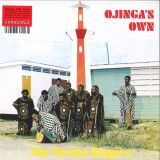
The 1974 debut album Ojinga’s Own and single Basa Bongo/Black Pepper by Guyanese Afro-Folk band The Yoruba Singers has been remastered for vinyl and digital.
The Yoruba Singers formed in Georgetown, Guyana in 1971. Despite their name they were not from Nigeria, but identified strongly with the area from which so many of the African diaspora in Guyana and neighbouring regions were originally descended.
The group started adapting Guyanese traditional folk music as well as writing their own - blending a mixture of protest, social commentary, blues, and genres inspired by the times. Beginning with about 12 people sharing vocal duties, most of the early repertoire was inspired
by folk songs that started life on plantations or in religious settings accompanied by a few sparse musical instruments.
Integral to the Yoruba Singers’ sound are echoes of Obeah traditions which are very closely related to the Santería religion of Cuba and the Orisha and Shango traditions of Trinidad and Tobago. Calypso and steel band culture from nearby Trinidad and Tobago was to some extent part of the musical DNA of the group, but they were naturally also influenced by the massive volume of rocksteady and roots-reggae coming from Jamaica.
Поиск:calypso
Все
A wild and funky collection of Afro grooves that was ahead of its time in 1977 and has become a collector’s item in recent years, especially due to the growing international interest in Colombian picó sound system culture. Fruko and his studio bands Wganda Kenya and Kammpala Grupo treat us to a diverse set of African and Caribbean styles, laced with crazy synths, psychedelic guitar and infectious pan-African polyrhythms. By the time Discos Fuentes released the album “Wganda Kenya Kammpala Grupo” in 1977, Wganda Kenya’s discography was expanding with many 45 singles and appearances in various artists collections. The group’s 1975 debut record “África 5.000” was a full length LP in the U.S. and a various artists compilation in Colombia, which was followed by the self-titled long player the following year. However, Kammpala Grupo, which shared the album’s title and was credited to three songs on the record, had never appeared before, yet was basically the same studio group as Wganda Kenya. Most likely the creation of this short-lived studio band was just a ploy by the label to make it seem like there were more groups playing the type of exotic afro tracks favored by the picotero DJs of Colombia’s Caribbean coast (especially in Barranquilla and Cartagena). 1974 Discos Fuentes’ management had sent musician, band leader and producer Julio Ernesto “Fruko” Estrada to the coast on an A&R mission to discover what people were dancing to in the verbenas (communal open air neighborhood parties) run by the owners of picó sound systems (decorated mobile DJ rigs). Always game for an adventure, Fruko was tasked with bringing some popular examples of these esoteric, hard-to-find African, French and Dutch Antillean records back to Medellín to serve as inspiration (or to outright copy) so that the label could enter into the growing regional market and spread its popularity to the interior of Colombia and other Latin American countries via its own studio creation, Wganda Kenya. Fuentes was always returning to exploit the rich African-rooted culture of the coast as it had with the cumbia and other regional genres before, so in a way it was not surprising that they were attuned to this particular niche phenomenon from a marginalized sector of the population. The most popular genres with the champeta dancers in the 70’s and 80’s were styles like Congolese rumba, highlife, afrobeat, juju, mbaqanga and soukous as well as the music of Haiti, Guadeloupe, Martinique, Curaçao and Dominica, all of which were fiercely guarded by the DJs who had managed to acquire them often through extreme means of travel, barter and intense digging. The record kicks off with the joyful ‘El Gallo Africano’ which features exquisite interplay between Sepúlveda’s highlife style guitar and an authentic-sounding African style saxophone, perhaps played by Carlos Piña. In reality it was ‘Go Call Police Chief’ by prolific Nigerian highlife guitarist Chief Oliver Sunday Akanite, aka Oliver De Coque. Next up is Kammpala Grupo’s ‘La Yuca Rayá’ (‘Grated Yuca’), written by Isaac Villanueva in a style he termed son haitiano which sounds much more like Zimbabwe Shona mbira music. Wganda Kenya’s ‘Caimito’ (star apple, a type of tropical fruit), on the other hand, is actually a cover of a relatively well-known Haitian merengue song. Kammpala Grupo then takes us from the French Antilles to the multi-cultural discotheques of Paris, where a cover version of Black Soul’s Afro-boogie anthem ‘Black Soul Music’ is retooled and renamed ‘King Kong’, perhaps in a nod to the 1976 remake of the monster flick of the same name. Side two introduces us to the infectious merengue rebita of Angola via ‘La riphyta’ with “Paparí”, aka Mariano Sepúlveda, doing the vocals and faithfully replicating the Angolan guitar style. ‘La Trompeta Loca’ (‘The Crazy Trumpet’), probably the nuttiest track on the album, is an ingenious cover of ‘Ye Gbawa Oo Baba (Tribute To Nigeria)’ by Joe Mensah of Ghana. As with all their covers of African tunes, this rendition tightens up the original with some pop sheen, more consistent drumming and higher production values, remaking it into a powerful slow-burning dance floor filler. This is followed by one of the most powerfully original songs to come out of the entire Wganda Kenya project, Mike Char’s reggae anthem ‘El Nativo’ with Joe Arroyo on vocals. The record ends on a more authentically Caribbean sounding note with the instrumental ‘El testamento’, a cheerful islands banger with bright brass, syncopated calypso beats and chunky cuatro guitar (or ukulele). The original was in the mento genre and titled ‘Sweet meat’, written and recorded by Jamaican trumpeter Bobby Ellis. First time reissue. 180g vinyl.
Brazilian soul, psych, bossa and jazz, reimagined from Berlin, via the Dead Sea, on Moriah Plaza’s dreamy first album for Batov Records.
Moriah Plaza co-founders Tamir Chen and Moosh Lahav first encountered and fell in love with the beautiful and hypnotic sounds of Brazilian bossa nova and samba as children in Tel Aviv in the nineties, via the many local bands and tribute groups that had sprung up since the first wave of bossa had hit swept across the world. Likewise
they developed a fascination with elevator muzak, film soundtracks, and even the hotel pianist performing day-by-day in the lobby of the Sheraton Moriah where Tamir’s mother worked, overlooking the Dead Sea.
Relocating years later to the vastly different environment of Berlin, capital of a country that enjoyed its own Brazilian moment, Tamir and Moosh’s shared passion for Brazilian music would encourage them to create their own songs inspired by the warm pulse of Brazil, albeit a world apart, through a vastly different lens.
Whilst the initial inspiration for Moriah Plaza can be traced back to Tel Aviv and the Dead Sea, the band itself was conceived by Tamir and Moosh in Solarium Studio, Berlin, from the broken fragments of their former shoegaze band, Soda Fabric, who had the honour of backing outsider legend Daniel Johnston. They would go on to write and record their debut album in close collaboration with two Brazilians and fellow Berlin residents,, poet and singer Cecília Erisman, and singer, songwriter, synth operator and Tropical Disco Club founder Flavia Annechini.
The album opens with “Desendereçada”. Dirty drum machine beats thud away under flutes and extraneous noises and a spoken word commentary. The oddness and allure of the intro is a perfect introduction to the world of Moriah Plaza.
The pace picks up on “Mais Amor”. A beautiful Brazilian soul jazz number with a sublime vocal from Flavia Annechini that will surely appeal to the global dancefloor jazz scene. “Te Peço” daws us in deeper with sweetest jazz vocal over an irresistible bassline and bossa drums that transforms halfway through into a modern soul rhythm crowned by flute and horns. A flute solo from Moosh Lahav leads us into the final uplifting refrain.
The Pharoah Sanders meets Ravi Shankar in Rio grooves of “Estelar”
have that fresh feeling that will certainly appeal to fans of modern favourites Rebecca Vasment and Ruby Rushton. Next up, the mysterious “Lagoon de Merim” is practically two songs in one, the first half an atmospheric string-topped number somewhere between Arthur Verocai and Cinematic Orchestra, before snappy drums beats and playful organ chords introduce a slow brassy samba that fills the whole sonic room.
“Teu Porto” is a must for all DJs, mixing calypso, highlife and house, lilting guitars and smooth vocals by Cecilia Erismann.. The deep samba house grooves of “Samba Moosh” close us out. The rich blend of sweet vocals, soaring flute and gritty synths carry us off into the sunset.
Moriah Plaza’s self-titled debut album is a major addition to the global soul and jazz scene. providing the perfect summer soundtrack for music lovers around the world.
Clear Vinyl[27,69 €]
Strut presents an exclusive new collaboration between UK jazz keyboardist Greg Foat and Venetian ambient / electronic maestro Gigi Masin on ‘Dolphin’.
Recorded remotely during 2021-2022 the album took shape in the form of mutual compositions, gradually developed and embellished online. Final recording sessions took place at the majestic Chale Abbey Studios on the Isle Of Wight with Moses Boyd (drums), Tom Herbert (bass) and Siobhan Cosgrove (flute, clarinet) adding elements to several pieces. Tracks include the reflective, wistful single ‘Viento Calido’ and drifting ambient piece ‘Sabena’, a beautiful tribute to Gigi’s wife who sadly passed away during 2022.
Greg Foat has recorded prolifically in recent years for Athens Of The North, Jazzman and Strut including acclaimed albums Symphonie Pacifique (2020) and The Mage (2019). Best known for his 1986 ambient masterpiece Wind and as a member of Gaussian Curve, Gigi Masin has enjoyed a revival in recent years through his Calypso album on R&S’s Apollo label and renewed touring. Dolphin represents Greg and Gigi’s first landmark recording collaboration together. “I first heard Gigi’s album Wind in 2016,” remembers Greg. “I was living in Miami and I heard it playing one Summer evening Since then, it has always been in my mind to be able to record together.”
Black Vinyl[22,27 €]
Strut presents an exclusive new collaboration between UK jazz keyboardist Greg Foat and Venetian ambient / electronic maestro Gigi Masin on ‘Dolphin’.
Recorded remotely during 2021-2022 the album took shape in the form of mutual compositions, gradually developed and embellished online. Final recording sessions took place at the majestic Chale Abbey Studios on the Isle Of Wight with Moses Boyd (drums), Tom Herbert (bass) and Siobhan Cosgrove (flute, clarinet) adding elements to several pieces. Tracks include the reflective, wistful single ‘Viento Calido’ and drifting ambient piece ‘Sabena’, a beautiful tribute to Gigi’s wife who sadly passed away during 2022.
Greg Foat has recorded prolifically in recent years for Athens Of The North, Jazzman and Strut including acclaimed albums Symphonie Pacifique (2020) and The Mage (2019). Best known for his 1986 ambient masterpiece Wind and as a member of Gaussian Curve, Gigi Masin has enjoyed a revival in recent years through his Calypso album on R&S’s Apollo label and renewed touring. Dolphin represents Greg and Gigi’s first landmark recording collaboration together. “I first heard Gigi’s album Wind in 2016,” remembers Greg. “I was living in Miami and I heard it playing one Summer evening Since then, it has always been in my mind to be able to record together.”
- A1: Cortijo Y Su Combo - El Bombon De Elena
- A2: Canario Y Su Grupo - Cortaron A Elena
- A3: Mon Rivera Y Su Orquesta - Karakatis Ki
- A4: Cortijo Y Su Combo - Caballero Que Bomba
- A5: Baltazar Carrero - En Orbita
- A6: Moncho Lena Y Los Ases Del Ritmo - Bailando Plena
- A7: Orquesta Panamericana - El Charlatan Side
- B1: Los Caballeros Del Ritmo - Habla Cuembe
- B2: Angel Luis Torruellas Y Su Conjunto Pleneros De Borinquen - Olvidalo
- B3: Mon Rivera Y Su Orquesta - El Plenero
- B4: Moncho Lena Y Los Ases Del Ritmo - ¡Alo! ¿Quien Nama?
- B5: Cortijo Y Su Combo - Dejalo Que Suba
- B6: Canario Y Su Grupo - Santa Maria
- B7: Mon Rivera Y Su Orquesta - Ola De Agua
- B8: Cortijo Y Su Combo - Calypso, Bomba Y Plena
- C1: Odilio Gonzalez - Sacude Zapato Viejo
- C2: Cortijo Y Su Combo - Maquinolandera
- C3: Al Torruellas Y Su Conjunto - Camelia
- C4: Monse Garcia Y Su Conjunto - El Gallo Espuelérico
- C5: La Sonora Poncena - Tan Linda Que Era
- C6: Moncho Lena Y Los Ases Del Ritmo - Carbon De Palito
- C7: Cortijo Y Su Combo - Y Pedro Flores
- C8: Chivirico - Belinda
- D1: Juanchin Y Sus Pleneros Del Palmar - Maldito Vicio
- D2: Ramito - Te Estan Vacilando
- D3: Odilio Gonzalez - Ni De Madera Son Buenas
- D4: Orquesta Panamericana - Bembeteando
- D5: Mario Ortiz All Star Band - Guiro Y Pandereta
- D6: Cortijo Y Su Combo - Cucala
- D7: Mon Rivera Y Su Orquesta - Ron Con Coco
Soundway presents a double-sider of raw, West Indian Funk from 1977. Led by King Wellington’s ‘Shango’, the stand-out cut harvested from his Sooner Or Later LP finally gets the 45 treatment
it deserves.
Inspired by the Shango ritual with its roots in Yoruba culture, traces of Calypso music are driven by hypnotic bass and Wellington’s signature vocal, making up a musical blend only found in the
Caribbean.
Hidden on the B-side, ‘Mystery Music’ fronted by Canadian musician Tony Springer, embarks on a dreamy, dynamic and even a touch psychedelic trip.
Steel pans coupled with floating horns, electronic keyboard effects, crisp drums and subtle guitar licks cook up a soundscape baked by the Trinidad sun. While original copies climb their way to impossible-to-find status, enthusiasts will be excited to hear this sought after piece of music is available on the 45 format again.
- Max Cilla - La Flûte Des Mornes
- Kallaloo - Star Child
- Ophélia - Red Light Lady
- The Revolution Of St. Vincent - The Little You Say
- Wganda Kenya - El Testamento
- Richard Duroseau Et Son Orchestre - Compas Jupiter
- Max Et Henri - Mizik A Ka Kafé
- The Beginning Of The End - Come Down
- Afrosound - Caliventura
- Super Combo - Rosita Femme Chaud
- Camille Soprane - Si Ou Dit Ça Çé Ça
- Henry Guedon - Bomba Des Musiciens
- Simon Jurad Feat Les Frères Déjean - Mawa
- Wganda Kenya - Pim Pom
- Max Cilla - Crépuscule Tropical
- Gordon Henderson - More Power
- Shleu Shleu - Alouette
- Les Aiglons - Musiciens De Grande Classe
- Skahshah - Racine Core
- Afrosound - Salome
Rare Groove Collection Explore the fusion of world music with soul, funk and disco through the Rare Groove Collection. With this new volume, discover unique groove tracks straight from Jamaica! Fully remastered original versions Caribbean RARE GROOVE Discover the multi-cultural musics from around the Caribbean Islands. From Haïti to the Bahamas, passing by the French West Indies, this journey explores traditional rythms from Soca, Calypso or Biguine. Musicians as Gordon Henderson, Max Cilla or the band Skah Shah knew how to use Soul, Funk and Disco influences to create a unique groove with multiple faces.
Etienne Daho returns with a new album. This album of fusion between orchestral lyricism and electronic music is produced by Etienne Daho, Jean-Louis Piérot and Unloved. Recorded between London (Abbey Road), Paris (Motorbass) and Saint Malo, the album unfolds with sumptuous melodies, supported by an opulent orchestration, gospel choirs, a soulful and brassy depth. Etienne is at the forefront of technology with the new electro scene. Rarely has an album had so many collaborators while keeping its course. With the participation of Vanessa Paradis, Italoconnection, Jade Vincent, Keefus Ciancia, Global Network, Calypso Valois, Yan Wagner, Lou Lesage, Moses Turizer, Doriand, Fabien Waltmann. The first single, "Boyfriend", a declaration of love both intimate and universal, heralds one of the most anticipated albums of the year. Reviews and Ads – R2, Mojo and London Macadam
Next up on Toolroom’s 4-track vinyl sampler series is a tasty collab from label founder, Mark Knight and dance music royalty, Armand van Helden, a fresh new edit of a revered club weapon from Julio Navas, Gustavo Bravetti and David Amo, Kiss FM regular, majestic and Sydney-native Alex Preston.
Up first label boss, Mark Knight enlists Grammy nominated Armand van Helden for their debut collaboration, 'The Music Began To Play'. Kicking off with a hard-hitting house groove and electrified bassline that drives the record, before dropping into the track's golden moment and sampling the 1979 classic disco cut 'I Don't Need No Music' by T.J.M; a gem of a record that encapsulates both Mark and Armand’s love for classic cuts.
Next up, a record that became a cult hit of the underground and one that defines the true sound of Toolroom's heritage, Julio Navas, Gustavo Bravetti and David Amo’s 'Raw'. Refreshed for 2022, we see one of France's hottest exports, Tony Romera, deliver a high energy, club focused remix of 'Raw', bringing the classic club record back to dancefloors and sound systems across the globe!
Up next is another heater from Majestic, who debuts on Toolroom with ‘Annie’. Recapping one of the hottest summers on record, Majestic embodies the Balearic, Ibizan heat, sampling Kid Creole & the Coconuts 1982 hit, 'Annie I’m Not Your Daddy', turning a slice of calypso / disco, into a club ready record for the dancefloor. From the brass melody to the hooky guitar riff, majestic lays down his signature style with a Groove Armada-esque vibe throughout.
Rounding things off is label favourite, Alex Preston with his unique blend of 4 to the floor dance music and live funk guitar riffs that have swept through clubs, moving feet, and bringing those feel-good vibes. Ticking all the right boxes on this one, 'Hunching' kicks off with its infectious groove and bassline, throwing in some lush strings, guitar flits and an 80's inspired saxophone break that adds some serious flavour to the record.
- A1: Marie Knight And Sister Rosetta Tharpe - Calvary
- A2: The Dundees - Evil One
- A3: The Heartbreakers - Wanda
- A4: Helene Polite - Love For Sale
- A5: Oscar Pettiford - Oscalypse
- A6: Bixie Crawford - Go Away Blues
- B1: Preston Love - Ali Baba's Boogie
- B2: Mamie Ree - I Wake Up Early In The Morning
- B3: Monchito - Caldonia
- B4: Betty Mattson - What Is This Thing Called Love
- B5: Effie Smith & Johnny Criner - Mambo Blues
- B6: Titus Turner - Big Mary's
- C1: The Blasts - Canaveral Rock
- C2: The Royals - I Want You To Be My Baby
- C3: Eunice Davis - My Beat Is 125Th St
- C4: Frank Butler - Girl Of My Dreams
- C5: Mr Bo - Heartache & Troubles
- C6: Otis Smith - You're So Good Looking
- D1: The Dukes Of Rhythm - Buddah's Boogie
- D2: Innocentay - Voodoo Shango
- D3: Lawrence Stone - Dark Of Night
- D4: Lawrence Peel And The Filatones - Song Of Sadar
- D5: Kiki Williams - When Love Is New
Ten years after our initial survey of Afro-Latin accented rhythm & blues from the mid-century, Jazzman proudly presents a fourth installment, packed with as many musical surprises as the first. With music plucked from an era spanning the late 1940s into the early 60s, Jukebox Mambo IV highlights yet again the unparalleled musical creativity of the post war era, and shows how the infusion of afro-latin rhythms was key to these revolutions.
Lovingly and painstakingly researched and curated, the album boasts 23 tracks, many previously uncompiled, touching on jazz, blues, doo wop, calypso, rock & roll, gospel and more. Featuring individual track notes for every song along with some never seen before photographs of the artists, Jukebox Mambo Vol IV maintains the same high production values of each previous volume, and indeed the wider Jazzman catalogue.
Jon Lucien is one of the most amazing vocal soul singers, nicknamed ‘the man with the golden throat’; he also had his own percussive style, and was prolific in the 70’s writing many timeless classics over the years. Dynamite Cuts take four of these wonderful songs from the Mind’s Eye LP – these titles are first time on 7” vinyl and all cut @ 45 rpm. A perfect Soul Jazz funk release, don’t miss out
Originally released in May 2006 through the German label Karaoke Kalk, »Osaka Bridge« was an album that captured the joyful amateurism of Tori Kudo's free-spirited Japanese collective Maher Shalal Hash Baz and Bill Wells’ rich, wistful and easy sense of melody. Approaching brass band and jazz music with a knack for making playing imperfectly feel perfectly right, »Osaka Bridge« became nothing short of groundbreaking when it was released to critical acclaim, becoming an instant classic among musicians and fans alike. Coinciding with the release of the second LP of Wells’ on-going collaboration with Danielle Price on tuba, »The Sensory Illusions«, Karaoke Kalk makes this highly sought-after record available again on vinyl for the first time in 16 years.
The pairing of the prolific Scottish pianist and composer and the fluctuating collective active since the mid-1980s was an easy, natural one—a union particularly apt and complementary. But this is not to say that the 15 recordings which made up »Osaka Bridge« were in any way seamless. The horns played by these self-taught musicians strain and struggle with Wells’ luscious arrangements; each note is given all the stiff emphasis that you’d expect of a high school brass band at its first rehearsal. Songs fall in and out of rhythm, and a track like »Poxy« misses its intended swing feel by a country mile. Of course, this is all part of the magic. Maher Shalal Hash Baz take Wells’ melodies and strip them back to their emotional core, disallowing all artifice and revealing a stark, serene beauty.
Particularly affecting are »On The Beach Boys Bus«—described by colleague Jens Lekman as the »the most beautiful melody I’ve ever heard«—and »Time Takes Me So Back«, the two tracks sung by Kudo’s wife Reiko. Inspiration for both pieces came to Wells in dreams. The former was sung by a group of tanned Californians on the way to a Beach Boys convention, the latter by his grandmother shortly before she passed away. Reiko’s voice gives each song a haunting fragility that enhances their phantasmagoric character. »Cowtail Calypso«, on the other hand, was born when Wells asked Tori Kudo to sing Roger Miller’s »King Of The Road« over a syncopated, propulsive melody. Kudo’s ambiguous response (»maybe,« which according to Wells usually translated to »forget it«) resulted in a brief, idiosyncratic track that nevertheless exceeded all of Wells’ expectations.
Of the instrumental tracks, »Liquorice Tics« stands out for its rolling rhythms and circular melody, while »Family Sighs« creates a brooding atmosphere which perfectly encapsulates the conflicting feelings many people have for their immediate family. For the most part, the instrumentals are concise—a melody stated once and then dispensed with—but their brevity only heightens the impact. Even (or especially) 16 years later, »Osaka Bridge« continues to be an almost accidentally timeless document that captured fleeting moments and personal revelations at their most spontaneous and unaffected. As someone put it so aptly in a Discogs comment a few years back, »this is the album which is able to make aliens understand what humankind is about.« You better turn up the volume so that everyone can hear it everywhere.
Pharoah Sanders' "Shukuru" is noteworthy as being the album that reunited Sanders with vocalist Leon Thomas, who sang on some of Sanders' most endearing and powerful compositions-- among them the legendary "The Creator Has a Masterplan".
Thomas only joins the band on two tracks-- "Mas in Brooklyn (Highlife)" and "Sun Song". The former gets a full calypso reading complete with steel drum sounds and chanted vocals traded between Sanders and Thomas. It's a lot of fun, but by and large, throwaway. The latter is one of the true gems on the album-- a pretty ballad that serves as both a launching point for Sanders' best balladry and Thomas' vocal, with the latter soaring in his upper register wordlessly between verses intoned in his trademark baritone. It's by and large simply stunning.
The rest of the record has got its issues however, and by and large this comes in the part of Henderson's synthesizer-- while his piano tone is virtually indistinguishable from an acoustic piano, several tracks receive irritating synth vocals or strings (it's really hard to tell which, it's fairly indistinct and obnoxious), mangling otherwise fine performances of traditional tenor feature "Body and Soul", Sanders-penned "Jitu" (although admittedly the leader manages such a powerful solo it gets past it) and an absolutely breathtaking reading of "Too Young to Go Steady". At least opener "Shukuru" and closing funereal piece "For Big George" are spared this as the use of synths of them are far more tasteful (although one questions Sanders' choice to intone his wife's name over the former's smokey lines, but that's another story). by Vine Voice
- A1: Collasso
- A2: Apocalypso (Feat Tessa Martin)
- A3: Nostalgia (Feat Tessa Martin)
- A4: Postumanesimo (Feat Tessa Martin)
- A5: Vita Digitale (Feat Tessa Martin)
- A6: Le Pacifique (Feat Tessa Martin)
- B1: Culturellement Appropriée
- B2: Cakaha (Feat Saeko Killy)
- B3: Melodia (Feat Dasha Utochka)
- B4: Дарья (Feat Dasha Utochka)
- B5: Solaris (Feat Dasha Utochka)
- B6: Efficience Insignifiante
remixes EP[13,03 €]
Born in the Alps in a small house spreading between the Italian and Swiss border, Alan Strani is a transdisciplinary artist exploring music and visual arts. For his new album, he invited artists Saeko Killy, Dasho Utochka (Love Object) and French singer Tessa Martin to join him in his attempt to musically make sense of the current Zeitgeist while questioning our relation to the digital world. The result is the album carried by its homonym single Apocalypso, a wordplay suggesting that, in the face of a possible emerging Apocalypse, like Ulysse during his Odyssey, the entire world is being distracted by the charms of the Calypso nymph.
One of pianist Ray Pérez's rarest releases and his first on his own label Pyraphon, "They Do It" (1971) was also his final collaboration with Perucho Torcat, a talented sonero who died tragically young in NYC the following year. The record sports an impressively diverse array of rhythms and genres, including the popular Cuban, Puerto Rican and New York sounds that the young Venezuelan salsa groups excelled in at the time (guaguancó, bolero son, son montuno and Latin soul / boogaloo). Other Caribbean modes like calypso (the coast of Venezuela is very near Trinidad and Tobago), pambiche (a slow form of Dominican merengue developed for tourists), and even traditional Venezuelan merengue (a completely different rhythm from the Dominican genre of the same name) appear on the album. Full of classic dance floor burners, the album has been lovingly restored, mastered from the original tapes, fully licensed, with its original artwork intact, preserving the legacy of this great Venezuelan music for today's generation of salsa dura lovers everywhere. The LP is highly collectible and is now being reissued by Vampisoul for the first time.
- A1: Milk Cow Blues (03:39)
- A2: Ring The Bells (02:17)
- A3: Gotta Get The First Plane Home (01:49)
- A4: When I See That Girl Of Mine (02:12)
- A5: I Am Free (02:32)
- A6: Till The End Of The Day (02:17)
- B1: The World Keeps Going Round (02:36)
- B2: I'm On An Island (02:14)
- B3: Where Have All The Good Times Gone (02:46)
- B4: It's Too Late (02:37)
- B5: What's In Store For Me (02:06)
- B6: You Can't Win (02:42)
Ray Davies reifte als Songwriter, und hat ihren rauen
frühen British-Invasion-Sound mit anspruchsvolleren
Texten und einer durchdachten Produktion versehen.
Kinks Kontroversy ist voller kraftvoller Raver wie dem Hit
"Til the End of the Day" (der ein weiteres "You Really Got
Me"-artiges Riff verwendet) und das raue, von Dave
Davies gesungene Cover von "Milk Cow Blues", aber
aber auch Stücke wie das Calypso-Pastiche "I'm on an
Island". Weitere großartige Songs auf diesem
unterschätzten Album sind "Where Have All the Good
Times Gone?", die klagenden Balladen "Ring the Bells"
und "The World Keeps Going Round" sowie die von Dave
Davies gesungene Unabhängigkeitserklärung "I Am Free".
- A1: Max Cilla – La Flûte Des Mornes
- A2: Kallaloo – Star Child
- A3: Ophélia – Red Light Lady
- A4: The Revolution Of St Vincent – The Little You Say
- A5: Wganda Kenya – El Testamento
- B1: Richard Duroseau & Son Orchestre – Compas Jupiter
- B2: Max & Henri – Mizik A Ka Kafé
- B3: The Beginning Of The End – Come Down
- B4: Afrosound – Caliventura
- B5: Super Combo – Rosita Femme Chaud
- C1: Camille Soprane – Si Ou Dit Ça Çé Ça
- C2: Henry Guedon – Bomba Des Musiciens
- C3: Simon Jurad & Frères Déjean – Mawa
- C4: Wganda Kenya – Pim Pom
- C5: Max Cilla – Crépuscule Tropical
- D1: Gordon Henderson – More Power
- D2: Shleu Shleu – Alouette
- D3: Les Aiglons – Musiciens De Grande Classe
- D4: Skah-Shah – Racine Core
- D5: Afrosound – Salome
This volume "Caribbean Rare Groove" is an invitation to discover music from the cultural mix of the islands and countries located on the Caribbean Sea. From Haiti to the Bahamas via the French West Indies, this journey explores the traditional rhythms of Soca, Calypso or Biguine that musicians such as Gordon Henderson, Max Cilla or the group Skah-Shah have skilfully blended with Soul, Funk or Disco influences, creating a unique groove with multiple facets. Have a good trip!
The indie dance and leftfield techno magicians Radial Gaze join the Urge To Dance family after remarkable releases for labels such as TAU, Feines Tier, Calypso and Eskimo. The Saint Petersburg-based project is accompanied by Thomass Jackson and Zombies in Miami on remix duties for the mesmerizingly exotic “In Each Other” EP.
The leading track, In Each Other, is a multi-layered and infectiously danceable combination of addictive bassline, magical Cameroonian drums, Amazonian percussions and mystical marimbas creating a mysterious and exotic track. Psych Subsidy delivers dirty, energising and somehow hypnotic emotions. Entrancing sitars loops, long pitched synthesizer and a twisted old lullaby female vocal will get you on board for an amazing psych-trip.
The B-side is where Thomass Jackson and Zombies in Miami deliver their wild and unorthodox remixes of In Each Other. The Thomas Jackson True Love Remix is emotional, hypnotising and yet so trippy, a true testament of Calypso Records Boss’ remixing skills. The second take of the leading track is by Zombies in Miami, a powerful and forward-looking track that blends the hypnotic percussions of the original with a rhythmic bassline and flawless simplicity of all elements used in this remix.
Very limited pressing of 300 units only. Following on from the two sold out records together, Freschard and Stanley Brinks come together for 12 brand new tracks. Lion Heart is an irresistibly charming collection of late night tales, woozy ballads and uptempo sing-alongs. Clemence Freschard’s beautiful vocal tones lend this a rich, French indiepop/chanteuse vibe, complemented by Stan’s wistful timbre and characteristic warm instrumentation. Stanley Brinks is renowned for his unique anti-folk style: both playful and suggestive, insightful and entertaining. Brinks was born in Paris, France, in 1973. He studied a bit of biology and worked as a nurse for a while. Half Swedish, half Moroccan, strongly inclined to travel the world, he soon began spending most of his life on the road and developed a strong relationship with New York. By the late 90s he’d become a full time singer-songwriter – André Herman Düne – as part of three piece indie-rock band, Herman Düne. Several albums and Peel sessions later and after a decade of touring Europe, mostly with American songwriters such as Jeffrey Lewis, Calvin Johnson and early Arcade Fire he settled in Berlin. The early carnival music of Trinidad became a passion, and in the early 21st century he became the unquestioned master of European calypso, changing his name to Stanley Brinks. Under this moniker he has recorded more than 100 albums, collaborated with the New York Antifolk scene on several occasions, recorded and toured with traditional Norwegian musicians, and played a lot with The Wave Pictures. Freschard grew up in a farm in French Burgundy. Aged 18 she moved to Paris, where she baked pies and cakes in a cafe. There, a local musician and regular customer called Stanley Brinks wrote a few songs for her to sing. Homeless in Paris, she saved up just enough money to get herself a ticket to New York. There she found an old electric guitar and started writing her own songs. In 2004 she moved to Berlin, where she recorded her first LP, "Alien Duck". Her second album, "Click Click", recorded in 2006, features electric guitar by Stanley Brinks. On her third album, she plays the drums herself. On her fourth “Shh...” she also plays the flute, and she breaks out the washboard on her fifth “Boom Biddy Boom”. On Midnight Tequila, Freschard brings it back to just drums and vocals // “an absolute joy.” Q // “...a set that’s as wistful and charming as it is playful and self-concious.” Uncut // “quietly charming” Pitchfork