Red Vinyl pressing
Goldie – “These guys are at the top of their game”
Break – “One of the best labels in dnb, very happy to be involved”
Our next venture into the world of Utopia comes with new momentum gained from Elliot Garvey aka Quartz, who has delivered the incredible “Thorns” EP.
Rolling with the punches from his immense Resident Advisor podcast and the successful releases on Metalheadz, Samurai and Rupture, we’re proud to put his next body of work out into the world. This brilliant four-tracker has it all: deep soundscapes, crunchy breakbeats, hypnotic grooves, haunting samples and an intense dose of powerful sub bass weight. Support from: Break, DLR, Djinn, Doc Scott, Double O, Flight, Goldie, Hydro, Loxy, Mantra, Noisia and many more.
Mako: "Quartz is one of those rare producers who can make any genre of music incredibly well. He chose drum and bass and I am thankful he did. I don't hear much I like these days but every tune he sends me I rate in one way or another. These 4 tunes are special though and I’m very lucky to call him a peer, a brother and a Utopia artist."
• Press / Promotion: In house campaign from Utopia. Editorial sought in all UK music and dance titles (Mixmag (single of the month), DJ Mag review, Faye Magazine, Bassrush, Your EDM Resident Advisor) as well as national, online and regional daily and weekly press titles for review. Third party uploads on Youtube channels of over 100k subscribers (Drum & Bass Arena, District Bass, Most Addictive)
• Radio / Internet: Utopia Podcast - Award-winning podcast with over 10,000 subscribers, 15k+ individual downloads, YouTube - Utopia YouTube channel, Social Networking - Facebook: Mako/Utopia Music = 12k+, Soundcloud 9k+. Rene LaVice radio premiere on BBC Radio 1; Bassdrive – world’s largest internet drum & bass radio station.
Cerca:can dee
The word that jumps to mind when hearing Deanna Petcoff's music for the first time is “yearning”. A whirlwind of emotions, her debut record To Hell With You, I Love You is a reckoning with the loss of a relationship, documenting the aggressive highs and deeply emotional lows that come from falling out of love.
Recorded in Toronto over the course of a year spent in-and-out of lockdowns, she was able to look more closely at the nuances and minutiae of relationships and examine the ways in which they can either grow or falter. She writes about her frustrating experiences as a24-year old woman finding her voice and identity while navigating a never changing world, exploring the ins and outs of love and heartbreak with a grace and quick wit that belies her year. Her rich, textured voice juxtaposes her soft imagery and her vulnerable and starkly honest lyrics welcome us into a world where even a fleeting moment of emotion can become its own monument.
Based in Toronto, ON, Petcoff shaped her own unique brand of beautiful and confessional indie rock through years of devotion to music, sharing stage with the likes of Molly Burch, Tokyo Police Club, The Nude Party and many more. She excels with heart-on-her-sleeve-emotive lyricism that showcases her strength as a songwriter and a vocalist, and on To Hell With You, I Love You, she wanted to present “the whirlwind of emotions you have when you’re grieving a relationship, which can feel like the death of a part of you or what you thought your life was going to look like.” It’s an album that ebbs and flows with a confidence and an assuredness as she tackles the highs and lows of falling in and out of love, and everything in between.
Toro y Moi’s seventh studio album, ‘MAHAL’, is the boldest and most fascinating journey yet
from musical mastermind Chaz Bear. The record spans genre and sound - encompassing the
shaggy psychedelic rock of the 1960s and ‘70s, and the airy sounds of 1990s mod-post-rock -
taking listeners on an auditory expedition, as if they’re riding in the back of Bear’s Filipino
jeepney that adorns the album’s cover. But ‘MAHAL’ is also an unmistakably Toro y Moi
experience, calling back to previous works while charting a new path forward in a way that only
Bear can do.
‘MAHAL’ is the latest in an accomplished career for Bear, who’s undoubtedly one of the
decade’s most influential musicians. Since the release of the electronic pop landmark ‘Causers
of This’ in 2009, subsequent records as Toro y Moi have repeatedly shifted the idea of what his
sound can be. But there’s little in Bear’s catalogue that will prepare you for the deep-groove
excursions on ‘MAHAL’, his most eclectic record to date.
The second the album begins we’re immediately transported into the passenger seat, jeep
sounds and all, ready for the ride Chaz and company have concocted for us. Seeds of some of
‘MAHAL’s 13 songs date back to the more explicitly rock-oriented ‘What For?’ from 2015.
‘MAHAL’ was mostly completed last year in Bear’s Oakland studio with the involvement of a
host of collaborators, Sofie Royer and Unknown Mortal Orchestra’s Ruban Neilson to Neon
Indian’s Alan Palomo and the Mattson 2.
“I wanted to make a record that featured more musicians on it than any other record of mine,”
he explains. “To have them live on that record feels grounded, bringing a communal
perspective to the table.” As a result, ‘MAHAL’ is lush and surprising at every turn, from the
cool-handed ‘The Loop’, which recalls Sly and the Family Stone, to the elastic psych rock of
‘Foreplay’ and the dizzying Mulatu Astatke-recalling of ‘Last Year’.
Lyrically, the album zooms in on generational concerns, picking up where the ‘Outer Peace’
standout ‘Freelance’ effectively left off. Bear seems to be surveying the ways in which we
connect with technology, media, each other, and what disappears as a result. Cuts like the
squishy ‘Postman’ and ‘Magazine’ take a deep dive into our relationship with media in a
changing digital world. “It’s interesting to see how we adapt to this new age. We’re so
connected, but we’re still missing out on things,” Bear ruminates while discussing the album’s
themes.
It’s not all introspection. Bear cools things down near the album’s end with the Mattson 2-
featuring ‘Millennium’, a laid-back jam with tricky guitar licks about ringing in new times even
when everything else seems upside down. “It’s about enjoying the new year, even when it’s
been shitty,” Bear explains. “There’s nothing else to do.”
Finding a sense of joy in the face of adversity is embedded in ‘MAHAL’s DNA, right down to the
jeepney that literally and figuratively brings the music out into the community. “We know that
touring is messed up for now, and large gatherings are a fluke,” he explains. “It’s about the
notion of us going out to the people and bringing the record to them.” And with the wide-open
atmosphere of ‘MAHAL’, Toro y Moi stands to connect with more listeners than ever before.
On their third album »Constant Connection«, West Australian-based Erasers create hypnotic compositions of synth, guitar and voice, evoking the vast expanse of their native landscape and the shrouded emotions behind the senses. Comprising of vocalist, synth player Rebecca Orchard and Rupert Thomas on guitar and synths, Erasers have developed their earthly kosmische music into an open language based on drone, variation in repetition and minimal song structures. Based in Perth, regarded one of the most isolated cities in the world, Orchard and Thomas’s music has brewed in the city’s vibrant DIY/Outsider community and evolved into a meditation on landscape, power, the shadow-world of human emotions and stream of consciousness. »Constant Connection«, with its waves of sound and chant-like vocals evokes a trance that suggests an infinity just beyond the senses.
At the heart of each Erasers composition is the interplay between the instrumentation, played with stoic restraint and recorded directly with minimal effects and the transcendental states induced in the listener. It’s a magic that is performed in plain sight and all the more powerful for it. The recognisable vibrato of Fender Rhodes keyboards and simple drum machine loops, the subtle strands of analog synth melodies that snake in and out of the ear, above all the towering encantations of Rebecca Orchard’s undeniably Australian-accented hymns; all of this is presented with minimal ostentation and yet it instantly engenders a dream state, hints at an infinity beyond the material.
Shades of John Cale’s 70s work with Nico, early 70s German synthesists Kluster and even fellow Australians Fabulous Diamonds can be seen as stylistic touchstones for Constant Connection. Where Nico hinted at the macabre and gothic, Rebecca Orchard’s similarly gliding vocal is more zoned in to a kind of oceanic openness, with words becoming chants and spells that suggested themselves to the singer during recording sessions. It’s this hidden hand of improvisatory, automatic writing that lends a sense of expanse to the music. On opener I Understand, while the lyrics might hint at discontent the emotional spectrum it opens up is far more rich and complex, as layered as the waves of droning chords that are the bedrock of each Erasers track. The title track talks of flow, continuum and balance, the protagonist in the song seemingly weightless, gently pulled through a walking reality that borders on dream. In Erasers’ world, it seems, the borders between reality and dream, consciousness and sub-consciousness are blurred and eroded.
On Constant Connection, Erasers’ music might be deeply evocative of landscape but it’s never clear which one. The vast, open terrain that surrounds Perth is dusty, burned by the sun into desert and Constant Connection feels like the product of the heat and relative isolation, the altered states these elements can create. But it’s these altered states of mind that appear to be the real landscape described by Erasers. It’s a landscape that’s hazy, in-and-out of focus, with emotional undertows pushing and pulling you into a weightlessness. On album closer Easy To See the band dispense with percussion all together, field recordings of the water at the edge of their native city ushering in two duetting synths. Orchard’s vocal undulates with the flow, viewing both the geographical and psychological landscape from the perspective of a consciousness not bound by bodies and from a timescale measured in millennia. The album ends as it begins, with field recordings of the real world that the music seeps out from, temporarily, before regressing back into the other realm it feels like it belongs to.
Between these two recorded hints of reality, Erasers manifest a deeply sensual dreamscape that constantly feels like it’s dissolving at its seams. A desert psychedelia emanating from a real world that might not be that real in the first place.
Without the West German-born Väth, techno would look, sound and feel very different. Since falling in love with electronic music and DJing in 1981, his dedication to the art has never faltered. He plays every party as if it were his last. His broad smile has connected with millions of people around the world. His colourful and curious character has imbued techno with a personality it was often lacking. His selections remain hugely unpredictable, despite the fact that he has been playing around the world for more than 40 years. To remain not only relevant but innovative after so long is a testament to Sven's ability to connect through music on a deeper level.
Technically, of course, he is a DJ who can play for thirty hours and not miss a beat. His track selections seem almost divine, and his aura is certainly otherworldly. But more than that, he is a ringleader who is able to mix the artful side of techno with the playful side of partying. Most famously he has done this for more than 20 years at his iconic Cocoon parties in Ibiza. They single-handedly introduced techno to the White Isle and have been its beating heart ever since. Under his charge, strict style guidelines and exaggerated pigeonholing no longer apply. Instead, he has perfected the art of playing far and wide while always remaining true to his own musical identity.
In the studio, Sven has always been just as unique. He has worked under several aliases but always brought a fresh perspective. Whether securing chart hits as part of OFF in the eighties, serving up brutalist techno and trance-tinged sounds in the nineties or crafting major label albums in the 2000s, his music has remained utterly forward-looking. That legacy continues with Catharsis as Sven teams up with highly respected producer Gregor Tresher for his latest long-form offering. Tresher has long been part of the Cocoon family and is a revered artist in his own right, when the two got together in the studio it was clear they had an instant connection and there would only be one person fit to co-author this LP.
It is a record inspired by Sven's interest in the physical and spiritual processes that take place when we dance. "They are realms into which we immerse ourselves to experience our own mysticism and ecstasy," he muses. "Dancing is a conversation between body and soul and it spiritually connects us with each other." Because of the pandemic, that is of course a feeling that we all missed out on for so long. "No dancing, no paradise!" says Sven. "My imagination for this record was fueled by the many cultural experiences and encounters I have had in my life. They gave me the strength to find a way, the way to myself." And that way to himself is through music, through purifying dancing rituals and the exchange of spiritual energies that are generated in the club.
The thirteen-track album explores all facets of Sven's sound. It opens with the stomping drums but sleek synths of 'What I Used To Play' and unfolds through deep and dirty rhythms like 'The Worm', subtly euphoric highs on 'The Inner Voice' and the bubbly tribalism of the title track. There is the impassioned call-to-arms that is 'Feiern', peak-time melodic workout 'Mystic Voices' and soothing electronic lullabies like 'Being In Love'. The second half of the album takes in many more twists and turns such as the exotic strings and driving drums of 'Butoh', the paranoid techno minimalism of 'NYX' and expansive synthscapes of ambient gem 'The Cranes Of Gangtey Valley' before things play out though rugged beats and emotive chords on 'We Are', which is named after the idea that we are what we think. "With our thoughts, we make the world.? says Sven.
Then comes the moody reflection of 'Silvi's Dream', which was written in French for Sven's girlfriend. Last but not least we have the immersive dream that is 'Panta Rhei', which completes a trio of electronica tunes on the album. Ambient music has been an integral part on almost every album Sven has written because it can bring a certain emotional deepness, a quality that Sven always has been looking for.
'Catharsis' is an adventurous album that captures the good times, the sad times and, most importantly, the times of hope.
- A1: Elvin Bishop - She Puts Me In The Mood (As Heard In "Jackie Brown" )
- A2: Dee Clark - Hey Little Girl (As Heard In "Once Upon A Time In Hollywood")
- A3: Dick Dale & The Del-Tones - Misirlou (As Heard In "Pulp Fiction")
- A4: Nick Perito & His Orchestra - The Green Leaves Of Summer (As Heard In "Inglorious Basterds")
- A5: Johnny Cash - I Walk The Line (As Heard In "Kill Bill : Volume 2")
- A6: Zarah Leander - Davon Geht Die Welt Nicht Unter (As Heard In "Inglorious Basterds")
- A7: The Coasters - Down In Mexico (As Heard In "Boulevard De La Mort")
- B1: The Lively Ones - Surf Rider (As Heard In "Pulp Fiction")
- B2: Johnny Cash - So Doggone Lonesome (As Heard In "Kill Bill : Volume 2")
- B3: Lilian Harvey & Willy Fritsch - Ich Wollt' Ich Wär' Ein Huhn (As Heard In "Inglorious Basterds")
- B4: Eddie Beram - Riot In Thunder Alley (As Heard In "Boulevard De La Mort")
- B5: David Alexander Hess - Now You're All Alone (As Heard In "Les Huits Salopards")
- B6: Jim Croce - I Got A Name (As Heard In "Django Unchained")
- C1: The 5.6.7.8'S - Woo Hoo (As Heard In "Kill Bill : Volume 1")
- C2: The Hurricanes - Out Of Limits (As Heard In "Pulp Fiction")
- C3: The Centurions - Bullwinkle (Part Ii) (As Heard In "Pulp Fiction")
- C4: Charlie Feathers - Can't Hardly Stand It (As Heard In "Kill Bill : Volume 2")
- C5: Ricky Nelson - Lonesome Town (As Heard In "Pulp Fiction")
- D1: Dimitri Tiomkin - The Green Leaves Of Summer (As Heard In "Inglorious Basterds")
- D2: Neu! - Super 16 (As Heard In "Kill Bill : Volume 1")
- D3: The Tornadoes - Bustin' Surfboards (As Heard In "Pulp Fiction")
- D4: Johnny Cash - Born To Lose (As Heard In "Kill Bill : Volume 2")
- D5: The 5.6.7.8'S - I'm Blue (As Heard In "Kill Bill : Volume 1")
Double LP of classic tracks from all your favourite Tarantino flicks.
‘Emotional Eternal’, out on Domino, is a glorious consolidation
of the lessons learned along the way, seen through the eyes of
someone who has taken a step back, and who can see clearly
as a result.
As with her previous acclaimed 2018 album ‘Bon Voyage’, this
album was initially recorded in the outskirts of Stockholm, with
Reine Fiske, the multi-instrumentalist member of Swedish rockband Dungen, who has worked with the likes of Travis Scott and
Anna Järvinen, and Fredrik Swahn, the musician, producer and
engineer best known for his work with Swedish indie-rock band
The Amazing.
A deeply human collection of songs full of prolonged moments
of sonic transcendency, ‘Emotional Eternal’ is a record rooted in
adulthood, but one that still regards the world with a childlike
wonder. It includes ‘Alma_The Voyage’, a beautiful paean to
motherhood concluding with resounding violins and EBow;
‘Personal Message’ featuring a giddily assured vocal
performance from Melody, vertiginous and breathy and the
ornate and catchy, ‘Where The Water Clears the Illusion’.
Listening to the album feels like coming across an abundant
treasure chest; strap in and get ready to be transported to
another heavenly, mediative and groove-filled world.
CD in printed inner wallet with 18-page poster booklet.
LP with 2-page insert plus 12” circular ‘optical effect’ card platter
disc with digital download code.
Press - Reviews in Uncut, MOJO, Loud and Quiet, Record Collector,
Reader’s Digest, Shindig, Electronic Sound, The Skinny, NARC,
Aesthetica, Spin, All Music. Features in Clash, Shindig Magazine,
Pitchfork, The Eagle, The Line of Best Fit, Far Out Magazine.
Radio - 6 Music Lauren Laverne, Craig Charles, Amy Lame, Radcliffe
& Maconie, BBC Radio 1 Jack Saunders, Radio X John Kennedy.
- A1: Where's The One?
- A2: Resila
- A3: Kule Kule Redux
- A4: The Chief Enters Again
- A5: Château Rouge
- A6: Super Duper Rescue Allstars
- A7: Tita Tita
- A8: Doubt/Hope
- A9: Banza Banza
- A10: Kabongo Celeste
- B1: On The Road
- B2: Beyond The
- B3: Many Tongues In Our Band
- B4: For Augustin
- B5: Even The Boa Can't Swallow A Viper
- B6: Mama's Way/Above The Tree Line
- B7: Ambulayi Tshaniye
- B8: Bombo & Sifflets
- B9: Tshitua Fuila Mbuloba
- B10: Mulume/Change
- B11: Tandjolo's Greetings
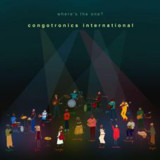
A supergroup comprising Deerhoof + Juana Molina + Kasai Allstars + Konono No.1 + Skeletons + Wildbirds & Peacedrums. It all started when the music of Konono No.1 and Kasai Allstars was first released in the US and Europe, in the later part of the '00s. With its blend of ritual music, traditional percussion, thumb pianos, electric guitars, and makeshift instruments made from junkyard scrap, their out-of-this-world sound now also known as Congotronics, a word coined to title the series in which their albums appeared on Crammed Discs - deeply struck the imagination of musicians and fans worldwide. Leading rock media enthused about this newly rediscovered brand of "primal rock", while an impressive string of avant-rock, electronic & hip hop artists (from Dirty Projectors, Andrew Bird, Animal Collective and Deerhoof to Beck, Björk, Wilco, Radiohead, Saul Williams, Questlove and many more) repeatedly quoted the Congotronics bands as major sources of inspiration.
Italy’s up and coming power rock trio Cripta Blue were
formed in 2019 by members of bands like Desert
Wizard, Rising Dark and Talismanstone.
Being no strangers to the heavy music scene, the trio
skilfully play an enthralling and vibrant blend of dark
though funky and fuzzy psych rock, jamming heavy
power blues and a remarkable primordial sound of
NWOBHM doom.
Cripta Blues‘ debut full-album has the psychedelic
mood you can’t help but to dive into, with gloomy lyrics
and the hint of a cult horror classic. The baritone
vocals of frontman and bassist Andrea Giuliani are
shrouded by acid and fuzz rock soundscapes, full of
power blues and with the soul of doom.
Andrea Giuliani says: “Our dark creature is finally
alive. Our personal blend of doom and psych rock
looks back on the past. On the exciting wild end 60’s
and the dark early 70’s with their proto type of heavy
rock and doom metal. We use no occult lyrics, but
instead distorted and horrible metaphors of what it
means to taste life and to live it sinking deep,
surrounded by the living dead.”
‘Tombstone’ features Witchwood-vocalist Ricky Dal
Pane.
For fans of Blue Cheer, Witchfinder General, Budgie,
Cream, The Stooges, Saint Vitus, Black Sabbath,
MC5, Iron Claw, Motorhead, Vanilla Fudge, May Blitz,
Mountain, Pentagram, The Obsessed.
LP pressed on red vinyl
Honeyglaze are the South London-based, Haiku-loving trio comprised of vocalist and guitarist Anouska Sokolow, bassist Tim Curtis and Yuri Shibuichi on drums.
Born out of lead songwriter Sokolow’s un-desire to be a solo act, the group met officially at their first ever rehearsal - just three days ahead of what was to become a near-residency, at their favoured Windmill in Brixton. Forming a mere eighteen-months ahead of a subsequent eighteen-months of mandatory solitude, a parallel that’s both aligned and universally un-timely, Honeyglaze, at first appearance, are a group who play with chance, time, and synergetic fate, in mannerisms few others are able to do.
Pricking the ears of seminal producer Dan Carey and his team of merry tastemakers, the Speedy Wunderground / Honeyglaze partnership would manifest into a dynamic that, despite not having met prior, quite simply just worked.
Much like the eponymously debuted statements of contemporary folk-singer Bedouine’s ‘Bedouine’, ‘Crosby, Stills and Nash’, or, dare we suggest Madonna’s ‘Madonna’, ‘Honeyglaze’ the album presents to the world an audibly picturesque documentation of soul-searching, in all its figment’s of reality; a proclamation of cultivated intent which in turn creates a subliminal safe-space between relatability and self-projection, and creative-comradery paired with introspective artistry.
A self-described “opposite to a concept album” that sonically encapsulates the who, what, where and how of their individual circumstances coming together as one, Honeyglaze is a meticulously transformative feat of which, in their own eyes, is a “quite accurate” sonic encapsulation of who the trio believe to be.
This is storytelling at its most soulful, and ‘Honeyglaze’ presents human instinct in a manner that accepts all of the insecurities that come from their present adolescence, whilst acknowledging the formative maturity that’s earned when we allow ourselves to embrace the unknown, of our futures ahead.
“If someone is going to find you special - then you want to show what’s most special about yourself,” notes Curtis. “Then you can do what you want from there.”
Mixing the personal with romanticised ideals in ways that are simultaneously heart-wrenching, and humorous to a dead pan effect, there is no one trajectory for Honeyglaze, whose greatest ability is finding ways to present what’s written in-between the lines, in moments of beautifully well-versed clarity.
In their own words: “Hi we are Honeyglaze, and there’s no time to explain.”
Marta Sanchez's creative voice is strikingly original - circling rhythms,
elaborate forms and criss-crossing counterpoint distinguishes her sonic signature on the crowded New York contemporary music scene
Following three critically acclaimed quintet releases, the Madrid- born pianistcomposer presents 'SAAM (Spanish American Art Museum)' on Whirlwind Recordings, an album driven by emotional candour and boundary- pushing compositions. A talented cast realises her knotty, technical writing - frontline partners Alex Lore and Roman Filiu meet Sanchez, Rashaan Carter and Allan Mednard on backline duties.'SAAM' riffs on the Smithsonian American Art Museum, on an album that's an exhibition of Sanchez's life in musical form: "It's made up of all the elements of society from both countries Spain and America that impact my life and make me who I am." Matters internal and external are realised in musical expositions of complex feelings. The pieces took shape in lockdown, as Sanchez exchanged fortnightly composition tasks with a pen- pal.
"Those compositions express all the phases I was going through at that time. I was reflecting super deeply on what's important, and how we might give some sense to life."
The Line Is A Curve is about letting go. The core of the record is that the pressures we face do not always have to be heavy burdens, but can be reframed; the more pressure a person is under, the greater the possibility for release.
The album plays like a chronicle of pressures - the mind-numbing pursuit of a comfortable life, the eternal striving for more, the pressures of the city, the country, the times. The pressures of maintaining relationships, of battling illness, addiction, poor mental health, the vacuous life of our online selves. As we move through these chronicles though, the mood brightens. The musicality becomes more expansive as the lyrical horizon broadens and we glimpse coastlines, high streets, scrap yards, train stations in the rain; the entire album begins to let go. We encounter the contributions of artists who I love and admire, guest vocalists and instrumentalists, and so we defeat the sense of isolation felt in the opening track with a sense of deeply connected community. More Pressure, the penultimate song, is the essence of the whole album and the epiphany that leads to Grace, which is a prayer, a surrendering; ‘Please move me, please move through me, please unscrew me, please loosen me up.’ But once we get to the end of Grace, and the album, we loop back to the start – to ‘Kiss off the day with a mute mouth. Pass the commute like I can die faster than you.’ Because no matter how much a person grapples with, realises, deeply understands, about life and their place in it, we still wake up in the morning back to square one. Life isn’t solved the minute you figure something out about it. It’s a daily operation to increase your resilience, cultivate a deeper acceptance, let go of what’s chasing you and lean in to the pressures. It’s cyclical, as I believe all things are. And instead of trying to fight the cycles, this album asks us to surrender to them. To let go.
These general themes, of acceptance, resilience, surrender are also about where I’m at in my personal life, in my journey towards a greater acceptance of myself as an artist and as a human being. Being more honest with the world and my community about who I am and letting go of some heavy heavy shame, which is a glorious thing.
This album has a beautiful heart, there is so much love running through it and I can’t wait for people to experience it.
The Nitecap EP is the first collection of music created by jazz multi-instrumentalist Marquinn Mason and FWM Entertainment mastermind Stefan Ringer. This 6 track EP is striking to say the least. One can tell from the artwork this is something different.
The stand out track for the DJs is “The Light”. This one is straight forward space funk in a dance track. It has that big room sound reminscent of “Sexual Obsession”. The title track “Nitecap” has to be the true stand out. Mason’s jazz influence stands out over the organic broken beat rhythm section. The tone of this one is deep and introspective. “Pulling Closer” and “Falling Notes” are both unique cuts in their own right.
Both tunes really show a different take on rhythm, bounce and energy and how those elements interact with melody to create something unlike most music you hear in the dance music space. The last two cuts, “Tiny Keys” and “Cocomango” are down tempo grooves with some soul and sauce thrown in. Perfect for background vibes for a kickback or just listening around the house.
We're all unabashed fans of Steely Dan so we take Steely Dan covers seriously. Mainly "why bother"? You can't improve on perfection right? However, when we heard Deep Heat's scintillating version of "Do It Again" we changed our minds. A totally brilliant funkier version of Steely Dan's first-ever hit which stands loud and proud in re-interpreting this classic song into something much more appropriate for today's more sophisticated dance-floors.
Originally released on the tiny Detroit label, Cu-Wu, original copies soon ran out. There is currently just one available in the entire world for $1000 and that'll be gone in a blink. The smart money says hold on for a mint reissue on the original label.
A great socially-conscious flip too, the uptempo funky "She's A Junky (Who's To Blame)". All in all, this is a killer double-sider and will also appeal to Steely Dan collectors and enthusiasts across the board. Expect strong demand. I mean who wouldn't want this within their collection? Absolute banger. Both sides!
- A1: O Ronco Da Cuíca
- B1: Incompatibilidade De Gênios
Originally written by João Bosco and Aldir Blanc and released on Bosco's 1976 album Galos De Briga, "O Ronco da Cuica" is a samba/MPB masterpiece. In the song, the cuíca roars: roars in anger, roars from hunger and is told to stop, but it cannot - "it's a man thing" explains Bosco in the lyrics. Personifying the instrument in this way, "O Ronco da Cuica" points to something quite profound about the nature of human suffering and our primitive need for expression. On this brilliant reimagining, renowned bassist Dudu Lima teamed up with Joao Bosco himself, as well as Azymuth drummer Ivan 'Mamão' Conti, pianist Dudu Viana and percussionist Marcos Suzano. Ironically, this version contains no cuíca, instead it takes a more stripped back instrumentation, exploring the deep jazz potential of this roaring samba classic, to stunning effect. On the B-side is a beautiful duet between Dudu Lima and João Bosco: acoustic guitar and vocals, and fretless bass - together they take on "Imcompatibilidade De Gênios", also from Bosco's 1976 Galos De Briga album.
“They were so solid. They meant what they said, they did what they did… here’s two guys, a guitar player and a harmonica player, and they could make it sound like a whole orchestra.” – Taj Mahal
“It was perfect. What else can you say?” – Ry Cooder
Nearly sixty years after they first played together, Ry Cooder and Taj Mahal, longtime friends and collaborators, reunite with an album of music from two Piedmont blues masters who have inspired them all their lives: GET ON BOARD: THE SONGS OF SONNY TERRY & BROWNIE MCGHEE, on Nonesuch Records.
With Taj Mahal on vocals, harmonica, guitar, and piano and Cooder on vocals, guitar, mandolin, and banjo – joined by Joachim Cooder on drums and bass – the duo recorded eleven songs drawn from recordings and live performances by Terry and McGhee, who they both first heard as teenagers in California.
Explaining where Terry and McGhee took him musically, Cooder says, “Down the road, away from Santa Monica. Where everything was good. ‘I have got to get out of here,’ was all I could think. What do you do, fourteen, eighteen years old? I was trapped. But that first record, Get on Board, the 10” on Folkways, was so wonderful, I could understand the guitar playing.”
Taj Mahal adds, “I started hearing them when I was about nineteen, and I wanted to go to these coffee houses, ‘cause I heard that these old guys were playing. I knew that there was a river out there somewhere that I could get into, and once I got in it, I’d be all right. They brought the whole package for me.”
Taj Mahal and Ry Cooder originally joined forces in 1965, forming The Rising Sons when Cooder was just seventeen. The band was signed to Columbia Records but an album was not released and the group disbanded a year later. The 1960s recording sessions, widely bootlegged, were finally issued officially in 1992. GET ON BOARD is Taj Mahal and Ry Cooder’s first recording together since then.
Harmonica player Sonny Terry and guitarist Brownie McGhee, both originally from the southeastern United States, had active solo careers as well as collaborating with some of the most celebrated musicians of their time. But they were best known for their forty-five-year partnership, which began in 1939 and included mesmerising live performances around the world and numerous acclaimed recordings.
Their Piedmont blues style became popular during the folk music revival of the 1940s and ’50s, centered in New York City’s flourishing club scene for jazz, boogie-woogie, blues and folk music. Terry and McGhee traveled in the same circles as Woody Guthrie, Pete Seeger, Leadbelly, and Josh White, among others in a rich mix of writers, actors and musicians. As a new generation emerging in the 1960’s drew inspiration from folk and blues, Terry and McGhee toured the world as the foremost exponents of the acoustic music of the Piedmont. They were named National Heritage Fellows in 1982 in recognition of their distinctive musical contributions and accomplishments.
“You got the south on steroids, when you got the music of the south, the culture of the south, the beauty of the south, through Brownie and Sonny,” Taj Mahal says. He describes McGhee as a “solid rhythm player. To really play behind the harp like that. He would set stuff up. He wasn’t making many notes. Sonny had all the notes, running around. But Brownie, he laid it down.” Cooder adds: “This thing of squeezing the thumb and first finger and a little bit of the second finger, which I still do. I’d forgotten where it came from. That’s what Brownie did. I saw him do that and said, ‘I think I can do that.’”
Taj Mahal calls Terry “a wizard harmonica player”. Cooder says, “Sonny had incredible rhythm for one thing. Making sounds with his voice and the harmonica so you couldn’t tell quite which was which. He was good at that.”
“We’ve been doing this a while,” Cooder says. “Perhaps we’ve earned the right to bring it back. Taj Mahal concludes. “We’re now the guys that we aspired toward when we were starting out. Here we are now… old timers. What a great opportunity, to really come full circle.”
Repress
Mancunian genre-bender Interplanetary Criminal comes back for more on Shall Not Fade sublabel Time Is Now; In My Arms EP makes his third full release on the imprint. This time round, he shares four carefree rave-influenced garage pieces topped off with a rolling drum and bass remix from breakbeat master Coco Bryce.
Much like his previous releases - spanning Time Is Now, Sneaker Social Club, Banoffee Pies and more - these tracks feel mildly tongue-in-cheek. The upbeat title track is skippy, summery garage that adds a twist of organ to add some playful flavour. "Momofuku" utilises cartoon-villain vocal samples for a similar effect, multilayered and crackling with ear candy but with a deep bass that builds through the rest of the record.
Into the B-side, "Opulence" focuses on this darker edge, echoing and growling with a sub bass that begs to be blasted through a towering sound system. "Let Loose" caps off the record in style, a rattling snare giving way to large house stabs that glimmer over swells of bass - a hands-in-the-air rave track.
Coco Bryce's reimagining of the title track sees it transformed into a deep and gritty drum and bass roller with a drop as powerful as a gunshot.
- A1: Alibi - Rave Digger
- A2: L-Side - Atomic Bomb
- B1: Lopht - Loose Ends
- B2: Dj Andy & Dunk - Off The Hook
- C1: Acuna - Big Cheers
- C2: Simplification & Ncamargo - Fluid
- D1: Dj Andy & Acuna - Kicking Back
- D2: Btk & Gremlinz - Ganja
- E1: Phizical - Blood Overdrive
- E2: L-Side - Inna Di Dance
- F1: Unreal - S Luv A
- F2: Dj Andy - Come Again
* Legend of the Brazilian scene, DJ Andy, has assembled some of the brightest lights, and hottest rising stars of the Brazilian Drum & Bass family and brought them all together on one huge compilation!
* “When we talk about Brazil we don't just mean Rio de Janeiro, samba, beaches and football. This compilation has music for all tastes. We are 100% connected.” - DJ Andy
* With a history stretching back to the very beginnings of rave music in the early nineties, DJ Andy is a foundational figure in Brazilian drum & bass. He's seen the trends and fashions, the sub-genres and evolutions, the mainstream hits and the underground anthems. He knows the music inside-out. And, with this compilation, he's offered us an insight into the kaleidoscope of styles and the surge of talent that his scene has to offer.
* Of course, the Chronic and V faithful will have already been introduced to many of these artists. We're talking the likes of L-Side, Alibi, BTK, Critycal Dub and more; names we all recognise from the top end of the download charts and the set lists of the biggest deejays in the business. But then there are also those making their debut for the V family. Producers like Phizical and No Scandal, who are about to find a whole new, highly appreciative, audience.
* With this strength in depth available to him in the community, DJ Andy's managed to draw together 20 tracks that reflect the full range of what this music has to offer. You'll hear influences from multiple genres, you'll hear the darkness and the light, the vibrancy and the viciousness. If you thought “Brazilian D&B” was confined to one particular sound, you'd better brace yourself for some powerful suprises.
* As DJ Andy says himself, “I wanted to show that our songs can be heard everywhere. At festivals, nightclubs, at parties with friends, while travelling and even as a dinner soundtrack.”
Kapriole is the debut album by Zurich- and Hamburg-based artist Leo Hofmann after working in music theatre, sound art, and performance contexts. Central to the album, which refers in its title to a joyous jump, is the ambition to translate an ephemeral practice into recorded matter. Fixed but never static, Kapriole is informed by intimate and detailed listening situations and sound practices like ASMR or the acoustically sheltered world of noise cancelling headphones. And while it is apparent that Hofmann has a deeply rooted understanding of technology and its abundant possibilities, Kapriole is a tender and almost analogue feeling affair. The human voice occupies a central role in the musical configuration of the album: quirky repetitions, hushed fragments and poetic statements, circling topics like communication, mobility, and immersion occupy the album’s eight tracks. The result is a sonorous sensation, which, in its scarcity, paves the way for meticulously crafted and delicate soundscapes. Kapriole as a joyous jump which is technological as much as it is emotional.
3x12"
Extraordinary musical talent returns with a deeply textured third outing on Blu Mar Ten Music.
Having made serious waves with the release of his debut album "Coeur Calme" in 2014 and the incredible 2016 follow up album "Zawadi", Kimyan Law steers his sound in a darker, more introspective direction with the twelve heavily themed set-pieces of his new album, "Yonda".
The album title, "Yonda", homophonically flits between a location in Kimyan Law's native Congo and definitions of something situated at a distance but still visible, foreshadowing the artist's move away from his typical uplifting palette into less playful territory.
While previous work seemed to be a personal exploration of joy-tinged melancholy, "Yonda", feels much more sober and pensive, infected with external events. In conversation with Kimyan Law the artist described one piece ("Krieg") as his "portrait of war", with the music moving through phases of violence, silence, panic, redemption and peace. Ever the allegorist, Kimyan Law relates themes of conflict and war not just to obvious geopolitics but also to his own physical struggles, and even an obsessive battle with the music itself, ("Yonda" has been more than three years in the making). In 2017 the artist wrote, "I've reached a point where I couldn't sleep because it bothered me so much... I have found myself unable to make any music except for Krieg".
An accomplished drummer in his own right, Kimyan Law's intricate rhythmic sensibility is the lifeblood that runs throughout the album, incorporating ever more outlandish sources of percussion recorded from his natural surroundings and filtered through technology.
"Yonda's opener, "Jaardin", is deceptively gentle, with off-kilter rhythms and pianos providing fertile ground for Elyn's delicate singing before the whole piece careens off into what can only be described as orchestral proto-jungle territory. It soon becomes apparent that this placid introduction is misleading, with subsequent tracks fluctuating between pounding tribal beats ("Arboreal Epitone" / "Kin"), chilling orchestration ("Byo" / "Krieg") and rehabilitated jungle forms ("Seven Ant Foley"). A constant mix of light and dark, futuristic yet primitive atmosphere hangs over the album, with waves of luscious synths and deeply musical string arrangements lovingly cloaked over the razor-sharp drum work.
Unusual conceptual themes litter "Yonda"; "Dor Rhythm" is about a Dung Beetle's journey, "Lampion" is about paper lanterns, "Nova" is about plant growth while "Kilele" is a song about peace, featuring Kimyan Law's own vocals in a new language he created himself, conjuring memories of Cocteau Twin's Liz Fraser.
While "Yonda" contains moments of incontestable beauty it can often be a difficult listen, an illustration of an anxious mind yearning for peace. An obsessive and intricate musician, Kimyan Law's use of African percussion, finely honed polyrhythmic patterns and celestial sprinklings of keys melded with slabs of sub-bass power and sheer energy makes for an intoxicating listen. As ever, Kimyan Law has delivered a profoundly serious piece of work that expands the vocabulary of his genre. Despite the darkness saturating the work, a soft light still breaks through the window. It is the east, and Kimyan Law is the sun.