Debut collaborative album from Troth, the Nipaluna-based duo of Amelia Besseny and Cooper Bowman, and kindred spirit and legendary Mancunian free-form guitarist Jon Collin. A lavish dreamscape conjuring the dramatic beauty of uncharted mountains and streams, it documents both the crystilisation of ideas first shared during an Australian encounter in early 2023 and years of mutual appreciation.
Troth’s sonic universe, a constellation of drifting atmospherics, bedroom pop impulse and modern classical motifs, is deeply intimate and never rushed. Recent sides Forget The Curse and Idle Easel and live performances supporting the likes of Maxine Funke and Treasury of Puppies have seen Besseny’s soaring, celestial voice take centre stage, delicately adorned with Bowman’s synthesiser flourishes and homespun instrumentation. At their heart lies Bowman’s tireless collaborative instinct: his decade-long involvement in the Australian underground and his countless musical outfits (including contemporary trio Th Blisks, with Besseny and Yuta Matsumura).
Summer 2023 saw the duo host two shows for Collin in their former home of Mulubinba, regional New South Wales. Collin is perhaps best known for his playing, deconstructing and reconfiguring of the guitar and other stringed instruments, realised in solo works on his own Early Music and Winebox Press imprints, and collaborations on a trio of albums with Demdike Stare and live sessions with Sarah Hughes and Bill Nace. His unique style of playing, sometimes delicate, at other times frictional, refutes expectations of traditional instruments and fits perfectly within both Troth’s ethos and their lush sonic mise-en-scène.
The objects of devotion perhaps symbolise the group’s devotion towards each other during their music-making process, and the fruits from which they are borne. “I think, any music I have a hand in, is a dialogue with by the people I'm making it with. It's an ongoing conversation between people and sound”, reflects Bowman. The sacredness and ominousness of remote Tasmania is just as affecting, the interplay of Besseny’s haunting vocal washes, Bowman’s sparse instrumentation and Collin’s ritualistic strum evoking the eeriness that lurks beneath the seemingly limitless Australian landscape. “When I think about it, it sounds like being together at the bottom of the Earth. Watching, listening and playing together with no-one else in sight."
Cerca:can dee
- A1: Distorted Clamor 21 52
- B1: Sweet Elephant 08 43
- B2: The Horizon Did It 05 45
- B3: Electromagnetic Ride 09 58
- C1: Your Hand In My Peace 05 27
- C2: And The Volcano 07 18
- C3: Hat Lives In Me 04 54
- D1: Quiet Races 06 59
- D2: Reen Stones 04 09
- D3: Look For What Is In Me From The Earth 05 04
- D4: Memory Crusher 06 45
'Distorted Clamor', the latest full-length album from legendary Spanish ambient composer Suso Saiz. Marking his eighth release with our label, the album showcases Saiz at his spellbinding best, continuing a prolific creative phase in a career that spans over 40 years.
Building upon 'Resonant Bodies' and 'Nothing Is Objective', his most recent full length releases for Music From Memory, Saiz's dedication to experimentation and conceptual approach to sound lie at the centre of 'Distorted Clamor'.
Discussing his process and the concept behind the album, Saiz says: “Thousands of beings cry out for their lives, for the sustainability of their habitats, for their future. Their
clamouring together generates a distorted, deafening and incomprehensible noise. Trying to go deeper into that distortion and understand all the voices and discover the strength and beauty in all of them. This was the first image I had when I started composing Distorted Clamor. Can distortion and all those sounds (clicks, clips, ticks, tocs, pluks, crashes) that we normally discard, generate beauty? This question has also accompanied the entire whole project.”
The transit of sound through various materials is also central to the work, with Saiz using water, wood, and metals as filters and sound-transforming pedals. The album was created without the use of synthesizers, relying entirely on acoustic sounds that were transformed in an unnatural way to achieve something completely new.
Spanning eleven compositions, Saiz's mastery of timbre and ability to paint layers of sound with the subtlest of touches stand out unmistakably to the listener. As always, his radiant drones are a nest of hidden feelings; they glisten with complex emotions and textures, teasing out moods of vulnerability and hope.
Sleeve art and design by Michael Willis.
- Isn't She Lovely (Stevie Wonder)
- Wonderwall (Noel Gallagher)
- Ben (Donald Black And Walter Scharf)
- Message In A Bottle (Gordon Summer)
- Smells Like Teen Spirit (Kurt Cobain, Dave Grohl, Krist
- Here, There And Everywhere (John Lennon And Paul Mccart
- Another One Bites The Dust (John Deacon)
- Redemption Song (Bob Marley)
When a musician with the extreme technique, versatility, and immense sensitivity of Gabriel Grossi sets out to rediscover new paths for songs deeply ingrained in the emotional memory of diverse generations, one thing is certain: beyond surprising the audience, he can easily enchant the original artists themselves by revealing musical possibilities they never imagined. That"s exactly what happens when we listen to the Gabriel Grossi Quartet"s album "Re-Disc-Cover" - each track brings a fresh surprise. Internationally recognised as one of the greatest harmonica players in the world, Gabriel and his quartet take us on a completely original journey through absolute classics of pop rock from the "60s, "70s, "80s, and "90s, reinventing true gems of universal music. "Re-Disc-Cover" unfolds across various "R"s": reinterpretation, reinvention, rediscovery, remembering, resignification, reharmonization, rearrangement.
- A1: Mystic Man
- A2: Recruiting Soldiers
- A3: Can't You See
- A4: Jah Seh No
- A5: Fight On
- B1: Buk-In-Hamm Palace
- B2: The Day The Dollar Die
- B3: Crystal Ball
- B4: Rumours Of War
"Mystic Man," released in 1979 is now available on 1LP Green Recycled, is an introspective and spiritually charged album by Peter Tosh. The album reflects his deep Rastafarian beliefs and features a mix of soulful and political tracks. Songs like "Mystic Man" and "Jah Seh No" highlight Tosh's commitment to his faith and his disdain for societal corruption. The album's production is marked by a refined sound that balances roots reggae with subtle experimentation.
D3 Classic Edition proudly presents its debut release, shining a light on an unsung hero of Detroit's electronic music scene: Nathaniel Killins IV. Active from the mid to late 1990s, Killins was an underrated talent who operated under the radar during a pivotal era of Detroit's musical history.
Under the alias Naquil, he released his debut EP in 1996 on Perception Records, a short-lived yet significant Detroit House/Techno
label. Krem de la Krem is a deep melancholia and obscure Detroit deep house EP, beyond qualification, like only a few Detroit records can attain.
Declassified Records is back with its 6th release - 2 more tracks crafted by the label owner himself SP:MC. Staying true to the original ideology of his imprint, SP:MC once again aims to fuse & contort his influences from the Drum & Bass & Dubstep scenes into the 2-step / UKG framework. The A side ‘XL Bully’ is definitely the more up front & hard hitting of the two tracks - drawing inspiration from the palette of Digital & Spirit, Total Science & Rufige Kru’s previous works. The flipside ‘Core Memories’ is a deeper cut leaning towards a more Detroit feel - you can undoubtably hear a nod to the late great Marcus Intalex & ST Files here. Declassified continues the forge its own path forwards, already becoming recognised as a ‘buy on sight’ label for UK bass music fans.
Two undisputed early jungle classics feature on this vinyl, plus the very sought after VIP mix...
The Dark Crystl was a music defining track when it was released in the early 90's. It single handedly changed the game, bringing to the fore what would soon become the very essence of jungle music - heavy amens with clever edits, huge bass lines, gorgeous pads and deep atmospherics. It started a run of anthems from the legendary Dj Crystl, that continued through to Inn Year 3000 and beyond. This is an unmissable repress of a timeless classic.
The last couple of years have seen a renaissance for West Coast singer-songwriters. LA-based youngsters such as Drugdealer and Sylvie have attracted considerable attention releasing warm and mellow records tonally reminiscent of the early 70s. Most fans of this new/old sound are unaware of Bart Davenport's early explorations in the same sonic territory. His now 20-year-old "Game Preserve"album should gain an appreciative new audience with its first ever vinyl release.
In the year 2000, Bay Area troubadour Bart Davenport and several other musicians were recruited by a major tech corporation in Seattle to work on an algorithm-based music matching/search engine. It was what looked like the beginning of a promising career. After a year, however, the project was shelved. Bart and his colleagues were laid off with a healthy severance package... on the 12th of September, 2001. Not only had the musician's life changed, so had the world. Rather than blow the money on a holiday or new car, Bart knew he had to make a record. A proper album that meant something.
Back in Oakland, he entered Wally Sound Studios with former Kinetics bandmate Jon Erickson at the controls, and a swathe of talented local musicians. "With Game Preserve," Bart explains, "Jon and I really wanted to knock it out of the park. I wanted to utilize people from my old bands like Loved Ones drummer John Kent. I also invited my newer indie-pop friends from Call & Response, and a young Nedelle Torrisi. Harmony singing by The Moore Brothers was an essential ingredient on Game Preserve as well."
Both Erickson and Davenport fondly recall growing up in households where the music of The Carpenters, Joni Mitchell and The Eagles soundtracked their young lives. By the early 00s they were ready to reconnect with what is often referred to as the "Laurel Canyon" sound. "I'd buy used tapes at garage sales and play them in the car. "Ladies Of The Canyon" by Joni and Jackson Browne's first album were both in heavy rotation. Jon Erickson was getting deeper into the Steely-Mac-Doobie yacht-rock sound in earnest. A certain amount of childhood nostalgia led a lot of us back to that part of the 70s. I'd flirted with classic soft-rock on my first album, but that record was pretty scattered esthetically. I wanted my next one to be more focused. Jon and I made some ground rules: no electric guitars (except on 'Bar-Code Trees'). No synths. Most importantly, all the songs have an air-tight, super dead, close mic'd drum sound. Putting these sorts of limitations on the sessions will give your record a specific quality. In the case of "Game Preserve"it's mostly about tight drums, acoustic instruments and analog production. We used a 24-track, two-inch tape machine for tracking, then ran the mixes through an analog board straight to a 1/4 inch master tape."
While the album's sonic palette may be firmly planted in 1970, Davenport's songwriting covers a sizable landscape of moods and reflections. From the quasi-flamenco intro of 'Sweetest Game' to the somber Wurlitzer of 'Nowhere Left To Go', to the 12-string shimmer of 'Intertwine', "Game Preserve" tells a story of young love, lost innocence and redemption, crossing borders and oceans along the way.
Released in 2003 on family-run Oakland label Antenna Farm, the ultra-analog sounding "Game Preserve" was only made available on digital formats, including CD. Copies were later pressed by labels in Germany and Spain; the latter being one country the album actually did well in, establishing Bart Davenport with a small but loyal fanbase he still enjoys today. Two European tours as support for Kings of Convenience also helped gain a foothold on the continent. Back in the US, however, Davenport and his sophomore album remained quite obscure.
Limited promotion meant it did little, but for the music lovers that heard it, the album undoubtedly remains a classic of the era, deserving far more. Twenty years on, it now finally receives its vinyl debut. "I personally think it holds up well," says Bart of the album two decades later. "The idea was to make something that could be an homage to late 60s/early 70s West Coast pop but hopefully timeless as well. Years on, I hear it as just that. It was a colorful and brief period of my life that felt at times like it could last forever. I discovered the joy of working in a proper studio with a perfect cast of characters. I'm still very close with all these people and still play music with many of them."
Who is Isabelle Lewis, anyway?
What kind of music does she make? Is she an opera singer? Does she write pop songs? Does she compose ethereal ambient soundscapes? Does she play chamber music on the violin? Is she producing dark, electronic beats?
Well… yes. But Isabelle Lewis is not so much a person as a project. Isabelle’s debut album, Greetings, credits a trio of composer–performers at its heart: producer Valgeir Sigurðsson, vocalist Benjamin Abel Meirhaeghe, and violinist Elisabeth Klinck. The sound of the elusive Isabelle Lewis is heard most clearly in the push and pull between them, the three-way tension that gives the album its musical and emotional drive.
Each of the three brings more to the collaboration than those epithets might imply. Elisabeth’s solo performance practice incorporates composition, improvisation, live electronics, and a close command of bowing and fingering techniques that make her fiddle sing, whisper or whistle as required. Benjamin is a self-taught countertenor - keening, crooning, and swelling to a voluptuous sensuality—but also an interdisciplinary stage director and performer. Well known for his work as a producer and studio collaborator, and as a composer of scores for film and stage, Valgeir’s solo discography interweaves meticulously crafted electronics, drones, noise, and other digital elements with acoustic instruments and vocals recorded with naked, unflinching clarity.
But the extravagant theatricality Benjamin brings to the aptly titled “Drama”—also featuring a heroic violin solo from Elisabeth—grapples against the thudding bass of the implacable digital backdrop. On “Mother, Shelter Me” Valgeir’s austere and detailed production throws the hushed violin and vocals into stark relief. The result is an exquisitely uncanny juxtaposition of past and present, human and mechanical, like a Rococo treasure viewed under cold fluorescent lights, or an 18th-century automaton slowly opening its clockwork eyes.
Even the lyrics seem somehow out of time. On “O Solitude,” Benjamin goes so far as to quote an entire song by the first great English opera composer, Henry Purcell, verbatim. No stranger to Purcell’s music, which has made its way into Benjamin’s theatrical productions as well, here Isabelle Lewis removes Purcell’s melodies and harmonies and sets the text, Katherine Phillips’s 17th century translation of a poem by Antoine Girard de Saint-Amant, to new music whose heightened, archaic character nevertheless seems haunted by Baroque ghosts.
Throughout the album, the outsized emotions and timeless archetypes of Benjamin’s lyrics feel like relics from some half-forgotten past—from the neatly rhymed couplets of “Fisherman,” a seemingly straightforward (but still somewhat askew) character study, to the abstraction of “Moonshell,” whose words seem like the fragments of some ancient, lost lament. It is just another of many ways in which Isabelle Lewis carefully distorts the listener’s notions of time. On a more micro level, time can stop for a moment of weightless, drifting ambience, and then plunge forward as the cloud of harmonies suddenly lock into tempo with the drop of the bass or the change of a chord. Or else that weightless moment is allowed to be, as in the aptly named prologue and epilogue to these Greetings (“Voicemail”/“…and farewell”), or in the interstitial tracks that bind the album together, connecting its dramatic peaks with expanses of meditative stasis.
The album as a whole is elegantly shaped, swelling from an intimate, interpersonal statement into something deeper and more spacious. The first half of the album leans slightly towards self-contained pop songcraft and ticking beats, while side B jumps off from “O Solitude” into the almost symphonic grandeur of songs like “Moonshell” or the instrumental “Not the water, air, or the dirt.”
But as it progresses, the contrasts only grow more sublime: antique and postmodern, human and machinelike. The ominous weight of the droning sub-bass and trombone (guest player Helgi Hrafn Jónsson) only makes the interplay between vocals and violins (guest player Daniel Pioro joining Elisabeth) seem more delicate and vulnerable. The ethereal string tremolos of “Moonshell” seem to pull against the heavy, shuddering electronics and layers of crooning vocals.
And that, in short, is where you will find Isabelle Lewis. Like an ancient stone archway, or a delicate house of cards, the architecture of Greetings is held together by the tension between opposing forces. Not just in Elisabeth’s playing, Benjamin’s singing, or Valgeir’s arrangements and production but in the conflict and contrast that generates the synergy between them.
Oh—Isabelle says hi, by the way. She’s looking forward to meeting you.
Naoki Zushi. Perhaps best known for his stellar guitar contributions to psych folk group, Nagisa Ni Te, Zushi has had a parallel career, for several decades, slowly releasing solo albums that spotlight his exultant guitar playing. Originally released to CD only by Shinji Shibayama of Nagisa Ni Te’s Org imprint in 2018, IV has Zushi playing and writing at a peak, its six songs slowly unfurling with a kind of paradoxical understated grandeur. This is psychedelic guitar music at its most paced and considered, yet given to flights of inspiration, and in this respect, Zushi sits within a lineage of guitarists who’ve used their instrument both as textural anchor and improvisatory tool – think of figures like Phil Manzanera and Robert Fripp, but also Roy Montgomery, Liz Harris of Grouper, even Tom Verlaine on his instrumental solo albums. Like those artists, Zushi locates moments of deep emotional resonance amidst luxuriant textural and melodic exploration. Zushi’s history stretches back to the mid 1970s. While for many, he first appeared on the scene as a founding member of noise legends Hijokaidan, alongside Jojo Hiroshige, his musical contributions predate that encounter. He started out playing progressive rock and improvised music, making home recordings of when he was in high school. He was a member of Rasenkaidan (Spiral Staircase) alongside Hiroshige and Idiot (Kenichi Takayama), the group that soon mutated into Hijokaidan (Emergency Staircase). Zushi and Takayama would soon form Idiot O’Clock, in 1982; Zushi also led his own Naoki Zushi Unit, starting in 1983. But for many, Zushi’s first significant appearance on record was as a member of Shinji Shibayama’s mid-eighties psych-pop group, Hallelujahs, whose sole album was recently reissued on vinyl. That group mutated into Nagisa Ni Te, and Zushi has played a significant role as their lead guitarist for several decades. His own solo music has appeared sporadically – Paradise (1987), Phenomenal Luciferin (1998), III (2005) and IV, with a few recent, meditative offerings, For My Friends’ Sleep (2021) and Nocturnes (2022). With IV, though, Zushi achieved something remarkable, a kind of extended exploration of the time-altering properties of echoplexed, hypnotically spiralling guitar interplay. The opening ‘Mirror’, “a song about the mirror inside me,” Zushi explains, starts out as a lush psych-folk song, slow and gentle, but soon takes to the skies with a cat’s cradle of Fripp-esque guitars, before thick, droning chords sweep the song to a drowsy coda. ‘Nocturne’ weaves silver skeins of guitar melody around a cyclical chord pattern; it gathers energy and quiet intensity through insistent repetition. The rest of the album explores the nuance Zushi can draw out of simple elements, building on what ‘Mirror’ and ‘Nocturne’ offer – the profundity of a chord change; the melancholy of a few quietly sighed words; the exhilaration of a guitar solo bursting out of the speakers; the subtle shifts in emotional register offered by tone and touch. Throughout, there’s something quiet, yet ineffable, shading the contours of the songs, such that it makes perfect sense when Zushi says, “What I want to express through music may be ‘sense of mystery’.” A few of the songs had their basic parts recorded at LM Studio and Studio Nemu with Shibayama and Masako Takeda joining on bass and drums, respectively; much of the album, however, was tracked at Zushi’s home studio. That seems appropriate for a collection of songs that are expansive in their intimacy. Asked what drove the sessions, Zushi answers, “I thought I’d make IV an album that particularly focuses on the guitar play.” And focus it does, as Zushi’s sky-scraping, soaring, elemental tone is front and centre throughout. But these are no guitar heroics; rather, Zushi uses the guitar as conduit and diviner, a tool for spirit location, and IV is his most eloquent expression yet of such singular magic.
For Moxy Muzik’s 6th birthday, we’re excited to present Moxy Editions 008—a collection of tracks that perfectly encapsulates the label’s signature sound.
The first track comes from none other than Detroit techno pioneer Stacey Pullen. Darius Syrossian, Moxy's founder, has been a fan of Stacey since the '90s, and this track captures the essence of Moxy’s vibe: techno energy infused with disco and house influences. This track was a peak-time staple in Darius’s sets all summer, igniting dance floors from DC10 and Amnesia to festivals across the UK and Europe. The buzz is palpable, with daily requests flooding in for the track ID whenever a clip surfaces on Darius’s social media.
Next, Darius brings his own twist to Audiojack’s “Get Down,” capturing the spirit of DC10’s late 2000s terrace sound. Tribal percussion, a deep groove, and a massive drop make this remix a dance floor weapon. Videos of this track’s electric energy have surfaced from epic nights at KOKO London, Space Miami, and Solid Grooves DC10, showcasing its undeniable impact.
Kicking off the B side Vincent Caira contributes a refined US house and garage track that’s bound to resonate with purist house heads. This sophisticated production by the Canadian producer is as smooth as it is engaging—a true gem for those who appreciate the finer details of house music.
Rounding out the release is a track by Buckley, the legendary Back to Basics DJ from Leeds. This one’s a tribute to the old-school Todd Terry sound, perfect for fans of classic, raw house beats. If you’re into that vibe, this track is sure to hit the mark.
This collection brings together iconic artists and authentic sounds that will resonate with Moxy’s long-time fans and newcomers alike. Enjoy the journey!
With output on Ubiquity, Wonderwheel and Razor-N-Tape, London’s Tigerbalm has truly come into her own production voice recently, bringing forth a colorful vision of tropical influences filtered through modern club sounds. With the Profunda Alma EP, the Tiger focusses her attention on Brazil, coaxing out two gorgeous original songs that pay homage to the sizable impact the country has had on her musical sensibilities. Profunda Alma features the vocalist Joy Tyson (who appeared on Tigerbalm’s earlier Nina EP), and creates an atmosphere of deep emotional mystique through driving percussion, an insistent bassline and dramatic guitar stabs. Vem Ca goes for a more bouncey retro samba vibe and features the incredible vocals of Joao Selva, who delivers a hook that feels almost canonical, as if we’ve known it forever. Ever consistent French producer Yuksek takes Vem Ca straight to the club with his remix, and London upstarts Make-A-Dance deliver two trippy dancefloor takes on the title track to make this record a powerful 5-tracker!
- A1: Ghost Riders In The Sky
- A2: Sad Shades Of Blue
- A3: Woman To Woman
- A4: Me And You And A Dog Named Boo
- A5: Judy In Disguise
- A6: I Walk The Line
- B1: I'm Troubled
- B2: Singing The Blues
- B3: Cannonball
- B4: Pipeline
- B5: Paint It Black
- B6: Murder In The Graveyard
- C1: Jeepster
- C2: Wipeout
- C3: Walk Don't Run
- C4: Deep Purple
- C5: Indian Giver
- C6: Boom Boom
- D1: Stupid Cupid
- D2: These Boots Are Made For Walkin
- D3: Love Potion No. 9
- D4: Midnight Confessions
- D5: The 'In' Crowd
- D6: Louie Louie
The Tarantino Experience Reloaded extends the tribute to one of the greatest filmmakers of the last 50 years and his uncanny talent.
Canadian band the Holiday Crowd as part of the Snowflakes Christmas Singles Club, it was a match too good to not be made. The Toronto, Ontario-based indie rockers formed in 2010 and released a mini-album, a full-length and a 7" between 2012 and 2016. In 2022, the group returned with a new single, 'Party Favours', like their other records released by Portland, Oregon label Shelflife Records. Despite being Canadian, the band's sound is heavily influenced by British indie rock of the 1980s and early 1990s. For their Snowflakes Christmas single, the original four members of the band, lead vocalist Imran Hanniff, guitarist Colin Bowers, British-born bassist Alex Roberts and drummer David George Barnes, reunited to write the original 'Winterland'.
Winterland' takes you right back to the 1980s with its jangly guitar, rolling bass, pounding drums and Imran's warm vocals. The song seems to look back on childhood memories, but the parts about the heart that turned to coal, the last-minute shoppers and the 'graveyard malls' show that there is a deeper meaning to the lyrics. The single's B-side 'Hard Candy Christmas' was written by Carol Hall for the 1978 musical 'The Best Little Whorehouse in Texas'. The song became a hit for Dolly Parton in 1982 when it was featured in the movie version of the musical in which she starred. The Holiday Crowd's reworking of the song perfectly captures the melancholy of the original, with its message of focusing on the sweet things in life, even when times are hard. The single is released on snow-white bio-vinyl in a sleeve with a playful design by Kenichi Ueda and limited to 300 copies.
- A1: If I Could
- A2: The Years
- A3: You Can Always Long For May
- A4: Ready
- A5: Interior Design
- B1: Not With You
- B2: I’m The Rain
- B3: Our Man
- B4: It Knows
- B5: To Be Forgiven
- B6: Song Of The Night
Sophie Zelmani’s 2010 album I’m the Rain is a delicate and introspective collection of folk-inspired tracks, reflecting her signature soft vocals and acoustic sound.
The album blends minimalist arrangements with heartfelt lyrics, creating a soothing, atmospheric listening experience.
Standout songs like “You Can Always Long For May” and “If I Could” highlight Zelmani’s poetic songwriting and emotional depth, exploring themes of love, loss, and introspection. Her subtle use of acoustic guitar, gentle melodies, and whispery vocals evoke a sense of calm and reflection throughout the album. I’m the Rain solidifies Zelmani’s reputation for creating deeply personal and timeless music. For fans of intimate, folk-inspired singer-songwriter styles, I’m the Rain is a must-listen, offering a tranquil escape into Zelmani’s beautifully crafted world. I’m The Rain is a limited edition of 1000 individually numbered copies on white coloured vinyl.
- Vintage Collection
- La Flare
- Deep Ain't It
- Sooth Sayings
- Mollyamory
- Over The Phone
- Candyman
- Supanatural
- Brick That Broke The Window
- Space Blue
- Buttaflies & Brownies
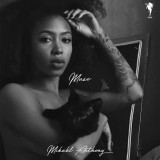
Hailing from the West side of St. Louis, Missouri, Mikahl Anthony’s sonic roots spread far across the global Alt-Soul / Hip-Hop scene. A highly soughtafter multidisciplinary artist (who has collaborated with the likes of Mick Jenkins, Chance The Rapper, Joey Purp, Smino and more), as well as being a founding member of Chicago’s THEMpeople collective, he now prepares to unveil his masterful full-length debut Muse via R&S Records.
Accompanied by several beautiful, self-directed film pieces, Muse is a record with storytelling at its core. Interspersed with commentary from a range of sources telling their stories to Mikhal, whilst collaboratively analysing their personal experiences, it speaks a candid and honest narrative, which reinforce the heartfelt lyrics within. With the project’s name anchored around a dual meaning acronym (1. Ms. Using sensual energy and 2. Making use of seclusion every day). The record is an audio version of docufilm, that creatively interprets the idea of self-therapy, an internal/interpersonal reflection of life experiences that serendipitously connect to Mikahl’s personal romantic relationships. Mikahl explains: ‘I wanted to use a unique style of songwriting, arrangement and filming with the intention of soundtracking my self-development/maturation process’.
On the project’s lasting impression on the listener, Mikahl elaborates ’The exploration of inner truth and vulnerability is key to the future of good music. I want this project to act as symbolism that highlights the mantra that honest approaches and authenticity still has the most value. I also want people to see how important the use of community is when you can connect them to your subject matter...I'd like my audience to observe and engage in their own self-reflections, approaches by way of listening or interacting with the story.’
Drifting to an elevated state of consciousness, Muse is a deeply intoxicating and engrossing listening experience from front to back. From the sliding, kaleidoscopic shadows of opening track ‘La Flare’, via the trepidation-laced atmosphere of ‘Polyamorous’ and the hazy, reverb drenched saxophone notes of LP closer ‘Eddie Kane’ - Mikahl channels moments of joy and pain, infused with spirit enriching instrumentation and gritty textures.
Visual stimuli play an integral role within Mikahl’s music. His songs represent transparency and openness dipped in funk. Layers of soft velvety vocals emerge from jazz harmonies, trap rhythms, and social commentary sourced from voiceovers/excerpts. His creations are the musical representation of documentary films. His art is imagery embodied.
A masterpiece by George and Sleepy with the new Big Four! A veteran talks about the fun of "those days" and the fun of "now". Jazz is so fascinating!
1950s. The Big Four led by George Kawaguchi gained overwhelming popularity as a pioneering group of modern jazz in Japan. They were active for a long time with changing members and left a big mark on the Japanese jazz scene. This work "George & Sleepy" was released in 1969 as one of Victor's "Japanese Jazz" series. The commentary at the time said "A record that attempts to reproduce the nostalgic George Kawaguchi Big Four", but that is by no means a simple nostalgic work. "Lover" and "Charade" are reminiscent of the Big Four of those days and are undoubtedly fun, and the songs that skillfully incorporate modern techniques and musicality, such as the sophisticated groove of "Tuesday Samba" and the exotic beat of "Vietnam", are also attractive. This is a thrilling piece that conveys the charm of jazz, past and present, with a deep performance that only a veteran can have.
Roberto Cacciapaglia is an Italian composer and pianist who started out in the fertile Milan avant-garde scene of the 1970s, which included Franco Battiato, Giusto Pio, Lino Capra Vaccina, Francesco Messina, among others. After studying at the conservatory, he worked at RAI's Studio of Musical Phonology – an electronic music laboratory similar to NDR/WDR in Germany, GRM/IRCAM in France or BBC Radiophonic Workshop.
Originally released in 1979, Sei Note In Logica (Six Notes In Logic) is Cacciapaglia's second album. While his debut, Sonanze, offers a series of ambient mini-soundtracks, Sei Note presents a singular, sinuous piece. The composition is based on a finite set of musical notes, yet this limitation is the point of departure for a grand tour of possible combinations and enthralling timbres (marimbas, strings, reeds and human voice).
Like Steve Reich's Music For 18 Musicians, the joyous experiment of Sei Note is grounded in constant variation. Often doubled by multiple instruments, non-repeating patterns are exquisitely layered, while electro-acoustic signals transform and further refract through visceral effects. Within this conceptual framework, Cacciapaglia does not so much juxtapose rigid dichotomies – acoustic vs. electronic, melodic vs. dissonant, simple vs. complex – as fuse them into an expansive whole.
What started as an inspired study in Minimalism becomes a bold feat of 20th century music. Sei Note In Logica is deeply sincere and, at the same time, quite playful. With one foot firmly planted in the past and the other steeped in technology, Cacciapaglia's influence can be heard in the work of Jim O'Rourke, Fennesz and Ben Vida.
Highly regarded as a former resident at Salon Des Amateurs at his native Düsseldorf, Tolouse Low Trax/Detlef Weinrich has carved one of the most distinctive sounds in contemporary leftfield club music thanks to his deeply unusual grooves and hypnotic arrangements over the past 15 years as a solo artist.
Fung Day is his first album with entirely new material since Leave me alone which was released through Bureau B in 2022. Fung Day was written and recorded over the course of two years, slowly mutating and progressing from one state to another. Mixed, produced and finally mastered in Paris, his new domicile by choice.
A few words by Yvan Smagghe about Fung Day:
„He pretended he was in exile from Germany but he was a French lover like all of us; his MPC Sampler was smoking hot, an Enigma machine, an ashtray full of ghosts. I had left Paris for the same reasons he came. I could strangely relate. We’d met before he left Düsseldorf, and I knew of him through his oeuvre, his art over words (they were few) and piercing blue eyes.
He was now texting me on a night train from Warsaw going East, as in a Greene novel, asking me to go over his file. He sent me a spontaneous, fun, brave and bold record which is his new album - one that curiously smelled of mechanical grease - machinery of the soul, broken transport rhythms, samples like memories, noise at peace. Referenced yet uncoded. I don’t believe in ulterior motives and complex explanations. Not here at least. On the other hand, I do believe that works can be exposure - especially with the silent type or mistaken identities - and I knew about these too.“ - London, 2024
A next salvo of big people dubwise out of the ITAL COUNSELOR stable comes on this, the label’s first foray into the 7” format.
This relick of the legendary Black Brothers 1970s dub plate is perfectly crafted for dropping at the deepest of sound system sessions or right on your home hi-fi for some front room skanking. This is in no small part due to the pedigree of artists who contributed to its creation.
Hughie Izachaar first started in the reggae business as part of obscure UK band, Black Brothers, during the heady days of the late 70s and early 80s. Only known to have recorded two legendary dub plates, the band never committed their music to plastic. A multi-instrumentalist versed in the art of playing the melodica and guitar as well as singing, Izachaar went on to join the band, The Original Rockers, with whom he recorded the underground classic, “Mountain Rock.” Into the 90s and through the 2000s he has been heard across a number of 7”, 10”s, 12”s, and LPs on labels such as Reggae on Top, Jah Warrior, Inner Sanctuary, and King Earthquake.
On this release, he is reunited with the equally esteemed Jah Warrior who was responsible for Hughie’s high water mark showcase, “Can’t Take the Pressure” in 1998. Jah Warrior’s usual hard and strident steppers vibrations are in attendance here.
Uniquely, this 7” represents the first time Hughie and Jah Warrior have been combined with the third ingredient in this musical stew. Another long-time music industry journey man, Gil “Tuff Scout” Cang, augments the sound with additional production and remixing. A veteran of Studio One, Riz Records, and Tuff Scout, not to mention innumerable soul, acid jazz, and pop productions, Gil adds that “little way different” touch that has become a defining character of ITAL COUNSELOR productions.
As the saying goes: If you don’t know, get to know. Neither your ears, your skanking feet, or your soul will be disappointed!