Once upon a time, DJ’s were like soaring eagles, they would spread their musical wings and fly high to wherever they wanted to go musically. It wasn’t uncommon to hear hip house and go go played alongside disco and funk, or techno being dropped on either side of something a lil’ mo’ soulful. Then the DJ’s wings were clipped and clubs became musical cages for the more adventurous DJ’s, clubs evolved into one-dimensional musical prisons and beats bubbles. Unconventionally, Marcus McGowan hails from South Carolina, and it would be fair to argue that South Carolina is a bit of a house music wasteland? Perhaps it’s this simple geographical blip that has nurtured McGowan into creating a sound that can’t be affiliated to any particular city, cities such as Detroit that is generally associated with techno, Washington is the undisputed town of go go, or Chicago, which is renowned for acid house, hip house, and jackin’ house, and of course, New Jersey is the spiritual home of soulful house. What McGowan has created is a fresh, new vibe that appears to be crossing many musical boundaries and the test pressing mailout appears to have united music lovers from numerous genres of house music AND techno alike, with its deep, techy, jazzy, soulful, sweet and melliferous flavoured vibe. Luke Una boasted that “it’s the record of the year so far”, MFSB’s Yogi Haughton called it a “classic in the making”, but all said and done, the test pressing feedback from the handful that were passed out to music lovers around the U.K. is unanimous, it’s jus’ a frikin’ solid double hitter that can’t be pigeon-holed. This is a record for majestic, soaring DJ’s and music lovers, not scabby, common or garden Columbidae garbage foragers. It’s a slice of intellectual music that will perch McGowan very high up in the producer pecking order!
quête:can dee
With two critically acclaimed albums and a swathe of award-winning production turns under their belt, Ana Frango Elétrico present their most confident and accomplished work to date: Me Chama De Gato Que Eu Sou Sua / Call Me They That I’m Yours. Gesturing to a tradition of Brazilian boogie music, but bouncing with modern pop ebullience, the album sees the Rio artist evolve from a captivating upstart into a surefooted scene leader in full stride.
At just 25, the prolific artist and producer has already garnered worldwide admirers. Ana’s sophomore Little Electric Chicken Heart was nominated at the 2020 Latin Grammys. Since then, standalone singles have received the WME ‘Best Music Producer’ Award, recognising Ana’s deep passion for music production – a passion which has led to collaborations with nascent Brazilian stars Dora Morelenbaum, Illy and Sophia Chablau. Most recently, Ana was hailed for their co-production of Bala Desejo’s 2022 Latin Grammy-winning album Sim Sim Sim.
The new album finds Ana at their most assured and full voiced. Album opener “Electric Fish”, with funky bass and shimmering backing vocals, sets a buoyant tone. “Boy of Stranger Things” is its bombastic counterpart. It’s the grooviest Ana has ever sounded. And the most brazen. Lyrically, where Ana was once oblique on personal matters, they are now forthright – lucidly exploring their gender identity, citing accessible cultural references, and often singing in English.
“I started this album in 2021 with the intention of showing, in means of sound, understandings and feelings about queer love, subjectively exposing myself,” the non-binary artist states – before qualifying that though “feeling was its driving force, the album is really about musical production.”
“There’s so many references to different decades,” Ana explains. “Seventies drums with eighties processing … Going back, getting beyond … Testing the limits of organic sounds”. Characteristically playful, on Me Chama, Ana takes vivid and rewarding detours through funk-inflected R&B (“Dela”) and art pop (“Dr. Sabe Tudo”). “Nuvem Vermelha” is a cinematic chanson with lush strings that recalls Arthur Verocai. Then, “Coisa Maluca” loafs with the indie insouciance of Canadian slacker Mac Demarco. Later, “Let's Go Before Again”, is a full-on drum machine workout evocative of Stereolab.
Tangential Music is pleased to present the new album from veteran Spanish DJ and producer, Dj Toner (aka Antonio Herrera). Alongside his co-writer/arranger Daniel Molina and with guests that include the legendary Blue Note Records innovator Erik Truffaz and Grammy winning flautist and saxophonist Jorge Pardo, he has created a 10 track collection of slow-burning instrumentals that straddle the worlds of hip hop, jazz and electronica.
With a personal, precision tooled approach to his craft, the Andalusian has offered up an album of finely modelled downbeat moods.
At first glance, ‘Out Side’ is made up of recognisably superior hip hop instrumentals but if you listen carefully, and with patience, one can hear a craftsman at work. A wooden box is just a box until you look closer. The hidden joints, the perfect lining up of the grain, the years of artisanal graft and laser-focussed attention to detail that go into making something that has nothing present, that doesn’t deserve to be there. This is how Dj Toner operates.
The two singles that preempt the album’s release reveal different sides of his craft. ‘Camina’ struts with tough intentions. Soundtrack-y in an exploitation police drama manner, the get-out-of-my-way drum break and tension-filled chords suggest the bad cop, Erik Truffaz’s piercing lyrical trumpet lines, the good. The Afro-jazz horns led second release ‘Surprise’ is an altogether more playful, sunbaked affair. Sensual and slow-burning, there’s still an edge but it’s too hot to quarrel.
Dj Toner’s minimalist attitude to creation is shared with his co-composer Molina - an individual’s contribution may be cut to the bone, leaving just its aura or tone. The echo of a piano, a single blast of tuneful wind from a flute, a perfectly positioned drum hit.
Since the Wu-Tang Clan’s RZA began applying his beatmaking prowess to movie soundtracks, the hip hop instrumental has been acknowledged as something to listen to, as much as being used as a DJ tool or backing for an MC. Dj Toner’s instrumentals can, therefore, be seen as soundtracks. Soundtracks to his life and craft, vignettes of his environment in both the urban sprawl and the wider and slower spaces of “el campo”.
The sweet-tempered jazz-blues of ‘La Rimosa’ is a gentle welcome to the album. A simple, laid back groove with the most romantic of piano hooks that one could imagine Common dropping rhymes on. You’re kept on your toes with the odd purposeful moment of discordant interruption but the tender heart of the composition is never far away.
‘O’Beat’ hints at John Coltrane with the sparse but full-sounding upright bass before a head-snap break leads into a curious piano groove, a vintage organ swirls into a psychedelic fractal, whilst the bluesy female vocal snippets add the spice, that zing in the Granadan gazpacho.
The flamenco guitar driven ‘Flama’ is an excellent example of intricate sample placement and musicality. Old school (school yard) scratch interludes, sweet piano hooks, a minimalist but knife sharp flute contribution from Jorge Pardo, and the crunchiest of drums taking us for an intriguing walk round the corner.
We’ve mentioned them before but it’s on ‘Sweetband’ that we can feel that Wu-Tang dread hanging off its shoulders. A brooding orchestral number with powerful horns and a cavernous piano hit. The title of the piece is in stark contrast to the dark shadows of the tune.
Erik Truffaz returns in fine form on the super lethargic jazz-funk-hop of ‘The Day’. His instantly identifiable muted trumpet sound paints dazzling colours over the more earthy tones of the filtered down keys as a rubbery upright bass keeps the forward momentum. Dj Toner’s ‘Blessed Are The Weird People’ album, was rated in Jazz Magazine as one of the 20 jazz albums of 2021, so he isn’t some dilettante when it comes to playing with the complex hues of jazz but he does like to strip it to its bare essentials.
‘Fanega’ sees a gorgeous flute contribution from Jorge Pardo. An eerie boom-bap groove with sprinkles of electronic pulses and washed out chords is the canvas on which the award-winning multi-instrumentalist evokes the heat shimmer of the savannah.
‘Esperanza’ translates as ‘hope’ in English and this lovely slow, swinging jazzy groove really does provoke feelings of positivity and belief. Sublime vibraphone and another stunning trumpet offering from Erik Truffaz, take us on a journey of warm days and possibilities, the shuffling drums and sweet chord patterns are nicely finished off by a tranquil horn chorus towards its unhurried end.
‘Under Beat’ ends on a beefy boom-bap groove with a liquid funk bassline, elegant synth strings and old school scratching. Again, there’s that undisputable soundtrack edge, action and motion, the smell of the city.
There you have it, 10 tracks that go beyond the surface, deep into the dedicated craft of Dj Toner. Decades of experience and collaboration purified and refined into beat-heavy emotions, listen closely or crank it up, it’s down to you!
As we embark on this musical journey, we begin with a series of singles by female-led groups that celebrate ancestral traditions through a feminist lens.
Orito Cantora and Jenn del Tambó (Orijenn), an extraordinary musical duo with more than two decades of artistic experience, have left a deep mark on the Colombian music scene as well as in various international festivals.
Orito Cantora is a talented luthier, singer-songwriter, producer, composer and feminist from Barranquilla. Jenn del Tambó, born in Barrancabermeja, is a producer, feminist, and master percussionist specializing in the rhythms and drums of the Colombian Caribbean.
She is the founder, leader and teacher of the First Network of Drummers of Colombia and Switzerland. Their music not only makes people vibrate, but also makes them think and strengthens the cause of gender equality. Their passion for music is powerfully intertwined with their social commitment, creating energetic and passionate sonorities.
- 1: Different Type Time (Prod. Quelle Chris & Cavalier)
- 2: Custard Spoon (Prod. Quelle Chris)
- 3: Can’t Leave It Alone Feat. Eric Jaye (Prod. Glassc!Ty)
- 4: Come Proper (Prod. Jacob Rochester)
- 5: Touchtones (Prod. Aummaah)
- 6: Déjà Vu / Tydro ‘97 (Prod. Messiah Muzik / Quelle Chris)
- 7: Doodoo Damien (Prod. Quelle Chris)
- 8: Baby I’m Home (Prod. Wino Willy)
- 9: Yeah Boiii (Prod. Quelle Chris)
- 10: All Things Considered (Prod. Wino Willy)
- 11: Pears (Prod. Malik Abdul-Rahmaan)
- 12: Told You (Prod. Fushou)
- 13: Badvice (Prod. Low Key)
- 14: Think About It Feat. Billzegypt (Prod. Obliv)
- 15: Up From Here / 7Th Ward Spyboy (Prod. Ahwlee / Quelle Chris)
- 16: Manigaults / I Miss Them (Prod. Ruffiankick)
- 17: Lazaroos (Prod. Vinny Cuzns)
- 18: Bespoke Feat. Dominic Minix (Prod. Hann_11)
- 19: 50 Bags Feat. Lord Chilla (Prod. Child Actor)
- 20: Axiom / My Gawd (Prod. Glassc!Ty / Quelle Chris)
- 21: Flourish (Prod. Quelle Chris)
"It seemed that if I didn’t somehow repeat the process of greatness, and do so immediately, multiple times away to satisfy playlist and binge watch culture, then I “wasn’t shit”. After a while I was like “nah this doesn’t feel good,… I don’t know if I am finding joy in this”. I would record songs and not release them, obsess over sessions recorded in my home with 30 takes of vocals and wake up only to delete them. When it began to feel right I found solace in an epiphany that I was not obligated to operate at any other wavelength. I am moving on a different type of time, and that doesn’t expire." -Cavalier
For heads of a certain time period of NYC hip-hop, Brooklyn born, New Orleans-based rapper and songwriter, Cavalier was the one that got away. The outrageously talented artist whose name and reputation preceded him everywhere you went in the scene. The rapper who everyone knew was so dope that he had to blow, but who never seemed concerned with any of that. The pretty boy draped in Polo who stole every live show with a feather in his hair and a mouth full of gold fronts. The cat so dedicated to his own independence that even indie labels stopped trying to sign him and projects came when they came, but when they came they were undeniable.
Cavalier was THAT guy for a lot of us; a silver-tongued philosopher with an eye for the poignant details of black life and a delivery as effortless as a young Ken Griffey’s swing. All that said, it never really felt like Cav had that moment in the spotlight that we always assumed was coming. After chiseling away through headier cult corners of the NYC hip-hop scene Cavalier was recognized for his memorable co-pilot to Quelle Chris’ 2013 Mello Music debut, Niggas Is Men. The critically acclaimed LP helped propel Quelle Chris into the forefront of indie hip-hop (and also happened to be the first production credits for Messiah Muzik). Cav followed up with his first full length, Chief, which sports a notable Raekwon feature but also early work from producers like Ohbliv and Tall Black Guy. A relocation to New Orleans and partnership with producer/vocalist Iman Omari yielded two more projects: 2015’s Lemonade EP and Private Stock in 2018. Great records all; eagerly sought by collectors and signal boosted by influential media like OkayPlayer, Solange’s Saint Heron, and Pitchfork. Cavalier’s bonafides have never been in question, but his new album Different Type Time feels like a revelation—a sonic suspension bridge between his rich history and the artform’s future.
Different Type Time doesn’t sound like the future though, its vibrations are somewhere all their own. It sounds like jazz, like a conversation overheard in roti shop, or a pool hall, or the foyer of your old building on a fall day, front door propped open with a brick. The blues is in there too, and the south—the American South, and theGlobal South, and South Brooklyn. It’s not that it sounds like the past, but you can hear everything that came before in the thick of the basslines and the yearning of the keys. Different Type Time also doesn’t sound like now, it sounds like RIGHT NOW; the bounce of the lyrics like the staccato of basketball in the park, carried on a spring breeze.
Although he doesn’t rap on DTT, Quelle Chris plays a pivotal role; producing eight songs and serving as associate producer/consigliere to Cav throughout the creative process. “There is no time wasted in explaining things when I collaborate with Quelle. He understands the universe I am in and the realities I want to create. He’s in them. And I don’t think I can envision one without him,” Cavalier explains. Messiah Muzik, Wino Willy, Ohbliv, Ahwlee, Child Actor, Fushou and several other producers round out the credits, all lending their talents to the album’s spaciously soulful sound. At the center of all these alchemies is Cavalier, nimbly dancing in and out of pockets like a sidewalk game of jumprope. Different Type Time is a masterclass in this thing we call hip-hop; daring and original, yet always standing deeply rooted in the culture.
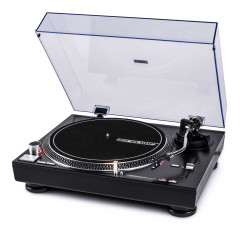
The RP-4000 MK2 is a solid DJ turntable for advanced users. The new MK2 version comes with several improvements, including a newly developed top panel and reworked metallic buttons with enhanced feel as well as a variety of functions. Precise motor control with 3 speeds: The precision-engineered die-cast platter is accelerated by a powerful motor with a high-torque direct drive of more than 1.8 kg/cm. The precise motor control with 3 speeds (33 1/3, 45 & 78 rpm) allows for the RP-4000 MK2 to play back any record. The pitch section with a selectable range of +/-8% and +/-16%, respectively, is suitable for the finest pitch adjustments. Statically balanced s-shaped tone arm: The RP-4000 MK2 features a statically balanced s-shaped tone arm with hydraulic lift and anti-skating mechanism. Via the universal connection for pick-up systems (SME) a large number of pick-up systems can be connected. Reverse function, pitch reset and extendible needle illumination: Additional features, such as reverse play and pitch reset, offer all DJs direct control of their turntable. With the push of a button the aluminium target light can be extended, so that the needle position can be seen in dark surroundings. Newly developed top panel and sturdy housing design: The new deep black metallic top panel construction is equipped with metallic buttons for start/stop, platter speed, pitch control, reverse function and tempo reset. The improved touch upon hit offers a clear haptic feedback. The sturdy construction with optimized damping features and shock-absorbing feet improve isolation from unwanted vibrations. With pick-up and headshell (made by Ortofon in Denmark): The RP-4000 MK2 comes with the high-quality OM Black pick-up, handmade by Ortofon in Denmark, pre-fitted to a headshell ready for immediate playback.
Technical data Turntable:
Type: direct drive turntable
Drive: quartz-driven high-torque direct drive
Motor: 8-pol., 3-phase, brushless DC motor
Turntable speeds: 3 speeds, manual (33 1/3, 45, 78 rpm)
Starting torque: > 1.8 kg/cm
Brake time: 50 dB (DIN-B)
Brake system: electronic brake
Platter:
Material: aluminium die-cast
Diameter: 332 mm
Tone arm:
Type: universal, statically balanced, s-shaped
Effective length: 230.5 mm
Overhang: 16 mm
Tracking angle error: < 3°
Applicable pick-up weight: 3.5 - 8.5 g (incl. headshell 13 - 18 g)
Anti-skating range: 0 - 7 g
Connections:
1x PHONO out (gold-plated), 1x GND
General:
Power supply: AC 115/230 V, 60/50 Hz (EU/US), AC 100 V, 50/60 Hz (JP)
Power consumption: 12 W
Dimensions: 450 (w) x 352 (d) x 144 (h) mm
Weight: appr. 9.8 kg
Included accessories:
Platter, OM Black pick-up system (by Ortofon), headshell, slipmat, counterweight, AC psu, instruction manual
Features
NEW in the MK2 version:
Newly developed top panel and reinforced housing construction
Reworked metallic buttons with improved feel & tactile response
Precision Pitch with selectable ranges of +/-8 % & +/-16 %
Tempo reset (Quartz Lock) feature
Superior finish in deep black metallic
Quartz-driven DJ turntable with high-torque direct drive
Designed for professional use
Powerful brushless DC motor with more than 1.8 kg/cm torque
Precise motor control with 3 speeds selectable (33 1/3, 45 & 78 rpm)
Reverse function: switch for forward/reverse playback
Precision-engineered die-cast aluminium platter with stable rotation
Statically balanced s-shaped tone arm with hydraulic lift and anti-skating mechanism
Universal connection for pick-up systems (SME)
Extendible needle illumination
Shock-absorbing feet for vibration isolation
Sturdy, heavy construction with optimized damping features
Prepared for dust cover (available as optional accessory)
Incl. slipmat, removable headshell and ready-mounted OM Black pick-up made by Ortofon
THE 1968 ALBUM ON WHICH JOHNNY CASH BECAME A LEGEND: AT FOLSOM PRISON AMONG THE MOST IMPORTANT AND POTENT STATEMENTS OF THE 20TH CENTURY
Johnny Cash already knew his way around Folsom Prison when he and his band stepped inside the institution’s forbidding walls on the morning of January 13, 1968 to record At Folsom Prison. He’d played there two years prior. But this time was different.
Cash took the stage that day for two shows amid a darkening sociopolitical atmosphere and a raging war in Vietnam, as well as the knowledge his career and health hung on by a thread. The Arkansas native shared many of the long odds and abject failures of the inmates for which he performed. The songs he chose, and the conviction with which he delivered them, say as much. The point at which Cash transformed from a country star into a legendary artist, and a bold statement about the American prison state and its commitment to rehabilitation, the triple-platinum At Folsom Prison remains one the most important, potent, and fabled records of the 20th century.
You can hear it echo off the walls of the room; pulse through the itchiness of the Tennessee Three’s acoustic-based boom-chick rhythms; crackle in the announcements conveyed over the intercom; ring in the comedy of the off-cuff remarks and pair of novelty tunes; sense it in palpable energy that wells up within Cash and his audience. And you can experience it like never before via Cash’s knockout singing. The bedrock foundation of all his music, the singer’s baritone resonates with profound degrees of depth, pliability, and passion that underscore how much this appearance meant to him — and the extent he was living the narratives.
Indeed, every song on At Folsom Prison serves a purpose and speaks to the conditions — mental, emotional, physical, geographical, legal, social — the inmates confronted on a daily basis. Beginning with the explicit messages of the opening “Folsom Prison Blues,” Cash makes it clear he understands and shares many of their plights. Not for nothing did the myth of Cash having done hard time persist for decades once this record hit the streets. That’s how real it is, and how dedicated Cash remains to conveying every note with the same truth he invests in the impromptu comments he makes between and amid songs.
Listen to the sorrow, regret, pity, and loneliness of Merle Travis’ “Dark as the Dungeon,” Cash pulling syllables til they threaten to break and inhabiting the mood of bleak phrases such as “pleasures are few” and “the sun never shines.” Witness the isolation, dejection, and sadness punctuating the walking-blues “I Still Miss Someone,” matched in gravity by a solemn reading of “The Long Black Veil” — a traditional dirge that involves murder, cheating, and deception. Cash cuts even deeper on a heartbreaking solo rendition of “Send a Picture of Mother” and plainspoken version of Harlan Howard’s “The Wall,” detailing a suicide disguised as jailbreak through cliched-jaw deliveries that softly curse the impossible situation.
In chronicling temptations, mistakes, mortality, punishment, and life “inside” — for better or worse, the stories of the disenfranchised, forgotten, written-off, and unrepentant — At Folsom Prison also has a blast playing the outlaw role. Cash captures wild-eyed craziness and out-of-control mayhem on a revved-up take of “Cocaine Blues,” taking extra satisfaction in its dastardly tales by way of voice that shifts into character for the sheriff and judge. The gallows humor and racing drama of “25 Minutes to Go”; quicksilver accents and resigned acceptance of “I Got Stripes”; train-whistle blare and twangy locomotion of “Folsom Prison Blues” — all fight the law only to see the law win.
Cash remains deeply committed at every moment, and inseparably connected with the tortured souls removed from the goings-on of the outside world. No wonder all but two songs here stem from the day’s first performance that saw Cash, Luther Perkins, Marshall Grant, and company give everything. As does the Man in Black’s soon-to-be-wife, June Carter. The couple’s fiery duet on “Jackson” scorches; their combination of surrender and fortitude “Give My Love to Rose” puts us in the dying protagonist’s shoes.
And with the closing “Greystone Chapel,” famously penned by convict Glen Sherley, who watched it all happen under the watchful eye of guards, Cash separates the corporeal from the spiritual, relaying lessons about salvation and survival. Heady themes to which he’d return for the remainder of his illustrious career.
"Listen to This." As the original working title for Bitches Brew, the instruction and invitation resonates to this day as the best way to approach a record that shattered conventions, altered music history, and, more than five decades after its original release, still sounds far ahead of its time. The aural Mount Rushmore of jazz fusion, Bitches Brew is rightly ranked by virtually every significant outlet among the 100 greatest albums ever made in any genre. Sewn together with vibrant colours, voodoo textures, and ethereal moods, the 1970 landmark emerges with supreme detail on Mobile Fidelity's definitive 180g 33RPM 2LP set.
Sourced from the original master tapes and pressed on 180g vinyl at RTI, this numbered-edition version of Bitches Brew joins the audiophile ranks of other essential Miles Davis sets reissued by Mobile Fidelity. Having established new possibilities for studio-recording techniques, the record can now be experienced to maximum degree by way of a pressing that widens and deepens the soundstage, opens up separation between instruments, and broadens the dynamic range. If ever a jazz album can be said to have gone to outer space and back, this is it.
Davis conceived Bitches Brew by having the musicians stand in a semi-circle, where he pointed at them with vague directions for tempo, solos, and cues. The collective improvisation and interplay spawned a galaxy of melodies and grooves later spliced together by producer Ted Macero. On this reissue, these creations take shape with utmost realism. Compositions stretch across black backgrounds and paint abstract canvasses on par with those of Axis: Bold As Love and Abraxas. Juxtaposed percussion, loose jams, and melodic segues explode with impressionistic verve.
And "verve" defines Bitches Brew. Gathering a Hall of Fame-worthy lineup of musicians and tweaking it according to his desires, Davis follows through on his idea to "put together the greatest rock and roll band you ever heard." Central to his proposition is the presence of two (and sometimes three) drummers and two bassists, a tactical move that thrusts rhythms into central focus. Akin to the futuristic album cover art, the drum-driven suites head toward distant universes and uncharted territories. At once hypnotizing and grooving, they chart maverick adventures with quixotic rock, funk, and R&B elements.
Conceptually, Davis described Bitches Brew as "a novel without words" and "an incredible journey of pain, joy, sorrow, hate, passion, and love." The vast psychedelic expanses of warped echoes, liquid reverb, and tape loops confirm such ambitious contrasts of light and dark, fear and hope. Yet the most absolute characteristic of this watershed effort lies in how it resists definitive interpretation and encourages free thought — the very principles with which Davis conceived the everlasting beauty and fascination that remain Bitches Brew.
Strawberry Wind, produced by Richard Swift (Nathaniel Rateliff and The Night Sweats, Foxygen, The Shins) not only delivers on a promise to create an honest album for kids and parents but it represents what Baylin calls the “beautiful divide,” of juggling family life with her creative life, a difficult task by any measure. “The divide in me is easy to feel because I invest 100% of myself into my family and often the creative gets put to the side,” she explained, “so when I decided to begin writing for this album it just poured out of me.” Now singer / songwriter Jessie Baylin shares that creative outpouring on her debut children’s album, ‘Strawberry Wind’. Throughout the album, Baylin doesn’t hold back on telling it like it is. Weaving through lyrical themes of dream life, supermoons and summertime vibes are some gentle doses of reality. “I don’t want to lie to my kids. Life is hard sometimes and you need to find a way to deal with it... there will always be things in life you can’t control. But, you can dream of a better world and make your own refuge,” says Baylin, who is mom to 4-year-old Violet and is expecting her second child with her husband. Baylin, who’s released four critically-acclaimed albums over the years, says the seed was planted for this album after recording a cover of Harry Nilsson’s He Needs Me from the kids’ film Popeye. “The song has a childlike sense, but the message is very deep. It’s magical, it’s dark, and it hit all the right notes. I wanted to do an album that feels like that” she says. “Since becoming a mother, I found myself being around the house a lot and I started gravitating to these wonderful albums I remembered from my own childhood - The Beatles, Harry Nilsson’s The Point!, John Lennon, Roger Miller’s Robin Hood and Carole King’s Really Rosie." The magic of those iconic 1970s records she mentions is that they’re all grounded in solid songwriting and were never dumbed down for the audience. “Those records felt very honest and that was my mission here. I also wanted it to feel magical and remind people of the child inside of all of us that is filled with a sense of wonder and pure joy and hope.”
Blue Record announces the re-awakening of Savannah’s rock giants BARONESS. Blue Record is an instant classic, with all the peaks and valleys, textures, and nuances that timeless records yield over repeated listens. Deep and dark, Blue Record overflows with gossamer melodies and striking, earnest riffs that have become the band’s signature. Blue Record is the most poignant moment in the BARONESS canon to date.
When Richard Thompson began writing songs for his latest album, Ship to Shore, the artist was instinctively drawn to his own musical roots, employing them in the service of fashioning a deep and diverse 12-track collection that pulls from various styles, genres and eras, but remains unmistakably Richard Thompson. There’s the rumbling, Motown-style rhythm that propels “Trust,” and the straightforward riff-rock of “Turnstile Casanova.” The drone-y “The Old Pack Mule,” an “old man’s song” that takes musical cues from 1600s-era European music, and “Life’s a Bloody Show,” an ode to “snake-oil salesmen and hucksters” that floats on a glammy, cabaret-like melody that’s “almost like a parody of a Noël Coward song, or something from Berlin in the 1920s,” Thompson says. “I liked the idea of having a strong base to work from and reaching out from there,” he says. “And I think of my base as being British traditional music, but there’s also Scottish music, there’s Irish music. There’s jazz and country and classical. As far as I’m concerned, once you establish your base you can reach out anywhere. It’ll still be you ringing through, wherever you decide to go musically.”
Ship To Shore by Richard Thompson, released 31 May 2024.
This version of Ship To Shore comes as a 1xLP. This release comes with (a) Sticker(s).
Luxury Apartments have spent long enough pondering in the orb of creative frustration as art charged city dwellers and have alchemised a jagged piece of guitar work that calls on the past for a quick catch up before cracking on with their day as a witty, energised and wiry punk band. Formed before your favourite East London neighbourhood became full of high rises, cockapoos and pubs with Madri & Beavertown on Draft, there’s a whole swath of words you could use to describe Luxury Apartments, but doing so might draw too many parallels to estate agent listings wo we’re gonna let their track record and new LP do the talking… LA played with the likes of TOY, TELEGRAM, Deep Tan, Es, The Chisel and Rifle before even having an LP. Mixing dry humour with a belting live show served them well while the guys were woodshedding and earnt them early fans such as Graham Coxon and Jamie Reynolds, who I can only gather shed a single tear of seeing where they came from with all the chaotic guitar-busting, skin-splitting, bottle-smashing madness of an early LA show. But we’re here talking about NOW and NOW is the time to get your pre-order for their first LP, a half hour of power smashing the atoms of 80s c86 indie on lead track ‘Energy’, 77 punk on ‘Wire’ and new garage rock explosions on ‘Taliban’ which morph in to a piece of black wax that’s 100% guaranteed to get the disenfranchised wiggling, the fed-up hurling half bricks through foxtons windows and the punk lifers flipping off yet another boss before carving out another fork in their paths of resistance.
LAKE's 2009 album Let's Build A Roof KLP213, produced by Northwest legend Karl Blau, is sweet, funky and nostalgic - a paragon of psychedelic pop. Originally, this landmark album had overlooked sonic anomalies now corrected by REMASTERING. Five bonus songs have been added to the DIGITAL ALBUM, creating a whole new Let's Build a Roof.Let's Build A Roof is LAKE's most popular album with many fan favorites, though every track is unique. After extensive touring in 2009, LAKE entered Dub Narcotic Studio (Olympia, Wash.) to record fresh with their live energy. In the studio they were able to fill out their jingly pop aesthetic, enhanced with the vintage sounds of instruments available at Dub Narcotic and the local community. Blazing synth solos, timpani, flutes, saxophones, cello, and marimba, are just some of the featured sounds on Let's Build a Roof.Some of the album's most requested songs: "Madagascar," a dubby, slow-groove track; "Christmas Island" a surfy Phil Spector-sounding song used as theme music for the television in show Adventure Time; and "Don't Give Up", an upbeat motivating dance song with Blau performing the hook on harmonized saxophones; "Gravel" is the first single and has that a driving intensity that we can all deeply relate to - trying to keep up.
- A1: Chosen Few – Dancin’ All Over The World
- A2: The Freex Machine – Freexfunkatized
- A3: Nzimande All Stars – Sporo Disco (Woody Bianchi Edit)
- A4: The Firebolts – Firebolt Hustle
- B1: Aggression - Tag (Woody Bianchi Edit)
- B2: The Movers – Onthekele Beer (Jwala)
- B3: World - You Got The Power
- B4: Joe & Lee – Black Gold Disco Moving Machine
- C1: Joe Pugliese - Plie And Isolation
- C2: The Family Tree - As
- C3: Pressure Point - Straight To The Point
- C4: John Blair - Momma Said Shut Up
- D1: The Headquarters - Sweetie
- D2: Wylie - Fan-Tasy (Woody Bianchi Edit)
- D3: Cania - Visions
- D4: Montreal - Night People
Repress!
We"re back with another instalment of badass Funk from the Disco era with Supafunkanova Volume 3 which has been selected by prolific DJ, producer, remixer and record collector Woody Bianchi. Woody digs deep into his collection, compiling a high-quality album filled with lesser-known disco, funk and boogie. As the title suggests, Supafunkanova focuses on the funkier end of the 70"s & 80"s, showcasing some of the bumpier grooves recorded in the disco era when even James Brown had to take notice of the Saturday Night Fever inspired disco explosion. It will come as no surprise to hear some particularly hard to find gems have been unearthed here, and ones that aren"t just rare and expensive (if you can even find a copy!) but genuinely merit being re-issued. With expansive sleeve notes by Woody himself to give you an in depth insight to the music, artists and personal discovery of each record.
The last, and previously unreleased, recordings from the legendary and world renowned Swedish psychedelic organist Bo Hansson before he passed away. (Jimi Hendrix was a fan and recorded his song "Tax Free"). Here you can listen to Bosse in fine form together with his lively organ student and keyboardist extraordinary; Eric Malmberg, joined by drummer Niklas Korsell, creating mesmerizing and ethereal space jazz. The music seems to contain information about a deep perspective that questions both time and space and recognize the universe unfolding its abstract process of creation.
- A1: Rehearsal #1 (“I’ve Been Looking From The Outside”) 4:13
- A2: Rehearsal #2 (Metal Sludge, Aka "Bufo Gutturalis") 6:56
- A3: Rehearsal #3 (“Early Morning Haze”) 6:56
- A4: Rehearsal #4 (“Free To Blow With The Wind”) 3:04
- B1: Rehearsal #5 (Heavy Acid Funk Groove) 2:55
- B2: Rehearsal #6 (More Heavy Acid Funk Groove) 2:12
- B3: Rehearsal #7 (“Sunshine Comes My Way”) 3:27
- B4: Rehearsal #8 (Grind Groove) 1:02
- B5: Rehearsal #9 (Grind Groove, W/Solos) 2:42
- B6: Rehearsal #10 (Acid Rock Groove) 2:44
- B7: Rehearsal #10 (Acid Rock Emergency) 1:33
- B8: Rehearsal #11 (Shred And Stroll) 3:42
Influences from heavy bands of the time, such as Black Sabbath, Deep Purple and Steppenwolf are noticeable, with proto-doom and psych/funk undercurrents.
Do you like fuzz guitar? You're going to hear it screaming and wailing and building to epic tidal waves and crashes, the kinds of astonishing guitar cascades not heard since you cued up the best of all available live Jimi Hendrix recordings. Talking about a track known online as 'Bufo Gutturalis,' a poster's assessment: "I gotta say this is one of the most shocking songs from 60s, it's impressive how the sound can be heavy and dark -- it is also one of the earliest released songs most closely to call proto-doom."
2024 Repress!
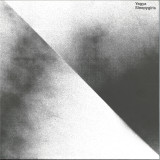
Limited 10 year anniversary repress. In May 2014, Icelandic producer Yagya released his fifth album, Sleepygirls, across three slabs of vinyl on Dutch label Delsin. It's a deep, spacious and dubbed out affair that stays locked at a pleasingly sedentary tempo throughout. Since 2002 the definitive member of the Thule Musik collective has been crafting lush electronic albums under his Yagya alias and always manages to find pure bliss and beauty and his simple, nature inspired soundscapes. "I wanted to create an album that's atmospheric, repetitive, and easy to listen to over and over again," says the man himself. "Something that works well in the background (e.g. when concentrating on work), as well as up close in a big sound system. I also wanted to learn how to make my music sound better than before, since I'm a huge sound-nerd, so that was a part of the goal for me personally." The album is a fine fusion of tropes from Yagya's earlier albums, features jazz instrumentalists that improvise beautiful melodies over monotonic, almost drone-like, techno beats and also uses live recordings of Japanese vocals, saxophone and guitar to counter the repetitiveness of the rhythms. Right from the rolling bliss of the opener, you're suspended in a womb like pillow of sound that is soft, warm and serenely beautiful. As tracks roll on, the pace stays the same but themes vary from upright and summery to more elongated and insular. This is natural, organic dub that is a delight and a pleasure to listen to. The vinyl versions of each track have been specially mixed with random LFOs, sonic quirks and unique fingerprints making them the subtly different to the CD version, but overall this is a brain soothing and mind melting album that can soundtrack lazy days, long summer afternoons and warm winter evenings in equal style.
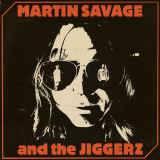
Who said rock'n'roll is dead?! Maybe Dr Frankenstein's made a rock 'n' roll monster cuz it sure seems alive to me. We introduce to you the debut LP of MARTIN SAVAGE AND THE JIGGERZ! All three gentlemen in this power trio have a solid background in the rock 'n' roll business which we won't bore you with here. The band has already released a slew of solid 7" records which we won't bore you with here either. Get on the internet ya lazy sods! Anyway, back to this here album: recorded by Ed Deegan at the esteemed Gizzard Recording Studio up in Fish Island, East London, on magnetic tape it delivers 12 solid senders of pure heart-on-the-sleeve rock 'n' roll action! From the blastin' drumroll of opener 'Between the Lines', a staple in the band's live set, via punk ballad anthem 'Down the Line' leading up to another live favourite called 'Boomerang'. There are covers of should-have-been-legends with bad-ass names like the Backstabbers or the Stripes. There are songs about shitty jobs, troublesome relationships, life on the high and life on the low. It's got everything you need really. Whether ya dig Boston 1976, Medway 1986 or Memphis 1996 there's something for you here. You can call it punk, pub rock, garage, glam or any other label you like but we just call it good ole rock 'n' roll. Hope ya dig!
Bill MacKay and Drag City are delirious with pride to announce the discovery of a new territory: Locust Land, a record which seeks to reflect the nerve-shredding consciousness run amok in our world today - and somehow allay it with sound. Bill"s music is a visceral crackling where it meets the air, and Locust Land can"t help but reflect its era more than any other in his discography. It"s been five years since the release of Fountain Fire - but in the interim, Bill has barely stopped moving, collaborating with artists across the spectrum, including cellist Katinka Kleijn, banjo player Nathan Bowles and keyboardist Cooper Crain. He"s also contributed to recordings by Steve Gunn, Ryley Walker, Bill Callahan & Bonnie Prince Billy (Blind Date Party), and Black Duck (on their self-titled record featuring Douglas McCombs and Charles Rumback). Forget five years - how"d he even get Locust Land squeezed out of his temporal lobes? Bill"s sense of music as art is constantly modulating - lifting off from where it is found and naturally migrating to some other place. Sometimes, that"s elsewhere - others, it"s simply to be found deeper inside the starting point. And so, the action of moving on informs the landscape of Locust Land. This manifests in several different ways. A restless energy and urgency is repeatedly felt - in the driving momentum of "Keeping in Time," "Glow Drift," and "When I Was Here" - while a dogged persistence radiates from the tone colors and percussion of "Oh, Pearl." Mating a dirge-like desolation with sparkling guitars, "Radiator" adds darkness and depth. The sense of searching, displacement and longing in vocal tracks "Keeping in Time," "Half of You," and "When I Was Here" speak literally to the tumult of current vibrations. Within the arrangements, there"s also departure from previous norms - in addition to the brilliant guitar work for which he is known, Bill plays a variety of keyboards, from piano to organ to synth, extending his music with the available voicings, while enriching the sound field without abandoning his signature brevity. For fans of his singing, and following in the recent tradition of Fountain Fire as well as his collaboration with Nathan Bowles, Keys, Locust Land expresses with an increased vocal presence - and heightened engagement, with Bill"s words and melodies drawing us closer. Also different: on his previous solo recordings, Bill played every sound. Here, he has invited other illustrious Chicagoans to join him: Sam Wagster (The Father Costume, Mute Duo) plays bass on three songs, two of which feature the percussion playing of Mikel Patrick Avery (Natural Information Society, Jeff Parker, etc.). Additionally, Janet Beveridge Bean (Eleventh Dream Day, Freakwater) adds otherworldly vocal textures to the elegiac "Neil"s Field." Whether played alone or with companions, this music projects the strength of a universal collective. Even with a piece that might earlier have passed for blissful pastorale, Bill displays some declamatory motives. The reverie which opens the album, "Phantasmic Fairy," embodies both transcendent and desperate moods, with Bill"s ineffable slide guitar playing afloat, with organs and synths, in a dream state suffused with a sense of foreboding - a requiem, perhaps for the days of unencumbered bandwidth? On the other side of the album, the strength to continue to hope appears in the lifting melodicism/exoticism of the album-closing title track, leaving the listener with the sense of having achieved a hard-won space - a place of personal contemplation and dissent, one that everyone on the planet deserves to visit every single day on earth. With cover art also by Bill MacKay (the third of his albums on Drag City to feature his work), Locust Land stands as a thoroughly personal statement from Bill to everyone everywhere.