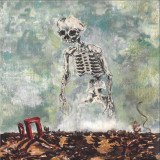
To be released in LP and CD on 02/04/21 by Les Disques du Festival Permanent, Pagans, Murailles Music.
Artwork and illustration by Camille Lavaud
Constructed like an invented tarot deck, De Mòrt Viva explores the idea of a contemporary paganism in ten jubilant, humorous and spiritual odes.
The Auvergne Occitan imposes itself at the spittoon, deploying its metaphorical and polysemic network, with the particular candor of a newly acquired language.
The melody is born from the word, the poem gives birth to the song, in a form that could recall from afar and without erudition, the trobar, the art of the troubadours.
In this game-album each piece describes a possible situation, with its typical emotions and stakes, its often reversible systems of forces whose meaning escapes Manichean thinking.
Drawing from the ageless figures of the Carnival, these ten arcane songs will perhaps bring to our consciences what to think differently about contemporary concerns.
Always hybrid and exploratory, Sourdure's music reveals itself here under a new face. Exoskeleton or chemical revelator, the electronics are camouflaged in the roughness of the song as if to disturb its contours. Carried away by an armada of percussions and wind instruments, the voice naturally takes its strong place, whispering, savoring the langue d'oc like a macerated wine.
Search:cando
Anne-Marie’s second studio album, ‘Therapy’, is the official follow-up to her multi-platinum and four million-selling 2018 debut, ‘Speak Your Mind’ the UK’s biggest-selling debut release of that year. An artist whose everywoman candour and knock-you-down vocal range has reverberated across the globe, ‘Therapy’ is a collection of songs that embody Anne-Marie’s characterful artistry, self-effacing attitude and beautiful honesty; attributes that have not only catapulted Essex-born Anne-Marie to platinum status in the UK to the USA and everywhere in-between, but ones that have seen her reign supreme a fearless Gen Z role model.
With the full tracklisting yet to be announced, Mind Charity ambassador Anne-Marie is delighted to confirm that ‘Therapy’ will feature her already-released UK Top 3 and Gold-selling ‘Don’t Play’ with KSI and Digital Farm Animals; recent feel-good Nathan Dawe and MoStack collaboration ‘Way Too Long’; as well as Niall Horan collaboration, ‘Our Song’, which the pair wrote with Phil Plested and TMS (Lewis Capaldi), with the latter also on production.
An album of candour and vivacity in equal measure, Anne-Marie wrote ‘Therapy’ with Max Martin (Ariana Grande, Taylor Swift), Kamille (Little Mix, Headie One), MNEK, Raye, TMS, Blake Slatkin (The Kid Laroi, 24kGoldn), Ed Sheeran, Nathan Dawe and Plested (Lewis Capaldi) – production comes from Mojam (Aitch, Fredo), Fred Ball (Rihanna), TMS and Blake Slatkin.
Anne-Marie has become one of the globe’s most successful pop stars since hear breakthrough in 2016. An artist with over five billion streams to her name, in her home market, she has secured 1 x platinum album alongside five Top 10 singles to date. And 2021 has seen her continue her winning streak, too – her January release ‘Don’t Play’ spent twelve weeks inside the Top 10 in the UK’s Official Singles Chart and has subsequently become the biggest song of 2021 so far by a British female artist (OCC). Not to mention her prime time debut as the new, and winning, judge on talent show, The Voice, earlier this year.
Rewind to 2020 and alongside charitable work and recording, Anne-Marie released her first-ever documentary titled ‘How To Be Anne-Marie’, exclusively with YouTube. Shot in her home county of Essex at a time when her years’ plans were turned upside down due to the pandemic, Anne-Marie took us back to where it all began. In the hour-long film, we saw her recounting her difficult school years, the close bonds she shares with her family, fans and friends, as well as the plights of stardom that she candidly spoke about with her peers, Little Mix.
Uruguayan groove and multicultural sophistication - 40th anniversary special edition, 500 copies, including 20 page booklet
With a unique mix of music roots and cosmopolitan sounds Jaime Roos would become one of the most successful and significant artists of Uruguayan music.
Aquello, his third album, recorded in France in 1980 with an impressive cast of international musicians, reflects Europe’s multicultural landscape during the late seventies. Psychedelic folk, afro-candombe, murga, rock, new tango and jazz-fusion are combined in a surprising way in a one-off album that exudes strangeness and sophistication.
For the fifth anniversary of Buraka Som Sistema's 2016 farewell show in their hometown of Lisbon, Portugal - and the 15th anniversary of their debut EP - we're celebrating this important milestone by releasing 'Buraka 4 Ever', an album created from the recordings of this legendary concert where the band's most iconic songs were last performed in front of a roaring live audience.
Papiro’s approach to music is never technical, but always personal. Since the mid-Nineties, he has released a handful of noteworthy albums, each carefully put together and seemingly self- contained, yet all sharing an unmistakable musical language and a certain escapist aura.
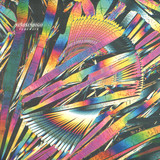
La finestra dentata (The Toothed Window), is no exception. It includes both studio and concert recordings from 2016–2020. The sounds on this album appear infinite and full of marvels, ingenious in portraying imaginary creatures and environments.
The title track and Anelli take up most of the first side and include live outtakes. Papiro likes to describe his performances as therapeutic. These swirly symphonies are specifically intended as immersive deep-listening experiences for concert venues, and have been edited for this album to meet the physical demands of vinyl and domestic use. Imagine the younger cousins of Laurie Spiegel’s Concerto Generator performance, or Terry Riley’s Shri Camel.
However, those who know Papiro only from the stage might be unaware of a different side to his oeuvre; starry-eyed miniatures that may appear frivolous in comparison to the more heady stuff, but are nonetheless well worth discovering. Each piece adds a chapter to a phantasmagoric world populated by such characters as "Giant Duckling", "King Hard-Beard", or the "Bodulator". Tracks like the opener Odilon or Il triciclo nascosto, meanwhile, emanate a candor rarely found in the domain of serious music, and revisit Papiro’s early days of instrumental storytelling.
About Papiro:
Marco Papiro is a Swiss-Italian musician, composer and graphic designer. He teaches at the Schule für Gestaltung in Basel and is known for the posters and album covers that he's created for a number of prolific artists (Sun Araw, Sonic Boom, Panda Bear, Oren Ambarchi)
A new title in the series of full-album reissues that Vampisoul (co-produced in collaboration with Little Butterfly Records) is releasing as a valuable addition to the largely acclaimed compilation “América Invertida”, focusing on the obscure leftfield pop and experimental folk scene from ‘80s Uruguay, making some of these elusive and essential albums available again.
Hugo Jasa aimed to merge the glamour of the 80s (drum machines and Yamaha DX7 and Roland D50 synthesizers command the timbre of the album) with Uruguayan Afro-candombe sound in his songs. A deep bench of national talent, as Eduardo Mateo, Hugo Fattoruso, Jorge Galemire or Mariana Ingold, took part in these sessions. The album was originally released in 1990 with a single pressing of 300 copies, and then recently rediscovered by new generation of DJs, musicians and hardcore record collectors around the world thanks to the internet, reaching a cult status and becoming a top want.
Hugo Jasa’s “Estados de ánimo” is reissued here for the first time, in its original artwork with an extra OBI and including an insert with liner notes by Uruguayan music writer Andrés Torrón.
Former member of Rodolfo Alchourrón and Gato Barbieri's bands, Cevasco's first solo effort is a combination of fusion jazz with a pinch of unexpected Brazilian flavours and electronic sounds that now, more than 30 years after the original release of the album, still evoke a refreshing feel of modernity in the same vein as many other experimental Argentine and Uruguayan artists from the same era. Includes guest appearances from artists such as Litto Nebbia or Ruben Rada. Reissued on vinyl for the first time, including insert with liner notes and previously unseen photos. Details: Few musicians can boast of having played with "the greatest" without some eyebrows to be raised. The bass of Adalberto Cevasco has been heard in multiple concerts and recording sessions of artists as diverse as the Spanish divas Rocío Jurado and Isabel Pantoja, tango genius Astor Piazzolla or the cream of the Argentine jazz scene -from Pocho Lapouble, Gustavo Kerestezachi, Rubén López Furst or Andrés Boiarsky to the great Gato Barbieri- With the latter, as part of a dream band that included artists like Nana Vasconcelos as well as other Argentines such as Lapouble or Domingo Cura, he recorded two fundamental pieces in the Impulse! label catalogue in sessions held in Argentina and Los Angeles and also toured across various countries. The daily sold-out shows at the Regina Theater in Buenos Aires and their overwhelming performance at Montreux Festival are still well remembered. It is therefore out of question that Adalberto Cevasco belongs to that top-level league of musicians whose talent has also contributed to enhance those who accompany them. The history of this album begins with an encounter. Adalberto Cevasco joins Rodolfo Alchurrón's jazz-funk project Sanata y Clarificación as bassist and meets Litto Nebbia, who is invited to sing along. Some years on, when Nebbia's Melopea record company was developing, he would receive a cassette with a collection of demos recorded by Cevasco over the years. Some of the songs dated back to 1981 while others were made well into the decade and included such outstanding collaborations as that of the Uruguayan Rubén Rada, whom Adalberto Cevasco had met playing in a group of fusion candombe called Candonga. In addition to producing the complete album, Nebbia would also collaborate in a special way in one of the most outstanding tracks (Reencuentros Nº2) by adding to Cevasco's fusion jazz some unexpected Brazilian flavours and electronic sounds that now, more than 30 years after the original release of the album, they still evoke a refreshing feel of modernity. As the Argentine press of the moment highlighted, it'd seem as if the influences received and developed by the bassist during his career as a freelance musician - from post-Piazzolla tango to proyección folclórica (a movement of revision and modernization of the Argentinian musical roots) - had been added to their superb rhythmic work in this album. "Pájaros Eléctricos" was never presented live and has remained as the only published work by Cevasco as a soloist since the date of its release.
Black Coffee, Peggy Lee's 1956 album smash for Decca (she left Capitol in 1952 over creative and artistic differences), presents her in an intimate setting with a top-notch jazz quartet in place of her usual studio orchestra. This smaller combination, including trumpeter Pete Candoli and pianist Jimmy Rowles (two of her favorite sidemen), works to perfection, especially on sultry takes on “It Ain’t Necessarily So”, “Gee, Baby Ain’t I Good To You” and the title track. Verve’s Acoustic Sounds Series features transfers from analog tapes and remastered 180-gram vinyl in deluxe gatefold packaging. SOLD IN PREVIOUSLY-EXISITING ORDERS STILL STAND
Fuera de Ambiente (2006), the latest album by Uruguayan musician and reference, Jaime Roos, now first time on vinyl! Includes a new cover artwork, designed especially for this edition, and a new audio master that far exceeds the original. Groove and introspection in the new millennium. With a unique mix of music roots and cosmopolitan sounds, Jaime Roos would become one of the most successful and influential artists of Uruguayan music. Released in 2006, Fuera de Ambiente is his last album of original material so far. Without leaving aside the groove of candombe fusion music, the eloquence of murga and his distinctive blend of Latin-American rhythms with pop and rock touches, this is one of his most introspective and sophisticated works. A timeless record that has gained recognition over the years as one of Roos' greatest albums. This is the first time ever that Fuera de Ambiente is released on vinyl.
New Wave and Afrofuturism
With a unique mix of music roots and cosmopolitan sounds Jaime Roos would become one of the most successful and significant artists of Uruguayan music.
Released in 1984, Mediocampo absorbs the new wave trend in a unique way, blending the sounds of synths and electric guitars with Afro drums and Latin rhythms. The songs jump from candombe to rock, from ballad to murga roots, from pop to experimental music. The album paved Roos’ path to stardom in Uruguay and is considered nowadays as one of his most substantial works.
500 copies. 140 gramms vinyl, 12 page booklet included!
Candombe fusion, art rock and psychedelia with punk attitude.
With a unique mix of music roots and cosmopolitan sounds Jaime Roos would become one of the most successful and significant artists of Uruguayan music.
Siempre son las cuatro, his fourth album, recorded in 1982 in Montevideo after a long stay in Europe, was the work that started to build Roos’ artistic personality and the first step towards mass appeal in his country.
A psychedelic album with dark and somber tones but also full of groove and punk defiance, that is quintessentially Uruguayan.
500 copies. 140 gramms vinyl, Poster included
Recorded between 1985 and 1987, this album brings together the two founders and leading performers of candombe-beat, Ruben Rada and Eduardo Mateo. They hadn´t collaborated in a project since 1969. Both artists had reached their creative prime, with Mateo having released “Cuerpo y Alma” and Rada, “La yapla mata” (which included the classic song ‘Tengo un candombe para Gardel’). 140 gram vinyl with OBI & Insert
This initiative sprang from the artists themselves. But when it was time to create, they rarely got together in the studio, preferring to work on their own. Once finished, the album failed to make an impact, since neither of them promoted it.
This revival brings that semi-hidden treasure to light. It includes two tracks of the artists strictly performing a duet, the only recordings of Mateo and Rada working alongside each other and no one else. It also contains two additional tracks where you can relish Rada accompanied by Mateo’s guitar and Mateo backed by Rada’s percussion. It includes a track where Mateo commands the instruments (as in Mateo solo bien se lame) and another with Rada’s solo on vocals and percussion. There are instances when Rada’s band of that moment and “super-group” (with Osvaldo Nolé on keyboards, Ricardo Lew on electric guitar, Urbano on the bass and Osvaldo Fattoruso on drums), makes an appearance. Sometimes, Urbano comes forth as lead singer, completing the triad of singers of “El Kinto”. All excellent songs.
This album is exceptional and one-of-a-kind, an overflow of talent, musicality, swing, imagination, rhythm, spark, and transcendence.
Guilherme de Alencar Pinto
Three years after their last collaboration “Lost in the Moment”, part of Darius’ debut album Utopia, the French producer and Nigerian born future soul artist Wayne Snow unveil their stellar single “Equilibrium”.
The message of unity has never felt more relevant than the times we are living through right now. This project composed one year ago, serves as a stark reminder that we can all transcend above our differences and connect through the experience of music together, regardless of colour and race.
The undeniable synergy of both artists create a harmony magnified by the richness of their diverse cultures and musical background.
The beat instantly catches us in a warm and arresting atmosphere. The main melody reveals an uptempo rhythm gently interwoven in Wayne Snow’ emotive voice, born in Nigeria, living in Berlin in preparation for his next album. His lyrics infuse a carefree candor, which only suggests love and euphoria, fruit of an universal balance and a collective caring energy.
After multiple collaborations among “Helios” or the “Nightbirds” improvised live project (feat. FKJ and Crayon), the two artists reunite once again on “Equilibrium”. Heady and joyful, only few seconds are enough to form a timeless memory and make this track an instant classic. Darius holds Wayne’s powerful vocals, which travel through the composition as gospel pipe dreams. His Funk and Disco influences, embodied by his heart-warming and dynamic groove reminds us of his iconic project Romance (2014). Driven by a festive and upbeat energy, Darius finally renews himself with a return to his musical roots, whilst Wayne Snow steps up towards an audacious expression and a peek into his forthcoming artist album.
Lovers of pastel and retro aesthetics, we find the artist’s aesthetic language elevated through an impressive video treatment by the esteemed French director Alice Kong set for release on July 23rd. The audio release will precede a week earlier on July 16th, part of his forthcoming project.
Another win for the Glowing Pin as Müller & Wandt drop a fresh new age groover on a killer club dub tip. Elsewhere Phazer Boys, Suzanne Kraft, Philipp Otterbach and River Yarra remix the pscht out of their favourite tracks from ‘Instrumentalmusik..’. Expect Goan hits, cosmic trips, loved up rave and chilled out wave on this flawless five tracker.
Growing Bin becomes Glowing Pin for the most anticipated rematch of the century. Back at the beginning of 2018, Wolf Müller and Niklas Wandt went head to head for a box office smash, throwing a high school percussion tray, wall of hardware and voodoo skull into the ring for the tribal trip of ‘Instrumentalmusik Von Der Mitte Der World’. Now the multi-instrumental duo face off once again, but this time it’s a royal rumble with Phazer Boys, Suzanne Kraft, Phillip Otterbach and River Yarra all bringing the noise to the Glowing Pin.
Müller and Wandt dominate the action on the A1, playing loose with sampler vox, serene pads and future primitive rhythms on the unreleased ‘Fun Dub’ of the also unreleased ‘Dub Dub’. Imagine Ferris Bueller’s trampoline tumble trading Chicago to the Weissenhof and you’ll sense the mood of this New Age groove. Germany’s number one party dudes, those freaky Phazer Boys take a break from dropping killer Candomblé cuts to reach for the lasers on the A2, taking ‘Ahu’ to another dimension. Dripping in neon body paint and armed with fire poi, the Düsseldorf duo power up progressive house sequences, didgeridoo bass and thumping tribal house percussion for a wall-shaking, speaker-breaking remix.
The B1 belongs to synth whiz Suzanne Kraft who revels in glistening, gliding glory on an expansive remix of ‘Auflösung’. Sleek, serene and futuristic, the track shimmers like Fritz Lang’s Metropolis, free from inequality and rendered with the 5D(ub?) majesty of a DMT breakthrough.
B2 hears Salon associate and serious talent Philipp Otterbach take over on a stripped back and psychedelic post punk dub of ‘Expedition’. Angular bass by Süne Große and a stuttering rhythm underpin astral flourishes and the hazy vocals of Lucas Croon before the African elements begin to move to the forefront.
Last man standing is Australian outlier River Yarra, who leads us into the Krautback with a chugging dub of ‘Weltraumsandalen’. Lent a lysergic sparkle by a percolating one-note bassline, this slow motion stunner masters perpetual motion amid the eerie echoes of the bush, organic percussion and electronic animal cries fading into the night. Let the pins glow again.
Patrick Ryder
404 is a young collective based in Paris of 4 very different guys making music together. Last year they released a debut mini LP on Dusseldorf label Candomble and started performing live at Concrete and other prominent venues. This is their second release ever. Dark, improvised, smokey, claustrophobic techno of the highest psychedelic grade, bringing together elements of the « slow techno » sound, industrial textures and dub.
- A1: Desencanto - Contraviento
- A2: Tras Tus Ojos - Jaime Roos Y Estela Magnone
- A3: De Los Relojeros - Eduardo Darnauchans
- A4: Kabumba - Hugo Jasa
- A5: El Chi-Li-Ban-Dan - Eduardo Mateo
- B1: En Este Momento - Travesía
- B2: Capítulos - Mariana Ingold
- B3: Llamada Insólita - La Escuelita
- B4: Y El Tiempo Pasa - Hugo Jasa
- B5: Bombinhas - Leo Masliah Y Jorge Cumbo
- B6: A Ustedes - Fernando Cabrera
Synth ambiences, acoustic landscapes, deep songwriting and subtle candombe percussions combine in most of the musical output released in Uruguay during the 80s. A very unique sound was developed within the narrow boundaries of Montevideo by just a small group of very talented artists. These sounds reverberated in singer-songwriting, jazz fusion approximations, experimental music and the work of musicians at the intersections of these worlds.
In “América Invertida”, ethereal vocal arrangements and acoustic guitars cohabit with synthesizers and drum machines; Candombe and Latin American music form a fellowship with new wave and dream pop.
"América Invertida" is presented with obi strip, deluxe artwork finishing and insert including extensive liner notes and previously unseen photos. Most of the tracks are reissued here for the first time.
This compilation is the fruitful output of a collaboration with Montevideo based label Little Butterfly, the first of many to come
404 – the Paris based electronica group and their debut LP “off course” unveils a 7 track journey through future ambient and intelligent beat music. All rhythms were performed and conducted live by the members of the band: Martin Carlier, Xavier Lanquet, Gauthier Carlier and Bab Mendy.
Following the release of his debut album, ‘sketches of transition’, UK house devotee Seb Wildblood has curated a brand new collection of remixes, inviting a cast of artists to reimagine tracks from the LP - featuring contributions from Suzanne Kraft, object blue, Ciel and Jenifa Mayanja. Running Back and ESP Institute affiliate Suzanne Kraft opens into the collection, offering a typically atmospheric, Italo-inspired take on sombre pop cut ‘amelia’.
Breakthrough experimental club producer and DJ, object blue, warps the easy-going pace set out in ‘sketches’, drawing focus to its woozy mood with muffled vocals and disjointed percussive hits. Swirling synths and a rich ambient tapestry make for an intoxicating rework.
On the B-side, Bumako Recordings boss Jenifa Mayanja puts a percussive deep house spin on the technicolor minimalism of ‘small talk’. A live bass groove pops beneath the track’s swaying synth beds and melodic chimes, making for the most “classic” dancefloor take of the bunch.
Discwoman affiliate and DJ/producer extraordinaire, Ciel, bathes ‘bahn’ in fluttering psychedelic percussion. Invoking the likes of Orbital, Boards of Canada and The Black Dog, with an emotional candour shining through the foggy atmosphere.
From Far Out Recordings’ in-house producer, Daniel Maunick’s debut solo album Macumba Quebrada conjures scenes of collective hedonism from start to finish. Spanning Afro-Brazilian spiritual dance ceremonies, late-eighties Detroit techno parties and jungle and broken beat raves in nineties London, Maunick celebrates our instinctive, age-old desire to come together and lose our sense of self.
Daniel Maunick practically grew up behind the mixing desk. As the son of Brit-funk legend Jean-Paul ‘Bluey’ Maunick (of Incognito fame), he found himself immersed in music from an early age, and quickly became involved in London’s drum n’ bass, acid-jazz, house, broken beat and soul scenes, releasing his first production at the age of sixteen on Gilles Peterson and Norman Jay’s Talkin’ Loud label. Since then, he has produced albums by the likes of Azymuth, Marcos Valle, Terry Callier, Incognito, Ivan ‘Mamao’ Conti and Sabrina Malheiros.
Reflecting his dual residence between Rio de Janeiro and East London, Macumba Quebrada features deep house stompers and broken bangers littered with Brazilian rhythms - in the form of both dusty percussion and Maunick’s intricate drum programming. But the album sees Daniel draw inspiration from across the black music continuum, and the rich histories of communal celebration in Detroit techno, Chicago house, London D’n’B and New York disco. Bringing all this together in explosive peak-time club tracks, moments of eerie ambience, South American swing and tribal earthiness, Macumba Quebrada expands on Maunick’s recent vinyl-only EPs ‘A Vicious Circle’ and ‘Sombra Do Dragao’, with a 13-track double LP and 14-track CD and digital release.
Taking its title from a syncretism of South American spiritual practices, the cover art is photograph taken by acclaimed French photographer and self-taught ethnographer Pierre Verger, who travelled the world documenting civilizations that would soon be effaced by progress. Settling for good in Salvador, Brazil, Verger became initiated into the Candomblé religion, eventually officiating rituals and ceremonies within the community. Without having become an ordained priest, Daniel Maunick shares both Verger and Far Out Recordings’ love for Brazil: its people, its culture and its music.
"He's been producing Azymuth and all kinds of great musicians in Brazil, and finally his debut album is about to be released." Gilles Peterson (BBC 6 Music)
"This one is a good one. Thanks!" Derrick Carter
"Wow couple of killers on there so it sounds!! Thanks a lot" ?? San Soda
"He is always brilliant!" Voclov (Neroli)
"Energetic, summery and full of groove. "It's like Theo Parrish went to Brazil and never decided to come back." Errol (Touching Bass)
"Super dope release from Daniel! proper Venom / Viper Squad vibes!!" Pablo Valentino (MCDE/Faces Records)
"Organic and bumpy...healthy dance music!" Mad Mats (Local Talk)
"really diverse, great sound" Chris Todd (Crazy P)
"super dope" Nick Tyson (XOA)
"Keep em coming man! ... Nice one" Earl Jeffers
"Feeling this! As always with Mr Maunick." Opolopo
"Dirty Trix is real nice!" Jkriv (Razor N' Tape)
"This is great!" Danny MoodyManc
"He's right on the money with this one, isn't he? Deep, profoundly funky stuff that Larry Heard would be proud of. You can feel it!!!!" Mark Webster (BBC 5 LIVE)
"this is so dope" Alex Attias (Visions Recordings)
"Love these tracks" Serkan Cetin (SunSplash)
"Great release, I love It! I-Robots approved!" I-Robots
"This is excellent. Dirty Trix and Somra Do Dragao are the ones!" Dane (The Love Below)
In 1986, Uruguayan vocalist and musician Mariana Ingold took the advice of a storied Uruguayan composer and musicologist and recorded her first album (Todo Depende) for the now legendary label Ayuí/Tacuabé. In the early ’80s, the introduction of the synthesizer fostered an experimental new approach to traditional Candombe rhythms. Ingold’s influence on the scene looms large. Pairing elegant vocals and majestic harmonies with complex arrangements, she pushed the Montevideo-specific sound — loosely termed Candombe fusion — in new directions and thrived working collaboratively with artists including Eduardo Mateo, Jaime Roos, and Hugo Fattoruso.
With the assistance of Chris J. Morris, Left Ear Records has extracted a collection of tracks that encapsulate this period between 1986-1991, lifting from her albums Todo Depende, Cambio de Clima, and Haace Calor. Full liner notes translated in English and Spanish with archival photos included.
Midnight Sun drew his imagination from trips to Iceland and elsewhere, from experiences. Everything has grown, some dates in New York for the CMJ Festival, Berlin, Barcelona or Warsaw, the Pitchfork Festival, Radio Nova, vinyl, meetings.
"Early Morning" extends this first EP and dreams of traveling at the end of the world.
The group is apart, it wanders while preserving its identity - the spirit of Cracki hovers over the project.
First discovery of the label in 2012, the duo barely existed, it is a quator today who just returned from a world tour (more than 100 dates).
The dream sticks to their skin, in fact. Just as when trying to catch one, it flies away, their music is elusive. The first disc spoke of a sun at midnight, the second is dawn.
The chosen horizon is not defined, the four artists are still searching for each other and continue their path with candor.
Soul Jazz Records' latest album 'Yoruba! Songs and Rhythms for the Yoruba Gods in Nigeria' is newly recorded in Lagos, Nigeria. The album is co-produced by Soul Jazz Records label head Stuart Baker and Laolu Akins (founding member of the legendary 1970s Nigerian Afro-Funk/Rock group Blo). Yoruba! features an array of local master drummers led by Olatunji Samson Sotimirin and singers (featuring the lead vocals of Janet Olufanmilayo Abe) performing heavyweight Afro-rhythms, with talking drums, Bata and Dundun drums and a mass of percussion in these deep spiritual and sacred songs used to honour and worship the traditional and ancient Yoruba gods in Nigeria, West Africa.
The enormous impact of Yoruba and West African music and culture is worldwide - from the first Afro-centric explorations of African-American jazz musicians in the 1950s such as Art Blakey, Randy Weston and Dizzy Gillespie, the explosion of Nu Yorican Latin music in New York City starting in the 1960s - Mambo, Boogaloo, Latin funk and soul - through to the sacred and powerful Afro-derived music of the religions of Santería in Cuba, Candomblé in Brazil and Voodoo in Haiti, which all came into existence on account of the Atlantic slave trade which began over 400 years ago. On a wider scale West African music remains the primary root of all African-American musical forms - from New Orleans jazz to Bronx rap, gospel, soul and more.
This album features songs honouring the Nigerian gods of the Yoruba traditional religion - Yemoja, Obatala, Ogun, Sango and others - as well as a selection of instrumental cuts focussing on the Bata and Dundun drums. The album comes complete with extensive text and photography included in the 40-page outsize booklet/gatefold double vinyl + inners showing the influence of Yoruba culture throughout the world and the social and historical context for the music contained here.
Watch out for a limited edition remix of the project by Osunlade, also forthcoming on Soul Jazz Records.
- A1: Odonata
- A2: Shaping The Mud
- A3: Nymphs Dance
- B1: Pond Mood
- B2: Standing/Crumbling
With this new work Maurizio Abate recovers the discourse started with Loneliness, Desire and Revenge (2016) but with a different narrative sensitivity. The symbolic air that you breathe suggests a personal and universal experience in which thoughts and perceptions remain as enveloped in an eternal cosmic wheel. It's a condition that flows sincerely into an emphatic introspection and identification between the stasis of an inner soul and the flowing vitality of stagnant aquatic landscapes. In this direction the music of Abate always condenses multiple ranges of different emotional spectra evoked by profound naturalistic references. The airy openings of the strings, the distant whispers of the harmonica, cascades of phrasings more calm or more torrential can lead into the magnificent climax of the Nostalgia. The string arrangement for violin and cello by Lucia Gasti introduces in a dimension of idyll, in elegiac passages of touching poetry almost of chamber music but at the same time wet by the pastoral and bucolic moods of autumn landscapes, they are paintings imbued with different flavors and colours that recall the light and the candor of the Venetian tonalisms or the moving paintings full of meaning of Tarkoski. In the darkest and saddest moments the open chords are like suspensions of unresolved questions and torments, but the cathartic finale with a free and minimalist piano prelude to possible future glares, almost to perceiving that even where there's stasis the sun can still shine the hope for the new on the clearing of the pond. Remains the feeling with that stylistic "freedom of expression" dear to the visionaries Fahey and Basho, but also a clear interpretation of the expressive possibility of the lead guitar, absolutely lyrical and contemporary for refinement of the crystalline sound, which places this work in parallel with the basic acoustic tests of others great like Jim O'Rourke, Jack Rose or James Blackshaw.
LSW is the product of musical collaborations between Leonard Horres, Sebastian Welicki and Gregor Darman. Also featuring contributions from various members Düsseldorf's candomblé tribe, the LP is an ensemble of eclectic rhythms and self-loathing nihilism. Recorded in Düsseldorf 2018.
The third time is the charme...that's right. Thus, the joy about the third album by Marek Hemmann is huge. Likewise, the third album is perceived as an important brand which ought to show the actual extent of a musician's potential. Either hold one's ground or dare something new Marek Hemmann is not deterred by such expectations. He was merely in the mood for new tracks. The eight newcomers on Moments' sound accordingly - easygoing, detached and characterised by the same profoundly and harmonically balanced musicality for which Marek Hemmann is world-renowned. Anyhow, a just continue as before' mentality is not an option for the Berliner my choice - from the beginning, his music effortlessly blurred the established genre lines. In this vein, his new work is influenced by a great candour.
As already accomplished with his highly esteemed albums In Between'and Bittersweet', in Moments' Marek Hemman takes the listeners - and certainly the dancers - on a journey through different spheres of contemporary electronic music. Nestled in Helio' and Bob' branches to significantly different moods are introduced from silent pauses to weightlessly lifting off to dancing around dreamily. Yet, within the many interwoven details, a noticeable sophistication can be picked out. Even more seamless and subtle, Marek Hemmann manages to unite euphoria and sweet melancholy, playful and sublime sounds, warmly shifting basses and sweeping synth-melodies.
Moments' provides moments of life and moments on the dancefloor with the fitting soundtrack. We are very happy
about this.
- A1: Antonio Adolfo E A Brazuca - Dois Minutos De Uma Novo Dia
- B1: Maria Castro Neves & Samba S.a. - Candomble
'2 Minutos De Um Novo Dia' - pacey samba-funk-MPB that originally appeared on a 7' from 1969 released on Odeon Brazil. Soaring vocals, strings and horns over alternating full and half-time funk drum breaks. Very big indeed.
'Candomble' has been a resident in our DJ sets for a long, long time. A retrained, deeper opening section drops into drum heavy, rich uptempo jazzy-MPB. Super catchy vocal hooks and piano lines sit over the top from start to finish. Taken from their self titled album from 1975 on RCA.
- A1: Abayomy - Obatala (Pd)
- A2: Zebrabeat_Zebrabeat Afro - Amazônia Orquestra (Zebrabeat)
- A3: Burro Morto - Lúcifer Colômbia (Daniel Jesi/Burro Morto)
- A4: Ive Seixas - Cervejas Populares (Ive Seixas)
- B1: Iconili - O Rei De Tupanga (Iconili)
- B2: Zulumbi - Zulumbi (Rodrigo Brandão / Lúcio Maia / Pg / Dengue)
- B3: Passo Torto - Faria Lima Pra Cá (Kiko Dinucci / Rodrigo Campos)
- B4: André Sampaio E Os Afromandinga - Ecos De Niafunke (André Sampaio)
- B5: Fabrício - Feito Tamborim, Pará Céu (Fabrício.)
Over the past few decades, there has been a seismic shift in Brazil's musical landscape. A plethora of varying musical undergrounds has developed across the nation. While Rio and São Paulo have been overwhelmed with networks of talented musicians for a long time, creative life is now bursting all over the country. Amplificador exists to document and propagate the wonderfully diverse music currently blossoming from Brazil's vivacious and geographically varied musical undergrounds. Presenting an up-to date insight into Brazilian music, this compilation draws together some of the components of 'Novíssima Música Brasileira' (brand new Brazilian music), ranging from afro-grooves to rock, to modern samba and MPB. The music reaches back across Brazil's incredibly rich musical and cultural traditions, while also taking in influence from other movements around the globe.
Having begun life in 2012 as a Brazilian music blog run by Marcelo Monteiro, Eduardo Rodrigues, Mateus Campos, and Ricardo Calazans, the aim of Amplificador is to document and propel to wider audiences, Brazilian music of the '00s and '10s generation. This is a task made more significant by obvious changes in the way music is consumed. 'People are no longer obliged to listen to what the radio and TV are presenting. There is a whole new generation that wants to listen to new bands and new sounds and we try to connect those bands with other bands, producers, fans and even the mainstream.' These changes in technology and the way music is discovered and shared have developed parallel to the proliferation of these emerging scenes. The ostensible decentralization of the music industry means the promoting and filtering work of journalists and blogs, like Amplificador, have become increasingly important, as people try to keep up with the tsunami of new music and media flooding the country on a daily basis.
Marcelo uses the example of the Mangue Beat movement to explain a trend in contemporary Brazilian music that looks both inwards, to Brazil's own musical traditions and outwards, to movements around the world to create a novel, localised identity: 'The 90's Pernambuco art-social movement was inspired by Coco, Maracatu and Forró all mixed with modern riffs and grooves. The mythical
revolutionary Chico Science, his Nação Zumbi, Mundo Livre, Siba, and many others do this blend perfectly. There are also the references to the older generations and masters - Gil, Caetano, Luiz Gonzaga, João Gilberto, Tim Maia, Jorge Benjor - as a constant inspiration for all bands.' This is very much the case for the Brazilian artists of today.
Music is unquestionably informed by place. Brazil has always been famed for its regional differences in this sense. Indeed there are still pronounced variations between the scenes of Rio, Sao Paulo, Natal, Goiânia, Belo Horizonte and Belém for example, there are also great divergences within cities and while technology has brought changes to the way musical influences are shared, there are cultural differences, rooted in folkloric traditions, that aren't going away. Expressing his appreciation for this fact, while highlighting the potential of Brazil's spread of musical flavours, Marcelo explains that 'what we have now is new ingredients to make an even better mixture.'
This compilation heavily features music from a scene in Brazil's current musical make-up, which draws inspiration from African music, particularly Afro-beat music. Abayomy Afrobeat Orchestra from Rio formed because of their shared love of the music of Fela Kuti, uniting initially in 2009 for a jam session in his honour. But what sets Abayomy apart from other groups of a similar nature, is the fact that their sound also brings with it the songs and rhythms of candomblé. In this sense, Abayomy was the first band of its kind. The thirteen members of the orchestra have a palpable current of Rio's musical heritage - its rhythms and culture - running through them. So while their sound is distinctly African, it is also inherently Brazilian. Similarly, Zebrabeat Afro-Amazônia Orquestra draw upon traditional guitarradas and carimbos from the state of Pará and fuse these with the poly-rhythms of Afrobeat to create another regional hybrid, which stays true to both its Amazonian and African roots, yet which results in a very fresh, Brazilian sound. From Belo Horizonte (capital of Minas Gerais), Iconilli are another key band on Brazil's Afro-groove scene. With influences as varied as funk, jazz and psychedelic rock, congado, mining harmonies, maracatu, coco, ijexá, carimbó, Iconilli somehow manage to balance all of these sounds in such a way that makes it impossible to pin them down. From the Northeastern city of Joao Pessao, Parayba, Burro Morto's pshychadelic afro sound leans more towards rock and funk influences, with hint of regional Brazilian rhythms such as frevo and forro. They add another flavour to the Brazilian afro-groove scene: just one of the many exciting facets of Novíssima Música Brasileira.
While African-inspired music features heavily on the compilation, it is just one of the many styles within. Ive Seixas has a fresh approach to MPB, based on traditional rhythms and instrumentation, punctuated by a pop sensibility, coupled with a powerful female vocal. As an artist she is a product of a 'Do It Yourself' outlook to creativity, taken from her love of rock growing up. In 2013 she embarked on a project of street performance: wandering, like a lonely troubadour with just her guitar. Ive and her project began to gain notoriety and shortly after, her first EP was recorded, featuring some important names of South Rio's underground scene. 'Cervejas Populares' taken from the EP, is a beautiful, sombre piece of modern Brazilian pop, with a traditional samba rhythm. Another artist of the new MPB scene is Fabricio, from the city of Vitoria, who's 'Feito Tamborim' melds rock and funk and is also clearly reminiscent of the old Brazilian masters. It's an appreciation for the national musical heritage, alongside a keen ear for melody and an acceptance of foreign influences that results in these promising new sounds of Brazilian MPB.
Sao Paulo's super group of the underground 'Passo Torto' have been at the helm of an emerging scene in the city: an innovative approach to samba which draws in and experiments with afro grooves, jazz melodies and rock structures. Their sound is naturally very Brazilian, but the nylon twang of Faira Lima Pra Ca, interspersed with ominous strings and light rolling percussion, seems reminiscent of Captain Beefheart or Tom Waits, as the band lament their frustrations with their native city through their music.
The Future of Novíssima Música Brasileira looks very bright. The main challenge (and purpose of this album) is to get the music beyond Brazil's underground and into view of international audiences. In the last 10 years this goal has become somewhat more attainable, as the Brazilian government has begun to see the internationalisation of the nation's culture as a strategic objective, with public projects gaining increased investment and backing. The continuing project of Amplificador is to reinforce this international bridge by writing, filtering and promoting the scene as a whole. There is a wealth of great music currently blooming in Brazil and using new media tools, Marcelo and the team, alongside many others, will passionately continue to get the voices of Brazil's underground heard.
- O&Apos;Placar (Feat. Jorge Lopez Ruiz)
- Para Nosotros Solamente (Feat. Jorge Lopez Ruiz)
- Balewada (Feat. Jorge Lopez Ruiz)
- Los Berugos Wor (Feat. Jorge Lopez Ruiz)
- La Hora De La Sed Maldita (Feat. Jorge Lopez Ruiz)
- El Viaje De Dumpty (Feat. Jorge Lopez Ruiz)
- Eterna Presencia (Feat. Jorge Lopez Ruiz)
- Mira Tú (Feat. Jorge Lopez Ruiz)
Altercat proudly presents the definitive reissue of one of the crown jewels of South American jazz. Essentially the brainchild of Argentinian jazz's leading figure Jorge López Ruiz, the project Viejas Raíces marked López Ruiz's departure from the traditional forms of jazz. The trio that recorded this album, consisting of López Ruiz joined by his life-long friend drummer Pocho Lapouble and gifted Chilean pianist Matías Pizarro, created a thrilling blend of jazz and Uruguayan candombe, surrounded by an undeniable cinematic feel spurred by López Ruiz's long experience in the soundtrack field. When read as one element, the cleverly chosen combination of group name and album title (in English: 'Old Roots of the Colonies of the River Plate') readily hints at the kind of sounds the listener will be challenged with when diving into this LP.

Recorded in 1976 in the wake of the "Proceso de Reorganización Nacional", the bloodiest period of dictatorship in Argentina, the album was initially frowned upon by critics and public alike, both still firmly rooted in jazz traditionalism and obviously not ready for the new ideas that musicians like López Ruiz were experimenting with. Despite being a commercial flop upon its release, the album has been enjoying a growing reputation over the last two decades, acclaimed by jazz enthusiasts who value it from a different historical perspective and embrace its experimentation during this revolutionary period of change.
Forty-five years after its release, the album receives the Altercat treatment with a much deserved deluxe reissue, with sound direct from the master tapes and an accompanying 12-page booklet with previously unpublished pictures and bilingual liner notes telling everything you ever wanted to know about the album and those who made it possible.