Single sleeve glossy LP jacket with double sided euro sleeve art insert and Dropcard w/ free digital download.
When Lindsay Pitts and Clifford John Usher first met, their connection was instantaneous. That bond still fuels their art. As GEMS, they self-released the Medusa EP in 2013, a debut with a remarkably mature sound. On Medusa, Lindsay's haunting and deeply emotive vocals provide the backbone for Clifford's dark and dreamy production, balancing gauzy atmospherics with emotional heft. That mix finds new tension and release on GEMS' first full-length album, Kill the One You Love.
The record more deeply indulges in the group's evocative shadow pop, influenced by R&B production and shoegaze. At the core of GEMS' music is existential longing. Lindsay and Clifford try to capture the intangible and they arrive closest with Kill the One You Love. Music is a never-ending process of learning and growing and reaching,' Clifford says. Of stepping outside of what is familiar and moving into a place where there aren't answers.'
quête:capt p
Liquid G. (Liquid Garbage) is the project of EBM stalwart Peter van Bogaert from Melsele, Belgium. In 1987, he began to record music and self-release limited cassettes on his own label Liquid Produkts. Between 1987 and 1990, Peter composed over nine albums, in addition to a split release with Vomito Negro. Liquid G. made their first vinyl appearance on the 'Expo 87' 7' compilation, courtesy of Dirk Ivens' Body Records. 'Liquidation' is the first ever vinyl compilation of Liquid G.'s cassette recordings, taking you on a journey through the underground of the Belgian Electro Industrial scene. Each song was written, produced, recorded and performed by solely by Peter between 1987-1989. Liquid G. captures the DIY synth-punk ethos of Cabaret Voltaire, The Screamers, and Nervous Gender.
Toby Tobias has been responsible for some fine quality music over the past 10 years with labels such as Rekids, Nang, Let's Play House and Quintessentials all dropping his unique brand of raw, analogue house and techno. A DJ's DJ who always seems to pull out a lesser known gem and make it sound like a classic, Toby knows his music as well as his studio, inside out. We've been proud to deliver three EP's from him on Delusions but we all felt the time was right for a full length, especially considering that 7 years have passed since his debut LP Space Shuffle on Rekids. Toby fully embraced the scope and breadth that an LP affords a producer, holing up in his Hackney studio and losing himself in his machines. Rising Son is the result of those sessions and it's brilliant!
From the opening machine funk of The Wonder featuring vocals from Atwell we can hear that Toby is quite sure about the direction he's taken for the LP. 808 beats bring vintage electro vibes whilst Atwell's vocal hints at the golden era of Chicago house, adding a soulful touch to the rigid groove. Love Affair continues the theme of off-world utopia where the droids have a heart and soul and sing torch songs of love lost, the Moroder-esque influences bringing a retro sheen to the LP. As we continue through tracks such as Sloflava and Sending Signals we find blissful, downtempo jams which perfectly soundtrack this imagined night time world which Toby seems so happy to immerse himself and his listeners in.
I Robot follows, providing the one cover version on the LP from the Alan Parsons Project as well as being an LP defining focal point. A track which shows that when the machines are working for you, it could just be a perfect world. But Broken Computer soon shows us what can happen when things go wrong. Incidentally, this is from a genuine computer crash which Toby managed to capture using his phone. A beautiful glitch in the system which spewed out such a mournful noise and a very happy accident that would be completely impossible to create if you set out to try.
As we continue we're treated to the likes of Friday Analogue Jam, Whisper It and Weird Danger, all echoing bleeps, squelching bass notes, heavenly pads and precision beats. In some ways we get a feeling of a land that time forgot, in others something of sublime beauty and futurism. That Toby can paint pictures with his music in this way speaks volumes, knowing instinctively when to draw out a mood or feeling or flip things on their head to command your attention and beg another listen. And another.....
Opening their doors every Saturday for mind-altering shock treatment, Power Station has been giving their raging punters a potent dose of megawatt reality. Their curatorial expertise has established an institution that will now extend the mythical energy generated with a record label in the form of annual limited 12"/digital compilations, grouping tracks that have already become the club's signature tunes. Resident, booker and co-founder Kris Baha finds himself on both sides of the inaugural disc, with the ball of confusion solo production 'Something Something, and again as Heavy Concern in collaboration with Otologic's Nick Murray, a name synonymous with the Melbourne club circuit being one quarter of the Animals Dancing massive. Young gun Disrute captures the optimum warm up set with the shape shifting slow burner 'Ka-Bu' while scene veteran and Haul Music boss Mike Callander discovers a new lab mutation of sci-fi soundtrack, damaged funk and cerebral house.
The Summer of Sangaile is a rare film that takes you by surprise with the honesty of its performances, the poetry of its narrative, and the crispness of its cinematography, which captures the beauty of the girls and the unique Lithuanian scenery equally well. Writer/director Alante Kavaite uses transfixing imagery and exquisite casting to bring to life her distinctly layered story of young love and big dreams. The end result is a rapturous film experience. The Summer of Sangaile won the 'World Cinema Dramatic' Directing Award at Sundance Film Festival - the worlds most important independent film festival and is featured globally in theaters over this summer /autumn. The Directing Award: World Cinema Dramatic was presented by Taika Waititi to: Alanté Kavaïtéfor The Summer of Sangaile / Lithuania, France, The Netherlands (Director and screenwriter: Alanté Kavaïté) - Seventeen-year-old Sangaile is fascinated by stunt planes. She meets a girl her age at the summer aeronautical show, near her parents' lakeside villa. Sangaile allows Auste to discover her most intimate secret and, in the process, finds in her teenage love, the only person that truly encourages her to fly.
Originally released as a strictly limited 10-inch vinyl record exclusive on Record Store Day 2012, this long sold-out must-have for fans of these two artists will finally be re-issued - this time in 12-inch format!
Erased Tapes label mates Ólafur Arnalds and Nils Frahm recorded and mixed their first collaborative record between Reyjkjavík and Berlin as a surprise release for label founder Robert Raths.
The ambient/electronic work 'Stare' is a true family effort with long-time collaborator Anne Müller joining in on cello and all graphics created by close label-friend and designer Torsten Posselt of FELD Studios.
Words by Nils Frahm: 'I heard 'Eulogy For Evolution' for the first time six years ago and I was totally captivated. Impossible to know back then that I was supposed to meet Ólafur many years later as my label mate. Later when he took me along a tour of his we also noted that we kind of like hanging out together, doing important things like cover versions of long forgotten songs or eating veggie pizza. Also he would join my live set for a jam and I would return the favour by playing along with his set.
All in all, I fell for Óli and after one memorable jam session we had in Berlin at Roter Salon in 2011, he finally proposed the idea to visit me in my studio in Berlin to work on 'some music'. I was happy and delighted about that idea, so we got together in April 2011 and after having a big pizza, I plugged in some old analogue synths and we played for four days until late in the night. Also queen Anne Müller stopped by after a show with Agnes Obel to record some cello at 5 am in the morning for 'b1'. Making music together with people is lovely!
The time I spent with Óli in Berlin made me very happy and the music wasn't like anything I have heard before. It was all very reduced and minimal and I felt like I couldn't have done this alone. So we decided to do another 4-day jam at Óli´s E7 studio in Reykjavik. So I flew there in the end of October 2011 to repeat the trick and record some out of this world ambient music. It didn't take us too long to write 'a1' and 'a2'. I can't wait for the follow up!'
Up and coming Belgium-born activist Philippe Petit, operator of the Knotweed and Decision Making Theory labels, returns to Figure SPC with a delightfully versatile four tracker. Spanning cold-wavesynth electronics, purist club techno and up-building melodic zones, its perhaps Petits strongest effort yet. Capturing a neo-classical, archaic mood in >Mist Solaris Negative Zone Suspended< closes the EP with a joyful, above the clouds journey, lifting up weightlessly into the ether.
Dark Entries is proud to release the sophomore EP from BEZIER entitled Telomeres. Bézier is the moniker of local SF musician ROBERT YANG, who also is part of the illustrious HONEY SOUNDSYSTEM crew. Telomeres is the follow up to Bézier's debut EP Ensconced, released in 2013. The title relates to themes of time, science, analytics and procedures. Bézier integrates the refrains of Spanish new wave and Italo disco with the attitude and aggression of underground styles like synth-punk and industrial. These six tracks were written, produced and mixed by Bézier at his home studio in San Francisco between 2014 and 2015, and feature the debut of his own vocals. All songs have been mixed by Mark Pistel (of Meat Beat Manifesto fame) at Room 5, San Francisco and EQed for vinyl by George Horn at Fantasy Studios. The vinyl comes housed in a jacket featuring an illustration by in-house designer Eloise Leigh riffing on early 80s computer graphics. The matted sleeve is meant to resemble the side panels of early computing instruments like Macintoshes or the Commodore 64. Each LP includes a postcard with a photograph of actual telomeres captured by a microscope camera by the Blackburn Lab at UCSF. Telomeres' are life's building blocks, changing the lengths of chromosomes to determine lifespan. This music is an investigation of a future in which time elongates as well as contracts.
Munich's Zenker Brothers arrive on Index Marcel Fengler for the first time with Pollioni, a four-track EP that captures the unique style that has brought the duo acclaim over a string of releases for Tresor and their own Ilian Tape label since they combined their considerable production talents as a dual force in dextrous, charismatic techno.
Each of Pollioni's tracks eschew the standard four-four in favour of insistent beat patterns that service a maelstrom of rave era-indebted synths and tumescent basslines, working themselves into grooves with their own personality and once again showing the Zenker ability to forge techno that rises above the standard DJ tool style into something more characterful and lasting.'Night Hustler' opens the A-side with a swinging, low-end-heavy groove that opens up for a sinister melody in the its second half. It's followed by 'Bias', which builds rolling tribalistic drums around a slowly rising degraded synth line. B1 'Karma Lounge' mines similar territory in the duo's collaboration with Ilian Tape colleague Philipp Von Bergmann, before 'Neunkeu' closes the EP by establishing its place in the continuum with its hardcore stabs and a sci-fi acid backbone.
- A1: Abayomy - Obatala (Pd)
- A2: Zebrabeat_Zebrabeat Afro - Amazônia Orquestra (Zebrabeat)
- A3: Burro Morto - Lúcifer Colômbia (Daniel Jesi/Burro Morto)
- A4: Ive Seixas - Cervejas Populares (Ive Seixas)
- B1: Iconili - O Rei De Tupanga (Iconili)
- B2: Zulumbi - Zulumbi (Rodrigo Brandão / Lúcio Maia / Pg / Dengue)
- B3: Passo Torto - Faria Lima Pra Cá (Kiko Dinucci / Rodrigo Campos)
- B4: André Sampaio E Os Afromandinga - Ecos De Niafunke (André Sampaio)
- B5: Fabrício - Feito Tamborim, Pará Céu (Fabrício.)
Over the past few decades, there has been a seismic shift in Brazil's musical landscape. A plethora of varying musical undergrounds has developed across the nation. While Rio and São Paulo have been overwhelmed with networks of talented musicians for a long time, creative life is now bursting all over the country. Amplificador exists to document and propagate the wonderfully diverse music currently blossoming from Brazil's vivacious and geographically varied musical undergrounds. Presenting an up-to date insight into Brazilian music, this compilation draws together some of the components of 'Novíssima Música Brasileira' (brand new Brazilian music), ranging from afro-grooves to rock, to modern samba and MPB. The music reaches back across Brazil's incredibly rich musical and cultural traditions, while also taking in influence from other movements around the globe.
Having begun life in 2012 as a Brazilian music blog run by Marcelo Monteiro, Eduardo Rodrigues, Mateus Campos, and Ricardo Calazans, the aim of Amplificador is to document and propel to wider audiences, Brazilian music of the '00s and '10s generation. This is a task made more significant by obvious changes in the way music is consumed. 'People are no longer obliged to listen to what the radio and TV are presenting. There is a whole new generation that wants to listen to new bands and new sounds and we try to connect those bands with other bands, producers, fans and even the mainstream.' These changes in technology and the way music is discovered and shared have developed parallel to the proliferation of these emerging scenes. The ostensible decentralization of the music industry means the promoting and filtering work of journalists and blogs, like Amplificador, have become increasingly important, as people try to keep up with the tsunami of new music and media flooding the country on a daily basis.
Marcelo uses the example of the Mangue Beat movement to explain a trend in contemporary Brazilian music that looks both inwards, to Brazil's own musical traditions and outwards, to movements around the world to create a novel, localised identity: 'The 90's Pernambuco art-social movement was inspired by Coco, Maracatu and Forró all mixed with modern riffs and grooves. The mythical
revolutionary Chico Science, his Nação Zumbi, Mundo Livre, Siba, and many others do this blend perfectly. There are also the references to the older generations and masters - Gil, Caetano, Luiz Gonzaga, João Gilberto, Tim Maia, Jorge Benjor - as a constant inspiration for all bands.' This is very much the case for the Brazilian artists of today.
Music is unquestionably informed by place. Brazil has always been famed for its regional differences in this sense. Indeed there are still pronounced variations between the scenes of Rio, Sao Paulo, Natal, Goiânia, Belo Horizonte and Belém for example, there are also great divergences within cities and while technology has brought changes to the way musical influences are shared, there are cultural differences, rooted in folkloric traditions, that aren't going away. Expressing his appreciation for this fact, while highlighting the potential of Brazil's spread of musical flavours, Marcelo explains that 'what we have now is new ingredients to make an even better mixture.'
This compilation heavily features music from a scene in Brazil's current musical make-up, which draws inspiration from African music, particularly Afro-beat music. Abayomy Afrobeat Orchestra from Rio formed because of their shared love of the music of Fela Kuti, uniting initially in 2009 for a jam session in his honour. But what sets Abayomy apart from other groups of a similar nature, is the fact that their sound also brings with it the songs and rhythms of candomblé. In this sense, Abayomy was the first band of its kind. The thirteen members of the orchestra have a palpable current of Rio's musical heritage - its rhythms and culture - running through them. So while their sound is distinctly African, it is also inherently Brazilian. Similarly, Zebrabeat Afro-Amazônia Orquestra draw upon traditional guitarradas and carimbos from the state of Pará and fuse these with the poly-rhythms of Afrobeat to create another regional hybrid, which stays true to both its Amazonian and African roots, yet which results in a very fresh, Brazilian sound. From Belo Horizonte (capital of Minas Gerais), Iconilli are another key band on Brazil's Afro-groove scene. With influences as varied as funk, jazz and psychedelic rock, congado, mining harmonies, maracatu, coco, ijexá, carimbó, Iconilli somehow manage to balance all of these sounds in such a way that makes it impossible to pin them down. From the Northeastern city of Joao Pessao, Parayba, Burro Morto's pshychadelic afro sound leans more towards rock and funk influences, with hint of regional Brazilian rhythms such as frevo and forro. They add another flavour to the Brazilian afro-groove scene: just one of the many exciting facets of Novíssima Música Brasileira.
While African-inspired music features heavily on the compilation, it is just one of the many styles within. Ive Seixas has a fresh approach to MPB, based on traditional rhythms and instrumentation, punctuated by a pop sensibility, coupled with a powerful female vocal. As an artist she is a product of a 'Do It Yourself' outlook to creativity, taken from her love of rock growing up. In 2013 she embarked on a project of street performance: wandering, like a lonely troubadour with just her guitar. Ive and her project began to gain notoriety and shortly after, her first EP was recorded, featuring some important names of South Rio's underground scene. 'Cervejas Populares' taken from the EP, is a beautiful, sombre piece of modern Brazilian pop, with a traditional samba rhythm. Another artist of the new MPB scene is Fabricio, from the city of Vitoria, who's 'Feito Tamborim' melds rock and funk and is also clearly reminiscent of the old Brazilian masters. It's an appreciation for the national musical heritage, alongside a keen ear for melody and an acceptance of foreign influences that results in these promising new sounds of Brazilian MPB.
Sao Paulo's super group of the underground 'Passo Torto' have been at the helm of an emerging scene in the city: an innovative approach to samba which draws in and experiments with afro grooves, jazz melodies and rock structures. Their sound is naturally very Brazilian, but the nylon twang of Faira Lima Pra Ca, interspersed with ominous strings and light rolling percussion, seems reminiscent of Captain Beefheart or Tom Waits, as the band lament their frustrations with their native city through their music.
The Future of Novíssima Música Brasileira looks very bright. The main challenge (and purpose of this album) is to get the music beyond Brazil's underground and into view of international audiences. In the last 10 years this goal has become somewhat more attainable, as the Brazilian government has begun to see the internationalisation of the nation's culture as a strategic objective, with public projects gaining increased investment and backing. The continuing project of Amplificador is to reinforce this international bridge by writing, filtering and promoting the scene as a whole. There is a wealth of great music currently blooming in Brazil and using new media tools, Marcelo and the team, alongside many others, will passionately continue to get the voices of Brazil's underground heard.
The enigmatic Amara Touré from Guinée Conakry finally getting a well deserved compilation showcasing all of the 10 songs ever released between 1973 and 1980. Cuban influenced music of a different kind featuring amazing spaced-out guitar works!! Analog Africa compiles a complete collection of Amara Touré's Afro-Cuban compositions, originally released between 1973 and 1980."Lamento Cubana and Temedy are the two finest Afro-Cuban compositions ever recorded. As if they were played in a smokey, poorly lit ballroom where dark rum was sipped ever so slowly" - Vikram Sohonie - Ostinato Records
Analog Africa to release a compilation by Amara Toure, the enigmatic Afro-Cuban musician from Guinea-Conakry, showcasing all of the 10 songs he ever released between 1973 and 1980.
"Latin music, is it really foreign to us Africans I don't think so. Listen to the drums, to the rhythm. It all seems very close to us - it feels like it's our own culture," declared enigmatic singer Amara Toure. It is the late 50s, and Senegal is going crazy to the groove of Son Montuno and Patchanga. Brought to West Africa by Cuban sailors in the early 40s, these styles were immediately adopted by a flourishing music scene that did not hesitate to embrace the Caribbean sound, mixed it with their own Folklore, and, in the process, created something new. Through the unique cultural fusion of West African and Caribbean influences, Latin music took on a new and unique sound - the format was reinvented. Producer Ibra Kasseì and his Miami nightclub acted as the spearheads of this movement. They brought a breath of fresh air into Dakar's nightlife, further energising one of West Africa's most exciting cities. The demand for ballroom parties and live acts exploded, attracting numerous musicians from surrounding countries. One of the musicians who answered this call was percussionist and singer Amara Toureì, from Guinea-Conakry. Spotted by Kasseì while performing with Dexter Johnson, Toureì was asked if he would like to be part of a new project. Little did he know that this project would become a phenomenon.Immensely important for the development of Senegalese modern music, Le Star Band de Dakar, led by Mady Konate, became a sort of musical incubator and workshop, where many musicians learned and practiced their trade before moving on to become stars in their own right. Toureì's talent on percussion was undeniable, but it was his powerful and raw voice that captivated the producer. The fascinating way Toure interpreted Cuban music was unparalleled, and it was this feature that encouraged Kasse to recruit the unknown artist.
Although already brimming with incredible talent, Amara Toure's joining of Le Star Band de Dakar in 1958 began the band's meteoric rise to the top. The band quickly became Dakar's number one orchestra, and it cemented the reputation of the Miami nightclub as the hottest spot in the country. The place was packed nightly, and Dakar was boiling.
Amara Toure's Senegalese adventure lasted for ten years when he received an irrefutable offer and in 1968, joined by a few talented Senegalese musicians, headed to Cameroon and immediately formed the Black and White ensemble. Many live gigs later and it was time for the first songs to be recorded. A total of three singles were produced between 1973 and 1976. These singles, representing the first six songs on this compilation, fully epitomise and distill the essence of what Toureì had learned during his career. His Mandingue roots fused with the Senegalese sound that he had mastered - the perfect foundation for the Toureì's Cuban interpretations.
If Toure's intention was to create the most sensual music ever recorded in Africa, he might very well have reached this goal. The musicians on the recording sound like they are playing in a smokey, poorly lit juke joint, where dark rum was sipped ever so slowly, and the pulse of the music took up a life of its own. How many couples have danced, swayed, and melted together to the distinct sound of Amara Toure Nobody can say for sure ...
Amara Toureì's success poured across the borders of Cameroon, and in 1980 he went to Libreville, Gabon, to team up with the powerful Orchestre Massako. Toureì recorded an LP at that time which is hailed by many music aficionados as one of the very best African albums. The songs from that LP are the last four on this compilation. It took only ten songs for Amara Toureì to become a legend. These ten treasures, representing Toure ìs complete discography, have been carefully re-mastered from original session tapes and vinyl records, and will be released by Analog Africa on 22 June 2015. After the release of his LP in 1980, Toureì seems to have disappeared. Apparently he was last seen in Cameroon but it is unknown if he is still alive today. His music though is definitely alive.
Over the last sixteen years Moods & Grooves has amassed a staggeringly impressive label family that includes names like Theo Parrish, Mr G, Kyle Hall, Rick Wade, Andres & Kenny Dixon Jr. aka Moodymann. This May the legendary Detroit label returns with a seminal thirteen-track album from veteran DJ & producer Joe Le Bon entitled 'House Music Love Music'.
With this new LP Jarno Eerola aka Joe Le Bon demonstrates his inimitable production prowess, garnered from a musical career spanning more than twenty years and encompassing releases on labels such as International Deejay Gigolo Records, Pro-Tez, Plastik.FM and Blumenbeat. Alongside his own output the Berlin-based artist has written tracks and remixes for numerous producers, most notably composing DJ Hells chart- smashing remix of Tim Deluxe 'Transformations' which saw six continuous weeks at number one on Beatport.
Jarno's polished production ability and aptitude for exploring diverse sounds and rhythms whilst maintaining a resolute warmth and depth to every cut is the most prevalent footnote across the course of the album. For 'Ghosts On Cassette' the Berlin-based producer works whirring space-like atmospherics over hypnotic beats and shuffling snares to dish up a smooth and captivating opener. 'For Yasuni' and 'The Road Is Under Repair' get worked over subtle synth patterns and crisp percussion to offer up some of the more emotive provisions on the album. This in contrast to the deep driving beats of 'House Music Love Music' and the more club-ready tracks like '82 Degrees' or 'Like Cotton Deep Orchestra' truly exemplifies the wide-ranging nature of the album.
All in all Joe Le Bon has structured a sublime body of work that can be enjoyed in the comfort of your own home or the middle of a dance floor, each and every track oozes depth and sits as a true testament to his abilities in the studio.
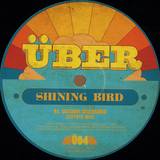
Uber picked up this beautiful mellowed out pop song by Shining Bird for a vinyl release after becoming totally captivated by its warm laid back Balearic feel. Shining Bird hail from Austinmer a coastal town just south of Sydney, Australia. They are a collective of friends who got together over their love of the sea, Australian cinema, Dennis Wilson's "Pacific Ocean Blue" Lp and the great Australian poet Henry Lawson. The second track Stitzing/Wipeout is another great alternative pop song in the same vein as Destroyer with the song blending into a 5 min piece of psyched out ambient. On the flip side Coyote remix Distant Dreaming into a horizontal percussion led dubby contemplative trip with pitched down vocals and a throbbing bassline. Uber continuing its crusade of finding and releasing music that captures their Balearic ethos.
Kaum eine andere Band hat in den vergangenen Jahren so viel Wirbel in der deutschsprachigen (Emo-)Punkrock-Szene verursacht wie Captain Planet aus Hamburg. Vor allem ihr Album "Treibeis" von 2012 untermauerte ihre Ausnahmestellung, legendär ihre energetischen, fast immer ausverkauften Konzerte: Live hinterlassen sie allerorts glückliche Menschenknäuel. Eine Band, deren Textzeilen man sich auf die Zunge tätowieren möchte. Lange Zeit waren ihre ersten beiden Alben, "Wasser kommt Wasser geht" von 2007 und "Inselwissen" von 2009, als LP vergriffen. Die Reissues erscheinen beide auf farbigem, auf 500 Exemplare limitiertem Vinyl, neu gemastert und inklusive eines MP3-
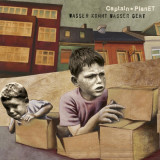
Kaum eine andere Band hat in den vergangenen Jahren so viel Wirbel in der deutschsprachigen (Emo-)Punkrock-Szene verursacht wie Captain Planet aus Hamburg. Vor allem ihr Album "Treibeis" von 2012 untermauerte ihre Ausnahmestellung, legendär ihre energetischen, fast immer ausverkauften Konzerte: Live hinterlassen sie allerorts glückliche Menschenknäuel. Eine Band, deren Textzeilen man sich auf die Zunge tätowieren möchte. Lange Zeit waren ihre ersten beiden Alben, "Wasser kommt Wasser geht" von 2007 und "Inselwissen" von 2009, als LP vergriffen. Die Reissues erscheinen beide auf farbigem, auf 500 Exemplare limitiertem Vinyl, neu gemastert und inklusive eines MP3-Downloadcodes.
Four years since they released Dring, Nôze are making a very welcome return to Circus Company with their fifth album Come With Us, and once again the pairing of Nicolas Sfintescu and Ezechiel Pailhes has yielded a collection of captivating and curious songs that could only come from the unique sound world they inhabit. As has been evident throughout their career from their early experimental house days through to the more recent song-based material for Get Physical, the Parisian duo have always moved on from album to album, maturing their sound to deliver a new experience for themselves and their listeners every time. On this occasion, Come With Us finds Nicolas and Ezechiel in a particularly introspective mood. Even as their work has naturally turned more to home-listening craft over the years, here they revel even more in personal reflection both musically and lyrically. Tracks such as Saint' conjure up the romanticism of dustbowl blues with its vagabond guitar tones (played by long time collaborator Thibault Frisoni), while Nicolas's voice reaches new distinctive heights in spellbinding tales like Apache". Emiliano Turi also lends a new sense of natural groove to the Nôze sound with his live drumming, and as ever, Nicolas and Ezechiel are keen to bring their friends into the fold for guest vocal spots. Dani Siciliano spars beautifully with Nicolas on the disco-inflected album opener I Need To Know". dOP vocalist JAW, fresh from his Midtown project, joins in for the bittersweet balladry of Come With Me".
Six years on from his debut album on Cadenza, Swiss DJ/producer Mirko Loko comes with the follow up to 2009's 'Seventynine' as he catapults us into the techno and electronica galaxy with 'Comet Plan'. 'Un voyage entre toute mes influences,' Mirko Loko shares, breaking into his mother tongue to describe the essence of his sophomore longplayer that was conceived in Berlin and later birthed in his hometown of Lausanne after a two-year gestation period. Literally translated as 'to travel between my influences', it's a fitting summation of an artist whose work has respectfully mined early inspiration from Detroit and Chicago that laid the foundations of the emotion-filled productions that we know of him from today. In addition to this, Mirko sees his connection with Luciano's Cadenza Music, a relationship that's been in existence since dot one and saw the likes of Ricardo Villalobos, Melchoir, Pedro and Rahdoo make up one of the most innovative crews in dance music, as leaving an indelible imprint on his musical DNA to this day. It's Mirko's strong sense of musical identity that is at the core of 'Comet Plan', a work that's equally informed by the artist's spiritual connection with the Motor City as his halcyon Cadenza roots. And one thing's for sure; he knows how to captivate: take 'Venus' whose trickles of melody and syncopated drum rhythms increases in intensity with each bar towards an eerie crescendo. Then there's 'U Special' that builds the kind of subtle party vibes you could imagine Luciano dropping to create one of those moments to a heaving blissed out dancefloor. 'Kolor' - the album's early single (also remixed by Carl Craig as part of an excellent EP package) is sprinkled with a dusting of xylophones, chimes and other bells as the melody is driven forward for a heady trip across the electronic galaxy.
A1, "Capitulo 4". We find Gregor surprisingly accepting of his new reality: far from going crazy, he has serenely discovered in his new self everything he didn't know and didn't perceive as a human being. "Capitulo 4" is an incredibly precise description of the awakening of the new Gregor. Shadows, fog, sinuous silhouettes that are impossible to identify. In one word: confusion.
B1, "Capitulo 5". Vertigo starts to ease, we can hardly feel the anguish and the heartbeat is gone. We are in a new reality and although it seems a done deal, every movement he makes tells Gregor that understanding this new world and his perception of it will not be easy. Chapter 5 demands our everything while we listen: our full dedication and attention to the last minute detail that reveals a new horizon and its new colour, or lack of it. A horizon that, nevertheless, is more perceptible for Gregor, because he can now capture all sorts of colours and emanations.
B2, "Capitulo 6". Light. Gregor still ignores that most domestic insects have a strong aversion to intense light, but his human conscience is still intact and it will take him a long time to reprogramme certain habits, instincts and automatic behaviours, like a preference for lit environments. The painfully intense sensation that his antennae convey to his tiny brain when faced with light is an effective path to learning: little shocks that Reeko reproduces in this track, surrounded by an oscillating and changing ambience that redefines itself each time we listen to it.
Having released on the label before (including a collaboration with Lake Haze last time out) Lisboa based producer IVVVO now returns to Creme Organization with a new three track solo EP. Showcasing his unique take on analogue house, here he conjures up his most unique work to date, Up first, 'Raised' is a dishevelled concoction that sees organic hand drums rattling over heady kicks, with groaning vocals, ghostly pads and afro mutterings all adding to the intoxicating brew. 'Our Journey' is then an acid flecked, lo fi techno rave up with car alarms, barking dogs and white noise textures that all come over like an urban soundtrack as much as anything else. It's captivating stuff that gets rounded out with '0000', a slurred, smeared bit of ambient with awkward key progressions, wordless vocals and tons of crunchy texture. Few people sound as idiosyncratic as IVVVO and this EP proves that in spades.