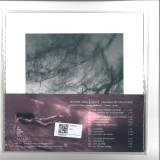
Sept duos pour guitar acoustique et piano préparé is the second duo recording from Stephen O'Malley and Anthony Pateras. Their first together, Rêve Noir (2018), took an electro-acoustic scalpel to a 2011 duo concert for electric guitar and piano, using Revox and digital treatments to twist and smear gig documentation into ghostly echoes and fractured drones. Here, in contrast, the music is entirely acoustic and presented as it was performed, without overdubs. Both players’ choices of instruments are notable: this is O'Malley’s most extensive recording on steel string acoustic guitar (playing an instrument whose previous owners include Marissa Nadler and Glenn Jones) and Pateras return to the prepared piano, which he has rarely employed in recent years, after spending much of the first decade of the 21st century exploring its possibilities.
Recorded during O'Malley’s residency at La Becque on Lake Geneva in the summer of 2021, from the first moments of the opening ‘déjà revé’ the music immediately establishes the distinctive landscape of chiming tones and hovering clouds of resonance explored throughout its one-hour running time. Pateras’ preparations create tolling bell-like tones alive with complex overtones, alongside which O'Malley’s open strings and natural harmonics add a sparkling clarity. While Pateras’ music often uses a densely chromatic harmonic language, these duos are remarkable for their modal simplicity. However, the interaction between the pure intervals of O'Malley’s just-intoned strings and the unstable harmonies created by the piano preparations suspends the music in an oneiric state of hazy ambiguity. Without obvious reference to tempo or meter, the music floats in what the composer Ernstalbrecht Stiebler has called a ‘bottomless sound space’, the temporal placement of events determined by bodily rhythms and the performers’ own listening to (and enjoyment of) the sounds being made.
Heard one way, this music can seem striking in its consistency, almost environmental. Attending more carefully, the listener hears the pitch sets and tunings changing throughout the album’s length. Each piece has its own character, subtly distinguished from the others through mood, pacing, and timbre. On ‘déjà voulu’, for instance, O'Malley makes prominent use of slide, the woozy, bending pitches weaving through a series of lush arpeggiated chords from the piano. ‘Déjà senti’, on the other hand, is particularly spare, the gestures spaced out to the extent that they often float in isolation against the background of fading resonance. Much of ‘déjà su’ is built around a slowly pulsing single prepared piano tone, creating an almost ominous tension, whereas the sparkling guitar harmonics and arpeggios of the closing ‘déjà raconté’ have a gently triumphal air. While the music’s calm, rippling surface is immediately entrancing, these seven duos – in the tradition of the best improvised music – also reward close listening, which reveals sonic details and focuses the listener’s attention on how the music unfolds spontaneously from decision to decision, from gesture to gesture.
Recorded during a period when O'Malley and Pateras were grieving the loss of recently departed friends and collaborators, these seven duos possess a reflective, at times almost mournful quality. More importantly, though, they are imbued with other qualities that can arise from personal loss: a clarity that allows one to clear away the inessential, to begin again, to renew one’s faith in friendship and music.
Cerca:car
This is the second time out for the Wormholes on AllChival following on from their You Never See the Stars When it Rains anthology release. This one is a previously unreleased album recorded in a concise burst of seven nights in Dublin’s Sun Studios in the spring of 1996. It was originally envisaged as being The Wormholes’ second album, the follow up to their 1994 debut Chicks Dig Scars. Unfortunately the end result of the sessions - Parijuana - would not only be ignored by their label of the time (Roadrunner Records) - but would also just as quickly be dismissed by the band themselves.
Eamonn Crudden, the manager of the band, had manged to extract some money from Roadrunner to record demos of new tracks as soon as the release cycle for their debut was over. The budget was so tight that it covered studio time but was not even enough to buy the master tapes. With things going south with the label – a classic 90’s tale of the A&R man who championed their cause heading off elsewhere the minute they signed - the intention was to go in and aim to record an album rather than demos - with the intention of releasing it on another independent label to keep the momentum around the band going.
However by this stage the Wormholes were totally wrapped up in listening to Can, Faust and generally exploring music based on casual recording, improvisations and extemporization. For them the album was too ‘rock’ and – having been dropped by Roadrunner - they no longer felt under any obligation to release it. To them it was time for a fresh start. Their next recordings would not be ‘for’ anyone but themselves. Today bassist Anto Carroll admits that “at times we were our own worst enemies” and with the benefit of hindsight both he and guitarist Graham Blackmore wish they had gone ahead and released this album at the time. However, back then, they thought they could do better and they did go on to make inventive and unique sounding versions of some of these songs with Stan Erraught producing just a short time later. These recordings were eventually released by Dead Elvis in 1999 - along with a couple of ‘adjusted’ tracks from the Sun Studios sessions - on Parijuana: 4 Years in Captivity.
It’s highly unlikely that listeners today will share the band’s view that the abum was too ‘clean’. This version of Parijuana is dirty, raw, messy with plenty of experimentation and extemporisation. The songwriting is as strong as that on their Chicks Dig Scars debut. The music is played with a new confidence and swagger, very much the sound of a band rooted in a wave of US ‘lo-fi’ finding their own sound. It’s the missing link between their conventional Pavement/Sebadoh influenced debut to the more drawn out, free roaming and extemporised second album proper Scorpio The Album.
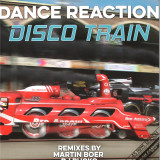
Undoubtedly one of the finest disco songs ever created, “Dance Reaction” emerged as a sensation from Holland, representing a true ‘one-hit wonder.’ The distinguished ‘Siamese’ label in the US and Carrere in Europe both recognized its potential and took it under their wings. This track, clearly inspired by dan Hartman’s “Vertigo”, swiftly climbed the charts across the continent in the spring of 1982.
On the A-Side, listeners are treated to the captivating and sensuous sounds of the Martin Boer version. This interpretation unequivocally showcases Martin’s innate connection with disco, evident in his captivating electro-disco masterpiece. Notably, Martin Boer holds the distinction of being a founding member of “2 Brothers on the 4th Floor,” a Eurodance phenomenon that dominated the 90s, amassing millions of record sales globally. Intriguingly, this release marks his return to remixing records, after a 15-year hiatus; incidentally, Martin embarked on his journey with High Fashion Music in 1990.
Flipping over to the AA-side, Croatian legendary DJ Pucko presents a remix that encapsulates the unique essence of the former Eastern bloc sound. This rendition exudes a raw and forceful energy, characteristic of that regional style. At the behest of High Fashion, the components of his mix were extracted and meticulously reworked and refined through the mastering process. The objective was to preserve the core while polishing the rough edges, culminating in an essential vinyl record that retro and disco DJs alike must acquire to elevate their dance floors.
Departing from rap and dance, Cherry’s third album ‘Man’, released in 1996, instead can be described as a collection of alternative rock anthems. The Swedish singer released the duet ‘7 Seconds’ with Youssou N’Dour, which topped the charts internationally. This release comes as a limited edition 140-gram Yellow vinyl.
The latest offering from Astral Black comes in the form of the 'Metropolis N' LP, courtesy of Queens, New York's number premier importer/exporter of Jungle & D&B, NIGELTHREETIMES. Having initially garnered a name for themselves as one of New York City's most versatile club DJ's, with the release of their 'Call Of The Void; project in 2020 Nigel also began to build a reputation as a producer in their own right. Resulting in residencies on Rinse FM & The Lot Radio, radio support from the likes of Tom Ravenscroft & Uniiqu3 and press support from Resident Advisor, OkayPLAYER & Mixmag – amplifying their talents throughout New York City and beyond.
With 'Metropolis N' NIGELTHREETIMES distills their eclectic influences through the lens of rolling 160bpm breaks – taking in Jazz, 8-bit game soundtrakcs, science fiction & jump up D&B. Starting off the LP with the rhodes tinged double header of 'TSQ MELTDOWN' & 'EARLY MORNING FROM 103RD STREET', the latter featuring some of the best double bass work heard on a jungle track since 'Brown Paper Bag'. Elsewhere, on 'ROAD2RAILS' and 'PHANTOM SHORES', the producer ditches the instrumentation in favour of oscillated square waves, dubbed out vocal FX & 8-bit melodies, without ever losing site of the projects underlying sense of optimism. On the album closer 'INTERNATIONAL SPACE STATION', 3X manages to bring together the influences heard throughout the project, tying together a muted rhodes chords, squarewave basslines, flutters of alien melodies and finely tuned, slices breakbeats into a 5 minute symphony.
The consistency and exacting production skills heard throughout the offering elevate this project from another drop in the digital ocean to a landmark opus, from a producer carrying the torch for this timeless sound and making the project worthy of a spot alongside some of the classics this genre has produced.
'Metropolis N' is available Oct 13th on digital and limited edition vinyl via Astral Black.
- A1: Flug 8 - Puerto Rico (The Velvet Circle Mix)
- A2: The Black Frame - Sacrosanct (Mount Obsidian Remix)
- A3: The Novotones - Liberty Bell
- A4: Sascha Funke - Mathias Rust
- A5: La Finca - What Clouds Say
- B1: Paulor - The Last Coke In The Desert
- B2: Mount Obsidian - Fade Feat Charlotte Jestaedt
- B3: The Velvet Circle - Our Tribe
- B4: Seb Martel Feat Las Ondas Marteles - Dark Mambo (Joerg Burger Mix)
- B5: Mount Obsidian - Marole Feat Charlotte Jestaedt
Kompakt unveils the third volume of Jörg Burger’s Velvet Desert Music compilation series, dedicated to music that hits the sweet spot between the cinematic, the (pop) ambient, and the psychedelic. With Velvet Desert Music Vol. 3, Burger and his friends wander afar, taking trips away from, or adjacent to, the dancefloor that’s acted so long as the crucible for the Kompakt aesthetic. Like its predecessors, it’s a gorgeous, lambent collection of late-night mood music.
Because it’s such a broad church, Velvet Desert Music admits all kinds of new experiences, as well, with Burger looking for music that "leads out of the desert into the velvet universe". Indeed, of all the volumes in the series, this third instalment feels closest to an album made by a true collective. The roster has changed, with new contributors Flug 8 and Seb Martel, both with his trio Las Ondas Marteles and with Chocolate Genius and Zsela as La Finca, joining regulars The Novotones, Mount Obsidian, The Golden Bug, Paulor and Sascha Funke.
Burger himself reappears, too, alongside Fritz Ackermann (of The Novotones), Max Würden and Thore Pfeiffer, in The Velvet Circle. Their contributions are pure lush life electronica: “Our Tribe” hitches a ride with a low-slung groove, flickering psychedelic reels of acoustic guitar traipsing across moody bass and taffeta layers of drone; their opening remix of Flug 8’s “Puerto Rico” gently introduces the album with softly tangling electronic tones, while guitars, drenched in reverb, pirouette in the background. A Mount Obsidian remix of “Sacrosanct” by Burger’s The Black Frame -project is a swirling treat for the ears.
La Finca’s electronics and voice miniature, “What Clouds Say”, is a masterclass in poetic restraint; Martel’s “Dark Mambo”, remixed by Burger, is one of the collection’s big surprises, for it indeed does what the title says, a drifting, surrealist take on the mambo form, full of pensive chords, rich with unrequited longing, a breathy saxophone whispering under the song’s sly rhythmic carriage.
Elsewhere, The Novotones chime in with a slyly propulsive, Krautrock-esque charmer, “Liberty Bell”, and the guitar-led tone-drift of “Valley of Oblivion”; Paulor’s “The Last Coke in the Desert” is a chiming, lilting dreamscape; Mount Obsidian are joined by vocalist Charlotte Jestaedt for two modern takes on early-hours art song, “Marole” and “Fade”; Sascha Funke’s “Mathias Rust” is a lavish dancefloor dream, vocal samples drifting through the song as it slowly envelops the listener in its opulent radiance.
This is just a taste of the rich pleasures of Velvet Desert Music Vol. 3, a triumph of a compilation that takes the psychedelic visions of its predecessors and looks for the desert within, a dusty kiss, a road-movie hallucination flickering on the listener’s eyelids, a cinematic projection from deep inside the mind.
Bacao Rhythm & Steel Band come in heavy with a two-sider for the Halloween season that is sure to get the masquerade ball moving. Side A is their cover of "Stranger Things Theme" where they play the top line on steel pans with echoed out guitar chanks and sound effects that haunt the track. This is the second time they take on a popular TV theme song and both times they knocked it out of the park. They manage to keep the eerie vibe but their cover takes on a more hypnotizing tone than the original. On side B they take on a tried and true October 31st classic: John Carpenter's iconic "Halloween Theme" and they do it up in a disco four on the floor style that is guaranteed to get spins at Halloween parties from now til infinity. Get the ghouls and the ghosts off their seats_ LIMITED EDITION PUMPKIN ORANGE COLORED VINYL!
At the helm of a collective immersed in London’s underground house landscape, Bizarre Traxx co-founder Jhobei is keeping things moving in his own unique way, shaping and crafting a sound to call his own. Releasing on labels like Mindhelment, Picnic and Mood Waves while stepping out as 1/3 of trio Felon5, he marries warping and heady territories with loose, spacey spheres, creating immersive trips for all hours of the night. Here he delves deeper once more, landing on Up The Stuss for the first time with his playfully titled ‘Slink ‘N Slide’ EP.
The title cut launches straight into the action and showcases his sound perfectly, harnessing squiggly synths, driving low-end grooves and sweeping astral sonics to unveil a cosmic ride through rich textures. Expect the same depth and unpredictable twists and turns across the EP as he draws for influences spanning those early golden years of tech house through to minimal and hazy late-night electronic realms. As debuts go, this one is stacked with treats and musical goodness from top to bottom - no surprise they’ve been go-to cuts for those deeper moments from the label boss!
'The John Carter and Bobby Bradford Quartet/Quintet were critical to the progressive jazz movement around Los Angeles in the late 60s alongside the likes of Horace Tapscott. Both hailed from the Watts area and trumpeter, Bradford played with a woodshedding Ornette Coleman for two years in the early 60s when the legendary free movement leader decided not to record for a while but wanted to hone his trademark sound on the saxophone. Multi-reed player, Carter also worked with Coleman who brought them together to lead their own band.
Their first outing on Flying Dutchman was “Flight For Four” as the Carter Bradford Quartet that was released in 1969. This is the second album they recorded where Carter and Bradford were supported by Tom Williamson (bass), Buzz Freeman (drums) and another uncredited bass player on four extended improvisations – ‘The Sunday Afternoon Jazz Blues Society’, ‘The Eye Of The Storm’, ‘Loneliness’ and ‘Encounter’.'
'After a first album as a duo released on Okraina Records: "Le Corps Défendant", Delphine Dora and Mocke invite us to join them again in listening to a new album. We slip into it as if in a dream, the music carries us away with its floating images.
Heard before on a handful of disturbingly beautiful solo albums and in collaborations such as Midget!, Arlt, Chevalrex, Mohamed Lamouri, Mocke (Dominique Dépret's nom de plume) is a subtle and inventive guitarist, who draws melancholic arpeggios, with a beautiful languor, that walk the line between tensions and tears. Delphine Dora has been heard with Roxane Métayer, Sophie Cooper, Andrew Chalk, Jackie McDowell, Helena Espvall, Valentina Magaletti ... meeting in a moment of improvisation, a solitary sincopated voice blooming between the black and white keys of her piano, tuning betwist these keys, or at other times in the gap of the right note. Here improvisation feeds on melody, or is it the other way round?
Recorded in an old church in the village of Mauzun in the Puy-de-Dôme, by Cyril Harrison, "L'invisible est multiforme" is an invitation to join them, to let these abstract songs erase our obsessive thoughts of the day, to open ourselves to the vibrant poetry of the air and the evening, to finally forget ourselves. Each note played by these four intertwined hands is like a slight break in the fabric of time, sliding one over the other, reminding us of mortality and its beauty. Ritornellas flow out of mechanical clocks, fragile, taking care not to hurt the silence. Both seek to dig and open up new paths to enrich their duet, to open up imaginary landscapes. Sometimes the guitar cuts through the fabric of an organ, fractures the song, just as the rain erases a landscape, redrawing it. But very quickly, both of them continue to follow this new path, improvising what will serve as a framework, a perspective, a language. There is a kind of praise for slowness in this "invisible", a desire to hold back the song, not to let it slip away, to let the listener's ear enter its course, to share the last note, its illumination. Each of these thirteen short sound pieces merge into a common colour, a vibration close to the different tonalities, which inter-penetrate, like a cubist painting. Words cannot take away the mystery of this record, words can only fail to describe the music, you must hear it.'
- Michel Henritzi
The latest by New York-based producer Lamin Fofana further refines his cinematic dialect of fractured soundscapes, displaced rhythms, and tectonic unease. Unsettling scores aptly describes itself: grainy, bristling, and bruised, rippling with dread disguised as grandeur. The collection emerged from an extended reworking of his 2016 composition, “A Symbol of the Withdrawn God,” mining deeper into the piece’s “unvoiced fragments, shards, and utterances.” Other tracks were inspired by recent readings on climate emergency and its “specific implications for Black life, from hurricanes in the Caribbean to mudslides in West Africa.”
Fofana has spoken of his music as part of a “legacy of resistance,” spanning the roots of Detroit techno to the outer reaches of contemporary sound art as championed by his labels, Sci-Fi & Fantasy and Black Studies. His work here vividly embodies that spirit, seven hyper-textural transmissions of rumbling lament, shifting sands, and restless innovation, tracing jagged silhouettes of indeterminate futures: “The instability is worldwide.”
A lavish four chapter chronicle that imagines an alternative evolution of mankind through sound, VIS (Latin for energy or force) is the result of a lengthy process of self-discovery, collaboration and research for Italian-German composer David August. The son of a classical pianist, August slipped from the academic music world into an early career as a dance music producer and DJ before he felt his artistic outlook shifting considerably. He established the adventurous 99CHANTS label in 2018, and has since used it as an output for his most progressive notions, collaborating most recently with jazz-noise vocalist Cansu Tanrikulu and Carnatic singer Sushma Soma on last year"s acclaimed "Imaginary Landscapes" compilation. VIS then is a chance for August to reconcile his personal narrative, leveling it with concepts that touch on history, transformation and metaphysics. He wrote the album"s 13 pieces to play like a linear storyline, tracking the development of culture from its illusory beginnings in Plato"s cave into the wider world and observing its progression and adaptation.
August represents these themes with levitational orchestral drones, choirs and bells that slowly bend to long-forgotten ancestral rhythms, inevitably colliding with the digitized chaos of the information age. Motion guides everything, whether it"s shadows on a wall projected by dancing flames, or dramatic, overlayed rhythms that vibrate the air and excite the feet. VIS is a dynamic attempt to show the movement of time on a macro scale, looking backwards in order to move forwards. It charts mankind"s journey from its cosmic beginnings through the awe-inspiring world of flora and fauna, grounding the experience in rhythmic expression and dance before we"re returned to the stars in transcended form. Crucially, it"s a hopeful articulation of ideas and concepts that continue to echo throughout history, inviting us to imagine greater and cherish the teeming landscape that surrounds us.
As a complete artist, Luna Maria Cedron gently and melancholy brings together the influences and facets of her existence. Behind her alias, Fiesta En El Vacio, the artist summons a number of Latin musicalities that make her career: Castilian flamenco, popular ballads from Venezuela meet the new generations of urban music: reggaeton rythms and sharp electronics. The uncompromising texts leave no alternative: this record claims the emancipation of women, the fight against this order of things that no longer suits anyone. Fiesta En El Vacio is a cry from the heart for and an encouragement to hope.
- A1: The Weather
- A2: House Music
- A3: Undercommons
- A4: Olde Joy
- A5: New Joy
- A6: Arms, Armor
- A7: Fission For Drums, Piano And Voice
- A8: Love Letter Zzz
- A9: Half-Life
- B1: The Great Wedge
- B2: I Hear A New World
- B3: No! (Geiger Dub)
- B4: Destroyer X
- B5: Voyager
- B6: Divider
- B7: Challenger
- B8: Decades, Castle Romeo
- B9: Us (Tower Of Love)
white LP[27,31 €]
Der multidisziplinäre Künstler Jasper Marsalis, bekannt unter seinem Künstlernamen Slauson Malone 1, kündigt sein neues Album EXCELSIOR als Debüt für das Kultlabel Warp Records an. Unter den Juwelen dieses Albums befinden sich die Singles NEW JOY, eine faszinierende Erkundung des Vergnügens, das aus der Unterwerfung entsteht, und VOYAGER, die von der Zeit der Liebe und Freude nach Veröffentlichung seines von der Kritik gefeierten 2019er Albums 'A Quiet Farwell, 2016-2018 (Crater Speak)' erzählt, bevor er nach LA zog.
Das Wort EXCELSIOR verkörpert den ewigen Aufstieg. Slauson Malone 1 stellt es sich als metaphorisches Schwert vor, das im Besitz von jemandem unaufhörlich wächst, bis es in einem großen Finale die Erde spaltet. Diese Metapher wird zu seinem Objektiv, um alle Facetten der Männlichkeit mit einer neuen Klarheit zu erforschen, während er seine eigenen gelebten Erfahrungen anhand von Songs und Bewegungen auf dem gesamten Album hinterfragt, die von allem inspiriert sind, von der Grammy-preisgekrönten Komponistin Wendy Carlos bis hin zu den Ähnlichkeiten zwischen dem Ende der Liebe und der nuklearen Halbwertszeit. EXCELSIOR hat die Form einer Sammlung persönlicher Essays mit Vignetten, die ineinandergreifen und eigenständig sind, aber letztendlich dem Zweck dienen, Slauson Malone 1s bislang persönlichstes und fesselndstes Musikwerk zu bilden.
- A1: The Weather
- A2: House Music
- A3: Undercommons
- A4: Olde Joy
- A5: New Joy
- A6: Arms, Armor
- A7: Fission For Drums, Piano And Voice
- A8: Love Letter Zzz
- A9: Half-Life
- B1: The Great Wedge
- B2: I Hear A New World
- B3: No! (Geiger Dub)
- B4: Destroyer X
- B5: Voyager
- B6: Divider
- B7: Challenger
- B8: Decades, Castle Romeo
- B9: Us (Tower Of Love)
black LP[30,21 €]
Der multidisziplinäre Künstler Jasper Marsalis, bekannt unter seinem Künstlernamen Slauson Malone 1, kündigt sein neues Album EXCELSIOR als Debüt für das Kultlabel Warp Records an. Unter den Juwelen dieses Albums befinden sich die Singles NEW JOY, eine faszinierende Erkundung des Vergnügens, das aus der Unterwerfung entsteht, und VOYAGER, die von der Zeit der Liebe und Freude nach Veröffentlichung seines von der Kritik gefeierten 2019er Albums 'A Quiet Farwell, 2016-2018 (Crater Speak)' erzählt, bevor er nach LA zog.
Das Wort EXCELSIOR verkörpert den ewigen Aufstieg. Slauson Malone 1 stellt es sich als metaphorisches Schwert vor, das im Besitz von jemandem unaufhörlich wächst, bis es in einem großen Finale die Erde spaltet. Diese Metapher wird zu seinem Objektiv, um alle Facetten der Männlichkeit mit einer neuen Klarheit zu erforschen, während er seine eigenen gelebten Erfahrungen anhand von Songs und Bewegungen auf dem gesamten Album hinterfragt, die von allem inspiriert sind, von der Grammy-preisgekrönten Komponistin Wendy Carlos bis hin zu den Ähnlichkeiten zwischen dem Ende der Liebe und der nuklearen Halbwertszeit. EXCELSIOR hat die Form einer Sammlung persönlicher Essays mit Vignetten, die ineinandergreifen und eigenständig sind, aber letztendlich dem Zweck dienen, Slauson Malone 1s bislang persönlichstes und fesselndstes Musikwerk zu bilden.
Repress!
Following a pair of double-vinyl gatefold collections featuring label owner Nina Kraviz, Exos, Population One, Deniro and Steve Stoll, 's first single comes from the label's rising star Bjarki. A-side 'I Wanna Go Bang' has long been an in demand record in Kraviz's sets, with the Dance Mania influenced techno cut sitting alongside his contributions to TRP001 & 002 as a calling card for this exciting new talent, while B-side 'Orange Juice Man' taps into Bjarki's more melodic side.
'This is the first 12-inch single on - one banger and one dreamy groover on the other side, that shows the different sounds of Bjarki. He is one of those artists that can make club bangers and also compose music for movies. But no matter what this brilliant Icelander does it always has this sexy groove going on.
'As always we asked Tombo to visualise our trip. The idea was based on one famous phrase from Arthur Russell's famous song 'Go Bang': I wanna see all my friends at once / I'll do anything to get the chance to go bang
'He came up with 2 beautiful whales and some really psychedelic drawings: 'Arthur and intergalactic whales'. Why Arthur Russell Well the connection is all in the name of the DJ Deeon's vocal from the track that Bjarki sampled in this record, originally released on Dance Mania - it says 'Sometimes I feel like I wanna go bang'. This phrase reminded us of Arthur Russell's song.'
The debut release from Sofia Grant delves into the topic of environmentalism, a subject close to her heart and a topic foremost in the minds of many. With smoky vocals and accompanied by spectacular musicianship from the likes of Poppy Daniels, Ernesto Marichales, Lorenz Osengor Okello, Sofia has created a five track EP that introduces a noteworthy talent to the Jazz re:freshed catalogue. In keeping with her values, Sofia specifically requested that the physical format be pressed on eco-friendly vinyl which produces a uniquely coloured product that utilises recycled materials and offsets carbon emissions created in its manufacture....
Life might be a predominantly linear affair, but when lived right, it’s nevertheless a turbulent experience. It’s a system of trial and error, ebb and flow, order and chaos, action and reaction. And paradoxically, this system somehow still feels balanced amid all this turmoil. In fact, the same can be said about Keope’s second longplayer for Bigamo. Easily.
Keope might be a duo consisting of Marcus Rossknecht and Toni Bruna, but they actually sound like a collective of rather nomadic - and heavily gifted - musicians on their ever-present quest to reach different musical spheres. Everything is in motion, everything is in constant flux. Everything, everywhere, all at once. Their previous record “Triangulo“ already provided the audience an idea of their elaborate rhythmic vocabulary, but it’s the cryptically titled “Flikka Flokka“, which sees their multilayered compositions bloom into a fully-formed, new musical Esperanto.
You can immediately sense that Keope must be a phenomenal live act because the twelve tracks on “Flikka Flokka“ sound as if they were born from endless jam sessions fueled by a whole variety of influences. As a result, the work of Rossknecht and Bruna presents itself as a prime example of sound in motion that responds solely to its very own pulse by taking the aforementioned influences and making them completely their own. Now, let’s dance!
La referencia X007 en vinilo de X Erie viene firmada por dos veteranos del techno como Frank Biazzi y Uncertain, acompañando al capo del sello, Horacio Cruz.
4 tracks de techno pistero, hacen de este lanzamiento una herramienta letal para tu maleta y para el dancefloor.
En la cara A, tintes Detroit, vocal, y potente base de Frank Biazzi, y el groove de Uncertain, hace años conocido como Boriqua Tribez.
En la cara B, tenemos por fin en formato vinilo el aclamado tema "Despiertos", además de Televillanos, ambos de Horacio Cruz.