Anlässlich des 50-jährigen Jubiläums freut sich Ace Records, eine limitierte 3-LP-Compilation anzubieten, die dort beginnt, wo alles begann – bei Chiswick Records. Im November 1975 verwirklichte Ted Carroll endlich seinen Traum von einem eigenen Independent-Label, als Chiswick seine erste Single veröffentlichte – die EP 'Speedball' von The Count Bishops. Mit Roger Armstrong und Trevor Churchill an seiner Seite war Chiswick zur richtigen Zeit am richtigen Ort. Bald darauf veröffentlichten sie Singles, die sich in den Bereichen Pub Rock, Punk, Metal, Pop und Rockabilly etablierten, darunter 101’ers, Motörhead, The Gorillas, The Radio Stars, The Radiators, The Stukas und viele mehr. Auch gabe es Artists die später groß werden sollten:. Joe Strummer war der Frontmann der 101’ers. Johnny & the Self Abusers verwandelten sich später in Simple Minds, während Riff Raff einen jungen Billy Bragg in ihren Reihen hatte. Der Solokünstler Jakko wurde zu einer tragenden Säule einer späteren Inkarnation von King Crimson. Über sieben Jahre hinweg verkauften sich die Singles von Chiswick nicht nur gut, sondern das Label schaffte es sogar, mit so unterschiedlichen Künstlern wie den Radio Stars, Sniff ‘n’ the Tears, Rocky Sharpe & The Replays und den Damned Chart-Singles zu landen.Das von Roger Armstrong persönlich zusammengestellte 3-LP-Set vereint einige der besten 45-rpm-Veröffentlichungen von Chiswick aus den Jahren 1975 bis 1982. Von bekannten bis hin zu weniger bekannten Klassikern. Roger Armstrong und Ted Carroll haben auch die informativen Begleittexte verfasst, mit Geschichten aus der spannenden Historie von Chiswick Records. Ja, natürlich auch jene um das Motörhead-Debüt. Mit einer sehr limitierten Auflage wird diese Veröffentlichung sicherlich zu einem Sammlerstück werden. 3LPs, 36 Tracks
Search:car
“Electronic / Funk Yacht Rock testament to the carefree teen spirit of the 80s”
In 1985, a young and ambitious Britt Cobble, fresh out of school, ventured to Florida to have his debut solo album Maiden Voyage mastered by none other than reggae legend Touter Harvey, known for his work with Bob Marley. The result is Spinnaker – Maiden Voyage, an Electronic / Funk Yacht Rock album infused with the carefree teen spirit of the 80s.
Anchored by its central motto, “Love the coast, it’s there for you,” the album captures the essence of youthful exploration and the allure of the open sea. With slick production and an undeniable air of nostalgia, Spinnaker invites listeners to escape into a world of sun-soaked coastlines and endless horizons. Britt elevates yacht rock to new heights, serving as both a testament to youthful ambition and a celebration of the era’s smooth, coastal vibes.
With this album, Heleen Van Haegenborgh returns to her roots as a pianist.
In recent years, she has primarily composed works on commission for a diverse range of ensembles, from recorders to foghorns.
On this solo album, her entire journey of musical encounters and compositions comes together subtly.
Van Haegenborgh doesn't think in terms of stories or boxes, but rather in colours, energy, and texture - without drifting into the abstract.
She remains true to her personal inside piano world, including the use of wires she has been experimenting with since 2008. These are given a place here as fully-fledged musical elements, communicating on different levels, in various contexts and forms.
The electronics sometimes become completely one with the piano, but often follow an entirely different path: at times calm, subtle and refined; at other times nervous and under the surface. Always within specific atmospheres and with precise timing.
Van Haegenborgh took charge of every detail from start to finish - electronics, composition, and performance.
- Cards On The Table
- Float (Feat. Jim Adkins)
- What You Need
- Appointments
- Drop A
- Past Lives (Feat. Hayley Williams)
- D.h
- Casino Stars
- Meander / Sprouting Wings
- A Million Reasons Why
- Want It All
only Lavender Sky Swirl Vinyl[30,97 €]
Eine halbe Dekade nach der Veröffentlichung ihres Albums "Anak Ko" (2019) hat sich Melina Duterte, alias Jay Som, sich selbst und ihren Erinnerungen geöffnet und Songs geschrieben, die den Klang ihrer Jugend wieder aufleben lassen, und dabei ihre Erfahrung als Musikerin, Produzentin und Performerin einfließen lassen. Kein vorheriges Jay-Som-Album klingt so wie "Belong", ein packendes 11-Song-Set über Selbstdefinition und Zugehörigkeit, das zwischen kraftvollen Power-Pop-Hits und verschwommenen Balladen, zwischen elektronischen Kuriositäten und aufheiternden Hymnen schwebt.
Melina wuchs mit Alternative-Rock außerhalb von San Francisco auf und lernte als Teenager die Hits des Pop-Punk/Emo der frühen 2000er auswendig. Passenderweise ist es Jim Adkins (Jimmy Eat World), einer dieser Kindheitshelden, der bei "Float" die backing vocals übernimmt. Während Hayley Williams sanfte Harmonien auf dem schwungvollen "Past Lives" beisteuert und Lexi Vega (Mini Trees) zu "Cards On The Table" beiträgt, sind diese drei Jay Soms allererste Gastsänger*innen und repräsentieren Dutertes Bestreben, mit Menschen ihres Vertrauens Neues auszuprobieren.
Seit ihrem letzten Album hat Melina beschlossen, sich selbst und ihrem lebenslangen Interesse am Recording etwas zu gönnen. Mit dem Kauf einer alten Neve-Konsole nahm sie sich vor, mehr zu werden als nur ihre eigene Tontechnikerin zu Hause. Fünf Jahre später kann sie nun auf eine umfangreiche Liste an Produktions- und Mixing-Credits zurückblicken, darunter auf Lucy Dacus’ neuestem Album "Forever Is A Feeling", Gastauftritte an der Seite von Troye Sivan, No Rome und beabadoobee, einen Beitrag zum Soundtrack von A24s "I Saw The TV Glow" und einen Grammy für ihre Arbeit an "The Record" von boygenius, der Band, der sie später als Tourmitglied beitrat.
This LP features Christmas music for the piano in a timeless journey through the decades and centuries. These songs have been through a remarkable evolution over the course of several centuries, with the changes they have undergone reflecting the shifting musical styles and cultural influences that prevailed in various times. Composers such as Irving Berlin created Christmas songs centred around the piano that went on to become instant classics. An example that epitomizes this era is Irving Berlin’s ‘White Christmas’. The growth of Christmas carols arranged for piano is a monument to the everlasting spirit of the Christmas holiday as well as the development of musical styles throughout the course of history. On Merry Christmas Pianomania, Jeroen van Veen performs in his signa- ture focused, serene minimalist style, reimagining Christmas music from medieval carols to modern jazz-inspired pieces.
Zelienople frontman Matt Christensen returns to Miasmah with Constant Green - a record of reverberant country inspired songs that puts the weight somewhere between Johnny Cash and Slowdive. Matt pours out his soul through flashes of life - small and large. His voice roaming over the guitars in a way which feels like a floating poetic deluge.
Appearing fresh from last years Zelienople album Hold You Up, Matt has made a very personal record that arrives as perfectly as it could be. It is full of beautiful sparse moments that capture the feeling of time standing still while simultaneously flashing in front of your eyes. As a child of the 70ies, growing up with country influenced AM rock on the radio, riding around in cars without seatbelts, Matt creates this nostalgic feeling of free riding through the city streets at dusk : a dream world where one can see green as a symbol for humanity and optimism. Not to say the album doesn't have it's share of darkness. Christensen always lingers deep in melancholy, driving his fears and anxieties out through music.
Visions of being able to move anywhere, picking his mother up from jail, family matters, change, the small things in life - all outtakes from what he sings about. Although it's hard to pick up on unless you really listen, as his ramblings can at one moment be fully clear while in the next drowned or muffled - becoming a mere meditative element to the music. Steady collaborators Brian Harding and Eric Eleazer from Zelienople accompanies on pedal steel and keys to further fill the sound into a warm dream, following in the footsteps of Matt ́s previous Miasmah album Honeymoons (2016). That said, while Honeymoons used drum machines and vast open spaces, Constant Green is another step closer towards the classic singer-songwriter folklore. Timeless gold from an artist that never stops creating.
“Is all that we see or seem but a dream within a dream?” This quote from a poem by Edgar Allan Poe sums up the lamenting, primal work that is "All That We See or Seem"; a project conceived between Finland, England and Brazil. The self-titled album consists of two long-form pieces of droning mysticism hailing from the trio of Gruth (concept, production, electronics), Ellen Southern (vocals, field recordings, percussion) and Johanna Puuperä (violin, modular synthesizer, additional vocals).
The album opens straight into a thousand yard stare with “Myrskymielellä", adapted from a 1891 poem by the Finnish national poet, Eino Leino, who wrote it at the tender age of 13. Here a blank distant droning of synths and the sounds of flowing water hover underneath like a dark river observed from the air. This is a sound and feeling that will stay constant for the entirety of the piece´s thirty minute duration. It is a trance-inducing composition that slowly unfolds elements of pagan ancestry into its own life. At first, faint female vocals are introduced as distant spatial elements, which gradually advance into waves of cries and anguish as the piece progresses and moves further into the storm. The tranquility of the first half is slowly morphed into a full blown ceremony as driving ritualistic percussion and a foreboding witch-like presence shifts the piece into a Dead Can Dance-like territory. Here a constant enveloping mixture of violins, modular synths, field recordings and vocal screams creates the feeling of a grande finale. It is an astounding piece of music that develops like a drone symphony for the beginning of time.
With the second piece, “A Dream Within A Dream”, from Edgar Allan Poe´s 1849 poem, you are transported to the shores of an undisclosed island; a place where it´s only you, your thoughts and the endless emptiness. The continual sound of waves is soon brought together with a cloud of synths and mourning violins that will keep a steady dreamlike state during most of the piece´s duration. This time the wordless vocals feel almost angelic in their pageantry. The composition flows like a slow caress of the soul and feels like the spirit twin of Gavin Bryars' “The Sinking of the Titanic” with its lamenting slow movements towards the unknown.
Truly a ghost of a record, “All That We See or Seem” is an experience hard to shake and feels like entering sacred ground. We are in a place surrounded by earth, both ancient and present. "Let loose, Vanha, the rage of an earthly storm! Detach the elements, completely open the sky! In the Earth, let an incessant storm prevail, so that in my chest I would not feel the miserable pain” - Eino Leino
- A1: Cadux Plectere I
- A2: Lacinia Off Axis
- A3: Maris Stella Plectere Ii
- A4: Ere
- B1: Arborea Plectere Iii
- B2: Eve
- B3: Sidereus Plectere Iv
- B4: Lacinia In Axis
- C1: Veris Plectere V
- C2: Nova Pt I
- C3: Eve For String Orchestra
- C4: Nova Pt Ii
- D1: Matrix Plectere Vi
- D2: Maris Stella Plectere Vii
- D3: Lacinia Off Axis
- D4: Cycle Plectere Viii
Returning to Die Schachtel with his fourth full-length with the label, the Genoa born, Bologna based, guitarist and electroacoustic composer, Stefano Pilia, delivers “Lacinia”, a new, immersive cycle of compositions, delving deeper into the realm of metaphysical, spiritual, and divine meaning, weaving astounding arrangements of sonority from a palette of synths, strings, brass, organ, various electroacoustic instruments, and percussion. Resting at a refined intersection of the acoustic and electroacoustic, drone, and chamber music - overwhelmingly beautiful, delicate, and bold, - “Lacinia” stands as a high-water mark in Pilia’s already remarkable and forward-looking career.
Since its founding in Milan during the early years of the new millennium, Die Schachtel has occupied a singular place in the landscape of experimental music, issuing a carefully curated body of reissues and archival releases by historically significant figures and projects like Christina Kubisch, Luciano Cilio, Marino Zuccheri, Prima Materia, Claudio Rocchi, Lino Capra Vaccina, Gruppo di Improvvisazione Nuova Consonanza, Roland Kayn, and numerous others, balanced against bristling contemporary counterparts by the likes of Jim O'Rourke, Giovanni Di Domenico, Nicola Ratti, Luigi ArchettI, Valerio Tricoli, etc. Running like a spine through the label’s output is a deep dedication to the work of the Italian guitarist and electroacoustic composer Stefano Pilia. Now Die Schachtel returns with “Lacinia”, Pilia’s forth full-length with the label and their first release of 2024. Building on the ground of deeply personal engagement with metaphysical, spiritual, and divine meaning, explored within his previous LP with Die Schachtel, 2022’s “Spiralis Aurea”, “Lacinia” encounters the composer working in close calibration with various ensembles, including the Bologna based Ensemble Concordanze and Comunale di Bologna String Orchestra, weaving synths, strings, brass, organ, various electroacoustic instruments, and percussion into an astounding reconfiguration of immersive, contemporary minimalism that stands among Pilia’s most noteworthy releases to date. Issued by Die Schachtel in two special double vinyl editions and a CD edition, “Lacinia” features artwork by Bruno Stucchi/Dinamomilano, and is an absolute marvel that draws you in and doesn’t let go.
First emerging during the early 2000s, over the past two decades – via solo releases and numerous collations with artists like Oren Ambarchi, Valerio Tricoli, Alessandra Novaga, Z'EV, Andrea Belfi, David Grubbs, and numerous others - the Genoa born, Bologna based, guitarist and electroacoustic composer, Stefano Pilia has presented a singular voice within Italian experimental music, harnessing visceral energy and hands-on immediacy within delicately woven tapestries of sonority, each investigating the sculptural properties of sound and illuminating its relationship to space, memory, and the suspension of time. “Lacinia”, Pilia’s forth solo venture with Die Schachtel, encounters the composer reentering his longstanding practice of collaboration with various ensemble forms, including the Bologna based Ensemble Concordanze, for the albums central piece, “Lacinia Off Axis”, spinning stunning string confirmations by Pietro David Carami and Elena Maury on violin, Alessandro Savio on viola, and Mattia Cipolli on cello.
A new, important cycle of compositions by Pilia, “Lacinia” (meaning "lace" in Latin) builds upon the exploration of the metaphysical, spiritual, and divine dimensions through numbers, geometry, and the creation of tonal forms explored by 2022’s “Spiralis Aurea”, mirroring archetypal, immutable forms at the juncture of the abstract realm of mathematics and architectural structures in the physical world, expands the poetics and compositional ideas featured in its predecessor. Regraded by Pilia as both a series of individual compositions and a single work, “Lacinia” was conceived to “define a circular path (a sort of "rhizomatic lace") where the beginning and end touch, suggesting the concept of time not only as linear but also cyclical and ritualistic—an eternal return, a process of transformation where matter changes, its state changes, but without altering the invisible internal principle of mutation”, embarking upon a a series of “steps, degrees, and energetic quanta in a progression of archetypal whole numbers and transcendent creation.”
The resulting 16 tracks unfold as a series of complex sonic meditations. While deeply resonant with the minimalism of composers like Arvo Pärt, LaMonte Young, Pauline Oliveros, and Eliane Radigue, Pilia digs deep and moves far beyond the predictable tonal relationships and structures of that idiom, echoing the ancient liturgical and devotional music of composers like Gesualdo da Venosa, Monteverdi, and John Dowland, at a refined intersection of the acoustic and electroacoustic, drone, and chamber music.
Fascinatingly structured as a whole to include a number of motif returns, across which we encounter works like “Lacinia Off Axis” appearing in slightly different rendering, states, or evolutions three times, and compositions like “Eve” appearing twice in subtly different forms and arrangements - first for four oscillators, guitar and voice and then for string orchestra - as well “Maris Stella”, which similarly makes two appearances, first for horn trio, organ and percussion, and then for string orchestra, with “Lacinia” Pilia delves further into the world of chamber music than ever before, creating a deeply inward, mediative body of work the totality of which, guided by its rich string arrangements of arching, sorrowful tone, feels almost like a mass for some unproclaimed loss; simultaneously locked in the nuances of a moment, while managing to suspend time.
Perhaps most remarkable is Pilia's ability to create a remarkable sense of sonic cohesion while using such a varied number of ensembles and instrumentation. From the sprawling string arrangements delivered by Comunale di Bologna String Orchestra, under the direction of Paolo Mancini, and Ensemble Concordanze, and a flute trio (Cadux / Plectere) brilliantly played by Manuel Zurria, to pieces for sax, organ and percussion, violin duo and percussion, organ and percussion, Pilia manages to create a sense of singular, encompassing world that flows forward like a shifting stream.
Overwhelmingly beautiful, delicate, and bold, “Lacinia” is unquestionably a high-water mark in Stefano Pilia’s already remarkable, forward-looking career. Nothing short of a marvel of contemporary Minimalism that, through its shifting arrangements of harmonics, tonality, and texture draws flickering images of ancient forms of music into the present day, “Lacinia” is Issued by Die Schachtel in two special editions on double vinyl and a CD edition, featuring artwork by Bruno Stucchi/Dinamomilano. This is an immersive all-consuming listen that can’t be missed.
- A1: Life In Forward Motion
- A2: Carousel
- A3: Break
- A4: Lawn Tennis
- A5: Car Crash
- A6: Hurts To Be Lonely
- B1: Frida, 1939
- B2: Dog
- B3: Cigarettes & Hotel Beds
- B4: We're Never Getting Out
- B5: Tracing Lines
- B6: I'll Be Around
Black+White Cornetto Vinyl[27,69 €]
Gold Splatter Vinyl[27,69 €]
Black And White Cassette[13,03 €]
Transparent Cassette[13,03 €]
Transparent Clear Vinyl[27,69 €]
Gold Splatter Vinyl[27,69 €]
Black And White Cassette[13,03 €]
Transparent Cassette[13,03 €]
Transparent Clear Vinyl[27,69 €]
Black+White Cornetto Vinyl[27,69 €]
Black And White Cassette[13,03 €]
Transparent Cassette[13,03 €]
- A1: Etude No. 1
- A2: Etude No. 2
- A3: Etude No. 3
- B1: Etude No. 4
- B2: Etude No. 5
- B3: Etude No. 6
- C1: Etude No. 7
- C2: Etude No. 8
- D1: Etude No. 9
- D2: Etude No. 10
- D3: Etude No. 11
- E1: Etude No. 12
- E2: Etude No. 13
- E3: Etude No. 14
- F1: Etude No. 15
- F2: Etude No. 16
- G1: Etude No. 17
- G2: Etude No. 18
- H1: Etude No. 19
- H2: Etude No. 20
The Complete Piano Etudes of Philip Glass available for the first time on vinyl, housed in a 4LP Box set (also available as a 2CD format).
After more than thirty years of working with and performing the great repertoire, the music of Philip Glass has, in a way, almost revolutionized my life as a musician,” confides Vanessa Wagner.
An emblematic artist on the French music scene, winner of a Victoire de la musique award and director of the Chambord and Giverny festivals, Vanessa Wagner is as inspired in her interpretation of Mozart, Debussy, Tchaikovsky and Dusapin as she is alongside Murcof and Rone.
With her innovative and daring approach, she has established herself as a major influence on the classical music landscape, crossing boundaries and blazing inspiring trails.
A tireless pioneer of new repertoires, she has been exploring the repertoire of minimalist composers for several years. For InFiné, she has dedicated 4 albums to the major figures of this movement, John Adams, Meredith Monk, Brian Eno, Ryūichi Sakamoto, as well as to the new generation Caroline Shaw, Bryce Dessner and Nico Muhly.
After giving numerous concerts based on these works, she felt the need to record in their entirety this essential monument in the history of music, which bridges the gap between the 20th and 21st centuries: Philip Glass's 20 Etudes for piano
by Philip Glass.
His approach helps to place these two books in the great repertoire, alongside the great cycles of studies by Ligeti, Debussy, Dusapin, and before them, Chopin and Liszt.
Philip Glass was born in 1937 and grew up in Baltimore. He studied at the University of Chicago, the Juilliard School and in Aspen with Darius Milhaud. Dissatisfied with much of what was then considered modern music, he moved to Europe, where he studied with the legendary pedagogue Nadia Boulanger (who also taught Aaron Copland, Virgil Thomson and Quincy Jones) and worked closely with sitar virtuoso and composer Ravi Shankar.
The thread linking Philip Glass to Vanessa Wagner may be as simple as a detail: a moment, a pedagogy, a way of looking at the piano. In Words Without Music, Glass recalls his apprenticeship with Nadia Boulanger in Paris - a lesson in rigorous received just as the Nouvelle Vague was about to shatter the conventions of cinema the conventions of cinema, just as the composers of the minimalist movement had done with with the language of music. Nurtured by Ravel and Debussy, the great French pedagogue disciplined yet inquisitive minds, capable of embracing modernity without denying modernity without denying their heritage.
Returning with its final instalments, Die Schachtel's Decay Music series extends its explorations of inspired contemporary experimental efforts of the ambient, ethereal, and emotively abstract with Luigi Turra and Elio Martusciello’s “Liminale” and Sergio Armaroli and David Toop’s “And I Entered Into Sleep”, two astounding electroacoustic gestures of blurred space and time, plumbing complexity of meaning bound to sonority. Creatively groundbreaking and inspired, radically rethinking the terms of what ambient music can be perceived to be, they stand among the most striking efforts to appear within the series to date.
Reconfiguring the notion of bridge building on a multitude of terms, it feels fitting that the tenth and final installment of Die Schachtel’s Decay Music series, Sergio Armaroli and David Toop’s “And I Entered Into Sleep”, was co-created by an artist whose work featured in the first suite of LPs issued by Brian Eno’s Obscure Records in 1975, the groundwork toward which Decay Music’s own efforts nod. Since that auspicious debut, “New and Rediscovered Musical Instruments” — his split with Max Eastley — David Toop has been regarded as a pioneer in British experimental and improvised music: a sonic voyager who has continuously challenged the sources and materiality of sound through rigorously thoughtful performances, a vast catalog of recordings, and a steady flow of highly influential texts. Be it as a member of Alterations, his group breaking group with Peter Cusack, Terry Day, and Steve Beresford that ran between 1977 to 1986, or through is noteworthy work with artists like Rie Nakajima, Thurston Moore, Paul Burwell, Rhodri Davies, Lee Patterson, Ryuichi Sakamoto, Akio Suzuki, Elaine Mitchener, and numerous others, collaboration has always played a central role within Toop’s singular practice, but few can claim the sprawling sense of beauty and intimacy that’s achieved by “And I Entered Into Sleep”, his first recorded outing with Sergio Armaroli.
A composer, percussionist, vibraphonist, and multidisciplinary artist, Armaroli has been issuing radical and forward-thinking musical gestures for decades, working as one of Italy’s most noteworthy interpreters of composer’s like Giacinto Scelsi, John Cage, Franco Evangelisti, Giancarlo Schiaffini, and Walter Branchi, as both a solo performer and member of the highly regarded Rib Trio, as well as forging a singular practice as a composer, intertwining his efforts as a painter, concrete percussionist, fragmentary poet and sound artist, within a total art, rooted “within the language of jazz and improvisation” as an “extension of the concept of art”. Like Toop, Armaroli’s career has been populated by many collaborators, notably with Riccardo Sinigaglia, Alvin Curran, and Walter Prati, among others, setting the stage for a remarkable meeting between the pair.
Featuring Armaroli on vibraphone and prepared vibraphone and Toop on electronics, “And I Entered Into Sleep” is “a sonic journey, a Proustian suggestion à la Recherche, into the unconscious between electronic and acoustic sounds”. Using a bell that sounds at the beginning of Proust’s “À la Recherché du Temps Perdu”, which reappears more than 3,000 pages later — signaling a transition of phases, as well an auditory trigger of memory — as a departure point, as an association to the percussive vibraphone pulses that thread the album’s two sides, the pair weave a striking interior world of immersive psychological depth. Feeling almost subaquatic at times, like captured glimpses of rumbling, shadowy ecosystems lost within murky ambiences, before washing ashore in a series of pointillistic, highly detailed alien landscapes of the mind, each artist’s markedly different sound-sources, and treatment of the subsequent material elements, dance in abstract grace, incorporating subtle nods to minimalism, free jazz, and musique concrète within its seamless total form of sparse texture and tone.
Easily one of the most striking and memorable releases by either artist to appear in recent years, Sergio Armaroli and David Toop’s “And I Entered Into Sleep” traverses uncharted realms at the borders of literary reference, sound art, ambience and abstraction through delicately musical sounds, revealing new depths at every turn. Issued as the tenth and final album in Die Schachtel’s Decay Music series, highlighting inspired contemporary experimental efforts of the ambient, ethereal, and emotively abstract.
- 1: Calling Ghostly Nations
- 2: Chemin De La Baie
- 3: Carried It All Around
- 4: In Hollywood
- 5: Pontiac Spirits
- 6: Battle Lines
- 7: The Clouds Are Casting Shadows From The Sunlight
- 8: Give Us Our Dominion
Metallic Gold Transparent Vinyl[26,01 €]
On their new album The Besnard Lakes are the Ghost Nation, Montreal’s The Besnard Lakes return with their post-rock psych; but this time around, with a lightness and optimism at play.
Unique among their furrowed brow peers, The Besnard Lakes are unafraid to marry textured, questing headphone sonics to the honeyed pleasure of radio hits past: the rapture of My Bloody Valentine entwined with the romance of Fleetwood Mac. Imagine dreamy Beach House riding Led Zeppelin dynamics, with unabashedly androgynous vocal harmonies; a melodic yet mountainous sound world.
In a crowded leaderboard of their own making, The Besnard Lakes are the Ghost Nation might just be their best album yet; a strive for hope when it is needed most.
- Cement
- Dive Into My Sun
- Numb Yourself
- Heaviside
- My Favorite Color
- Weave Me (Into Yr Sin)
- Stain
- Ten
- Yellow Love
- Ring Of Chain
- Nail In Your Hand
- Heaviside (Wisp Version)
- Cement (Demo)
- Dive Into My Sun (Demo)
- Numb Yourself (Demo)
- Heaviside (Demo)
- My Favorite Color (Demo)
- Yellow Love (Demo)
- Ring Of Chain (Demo)
Cloudy Gold Vinyl. This 10 Year Anniversary Edition features new, gatefold packaging with updated photos, lyrics and liner notes. Disc one incldues the originial album in full and the brand new second disc features rare b-side "Nail In Your Hand," a re-done version of "Heaviside" with artist Wisp performing vocals on the song, and seven never-before heard demo versions of songs from Citizen's second album. Ten years ago, Citizen released Everybody Is Going to Heaven _ a record that marked a bold turning point in their career. Following the breakout success of Youth, the band could have stayed the course. Instead, they doubled down on darker textures, heavier moods, and a fearless sense of experimentation. Released in 2015, Everybody Is Going to Heaven expanded Citizen's sound beyond their emo and post-hardcore roots, weaving in elements of grunge, and alternative rock. Tracks like "Cement" and "Stain" captured a raw, unsettled energy that explored mortality, depression, and identity with an honesty that still resonates today. It wasn't a record built for easy listens _ it was built to last. Now, a decade later, Everybody Is Going to Heaven stands as a defining moment in Citizen's evolution _ a record that challenged both the band and their audience, and helped shape the fearless, genre-blurring artists they've become. As they celebrate its 10th anniversary, Citizen remains a band deeply committed to growth, refusing to be tied to a single sound or era. Everybody Is Going to Heaven didn't just mark where they were; it lit the way for everything that came next.
LIMITED ITALIAN IMPORT. 500 ONLY.
Introducing "BLACK WAVES", a cinematic soul journey rooted in social justice, love, and introspection.
From the vibrant streets of Rome, Luca Sapio crafts an evocative musical landscape that echoes the soulful activism of Marvin Gaye’s "What’s Going On", Curtis Mayfield’s "There’s No Place Like America Today", and Eugene Mac Daniels’ "Headless Heroes of the Apocalypse".
Infused with the timeless sounds of Italian vintage soundtracks—Piero Piccioni, Ennio Morricone, and their cinematic grandeur—this album is a powerful blend of social awareness and heartfelt emotion.
Among the guests legitimising the sound of the album are the legendary Dennis Coffey (Original Motown Funk Brother) Rob Harris (Jamiroquai) and the veteran Boston rapper Ed O.G. along with the same strings used by Ennio Morricone.
Record mastered by grammy winner Mike Bozzi
Hailing from Roma, Italy, Luca Sapio is a celebrated singer-songwriter and record producer, known for his soulful contributions to the music industry.
With a career spanning over a decade, in 2012, Luca released his debut solo album, "Who Knows", which achieved notable success on the German and French charts and was recognized as the best independent record by SIAE, Italy's copyright collecting agency.
In 2014, he solidified his partnership with producer Thomas Brenneck and released his sophomore album, "Everyday Is Gonna Be The Day” once more backed with members of the Dap-Kings and the Budos Band.
A hill repeating its own name.
Ben Beinn — mountain mountain — an imagined summit, recursive and unstable.
Poole’s new album Ben Beinn follows 2024’s In a River Shadow, and deepens his exploration of environment, voice, and abstraction. If the previous record moved with flowing water and submerged hymns, Ben Beinn climbs into elemental instability: passing storms, coded skies, and sodden ground.
Across ten tracks, Poole entangles the Celtic New Age sound world — traditional instrumentation (flute, low whistle, bagpipe, piano, strings) — with synthesis, environmental recordings, and abstracted voice. The sound palette is tactile — marked by microtonal harmony, swelling dissonance, and a breathy naïvety. Voices in Gaelic, Norwegian, and English surface and dissolve, stretched beyond recognition — more weather than word.
The album’s title refers to a tautological hill — Ben Beinn, or “mountain mountain” — a recursive site where motifs surface, fracture, and re-emerge. On 365 Days of Rain, rainfall data becomes a rhythmic lattice that slips from metrical order. 1000 opens the record in cinematic emergence: mountain icicles and frozen streams swell into strings and breathy melodic weight. Pulling from the connective folktales of hill and mountain trolls — “Dance for a thousand years,” Poole writes, “for jeg har sovet tidlig så lenge.”
Recorded in Scotland between 2024–2025, Ben Beinn draws from environmental recordings of frozen hill passes, storm drains, and peat bogs using contact mics and hydrophones. Rather than simply reflecting place, these recordings press against it — layering the sonic materiality of landscape with synthesis and song. An inflection point between fabrication — folk music as performed identity, a carrier of story — and its obfuscation through digital networks, where tradition is refracted into plural forms.
Musical reference points include the emotionally saturated textures of Inoyama Land, the folk-electronic hybrids of Eli Storbekken, the hyperrealist collage practices of Noah Creshevsky, and the disquieting sonic simulations of James Ferraro. While Ferraro captures the uncanny surfaces of networked life, Ben Beinn turns inward — toward a located listening, shaped by weather, memory, and terrain.
The second in a triptych that began with In a River Shadow, Ben Beinn continues Poole’s excavation of environmental and folk material through contemporary methods. If the first record submerged itself in flowing water and submerged hymns, this one is shaped by the slow pressures of land and sky — a music of erosion, recurrence, and elemental presence.
Jessica93, prodigal bastard of our glorious french squat scene, relocated on Born Bad : this is no picnic. Geoffroy Laporte, alone against all odds, alternates bass and guitar to build harsh loops with a drum machine spitting pre-Gulf War patterns. That’s where it gets tricky : every musical posse claims him. Grunge, sure, but Jessica doesn’t indulge in necrophilia. His circuit is punk, he doesn’t dress the part though. Cold wave, the atmosphere fits somehow, but the gear does not. The self-confident rock horde saw him playing with hair in his eyes… but he never joined the Party. Metal had something to say but sadly, nobody listened. Maybe it's time to give it a rest and let Jessica93 cook his great misery broth on her own, called « 666 tours de périph’ » (666 laps on the beltway). Witnessing Jessica93 live makes you dread that he'll get up the next morning, drive 200 miles and one nap later kick it again, when it takes us a good week to recover from the bad half of that same evening. Like so many other unknown soldiers during our very own world war of music, he patrols small venues relentlessly.
At the heart of this cultural pentacle painted by french weirdos Bryan's Magic Tears, and Carine Krinator, Jessica93 has built a sound validated by years of chosen vagrancy, birthing bands with joyously stupid monikers, in the humid jungle of small labels. Jessica93's debut album had a track celebrating Omar Little, HBO’s gay bandit from Baltimore. This story begins on the beltway, where Florence Rey, accidental copkiller turned to political icon of the 90’s. Geoffroy offers his brilliant analysis : " C’est la police qui nous tire d’ssus / C’est mon trou d’balle qui leur chie d’ssus « (Police shoots us down / my dripping asshole gets the job done).
A previous album was haunted by bedbugs, this one is essentially about love, a delicious scourge just as hard to eradicate. Two black diamonds peek out of the LP : ’’La colline du crack’’, heartbreak song about the ultimate temptation of violent delights, located on crackhead central in Paris. The brilliant chorus, ‘Take my hand and come with me to Crack Hill’ will put an end to the rumours, almost everything was really false. And Bébé Requin, alternative obituary that’ll make you shiver, where our nice couple states ‘’on kiffe la drogue dure et les ptits chiens’ (‘we love hard drugs and little dogs’). And that is the reason we face the wall of sound jostled by unnecessary shoulder thrusts: those nice fat chunks of charcoal poetry, hidden under light sarcasm.
The rest of the record demonstrates the know-how acquired in loop-by-loop construction of ruins that are pleasant to squat in together. There’s your classic doom delicatessen, with bits of heavy metal inside, crafted with the manic care typical of hard wankers. Arthur Satàn, who produced and mixed the album at home in Bordeaux, helped him get his head out of the reverb safe house. And Jessica93 took the opportunity to switch to the dark side of the language : french at last. Worth the wait ! Sing along : « nique sa mère / nique sa grosse mère » (translate that yourself).
- Afraid
- Keep Me In The Dark
- Long After Midnight
- Defeat
- Close To Home
- The Enemy
- Not Yet Free
- Pride
- Theo
- Instead Of Calling
- River In My Arms
- I Think I'm God
The Life You Save" ist das dritte Album von Flock of Dimes, dem Soloprojekt der Multi-Instrumentalistin und Produzentin Jenn Wasner. In den letzten Jahrzehnten sei es als Flock of Dimes, als eine Hälfte des beliebten Duos Wye Oak oder durch eine ihrer zahlreichen Kollaborationen mit Bon Iver, Sylvan Esso und einer langen Liste weiterer musikalischer Größen hat Jenn Wasner in ihrem umfangreichen Repertoire ihr Talent bewiesen, Authentizität und Direktheit mit einer unverkennbaren, unkonventionellen Sensibilität in Einklang zu bringen. Ihre Songtexte zeugen von ihrer scharfen Beobachtungsgabe, ihrer tiefen Empathie und ihrer nachdenklichen Art, Geschichten zu erzählen. Mit ihrem Talent, Erinnerungen, Herzschmerz und unheilbare Traumata zu ergründen, und einem Schleier aus Synkopierung oder schrägen Gitarrenklängen, die einen Song an einen Ort der stillen Großartigkeit entführen, ist ihr neues Album The Life You Save" ein weiterer Meilenstein in ihrer Karriere und geht noch einen Schritt weiter; einfach gesagt ist es das ehrlichste, intimste und persönlichste Album in Wasners Karriere. Die zwölf Songs sind ebenso herzzerreißend wie hoffnungsvoll und tauchen tief in die Abgründe von Sucht und Co-Abhängigkeit, vererbten und erlebten Traumata und den Prozess der Friedensfindung angesichts des Leidens anderer ein. The Life You Save" ist eindringlich, schonungslos offen wie eine Botschaft aus dem Auge eines Sturms. Doch obwohl es irgendwie sowohl viszeral roh als auch verletzlich wirkt, schwebt darüber ein Gefühl von stiller Ruhe, ein Schimmer von Rückblick oder vielleicht von Akzeptanz. Es ist die Geschichte davon, wie es sich anfühlt, zwischen zwei Welten gefangen zu sein der, aus der man kommt, und der, in die man geflohen ist; von dem Glauben, dass man irgendwie die Menschen, die man liebt, mit an diesen Ort nehmen kann; von der Trauer, zu erkennen, dass man nur sich selbst retten kann. The Life You Save" wurde von Jenn Wasner produziert und im Betty's in Chapel Hill, North Carolina, sowie im Montrose Recording in Los Angeles, Kalifornien, aufgenommen, mit zusätzlicher Produktion von Nick Sanborn. Das Album wurde von Adrian Olsen & Alli Rogers tontechnisch aufgezeichnet, von Adrian Olsen gemischt und von Huntley Miller gemastert.
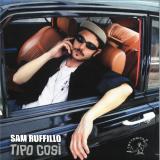
Italian producer, musician, DJ, and groove architect Sam Ruffillo drops his long-awaited debut album Tipo Così on Toy Tonics – a sun-drenched, genre-blurring statement that blends classic house with Mediterranean flair, romantic funk, and tongue-in-cheek Italo vibes. Over 11 expertly crafted tracks, Ruffillo delivers a dancefloor-ready, emotionally rich LP that connects deep musicality with irresistible rhythm and light-hearted elegance.
After three acclaimed EPs and collaborations with revered artists such as Barbara Boeing, Kapote, and Fimiani, Ruffillo has firmly cemented himself as a core artist on the Berlin-based label. Known for his unmistakable signature sound — a warm mix of vintage disco, 90s house, and Italian vocals — Sam’s music has garnered widespread DJ support from tastemakers like Gerd Janson, Palms Trax, Seth Troxler, and DJ Tennis, while becoming a staple on Italian airwaves. His infectious summer anthems like Danza Organica and Perfetta Così have soundtracked countless club nights and festivals, creating a loyal following that eagerly awaited this full-length debut.
Tipo Così is the natural culmination of a musical journey that’s both playful and profound — a travel diary written in grooves, synth stabs, and melodies that feel like postcards from a parallel Mediterranean universe. The album expands and deepens Ruffillo’s world into a fully immersive experience: lush emotional chords meet tight syncopated grooves, vintage synth textures collide with irresistibly catchy pop refrains, and the boundary between sincerity and playful irony is exquisitely blurred.
Entirely written, produced, and recorded in Italy, in his beloved hometown of Bologna, the album finds Ruffillo at the helm on keys, drum machines, and production, supported by a talented cast of musicians contributing live bass, guitar, and other organic elements — further enriching his trademark fusion of electronic grooves and natural instrumentation. There’s a tactile warmth in these tracks, a hands-on feel that adds soul and depth to every beat.
This album also marks Ruffillo’s heartfelt return to singing in Italian, with standout tracks like House Tipo Così, Mi Fa Volare, Ancora, and Dentro Di Me, where romantic naïveté meets pulsing club energy in a way that feels both timeless and refreshingly new. The vocal performances add an intimate, human touch to the music, reinforcing the personal stories woven into each song. There’s poetry in the casual, a bittersweet elegance in the way the lyrics float over groove-heavy production.
Having toured extensively across Europe, Australia, Indonesia, New Zealand, and Mexico — with sets at iconic venues like Panorama Bar and festivals such as Sónar Barcelona — Ruffillo has fine-tuned much of this album in front of live audiences. The real-world testing ground infused the record with a dynamic energy and immediacy that only comes from genuine crowd interaction. These songs weren’t just made in the studio — they were lived on dancefloors around the world.
Tipo Così is not just a collection of tracks. It’s a philosophy — playful, stylish and unmistakably personal. A modern club album bursting with heartfelt emotion and sophistication. Music for dancers with taste; for lovers of beauty, rhythm, and the little imperfections that make things feel real.
But what exactly is Tipo Così? More than just a phrase, it’s a way of being. It’s about embracing elegance without effort, mixing irony with sincerity, and letting nostalgia slip into the room without taking over the party. It’s Sam Ruffillo’s signature language: relaxed, confident, meticulous yet never rigid — where a chord progression can say as much as a lyric, and every beat carries intention.
The album’s visual identity complements this vision perfectly. The artwork and promotional materials lovingly reference Italian design from the ’80s and ’90s, combining bold graphic elements with playful pop culture nods. This aesthetic mirrors Ruffillo’s music — a fusion of vintage warmth and contemporary freshness, delivered with authenticity and charm.
Sam Ruffillo belongs to a new generation of European artists who are reshaping electronic music by blending past and present, analog and digital, groove and emotion — without nostalgia or pose. His artistic universe is coherent, vibrant, and alive; a rich tapestry of sound, images, and stories that coexist with lightness, precision, and a distinctive voice.
Reflecting on his artistic journey, Sam describes music as a vital, deeply human impulse — a tribal connection to rhythm and body that has driven him since he was a teenager. His creative process balances meticulous planning with room for spontaneity, usually sparked by clear melodic ideas that evolve naturally. Collaborations with close friends, especially vocalists like Ninfa, add warmth and authenticity, exemplified in tracks like “House Tipo Così.” For Sam, music is honest self-expression — crafted for listeners who crave memorable melodies and rhythms imbued with genuine feeling.
While technical perfection is tempting, Sam prioritizes emotion, knowing that what truly resonates is the soul behind the sounds. His long-standing partnership with Toy Tonics has been key in nurturing his vision, offering a blend of creative freedom and professional support. Looking ahead, Sam Ruffillo is excited to broaden his live performances, and release new projects that continue to blend electronic grooves with organic, heartfelt sounds — maintaining the delicate balance between playful irony and sincere emotion that defines Tipo Così.
Kurzversion:
Italian DJ, producer and musician Sam Ruffillo drops his debut album Tipo Così on Toy Tonics - a sunny blend of house, funk, Italo and pop, full of groove and emotion. Written and recorded in Bologna with live instruments and Italian vocals, it’s a playful, elegant journey shaped on dancefloors worldwide. A stylish, sincere club album where nostalgia, irony and rhythm meet in perfect harmony.
- Mi Fa Volare
Road-tested across continents and now finally released, “Mi Fa Volare” channels 90s uplifting euphoria with big breakbeats, lush chords, and Italian vocals built to stick. Somewhere between balearic bliss and piano house nostalgia, it’s a feel-good club weapon made for peak-time moments - already sung back by crowds after just one listen.
- Ancora
“Ancora” is a vibrant hi-NRG track inspired by 80s Italo disco, sung entirely in Italian. It blends driving rhythms with dreamy melodies, capturing the radiant spirit of the decade. This fresh yet nostalgic song delivers euphoric vibes and timeless energy, making it a perfect fit for both dancefloors and reflective listening moments worldwide.
- Dentro Di Me
“Dentro Di Me” channels ‘90s sensuality through a fast-paced, UK house-inspired lens. Entirely in Italian, it’s a bold and contemporary dance track where hypnotic vocals meet high-energy grooves. Blending nostalgic textures with forward-thinking production, the result is a seductive and euphoric trip - equal parts emotional and club-ready.
- Amigo
“Amigo” blends Latin groove, acoustic guitar-driven rhythm, and Mediterranean flair into a warm, magnetic, cross-cultural dance anthem. Sung in Spanish and Italian, it celebrates connection, inclusivity, and the joy of moving together - whether stranger or friend. With its unstoppable rhythm and vibrant energy, it’s a feel-good track with a unifying spirit.
- Ma Sei Fuori
“Ma Sei Fuori” is a tongue-in-cheek dancefloor bomb blending raw house energy with catchy vocal phrases and a nod to classic French touch. Driven by hypnotic vocal lines and a playful attitude, it doesn’t take itself too seriously - while still proving serious club impact. Built for late-night moments, it’s bold, bouncy, and impossible to ignore.