Search:cari

Styles
All
Kristine Leschper - The Opening, Or Closing Of A Door

Kristine Leschper's The Opening, Or Closing Of A Door, is a paean to the
sensory world and is the first Leschper has released under her given
name, having retired the moniker Mothers after eight years of performing
and releasing music under it
Though both projects are guided by Leschper's idiosyncratic approach to
songwriting, they couldn't sound more different. While Mothers drew inspiration
from the stark, skeletal sounds of post-punk and contemporary folk, Leschper's
new work is practically baroque, integrating an array of synthesizers, strings,
woodwinds, and over a dozen percussive instruments.
The at-home recording process gave Leschper freedom to set her personal ethos
to music divorced from the pressure of an audience. As she worked on The
Opening, Or Closing Of A Door, the constellation of ideas that had guided her
personal transformation began to cohere into something communicable through
music

pre-order now08.04.2022

expected to be published on 08.04.2022

26,01
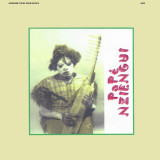
Papé Nziengui et son Groupe - Kadi Yombo LP 2x12"

Kadi Yombo, published in 1989, is the most successful album in the quest for a fusion between tradition and modernity in Bwiti harp music of the Tsogho people of Gabon. Combining beating rattles with a layer of synthesizers, Papé Nziengui blends in a contrapuntal dialogue characteristic of harp playing: male song in appeal and female choir in response, male voice of the musical arc and rhythms of female worship. But above all it’s Tsogho ritual music and modern studio orchestration. The result is an initiatory itinerary of 10 musical pieces which are all milestones likely to be simultaneously listened to, danced, meditated on, and soon acclaimed. In the years since, Nziengui has traveled he world from Lagos to Paris, from Tokyo to Cordoba, from Brussels to Mexico City to become a true icon, the emblem of Gabonese music.

Like Bob Dylan, "electrifying" folk and Bob Marley mixing rock with reggae, some purists have criticized Nziengui for having distorted the music of harp by imposing a cross with modern instruments. They even went so far as to claim that Nziengui was just an average harpist covering his shortcomings with stunts that were only good for impressing neophytes; like playing a harp placed upside down behind his back or playing two or three harps simultaneously. Sincere convictions or venomous defamations, in any case, Nziengui never gave in to such attacks, imposing himself on the contrary to pay homage to the elders (Yves Mouenga, Jean Honoré Miabé, Vickoss Ekondo) while instructing the maximum of young people. He is thus the promoter of many young talents, the most prominent of which is certainly his nephew Jean Pierre Mingongué. In a conservative society where the sacred is confused with secrecy, exposing the mysteries of Bwiti in broad daylight can be punished by exclusion or even execution.

Papé Nziengui has always claimed that he faces such risks because he never felt enslaved to a community that governs his life, that regulates his conduct, that has a right of censorship over his activities. Like Ravi Shankar, the famous sitarist, Papé Nziengui is a man of rupture but also of openness, a transmitter of culture. As proof, he has established himself in Libreville, Gabo’s capital, as the main harpist for sessions and concerts, accompanying the greatest national artists (Akendengué, Rompavè, Annie-Flore Batchiellilys, Les Champs sur la Lowé, etc.) as well as foreign artists (Papa Wemba, Manu Dibango, Kassav', Toups Bebey, etc.). In 1988, he was the first harpist to release an album in the form of a cassette produced by the French Cultural Center (Papé Nziengui, Chants et Musiques Tsogho). At the same time, he created his own group (Bovenga), combining traditional music instruments (musical bow, drums, various percussion instruments, etc.) in the framework of a true national orchestra, which gave the first concert and the first tours of a traditional music that was both modern and dynamic, thus "democratizing" the harp, to the dismay of certain purists.

On the other hand, in modern music, dominated by the logic of profit or even commercialism, artistic creation must often be adjusted for a specific audience based on reason rather than heart. But instead of allowing himself to be distorted, Papé Nziengui has always tried to produce music that is not a caricature, worthy in its expression as in its content, of the sacredness and transcendence of the music of the Origins. This is what makes Nziengui not only the musician, but the man someone whose age hasn’t altered any of his freshness or authenticity

pre-order now08.04.2022

expected to be published on 08.04.2022

32,73
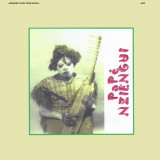
Papé Nziengui et son Groupe - Kadi Yombo LP

Kadi Yombo, published in 1989, is the most successful album in the quest for a fusion between tradition and modernity in Bwiti harp music of the Tsogho people of Gabon. Combining beating rattles with a layer of synthesizers, Papé Nziengui blends in a contrapuntal dialogue characteristic of harp playing: male song in appeal and female choir in response, male voice of the musical arc and rhythms of female worship. But above all it’s Tsogho ritual music and modern studio orchestration. The result is an initiatory itinerary of 10 musical pieces which are all milestones likely to be simultaneously listened to, danced, meditated on, and soon acclaimed. In the years since, Nziengui has traveled he world from Lagos to Paris, from Tokyo to Cordoba, from Brussels to Mexico City to become a true icon, the emblem of Gabonese music.

Like Bob Dylan, "electrifying" folk and Bob Marley mixing rock with reggae, some purists have criticized Nziengui for having distorted the music of harp by imposing a cross with modern instruments. They even went so far as to claim that Nziengui was just an average harpist covering his shortcomings with stunts that were only good for impressing neophytes; like playing a harp placed upside down behind his back or playing two or three harps simultaneously. Sincere convictions or venomous defamations, in any case, Nziengui never gave in to such attacks, imposing himself on the contrary to pay homage to the elders (Yves Mouenga, Jean Honoré Miabé, Vickoss Ekondo) while instructing the maximum of young people. He is thus the promoter of many young talents, the most prominent of which is certainly his nephew Jean Pierre Mingongué. In a conservative society where the sacred is confused with secrecy, exposing the mysteries of Bwiti in broad daylight can be punished by exclusion or even execution.

Papé Nziengui has always claimed that he faces such risks because he never felt enslaved to a community that governs his life, that regulates his conduct, that has a right of censorship over his activities. Like Ravi Shankar, the famous sitarist, Papé Nziengui is a man of rupture but also of openness, a transmitter of culture. As proof, he has established himself in Libreville, Gabo’s capital, as the main harpist for sessions and concerts, accompanying the greatest national artists (Akendengué, Rompavè, Annie-Flore Batchiellilys, Les Champs sur la Lowé, etc.) as well as foreign artists (Papa Wemba, Manu Dibango, Kassav', Toups Bebey, etc.). In 1988, he was the first harpist to release an album in the form of a cassette produced by the French Cultural Center (Papé Nziengui, Chants et Musiques Tsogho). At the same time, he created his own group (Bovenga), combining traditional music instruments (musical bow, drums, various percussion instruments, etc.) in the framework of a true national orchestra, which gave the first concert and the first tours of a traditional music that was both modern and dynamic, thus "democratizing" the harp, to the dismay of certain purists.

On the other hand, in modern music, dominated by the logic of profit or even commercialism, artistic creation must often be adjusted for a specific audience based on reason rather than heart. But instead of allowing himself to be distorted, Papé Nziengui has always tried to produce music that is not a caricature, worthy in its expression as in its content, of the sacredness and transcendence of the music of the Origins. This is what makes Nziengui not only the musician, but the man someone whose age hasn’t altered any of his freshness or authenticity

pre-order now08.04.2022

expected to be published on 08.04.2022

10,29
Mathias Eick - When We Leave

Mathias Eick

When We Leave

12inch3865851
ECM Records
08.04.2022

180g vinyl pressing of Norwegian trumpeter Mathias Eick's 2021 ECM
album 'When We Leave'
Eick's expressive playing, which according to the New York Times radiates a
"pristine yet penetrating tone", is remarkably well complemented in the company
of his gifted supporting players and fellow travelers. Violinist Hakon Aase, one of
the outstanding improvisers of his generation, shadows the leader with lines that
reflect a profound background in folk as well as jazz. Drummers Helge Andeas
Norbakken and Torstein Lofthus mirror their exchanges, as they interact with
purring precision. Near the centre of the action, pianist Andras Ulvo and bass
guitarist Audun Erlien ferry ideas between frontline and rhythm section and make
statements of their own. On several tracks, the delicate swell of Stian
Carstensen's pedal steel guitar adds a dimension of mystery.
'When we leave' was recorded at Oslo's Rainbow Studio in August 2020.
Mathias Eick: trumpet, keyboard, vocals
Hakon Aase: violin, percussion
Andreas Ulvo: piano
Audun Erlien: bass
Torstein Lofthus: drums
Helge Andreas Norbakken: drums, percussion
Stian Carstensen: pedal steel guitar

pre-order now08.04.2022

expected to be published on 08.04.2022

27,69
Papé Nziengui et son Groupe - Kadi Yombo LP

Kadi Yombo, published in 1989, is the most successful album in the quest for a fusion between tradition and modernity in Bwiti harp music of the Tsogho people of Gabon. Combining beating rattles with a layer of synthesizers, Papé Nziengui blends in a contrapuntal dialogue characteristic of harp playing: male song in appeal and female choir in response, male voice of the musical arc and rhythms of female worship. But above all it’s Tsogho ritual music and modern studio orchestration. The result is an initiatory itinerary of 10 musical pieces which are all milestones likely to be simultaneously listened to, danced, meditated on, and soon acclaimed. In the years since, Nziengui has traveled he world from Lagos to Paris, from Tokyo to Cordoba, from Brussels to Mexico City to become a true icon, the emblem of Gabonese music.

Like Bob Dylan, "electrifying" folk and Bob Marley mixing rock with reggae, some purists have criticized Nziengui for having distorted the music of harp by imposing a cross with modern instruments. They even went so far as to claim that Nziengui was just an average harpist covering his shortcomings with stunts that were only good for impressing neophytes; like playing a harp placed upside down behind his back or playing two or three harps simultaneously. Sincere convictions or venomous defamations, in any case, Nziengui never gave in to such attacks, imposing himself on the contrary to pay homage to the elders (Yves Mouenga, Jean Honoré Miabé, Vickoss Ekondo) while instructing the maximum of young people. He is thus the promoter of many young talents, the most prominent of which is certainly his nephew Jean Pierre Mingongué. In a conservative society where the sacred is confused with secrecy, exposing the mysteries of Bwiti in broad daylight can be punished by exclusion or even execution.

Papé Nziengui has always claimed that he faces such risks because he never felt enslaved to a community that governs his life, that regulates his conduct, that has a right of censorship over his activities. Like Ravi Shankar, the famous sitarist, Papé Nziengui is a man of rupture but also of openness, a transmitter of culture. As proof, he has established himself in Libreville, Gabo’s capital, as the main harpist for sessions and concerts, accompanying the greatest national artists (Akendengué, Rompavè, Annie-Flore Batchiellilys, Les Champs sur la Lowé, etc.) as well as foreign artists (Papa Wemba, Manu Dibango, Kassav', Toups Bebey, etc.). In 1988, he was the first harpist to release an album in the form of a cassette produced by the French Cultural Center (Papé Nziengui, Chants et Musiques Tsogho). At the same time, he created his own group (Bovenga), combining traditional music instruments (musical bow, drums, various percussion instruments, etc.) in the framework of a true national orchestra, which gave the first concert and the first tours of a traditional music that was both modern and dynamic, thus "democratizing" the harp, to the dismay of certain purists.

On the other hand, in modern music, dominated by the logic of profit or even commercialism, artistic creation must often be adjusted for a specific audience based on reason rather than heart. But instead of allowing himself to be distorted, Papé Nziengui has always tried to produce music that is not a caricature, worthy in its expression as in its content, of the sacredness and transcendence of the music of the Origins. This is what makes Nziengui not only the musician, but the man someone whose age hasn’t altered any of his freshness or authenticity

pre-order now08.04.2022

expected to be published on 08.04.2022

32,73
Jon Lucien - Minds Eye - LTD EP - 2X7"

Jon Lucien

Minds Eye - LTD EP - 2X7"

7"-VinylDYNAM7109/110C
Dynamite Cuts
01.04.2022

Jon Lucien is one of the most amazing vocal soul singers, nicknamed ‘the man with the golden throat’; he also had his own percussive style, and was prolific in the 70’s writing many timeless classics over the years. Dynamite Cuts take four of these wonderful songs from the Mind’s Eye LP – these titles are first time on 7” vinyl and all cut @ 45 rpm. A perfect Soul Jazz funk release, don’t miss out

pre-order now01.04.2022

expected to be published on 01.04.2022

27,27
Rizomagic - Voltaje Raizal

Voltaje Raizal is the first album of the tropical futurist music project Rizomagic, an electronic music duo, that consists of Diego Manrique, director of the avant-garde cumbia orchestra Niño Pueblo, and Edgar Marun, director of the ethno-afrobeat ensemble Dorado Kandua; Two outstanding projects from Bogota's new thriving alternative psychedelic scene.

The sounds of the album are rooted in the Afro-Caribbean musical tradition, in the mixed ancestry that defines Colombian culture, and IDM. The melodic construction of the album takes inspiration from variouscultures, including Indigenous chants from Colombia’s Embera people, the traditional scales from Mali’s Bambara ethnic group, and the Ghanian palm wine guitar interpreted by a Caribbean millo flute. The mix and mastering carried out by Eblis Alvarez (Meridian Brothers, Pirañas, Chupame el Dedo) and Camilo Manchego offered the final touches that make Voltaje Raizal a fresh proposal to Colombia’s futurist tropical scene. "Rizomagic set out to recontextualize their sources. It’s no coincidence that their name comes from rhizomatic, the botanically derived term for a subterranean, horizontal network of roots".

out of Stock

Order now and we will order the item for you at our supplier.

24,33

Last In: 4 years ago
YABBY YOU / THE PROPHETS - The Yabby You Sound: Dubs & Versions 2xLP

In the early 1970s the island of Jamaica, and in particular its reggae musicians, developed a love affair with small Japanese motor bikes. Honda bikes were eulogised in Big Youth’s ‘S90 Skank’ and Dillinger’s ‘CB200’, whilst their rival was lauded on Shorty The President’s ‘Yamaha Skank’, to name the most obvious examples. The plot of the film ‘Rockers’ revolved around how transformative a motorbike could be, providing a livelihood whilst projecting an image of success in the ghetto.
Vivian ‘Yabby You’ Jackson had been fiercely independent as a singer and producer, and the success of his early self-pressed productions, mostly on the Prophets or Vivian Jackson labels, had given him a sense of hard earned autonomy. A motorbike was one of the fruits of his labours, acquired as a way of zipping around the capital’s roads to deliver records and organise recording sessions. His wife Jean could often be see hanging on to the back. Twelve years after his death, she remembers various exploits on the pot-holed roads of Kingston.
Jean Vencella Williams: ‘His first motorbike was a Honda 50 and then a 100, a Yamaha. I remember the Yamaha, it was a dark blue colour, it must have been from the mid 70s til the early 80s. I used to ride around on the back and we ride all over, like we go to the country cos his mother lived in Clarendon. And he had a little carrier thing for boxes of records, so we go to Mandeville in Manchester, sometimes to Spanish Town fe sell records. Most of the time he sell them to the shops, like Randys, and the people them buy it from there. He had pressing plants like Byron Lee and later Tuff Gong, so when the records pressed we find out the time when we get back the records, which usually was at least a couple of days or about a week. And later when we living in Clarendon we come into Kingston to pick them up at the pressing plant. And when he book the studio he might book two or three days and we come in and usually stay til late.

‘He used to carry the records from the different pressing plants on the bike, but because of the rain and weather you know it not so good for the records, and also the sun beating down. Then Wayne Wade had an accident on the Yamaha, and he was hurt quite bad, and he had to go to the hospital for quite a while. Well Yabby didn’t ride it after that, cos it was getting dangerous with so many cars coming in. So he gave up the Yamaha and bought a Toyota Carina, and that car was very good to him. Then the Carina become a little shaky, so he got a Toyota Corolla which he drove until his death.’

This album presents a sample of the best of those ‘Dubs and Versions’ that Yabby was ferrying around town, whether rarities, B-sides or tracks culled from albums that showcase the breadth of Yabby’s productions between 1975 and 1982.

This release comes with sleevenotes original artwork.

pre-order now11.03.2022

expected to be published on 11.03.2022

32,56
Siavash Amini & Saffronkeira - The Faded Orbit

Siavash Amini is a composer from Tehran, Iran. He Has worked with labels like Room40, Hallow Ground, Opal Tapes and Umor Rex for the better half of the past ten years. He has performed at festivals like CTM & MUTEK and many other well known international events. Apart from it Siavash is a co-founder of the “SET experimental art events” and “SETfest” in Tehran, Iran. His work ranges from fragile ambient pieces and brittle IDM (incorporating his distinctive style of atmospheric guitar playing) to noisy drones and bleak modern classical pieces. His compositions have been inspired by films such as Andrei Tarkovsky's The Mirror as well as novels by Dostoyesvky and poems by T.S. Eliot.

Saffronkeira is the Sardinian sound researcher Eugenio Caria being active in the electronic music scene since almost two decades. His most recent work - a cooperation with the Italian jazz trumpet legend Paolo Fresu - earned a lot of praise from the international music press for the pure timelessness of the album.

"Upon hearing a small snippet of sound an image is conjured, not a memory but not unfamiliar. A shell of a memory, thousand events superimposed on each other. While trying to extract points of a narrative to ease the discomfort of this recollection, I try to separate and unfold the image and with it the points of the spectrum which make up the sound, a shell of a narrative. Here is an album based upon an almost entirely imagined/ synthesized happening upon hearing a snippet of sound. It sounded like of a whole story that never happened but yet I felt myself amongst it’s participants, a sound triggering a false memory. Each sound in Eugenio’s collection of sounds and ideas guided me a to a point in the narrative and it’s construction. He had handed me a portals of some kind to a few scenes of the whole narrative. This is the soundtrack for that false memory from all the perspectives I can think of."

out of Stock

Order now and we will order the item for you at our supplier.

21,30

Last In: 4 months ago
FIRE FLIGHT - EXIT LP

Fire Flight

EXIT LP

12inchISLELP008
ISLE OF JURA RECORDS
11.03.2022

For the next release we head to Barbados and 1985 for the first official reissue of ‘Exit’ by Fire Flight. The best reissues succinctly capture a moment in time and this album provides a snapshot of Island life in the Caribbean region of the America’s in the middle of the 1980’s. The LP encompasses new wave, funk and early house rhythms with a backbone of calypso.

The idea for Fire Flight started with Carl “Beaver” Henderson, a musician, arranger and producer who initially provided back up band services for the Royal Bank of Trinidad & Tobago’s annual staff Calypso competition. In 1981 the idea quickly evolved into the 15 piece band that was Fire Flight who took Trinidad and Tobago’s performance spaces and annual carnival by storm with their electrifying life performances. The band also travelled to Toronto, Montreal and New York for their annual carnivals. In 1984 the band entered the now defunct Coral Sound Studios in Barbados to record their debut album. The driving force behind the LP was the band’s main songwriter Francis Escayg’s desire to explore alternative avenues of recognition for the band and to perform and thrive in the carnival off season. Highlights from the LP include the slow new wave funk of ‘Best Shot’ & ‘White Horse’, the melting pot of calypso, zouk and reggae influences on ‘Hard Life’ & ‘Mornin Lovin’ and the tropical proto house of ‘Wantin U’ that was a highlight of the Fire Flight live show.

The LP is pressed on heavyweight 180 Gram Vinyl with new full sleeve artwork from Bradley Pinkerton.

out of Stock

Order now and we will order the item for you at our supplier.

19,54

Last In: 3 years ago
Charlotte Adigery & Bolis Popul - Topical Dance 2x12"

Today sees Belgian-Caribbean provocateur Charlotte Adigéry and her long-term musical partner, Bolis Pupul announce their debut album Topical Dancer, due for release on March 4 2022 via Soulwax’s iconic label DEEWEE.
Cultural appropriation. Misogyny and racism. Social media vanity. Post-colonialism and political correctness. These are not talking points that you’d ordinarily hear on the dancefloor but Charlotte Adigéry and Bolis Pupul are ripping up the rulebook with their debut album Topical Dancer. The Ghent-based duo, who broke out with their 2019 Zandoli EP, are rare storytellers in electronic music: they take the temperature of the time and funnel them into their playful synth concoctions – never didactic and always with a knowing wink.

Their debut studio record – which cements them as a duo under both their names for the first time and is co-written and co-produced by Soulwax – is both a triumph of kaleidoscopic electro-pop and “a snapshot of how we think about pop culture in the 2020s.” It captures Charlotte and Bolis’s essence as musical collaborators and the conversations they’ve had over the past two years on tour, as well as their perspectives as Belgians with an immigrant background, Charlotte with Guadeloupean and French-Martinique ancestry and Bolis being of Chinese descent.

Beyond the album’s thematic heft, Topical Dancer reflects Charlotte and Bolis’s idiosyncratic sound: it’s thoughtful but it bangs. Their take on familiar genres is always off-kilter; songs sound undone or a little wonky; but these are nocturnal heaters to make the club throb. “We like to fuck things up a bit,” laughs Bolis. “We cringe when we feel like we're making something that already exists, so we're always looking for things to combine to make it sound not like a pop song, not like an R&B song, not a techno song. We’re always putting different worlds together. Charlotte and I get bored when things get too predictable.”

Topical Dancer is fizzing with ideas – there’s certainly no filler among its 13 tracks. But above all, perhaps, it has a restlessness, a desire not to be boxed in and to escape others’ narrow perceptions of who they are. It’s summarised by the refrain of their new single, ‘Blenda’: “Don’t sound like what I look like / Don’t look like what I sound like.” “One thing that always comes up,” says Bolis, “is that people perceive me as the producer, and Charlotte as just a singer. Or that being a Black artist means you should be making ‘urban’ music. Those kinds of boxes don’t feel good to us.”

‘Blenda’ in particular references how “I am a product of colonialism,” says Charlotte, “and I feel guilty for taking up space in a white country.” The song was inspired in part by Reni Eddo-Lodge’s book Why I’m Not Longer Talking To White People About Race. “It talks about the colonial past and post-colonial present in the UK,” Charlotte continues, “but that isn’t merely a British or American problem, Belgium is part of that as well.” She says that her home country is likewise “oblivious to a big part of its history” which “results in general ignorance and a lack of understanding and empathy towards Belgian inhabitants of immigrant descent.”

On Topical Dancer, it’s less about finger pointing or being dogmatic about all the things they speak about. It’s about emancipation through humour. “I don’t want to feel this heaviness on me,” says Charlotte. “These aren’t my crosses to bear. Topical Dancer is my way of freeing myself of these issues. And of having fun.”

out of Stock

Order now and we will order the item for you at our supplier.

27,69

Last In: 4 years ago
Charlotte Adigery & Bolis Popul - Topical Dance 2x12"

Ltd Black & White LP

Today sees Belgian-Caribbean provocateur Charlotte Adigéry and her long-term musical partner, Bolis Pupul announce their debut album Topical Dancer, due for release on March 4 2022 via Soulwax’s iconic label DEEWEE.
Cultural appropriation. Misogyny and racism. Social media vanity. Post-colonialism and political correctness. These are not talking points that you’d ordinarily hear on the dancefloor but Charlotte Adigéry and Bolis Pupul are ripping up the rulebook with their debut album Topical Dancer. The Ghent-based duo, who broke out with their 2019 Zandoli EP, are rare storytellers in electronic music: they take the temperature of the time and funnel them into their playful synth concoctions – never didactic and always with a knowing wink.

Their debut studio record – which cements them as a duo under both their names for the first time and is co-written and co-produced by Soulwax – is both a triumph of kaleidoscopic electro-pop and “a snapshot of how we think about pop culture in the 2020s.” It captures Charlotte and Bolis’s essence as musical collaborators and the conversations they’ve had over the past two years on tour, as well as their perspectives as Belgians with an immigrant background, Charlotte with Guadeloupean and French-Martinique ancestry and Bolis being of Chinese descent.

Beyond the album’s thematic heft, Topical Dancer reflects Charlotte and Bolis’s idiosyncratic sound: it’s thoughtful but it bangs. Their take on familiar genres is always off-kilter; songs sound undone or a little wonky; but these are nocturnal heaters to make the club throb. “We like to fuck things up a bit,” laughs Bolis. “We cringe when we feel like we're making something that already exists, so we're always looking for things to combine to make it sound not like a pop song, not like an R&B song, not a techno song. We’re always putting different worlds together. Charlotte and I get bored when things get too predictable.”

Topical Dancer is fizzing with ideas – there’s certainly no filler among its 13 tracks. But above all, perhaps, it has a restlessness, a desire not to be boxed in and to escape others’ narrow perceptions of who they are. It’s summarised by the refrain of their new single, ‘Blenda’: “Don’t sound like what I look like / Don’t look like what I sound like.” “One thing that always comes up,” says Bolis, “is that people perceive me as the producer, and Charlotte as just a singer. Or that being a Black artist means you should be making ‘urban’ music. Those kinds of boxes don’t feel good to us.”

‘Blenda’ in particular references how “I am a product of colonialism,” says Charlotte, “and I feel guilty for taking up space in a white country.” The song was inspired in part by Reni Eddo-Lodge’s book Why I’m Not Longer Talking To White People About Race. “It talks about the colonial past and post-colonial present in the UK,” Charlotte continues, “but that isn’t merely a British or American problem, Belgium is part of that as well.” She says that her home country is likewise “oblivious to a big part of its history” which “results in general ignorance and a lack of understanding and empathy towards Belgian inhabitants of immigrant descent.”

On Topical Dancer, it’s less about finger pointing or being dogmatic about all the things they speak about. It’s about emancipation through humour. “I don’t want to feel this heaviness on me,” says Charlotte. “These aren’t my crosses to bear. Topical Dancer is my way of freeing myself of these issues. And of having fun.”

out of Stock

Order now and we will order the item for you at our supplier.

29,37

Last In: 4 years ago
Shelter - Profondeur 4000

repress

An underwater adventure by young Parisian Shelter. Where previous releases have seen the synth-obsessed Frenchman take his inspiration from Caribbean rhythms or Balearic attitudes, this marine missive sees Shelter turn to the lavish world of the library,creating his an alternate score to Jean Faurez' 1960 documentary short.

More submersible than snorkel, our journey begins in the very dark of the deep, mystical harp trills echoing through the inky blackness, picking up the bioluminescent shimmer of an Abraliopsis Squid. Gradually we make our way into the light, cruising past shoals of silver scales and underwater forests. Immersion' offers a placid, percolating rhythm and billowing pads, providing sonic symmetry for the dancing leaves, while the spheric soundscape of 'La Vie A L'Ombre' bubbles away like an underwater volcano. The optimistic ambience of 'Plenitude Azotee', brimming with delicate melody and glistening sequences, perfectly captures the wide-eyed wonder of a reef dive, before drifting into the serenity of 'Parade', an aquatic acquaintance of A.R.T. Wilson's 'Overworld'. A brief foray into shark fin funk sees out the A-side, before we're back amid the beauty of the ocean floor, 'Variation Abyssale II' echoing the album opener but with even more poetry. The exotic and otherworldly sine waves of 'Dans La Jungle De Varech' simultaneously sound like a rainforest canopy, alien landscape and coral microcosm, expanding our horizons nicely ahead of the adrenaline rush of 'Hors D'Haleine'. Shelter then sets us at ease with the
tidal tonality and subtle shuffle of 'Fumeurs Noirs', a sublime synthetic suite,
then leaves us to marvel at the soft focus splendour of 'Synthii Outro'.

out of Stock

Order now and we will order the item for you at our supplier.

18,95

Last In: 14 days ago
Zopelar - THC 303

Dark Purple Vinyl Only

Techno House Connoisseurs proudly present Zopelar. This brilliant Brazilian artist has been turning out quality release after quality release on labels like Apron, Soul Clap and Axe Traxx. This release showcases his unique sound in the realm of Acid. This is classic Zopelar with rich, dreamy synths, layering of distorted percussive elements and of course his version of the timeless TB 303 sound. Exquisite production from an artist who is changing the game!

out of Stock

Order now and we will order the item for you at our supplier.

10,04

Last In: 11 months ago
Blue Rondo A La Turk - Chewing The Fat - GC Lost 80s
  • A1: Change
  • A2: I Spy For The F.b.i
  • A3: Coco
  • A4: The Heavens Are Crying
  • B1: The Method
  • B2: They Really Don't
  • B3: Sarava
  • B4: Klacto Vee Sedstein
  • B5: Carioca
  • C1: The Cities Are Dying
  • C2: Light & Shadow
  • C3: Klactofonkedstein
  • D1: Klactoblusedstein 2020
  • D2: El Ritmo Do Sanchez 2020
  • D3: Changez 2020

Demon Records is proud to reissue this album as part of the Gary Crowley’s Lost 80s project. This Classic LP
reissue is presented on double 140g translucent blue vinyl.
Blue Rondo A La Turk were a lively 6 piece British latin/jazz/pop group, formed in 1981 by singer/lyricist Chris
Sullivan, and disbanded in 1984 when several members moved on to form the hit-making band Matt Bianco.
‘Chewing The Fat ‘ is the debut album, originally released in 1982 and includes the charting singles ‘Me And
Mr. Sanchez’ and ‘Klacto Vee Sedstein’
Included in the release is a bonus LP of official remixes on vinyl for the first time.
“If there was one band I wanted to be in back in 1982 it was Blue Rondo A La Turk. Named after the classic
Dave Brubeck song, they were a bunch of sharp suited hedonists with a philosophy straight out of Spinal Tap,
have a good time, all the time! Thinking about it though they probably would have left a lightweight like me
for dead in some Soho gutter after the first couple of drinks on a night out. Known and loved for their
infectious blend of salsa, funk, pop and cool bop and swing as well as their renowned live performances, why
they didn't break through to the nations charts remains one of pop's great conundrums. But those who
knew, knew and for energy and sonic pleasure this, their debut album "Chewing The Fat" takes some beating
and I'm thrilled it's available once again on vinyl under our GC Lost 80s moniker. It really is a wonderful
reminder of their collective talent that was sadly never given time to flourish.

pre-order now25.02.2022

expected to be published on 25.02.2022

30,04
Remy Martin - I Want You EP

Following the collaborative releases with DJ Duckcomb, Emotional Rescue teams with “discodub” specialist NAD aka Dan Tyler (Idjut Boys) in the continual documentation of the crucial role played by the Caribbean diaspora in Britain’s music history.

Of the many who have made a mark, Clifton “Sonny” Roberts maybe one of the most unheralded. Upon arrival in the early migration from the Caribbean, Roberts used his carpentry vocation to build and operate the first Jamaican recording studio and then black owned record shop in the country.

Working alongside and sharing offices with a young Chris Blackwell and Trojan founder, Lee Gopthal, Roberts’ trailblazing through his Planetone and Orbitone labels were pivotal in bringing first Ska, then Reggae and on to Lovers Rock to prominence, as well as releasing influential Afrobeat and rising Disco sounds of the day.

It is on the sub-label Cartridge that the mega-rarity I Want You appeared in summer 1982. Teaming up with vocalist Joseph “Remy” Martin, the original 12” is a wonderful mixture of all their influences; soulful vocals, unrelenting boogie groove, afro keys, all pinned by reggae bass.

A heavily saturated Discomix is then created by Dan Tyler aka NAD. A dub masterclass with live desk filter passes and flanging, all running through spring reverb for a true Tubby disco-rockers ride, this is a sound system treasure with more to follow soon.

out of Stock

Order now and we will order the item for you at our supplier.

14,71

Last In: 4 years ago
Various - Tougher Than Tough - Trojan Rude Boy Sounds
 
24

Tougher Than Tough – Trojan Rude Boy Sounds is an exclusive release from Music On Vinyl’s Trojan compilation series, which celebrates the best works from the legendary reggae label Trojan Records. It was compiled by Laurence Cane-Honeysett, who also wrote the linernotes. Some of the artists featured on this compilation include Stranger Cole, The Pioneers and Alton Ellis. 2000 individually numbered copies on orange vinyl. The package also includes exclusive Trojan Records and Music On Vinyl coaster.

pre-order now18.02.2022

expected to be published on 18.02.2022

38,45
The Surfing Magazines - Badgers of Wymeswold

Garage rock supergroup The Surfing Magazines have announced Badgers of Wymeswold.

Consisting of one half of Slow Club and two thirds of The Wave Pictures, The Surfing Magazines’ primary influences are Bob Dylan, The Velvet Underground and all the great surf guitar music of the 1960s. They burst onto the scene with their eponymous debut album in 2017, a lauded LP described by Record Collector Mag as “a vintage-yet-modern rock’n’roll classic”.

Mixing the noir surf textures of 1960s garage rock along with west coast sun beaten harmony pop, the 17-track Badgers of Wymeswold follows the acclaimed debut and is to be released July this year. The London based foursome recorded the album at Ranscomb Studio in Rochester in February last year before the start of the first UK lockdown.

Pushing their sound forward, the band utilise their garage rock ethic and have both Drummer Dominic Brider and Rhythm guitar player Charles Watso lead on vocals across multiple tracks. The album sees a return of free form saxophone parts, eerie violins and piano all appear, notably on tracks ‘Nostaw Boogie’ and ‘I’m Going Out Tonight To Play Some Pool’. The title track is drawn from David Tattersall’s nightmare vision about his home town's population of self-governing people, the album artwork was also made by Tattersall and depicts a collage of his referenced dreams. The extensive LP showcases their characteristic sound at their brightest, from softer ballads such as ‘Poppies’ and ‘Silver Breasts’, surf guitar rock anthem ‘Locomotive Cheer’, and to the six bar blues ‘Pink Ice Cream’.

pre-order now11.02.2022

expected to be published on 11.02.2022

27,94
Lonely Pirate Committee - He Was in the Father / ODE

In an age of never-ending genre caveats, there’s something refreshing in a band simply referring to themselves as a rock band, plain and simple. Lonely Pirate Committee define themselves in such a way, and while their music encompasses a number of different strands and influences, they like the openness of that descriptor, the space it leaves for exploration and experimentation.

Moving through various iterations over the years, Lonely Pirate Committee remains in 2021 as the musical project of childhood friends Pearce Gronek and Fletcher Barton. Together, the pair has guided the band’s studio work, before bringing varying members to flesh out LPC’s high-volume and high-intensity live performances that juxtapose the more mellow and laid-back sound that mostly defines their recordings to date, save for the band’s occasional moments of skewed eccentricity.

Formed in Cleveland, the pair work both together and apart, splitting the band’s songwriting down the middle, working on their ideas at home before bringing them together under one defined vision. In early 2020 LPC released their second album, Everyday Ordinary, and it showcased a more refined version of the band than what had come before, the pair’s songwriting drifting into creative and hazy new textures across the album’s ten songs.

In early 2022, Lonely Pirate Committee release their first new work since those album sessions in the form of a brand new 7” single for Saddle Creek’s Document series. Formed of two new tracks, both recorded in late 2020, the release is led by “He Was in the Father”, a song which should be seen as a caricature of Middle-American suburbia; a white picket fence daydream through a shadowy lens. The track began simply as a sonic experiment but soon evolved into the full song we hear today – albeit one shaped by AI. “The track is partially written using AI music generation technology, in direct collaboration with the human composer,” the band explain.

pre-order now11.02.2022

expected to be published on 11.02.2022

9,62
Items per Page:
N/ABPM
Vinyl