Carlo Onda vinyl debut represents the Neue Deutsche Welle reinterpretation as it must. Truly vanguard and fresh minimal synth and perfect Germanic vocals that transport us to splendor days of Grauzone, DAF, Joachim Witt or Robert Görl. All tracks have been specially remastered for long cut vinyl by Eric Van Wonterghem at Prodam Berlin.
quête:carlo r
- A1: Stephen Ham & Alain Leroux - Up Country
- A2: Fabio Frizzi - Cocktail Molotov
- A3: Enrico Pierannunzi & Silvano Chimenti - I Love Blondes
- A4: Carlo Maria Cordio - M21
- A5: Carlo Maria Cordio - M29
- A6: Carlo Maria Cordio - M20
- A7: Carlo Maria Cordio - M15
- B1: Carlo Maria Cordio - M13
- B2: Carlo Maria Cordio - M31
- B3: Stelvio Cipriani - A Strange Symbol
- B4: Stelvio Cipriani - Carlotta And The Professor
- B5: Stelvio Cipriani - Deathwatch
- B6: Stelvio Cipriani - Deathwatch (Unused Alternate Version 1)
- B7: Stelvio Cipriani - Deathwatch (Unused Alternate Version 2)
2022 repress
This limited edition vinyl includes numerous songs by Italian composer Stelvio Cipriani, the man behind the superb soundtrack of Poliziottesco movie La Polizia Sta A Guardare (1973) whose main theme was reborn in 2007 on Quentin Tarantino’s Death Proof, multiple scores for Spaghetti Western movies starring Tony Anthony, as well as a Nastro d’Argento award for best score for The Anonymous Venetian (1970).
Also found on Pieces are compositions by Carla Maria Cordo who scored Joe D’Amato’s gorefest Absurd (1981) that some might know as Anthropophagus 2, Monster Hunter, Horrible or The Grim Reaper 2 - a movie so shockingly violent it became one of the Video Nasties of the UK and was successfully prosecuted under the Obscene Publications Acts in 1984.
Lucio Fulci’s frequent collaborator Fabio Frizzi (responsible for the music of classic horror movies Zombie aka Zombi 2, L’Aldilà aka The Beyond, City of the Living Dead aka The Gates of Hell and the list goes on) also makes a special appearance with the sexy « Cocktail Molotov ».
Chapter 3 of the Tale of Tales series from us at Lagaffe Tales is finally on the horizon, fronting some of Lagaffe's closest friends. Neovinyl Records label head Carlo, Ari Bald from the Swedish Klubbhuset and our very own Jonbjorn and Moff & Tarkin.
The theme of this compilation could be a farewell wish to the summer, a sort of reminiscence of the good times, with good friends and summer grooves.
- A1: Hippiehaus - Galaxy
- A2: Rouge Rouge - L'amour
- A3: Physics - Leaving Monte Carlo
- B1: Steamer - Zwing Ting
- B2: Cam Starring Anggun - Summer In Paris
- B3: Clementine - Les Champs Elysees (Stephane Pompougnac Remix)
- B4: The Strike Boys - Cocaine Is A Sin
- C1: Vision - Ponger Star
- C2: Gabin - Doo Uap, Doo Uap, Doo Uap
- C3: Janice Hosted By Bsg - Voodoo Bliss (Aaron Bingle's Azure Mix)
- C4: Minus 8 - Starlight
- D1: Limbo Experience - Illusion (Rollercone Remix)
- D2: Dublex Inc - Tocame
- D3: Louie Austen - One Night In Rio
- D4: Fantastic Plastic Machine - Steppin' Out (Costes Re-Edit)
Einer der besten Lounge-Serien der Welt, "Hotel Costes", setzt seine Vinylserie mit den Volumes 4-6 fort. Jede der von Stephane Pompouganc zusammengestellten Ausgaben hat ein individuell-exquisites Cover und Tracklisting. Vol.5 enthält 15 superbe Tunes von DJ Cam, Minus 8, Louie Austen, The Strike Boys, Rouge Rouge, Clementine, Hippiehaus, u.v.a.
What A decade deep into its ongoing investigations, documenting and pushing the sonic frisson and fusion between science and technology, SCI+TEC remain at the very forefront of electronic music. Its feet firmly on the dancefloor, its spirit deep inside the machines, its sights set on the future: Dubfire's label has continuously forged its own deep furrow and has been doing so from day one. With breakthrough Dubfire releases such as 'Roadkill' and 'I Feel Speed' SCI+TEC has managed to create a whole new framework for 21st century techno. All the while SCI+TEC has consistently championed and encouraged new and unsung talent from around the world, amplifying legions of rising names; Davide Squillace, Paul Ritch, SHADED, Simi, Delete, Harvard Bass, Joop Junior and countless more include SCI+TEC releases in their rich histories. This precision balance of stark sonic signature, technical ideology and nurturing new ideas and talent has led to SCI+TEC's perpetual momentum into every house and techno DJ's playlists and sets for the last 10 years. Be it the label's penchant for deep, undulating subby grooves or its passion for warehouse-razing thunder-powered techno, the SCI+TEC sound covers every corner of the floor and every chapter of the night; as proved by the label's many world tours. And proved once again by this fittingly stacked anniversary album. 10 tracks to celebrate 10 years from 10 of the label's most exciting artists, every track brings home the SCI+TEC message: The breath-taking atmospheres of Alex Mine's album scene-setter
For it's seventh release, Banlieue Records showcases the work of Budapest-based producer AIWA through a mini album full of dreamy and ethereal sounds. With a subtle nod to the sound design of previous decades, AIWA is channeling inspiration from some of the more cosmic genres but never compromises on a forward thinking attitude that means this release can't be pinned down to a specific genre, rather, it is another example of the unique music Banlieue Records is currently nurturing. From beatless tracks that are anything but static to cuts with a more club-oriented groove, AIWA's sound is on the surface a stripped down, no frills a air. Without compromising on sounding lush, his productions invite the listener to dive deep into the worlds evoked in each track. These often convey the sense of upwards motion, while pulling the listener into a whirlpool of emotion.
"I think I have never met anybody, with the exception of Brazilian guitarists Baden Powell and Toquinho, as connected to his instrument as Agustín Pereyra Lucena" – Vinicius de Moraes
Far Out continues its exploration into the singular catalogue of Argentine guitarist and songwriter Agustin Pereyra Lucena with a special Record Store Day edition of his most celebrated album Ese Dia Va A Llegar.
Agustín Pereyra Lucena was one of South America’s outstanding guitarists. Hailing from Buenos Aires but obsessed with the music of neighbouring Brazil, Agustin abandoned his architecture studies to pursue music full-time, earning friendship and collaborations with Brazilian music's greatest figures including Vinicius de Moraes, Baden Powell, Toquinho, Dorival Caymmi, Maria Bethania and Chico Buarque.
Originally released in 1975, the album has been better known in some parts of the world as Brasiliana – a title repurposed by Agustín's European record label in the 70s to exoticize the sounds of South America for the continental market. It finds Agustin and band—which includes key collaborators Guillermo Reuter on contrabass, and Carlos Carli on drums and percussion— at their most blissfully laid back. The album features idiosyncratic renditions of classics by Antonio Carlos Jobim, Vinicius de Moraes, João Donato and Agustin’s personal hero and friend Baden Powell, alongside Agustín's own works which ooze with captivating mystical wonder.
The analog warmth of the recording is such that it feels like you’re there in mid-seventies Buenos Aires, on a balmy late night session at Estudios Audión, with a group of phenomenally impressive musicians. The heat generated is offset only by the cool temperament of everyone involved. On the handful of vocal tracks on the album, Agustin’s gentle voice is responded to by the liquid smooth vocals of Laura Hatton, Luis Maria Cosenza and Patricia Scheuer.
Agustin’s unique position in the annals of his continent’s musical history has been lovingly maintained by Agustin’s nephew Jose Luis Pereyra Lucena, who has entrusted Far Out Recordings to preserve and re-release Agustin’s works. The music has been professionally remastered at London’s Metropolis Studios, using multiple copies of well kept original vinyl.
Reissued worldwide for the first time under its original title and cover as Agustin originally intended, Ese Dia Va A Llegar will be presented in a limited edition obi-stripped gatefold replica sleeve.
In Mikey’s own words, ““Myths of the MediterrAlien” is a high-octane voyage through a universe where ancient cultures collide with futuristic visions.” For him “the MediterrAlien is a hybrid character who drifts between mythology and outer space, carrying fragments of both history and hyperspace into the club.” Across four explosive tracks, the EP reimagines deconstructed club and experimental bass through a fast, hyper-energetic lens. Each piece feels like a different chapter in the MediterrAlien’s journey, spiralling through cosmic turbulence, touching down on ancient shores, and refracting tradition through the intensity of a distant galaxy.
Designed for the late-night fringes of the dance floor, Myths of the MediterrAlien is both a personal mythology and a sonic wormhole—bridging the universe where Jensen Interceptor’s comes from with where his imagination is heading next.
All tracks written and produced by Jensen Interceptor. Master by Carlos Nascimento at Qualia Audio Lab. Artwork by Conhecido João & Diogo Vasconcelos
The new issue of Disco Pogo features 20 pages on Prince’s influence on electronic music marking 10 years since his passing.
Our other two cover stars are Warp’s Nightmares on Wax, who is celebrating 30 years since his classic album ‘Smokers Delight’, and TOMORA who are a new duo made up of Tom from The Chemical Brothers and Scandi pop star Aurora.
Plus features on The Durutti Column, Wendy Carlos’ ‘Clockwork Orange’ soundtrack, Burial, Lorraine James, DJ Hell, DJ Shadow, Hot Chip’s Alexis Taylor, Speedy J, Tiga and much more!
194 pages of quality music journalism by the world’s best music writers plus beautiful photography and design in a quality print magazine.
Double 12" release
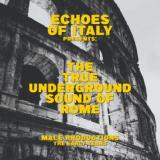
The Story — From the Streets of Rome to the Male Productions Label
In the early 1990s, Rome lived in a kind of suspended moment. The city was still tied to its historic clubs, yet in the outskirts—inside abandoned warehouses, quarries along the coastline, and the wooded parks north of the capital—something new was beginning to stir. A nocturnal, constantly shifting movement fuelled by a hunger for freedom and a sonic curiosity that reached far beyond the mainstream.
Moving through this ferment was Francesco “Chicco” Furlotti. First an organizer of unconventional parties and underground nights, he soon became one of the driving forces behind Rome’s itinerant rave scene. Furlotti sensed that a wave of change was about to sweep across the city. It wasn’t just about parties: it was the rise of a culture, a new way of thinking about music, community, and belonging.
It was within those nights—later held with official permits, properly built sound systems, and an ever-growing crowd—that Furlotti recognized the existence of a distinctly Roman sound, and the need to capture it, preserve it, and give it tangible form.
So, in 1991, he decided to take a bolder step: to found an independent record label—small, determined, and far removed from the commercial logic that dominated at the time.
That was the birth of Male Productions.
Male was not a label like any other: it was a workshop, a gathering point, a creative hub where DJs, producers, friends, and wanderers converged. Within that environment, an artistic core took shape—Stefano Di Carlo, Leo Young, and Mauro Tannino, along with other collaborators orbiting around Furlotti. From their synergy emerged a project whose very name declared its mission:
The True Underground Sound of Rome.
The collective did not simply aim to release music; it sought to tell a story of Rome through sounds that defied categorization: house, techno, ambient, electronic mysticism, psychedelic visions… a unique blend, instantly recognizable, emotional, and experimental. The sessions unfolded using essential yet razor-sharp gear: Roland drum machines, analogue synthesizers, Akai samplers, stripped-down mixers. Few tools, endless imagination.
The first result of this work was the 12” Secret Doctrine, released in 1991 in an extremely limited run—around 500 promotional copies, according to accounts. The record captured something that until then had floated only in the air of Roman raves: enveloping atmospheres, deep rhythms, melodies built to make the mind travel far beyond the dancefloor. A sound that did not imitate what was happening in Detroit, London, or Berlin, but absorbed those influences and re-sculpted them with a distinctly Roman sensibility.
Yet, precisely because it was independent and detached from commercial circuits, Male’s output remained sparse: few EPs, few copies, irregular distribution. Over time, those records became rare artifacts—almost mythical objects within the Italian electronic scene. The legacy of Male Productions seemed destined to survive only in the memories of those early years, in the stories told after raves, and in the private archives of a handful of collectors.
Many years later, thanks to the almost accidental rediscovery of a few original copies of the first two releases issued by Male Productions, it became possible to undertake a meticulous process of recovery and restoration of the audio etched into those grooves, with the aim of preserving as fully as possible the quality and character of that unrepeatable sound.
We are therefore able today to present — at last in a complete and faithful form — the first two mixes created for Male Productions, now released on a double vinyl that brings back into the present the exact moment when it all began: the nomadic nights of the raves, Furlotti’s vision, the creativity of Di Carlo, Young and Tannino, and the sonic identity of a Rome in the midst of transformation.
This is not merely a reissue.
It is a historical document.
A fragment of a culture that changed the city.
The authentic sound of the Roman underground, finally returned to the world.
- A1: A Frauta De Pã
- A2: Serenata Do Meio-Dia
- A3: Estrada Da Intemperança
- A4: Pote De Mel
- A5: Via Láctea
- A6: Cidade Americana
- B1: O Cavaleiro E Os Moinhos
- B2: Modinha
- B3: Debaixo Do Sol
- B4: Um Dia
- B5: Alfazema
A Frauta de Pã, released in 1975 when Carlos Walker was just 19, stands as a cult masterpiece of 1970s Brazilian music. An album where MPB (Música Popular Brasileira) sophistication meets jazz-fusion virtuosity and psychedelic imagination.
the album features an all-star cast of musicians, including João Bosco, Hélio Delmiro, José Roberto Bertrami (Azymuth), Gilson Peranzetta, and Roberto Quartin, the record delivers a rich, orchestral sound that continues to captivate collectors and DJs worldwide.
A Frauta de Pã is available as a limited edition of 500 copies on smokey smarble vinyl.
- A1: Abay
- A2: Tew Ante Sew
- B1: Mengedegna
- B2: Kahn
- C1: Sew Argen
- C2: Nafekeñ
- D1: Abet Wubet
- D2: Guramayle
- D3: Gud Fella
- D4: Guramayle (Slight Return)
180g Heavy double vinyl LP with liner notes by Tyran Grillo. Limited Japanese Obi for the first pressing. Original artwork by Russell Mills and photography by Jean-Baptiste Mondino.
The third Time Capsule is a body of dub reinterpretations by celebrated producer Bill Laswell of Ethiopian singer Gigi. Curated by Tokyo record collector, music researcher and seasoned reissue supervisor Ken Hidaka, it is the first time Illuminated Audio is pressed to vinyl after its CD release in 2003.
Ejigayehu Shibabaw was born in 1974 in Chagni, northwestern Ethiopia and by pursuing a career as a singer, went against her father’s strict, traditional gender roles. As Gigi, she embraced the same musical freedom she had strived for in her personal life, incorporating the Ethiopian church, funk, hip-hop, West and South African music into her work. She first settled in Nairobi, then Addis Ababa, where she quickly established herself as one of the city’s leading singers. A move to San Francisco in 1998 led to a long and fruitful creative partnership with bassist and producer Bill Laswell.
Around the same time, Chris Blackwell had stepped away from Island Records to start the art house film company and label Palm Pictures. He took an interest in Gigi and together with Laswell, pulled together an all-star cast of musicians for her self-titled US debut album, including Herbie Hancock, Pharoah Sanders and Wayne Shorter. It won international critical acclaim, not just for its musicianship but for making Gigi a “defining voice for the Ethiopian expatriate community”, as journalist Tyran Grillo praises in his Time Capsule liner notes. From the nation-defining 1896 victory over Italian invaders to the quiet revolutionaries who wear simple shemma garments, Grillo believes the themes in Gigi make it “a shower of sunlight on her homeland for those ignorant of its struggles.”
After its success, Blackwell encouraged them to go back into the studio to rethink the album and Illuminated Audio was born. “Anyone can make a voice sound worldly”, Grillo remarks, “but rare are those who can make one sound inner-worldly.” Gigi was clear with Laswell to give her vocals a minor role “because it’s already been done.” Instead her Amharic verse is fleeting, exhaling through the textures like ghostly fragments; soaring yet muted. Yet the album is still titled under her name, an assertion by Laswell of her central role in the album’s creation. Not only was it a fully endorsed project by Gigi, but she would be present throughout its development, giving feedback on half-finished ideas as Laswell played them back in the studio. “It works perfectly”, she reflected after the album’s release. “We wanted to capture the whole spirit of each track, and Bill’s remixes create a different music language that really puts you in a pleasant place”.
This new vocabulary takes its lead from a technical approach that Laswell had been perfecting during a furtive creative period at the turn of the millennium. Much like his ambient interpretations of Miles Davis (Panthalassa, 1998), Bob Marley (Dreams of Freedom, 1997), and Carlos Santana (Divine Light, 2001), Laswell approached Illuminated Audio by returning to the original multitrack masters. Gigi wasn’t just reworked, but recomposed into an expansive lattice of instruments, submerged in a watery ambience of dub and trance undercurrents.
Sonically, this new language that Gigi refers to, is manifested by the original album’s more understated parts being pushed to the fore. Explaining his contrasting methods, Laswell saw Gigi as being “put together in a way that fits”. Contrastingly, in Illuminated Audio, “a lot of things that I featured in the remix weren’t as audible in the original.” Instrumentation laying near-dormant, deep in the mix, are brought to the fore: the acid rock guitar and Wayne Shorter’s saxophone on ‘Tew Ante Sew’, Graham Haynes’ flugelhorn on ‘Nafekeñ’, Laswell’s bass on ‘Kahn’, the melodica in Mengedegna or the floating synths and talking drums in ‘Gud Fella’.
Brought to his attention by mentor DJ Nori, Hidaka describes Illuminated Audio as a “masterful sonic exploration into ethereal ambience and dub” and made sure this reissue also contained a full remaster to give its “deep musicality” much better dynamics and density in the overall sound. Hidaka admits that Laswell's music “is sometimes so out-there, it is often misunderstood” and, indeed, to dub album non-believers this might seem like a prolific producer imposing himself on another artist’s work; eternally developing rearrangements that never quite get to its destination. But that’s missing its true power and triumph. This is more than the reissue of a remix, but “a wholly unique musical entity”, as Hidaka describes. Illuminated Audio refers to the illuminated manuscripts that comprise the major part of Ethiopian art and its new compositions stand in proud solitude as a rare body of reworks that both informs and enhances their originals.
Foundations Records brings you their hotly anticipated third release from Sonar's Ghost on Rinse Out EP - a bold four-tracker of breakbeat jungle, atmospheric jungle and jungle-tekno.
Sonar's Ghost
Starting out DJing in the peak hardcore era of 1992, Dominic Stanton rose as a post-hip-hop and ragga kid, cutting his teeth at free parties across the Shires. Drawn into the new directions of hardcore and jungle, he earned early gigs at the legendary Sanctuary, Milton Keynes, performing as Dom-unique.
Learning the art of beat-chopping on the Amiga 500, Dom landed his first release on Reinforced Records in 1995 and continued releasing into the 2000s as Static Imprints and Sonar Circle. Inspired by Dego and the evolving trajectory of 4hero, Dom began moving into more unexplored territory, producing eclectic, soulful beats under the name Domu.
After a brief hiatus, Sonar's Ghost was born - an outlet to explore the years Sonar Circle missed, from 1991 to 1995. Creating alternate journeys through that era, Sonar's Ghost reimagines the original sound palette using original sources, new blends of beats, and a lifetime of musical influence. For Dom, Sonar's Ghost is his happy place.
The Foundations release blends the eras and directions Dom loves most - from '93 bouncy darkside through to '03 drum funk - with authentic drums and samples integral to the vibe.
Here's the support on radio:
- Makossa (Radio FM4 Vienna)
- Distant Planet (Infrared FM)
- Sun People (Sub FM)
- Alex Ruder (KEXP Seattle)
- Haus of Beats (Txapa Irratia)
- Tom Ravenscroft (Rinse FM)
- Jon1st (Subtle Radio)
- Martha (NTS / BBC R1)
- Harper (Czworka Polskie Radio)
- Gremlinz (89.5FM Toronto)
- N-Type (Rinse FM)
- Michelle (NTS)
- Mathieu Schreyer (KCRW, LA)
- Darkerthanwax (The Lot Radio)
- Bevin Campbell (PBSFM Aus)
- Errol Anderson (NTS)
- Ian (94.9 CHRW)
- OPR8 (Sub FM)
- Tramma (Noods)
- Carlos Contreras (Tilos Radio Budapest)
- Jay Scarlett (BR Puls Munich)
- DJ Tuco (91.90FM Prague)
- Ed2000 (Cashmere / The Face)
- Vinyl Junkie (Eruption Radio)
- Klaus Fiehe (1WDR)
- Benji B (BBC 1Xtra)
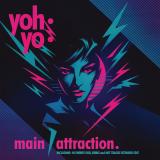
Some tracks don’t age, they just wait for the right dancefloor to hit again.
Originally released in 1985, Main Attraction by Toronto-based duo Yoh-Yo is one of those high-energy sleepers that quietly tore through clubs while never fully crossing into the mainstream canon. Produced by maestro Allan Coelho (Tapps, Click) and driven by the instantly recognizable vocal of Carlos Borges, it’s a pure shot of mid-80s Hi-NRG euphoria. Tight, glossy, and unapologetically emotional.
Fast forward to now, and Vintage Pleasure Boutique digs deep into the archives of Boulevard Records to deliver the ultimate collector’s package, bringing together all six officially released versions from the original 1985–86 pressings across Europe, Canada and Mexico. But this isn’t just a reissue, it’s a full-spectrum reconstruction of a club weapon.
From the Original Version, still hitting with that raw, uplifting drive, to the Sandy St. Alban Version, adding a slightly different vocal flavor for the heads who know, each cut reveals another angle of this underground anthem. The Instrumental and Hi-NRG Dub Version strip things down into pure mixing tools: extended grooves, pulsating basslines and synth hooks that lock dancers into a trance. The Remix pushes things further into peak-time territory, while the real gem for DJs lands on the B-side: the long-sought Hot Tracks Extended Edit by Gregg Denewith — originally exclusive to the US market and finally resurfacing in proper, playable quality. A true secret weapon for selectors who like their sets with a touch of authentic 80s heat.
This release is a love letter to Hi-NRG, to analog excess, and to the global club network that kept these records alive long before algorithms caught up. For fans of neon-lit nostalgia, sweaty dancefloors and that unmistakable Italo-adjacent pulse. Main Attraction is exactly what the name promises. Pure energy. No compromise.
- A1: Los Nickelos - Emilie Cha Cha
- A2: Lembe Carlos - Koko
- A3: Yeye National - Eldorado
- A4: Los Nickelos - Endende
- A5: Ebuka Ebuka - Poso Na Yo Egilite
- A6: Afro Negro - Si Me Quierre
- B1: Ba Bolingo - Mi Mambito
- B2: Ebuka Ebuka - Merengue Soucouss
- B3: Afro Negro - Princessia Nono
- B4: Los Nickelos - Guarache Fredo
- B5: Ebuka Ebuka - Mpenzi Niambiye
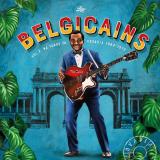
Following the sold-out first volume, the Belgian label Covadia presents a second chapter of Les Belgicains, focusing on the European rumba created by Congolese students in Belgium during the 1960s.
Volume 2 includes 11 rare tracks originally issued on 45 rpm singles or never released before. Highlights include the dancefloor favourite “Guaracha Fredo” by LOS NICKELOS and previously unreleased recordings by the orchestra EBUKA EBUKA, like the swinging “Merengue Soucouss” and the emotional “Mpenzi Niambiye”. The songs unmistakably express a longing for recognition and for a rightful place for a new nation.
- 1: Pass Between Houses
- 2: Theatre For Change
- 3: Real Home
- 4: Treat Me A Stranger
- 5: Utopia Of Bog
- 6: Void Attentive
- 7: My Love, Let's Take The Stage Tonight
- 8: The Kiss
- 9: He Had Always Led
Cathartic avant-rock, literate DIY folk & experimental composition exploring displacement, love, climate change, belonging & the places we call home - RIYL Jim O’Rourke, Richard Youngs, This Heat, Richard Dawson, Flying Nun. ‘Real Home’ is the new album by the Manchester-born, London-based artist Kiran Leonard. His sixth album proper (not including innumerable tour-only CD-Rs and short-run cassettes), since his precocious debut in 2013, ‘Real Home’ finds Leonard invigorated by inspiration and experience, making passionate, literate, and mercurial music that explores displacement, love, memory, climate change, connections to home and more. Encompassing songs recorded after moving to South London, ‘Real Home’ reflects on ideas of belonging and domesticity through folkloric, stream-of-consciousness songwriting. Across nine tracks, Leonard traces lived impressions of the household and the city, expressing sentiments of dislocation, alienation and stasis, but contentment too. Infusing the avant-rock effervescence, terraced dynamics and visionary lyricism of his music with what he defines as a greater sense of openness, Leonard is as versatile, fervent and imaginative as ever on ‘Real Home’, yet his music is somehow more intimate, affecting, and acutely expressive. Shaped by dual considerations of simplicity and formalism, ‘Real Home’ is by turns beautiful, allusive, and ruminative, an album on which Leonard considers what his songs have resembled in the past and what they mean now. In recent years, Leonard has crafted eloquent chamber music inspired by the likes of James Joyce and Clarice Lispector (‘Derevaun Seraun’), responded to contemporary politics and communication breakdown in the digital age (‘Western Culture’), and compiled solo works and ensemble recordings for a longform ode to Jonas Mekas and to one of Leonard’s enduring themes; home (‘Trespass On Foot’). On ‘Real Home’, Leonard reiterates this abiding thematic focus yet ascends to new, different heights, in music of cathartic delicacy and dissonance where all the myriad dimensions of his work to date seem to crystallize. There are sinuous songs about struggle and defying the pace of city life through drift and diversion (‘Pass Between Houses’), stirring songs of intense feeling and crescendo, described as a form of speculative detective fiction (‘Theatre for Change’). There are touching solo piano ballads (the title track), symbolic contentions with carbon capture and climate change (‘Utopia of Bog’), modes of experimental minimalism (‘Void Attentive’), and other profuse feats of compositional range, embroidered with wild tendrils of narrative and lyrical depth. A record to pore over, and get lost in. Exemplifying the vast aesthetic scope of Leonard’s music, lead single ‘My Love, Let’s Take The Stage Tonight’ is inspired by country lodestar Hank Williams, Russian poetry and a late period love poem by William Carlos Williams. Yet for Leonard, the song signals a sense of accessible materiality, and is the product of a more linear approach to writing songs: “My imitation of the great Hank Williams, in spirit if not in substance…This is one of the best efforts on Real Home at a song-as-object. Looking at it now I realise I was trying to write a song that made itself known as a song to the listener, and I wonder whether that’s crucial if you want a song to transcend its context. And that this is either accomplished through a total openness – by being inviting, by laying the tricks of the song out plain to see, as Williams and his many ghostwriters did so well – or by adopting a knowing aloofness, positioning oneself against the listener but letting it be known that that’s what it’s doing. In this song I try both, but mostly the former: as in, I wanted to write a song where every line follows on from the next.” Imbuing the endlessly elaborate and inventive qualities of his music with a newfound streak of candid, clear-cut melodicism, Leonard has reached a special place in his artistry, on a record that feels familial, and expresses closeness. Assembled with affiliates including Lauren Auder, Otto Willberg, Jasper Llewellyn (caroline), Tom Hardwick-Allan (Shovel Dance Collective), Magda McLean (caroline, The Umlauts), Alex Mckenzie (caroline, Shovel Dance Collective), Isabelle Thorn (Dear Laika) & more, the recording process had a significant influence on the subject matter of ‘Real Home’, in sessions defined by close-knit camaraderie and artistic eccentricity: “The theme of the home obviously recurs throughout the record; the album was mostly recorded in domestic spaces with friends, and the name of the album is Real Home. I like the qualifier ‘real’, like you’re getting past the cloak of the word and towards the thing-itself…also nearly all the percussion in this record was recorded on items from my dad’s shed (jam jars, sandpaper, blocks of wood, etc). Real home record!” ‘Real Home’, like anything by Kiran Leonard, is a record of dazzling multiplicity. Yet it’s a companionable prospect with a central premise; a collection of songs where listeners old and new can find a home. An album led by a scene; of Leonard standing at the threshold, ready to welcome you inside. “Exceptional songs that linger” - The Guardian // “An autodidact of amazing talent & energy” – Pitchfork // “A ridiculous amount of talent…confrontational, celebratory, provocative or perverse – he manages all of these emotions & more” - The Quietus /
- A1: If Sunlight Passes Through (Excerpt) - Molinaro
- A2: Luz Violeta - Pablo Color
- A3: Theme From Extase - Left Bank
- A4: Patterns - Carlos Nino & Friends Feat Zeroh, Jamael Dean & Jesse Peterson
- A5: Créme (Rough Mix) - Suzanne Kraft
- B1: In The Light Of Sprint - Bsa Gold
- B2: Ridge Of Tocco - Moliaro
- B3: The Cloud Is Back - Kaidi Tatham
- B4: Secret Beach - Jonti
- B5: Too Many Letters - Fourth Kind
- C1: Cinnamon Vision - Ashtrejenkins
- C2: Gears Not Working (Alternate Take) - The Abstract Eye
- C3: Persistere - Afrikan Sciences
- C4: Waver Track - Legowelt
- D1: Starr22 - K15
- D2: Suspicious Numbers - 2000Black
- D3: Freedom Live - Build An Ark With Special Guest
- D4: Atairs Flight - Alex Attias & Sassy J
Sassy J’s acclaimed A Sanctuary tape mix arrives as a double vinyl release, featuring 18 of the 22 original tracks. All exclusive and previously unreleased music by 17 contemporary artists including Molinaro, Carlos Niño & Friends, K15, Kaidi Tatham, Legowelt, Afrikan Sciences, AsheTreJenkins, 2000Black and many more. A journey through sounds, spheres, moods and dynamics dedicated to the unity and empowerment of the independent artists.
Tip on sleeve.
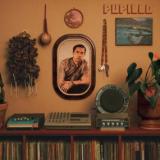
Latin Grammy-Winning Producer Pupillo Unites Global
Artists on his new album
Co-produced by Mario Caldato Jr. (Beastie Boys), featuring collaborations with Rodrigo
Amarante, Carminho, Adrian Younge, Gaslamp Killer, Cut Chemist, Hervé Salters, and more
Drummer, percussionist and producer Pupillo, one of the most influential figures in Brazilian
music and a four-time Latin Grammy winner, releases his first original album through the Los
Angeles–based label Amor in Sound. The record brings together an impressive and diverse
group of collaborators from Brazil and abroad. Amor in Sound is run by Samantha Caldato,
the project’s executive producer and creative director, and Mario Caldato Jr. (Beastie Boys),
who co-produced the album alongside Pupillo. The project was developed in a free,
experimental environment, allowing the artist to explore the many rhythmic and sonic
territories that have shaped his career — from Northeastern Brazilian traditions to jazz, hip
hop, and cinematic soundscapes. Listen here.
The album features special appearances by Brazilian artists such as Céu, Rodrigo Amarante,
Agnes Nunes, Amaro Freitas, Davi Moraes, Alberto Continentino and Pedro Martins,
alongside a strong roster of international collaborators, including Carminho, Gaslamp Killer,
Loren Oden, Adrian Younge, Cut Chemist and Hervé Salters (known for his work with
General Elektriks). The album’s 12 tracks were further enriched by contributions from
Jeremy Gustin, Roberto Schilling, and other musicians who make Amor in Sound Studios in
Los Angeles a place of creative exchange.
Beyond his work as the drummer of Nação Zumbi, Pupillo has built a prolific career as a
producer and collaborator with some of the most important names in Brazilian music,
including Gal Costa, Nando Reis, Erasmo Carlos, Céu, and Otto, helping to shape the sound
of multiple generations. This trajectory has earned him four Latin Grammy Awards.
From Pernambuco, Pupillo is also an acclaimed composer for cinema, having written
soundtracks for films such as Arido Movie and Blue Blood (directed by Lirio Ferreira), The
Assailant (directed by João Daniel Tikhomiroff), among others. This cinematic sensibility
permeates the album, which unfolds like a film, moving through richly textured soundscapes
that cross continents and musical traditions.
- A1: Cyril - Stumblin' In
- A2: Tiësto & Kshmr - Secrets
- A3: Afrojack & Eva Simons - Take Over Control
- A4: Sander Van Doorn - Riff
- A5: 4 Strings - Take Me Away (Into The Night)
- A6: Beatfreakz - Somebody's Watching Me (Hi_Tack Radio Edit)
- A7: Carlos - The Silmarillia (4 Strings Radio Edit)
- A8: Cheat Codes & Dante Klein - Let Me Hold You
- B1: Martin Garrix - Animals
- B2: Nicky Romero - Toulouse
- B3: Sandro Silva & Quintino - Epic
- B4: Watermät - Bullit
- B5: Hi_Tack - Say Say Say (Waiting 4 U)
- B6: Ian Carey - Keep On Rising (Feat. Michelle Shellers)
- B7: Kshmr & Bassjackers - Memories (Feat. Sirah)
- B8: Erick E - The Beat Is Rockin
- C1: Dvbbs & Borgeous - Tsunami
- C2: Bingo Players & Far East Movement - Get Up (Rattle)
- C3: Showtek - Booya (Feat. We Are Loud & Sonny Wilson)
- C4: Peter Gelderblom - Waiting 4
- C5: Ron Van Den Beuken - Timeless
- C6: Makj & Timmy Trumpet - Party Till We Die (Feat. Andrew W.k.)
- C7: Randy Katana - In Silence
- D1: Sam Feldt - Show Me Love (Edx Radio Mix)
- D2: Don Diablo - Cutting Shapes
- D3: Nadia Ali & Starkillers - Pressure (Alesso Radio Edit)
- D4: Sidney Samson - Riverside
- D5: Sander Van Doorn, Martin Garrix & Dvbbs - Gold Skies
- D6: Parra For Cuva - Wicked Games (Feat. Anna Naklab)
- D7: Firebeatz & Schella - Dear New York
Chapter 2[40,29 €]
Spinnin' Records, one of the most influential dance music labels, celebrates its 25th anniversary with the Chapter 1 compilation featuring a selection of iconic hits that have shaped the global electronic music scene. Since its founding in 1999, Spinnin' has been a trendsetter in electronic dance music (EDM), nurturing superstar artists and groundbreaking tracks across house, future bass, big room, and deep house genres.
This edition of Spinnin' 25 Years...Chapter 1 double vinyl LP collection includes memorable tracks from legends like Martin Garrix with the chart-topping hit “Animals”, "Stumblin' In" by CYRIL, "Secrets" by Tiësto & KSHMR, "Tsunami" by DVBBS & Borgeous, “Bullit” by Watermat, “Toulouse” by Nicky Romero, "Show Me Love" by Sam Feldt and 23 more tracks showcasing the signature sound and major contributions to the label.
Spinnin' 25 Years...Chapter 1 is available as a limited edition on green vinyl. The iconic Spinnin' logo is printed with an uv spot varnish on the gatefold sleeve.