Suche:casa disco

Styles
Alle
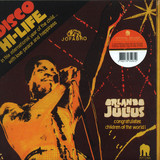
Orlando Julius - Disco Hi-life

Hot Casa Records reissues Disco Hi-Life, a real treasure album composed and interpreted by Afro-Soul maestro, Orlando Julius. Comes as delux 180 gramms vinyl with tip on jacket & inserts with interviews & photos. Check!
Following up to the 12inch release (HC07 / 2009), here comes the remastered version of a real mindblower piece from 1976 including four unreleased tracks, all recorded with the best Nigerian musicians, between Ginger Baker' Studio in Lagos and the American Star Studio in West Virginia, USA.
Orlando Julius Aremu Olusanya Ekemode was born in 1943 in Ikole-Ekiti, Nigeria and can be considered as a main figure of the Afro-Soul music history. One of the first African musician to get signed on a 'Major' label (Polydor), he delivered many hit single as a composer and effortlessly performed live as a tenor sax and singer. He worked and met with some of the 'greatest', such as Louis Armstrong, James Brown (for his Nigerian tour with Bootsy Collins), The Crusaders, Gil Scott Heron, or Hugh Masekela.
In the middle of 1975, just after they finished the recording of The Boys Doing It' album with Hugh Masekela, they all flew to Ghana and Lagos. It was holyday and Orlando had also plenty of time to focus on his own songs. He wrote 'Disco Hi-Life' in Yoruba and 'Children of the World' in English. And he immediately planned a recording session including 12 finest musicians, such as the great singer Dora Ifudu Avery, Adelaja Gboyega on keys, Kenneth Okulolo on Bass guitar, Butley Moore on drums, Fela's collaborator Tunde William on Trumpet, and also Ade, who helped sang 'Love Peace & Happiness'.
Originally released by Nigerian label Jofabro in partnership with the UNICEF association for the 'International year of the Child', it was only available in few promotional quantity... here comes the very first official reissue of this dancefloor masterpiece!

nicht am Lager

Bestelle jetzt und wir bestellen den Artikel für dich beim Lieferanten.

17,52

Last In: vor 7 Jahren
Various - Tchic Tchic: French Bossa Nova 1963-1974  Colored Edition LP 2x12"
  • A1: Les Masques - Il Faut Tenir (1969)
  • A2: Isabelle Aubret - Casa Forte (1971)
  • A3: Christianne Legrand - Hlm Et Ciné Roman (1972)
  • A4: Jean Constantin - Pas Tant D'chichi Ponpon (1972)
  • A5: Billy Nencioli & Baden Powell - Si Rien Ne Va (1969)
  • B1-: Marpessa Dawn - Le Petit Cuica (1963)
  • B2: Jean-Pierre Sabar - Vai Vai (1974)
  • B3: Sophia Loren - De Jour En Jour (1963)
  • B4: Isabelle - Jusqu’à La Tombée Du Jour (1969)
  • B5: Sylvia Fels - Corto Maltesse (1974)
  • C1: Frank Gérard - Comme Une Samba (1972)
  • C2: Ann Sorel - La Poupée Des Favellas (1971)
  • C3: Charles Level - Un Enfant Café Au Lait (1971)
  • C4: Andrea Parisy - Les Mains Qui Font Du Bien (1970)
  • C5: Audrey Arno - Quand Jean-Paul Rentrera (1969)
  • C6: Aldo Frank - T’as Vu Ce Printemps (1970)
  • D1: Christianne Legrand - Cent Mille Poissons Dans Ton Filet (1972)
  • D2: Clarinha - Lemenja (1970)
  • D3: Hit Parade Des Enfants - Aquarela (1976)
  • D4: Jean-Pierre Lang - Tendresse (1965)
  • D5: Magalie Noël - Une Énorme Samba (1970)
  • D6: Françoise Legrand - La Lune

Ever since the late 1950s bossa-nova revolution, Brazil’s influence on French music has been undeniable. Pierre Barouh, Georges Moustaki and a vast array of lesser known artists, all made the Musica Popular Brasileira (MPB) an axis of promotion at the service of a cool and metaphysical, modern and mixed Brazilian lifestyle. Some were seduced by the poetic languors of the bossa, some were looking for fun, and others just loved the American hybridization of jazz-bossa, jazz-samba.


What is bossa nova? One of its creators, Joao Gilberto said: "Its style, cadence, everything is samba. At the very start, we didn't call it bossa nova, we sang a little samba made up of a single note - Samba de uma nota so .... The discussion around the origins of bossa nova is therefore useless”. It is nevertheless useful to remember that these magnificent Brazilian songs, which the guitarist describes as samba, were shifted and balanced around improbable chords. "I like things that lean, the in-betweens that limp with grace," said Pierre Barrouh, quoting Jean Cocteau.


With emotion, arrangements for violin and supple guitar licks, bossa nova rapidly changed. A transformation that can be heard in the Tchic, tchic, French Bossa Nova 1963-1974 compilation, the result of a cultural reappropriation, which traveled through the United States and supplemented itself in France.

A musical revolution that has remained significant, bossa nova was born in Rio. From 1956 to 1961, Brazil lived through its golden years. In five years, the country had invented its modernist style. Elected president in 1956, Juscelino Kubitschek de Oliveira, an elegant man with a broad forehead, brandished a promising slogan: "Fifty years of progress in five years". He quickly got to work. Not worried about increasing debt, he launched the project for a new federal capital, Brasilia, designed by the communist architect Oscar Niemeyer. Volkswagen opened state-of-the-art factories and created the “fusquinha”, the Beetle. In Rio, the Vespa made its first appearance. The Arpoador Surf Club crew run into the “girl” from Ipanema, Helô Pinheiro - the tanned garota ("chick"), between a flower and mermaid, who at 17 walked by the Veloso bar, where the fiery author and composer, Tom Jobim and Vinicius de Moraes, were getting drunk on whiskey. From then on, bossa symbolized cool.

In 1958, Joao Gilberto recorded Chega de Saudade, which the directors of Philips denied, calling it "music for fagots". The marketing director, who believed in it, secretly pressed 3000 78-inch vinyls and distributed them at schools around Rio, creating a tidal wave.

American jazzmen then took over. In particular, trumpeter Dizzy Gillespie and guitarist Charlie Byrd. In November 1962, the Brazilian Ministry of Foreign Affairs funded a "Bossa-Nova" concert at Carnegie Hall in New York, inviting the genre’s pioneers. Unprepared, the show soon turned to disaster. But the troupe was invited to the White House by Jackie Kennedy. The first lady loved "the new beat" and in particular Maria Ninguem, a song by Carlos Lyra, later covered by Brigitte Bardot.

In Brazil, the 1964 military coup quickly ended this euphoria. The destructive atmosphere that ensued pushed many Brazilian musicians to leave, if not to exile. Thus, Tom Jobim, Sergio Mendes and Joao Gilberto arrived to the United States. In New York, Joao Gilberto met saxophonist Stan Getz. At the time, he was married to the Bahianese Astrud Weinert Gilberto, who had a German father. She had never sung before, but she knew how to speak English. Getz therefore asked her to replace her husband on The Girl From Ipanema. The Getz/Gilberto record with Tom Jobim on piano, was released in March 1964. Phil Ramone, the "pope of pop" was in charge of sound.

Bossa nova arrived in Paris through the classic “guitar-voice” channel (Pierre Barouh, Baden Powell, Moustaki…) But France loved jazz and Paris had already welcomed its American contributors. All these good people were to pass through Saint-Germain-des-Prés. The cabaret l'Escale became the Mecca of Latin American sound where one could find Pierre Barrouh and his friends, such as the Camara Trio, samba-jazz aces, whose only record was published by the Saravah label. With a band strangely called Les Masques (a band that included Nicole Croisille and Pierre Vassiliu, among others), the Camara Trio recorded an interesting Brazilian Sound, including the track Il faut tenir which is present on this tasty compilation of rarities.

Other enlightened musicians can also be found on the compilation, such as Jean-Pierre Sabar (songwriter for Hardy, Auffray, Leforestier ...) and the French pop rock organist Balthazar. In 1975, Sabar recorded Aurinkoinen Musiikkimatka on a Finnish label, which featured the crazy Vai, Vai, included on this record. We are now following the footsteps of Brazilian electronic musicians such as Sergio Mendes, Eumir Deodato or Marcos Valle who created funk and disco sounds on their keyboards and synthesizers. A style that influenced Véronique Sanson when she wrote Jusqu’à la Tombée de la nuit in 1969 for Isabelle de Funès, the niece of Louis and a great friend of Michel Berger - Sanson did end up singing this track on her 1992 Sans Regret record.


The pinnacle of exoticism and travel, Sylvia Fels’ Corto Maltese includes bongos, sea mist and ocean sounds. The title was taken from Jacky Chalard’s concept album written in 1974, Je suis vivant, mais j’ai peur (I am alive, but I am scared), based on Gilbert Deflez’s science fiction novel.


However, bossa nova extended the scope of popularity. "In the 1970s, I was a fan of Sergio Mendes, Getz / Gilberto. I fell in love with this music that I knew because I had been an orchestral singer, " explained Isabelle Aubret, who in 1971 delivered a composite record of covers by the very funky Jorge Ben, Orfeu Negro, Tom Jobim, Vinicius de Morais and Jean Ferrat. "I recorded this album for Meys Records in Paris, far from Brazil, with wonderful musicians, François Raubert, Roland Vincent, Alain Goraguer...". The latter wrote the arrangements for Casa Forte, a very percussive title borrowed from Edu Lobo, one of the initiators of the bossa who spent time in California. "Jazz and bossa came together and produced very rhythmic music. I love singing, it allows me to dream, to have fun, to feel a high on stage, and these songs brought me joy, made me swing, my singing felt like a dance.”


The world tours of French singers and their desire for the tropics, often brought them to Rio with its hills, forests, caipirinhas and tanned bodies. There are surprises though, like this Iemenja (Iemenja is the goddess of the sea in the Afro-Brazilian candomblé religion). Not unlike the composer and musician Jean-Pierre Lang, based in Sao Paulo, Claire Chevalier taught Brazil to Brazil. In 1970, the singer and painter published a 45-inch vinyl, Mon mari et mes amants (My husband and my lovers), under the improbable pseudonym of Clarinha (little Claire). She was then living in Rio, with her husband, Joël Leibovitz, who founded a band called Azimuth, and who owned a record label specialized in "sambas enredos" songs for samba school parades.


For its B side, she asked Pierre Perret to come up with lyrics for a song composed by Carlos Imperial: "Oh goddess of the sea, o goddess Iemenja, I bring a white rose to adorn your long hair ..." . "Perret came to see us, and we had fun, remembers Joël Leibovitz. We wrote Lemenja for fun, we recorded it at the Havaí studio, behind the Central do Brasil the central station. Erlon Chaves, the arranger who worked with Elis Regina, joined us" adding his share of Afro-Brazilian percussions and funky brass to the mix.

There is a common misunderstanding in Franco-Brazilian history: that bossa, admittedly hedonistic, is perceived as funny, even though the poets who wrote the texts are often philosophizing on the human condition. Its French interpreters pull it towards a carnival inspired universe, far removed from its fundamental essence. Thus, Jean Constantin covered the famous Samba da minha terra, an ode to the art of samba written by the classic Bahian composer Dorival Caymmi, renaming it with the enticing title of Pas tant de tchi tchi pompon: "On your pier there is no tchi tchi / when you arch your back, you know everything is alright ”(lyrics by Gérard Calvi). This expedited bossa aims for the absurd, but retains a certain elegance.

Indeed, Jean Constantin was not an idiot, the rather large man had a huge mustache and liked fantasy, (Les pantoufles à papa, Le pacha, inspired by cha-cha-cha-cha, salsa and jazz) but he was also the lyricist of Mon manège à moi interpreted by Edith Piaf, the composer of Mon Truc en plume by Zizi Jeanmaire and the soundtrack of François Truffaut’s 400 Blows. Le Poulpe, published in 1970, from which this bossa is extract, was arranged by Jean-Claude Vannier, an accomplice of Serge Gainsbourg’s Melody Nelson. In short: "There is enough of samba / By looking at the parasol / Because my poor cabeza / Is going to die in the sun".

Even the American actress Marpessa Down, who was at the heart of the bossa nova revolution with her role as Euridyce in Marcel Camus’ film Orfeu Negro, winner of the 1959 Cannes Palme d'or, fed the clichée with Je voudrais parler au petit cuica - "Tell me how you manage to always make people want to dance / It's true, I must admit that I cannot resist your magic" - in consequence, once can hear the cuica, a little drum inherited from the Bantu.


But bossa nova had many angles. Societal, of course, pushing actresses who were symbols of women's liberation like Brigitte Bardot, Jeanne Moreau, or Sophia Loren to engage in the exercise of accelerated bossa. In February of 1963, Sophia Loren made a record in French in Rome, Je ne t'aime plus, featuring the song De jour en jour, a bossa written by two Italians, Armando Trovajoli and Tino Fornai, which was released a little later by Barclay. Bossa accompanied the 1960s, a decade of moral liberation. Ann Sorel, who interpreted La Poupée des favellas, caused a sensation with L’amour à plusieurs, a provocative song written by Frédéric Bottom and Jean-Claude Vannier. As for the actress Andrea Parisy, she displayed her bourgeois cheekiness in Marcel Carné's Les Tricheurs before interpreting Les mains qui font du bien. And Magalie Noël, the friend of Boris Vian, who sung Johnny fais-moi mal, was hired to sing Une énorme Samba, composed by Alain Goraguer (arranger to Gainsbourg, Bobby Lapointe and Jean Ferrat) with lyrics by Frédéric Botton.

But in the end, of what wood is bossa nova made of? The answer is given by Christianne Legrand, daughter of Raymond the conductor, and sister to Michel the composer: "With me, with jà" - jà means "immediately" in Portuguese. In 1972, the singer, an expert in vocal jazz and a member of the Double Six, published Le Brésil de Christianne Legrand. Two songs included on the Tchic Tchic compilation that demonstrate how bossa, jazz, funk, rock, etc. work like a swiss army knife: the music is used to denounce broken systems, or miracles, HLM et ciné roman, Cent mille poissons dans ton filet, two songs from the O Cafona soundtrack, a successful telenovela broadcast, at the time in black and white, on TV Globo. The first was adapted in French by the fighter and friend of the Legrand tribe, Agnès Varda. The second is content with a play on words, jostling them into a summer fun.


Véronique Mortaigne

vorbestellen17.04.2026

erscheint voraussichtlich am 17.04.2026

27,31
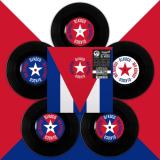
DJ KOCO - Cuban 45 Boxset (5x7")
  • A - Ricardo Eddy Martínez Y Expreso Rítmico - La 132
  • B - Juan Pablo Torres Y Algo Nuevo - Rompe Cocorioco
  • C - Farah María - Ámame Y No Pienses Mas
  • D - Grupo Ismaelillo - Amanecer - Dj Koco Edit
  • E - Fa-5 - Muévete Con Las Fuerzas Del Corazón - Dj Koco Edit
  • F - Grupo Los Yoyi - Paco La Calle
  • G - Juan Pablo Torres Y Algo Nuevo - Y Viva La Felicidad
  • H - Orquesta Riverside - En Casa Del Trompo No Bailes
  • I - Grupo Fa-5 - Ya Tengo Un Amor Verdadero
  • J - Rembert Egües - Tema Para Un Amanecer

Two years since DJ KOCO aka SHIMOKITA curated his sold-out Mr Bongo Brazil 45 boxset, he is back with another Record Store Day special, this time turning his attention to Cuba. Following a meteoric rise to the top, the Japanese DJ / turntablist extraordinaire has won the world over with his unquestionable humility, refreshing positivity, and flawless skills. The DJ’s DJ, it’s as much about taste as it is technicality for one of the world’s best showmen.

When the idea arose for a Cuban Classics 45 Boxset to mark RSD 2026, DJ KOCO was top of the list. With a deep-seated passion for Cuban music, its melting pot of cultures, its focus on rhythm, and its undeniable groove, DJ KOCO presents a selection of his favourite Cuban cuts, as well as two exclusive edits for the boxset.

It kicks off with the Latin funk sounds of Ricardo Eddy Martínez y Expreso Rítmico’s ‘La 132’ from 1978, before rolling into one of two spellbinding Juan Pablo Torres y Algo Nuevo cuts found on the boxset. Elsewhere, you’ll hear Farah María’s slow disco ‘Ámame Y No pienses Mas’, an unusual American-leaning production for Cuba at the time, given the state of US-Cuban political relations in that period. Other highlights include Orquesta Riverside’s ‘En Casa Del Trompo No Bailes’, taken from a rare collectable 7”, channelling a low-slung Latin bounce which explodes into an Afro-Cuban dancer as the track progresses.

In signature style, DJ KOCO has also served up two exclusive edits for the boxset. These include a reworking of the Cuban children's band Grupo Ismaelillo’s quirky ‘Amanecer’, giving it a more DJ-friendly structure. You’ll also find DJ KOCO’s take on FA-5’s much-loved funky dancer ‘Muévete Con Las Fuerzas Del Corazón’ with its heavy b-boy/girl break from 1976.

Testament to Cuba’s vast and vibrant musical landscape, DJ KOCO has cherry-picked some of the finest recordings to emanate from the country, spanning a wide range of styles and rhythms. Yet what ties all the tracks on this boxset together, is a hip hop sensibility and thirst for a breaks-heavy, danceable energy which radiates through DJ KOCO’s masterful DJ sets.

vorbestellen18.04.2026

erscheint voraussichtlich am 18.04.2026

27,10
VARIOUS - 70s Disco Hits Vol. 3 LP

VARIOUS

70s Disco Hits Vol. 3 LP

12inchZYX54074-1
Zyx Music
09.04.2026

Tauchen Sie ein in das glitzernde Lebensgefühl der 1970er Jahre! Mit „70s Disco Hits Vol. 3“ holen Sie sich die größten Dancefloor-Klassiker einer unvergesslichen Musikära direkt nach Hause – energiegeladen, zeitlos und voller Groove.

Diese exklusive Vinyl-Compilation vereint ikonische Künstler und Welthits, die die Disco-Welle geprägt haben:
• Donna Summer – Die „Queen of Disco“ begeistert mit ihren elektrisierenden Hymnen und unverwechselbarer Stimme.
• Barry White – Samtweiche Soul-Vibes und unverkennbarer Groove.
• Blondie – Disco trifft New Wave mit ikonischem Sound.
• Stevie Wonder – Funkige Rhythmen und musikalische Meisterwerke.

„70s Disco Hits Vol. 3“ bringt das Gefühl von Spiegelkugeln, Plateauschuhen und durchtanzten Nächten zurück – eine musikalische Zeitreise in die goldene Ära der Disco.

Let the music play – und machen Sie Ihr Wohnzimmer zur Tanzfläche!

Auf Lager

Bei uns am Lager und sofort versandfertig

18,28
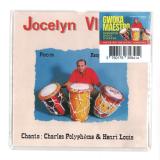
Jocelyn Virapin - Respè Pou Fanm 7"

JOCELYN VIRAPIN is one of the master of the Guadeloupean Gwoka percussion.
Born October 17th, 1957 in Basse-Terre, he’s an author, composer, producer and a vinyl digger.
His Gwoka is a pure tribute to the traditional combination of responsorial singing in Guadeloupean creole, rhythms played on the Ka drums and dancing.
He started to play in the 90’s with his band Gwaka. He opened and collaborated with prestigious band such as Kassav or Zouk Machine.
He has a massive discography as arranger and musician: he appears on more than 78 albums! The track "Pasyon" was originally released in 1994 on a rare vinyl , but with the artist we decided to do an edit, so we invited the super talented jazz player Florian Pellissier for a Rhodes improvisation on the original take.
The track "Respè Pou Fanm" was originally released with his band BELOKA in 2010 and was only pressed on a Cd format at a very limited quantity. This beautiful song is a blend of Ka, fantastic jazzy keys on Rhodes, hypnotic bass, sublime creole spiritual chants. With an incredibly joyous feel, the lyrics gave a timeless advice to men: Respect Women .
It definitely deserves a vinyl version for all the music lovers, Dj’s and diggers from all over the world !
Kenbé red pa moli !

Auf Lager

Bei uns am Lager und sofort versandfertig

14,08
DJ Dex - Libra LP

DJ Dex

Libra LP

12inchYXTQ-012
Yaxteq
12.02.2026

The Libra LP finds DJ Dex searching for the perfect balance on the dancefloor. "Freeks N' Geeks" is a shameless party anthem asking dancers to get their geek and their freak on with stomping kick drums, percussion, acid funk, and hands-in-the-air horns. "Papa Was a 909" reinvents a classic Motown anthem via a relentless 909 drum machine workout. "Hoodrat" pays homage to Detroit minimalism and Chicago jack—doubles are essential for the creative DJ. "The Balance" merges an 808 kit with clever percussion, melodic chords, and sci-fi synths for a tense, building track ready for peak-time action. "Casa Oscura" takes equal inspiration from hi-NRG disco tracks and the funkiest aquatic synths of Drexciya for a vibe entirely its own. "Astrological" is the LP's polyrhythmic, thumping, big-room techno cut where cascading synth lines meet atmospheric pads and vocal samples.

Auf Lager

Bei uns am Lager und sofort versandfertig

15,34
VARIOUS - DISCOTECA SOUND - ITALIAN DISCOTECA UNDERGROUND 1975-1986 (2x12")

Everyone knows the story of American disco.
But few are aware that, between the late 1960s and the late 1980s, Italy wrote a parallel one — spontaneous, surprising, and incredibly creative.

It is a story that spans two distinct seasons: the Italian disco of the 1970s — melodic, handmade, sometimes naïve yet always original — and the emerging Italo Disco of the 1980s, electronic, futuristic, and lightheartedly projected toward the future.
Two different languages, yet both driven by the same desire for freedom and modernity. Discoteca Sound — Italian Discoteca Underground 1975–1986 brings together 18 rare tracks — including two previously unreleased — that tell this story of transition: from the orchestral and sentimental disco of Italian dance halls to the synthetic and visionary sound of the first drum machines.
A journey through private archives, local labels, regional studios, and forgotten voices — the sonic map of a country that has always danced, but to its own rhythm. From Mediterranean disco to the first Italo Disco, from the dim lights of provincial dance halls to the early home synthesizers, each track opens a window onto an Italy that dreamed of the dance floor as a universal language of connection during the brief season of revolutionary utopias.

This compilation celebrates ten years of work by Disco Segreta — a decade dedicated to the research, recovery, and appreciation of Italian disco and electronic culture. An act of justice owed to all those artists who had their moment yet were never remembered by history — bringing back to light an essential, still too little known part of our musical heritage.
Because dancing today remains, more than ever, a living act of memory.

Limited edition 2LP, features 2 previously unreleased tracks and a new 2025 version of Coscarella & Polimeno – Station to Station.


f Grazia Vitale – Poi (1975) Previously Unreleased


q Daniel Sentacruz Ensemble – Vivo Solo Con Te (1982) Previously Unreleased


f Grazia Vitale – Poi (1975) Previously Unreleased


q Daniel Sentacruz Ensemble – Vivo Solo Con Te (1982) Previously Unreleased


f B2. Grazia Vitale – Poi (1975) Previously Unreleased


q D4. Daniel Sentacruz Ensemble – Vivo Solo Con Te (1982) [Previously Unreleased]


[f] B2. Grazia Vitale – Poi (1975) [Previously Unreleased]


[q] D4. Daniel Sentacruz Ensemble – Vivo Solo Con Te (1982) [Previously Unreleased]


[f] B2. Grazia Vitale – Poi (1975) [Previously Unreleased]


[q] D4. Daniel Sentacruz Ensemble – Vivo Solo Con Te (1982) [Previously Unreleased]

Auf Lager

Bei uns am Lager und sofort versandfertig

32,35
Bobby Matos and The Combo Conquistadores - My Latin Soul

When it comes to Latin soul, Bobby Matos And The Combo Conquistadores 'Tema De Alma Latina', has to be up there as one of the heaviest tracks ever recorded. This much-loved Latin workout has been rocking dancefloors for years with its infectious, driving energy and pulsating rhythms. Released in 1968, the 'My Latin Soul' album on Philips Records now receives a welcome reissue on Mr Bongo. It’s a sheer delight throughout and a premier example of the Nu Yorican sound that was thriving in New York in the ‘60s.

From a young age, the Bronx, New York-born Latin jazz percussionist Bobby Matos found inspiration through the conga drum masters Mongo Santamaría and Patato Valdez (who he had informal backstage lessons with) and timbales legends Willie Bobo and Tito Puente. Bobby was drawn into New York's club scene and began playing in the vibrant ‘60s beat / bohemian Greenwich Village cafes, followed by stints in a wide range of different venues. These included Bronx dance halls and after-hours clubs in El Barrio, through to the elegance of Carnegie Hall, Central Park concerts, and off-Broadway theatres.

Later relocating to Los Angeles, Bobby played an important role in spreading Latin music far and wide. He became an inspiration to many on the jazz dance and acid jazz scenes in the ‘80s / '90s where his recordings were picked and played, becoming prized collector items amongst DJs. The track 'Tema De Alma Latina' was immortalised as a classic for many, after being featured on the Gilles Peterson’s Street Sounds Jazz Juice 5 compilation in 1987. A captivating listen from start to finish, the album features other treats such as the dynamic album opener ‘Nadie Baila Como Yo’, the blazing flute led 'Mambo Maxims', and the blistering piano shuffler 'Raices'.

A truly iconic Latin classic whether you’re being reunited with it like an old friend or discovering it as a fresh new find.

Auf Lager

Bei uns am Lager und sofort versandfertig

29,03
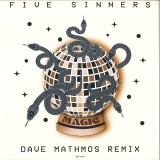
Five Sinners - Magic

Five Sinners

Magic

12inchBST-X105
Best Record Italy
15.05.2025

With the reissue of ''Magic" the circle of the works originally published by Eyes Records and composed in the earliest 80s by Celso Valli is completed: Future State, Blue Gas and now precisely Five Sinners !!! Best Record thus creates ''the triplet'' of the Italo-Disco operas made by the immense musician from Bologna, who used various nicknames at that time - as the trend of the main Italian arrangers - feeling 'a certain shame' in making commercial pieces, songs that were danced in the discos. He hid under dozens of pseudonyms (Adal-Scandy, Azoto, Bulldog Lama, Sandon, Super Band....) ''Magic'' and ''Precious Lies'' kept hidden, almost buried for over 40 years (but with many followers abroad) now shine their own light! Indeed. To further enrich this latest vinyl production by Claudio Casalini there is - in addition to the successful artwork of graphic designer Nerina Fernandez - the new captivating version of ''Magic'' (timing 6'20'') skillfully remixed by the talented Italian-Australian DJ-producer Dave Mathmos. In short, a 12-inch reissue not to be missed for both collectors and club DJs.

Auf Lager

Bei uns am Lager und sofort versandfertig

17,23
Prospect Park, Taka Boom, Lou Casablanca, Angela Johnson, Da Funk Junkies & DiscoGalactiX, Massimo B - Groove Is In The Heart Vol. 2

DJ Support: Dimitri From Paris, David Morales, Dave Lee, The Shapeshifters, Brian Tappert, Quentin Harris, Michael Gray, Dr. Packer, Marcel Vogel, Dj Pippi, Sebb Junior, Dj Pope, Dj Oji and many others

Groove Culture main men Micky More and Andy Tee are once again at the controls as the label presents its' second collection of 'Groove Is In The Heart'. As with the popular imprint's various EPs, the focus is on joining the dots between organic house, revivalist disco, uplifting dancefloor soul and colourful jazz-funk. There's much to admire from start to finish, a very strong bunch including MM & AT's celebratory Mix of Prospect Park's swirling disco-funk treat Feat Taka Boom 'i Got This Feelin', a wonderfully rolling and soulful Groove Assassin rework of Lou Casablanca and Angela Johnson's 'Gimme Your Love', Da Funk Junkies and DiscoGalactiX tasty Feel Good house Tune 'Holding On' and the revivalist Italo-house warmth of Massimo Berardi's 'Who I Am' Feat. Sheree Hicks.

Auf Lager

Bei uns am Lager und sofort versandfertig

14,24
Rico Casazza - Climax

Rico Casazza

Climax

12inchMOVPIC011
Moving Pictures
25.04.2025

Rico Casazza is no stranger to the Moving Pictures Label and the local scene. Calling Prague his home for the past few years, Italian electro/techno heavyweight is returning to the imprint with another release titled "Climax".
The EP brings to life a pair of high-speed dancefloor weapons, showcasing Rico's signature touch and sonic precision.
Complementing these tracks are two remixes by Moving Pictures' label founders - Roman Rai & Täino, having stayed true to the imprint's eclectic sound and the record's driving essence.
Pressed on black vinyl with a full artwork sleeve & label, "Climax" is yet another chapter to be discovered in Moving Pictures' universe.

Auf Lager

Bei uns am Lager und sofort versandfertig

15,34
Pamela Prati - Un Nodo All'anima

2024 Repress


"Limited Collector's 12inch Edition on Pink Colored Vinyl" - of 300 copies only !
It contains the original versions plus the extended version of "Un Nodo All'Anima", a big Italo-disco hit performed from one of the best eighties italian singer and showgirl.
This release comes with full picture cover artwork on the original "Jumbo Records" label.
From an idea of the former executive producer : Claudio Casalini.

Auf Lager

Bei uns am Lager und sofort versandfertig

18,70
Fibonacci - Primavera Cabriolet

'Primavera Cabriolet,' the inaugural album by the talented Italian artist, Fibonnacci, presented by LOT Records.
Prepare to be swept away by a quartet of mesmerizing tracks that intricately weave together a tapestry of rich, minimal sounds and atmospheric layers, reflecting the diverse influences that have shaped Fibonnacci's music.

This captivating release is a fusion of classic rominimal house beats with industrial undertones, adorned with resounding noises, expansive pads, and uplifting chords. 'Primavera' paints a sonic canvas that encapsulates the vibrant spirit of summer, tailor-made for those euphoric after-party moments.

Anticipate enthralling rhythms, immersive soundscapes, and innovative musical crescendos across each unique composition.
Step into the journey with 'Panorama 1986,' the album's opening masterpiece. It's a powerhouse track that boasts a compelling bassline, enigmatic pads, and hints of hip-hop vocals, setting the stage for an electrifying sonic adventure.

Next, 'il Viaggiatore,' the second track, emerges as a dancefloor anthem. Its pulsating bassline, driving beats, and harmonious fusion of vocals with retro piano and pads form an irresistible groove, perfectly suited for peak-time revelry or after-party indulgence. 'Hôtel Casablanca' exudes a delightful, feel-good aura. A delightful blend of industrial elements, crisp rominimal beats, and a deep, melodious tune creates an irresistible fusion that is sure to set feet in motion and spread smiles. This track has already earned high praise and is a must-listen for all.

Rounding off the album with finesse, 'Discoteca Paradiso' delivers an iconic rominimal experience. With classic kicks, hats, and industrial nuances, combined with nostalgic pads and vocals, it invokes the essence of the end of the night or the dawn of a new adventure embracing diverse perspectives within the dance music realm.

Fibonnacci's 'Primavera Cabriolet' promises a spellbinding and deeply immersive experience. Let this musical expedition captivate your senses and transport you.

Auf Lager

Bei uns am Lager und sofort versandfertig

11,72
Freeez - I.O.U / We’ve Got The Juice - Dr Packer Remixes

Dialling it back to the early ‘80s yet with a firm foot still in the future, Dr Packer takes on two of Freeez’s classic brit funk cuts ‘I.O.U’ and ‘We Got The Juice’ for a double dose of disco remix deliverance.

First up for a slice and dice, Freeez’s biggest hit ‘I.O.U’ gets a trademark Dr Packer update with a tougher bassline and squelching synths, echoed and extended in all the right spots. On the B, ‘We’ve Got The Juice’ gets a DJ friendly edit, with the Dr replaying the bass riff to get that extra dose of funk, whilst tightening up the percussion ready for it to be unleashed on the dancefloor.

DJ Support:

Arthur Baker, Dave Lee, Michael Gray, Fingerman, Casual Connection, Yam Who?, Andy Smith (Streetsounds), Walterino, Casa Blanco + many more

Auf Lager

Bei uns am Lager und sofort versandfertig

12,40
Dies Lexic - Lexicon Hall

Dies Lexic is a duo by Inês Tartaruga Água and Xavier Paes. Part of Favela Discos collective and label, they explore the channelling potentialities of sound, wandering between spectrums, ethereal soundscapes and zones of sonic subduction through means of DIY electro-acoustic instruments, amplified objects, electronics and composition processes based on repetition, language, chaosmosis and error.

Lexicon Hall, the long overdue debut album by the Portuguese duo of intrepid sound explorers, is a sort of digital ayahuasca, an intense psychedelic journey guided by drums and harshly bowed strings, channelling voices from other planes and fusing them with Dies Lexic’s very own distinctive voice. If you close your eyes hard enough you can probably see Tony Conrad waving hello in the middle of a dark jungle that is inhabited by tribes of our ancestors.


Artists bio:
Inês Tartaruga Água is a multidisciplinary artist, focused on the issues of deep ecology and radical regeneration, sound explorer and practitioner of DIY philosophy as well as collaborative and participatory practices in public space. Participates in collective exhibitions since 2013, highlighting the “XIII International Biennial of Artistic Ceramics” (Aveiro, 2017), “Убежище / Suoja / Shelter Festival - Laboratory” (Helsinki, 2019), «48 часов Новосибирск» (Siberia, 2019), or “Soundscapes” (Bahrain, 2019), and has her first individual artistic residency “Méhtēr: Matter, Form and Transformation” at Júlio Dinis Museum in Ovar (2018). Recently, Água has debuted sound pieces in Casa de Serralves (Porto, 2021) and in Casa das Conchas (Spain, 2021).

Xavier Paes is a transdisciplinary artist based in Porto. He divides his practice between visual arts, sound, performance, gleaning improvisation and multi-instrumentalism, focusing on ideas such as acoustic phenomena, repetition, resonant and sympathetic bodies, echo and ecology. He has presented his work at institutions, galleries, festivals, kiosks, raves and after-parties, highlighting places such as Serralves Museum, Oliva Arts Center, Porto Municipal Gallery, Stichting Centrum (The Hague), OCCII and Vondelbunker (Amsterdam), La Pointe Lafayette and L'international (Paris), STUK (Louven), Overtoon (Brussels) and Villa Arson (Nice).

Auf Lager

Bei uns am Lager und sofort versandfertig

9,03
Viewtiful Joe - Slappin Limerick EP

Viewtiful Joe (Casa Voyager, mindcolormusic, Fundamental) continues his run of sublime electro EPs with this joyful 5-tracker for Welt Discos. Futuristic in sound yet harking back to the heyday of breakdance in the early-to-mid 80s, these battle-ready boogie jams explode with wiggly slap bass, soaring pop melodies and the funk to make you jump. Lock in and freak out!

Auf Lager

Bei uns am Lager und sofort versandfertig

9,20
Kayroy - Pavlova Casanova EP

The mysterious Kayroy appears on his second Whiskey Disco record bringing the heat by way of sampladelic dancefloor collages packed with funk and a slight left-of-center aesthetic. 'Like Damn!' and the titular, 'Pavlova Casanova', are both hands-up, disco gaiety that will rip the heart of your chest.

'Sandy Shackles' closes out the EP conjuring the disco dub vibes of editors like Idjut Boys or Ray Mang. Just who is Kayroy - and who was he on his first Whiskey Disco appearance

Auf Lager

Bei uns am Lager und sofort versandfertig

11,35
Abdou El Omari - Lost Tape - 1980
  • A1: Ali Ou Hayani
  • A2: Ana Sahraoui
  • A3: Nihayat Hob
  • A4: Angham Chaabia
  • A5: Dikrayat
  • A6: Alach Yayouni
  • B1: Layali Fass
  • B2: Lobna
  • B3: Tanger L'été
  • B4: Taksim Abdou
  • B5: Hanan
  • B6: Interlude

Abdou El Omari was born in 1945 in Tafraout, south of Agadir -- a village suspended between the pink granite peaks of the Anti-Atlas and the waves of the Atlantic. A landscape already musical in itself. He grew up in the dry mountain light, surrounded by the rhythms of nature and Berber's culture. Very little is known about the man -- a veil of mystery still surrounds his life, only deepening the fascination. In the 1970s, as Morocco was transforming, Abdou El Omari shaped a sound of his own -- a visionary blend of spiritual jazz, psychedelic funk, Moroccan traditions, and early electronic experimentation. Today, his work is resurfacing, rediscovered by a new generation of listeners in search of lost horizons. This record stands among its rarest and most precious fragments. At twenty-two, he founded his first group, Les Fugitifs, which gained him local fame. Soon after, he released records and cassettes on labels such as Cléopâtre, Hassania, Boussiphone, Hilali, and his own, Al Awtar, while performing on RTM (national radio and television). He also composed for artists like Naima Samih, Laila Ghofran, and Aicha El Waad. In 1976, through the label Gam, he released his only vinyl album, Nuits d'été -- a record that would become cult decades later, reissued in 2017 by Radio Martiko. In the 1980s, his music grew quieter, more secret. He tried to recover his old tapes from the studios he had recorded in, but gradually withdrew from the scene and returned to hairdressing. A pioneer of musical fusion, he opened paths that would remain unexplored for years. He passed away in 2010, never witnessing the rediscovery of his music by diggers, bloggers, and collectors online. One day, his close friend and poet Aziz Essamadi, rescued a cardboard box from the trash -- a box containing Abdou El Omari's personal archives. It was later entrusted to Casablanca based collector Ahmed Khalil, founder of the label Dikraphone. Inside were treasures preserved by chance: demos, rehearsals, private recordings, unseen photographs -- and a stunning, almost forgotten cassette. Here, El Omari sounds bolder than ever, exploring territories where pop, cosmic disco, electric blues, and Moroccan tradition merge without boundaries. Armed with his ARP Odyssey synthesizer, hypnotic grooves, and the celestial layers of his Farfisa, he expanded the dialogue between deep roots and electronic exploration. This album is the continuation of a vision -- a music of the Moroccan future: rooted, but reaching for the unknown. Colorful, magnetic and timeless, here is music for dancing as much as for dreaming.

vorbestellen13.03.2026

erscheint voraussichtlich am 13.03.2026

23,11
Kapote presents - Wildstyle House Vol. 1 (LP 2x12")

Kapote presents

Wildstyle House Vol. 1 (LP 2x12")

2x12inchTOYT180
TOY TONICS
27.02.2026

WILDSTYLE HOUSE is a new compilation series where Toy Tonics invites producers and DJs that have a very special, funky, unique sound to make one new track. The compilation should show the variability and diversity of house and disco TODAY. Like the wild music mix you can hear at the Toy Tonics events and the way Toy Tonics DJs combine many different styles of "4 to the floor" music into one new soulful, multi-style, and warm-sounding blended "genre." It's about the groove, about a new soul sound, the human feel, the organic and Y2K-inspired dance music that is growing and appeals to a new generation of dance music lovers.

This first part of the compilation includes unreleased music by:

Afro-funk and salsa-house producer talents ELADO, MUSTA, and ALMA NEGRA.

Garage house maestros MELON BOMB and Italian musician DANIEL MONACO (known for his New Wave disco and proto-house releases on Rush Hour and his work for Antal).

MARLA KETHER, the London bass player and DJ, who is known for her work with Little Simz, Oscar Jerome, and Loyle Carner, and has now started to release her own tracks.

Argentinian singer, musician, and DJ ALOT, combining proto-house vibes with Spanish rap.

Funk house producer and edit maestro PAUL OLDER, who is starting to become one of the key names of the new soul house scene (supported by DJs like Folamour, David Penn, Seth Troxler, Kirollus, Breakbot...).

And also Toy Tonics' own GEE LANE, KAPOTE, and ARPY BROWN contributed new tracks.

nicht am Lager

Bestelle jetzt und wir bestellen den Artikel für dich beim Lieferanten.

20,59

Last In: vor 51 Tagen
Various - Wizzz! French Psychorama Volume 5 (67-75)

The journey through French-speaking pop archives continues with this fifth volume, packed with fuzz, gimmicks, and dissent. Far from the charts, the selected tracks display a great creative freedom, often backed by corrosive humor. Welcome to the surprising, kaleidoscopic, and colorful world of the late sixties and early seventies, Wizzz!
Born in Montauban, Robert Pico stumbled into music by chance when he met René Vaneste, then artistic director at Pathé-Marconi. René brought him to Paris to record his first 45 RPM EP in 1964. A year later, Pierre Perret introduced him to Vogue, where he recorded his second album with Claude Nougaro’s orchestra. Sylvie Vartan then introduced him to RCA, where he recorded four singles, including the astonishing "Chien Fidèle," a track backed by a hair-rising fuzz guitar. Alongside his solo career, he also composed for other artists like Alain Delon (the song was recorded but remains unreleased), Magali Noël, Bourvil, and Georges Guétary. In the Paris of the sixties, he mingled with Mireille Darc, Elsa Martinelli, Marie Laforêt, France Gall, Françoise Hardy, Petula Clark, Régine, Dani, Serge Gainsbourg, Joe Dassin, Franck Fernandel, Charles Level, and Roland Vincent. Despite his efforts and winning a Grand Prix Sacem for his final record, Robert Pico didn’t achieve the expected success in show business and decided to leave Paris and return to the Southwest, where he devoted himself to writing. He is the author of 23 books (including Delon et Compagnie, Jean-Marc Savary Editions 2025, a memoir about his youth and his many encounters). Today, he is relieved to never have become a celebrity and devotes himself to his work with passion.
In 1969, the Franco-Italian movie Erotissimo was released, directed by Gérard Pirès (who later directed Taxi in 1998, written and produced by Luc Besson). This pop comedy features Annie Girardot, Jean Yanne, Francis Blanche, Serge Gainsbourg, Nicole Croisille, Jacques Martin, and Patrick Topaloff. The soundtrack was written by Michel Polnareff and William Sheller, with lyrics by Jean-Lou Dabadie. "La Femme Faux-cils," performed by Annie Girardot. It recounts the feelings of a rich CEO's wife who seeks to develop her sex appeal under the influence of advertisement and magazines. Groovy, sparkling and light, this track, with ITS lush arrangements humorously critiques consumer society and feminine beauty standards.
“Je suis l’Etat” (1967) is the flagship track of the first EP by singer-songwriter Spauv Georges, aka Georges Larriaga, better known as Jim Larriaga (1941-2022). Born into a family of bakers, the young man was initially planning to become a hairdresser when he discovered English-speaking music through Elvis Presley and the Beatles. After this revelation, he decided he would become a songwriter and gave himself five years to succeed. He recorded his first two EP’s independently for RCA under the pseudonym Spauv Georges; meaning “that poor George”, a nickname given to him by the mother of her friend Jean-Pierre Prévotat (future drummer of the Players, Triangle, or Johnny Hallyday). Portraying a depressed and eccentric young man, Spauv Georges created corrosive and amusing songs that didn’t reach a wide audience, despite a TV appearance with Jean-Christophe Averty.
Supported by his loyal friend and fellow songwriter Jean-Max Rivière, Georges Larriaga met the future singer Carlos in the early '70s, then Sylvie Vartan’s assistant. He wrote songs for Carlos, including the popular "La vie est belle," "Y’a des indiens partout," and "La cantine", which went onto become a huge hit in 1972. He also composed for Claude François (“Anne-Marie”, 1971), Charlotte Julian (“Fleur de province”, 1972), helped launch child singer Roméo (who sold 4 million records), and later wrote the hit "Pas besoin d’éducation sexuelle" (1975) for the young Julie Bataille. In 1971, Jim recorded an album for Disc'Az: “L’univers étrange et fou de Jim Larriaga”, which featured pop gems like “La maison de mon père”.
The story of the song "Zoé" began when Pierre Dorsay, artistic director at Vogue Records, asked Swiss singer and musician Pierre Alain to write a song for a new female singer. The inspiration came when he realized that Zoé (the artist's name) was also the name of France's first atomic battery, created in 1948, which consisted of uranium oxide immersed in heavy water! The lyrics reflect a bubbling energy that must be handled with caution, while the instrumentation echoes this atomic theme, notably with the use of a theremin.
Zoé’s career lasted only as long as a single 45 RPM, but it seems Christine Fontane was the vocalist behind this pseudonym, who is known for several EPs, a good "popcorn" album in 1964, and a handful of children’s singles in the '70s. Regardless, the photograph on the cover is of a different girl entirely.
Later, Pierre Alain continued his career, writing songs for himself, Marie Laforêt, Danièle Licari, Alice Dona, Arlette Zola (3rd place in Eurovision 1982), and achieving multiple gold and platinum records in Canada. Also an inventor with several patents, president of the Romande Academy, and head of the French Alliance in Geneva, he now composes atonal music, books, and poetry. Moreover, he is also the host of "Les Mardis de Pierre Alain" at "Le P'tit Music'Hohl" in Geneva.
Filled with oriental choruses and fuzz guitar, "Fou" is from Jacques Da Sylva's only EP released by Vogue in 1967. Despite the quality of this recording, all traces of this singer disappear after this first effort.
Valentin is a baroque pop singer born in Belgium. He is the songwriter and composer of most of the tracks on his three singles released in the late 60s in Canada. A legend says that he reincarnated himself as Jacky Valentin during the 1970s for a rock'n'roll revival career in Belgium, but his older brother sadly debunked this story. Valentin's first two singles were arranged by Claude Rogen, a Parisian session pianist who had come to Canada to promote the song “Mister A Gogo”, a cover of David Bowie’s “Laughing Gnome”, adapted by singer Delphine, his wife at the time. Far from his usual network, Claude Rogen arranged music for Polydor, including the arrangements for “Je suis un vagabond” in 1969, a jerk tune with string arrangements and a furious optimism.
Jacques Malia wrote, composed, and recorded his only 45 EP for Festival in 1966. “Histoire de gitan” is an incredible beat track with bohemian scat that tells the story of a gypsy musician who came to Paris to make it in the Music-Hall, to no avail. The hero of the song and its author probably shared a similar fate, as Jacques Malia faded into anonymity after this remarkable attempt.
Bernard Jamet recorded two EPs for Barclay in the late sixties and co-wrote several songs with Christine Pilzer, Pascal Danel, and prolific songwriters Michel Delancray and Mya Simile. The track “Raison Légale” (1968), his masterpiece, immerses the listener in a courtroom right when a murderer is being judged, with jerk rhythm and free arrangements. A unique, paranoid, judicial, and psychedelic oddity.
Jean-Pierre Lebrot-Millers started his career in show business in 1967 as a singer and songwriter for the Philips label. After three singles, he wrote several songs of a new kind with his friend Pierre Halioche, in the midst of the sexual liberation movement and the democratization of drugs. With provocative lyrics, “Les filles du hasard” and “Barbara au Chapeau Rose” were released on a Philips singles in 1968. The character of Barbara was inspired by a queen of Parisian nightlife during the psychedelic years: model Charlotte Martin, who dated Eric Clapton from 1965 to 1968, then Jimmy Page from 1970 to 1983. Jean-Claude Petit’s arrangements, with a table-filled intro, soul brass, and Hendrixian guitar, emphasize the flamboyance of a hedonistic and sexy character, whose dog is named Junkie because “Junkie est un nom exquis”! The track was recorded live in three takes with a full orchestra.
Upon its release, the record was censored by Europe 1 and RTL due to its references to drug use. Jean-Pierre Lebrot was then banned from the airwaves and later dismissed by his record label. He changed his artist name to Jean-Pierre Millers, while his companion Pierre Halioche became D. Dolby for a new dreamy composition, “Chilla”, which Jean-Pierre produced himself with arrangements by Jean Musy. Once again, the song was immediately censored everywhere. After this setback, he decided to stop singing and started taking on odd jobs to support his Swedish wife and their son until the day he met Jean-Pierre Martin, then production manager at Decca, who had worked with Manu Dibango. Martin offered Jean-Pierre Lebrot-Millers, then employed at Rank Xerox, the position of artistic director at Decca. He accepted and became, a year later, promotion director (radio, press, TV). He worked on Julio Iglesias’s first album for Decca, which became a massive hit and allowed him to meet Claude Carrère. The latter asked him to write new songs and find their performers, much like a “talent scout.” It’s through him that Jean-Pierre discovered Julie Pietri and Corinne Hermès. He composed “Ma Pompadour” for Ringo, Sheila’s husband, and took the microphone again for the syncope hit “Rendez-Vous” in 1982.
That same year, Jean-Pierre Lebrot-Millers tried to release a track for which he had heavily gone into debt: “Si la vie est un cadeau”. Having recorded it in London, he presented it to numerous professionals, all of whom refused to get involved. The same thing happened with Antenne 2 and the Sacem when he proposed the song as France’s entry for Eurovision. He then met Haïm Saban, who was producing cartoon soundtracks and had just launched the Goldorak theme song. Saban, having listened to the song, declared it had the potential to become a hit. He sent Jean-Pierre and Corinne Hermès to meet the CEO of the Luxembourg radio and television network. The latter received them, asked to hear a verse and chorus a cappella in his office, and immediately hired them to represent Luxembourg at Eurovision 1983. They reworked the arrangements and recorded a new version with Haïm Saban as co-producer. The song ended up winning Eurovision 1983, a great comeback for our hero. He continued producing and hung out with the band Nacash in Belgium when a couple came to introduce their daughter for an impromptu audition in a hotel room. The girl sang “Les démons de minuit” while dancing to a radio cassette. Impressed, he had her take singing lessons for a year and composed a song for her (for which he had the melody and title, but no lyrics). This required him to go on the hunt for a lyricist, who ended up being Guy Carlier. They recorded the song, which was initially a ballad, at Bernard Estardy’s CBE studio, and gave the singer a new name: Melody. They showed the song around their industry network without success. Later, Estardy called Jean-Pierre to suggest changing the rhythm and making it pop-rock. Orlando, Dalida’s brother, liked the result and decided to co-produce the track. “Y’a pas que les grands qui rêvent » became a classic hit. The song has since been covered by Juliette Armanet (as a ballad, like the original) and Valentina.

Born into an aristocratic Breton family, Hervé Mettais-Cartier worked as a DJ at Queen Kiss, a nightclub in Poitiers, where he formed the band Les Concentrés with Michel (an actor) and Christian (a radio technician). Together, they created a repertoire of whimsical songs (“Ma bique est morte”, “J’suis un salaud”, “Fils de dégénéré”...) that they performed on stage dressed in white (in homage to “concentrated milk”). They performed at Bliboquet and Olympia in 1968 for the 10th edition of the “Relais de la chanson Française” organized by L’Humanité-Dimanche and Nous les Garçons et les Filles, sponsored by Pepsi Cola. Winners in the author-composer category, alongside Danish singer Dorte, their visibility allowed them to record a 45, and appear on television in Jean-Christophe Averty’s show. The A-side of the disc features Bruno le ravageur, a casatchok dedicated to Bruno Caquatrix, the director of Olympia, nicknamed in the song “Coq Atroce” or “croque-actrices”. The B-side is dedicated to “Fils de dégénéré”, a quirky tribute to Hervé's aristocratic roots, mixing absurdity with sophisticated vocal harmonies.
After Les Concentrés, Hervé Mettais-Cartier formed the duo La Paire et sa Bêtise with his friend Olivier Robert. They performed in Parisian cabarets and toured with Pierre Vassiliu. In the late 1970s, Hervé began a solo career. He recorded two albums for the Motors label in 1978 and 1979, which did not achieve their anticipated success due to lack of promotion. In 1980, he met Bernadette, with whom he started a family and created a “Chansons à voir” (songs to see) show that he performed until his death at the end of 2024.

Publicité comes from the final EP by the Missiles (Ducretet Thomson, 1966), a disc that also includes “La (nouvelle) guerre de cent ans”, featured on Volume 4 of our Wizzz! series. Please refer to the booklet for the story of the band.

“He’s 1.82 meters tall, 28 years old, weighs 135 kg, is black and Belgian”: this is the description of singer Hegesippe on the back of his sole single (Decca, 1967). He appears on the album cover wearing a Greek toga, like a hippie gag – we are at the end of the year 1967. In “Le crédo d’Hegesippe”, this former bodyguard of Antoine and the Charlots plays the delightful card of the thick brute converted to Flower-Power and non-violence, with arrangements by Jean-Daniel Mercier, aka Paul Mille.
“Ethéro-disco” was released on a promotional record for clients of the Maréchal company (Liège, Belgium) for the New Year 1979. Over a funky rhythm, celebrity impersonations (Brigitte Bardot, Jacques Dutronc, Fernandel…) deliver an enigmatic text about pharmaceutical products like ether, bismuth, and aspartate. The track was composed by Dan Sarravah (responsible for Joanna's “Hold-up inusité” featured on Wizzz! Volume 3) and Tony Talado, who was also a singer (one 45 in 1967), songwriter (with over a dozen credits between 1964 and 1985 in various styles from surf music to disco), author (Devenez Végétarien, Dricot Editions, 1985), ad designer, and psychologist.

Décollez-les is on the A-side of Mamlouk's only single, a pseudonym for Marsel Hurten, who is known for his work on several EPs in the late sixties, as well as composing music for Hervé Vilard’s “Capri, c’est fini”, Claude Channes' “La Haine”, Annie Philippe’s “On m’a toujours dit”, and Nancy Holloway’s “Panne de Cœur”.
This strange song, with Afrobeat horns and absurd dialogues between a chef and his kitchen staff, is the result of a collaboration between Marsel Hurten and one of his neighbors, a photographer from Pavillon-sous-Bois (93), where the musician settled after returning from the Algerian War. A music video was shot to promote the record.
Marsel Hurten was born in Tourcoing (59) into a musical family. At a young age, he joined the brass band founded by his grandfather, playing the piston before studying trumpet at the conservatory, as well as teaching himself how to play the guitar. As an orchestra musician, he toured in France, Belgium, Germany, and England. He released a series of solo 45’s between 1965 and 1968 for the DMF and Az labels before stopping recording to focus on working for other artists (Gilles Olivier, Noëlle Cordier…).
“L’amour nu” (Vogue, 1971) is the work of the short-lived Belgian band Mozaïque. The track, written by singer Jacques Albin, closely resembles another of his compositions, “Carré Blanc”, which he recorded in 1969 for Disc’AZ.
Represented by the Lumi Son micro-label based in Marignane (Côte d'Azur), Jean-Marc Garrigues released two 45 RPMs in the late sixties, defending the French jerk sound. The song “Je dis Non” is a short, joyful ode to youth, pop music, and rebellion.
Songwriter and performer Jacques Penuel released three singles. The first one, “Astronef 328” (Fontana, 1969), features a dizzying series of chords punctuated by sound effects, a sci-fi story, and arrangements by Jean-Claude Vannier.

We would like to sincerely thank Pierre Alain, Moon Blaha, Marsel Hurten, Bastien Larriaga, Jean-Pierre Lebrot-Millers, Bernadette Mettais-Cartier, Robert Pico, Olivier Robert, Claude Rogen, Micky Segura.
nicht am Lager

Bestelle jetzt und wir bestellen den Artikel für dich beim Lieferanten.

23,11

Last In: vor 76 Tagen
Artikel pro Seite:
N/ABPM
Vinyl