On their second album, Winter Pageant, The Softies move forward with focused delight. It's the combination of Jen Sbragia (All Girl Summer Fun Band) and Rose Melberg (Tiger Trap, Gaze, Go Sailor) that molds The Softies' panoply: feathers and thorns, fawn and fearless, fable and friction. Originally released in 1997, Winter Pageant is the drama of utter melancholia documenting the broken promises, missed phone calls, conversations stalled, love lost. Colossal tasks recorded two guitars deep, forming a new Iliad, chapters on brave deeds and the power of love on the move. You can live for love, or you could live for the splendid cascade of guitar on guitar, voice over voice: The Softies. Winter Pageant was recorded by Stuart Hallerman (Soundgarden, KARP) at his Avast! recording studio in Seattle, Washington.
Suche:cascade
Black/white splatter vinyl. Sect's 4th LP is about a political plague swept in worldwide under the chaos of a literal & ecological one. Plagues Upon Plagues faces a mournful new reality: the profound loss of lifelong battles in an unraveling civilization." Sect have a lot on their minds. With the release of their brand new single, "New Low" and the promise of Plagues Upon Plagues, the follow up full-length to 2019's Blood of the Beasts, Sect explore the intersection of issues which have cascaded over us for the last five years, the "plagues" of the title referring to the literal pandemic, and the metaphorical plague of the political state and the rise of fascism
CRUDE’s second record release features one of the most promising artists from the underground music world - DJ RAT.
Hailing from the American Pacific Northwest, DJ RAT’s signature sound is characterised by an eccentric, distinguishing and uncompromising approach - seamlessly blending intense, arcane and mystical elements in order to create a captivating experience.
Side A kicks in with Nocturne, the EP’s leading track that guides the listener into a veil of mystery with its enigmatic melody and its pulsating basslines that gradually build intensity while maintaining an underlying sense of tranquillity.
Hexosphere’s rhythm is edgy and straightforward with a trippy nature.
There’s an ever-evolving dynamic throughout the four tracks, alternating between driving rhythms and moments of serene psychedelia - exploring the duality of light and dark and evoking a feeling of introspection.
The B-side takes off with Corridor, an oscillating tension-builder.
Corridor’s distorted synths and glitchy effects cascade over pounding drums, creating a chaotic yet mesmerising soundscape.
Telepathic Climax weaves in and out with shimmering and alluring shifts that add depth and dimension to the track.
Atmospheric and trippy textures create a sense of space and immersion throughout the journey of the EP - with illuminating elements piercing through the darkness.
Sect have a lot on their minds. With the release of their brand new single, New Low and the promise of Plagues Upon Plagues, the follow up full-length to 2019’s Blood of the Beasts, Sect explore the intersection of issues which have cascaded over us for the last five years, the “plagues” of the title referring to the literal pandemic, and the metaphorical plague of the political state and the rise of fascism.
Comprised of an international cast of stellar musicians, who cut their teeth in a formative moment of political, cynical, antagonistic extremes, Sect unites Scott Crouse (Earth Crisis, Tooth & Claw) & Jimmy Chang (Undying, Catharsis) - guitars, Steve Hart (Day of Suffering, Mania For Conquest) - bass, Andy Hurley (Fall Out Boy, Racetraitor) - drums and Chris Colohan (Cursed, Unwell) - vocals. They released No Cure For Death in 2017 and Blood of the Beasts in 2019.
Plagues Upon Plagues opens with the bereft waves of “No Uncertain Terms”, a side of the band we haven’t seen before. Vocalist Chris Colohan describes this album as “a funeral rather than a trial”, the activism of previous releases fading to sorrow and grief.
Lead single New Low follows with the advent of marching drums, a funereal procession for the world we hoped to build. There’s frantic horror on the album too, with the track “Drowning in Sorrows” taking a look at the ways in which we numb ourselves as a society. “#ForeverHome” is a bitterly angry track about how people used animals for both narcissistic virtue signalling and one-way comfort in the pandemic, and abandoned them en masse just as selfishly when social life came back. Speaking to their straight-edge principles and how that continues to feed into their songwriting, Chris says, “the only kind of straight edge songs I’m interested in writing are dynamic ones that address human realities that you don’t have to be straight edge to engage with.”
On Plagues Upon Plagues, Sect pierce through the veil of complacency, forcing listeners to confront uncomfortable truths about the fragility of our world. The band wields their sonic arsenal like a prophetic warning and with raw vocals and uncompromising lyrics, they confront the harsh realities of existence in these tumultuous times. As society teeters on the brink of chaos, Sect's cold hard statement resonates with an urgency that cannot be ignored.
- A1: Rehearsal #1 (“I’ve Been Looking From The Outside”) 4:13
- A2: Rehearsal #2 (Metal Sludge, Aka "Bufo Gutturalis") 6:56
- A3: Rehearsal #3 (“Early Morning Haze”) 6:56
- A4: Rehearsal #4 (“Free To Blow With The Wind”) 3:04
- B1: Rehearsal #5 (Heavy Acid Funk Groove) 2:55
- B2: Rehearsal #6 (More Heavy Acid Funk Groove) 2:12
- B3: Rehearsal #7 (“Sunshine Comes My Way”) 3:27
- B4: Rehearsal #8 (Grind Groove) 1:02
- B5: Rehearsal #9 (Grind Groove, W/Solos) 2:42
- B6: Rehearsal #10 (Acid Rock Groove) 2:44
- B7: Rehearsal #10 (Acid Rock Emergency) 1:33
- B8: Rehearsal #11 (Shred And Stroll) 3:42
Influences from heavy bands of the time, such as Black Sabbath, Deep Purple and Steppenwolf are noticeable, with proto-doom and psych/funk undercurrents.
Do you like fuzz guitar? You're going to hear it screaming and wailing and building to epic tidal waves and crashes, the kinds of astonishing guitar cascades not heard since you cued up the best of all available live Jimi Hendrix recordings. Talking about a track known online as 'Bufo Gutturalis,' a poster's assessment: "I gotta say this is one of the most shocking songs from 60s, it's impressive how the sound can be heavy and dark -- it is also one of the earliest released songs most closely to call proto-doom."
1981, the leaden years are over, the socialist left is in power in France and the first wave of punk seems a long way off. However, the youth of the day had not said its last word, and bands were springing up all over the place, free radio stations were opening up, fanzines were being published, concerts were being staged on the fly and little by little a scene was forming, a motley crew of kids in revolt, radical activists and just plain old folk passing through.
After having cut their teeth in a variety of more or less confidential bands, in which you'd come across a good number of players from this up-and-coming alternative scene, the members of Guernica moved up a gear, determined to blow on the still-glowing embers of rebel rock. With the shortage of venues the rule at the time, they began by scouring the suburban MJCs, putting on wild concerts and eventually meeting up with the squatters of the Couronnes commune and the members of V.I.S.A., with whom they played an active part in organising concerts in squatted buildings in these relegated areas of the capital.
In February 1983, the V.I.S.A. association and the Abattoir art collective (which included some members of Guernica) organised a concert at the Usine Pali-Kao. That evening, two groups took to the stage in succession: Guernica and a fledgling duo, Bérurier Noir. The evening will go down in the history of alternative rock as one of the key turning points of the period. After the departure of Loran, who played guitar with both bands, Fabrice Benoît joined Guernica on guitar, and the gang continued for a few more months, ending on a high note with a chaotic concert at the Eldorado in Paris.
Until now, it's been impossible to get your hands on any of the band's recordings unless you're lucky enough to own the Paris Mix compilation, the Guernica/Bérurier Noir split or the V.I.S.A. Usine Cascades 1982 cassette. This vinyl, a perfect record of the era, brings together the six tracks recorded by the band at the time.
Drab Majesty's third album, Modern Mirror, is a journey of self-reflection, nostalgia, love, beauty, and heartbreak told across eight addictive and emotional synth pop anthems - a seemingly classic tale delivered unblinkingly through the frame of the modern world. Elements of classic tragedy weigh heavily in the reflection of Modern Mirror in songs like "The Other Side", possessing a fundamental sound that is energetic, luminous and hopeful. Fusing the sonic aesthetics of predecessors like New Order and The Cure within the cautious instruction of Greek mythology and modern science fiction, Drab Majesty has birthed a hybrid of dreamy malaise, captured for a future moment. The first single, "Ellipsis", romantically plays up the distorted concept of courting through modern technology in a world that has yet to adapt, while on "Long Division", Deb's resounding guitar cascades around the chorus shared with No Joy frontwoman Jasamine White-Gluz, wistfully warning us against our vanity and self-obsession. Even when hope for everlasting love peeks through in "Oxytocin", a sparkling and stoic track sung by Mona D., we are firmly reminded our fleeting existence. Produced by Josh Eustis (Telefon Tel Aviv) with appearances by Jasamine White-Gluz (No Joy) and Justin Meldal-Johnson (NIN, Beck, M83, Air).
Clear Vinyl[10,88 €]
Swedish synth-pop phenomenon Kite's second 7 inch since signing with Dais in 2023 finds the duo of Nicklas Stenemo and Christian Hutchinson Berg swinging for new heights of romantic desolation and baroque grandeur. They describe the A Side, "Losing," as a "six-minute empty call for emotional response." Stately piano and anguished voice reverberate in a vaulted hall, before gradually building into a widescreen anthem of synths, drums, and soaring vocals decrying the steady deadening of life and love: "It's deadly quiet in your old heart / Are you there? / I see dark skies on the rise / And daylight shows no remorse / And I realize it is my life / But It's losing all meaning." Swedish dark music icons Anna von Hausswolff and Henric de la Cour join the chorus as the song cascades towards an ominous horizon. The B Side, "Glassy Eyes," showcases Kite's mastery of somber, sweeping balladry. Hushed church organ elevates and anchors Stenemo's devastated confessional, swaying between resilience and defeat. The band describes the song as a reckoning with "the privileged and existential anxiety of drifting through life dispassionately," contrasted with "the yearning to connect profoundly with others and a desire for experiences that stir the soul before facing one's final moments." Like a hymn, the emotion thickens as it deepens, approaching both darkness and divinity: "Deep as I go, nothing to find / Oh catatonia, I won't cry / Nothing can grow, everything dies / Behind my glassy eyes."
Black Vinyl[10,29 €]
Swedish synth-pop phenomenon Kite's second 7 inch since signing with Dais in 2023 finds the duo of Nicklas Stenemo and Christian Hutchinson Berg swinging for new heights of romantic desolation and baroque grandeur. They describe the A Side, "Losing," as a "six-minute empty call for emotional response." Stately piano and anguished voice reverberate in a vaulted hall, before gradually building into a widescreen anthem of synths, drums, and soaring vocals decrying the steady deadening of life and love: "It's deadly quiet in your old heart / Are you there? / I see dark skies on the rise / And daylight shows no remorse / And I realize it is my life / But It's losing all meaning." Swedish dark music icons Anna von Hausswolff and Henric de la Cour join the chorus as the song cascades towards an ominous horizon. The B Side, "Glassy Eyes," showcases Kite's mastery of somber, sweeping balladry. Hushed church organ elevates and anchors Stenemo's devastated confessional, swaying between resilience and defeat. The band describes the song as a reckoning with "the privileged and existential anxiety of drifting through life dispassionately," contrasted with "the yearning to connect profoundly with others and a desire for experiences that stir the soul before facing one's final moments." Like a hymn, the emotion thickens as it deepens, approaching both darkness and divinity: "Deep as I go, nothing to find / Oh catatonia, I won't cry / Nothing can grow, everything dies / Behind my glassy eyes."
Earth, Our Planet?”: A call for environmental awareness. This time, Pedro Vian - the founder of Modern Obscure Music - presents his fourth solo album (following his 2020 release, "Ibillorca"). Due for release in spring 2024, "Earth, Our Planet?" promises to immerse us in a moving odyssey, crossing the boundaries of musical genres to provoke an urgent meditation on the protection of our planet. On this occasion Vian has composed the album influenced by the myth of the eternal return, the compositions are long and repetitive, generating states of pure trance.
Pedro Vian, singular for his fusion of genres and styles, ventures into even more complex territories in "Earth, Our Planet?". From the first listen, it is evident that this work treads the line of convention and breaks the boundaries of electronic and experimental music with artistic dexterity. The album weaves together texture, hypnotic rhythms and melody. Each track reveals his distinctive ability to create immersive landscapes, guiding the listener into deep emotional introspection. This is not just music; it is a transformative experience.
The beauty of this album lies not only in the musical vision. The album features high-calibre collaborations that add layers of creativity and elegance. Trumpeter Pierre Bastien, whose early productions left an indelible mark on Aphex Twin's Reflex label, infuses "A Day in Rotterdam" with a unique emotional resonance. Violinist, Asia, renowned for her avant-garde approach and ability to conjure unique landscapes, elevates the album's opening tracks "Urobóros" and "Les Tambours Subterraniens". Their skill and sensitivity intertwine perfectly with Vian's artistic vision. In addition, Italian producer Daniele Mana, with whom Pedro Vian collaborated closely on his previous album "Cascades", known for his experimental approach and talent for creating extraterrestrial atmospheres also contributes to "Les Tambours Subterraniens". His artistic perspective adds more complexity and texture to the piece, pushing the boundaries of contemporary electronic music. There is also a collaboration with Raül Refree, an artist with whom Vian worked with last year, presenting “Font De la Vera Pau”, an album that The Guardian defined as "a wonderful piece of electroacoustic music, a captivating mix of strings and analogue synth drones which sometimes flirts with Alice Coltrane-ish spiritual jazz". With "Earth, Our Planet?", Pedro Vian not only offers up some of his best work to date, but it is also a call to reflect on our relationship with the natural world. As a part of a planet where environmental awareness is more crucial than ever, he urges us to protect and preserve our world as an extension of ourselves. This extensive work is a statement, Vian addresses the notion that too often we prioritise immediate needs over the well-being of the planet. It highlights the fact that we often consider the Earth as a possession when, in reality, we are but a part of it.
On A Golden Shore arrives as The Hanging Stars reflect on a year of triumphs. With an Americana Music Association Bob Harris - sanctioned award and a Nashville sell-out in Third Man’s Blue Room with Jack White approvingly looking on, they’re a leading light in the UK Cosmic Americana cohort. Their standing has allowed them to pay less attention to any preconceptions of what they are ‘supposed to be’. On A Golden Shore - their fifth album and their second for the pioneering Loose Music, following 2022’s Hollow Heart - finds them definitively themselves and presents a set of disparate songs whose fundamental linkage is the band that made them. On A Golden Shore was recorded at Edwyn Collins’ Clashnarrow Studios with Sean Read producing. Singer/guitarist Richard Olson, drummer Paulie Cobra, multi-instrumentalist Patrick Ralla, plus freshman bassist Paul Milne – laid down the album’s backbone over eight days. Mostly recorded live, even the solos done as a piece. Much is first take because trying better, it never worked as well. Pedal-steel player Joe Harvey-Whyte created and added his parts at his London studio bringing ‘shimmery psychedelic goodness’. Smartly sequenced On A Golden Shore proceeds in clusters of songs; commencing with the free and easy choogle of ‘Let Me Dream Of You’, encompassing the sunny glam of ‘Sweet Light’, the baggy Balearic waft of ‘Happiness Is A Bird’, the pan pipes and bongos of the exotic ‘Golden Shore’, through to the rolling banjo of ‘No Way Spell’ and the celestial cascades of ‘Heart In A Box’. Fashioned instinctively On A Golden Shore is ultimately an album of sensation as much as thought, filled with fleeting moments of blissful excess, and stumbling, rushing flutters of sound; its evanescent psychedelia, divine choruses, and shards of strings combine into an infectious, compelling Cosmic Heartbreak Boogie.
Following a first iteration which set the tone for our newly-minted Heimat series in explosive fashion, here comes the much anticipated second batch of our zeitgeistian take on today's scene's, its current potential and destination. Showcasing productions from artists keen to roll up their sleeves and sail into the impassible status quo, this new number packs the kind of red-hot hammering and cutting-edge punch we've been so adamant to push and defend over the past decade. Berlin-based French producer Arkan steps in first with a proper magnetic depth charge. Dwelling the darker layers of our ocean floor as its name suggests, 'Submarine' is pure hypnotic material geared up for heavy-duty boogie in the warehouse. Filling its ballast tanks with a hefty deluge of muscular bass onslaughts, sonar-like bleeps and untamed cascades of loopy arps, this one rolls and pitches like a haunted ship on predator mode. Adding his dynamic pulse and mind-bending spin to the A-side, Frameworks & Untertwegs bossman Decka cuts a path of straight mental obliteration as he smashes the doors of the club wide open and parades all guns blazing with the unapologetic crusher that is 'Circumvent'. A no-holds-barred workout for the strong stomachs, churning out fiery bars of kick-drum/squelchy bass contrast with in-your-face swagger. Switching on to the flip side, there's Manchester's Yant cruising with the ebulliently dynamic (no shit, Sherlock) tune, 'Moving'. A multidirectional concerto of pong-like modularity and racing synth arpeggios flying off like coloured bricks in a Tetris game gone absolute batshit. The kind of hi-intensity burner that'll awaken any lukewarm mid-set flow with its bouncy unpredictability and ruthless forward-pushing thrust. Rounding it off on a further minimal note, Amsterdam up-and-comer Hitam treats us to an inch-perfectly engineered finale with a stripped-back - yet, absolutely not hollow - bomb, 'Venusian Winds'. Gutsy that one sure is, with its metronomic step ticking at near-cyclonic speed and cleverly arranged, subtly FX-coated funk keeping things both suspenseful and focussed thru and thru. A sleek combo of pared-down brutalism and masterly executed analogue tailoring altogether. All dressed in clear purple marbled wax for the occasion, "Heimat II" shall please both the techno purist and visual aesthete in you with its velvet touch and effortless chic.
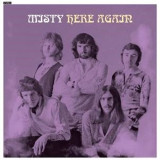
First ever vinyl release of the album recorded in 1969/70 by UK prog-psych band Misty. Including their terrific mod-psych “Hot Cinnamon” 45.
A dazzling fusion of classically-inspired progressive rock and song-based psychedelic pop with an organ-based sound, in the vein of Procol Harum and The Nice.
“In October 1969, King Crimson released their debut, In The Court Of The Crimson King, Pink Floyd unleashed Ummagumma and Led Zeppelin put out their second LP. At the same time, Misty were in London’s Regent Sound Studios recording what turned out to be the only album of their career with producer, Adrian Ibbetson, who had cut his teeth as an engineer working with everyone from the Beatles to the Equals.
After only a handful of gigs, Misty signed a deal with Parlophone and began to gather momentum with the release of Hot Cinnamon. Although they received a lot of airplay, the single failed to chart and the band’s hopes of releasing their debut album were dashed. Reluctantly, Misty went their separate ways and the Here Again master tapes sat gathering dust on a shelf until Gelardi came across the original acetate and decided it was time for the album to finally see the light of day.
Bridging late psych and early prog, songs like Life Has Just Begun, Witness For The Resurrection and the title track were played with a perfect mix of high-flying experimentation and virtuosic musicianship. Blurring the fine lines between rock, jazz, classical and chamber pop, Here Again is a transcendent kaleidoscope of colour that is beyond definition.
Maybe you can tell an album is truly timeless when it takes half a century for it to be properly appreciated. Misty were a rare bird, a brilliant, truly original band who should have left an indelible mark instead of joining what now seems like the never-ending line of half-remembered and long-forgotten flotsam and jetsam of the psychedelic era.
Both the first and the final statement from a group who never really got their chance to be heard, Here Again is a slice of pristine psychedelic pop that so embodies the dizzying energy and the progressive spirit of the time, it’s astonishing that it stays afloat under the weight of its own intentions. But float it does, like mist in the air - a half-forgotten diaphanous dream slowly coming back to you after 50 years of silence.” – Jonathan Wingate
grey & green splatter vinyl
A1 - Spacewaves
Opening the EP in thunderous style, Aural Imbalance chops impeccable, clean amen breaks, rolling sublimely into a chorus of fluid, delicate keys. The track whisks the listener atop the crest of wavy edits before a quietly turbulent assortment of blips and notes punctuate a bass-heavy breakdown. The latter half combines the elements in surreal harmony for a triump hant crescendo, buoyed by the truly vibrant breaks.
A2 - Tranquil Sea
A masterclass in subsurface ambience introduces Tranquil Sea, glistening melodies cascade into punchy breakbeats, setting the pace. Brimming with sunken off-key 808 bass resonating unpredictably with the spirit of the ocean, Aural Imbalance gently builds the vibe with soothing waves of mesmerising soundscapes as the beats rumble on, inviting you to dance amidst the swirling currents of his inimitable sound.
AA1 - Concordia
Old school analogue breaks take center stage as Aural Imbalance rewinds the clock for a great dancefloor-friendly slice of history with a modern Spatial twist. Quiet plinky keys bubble underneath long, whooshing ripples of the sea, echoed hi hats and a distinctive classic bassline intertwine perfectly, carrying you to uncharted sonic territories that will linger in the recesses of your mind long after the needle is lifted.
AA2 - Fading Fields
Delicate cymbal work and stirring pads combine deliciously before the listener is lifted to blissful serenity with a sumptuous tapestry of synths and micro melodies set to an immense, head nodding break pattern. The noteworthy kickdrum delivers a classic analogue stomp while the drums joyously encircle them
in their droves, showcasing further the variety and density Aural Imbalance offers.
"The Dive is a 2023 scuba-diving movie, starring Sophie Lowe (Medieval) and Louisa Krause (Billions), with much of the footage – underwater and topside – shot in the popular diving destination of Malta. Directed by Maximilian Erlenwein and written by Erlenwein with Joachim Heden, The Dive focuses on two sisters, Drew and May, whose dive together off the rocky shoreline is abruptly cut short when a landslide above water sends a cascade of boulders down on top of them, leaving May trapped down at 28m by the debris. With dangerously low levels of oxygen and cold temperatures, it is up to her sister to fight for her life. The score to The Dive is composed by Volker Bertelmann & Raffael Seyfried. Bertelmann is a German composer who is also known under the name Hauschka. In 2022, he won an Academy Award and BAFTA for his work on All Quiet on the Western Front. For the soundtrack for The Dive, he teamed up with Raffael Seyfried, who previously scored the acclaimed 2018 drama series Patrick Melrose. The Dive is available as a limited edition on turquoise coloured vinyl."
Dive by Various Artists, released 25 January 2024, includes the following tracks: "Do You Hear That", "Go To The Surface", "Ship", "Are You OK" and more.
This version of Dive comes as a 1xLP.
The vinyl is pressed as a turquoise disc.
- A1: Stolen Moments
- A2: Hoe Down
- A3: Cascades
- B1: Yearnin
- B2: Butch And Butch
- B3: Teenie's Blues
Blues And The Abstract Truth is Oliver Nelson’s triumph. Featuring his all-time classic ‘Stolen Moments’, Nelson assembled one of the most potent modern jazz sextets ever. Lead trumpeter Freddie Hubbard is at his peak of performance, while alto saxophonists Nelson and Eric Dolphy (Nelson doubling on tenor) team to form an unlikely union that was simmered to perfection. Bill Evans (piano), Paul Chambers (bass) and Roy Haynes (drums) can do no wrong as a rhythm section. Verve’s Acoustic Sounds Series features transfers from analog tapes and remastered 180-gram vinyl in deluxe gatefold packaging.
Announcing the new cassette release from London based solo artist, Bubble People.
Both sides of this tape were recorded in continuous takes over the course of a few days. A mixing session was performed shortly afterwards, in order to preserve the moment that was captured here.
Jasper Sdougos performs using a DSI Prophet 12 and an array of borrowed, vintage drum machines, his melancholic vocals echoing through cascades of drones and synthesis.
Bubble People is a live AV electronica act based in London, UK. Jasper Sdougos performs alongside visual artist Mamoru Watanabe.
50 turquoise cassettes pressed exclusively by Squeeze Trip Records (JP).
This audio was written especially for cassette format.
Includes 2 continuous live recordings, timed to 22.5 minutes in length, for sides A and B.
A collaboration between two prestigious Italian bands, the wizards of dub and the masters of big-band ska-jazz, in perfect symbiosis. An album full of dub atmospheres mixed with orchestral patterns; compelling rhythms of the ska and reggae traditions together with dilated and hypnotic electronic sounds. A recording fruit of a challenge and a celebration of music, something that is undoubtedly reflected in the spectacular outcome. 22 musicians locked in a large studio to rediscover the beauty of sharing after months away from the stage due to the pandemic, without even being able to rehearse.
The decision to record a live album was instantaneous, it was just about enjoying the energy of the moment. All tracks were recorded strictly live in the studio, without overdubs, with the aim of apprehending something unrepeatable.
The electronics, the melodies of the wind section and the vocal power come together in this work, recorded live at Deep Studio in Treviso (Italy) and mastered by Ibon Larruzea (Bilbao), full of dub atmospheres mixed with orchestral patterns.
All this merges into a unique and explosive sound in which the strength of the big band meets the deep and hypnotic beats of dub music. The instrumental "Cascade Dub" opens the album with a rootsy, majestic brass-led track.
From there on, Michela Grena, Rosa Mussin and Freddy Frenzy jump into their vocal games, inducing a trance-like state from which you can't (don’t want to) get out. A succession of untamed riddims and expansive sounds in which, in many cases, the wind section remains crouched in the background leaving the creative element in the hands of the dubmaster unit. As small depth charges "You Can Fly", "Lion", "Moon", "Beating Heart", generate submission to the beat and texture. "Mama", the successful first collaboration between the two bands, celebrates the bright sounds and colours of mother earth, a glorious song to our home. In the face of inequality, the senselessness of war, injustice, it becomes necessary to "Shine a Light" that offers hope and, at the same time, to "Give Thanks" for what we are fortunate enough to enjoy. The power of the big band merges with the heavy and deep step of the dub.
A progression of organic, pressing cadences, as in the solidest of the ska and reggae traditions and, at the same time, electronic resonances, dilated and deep. "Sinking Sand" closes the album in a sort of sonorous fencing of styles that makes us guess (as well as the title of the album itself) that WDD and NESJO still have a lot to debate. WDD began their journey as a quartet in 2014 and prior to Studio Session #1 they had already released two albums and several singles. NESJO formed in 2012 and have previously released two albums (both available on Brixton Records) and are working on what will be the recording of their next full-length.
Northeast Italy is a border area and it's easy to connect with each other in those territories made of enchanted landscapes. That energy, that desire to experiment and get involved, have made possible this ambitious project in which a ska-jazz orchestra and a dub band, each with its own language, are assembled in an amazing sonority
Their full-length debut, Exit Simulation, captures this sense of deep-rooted divination, cycling between simmering ballads, ghosted R&B, downtempo gospel, and looped vocal improvisations – often within the same track. The title is taken from a science fiction novel she read during the purgatory of the pandemic, alluding to a dimensional ideation of departure – “the permission to imagine leaving.”
Recorded in her current home of Charleston, she characterizes the album’s mood in terms both reflective and raw: an exploration of things suppressed, foundations beginning to crack, “talking myself off a ledge.”
The music of Niecy Blues transposes reverie and reckoning into emotive devotionals of keys, guitar, bass, synth, and bewitched voice, steeped in sacred atmospheres gleaned from a youth spent in a religious Oklahoma household: “My first experience with ambient music was church – slow songs of worship, with delay on the guitar... even if you don’t believe, you feel something.”
After his participation in a masterpiece such as Popol Vuh’s Hosianna Mantra, in the early 1980s Klaus Wiese produced a series of seminal works in the field of ambient-drone and healing music. The first of these, Baraka, was released on tape by Acquamarin in 1981, and already contained all the aspects of his future research into the mysticism of sound. Wiese shares the path with other German explorers such as Hamel, Fricke, Micus or Deuter, but he focuses his attention on the most essential nature of sounds, on their acoustic purity, which is always infinite spiral, vortex of frequencies and cosmic bath. It takes only a few means (zither, tampoura, cybals, singing bowls) to reach the absolute through vibration. Like the archaic mood of a great universal harmony, the sound suggests a complete state of otherworldly meditation, an enveloping cloud of peace in the eternity of the present. The musician is only the one who distributes and directs the thickenings of ethereal matter, microtonal agglomerates, cascades of celestial harmonics and emotional floods, petals and stems of devotion.