Reissue of seminal 1992 Bodysnatch cut ‘Euphony (Kuff Mix)’, later released as ‘Just 4 U London’. Accompanied by two more Bodysnatch back catalogue highlights from 1992 – ‘Eyes On The Horizon’ and ‘The Strength (Mental Rapids)’. All three tracks have been remastered with love and care by Johanz Westerman from the original recordings and selected for reissue by Parts Unknown and Craigie Knowes.
Buscar:cat 1
- A1: Can The Can
- A2: Shine My Machine
- A3: 48 Crash
- A4: Skin Tight Skin
- A5: Daytona Demon
- B1: Devil Gate Drive
- B2: The Wild One
- B3: Cat Size
- B4: Too Big
- B5: Michael
- C1: Half As Much As Me
- C2: Stumblin' In
- C3: If You Can't Give Me Love
- C4: Suicide
- C5: Wiser Than You
- D1: She's In Love With You
- D2: Hollywood
- D3: 15 Minutes Of Fame
- D4: Free The Butterfly
- D5: Dancing In The Wind
Bringing together the elder statesman of the Zulu guitar Madala Kunene and internationally acclaimed Sibusile Xaba, kwaNTU pulls two generations of South African guitar mastery into a single point of focus. Under-represented on recordings outside of South Africa, Madala Kunene (b. 1951), the ‘King of the Zulu Guitar’, is revered as the greatest living master of the Zulu guitar tradition. Sibusile Xaba, whose collaboration with Mushroom Hour Half Hour reaches back to his first recording in 2017 (Open Letter To Adoniah/Unlearning), has garnered international acclaim for his unique voice and virtuoso guitar stylings, which bring together multiple South African guitar lineages in an original, spiritualised fusion. Collaborating with Mushroom Hour and New Soil for kwaNTU, the two players come together to weave a filigree sonic fabric which reaches down to the heartwood of Zulu guitar music but moves resolutely outward, building on the past to create a deeply rooted statement about present conditions and future travels. kwaNTU – which can be roughly translated ‘the place of the life-spirit’ – is also conclave of teacher and student, as Xaba has been taught by Kunene for the last decade. Meditative, rich and sonically sui generis, kwaNTU finds these two musicians linking up within the inimitable space of sound and spirit that they share through Kunene’s teaching.
The great masters of South African music have not all had equal exposure. For many years the generation of musicians who were exiled during apartheid took centre stage, as the regime made it very difficult for those at home to be heard. More recently, a new cohort of important voices, especially in jazz, has broken through to international consciousness. But for the generation of musicians in between – those who shone like beacons in the most difficult final years of apartheid and immediately afterward – international recognition has been slow in coming.
Madala Kunene, ‘the King of the Zulu Guitar’, is among this number. A revered figure for current generations of South African musicians, Kunene began his recording career in 1990, at the bitter end of apartheid, with a now classic self-titled LP for David Marks’ storied Third Ear imprint. Born in 1951 in Cato Manor, near Durban, he had determined to be a musician from early childhood, and by the time he first entered a recording studio he had already had a long career as a popular performer. His virtuoso absorption and transformation of the venerable Zulu maskanda guitar tradition and his richly spiritualised approach to music immediately marked him out as someone special, and in the years that followed, Kunene cemented his position as one of South Africa’s musical elders. He is without doubt the grand master of the Zulu guitar tradition, but his sound and sensibility ranges far beyond it into varied sonic terrain, and he has collaborated with a wide range of musicians both at home and abroad. Now in his mid-seventies, he remains a shining light for those that are making music in contemporary South Africa.
‘He is really an amazing person,’ says the guitarist Sibusile Xaba, who has been mentored by Kunene for over a decade, and now invites a collaboration with him on kwaNTU. ‘As a mentor, he's really powerful in showing us the way. For us to have this opportunity to make music together and have a project together is really a blessing to me.’
Xaba himself grew up in Newcastle, KwaZulu-Natal, where his mother had been in a band and his father sang in a church choir, and from early childhood Xaba played homemade tin guitars. He only later realised that music was his calling. ‘I just loved music. I was fortunate. My parents loved music. And when it was time for me to leave home and go to study outside Newcastle, I knew that music was what I wanted to do. There was no second option. It was just music.’ Moving to Pretoria to study music formally, Xaba committed himself to his craft, developing a unique style that draws on both US jazz masters such as Wes Montgomery and Jim Hall, and the rich and varied heritage of the South African guitar, from inspirational jazz players such as Allen Kwela and Enoch Mthalane, to the music of the Malombo groups and Dr. Philip Tabane (Xaba has previously collaborated with Dr. Tabane’s late son, Thabang), and the Zulu guitar tradition embodied by Kunene.
‘I was really in love with the jazz guitar, I really admired it, and I was digging a lot in that direction,’ says Xaba, recalling his first encounter with Kunene’s music, over a decade ago. ‘And then one day on my timeline, Kunene popped up, and I was like – “What's this sound?” I was so connected to it. It really touched me deep. I started checking out his records, and then I found out he's from the same region as I am, which is Zululand.’ After Kunene played a show at the Afrikan Freedom Station in Johannesburg, Xaba make contact with him, and visited him at home in Durban. They struck up a friendship, and Xaba became the elder’s student, as Kunene began to pass on his knowledge and his inimitable way of playing.
kwaNTU is a tribute to this relationship and the deep learning that has defined it. The album was recorded in Zululand in the town of Utrecht, at a cultural centre called Kwantu Village, which gives its name to the album. ‘It's such a broad word,’ Xaba says, ‘but the elders teach us that Ntu is basically an energy, almost chi, an energy, a force that all living beings have within them. It's a living energy, so kwaNTU is like, almost the place of this energy.’ The two men sequestered themselves for five days of jamming, improvising and planning, and then the session was recorded in one take over a single night, with Gontse Makhene joining on percussion and backing vocals and Fakazile on vocals. Other voices and overdubs were later added in the studio in Johannesburg.
The result is a rich and meditative recording that finds two generations in a deeply engaged dialogue. Teaching and passing on his knowledge, the elder Kunene has brought Xaba into a space of sound and knowledge that they now share; Xaba’s own practice of deep communion with nature and his dedication to his musical craft make him the perfect interlocutor for Kunene. The result is an album that foregrounds the two musicians engaged at the highest levels of responsive listening, sympathetic unity, and collaborative concentration. Bringing an elder statesman of South African music to an international listening audience for the first time in decades by pairing him with one of South Africa’s most important new voices, kwaNTU is a meeting of generations and a powerful demonstration of musical lineage and continuity.
‘Before music, there is sound,’ Xaba observes, speaking of Kunene’s unique approach to music. ‘And sound is like a common compartment…it's not restricted to particular people or particular geographic places, you know what I mean? It's sound. Everybody can hear it. So when he constructs that sound into music, I think everybody resonates with the energy behind his construction of sound into song. Here at home, we really love him for preserving our history through the guitar, through his stories as well the music, the songs that he writes. We really, really admire him.’
A Place In My Memory Is All I Have To Claim is the new album by Australian atmospheric pop trio Hydroplane, the storied 'offshoot' formed by three quarters of independent pop group, The Cat's Miaow. On this, their first music after two decades plus of radio silence, Andrew Withycombe, Kerrie Bolton and Bart Cummings return to the gentle, close-quarters musical world they shared around the turn of the century.
Recorded during 2024 in Melbourne and Ballarat, A Place In My Memory… picks up the thread Hydroplane set down with its precursor, 2001's The Sound Of Changing Places, though you can hear echoes of their other releases, too, with Withycombe noting a through-line from the group's 1998 "Failed Adventure" single. There's little quite like A Place In My Memory…, then or now, though. Maybe you can draw some connections between Hydroplane and their sister group, The Cat's Miaow, while fellow travellers might include Empress, The Ah Club, and further back, Young Marble Giants, Veronique Vincent (the muffled, ticking drum machine also makes me think of Robin Gibb's Robin's Reign).
There's also an umbilical to the bedroom-crafted electronica doing the rounds in the late nineties and early noughties. Hydroplane hint at this through their approach to songwriting, which often builds creatively around loops as structural devices. Through all this, the trio achieve an effortless, organic weightlessness across these nine lovely songs. Many feature Bolton's clear singing voice, drifting along, while guitars, keyboards, drum machines and loops tickertape away. The constituent parts fit together, but they also have a curiously detached quality - think of abstract cloud formations sharing the same sky.
Hydroplane and The Cat's Miaow often dealt in emotional ambiguity and uncertainty, and the uncertainty of the nostalgic. This was always one of the most appealing facets of their music, and A Place In My Memory… is thus named perfectly. I couldn't dream up a better title for the album and its reflections on history, lived experience, and the inevitable tangle between these two phenomena. These reflections variously address such concerns as human cruelty, flight, space travel, adventurism and spiritualism. There's also "To the Lighthouse", not a direct reference to the Virginia Woolf book, but a great title, nonetheless. (They've always had excellent titles, often borrowed, for songs and albums.)
A beautiful collection of drowsy, sleepy pop, humble and quiet, but resolute in its craft, A Place In My Memory Is All I Have To Claim is dream work in practice; a lovely reintroduction. Welcome back, then.
Physical format only. No digital. Limited to 100 copies.
After a long break from the 12" club format, Pedro Vian returns with a four-track EP aimed at the dancefloor. One of the key cuts is a club version of "I am OK", originally released on his latest album The Addiction (2025).
The EP also includes an additional track, "Teresa (Comelade's Piano Redubbed)" - a reinterpretation that samples Pascal Comelade's version of a song by Ovidi Montllor, the iconic Catalan folk singer known for his poetic, politically charged work during the post-Franco era. Vian reshapes this reference into a meditative ambient piece.
Conoley Ospovat delivers again with another missive on his mostly solo platform, Continental Drift. With supporters like Move D, Daniel Bell, Snad, Gavin Hardkiss, & DJ 1985, he always seems to find himself in the record bag of underground tastemakers & adventurous selectors. On the Tokyo Techno Girl 12" he continues to refine his sound - ranging from the B-side dusty dub roller Culture Lag to the playful shimmer of the lead tune: Stars.
In between, the wistful title track is a shuffling ode to a faithful furry studio companion. Then classical house roots shine through on Jam bij de Vrij Paleis, catapulting a buoyant bassline groove to the fore with a deep spirit sure to grab fans of Smallville or Giegling. Do not miss this.
‘Cataclysm’ is a poignant call for revolution of both politics and consciousness, conveyed through ten distinct songs written and produced by Zanias between 2020 and 2024. Each piece of music inhabits its own aesthetic universe and rhythm, featuring elemental fusions of coldwave, italo disco, witchhouse, trance, breakbeats, hyperpop and even a touch of drum and bass. The unique amalgamation is best described as post-industrial ethereal wave, of Zanias’s very own signature. The subject matter grapples with how to move forward through times when civilisation and the entire ecosystem of the planet feel like they are on the brink of total collapse, while gazing back over hundreds of thousands of years of human survival in total awe of how far we’ve come. The lyrics aim for a balance of vulnerability and poetic strength, as the audience is beckoned to “thread the power through the pain”. While darker atmospheres are conjured through the sound design and instrumentation, the album ultimately directs itself steadfast toward the glittering sheen of hope. As the tempo ascends through the course of the album’s tracklist, so too does Zanias’s deep attachment to our sacred humanity and refusal to give in to despair.
‘Cataclysm’ represents an ambitious defiance of genre tropes in pursuit of pure artistry, with a potent political message delivered with assertive fervour and playful sincerity. Additional production was contributed by mixing engineer Trey Frye, best known for his work in the band Korine, and the album was mastered by Alain Paul.
Sunny Crypt reaches double digits on their release catalogue with a fully remastered new edition of the now sought after debut EP from Most Significant Beat. M.S.B. is an electronic music project active since the early 90s, formed by Maurizio Martinucci and Saverio Evangelista; their first record - originally released by Marco Passarani’s Nature Records in 1994 - is a masterclass in hypnotic patterns, pulsating rhythms and mind-bending leftfield techno. While “Heart Thinks Wide” and “A Flux To Follow” on A side give more breath to lushy textures and classy, dreamy pads, B side
reflects more carefully another aspect of the duo’s background with a rawer, electro leaning, percussion driven sound palette; in fact, both Martinucci and Evangelista have deep roots in the industrial and experimental music scenes. Martinucci has been a member of Clock DVA since 2010, while also working on a wide array of projects including The Anti Group and his solo Pragma alias. Evangelista, on the other hand, has been a core member of the cult industrial outfit Esplendor Geométrico since 1990.
Belgian pop superstar Max Colombie, aka Oscar and the Wolf, announces new
album ‘The Shimmr’, on PIAS Recordings.
Enter Colombie’s world and you’ll discover a uniquely dazzling and shimmering
fusion of contemporary R&B and a more European electro-pop sensibility, uniting
shivery melody, shifting beats and vocals steeped in drama, sensuality and yearning.
Colombie hears, “a twilight zone where it doesn’t sound dark nor happy. It’s like the
name Oscar and the Wolf; it’s a balance between light and dark, this perfect
combination between the sun and the moon. It’s beautiful and scary at the same
time.”
Oscar and the Wolf’s official debut, the 2012 EP ‘Summer Skin’, showed his gifts
arrived virtually fully formed, but he truly came of age in 2014 with his debut album
‘Entity’. Balanced between dancefloor anthems and slow jams, ‘Entity’ went 4 times
Platinum in his native Belgium and quickly jettisoned Colombie to superstar status.
He sold out arenas in Belgium and the Netherlands, taking the penultimate
headlining slot (behind Muse) at 2016’s Lowlands festival before headlining
Belgium’s Pukkelpop festival, sharing the bill with Rihanna and LCD Soundsystem.
Released in 2017, the second Oscar and the Wolf album, ‘Infinity’, went Platinum at
home, whilst amassing a huge Middle Eastern fanbase across Turkey (where his
2018 tour sold out in minutes), Egypt, Israel and Iran. On stage, Colombie cut a
commanding and lithe performer, often garbed in shimmering outfits that interacted
with the dynamic lighting.
The new Oscar and the Wolf album, ‘The Shimmer’, distils the essence of Colombie’s
sound and vision in its title and the image of Colombie on the album cover, bathed in
starry light. The album is a benchmark of his transformation on record; whereas
‘Entity’ was recorded in a barn, “very lo-fi with no access to gear,” he recalls.
‘The Shimmer’’s bold, rich and layered dynamics were captured at ICP Studios in
Brussels, home to, “one of the best live rooms in Europe, with all this vintage gear.”
More intimate moments were added at Colombie’s house outside the city, “those
magic takes we made just after we’d written something, which are so hard to capture
again.”
By ‘we’, Colombie includes producer Jeroen De Pessemier and multi-instrumentalist
Ozan Bozdag, who had both worked on ‘Infinity’ (and Bozdag on ‘Entity’ too). “It’s a
magical trio,” Colombie says. “Everyone is allowed to be themselves, and to explore
themselves. I’m really happy with ‘The Shimmer’ because I hear a more mature
version of myself. I always want things to grow, and I’m proud that I allowed myself to
not follow people’s expectations and reproduce what had been successful before.
There are no four-to-the-floor clubby pop songs this time.”
Instead, ‘The Shimmer’ more accurately reflects Colombie’s personality. “My
emotions run from super-happy to super-melancholic in a split second,” he says. “To
me, ‘The Shimmer’ feels like the soundtrack to a blockbuster, with many types of
tracks and themes. It’s always changing."
Útil Records vuelve con su referencia número 7, un split ep que comparten Bad Pad de Barcelona y Spectrums Data Forces de Granada.
Bad Pad (Cyberdom y The Bandit) firman dos tracks desenfadados, con una particular visión del electro en la que cabe cierta experimentación. Exploración de pads, bajos cuadriculados siguiendo lineas rítmicas bien marcadas que construyen estructuras matemáticas. Devoción por el mundo gatuno, cambios de vida y sensibilidad.
Spectrums Data Forces nos entrega tres tracks contundentes. Tres armas de gran calibre con ritmos duros y sincopados, cargadas de energía y distorsión, acompañadaspor potentes líneas de sintetizador arpegiadas, arreglos que evocan paisajes apocalípticos, melodías que transmiten sensibilidad y secuencias repetitivas que harán vibrar cualquier pista de baile.
En definitva, un disco muy completo que no deberías dejar escapar.
Edición limitada 300 copias.
Dantz Records launches its catalog with Time & Space, the first vinyl EP by producer Promising/Youngster. An elegant and powerful electro work that explores futuristic soundscapes, oscillating between rhythmic force and atmospheric depth. With this release, the label paves the way for a new era of talent promotion and projection in the electronic scene.
Introducing Beautiful, a 4-track, club-focused EP by Copenhagen’s Hekt on Numbers. It hints at his mass appeal while featuring club-ready vocal collaborations from close friends Henriette (on ‘Beautiful’ and ‘You Won’t Believe’) and Catharina (on ‘Anytime Anywhere’), who together record as Smerz.
Working entirely without samples, Hekt is a sculptor wielding digital synthesis and sticky hooks, with each element carefully constructed from the ground up and the process just as important as the finished result. “It’s about trying to be honest with what I like at every level,” he says. “To maximise the points where I'm forced to check in with my feelings on each aspect of the songwriting, sound design, mixing, and any other aesthetic choice. Creating digital approximations tilts towards an uncanny space where everything is crystal-clear but also kind of warped.”
On opening track “Beautiful”, the descending bass and acid lines are inspired by tracks Hekt and friends used to test subwoofers in the cars they rode around during their teenage years. “You Won’t Believe” started off as a MIDI piano sketch that accelerated towards the epic emotional impact of EDM stadium-fillers like Avicii and Eric Prydz. In a playful nod to internet culture, Hekt recalls that “I had this idea for adding a vocal that played on YouTube thumbnails and self-promotion. I called Henriette when she was in France and asked her to phrase it as epic as possible, and she sent two ideas over for ‘Beautiful’ and ‘You Won’t Believe’.”
On ‘Anytime Anywhere’, Hekt reimagines his sound at 110 BPM. What began as studio experiments morphed from Neptunes or Timbaland-style productions into a crunchy pressure overload closer to Gescom via Lazer Dim 700, with Hekt also adding his own vocals.
In late-1970s Japan, a new and unique “genre” called techno kayō emerged, blending catchy pop melodies with the futuristic sounds of synthesizers and drum machines. Rooted in the older kayōkyoku style, it was influenced by European electronic acts like Kraftwerk, but had a distinctly Japanese flair. Artists such as Yellow Magic Orchestra pioneered this retro-futuristic sound, creating music that felt both nostalgic and ahead of its time.
Dubby, owner of the legendary record shop Ondas in Tokyo, was one of the first to make Japanese music available to the outside world. He has teamed up with Antal, co-founder of the Amsterdam-based, Rush Hour Records, to release the first in a series of compilations.
Artwork from Johann Kauth (Stenze Quo)
TECHNO KAYO
Wally Badarou is a synth pioneer and musical polymath. But rarely does he sing over his sumptuous tracks. The 6 songs that comprise new record Simple Things finally realise Wally's vision for select backing tracks from his beloved Colors Of Silence.
The tracks were originally developed back in 2001 for the release of the original CD; here, Wally has “simply" added overdubs and vocals to their mastered mixes with some discerning edits. Simply put, Simple Things is another slice of simply stunning Wally Badarou genius.
Simple Things has been decades in the making. Indeed, Wally struggled not only with the idea of singing these wonderful songs himself but singing them in English and writing his own lyrics, while wrestling with the sensational backing tracks, which themselves seemed to have taken on a life of their own.
As Wally explained to us: "In addition to the instrumental artist I have been known as, so far, there has always been a singer who simply was not sure he was, up until now. Even though “Back To Scales Tonight”, my very first album, was, indeed, a song album."
Opener "It Couldn't Be You" embellishes the uptempo groove of soca-funk gem "The Lights Of Kinshasa". As Wally explained to us, it's about “a simple love story somewhere, one rainy night, under the lights of Kinshasa. A woman, a man, online dating, quite usual in our times. Then they meet, almost missing each other." The guide vocal Wally had laid for Colors Of Silence - with an organ sound - seemed striving for words in Linguala, a Congolese language he could not speak. Therefore the decision to do it himself was not an easy one, for it had to be in English to fit his singing. We think it turned out pretty good!
"You Can't Hide Always" vocalises Wally's deep concerns set to the propulsive "Smiles By The Millions": "Populism, ostracism, radicalism, ethics and values all turned upside down worldwide, are they all inevitably exacerbated by our social networks? It could all melt down one day, like a house of cards in the ocean of fake news and false prophecies”. Wally wanted to keep the track as bare as possible but, inevitably, the backing vocals and the synth-brass arrive ultimately to present a welcome 70s flavour, with no snare-drum added.
The bright and breezy "We'll Make It Again" adds vocals to "Where Were We", a tropical, reggae-tinged bounce through the islands. Here's Waly: "Where were we when we last said: "I love you"? Simple words to express something quite common, but never quite simple to deal with. A simple song about the resilience of the broken hearts.” The reggae came from it being conceived when Wally was scoring for “Third World Cop”, a 1999 Jamaican action movie.
"Walk Straight Ahead" provides Wally's gorgeous, contemplative and idiosyncratic vocals to the deep serenity of Colors Of Silence highlight, "Amber Whispers". It's a gliding, divine, mini melodic masterpiece. It'll make you swoon in its extreme beauty. As Wally describes, "it started as just whispers, sweet amber whispers. Then the colour turned darker, as darker skies seemed to fall upon us while the whole world keeps on walking ahead, straight ahead, regardless of the blatant warnings, feeling much too comfortable in conformity. Initially, the verses were to be spoken only. I realised they could be sung all the while, without overshadowing the ethereal atmosphere." Amen.
The serene, celestial "Painting My Life Blue" presents the vocal version of "Days To Wonder". Says Wally, "how does it feel when your second half is gone after decades of riding life together? Past the temporary loss of your bearings, you come to realise you've been blind to the essential, and suddenly you can see...For this most intimate song of mine, I had tried to come up with a melody on top of the existing backing track, long before realising the melody was in the keyboard part already. It just needed to be properly mixed with it."
The profoundly emotional "Just Two Lovers" works up the formerly-too-brief and glorious "Crystal Falls" into a much fuller masterpiece and features acoustic guitar sparkle before fully glistening with some gentle head-nod percussion. Waly explains further: "Dear little green men, please tell me, what is it about us that makes you want to come and visit us so often (contrary to Fermi's assertion)? And here is the reply I believe I heard them sing: "You've got the key you've been searching for: Love”. I reverted to the initial backing track I had made around 1985, which already bore the melody, and which I added acoustic guitars to, before singing it." An astounding closer.
A synth specialist, there can be few artists more under-appreciated given their vast influence than Wally Badarou. His solo work practically defined the sound of the Balearic DJs of the 1980s, and thus the more sophisticated sound of dance culture thereafter. He was one of the Compass Point All Stars (with Sly and Robbie, Barry Reynolds, Mikey Chung and Uziah "Sticky" Thompson), the in-house recording team of Compass Point Studios responsible for a series of albums in the 1980s recorded by Grace Jones, Tom Tom Club, Mick Jagger, Black Uhuru, Gwen Guthrie, Jimmy Cliff and Gregory Isaacs. Badarou's keyboard playing could also be heard on albums by Robert Palmer, Marianne Faithfull, Herbie Hancock, M (Pop Muzik), Talking Heads, Manu Dibango and Miriam Makeba. He also produced Fela Kuti. Phew!
When we asked Wally about the significance of this collection's title, he explained: "These are "Simple things” that everyday’s life seems to build upon. The simplest are the harder to describe, but when satisfactorily described i.e. with simple words, they are the more genuine and authentic to express and share. I’ve immersed myself in other classic song lyrics, something I hardly did before, just to appreciate the genius behind the simple words they were made of, and had a great time studying how powerful they were in expressing complex ideas such as love."
Recording was twofold: first, most of the backing tracks were recorded in 2001, in Wally's studio in Normandy, mostly using hardware synths and Yamaha digital consoles. Then, he fine-tuned the melodies and wrote the lyrics in late 2023, then added some overdubs and sang them all during summer 2024. States Wally, "Digital Performer was and remains the DAW I’ve been using throughout, ever since the 80s."
Wally's sophisticated synth textures and expressive keyboard runs are so full of character, so full of life, that this work of art transcends any easy genre categorisation. Meticulously remastered and cut by both Simon Francis and Cicely Balston respectively, it has been pressed to the highest possibly quality at Record Industry in Holland. Sometimes, the simple things are the most extraordinary.
Devianza, leading artist and owner of the label, returns to production by launching a new series of single-sided vinyl releases, each featuring only two tracks. The first instalment is a sonic catharsis rising from the very depths of a generous land, abundant with new seeds ready to sprout.
‘Le Piante di Elena’ is a dreamlike homage to a primordial world — untouched, pure, and still fertile. A tribute to a newborn bearer of the most radical values of a necessary humanism: a call to return to nature in its most spiritual and purest form. Devianza appears to be evolving into a higher, more spiritual dimension, where spirituality itself becomes the guiding force behind his musical production.
The single side opens with ‘Betullae’, a hypnotic ride between deep and leftfield, characteristic of Devianza’s sound, but this time enriched with an Indian tonal and modal flavour. Forest landscapes are traced by piano motifs that evoke interstellar journeys among endless birch trees.
‘Sunflower Sunset’ continues the hypnotic drift with a melodic crescendo that conjures the image of a sunflower field bathed in the warm glow of a summer sunset without wind. Here, where everything stands still yet everything is, this eight-minute piece becomes proof of the rarefaction of time — an instant that, though fleeting, feels infinite.
For fans of: Donato Dozzy, Voices From The Lake, Luigi Tozzi, Claudio PRC.
Related labels: Spazio Disponibile, Hypnus, Semantica, Silent Season.
- A1: Ayce & Spirit Of House - Top Of The World Ft Stephanie Sounds
- A2: The Wild Violets - Sweet Redemption
- A3: Golden Gate & Inaya Day - My Name Is Love
- B1: Gabriel Deb - Turn Around Ft Michelle Weeks
- B2: Milfredo & Derrick Carter - Didn't I (Derrick Carter Remix)
- B3: Fatback Band - (Are You Ready) Do The Bus Stop (Bustin' Loose’s Disco Express Remix)
- B4: Monsieur Van Pratt - Stimulation Ft Suki Soul (James Juke's Hot Take)
- C1: Bustin' Loose & Magnolia - Paradise Ft Catalina
- C2: Disco Feelings - Cosmic Martini
- C3: La Felix - Hot Ft Relaye (De Soffer Remix)
- C4: Bayside & Felmann - I Believe Ft Alyssah
- D1: Generoco - The Express
- D2: Dirty Supercar - Get Down Boogie (John Morales Remix)
- D3: Third Attempt - A Little Deeper
- D4: Meridian & Aleisha Lee - It Ain’t Easy
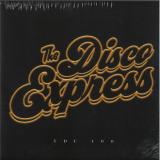
Regarded as one of London's "leading disco labels" The Disco Express is one of the most consistent and influential forces in the modern nu-disco scene.
A record label, international event series and DJ collective, TDE is dedicated to original, soul-infused house and disco music. With a global family of artists, the label blends vintage warmth with modern energy to honour the past whilst envisioning the future.
TDE100 is a 15 track compilation that distills the label's essence. Packed with fresh originals and hand-picked gems, the compilation blends funk, soul, nu-disco, house, and electronica. Crafted to move seamlessly from peak-time dance floors to laid-back Sunday listening, it's both timeless and forward-thinking.
Pressed across 2 X LP’s in a Gatefold Sleeve featuring John Morales / Derrick Carter & Inaya day.
This is original house & disco for 21st century dance floors and this train ain't slowing down anytime soon…
“Vox Flora Vox Fauna” is an invocation in which ECE CANLI channels the voice of Earth itself. A ritual of breath, rebirth, bone, and buried memory. Like the most transcendent moments of Dead Can Dance, the soundscapes are primitive, tribal, atmospheric, and utterly cathartic: echoes of a wounded planet, mourning and resisting at once. They unleash the raw force of Gaia, vibrating through ancient rhythms and spectral chants that seem to rise from the soil itself. In an age of collapse, this is music as prayer, protest, and purification, an elemental cry from the Mother to all who still listen. ECE CANLI “Vox Flora Vox Fauna”. Ltd. Edition Album presented in ONE-OFF truly limited edition of 100 copies lacquered pressed on 180 gr. high quality solid BLACK vinyl. Includes a printed innersleeve.
In the heart of a post-apocalyptic city, Spacelunch was making his way through the ruins, wearing a heavy armour of metal plates and flickering circuitry. Cat settled on his shoulder, listening intently to every sound. This time, they weren't just looking for an artefact — their target was the Singularity Echo, a mysterious device created right before the catastrophe. Legend had it that the scientists of the past, sensing the impending collapse, had put all their accumulated experience and knowledge together to create it. It was said that one day “Echo” would awaken and allow descendants to touch the wisdom of the ancients, learn the secrets of forgotten technologies and, perhaps, avoid the fatal mistakes of the past.
— We’ve been wandering around for how long? — muttered Cat, looking around warily. — And nothing.
— Sitting up there complaining, aren’t you? — Spacelunch grinned, deftly bypassing the debris and intertwined roots that poked out from under the asphalt.
Suddenly, a glow flashed before them, gradually taking the form of a palm-sized transparent crystal. It floated in the air, surrounded by silver lining that wove into intricate patterns, like a network of ancient runes. The symbols on its facets, flickering, cast soft reflections on the debris around them. As the professor slowly reached out his hand, the crystal shone brighter, and the low whisper of distant voices cut through the silence. Their minds were enveloped by the echoes of past events, filling their minds with images of the vanished world.
The friends froze for a moment, overwhelmed by shock and a sense of profound change.
— Well, — said Cat, not hiding his surprise. — It seems we've gotten a little smarter.
— A little? Now we have what has been lost for an era.
— So, we have a new adventure ahead of us. Where do we start?
The ghost town, once seemingly lifeless, now seemed to come to life: every collapsed building and every corner sparked with traces and clues as if the world itself was holding its breath, waiting for a sign.
Fetter’s Body of Noise erupts at the threshold between ravey hypnosis and avant-pop experiment, slithering through the hinterlands of unconscious desire. Nine shape-shifting tracks conjure haunted landscapes where beauty refuses clarity and dancefloor logic warps underfoot. Vocals swoon, drift, and demand—stacking into fragments that multiply and weave through saturated pulses and shimmering, snarling synths.
Opening track "Like a Rose" traces a dreamer’s transition into the unstable physics of a perplexing but familiar dream world, where they gradually become lucid. “Beast” follows up humming with shadowed urgency, threading a path through self-sabotage and metamorphosis. “Spathiphyllums” drifts a while in a lush lostness, aching for something new before fracturing into wild, cathartic collapse. Side B’s “Do I Exist? (D.I.E)” and “The Longing” spiral into existential wonder, searching for a human origin story—both personal and collective—against a backdrop of uncertainty, while “Headache” thrusts forward as an absurd and insistent manifesto to stay the course and harness one’s own power within the madness.
Body of Noise is crafted not only for sweating bodies in motion, but for distorting time and opening psychic portals, where surrender becomes strategy and uncertainty transforms into ecstatic navigation. Rooted in all-hardware improvised production and shaped by Fetter’s years of boundary-blurring visual and performance art, their debut LP feels alive and in flux. Reminiscent of a spectral pop chorus trapped in a loop of broken machinery, or a lost broadcast from a dancefloor in a parallel realm, Body of Noise is a journey into chaos, transformation, and a bold refusal to be contained.
About Fetter:
Fetter makes clubby self-destructing noise pop to dance and weep to. Oscillating between ethereal and pounding, their all-hardware, largely improvised live sets take listeners through a foggy wilderness of saturated rhythms and menacing synth lines, a golden voice guiding the way through. Fetter is the stage moniker of multimedia artist Jess Tucker. Their performances take place in clubs as well as galleries, often incorporating video, installation, and interactive performance art elements to create other-worldly surrounds of mesmerizingly unhinged bodies and faces.
Following the debut album Only Skies Stay Eternal, the Remixes EP takes a bold step forward. These reinterpretations reshape Fille’s introspective sound into more club-oriented territories, signalling a new phase in her sonic evolution.
Rico Casazza opens the release with a standout electro remix - fluid rhythms, a wavy bassline, and catchy vocal hooks push Fille’s sound into elevated, high-energy territory. Alienata follows with a deep, broken-beat techno version that’s both shadowy and hypnotic, crafted for dark rooms and powerful systems.
Sestrica delivers a rolling breakbeat interpretation with a pulsing low end - engineered to move peak-time floors with force and precision. Closing the release, Clouzer’s remix of Thistles blends dreamy textures, trancy momentum, and broken rhythms, adding emotional depth to the club experience.