Search:centuries

Styles
All
Yindi - Noir Brésil LP

Yindi

Noir Brésil LP

12inchNASC004LP
Shinigame / Modulor
26.04.2024

Noir Brésil is the debut album from Franco-Brazilian artist, composer and producer Yndi. Formerly known as Dream Koala, she decided to retire the moniker back in 2017 and began writing what ultimately became Noir Brésil, a modern pop album where afro-Brazilian percussion meets French and Portuguese poetry to create an immersive soundscape. As Dream Koala, Yndi released EPs Odyssey (2013,) Earth. Home. Destroyed. (2014,) and Exodus (2015,) as well as popular single "We Can't Be Friends", gaining her international success and garnering multi-millions of streams across platforms. In 2020, there were so many images of black people suffering on social media. After that traumatizing year, Yndi needed images showing that being black wasn't only about suffering, she wanted healing images. It's exactly what the Afro-Brazilian culture has been doing for centuries, it conveys a strength that keeps us alive in a dehumanizing society. The title track "Noir Brésil" is a poem for her ancestors. Yndi wrote "Amazona" on an atabaque (Afro-Brazilian percussion) rhythm inspired by the myth of the Amazons, warrior women, and Douanier Rousseau's painting La Guerre. The violence of the lyrics contrasts with the melancholic harmonies. The song pays tribute to the anger and strength required by women to live in the contemporary world. The song "Novo Mundo" and its animated video directed by Nina-Lou Giachettia are a reflection of Brazil, through luminous and colorful landscapes. Here the evocation of the divine, the beauty and the violence of nature reflects perfectly the essence of Yndi'sdebut album.

pre-order now26.04.2024

expected to be published on 26.04.2024

25,00
Rail Band - Rail Band LP

One of the greatest, heaviest, and most sought-after guitar records from 1970s West Africa, available on vinyl for the first time in over a decade!!!

Bamako, Mali, 1973: Rail Band, the official orchestra of the Malian state railway, drops their self-titled LP. It’s a relentlessly soulful and hypnotic blend of American funk, jazz horns, and Afro-Cuban music, reflected through centuries-old Mandé tradition and blasted at top volume by some of the continent’s greatest artists.

Led by legendary trumpet and saxman Tidiani Koné and held aloft by the intricate web of Djelimady Tounkara’s rumbling, reverb-soaked guitar, Rail Band’s sprawling compositions embody West African storytelling traditions while exulting in the technology and modernity of a newly independent Mali. Vocalists Salif Keita and Mory Kanté, two heroes of African music who would achieve global fame as soloists, are endlessly emotive, oscillating between silky ballads and funk screams. The band’s sound is filled out by layers of percussion, rolling guitars, and melodic horns filtered through the Caribbean.

Starting in 1970, Rail Band played five nights a week, from 2 pm til the early hours, at the Buffet Hotel de la Gare. Their audience was an international array of businessmen, young partiers, and people of the Bamako night. The band was incredibly versatile, switching genres, rhythms, and styles to meet their crowd. It was a volatile mix, one that would fall apart soon after these recordings were made, with Salif Keita’s departure to start the rival Les Ambassadeurs. Though Rail Band continued in many distinguished forms, the eight songs on this album reveal one of the greatest bands to ever exist, at the height of their creative powers.

On “Duga”, a composition dating back to the 13th century and passed on through oral tradition by the jelis (griots), the Rail Band replace balafon with the interplay of Cheick Tidiane’s speaker-rattling bass and Alfred Coulibaly’s tasteful organ. “Marabayasa,” with its iconic sax intro and Mory Kanté channeling James Brown, is a deep-cut favorite of DJs around the world. Part of a long and regal lineage of Malian guitar orchestras initially tasked with translating the region’s traditional music to modern instrumentation, Rail Band morphed and reenvisioned those traditions with a style and energy that has never been matched.

pre-order now05.04.2024

expected to be published on 05.04.2024

29,20
Bergslagsdiagonalen - De fyra arstiderna LP

Route 50, colloquially known as "Bergslagsdiagonalen" slices through the central Swedish landscape, an area that for centuries supplied Sweden with timber and ore, thus propelling industrialization forward

But as the resources dwindled and mining companies moved on, the workforce had to seek opportunities elsewhere, in the cities. Enter: Bergslagsdiagonalen, the new rock band formed in 2022, writing thoughtful rock songs contemplating modern day life with a tongue in cheek nod to relationships dynamics and parenthood

pre-order now15.03.2024

expected to be published on 15.03.2024

25,00
Anne Briggs - The Time Has Come LP
  • Sandman's Song - 5:05
  • Highlodge Hare - 2:15
  • Fire And Wine (Steve Ashley) - 3:30
  • Step Right Up (Henry Mccullough) - 3:10
  • Ride, Ride - 3:20
  • The Time Has Come - 2:35
  • Clea Caught A Rabbit (Stan Ellison) - 1:50
  • Tangled Man - 3:22
  • Wishing Well (Anne Briggs, Bert Jansch) - 1:45
  • Standing On The Shore - 4:33
  • Tidewave - 3:23
  • Everytime - 3:04
  • Fine Horseman (Lal Knight) - 3:02
also available

GREEN VINYL[27,31 €]


LP black vinyl repress, standard single sleeve printed inner but note no download card. The Time Has Come’ is an absolute master class on words and guitar twisting into one another - the poetry goes beyond simple observation into deeply personal and profound lore. A timeless document of sweet and haunting melodies. My favourite record of all time.’ Ryley Walker. // "I've never written songs, regularly, because I never considered myself a songwriter. I've only ever really considered myself a ballad singer, which is what is most important to me. The stories... the ancient nature of the situations and the human condition. And obviously, it's changed so much over the centuries that those songs have been sung, but it always retains that essence of something that's universal... to humanity, and I've always wanted to touch that. I think I wanted to understand people; I think I wanted to understand myself. It's a way of finding the truth. I felt I belonged to that music.” Anne Briggs // Offering some of her first original compositions, ‘The Time Has Come’ was a break from tradition in more ways than one for Anne Briggs. Where previous recordings displayed the unaccompanied melodies of her voice, this album - originally released by CBS in 1971 - brings additional instrumentation in the form of guitar and bouzouki. The result is that her vocals are not submerged but heightened - the plucked strings providing the perfect foil for her crystalline inflection. ‘The Time Has Come’ is a mix of Anne’s own songs alongside some notable covers (Lal Waterson, Steve Ashley, Stan Ellison, Henry McCulloch). All are graced with the quietly self-assured elegance of Anne’s playing, with sounds ranging from the breezy ‘Clea Caught A Rabbit’ to the terrible beauty of ‘Wishing Well’ - each song typifying the bouzouki or guitar style. To say that Anne was an accomplished picker is to do her something of an disservice - the intricacy of her finger-work rivals - and more often than not eclipses - any number of her contemporaries.

pre-order now20.02.2024

expected to be published on 20.02.2024

26,85
KALI MALONE - ALL LIFE LONG LP 2x12"

Kali Malone's anticipated new album "All Life Long" is a collection of music for pipe organ, choir, and brass quintet composed by Kali Malone, 2020 - 2023. Choral music performed by Macadam Ensemble and conducted by Etienne Ferschaud at Chapelle Notre-Dame-de-L'Immaculée-Conception in Nantes. Brass quintet music performed by Anima Brass at The Bunker Studio in New York City. Organ music performed by Kali Malone and Stephen O'Malley on the historical meantone tempered pipe organs at Église Saint-François in Lausanne, Orgelpark in Amsterdam, and Malmö Konstmuseum in Sweden. Kali Malone composes with a rare clarity of vision. Her music is patient and focused, built on a foundation of evolving harmonic cycles that draw out latent emotional resonances. Time is a crucial factor: letting go of expectations of duration and breadth offers a chance to find a space of reflection and contemplation. In her hands, experimental reinterpretations of centuries-old polyphonic compositional methods become portals to new ways of perceiving sound, structure, and introspection. Though awe-inspiring in scope, the most remarkable thing about Malone's music is the intimacy stirred by the close listening it encourages. Malone's new album All Life Long, created between 2020 - 2023, presents her first compositions for organ since 2019's breakthrough album The Sacrificial Code alongside interrelated pieces for voice and brass performed by Macadam Ensemble and Anima Brass. Over the course of twelve pieces, harmonic themes and patterns recur, presented in altered forms and for varied instrumentation. They emerge and reemerge like echoes of their former selves, making the familiar uncanny. Propelled by lungs and breath rather than bellows and oscillators, Malone's compositions for choir and brass take on expressive qualities that complicate the austerity that has defined her work, introducing lyricism and the beauty of human fallibility into music that has been driven by mechanical processes. At the same time, the works for organ, performed by Malone with additional accompaniment by Stephen O'Malley on four different organs dating from the 15th to 17th centuries, underscore the mighty, spectral power that those rigorous operations can achieve. All Life Long simmers in an ever-shifting tension between repetition and variation. The pieces for brass, organ, and voice are alternated asymmetrically, providing nearly continuous timbral fluctuation across its 78-minute runtime even as thematic material reiterates. Each composition's internal framework of fractal pattern permutations has the paradoxical effect of creating anticipated keystone moments of dramatic reverie and lulling the listener into believing in an illusory endlessness. On an even more granular level, the historical meantone tuning systems of each organ used, and the variable intonation of brass and voice, provide further points of emotional excavation within the harmony. The titular composition "All Life Long" appears twice on the album, first as an extended canon for organ and again in the final quarter, compactly arranged for voice In the latter, Malone pairs the music with "The Crying Water" by Arthur Symons, a poem steeped in language of mourning and eternity. For organ, "All Life Long" moves with a patient stateliness, the drama concentrated in moments when shifting tonalities generate and release dissonance and ecstasy. For voice, each word is saturated with feeling, the singers swooping gracefully downward to capture the melancholy of the narrator's relationship to the timeless tears of the sea. "Passage Through The Spheres," the album's opening piece, contains lyrics in Italian pulled from Giorgio Agamban's essay In Praise of Profanation. In it, Agamban defines profanation as, in part, the act of bringing back to communal, secular use that which has been segregated to the realm of the sacred, a process Malone enacts each time she performs on church organs. This is not music of praise, or of spiritual revelation, but it is an artistic enactment of translating the indescribable. It carries the gravity of liturgical chant, and its fixation on the infinite, but draws its weight from the earthly realm of human experience. A music that draws the listener into the present moment where they can discover themselves within the interwoven musical patterns that can come to resemble the passage of days, weeks, years, a lifetime.

out of Stock

Order now and we will order the item for you at our supplier.

33,19

Last In: 6 months ago
ENON - Believo! LP

Enon

Believo! LP

12inchTG325LPC1
Touch and Go Records
29.11.2023

140 Gram White Vinyl Limited Edition Of 1500 worldwide. Includes full album download + 2 bonus download tracks from the out of print 1999 Suz EQ /to whom it may consume 7-inch. Originally released in 2000 as Enon burst on the scene to wide acclaim +++ Pitchfork called Enon lyricist / guitarist John Schmersal “one of indie rock’s most consistently compelling songwriters.” Long, long ago, at the beginning of the new millennium, the world begot Enon. It was before Willliamsburg was, like, totally over, before beards made you cool, and just at the cusp of all this modern computer recording tomfoolery. What a time, before innocence lost. From all this came a much beloved and oft-overlooked record – one Touch and go is damn proud to re-issue on vinyl today – Believo! This record makes a bridge between the 20th and 21st centuries – full of effects, samples, pop sensibilities, and a complete respect for and disregard of The Rules. In 2000, Enon was all Brooklyn style, comprised of John Schmersal of Brainiac and Rick Lee and Steve Calhoon of Skeleton Key. John and Rick bonded over a penchant for suitcases full of electronics and battery powered trickery – portable musical distractions capable of making tracks on the fly. That’s what this era was all about for Enon – the suitcases, and being in the moment wherever they were. Though the band would later evolve to 2007’s lineup of Schmersal, Toko Yasuda and Matt Schulz, you’ve got to know where you’re coming from to see how you got to where you are today. So, come along with us, please, to the re-birth of Believo!

pre-order now29.11.2023

expected to be published on 29.11.2023

33,19
MONTANERA - A FLOR DE PIEL LP

A Flor de Piel, the new album from singer-songwriter and composer Maria Monica Gutierrez (aka Montañera), is a meditative journey of self-discovery across oceans, time, and the traditional confines of genre. Originally from Bogota, Colombia, Gutierrez began the album as a way to explore her identity after a difficult move to London left her feeling untethered in a strange new place. The result is an examination of the immigrant's experience through a rich sonic lens of ambient pop textures, inspired by sources as disparate as Colombian traditional music, traditional Senegalese music, and whalesong from the depths of the Atlantic. The album begins with the title track "A Flor de Piel," Gutierrez's indelible vocals floating above a vast expanse before being joined by deep, silky bass and the plucks of a koto-like stringed instrument. "The song was inspired by traditional Japanese music," Gutierrez explains, "It's about making my heart a little lighter; I know that inside of me I can be as light as mist in heat, I can be fragile as the song of a sparrow." That sentiment perfectly encapsulates much of what makes A Flor de Piel so special. The album comes with a message of healing for all people, without forgetting the centuries of struggle and hurt that form the bedrock of modern society. The track "Santa Mar," for instance, is inspired by the musical traditions of afro-pacific women in Colombia, and the crucial role that they play as peacebuilders in the region. Backed by a hypnotic beat, the song features contributions from marimba player Cankita, alongside Las Cantadoras de Yerba Buena, an all-female vocal group that utilizes traditional Afro-Colombian music to preserve their history and promote peace. Standout track "Como Una Rama" is a futuristic take on bullerengue, a traditional style of music and dance originally developed by Maroon communities on Colombia's Caribbean coast. Deeply affecting, the song combines Gutierrez's indomitable voice with electronics that recall Steve Reich's rhythmic minimalism. "Cruzar," the final track on the album, feels almost like a lullaby, with a meditative harmonic style and trance-like vocal melody. "The lyrics," Gutierrez explains, "are a personal reminder of what is important to me: healing, letting go, breathing, evaporating, forgetting, changing, crystallizing." Across the 40-odd minutes of A Flor de Piel, Gutierrez triumphs at recontextualizing traditional sounds and sentiments into a modern form using synth-based and electronic textures. It's a fitting representation for the personal struggles that the artist endured during her move to London. Rather than dwelling solely on the past Guitierrez uses A Flor de Piel to summon the strength of past generations, and forge a new path forward. As she describes it, "The album has accompanied me through inner journeys of finding myself in a new territory _ of redefining myself, of remembering who I am _ in a strange place." As we drift towards an increasingly frightening and uncertain future, perhaps Montañera's A Flor de Piel is exactly what we need: something to give us strength, to bring us peace, and to accompany our journey into a strange new place.

pre-order now17.11.2023

expected to be published on 17.11.2023

24,79
Ellen Arkbro - Sounds While Waiting

Sounds While Waiting documents the latest organ works by composer and musician Ellen Arkbro – following her phenomenal debut, 2017's For Organ And Brass, and the more recent CHORDS. Recorded at a centuries-old church in Unnaryd, Sweden in June 2020, these pieces reveal the enchanting qualities of sustained harmonic sound, how patterns of listening dissolve and emerge as textured space. On opening track "Changes," long radiant tones ebb and flow like divine breaths, while "Leaving Dreaming" builds with dynamic tension to unlock a subtle, otherworldly ambience.

As the composer states in the sleeve notes, "These recordings are traces of something I have come to love to do in large resonant spaces, which is to set up sustained chords on multiple organs and then move slowly through the sound. The instruments are usually far apart, which makes for the emergence of large fields of continuous change, spaces of harmonicity that can be passed through layer by layer and which contain within them points of both clarity and overwhelming complexity. The organ pipes are tuned and retuned, though sometimes I leave them just as they are. What I'm searching for is the moment when a particular kind of sounding texturality is revealed – it is rough, focused and yet strangely transparent."

Arkbro composes for acoustic instruments, for synthetic sound and for combinations of both, including music for orchestra and smaller chamber ensembles and large scale installation works. She currently performs in Catherine Christer Hennix's Kamigaku ensemble, and she previously studied with La Monte Young and Marian Zazeela. Recommended for fans of Sarah Davachi, Eliane Radigue and Charlemagne Palestine.

out of Stock

Order now and we will order the item for you at our supplier.

24,16

Last In: 2 years ago
Irakli - Mechanical Moon

BLUE-BLACK COLOURED VINYL! LIMITED TO 100 UNITS
Irakli’s new album is due to come out October 2023 on Live at Robert Johnson. Mechanical Moon is a retrofuturistic adventure of beautiful compositions and pulsating rhythms which are weaved together over the span of eight tracks.

We are immersed into evocative atmospheres, full of intricate textures. This is techno where you close your eyes and board an ocean liner that slowly rises and floats towards the moon.

Happy human with sad eyes roamed the neon-lit streets of the artificial island. This section of the metropolis had been designed as a necessity more than any other amenities. It had been allocated a budget surpassing the one for waste management in a city housing over a billion inhabitants.

Society had managed to eradicate love, yet it still grappled with untamed primal instincts such as dancing, sex, or violence. The island provided a discreet haven, away from the prying eyes of telescreens that silently stared into all souls. Similar to Las Vegas centuries ago, it was a safe space where anything was fair game.

Once there, night time lasted all day. Everything retained an analog essence. Music emanated from vintage record players. Amidst the laughter and tears, the artificial glow of the mechanical moon had become the last reminder of life outside.

A life so repetitive that he had been consumed by the desire to transform into a machine or a human satellite. Yet, breaking the cycle in such a manner remained impossible. And so, he wandered for hours on the island, among the weary faces.

Happy as one could be.

out of Stock

Order now and we will order the item for you at our supplier.

27,69

Last In: 2 years ago
Roger Eno - The skies, they shift like chords

Roger Eno’s second solo album for Deutsche Grammophon invites listeners to reflect on the nature of sound and silence. The Skies, They Shift Like Chords… contains a dozen tracks that express nostalgia for something lost while projecting a sense of something timeless, like the renewal of the seasons or the rise and fall of the breath. The composer-pianist builds here on the soundworld of The Turning Year, his debut solo album for DG, adding layers of instrumental and electronic colours and including a song for his eldest daughter, the artist, vocalist and image maker Cecily Eno. The Skies, They Shift Like Chords… connects with universal feelings for place and home. It also reflects the particular roots of Roger Eno’s music in rural eastern England, a landscape shaped by centuries of agriculture and marked in recent decades by dwindling biodiversity and troubling ecological change.

pre-order now13.10.2023

expected to be published on 13.10.2023

30,21
Jeans - Meng LP 4x12"

Jeans

Meng LP 4x12"

4x12inchOB004
Oracle Bones
05.10.2023

In a realm where the threads of fate intertwined with the tapestry of existence, there existed a timeless construct we call “MENG”. This transcendental domain pushed a sanctuary where an unholy wisdom was safeguarded. Within its twenty-two walls, the experiences of countless sages and seekers resided, forming a reservoir of enlightenment, of vision and of identity.

Among the enigmatic texts that adorned the shelves of The Memory Palace, one stood out—the "Tubular Heaven," a chapter that held the essence of the universe's patterns and transformations. The book we speak of is the Book of Change - I Ching. Legend has it that the Memory Palace embodied the vibrations of those who sought its wisdom, guiding them to the Slow-Chain’s pages where hexagrams unveiled the secrets of existence.

Amidst this cosmic dance of knowledge, there lived a young wanderer whose name we do not say out loud. Driven by a deep yearning for understanding, this Warrior ventured into the city of Tanoy. With every step, he felt the resonance of centuries long gone, as if the walls whispered to him the essence of reality itself - “you may fall as long as you stand up again. Repeat this 1000 times and you will understand me. Only then can we control the sound.” As he reached for the illuminated Book of Change, a light was cast onto a newly fabricated realm of questions.

One hexagram, in particular, was essential. The cryptic symbolism was perplexing. Upon meditation, we slowly begin to realize that life is indeed a tapestry of imperfections, yet from these glitches we arise with profound growth and transformation.

As our curiosity spikes, we delve into the pages that follow, discovering an unexpected connection between I Ching and the world of Jeans, no denim. In ancient times, the craft of weaving denim mirrored the wisdom of these hexagrams. Just as threads interwove to create a durable fabric, I Ching reveals how life's experiences intertwine to form a meaningful existence. Denim, like life, is sturdy yet adaptable - a true testament to the harmonious balance between falling and standing.

As this journey comes to a gentle end, we must stress that hexagrams prove that other divination systems exist. It has become clear that the patterns hitherto observed are not confined to one culture, tradition, mind or body. Instead, they echo throughout history, manifesting in various divination systems across our globe. Hexagrams are a universal language, transcending boundaries and demonstrating the interconnectedness of humanity's pursuit of higher understanding.

We can now truly emerge from the Memory Palace, carrying the wisdom of everything above us. It’s time to Drag A Friend into this Made Up Reality. Or is it? We now understand that life's glitches are the catalysts for growth and that just as threads wove together to create denim, experiences wove together to create a meaningful existence.
As we walk beneath the open sky, we whisper into the wind, "Hexagrams are the echoes of universal truths, proving that the search for wisdom knows no bounds."

The chimes tingle in the deep subset of your imagination. As the pages of the Book of Change unfurl one last time, the shimmering tapestry of our shallow minds unravels.

We have revealed the kaleidoscopic corridors where perceptions dance in hallucinogenic symphony to the hymns of our rich minds.

out of Stock

Order now and we will order the item for you at our supplier.

56,51

Last In: 2 years ago
Umeko Ando - Upopo Sanke 2x12"

Umeko Ando

Upopo Sanke 2x12"

2x12inchPINGIPUNG081
Pingipung
01.09.2023

“Upopo Sanke“ means “Let's sing a song" in the Ainu language. Umeko Ando (1932-2004) was one of the best-known artists of the Ainu, an indigenous, long-suppressed community in northern Japan. She sings their traditional songs together with Oki Kano on the Tonkori harp, who also recorded the album. The two are supported by members of the female vocal group Marewrew as well as Ainu percussionists, a string player and a male singer who provides rhythmic shouts and also throat singing. The call-and-response structure of many of the songs is performed with a mantric quality in a vocal style that is perhaps best described as elastic and breathing. There seems to be a gentle smile in every note and syllable. This music softly hits the heart.

Upopo Sanke was recorded on a farm in Tokachi in the summer of 2003. We hear dogs barking, a distant thunderstorm and voices imitating animals. The liner notes that accompany the 2LP release gather the anecdotal memories of Umeko Ando and Oki Kano about the stories of the 14 songs. Oki Kano is a musical ambassador of the Ainu culture who tours worldwide with his Oki Dub Ainu Band and also gives solo concerts, always playing the Tonkori, the five-stringed Ainu harp.

The Ainu have suffered from the oppression of their culture and language by Japan, especially since the 18th and 19th centuries. Only recently, in 2008, were the Ainu officially recognized again as an indigenous people culturally independent of Japan. As a result of the marginalization, there are now only a few hundred native speakers of the Ainu language left, making it a particularly worthy object of preservation.

"Upopo Sanke" was mixed again in part by Oki Kano, before being mastered and cut to vinyl by Kassian Troyer. The 2LP plays on 45rpm and it sounds fantastic. This album was the second album by Umeko Ando, the follow-up to „Ihunke" and also re-released in 2018 by Pingipung together with Oki Kano.

out of Stock

Order now and we will order the item for you at our supplier.

30,55

Last In: 2 years ago
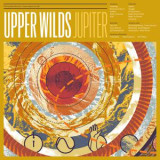
Upper Wilds - Jupiter

Upper Wilds

Jupiter

12inchTHRILLX591
Thrill Jockey
21.07.2023

Voyager Gold Vinyl

On Jupiter, Brooklyn trio Upper Wilds voyage deeper into the cosmos, mapping out the overwhelming enormity of the universe in soaring hooks and blistering noise. The third installment in the trio"s exploration of our solar system looks to its largest planet for a daring exploration of scale and perspective. New York underground mainstay Dan Friel"s melodic gifts and wry lyricism are magnified and propelled ever outwards by the thundering rhythm section of bassist Jason Binnick and drummer Jeff Ottenbacher, all immersed in rippling fuzz. Just like its namesake, Jupiter stands as Upper Wilds most colossal offering in their catalog. The raw power of their music is amplified to titanic proportions, sky-clawing riffs invoking the sheer awe that the heavens inspire. More than any Upper Wilds album before it, Jupiter makes humanity"s endeavors in space exploration an inseparable part of its sonic DNA . Recorded with Travis Harrison at his studio Serious Business in Brooklyn (Guided By Voices, Dope Body, The Men), the trio"s live recordings are inspired by the Voyager Golden Record - a double LP launched with the 1977 Voyager probe spanning field recordings to compositions by J.S. Bach and Laurie Spiegel. While the Voyager Golden Record"s intended audience may have originally been the extra-terrestrial beings that might encounter the probe, Upper Wilds bring cosmos-seeking sounds back to earth with a record made for and about humanity. Jupiter finds comfort in space"s unending expanse. Far from feeling defeated by the smallness of our existence in the face of an uncaring universe and ever-expanding infinite, Upper Wilds capture the power of creativity to extend our lifespans far beyond our limited time on earth

pre-order now21.07.2023

expected to be published on 21.07.2023

32,56
Bjarte Eike & Barokksolistene - The Playhouse Sessions LP 2x12"

From Alehouse to Playhouse Bjarte Eike and his barnstorming Barokksolistene capture the vital spark of Restoration London’s entertainment scene with a captivating new recording for Rubicon Classics! The Playhouse Sessions will be released on 23 September 2022 to coincide with Barokksolistene’s concert double-bill at London’s Southbank Centre.

‘A smattering of Purcell, dances from Playford’s Dancing Master, shanties, reels and ballads succumb to a nine-piece ensemble drawing on Baroque, jazz and folk styles for a no holds barred hooley of riotous improvisatory give and take,’ (BBC Music Magazine review of The Alehouse Sessions, August 2019)

London’s musicians, pushed in the 1650s, to the margins of society by order of Oliver Cromwell, found room for new forms of entertainment in city-centre taverns and alehouses. They remained there long after the restoration of the monarchy, performing sets of dances, theatre songs and bawdy ballads to audiences glad to be free from Puritan constraints on pleasure.

Norwegian violinist Bjarte Eike and his Barokksolistene have restored the spirit and substance of those long-forgotten performances with their Alehouse Sessions, hailed by The Times as ‘irresistible’ and ‘fabulously unrestrained’ by The Guardian. Five years ago the Norwegian violinist and his band scored a best-selling album with The Alehouse Sessions on Rubicon Classics. They return to the label with another compelling collection of music and words of the kind on offer more than three centuries ago at Henry Purcell’s favourite Westminster watering holes. The Playhouse Sessions, set for release on Rubicon Classics on 23 September 2022, reflects the uplifting energy and engaging emotional contrasts of Barokksolistene’s Alehouse performances.

“The album contains a sort of inner narrative that runs through the recording,” says Bjarte Eike. “It has become like a play in its own right, with each track being a small tale within a larger story.” The recording’s tracklist includes Eike’s beguiling arrangements of music from Purcell’s semi-opera The Fairy Queen and his own original compositions on words from the play on which it is based, Shakespeare’s A Midsummer Night’s Dream; popular songs and ballads such as ‘The Irish Washerwoman’, ‘I often for my Jenny strove’ and ‘The Three Ravens’; tunes from Purcell’s welcome odes and stage shows, Come ye sons of art and Dido and Aeneas among them; the ‘Willow Song’ from Shakespeare’s Othello; Eike’s own voice in Puck’s monologue from Act 5 of A Midsummer Night’s Dream; and John Dowland’s sublime air ‘Can she excuse my wrongs’.

London’s theatres were closed at the start of the English Civil War in 1642 and remained shut until the Restoration. Alehouses offered redundant musicians, actors and dancers a place to scrape a precarious living and soon became their creative refuge. “Although a few surviving theatres reopened in 1660 with the return of Charles II, there was little money around to rebuild those that had been demolished,” observes Bjarte Eike. “And a generation of musicians had already found an audience in places like the Black Horse in Aldersgate Street. So popular were their alehouse sessions that Cromwell tried to abolish them! But they outlived him and became part of Restoration musical life.” The form of a Barokksolistene Alehouse, he adds, is like a creative room. “Within its framework I can frequently refurbish the show with new contents. The Playhouse project is likewise an extension of the ever-evolving Alehouse Sessions. Together they tell the story of music and theatre in London during Cromwell’s time and after the Restoration. Of course there’s an historical context to what we do. But there’s also the practical context – which is even more important to me – of connecting with a contemporary twenty-first century audience. An Alehouse / Playhouse performance is not something for the museum; it's about music made in the present moment, just as it was in the London alehouses of Purcell’s day -- with their playhouses annexed to the rear of the beer-drinking saloons. The encounter of musicians onstage and the audience in the hall is the real magic of it. We have to fuse the audience into the action of our performance!”

The Playhouse Sessions will be launched on Friday 23 September with a late-night concert at the Purcell Room and a post-concert Alehouse Session in the foyer of the Queen Elizabeth Hall. Soprano Mary Bevan is set to join Eike and his Alehouse Boys for the first half of their Southbank Centre double-bill, offering unique interpretations of songs from Purcell shows and other hits from the late seventeenth-century London stage. “The Southbank Centre is a direct descendant of concerts given in the 1650s in the alehouses of London,” notes Eike. “These alehouses after all staged some of the world’s first public concerts. Later, after the Restoration, it became common for promoters to advertise alehouse concerts in the press and offer subscription tickets. Purcell and his fellow musicians were thus just as at home performing there as they were in the chambers of the royal court or in London’s new theatres.”

Bjarte Eike launched his Alehouse Sessions in company with like-minded musicians 15 years ago. The ensemble comprises a core of regular performers, all of whom have committed to memory a huge setlist of up to four hours of music. Typically they meet a day or so before a concert tour to share a meal and make music together; then next day, re-grouping thirty minutes before the show, they discover Eike’s select-menu for the evening. “That ensures that every show is fresh,” he notes. “I make sure we never repeat the same programme twice. It’s therefore essential to work with people who share my outlook and dare to adventure. We’re into a high-risk sport, with lots of traps and places where the unexpected appears - for good or for ill. And so the audience knows we’re vulnerable. But our skill is seen in how we re-act on the hoof to the unpredictable. That’s authenticity and honesty - and above all it’s a performance that’s genuine.”

Armed with a classical training and a background in folk music and improvisation, Bjarte Eike was drawn naturally to Early Music in all its stylistic variety. “I never really felt at home with only one genre,” he recalls. “Early Music allowed me to study profound, complicated compositions, but performing it has also opened up the chance of rebellion and uproar! Early music offers wide, multi-faceted areas of musical exploration for me. You find, for instance, links to different types of music wherever you look in seventeenth-century English repertoire. And I am fascinated by all these connections. They offer a foundation for the Alehouse Sessions and for all Barokksolistene performance more generally. Every member of the group plays, sings, dances and improvises without limitation. We’re all interested in the many different fields of being a stage performer and pushing hard at the ‘normal’ boundaries of what it means to be a classical musician.”

pre-order now30.06.2023

expected to be published on 30.06.2023

32,98
MEV - Symphony No. 107 - The Bard
 
2

Black Truffle is pleased to announce Symphony No. 107 –The Bard, a previously unheard archival recording of the legendary improvising ensemble MEV (Musica Elettronica Viva), captured in concert at Bard College, New York in 2012. Formed by a group of American expat composers in Rome in 1966, the MEV ensemble played an important role in the development of free improvisation, bridging the live electronics tradition begun by Cage and Tudor and the high-energy squall of free jazz. Early recordings like Spacecraft or The Sound Pool unleash volleys of metal and glass amplified with contact microphones, howling winds, primitive synthesizer bleep and raucous audience participation, the intensity of which puts much later ‘noise’ to shame. In later decades, the ensemble would go through many iterations, often including legendary free players like Steve Lacy and George Lewis. In its final years, MEV settled into the core trio of founding members heard here: Alvin Curran, Frederic Rzewski, and Richard Teitelbaum, using piano, electronics, and small instruments.

Curran, Rzewski, and Teitelbaum were life-long friends blessed, as Curran says, with ‘incompatible personalities’: major figures in the post-Cagean experimental tradition, they explored countless divergent and even contradictory paths as composers and performers, from agitprop songs to brainwave-controlled synthesis. MEV is the sound of these three personalities coming together, their contributions radically individual yet attaining a state of ‘fundamental unity’ that Rzewski, in a text written in the collective’s earliest years, defined as the ‘final goal of improvisation’. Of course, listeners familiar with aspect of the trio’s individual works might hazard some guesses about who is doing what: the crisp piano figures are probably Rzewski’s, the cut-up hip-hop samples most likely Curran’s, the sliding, squelching synth possibly Teitelbaum’s. But often these identities are dissolved in a constantly shifting hall of mirrors, the listener unable to tell which of these pianos is live and which is a sample of a past virtuoso, or whether a horn blast derives from ethnographic documentation or Curran cutting loose on Shofar. The two side-long sets here occupy a similar terrain of constantly shifting texture and instrumentation, unexpected interruptions, and moments of sudden beauty. The first set is sparser, at times almost ominous, as a bell repeatedly sounds across wheezing harmonica, seasick orchestral textures, and creaking wood, making room for episodes of yodelling and delicate prepared piano before exploding into a storm of buzzing synth and piano fragments. The second set is more frenetic, moving rapidly across centuries and continents: cars crash into post-serial piano pointillism, wailing voices collide with chopped and screwed hip-hop samples, Hollywood strings are buried under layers of electronic gurgles. The performance slows in its final moments, making way for a sampled voice repeating the phrase ‘protest and the good of the world’, reminding us that MEV’s idea of freedom was always more than musical. Symphony No. 107 –The Bard is a beautifully recorded example of the endlessly multi-layered later MEV sound, accompanied by new liner notes by Alvin Curran (now the only surviving member of the group) and a selection of previously unseen photographs from across the many decades of the group’s activity. Arriving in an elegant sleeve bearing a beautiful photograph by Francis Zhou of the Olin Hall at Bard College where the concert was recorded, this is an essential document from a major group in the history of experimental music. As Rzewski wrote, this music is ‘like life, unpredictable, sometimes making sense, mostly not’.

out of Stock

Order now and we will order the item for you at our supplier.

23,95

Last In: 2 years ago
Jason Graves - Order:1886 OST

Jason Graves

Order:1886 OST

12inchMOVATM030C
Music On Vinyl
31.05.2023
also available

Red Coloured Vinyl[34,03 €]


The Order: 1886 is an epic game score for the 2015 third-person action-adventure Playstation video game The Order: 1886, created by the gaming studio Ready At Dawn. The game takes place in a painstakingly recreated Victorian-Era London, but features new advances in technology brought about by an accelerated Industrial Revolution and the centuries-old conflict between Human and Half-breeds.

The music was created by BAFTA Award-winning composer Jason Graves, who received the BAFTA Award for Best Original Score for his work for the 2008 video game Dead Space. Graves is renowned worldwide for his cinematic and immerse music. His musical background as a classically trained composer, jazz drummer, guitarist, and world percussionist, allows him to compose for a wide variety of genres.

The Order: 1886 is available as a limited edition of 500 individually numbered copies on smoke coloured vinyl, housed in a gatefold sleeve and includes a 4-page booklet with liner notes.

pre-order now31.05.2023

expected to be published on 31.05.2023

38,03
Psyché - Psyché LP

Psyché

Psyché LP

12inchFLIES59
Four Flies
22.05.2023

Drop a needle on Psyché's debut album and you'll see visions, or rather Mediterranean visions, be they of waves of heat shimmering above dunes of sand, or of women dancing around a bonfire on a rocky plain, or of bushy cliffs overlooking emerald-green and turquoise sea. The name Psyché is of course ancient Greek for 'soul' or 'mind', signifying the band's love of psychedelic funk, but also the wide range of Mediterranean influences – from Southern Europe to the Balkan Peninsula, and from Anatolia to the Maghreb – that provide an endless source of inspiration for their hypnotic sound and minimalist style.

Psyché members Marcello Giannini (Guru, Nu Genea, Slivovitz), Andrea De Fazio (Parbleu, Nu Genea, Funkin Machine) and Paolo Petrella (Nu Genea) have been active in the Naples music scene for almost two decades, most notably during the first wave of the new Neapolitan Power movement (Slivovitz, Revenaz Quartet). Over the years they have often crossed paths and collaborated on side projects in various genres (math-rock duo Arduo and, more recently, synth-pop duo Fratelli Malibu), before working together as the rhythm section of Nu Genea's live band. Following their first tour with Nu Genea in 2018, they started Psyché with the intent of exploring more minimalist styles and making music with just a few elements.

A unique combination of psychedelia, groove and improvisation, the music of Psyché goes back to the roots of our future; it evokes visions of a mythical past, blending centuries-old music traditions and mixing them with modern genres. Like a warm Mediterranean breeze, it travels across lands, seas and eras, distilling essential rhythms and cosmic pulsations.

The album's opener "Kuma" (titled after the first ancient Greek colony on the Italian mainland, now an archeological site near Naples) is like a vibrant, magical wave. With its deliberately simple harmony and sharp guitar riffs, it travels across the Mediterranean from Italy to North Africa, first lapping gently on Greek and Turkish shores – with some compositional elements reminiscent of Italian pop legend Lucio Battisti – and then speeding up and landing on the driving, syncopated rhythms of afrobeat. While listening to it your eyes fill with images of small white houses shining in the sun, of fig trees heavy with fruit, of spice bazaars and colourful medinas, and you can almost feel the desert wind blowing in your hair.

The journey continues with two examples of Psyché's bold and elegant approach to contemporary afrobeat and cumbia fusion: "Cumbia Mahàre" and "Amma". The former combines minimal synths and exhilarating rhythmic patterns of drums, percussion, guitar and bass, drawing us into the movements of an imaginary ritual dance (the term mahàre was used in Southern Italian dialects to indicate witches). Next is the cinematic and mysterious ambiance of "Angizia" (a snake goddess worshipped by the Marsi in ancient Italy), another fascinating mixture of different sonic traditions and cultures where hip-hop/funk drums are blended with Maghreb influences, Balkan echoes, and hypnotic, Theremin-like synths that have sort of a sci-fi movie quality to them.

The title track "Psyché", with its uptempo afro-rhythms, ethereal vocalizations and refined percussion, is almost a manifesto of the band's style and confirms the freshness of their minimalism, which is not afraid of taking in the sun of lands confined between the sea and the desert. The following "Manea" (named after the Roman-Etruscan goddess of the dead) is an afro-funk number with smooth and introspective dreamy jazz touches, and with an arrangement dominated by a guitar that, dripping notes like drops of water, creates a delicate, cinematic sound. Next, we come to "Hekate" (the Greek goddess of magic, witchcraft and crossroads), a track that fuses psychedelia, spacious Latin guitars and a fast, tight groove. The album comes to a close with the exquisite melodic ballad "Kelebek", which seamlessly combines hip-hop drums and dreamy guitars, and whose warm, flowing sonorities and evocative atmospheres conjure the image of a butterfly (which is what kelebek means, in Turkish) floating over the Mediterranean and, from there, the world.

out of Stock

Order now and we will order the item for you at our supplier.

28,15

Last In: 2 years ago
Various - Canto A Lo Divino LP 2x12"

Canto A Lo Divino is the unique musical expression of the Chilean peasant world - a conversation with the divine nourished by Biblical and other sacred texts. It is communal music, played in packed rooms throughout the night on the 25-string guitarron, its ancient melodies transmitted through the 10-line decima form originating in Spain and found across the Caribbean, South America, and even into the Mississippi Delta. Rooted in the remote Central Valley of Chile at the skirt of the mountains and following the slopes of the major rivers, the Canto tradition has persisted for centuries in the voices of hundreds of men and women who sing of saints, divine images, and angelitos (very young children who have died). The verses are also centered around daily life in the valley - labor and drought, family, animals, and plants. There are countless entonaciones (melodies) that define this region, its communities, and its unique worldview. Mississippi Records is privileged to work with the Museo Campesino En Movimiento and their archive of hundreds of hours of intimate field recordings of the Canto - music rarely, if ever, heard outside of the region. Artwork is provided by another inhabitant of Chile's Central Valley, a baker called Frederico Lohse, who brought divine visions from the Cantos to life, painted on reused flour bags. Canto A Lo Divino celebrates the complexity and solemn, stunning beauty of this nocturnal, communal form of musical devotion. Double vinyl LP comes housed in deluxe gatefold jacket with 8 pages of lyric translations and liner notes about the Canto tradition by researcher Danilo Petrovich.

pre-order now19.05.2023

expected to be published on 19.05.2023

29,83
drøne - The Long Song

"but as the centuries passed, the constellations drifted slowly eastwards"

Mike Harding, Mark Van Hoen and invited guests - …a hauntingly strange and mysterious immersion into a crackling entropy of phantom radio transmissions, squalls of static, choruses of insects, and creepily digitized voices.

drøne have released 3 albums on pomperipossa records and "the long song" is therefore volume 4 in the series... (drøne also self-released "mappa mundi" on their own label on compact disc in 2017.)

choir voices - galya bisengalieva, bana haffar, ipek gorgun, alex hoàng,

bethan kellough, anna von hausswolff & jana winderen

pre-order now05.05.2023

expected to be published on 05.05.2023

20,97
Kammerflimmer Kollektief - Schemen LP

11th album by the one-of-a-kind collective: psychedelia and free form jazz (not jazz) trigger a sophisticated excursion into weird textures with drastic turns. Dislocated dense music full of secret connections!

Kammerflimmer Kollektief – "Schemen"

Before reason prevails, invoked by those who want everything to remain as it is, Kammerflimmer Kollektief disrupts the established supply chains of sound. It seeks more interesting ways to assemble them. Trusting in this, because of the fact that every sound that still comes out of a guitar, a bass, a harmonium, drums and electronic devices has already been taken into the common mangle of meaning anyway. Enough of all that. Here, nothing is explained. Here we speak in schemes. Polished and jerky.

The images that Kammerflimmer Kollektief conjures up therefore happen not in the focus of consciousness, but rather in its outer realms. In those to which one does not give one's full attention at the moment, but which are nevertheless perceived. For example, when a leaf falls from the ground back up to the tree in the corner of your eye, and for an instant you think this is possible, before you realize it was a small bird flying into the tree; it is in just such irritating moments between perception and realization that the art of the Kollektief also unfolds. On "Schemen", familiar fragments float gently around their core – a Fender Rhodes tone, a bass figure, a guitar motif, a masterful drum shuffle, a moment of icy stasis borrowed from the harmonium playing of Christa 'Nico' Päffgen. Triggering brief associations, they slowly rush off in other directions through free jazz-informed editing work, whereupon such zones can also arise in which perception has a few tricks ready and earlier experience suddenly breaks into the now in a completely different way. Half suspected, half seen.

Half-music like Can from Cologne – also masters of improvised editing – sometimes produced a few decades ago in their in-between moments. The first minutes of "Future Days" for example, which fade in gently, sketch a barely graspable figure emerging from all directions of the room. Kammerflimmer Kollektief also engages in similarly open moments of development. Loosely, it eludes the first formative impressions, keeping itself ready for moments that do not follow any logic of appointment. This looseness in handling makes Kammerflimmer Kollektief so fluidly audible, even when dissonant peaks and free playing arise. What Karlheinz Stockhausen is to Can's understanding of composition, the recordings of The Cocoon are to Kammerflimmer Kollektief. The Cocoon, a meeting of garage psychedelics from the Hannover area with free jazzers from the Galaxie Dream Band, whose album "While The Recording Engineer Sleeps", recorded in 1985 in unguarded moments, operates in a very similar way with decentralized perceptual ambivalences and only appeared more or less secretly four years later on Wilhelm Reich Schallspeicher. Other traces of "Schemen" lead to the debut album of Quicksilver Messenger Service. The guitars of Gary Duncan and John Cipollina, which refer to themselves in an unforced manner, are instructions to let go. They don't want to be traced in every note as a solo, but they give their music a sense that the essential takes place off center, in the mutual and intuitive gift of loving attentions. Consciousness-free.

Loving turns like the little guitar phrase that, like a kind of leitmotif, is repeatedly ghosting more or less unchanged through all of the Kammerflimmer Kollektief albums. A Coricidin induced, very catchy slide idea filtered out of ancient Æther, which – who knows – maybe even centuries ago found its way from somewhere to America – the old, the eerie – and from there wafted on through the ages to southern Germany, to a smoky studio in the Upper Rhine lowlands. A memory of which even the memory no longer knows what it once reminded. Unsaid, then forgotten.

In Kammerflimmer Kollektief you will also find a friend of slowly building, unhurried music, which probably would have been appreciated by the old Franz Mesmer, who 200 years ago, after tranquilizing treatments, sometimes used to play for his patients ambient melodies on the enormous glass harmonica. However, in order not to surrender completely to the flow of one's own life energy, as Mesmer had in mind with his therapies, Kammerflimmer Kollektief occasionally adds hectic tensions, gently embraced by the droning of a sine wave generator, as if a trance could briefly refesh. This old analog sine wave generator is new in the Kammerflimmer assortment of sounds. So, the art of the Kollektief likes to dock occasionally in modern times, yet with the past in mind. Mental states begin to flicker between imagination and certainty, between culture-bound art expression and coincidences: A cawing and scraping can always just be a cawing and scraping with Kammerflimmer Kollektief, the way Andy Warhol's mushroom eater just eats a mushroom.

Heike Aumüller's cover works, which illustrate all the Kammerflimmer Kollektief albums, additionally act as amplifiers of unexplained refractions. Her style consists of eye-corner art that remains so, even when looked at directly. Her shots remain disquieting because they do not jolt themselves into a reassuring order, even in retrospect. Rather than evading the fear that arises when looking at them by trying to impose some irrational rhyme or reason, that fear must simply be endured. This strategy of endurance is equally applicable to the music. The trick is to let parts be parts without compulsively seeking delusional patterns that lull us into a false sense of security and in doing so, possibly delude ourselves. In this context, freedom means not having to anxiously attach a fantasized superior meaning to everything. "Schemen" has an conspiracy disintegrating effect.


b A2 Zweites Kapitel (ruckartig) [feat. Heike Aumüller]

pre-order now28.04.2023

expected to be published on 28.04.2023

21,64
Items per Page:
N/ABPM
Vinyl