
In Stock
On Stock and ready to ship
Last In: 3 months ago
12,19 €
On Stock and ready to ship

With a steely sound matching fathoms-deep echo chambers with metallic textures and precision drums, Sciama arrives on Samurai Music to press into the inspiring hinterland between techno and drum & bass.
Sciama is the production alias for Michael Watters, a producer who since 2019 has carved out a formidable reputation across a stellar run of releases on ASC's Auxiliary label. While his music references UK bass, transcendental techno and industrial, the end result is a taut, focused journey through fractured, weighty rhythms and vast, ranging atmospherics tilted towards the darkness.
Between Veils is testament to Watters' refined production, steeped in intensely detailed and layered sound design in constant fluid motion, whether locked to the grid or shifting across the surface of the track like grayscale snow drifts. Noise becomes a subtle tool in his hands, capable of delicacy as much as abrasion, and discord evokes a haunting beauty if you listen past the clangorous overtones he elicits from his pads.
For all the writhing, artful sonics, there is still ample weight in the Sciama sound to hold court over a sound system. 'Figures In Mist' rests on a constant half time cycle underpinned by monolithic bass pulses and 'Ghost Trail' finds deadly energy in the faintest flicker of double-time hats above the slow march of a 4/4 kick clocking around 85BPM. Restraint is paramount, even in the fuller rhythm section that drives 'Anima Trace', creating tension through what isn't sequenced as much as what is. 'Veil Of Mirrors' has an especially punchy kick propelling the cavernous echos and ripples that shape out yet another vivid soundscape, but at all times Watters keeps a tight grip on his arrangement to keep the energy simmering just below boiling point.
Moving well beyond the boundaries of any specific genre, Between Veils winds upas a strong, independent statement on the meeting point between broad influences and clear intentions - a formidable addition to Samurai Music's explorations beyond drum & bass and Sciama's steadily evolving, singular style.
On Stock and ready to ship

Big Disco Dub 12″ on the obscure Jahtari spin-off Jahmiga, exploring the sweet spot between funk bass and echo chamber with two certified heaters produced by LA axe master Dubsworth and disrupt.
UK dancehall veteran Speng Bond spins a big heart-shaped tale with ‘Empress’ on the A side, meshing his signature ragga-comedy flow with uplifting lofi jazz funk vibes into a sexy anthem that will put a big smile on faces and Reggae sound systems alike.
On the AA-side the enigmatic voice of Domino Slims takes you to an all too familiar scene: the DJ drops your favourite song – but suddenly someone tries to chat you up! ‘Don’t Talk To Me Now!’ can be the only answer when this thumping slap bass epic hits the floor.
Also watch out for the hypnotic Dub cuts, two groove-focused percussive workouts layered with mystical vocal haze by Kimchi Shocka and plenty of Space Dust sparkled on top.
On Stock and ready to ship

In 2018, Glonti started collecting LPs of Soviet-era Georgian composers at Tbilisi’s “Dry Bridge” flea market.The records mostly consisted of classical and chamber music released on Melodiya, the singular, state owned record label of the USSR. It was through this process that the idea of Recollection was born, as Glonti aimed to create an album that would utilize samples from his growing collection.
Recollection III-IV marks the second in a planned series of 7” releases, each built from Glonti’s expanding archive of Soviet-era recordings. The artwork by Dmytro Nikolaienko (Day Night) once again reflects the utilitarian aesthetic of Soviet-era record design.
On Stock and ready to ship
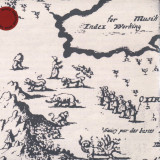
In this post Sounds world, the boundaries of Post Punk have not only broadened but splintered. And over the course of (now) four releases, Index For Working Musik have seen to using the sprawling boundaries to great effect, flexing a polyglot of styles to convey the language of the moment. On Which Direction Goes The Beam, the murky, distant ambience that was 2023's Indexé has been fleshed out, incorporating everything from the Brian Aldiss laced, ground lightning shudder of Dome, to the chamber-like arrangements of This Kind Of Punishment. There's even a candle flickering in the window for Think Fellers Union Local 282 that warmed these ears. And if you're a fan of the great Dutch band, Trespassers W (who isn't?), the collective consciousness IFWM enunciates on here is a similar testament of a band growing more sure footed in the pursuit of not only knowing all the ways in, but carving a few of their own on the way out. And it's discerning releases like Which Direction Goes The Beam that keep us in the hunt. Long may they forge. - Tom Lax. RIYL: Brian Jonestown Massacre, Velvet Underground, TOY, John Cale, Wire, Dome
On Stock and ready to ship

On Stock and ready to ship

The album SATO was made by the Ukrainian Crimean Tatar pianist and composer Usein Bekirov.
SATO was created during the difficult wartime for Usein’s motherland Ukraine and for the author himself.
Despite circumstances, the compositions of SATO express the ideas of the beauty and revival of Ukrainian music, a part of which is Crimean Tatar folklore.
The uniqueness of the release is caused both by the concept of the album and by the performers' star crew.
The jazz sound of the compositions of SATO is directed to the stylistic course of ethno-jazz and world music.
Rhythms and melodies of colorful Crimean Tatar folk music became the main source of inspiration in the creation of the album.
We can find both Usein's original author's themes, skillfully stylized to the oriental sound,
and referenced to the classic jazz vocabulary in its juicy riffs and grooves with features of fusion and funk music.
The name of the album reflected the inheritance of generations through music.
Sato is not only a folk instrument but also the name of the first Crimean Tatar jazz band, which made the first jazz arrangements of Crimean Tatar songs.
The music of this band became the basic musical experience of Usein Bekirov, because one of the members of the group was his father Riza Bekirov, to whom the album is dedicated.
The author and producer of the album is Usein Bekirov - Ukrainian pianist, composer, arranger, sound producer, and author of music for a number of films and theater performances.
Usein Bekirov cooperates with both foreign and Ukrainian musicians of the highest rank.
This is evidenced by the participants of the album Sato: Dennis Chambers, Randy Brecker, James Genus, Mike Stern, Ada Rovatti (USA), Hadrien Feraud (France), and Cenk Erdogan (Turkey).
Each performer reinterprets the author's material of Usein Bekirov through the prism of his own experience, character, and manner of performance, which was expressed in the daring stylistic combinations within a jazz style.
A special role in the creation of the album was taken by the participants of the recordings, especially, legendary jazzmen Dennis Chambers, Randy Brecker, James Genus, Mike Stern.
Their ideological and creative support became an important part of the creativity process.
Musicians expressed their impressions in small addresses for the audience.
One of the reviews of the musicians:
"The process of recording compositions was really exciting! This music reflects Usein's national origin and sense of his native culture.
It is full of real emotions. Actually, this music is quite difficult, but it is very well written and produced!
I sincerely hope you will notice this album, which also took part in Dennis Chambers, James Genus, Mike Stern, Ada Rovatti, and others.
I think it's going to be a really special album, can't wait to hear the final version.
When you hear about the premiere, I highly recommend listening to this new album created by Usein Bekirov.
It will be great!" Randy Brecker
On Stock and ready to ship

'Cupar Grain Silo' is Sam Annand's first release on the Blackford Hill label. Its nine tracks blur the lines between ambient electronica and sonic history, as synthesised melodies and rhythms reverberate through the extreme acoustics of the disused Cupar Grain Silo in Scotland. Built in 1964 as a sugar store, the silo towers 60 metres above the surrounding Fife countryside. Its industrial life was short: in 1971 it was closed, and barring a short period as a grain store, remained empty for decades.
In 2014, Sam Annand was given access to the silo as part of the Resono project, set up to study a series of highly reverberant locations across Scotland. The ambitious industrial architecture of the Cupar Grain Silo has given the space a reverberation time of 36.5 seconds. This measurement describes the time a sound takes to decay or 'fade away' in a closed space. To put this in perspective, the Cupar Grain Silo reverb time is around three times longer than that in cathedrals like York Minster and St Paul's.
"The acoustics are immediately noticeable when climbing the ladder into the main chamber", Sam says. "The sound of your voice begins to circle around and above you, inviting you to shout, clap and bang objects to excite the space into revealing its intimidating architectural voice."
Sam began to experiment with musical compositions which responded to the unique acoustics of the silo space. He used impulse responses – a short, sharp sound like a gunshot – to record these acoustics, allowing him to experiment with the silo's reverb in his production. Sam's compositions were performed using a modular synth system, a Roland Juno-6 polyphonic synthesizer and a bowed ride cymbal.
"Chords can be constructed in time by hanging successive single notes in the air," Sam describes, "The flutter echoes from the immediate cylindrical walls can be used to create bursts of scattering spatial imagery and harmonic blooms, following short percussive moments."
Originally recorded on 21st May 2016, 'Cupar Grain Silo' is now released on 12" vinyl with an accompanying booklet of imagery and essays. The compositions are at once true to the unique architectural acoustics of the silo whilst also being playful and experimental with the creative possibilities it offered. Arpeggiated melodies ebb and fall across extended call-and-response shapes formed by the silo's reverb; modular drum patterns crackle like dying machinery; whilst bowed drones waver and wash over.
"We all love reverberation," reflects Prof. Peter Stollery, Professor of Composition and Electroacoustic Music at the University of Aberdeen, on the project. "As kids, we play in it – yelling in forests and caves, surreptitiously dropping objects in huge churches – mouths wide open at the lingering smears of sound which come back to us."
In 'Cupar Grain Silo', Sam Annand has harnessed the extraordinary acoustics of the disused silo to tap into this sense of joy and amazement that reverberation can bring.
On Stock and ready to ship

Here at Mr Bongo we have been inundated with people asking us to reissue this release. Ana Frango Elétrico's petit cult classic masterpiece 'Little Electric Chicken Heart' from 2019, which was only ever released on vinyl and CD in Brazil and Japan, has fast become a collector's item.
Well received by fans, DJs, and reviewers on release, The Needle Drop expressed "Ana Frango Elétrico's authentically vintage fusion of chamber pop, rock, samba and jazz is a real blast!" listing it as one of its Top 50 Albums of 2019. The album's reputation has been slowly building ever since, gaining a Latin Grammy nomination in 2020, and now solidly cementing itself as a gem of contemporary Brazilian music.
Across the albums nine tracks, Ana blends elements and influences from MPB, Tropicália, indie rock, punk and pop, forging them together with a sumptuous dose of her signature style. The finesse of 'Saudade' kicks off the LP, one of Ana's most known tracks to a non-Brazilian audience. A sublime opener, beginning with a spellbinding piano solo before transcending into a beautiful dream-laden slice of warmth, complete with luscious jazzy horns and deft vocal delivery. ‘Promessa e previsões’ follows, the only track on the album not to be written by Ana, instead being penned by Chico França. It’s a swelling and sweeping twilight groover, building and breaking across absorbing peaks.
Other highlights on the album include the anthemic 'Chocolate', which was a firm favourite with a packed sing-along crowd when we heard Ana perform it live. Elsewhere, 'Se No Cinema' hits with its quirky allure, charm and catchy melodies before transforming into a carnival spirit.
Tapping into the richness of Brazil’s new wave of musical energy, the album also includes a heavyweight lineup of collaborations with artists such as Dora Morelenbaum (Bala Desejo), Tim Bernardes, Antonio Neves and Guilherme Lirio to name but a few.
A short, sweet and refreshing record, that leaves nothing to waste, marrying playful ideas with poignant themes. 'Little Electric Chicken Heart' is a future classic and will beguile fans of ‘70s Brazilian recordings, Gal Costa, Mac DeMarco, Stereolab, Superorganism, Caetano Veloso and more.
On Stock and ready to ship

They’re Only Chasing Safety is the fourth studio album by American melodic hardcore band Underoath. It was released on June 15, 2004, through Solid State Records. Following the release of their third studio album, The Changing of Times (2002), half of the band's members were replaced. After finalizing the line-up with vocalist Spencer Chamberlain, the band recorded They're Only Chasing Safety with producer James Paul Wiser (Dashboard Confessional, Further Seems Forever, Paramore). In the heavy and punk music scene, the album is considered a watershed moment.
The blend of heavy metal and hardcore influences with a strong pop/punk sensibility spawned a new branch of heavy music. The sound eventually became synonymous with the scream scene of the mid-2000s. The record went gold in 2011
On Stock and ready to ship

Matching breezy, Bossa nova-tinged sophistication with softly spiralling psychedelia, Testbild! arrive in the Quindi lounge as though they've always been there. On their 12th album, Bed Stilt, the Swedish collective cast their attention back to the earlier days of their 25-year trip through sweetly mysterious pop-not-pop rendered in warm tones and shot through with surrealism. It's tricky to get a precise fix on the story and structure of Testbild! The project was spearheaded by Petter Herbertsson in his hometown of Malmö in the late 90s, although the story on their website credits the inspiration and source material to a chance meeting and unpublished manuscript from a retiring scientist. The collective's evolution since then is a tangled web of facts and fiction spun by a revolving cast of collaborators including Siri af Burén, Katja Ekman, Rikard Heberling, Douglas Holmquist, Mattias Nihlén and Petter Samuelsson. Along the way, their music has touched on chamber pop, post-punk and modern jazz with the elaborate harmonies and catchy songwriting charm of the Canterbury scene. The tracks which make up Bed Stilt were in fact track recorded in Malmö back in the mid- 00s, lying in wait for the right opportunity to be brought to light with some delicate overdubs and finishing flourishes in the here and now. The core musicians working on the record were Herbertsson and Douglas Holmquist on a similarly expansive list of vocals, guitars, bass, synths and keys, Siri af Burén on lead vocals and Mattias Nihlén on synths and additional mixing. Meanwhile Tomas Bodén - better known as Civilistjavel - lent some additional synth work as well as mastering the record. Musically, Testbild! stay true to their idiosyncratic approach on Bed Stilt with six immaculately rendered sojourns through lilting harmonies and brushed rhythms, feeling nostalgic but beguiling in equal measure. Theirs is a luxurious sound, not least on the opening strains of 'The First New Years Eve,' which purrs to life draped in silky Rhodes and chiming vibes. Behind this comfortable veneer the enigmatic lyrical themes unfurl through Herbertsson, Holmquist and af Burén's vocal harmonies like fractalized puzzles waiting to be solved. The finger-picking delicacy and languid harmonica of 'Streams' strike a pastoral mood neatly countered by the elegant slide into dislocated ambience for the track's final stretch. By contrast, 'And Her Eyes Are Red' surges with a big beat urgency which plays beautifully with the mellow jazziness of the chord sequences, boldly toying with song structure to dart down curious tangents without losing the immediate impulse of a great pop record. Somewhere in this tension between clarity and chaos we can understand the addictive charm of Testbild! - a band steeped in the considerable craft of making accomplished and unconventional music so very easy to sink into. If that doesn't make for a perfect addition to the Quindi catalogue, we don't know what does.
On Stock and ready to ship

On Stock and ready to ship

In May, fans were treated to the first new music from Trentemøller since 2022. A new single, "A Different Light," showcased a stunning blend of prismatic space rock and folk. For anyone wondering if it foreshadowed the release of a full-length, Dreamweaver will drop in September, on Friday the 13th.
Featuring 10 tracks that traverse Trentemøller's many musical strengths, Dreamweaver also represents an obvious artistic leap, treading new ground while retaining the overall plot. Tracks featuring vocals come courtesy of of Iceland's Disa, who has been in Trentemøller's fold since the Memoria tour.
Dreamweaver's nylon string-led opening track, and first single from the album, "A Different Light," contains many of Trentemøller's trademarks: exploring dichotomies, musical shadowplay, Nordic frigidity, and warm waves. It opens the door for the steady, hypnotic "Nightfall," with its tetherless vocal, wistful guitars, and early morning desert chill. The third track in the opening trifecta, "Dreamweavers" finds its footing with a percussive soft trot, which starts after what feels like a shortwave radio scan in search of the right chords, eventually dialing in a weightless voice. Ostensibly keeping a ruminative pace with the previous two tracks, the song and, by extension, album soon opens up as the rest of the elements drop into place with a grand, luxurious burst.
Dreamweaver is about to enter its next phase. With the hatch blown off of the portal, the noisy "I Give My Tears," driven by its glissed and fuzzy bass line, pours into the void. It's followed by its sibling, the most chaotic track on Dreamweaver, "Behind My Eyes." Arriving as a piece of noise rock pandemonium, "Behind My Eyes," can't be contained in its plush vault. A whip-crack snare and convulsing guitars smash against each other in the song's verse chamber. The tension builds, as the particles collide, pushing past the point of critical mass, kicking off the chain reaction which is the chorus. At times it harkens back to the proto-gaze tracks that gave birth to dream pop, at others it newly defines what that is. There's no time to contemplate it, though, as the song disintegrates in a microphonic feedback instant.
A respite follows with the somnambulistic pair of "Hollow" and "Empty Beaches." Then, a moment of intensity returns as the soaring textures and tribal drum bursts of "In A Storm" take control, before being taken out with the ambient slo-core of "Winter's Ghost" and "Closure." This diptych wraps up an album which certainly feels on-script for Trentemøller, but is also much more psychedelic than previous offerings.
Dreamweaver will be released on Trentemøller's own In My Room label. It is an exceedingly immersive experience, bound to release any dormant hallucinations you may be harboring.
On Stock and ready to ship

Chamber music masterpiece with electronics
Albert Alan Owen was born in Wales in 1948 to parents of Welsh and Latvian heritage. His family later moved to Zimbabwe, where his father took up a teaching position. There, Owen was deeply influenced by local music and culture, while also exploring American RnB and jazz. It was during this period that he became acutely aware of the harsh inequalities under British colonial rule, which instilled in him a lifelong aversion to discrimination and racism.
In 1967, Owen returned to Europe to pursue his studies and enrolled at the Royal Academy of Music in London. He went on to spend time in Paris, studying composition with the eminent Nadia Boulanger and piano under Jacques Février, a favorite pianist of Ravel’s and Poulenc’s. Owen's focus shifted almost entirely to composition, and the acquisition of a Fender Rhodes electric piano marked the beginning of a divorce from his classical Western training. This transition allowed him to merge his passion for African and African-American music with the impressionistic styles of Ravel and Debussy while exploring the innovative realm of electroacoustic composition.
These formative experiences framed Owen’s career as a composer and educator at the Royal Academy of Music and London’s Working Men’s College. He eventually returned to Wales, where he continues to reside.
In 1979, 29-year-old Albert Alan Owen released Keyboards & Strings, a light magical chamber music masterpiece.
Transcending the formal conventions of its era, Keyboard & Strings is an acoustic and electric piano piece, where the violin is met by synths and electronics.
As is often the case in Albert Alan Owen’s most intimate works, there is a sense of ethereal beauty that emerges from the music, akin to the emotional state one might experience while contemplating a Félix Vallotton landscape or the unfathomable mystery of dawn’s first light.
Quiet, profound, and immersive, Keyboard & Strings stands out as an electronic-age tone poem, a rare gem that transcends time and place.
On Stock and ready to ship

The scenic artist and multi-instrumentalist CLARAGUILAR moves from performing arts to cinema as a composer and live performer. Over the last few years he has created soundscapes that blend electronics and sampled elements with orchestral arrangements, becoming one of the main names of the Spanish theater scene when it comes to soundtrack and sound design creation.
After her acclaimed EP 'Mystery is All' Lapsus is proud to present 'Figura', CLARAGUILAR's debut album, a heartfelt tribute to her connection with the scenic world, and especially with the operatic universe. The starting point of this project was born with the concept of an "invisible orchestra", an imaginary that aesthetically becomes a reality on stage thanks to the collaboration with the Barcelona studio Oscila, as well as with the help of the stylist Joan Ros, who has been in charge of the costume design.
'Figure' is a space in which electronica, ambient, and chamber-pop coexist; all under an operatic halo full of drama. Once again, the producer locked herself down from late 2022 to the beginning of 2023 to compose all the tracks in a very intimate and closed composition process. The album dives into the melodic landscapes, merged with orchestral samples and chopped voices containing mysterious messages inside.
Each track is a pixelated lightshow and a live electronic instrumentation, presented onstage as an elegant performance with an expansive emotional range
On Stock and ready to ship

A collection of music for the various films and theatre plays by Mirko Krsticevic, Croatian and Yugoslavian composer and musician active since 1970s. All and Nothing at All (Film and Theatre Music 1978 - 1988) focuses on his work for the underground and avantgarde cinema from the era: directors Ivan Martinac, Svemir Pavic, Lordan Zafranovic, Aleksandar F. Stasenko and Vanca Kljakovic are all part of the Split Cinema Club association; their work explores art, death, sexuality and eroticism. Pavic's portrait of surrealist painter Ljuba Popovic, made in the same year as its counterpart by Walerian Borowczyk, features scenes form Beaubourg Gallery in Paris and Udo Kier as a guest. Side B of the record is all about theatre: plays by Sam Shepard, Rainer Werner Fassbinder and Jean Giraudoux were all produced in Sarajevo and Split in the 1980s, with the rare electronic takes by Mirko Krsticevic and his subtle minimalist soundings of the themes from the Cold War era. This unique and diverse compositions by founder of the rock band Metak and sound studio Tetrapak from Split, are document of the time that is, especially in the closing Chernobyl theme, relevant again. Composer, musician and musical arranger Mirko Krsticevic was born in 1948 in Sibenik. He graduated in music theory at the Pedagogical Academy in Split and then at the Music Academy in Sarajevo. He studied composition with Josip Magdic, Mladen Pozajic and Miroslav Spiler. He is the co-founder of the Tetrapak music studio in Split, where numerous performers and musicians have recorded (Animatori, D'Boys, Haustor, Oliver Mandic, Gibonni, Srdjan Marjanovic, Stil, Trotakt Projekt and others). The first group he founded was the rock group Che, which performed his own songs, in which he played bass guitar. It was founded in the summer of 1969. Together with Ranko Boban and Momcilo Popadic, he founded the Metak group in the spring of 1978 in Prigradica on Korcula. In the group, he is the author of songs and lyrics, and he also plays the bass guitar. "Da mi je biti morski pas" is the group's most successful single, which in 1980 became one of the most played songs on radio and television. Metak performed in Belgrade in front of 70,000 people, and the media declared them the best group along with Macedonian Leb i sol. In compositional work and arrangements for other pop and rock artists, Krsticevic had high commercial success with Tutti Frutti Balkan Band, Biljana Petrovic, Seid Memic Vajta, Pepel in kri, Osmi putnik, Oliver Dragojevic , Djordji Peruzovic, Henda and others. Parallel to his pop and rock career, Krsticevic composed stage and film music for 45 films, mostly collaborating with the circle of experimental and amateur directors of the Split Cinema Club (Kino klub Split) as well as the rest of the local underground scene. He is the author of stage music for 130 theatre plays, and also records his own compositions in the field of contemporary music. He wrote over 30 works for solo instruments, chamber and symphonic music. At the end of 2007, he founded the Split society for contemporary music and the contemporary music ensemble Splithesis. In 2015, he founded his own orchestra The Highway to Well Family, composed of fourteen musicians and three singers. In 2021, he founded Arthesis, an artistic organization for contemporary music and visual arts. He is the author of four operas: "Krvava svadba" (1997), "Halugica" (1999), "Atlantida - Legenda o Dan'zoru" (2018) i "Atlantida II - Lu'blis Kaoamos" (2020). He is the winner of numerous awards, lives and works in Split. Gatefold LP with extensive liner notes, Direct Metal Mastering (DMM) from original tapes, pressed at Record Industry. File under: Soundtrack, Stage, Electronica
On Stock and ready to ship

It’s always exciting to have a new release on Sushitech’s sub label Pariter. The label is already home to some living legends such as Delano Smith, Norm Talley and Boo Williams is surely finding himself in good company here. Night Fall / Day Rise is a two parts release, beautiful collection of new and unreleased driving Chicago House music at its very best!
On Stock and ready to ship
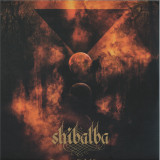
The flesh withers to the pulses of thunderous cave reverberations, while the spirit is united with the psalms of the Glorious Dead, the Ancient Entities that have conquered Death and become Life, dominant, absolute and victorious. This Work consists of a ritual deriving from the darkest corners of the Mind, the deathlike spheres of the Netherworld and the truest essence of the Afterlife, to become a homage to the Force of Life Eternal.
Guided by Her Luminous rays, it is dictated to be experienced solely in chamber-like conditions, below the waxing Moon, accompanied with Myrrh and lunarian incenses and agharbattis, to be properly roamed within its uncharted corridors. Listen, experience and conquer, setting aside the mundane aspects of realities, explore the unmapped pathways, with every preconception burnt to the altars of this Magnum Opus.
SHIBALBA's music is saturated with the mysticism of the East. It's richly detailed and multidimensional, while layered with chanting and broadly defined elements of traditional ritual and shamanic music. Apart from contemporary synths and guitar drones, the band makes use of bones and skulls as percussion instruments, Tibetan Horns, Tibetan Singing Bowls, bone & horne trumpets, Darbuka's (goblet drums) as well as ceremonial bells and gongs, to name a few. The Spirits behind the Shamanic Halls of Shibalba are V.P. Adept & Aldra-Al-Melekh.
CD edition of 300 copies in 6 panel Digisleeve, Matt Lamination. 7 Tracks. Running Time: 43:04
Vinyl LP edition of 300 copies in 3mm sleeve with printed innesleeve, Matt Lamination. 7 Tracks. Running Time: 43:04
On Stock and ready to ship

Influenced heavily by the metallic and industrial sounds that surround
him at his day job, Veldt (HANDS, Industrial Detroit) channels those
sounds into a rhythmic chamber, filled with electronics that hint to
influences from the Rhythmic Noise, Industrial, and Techno strata.
While residing in Detroit, Michigan, Veldt works closely and in
partnership with Industrial Detroit. Interrupting new circuits with a
purpose
On Stock and ready to ship

In the fall 2021, Belgian saxophone player Robin Verheyen was invited by Kunstencentrum KAAP and W.E.R.F. records to play a solo concert during AMOK festival in the beautiful Bruges baroque church Walburga. The haunting concert was recorded in its entirety and additionally an extra recording session was scheduled in the Chamber Music Hall of the Bruges Concertgebouw. Both rooms have one thing in common: special acoustics. The playful dialogue Robin created with both spaces created an extremely unique sound and formed the basis for the title of this first solo album: Playing The Room.
Over the past two decades, Robin Verheyen has proven to be not only one of Belgium's brightest saxophonists of his generation, but also that he is a musical jack-of-all trades. Within his band with dEUS frontman Tom Barman - TaxiWars - he demonstrated his ability to rock, while with Bach Riddles he showed that he is no stranger to baroque music either. In his own bands he was often surrounded with illustrious American jazz greats like Joey Baron or Marc Copland, but with 'Playing The Room' Robin proves that he can hold his own as well and what an exceptional musician and improviser he is.
Playing The Room offers the listener a musical journey full of discoveries on the edge of spirituality and virtuosity. The album will be officially released on W.E.R.F records on Friday, May 5, and will be available in a limited edition on vinyl. An absolute must-have for any musical connoisseur.
On Stock and ready to ship

Revolver, die die Band 2020 auf ihr Cover setzten, bemerkten, dass AUGUST BURNS RED "den Schmerz so gut annehmen". Eine Wahrheit, die nie offensichtlicher war als auf "Death Below", ihrem atemberaubenden neunten Studioalbum. Aufgenommen mit den langjährigen Produzenten Carson Slovak und Grant McFarland.
On Stock and ready to ship

KAU is an instrumental project based in Brussels consisting of André Breidlid (drums), Matteo Genovese (bass) & Jan Janzen (keys). Representing various European backgrounds, their coming-together is in the spirit of the city they grew up in.
Taking inspiration from jazz, they create a head-bobbing atmosphere using bassy beats and catchy melodies. By implementing acoustic instruments, the trio stays true to an organic and rich sound, granting themselves the liberty for improvisation & spontaneous happenings. Influenced by artists like BADBADNOTGOOD & Christian Scott, their music is contemporary, powerful, and audacious.
The EP "III" is the collaboration between the three core members of the band and Maxime Dereux, talented French saxophonist already guested on "II". Having built strong musical ties over the course of the last years, the idea to make more music together arose naturally without a shadow of a doubt.
The result is a 4 track EP with a high concentration of powerful riffs and sharp themes. The title song 'Mad Max' perfectly represents madness incarnated. On "Moonwalker" they go to new places with ever-changing melodies and sax lines. 4 minutes of holding on to your seat in anticipation of the next measure.
This EP also features Brussels born and bred rapper "Jay MNG" who has made a name for himself around many concert halls & festivals in Belgium. Having collaborated notably with Commander Spoon and Kuna Maze, the polylinguistic rhymes of Jay MNG left a mark on this emerging music scene. Enraged, banging in whatever language that may be, Dutch, French or English, he manages to make a massive impact on the atmosphere of the tracks and add his own flavour.
On Stock and ready to ship

Angelo is an LP, named after a car, featuring nine songs Brijean have crafted and carried with them through a period of profound change, loss, and relocation. It finds percussionist/singer Brijean Murphy and multi-instrumentalist/producer Doug Stuart processing the impossible the only way they know how: through rhythm and movement. The months surrounding the acclaimed release of Feelings, their full-length Ghostly International debut in 2021 which celebrated tender self-reflection and new possibilities, rang bittersweet with the absence of touring and the sudden passing of Murphy’s father and both of Stuart’s parents. In a haze of heartache, the duo left the
Bay Area to be near family, resetting in four cities in under two years. Their to-go rig became their traveling studio and these tracks, along with Angelo, became their few constants. Whereas Feelings formed over collaborative jams with friends, Angelo’s sessions presented Murphy and Stuart a chance to record at their most intimate, “to get us out of our grief and into our bodies,” says Murphy. They explored new moods and styles, reaching for effervescent dance tempos and technicolor backdrops, vibrant hues in contrast to their more somber human experiences. Angelo beams with positivity and creative renewal — a resourceful, collective answer to “what happens now?”
Angelo the car is a 1981 Toyota Celica they got off Craigslist during their first stint in Los Angeles, where Murphy and Stuart have since settled. “Such a bro-y, ‘80s dude car, it’s been super fun to drive around in a new town,” Murphy says. “He’s older than us, he’s a classic, he’s got a story.” It is a spiritual vehicle with a cinematic appeal, first dropping them off in an alleyway for the scene-setting intro, “Which Way To The Club.” The question is quickly resolved by “Take A Trip” as a cruising bassline mingles with crowd sounds, hand-claps, cuíca hiccups, whip-cracks, even a horse neigh. Brijean have found some club on this cross-dimensional trip — the kind of
imagined space or chamber within one’s self capable of “shifting a fraction of who you are,” says Murphy. They wrote the track with the simple intention to be “as free as we could be,” adds Stuart, likening the flip on the B section to a realm unlocked: ”What if the world changed completely? You open the door to a new room.”
Next is “Shy Guy,” a motivational anthem for the wallflowers among us. Murphy sets up the daydream: “We are in junior high, we’re on the dance floor, what’s going down, who is dancing, who is not, how are we gonna make them dance?” The narrator, the MC, hypes up the room as conga-driven rhythms bounce between languid synth and guitar lines. “Show me how to move...I feel something...I know you feel it too,” Murphy sings sweetly, calling back to the opening lines of Feelings, and this time the audience chants it back. It is easy to picture Brijean performing this one — something they only got to do a handful of times until more recently, opening shows for Khruangbin and Washed Out, an experience they found informative. Murphy explains, “It was inspiring to be out there and let loose more. To see how people can expand their expression on stage gave me more liberty with how I viewed my musicianship. My role for so long was to be a backup percussionist, so why would I ever leave the drums, you know? But then after playing all these runs, you see these artists and realize you can, you have permission.”
“Angelo” and “Ooo La La” deliver the danciest stretch in Brijean’s catalog to date. The title track adopts a deep house pulse replete with strings, hi-hats, and kicks. The latter opts for a funkier groove that foregoes verses in favor of warbled hums and extended breakdowns. What follows is perhaps the duo’s dreamiest run, a comedown initiated with the honey-hued interlude “Colors” drifting into “Where Do We Go?”, a tropicália reverie where Murphy contemplates the passage of time and space.
It all culminates in “Caldwell’s Way,” a fond farewell to their Bay Area community — “a part of my life that I knew couldn’t come back,” says Murphy. Above shimmering organ sounds, lush strings, and the birdcall of their former neighborhood, she wistfully articulates the uncertainty of moving on by remembering the characters dear to them. There’s the wisdom of their neighbor, Santos, who refused payment when helping them move out: “I’d rather have 100 friends than 100 dollars.” And the song’s namesake, Benjamin Caldwell Brown, a friend and club night cohort for many years. “I’m only miles away, maybe I’m just feeling lonely,” the line resigns to warm nostalgia, and “Nostalgia” runs the closing credits to this healing and transportive collection.
On Stock and ready to ship

'The album is composed by Cerys Matthews with Hidden Orchestra and features 10 UK poets: MA.MOYO, Raymond Antrobus, Lemn Sissay, Liz Berry, Anthony Anaxagorou, Adam Horovitz, Cia Mangat, Imtiaz Dharker, Kim Moore and Kayo Chingonyi “We are living in extraordinary times, I wanted to respond but had the urge to offer more than one voice, more than one perspective. Not an echo chamber” – Cerys Matthews. In February 2020 Abbey Road studios welcomed each of the 10 poets to record pieces from their collections. Then lock down hit…. But remotely and with the additional help of field recordists and musicians around the world, Cerys and Joe Acheson (Hidden Orchestra) created a sound journey for these poems with the theme of: Genesis: Birth, heritage, a journey about to begin.
On Stock and ready to ship

In 1975, under the oppressive air of military dictatorship in Brazil, brothers Lelo and Zé Eduardo Nazario invited bassist Zeca Assumpção to join their musical experiments in a basement under Sao Paulo’s Teodoro Sampaio Street. As teenagers, the trio had already been playing together in Hermeto Pascoal’s Grupo, alongside guitarist Toninho Horta and saxophonist Nivaldo Ornelas, and it was while working together under Hermeto’s direction that the Paulista rhythm section (as they were then known) began to realise their own potential.
With many nightclubs and venues closed in the mid-70s and government censors dictating the output of radio, TV and art galleries, many Brazilian artists fled during the years of dictatorship. But underground, Grupo Um were fusing avant garde ideals with contemporary jazz and Afro Brazilian rhythm; making phenomenally free and expressive music - in stark contrast to the sterile, conservative conditions being imposed above ground.
Just like Hermeto Pascoal’s Viajando Com O Som from the following year, Starting Point was recorded over two days at Vice-Versa Studios, by revered engineer Renato Viola. The studio was one of the best in Sao Paulo and musicians communicated with engineers through cameras and a monitor, allowing the group complete immersion in the process. They also made use of the studio’s hemispherical tiled room, which served as an acoustic reverberation chamber.
The album begins with Zé Eduardo Nazario’s thunderous drum solo on “Porão da Teodoro”, before clearing the clouds with the lone Berimbau which opens “Onze Por Oito”. Built around a hypnotic electric bass line, heady Fender Rhodes improvisations, and more rip-roaring drums, it’s a rapturous, electrifying freak-jam in 11/8.
Like some invertebrate deep-sea curiosity, the free-form “Organica” is made up of Lelo Nazario’s playfully eerie prepared piano, with Zé Eduardo’s percussion flurries darting around Assumpçao’s double bass. The equally non-conformist, percussion-only piece “Jardim Candida” features many of Zé Eduardo’s home-made instruments, including a long saw blade played with vibraphone sticks and violin bow. While working with Hermeto, Zé Eduardo famously built his own all-in-one percussion set-up known as the “Barraca de Percussão” (Percussion Tent) - the first of its kind in Brazil, which he would also use on Hermeto Pascoal’s Viajando Com O Som and throughout his career.
“Suite Orquidea Negra'' (Black Orchid Suite) was written by Lelo Nazario as the score for an imaginary movie - the story of a rare, black orchid which produced a substance meant to cure all diseases, but which had mysteriously disappeared from the laboratory… “As a screenplay it’s not very good” reflects Lelo in jest, “but the music ended up being very interesting, the way its parts are chained to one another carries a little of the mystery I imagined for the movie.”
The album closes with the triumphant “Cortejo dos Reis Negros” (Procession of Black Kings) - a groovy variation on the Maracatu rhythm, with a two-note bassline underpinning piano improvisations, exultant wordless vocals, cuicas, slide-whistles and a very special guest appearance from Zé’s dog Bolinha.
Starting Point was to mark the inception of one of Brazil’s most daring instrumental groups. Their debut now sits in the lofty echelon of otherworldly 70s Brazilian music, alongside the likes of Marcos Resende & Index’s self-titled debut, Cesar Mariano & Cia’s Sao Paulo Brasil, Azymuth’s debut and indeed Hermeto Pascoal’s Viajando Com O Som. But just like all of those titles, which were either shelved or largely ignored at the time, Grupo Um - so radically ahead of their time - struggled to find a label to release their debut album. So Lelo kept the tapes safe in his archives, which is where they sat for almost half a century. Finally, almost fifty years later, this mesmerising piece of history is here, and it was only the beginning...
Grupo Um’s Starting Point will be released by Far Out Recordings, on vinyl LP, with an insert featuring unseen photos and liner notes by the Nazario brothers, as well as a CD on 17th February 2023.
On Stock and ready to ship
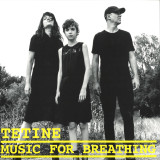
We've been writing new material as a trio since the first lockdown in the spring of 2020.
An organic and electro-acoustic impulse that translates both mine and Eliete's need of self-archiving,
re-inventing and auto-cannibalising Tetine's past, present and
future in order to explore other aural
landscapes and modes of composing intuitively, while at the same time, re-experiencing moments of our
trajectory as a hybrid organism.
Music For Breathing was born as a respiratory, meditative, and improvisatory piece of DIY
tropical-mutant-punk "chamber music" written for cello, voice, piano, organ and electronics.
The work responds to the suspended acts of breathing and vertigos experienced in contemporary polluted
environments in political, social and philosophical transitions, whilst investigating the
secret ontologies of inanimate objects and architectures, as well
as the echoes and ethics of modes of operating things.
Recorded during the intense period of heatwaves that hit London between July and August 2022, in
a small studio set up in our flat's kitchen - so that we could capture the acoustic instrumentation
(in particular, for the recording of cellos) without much
noise interference from the street -
this vinyl version of the album comprises of 5 distinct yet complementary reflective movements.
Musically and lyrically, it explores the atmospherics and syntaxes of time and space, voice, rhythm,
as well as themes such as hearing loss, menopause, pollution and respiration. It builds an expanded suite of unexpected
electro-acoustic textures through repetition, minimalistic motives, simple melodies, chromatic
developments, free counterpoint and atonalism. Conceived as an ode to the poetics of slowness,
the sounds you hear give continuity to the music we composed for the performance-film
The Ether - Prelude No.1 over the first lockdown in 2020 as it simultaneously explores the warmth,
melodiousness and power of the cello in conjunction with electronics.
Music For Breathing evokes this transitory moment: a place and time where language runs out,
communication and information lose their functions, sound and meaning do not correspond. Facts do not correspond to contexts. Spaced Out in Paradise. The last degree of the structure, the
loss of memory. The lost voice.
The album also features our 12-year-old daughter Yoko Afi on cello and vocals. It reflects
a period of free sound experimentation influenced both by romantic composers of the late
19th / early 20th centuries and contemporary electronic music. The pieces you hear were composed, arranged, and recorded
with the joy and melancholy of "those who do not know". In other words, "with the arrogance
of a second childhood" as Derek Jarman once put it. 'Agile and candid as a child'(1).
1) Manifesto da Poesia Pau-Brasil, Oswald de Andrade, Correio da Manhã, 18 de Março de 1924.
On Stock and ready to ship

Rousing Robocop Knock-Outs
On Stock and ready to ship

Ohne Cover[28,99 €]
Box Set w/ Hand-stamped LP, 36 page riso-printed book, Riso-printed fold-out poster, Stickers
"Phantom Seance Ballett is a boombox orchestra, Nō mimes, Vicky’s protection spells, Detlef’s psychic shuffles, a smoke machine, a strobe light chamber, painting, Margit Carstensen’s chiffre, Susie Greene’s insults, Schleim, Ebichu’s echoes and Anna Oppermann’s limbo."
Thus we welcome Lena Willikens & Sarah Szczesny's ethereal Phantom Kino Ballett project to Utter with 'Phantom Seance Ballett', an unusually tangible manifestation of what has become an on-going series of live performances and installations that incorporate sound, video, costume, still imagery and beyond. The themes explored weave in and out of grasp, touching on the otherworldly and mysterious, on hypnotic rites and ceremonies, on the fetishisation of cultural tropes and curios.
While carefully documented, these happenings had not been distilled or presented in a cohesive format until now. Of course, an attempt to harness and package such an experience required an imaginative leap beyond the traditional 'record-in-sleeve' approach and Lena and Sarah have overseen every aspect of this remarkable collection themselves.
Working with designer Till Sperrle, Lena and Sarah have conjured up a fold-out box containing an LP, a riso-printed credits poster detailing the samples and snippets collaged into the sound, a 36 page book with imagery from various shows and an essay by Thomas Vorreyer plus sticker pack. The limited 50 copy artist edition contains an additional 10 special riso-prints within an artist stamped hand-numbered box. For all, the LP contains twenty hidden locked grooves cut into the run-out on each side presenting snippets from the artists' archive.
The first of these pieces - 'Identikit Arkaden Seance' - took place on the 2nd of October 2019 at NAK Neuer Aachener Kunstverein and is a live recording. This performance was part of their exhibition "Chambers of Phantom Kino Ballett", where they showed new video works and displayed the now infamous costumes and slippers worn by Lena, Sarah and a rotating cast of guest phantoms.
At this performance, the seven performers carried boomboxes playing individual audio tracks inside and outside the Kunstverein, while Viktoria Wehrmeister and Detlef Weinrich improvised music alongside the phantoms' moving soundtracks of sonic snippets, poetry, field recordings and soundscapes.
The second piece - 'Studio Chamber Seance' - contains diverse audio tracks of performances that were held by Willikens and Szczesny in collaboration with Wehrmeister and Weinrich. It has been deconstructed and rearranged with additional sound material from the Lena Willikens & Sarah Szczesny archive, then edited and mixed by Lena and Sarah in Amsterdam and Cologne last year. Additional music by Detlef Weinrich and Viktoria Wehrmeister features throughout, recorded live in Aachen 2019 and Frankfurt 2020.
Mastered by Gordon Pohl. Transfer, additional mastering & lacquer cut by Helmut Erler at D&M.
On Stock and ready to ship

SUMMER OF SEVENTEEN are MONIKA KHOT (NORDRA, ZEN MOTHER), WILLIAM FOWLER COLLINS, DANIEL MENCHE, FAITH COLOCCIA (MAMIFFER), and AARON TURNER. (SUMAC, SPLIT CRANIUM).
Wildfires plagued Washington state during the summer of 2017, their smoke drifting westward toward the Seattle area and toxifying the air. Shortly before that trauma, MONIKA KHOT, WILLIAM FOWLER COLLINS, DANIEL MENCHE, FAITH COLOCCIA, and AARON TURNER had gathered at the latter two musicians' House Of Low Culture studio on idyllic Vashon Island with revered producer RANDALL DUNN. There they cut eight songs that capture the makeshift band's feelings of what COLOCCIA calls "a kind of doomsday lurking in the background." It's as if these highly attuned players had a premonition.
"Summer Of Seventeen" -which was edited and arranged by MONIKA KHOT, who records apocalyptic music solo as NORDRA and plays in the avant-rock band ZEN MOTHER—is a nuanced admixture of these musicians' sounds and a culmination of all of their previous collaborations. COLOCCIA and TURNER have created eldritch folk and chamber rock for over a decade in MAMIFFER while engaging in various solo and group projects that explore their profound spirituality in sound. MENCHE has been a fixture on the abstract composition scene for 31 years and COLLINS is a savvy explorer of drone and ambient forms. Their ephemeral summit meeting has yielded a masterwork for the ages.
A heaven/hell and beauty/beastliness dichotomy pervades the album—as if a titanic struggle was transpiring in that small studio. The fearsome trumpet fanfare that starts "Chorus Of The Innocents" heralds a baleful fate. With a subliminal industrial rhythm bristling beneath the eerie exhalations, the song submerges us in a slow-motion maelstrom, a horror-film facsimile of MILES DAVIS' "Bitches Brew". "Perceived Slight" threads death-metal screams through a stark, suspenseful atmosphere, with austere glints of guitar and beats like fists on a casket lid intensifying the dread.
Angelic chants and celestial drones perfume the air in several of the songs on "Summer Of Seventeen", countered with muted blast beats, serrated hums, jagged glitches, simulacra of grinding gears and lightning. It's as if no good deed goes unpunished. "Spirits Of Redeemer" could be an elegy for the human race while "Cultural Orphan" sounds like a symphony for a malfunctioning factory. The album ends with "Theatre Needs An Audience," a harrowing ballad somewhere between EINSTÜRZENDE NEUBAUTEN and MERZBOW; it's a savage rent in the space-time continuum.
"Thinking about this record now," COLOCCIA recalls, "it seems like we were all sort of anticipating something like this current pandemic happening, although we were thinking about it as fire in the hands of man (literal fire, and also gunfire) that would overturn the normal running of things and reveal the current false beliefs systems holding up most of America."
That grave aura infiltrates "Summer Of Seventeen", However, a hopefulness bubbles beneath the foreboding architecture of sound and noise summoned here. The bunker is the new penthouse.
-Dave Segal, April 2020
On Stock and ready to ship

DUAT (pronounced "do-aht") was the realm of the dead in ancient Egyptian mythology. The deity Osiris was believed to be the lord of the underworld since he personified rebirth and life after death, being the first mummy as depicted in the Osiris Myth. The underworld was also the resi-dence of various other gods along with Osiris. The DUAT was the region through which the sun god Re traveled from west to east each night, and it was where he battled Apep, who embodied the primordial chaos which the sun had to defeat in order to rise each morning and bring order back to the earth. It was also the place where people's souls went after death for judgement, though that was not the full extent of the afterlife. Burial chambers formed touching-points be-tween the mundane world and the DUAT, and the akh, the effectiveness of the dead, could use tombs to travel back and forth from the DUAT
On Stock and ready to ship
On her first Harmony Index album, multi-instrumentalist and producer Nico Leibman spotlights the feelings that are most difficult to express, bringing out the friction between her dreamy hooks and harsher sonics. Written almost like a DJ set, the album shifts intentionally between piano-led trip-hop, lounge, dream pop, 2-step and breakbeat house, not languishing in nostalgia but defining a language that's rooted in desire, surrender and forward motion.
Until now, Leibman has been best known as a touring musician, working alongside artists like Jessica Pratt and Ana Roxanne, while slowly putting together new solo material in-between frequent tours. The album was written in bursts over the course of five long years and provided Leibman with a much-needed outlet - a chance for her to lock into her personal musical preoccupations, like Janet Jackson's 'The Velvet Rope', Everything but the Girl's 'Walking Wounded' and Prefab Sprout's 'Jordan: The Comeback'.
It's this era of pop - when nascent technology collided at force with skillful, soulful songwriting - that provides the album's backbone, fleshed out by Leibman's potent meditations on a spectrum of experiences in Los Angeles. And as the record was evolving, Leibman let long night drives crack her creative world open. Embracing the city's notoriously cinematic romantic side, she used the car as a "little chamber of limerence," in her own words, enabling her fantasies and acting as a test system for each song. "If it wasn't hitting in the car," she says. "It wasn't going to be on the record, period."
This sense of motion is evident almost immediately on 'Recognize', when Leibman's breathy words are carried into the night by choppy, uptempo breaks and resonant pads. So even when she simply coos over chugging guitars and bass on the first half of 'Enough', the drop into a low-slung breakbeat is implied. "Another digression, a break in this tension," she sings. "Was I foolish to believe that this was never your intention?" Leibman's tales of disillusionment are imbued with power, buoyed by her pitch-perfect production, with additional help from co-producer Cesar Maria.
On 'Don't Pretend', she sings softly and soulfully over decelerated Timbaland-inspired beats and a dubwise bassline, aided by additional production from Purelink. And 'If' marks the point where she lets go, infusing her euphoria with melancholy as her voice soars alongside the album's most infectious piano riff. Fittingly, the album concludes with 'Trust', a song about surrendering to the possibilities of love that works as a potent metaphor for the album's evolution. Over the course of five years, Leibman learned to let people in, finally trusting the process. "It's also a fantasy of what it would feel like to finally be in love again," she laughs, accepting that it's still just a fantasy. But it's this hope in unfulfilled longing that gives the album its unique character, defining a bold, unguarded voice in LA's experimental pop landscape.
Order now and we will order the item for you at our supplier.
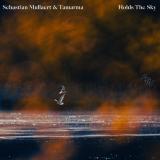
Acclaimed, Swedish composer, producer and live artist Sebastian Mullaert, and Georgian electronic artist Tamarma (Tamara Davitashvili), are set to release the deeply personal and genre-fluid album ‘Holds the Sky’ on the 25th September via Awesome Soundwave, the label curated by Christopher Coe and Carl Cox.
Spanning ambient, experimental and alternative electronic forms, alongside a set of dancefloor-oriented reworks that expand the project’s sonic spectrum, at its core, the album is the result of an unusual artistic convergence that traces back to 2020. Tamarma entered Mullaert’s successful In Bloom mentorship programme on a scholarship, and over a year-long deep exploration of album creation, her work revealed a rare clarity and emotional depth.
One piece in particular became the catalyst. Developed further through Mullaert’s 4 step studio process, it unfolded into a full length album collaboration. What began as a single composition has since grown into an album that documents an organic and intuitive exchange between two distinct artistic voices.
The result is less a collection of tracks than a continuous unfolding; a dialogue shaped by trust, listening and shared curiosity. Rather than aiming for a fixed genre position, the album operates as a living process: a meeting point between tradition and experimentation, between voice and synthesis, between two artists allowing something larger to emerge through their collaboration.
With compositions such as the chiming ‘Being Colours’ and hypnotic ‘Holds The Sky,’ Mullaert and Tamarma have created a body of work that resists easy categorization. The album moves through intimate, meditative passages and more rhythmically driven moments, always anchored in a sense of presence and emotional immediacy. The flickering beats of ‘Winnow’ and ambient manifestations of ‘Lost In Dimension’ and ‘Field of Us’ add a sense of tranquillity, stillness and convergence.
Tamarma’s voice carries both a personal and cultural depth throughout the album, while remaining fluid and responsive to the moment. The result is a sound that feels both intimate and spatial, where voice, texture and atmosphere are closely connected. Her Georgian musical heritage combined with Mullaert’s open-ended electronic exploration, allows something beautiful to emerge, shaped by listening, space and a sense of something larger than either artist alone.
Widely celebrated in the electronic music community, Mullaert has spent the last three decades moving beyond the boundaries of electronic music, from shaping the sound of cult duo Minilogue to creating the fully improvised global platform, Circle of Live, which has seen him perform and collaborate with artists such as Mathew Jonson, Âme, Amp Fiddler, Aurora Halal, Speedy J, Sam Barker, Dorisburg, Move D, Sleep D, Kuniyuki, Pantha du Prince, Leafar Legov, Wayne Snow, Laurence Guy, VRIL, Neel and Erika.
Initially making a name for himself in the world of techno, his performances have moved fluidly between environments, from underground spaces including Berghain’s Panorama Bar to festivals around the world, and venues including the Barbican, London, where he has appeared alongside artists including Joep Beving, Laura Misch and JakoJako. Platforms such as ARTE have featured his performances, placing his work within a broader European cultural context, while support from Resident Advisor and Boiler Room reflect his continued presence within the core of electronic music culture. He has received a Swedish Grammy and the P3 Guld award from Swedish National Radio.
His 2020 album ‘Natthall,’ developed in collaboration with Tonhalle Orchestra Zürich and performed with Subchamber Ensemble, saw Mullaert enter the world of contemporary composition, and merged electronics with chamber music and improvisation. The album was later named among the top post classical releases of the year by BBC Music Magazine.
A new documentary film by Ableton, set for release this summer, captures Mullaert’s Circle of Live project through a performance at Brighton Dome in the UK, featuring Mullaert and electronic artists Clark and Rival Consoles. The film offers a rare insight into the inner workings of collective improvisation at a high artistic level, further cementing Mullaert’s role as a leading voice in contemporary live electronic practice.
Tamara's background is rooted in the landscapes and traditions of Georgia. Raised near the Caucasus Mountains, classically trained in piano and shaped by years as a jazz vocalist, her work carries traces of Georgian polyphonic singing and a strong connection to nature and place. Her transition into electronic music is not stylistic but transformational; a recontextualisation of heritage into new sonic forms.
‘Holds The Sky’ will be available on vinyl and digitally on the 25th September via Awesome Soundwave. The digital release includes three exclusive album track reworks from Mullaert.
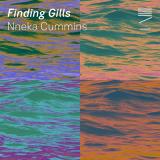
Nonclassical are proud to release Nneka Cummins’ Ivor Classical Award-winning finding gills (when they try to drown you), pairing the original orchestral work with its remix, finding gills realms and possibilities.
Originally commissioned and composed during Nneka’s time on nonclassical’s Artist in Residence programme and premiered by Sinfonia Smith Square in 2025, the work marks their first large-scale exploration of fixed electronics alongside chamber orchestra. Built entirely from its source material, the remix dissolves the perceived sacredness and permanence of orchestral music, stretching, warping and reassembling its fragments into a fluid electronic form.
Drawing on fragments of earlier compositions, Finding Gills embodies both destruction and creation, embracing the spirit of metamorphosis. Inviting the listener to sit in moments of dissonant discomfort and distress, an emerging sense of hope gradually reveals itself through radiant strings and spiralling melodies. Hinting at a sense of tiredness that is continually renewed, sparks of new life blossom within a shifting orchestral landscape where memory, experimentation and survival coexist.
The title alludes to the Afrofuturist mythology of Drexciya, imagined by Detroit duo James Stinson and Gerald Donald, in which the descendants of pregnant African women who were thrown overboard during the transatlantic slave trade adapted to breathe underwater, creating a new civilisation beneath the sea. Nneka draws on this subtle reference as they are inspired by the deep creative alchemy of transforming horror into vibrant and powerful myth.
expected to be published on 02.10.2026

Miles Davis' quintet formed in 1955 is widely regarded as one of the greatest combos in jazz history. Each of its members was an individual creative force and each could easily have been the leader. Cookin' was the first in a series of four albums featuring this classic all-star combo: Miles Davis, John Coltrane, Red Garland, Paul Chambers, and Philly Joe Jones. Like its followers ' Steamin ', ' Workin' and Relaxin' , ' Cookin' is the product of two massively productive recording sessions during May and October of 1956, sessions required to fulfil Davis's contractually obligations to Presage Records before moving to Colombia Records. . A quartet version of the song 'When Lights Are Low' from a previous session has been added to this special edition as a bonus.
[c] When Lights Are Low [Quartet Version]
expected to be published on 02.10.2026
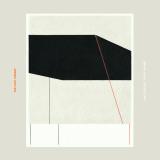
Following the much-loved Library Music: Volume One (2022), and hot on the heels of this year’s critically acclaimed ‘After The Rain, Strange Seeds’ (9/10 - Uncut) , London group The Leaf Library return with a second journey through the margins of their catalogue. Gathering together rare recordings, compilation tracks, limited edition releases, collaborations and hidden gems from their ever-expanding musical world, Library Music: Volume Two is another vibrant and varied collection of electronic indie pop, in all its guises.
Far from a conventional odds and ends collection, the double LP compilation reveals another side of a band who have always treated the spaces between albums as places to explore. These are the moments where ideas stretch out; there are hypnotic drones, motorik rhythms, glowing analogue textures, pastoral electronics and the warm, melodic melancholy that has become unmistakably The Leaf Library. There is the electro-pop of Flowers At The Border, the psych rock-adjacent Building Better Worlds, and the gentle chamber shuffle of Kendrick Road. Tracks range from the 22 minute folk kosmiche epic Versatile Clouds to the 59 seconds, record skip punctuation mark of Harmonic Runout, with a whole array of trips, ideas and experiments in between.
Since forming in a pre-Ghost Box, Castles in Space and Clay Pipe world, The Leaf Library have carved out a unique place somewhere between dream pop, kosmische repetition and experimental songcraft — drawing comparisons to Stereolab, Broadcast, Yo La Tengo and the outer edges of library music, while creating a sound entirely their own.
“We’ve always loved making things outside the pressure of a ‘proper’ album,” says singer/guitarist Matt Ashton. “Singles, collaborations and compilation tracks give you permission to follow an idea wherever it wants to go. Looking back, those pieces tell their own story.”
Where their studio albums have shown the group carefully building immersive worlds, the Library Music series maps the pathways between them — the sketches, diversions and unexpected discoveries that often reveal the most about a band.
Across a lucky thirteen tracks, Library Music: volume two is a reminder that some of the best discoveries are found on the shelves you forgot to check.
[a] Flowers At The Border [4.21]
[b] The Long Dead King [7.16]
[c] Bowed Clusters [4.00]
[d] I Learned To Swim Under Water [4.32]
[e] Building Better Worlds [11.59]
[f] Harmonic Runout [0.59]
[g] Kendrick Road [3.36]
[h] Sailing Day (Wintergreen Remix) [3.59]
[i] Versatile Clouds [22.00]
[j] Bells and Thread [2.54]
[k] No Memories, No Plans [4.33]
[l] Everyone I Met Today [1.00]
[m] Tired Ghost In Orbit [9.19]
expected to be published on 25.09.2026
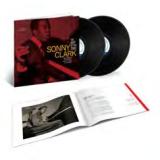
Das im Oktober 1957 aufgenommene Album “Sonny Clark Trio” sticht aus zweierlei Gründen aus der
Blue-Note-Diskografie des Pianisten Sonny Clark (1931-1963) heraus. Einerseits, weil er sich nicht wie
auf seinen anderen Alben für das Label mit einem Quintett oder Sextett präsentierte, sondern im Trio mit
dem Bassisten Paul Chambers und dem Schlagzeuger Philly Joe Jones. Zum anderen, weil er darauf keine
Eigenkompositionen spielte, sondern auf subtile Weise erstmals ausschließlich Standards aus dem Great
American Songbook und Werke führender Jazzkomponisten jener Zeit interpretierte. Das Album kam bei
den Fans und Kritikern so gut an, dass Clark im Dezember 1957 und im November 1958 nach demselben Muster mit zwei anderen Trio-Besetzungen zusammenarbeitete. Aus unerfindlichen Gründen sollten
diese Aufnahmen jedoch erst lange nach Clarks Tod veröffentlicht werden - und zunächst auch nur in Japan.
Nun erscheinen die kompletten Aufnahmen zusammen mit alternativen Takes des Albums “Sonny Clark
Trio” auf einer Doppel-LP innerhalb der audiophilen Blue-Note-Tone-Poet-Serie unter dem Titel “The Art
of the Trio”. Die Veröffentlichung kommt in einer luxuriösen Tip-On-Gatefold-Hülle daher und enthält ein
Booklet mit neuen Liner Notes von Syd Schwartz, den Original-Liner Notes von Ben Sidran und Bob Porter
sowie bisher unveröffentlichten Fotos von Francis Wolff.
expected to be published on 25.09.2026
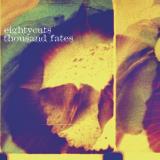
Perhaps because this debut album takes its title from the 80 duplications of the original cell, Eightycuts' first album seems constructed according to an organic logic: one idea contains another, a motif divides, bifurcates, transforms.
The tracks then function like organisms in motion, traversed by passages, secret chambers, and successive metamorphoses.
Nothing remains quite identical to itself. Through these krautrock repetitions, the psychedelic experiments of Siam and Greg, sometimes joined by Frédéric D. Oberland, the group constructs songs that unfold through proliferation. Nervous drums propel the tracks forward while the guitars open up more ambiguous spaces, both abrasive and melodic. Somewhere between the urgency of punk and the slowness of trance.
expected to be published on 25.09.2026

For her new and most radical album »Electroacoustic Works for Halldorophone«, Martina Bertoni used the electronic instrument at EMS Stockholm to create four pieces that are massive in scale and incredibly intimate, sonically restrained and emotionally overwhelming—almost ambient and always demanding your full attention.
Martina Bertoni returns to Karlrecords with »Electroacoustic Works for Halldorophone,« her most radical album yet. The foundation for the four electroacoustic pieces was laid during a residency at Stockholm’s legendary Elektronmusikstudion (EMS) that the Berlin-based cellist and composer used to explore the curious instrument, originally designed by Halldór Úlfarsson in 2008, as an algorithmic system in order to examine tunings and the mathematical relationships between Aiming to analyse and understand their interaction beyond the composer’s control, Bertoni sought to engage more deeply with the concepts of time, tuning, and, most importantly, control. Accordingly, her four »Electroacoustic Works for Halldorophone« seem both massive in scale and incredibly intimate, sonically restrained and emotionally overwhelming— almost ambient and always demanding your full attention.
While the halldorophone—famously used by Hildur Guðnadóttir for her »Joker« score—roughly resembles a cello and can be played like one, it is an electronic instrument. The vibration of its strings is being picked up, amplified, and then routed through a speaker. This creates a feedback loop that becomes increasingly complex depending on how much gain is added to individual strings. Úlfarsson gave Bertoni a carte blanche for how to handle the instrument, but she stresses that she relied on »minimal interventions—some string strumming and plucking« that set the interactions of different sounds and frequencies into motion. »I decided to not approach it like a cellist would,« she explains. »Instead I used it as a kind of generative organ by turning it into a feedback machine, with tuned feedback triggering more feedback depending on the tuning, which was based on tetraphonic scales that I could apply on the four main strings as well as the sympathetic group of strings.«
Bertoni recorded the material in the EMS studio, later composing and arranging the four complex pieces in her home in Berlin, after which they were mixed and mastered by Ciaran O’Shea. While this can be considered a compositional abstraction process, traces of her concrete work as a performer are firmly ingrained in the music. »The halldorophone doesn’t have a line output, just a double set of speakers, which is why I recorded all sounds with two microphones in the EMS studio,« she explains. »That’s why there’s plenty of breathing sounds here and there—label owner Thomas Herbst and I jokingly refer to the album as my ›chamber music record‹.« And indeed, there is a striking sense of intimacy to these four pieces throughout which individual sounds, harmonic frequencies, and even subtle rhythmic figures seem to move both on their own accord but also according to a underlying vision that steers their interplay.
Indeed, »Electroacoustic Works for Halldorophone« is an album built on and marked by contrasts. The soothing polylogue of single sounds in the higher register on opener »Omen in G« is counterpointed by massive bass drones, while the second piece, »Nominal in D,« plays a cunning game of repetition and difference by combining thick textures with all kinds of rhythmic elements. »Fades in C«—the longest of the four pieces, clocking in at 17 minutes—unlocks the emotional potentials of the sonic qualities of the halldorophone, sounding at once serene and anthemic, and »Organon in D« closes the album by underscoring how Bertoni’s unconventional approach allows her to seamlessly transform simple, quiet tones into complex, towering walls of sound.
expected to be published on 21.09.2026
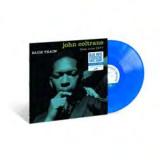
BLUE NOTE ESSENTIALS heißt die neue LP-Serie, die Klassiker des Labels erstmals kompromisslos
preiswert aber ohne Abstriche bei der Fertigung präsentiert (140g-Optimal-Pressung, Hi-res-Master, OriginalCover). Ein ganz besonderes Album erscheint innerhalb der Serie jetzt als limitierte Auflage in blauem Vinyl:
”Blue Train”.
Am 15. September 1957 nahm John Coltrane in Rudy Van Gelders Studio in New Jersey sein erstes
großes Meisterwerk auf. Es blieb das einzige Album des legendären Saxofonisten als Bandleader für Blue
Note. Inspiriert vom bluesigen Titelstück präsentiert das Album auf fünf Stücken ein hochkarätig besetztes
Sextett mit Lee Morgan (Trompete), Curtis Fuller (Posaune), Kenny Drew (Piano), Paul Chambers (Bass)
und Philly Joe Jones (Drums). Ein Meilenstein des Hard Bop.
expected to be published on 18.09.2026
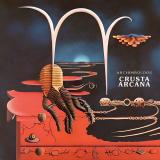
Archimboldos have clawed their way out of the starcaves of their primordial past and into the tranquil light of a coral garden on their third full length album, Crusta Arcana, a gumbo stewpot of transcendent electronica suffused with tribal rhythms and liquid ambience. Across a stereo field smeared with tolling bells, post-industrial folk percussion, and tinkling keys, Archimboldos soundtrack a science fictional journey, not into the depths of space, but deep beneath the waves.
In the past the Chilean duo of Nicolás Carcavilla and Felipe Crocco have described their music as “liminal shrimp folk.” Here they continue this strange exploration when they visit the court of the prawns, producing stately electronic chamber orchestrations. Perhaps these are the frequencies used for ritual dream initiation into the mystery schools of drowned Atlantis. Weaving an ancient sacred science, Archimboldos take listeners on a mystic vovage into their singular crustacean mythology, the crusta of their hidden arcana.
Archimbolodos are masters of conjoining cyclonic and centrifugal lines of electricity into spellbinding incantations. These deep-sea transmissions envelope the listener into aquamarine forcefields that are as hallucinatory as they are hypnotic. Navigating these strange fantasias could lead one to getting lost at sea, but the work is buoyed by the somnolent melodies of lonely harpsichords and swelling synth pads whose sustained tones reach towards distant shores. Sailing across a vast expanse of oceanic harmonies and percolating percussion, these pieces are as precise as the hand of a sailor on the rudder, moving with the tide.
Casting their net wide across eight pieces, Archimboldos have made a big catch. From the emotive electronic counterpoint found on “Bursting Armor” to the blocks of seaweed tangled sonic sculpture trawled up from the ocean floor on “Aphelion IX.” Other songs are like samples of biological ambience collected from luminous tide pools: resplendent tones placed into a Petri dish of sound, swirled, cultured and fermented until it undulates with the rhythmic movement of microscopic lifeforms. Alternating between rippling minimalist sonority and pounding, progressive, synth-heavy entrancement, Crusta Arcana charts its own idiosyncratic itinerary of instrumental invention.
All the while light is down streaming from the heavens to pierce the waters, here calm, there choppy. The intrepid musical captains commanding Archimboldos have laid a course for new archipelagos of the imagination, guided by heavenly constellations.
-Justin Patrick Moore, author of The Radio Phonics Laboratory, Telecommunications, Speech Synthesis and the Birth of Electronic Music
expected to be published on 18.09.2026