DJ Support: Kerri Chandler, Louie Vega, Dam Swindle, Jovonn, Brian Tappert, Grant Nelson, Mark Farina, DJ Mes, Cinthie, Floorplan, Kevin Yost, Fouk, Julius Papp, T. Markakis and more..
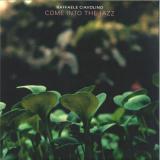
Raffaele Ciavolino is an Italian DJ, producer, and professional engineer who has carved out a significant niche in the global house music scene. His work is characterized by a sophisticated blend of Jazzy, Funky, and Deep House, often incorporating the high-energy "Jackin" house style that has earned him consistent recognition on major genre labels. “Come In To The Jazz”, the title of his new Album, gives you an idea of what to expect - jazzy melodies and sophisticated house beats. He does so with a modern viewpoint but also plenty of reverence for the glory days of jazzy house. Trumpets and guitars feature here and embellish the drums with quality, meaningful layers of melody and mood. As he merges the past and present, this richly textured work shines with improvisation and timeless deep house warmth.
Search:chan
Back on PANORAMA Records, we turn to a beautiful slice of under-the-radar Jamaican reggae with Horace Martin – “Me Rule.”
Born in Kingston, Jamaica, Horace Martin was just 20 years old when he stepped into Channel One Studio to record the track in 1974. At the time he was building his name locally, performing in clubs and talent shows around the city while cutting sides in Kingston’s vibrant studio scene. “Me Rule” captures that moment perfectly — youthful confidence over a deep, steady rhythm.
This record earned its place among the deepest collectors: Proper rootsy dancefloor reggae that feels just as good today as it did when it first came out of Kingston.
On the flip, things open up with a dubbed-out version of the rhythm titled “Rule,” credited to Prince Huntly. Stripped back, the dub extends the track — echo, percussion, and bass doing the work.
As always, PANORAMA Records continues its search for overlooked gems from across the globe — records with history, character, and real musical weight. Carefully remastered and brought back on 7inch, PAN013 is another example of these records finding their way back to the turntable.
To celebrate the 20-year anniversary of our label Jamaican Recordings and to mark the
sad one year passing of the musical maestro reggae producer Bunny `Striker’ Lee, we
have pulled together a brand new collection of some great Bunny Lee rhythms.
Our label started way back with initial meetings with Bunny Lee and a promise to keep his music available, out on the streets. He will be sorely missed but will live on through his extraordinary musical legacy and we hope to add to this by including this release to the stable of an unbeatable catalogue.
Legendary record producer Bunny `Striker’ Lee’s vast selection of rhythms were ever present at any Sound Clash or Dance worth talking about in the early to mid-1970’s.
Where the version found on the b-side of a single or special dub cut on acetates, would be played to win over the people and conquer the dance. Bunny Lee was the undisputed rhythm master and on this special release he is also the MC telling the crowd how it is and that any rival sound system should watch out as he has the rhythms that can reign supreme. The band cutting these timeless rhythms were a group of top Jamaican musicians Bunny had put together called The Aggrovators.
The Aggrovators were a group of reggae musicians that usually featured Carlton `Santa’ Davis on drums playing alongside Robbie Shakespeare on bass, with other musicians added like Earl `Chinna’ Smith on guitar and Tommy McCook and Vin Gordon and Lennox Brown added for horn arrangements. Keyboards and organ duties normally fell
to musicians Ansel Collins and Bernard ‘Touter’ Harvey. The band was named after singer Eddie Grant had repeated the phrase to Bunny Lee on one of his many trips to England, that such and such artist was giving him `Aggro’. This was a term used in England in the 1970’s by the Skinhead followers of reggae music. A term shortened
from the word `Aggrovation’, meaning trouble, fighting or making the situation worse. Bunny Lee was so taken with this term that on returning to Jamaica, not only did he name his group of musicians the `Aggrovators’ but he also named his record shop situated at 101 Orange Street `Agro Records’.
We have compiled some great tracks recorded by this fantastic group of musicians. With the added extra magic of Mr Bunny Lee calling it out as only he can on the microphone.
Yes Run Sound Boy Run the version master is here…Respect
An instrumental counterpart to ‘Man Kill Man’ by Lone Ark meets The 18th Parallel, ‘Kanata’ marks the debut solo release of Japanese saxophonist extraordinaire Yuko Arakawa.
A member of ZIONHILL SESSION—the collective led by Mr. Saito, who also lends his trombone to this recording—Yuko Arakawa channels a deep reverence for the legacy of Count Ossie and the pioneers of Nyahbinghi instrumental reggae. Her playing moves with a spiritual intensity, echoing the meditative roots sound of Cedric 'Im' Brooks, while igniting flashes of raw, untamed energy reminiscent of Sugar Belly. The result is a living, breathing sound—both grounded in tradition and reaching beyond it.
Roberto Sánchez delivers a deep Mutron Bi-Phase dubby mix that expands the sonic horizon of the track. True to its title, ‘Kanata’ (彼方)—a Japanese word meaning ‘far beyond’ or ‘in a distant place’—invites the listener into a meditative journey, drifting across time, space, and memory.
- 1: Are You Comin' Down This Weekend?
- 2: Her Eyes Were Huge Things
- 3: The Charmer
- 4: Hope Called In Sick
- 5: My Feathers Needed Cleaning
- 6: The Well
- 7: There's Something Between Us And He's Changing My Words
- 8: The Phoenix, A Pool Of Ice
- 9: Are We Still Married?
- 10: Put Your Finger In Your Eye
- 11: Home Is In Your Head
- 12: Why People Disappear
- 13: Here Eyes Are Huge
- 1: Save The Birds
- 2: Chances Are We Are Mad
- 3: Mescalina
- 4: Sitting Still Moving Still Staring Out
- 5: Very Bad A Bitter Hand
- 6: Beautiful And Pointless
- 7: Tempe
- 8: Spirit And Body
- 9: Love's A Fish Eye
- 10: Dreams Are Of The Body
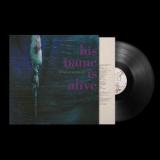
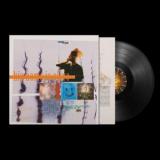
Home Is In Your Head enthält 23 Songs, die in schneller Abfolge durch verschiedenste Emotionen führen, wobei Momente beruhigender Ruhe schon bald mit weißem Rauschen und rohem, unmittelbarem Chaos kollidieren. Als vielseitige und zugleich geerdete Sammlung aus neuem und älterem Material (teils zurückreichend bis in Defevers frühe Schulzeit) zeigt das Album eine Band, die in eine selbstbewusste kreative Phase eintritt. Es fesselt die Hörer sowohl durch seine Schönheit als auch durch seine Dunkelheit und beweist, wie einzigartig Defevers inspirierte Produktionen sind. "Spät in der Nacht hörte ich mir die Mischungen ganz leise an und ließ das Ticken meines Weckers mit dem auf der Platte gesampelten Uhrgeräusch verschmelzen - es ist eine so unvorhersehbare, fließende Reise." - Ivo Watts-Russell
- 1: Baby Fish Mouth
- 2: Lip
- 3: Cornfield
- 4: In Every Ford
- 5: Lord, Make Me A Channel Of Your Peace
- 6: Drinks, Dress, And Ink
- 7: Where Knock Is Open Wide
- 8: Can't Go Wrong Without You
- 9: Jack Rabbits
- 1: Sort Of
- 2: Sick
- 3: Blue Moon
- 4: Ear
- 5: Lemon Ocean
- 6: The Torso
- 7: The Dirt Eaters
Mouth By Mouth ist das erste Album von His Name Is Alive bei dem die Band alle Prozesse - einschließlich des Mixings - selbst kontrollierte, und markierte einen deutlichen Wandel: Es ist zugleich ihr vielfältigster und zugänglichster Katalogeintrag. Die kontinuierliche künstlerische Weiterentwicklung des Projekts ermöglichte es Defever, einen außergewöhnlich experimentierfreudigen Ansatz für Klang und Vision des Albums zu verfolgen und seiner Liebe zu unterschiedlichsten Musikstilen freien Lauf zu lassen - von loop-basiertem Dub über zuckersüßen Pop der 1960er, verzerrten Dream-Gaze, atmosphärischen Alternative-Noise bis hin zu gitarrenbetontem Folk. Indem die Band das Surreale aufgriff und ihren experimentellen Ansatz noch weiter intensivierte, während Defevers Studiofähigkeiten voll zur Entfaltung kamen, gilt dieses Album für viele als ein Höhepunkt ihres Schaffens.
- 1: Snake
- 2: Moses Kill
- 3: Golden Arm
- 4: Lunch
- 5: Special Power
- 6: The Void / Madison
- 7: White Shirt
- 8: Radiator
- 9: Icepick
- 10: <
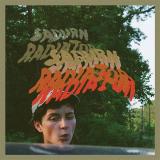
Intimacy is manifested in every moment of Radiator, the debut album from Philadelphia's Sadurn. This feeling of closeness, of being able to lend your every sense to one's confessions of internal conflict, is due in large part to the circumstances under which this album was created. Much of the world fell apart in 2020, but Sadurn tucked themselves away in a Pocono's cabin, creating and recording what would become their first full-length. Within the confines of their close quarters, passing animals as the only auditory witness to a makeshift recording studio created by moving furniture, Sadurn created an album that will break your heart and then slowly piece it back together.Sadurn started as the solo project of Genevieve ??DeGroot. Picking up guitar in 2015, DeGroot started writing songs, eventually playing DIY shows throughout the city of Philadelphia. With time, the direction, sound, and members of Sadurn changed. The beginning of 2020 was meant to serve as their debut as a four member band (Jon Cox on guitar/tenor guitar, Tabita Ahnert on bass, and Amelia Swan on drums), but the world had other plans and the group adapted.Taking influence from artists like Gillian Welch, Alex G, and Jason Molina, Sadurn's emotive indie rock explores the struggles and eventual beauty of grappling with multiple emotional realities, particularly when it comes to relationships. That conflict, the idea of being forced to choose, even when terrified, is present on singles like "Radiator" and "Golden Arm." The latter is an unhurried ballad that shows its truest colors with time, eventually blossoming with unexpected admissions of desire and uncertainty. Indecision, heartbreak, and attempting to live out your days against the actual backdrop of a gradually worsening hellscape is a shared commonality among us all, but on Radiator Sadurn breaks down walls that others so often put up. It's a fleeting, impactful glimpse at one's whole heart, and its sweeping, special nature is evident from the moment the album opens.
Analog Fingerprints Vol. 0 is a compilation bringing together the early 2000s works of Marco Passarani under his Analog Fingerprints alias, collecting key tracks originally released on Rome’s Plasmek and Pigna labels.
For Numbers, the story starts long before the label itself. In their formative years, digging in Glasgow’s Rubadub, Passarani’s records felt like dispatches from a future city. Releases on his own Nature Records and on labels such as Generator and Interr-Ference Communications were mind blowing: rooted in Detroit techno, Chicago house and electro, yet pushing somewhere new. Much like fellow travellers Autechre, who would remix him in 2001, Passarani’s music balanced machine funk with restless experimentation.
Information was scarce, and you would hear these records first on the dancefloor or at listening stations in shops like Rubadub. Print fanzines like Ear and early web outposts such as Forcefield offered only fragments. But there was a palpable axis forming between Detroit techno and a new European wave of record labels including Skam, Rephlex, Clone, Viewlexx and Nature itself. It was the sound that defined Saturday nights at Rubadub’s ‘69’ parties in Paisley, just outside of Glasgow.
Passarani’s records, in particular, were instrumental in bringing together the future Numbers co-founders. Richard had already booked him pre-Numbers; meanwhile Calum (Spencer) and Jack (Jackmaster), then 16/17 year olds working alternate Saturdays in Rubadub, were so enamoured with the Roman sound that they travelled to Rome for the Bitz Festival in 2003 to seek out Passarani and Lory D at their source.
The first Analog Fingerprints release landed as a 12” on Plasmek in 2001, following the fractured, IDM-leaning 6 Katun material. For Passarani, the project marked a recalibration. A DJ first and foremost, he had moved into production via early computer setups, from a Commodore Amiga through primitive PC audio, Cubase and Logic, later experimenting with Ableton. The IDM scene had offered a playground for trial and error, but there was always a tension between abstraction and the dancefloor. Analog Fingerprints became the bridge: still intelligent, but with more dance than distance. After years of broken beats and complex arrangements, he wanted directness without surrendering identity.
Working closely with Francesco de Bellis and Mario Pierro in the Pigneto district, the trio formed Pigna as a vehicle for reclaiming a more accessible dance sound, deliberately steering away from the minimal wave beginning to dominate Europe. Sessions were fast, instinctive, often stretching late into the night with friends dropping by. It was a studio as social space, production as collective energy.
“In that constant search for balance, Analog Fingerprints was my way of expressing something closer to the classic dance floor. The track 'Tribute' - a tribute to my favourite early Detroit techno track of all time, 'First Bass' by Separate Minds - came after I realised I had almost lost my connection with the dance floor. The simplest step was to take inspiration from early Chicago and Detroit and twist it in our Roman ‘Pigna’ way. My goal was to create more accessible dancefloor tracks by mixing my unconscious Italo roots with my teenage love for that early US sound, ensuring the result was as far as possible from the minimal sound that was starting to dominate everywhere.” - Marco Passarani
Technically, the Analog Fingerprints tracks span a transitional era: Roland TR-909, SH-101 and Alpha Juno hardware met early software experiments. A Novation Drumstation rack stood in for the unattainable TR-808, syncing with TB-303 and TR-606. Yet the true secret weapon was Jeskola Buzz, a tracker-style modular environment that allowed step-by-step parameter control and strange melodic constructions, later exported into the audio sequencer. Even the lead on ‘Tribute’ came from an early PPG Wave-style plugin. It was hybrid thinking at a moment when digital tools still felt unstable but full of possibility for technologists like Passarani.
Behind the music sat Finalfrontier, a loose Roman collective orbiting Nature and Plasmek. Distribution and production were intertwined; importing obscure records into Italy built connections with like-minded outsiders across Europe and the US. Expensive phone bills and fax machines forged an “electronix network” that linked Rome to Clone, Viewlexx, Skam, Rephlex, Rubadub and Detroit’s Underground Resistance. There was a shared sense of survival and resistance, of operating against commercial systems.
Passarani recalls “The first time I found a sheet of paper inside an Underground Resistance 12” with info about upcoming releases... and a huge picture of Spock on the back. Imagine that: you love the music, you love Star Trek, and there’s someone on the other side of the ocean sharing those same values and sounds. It was the perfect match. We even gave our original company the suffix ‘Finalfrontier’: that says it all.”
Feedback in that era arrived physically: distributor faxes, conversations with visiting DJs, the experience of playing abroad and meeting kids who had connected with the records. Glasgow became a key node in a scattered outlier network. Passarani personally brought the first two Nature releases to Fat Cat in London, playing them in-store. Shortly after, a fax arrived from Rubadub in Glasgow requesting copies.
“I still remember that phone buzz and the fax paper slowly sliding out, with someone I didn’t know saying they wanted 75 copies of Nature 001. Or like the time we got a fax from the Rephlex crew just saying, “Hello Nature Records, Keep up the good work.” That was how we knew the message was getting through. It was a fantastic feeling; just one piece of thermal fax paper as an analog notification - the mood for the entire week would change.” - Passarani
The connection to Glasgow has since stretched across generations. As Passarani reflects, links often fracture as scenes renew themselves, but in Glasgow something different happened. New and old mixed seamlessly. There was a visible trust in what came before, and a willingness to carry it forward rather than discard it. Observed from Rome, it was deeply encouraging.
Analog Fingerprints Vol. 0 captures that moment of exchange: Rome to Glasgow, Detroit to Europe, experiment to dancefloor. It documents an artist recalibrating his sound and a network of scenes discovering one another in real time, connected by vinyl, faxes and shared intent.
Close your eyes, throw your arms to the sky, and experience the magic of 'Aisha' anew with this limited-edition vinyl release of the GAIA classic. Repressed to include remixes from staple trance artists such as Aly & Fila, Ashley Wallbridge and Orjan Nilsen alongside the timeless anthem, this four-track vinyl channels the limitless wonder of a cornerstone trance track.
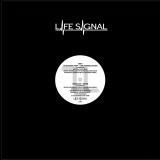
Leading voices in contemporary Organic House anchor LS001 V.A-Thunderlab Collective, the inaugural vinyl-only edition from Life Signal. This first chapter introduces Life Signal as a curated imprint dedicated to presenting standout works from modern electronic music-pieces selected for their lasting impact and now pressed exclusively for listeners who value both sound and physical format.
These tracks have earned significant attention within the digital space, and this release brings them to vinyl for the first time, giving collectors a chance to experience them in a new, tactile form.
A1-Volen Sentir & PROFF-"Luna Amazonia (PM Mix)"
The record opens with a signature blend of organic textures and melodic flow, shaping an atmosphere that sets the tone for the edition.
A2-Krasa Rosa-"
Kaftan"A refined balance of acoustic nuance and electronic drive, building toward a standout breakdown and a sharp, vocal-chopped lead.
B1-Jiminy Hop-"Cavalier (Extended)"
Marked by Jiminy Hop's characteristic phrasing and evolving percussive movement, this version extends the melodic narrative with precision.
B2-Audiense-"Winterfell (Extended)"
A steadily rising finale combining psychedelic touches and ethno-vocal textures, rounding out the collection with an expansive sense of lift.With LS001, the Life Signal vision arrives on vinyl: curated electronic works preserved for collectors who follow music not only by sound, but by legacy.
2026 Repress
French talent Hyden makes label debut on Mutual Rytm with conceptual new techno EP, 'To Whom It May Concern'. Hyden is a potent force in the French underground, creating powerful techno with dense percussion, immersive grooves and subtle nods to classic influences - all through his own unique lens. Having delivered standout releases in recent years, here he offers up sounds "anchored in psychoanalysis, time, and emotional residue" as he makes his mark on SHDW's Mutual Rytm imprint, delivering influences of dream logic and surrealism as the palette moves between brutality and introspection. "It's hypnotic music for moments of rupture where something breaks or breaks through". Opener 'Manifest Content' is inspired by Freudian theory and explores the surface illusions of thought and dream. It's about the dissonance between what we perceive and the deeper meaning that slips away beneath and is a deep and dubby techno track with flashes of unsettling melody. 'Bruises' is emotional trauma made sonic. This piece delves into invisible scars and traumas, residues of past conflict or intimacy - it's slow-burning, heavy and raw. 'Jikan' is a meditation built on time and its erosion. Inspired by the Japanese concept of impermanence, it reflects fleeting moments, decay and the tension between stillness and motion with jacked up but warm drums and turbulent bass. Next, 'Free Will' is born from inner conflict and plays with deterministic rhythms and evolving layers, questioning whether we are truly in control or just passengers in a prewritten sequence. The vocal mentions, "creatures, you're out of time" to bring darkness to the intense but sleek rhythms. The streamlined physicality of 'Swarm' channels the primal force of collective movement and is a nod to the loss of individuality in group behaviour. In addition, the package is loaded with digital bonus cuts. 'Yumehara' is a dive into surreal dream-states and evokes subconscious landscapes where logic dissolves and emotion reigns, while 'Lu Bu' is brutal and warlike and named after the legendary Chinese general that captures impulsive violence, betrayal and reckless glory with relentless energy and rhythm. Lastly, 'Neon Pale' is a synthetic dreamscape about fading beauty under artificial light - a melancholy ode to cities at night and the loss of warmth in modern life.
A year or two back, original Nottingham deep house don Gavin Belton (famed for being part of Smokescreen and Drop Music-adjacent duo The Littlemen) returned to the UK after living in New Zealand. One thing led to another and soon he was back in the studio alongside former creative partner Steve Lee for the first time in 15 years. Featuring heady spoken word vocals from Hector Moralez, the result is 'House For Change', a lightly electrofunk-fired slab of classic East Midlands deep house. Raising funds for homeless charity Help The Framework, this surprise EP also includes 2004 classic 'Tell Me' (a free party deep house classic) and two fresh reworks: a TB-303-bass-driven revision of 'House For Change' by their old pals Inland Knights, and a squelchy, spacey take on 'Tell Me' by Lee under his solo alias, Positive Divide.
HOUSEWAX presents the 3rd release by FLABAIRE!
We are very happy to have this great artist from Paris again on our imprint.
Ralph delivered anothe outstanding piece of music for our 40th edition.
Don't miss this beauty!
- B1: Ore-Se-Rere (Nigerian Juju Hilife)
- B2: The Gathering
- B3: Spiritual Blessing
- A1: Elevation
- A2: Greeting To Saud (Brother Mccoy Tyner)
Elevation, released in 1974 on Impulse! Records, finds saxophonist Pharoah Sanders expanding his spiritual jazz vision on an album that balances ecstatic expression with focused ensemble interplay. Produced by Ed Michel and recorded in 1973 across two live performances and a studio session, Elevation features a dynamic ensemble including Joe Bonner on piano, Calvin Hill on bass, and Michael Carvin on drums.
The album’s open forms, modal grooves, and spiritual themes underscore Sanders’s ongoing search for transcendence and cultural affirmation through sound. With chant-like melodies, circular motifs, and immersive rhythmic textures, pieces like “The Gathering” and the title track reflect a more meditative and exploratory side of Sanders’s aesthetic. Elevation comes towards the end of Sanders’ tenure on Impulse!— a cohesive and spiritually resonant statement that bridges the raw fire of earlier albums with a deeper, more spacious sound.
The album’s open forms, modal grooves, and spiritual themes underscore Sanders’ ongoing search for transcendence and cultural affirmation through sound. With chant-like melodies, circular motifs, and immersive rhythmic textures, pieces like “The Gathering” and the title track reflect a more meditative and exploratory side of Sanders’s aesthetic. Elevation marks the culmination of his Impulse! discography — a cohesive and spiritually resonant final studio statement that bridges the raw fire of earlier albums with a deeper, more spacious sound.
The Verve Vault series is always mastered from analog tapes and pressed on 180g vinyl at Optimal.
a A1. Elevation 18:26
b A2. Greeting To Saud (Brother McCoy Tyner) 4:15
[c] B1. Ore-Se-Rere (Nigerian Juju HiLife) [6:20]
[d] B2. The Gathering [14:09]
[e] B3. Spiritual Blessing [6:20]
[a] A1. Elevation [18:26]
[b] A2. Greeting To Saud (Brother McCoy Tyner) [4:15]
[c] B1. Ore-Se-Rere (Nigerian Juju HiLife) [6:20]
[d] B2. The Gathering [14:09]
[e] B3. Spiritual Blessing [6:20]
[a] A1. Elevation [18:26]
[b] A2. Greeting To Saud (Brother McCoy Tyner) [4:15]
[c] B1. Ore-Se-Rere (Nigerian Juju HiLife) [6:20]
[d] B2. The Gathering [14:09]
[e] B3. Spiritual Blessing [6:20]
[a] A1. Elevation [18:26]
[b] A2. Greeting To Saud (Brother McCoy Tyner) [4:15]
[c] B1. Ore-Se-Rere (Nigerian Juju HiLife) [6:20]
[d] B2. The Gathering [14:09]
[e] B3. Spiritual Blessing [6:20]
[a] A1 | Elevation [18 26]
[b] A2 | Greeting To Saud (Brother McCoy Tyner) [4 15]
[c] B1 | Ore-Se-Rere (Nigerian Juju HiLife) [6 20]
[d] B2 | The Gathering [14 09]
[e] B3 | Spiritual Blessing [6 20]
Manaccan ep is a blend of dub and Detroit techno tracks.
Merv (Denmark) are known for their dubby Basic Channel like sound. Elevation is a natural successor to the timeless classic 'Dust'.
Ohm (Denmark) and Octal Industries (Estonia) have been industry stalwarts for decades. Their experience is evident in the BS1818 debut track 'Journey': a functional track in the Scandinavian dub techno style.
Kuba Sojka (Poland) is back on Boomstraat 1818 with a remastered version of 'Rain', which was originally released on Rohs! The track deserved a vinyl release and Kuba rebuilt the track from scratch.
Stroef (Netherlands) his track 'Boxed In' was originally released on OHM Series Digital. This version is reconstructed for the vinyl release on Boomstraat 1818.
&Co. debut on A Quiet Village. The US-based trio drop the third release on Quiet Village’s eponymous imprint March 20th. &Co. Is a project from multi-hyphenate and Bianca Chandon founder, Alex Olson, pianist, composer and producer Alberto Bof (known for his work on ®Oscar ®Bafta ®Golden Globe and ®Grammy award winning ’A Star is Born’) and DJ/fashion luminary, Paul Takahashi. The trio’s second release, ‘Staycation’ follows 2015’s ‘Best of Friends’, and sees these rare talents create a two-tracker that explores a uniquely evocative, cinematic and dubby Balearic aesthetic. ‘Staycation began as a follow-up to the first EP, Best Friends.
As a result, ‘Staycation’ came together in fragments. The first track was built over a handful of short studio sessions, each only about an hour long, driven by brainstorming and reworking ideas. With Alex away, Alberto and I continued refining the piece in Los Angeles, sharing updates for Alex’s approval until it was completed. The track remained unmastered and was quietly circulated to a small circle as a promotional piece. The second track, “Lean Like a Cello,” was initially conceptualized together. However, with Alex now based in New York and less available, we completed the arrangement in Los Angeles, sending versions back and forth for Alex’s input and feedback. Nearly a decade later, the idea resurfaced, and the recordings were finally mastered and released. A friend, Justin Van Der Volgen, handled the mastering. What began as a plan to give the tracks away as a promo evolved when Justin encouraged the group to shop the release. With help from Eric Duncan of Rub N Tug, the music reached Matt (Edwards, aka Radio Slave/ 1/2 of Quiet Village).
Ten years after the first sessions, Staycation arrives as a document of distance, collaboration, and time. A project shaped as much by separation as by shared intention.’ (Paul Takahashi, Feb 2026)
A piece of art from a powerhouse creative team operating at the intersection of skate culture, music, design and fashion, ‘Staycation’ by &Co. Arrives on The Quiet Village 12” and digital/streaming on March 20th.
Selection of IKIGAI Album by Nadia Struiwigh. IKIGAI was born in the quiet space between grief and remembering... Made entirely on hardware, from my living room in Berlin near Hermannplatz (my dad's name is Herman -- the odds), in the months my father passed away. Every sound, every sequence, every texture carries his fingerprint. Not because he made music, but because he made me love gadgets. Circuits, signals, blinking lights. He was the man who opened me up to machines and taught me how, eventually, to listen to them and use them for my craft. The name IKIGAI, a Japanese word for ''reason for being,'' found me when I was at a crossroads. The kind where you ask yourself: Why am I still here? What am I still creating for? What part of me still believes in beauty when everything feels like it's falling apart? These pieces came through slowly, on Japanese gear like Yamaha SEQTRAK, KORG, Roland -- like threads weaving a tapestry I didn't know I was making. Each track is a kind of purge... to him, to myself, to the listeners who find themselves in the in-between. The space where you're not who you were, and not yet who you're becoming. I found myself back into soundscapes and Ambient with a touch of Electronica. I weaved in sounds I captured from daily life, memories -- like the laugh of my sister. I built in silence and let the machines cry for me and let them tell the story I couldn't find the words for. IKIGAI is spacious. It's not trying to impress anyone. It's trying to just be, and hold space for all kinds of emotions. It moves like memory... slow, sacred, shifting. This release needs to be close to home, and will be released on my own imprint Distorted Waves, on the day 11.11 -- which refers to my first album that my dad had hanging up in his shed. For my father. Nadia
Emerging from the sun-drenched haze of their previous releases, the Belgo-Italian duo descend into the shadows with Trabajando El Flex, their third record to date. This is their gloomiest strike yet, a mutant wave manifesto built on a raw DIY ethos. Imagine pulsing basslines and ghostly vocals soundtracking your deepest, most illicit desires. Channeling the spirit of a major influence which is Coil, this album could have been called "Music to Play in the Dark(rooms)." It's a lethal fusion where New Beat, EBM, Dub, Italo, and New Wave lock into a singular, hypnotic atmosphere. Their world is a wild ride from Bear-Santa Claus Fantasms to Burning Churches and Amphetamine rooms, reflected in both their playful - not-to-be-taken-seriously - lyrics and a genre-shattering sound. Their debut was a a lost reel; their second, a dream, Trabajando El Flex is the raw, slow-burning, and beautifully unclean night that consumes both. It's a flawless fit for the after-hours ruin of the Pinkman universe.