Continuing Mr Bongo’s series exploring the wealth of material released through the record labels of Sonny Lester, 1977’s Funk Reaction finds Hammond B3 organ virtuoso Lonnie Smith at his most dancefloor-friendly. Dripping with groove and swagger, this album skates between jazz-funk, cosmic disco radiance, beat-laden slow-jams and conscious psychedelic soul.
Having played with the likes of George Benson and Lou Donaldson in the ‘60s, alongside releasing a string of albums on Columbia and Blue Note, Funk Reaction sees Smith move into late ‘70s disco-funk-tinged territory.
Originally released on Sonny Lester's Groove Merchant Records successor, Lester Radio Corporation, the album feels more like a collaborative band-orientated project as opposed to a solo artist outing. Featuring some elite session players of the time, including Steve Gadd on drums, guitarist Lance Quinn and bassist Bob Babbitt, the album is tied together expertly by songwriter, arranger and conductor Brad Baker.
It’s worth the price tag alone for the superb disco-funk nugget 'Funk Reaction’. Other highlights include the only Lonnie Smith penned track on the album 'All In My Mind', that shines with a beautiful Stevie Wonder-esque quality and the slick guitar-led floater 'When The Night Is Right’, written by and featuring guitarist Richie Hohenburger. Elsewhere, ‘For The Love Of It’ and the Brad Babbitt written ‘Babbitt's Other Song’ serve up classic jazz funk flavours, both featuring stellar tenor saxophone from Eddie Daniels.
As a whole, the album is a superb example of Lonnie Smith’s ability to merge jazz with elements of funk, soul, disco and beyond, experimenting with ideas whilst broadening the scope of both his audience and appeal. Fans of The Blackbyrds, the CTI / Kudu stable and ‘70s George Benson will dig this!
Cerca:chan
rush2theUnknown is a project born in pandemic-era provincial New Zealand, developed in the hills of Izu Peninsula, Japan, but forged in the fire of potent teenage memories — the flames of the future sounds of jungle and drum 'n' bass that exploded onto dance floors across the urban centres of New Zealand in the mid 90's. Two old friends, both who played pivotal roles in the development of New Zealand's own jungle and drum 'n' bass scenes in the 1990s, estranged for decades, reunited amidst the isolation and chaos of covid. They began an experiment, attempting to recapture the feeling of having their heads overwhelmed by sounds they couldn't quite comprehend as adolescents — in particular, channeling the energy, spirit, and vibe of 1995 to 1997, where the ever-mutating evolution of jungle intersected with the dawning of drum 'n' bass to create a utopian future vision, before the latter genre changed course and moved increasingly darker.
By weaving in the influences that these two long-lost friends had accumulated over the decades, most notably from ambient, kankyõ ongaku, new age, minimalism, and some of the deepest research into the history of Japanese video game music ever conducted, the pair attempt to discover new terrain from an specific era of dance music that was never fully explored.
Dennis Quin is making his Eastenderz debut with an impressive four tracker. Bringing his signature sound with this masterclass EP, Dutchman delivers a timeless record that's guaranteed to work on the dancefloor. Limited run, Vinyl Only.
Essential business as always from Eastenderz.
DJ Support: East End Dubs, Prunk, Archie Hamilton, Kerri Chandler
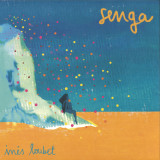
avigating vibrant influences of Latin-jazz, Tropicália and joyful grooves; multi-instrumentalist, songwriter, singer and producer Inês Loubet presents her utterly gorgeous debut album ‘Senga’. The album covers Inês’ experiences over the past five years, originating in Portugal, travelling through Brazil, before finding home in London.
Previously, Inês co-wrote and performed on Caravela’s album 'Orla' on None More Records, which was praised by the likes of Gilles Peterson and The Line of Best Fit. Her music has been played on Jazz FM, BBC 6 Music, BBC Radio 3, NTS and Soho Radio. A relentless live performer, she’s played alongside Brazilian legends Gilberto Gil & João Bosco, graced the stage of The Royal Albert Hall, Union Chapel, and O2 Shepherds Bush, around UK and international tours.
The album explores a range of profound themes including nature, travel, grief, unconditional love, separation, family dynamics, and the nuanced experience of womanhood in contemporary society. Dedications to the music, philosophy and revolutionary history of samba (‘Sambo Mesmo Sem’), everyday observations of joy (‘Guri’), and motivating generational change for the better (‘Sab Sabim’); glide across romantic harmonies and the Brazilian rhythms at the melodic heart of the album.
“I started writing whilst living in Salvador da Bahia, Brazil, in February 2020”, says Inês. “I was shy and hadn't written fully composed tracks before then. During lockdown I received support from The Arts Council’s DYCP, started making demos, gained confidence and started playing them live”. In October 2022 Inês was presented with the Drake YoLanda award and went to Giant Wafer studio in Wales for three days, before recording the final vocals at her home studio and mixing and mastering in Porto, Portugal.
Inês is joined on the album by a band of close friends. Percussionist and long-time collaborator Jansen Santana from Salvador da Bahia brings the soul of the drums, the tambor. “I always have the Bahia drums present in my mind when I write a new composition. I studied Latin percussion at University and then lived in Salvador absorbing all that heritage and knowledge”. Playing four different stringed instruments on the album, Greg Sanders is a long-time friend and collaborator from London “I met him in a samba band in 2015 and he was the first person I ever showed my songs to and played with”. The band is completed by Ruta Sipola on flute, Jake Burgess on tenor sax, Peu Meurray who recorded a lot of the percussion and lead vocals, and bassist Julio de Castro from Sao Paulo. “I was blown away by his bass playing, his swing and creativity, his ton of experience and professionalism but also his voice - he's an amazing singer and I believe that adds a lot to the magic”.
Inês concludes, “Last year, I had a show in London and I asked everyone in the audience to write down what they felt when they listened to the music. These are some of the things they wrote: wholesome, refreshing, lifted, moving, joyful, happy, nostalgic, warmth, force, goosebumps, emotional, togetherness, transported, rooted”. ‘Senga’ captures all of these feelings and more in a memorable first impression from a highly talented musician.
FEATURES
NEW in the MK2 version:
Metal top panel and reinforced housing construction
Reworked metallic buttons with improved feel & tactile response
Precision pitch with range of +/-10 %
Superior finish in deep black metallic
Turntable with belt-drive for DJ and hifi use
Perfect for aspiring DJs and hifi enthusiasts
Powerful belt-drive motor system absorbs unwanted vibration and noise
Precise motor control with 2 selectable speeds (33 1/3 & 45 rpm)
Precision-engineered, die-cast aluminium platter with stable rotation
Statically balanced S-shaped tone arm with hydraulic lift and anti-skating mechanism
Universal connection for pick-up systems (SME)
Extendible needle illumination
Shock-absorbing feet for vibration isolation
Sturdy, heavy construction with optimized damping features
Dust cover available as optional accessory
Incl. platter, Reloop OM Black cartridge (by Ortofon), headshell, slipmat, counterweight, power cord, instruction manual
TECHNICAL DATA
Turntable:
Type: belt drive turntable
Drive: belt drive
Motor: DC motor
Turntable speeds: 2 speeds, manual (33 1/3, 45 RPM)
Brake time: 50 dB (DIN-B)
Brake system: electronic brake
Platter:
Material: aluminium die-cast
Diameter: 332 mm
Tone arm:
Type: universal, statically balanced, s-shaped
Effective length: 230.5 mm
Overhang: 16 mm
Tracking angle error: < 3°
Applicable pick-up weight: 3.5 – 8.5 g (incl. headshell 13 – 18 g)
Anti-skating range: 0 - 7 g
Connections:
1x PHONO out (gold-plated)
General:
Power supply: AC 115/230 V, 60/50 Hz (US/EU)
Power consumption: 10 W
Dimensions: 450 (w) x 352 (d) x 144 (h) mm
Weight: appr. 5.7 kg
ora’s most innovative modern exponent bathes in communion with a re-imagined classical guitar, unveiling a new and previously unsuspected musical universe. In a meeting between instruments, not traditions, these maestros emerge from quite different and distant musical worlds. Ballaké Sissoko’s kora tradition and lineage traverse the once powerful West African empire known as Kaabu. South African Derek Gripper’s roots are in European classical guitar but infused with a unique jeli music mastery that takes guitar’s modern history in a captivating new direction.
But we are not hearing these traditions in dialogue: these masters meet on the sonic groundings of the kora, instrument of the griots, resonant vessel of the sacred and profane, sound carrier of history and wisdom. Through two decades of commitment and study, it is to this terrain that Gripper brings his guitar to meet its multi-stringed cousin.
The two men do not share a spoken language, but if it is true that music speaks universally, then they were already involved in profound dialogue long before they met for the series of London concerts which yielded this recording session – a session which matches deep communion with sparkling improvisation, which pushes a living tradition into brand new sonic spaces, and opens a live and direct channel of communication between kora and guitar. In the complex web of theme and variations spun by Sissoko’s twenty-two strings and Gripper’s six, a new African string theory is elaborated.
“Musically we tested each other,” says Sissoko, explaining that the most magical aspect of their encounters are spontaneity. “We have the mastery of our instruments, the technique and a good ear. Derek is very curious, that’s very important.”
“He’s just such a good listener,” says Gripper about Sissoko. “It’s not what he plays, it’s how he plays it. He’s an amazing interpreter, the prime master of timbre.”
Recording by Taylor Pollock at Platoon Studios, London.
Mixed, edited and produced by Derek Gripper.
Mastered by Murray Anderson at Milestone Studios, Cape Town.
Produced for vinyl by Chris Albertyn and Matt Temple at Matsuli Music.
Mastered for vinyl and lacquers cut by Frank Merritt at The Carvery, London.
Vinyl pressed at Pallas GmbH, Germany.
Sleeve notes by Francis Gooding, French translation by Paulo Goncalves.
Cover design by Toby Attwell at Twoshoes, Cape Town.
ohann Wolfgang von Goethe is always a reliable source for a good quote: "We must always change, renew, rejuvenate ourselves; otherwise, we harden." Sure as death, there is an excerpt of his that states the opposite. In the case of Robert Dietz, it holds true. Since his first appearance on Running Back in 2009 (Forward Snipping), he did a marvelous job staying on his toes as a producer and DJ.
Rejuve-Nation showcases his talent in various alleys of electronic (dance) music with Crane Song being the prime cut here. You will get exposed to proggy house with an intelligent brush in two slightly different mixes. Imagine if Euro dance went to get a college degree or a bumper car floor and you are almost there: an almost irresistible sing a long without lyrics.
If you need help afterwards, Deranged Self Therapy is exactly what you need. IDM meets new wave drums, poignant synths mix with an upbeat hook to create a ballet piece for lovesick robots.
Centro Di Gravita reconnects those qualities with the aforementioned Crane Song ones, while giving it an acid spin, before the ambient salts of Any Plan(t)s This Weekend closes the EP off like a confident sketch for the end of a beautiful summer. A bouquet of bangers for different needs.
Short: One Rejuve-Nation EP under a groove with Robert Dietz' return on Running Back. Proggy meets acid house, IDM leanings mix with stylistic devices of new wave and extra special ambient aerobatics round out the EP. Special attention goes to Crane Song and its peak time perfection. A bouquet of bangers for different needs.
Metropolis; a powerful song addressing city inequalities and their impact on youth. It's a call for freedom, criticizing large corporations. The lyrics remind us of our basic human needs, while the smooth music eases the despair about environmental issues. Despite being recorded over forty years ago, the message feels relevant today, as we continue to struggle with harmful capitalism.
Originally part of a 1975 charity compilation LP raising money for environmental charities in California, which later became a collectors artifact changing has for silly money (which didn’t fit well with the Déjà vu kid team), so this Balearic nugget, the crown jewel of this album, was released on 7”…There is no better way to share it again than on it’s own 45 inch release at a fair price.
Moonboots, Danny Psychemagik, Spruzzi Monorecords, Micky Browne, Paul Hillery are just a selection of names who have championed this track from this great album and now we can reshare it with you in this first time format.
Artwork redesigned by GNB Studios.
Classically trained on piano in Ukraine as a child, Eduard embarked on a career in metallurgy and business before a crisis drove him to find more meaning and purpose in life. He started exploring the deep world of Kabbalah and science, and published his Amazon bestseller 'From Infinity to Man: The Fundamental Ideas of Kabbalah Within the Framework of Information Theory and Quantum Physics'. Some years later, he returned to playing music, and his radically changed mindset, research and life experience have now culminated in Shyfrin Alliance - his first ever album of intoxicating rock, blues and romantic balladry, composed entirely by Eduard himself.
- 1: Do Or Die (Feat. Nathan James)
- 2: Pressure (Feat. Brandon Saller Of Atreyu)
- 3: Imposter Syndrome (Feat. Lzzy Hale)
- 4: Let It Hurt (Feat. Chris Robertson)
- 5: Runaway (Feat. Michael Starr)
- 6: Fall Of Man (Feat. Matthew K. Heafy)
- 7: Lost (Feat. Cole Rolland)
- 8: Hanging On (Feat. Lauren Babic)
- 9: Avalanche (Feat. Trevor Mcnevan Of Thousand Foot Krutch)
- 10: Won't You Come (Feat. Marisa Rodriguez)
- 11: Judge And Jury (Feat. Tyler Connolly)
Sophie Lloyd is one of the most prolific guitarists on the world wide web, a trailblazer who is redefining the concept of a "bedroom" guitarist. A talented composer and accomplished musician, Sophie graduated from the prestigious BIMM in 2018 with a First Class Honours BMus in Popular Music Performance, honing and refining a talent she has nurtured since childhood. Since then, she has amassed the kind of following that even the guitar gods she grew up idolizing would be envious of, with a reach surpassing 3 million followers across her social channels, built through a steady stream of sharing her talent via guitar "shredleys", covers and her own original material. In addition to her own content, Sophie's talent and popularity has led to collaborations with brands such as Amazon Prime, Hard Rock Cafe, LiveNation and Harley Davidson, her own Guitar course on Truefire and a stunning performance at Paris Fashion Week for Redemption Brand Clothing. She has also released her own signature guitar, becoming the first female artist to do so for exclusive Californian Guitar maker KIESEL.
Most recently, Sophie could be seen shredding on stage as guitarist for multi-platinum recording artist Machine Gun Kelly on his recent Mainstream Sellout World Tour, which included sold out shows at legendary venues such Madison Square Garden in New York and Wembley Arena in London.
At 27 Years Old, Sophie Lloyd is just getting started, with the upcoming release of her debut solo album. The first few songs have already been released to rapturous reception, including "Fall Of Man (Feat. Matthew K Heafy)", "Do Or Die (Feat. Nathan James)", "Lost (Feat. Cole Rolland)" and "Runaway (Feat. Michael Starr)" with some more exciting names including Lzzy Hale (Halestorm), Chris Robertson (Black Stone Cherry), Tyler Connolly (Theory Of A Deadman) and Brandon Saller (Atreyu) all appearing.
Popol Ace is a progressive rock band from Norway which had its heyday in the 1970s. The band formed in 1972 as Popol Vuh, but changed their name in 1975 to avoid the confusion with the German group of the same name, which practiced more experimental and cosmic music. Stolen From Time is an ambitious and varied album, which testifies to the richness of progressive rock of the time. The group mixes various influences, such as Pink Floyd, Genesis, Yes, or Supertramp. The nine tracks on the album are all musical nuggets, ranging from symphonic rock to folk via jazz- rock or hard- rock. The group demonstrates great instrumental and vocal mastery, with neat arrangements and catchy melodies. Singer Jahn Teigen stands out for his powerful and expressive voice, able to move from low register to high register with ease
"I was in a dream, but now I can see that change is the only law." With a credo adapted from science fiction author Octavia E. Butler, an album title from a collection of metaphysical poetry, and an expansion in consciousness brought on by personal crisis, guitarist and songwriter Shana Cleveland learns to embrace a changing world with unconditional love on News of the Universe, the new full-length from California rock band La Luz. News of the Universe is a record born of calamity, a work of dark, beautiful psychedelia reflecting Cleveland's experience of having her world blown apart by a breast cancer diagnosis just two years after the birth of her son. It's also a portrait of a band in flux, marking the first appearance for drummer Audrey Johnson and the final ones from longtime members bassist Lena Simon and keyboardist Alice Sandahl, whose contributions add a bittersweet edge to a record that is both elegy for an old world and cosmic road map to a strange new one. But is there any band in the world more suited to capturing the chaos of change in all its messy beauty than La Luz? Formed by Cleveland in 2012, La Luz is beloved for their ability to balance bedlam and bliss, each new record another fine-tuning of the band's mix of swaggering riffs with angelic vocals borrowed from doo-wop and folk; a band so reliably great that it makes the huge step forward in confidence and sheer musicality that is News of the Universe all the more formidable. Cleveland, also a writer and painter, has developed into a truly original songwriter with her own canon of haunted psychedelia. Yet if Cleveland has spent years writing songs about ghosts, what lurks in the shadows of News of the Universe is nothing less than death itself. "There are moments on this album that sound to me like the last frantic confession before an asteroid destroys the earth," says Cleveland. The powerful sense of openness that permeates News of the Universe is at least partially due to the fact that it is a record made entirely by women-from the performing, writing, and producing all the way through to the recording, engineering, and mastering. Working with producer Maryam Qudos (Spacemoth), the all-female environment allowed Cleveland to feel safe tapping into difficult places and expressing hard emotions women are socialized to suppress. Unashamedly vulnerable, unabashedly feminine, and undeniably triumphant, News of the Universe is another knockout record from a band so reliably great that it has perhaps led people to overlook how pioneering La Luz really are: women of color in indie music forging their own path by following their own artistic star into galaxies beyond current musical trends, always led by an earnest belief in the cosmic power of love and a great riff. Never is that more true than on News of the Universe, which might be La Luz's most brutal record to date but also their most blissful.
Following the resounding success of Rythm by Nature's first release by Nail, the imprint's second outing, "Deep Cuts", builds upon the previous momentum and introduces label owner SaPu for his first solo EP. "Deep Cuts" features three groove-drenched original works and a foot-stomping remix from Berlin-based groove master and sound wizard Tripmastaz.
Drawing from his 15+ years of experience in the scene, "Deep Cuts" displays SaPu's impeccable production skills and evident passion for deeper house grooves and hypnotic rhythms — the ideal music for extended dancing marathons. The EP's first track, 'Roll Out' (A1), is a classic, tech-house-infused banger: funky bass, filtered samples, and snappy percussion elements. Tripmastaz's version, 'Don't Let Joe Change the Name Dub' (A2), adds new layers of depth to the original, infusing it with dubby, sample-based elements and warm chords. SaPu's inclination for old-school grooves shines through on 'Clappin Iron' (B1), delivering Detroit tribal vibes punctuated by stabby synths and rolling basslines. Closing off the EP, 'Keep it Trill' (B2) provides a relatively stripped-down approach, allowing SaPu to demonstrate his innate skill in dubby sample manipulation.
- Future Legend
- Diamond Dogs
- Sweet Thing
- Candidate
- Sweet Thing (Reprise)
- Rebel Rebel
- Rock ’N’ Roll With Me
- We Are The Dead
- 1984:
- Big Brother
- Chant Of The Ever Circling Skeletal Family
Picture Disc[35,25 €]
On 24th May, 2024, the exact day of its Golden Jubilee, Diamond Dogs will be issued as a limited edition 50th anniversary half-speed mastered LP. The first single from the album, ‘Rebel Rebel’, reached number 5 in the UK and the album would also reach similar heights on both sides of the Atlantic reaching number 1 in the UK and number 5 in the USA.
This new pressing of Diamond Dogs was cut on a customised late Neumann VMS80 lathe with fully recapped electronics from 192kHz restored masters of the original master tapes, with no additional processing on transfer. The half-speed was cut by John Webber at AIR Studios
The writing of the album was influenced by Bowie not being able to secure the rights for a theatrical production of George Orwell’s 1984 and the work of William S. Burroughs, whom Bowie had interviewed for Rolling Stone in November 1973. The songs on the album created an urban apocalyptic scenario with Bowie appearing on the cover as a controversial half-man, half-dog hybrid painted by the Belgian artist Guy Peellaert from photos by the world-renowned photographer Terry O’Neill. Since its release, tracks from Diamond Dogs have been covered by artists such as Beck, Tina Turner, Duran Duran, Def Leppard, Joan As Police Woman, Dead Or Alive and The Struts.
Deluxe 180g vinyl. Art Edition LP includes set of six 12”x12” art cards.
The follow-up to Kee Avil's acclaimed 2022 debut Crease: "A stunning debut" (The Quietus); "A whiplash style of uninhibited exploration" (The Wire); "Kee Avil's debut is a force" (Foxy Digitalis); "A work of Frankensteinian wonder" (Electronic Sound); "A tightly coiled, finely wrought vision of avant-pop" (Exclaim); "A debut of fiendish creativity" (Bandcamp Album Of The Day / Albums Of The Year) Kee Avil's music is both adventurous and intimate, intellectually challenging and emotionally resonant. The Montréal guitarist and producer's 2022 debut LP Crease garnered plaudits from outlets like The Wire, The Quietus, Mojo and Foxy Digitalis, picking up a Canadian Juno Award nomination and Bandcamp Album Of The Day and Albums Of The Year along the way. Its intricate construction, unnerving atmospheres, and knife-edge take on avant-pop prompted comparisons to early PJ Harvey, This Heat, and Gazelle Twin. A remix EP with work by claire rousay, Ami Dang, Cecile Believe, and Pelada brought collaborative perspectives to four Crease tracks, offering new pathways within those songs. With Spine, Kee Avil strips back her heavily textured compositions, opening up a much rawer sound. She calls it folk… and while traditionalists might scoff, this is urgent music that reflects the precarity of modern life, as well as the jarring mixture of electronic and real-world interactions that have become the fabric of our day-to-day experiences. There's a hypnotic post-punk somnambulance to it all, using the repetition and fracturing of melodic phrases interwoven with delicate electronics to create curious and persistent hooks. While not a concept album, themes of time's passage, remembrance, and decay crop up across multiple tracks. Each track intentionally only has four elements - guitar, electronics, and two other instruments, with Kee's voice and guitar pushed to the front. Within this minimalist framework, the juxtaposition of beauty and discomfort that is key to the Kee Avil sound stands out in skin-prickling relief. "We're shaped by many versions of ourselves," says Avil. "I was looking back at these versions of myself and what could have been, what didn't end up being and what did end up being, and going back like that through time. Seeing the future, the past." Spine was written in Kee Avil's home studio after a lapse in writing while touring Crease and working on other projects. She is a well-known and respected member of the Montréal experimental scene, and formerly ran Concrete Sound Studio with Zach Scholes, who continues to work with her as a producer on Spine. Compared to the three years that went into making her debut, Spine emerged in a matter of months - a process that may also be a factor in its intensity and sharpness: "This record was much harder, like it was really discovering everything from scratch." In her desire to not simply replicate or extend the sound of Crease, she felt she had to rip up the rule book, write in a different way, and pare back songs against her usual instincts. Sometimes, when we work against our ingrained habits, we get to the core of who we really are. Spine is an exercise in that process. Without over-intellectualizing or being didactic, it hits immediately and emotionally, especially if you are a person who has spent much time in the process of self-examination. Kee's voice hisses, whispers, and chants; her guitar bends and rings; electronics skitter and crackle; violin creaks like a door in the wind. There is something so evocative about the atmospheres she creates that it's easy to overlay one's own feelings onto her work, but to do that wholly would be to overlook one of the most important things about Spine: Kee Avil's clear and thoughtful vision. This isn't just the next step forward in her artistic trajectory; it's a stunner of a record that stands on its own, a bracing and thrilling listen that has much to reveal about the contradictions inherent in being human. - jj skolnik
- Satan Mamage
- The Mould
- Everything To Die For
- Donna Like Parasites
- The Rules Of What An Earthling Can Be
- Please Be Okay (Feat. Miss Grit)
- Telephone Congee Ii
- Speak Up, Sponge
- What's The Password Baby Bird?
- Hopefulness, Hopefulness
- Telephone Congee Ii
- Sparky (Feat. Lei, E)
- In The Dot (Feat. Pickle Darling)
- Cool As A Cucumber
- ?????
As mui zyu, Hong Kong British artist Eva Liu searches for a portal, wandering between nothing and everything in her pursuit of peace. On her second full-length album nothing or something to die for she looks outward, embracing the chaos with each tentative step. mui zyu's debut album Rotten Bun for an Eggless Century saw her explore her heritage, as she dived inward to find acceptance and healing. Now, instead of searching for answers from the inside, Liu raises her head to look at the world around her. As she attempts to understand the complexities and significance of human existence, she observes apathy alongside overwhelming chaos; the technological advancements of connection with the lack of meaningful bonds and the frustrations of upholding standards set by others. nothing or something to die for tries to decipher these juxtaposing truths, holding both the weight of those trying to destroy the world with the utter futility of it all. Working with co-producer and fellow Dama Scout band member Luciano Rossi, the sonic world of nothing or something to die for encapsulates both the fleeting tranquility of serenity and the dissonance in chasing it. After all, our reality can change in an instant. Like the psychedelic tones of Ryuichi Sakamoto's Thousand Knives, the urgent techno-pop of Miharu Koshis Parallelisme or the eerie wanderings of Angelo Badalamenti's work for Twin Peaks, nothing or something to die for expertly toes the line between disorder and clarity
Kein Zweifel: Die große musikalische Weiterentwicklung der Hamburger Sleaze-Rocker Night Laser ist auf ihrem neuesten Studioalbum ‚Call Me What You Want‘ in jeder einzelnen Note zu spüren. Die fünfköpfige Band hat die gesamte Erfahrung aus den drei Vorgängerscheiben ‚Fight For The Night‘ (2014), ‚Laserhead‘ (2017) und ‚Power To Power‘ (2020) sowie den mehr als 200 Konzerten gebündelt und in ihre bislang abwechslungsreichste
und kraftvollste Studioproduktion einfließen lassen. Verantwortlich dafür sind – neben den Bandgründern/Brüdern Benno (Gesang) und Robert Hankers (Bass) – die Neuzugänge Felipe Zapata Martinez, Vincent Hadeler (beide Gitarre) und Schlagzeuger Ingemar Oswald, aber auch Produzent Dirk Schlächter (Gamma Ray, Ross The Boss) und Mix/-Mastering-Koryphäe Eike Freese (u.a. Deep Purple, Helloween, Simple Minds). Veröffentlicht wird ‚Call Me What You Want‘ am 24. Mai 2024 über Steamhammer/SPV als CD, Vinyl und digitaler Download. Bereits vorab werden mit den Album-Openern ‚Bittersweet Dreams‘ und ‚Way To The Thrill‘ und der Hymne ‚Don´t Call Me Hero‘ mindestens drei Singles inklusive Videos
ausgekoppelt.
Not God is the new album from Chicago's beloved two-headed monster, Finom (fka Ohmme). You can ask them to go into more detail about the boring reasons why they changed their name, but for now, the answer is going to be polite refusal. No. Co-fronted by Sima Cunningham and Macie Stewart, Finom's influences run vast and varied, and they put a premium on change. Produced by Jeff Tweedy in the Wilco Loft, Not God is a marvel of growth, a progression from the roots of this collaborative band whose history can be traced back to its improvised conception. This is owed in no small part to their hometown of Chicago, the life raft to so many persisters in musical adventurosity. That energy combined with Finom's dramatic vocal and musical gifts puts them in the peripheries of the legacies cemented by The Roches, Roxy Music, the B52s, Kate Bush, Cate Le Bon, and Wilco. Cunningham and Stewart are brilliant harmonizers, but harmony doesn't equate to a utopia. In Finom's maws harmony can also be a fight, holding the line until the volcano erupts. This realistic depiction of a creative relationship jolts throughout the songs of Not God, and brings the whole damn thing to life. Finom are more than one person with more than one dream. But still, they grow together, harnessed by their shared love of pop songwriting, control, chaos, and being generally freaky-deaky. Freaky in that way that is only really fun when you're doing it with a friend. As the globe spins and advancements advance, it can feel essential to return to relationships that make us feel whole, that generate energy of strength and relief. Which puts double the weight on the reality that Sima and Macie continue to pledge allegiance to each other, at the base of the volcano, in the front seat of the car as it pulls off the highway.