Holy Grail alert! Two stunning sweet soul cuts from New York based quintet, The Village Choir. Blending latin, soul & jazz, two dancefloor swayers of serious class. This super soulful 70’s 7 inch has regularly been changing hands for over £500 on the second hand market & for the first time ever, it has been officially licenced and lovingly reissued on heavyweight 7 inch vinyl for this RSD exclusive release. For the dancers and the romancers!
Buscar:chan
2024 RSD Release
Originally released on the cult V4 Visions label in 1991 & 1994, Ashaye’s 'Dreaming' and 'What’s This World Coming To' showcased the sound of Steet Soul, a genre that emerged in the 1990s, blending elements of soul, R&B, and hip-hop, that could be heard playing across London’s pirate radio stations. As the popularity of UK soul has grown in the last 5 years, DJ’s and tastemakers have put 'Dreaming' and 'What’s This World Coming To' into heavy rotation which has only increased demand & price for the original vinyl considerably. At present this demand is so high that it’s not even possible to purchase 'Dreaming' on the second hand market, while copies for 'What’s This World Coming To' are changing hands for £50+. On this fully licenced, RSD release, two of Ashaye’s biggest tracks are together on one 12 inch for the first time! Don’t sleep on this double header of premium UK street soul on South Street International's debut foray into vinyl!
Toe is a Japanese music group long revered in post-rock circles, while their song structures and dynamics have taken on elements from all styles of music, ranging from math-rock, jazz, pop, and R&B. toe is composed of Kashikura Takashi on drums, Mino Takaaki on guitar, Yamane Satoshi on bass guitar, and Yamazaki Hirokazu on guitar. The band has formally played with this lineup since their inception in 1998. The vast majority of the music is instrumental and features the swift, agile drumming of Takashi. The band is also known for melodic, clean guitar, often employing the juxtaposition of electric and acoustic. While the compositions feature the repetition of typical rock motifs, the subtle changes in beat and rhythm form a unique rhythmic dialect. The band has consistently expanded their sound throughout their musical tenure by incorporating singing, rhodes piano, mallet percussion, and electronic production elements.
At once a hazy relic and a digital snapshot of the human experience, Your Day Will Come is the debut album from Chanel Beads, arriving April 19 via Jagjaguwar. The remarkable project announces the arrival of New York-based musician Shane Lavers as a new force in experimental music, capturing the many contradictions of modern existence and the strange infiniteness of the digital world. The songs feel like a memory in which you can't distinguish between what actually happened or what was a false reproduction in your mind - although the burning emotion remains intact. Lavers pushed himself to strip his own sense of ego from “Your Day Will Come”. Throughout, Lavers weaves in contributions from his live bandmates, singer-songwriter Maya McGrory (Colle) and experimental instrumentalist Zachary Paul, who offer their own layers of feeling. As McGrory offers a more full-bodied tone and Lavers often sings with his higher-pitched head voice, the two collaborators meet in the middle; it's an intermingling of identities or a subconscious pining for androgyny. In this slippery space, different perspectives merge together, and there's a sense of empathy and humility that arises from the blending of these voices. These days, Chanel Beads live shows see all three performers weaving together in absolute catharsis. This catharsis is pushed to its peak on "Idea June," which sees McGrory taking over lead vocals to project Lavers' lyrics. As McGrory sings, "The waves wash onto my shore," in a voice that's both earnest and digitally processed, it's as though she's speaking as a separate embodiment of Lavers. In under two minutes, the track of clunky acoustic guitar and gutting strings lands somewhere between detachment and kinship. Similar to the off-kilter structure of "Police Scanner," these songs are strangely affecting in their unfinished and liminal forms. Lavers, who is drawn to poor MP3 rips and transitional moments in DJ mixes, knows that these inexact musical artifacts evoke human imperfection. The title of Your Day Will Come could be read as a promise of the arrival of good karma, or it could be a reminder of one's mortality, said out of spite. Yet as Lavers unpacks the haunting feelings of the past that he must release in order to move into his future, he reminds us that grief and hope might be closer than they seem to the naked eye.
Joey Tempest is best known as the lead vocalist of the rock band Europe. His debut solo album A Place To Call Home was originally released in 1995 and features a guest appearance by his band member John Norum on guitar. The LP includes the singles ""Under The Influence"", ""A Place To Call Home"", ""Don't Go Changin' On Me"" and ""We Come Alive"". A Place To Call Home is available on vinyl for the first time and includes an insert with lyrics.
A Place To Call Home by Joey Tempest, released 19 April 2024, includes the following tracks: "A Place To Call Home", "Elsewhere", "Don't Go Changin' On Me", "Right To Respect" and more.
This version of A Place To Call Home comes as a 1xLP. This release comes with (a) Insert(s).
Reissue of early Japanese house outing by Junichi Soma, Shuji Wada and Katsuya Sayo. Comes with insert with liner notes.
All musical movements require a spark to set them alight; in the case of Japanese house music, that spark was provided by the forward-thinking resident DJs of The Bank in Roppongi, Tokyo. In 1989, to celebrate the ground-breaking club’s first birthday, the venue released a 12” EP featuring first-time productions from three of its DJs, Junichi Soma, Shuji Wada and Strong Katsuya AKS Katsuya Sayo.
Widely considered to be one of the first ever EP of house music produced in Japan, 1st Unit was never officially released. Instead, 500 of the 1000 copies pressed were given away at The Bank’s first birthday party, with the rest initially being sold not in local record stores, but rather the venue’s own in-house shop. Three decades on, the 12” is finally set to get its first worldwide release via Rush Hour’s Store JPN Series.
The record has its roots in The Bank’s willingness to give its ever-changing roster of DJs a free hand to play what they liked – at the time a rarity in Tokyo nightclubs, whose musical offerings usually revolved around strictly defined playlists. At The Bank in 1989, it was not only common to hear European body music and the kind of post-disco New York productions associated with Larry Levan’s sets at the Paradise Garage, but also acid house – something not offered at the time by other clubs in the city.
This cutting-edge blend of sounds, combined with the venue’s unique decor (it was modeled on the inside of a London bank, complete with a cashier’s window to take entrance fees), made The Bank a go-to spot for young party-goers, celebrities and forward-thinking Japanese musicians (Ryuichi Sakamoto was reportedly a weekly visitor).
When it came to celebrating the club’s birthday by cutting a unique record, it made sense for The Bank’s owners to turn to three of their most exciting resident DJs, who were assisted by Heigo Tani and Jun Ebi. The collective name, 1st Unit, was chosen to reflect the fact that all three resident DJs were debutants with no previous studio experience.
As this reissue proves, the music remains timeless, magical, and authentic to the sound of American house productions of the period – albeit with occasional twists,. Katsuya Sano’s EP opener, ‘I Need Love’, sounds like a twist on Larry Heard productions of the period – all jacking TR-909 drums, undulating analogue bass, dreamy JUNO synthesizer chords and evocative vocal samples.
The influence of Chicago acid house is also evident on Junichi Souma’s ‘Ubnormal Life’, whose unusual title contains what he says was an intentional misspelling. Driven forwards by restless drum machine handclaps, sweet chords and rising and falling melodic motifs, the track is an energetic and uplifting treat.
Perhaps the most influential of the three tracks at the time – within Japan at least – was Shuji Wada’s similarly misspelled ‘Endless Load’. Deeper and more melodic with a more expansive arrangement, the track’s combination of marimba-style lead lines, tribal drum patterns, dreamy chords and jazz-funk influenced bass offered a loose blueprint for the more successful and better-known Japanese deep house tracks that followed.
Das erste offizielle Album von Jean Yves Tola nach der Auflösung von 16 Horsepower anno 2005. Als Gründungsmitglied der Alternative Country Band aus Denver waren Tolas Arrangements, Ideen und sein Einfluss innerhalb der Band immer präsent. Jetzt kommt endlich seine ganz eigene musikalische Vision auf "Feathers" zum Vorschein und präsentiert dabei zehn wunderschöne, dunkle Folk Songs. Als Gastmusiker:innen sind hier Chantal Acda, Calvin Dover (Dover Brothers), Steve Taylor (ex-16 Horsepower) und Theo Hakola (Orchestre Rouge, Passion Fodder) zu hören.
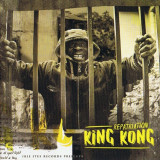
The critically acclaimed "Repatriation" album features 12 original tracks and boasts a dream team of legendary musicians, including Roots Radics, Mafia & Fluxy, Sly & Robbie, Dwight Pinkney, Bongo Herman, Russ D and Naram. With its fusion of genres between Digital and Rub A Dub, the album offers a nostalgic nod to the 80s while retaining a contemporary edge. King Kong, one of the pioneers of this era, shows the full extent of his musical prowess, making this a reference album for reggae aficionados and music lovers alike. for reggae aficionados and lovers of the iconic Jamaican soundscape.
To back such a legendary artist, TABOU1 asked Sly & Robbie and the Revolutionaries (Channel One studio band in the late 70's) to work the "old school" way: all musicians would play live, together and in one take, as opposed to recording their parts separately as is now done in modern music. The result is stunning, with luminaries Ansel Collins and Robbie Lyn on keyboards and organ, Sticky Thompson and Skully Sims on percussions, Dalton Browne and Dougie Bryan on guitar. Bob Marley's synth wizard Tyrone Downie added some musical pixie dust while Stepper did the horns.
How do you follow up a work described in the Independent on Sunday as “the best debut album since Marquee Moon”? That’s the question facing singer-songwriter John Canning Yates, twenty years on from the critically acclaimed ‘The First Album’ by his band Ella Guru.
‘The Quiet Portraits’ will appeal to anyone who loves the beautiful melodic soundscapes woven by Brian Wilson, Burt Bacharach, and Tom Waits, while Yates’s unique vocals evoke the emotional fragility and compelling narrative of Neil Young, Paul Buchanan, Mark Linkous and Elliott Smith.
Mastered by Jason Mitchell (PJ Harvey, Robert Forster), and featuring guest contributions from pedal steel maestro BJ Cole and friend and multi-instrumentalist Andy Frizell (Kevin Ayers, Wizards of Twiddly), those dedicated followers of Ella Guru who stayed the path will find their patience very well rewarded. ‘The Quiet Portraits’ is a remarkable achievement from an unassuming, yet hugely talented artist.
It’s a welcome relief amid the rapidly changing musical landscape to find that all that has changed in John’s world is the number of musicians around him. The beautiful storytelling, the art of finding those magical musical moments that will remain with you for years to come: all of that has survived the passing of time intact.
Happiest with headphones on, working alone in the small hours from his Liverpool home, Yates has created another masterpiece.
He explains: “In the wee small hours, with loved ones safely asleep and the busy day done, there comes a hush. Within it, you can breathe and listen. Listen for the infinite possibilities. From those possibilities emerged these portraits. I have sought to find those precious moments: of love and peace in turbulent times, of truth and hope for calmer days ahead. I hope you find them too.”
Entitled ‘The Quiet Portraits,’ the new solo album from John Canning Yates tells tales of people and places, of time, family, history, belonging, forgetting and remembering.
Bruno Berle, the young songwriter and poet originally hailing from Maceió, the capital of Brazil’s Alagoas state, crafts songs that are simple, direct, and full of tender nuance. With his first album No Reino Dos Afetos (which translates to "In the Realm of Affections” and was released in 2022), Berle firmly established himself as a unique and important voice in the burgeoning scene of new Brazilian artists making a global impact, including peers like Ana Frango Elétrico, Tim Bernardes, Bala Desejo, Sessa and more. Now back with his second album, No Reino Dos Afetos 2, he stretches that further.
Bruno Berle’s music lives between two worlds – a traditional Brazilian folk talent steeped in history, and a contemporary, dreamy electronic pop; the result is songwriting that’s genre-bending, intentional, iconoclastic and consuming, spacious and sinewy and singular, a striking reflection of its composer while leaving space for the listener to settle in. The album follows Bruno’s relocation to São Paulo, and the songs are a reflection of his past and present. A rebuke of former categorizations of his work in Brazilian music scenes, and an idea of where his music can move, unfettered.
Berle’s music is purposeful in being a true portrait of himself, and a reflection of the music, art, and fashion scenes he personally moves through. Berle aims to provide an entrypoint for Black queer joy in his music, in his storytelling, in his presence and vision as a creative. For him, it feels subversive to be playing MPB laced with dubstep and lo-fi, a sort of intentional sacrilege, capturing a dialogue of modernity in traditional music.
Berle wrote most of the arrangements and co-produced his new album, Reino Dos Afetos 2 with longtime friend and musical partner Batata Boy, who is also from Maceió; the album was recorded in Rio de Janeiro, Maceió, and São Paulo, his new home, and picks up the conversation begun in 2022 on Berle’s debut album No Reino dos Afetos. Both records are the result of a nonlinear but coherent seven-year music creation process culminating in these albums, holding hands across space and time.
“Tirolirole,” the first single from the record, was released at the end of 2023; sun-soaked rhythms and soft voice coat the song, the lilting refrain of “Tirolirole” throughout – hushed, gentle, but somehow almost tactile, a golden-hour moment unlocked in the mind. “Tirolirole” is a triumphant future classic about the temporality of a blossoming love, with Bruno’s stunning vocal soaring over melodies which ebb and flow like the waters on the Atlantic shore. Of the track, Berle explains: “Despite ‘Tirolirole’ being an expression that evokes my childhood, just like the light words about nature, the harmony, and the poetry are epic, carrying a great hope for love.”
In fact, the guiding theme of No Reino dos Afetos 2 is a relationship, unfolding in the arc of a weekend. It traverses the innocence of an early young love, how that can be formative, can stretch on to take new shapes, or shape you. The album happens at the genesis of meeting someone and falling for them, before the relationship is thrown into overdrive – set in a big city, against a backdrop of major life changes, rising energy, the sound of São Paulo.
Something transcendental emerges in “Dizer Adeus,” with an arrangement that echoes a gospel atmosphere (evangelical and Catholic environments were pivotal to Berle’s upbringing). On “É Só Você Chegar,” piano and flute gracefully intertwine, a dance, while “Quando Penso” skews sparser, the voice-and-guitar minimalism somehow cultivating an entirely different shape – somehow both cozy and melancholy, with the background sound of a rainy day. Coupled with the lo-fi aspects that shape much of the album’s personality in the vocals and the production, No Reino Dos Afetos 2 is meticulously elaborated by Berle’s sonic alchemy, like on the mid-album instrumental “Sonho,” which feels like floating. “It’s the apex. It’s when lovers are sleeping together,” Berle explains of the feeling he wanted to encapsulate in the song.
On “Love Comes Back” Berle interprets Arthur Russell, the late Iowa musician who only reached greater visibility after he died in 1992. “His way of making music is similar to mine,” Berle explains. “He sings in a more fragile way, has more of an experimental way of recording, letting ‘chance’ appear in the final work.”
Even so, Berle doesn’t want his music to be buried in sentimentality – and the purposefulness of his craft serves as a sort of north star. The production, the arrangements, his restraint and intentionality in crafting his songs feel just as vital as their emotional cores. His songwriting is amorphous, fluid, an encompassing genre-bending movement in-and-of-itself, quietly daring. The songs are often in conversation with other works – drinking in fountains as diverse as the filmmaking of Ingmar Bergman, the poetry of Walt Whitman, the rhythm of Djavan, and the painting of Maxwell Alexandre. Musically he weaves together a rich tapestry of Brazilian folk, UK 2-step garage/dub, trip hop and sun soaked west coast songwriters; something akin to the worlds of Milton Nascimento, Arthur Russell, James Blake, Feist, and Sade colliding into one. But even then No Reino Dos Afetos 2 floats separately, a romanticism driven by a simplicity and intimacy, an open-ended possibility, Berle’s singularity as an artist at the helm of the ship.
Label mainstays Fouk just dropped the perfect dancefloor Bomb with ‘Mirage’ paired with a high-octane Elisa Bee remix
We all know Dutch duo Fouk from their soulful, bouncy take on house music. They’re also responsible for some of Heist’s biggest tracks like Kill Frenzy or their Lil Louis inspired 2021 release ‘Blue Steel’. On their new EP, the talented duo shows us a fresh side of their sound: the main-room hands-in-the-air-going-wild side. To top things off, Italian producer Elisa Bee made time in her busy schedule of DJ’ing and releasing for artists like Ben Sims on his Hardgroove imprint and Unknown to the Unknown to deliver a killer remix of the title track.
Fouk’s return to Heist after 3 years is a welcome one and with ‘Mirage’, they might just have given us their biggest house track in their decade spanning career. The track is built around a stuttering synth loop and a seductive female vocal chanting ‘What made you wanna…” The real star here is the bassline, which propels the track into a seriously infectious groove. Add some lush strings and moody changeovers and you’ve got yourself a full-blown dancefloor weapon. Mirage has been a staple in Dam Swindle’s sets for the past months and has been one of their set highlights ever since.
“Coffee” is one for the classic Fouk fans. It’s got lovely Rhodes, a joyous combination of whoo’s, snare-rolls and synth hits grooving on top of an infectious orchestral background loop. “Tapioca” is a hybrid latin-electronic groove that builds on punchy synths, live percussion and drunk keys to balance the energy of the track.
Elisa Bee’s remix of ‘Mirage’ is an intense percussive workout that builds on a breakbeat loop and a rave-bassline. The tempo is turned up a notch or 2 and that stutter synth and vocal of the original make this remix a wild warehouse affair.
Closing track of the EP is ‘Abalone’; A lovely bleep-house affair that still has a bit of that warehouse vibe. It’s got the perfect amount of distortion the drums while keeping things dreamy with some face-melting pads throughout the track.
As always, enjoy the music and play it loud!
Lars & Maarten
toe is a Japanese music group long revered in post-rock circles, while their song structures and dynamics have taken on elements from all styles of music, ranging from math-rock, jazz, pop, and R&B. toe is composed of Kashikura Takashi on drums, Mino Takaaki on guitar, Yamane Satoshi on bass guitar, and Yamazaki Hirokazu on guitar. The band has formally played with this lineup since their inception in 1998. The vast majority of the music is instrumental and features the swift, agile drumming of Takashi. The band is also known for melodic, clean guitar, often employing the juxtaposition of electric and acoustic. While the compositions feature the repetition of typical rock motifs, the subtle changes in beat and rhythm form a unique rhythmic dialect. The band has consistently expanded their sound throughout their musical tenure by incorporating singing, rhodes piano, mallet percussion, and electronic production elements.
This release comes with a Poster & Insert & Sticker & Download Code.
The vinyl is pressed as a colour in colour, green & yellow disc.
toe is a Japanese music group long revered in post-rock circles, while their song structures and dynamics have taken on elements from all styles of music, ranging from math-rock, jazz, pop, and R&B. toe is composed of Kashikura Takashi on drums, Mino Takaaki on guitar, Yamane Satoshi on bass guitar, and Yamazaki Hirokazu on guitar. The band has formally played with this lineup since their inception in 1998. The vast majority of the music is instrumental and features the swift, agile drumming of Takashi. The band is also known for melodic, clean guitar, often employing the juxtaposition of electric and acoustic. While the compositions feature the repetition of typical rock motifs, the subtle changes in beat and rhythm form a unique rhythmic dialect. The band has consistently expanded their sound throughout their musical tenure by incorporating singing, rhodes piano, mallet percussion, and electronic production elements.
On their eponymous debut, Super American Eagle deliver manna for heavy rock fans craving ergine detours into noise, psych and sludgy dank, herbal grooves. A union delivered via chance, Brent DeBoer of The Dandy Warhols, Dave Mudie from the Courtney Barnett band and Bob Harrow of Immigrant Union, played an impromptu Immigrant Union NYC show as a three-piece. That night the chemistry was undeniable and so Super American Eagle soon took flight. Known for the individual talents they bring to other’s bands, the trio take control of the destination, reveling in the creative liberty that beats at the heart of the project. From a lightening moment of musical connection Super American Eagle have built a thrilling, fuzz-filtered debut of urgent and essential psych and super heavy rock vibes.
Growing up on the outskirts of Manchester, Daniella Lubasu feels that the city's strong indie rock legacy has had an "inevitable" impact on her Equally significant was the music of her Congolese heritage - with its upbeat rhythms, driving bass and intricate electric guitar riffs a constant presence in her childhood. It's in this intersection between the genres where Daniella grounds her sonic identity as DellaXOZ - one which has already garnered extensive love from Clara Amfo at Radio 1, early nods from The Guardian, The Line Of Best Fit, Clash and many more, and support slots with the likes of Beabadoobee, Spill Tab, Wallice, Two Door Cinema Club and Connie Constance. At age 13, armed with a cheap mic and free software from the internet, Daniella wrote and produced her first song, using music as an emotional outlet throughout her teenage years. The potential for music to shape mood is a recurring trait of Daniella's idols too. The clever wordplay and bravado of Nicki Minaj have emboldened her to channel her own "irreverent villain energy", the untethered chaos of La Tigre and Bikini Kill directly influenced her single 'AHH!!', and she is in awe of pop stars like Lana Del Rey and Lorde's ability to seamlessly shift emotions en masse. DellaXOZ is Daniella's real-time chronicle of expression and introspection, manifested via her own brand of glitchy, alt-pop-fecked indie rock. With her formative teenage years navigated during a global pandemic, it's little wonder that Daniella sets classic coming-of-age concerns to the backdrop of wider social issues and commentary. Her current ethos as DellaXOZ is to capture "the fleeting emotions and multi-dimensionality of the teenage experience", and she rejects the narrative of apathy and distraction misassigned to her generation, explaining "I think it's necessary to know what's going on in the world to not become distanced or ignorant. Current world issues like hate crimes, bans on safe abortion and poor gun control are things that I feel personally provoked to shed light on, and have already written some rage- y unreleased songs about." Currently studying for her A-levels, her lessons too expand the narratives within her songwriting. Drama classes led her to include references to Greek mythology in her tracks, where sociology galvanised her to pen her own "riot girl feminist song". It's exactly this kind of boldness and conviction to play with sounds and ideas that mark DellaXOZ as a key young creator in the next chapter of Manchester's musical tradition.
Big Crown Records is proud to present Brainstory’s sophomore full-length album Sounds Good.
Based in L.A. but hailing from the Inland Empire's own Rialto, California, two-thirds of Brainstory, Kevin and Tony Martin are brothers by blood, while Eric Hagstrom is a brother through their music and long term friendship. Since they started the band they have constantly faced situations that forced them to rise to the occasion. They got signed to Big Crown Records, they stepped up their game. COVID happened, they learned to record themselves. They started touring a ton sharing the stage with the likes of Lady Wray and they got their live show super tight. All of this time spent grinding and growing has certainly paid off. The path to take their art to the next level is clearer than ever, and once again, they are here for it. If there is one thing that is abundantly clear on Sounds Good, it’s that Brainstory has leveled up.
Part of this evolution is undoubtedly attributed to having access to and working constantly in their own studio in Long Beach. Another major factor is that their brotherhood has expanded. "I've been playing music with my brother all my life and now with Eric for a long time," Tony tells us. "Leon, though, is like another brother I've just met."
Leon Michels, Big Crown's co-owner, produced this record and applied his unmistakable golden touch in crucial ways. The other member of the extended Brainstory brotherhood whose contributions were essential to the album, is studio engineer legend Jens Jungkurth who controls the tones and textures of the music. "That's what you're hearing, our connection, the fun moments, the little details," Kevin describes. "This record isn't half what it is without them—and it made us want to match that effort," and match that effort they did. Album opener "Nobody But You" is an uplifting, dance oor burner, that shows off a new side of Brainstory's range. Drummer Eric Hagstrom’s crushing back beat lays the foundation for an inspirational feel good banger that manages to take the uncomfortable truth that “nobody will save you but you” and turn it into pure blissful motivation. "Peach Optimo" is a laid back half time tune that blends the bounce of Down South Hip-Hop with California G funk and Jazz. They once again show off their B said ballad talents with "Gift Of Life" but this time taking the genre to a new place with lyrics about existentialism and a track that is drop dead gorgeous, haunting, and profound all at once. "NyNy" is an homage to Kev and Tony's recently deceased grandfather while "Too Yung" is a show stopping, deeply personal, stripped down number about being introduced to
alcohol at a young age. They put another hit on the boards with "Hanging On," a Latin / Psychedelic Soul inspired banger featuring Claire Cottrill on background vocals while "XFaded” addresses the all too common vicious cycle of smoking and drinking too much over a trippy shufe.
"It's been four years since our last full length record, and with everything that's happened since, it's like we've been catching up to ourselves." That's one way to describe change: catching up to oneself. Each member of Brainstory has gone through shifts, both personally and musically, and all of that threads through Sounds Good. It's easy to say that the music industry can be short on lasting, genuine relationships. However, for Brainstory, from day one it's been about standing by each other, for each other. Their friendship started the group. Track listing:
Superb 45 featuring two Hammond-led instrumentals! We caught up with Mr Guy Hamper for an insightful Q&A_ Q: What a cracking single this is! 'Instrument of Evil' in particular has a very eerie vibe. What was the inspiration for it? A: The track is the sequel to '7% Solution', which featured on the last Guy Hamper Trio LP with Thee Headcoats standing in as rhythm section. A 7% Solution being the amount of morphine Dr Watson administered to Sherlock Holmes. For 'Instrument of Evil' I took Sherlock Holmes' later designation of his syringe as "an Instrument of Evil". This is originally a quote from the bible: "Wicked men do at times reject God's purpose for the state, transforming the good of civil government into an instrument of evil." Point of interest: Morphine addiction happens to tie in with another aspect of the song. In the section that nods to Elmer Bernstein's main title theme to the film of the book The Man With the Golden Arm, in which the main character is also a morphine addict. Another ingredient - we added six-string bass to that section in tribute to Jet Harris - he formerly of top group The Shadows, who recorded a great version of Bernstein's classic. To top it all off the record sleeve references the fine graphics of the great Saul Bass. Phew! Q: The track features contributions from Tom Morley (trumpet) and Anna Jordanous (sax). What's it like working with them? A: They are great and easy to work with. I basically make a playground and let them loose in it with very little direction, apart from pointing out the swings and location of the roundabout. I told Tom "You're a Spanish trumpeter stood on a hill in Spain." For Anna, I think we said "go low and nasty." Q: On the flip side you have 'Incense Rising From a Censer'. A very evocative title for an evocative track. Do you have lyrics in mind for this for a possible later release? A: No lyrics have sprung to mind as yet - but it's always possible. The title is from The Elders observation in Dostoevsky's The Brothers Karamazov, a book I really recommend. Prayer rises to God on the smoke of the incense burning in the censer. I imagine this track being some kind of antidote to 'Instrument of Evil'. Q: This single marks your first time in the new premises of Jim Riley's Ranscombe Studio. What's the new place like? A: The studio is great - the sound - using my old Mighty Caesars drum kit, and Jim engineering, is pure, easy with a better sound than the old premises. Q: Any more Guy Hamper Trio releases in the pipeline? A third album perhaps? A: Again, anything is possible. Me and Jamie (James Taylor, Hammond organ) have talked of writing together in the future. Jamie is a truly great musician - the cherry on the cake if you will. We're just busted old eggs, sour milk, and some gunk. Q: A live Guy Hamper Trio show would be amazing. Any chance of that happening or will it remain a studio-based project? A: It could happen if someone came up with a very cunning plan.