Causa Sui's three volumes of Summer Sessions are back in print! This time on the band's own label, on individual LPs for the first time since they were first released in 2008 and 2009. Re-packaged in El Paraiso's signature style. Originally the Summer Sessions were intended as a side project for the band - a chance to explore their love for other genres such as American free jazz, krautrock, 1970s soundtracks, as well as the psychedelia and detuned stoner-rock that characterized Causa Sui's first two albums. But these three albums came to define the band, and have become modern classics of psychedelia and progressive rock since their initial release ten years ago. In a scene often characterized by loyalty to a specific period, there's something refreshing about Causa Sui's eclectic approach. With several guest appearances by Coltrane-devotee Johan Riedenlow on sax and electronics wiz Rasmus Rasmussen, Causa Sui venture far beyond stoner-rock platitudes. Take the grandiose opening statement for example - the 24 minute "Visions of Summer" taking up the entire A-side: here new and old sounds dissolve in a mindbending excursion that recalls Future Days-era Can, breezy tropicalia or Herbie Hancocks Mwandishi group, as much as it sparks associations to Kyuss or Hendrix. Other tracks, such as the frenetic Rip Tide (vol. 2), heads into straight up free jazz territory with Riedenlow going absolutely bonkers on the sax. But this set also allows plenty of room for atmospheric pieces such as the sun-drenched "Venice by the Sea" (vol. 3) or the Morricone-esque "Cinecitta" (vol. 2).
quête:chan
Circus of Desire is the much anticipated third studio album from Grammy-nominated folk singer-songwriter Olivia Chaney. Worked up over five eventful years, this collection of lovingly wrought songs was recorded in NYC with long-time collaborator, producer and musician Thomas Bartlett (David Byrne, the Magnetic Fields, Sufjan Stevens, The National, St. Vincent, Father John Misty)
Consisting of ten originals and one cover (a revoicing of Dory Previn’s haunting ballad ‘Lady with the Braid’), this album is Olivia set free. Taking their departure from real life experiences, these songs strain towards the universal. The title track blends the carnivalesque and meditations on ancient wisdom with an anthemic, dancy refrain. ‘Calliope’ is a tribute to Olivia’s daughter, named after the Greek muse of music and epic poetry, picturing this little life as part of the ever-revolving cosmos. ‘To the Lighthouse’ tells the story of her sister who left the capital to live on a remote island. Like ‘Mirror, Mirror’ and ‘Why’, a pair of tracks about erotic love, this song reflects upon our capacity to flee and transcend inherited trauma. ‘Zero Sum’ is a setting of a metaphysical number poem by Olivia’s grandfather, a mathematician and poet. ‘I Wish’ - the album closer, is the ultimate breakup song.
Whilst staying true to her folk roots, Olivia enters new musical territories with Circus of Desire, venturing into the realms of pop and dance. The record features cameos from a number of friends, including string arrangements by Nico Muhly and banjo and guitar from Sam Amidon. The result of this rich blend of musical influences is an album that looks honestly, sometimes despairingly, but primarily hopefully at the carnival that is life - ‘we’re in a dance with death, with fire…we’re all in a circus of desire’.
Circus Of Desire by olivia Chaney, released 22 March 2024, includes the following tracks: "Why", "Galop", "Bogeyman", "Mirror, Mirror" and more.
This version of Circus Of Desire comes as a 1xLP.
Nachpressung in tief rotem Vinyl! Ein zentrales Album für die heutige Zeit: hell, frei, unnachgiebig, optimistisch. Brain Worms ist das bisher vollste und makelloseste Album von RVG. Auf "Brain Worms" wird deutlich, dass die Band in bester Form ist. Der Album-Opener 'Common Ground' gibt den Ton an für das, was kommen wird; ein glänzendes, mitreißendes, schlagkräftiges Album mit allen geliebten RVG-Merkmalen. Vagers Stimme ist ungefiltert und souverän wie immer, wenn sie ihre cleveren, nicht ganz ironischen Texte vorträgt. Hier fühlen sich diese Texte jedoch viel weniger resigniert und sehnsüchtig an, sondern viel mehr trotzig und fröhlich. Tambourine" ist der einzige Covid-Song, den Vager schrieb, als sie "versuchte, keine Covid-Songs zu schreiben", und es ist ein schmerzhaft ehrliches Porträt der Trauer inmitten der Isolation. Brain Worms" erzählt die nur allzu bekannte Geschichte eines Menschen, der in den Kaninchenbau des Internets fällt und Trost in Verschwörungen findet. Nothing Really Changes" ist ein Keyboarder-lastiges New-Wave-Ding, während das abschließende "Tropic of Cancer" mit Vagers selbstbewusstem neuen Manifest glänzt: Ich weiß, wie ich bin, und ich weiß, wie ich werde. Wenn du denkst, ich bin seltsam, hast du noch nichts gesehen. Bloxham, Nolte und Wallace erwecken Vagers Songwriting mit Bravour zum Leben. Aufgenommen in den Londoner Snap Studios mit James Trevascus (Nick Cave & Warren Ellis, PJ Harvey), strotzen alle zehn Tracks vor üppigen Klängen, klaren Absichten und der Magie einer Akustikgitarre, die einst Kate Bush gehörte und die ihr von Tears for Fears geschenkt wurde (die, so die Legende, "Everybody Wants to Rule the World" darauf geschrieben hat). Die vier Bandmitglieder - Leadsänger und Gitarrist Vager, Gitarrist Reuben Bloxham, Schlagzeuger Marc Nolte und Bassist Isabele Wallace - sind so selbstbewusst wie noch nie bei RVG. Sie haben ihre Einflüsse hinter sich gelassen, sich selbst vorangetrieben und neue Dinge ausprobiert. Und sie haben ein Album gemacht, das sie nach allem, was sie sagen, als ihr bestes bezeichnen können. Brain Worms" fühlt sich an wie die Antithese zu dem, was eine Post-Pandemic-Platte leicht sein könnte. Für eine Band, die bereits Musik über das Zurückgezogensein schrieb, "wir waren deprimiert und gingen auf unseren ersten beiden Alben nicht nach draußen", gab die erzwungene Isolation und die Zeit zum Nachdenken Vager Raum, über alles zu schreiben, was sie wollte. Und es stellte sich heraus, dass sie bereit war, über Akzeptanz zu schreiben. "Wenn wir nur ein weiteres Album machen könnten, wäre es dieses", sagt Vager. Rolling Stone: "Eine Visitenkarte für Außenseiter... dynamischer und vitaler Post-Punk" The Guardian: "Eine der vitalsten Bands der australischen Szene von heute.
Fado music’s fastest-rising stars, Portuguese singer Sara Correia’s acclaimed third album Liberdade is a triumph. Sara arrives in 2023 with the status of a phenomenon: she has travelled the world to great acclaim, nominated for a Latin Grammy along with her appearances as a judge on the hugely popular Portuguese version of reality singing competition The Voice. Sara Correia’s smoky and passionate voice captures love and power, sadness and joy, the city of Lisbon and the Portuguese soul. Inhabiting the space between traditional, dark Fado and its modern, lighter incarnation, her mellifluous toplines are influenced by French chanson.
"Jolifanto" takes its name from the first verse of "Karawane", a seminal Dadaist phonetic poem by Hugo Ball. When Ball first recited it in 1916 at the Cabaret Voltaire, both the author and the audience embraced a trance that left Ball exhausted, requiring assistance off the stage as the audience claimed the spotlight.
Over a century later, by a series of fortuitous events, "Jolifanto" is also the title of an album featuring two powerful musical entities. Artists stemming from diverse backgrounds converge with a shared experimental spirit, curiosity and passion for exploration in their music.
"Jolifanto" is an unexpected explosion propelled by (poly)rhythm, expanding into seemingly distant territories under the influence of flamenco. The Dadaist spirit permeates the work, where a constant tension between the improvised and the meticulously planned is evident. ZA! and Perrate together form an organism traveling from the roots to the rave, with nothing sounding out of place because the place is yet to be defined.
Perrate witnessed ZA!'s concert in a festival he attended as part of the audience. The Catalans surprised him with a proposal that he found radical and unclassifiable. Later, after being invited to prepare a collaboration for the Música y Museos season in Seville, Perrate decided to move off the beaten path, approaching ZA!, who quickly embraced the proposal. Exchanges of ideas and audio tracks ensued in a short time and they quickly found out that they were in the same wavelength. A week before the concert, they met in the same physical space for the first time, dedicating a couple of days to composition and preparing the gig at La Mina Studios in Seville. The concert took place, hailed as "the best concert most attendees had experienced in a long time", as reported by the Diario de Sevilla. That energy needed to be captured, and so it was, at the Happy Place studio in Seville, where the album was recorded between March 6th and 9th, 2023.
The Catalan duo ZA!, "the duo that mash up terrace-chant mayhem with... everything else" (The Wire #384), has operated independently and self-managed since their inception in 2004. They overlap genres and amalgamate sounds that move, with intensity, between wild jazz, post-rock and avant-garde electronics, among other influences. In their acclaimed latest work, they have revived the Phoenician language, exploring Mediterranean sounds alongside MegaCobla and Tarta Relena.
Perrate, active since the late 90s, explores the outer edges of flamenco without forsaking its profound essence rooted in lineage and tradition, evident in every note of his voice. His latest work, "Tres golpes" (Lovemonk/El Volcán, 2022), named flamenco album of the year by Babelia/El País, and one of the albums of the year for BBC3's Late Junction, reflects an innate curiosity, possibly the seed of all the fortuitous events leading to this album.
The encounter between Perrate and ZA! is the result of serendipitous events interwoven with the narrative of artists dedicated to experimentation and radicalism in all its forms.
LA/Joshua Tree based Sugar Candy Mountain deliver carefully built psychedelic odes in the style of Jacco Gardner and Tame Impala. Their breakout album 666 feels like something unearthed from a box of records found in your dad's garage, glowing wistfully with vintage inspired tones, rambling organs, fuzzed out guitars, shimmering keys and sprawling drums. Ash Reiter's woolly voice croons with the icy warmth of Francoise Hardy, while Will Halsey's tender Lennon-esque vocals uncoil with easy languor. Recorded with Jason Quever of Papercuts, the bands sophomore album sits comfortably between 60's Laurel Canyon bliss and more modern production of Dave Fridmann (Flaming Lips/Tame Impala). 666 is the band's first record after deciding to retire Ash Reiter's eponymous solo project to focus solely on Sugar Candy Mountain. With this shift Ash became more heavily invested in writing for the project. On 666 the band moves away from the grandiose production of their previous album, Mystic Hits, on which some songs featured over two hundred instrument tracks. The majority of basic tracking was done on Jason Quever's 16 track Ampex tape machine through a Neve console, and completed at the bands home studio. Under Quever's guiding hand, production on 666 is significantly simplified, favoring featuring strong melodies over the wildly playful orchestrations of Mystic Hits. Quever is also significantly featured on the record as a player, with his influence distinctly coloring the album.
Bite Down, the Merge Records debut of Rosali, finds acclaimed songwriter and guitarist Rosali Middleman in the midst of transition. Written after moving to North Carolina from her longtime home of Philadelphia, Bite Down is a searching, hungry record by an artist who is resolved to bite down on life, in all its horror and joy. She is joined here by Mowed Sound_David Nance (bass, guitar), James Schroeder (guitar, synth), Kevin Donahue (drums, percussion)_and in studio by Destroyer collaborator Ted Bois (keys). Bite Down is Rosali's second album working with Mowed Sound, and there is urgency and ambition in their collaboration_a band pushing each other not just to expand on what they've already done together, but to break through into altogether new territory. Among those joining Rosali and her band there is Dan Bejar of Destroyer, who waxes poetically on where she's been, where she's going, and how thrilling Bite Down is to experience: It's hard to talk about Rosali's music. Songs that reach outward like this, but then constantly disarm with their intimacy. What do you call such inner searching that is hellbent on rollicking? Songs that long for a sense of peace and songs that want romance, all on equal footing in the same plot of earth? Performed wild, but always centered around the incredible lyrical calm that is Rosali's voice. Bite Down makes me think about singers and bands that throw themselves hard into the storm, the way the Rosali quartet does. (Jim captures the tone of this perfectly, again!) The calm of her voice over top of the band's raging_it is the emblem of songs that live to put themselves in harm's way. But it's not harm. It's just that you have to play hard to get at these goods. The calm of Rosali's voice, the straight talk of her inner search vs. the wildness of the band, the sonic storm she rides in on. That's their sound. The Mowed Sound. It's hard to talk about these last couple Rosali albums without talking about them. They play free and wild and relentlessly melodious. They rip and create space and fill it up with what seems like reckless abandon, but listen carefully or listen for a while and you'll find them paying real close attention to each other and exactly what the song demands. Maybe Fairport did this, maybe VU. It's a strange telepathic brew. Breezier songs like "On Tonight" and "Rewind" sound like they've fought their way to get to that sense of ease. Maybe that's the Mowed Sound "sound"_hard-won ease. Then add to that Ted Bois' patented Rhodes sleaze (see sinuous title track "Bite Down") steering the record into late-night corners; the incredible "Hills on Fire" (maybe the centerpiece of the album), the guitar-ripping and the singing taking turns in reaching new levels of intimacy. It feels listened-in on, exposed and invented on the spot. It is also simply a staggeringly beautiful song. There are a few of those on the album. In contrast, "My Kind" is a raucous, hand-delivered classic; the band throws tables over. For the most part, this is a moodier record than No Medium. It has the same sound of "I've traveled through fire to deliver you these songs," but it is also quieter, more nocturnal. The quiet dread of staring down an open road, and the excitement of that. By the final track, "May It Be on Offer," it is the prayer uttered as you hand yourself over to the world.
More about the world has changed than not in the decade since dance production dyad Frank & Tony released their last full-length record, 2014’s You Go Girl. Despite, or perhaps in spite of, this shifting landscape, house music has managed to stay fundamentally reliable (either a bug or its greatest feature, depending on who you ask). Where previously, Frank & Tony have been celebrated for their contemplative, studious approach to the genre, with 2024’s Ethos, the Brooklyn/Biarritz-based duo return amidst metastatic cultural upheaval to prove out those scholarly credentials — with an album that serves to remind listeners why dancefloors and liberatory politics consistently share the language of movements and revolutions.
Undoubtedly, Ethos is tremendously influenced by the multitude of projects originating from, and supported by, the duo and their label in the decade since You Go Girl– releasing records from a vast diversity of artists (including Nadia Khan, Gry, Villete, Darand Land, Alex Albrecht, DJ Sprinkles and CCL), and Harris becoming curatorial voice of Brooklyn’s premiere venue for audiophiles, Public Records, where he continues to amplify work across a global diaspora (and where the duo maintain a residency of wide praise).
It is this bright energy and focus on the necessity of community and relationships that animates the aptly-titled Ethos. If past Frank & Tony releases have been lauded as ‘a coloring book in which someone has exclusively drawn inside the lines… with extreme precision,’ Ethos deviates by inviting friends in for a game of exquisite corpse. From singer and pianist Eliana Glass, whose androgynous, double-reeded voice freestyles across album opener Olympia, to distinct track features from fellow house masterminds DaRand Land, DJ Aakmael and Lawrence over half of the album’s nine tracks highlight artists in the larger Scissor & Thread circle.
When the grunge explosion of the early `90s elevated Seattle's flannel-clad misfits out of the divey clubs of downtown and into the mainstream, a new generation of restless artists filled the void left in the Pacific Northwest's underground music scene. The under-21 crowd making music in the wake of Nevermind seemed even less enamored with the slick production values, classic rock nods, and testosterone-fueled moshing culture that came with the Zeitgeist, favoring their own kind of Revolution Summer-style pivot away from the popular sounds of the era towards a more emotionally nuanced, melodic, and inclusive style of punk. The Puget Sound trio Lync perfectly captured the spirit of that era, blending the passionate chaos of the DC and San Diego scenes with the rough-hewn DIY pop sensibilities of Olympia's thriving indie community into one unified sound. Though they were only a band for two years, they helped define the next era of the Northwest underground, inspiring countless other artists and instigating the creation of beloved records from the region. After being out of print for over a decade, the band's sole LP These Are Not Fall Colors has been remastered and expanded into a 2xLP with the inclusion of "Can't Tie Yet"_a compilation track from the album's recording session_into a deluxe edition available courtesy of Suicide Squeeze Records. Originally released on K Records in the summer of '94 just a few months before the band called it quits, These Are Not Fall Colors is a boisterous collection of scrappy basement-show anthems played on duct-taped-together gear. Led by the off-kilter melodies of late singer/guitarist Sam Jayne and hammered into place by the driving bass of James Bertram and drum battery of David Schneider, the album's eleven songs channel that undefinable sound of the early `90s before descriptors like "post-hardcore" and "emo" became pejorative terms. Sure, you get a sense of the more sophisticated mid-tempo punk approach on songs like "B" and "Silverspoon Glasses," and maybe catch wind of wistful songwriting on "Pennies to Save" and "Cue Cards," but Lync seemed to cull their ideas from whatever bits of inspiration they could find in the gray gloom and geographic isolation of western Washington, absorbing it all and churning it together into a style uniquely their own. Despite Lync's short existence, modest aspirations, and DIY approach, their work had a ripple effect. Jayne would go on to make music under the moniker of Love As Laughter. Built to Spill's Doug Martsch was so enamored by the album that he enlisted Bertram and Schneider to serve as his rhythm section on the There's Nothing Wrong with Love tour. These Are Not Fall Colors engineer Phil Ek would go on to help record and produce records by Fleet Foxes, Band of Horses, and The Shins. Early bassist Isaac Brock and These Are Not Fall Colors album art contributor Jeremiah Green would go on to form Modest Mouse. Bertram and Green would also go on to form the revered indie rock group Red Stars Theory. At times it feels like you could pick any major Northwest indie rock group from the `90s and `00s and trace their DNA back to Lync. The deluxe edition of These Are Not Fall Colors comes pressed on 180g vinyl and packaged in a gatefold cover with printed inner sleeves and expanded artwork by Jesse LeDoux. The 2xLP also features an 18x24 poster with extensive liner notes by Brian Cook. Altogether, this new version of These Are Not Fall Colors not only brings this celebrated classic back into analog libraries of old fans, it also provides new context and appreciation for Lync's ongoing impact on both a local and international level.
Much like the North Carolina wilds it reflects, Needlefall waxes and wanes from mysterious and unsettling to ecstatic and awe-inspiring, capturing the sacred dimensions of the natural world. Magic Tuber Stringband draw on a host of fellow travelers to realize Needlefall"s intricate arrangements, exemplifying the diversity of contemporary folk movements, placing their work in the tradition of modern innovators like Moondog, Harry Partch, Pauline Oliveros, and labelmate Sally Anne Morgan. The vast forests and mountains that inspire the band as a metaphor for living music traditions - ever-changing and yet still standing, shaped over time by human hands while equally shaping the human experience. Magic Tuber Stringband, from North Carolina, are Courtney Werner and Evan Morgan, accompanied by their regular bassist Mike DeVito. Morgan is an organizer within the local music community, and Werner is a dedicated naturalist involved in local land stewardship. Needlefall answers the question "what does a modern string band sound like?" with powerful new arrangements of traditional songs and transcendent originals. The album is teeming with life, translating abundant ecosystems into arcing melodies and shimmering, mystic drones. The band explains: "If you spend enough time out in the woods you inevitably see or hear things that are hard to explain. I"ve been in caves where it"s total darkness and you"re enveloped by the disorienting sound of dripping water. The natural sights and sounds in these places are often repetitive, percussive, expressive, sometimes unsettling - the way that water carves patterns into rock or tree trunks appear in endless rows."
SAICOBAB channels the vital energy of living music traditions through ecstatic performance. NRTYA, Sanskrit for "dance", explores the shared roots of Japanese and Indian spiritual practices in a tangible, intoxicating form. YoshimiO"s experiments in this field are well documented and legendary from her work in OOIOO to her work in the Boredoms. Multi-instrumentalist Yoshida Daikiti reveals the human hand that shapes living traditions, as much through his fluid playing as his own collection of handmade instruments, while percussionist and multi-instrumentalist Motoyuki "Hama" Hamamoto embodies the metaphysical power of rhythm. YoshimiO"s wild vocal acrobatics and inimitable range shift from hypnotic chants to ethereal atmospherics and darting melodies, ducking and weaving around Daikiti"s serpentine sitar figures and basslines. Hama"s solid rhythmic architectures and deft polyrhythms are here enhanced by additional drums from Taketawa Yo2ro, slipping from subtle pulses to thundering grooves that drive the music. SAICOBAB"s music exudes a true reverence for living musical traditions while remaining unbound by orthodoxy. The electrifying energy of the quartet"s performance is palpable in every track, eliminating established hierarchies with performer and listener alike entwined in the same cosmic dance.
Buffalo & Detroit are America’s broken dream. They are once thriving cities, now known for frigid temperatures and violent crime. The cities were birthed in a different era, forged in fire, built of cold steel. It follows that the rawest Hiphop in recent memory has bled from these two regions. No two artists exemplify this hard truth more than legendary Detroit producer Apollo Brown and Buffalo’s maverick emcee Che’ Noir. The two artists came together to create a sound as natural as calm after the storm. The soulful, head-nodding production of Apollo Brown has been a staple called on by some of the greatest to ever do it. From Ghostface Killah to Danny Brown, and from Freddie Gibbs to Chance the Rapper, Apollo Brown’s signature style has become an iconic staple of the culture. Meanwhile, Che’ Noir has stepped onto the scene as smoothly as any double dutch veteran. Having already worked alongside Benny The Butcher, Kool G Rap, and Fred The Godson, she has emerged as one of the most extraordinary New York talents heard in years. The pair’s new album, “As God Intended”, drifts up and down city streets and offers a glimpse behind closed doors, telling the stories of gunshots, missing fathers, & playing the system. The album from Apollo Brown & Che’ Noir features Skyzoo, Blakk Soul, Planet Asia, Ty Farris, and Black Thought. Part of the Mello Music Group 24 for '24 Artist Series featuring limited edition vinyl art by oil painter KipDaFog.
As God Intended by Apollo Brown & Che' Noir, released 22 March 2024, includes the following tracks: "Hustle Don't Give (feat. Black Thought)", "Hours", "Daddy's Girl", "The Apple (feat. Planet Asia)" and more.
This version of As God Intended comes as a 1xLP.
The vinyl is pressed as a brown disc.
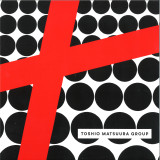
Brownswood Recordings are proud to present the reissue of Toshio Matsuura’s 2017 cult classic LOVEPLAYDANCE, issued for the first time as a complete album on limited edition red and white double vinyl.
The project focuses on covers, presenting classics & influential tracks in a new context. This new edition includes a cover of the Rotary Connection’s classic "Black Gold of the Sun'' featuring Afro-Cuban singer Daymé Arocena and her prodigious Havana-based players, as well as the high energy re-lick of Byron Morris and Unity’s ‘Kitty Bey’, a classic from Gilles Peterson’s seminal afternoon session at Dingwalls in the 1990s; neither included on the original vinyl LP.
On ‘LOVEPLAYDANCE’, legendary Tokyo DJ and producer Toshio Matsuura charted a new direction by casting musical cornerstones in a fresh light. The TOSHIO MATSUURA GROUP features Tom Skinner (drummer for Smile, Sons of Kemet, amongst others) as its musical director, as well as some of the UK’s most exciting jazz-influenced musicians. Drawing on years of surveying and curating different corners of music, Matsuura deftly combined this talented pool of players into one singular, wide-ranging album. A co-founder of Japan’s United Future Organisation (aka U.F.O.), this record sees Matsuura reconnect with longstanding friend and collaborator Gilles Peterson. Releasing the album via Brownswood Recordings in the UK, it’s a continuation of a relationship which started as a bridge between London’s then-blossoming jazz scene and Tokyo’s new musical vanguard of the early ‘90s. This album continues that two-way dialogue between Japan and the UK.
The scope of the music reflects the breadth of Matsuura’s interests; It ranges from Bugges Wesseltoft’s Detroit-influenced, dancefloor-minded jazz, stretched out into a more meditative contemplation, to Flying Lotus’ LA-rooted, Brainfeeder beatmaking, translated from laptop-to-live, given a new, equally idiosyncratic lease of life. Elsewhere, Carl Craig’s iconic ‘At Les’ is taken in a looser direction, the overtones of euphoria cast in a different hue.
They’re touchpoints which hint at interests in the different, diffuse corners of electronic music, and how they connect to jazz and improvisation. Featuring an all star line up of some of the best players London has to offer, line up includes Nubya Garcia, Yazz Ahmed, Yussef Dayes and more.
In 2014, Wye Oak released Shriek, their fourth album. It was a necessary departure for Jenn Wasner and Andy Stack, who found themselves on uncertain ground after two years of constant touring for 2011's Civilian, living on opposite ends of the country and trying to revitalize their creative partnership. Wasner set aside her guitar for a bass. Stack took on the band's upper register, playing syncopated, meditative keyboard parts that interacted with Wasner's voice, which was newly freed from its call-and-response relationship to the guitar_what had been, until then, a signature of Wye Oak's sound. "This idea and the ensuing creative reworking of our band did what it was meant to do," Wasner writes in 2024. "It ended a long, painful period of creative stagnancy and reconnected me with the joy of making music." During that period, Wasner and Stack were introduced to William Brittelle, the Brooklyn-based composer whose 2019 LP Spiritual America featured Wye Oak, the Metropolis Ensemble, and the Brooklyn Youth Chorus. His orchestral reimaginings of five songs from Shriek (Shriek: Variations, if you will) are the centerpiece of this package, which serves not only to mark the tenth anniversary of a great album, but to demonstrate the richness of Wye Oak's compositions. Stack says of Shriek: Variations: "It's like looking at the songs in a funhouse mirror. The songs on Shriek can be stripped down or embellished_this is maximal embellishment. William took the album and blew it to smithereens, looking at it in a weird, prismatic way." Through Brittelle, Wasner and Stack found themselves at the intersection of classical, experimental, and pop music. Further collaborations, like the Brooklyn Youth Chorus- featuring No Horizon and Paul and Michi Wiancko's string arrangements on "My Signal" from The Louder I Call, The Faster It Runs, followed, as this connection fundamentally changed the way Wye Oak approached making records, incorporating an entirely new palette of sound into their work. That shift began here. Shriek: Variations may feel like a startling take on the material, something like light bursting into a room through drawn curtains, but Brittelle's arrangements are largely original to his first collaborations with Wye Oak a decade ago, suggesting that his maximalist arrangements have lived comfortably within the framework of Shriek the whole time, waiting for the right moment to emerge. It's a fitting reintroduction to the album, which upon its initial release was pigeonholed into the easy one-note talking point of being the "no-guitar" record. But even so, as that happened, Shriek quietly started to become a staple among Wye Oak's core fans. Here, with help from Brittelle's expansive compositions, the release draws attention back to the songwriting_how, regardless of the instrumentation, Wasner and Stack's uncanny musicwriting partnership at the core is what makes both Shriek and Wye Oak excellent. Joined by the Metropolis Ensemble, Paul Wiancko, and Lizzie Burns, Wye Oak turn songs like "Logic of Color" inside out, reaching towards a kind of pastoral bombast, Brittelle's aesthetic with Wasner and Stack as an anchor. In fact, "Logic of Color" in this iteration takes that "no-guitar" script and flips it, with Wasner playing the synthesizer ostinato on acoustic guitar at its center. If Shriek is a record that charts the depths of solemnity and inner space, its Variations, roiling in a sea of winds, brass, and strings, recolors that space and complicates it, a gorgeous, unexpected response to the original's siren call.
With two critically acclaimed albums and a swathe of award-winning production turns under their belt, Ana Frango Elétrico present their most confident and accomplished work to date: Me Chama De Gato Que Eu Sou Sua / Call Me They That I’m Yours. Gesturing to a tradition of Brazilian boogie music, but bouncing with modern pop ebullience, the album sees the Rio artist evolve from a captivating upstart into a surefooted scene leader in full stride.
At just 25, the prolific artist and producer has already garnered worldwide admirers. Ana’s sophomore Little Electric Chicken Heart was nominated at the 2020 Latin Grammys. Since then, standalone singles have received the WME ‘Best Music Producer’ Award, recognising Ana’s deep passion for music production – a passion which has led to collaborations with nascent Brazilian stars Dora Morelenbaum, Illy and Sophia Chablau. Most recently, Ana was hailed for their co-production of Bala Desejo’s 2022 Latin Grammy-winning album Sim Sim Sim.
The new album finds Ana at their most assured and full voiced. Album opener “Electric Fish”, with funky bass and shimmering backing vocals, sets a buoyant tone. “Boy of Stranger Things” is its bombastic counterpart. It’s the grooviest Ana has ever sounded. And the most brazen. Lyrically, where Ana was once oblique on personal matters, they are now forthright – lucidly exploring their gender identity, citing accessible cultural references, and often singing in English.
“I started this album in 2021 with the intention of showing, in means of sound, understandings and feelings about queer love, subjectively exposing myself,” the non-binary artist states – before qualifying that though “feeling was its driving force, the album is really about musical production.”
“There’s so many references to different decades,” Ana explains. “Seventies drums with eighties processing … Going back, getting beyond … Testing the limits of organic sounds”. Characteristically playful, on Me Chama, Ana takes vivid and rewarding detours through funk-inflected R&B (“Dela”) and art pop (“Dr. Sabe Tudo”). “Nuvem Vermelha” is a cinematic chanson with lush strings that recalls Arthur Verocai. Then, “Coisa Maluca” loafs with the indie insouciance of Canadian slacker Mac Demarco. Later, “Let's Go Before Again”, is a full-on drum machine workout evocative of Stereolab.
“Even if people don't find my own references here, they'll find theirs,” observes Ana. “Maybe that’s this record’s biggest goal.”
"As Bill Orcutt’s most mature and exhilarating LP to date, Music for Four Guitars was a slab of undeniable Apollonian beauty. Its approachability and obvious novelty landed it not only on the year- end lists of every key-pushing codger in the underground in 2022, but also on NPR in the form of the Bill Orcutt Guitar Quartet, an ensemble assembled to perform this music and featuring Wendy Eisenberg, Ava Mendoza, and Shane Parish in addition to Orcutt. But while their Tiny Desk Concert gave a whiff of the quartet’s easy intimacy, the sterile confines of the virtual recital medium still left a puzzle unsolved: how might these brutally mannered bricks of minimalist counterpoint sound on a stage in front of actual breathing bodies?" "This was the question foremost in my mind when I first saw the quartet in San Francisco a few months before this double live LP was recorded. I was already familiar with the prowess of Eisenberg and Mendoza, two of the most technically intimidating shredders to blast out of the noise/improv underground, and knew Parish as the mastermind behind the epic translation of Orcutt's quartet recordings into a fully notated score. I was ready to be 'blown away'—and I most assuredly was. The quartet navigated Orcutt's jaggedly spiraling right angles into the shining core of the compositions with joyous ease, faithful to the originals in nearly every way (though their tempos were slightly ramped up, Blakey style, to communicate their breathless rush). The renditions were flawless, stellar and inspiring. I had expected nothing less." "Which leads us to this album, Four Guitars Live, recorded in November of 2023 at Le Guess Who? festival during the quartet’s first European tour. The true essence of this set is not simply in its faithfulness to the source compositions, but in the group's easy familiarity (no doubt the result of weeks on the road) and the generosity of their improvisations, both collective and solo. Orcutt, clearly cognizant of both the caliber of his collaborators and the singularity of their voices, has given everyone room to stretch out, and all have delivered some of their most moving passages to date." "One of this record's great thrills for me is imagining a listener, perhaps unfamiliar with the outer limits of contemporary guitar improvisation (or the Tzadik catalog), slammed into catatonia by Mendoza's liquefying lines on Out of the corner of the eye, then revived and healed by the languid, breathy lines of Parish's unaccompanied, spaced-out breakdown of the track's main theme, finally only to be crushed by Eisenberg’s staggering extended solo on Only at dusk (somehow channeling both Eugene Chadbourne and Buck Dharma)." "There's another peak, which begins at the end of side B, in Orcutt's own languid solo, encapsulating the flowing focus of his recent solo LPs, and serving as an introduction to the next side's ensemble tour de force, the psychic heart of the album, On the horizon: its melodic core passing first to Orcutt, launching into a sublime solo turn by Eisenberg, a duo of Parish and Mendoza, before parachuting back into the ensemble for a smashup rendition of Barely visible and Glimpsed while driving (renamed Barely driving) knitted together with an softly bubbling ensemble improvisation. The transfer is orchestrated yet seamless, its tonal form undeniable even in the presence of obvious dissonance." "The breadth of Four Guitars Live gives lie to the false notion that agile, polytonal improv is necessarily without soul, is necessarily inaccessible. Rather, Four Guitars posits a human avant-garde music that the most conservative will recognize as virtuosic and revel in its classic intervals, boiling counterpoint, and precisely- layered facets. Even the rockers in your life might dig it, so why not pass it on?"—Tom Carter
The Left Side is the latest body of work from the Iggy Pop-endorsed teens since the release of their acclaimed second EP We Aren’t Getting Out But Tonight We Might in summer 2022. With Saul at the creative helm, The Left Side is a mature and cerebral body of work with Saul once again writing and producing the entire EP (with co-production by Ali Chant (Yard Act, Katy J Pearson, Dry Cleaning) on ‘Conman’ and ‘ITSA’). Written in Saul’s bedroom, the EP is a retrospective insight into the young band’s journey so far as they tie up their teenage years.
A coming of age saga, the EP acts as a vehicle for Saul to dive into the psyche behind emotional evolution, and to unpack the complexities of maturity and the ability to say goodbye to the past. These themes present themselves not only in the songs, but right down to the title of the EP itself - which refers to the fact that the left side of the brain is responsible for comprehension.
Summarising the EP, Saul says: “It’s the closest we have been to knowing what picture we want to paint. It’s another window into the musical space we wish to explore, yet I think we’re closer to having our sound. I think the project signifies the end of a section in our lives, moving out from the haze of the moment and reflecting on our teenage years and all its chaos with more understanding.”
L’objectif have drawn instant acclaim across their two EPs to date with support coming from key tastemakers at 6 Music (where previous single ‘Feeling Down’ was daytime playlisted after being premiered by the station’s Steve Lamacq) such as Amy Lamé, Tom Robinson, and of course Iggy Pop, BBC Radio 1’s Jack Saunders (who made the band his Next Wave featured artist and featured
‘Burn Me Out’ and ‘Do It Again’ as Daily Delivery) and Gemma Bradley, Radio X’s John Kennedy, Apple Music 1’s Matt Wilkinson, and Australian national broadcaster triple j. The effervescent young band have already received ‘ones to watch’ tips from national media outlets NME (First On), The Line Of Best Fit (On The Rise), The Observer (One to watch), The Sunday Times Culture (Breaking Act), and more.
96kHz - 48-bit HD Audio with digital booklet including original photography by Christopher Kayfield and liner notes by Shaun Brady.
Pianist Kevin Hays, bassist Ben Street, and drummer Billy Hart reunite for a second, scintillating trio date, BRIDGES, featuring original compositions by Hays and Hart with classics by Wayne Shorter, Bill Frisell, The Beatles, and Milton Nascimento.
Hays Street Hart, the trio of pianist Kevin Hays, bassist Ben Street, and legendary drummer Billy Hart, recorded their acclaimed 2021 debut, ALL THINGS ARE, under less than optimal conditions. The album began life as a performance in honor of Hart’s 80th birthday in December 2020, live-streamed from an empty Smoke Jazz Club in the final weeks of that grueling pandemic year. Despite those adversities, the music they created that night was spectacular enough to convince all involved that it should be released.
Two years later, the trio has reconvened, this time fully cognizant that they were going to record an album at Sear Sound Studios in NYC. The captivating BRIDGES brilliantly spotlights the unique chemistry and shared spirit of exploration that emerged fully formed on that initial impromptu session. The title succinctly hints at some of the reasons why Hays, Street and Hart work so well together: this is a trio that bridges generations, certainly, as well as a wealth of diverse experience and inspiration. But it also sums up a mutual desire to bring people together through music.
“In this world that seems to be crumbling beneath our feet,” Hays explains, “we sense the need to make allies where there might be adversaries. On the most intimate level, interpersonally and inter-psychically we set out to overcome any number of misunderstandings and adversarial situations.”
Not that there was any antagonism to overcome within the trio itself. More than anything, Hays Street Hart is a mutual admiration society of the highest order. The esteem in which the pianist and bassist hold Billy Hart likely goes without saying. The drummer was ordained in 2022 as an NEA Jazz Master, just one of the many honors he has chalked up over a breathtaking career. He began his career with an apprenticeship under the revered vocalist Shirley Horn and went on to make notable music with such luminaries as Miles Davis, McCoy Tyner, Herbie Hancock, Wes Montgomery, Jimmy Smith, Stan Getz, and as part of the quartet Quest featuring David Liebman and Richie Beirach.
But Hart is if anything, even more laudatory toward his younger bandmates. Street has been a member of the drummer’s stellar quartet for two decades, alongside pianist Ethan Iverson and saxophonist Mark Turner, a tenure that speaks for itself. As for Hays, Hart is quick to place the pianist in the exalted company of some of his iconic former collaborators.
“I’ve been lucky enough to have the chance to perform with Herbie Hancock and McCoy Tyner,” says Hart modestly. “Each generation presents their own equivalent, and Kevin is an example of the latest innovations. There was Herbie and McCoy, then it was Chick Corea and Keith Jarrett, and then you have what's coming next. I think Kevin is definitely part of that continuum.”
Though Hays sticks strictly to the piano on BRIDGES, he is also an accomplished singer whose vocal instincts fuel his inventive and lyrical melodicism. Street points to those facets as key to the connection between the pianist and Hart, who has enjoyed several meaningful collaborations with vocalists.
“It always seems to me that Kevin has the capacity to sing in his mind and then accompany himself on the piano,” Street describes. “That makes for such a nice connection with Billy, who has played with and learned from so many singers. I don't even feel like we're playing as a piano trio most of the time; it feels more like a quartet.”
Those qualities are especially clear on Hays’ “Butterfly,” which opens the album. Though it’s performed here as an instrumental, the pianist has composed lyrics for the piece, and its gorgeous, song-like quality shines through. Hays also contributed the breathtaking ballad “Song for Peace,” highlighted by Hart’s gentle, embracing brushwork and Street’s sturdy, stentorian tone. The pianist’s third original, “Row Row Row,” is constructed on a twelve-tone row, but as the playful title suggests, it has none of the more stringent qualities of the serialist composers.
Hart’s stunning “Irah,” originally recorded on his quartet’s self-titled 2006 debut, is dedicated to the composer’s mother and was recorded at Street’s suggestion. The bassist also brought guitarist Bill Frisell’s reflective “Throughout” to the date, imagining Frisell’s Americana influences would resonate with the similarly inclined Hays, who approaches the tune with a harp-like beauty. Hays’ love of pop and rock music is also reflected by the inclusion of The Beatles classic “With a Little Help from My Friends.”
The trio pays tribute to the late, great Wayne Shorter with “Capricorn,” originally released on the composer’s 1969 Blue Note album SUPER NOVA and later included on the Miles Davis Quintet set WATER BABIES. Hart called Shorter one of a kind. I think of the many times I heard him excel – with the Maynard Ferguson Big Band, with Art Blakey's Jazz Messengers, with Weather Report. And in each case, he was innovative.”
BRIDGES closes with the title track, a dazzling piece by the great Brazilian singer and songwriter Milton Nascimento, which Hays calls “one of my favorite compositions ever, by anybody.”
BRIDGES was recorded under ideal studio conditions by a now-established trio with a weeks-long European tour under their belts. Perhaps what’s most remarkable about the album is not that Hays, Street, and Hart play so masterfully together – with three artists of their caliber, who could expect any less? – but that this second outing maintains the bold spirit of inquisitiveness and spontaneity that its predecessor naturally possessed. Credit that to a trio perpetually determined to discover new bridges worth building.